THE INTERNATIONAL TRADING ENVIRONMENT Session 2
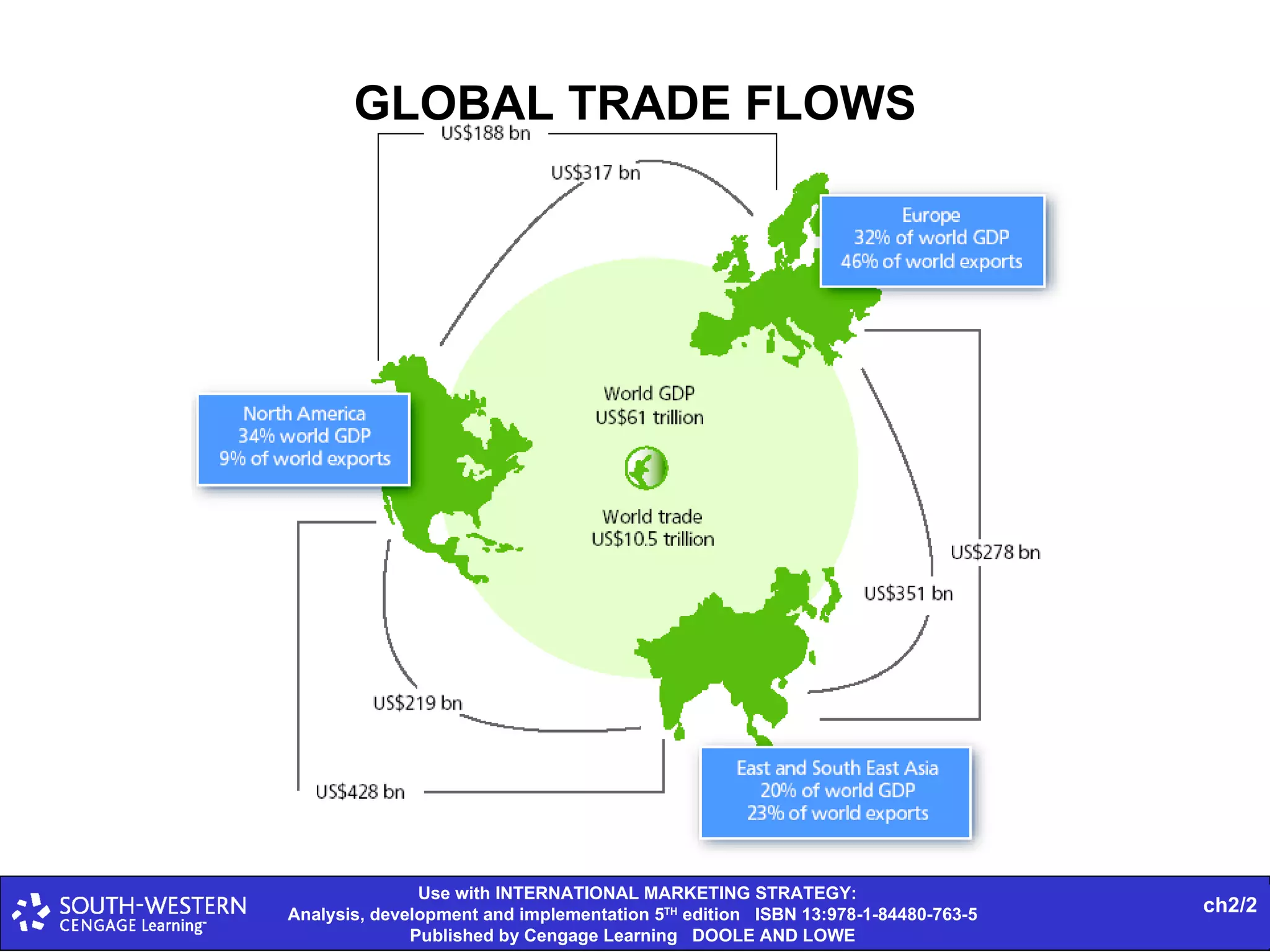
GLOBAL TRADE FLOWS
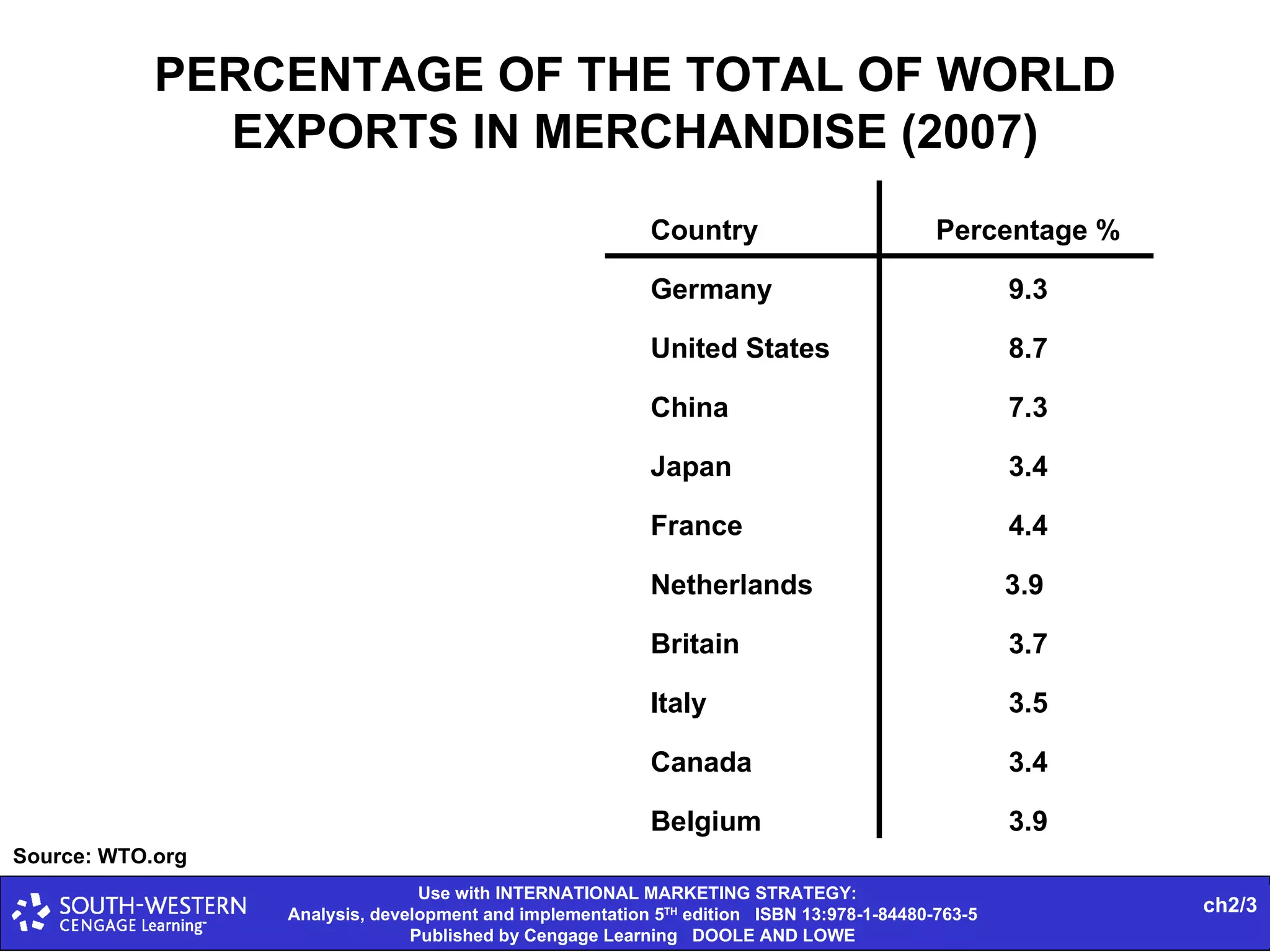
PERCENTAGE OF THE TOTAL OF WORLD EXPORTS IN MERCHANDISE (2007) Country Germany United States China Japan  France Netherlands  Britain Italy  Canada Belgium Percentage % 9.3 8.7 7.3 3.4 4.4 3.9  3.7 3.5 3.4 3.9 Source: WTO.org
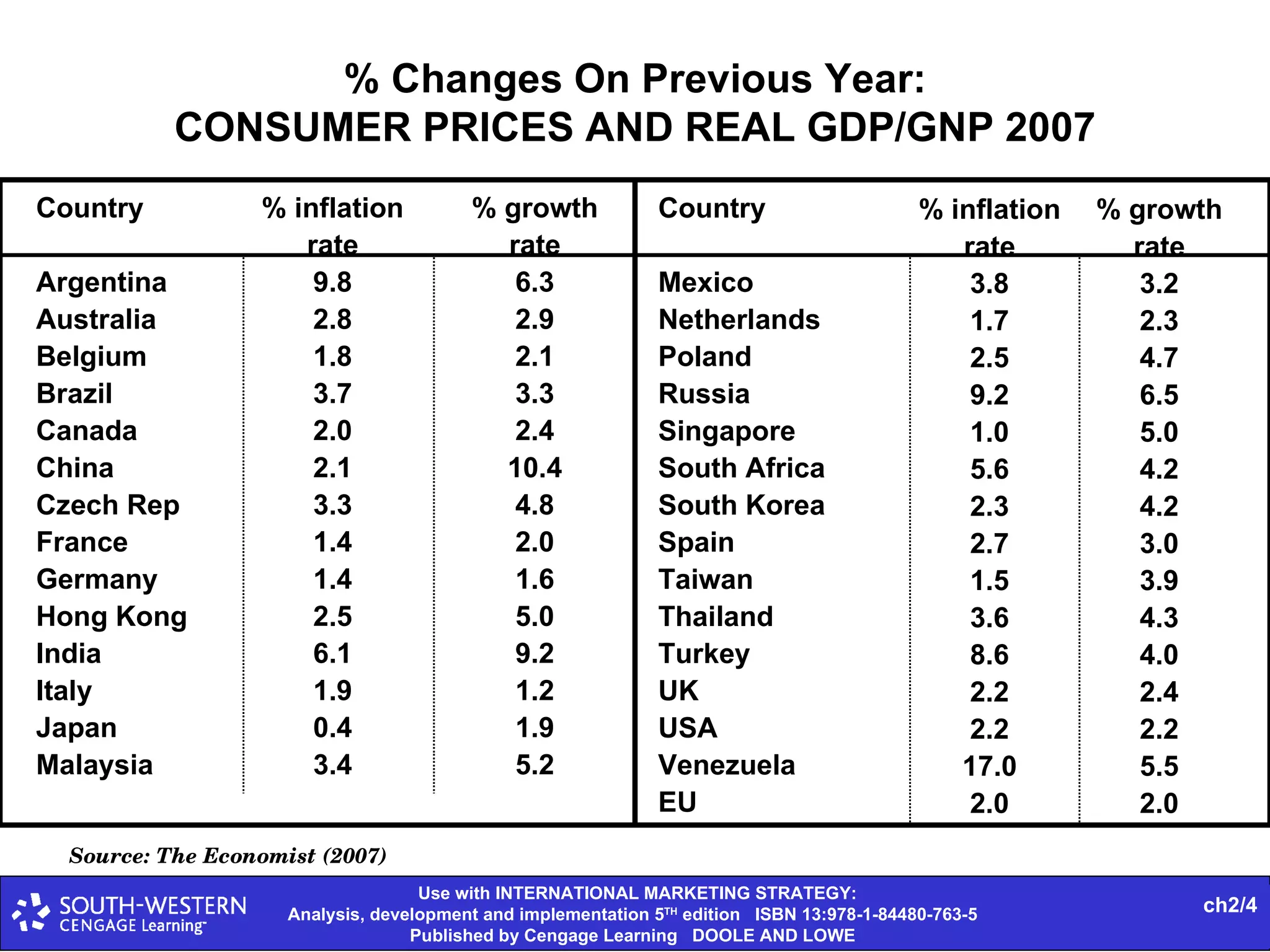
% Changes On Previous Year: CONSUMER PRICES AND REAL GDP/GNP 2007 Country Argentina Australia Belgium Brazil Canada China Czech Rep France Germany Hong Kong India Italy Japan Malaysia % inflation rate 9.8 2.8 1.8 3.7 2.0 2.1 3.3 1.4 1.4 2.5 6.1 1.9 0.4 3.4 % growth rate 6.3 2.9 2.1 3.3 2.4 10.4 4.8 2.0 1.6 5.0 9.2 1.2 1.9 5.2 Source: The Economist (2007)  Country Mexico Netherlands Poland Russia Singapore South Africa South Korea Spain Taiwan Thailand Turkey UK USA Venezuela EU % inflation rate 3.8 1.7 2.5 9.2 1.0 5.6 2.3 2.7 1.5 3.6 8.6 2.2 2.2 17.0 2.0 % growth rate 3.2 2.3 4.7 6.5 5.0 4.2 4.2 3.0 3.9 4.3 4.0 2.4 2.2 5.5 2.0
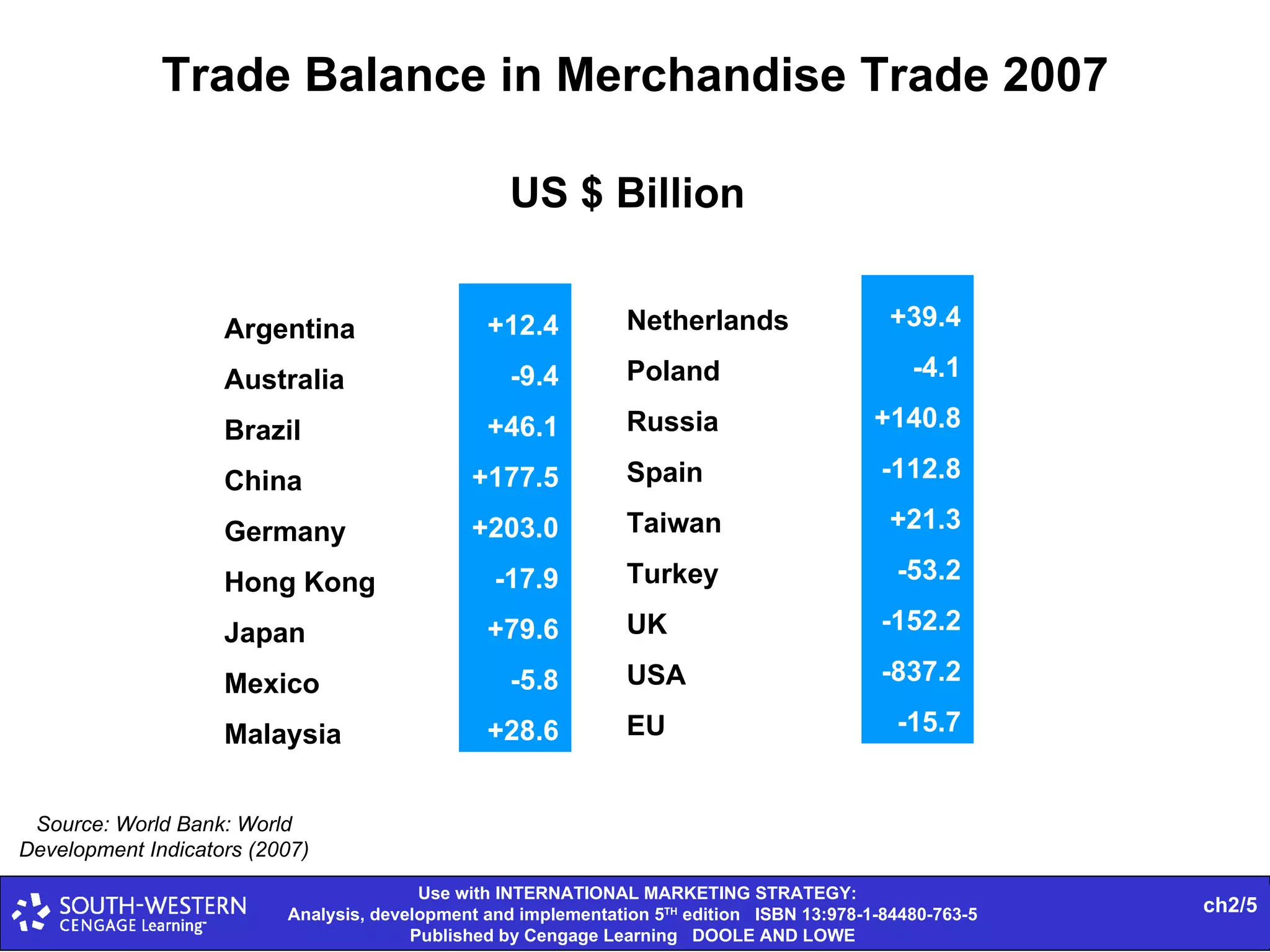
Trade Balance in Merchandise Trade 2007 Source: World Bank: World Development Indicators (2007) US $ Billion Argentina Australia Brazil China Germany Hong Kong Japan Mexico Malaysia +12.4 -9.4 +46.1 +177.5 +203.0 -17.9 +79.6 -5.8 +28.6 Netherlands Poland Russia Spain Taiwan Turkey UK USA EU +39.4 -4.1 +140.8 -112.8 +21.3 -53.2 -152.2 -837.2 -15.7
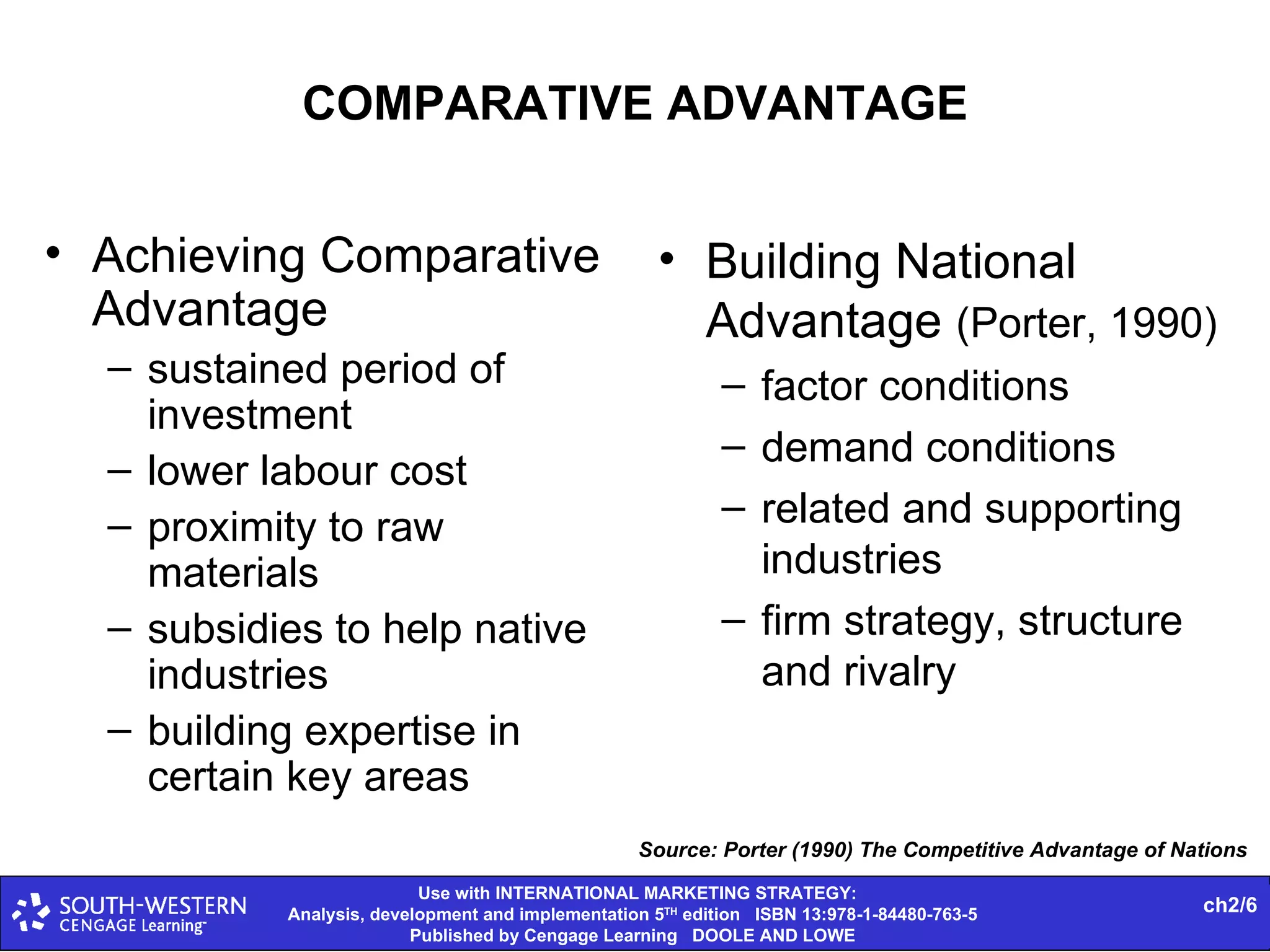
COMPARATIVE ADVANTAGE Achieving Comparative Advantage  sustained period of investment lower labour cost proximity to raw materials subsidies to help native industries building expertise in certain key areas Building National Advantage  (Porter, 1990) factor conditions demand conditions related and supporting industries firm strategy, structure and rivalry Source: Porter (1990) The Competitive Advantage of Nations
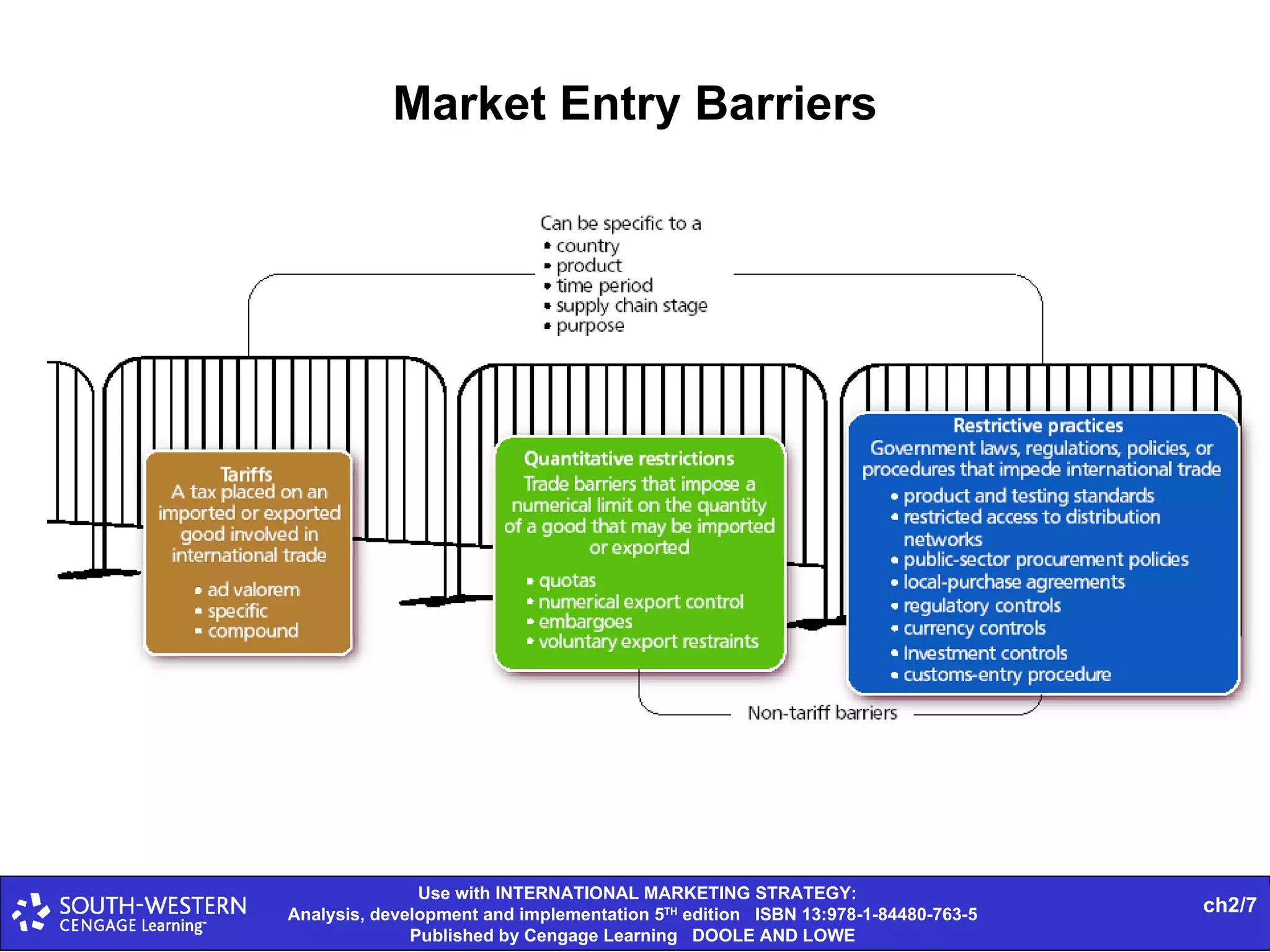
Market Entry Barriers
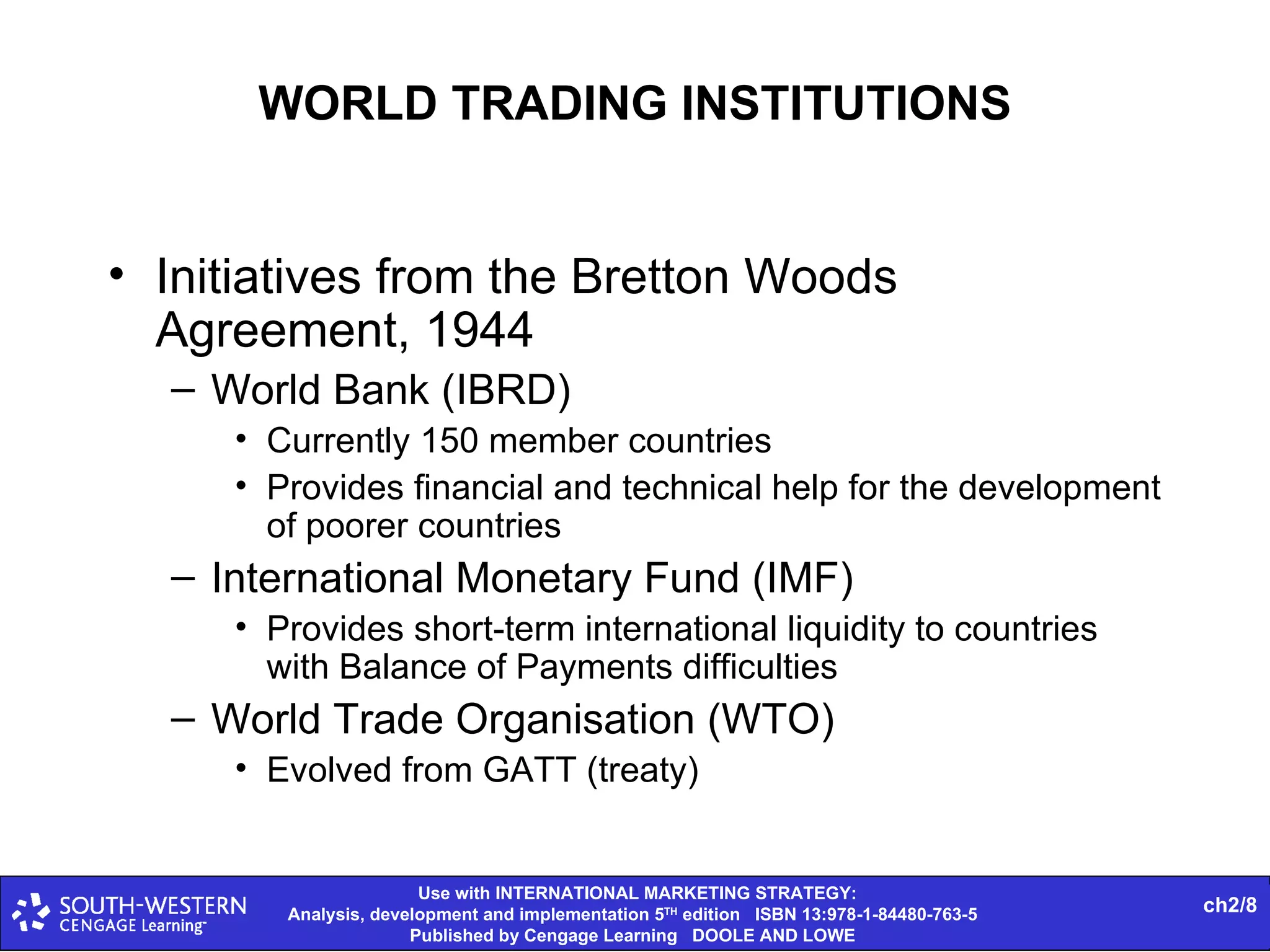
WORLD TRADING INSTITUTIONS Initiatives from the Bretton Woods Agreement, 1944 World Bank (IBRD)  Currently 150 member countries Provides financial and technical help for the development of poorer countries International Monetary Fund (IMF) Provides short-term international liquidity to countries with Balance of Payments difficulties World Trade Organisation (WTO) Evolved from GATT (treaty)
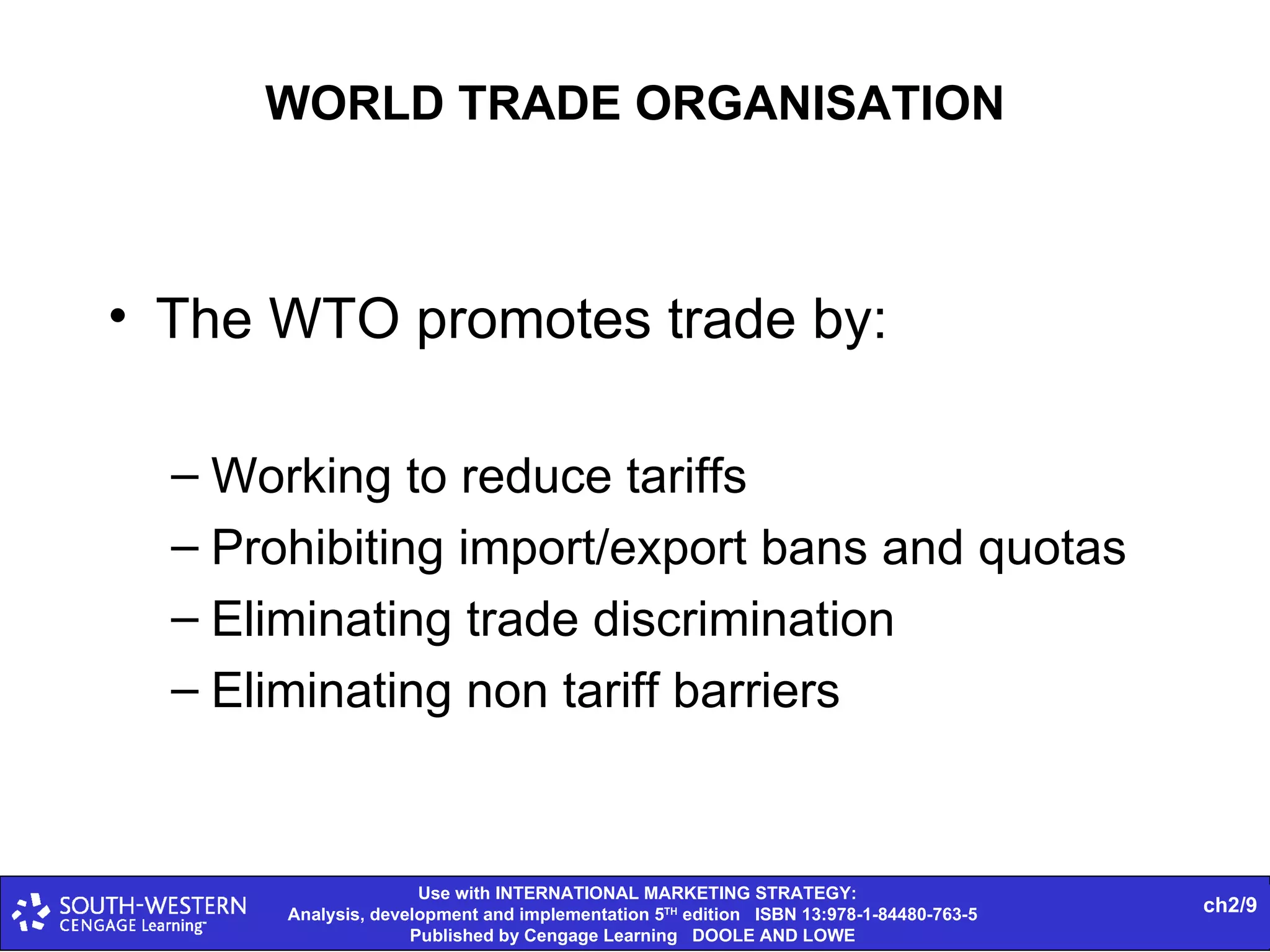
WORLD TRADE ORGANISATION The WTO promotes trade by: Working to reduce tariffs Prohibiting import/export bans and quotas Eliminating trade discrimination Eliminating non tariff barriers
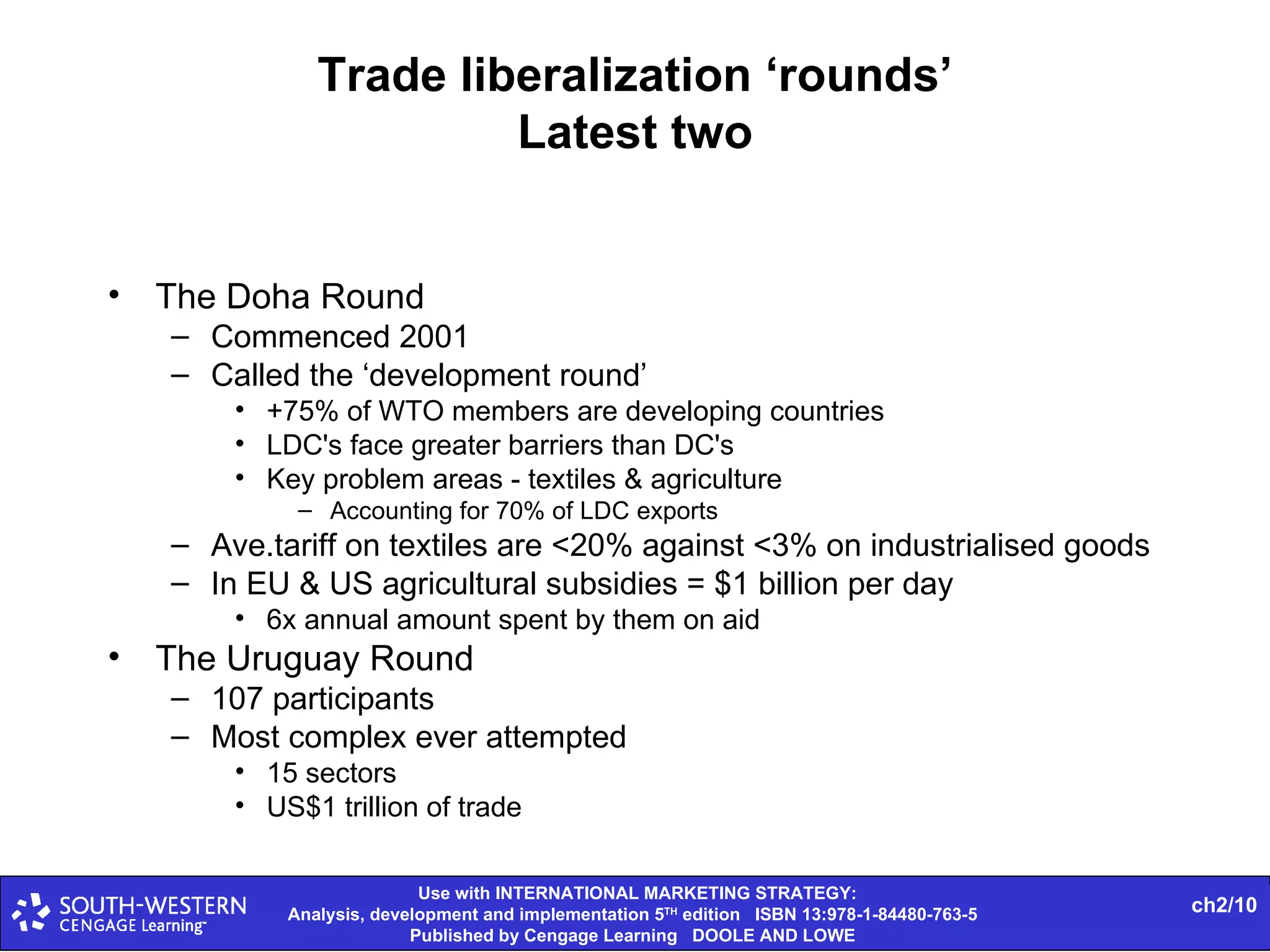
Trade liberalization ‘rounds’ Latest two The Doha Round Commenced 2001 Called the ‘development round’ +75% of WTO members are developing countries LDC's face greater barriers than DC's Key problem areas - textiles & agriculture Accounting for 70% of LDC exports Ave.tariff on textiles are <20% against <3% on industrialised goods In EU & US agricultural subsidies = $1 billion per day 6x annual amount spent by them on aid The Uruguay Round 107 participants Most complex ever attempted 15 sectors US$1 trillion of trade
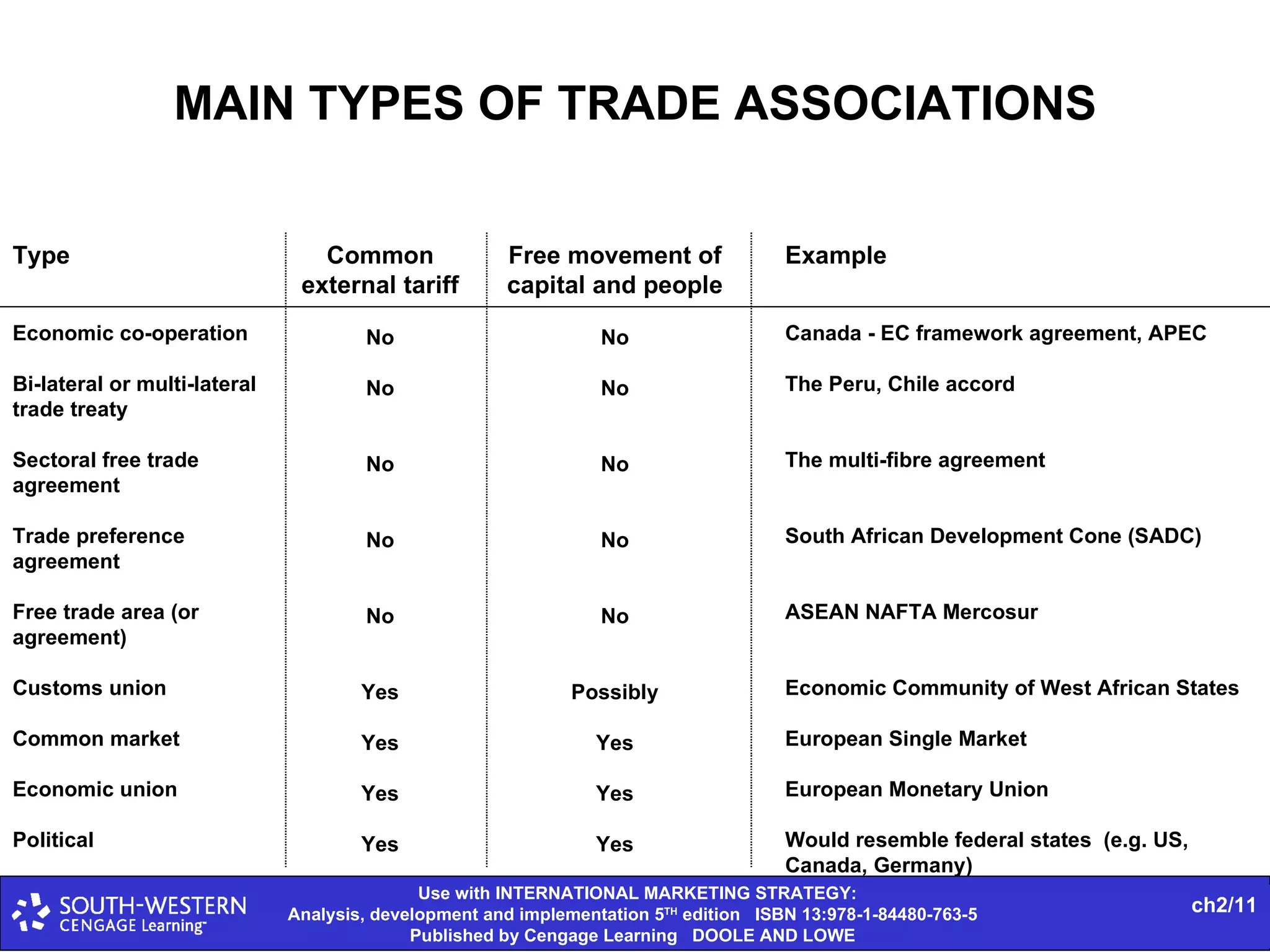
MAIN TYPES OF TRADE ASSOCIATIONS Type Economic co-operation Bi-lateral or multi-lateral trade treaty Sectoral free trade agreement Trade preference agreement Free trade area (or agreement) Customs union Common market Economic union Political Common external tariff No No No No No Yes Yes Yes Yes Free movement of capital and people No No No No No Possibly Yes Yes Yes Example Canada - EC framework agreement, APEC The Peru, Chile accord The multi-fibre agreement South African Development Cone (SADC) ASEAN NAFTA Mercosur Economic Community of West African States European Single Market European Monetary Union Would resemble federal states  (e.g. US, Canada, Germany)
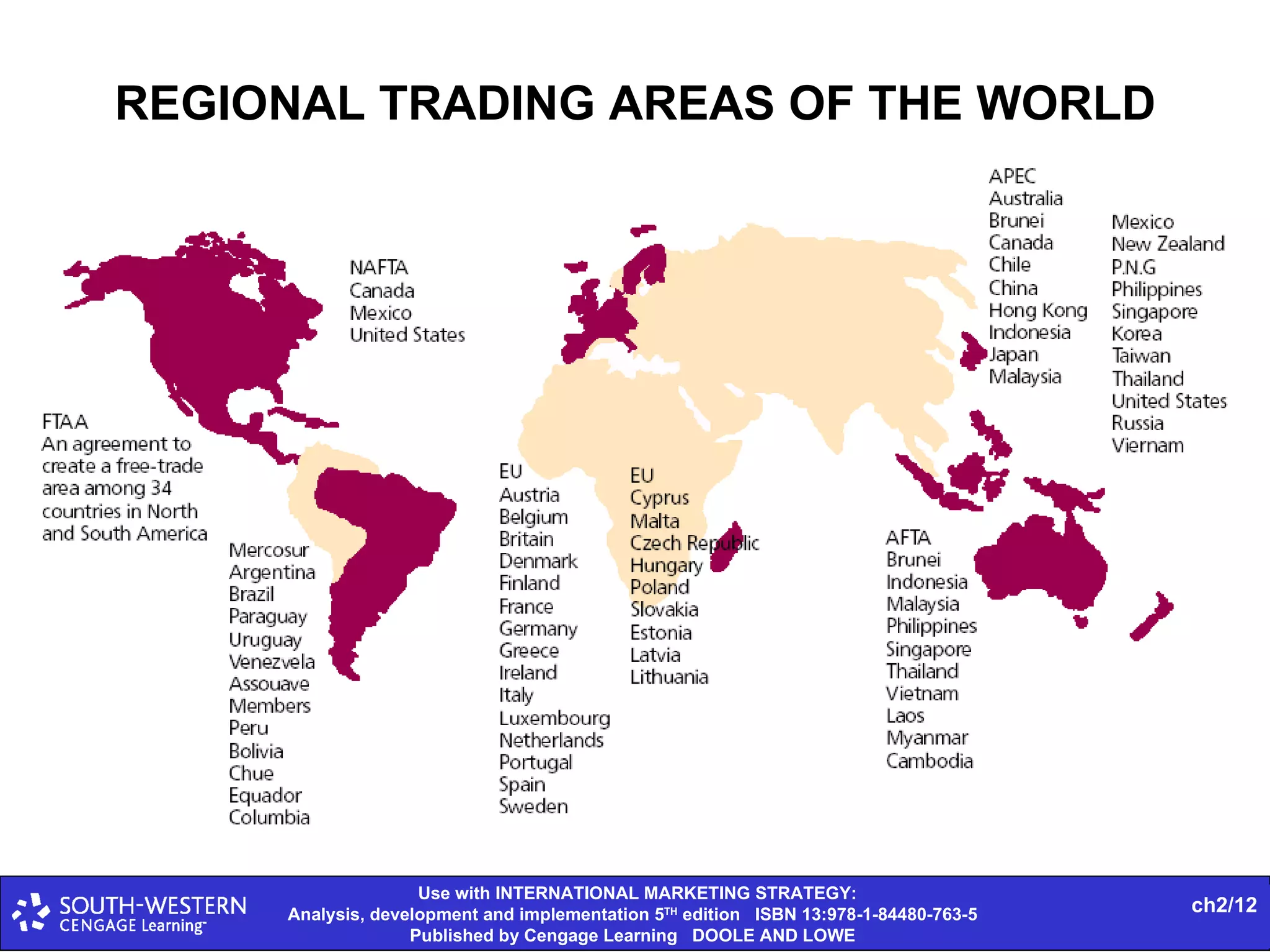
REGIONAL TRADING AREAS OF THE WORLD
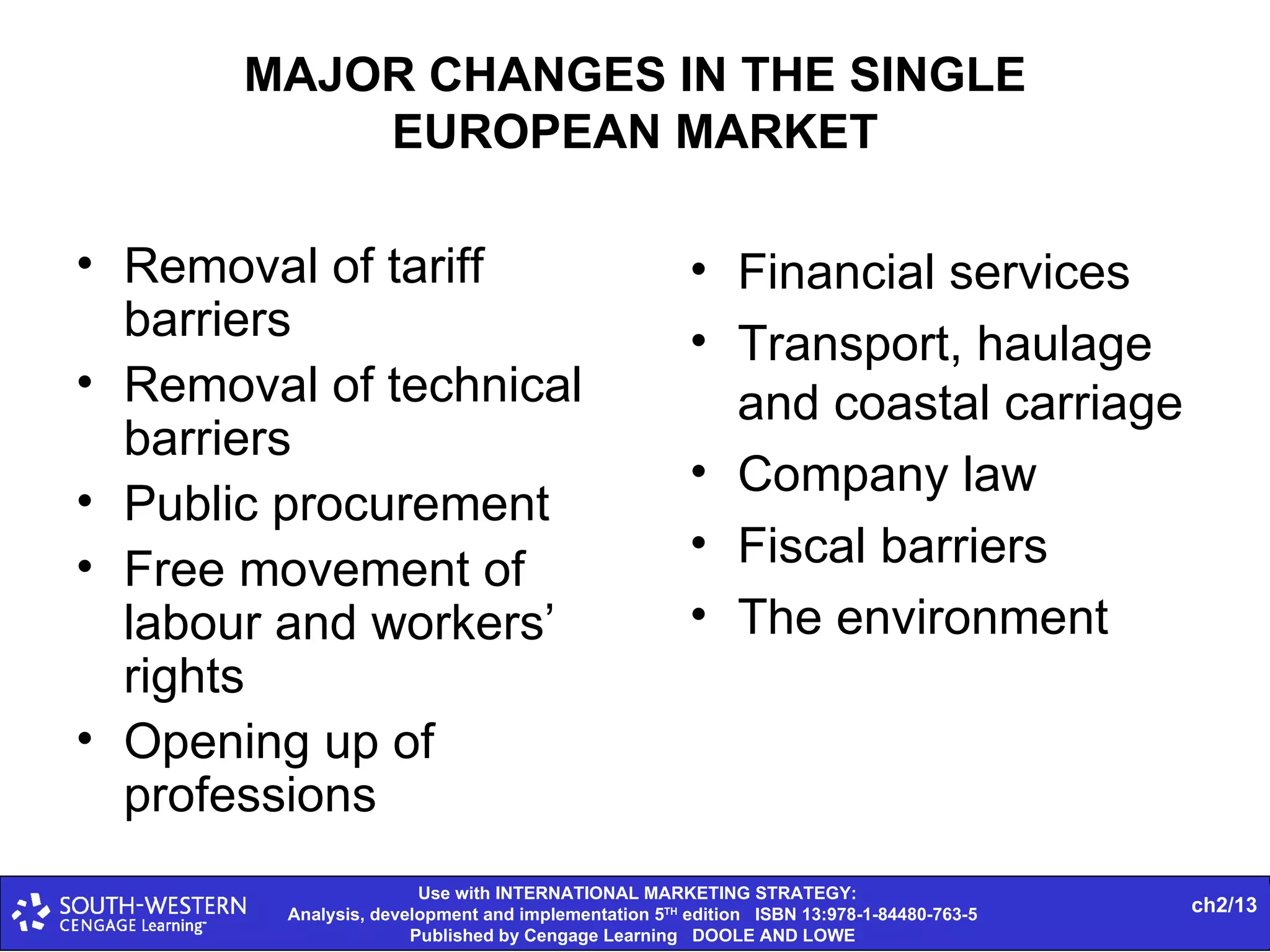
MAJOR CHANGES IN THE SINGLE EUROPEAN MARKET Removal of tariff barriers Removal of technical barriers Public procurement Free movement of labour and workers’ rights Opening up of  professions Financial services Transport, haulage and coastal carriage Company law Fiscal barriers The environment
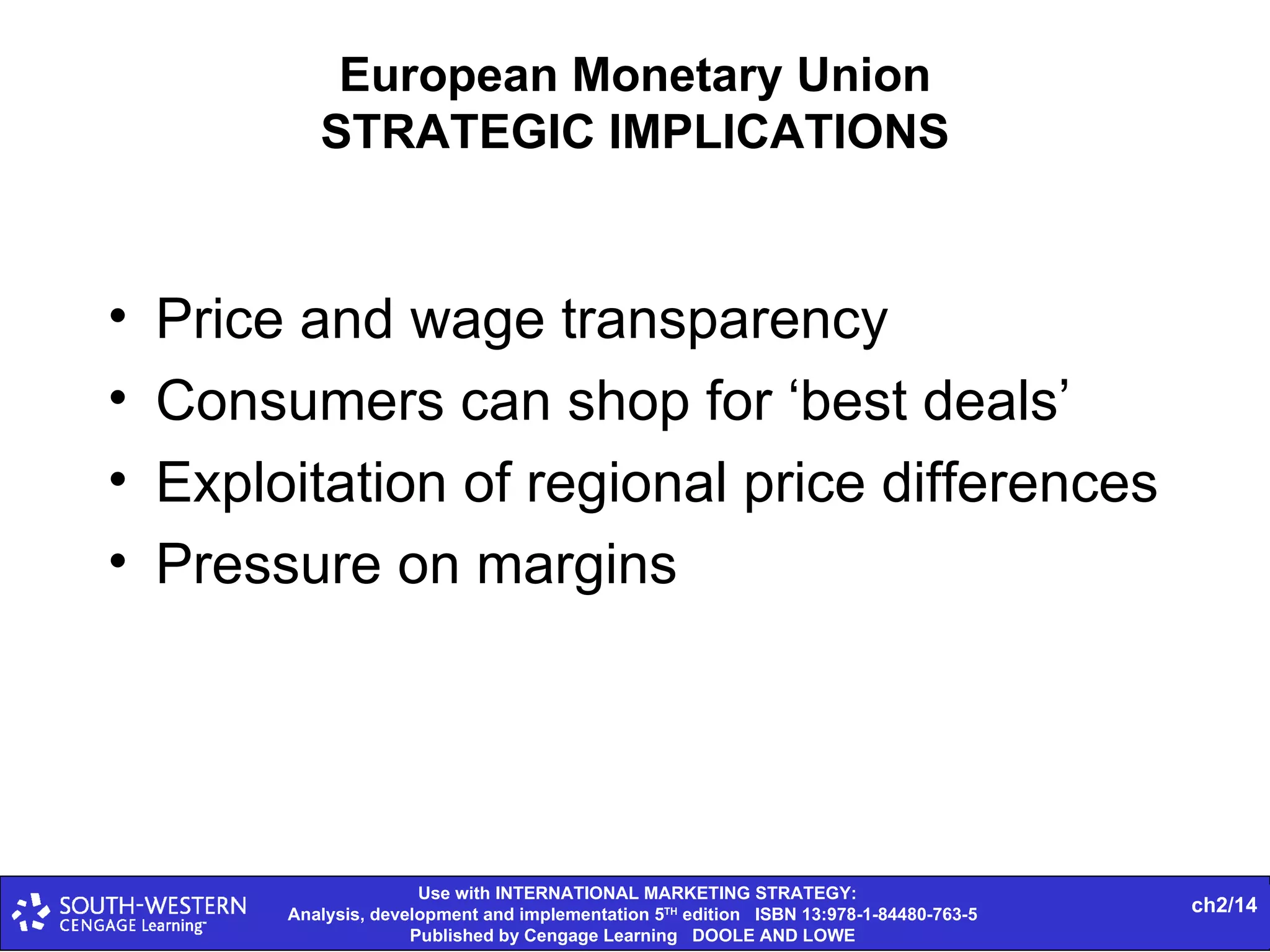
European Monetary Union STRATEGIC IMPLICATIONS Price and wage transparency Consumers can shop for ‘best deals’ Exploitation of regional price differences Pressure on margins
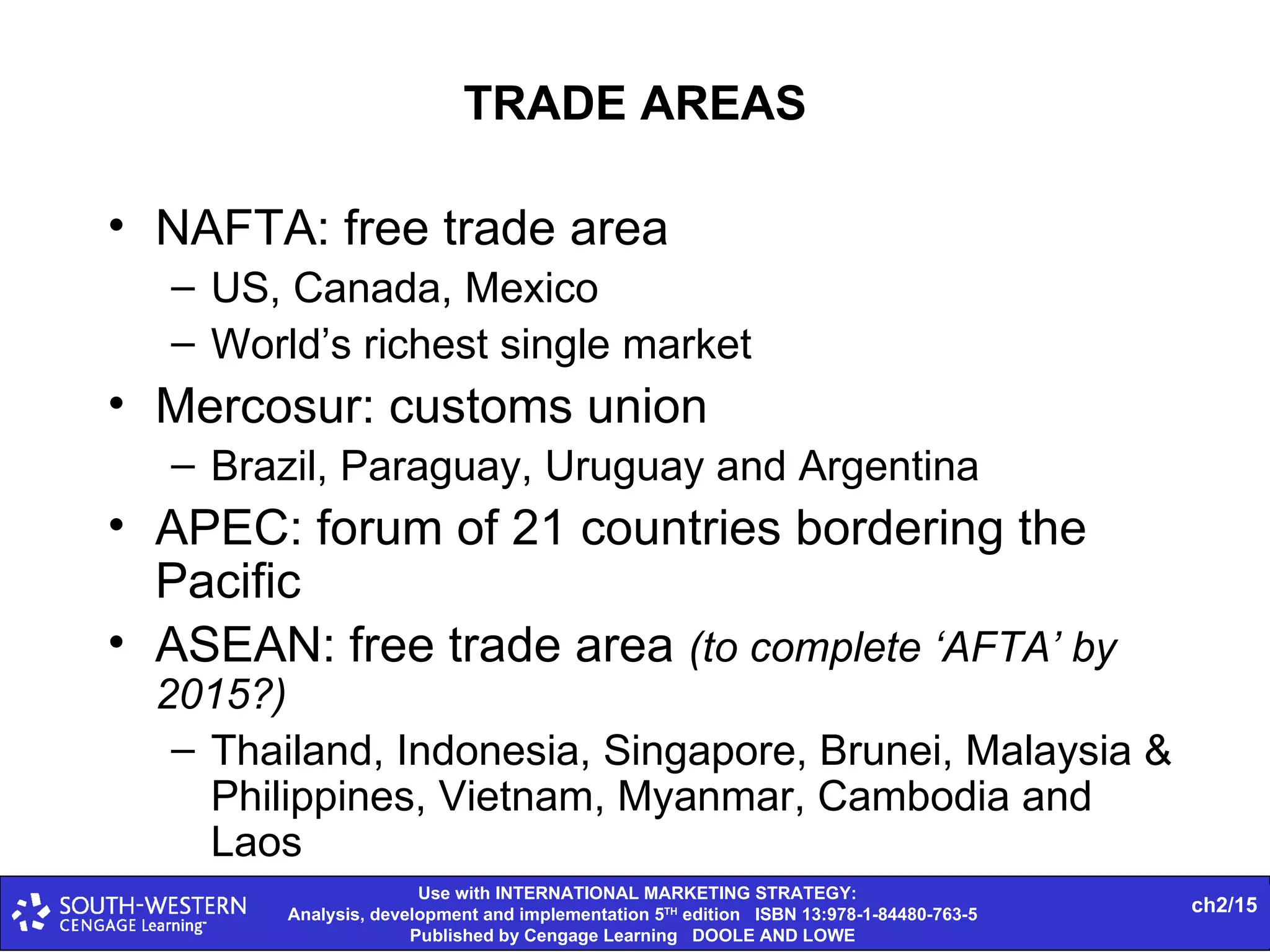
TRADE AREAS NAFTA: free trade area US, Canada, Mexico World’s richest single market Mercosur: customs union Brazil, Paraguay, Uruguay and Argentina APEC: forum of 21 countries bordering the Pacific ASEAN: free trade area  (to complete ‘AFTA’ by 2015?) Thailand, Indonesia, Singapore, Brunei, Malaysia & Philippines, Vietnam, Myanmar, Cambodia and Laos

Ch2

  • 1.
    THE INTERNATIONAL TRADINGENVIRONMENT Session 2
  • 2.
  • 3.
    PERCENTAGE OF THETOTAL OF WORLD EXPORTS IN MERCHANDISE (2007) Country Germany United States China Japan France Netherlands Britain Italy Canada Belgium Percentage % 9.3 8.7 7.3 3.4 4.4 3.9 3.7 3.5 3.4 3.9 Source: WTO.org
  • 4.
    % Changes OnPrevious Year: CONSUMER PRICES AND REAL GDP/GNP 2007 Country Argentina Australia Belgium Brazil Canada China Czech Rep France Germany Hong Kong India Italy Japan Malaysia % inflation rate 9.8 2.8 1.8 3.7 2.0 2.1 3.3 1.4 1.4 2.5 6.1 1.9 0.4 3.4 % growth rate 6.3 2.9 2.1 3.3 2.4 10.4 4.8 2.0 1.6 5.0 9.2 1.2 1.9 5.2 Source: The Economist (2007) Country Mexico Netherlands Poland Russia Singapore South Africa South Korea Spain Taiwan Thailand Turkey UK USA Venezuela EU % inflation rate 3.8 1.7 2.5 9.2 1.0 5.6 2.3 2.7 1.5 3.6 8.6 2.2 2.2 17.0 2.0 % growth rate 3.2 2.3 4.7 6.5 5.0 4.2 4.2 3.0 3.9 4.3 4.0 2.4 2.2 5.5 2.0
  • 5.
    Trade Balance inMerchandise Trade 2007 Source: World Bank: World Development Indicators (2007) US $ Billion Argentina Australia Brazil China Germany Hong Kong Japan Mexico Malaysia +12.4 -9.4 +46.1 +177.5 +203.0 -17.9 +79.6 -5.8 +28.6 Netherlands Poland Russia Spain Taiwan Turkey UK USA EU +39.4 -4.1 +140.8 -112.8 +21.3 -53.2 -152.2 -837.2 -15.7
  • 6.
    COMPARATIVE ADVANTAGE AchievingComparative Advantage sustained period of investment lower labour cost proximity to raw materials subsidies to help native industries building expertise in certain key areas Building National Advantage (Porter, 1990) factor conditions demand conditions related and supporting industries firm strategy, structure and rivalry Source: Porter (1990) The Competitive Advantage of Nations
  • 7.
  • 8.
    WORLD TRADING INSTITUTIONSInitiatives from the Bretton Woods Agreement, 1944 World Bank (IBRD) Currently 150 member countries Provides financial and technical help for the development of poorer countries International Monetary Fund (IMF) Provides short-term international liquidity to countries with Balance of Payments difficulties World Trade Organisation (WTO) Evolved from GATT (treaty)
  • 9.
    WORLD TRADE ORGANISATIONThe WTO promotes trade by: Working to reduce tariffs Prohibiting import/export bans and quotas Eliminating trade discrimination Eliminating non tariff barriers
  • 10.
    Trade liberalization ‘rounds’Latest two The Doha Round Commenced 2001 Called the ‘development round’ +75% of WTO members are developing countries LDC's face greater barriers than DC's Key problem areas - textiles & agriculture Accounting for 70% of LDC exports Ave.tariff on textiles are <20% against <3% on industrialised goods In EU & US agricultural subsidies = $1 billion per day 6x annual amount spent by them on aid The Uruguay Round 107 participants Most complex ever attempted 15 sectors US$1 trillion of trade
  • 11.
    MAIN TYPES OFTRADE ASSOCIATIONS Type Economic co-operation Bi-lateral or multi-lateral trade treaty Sectoral free trade agreement Trade preference agreement Free trade area (or agreement) Customs union Common market Economic union Political Common external tariff No No No No No Yes Yes Yes Yes Free movement of capital and people No No No No No Possibly Yes Yes Yes Example Canada - EC framework agreement, APEC The Peru, Chile accord The multi-fibre agreement South African Development Cone (SADC) ASEAN NAFTA Mercosur Economic Community of West African States European Single Market European Monetary Union Would resemble federal states (e.g. US, Canada, Germany)
  • 12.
  • 13.
    MAJOR CHANGES INTHE SINGLE EUROPEAN MARKET Removal of tariff barriers Removal of technical barriers Public procurement Free movement of labour and workers’ rights Opening up of professions Financial services Transport, haulage and coastal carriage Company law Fiscal barriers The environment
  • 14.
    European Monetary UnionSTRATEGIC IMPLICATIONS Price and wage transparency Consumers can shop for ‘best deals’ Exploitation of regional price differences Pressure on margins
  • 15.
    TRADE AREAS NAFTA:free trade area US, Canada, Mexico World’s richest single market Mercosur: customs union Brazil, Paraguay, Uruguay and Argentina APEC: forum of 21 countries bordering the Pacific ASEAN: free trade area (to complete ‘AFTA’ by 2015?) Thailand, Indonesia, Singapore, Brunei, Malaysia & Philippines, Vietnam, Myanmar, Cambodia and Laos