INTERNATIONAL COMMUNICATIONS Session 9
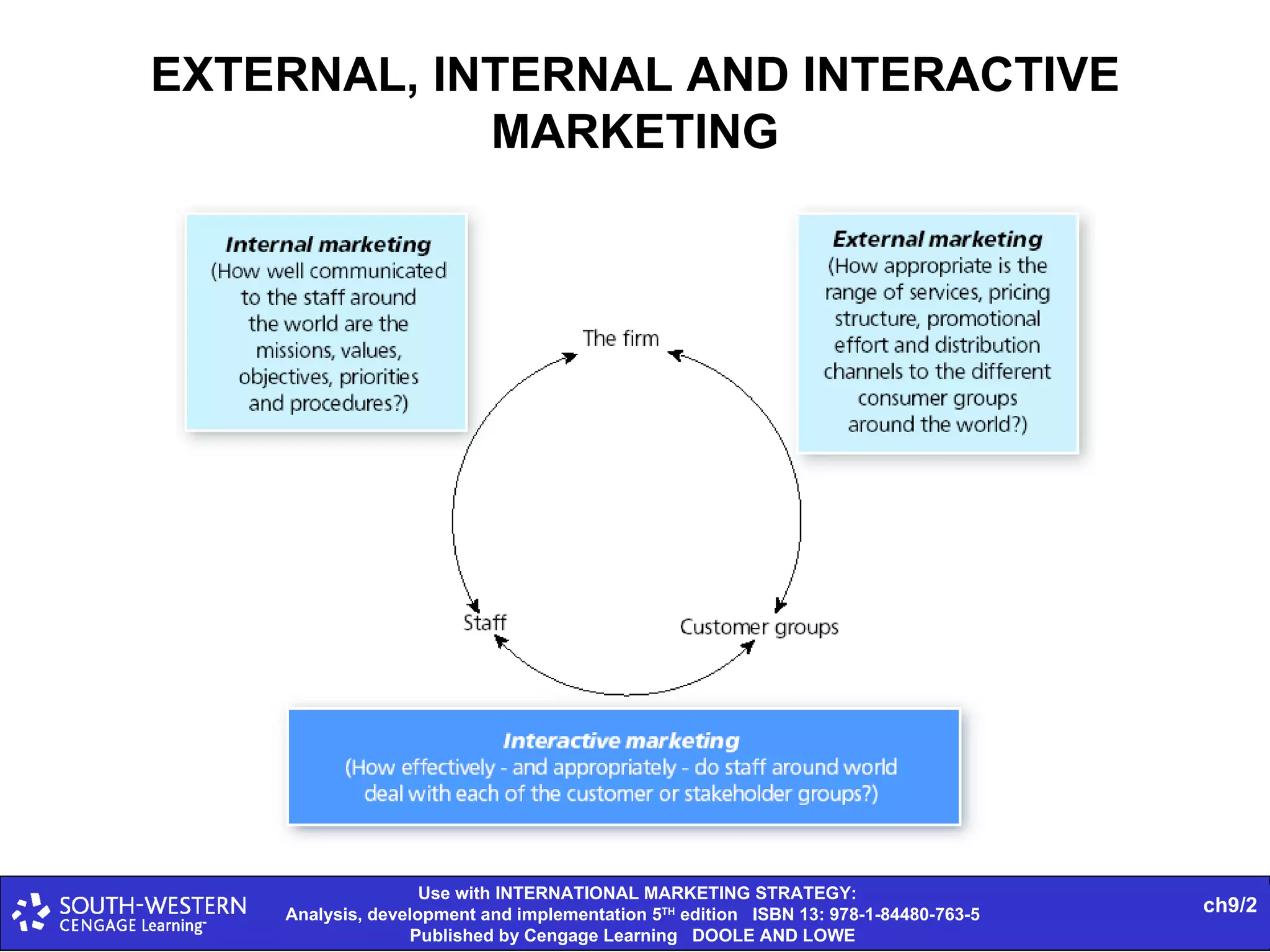
EXTERNAL, INTERNAL AND INTERACTIVE MARKETING
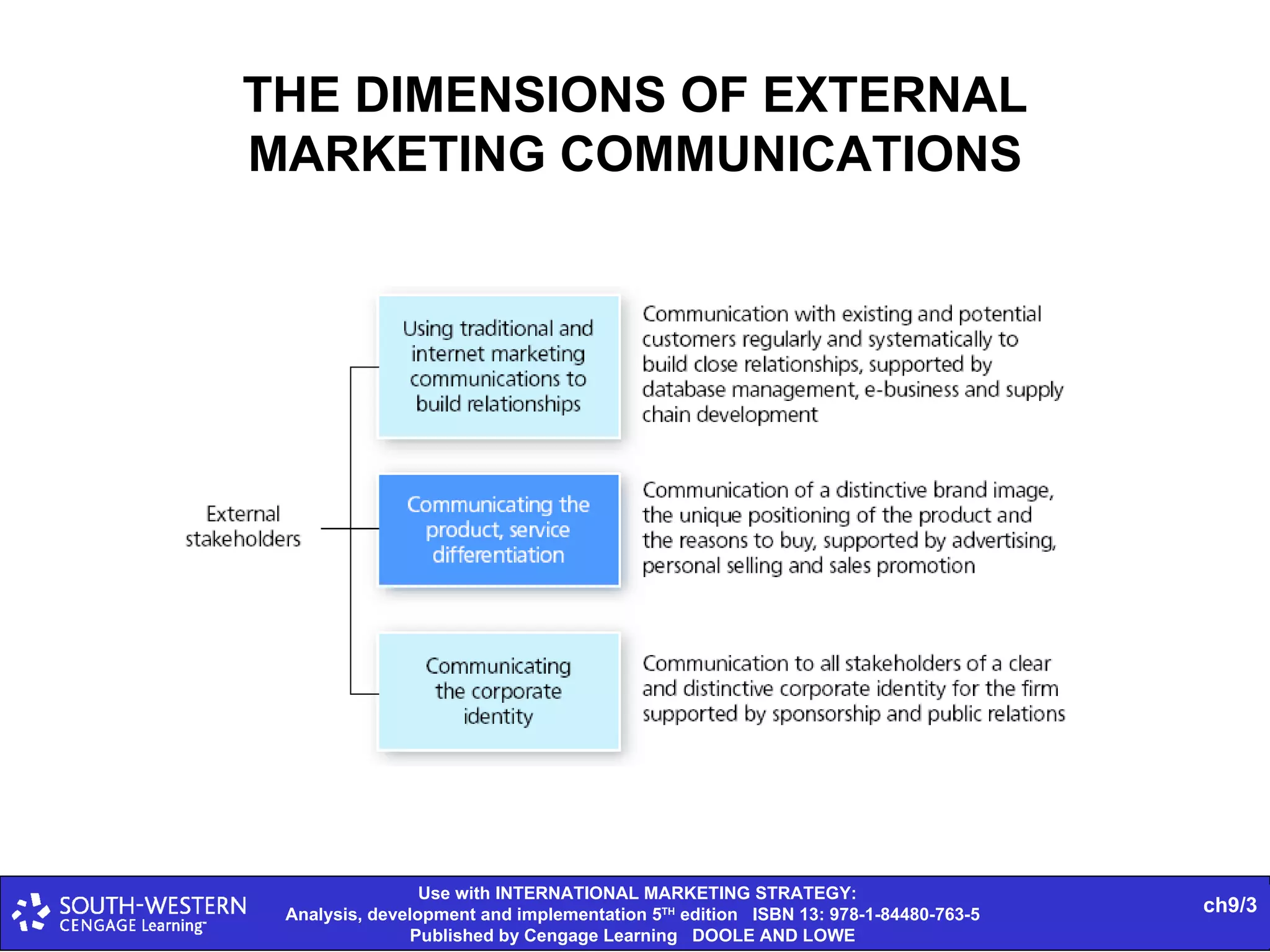
THE DIMENSIONS OF EXTERNAL MARKETING COMMUNICATIONS
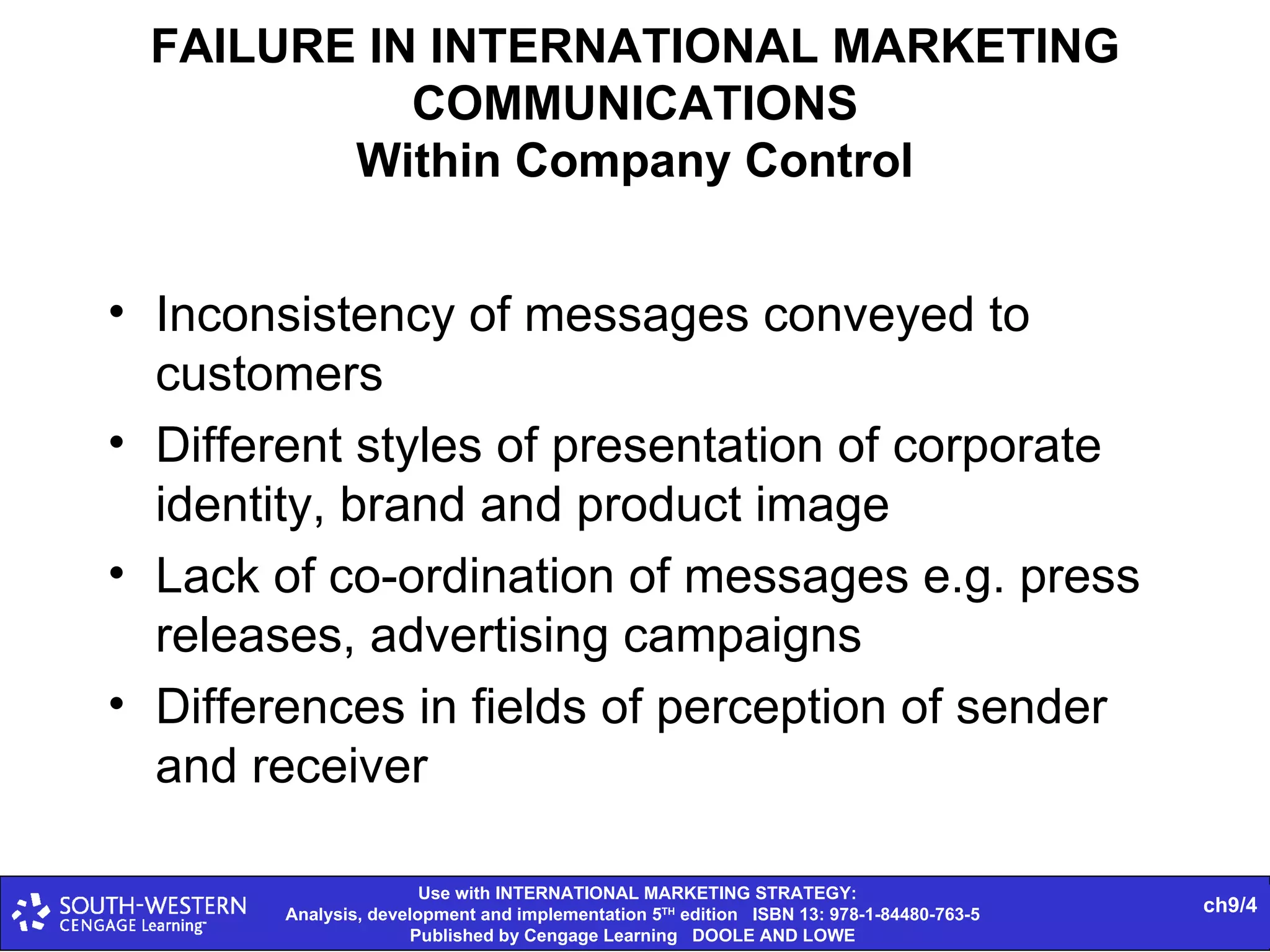
FAILURE IN INTERNATIONAL MARKETING COMMUNICATIONS Within Company Control Inconsistency of messages conveyed to customers Different styles of presentation of corporate identity, brand and product image Lack of co-ordination of messages e.g. press releases, advertising campaigns Differences in fields of perception of sender and receiver
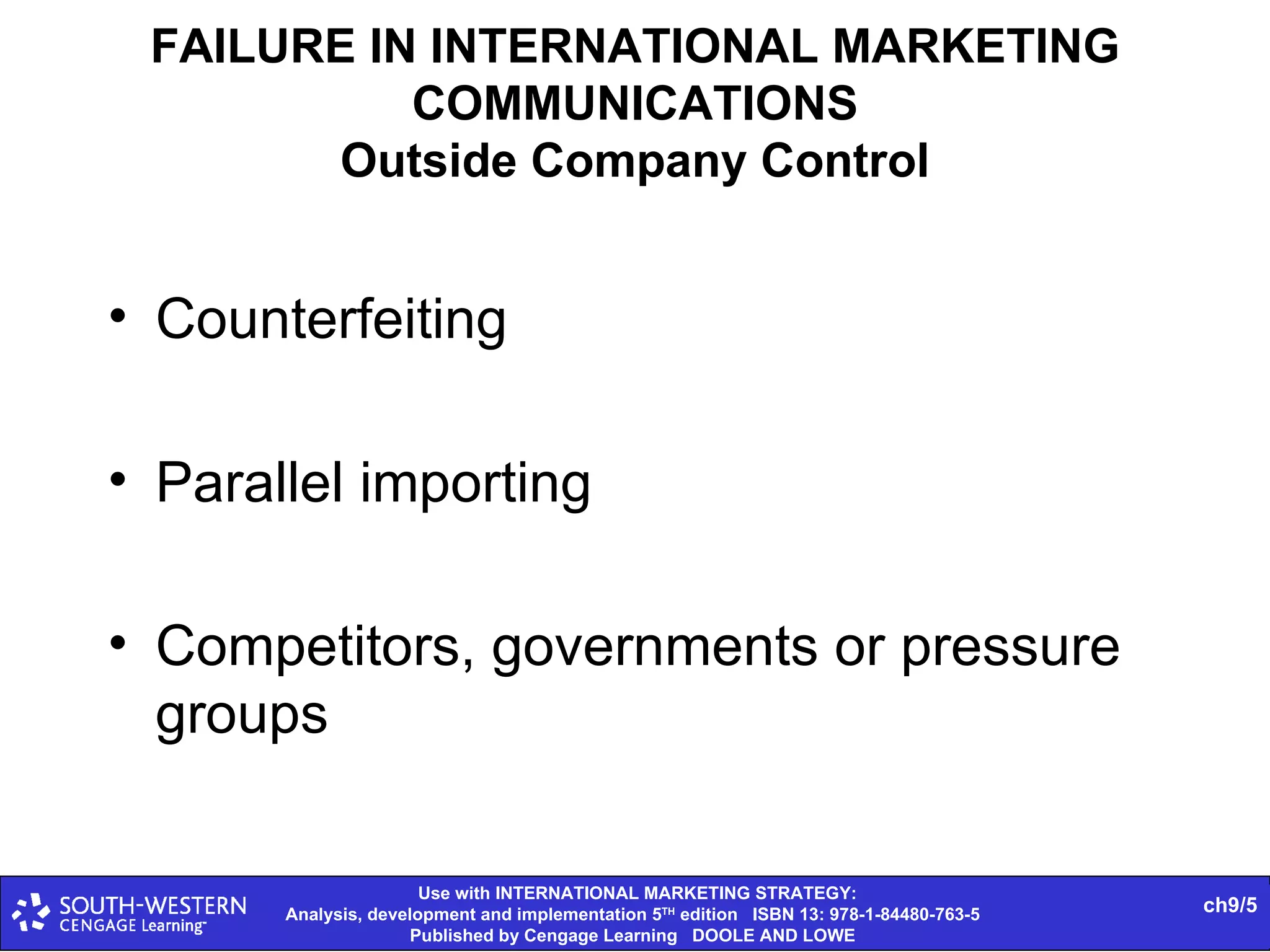
FAILURE IN INTERNATIONAL MARKETING COMMUNICATIONS Outside Company Control Counterfeiting Parallel importing Competitors, governments or pressure groups
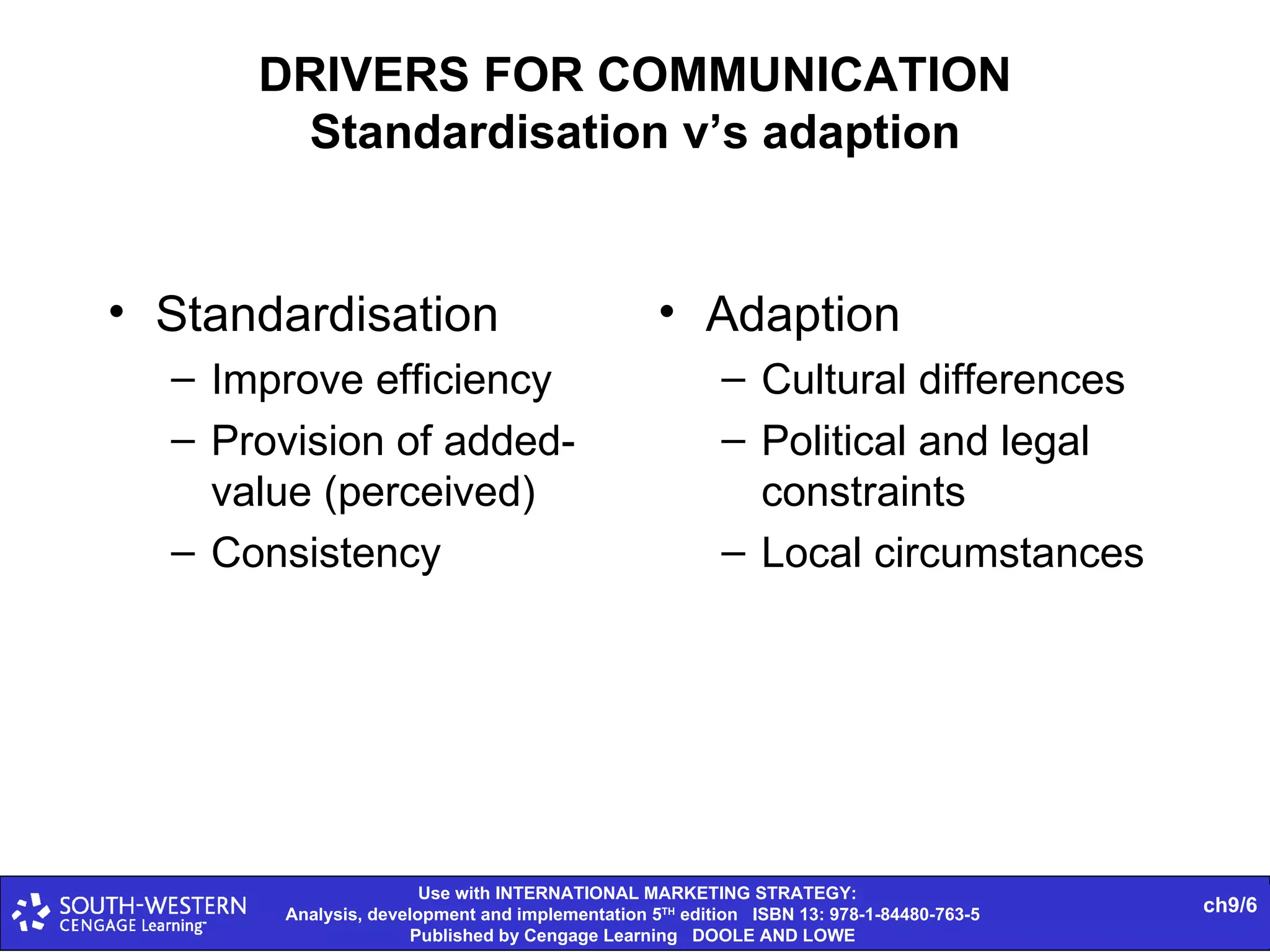
DRIVERS FOR COMMUNICATION Standardisation v’s adaption Standardisation Improve efficiency Provision of added-value (perceived) Consistency Adaption Cultural differences Political and legal constraints Local circumstances
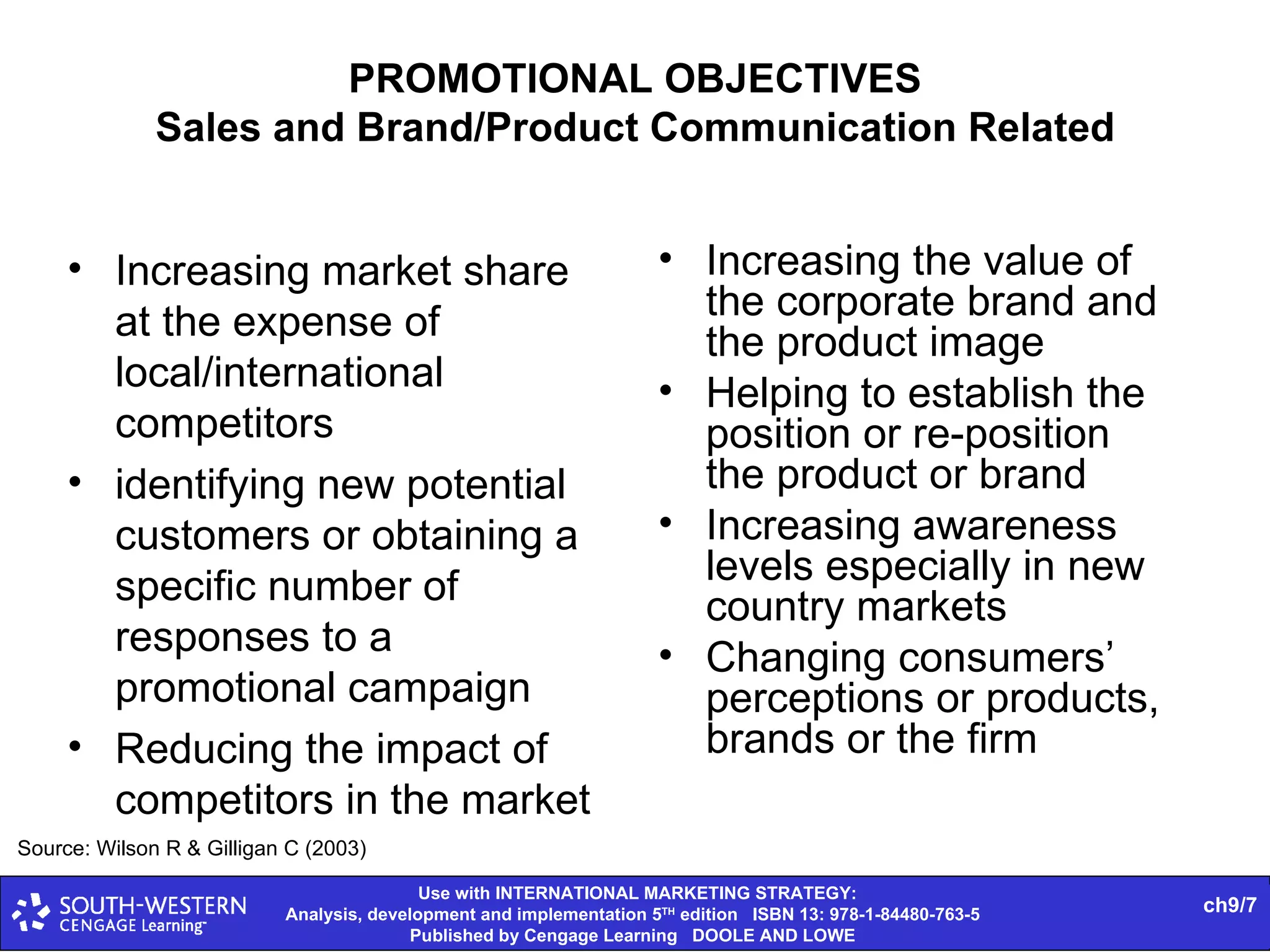
PROMOTIONAL OBJECTIVES Sales and Brand/Product Communication Related Increasing market share at the expense of local/international competitors identifying new potential customers or obtaining a specific number of responses to a promotional campaign Reducing the impact of competitors in the market Increasing the value of the corporate brand and the product image Helping to establish the position or re-position the product or brand Increasing awareness levels especially in new country markets Changing consumers’ perceptions or products, brands or the firm Source: Wilson R & Gilligan C (2003)
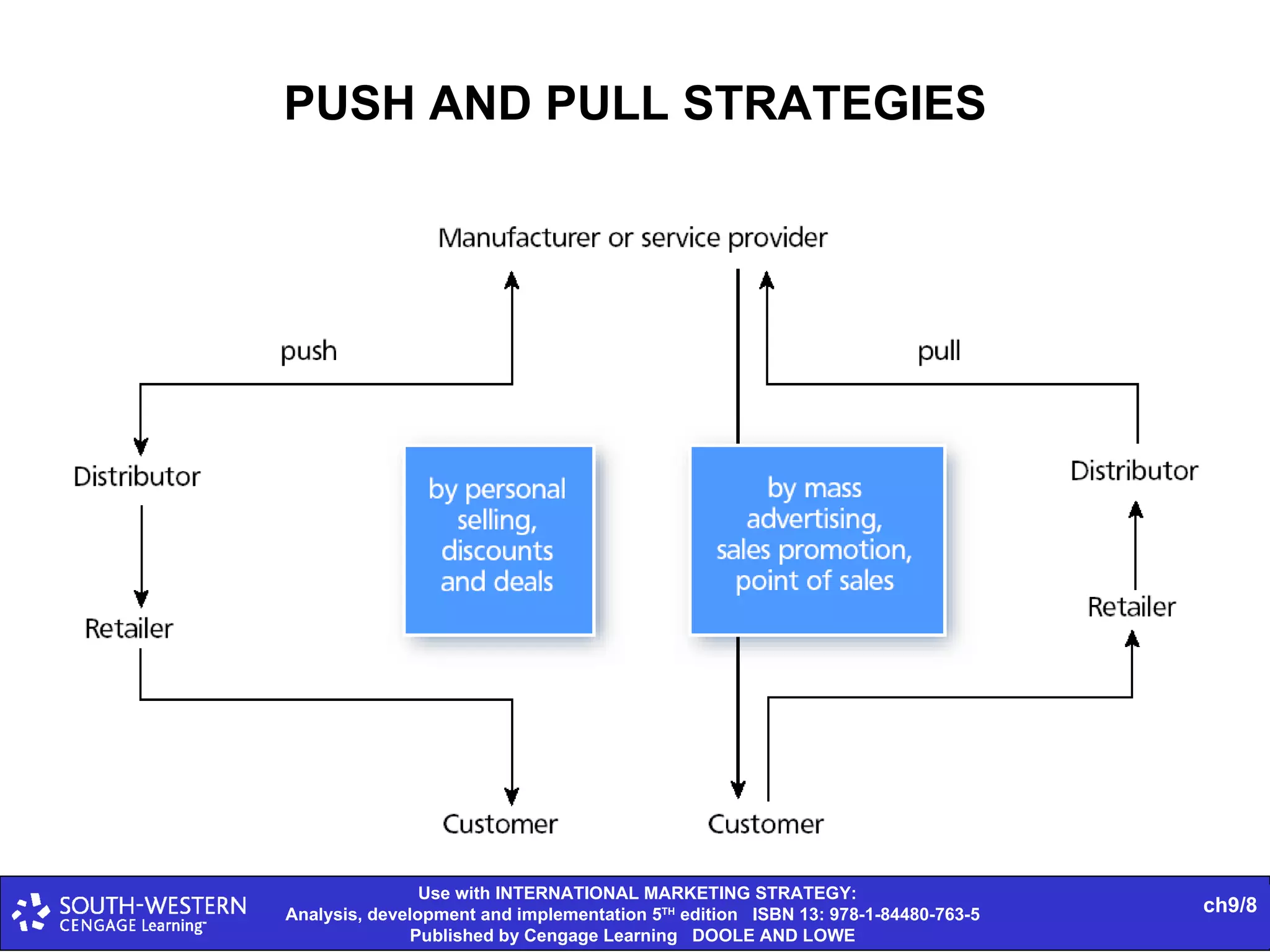
PUSH AND PULL STRATEGIES
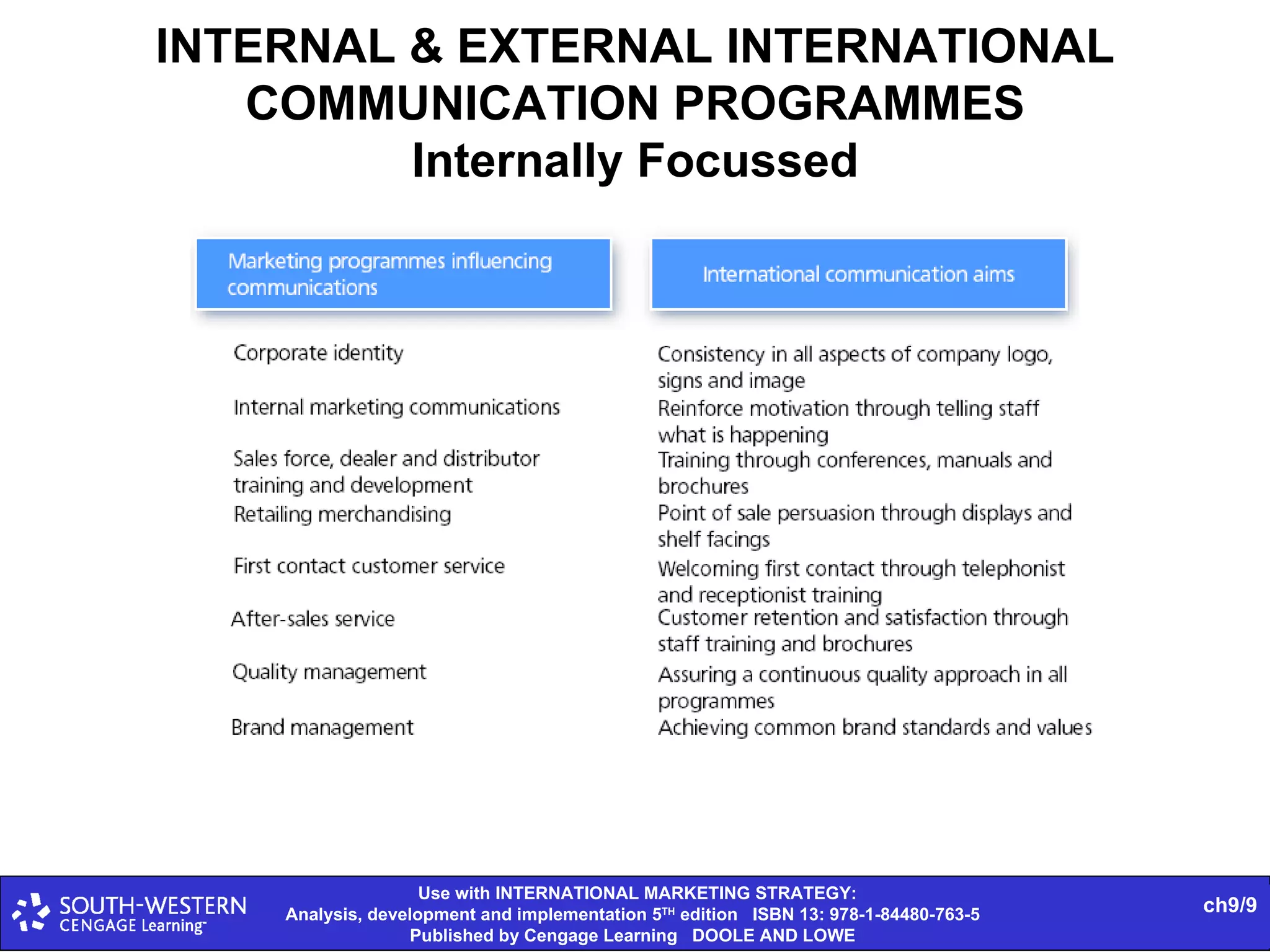
INTERNAL & EXTERNAL INTERNATIONAL COMMUNICATION PROGRAMMES Internally Focussed
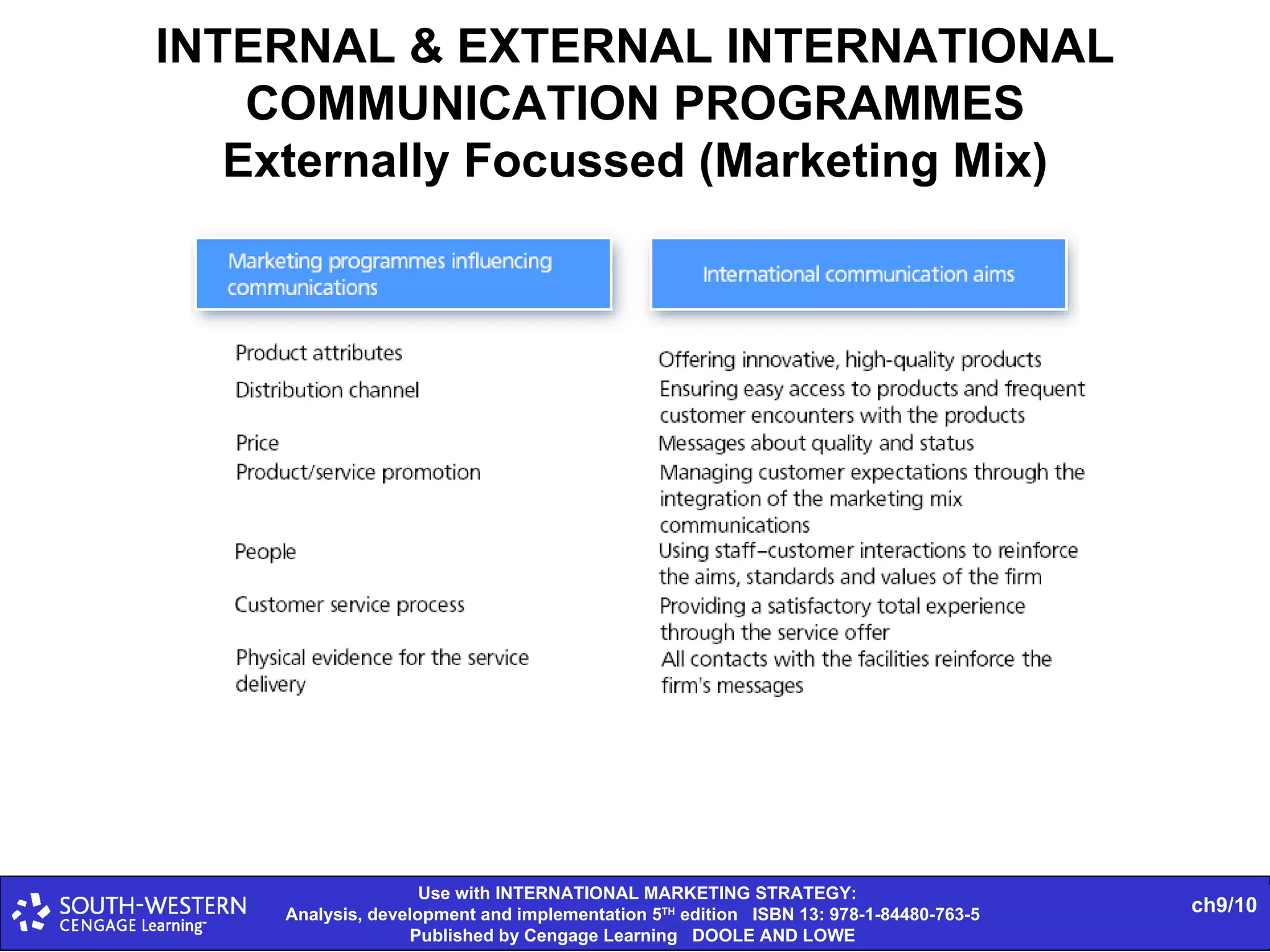
INTERNAL & EXTERNAL INTERNATIONAL COMMUNICATION PROGRAMMES Externally Focussed (Marketing Mix)
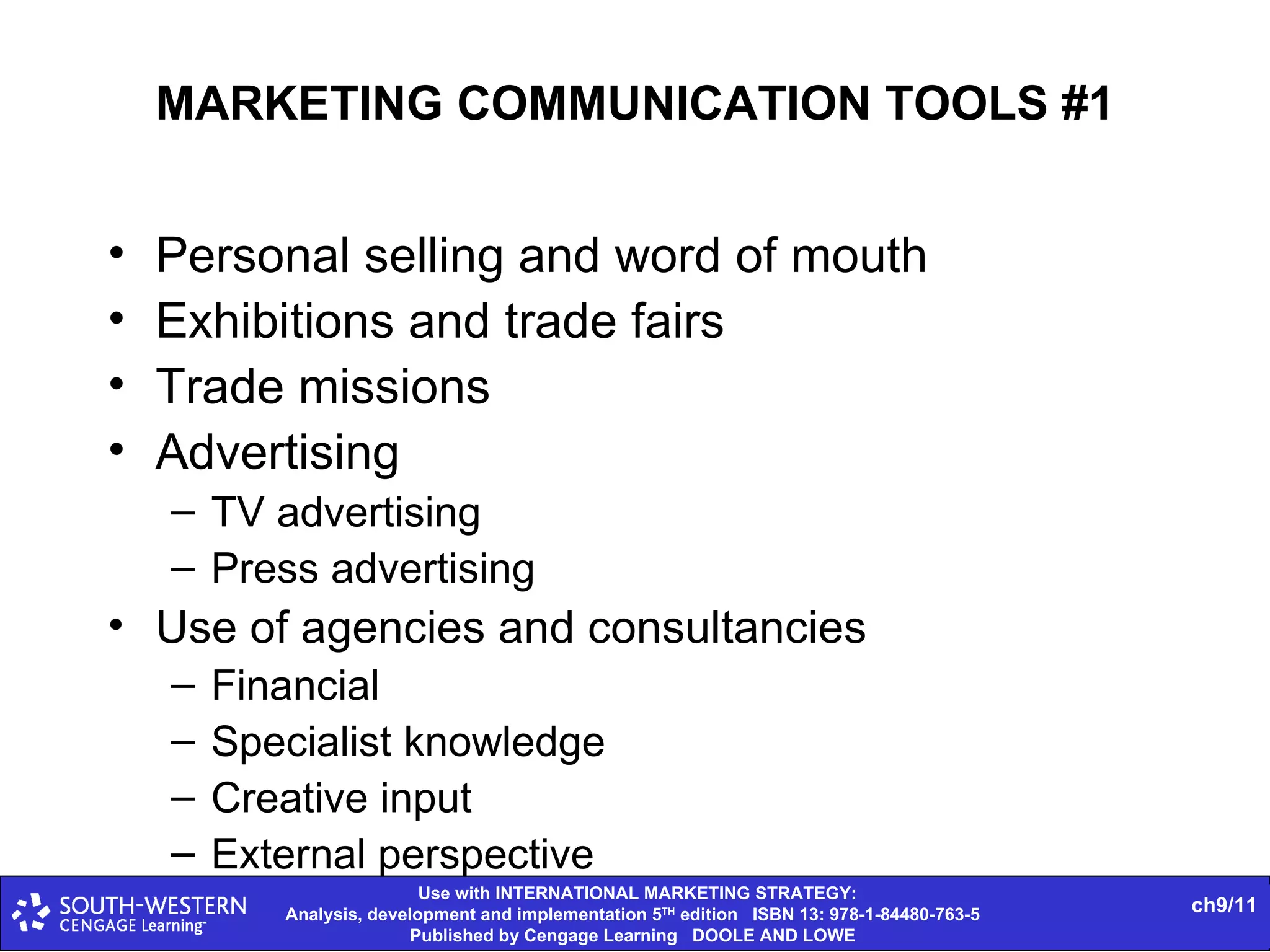
MARKETING COMMUNICATION TOOLS #1 Personal selling and word of mouth Exhibitions and trade fairs Trade missions Advertising TV advertising Press advertising Use of agencies and consultancies Financial Specialist knowledge Creative input External perspective
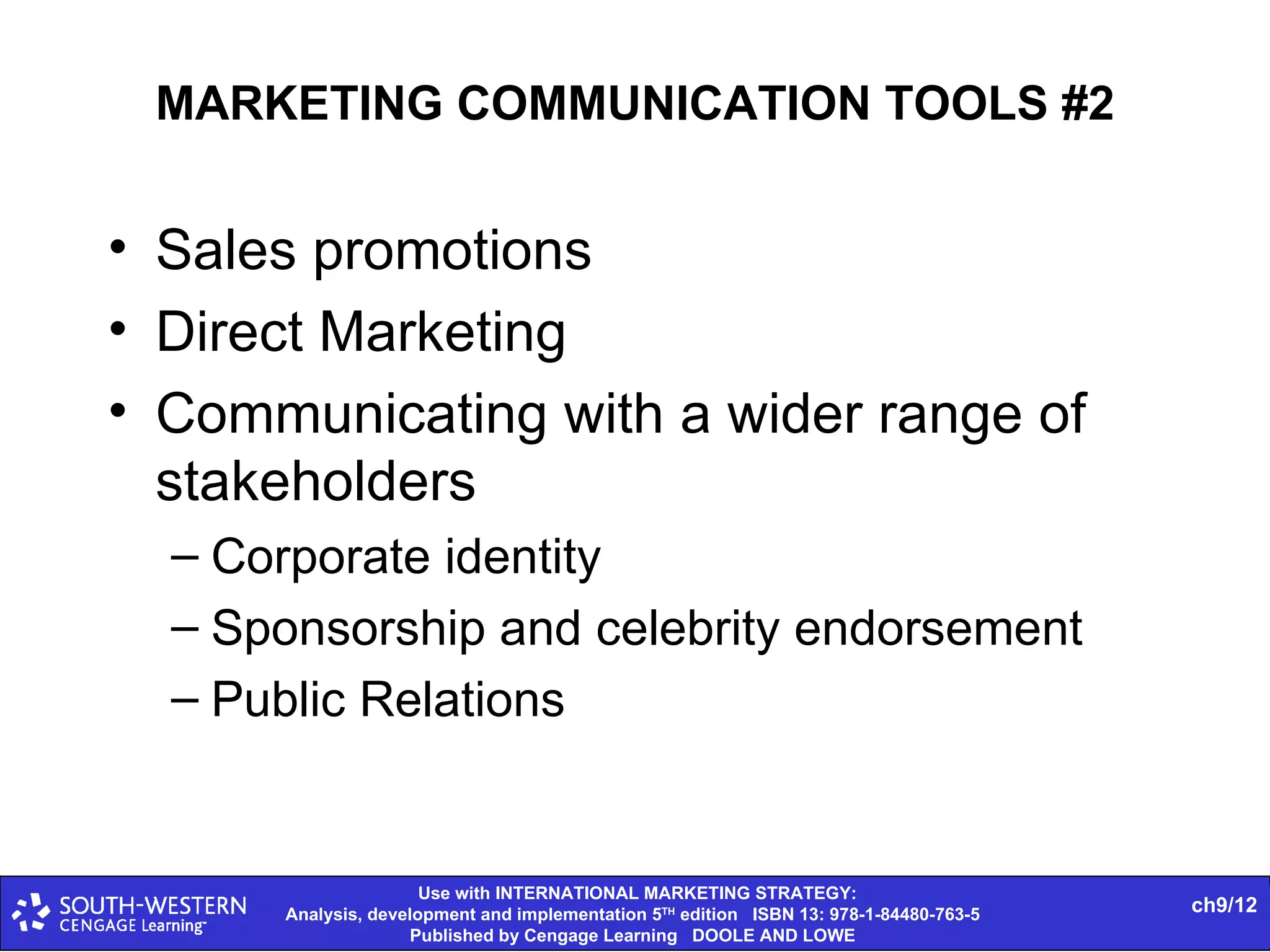
MARKETING COMMUNICATION TOOLS #2 Sales promotions Direct Marketing Communicating with a wider range of stakeholders Corporate identity Sponsorship and celebrity endorsement Public Relations
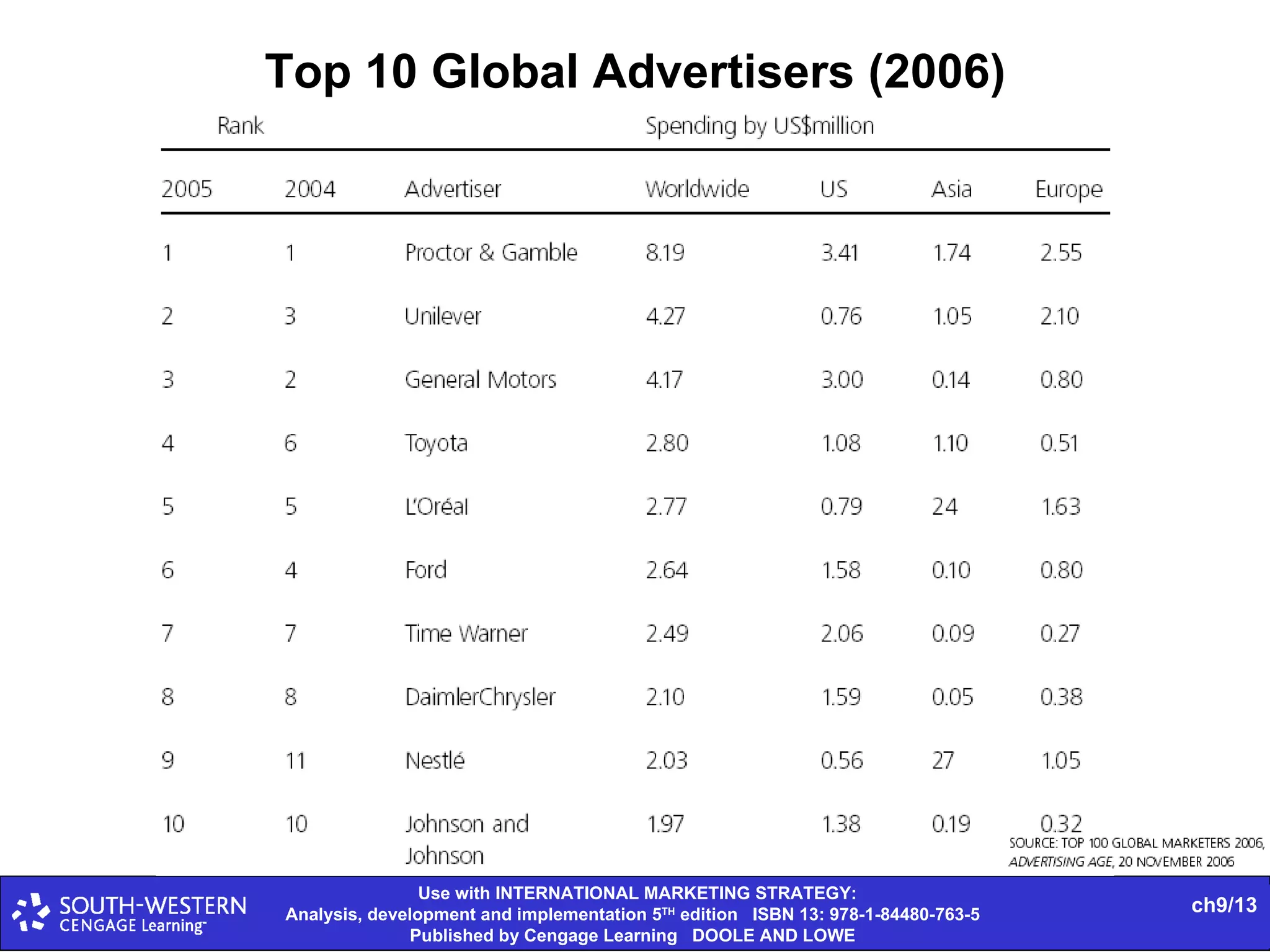
Top 10 Global Advertisers (2006)
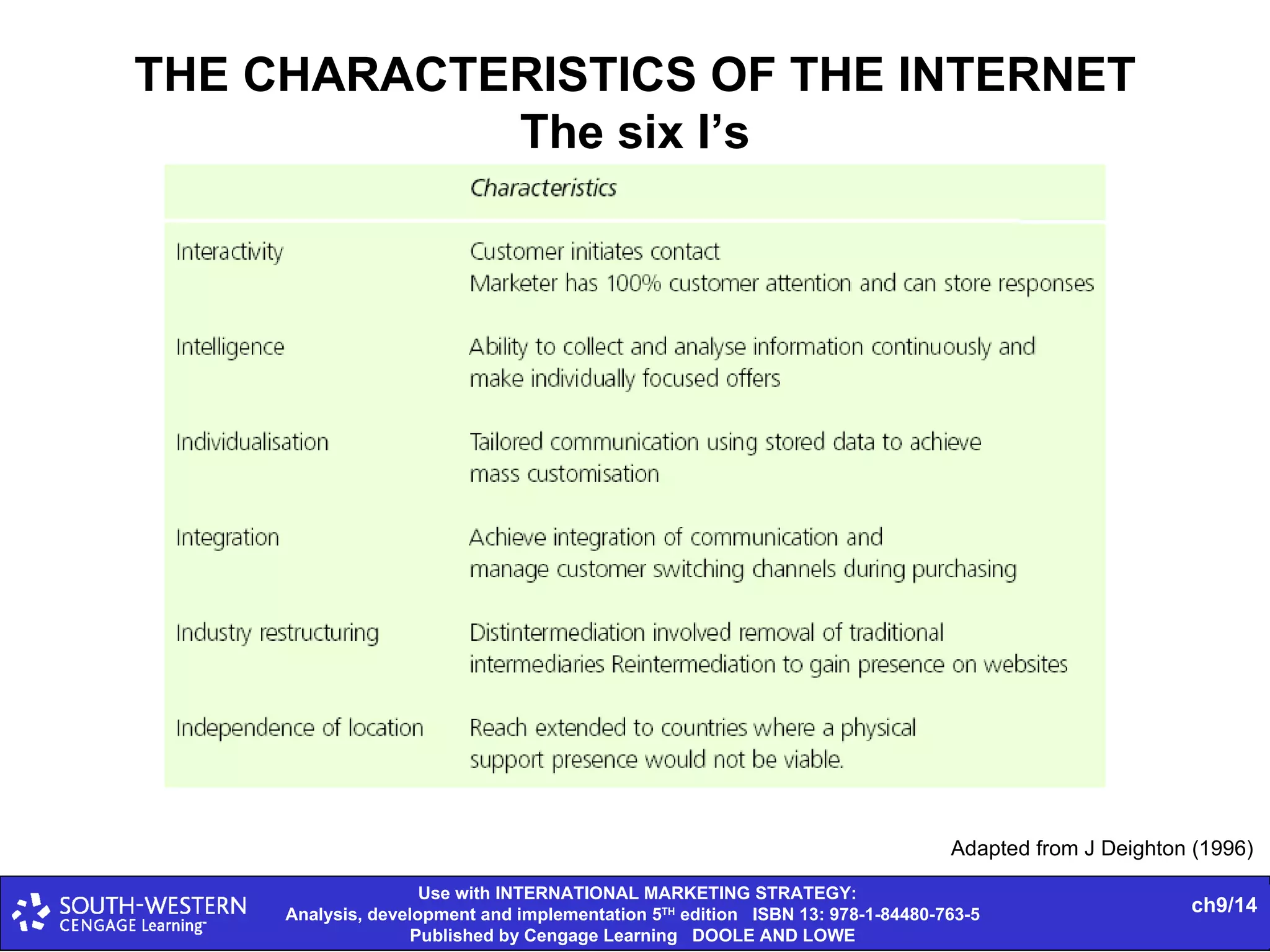
THE CHARACTERISTICS OF THE INTERNET The six I’s Adapted from J Deighton (1996)
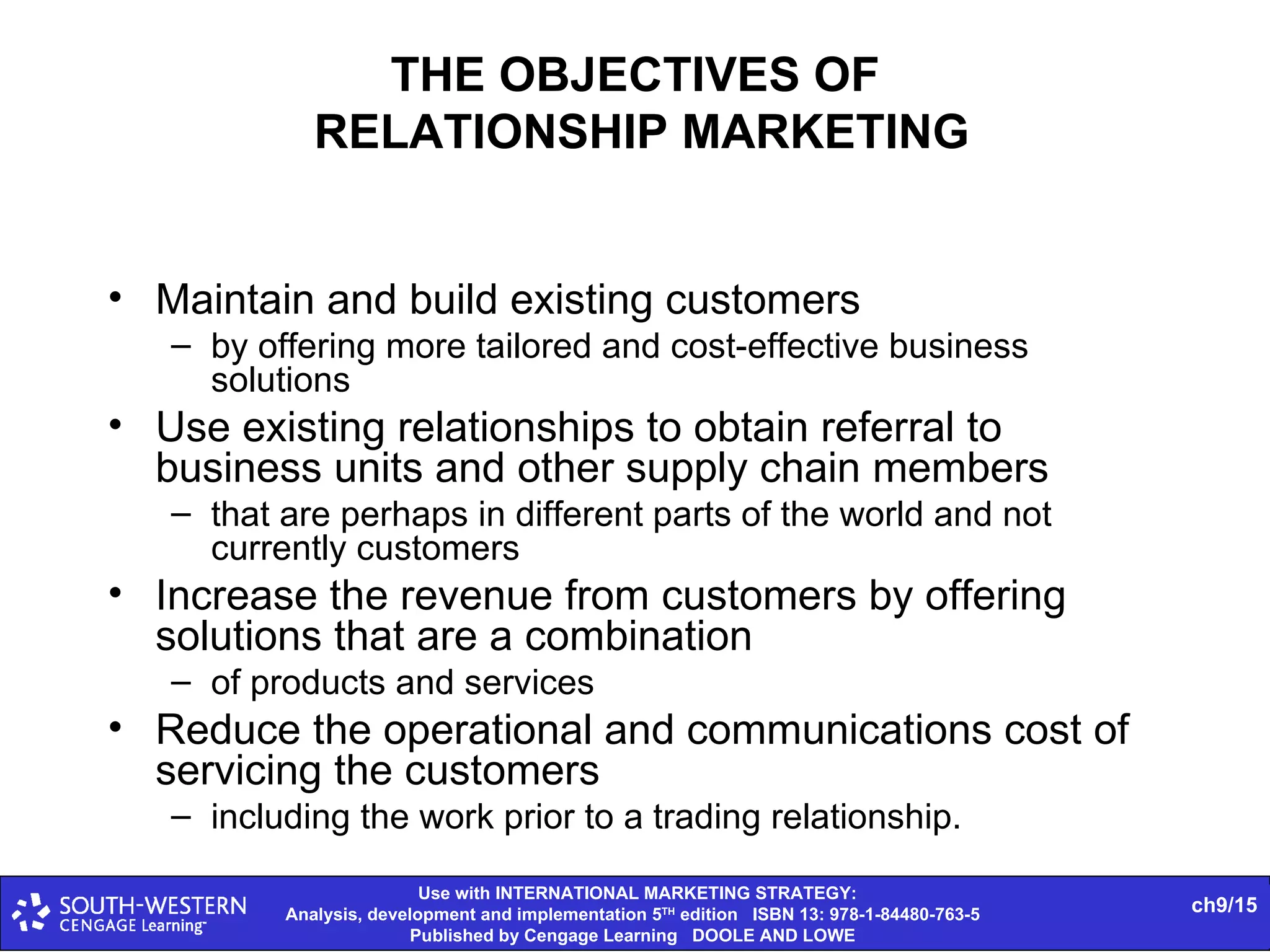
THE OBJECTIVES OF  RELATIONSHIP MARKETING Maintain and build existing customers by offering more tailored and cost-effective business solutions Use existing relationships to obtain referral to business units and other supply chain members that are perhaps in different parts of the world and not currently customers Increase the revenue from customers by offering solutions that are a combination of products and services Reduce the operational and communications cost of servicing the customers including the work prior to a trading relationship.

Ch9

  • 1.
  • 2.
    EXTERNAL, INTERNAL ANDINTERACTIVE MARKETING
  • 3.
    THE DIMENSIONS OFEXTERNAL MARKETING COMMUNICATIONS
  • 4.
    FAILURE IN INTERNATIONALMARKETING COMMUNICATIONS Within Company Control Inconsistency of messages conveyed to customers Different styles of presentation of corporate identity, brand and product image Lack of co-ordination of messages e.g. press releases, advertising campaigns Differences in fields of perception of sender and receiver
  • 5.
    FAILURE IN INTERNATIONALMARKETING COMMUNICATIONS Outside Company Control Counterfeiting Parallel importing Competitors, governments or pressure groups
  • 6.
    DRIVERS FOR COMMUNICATIONStandardisation v’s adaption Standardisation Improve efficiency Provision of added-value (perceived) Consistency Adaption Cultural differences Political and legal constraints Local circumstances
  • 7.
    PROMOTIONAL OBJECTIVES Salesand Brand/Product Communication Related Increasing market share at the expense of local/international competitors identifying new potential customers or obtaining a specific number of responses to a promotional campaign Reducing the impact of competitors in the market Increasing the value of the corporate brand and the product image Helping to establish the position or re-position the product or brand Increasing awareness levels especially in new country markets Changing consumers’ perceptions or products, brands or the firm Source: Wilson R & Gilligan C (2003)
  • 8.
    PUSH AND PULLSTRATEGIES
  • 9.
    INTERNAL & EXTERNALINTERNATIONAL COMMUNICATION PROGRAMMES Internally Focussed
  • 10.
    INTERNAL & EXTERNALINTERNATIONAL COMMUNICATION PROGRAMMES Externally Focussed (Marketing Mix)
  • 11.
    MARKETING COMMUNICATION TOOLS#1 Personal selling and word of mouth Exhibitions and trade fairs Trade missions Advertising TV advertising Press advertising Use of agencies and consultancies Financial Specialist knowledge Creative input External perspective
  • 12.
    MARKETING COMMUNICATION TOOLS#2 Sales promotions Direct Marketing Communicating with a wider range of stakeholders Corporate identity Sponsorship and celebrity endorsement Public Relations
  • 13.
    Top 10 GlobalAdvertisers (2006)
  • 14.
    THE CHARACTERISTICS OFTHE INTERNET The six I’s Adapted from J Deighton (1996)
  • 15.
    THE OBJECTIVES OF RELATIONSHIP MARKETING Maintain and build existing customers by offering more tailored and cost-effective business solutions Use existing relationships to obtain referral to business units and other supply chain members that are perhaps in different parts of the world and not currently customers Increase the revenue from customers by offering solutions that are a combination of products and services Reduce the operational and communications cost of servicing the customers including the work prior to a trading relationship.