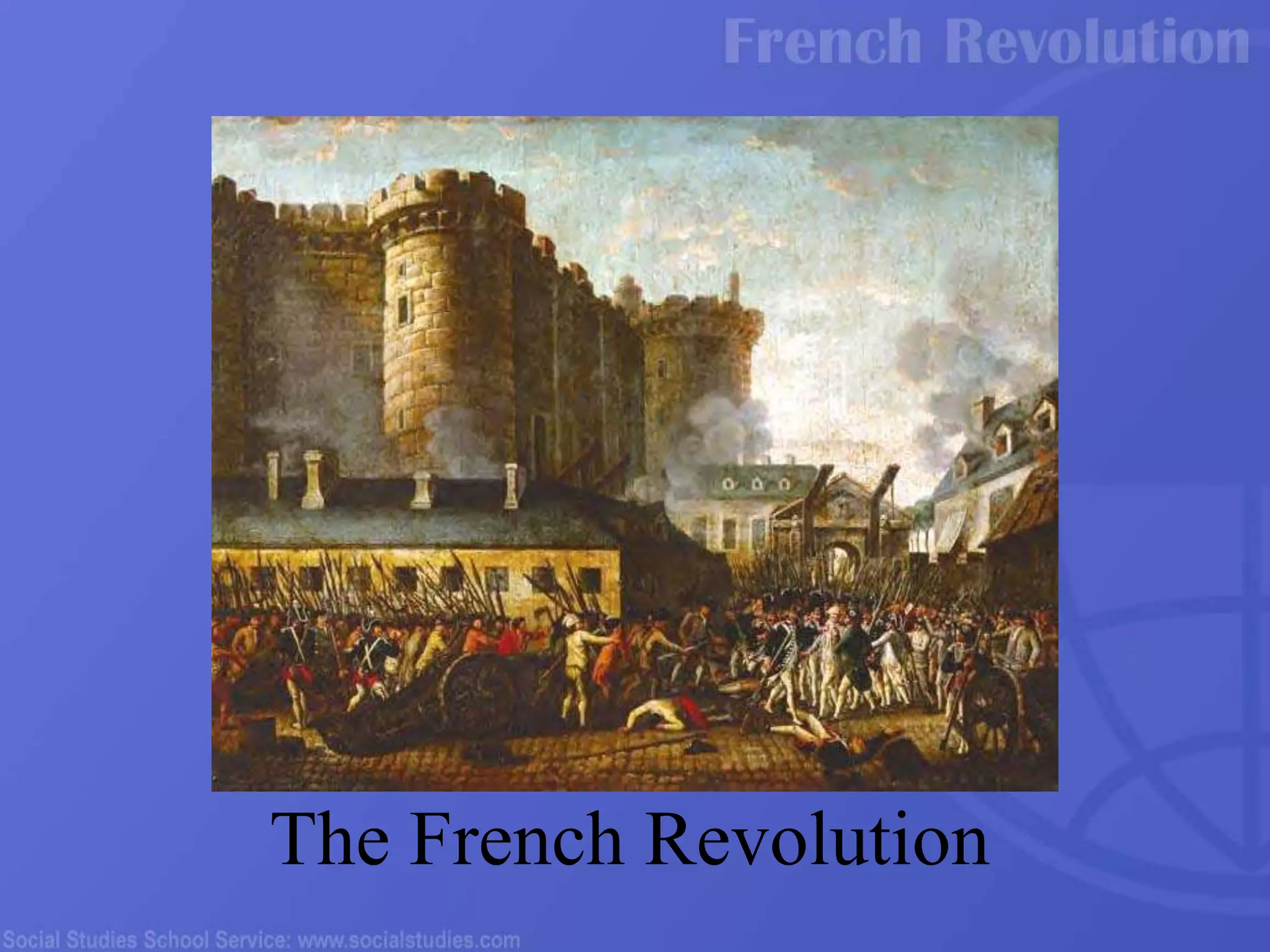
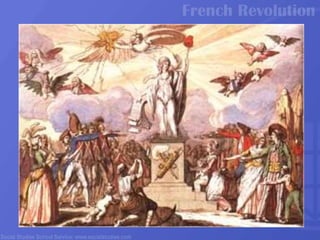
The French Revolution
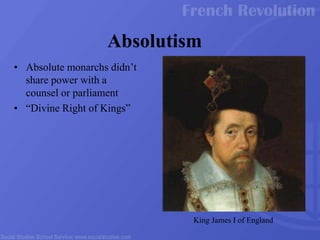
• Absolute monarchs didn’t
share power with a
counsel or parliament
• “Divine Right of Kings”
Absolutism
King James I of England
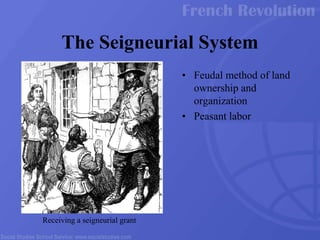
The Seigneurial System
• Feudal method of land
ownership and
organization
• Peasant labor
Receiving a seigneurial grant
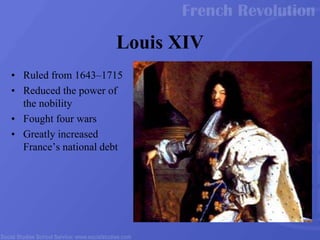
• Ruled from 1643–1715
• Reduced the power of
the nobility
• Fought four wars
• Greatly increased
France’s national debt
Louis XIV
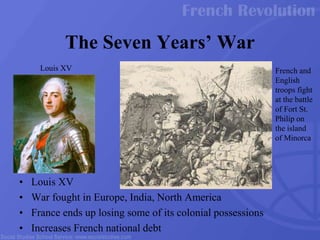
• Louis XV
• War fought in Europe, India, North America
• France ends up losing some of its colonial possessions
• Increases French national debt
The Seven Years’ War
Louis XV French and
English
troops fight
at the battle
of Fort St.
Philip on
the island
of Minorca
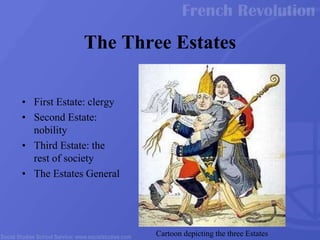
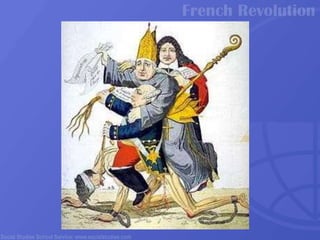
• First Estate: clergy
• Second Estate:
nobility
• Third Estate: the
rest of society
• The Estates General
The Three Estates
Cartoon depicting the three Estates
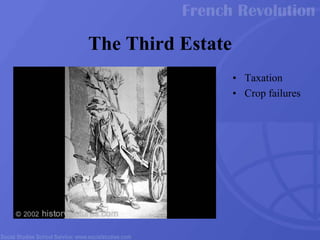
• Taxation
• Crop failures
The Third Estate
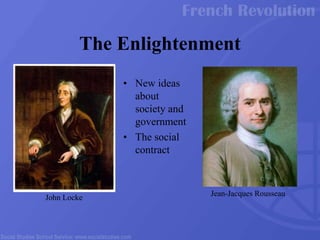
• New ideas
about
society and
government
• The social
contract
The Enlightenment
John Locke
Jean-Jacques Rousseau
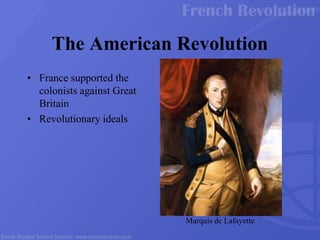
• France supported the
colonists against Great
Britain
• Revolutionary ideals
The American Revolution
Marquis de Lafayette
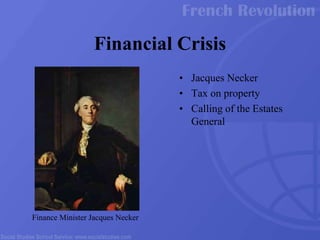
• Jacques Necker
• Tax on property
• Calling of the Estates
General
Financial Crisis
Finance Minister Jacques Necker
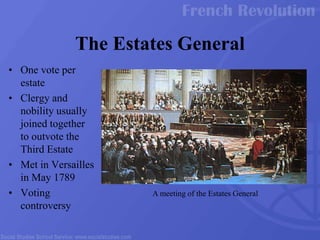
• One vote per
estate
• Clergy and
nobility usually
joined together
to outvote the
Third Estate
• Met in Versailles
in May 1789
• Voting
controversy
The Estates General
A meeting of the Estates General
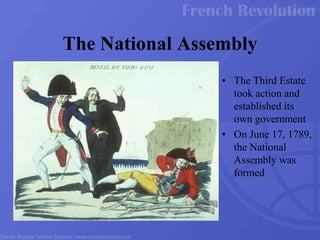
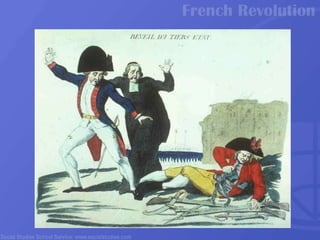
• The Third Estate
took action and
established its
own government
• On June 17, 1789,
the National
Assembly was
formed
The National Assembly
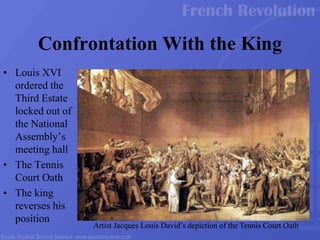
• Louis XVI
ordered the
Third Estate
locked out of
the National
Assembly’s
meeting hall
• The Tennis
Court Oath
• The king
reverses his
position
Artist Jacques Louis David’s depiction of the Tennis Court Oath
Confrontation With the King
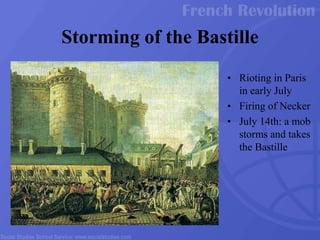
• Rioting in Paris
in early July
• Firing of Necker
• July 14th: a mob
storms and takes
the Bastille
Storming of the Bastille
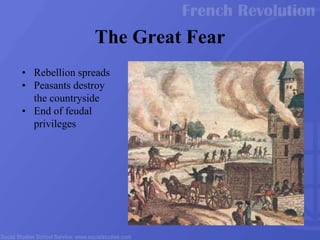
• Rebellion spreads
• Peasants destroy
the countryside
• End of feudal
privileges
The Great Fear
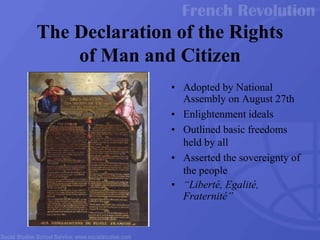
• Adopted by National
Assembly on August 27th
• Enlightenment ideals
• Outlined basic freedoms
held by all
• Asserted the sovereignty of
the people
• “Liberté, Egalité,
Fraternité”
The Declaration of the Rights
of Man and Citizen
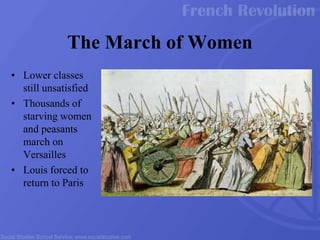
• Lower classes
still unsatisfied
• Thousands of
starving women
and peasants
march on
Versailles
• Louis forced to
return to Paris
The March of Women
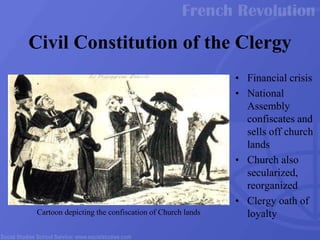
• Financial crisis
• National
Assembly
confiscates and
sells off church
lands
• Church also
secularized,
reorganized
• Clergy oath of
loyalty
Civil Constitution of the Clergy
Cartoon depicting the confiscation of Church lands
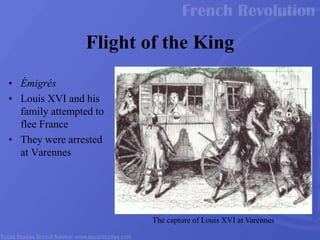
• Émigrés
• Louis XVI and his
family attempted to
flee France
• They were arrested
at Varennes
Flight of the King
The capture of Louis XVI at Varennes
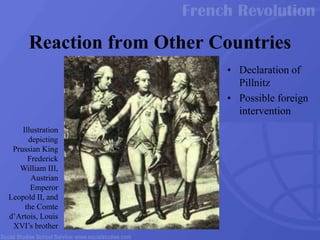
• Declaration of
Pillnitz
• Possible foreign
intervention
Reaction from Other Countries
Illustration
depicting
Prussian King
Frederick
William III,
Austrian
Emperor
Leopold II, and
the Comte
d’Artois, Louis
XVI’s brother
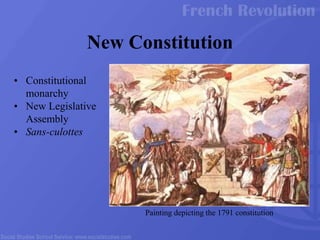
New Constitution
• Constitutional
monarchy
• New Legislative
Assembly
• Sans-culottes
Painting depicting the 1791 constitution
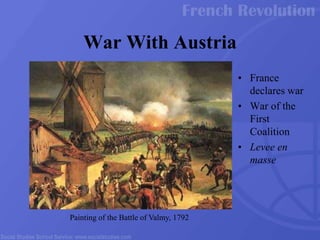
War With Austria
• France
declares war
• War of the
First
Coalition
• Levee en
masse
Painting of the Battle of Valmy, 1792
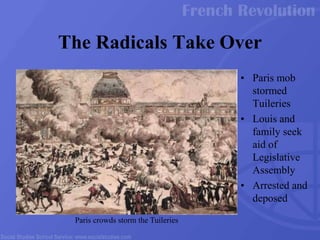
• Paris mob
stormed
Tuileries
• Louis and
family seek
aid of
Legislative
Assembly
• Arrested and
deposed
The Radicals Take Over
Paris crowds storm the Tuileries
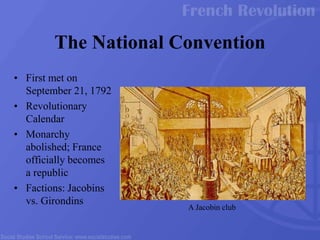
• First met on
September 21, 1792
• Revolutionary
Calendar
• Monarchy
abolished; France
officially becomes
a republic
• Factions: Jacobins
vs. Girondins
The National Convention
A Jacobin club
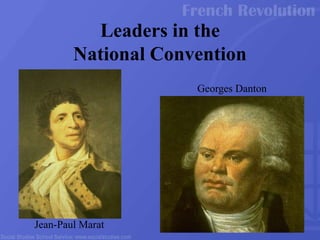
Jean-Paul Marat
Georges Danton
Leaders in the
National Convention
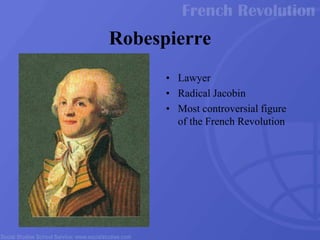
• Lawyer
• Radical Jacobin
• Most controversial figure
of the French Revolution
Robespierre
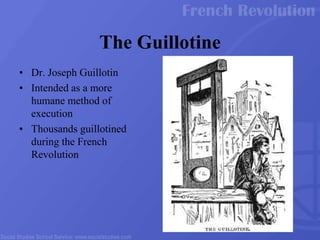
The Guillotine
• Dr. Joseph Guillotin
• Intended as a more
humane method of
execution
• Thousands guillotined
during the French
Revolution
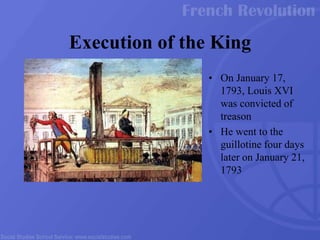
• On January 17,
1793, Louis XVI
was convicted of
treason
• He went to the
guillotine four days
later on January 21,
1793
Execution of the King
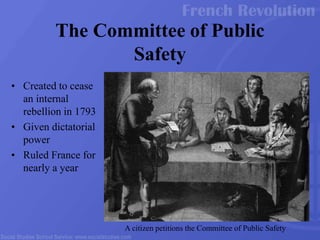
• Created to cease
an internal
rebellion in 1793
• Given dictatorial
power
• Ruled France for
nearly a year
The Committee of Public
Safety
A citizen petitions the Committee of Public Safety
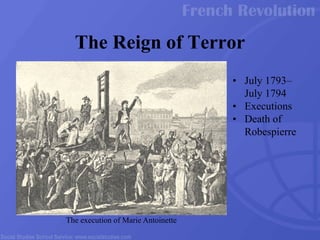
• July 1793–
July 1794
• Executions
• Death of
Robespierre
The Reign of Terror
The execution of Marie Antoinette
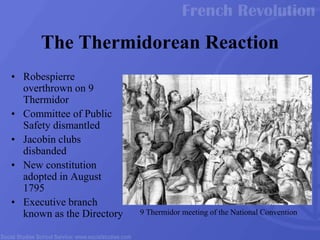
• Robespierre
overthrown on 9
Thermidor
• Committee of Public
Safety dismantled
• Jacobin clubs
disbanded
• New constitution
adopted in August
1795
• Executive branch
known as the Directory
The Thermidorean Reaction
9 Thermidor meeting of the National Convention
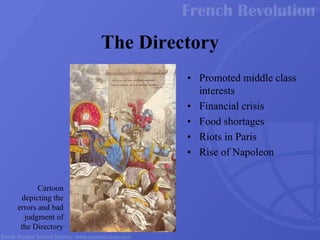
• Promoted middle class
interests
• Financial crisis
• Food shortages
• Riots in Paris
• Rise of Napoleon
The Directory
Cartoon
depicting the
errors and bad
judgment of
the Directory
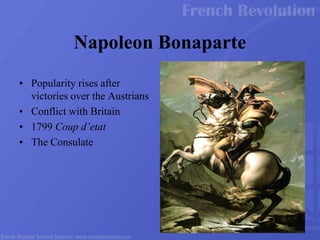
• Popularity rises after
victories over the Austrians
• Conflict with Britain
• 1799 Coup d’etat
• The Consulate
Napoleon Bonaparte
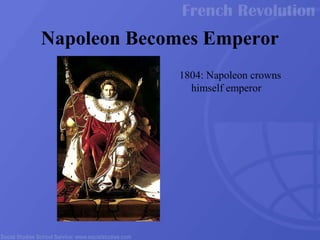
1804: Napoleon crowns
himself emperor
Napoleon Becomes Emperor
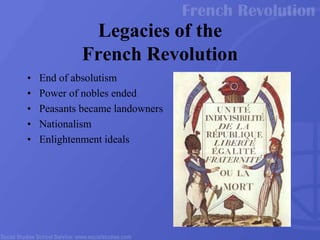
Legacies of the
French Revolution
• End of absolutism
• Power of nobles ended
• Peasants became landowners
• Nationalism
• Enlightenment ideals

French revolution

  • 1.
  • 2.
    • Absolute monarchsdidn’t share power with a counsel or parliament • “Divine Right of Kings” Absolutism King James I of England
  • 3.
    The Seigneurial System •Feudal method of land ownership and organization • Peasant labor Receiving a seigneurial grant
  • 4.
    • Ruled from1643–1715 • Reduced the power of the nobility • Fought four wars • Greatly increased France’s national debt Louis XIV
  • 5.
    • Louis XV •War fought in Europe, India, North America • France ends up losing some of its colonial possessions • Increases French national debt The Seven Years’ War Louis XV French and English troops fight at the battle of Fort St. Philip on the island of Minorca
  • 6.
    • First Estate:clergy • Second Estate: nobility • Third Estate: the rest of society • The Estates General The Three Estates Cartoon depicting the three Estates
  • 8.
    • Taxation • Cropfailures The Third Estate
  • 9.
    • New ideas about societyand government • The social contract The Enlightenment John Locke Jean-Jacques Rousseau
  • 10.
    • France supportedthe colonists against Great Britain • Revolutionary ideals The American Revolution Marquis de Lafayette
  • 11.
    • Jacques Necker •Tax on property • Calling of the Estates General Financial Crisis Finance Minister Jacques Necker
  • 12.
    • One voteper estate • Clergy and nobility usually joined together to outvote the Third Estate • Met in Versailles in May 1789 • Voting controversy The Estates General A meeting of the Estates General
  • 13.
    • The ThirdEstate took action and established its own government • On June 17, 1789, the National Assembly was formed The National Assembly
  • 15.
    • Louis XVI orderedthe Third Estate locked out of the National Assembly’s meeting hall • The Tennis Court Oath • The king reverses his position Artist Jacques Louis David’s depiction of the Tennis Court Oath Confrontation With the King
  • 16.
    • Rioting inParis in early July • Firing of Necker • July 14th: a mob storms and takes the Bastille Storming of the Bastille
  • 17.
    • Rebellion spreads •Peasants destroy the countryside • End of feudal privileges The Great Fear
  • 18.
    • Adopted byNational Assembly on August 27th • Enlightenment ideals • Outlined basic freedoms held by all • Asserted the sovereignty of the people • “Liberté, Egalité, Fraternité” The Declaration of the Rights of Man and Citizen
  • 19.
    • Lower classes stillunsatisfied • Thousands of starving women and peasants march on Versailles • Louis forced to return to Paris The March of Women
  • 20.
    • Financial crisis •National Assembly confiscates and sells off church lands • Church also secularized, reorganized • Clergy oath of loyalty Civil Constitution of the Clergy Cartoon depicting the confiscation of Church lands
  • 21.
    • Émigrés • LouisXVI and his family attempted to flee France • They were arrested at Varennes Flight of the King The capture of Louis XVI at Varennes
  • 22.
    • Declaration of Pillnitz •Possible foreign intervention Reaction from Other Countries Illustration depicting Prussian King Frederick William III, Austrian Emperor Leopold II, and the Comte d’Artois, Louis XVI’s brother
  • 23.
    New Constitution • Constitutional monarchy •New Legislative Assembly • Sans-culottes Painting depicting the 1791 constitution
  • 25.
    War With Austria •France declares war • War of the First Coalition • Levee en masse Painting of the Battle of Valmy, 1792
  • 26.
    • Paris mob stormed Tuileries •Louis and family seek aid of Legislative Assembly • Arrested and deposed The Radicals Take Over Paris crowds storm the Tuileries
  • 27.
    • First meton September 21, 1792 • Revolutionary Calendar • Monarchy abolished; France officially becomes a republic • Factions: Jacobins vs. Girondins The National Convention A Jacobin club
  • 28.
    Jean-Paul Marat Georges Danton Leadersin the National Convention
  • 29.
    • Lawyer • RadicalJacobin • Most controversial figure of the French Revolution Robespierre
  • 30.
    The Guillotine • Dr.Joseph Guillotin • Intended as a more humane method of execution • Thousands guillotined during the French Revolution
  • 31.
    • On January17, 1793, Louis XVI was convicted of treason • He went to the guillotine four days later on January 21, 1793 Execution of the King
  • 32.
    • Created tocease an internal rebellion in 1793 • Given dictatorial power • Ruled France for nearly a year The Committee of Public Safety A citizen petitions the Committee of Public Safety
  • 33.
    • July 1793– July1794 • Executions • Death of Robespierre The Reign of Terror The execution of Marie Antoinette
  • 34.
    • Robespierre overthrown on9 Thermidor • Committee of Public Safety dismantled • Jacobin clubs disbanded • New constitution adopted in August 1795 • Executive branch known as the Directory The Thermidorean Reaction 9 Thermidor meeting of the National Convention
  • 35.
    • Promoted middleclass interests • Financial crisis • Food shortages • Riots in Paris • Rise of Napoleon The Directory Cartoon depicting the errors and bad judgment of the Directory
  • 36.
    • Popularity risesafter victories over the Austrians • Conflict with Britain • 1799 Coup d’etat • The Consulate Napoleon Bonaparte
  • 37.
    1804: Napoleon crowns himselfemperor Napoleon Becomes Emperor
  • 38.
    Legacies of the FrenchRevolution • End of absolutism • Power of nobles ended • Peasants became landowners • Nationalism • Enlightenment ideals