THE NORTH AMERICAN MANUFACTURING CORE (Chapter 5)
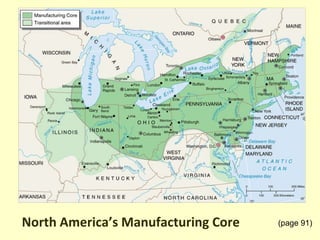
Introduction Straddles the U.S.–Canadian boarder, but the  international boundary  has little impact on the region's shape.  Manufacturing  concentrated Ohio Valley  Megalopolis  Southern shores of the Great Lakes  Overlaps the  agricultural core,  other regions  Manufacturing as definer of continental core Most important ports Centers of communication Primary financial centers
North America’s Manufacturing Core (page 91)
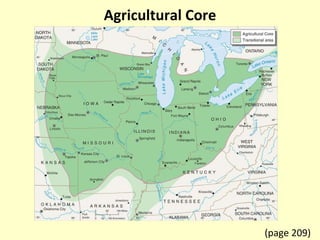
Agricultural Core (page 209)
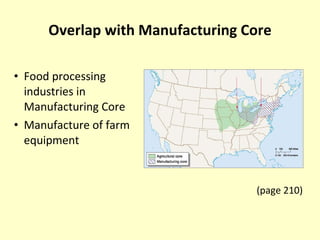
Overlap with Manufacturing Core Food processing industries in Manufacturing Core Manufacture of farm equipment (page 210)
 
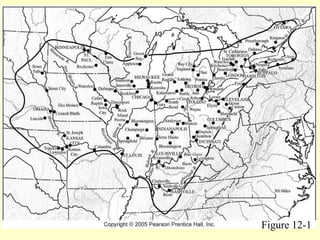
Figure 12-1
Vegetation Eastern Forests North: Oak-Hickory South: Chesnut-Oak-Y. Poplar Western Tall Grass Prairie Climate Humid Continental Importance of location Major Microclimatic Variations Hazards Usual: Tornadoes and Flooding Unusual: Earthquakes Physical Geography
Physical Geography: Climate Average  precipitation  > 75 centimeters (>30 inches), most during growing season (April-November) Limited  variability , little risk of drought Growing season Last killing frost from mid-April (south) to mid-May (north) First killing frost late September Continental climate:  strong seasonal range
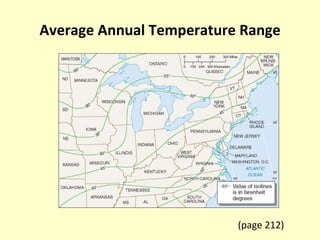
Average Annual Temperature Range (page 212)
Beyond the Corn Belt Dairying North of Corn Belt Climate too cold for corn maturation German, Scandinavian immigrants Corn silage (cut before maturity), other grains for dairy cows Surplus milk: Cheese, butter (survive trip to market) Fruit belts Lake Michigan, Lake Erie shorelines Moderating effect of lakes
The Family Farm Family farm as part of American (and Canadian) folklore Exaggerated images of farming Fit until about World War II In swift decline today Changes in ownership Pressure for greater efficiency Necessity for larger operations Rental and leasing of additional land
Agricultural Development Early settlers  Wheat High-value crop with reliable market Hard on soils, therefore shifted west with settlement Shipping dependent on water transport Flour milling at break-in-bulk points (Cincinnati, Buffalo) Meat  from domestic livestock Hogs and cattle Mixed farming: raising grain to feed livestock Rise of Cincinnati as “Porkopolis”
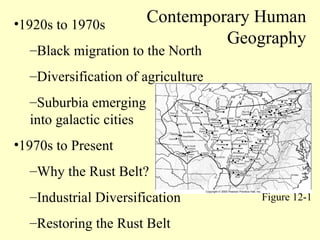
1920s to 1970s Black migration to the North Diversification of agriculture Suburbia emerging   into galactic cities  1970s to Present Why the Rust Belt? Industrial Diversification Restoring the Rust Belt Contemporary Human Geography Figure 12-1
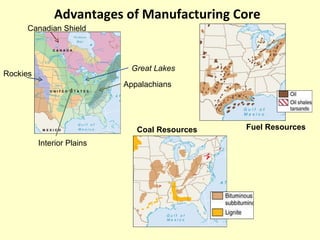
Advantages of Manufacturing Core Mineral resources Metallic  minerals (metamorphic rock) Appalachians Western mountains Canadian Shield Mineral  fuels  (sedimentary lowlands) West of Appalachians Between Gulf of Mexico and Arctic Accessibility resources Great Lakes (with canals) Ohio River Mississippi and tributaries
Canadian Shield Appalachians Rockies Interior Plains Advantages of Manufacturing Core Fuel Resources Coal Resources Great Lakes
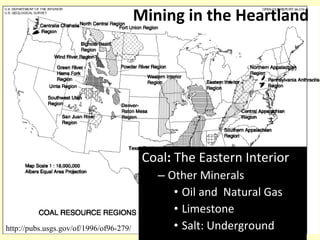
Coal :  The Eastern Interior Other Minerals Oil and  Natural Gas Limestone Salt: Underground  Mining in the Heartland http://pubs.usgs.gov/of/1996/of96-279/
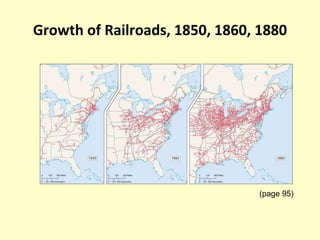
Growth of Manufacturing Core Product of late 19 th  century Before 1830, urban/manufacturing development along Atlantic Coast Agricultural settlement between 1830 and Civil War Transportation growth: Erie Canal Railroads
Growth of Railroads, 1850, 1860, 1880 (page 95)
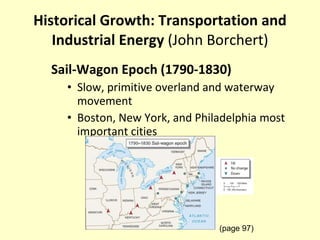
Historical Growth: Transportation and Industrial Energy  (John Borchert) Sail-Wagon Epoch (1790-1830) Slow, primitive overland and waterway movement  Boston, New York, and Philadelphia most important cities (page 97)
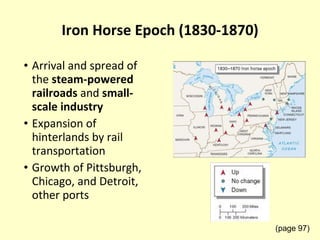
Iron Horse Epoch (1830-1870) Arrival and spread of the  steam-powered railroads  and  small-scale industry Expansion of hinterlands by rail transportation Growth of Pittsburgh, Chicago, and Detroit, other ports (page 97)
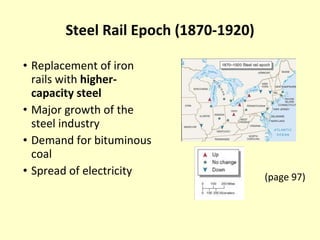
Steel Rail Epoch (1870-1920) Replacement of iron rails with  higher-capacity steel Major growth of the steel industry Demand for bituminous coal Spread of electricity (page 97)
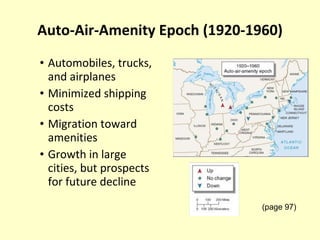
Auto-Air-Amenity Epoch (1920-1960) Automobiles, trucks, and airplanes Minimized shipping costs Migration toward amenities Growth in large cities, but prospects for future decline (page 97)
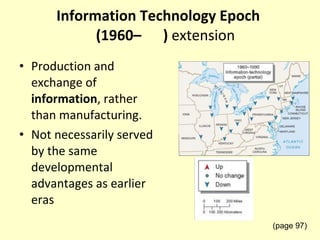
Information Technology Epoch    (1960–  )  extension Production and exchange of  information , rather than manufacturing. Not necessarily served by the same developmental advantages as earlier eras (page 97)
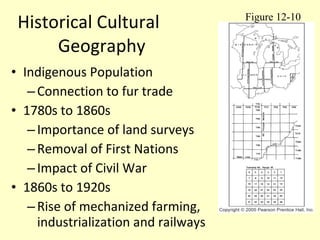
Historical Cultural  Geography  Indigenous Population Connection to fur trade 1780s to 1860s Importance of land surveys Removal of First Nations Impact of Civil War 1860s to 1920s Rise of mechanized farming, industrialization and railways Figure 12-10
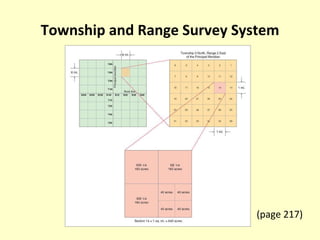
Township and Range Survey System Metes and bounds  (east coast) Used visible landscape features, directions, measurements Unsystematic Subject to conflict Land Ordinance of 1785 North of Ohio River, west of Pennsylvania Used system of  east-west base lines  and  north-south principal meridians Regular, rectangular Surveyed before settlement
Township and Range Survey System (page 217)
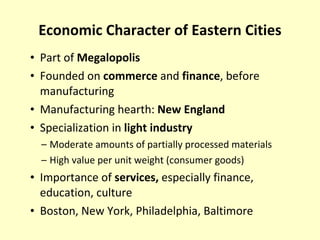
Economic Character of Eastern Cities Part of  Megalopolis Founded on  commerce  and  finance , before manufacturing Manufacturing hearth:  New England Specialization in  light industry Moderate amounts of partially processed materials High value per unit weight (consumer goods) Importance of  services,  especially finance, education, culture Boston, New York, Philadelphia, Baltimore
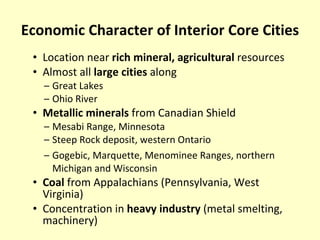
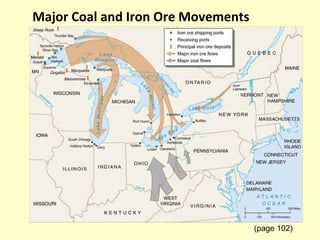
Economic Character of Interior Core Cities Location near  rich mineral, agricultural  resources Almost all  large cities  along Great Lakes Ohio River Metallic minerals  from Canadian Shield Mesabi Range, Minnesota Steep Rock deposit, western Ontario Gogebic, Marquette, Menominee Ranges, northern Michigan and Wisconsin Coal  from Appalachians (Pennsylvania, West Virginia) Concentration in  heavy industry  (metal smelting, machinery)
Major Coal and Iron Ore Movements (page 102)
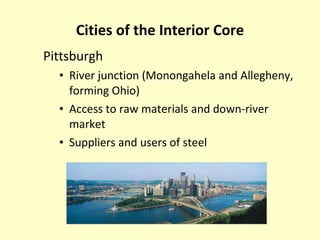
Cities of the Interior Core Pittsburgh River junction (Monongahela and Allegheny, forming Ohio) Access to raw materials and down-river market Suppliers and users of steel
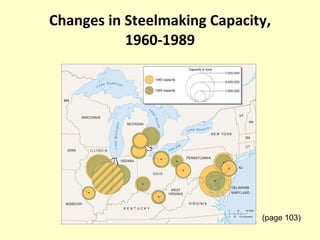
Changes in Steelmaking Capacity, 1960-1989 (page 103)
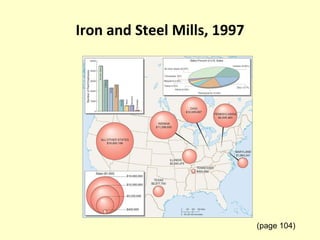
Iron and Steel Mills, 1997 (page 104)
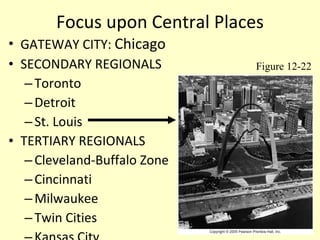
Focus upon Central Places GATEWAY CITY:  Chicago SECONDARY REGIONALS Toronto Detroit St. Louis TERTIARY REGIONALS Cleveland-Buffalo Zone  Cincinnati Milwaukee Twin Cities Kansas City Figure 12-22
Lake Ports Transfer of iron ore shipped on Great Lakes to rail cars at Great Lakes ports:  break-in-bulk Return rail cars carrying coal Development of steel and other industries at ports Cleveland Largest Lake Erie port city Canal linkage to Ohio River Buffalo  (flour milling)
Lake Ports Canadian cities: Hamilton  (iron and steel) Toronto  (diversified) Detroit–Windsor Off main New York–Chicago route Center of automobile manufacture
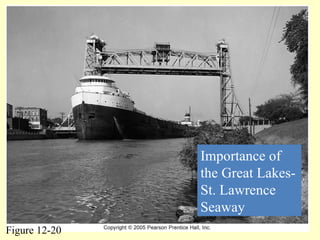
Importance of the Great Lakes-St. Lawrence Seaway  Figure 12-20
Chicago Dominant city in interior core Inauspicious  site Swampy Poor-quality drinking water Non-navigable river Major fire in 1871 Situational  advantages Transfer of goods and people from west and southwest  Focus of inland water transportation (Illinois and Michigan Canal, 1848) Railroad center
Broad Shifts in Economic Activity Decline in agricultural and manufacturing labor force Greater efficiency Fewer workers needed Rise in service industries More widespread income distribution Workers no longer needed in manufacturing, agriculture
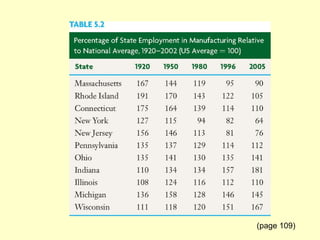
Relocation of Industry Population  shifts Computers  and  telecommunications Competition  from foreign manufacturers Importance of  educated workforce Growth of Sunbelt (southeastern and southwestern U.S., western Canada) Industrial inertia  still important Changes in concentration Pre-1920:  Atlantic Coast states more heavily manufacturing Post-1920: Growth of interior states at coastal states’ expense
(page 109)
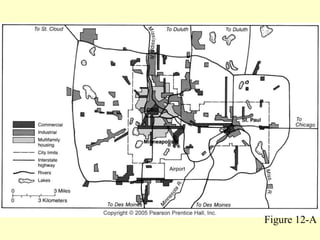
Figure 12-A

Ch05ed

  • 1.
    THE NORTH AMERICANMANUFACTURING CORE (Chapter 5)
  • 2.
    Introduction Straddles theU.S.–Canadian boarder, but the international boundary has little impact on the region's shape. Manufacturing concentrated Ohio Valley Megalopolis Southern shores of the Great Lakes Overlaps the agricultural core, other regions Manufacturing as definer of continental core Most important ports Centers of communication Primary financial centers
  • 3.
  • 4.
  • 5.
    Overlap with ManufacturingCore Food processing industries in Manufacturing Core Manufacture of farm equipment (page 210)
  • 6.
  • 7.
  • 8.
    Vegetation Eastern ForestsNorth: Oak-Hickory South: Chesnut-Oak-Y. Poplar Western Tall Grass Prairie Climate Humid Continental Importance of location Major Microclimatic Variations Hazards Usual: Tornadoes and Flooding Unusual: Earthquakes Physical Geography
  • 9.
    Physical Geography: ClimateAverage precipitation > 75 centimeters (>30 inches), most during growing season (April-November) Limited variability , little risk of drought Growing season Last killing frost from mid-April (south) to mid-May (north) First killing frost late September Continental climate: strong seasonal range
  • 10.
  • 11.
    Beyond the CornBelt Dairying North of Corn Belt Climate too cold for corn maturation German, Scandinavian immigrants Corn silage (cut before maturity), other grains for dairy cows Surplus milk: Cheese, butter (survive trip to market) Fruit belts Lake Michigan, Lake Erie shorelines Moderating effect of lakes
  • 12.
    The Family FarmFamily farm as part of American (and Canadian) folklore Exaggerated images of farming Fit until about World War II In swift decline today Changes in ownership Pressure for greater efficiency Necessity for larger operations Rental and leasing of additional land
  • 13.
    Agricultural Development Earlysettlers Wheat High-value crop with reliable market Hard on soils, therefore shifted west with settlement Shipping dependent on water transport Flour milling at break-in-bulk points (Cincinnati, Buffalo) Meat from domestic livestock Hogs and cattle Mixed farming: raising grain to feed livestock Rise of Cincinnati as “Porkopolis”
  • 14.
    1920s to 1970sBlack migration to the North Diversification of agriculture Suburbia emerging into galactic cities 1970s to Present Why the Rust Belt? Industrial Diversification Restoring the Rust Belt Contemporary Human Geography Figure 12-1
  • 15.
    Advantages of ManufacturingCore Mineral resources Metallic minerals (metamorphic rock) Appalachians Western mountains Canadian Shield Mineral fuels (sedimentary lowlands) West of Appalachians Between Gulf of Mexico and Arctic Accessibility resources Great Lakes (with canals) Ohio River Mississippi and tributaries
  • 16.
    Canadian Shield AppalachiansRockies Interior Plains Advantages of Manufacturing Core Fuel Resources Coal Resources Great Lakes
  • 17.
    Coal : The Eastern Interior Other Minerals Oil and Natural Gas Limestone Salt: Underground Mining in the Heartland http://pubs.usgs.gov/of/1996/of96-279/
  • 18.
    Growth of ManufacturingCore Product of late 19 th century Before 1830, urban/manufacturing development along Atlantic Coast Agricultural settlement between 1830 and Civil War Transportation growth: Erie Canal Railroads
  • 19.
    Growth of Railroads,1850, 1860, 1880 (page 95)
  • 20.
    Historical Growth: Transportationand Industrial Energy (John Borchert) Sail-Wagon Epoch (1790-1830) Slow, primitive overland and waterway movement Boston, New York, and Philadelphia most important cities (page 97)
  • 21.
    Iron Horse Epoch(1830-1870) Arrival and spread of the steam-powered railroads and small-scale industry Expansion of hinterlands by rail transportation Growth of Pittsburgh, Chicago, and Detroit, other ports (page 97)
  • 22.
    Steel Rail Epoch(1870-1920) Replacement of iron rails with higher-capacity steel Major growth of the steel industry Demand for bituminous coal Spread of electricity (page 97)
  • 23.
    Auto-Air-Amenity Epoch (1920-1960)Automobiles, trucks, and airplanes Minimized shipping costs Migration toward amenities Growth in large cities, but prospects for future decline (page 97)
  • 24.
    Information Technology Epoch (1960– ) extension Production and exchange of information , rather than manufacturing. Not necessarily served by the same developmental advantages as earlier eras (page 97)
  • 25.
    Historical Cultural Geography Indigenous Population Connection to fur trade 1780s to 1860s Importance of land surveys Removal of First Nations Impact of Civil War 1860s to 1920s Rise of mechanized farming, industrialization and railways Figure 12-10
  • 26.
    Township and RangeSurvey System Metes and bounds (east coast) Used visible landscape features, directions, measurements Unsystematic Subject to conflict Land Ordinance of 1785 North of Ohio River, west of Pennsylvania Used system of east-west base lines and north-south principal meridians Regular, rectangular Surveyed before settlement
  • 27.
    Township and RangeSurvey System (page 217)
  • 28.
    Economic Character ofEastern Cities Part of Megalopolis Founded on commerce and finance , before manufacturing Manufacturing hearth: New England Specialization in light industry Moderate amounts of partially processed materials High value per unit weight (consumer goods) Importance of services, especially finance, education, culture Boston, New York, Philadelphia, Baltimore
  • 29.
    Economic Character ofInterior Core Cities Location near rich mineral, agricultural resources Almost all large cities along Great Lakes Ohio River Metallic minerals from Canadian Shield Mesabi Range, Minnesota Steep Rock deposit, western Ontario Gogebic, Marquette, Menominee Ranges, northern Michigan and Wisconsin Coal from Appalachians (Pennsylvania, West Virginia) Concentration in heavy industry (metal smelting, machinery)
  • 30.
    Major Coal andIron Ore Movements (page 102)
  • 31.
    Cities of theInterior Core Pittsburgh River junction (Monongahela and Allegheny, forming Ohio) Access to raw materials and down-river market Suppliers and users of steel
  • 32.
    Changes in SteelmakingCapacity, 1960-1989 (page 103)
  • 33.
    Iron and SteelMills, 1997 (page 104)
  • 34.
    Focus upon CentralPlaces GATEWAY CITY: Chicago SECONDARY REGIONALS Toronto Detroit St. Louis TERTIARY REGIONALS Cleveland-Buffalo Zone Cincinnati Milwaukee Twin Cities Kansas City Figure 12-22
  • 35.
    Lake Ports Transferof iron ore shipped on Great Lakes to rail cars at Great Lakes ports: break-in-bulk Return rail cars carrying coal Development of steel and other industries at ports Cleveland Largest Lake Erie port city Canal linkage to Ohio River Buffalo (flour milling)
  • 36.
    Lake Ports Canadiancities: Hamilton (iron and steel) Toronto (diversified) Detroit–Windsor Off main New York–Chicago route Center of automobile manufacture
  • 37.
    Importance of theGreat Lakes-St. Lawrence Seaway Figure 12-20
  • 38.
    Chicago Dominant cityin interior core Inauspicious site Swampy Poor-quality drinking water Non-navigable river Major fire in 1871 Situational advantages Transfer of goods and people from west and southwest Focus of inland water transportation (Illinois and Michigan Canal, 1848) Railroad center
  • 39.
    Broad Shifts inEconomic Activity Decline in agricultural and manufacturing labor force Greater efficiency Fewer workers needed Rise in service industries More widespread income distribution Workers no longer needed in manufacturing, agriculture
  • 40.
    Relocation of IndustryPopulation shifts Computers and telecommunications Competition from foreign manufacturers Importance of educated workforce Growth of Sunbelt (southeastern and southwestern U.S., western Canada) Industrial inertia still important Changes in concentration Pre-1920: Atlantic Coast states more heavily manufacturing Post-1920: Growth of interior states at coastal states’ expense
  • 41.
  • 42.