Keynesian economics
Mps mpc
Assoc Prof Ergin AKALPLER
Intro to Unit III
 In Macro Unit III, we will ultimately
employ the AD-AS model to explore
how changes in in the economy and
government policy affect real GDP,
employment, and the price level.
 We will start building our model by
taking a closer look at Consumption,
since it is the largest component of
GDP.
AD
 Aggregate Demand
 A schedule or curve that shows the
total quantity of goods and services
demanded (purchased) at different
price levels.
AS
 Aggregate Supply
 A schedule or curve showing the
total quantity of goods and services
supplied (produced) at different price
levels.
GDP
 Gross Domestic Product
 The total market value of all final
goods and services produced
annually within the boundaries of the
United States.
Y
 National Income
 Economists often use output and
income interchangeably, because
whatever is spent on a product
(output value) is also the income of
the people producing it.
DI
 Disposable Income = the sum of the
incomes of all the individuals in the
economy after all taxes have been
deducted and all transfer payments have
been added.
 DI = Y - Taxes + Transfers
 Disposable Income is the income available
for personal consumption expenditures
and personal saving.
S
 Saving
 Disposable income not spent for
consumer goods.
 We can do two things with our
disposable income…spend it (C) or
save it (S). So, S = DI – C.
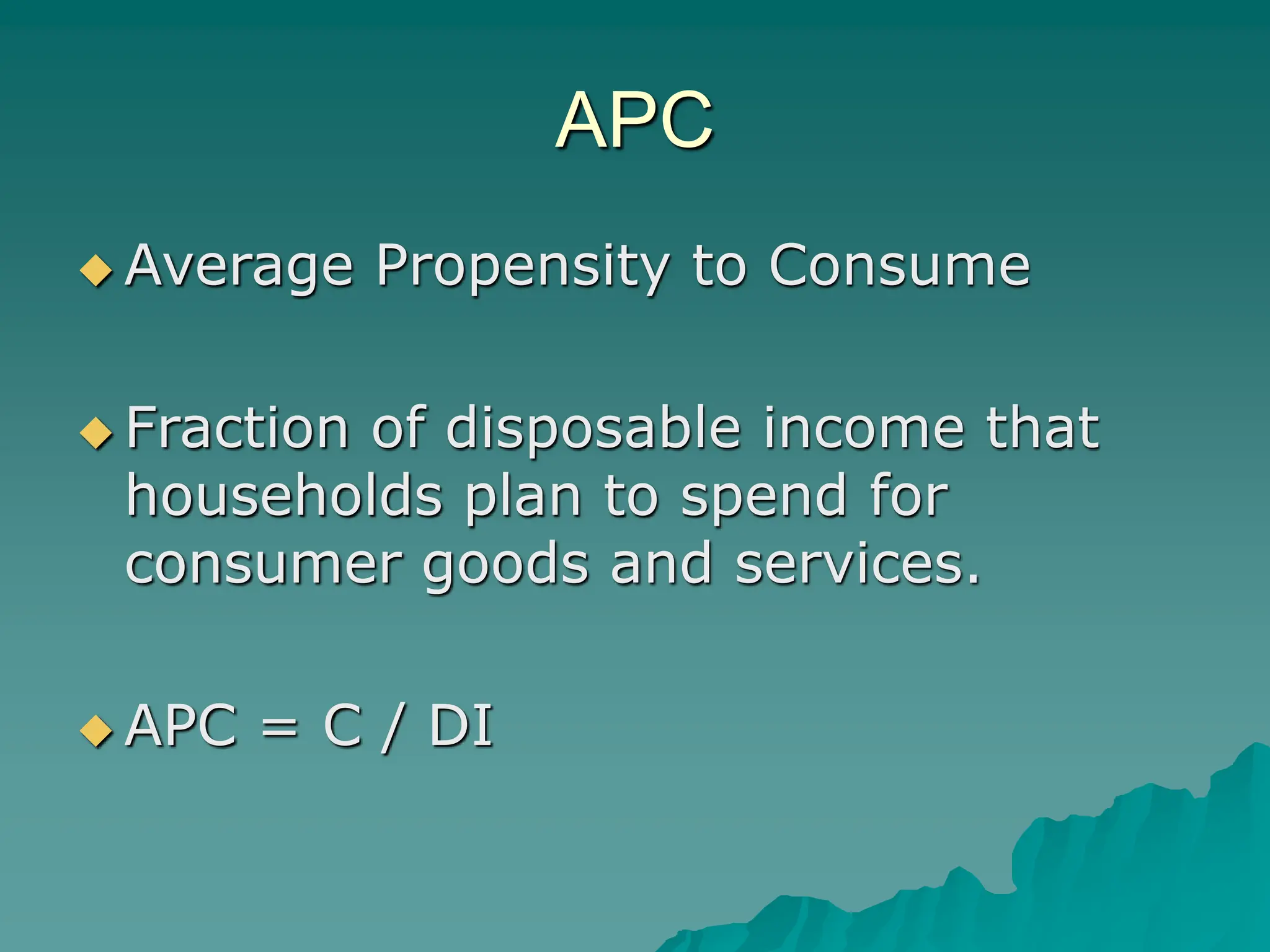
APC
 Average Propensity to Consume
 Fraction of disposable income that
households plan to spend for
consumer goods and services.
 APC = C / DI
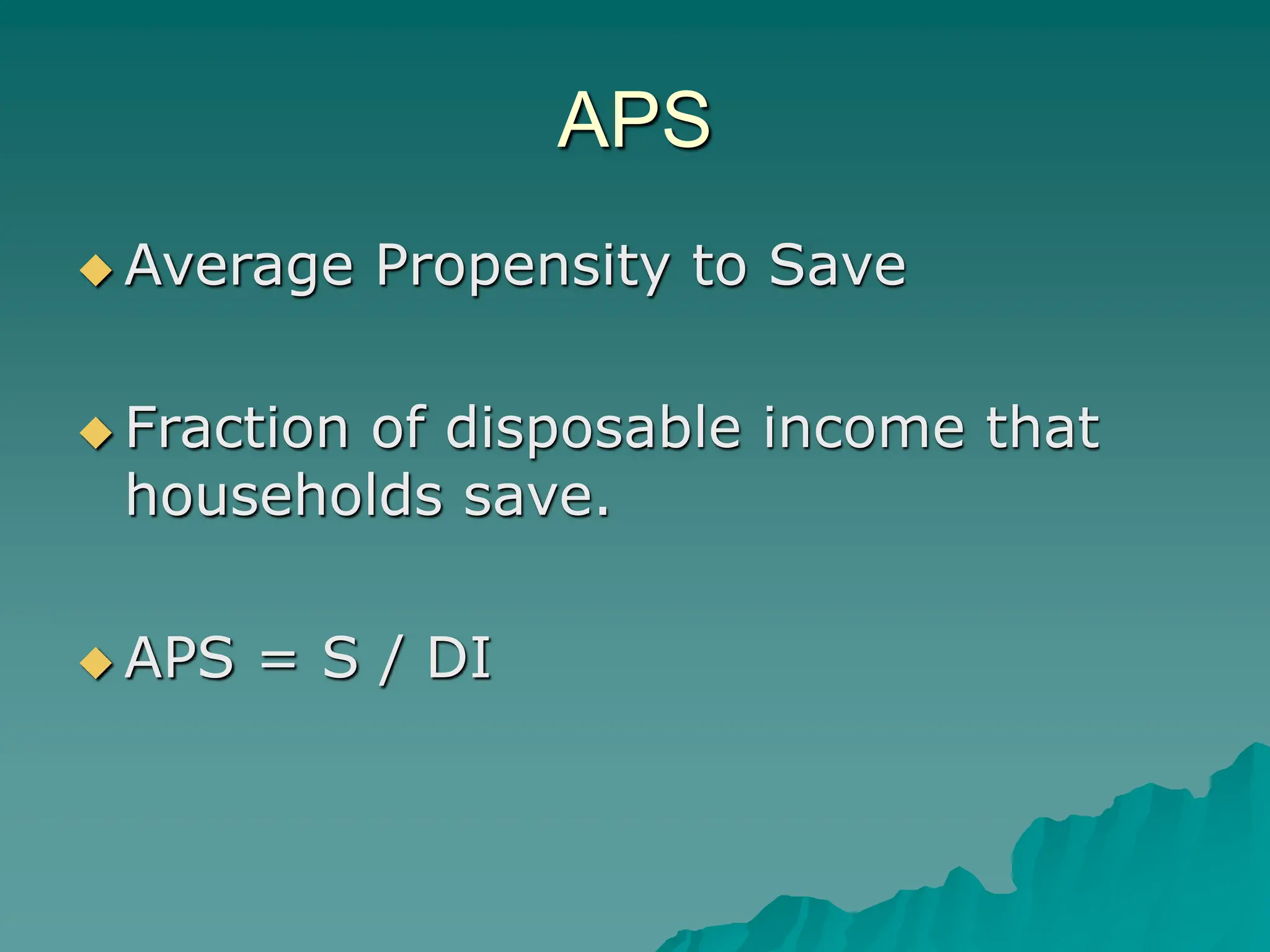
APS
 Average Propensity to Save
 Fraction of disposable income that
households save.
 APS = S / DI
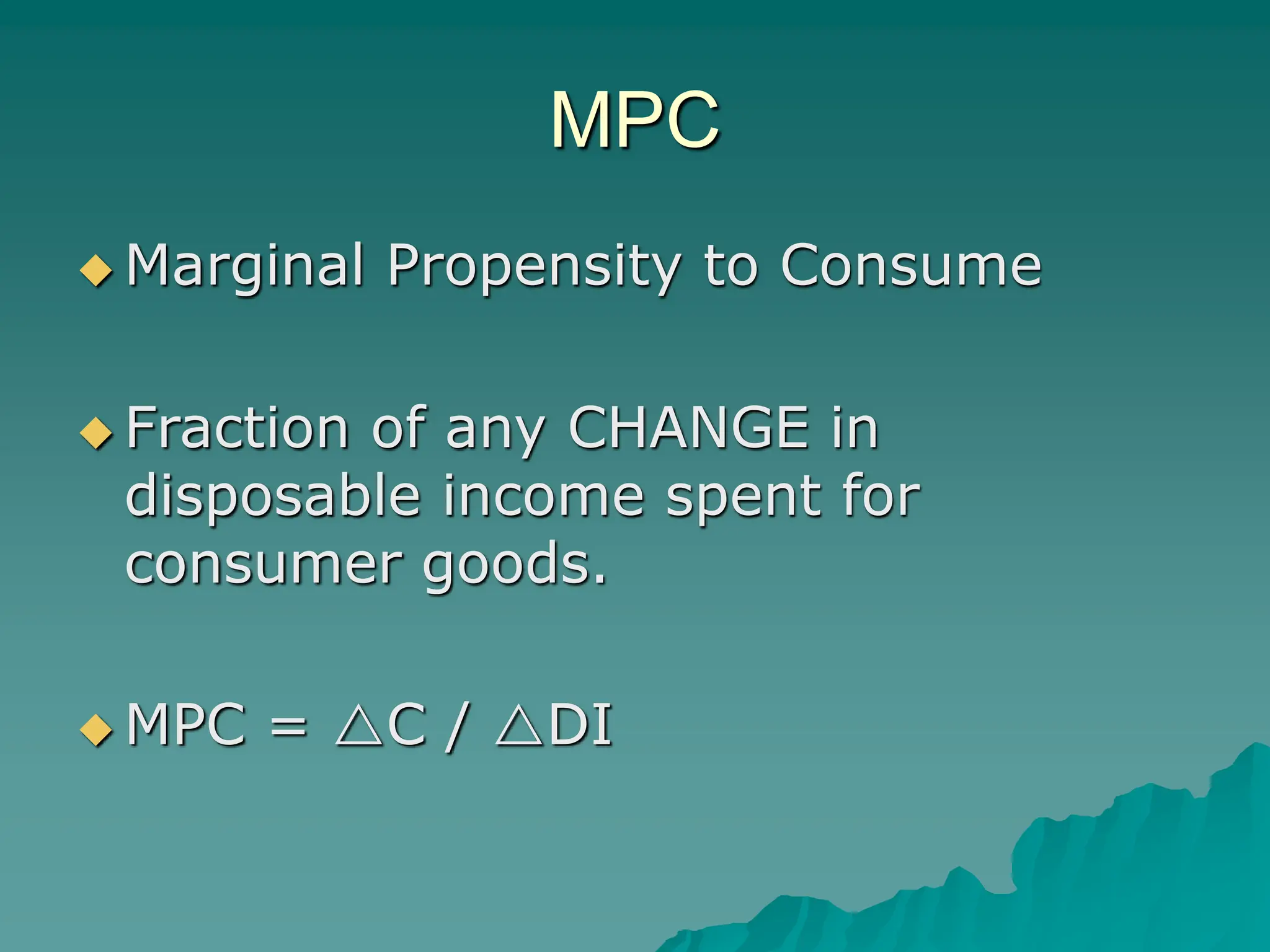
MPC
 Marginal Propensity to Consume
 Fraction of any CHANGE in
disposable income spent for
consumer goods.
 MPC = C / DI
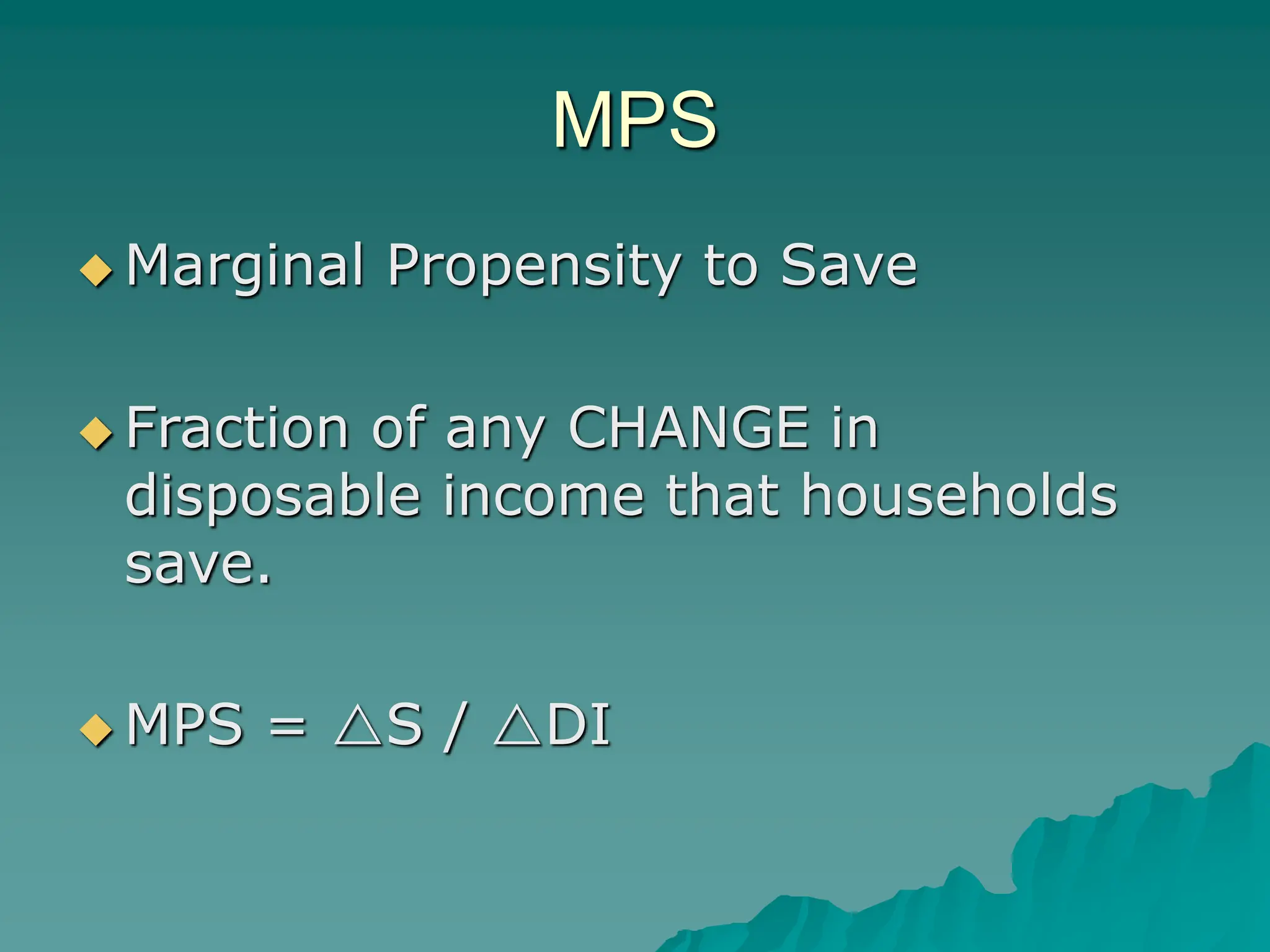
MPS
 Marginal Propensity to Save
 Fraction of any CHANGE in
disposable income that households
save.
 MPS = S / DI
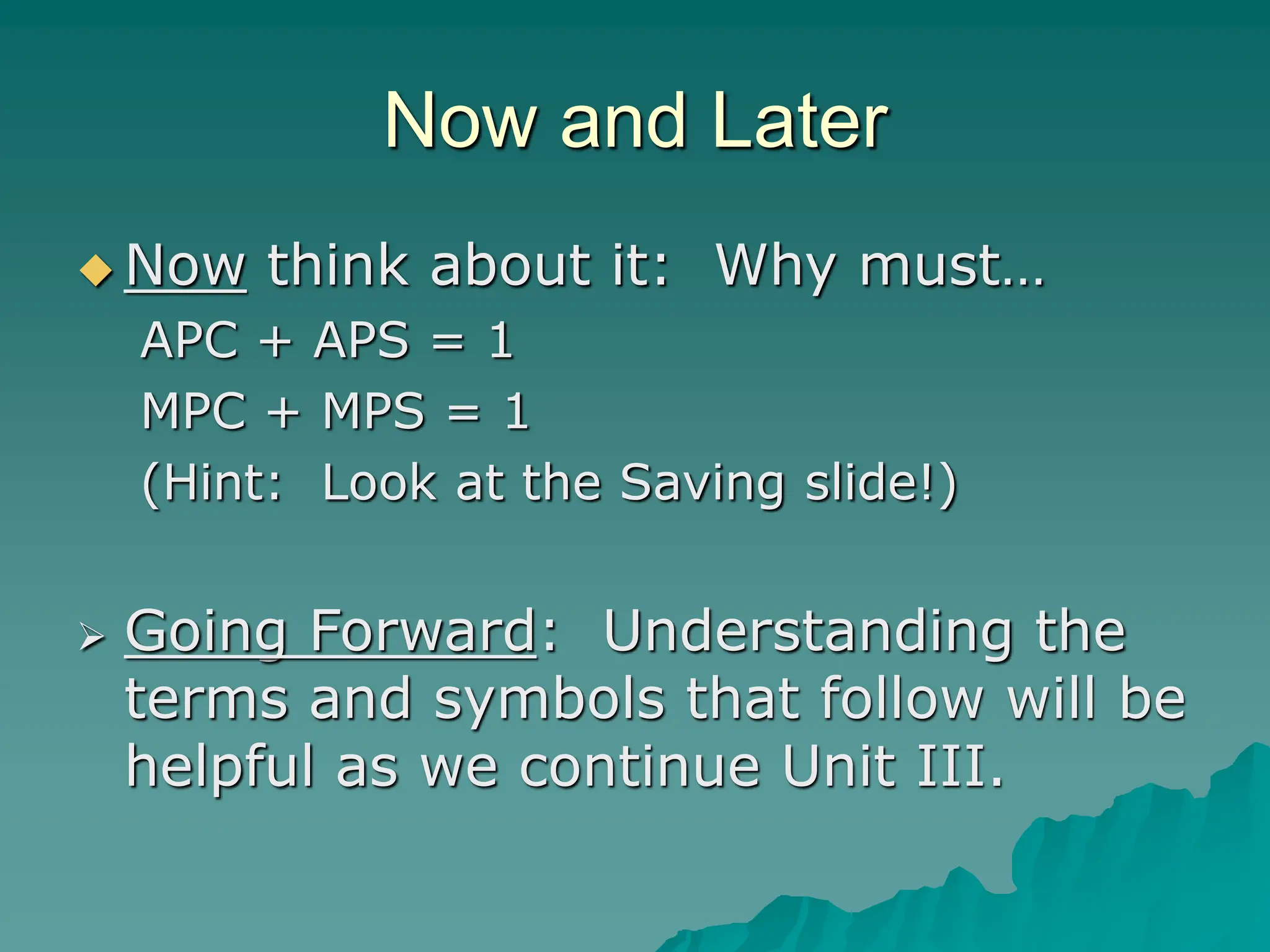
Now and Later
 Now think about it: Why must…
APC + APS = 1
MPC + MPS = 1
(Hint: Look at the Saving slide!)
 Going Forward: Understanding the
terms and symbols that follow will be
helpful as we continue Unit III.
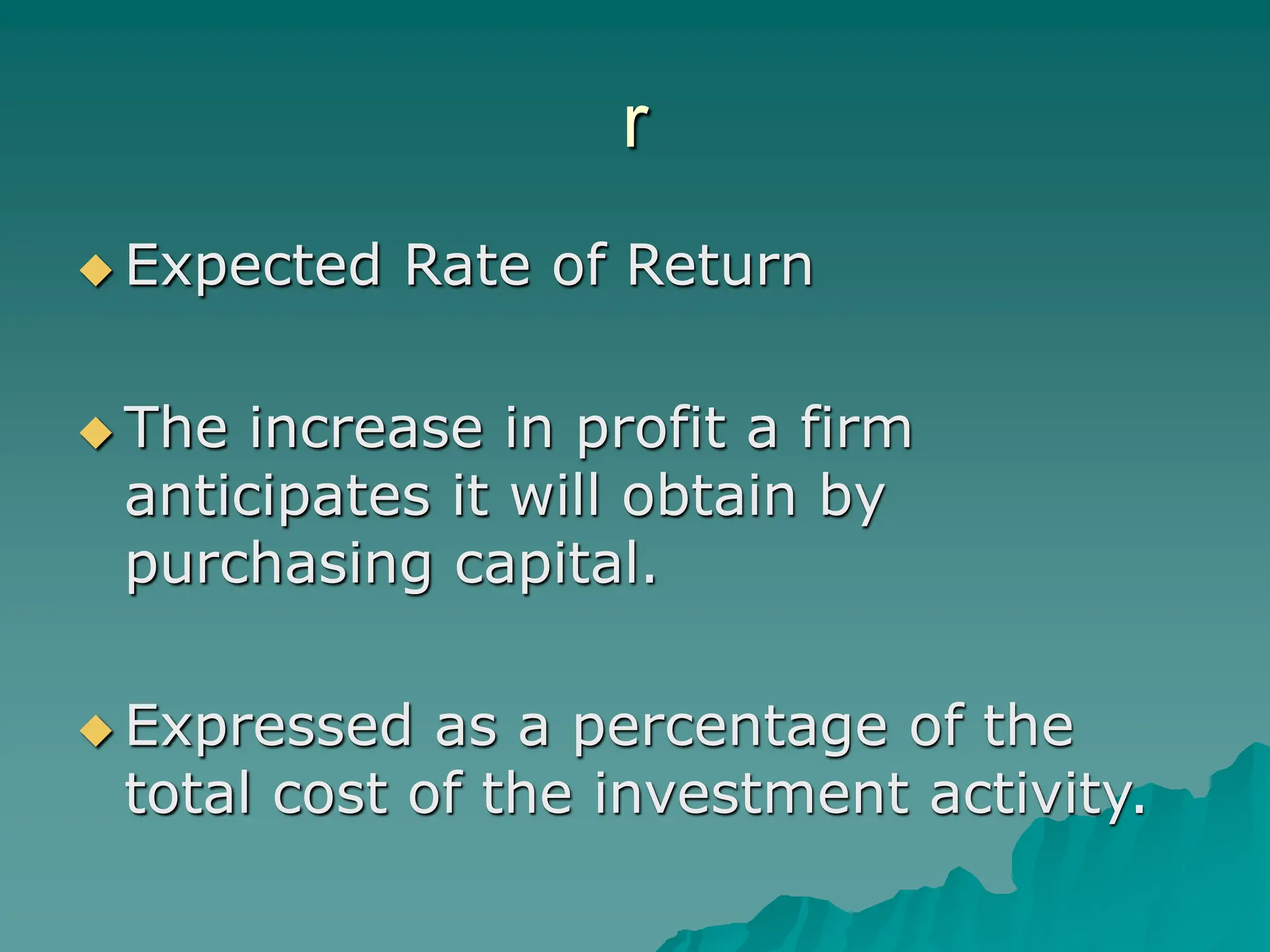
r
 Expected Rate of Return
 The increase in profit a firm
anticipates it will obtain by
purchasing capital.
 Expressed as a percentage of the
total cost of the investment activity.
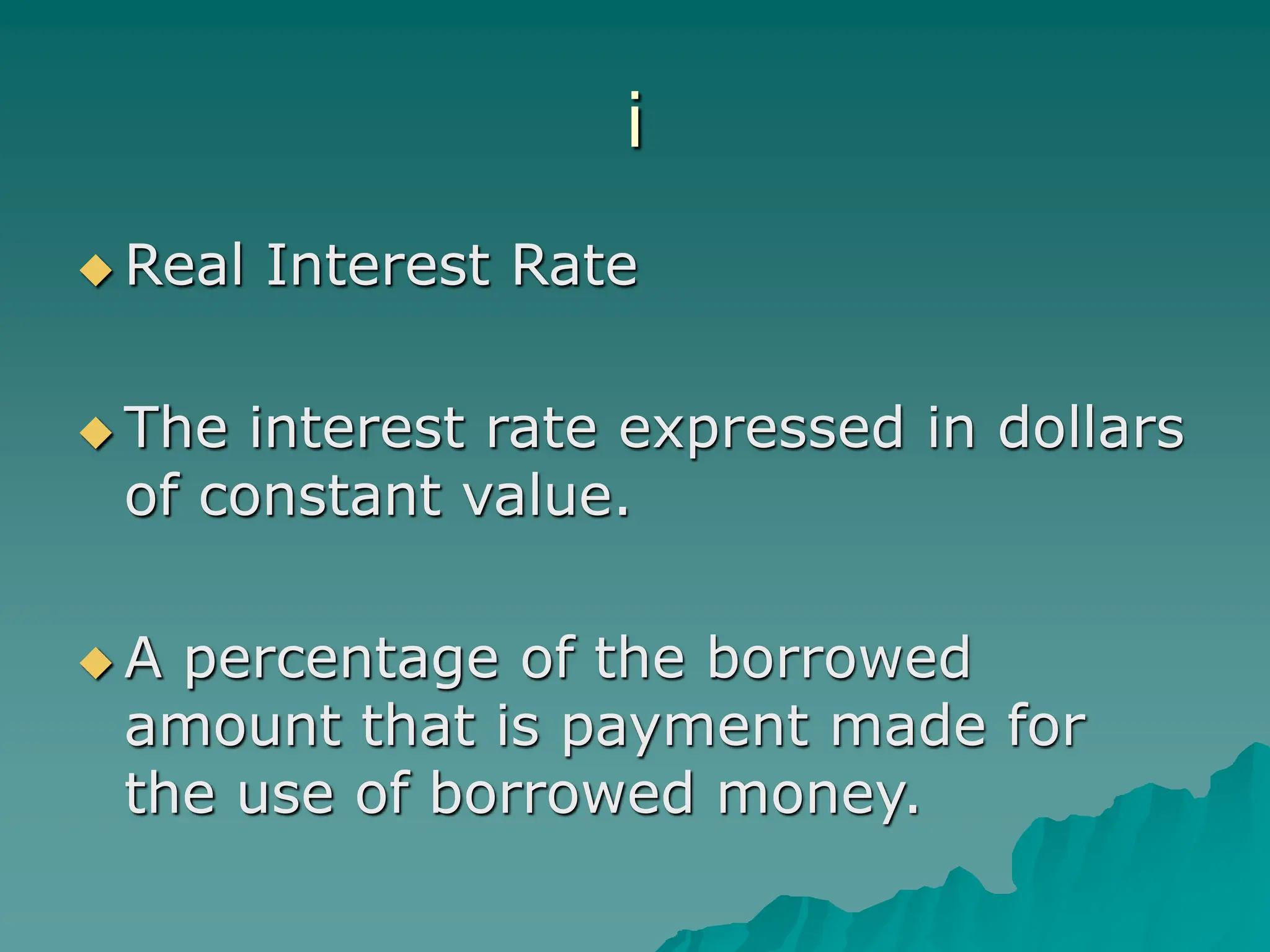
i
 Real Interest Rate
 The interest rate expressed in dollars
of constant value.
 A percentage of the borrowed
amount that is payment made for
the use of borrowed money.
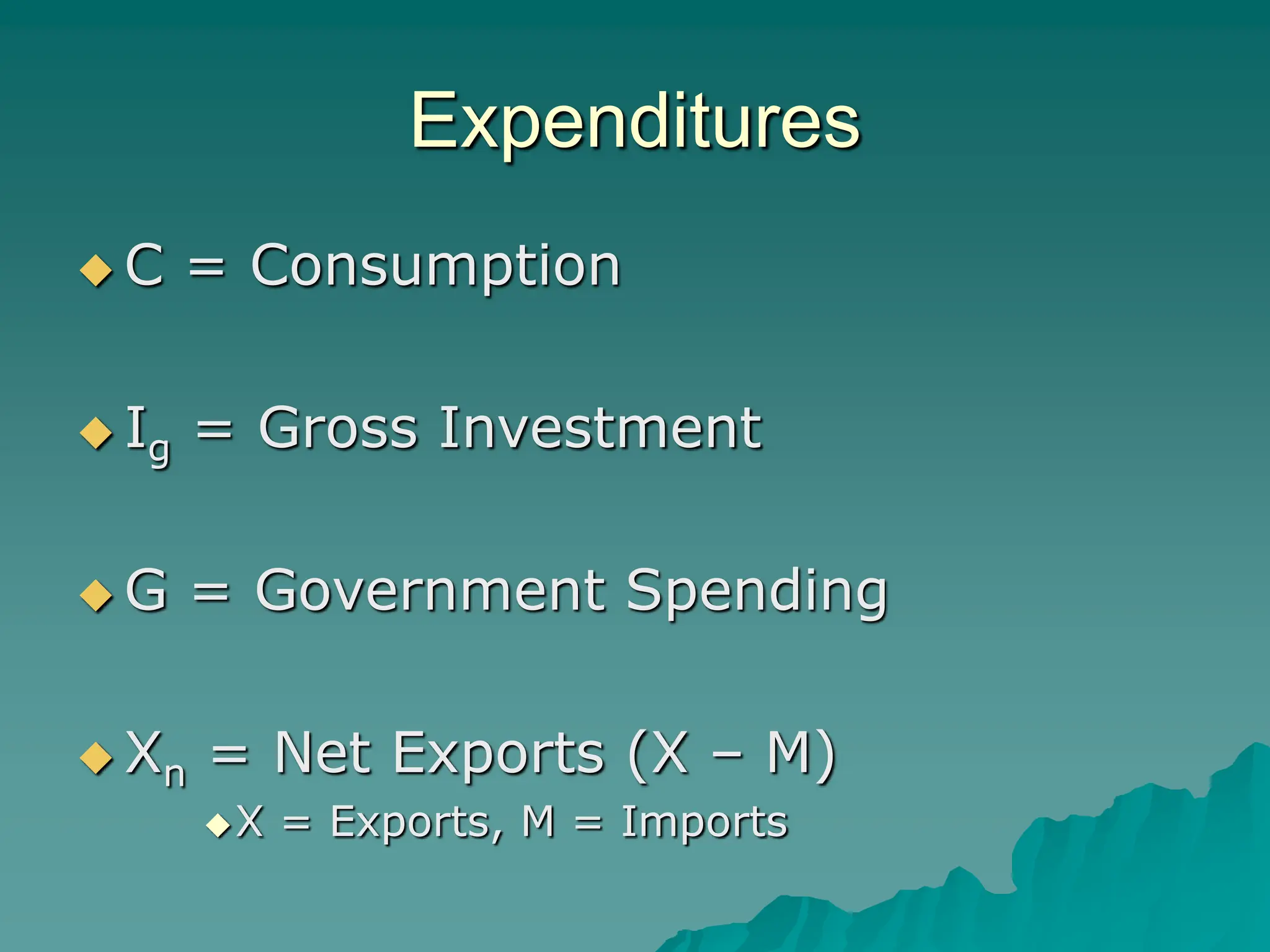
Expenditures
 C = Consumption
 Ig = Gross Investment
 G = Government Spending
 Xn = Net Exports (X – M)
X = Exports, M = Imports
AE
 Aggregate Expenditures
 The total amount spent on final
goods and services in the economy.

CH 1.2 marginal propensity to save and MP to consume .ppt

  • 1.
  • 2.
    Intro to UnitIII  In Macro Unit III, we will ultimately employ the AD-AS model to explore how changes in in the economy and government policy affect real GDP, employment, and the price level.  We will start building our model by taking a closer look at Consumption, since it is the largest component of GDP.
  • 3.
    AD  Aggregate Demand A schedule or curve that shows the total quantity of goods and services demanded (purchased) at different price levels.
  • 4.
    AS  Aggregate Supply A schedule or curve showing the total quantity of goods and services supplied (produced) at different price levels.
  • 5.
    GDP  Gross DomesticProduct  The total market value of all final goods and services produced annually within the boundaries of the United States.
  • 6.
    Y  National Income Economists often use output and income interchangeably, because whatever is spent on a product (output value) is also the income of the people producing it.
  • 7.
    DI  Disposable Income= the sum of the incomes of all the individuals in the economy after all taxes have been deducted and all transfer payments have been added.  DI = Y - Taxes + Transfers  Disposable Income is the income available for personal consumption expenditures and personal saving.
  • 8.
    S  Saving  Disposableincome not spent for consumer goods.  We can do two things with our disposable income…spend it (C) or save it (S). So, S = DI – C.
  • 9.
    APC  Average Propensityto Consume  Fraction of disposable income that households plan to spend for consumer goods and services.  APC = C / DI
  • 10.
    APS  Average Propensityto Save  Fraction of disposable income that households save.  APS = S / DI
  • 11.
    MPC  Marginal Propensityto Consume  Fraction of any CHANGE in disposable income spent for consumer goods.  MPC = C / DI
  • 12.
    MPS  Marginal Propensityto Save  Fraction of any CHANGE in disposable income that households save.  MPS = S / DI
  • 13.
    Now and Later Now think about it: Why must… APC + APS = 1 MPC + MPS = 1 (Hint: Look at the Saving slide!)  Going Forward: Understanding the terms and symbols that follow will be helpful as we continue Unit III.
  • 14.
    r  Expected Rateof Return  The increase in profit a firm anticipates it will obtain by purchasing capital.  Expressed as a percentage of the total cost of the investment activity.
  • 15.
    i  Real InterestRate  The interest rate expressed in dollars of constant value.  A percentage of the borrowed amount that is payment made for the use of borrowed money.
  • 16.
    Expenditures  C =Consumption  Ig = Gross Investment  G = Government Spending  Xn = Net Exports (X – M) X = Exports, M = Imports
  • 17.
    AE  Aggregate Expenditures The total amount spent on final goods and services in the economy.