Copyright © 2012 Pearson Education, Inc.
Publishing as Prentice HallManagement, Eleventh Edition by Stephen P. Robbins & Mary Coulter ©2012 Pearson Education, Inc. publishing as Prentice Hall
10-1
Copyright © 2012 Pearson Education, Inc.
Publishing as Prentice HallManagement, Eleventh Edition by Stephen P. Robbins & Mary Coulter ©2012 Pearson Education, Inc. publishing as Prentice Hall
10-2
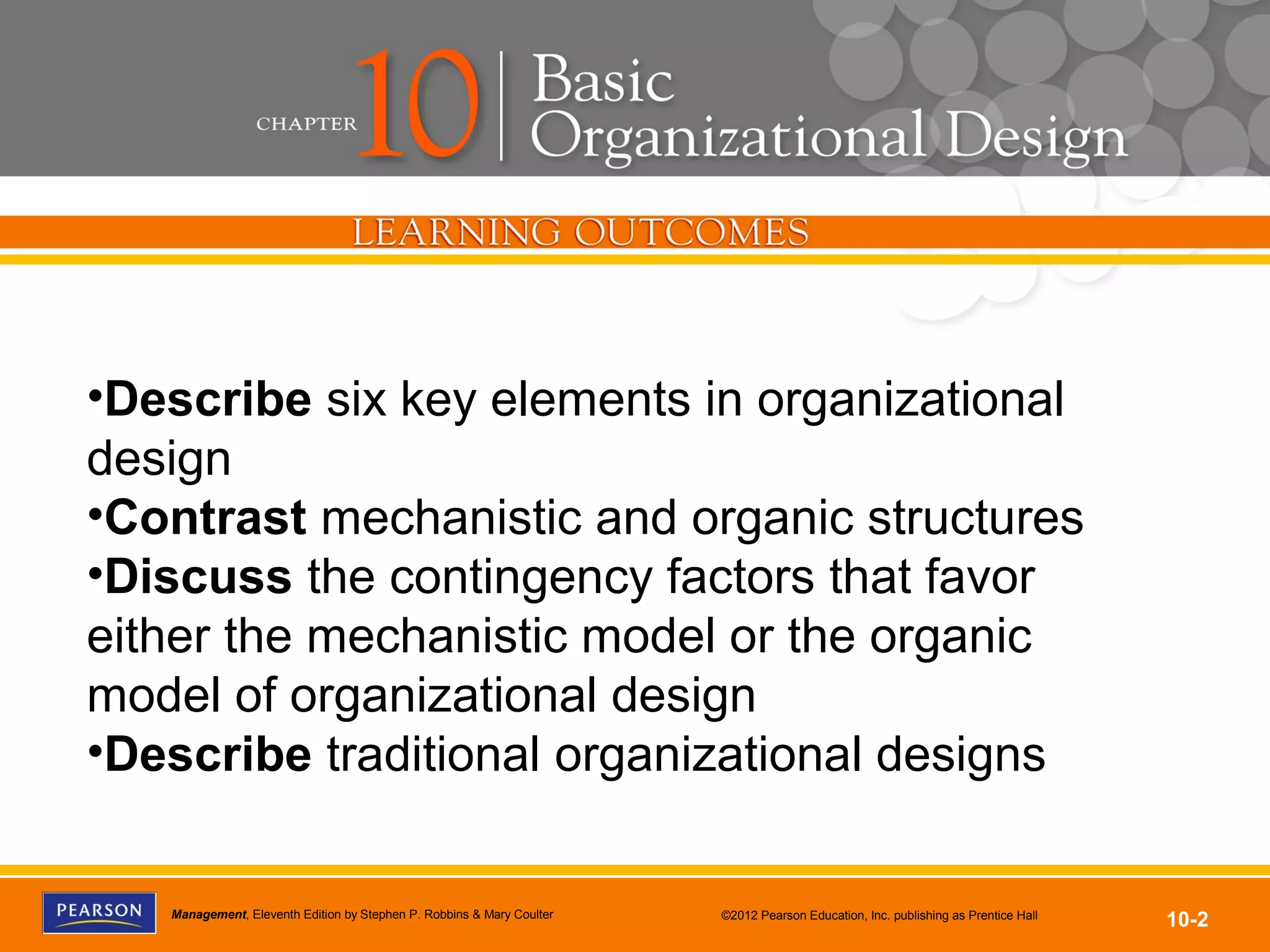
•Describe six key elements in organizational
design
•Contrast mechanistic and organic structures
•Discuss the contingency factors that favor
either the mechanistic model or the organic
model of organizational design
•Describe traditional organizational designs
Copyright © 2012 Pearson Education, Inc.
Publishing as Prentice HallManagement, Eleventh Edition by Stephen P. Robbins & Mary Coulter ©2012 Pearson Education, Inc. publishing as Prentice Hall
10-3
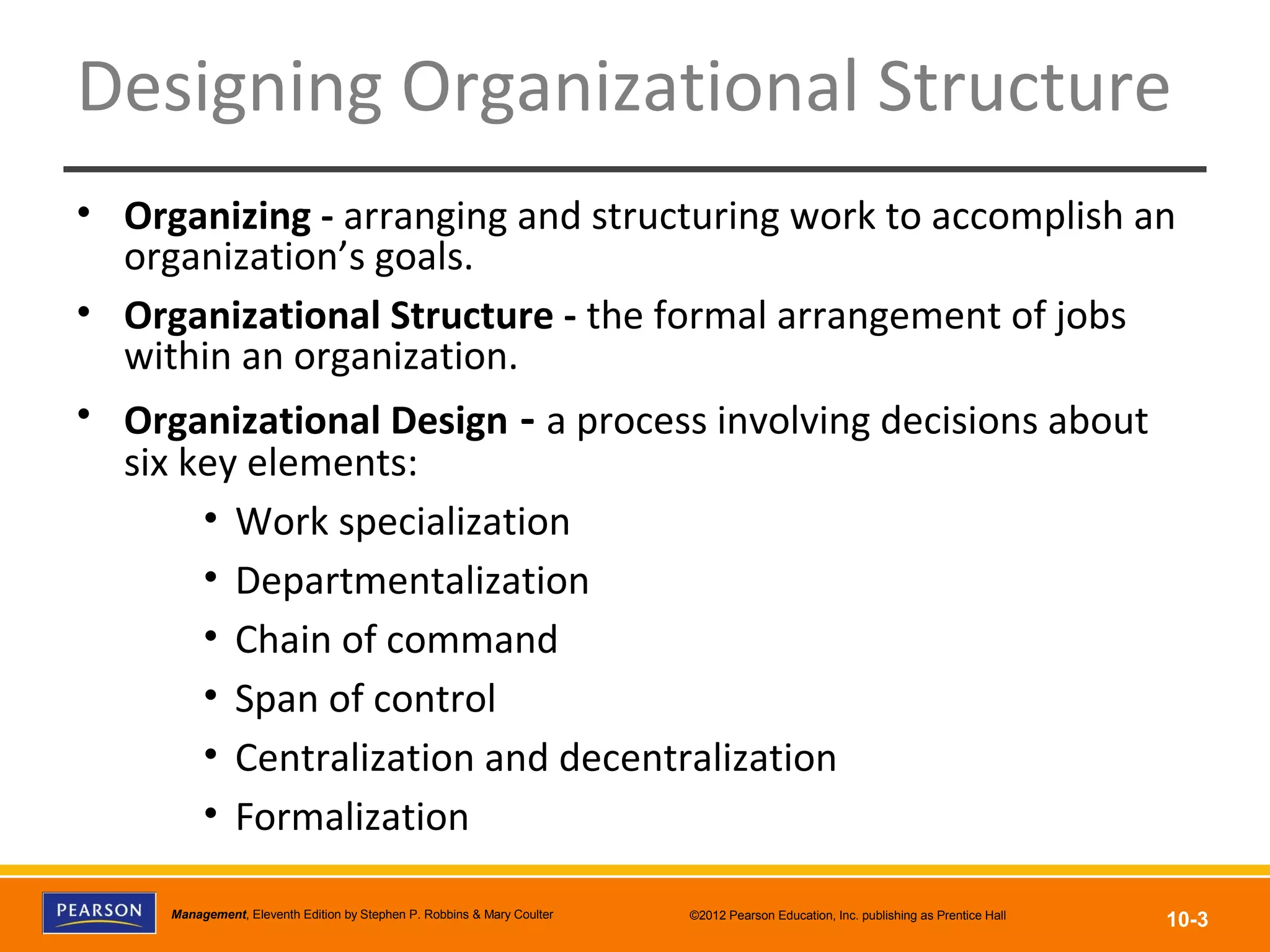
Designing Organizational Structure
• Organizing - arranging and structuring work to accomplish an
organization’s goals.
• Organizational Structure - the formal arrangement of jobs
within an organization.
• Organizational Design - a process involving decisions about
six key elements:
• Work specialization
• Departmentalization
• Chain of command
• Span of control
• Centralization and decentralization
• Formalization
Copyright © 2012 Pearson Education, Inc.
Publishing as Prentice HallManagement, Eleventh Edition by Stephen P. Robbins & Mary Coulter ©2012 Pearson Education, Inc. publishing as Prentice Hall
10-4
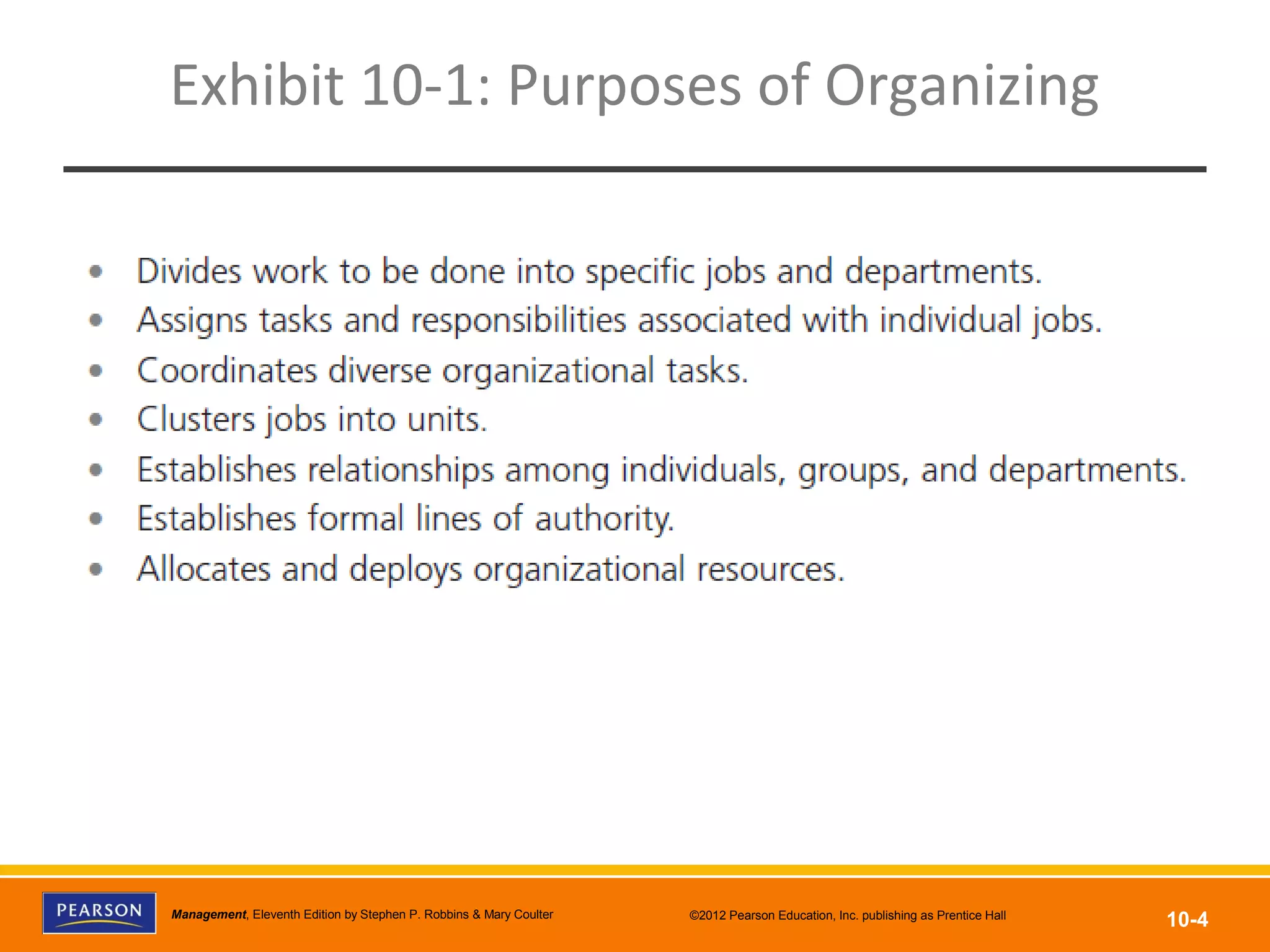
Exhibit 10-1: Purposes of Organizing
Copyright © 2012 Pearson Education, Inc.
Publishing as Prentice HallManagement, Eleventh Edition by Stephen P. Robbins & Mary Coulter ©2012 Pearson Education, Inc. publishing as Prentice Hall
10-5
Organizational Structure
• Work Specialization
– The degree to which tasks in the organization are
divided into separate jobs with each step
completed by a different person.
– Overspecialization can result in human
diseconomies such as boredom, fatigue, stress,
poor quality, increased absenteeism, and higher
turnover.
Copyright © 2012 Pearson Education, Inc.
Publishing as Prentice HallManagement, Eleventh Edition by Stephen P. Robbins & Mary Coulter ©2012 Pearson Education, Inc. publishing as Prentice Hall
10-6
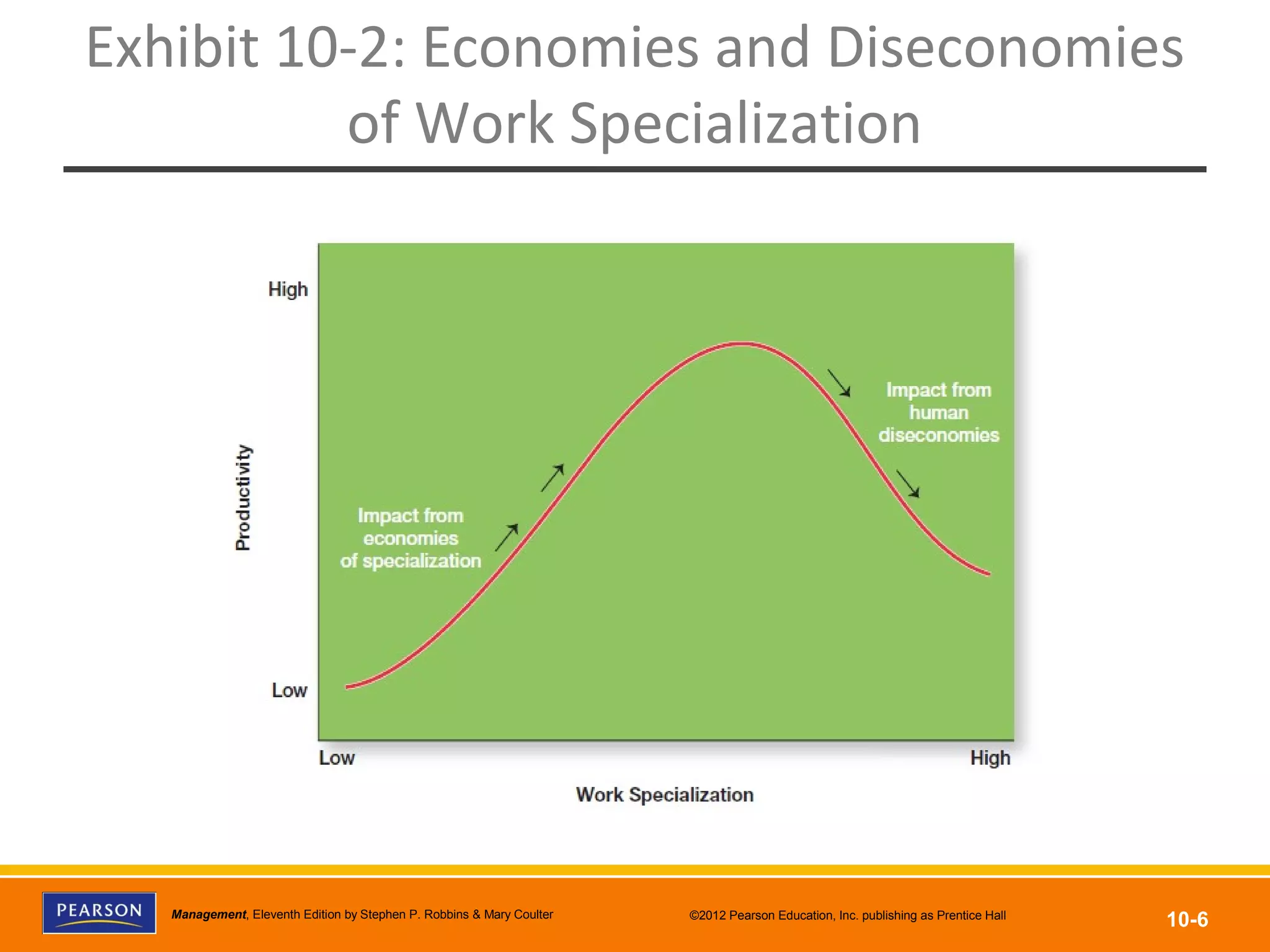
Exhibit 10-2: Economies and Diseconomies
of Work Specialization
Copyright © 2012 Pearson Education, Inc.
Publishing as Prentice HallManagement, Eleventh Edition by Stephen P. Robbins & Mary Coulter ©2012 Pearson Education, Inc. publishing as Prentice Hall
10-7
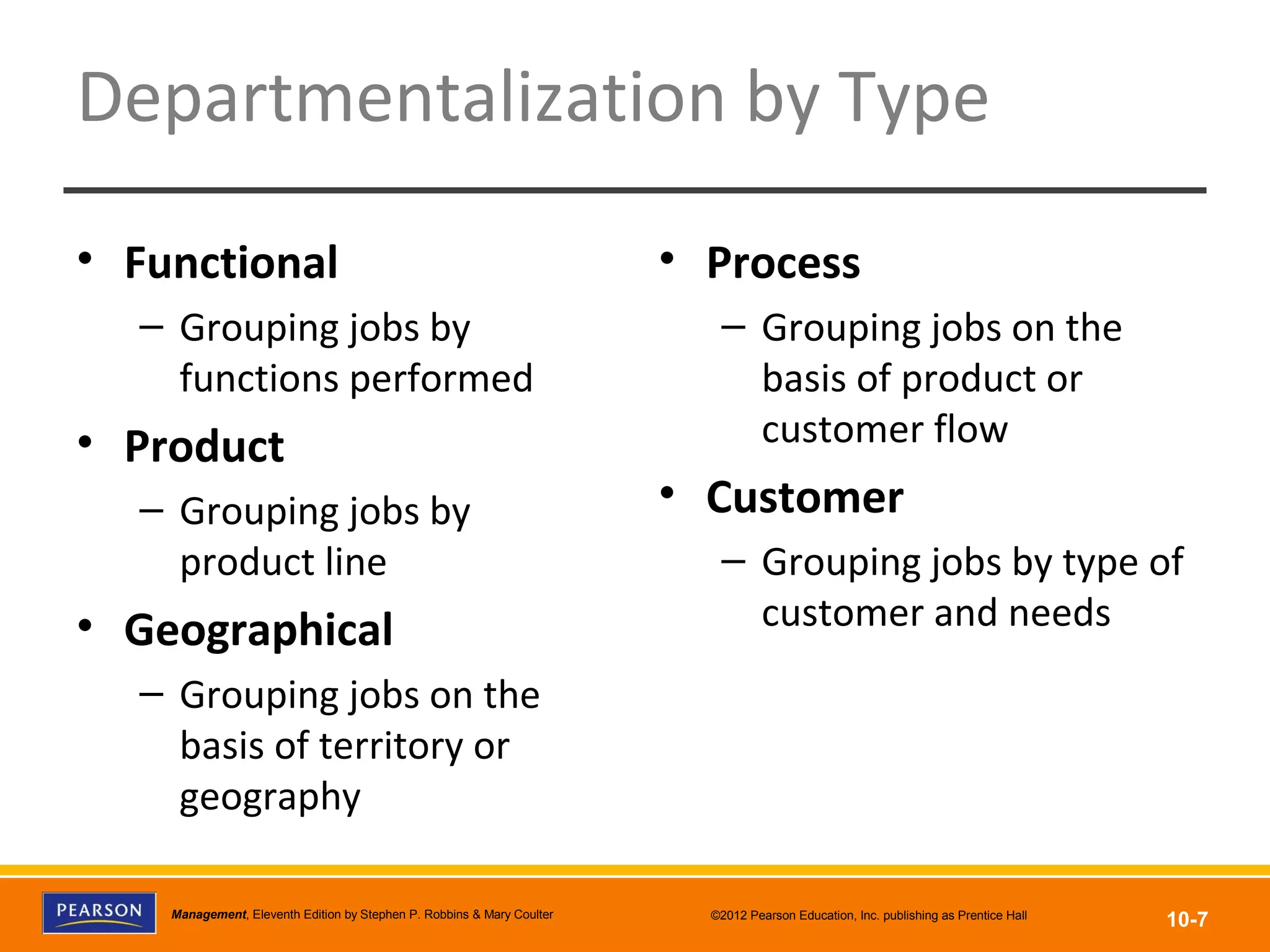
Departmentalization by Type
• Functional
– Grouping jobs by
functions performed
• Product
– Grouping jobs by
product line
• Geographical
– Grouping jobs on the
basis of territory or
geography
• Process
– Grouping jobs on the
basis of product or
customer flow
• Customer
– Grouping jobs by type of
customer and needs
Copyright © 2012 Pearson Education, Inc.
Publishing as Prentice HallManagement, Eleventh Edition by Stephen P. Robbins & Mary Coulter ©2012 Pearson Education, Inc. publishing as Prentice Hall
10-8
Organizational Structure (cont.)
• Chain of Command - the continuous line of
authority that extends from upper levels of an
organization to the lowest levels of the
organization—clarifies who reports to whom.
Copyright © 2012 Pearson Education, Inc.
Publishing as Prentice HallManagement, Eleventh Edition by Stephen P. Robbins & Mary Coulter ©2012 Pearson Education, Inc. publishing as Prentice Hall
10-9
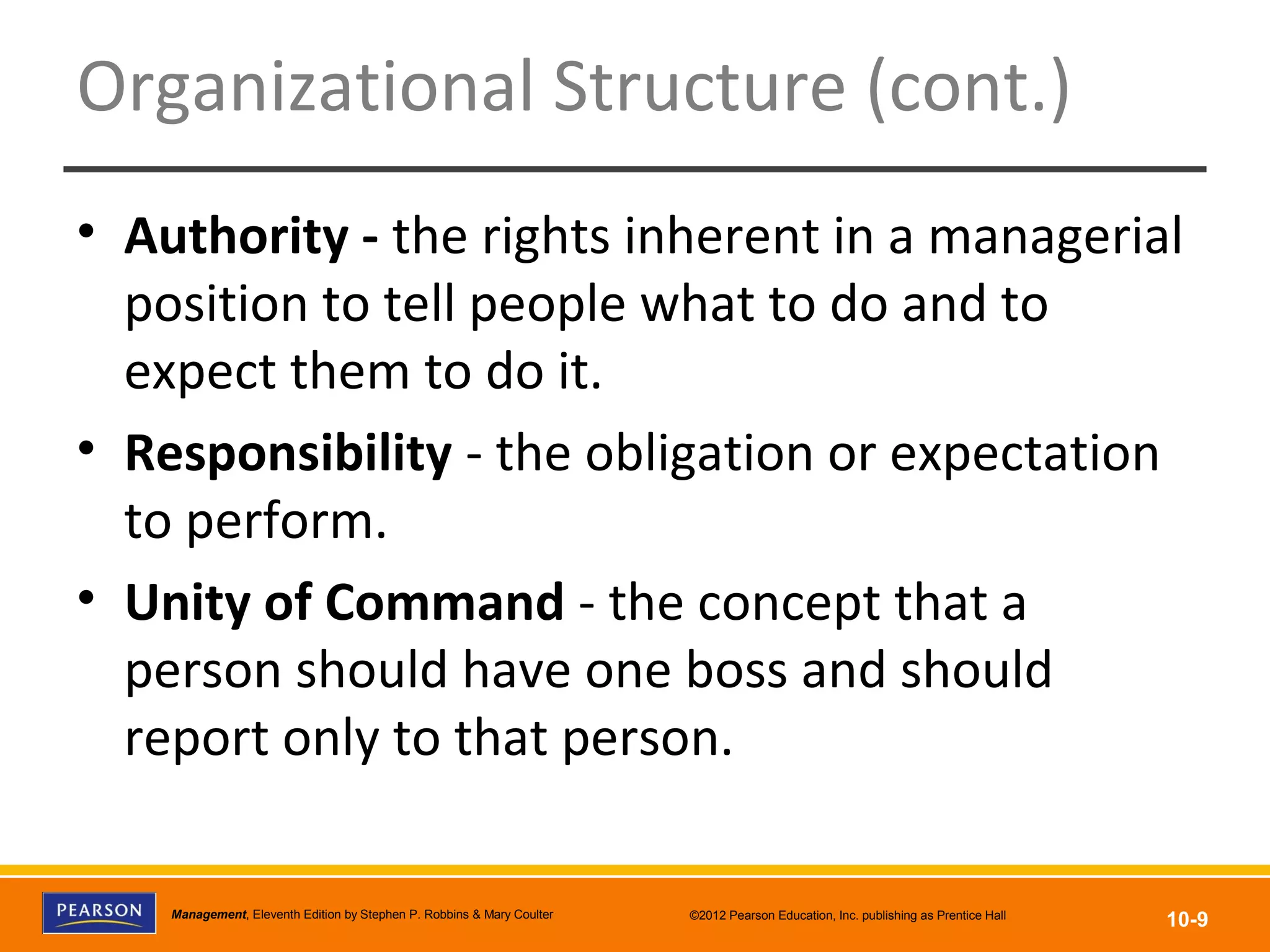
Organizational Structure (cont.)
• Authority - the rights inherent in a managerial
position to tell people what to do and to
expect them to do it.
• Responsibility - the obligation or expectation
to perform.
• Unity of Command - the concept that a
person should have one boss and should
report only to that person.
Copyright © 2012 Pearson Education, Inc.
Publishing as Prentice HallManagement, Eleventh Edition by Stephen P. Robbins & Mary Coulter ©2012 Pearson Education, Inc. publishing as Prentice Hall
10-10
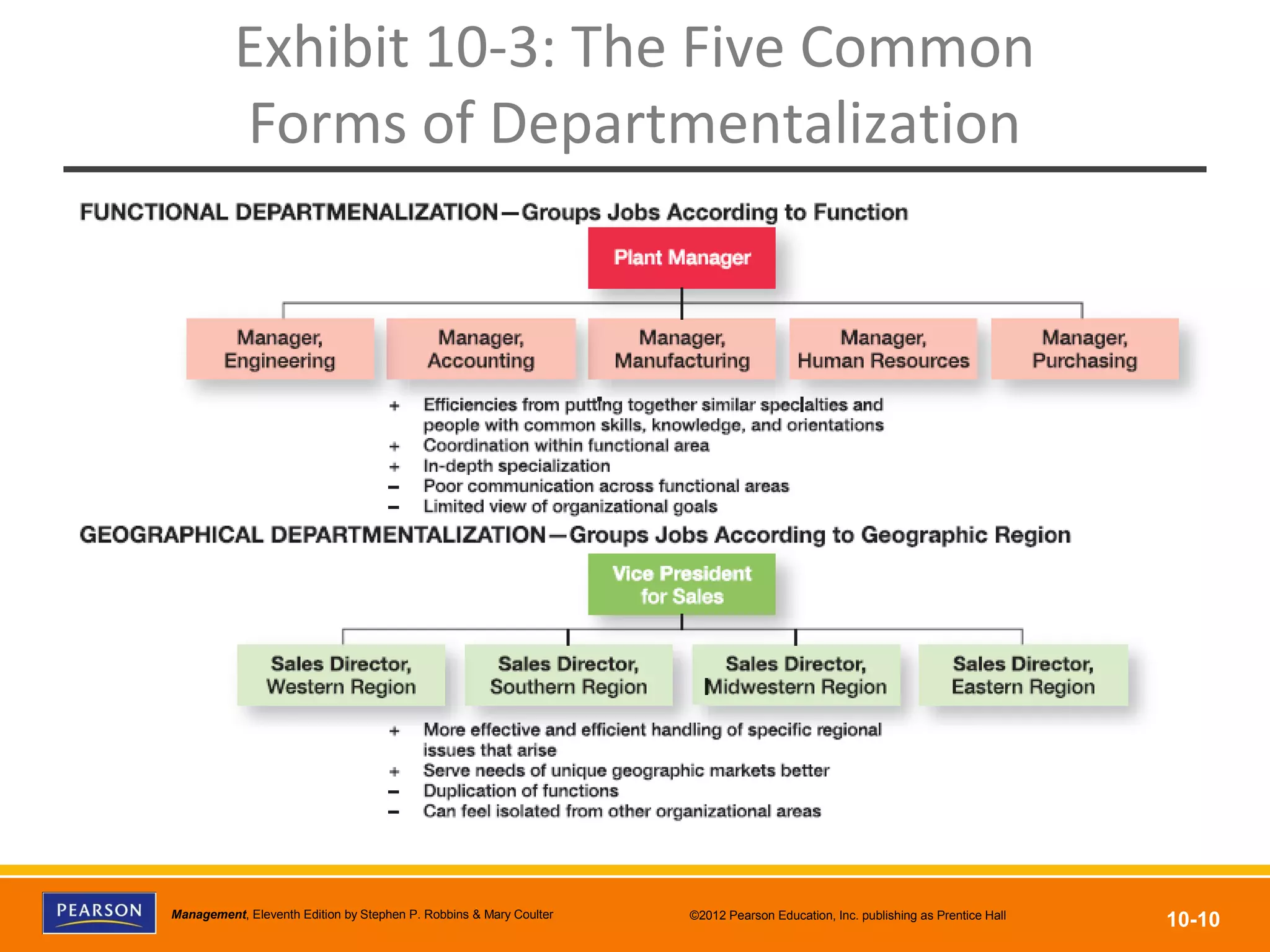
Exhibit 10-3: The Five Common
Forms of Departmentalization
Copyright © 2012 Pearson Education, Inc.
Publishing as Prentice HallManagement, Eleventh Edition by Stephen P. Robbins & Mary Coulter ©2012 Pearson Education, Inc. publishing as Prentice Hall
10-11
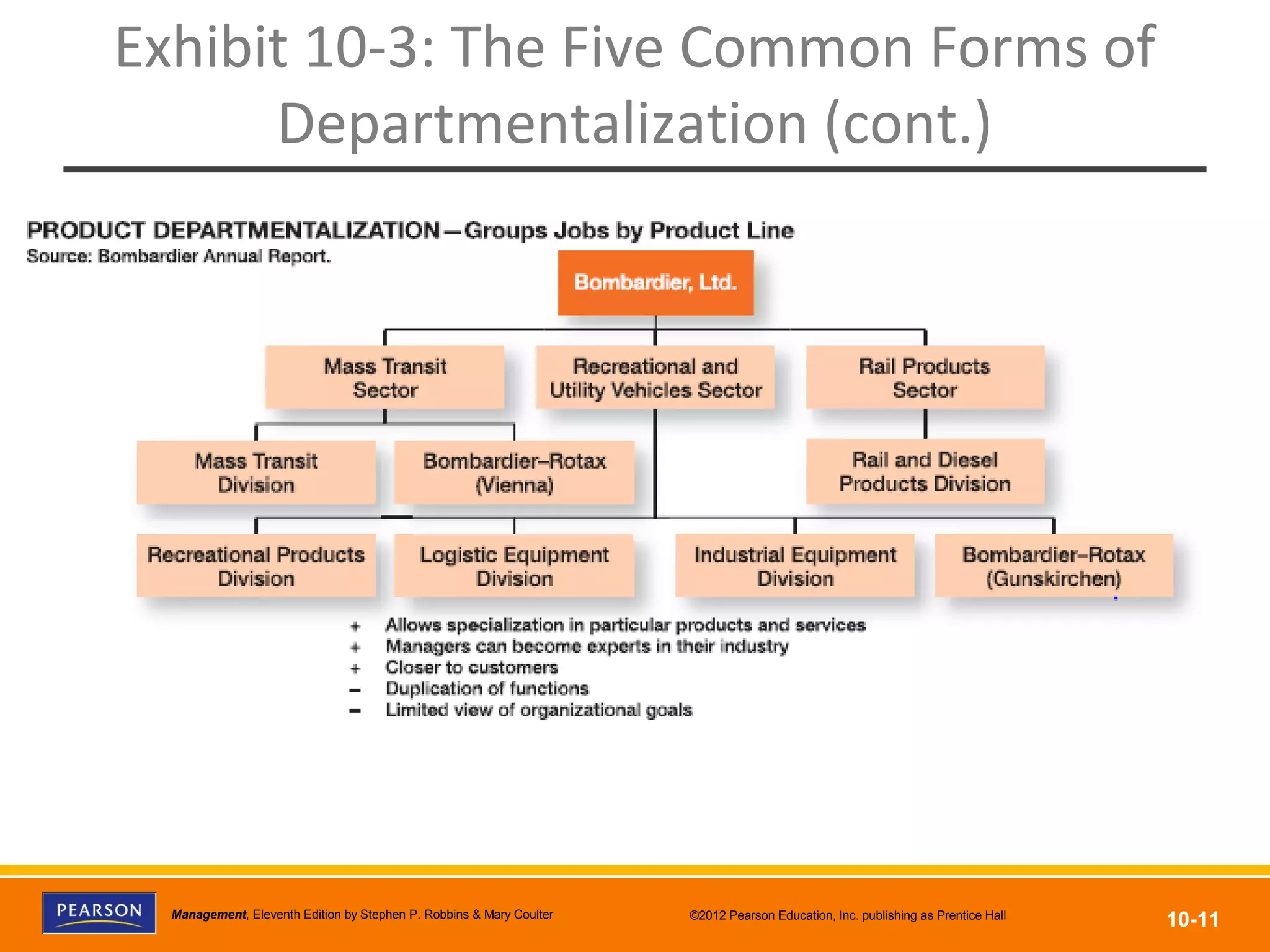
Exhibit 10-3: The Five Common Forms of
Departmentalization (cont.)
Copyright © 2012 Pearson Education, Inc.
Publishing as Prentice HallManagement, Eleventh Edition by Stephen P. Robbins & Mary Coulter ©2012 Pearson Education, Inc. publishing as Prentice Hall
10-12
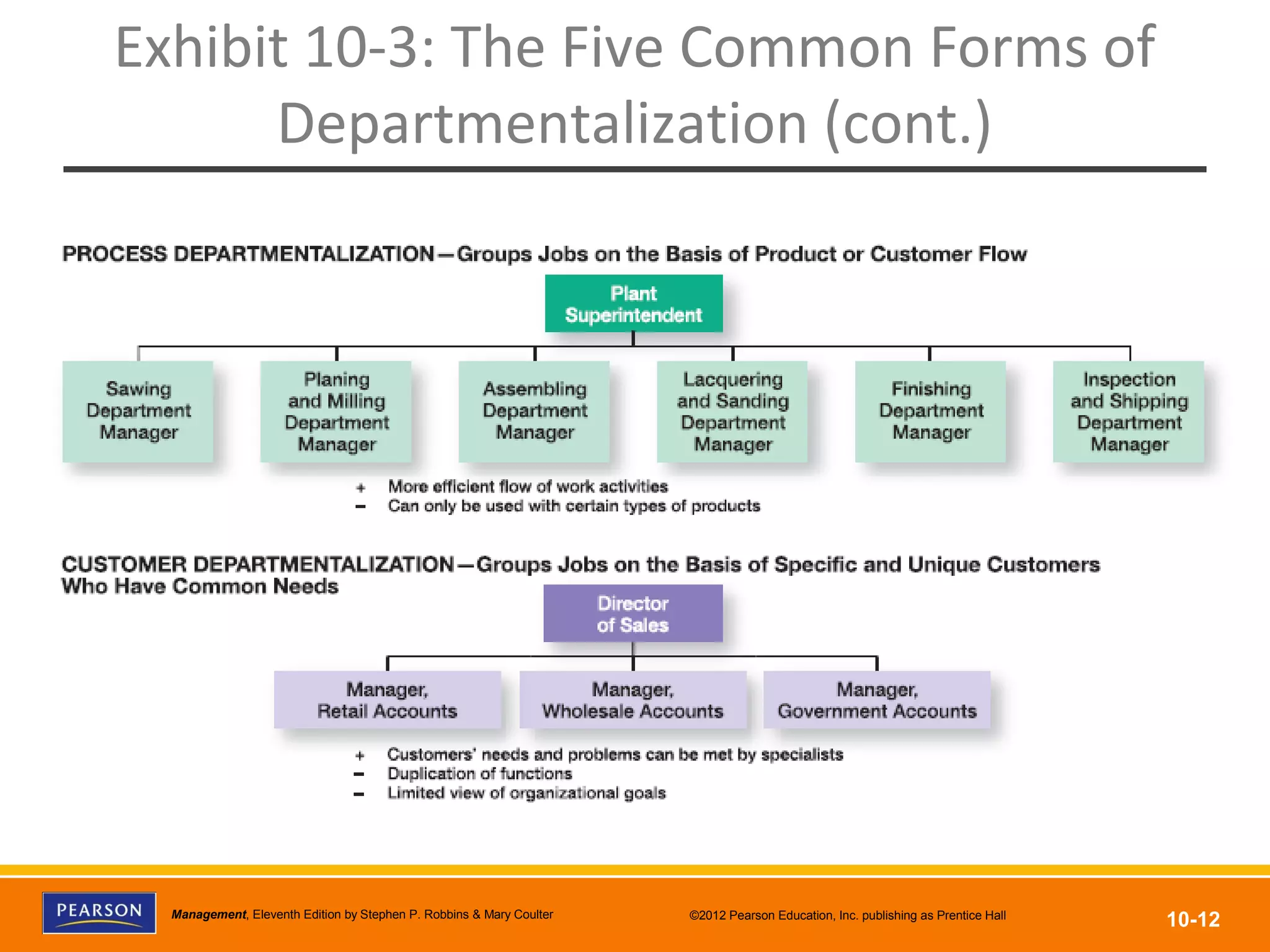
Exhibit 10-3: The Five Common Forms of
Departmentalization (cont.)
Copyright © 2012 Pearson Education, Inc.
Publishing as Prentice HallManagement, Eleventh Edition by Stephen P. Robbins & Mary Coulter ©2012 Pearson Education, Inc. publishing as Prentice Hall
10-13
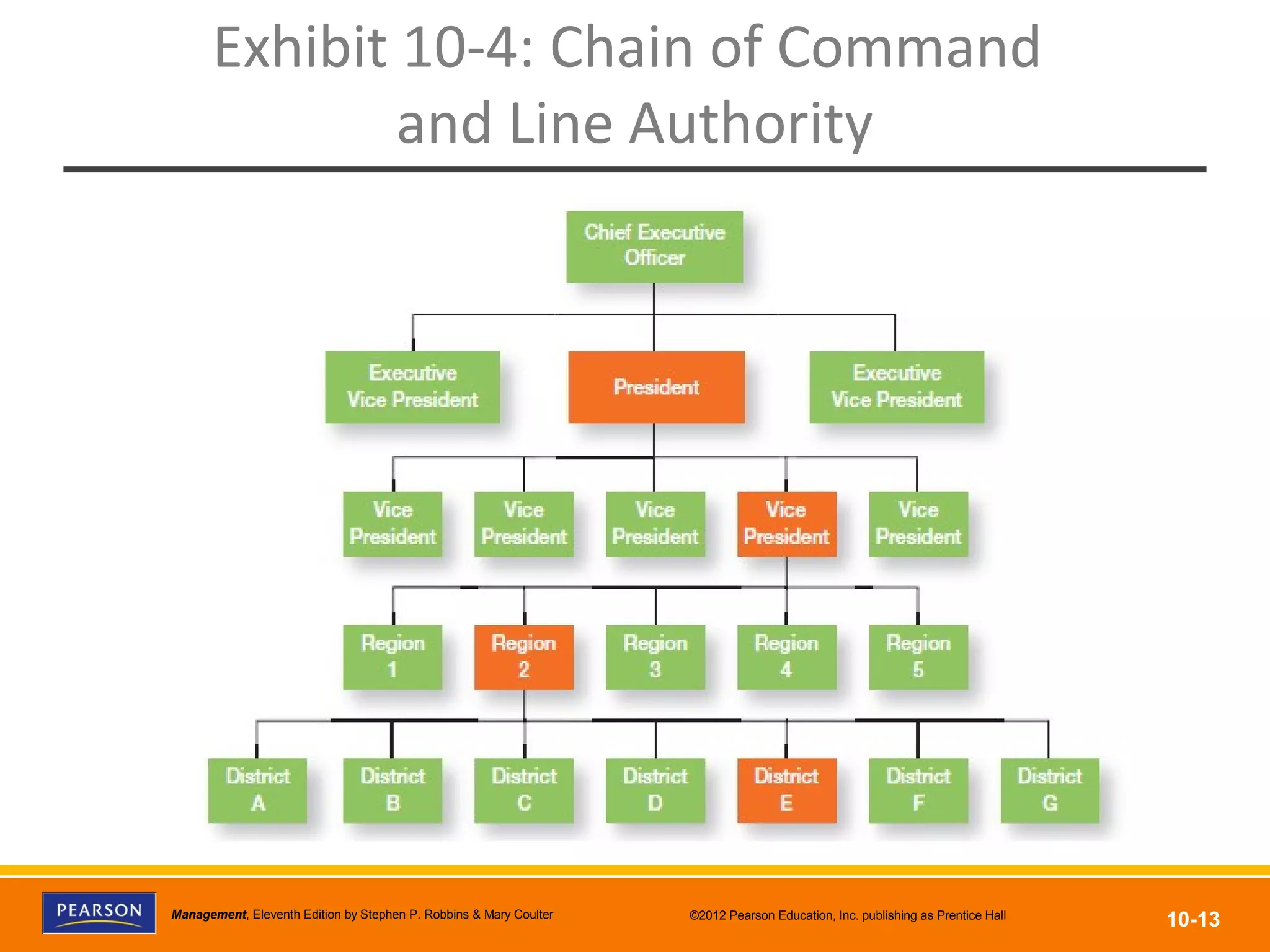
Exhibit 10-4: Chain of Command
and Line Authority
Copyright © 2012 Pearson Education, Inc.
Publishing as Prentice HallManagement, Eleventh Edition by Stephen P. Robbins & Mary Coulter ©2012 Pearson Education, Inc. publishing as Prentice Hall
10-14
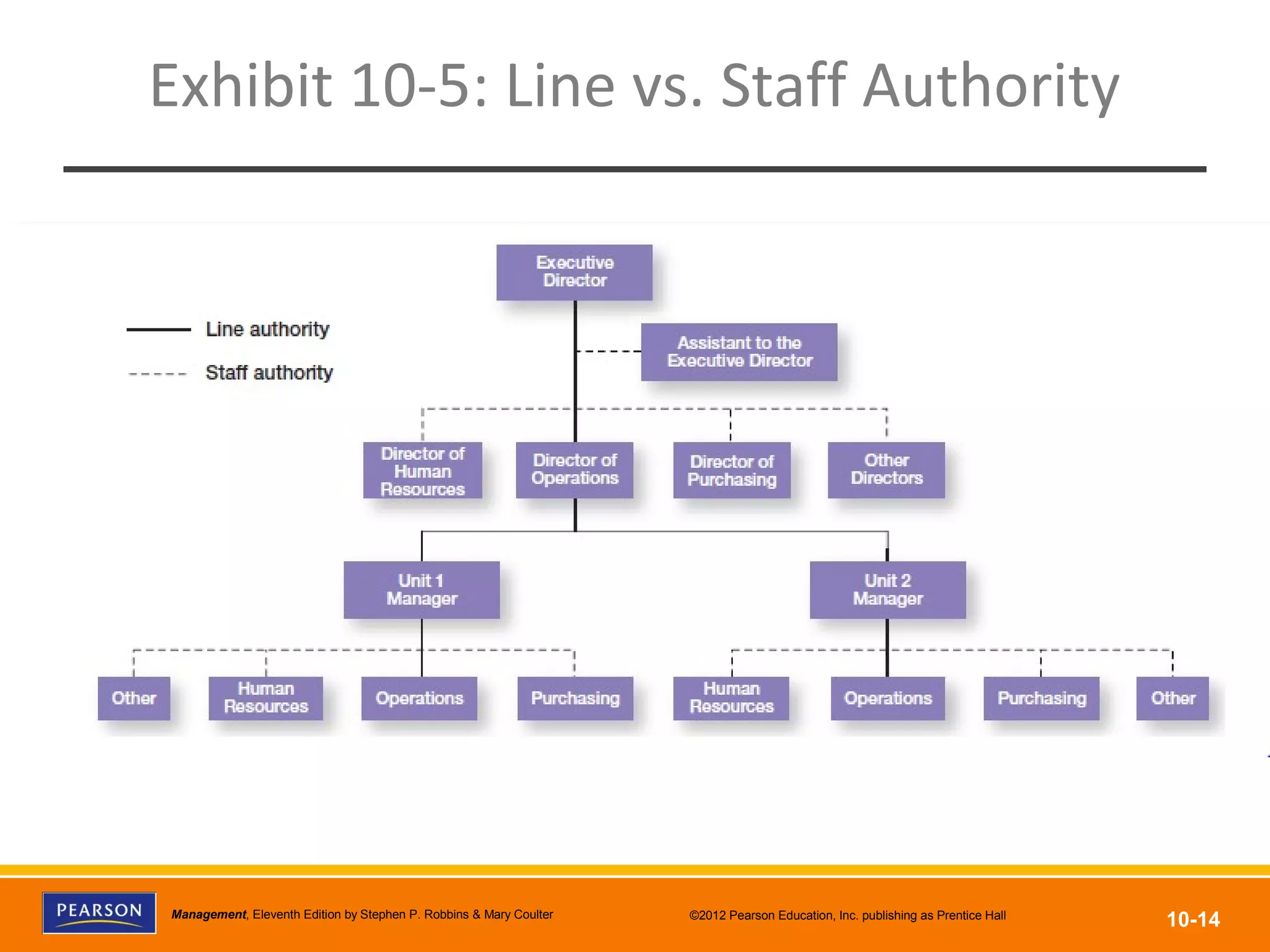
Exhibit 10-5: Line vs. Staff Authority
Copyright © 2012 Pearson Education, Inc.
Publishing as Prentice HallManagement, Eleventh Edition by Stephen P. Robbins & Mary Coulter ©2012 Pearson Education, Inc. publishing as Prentice Hall
10-15
Span of Control
• Span of Control - the number of employees who can
be effectively and efficiently supervised by a
manager.
Copyright © 2012 Pearson Education, Inc.
Publishing as Prentice HallManagement, Eleventh Edition by Stephen P. Robbins & Mary Coulter ©2012 Pearson Education, Inc. publishing as Prentice Hall
10-16
Width of span is affected by:
• Skills and abilities of the manager
• Employee characteristics
• Characteristics of the work being done
• Similarity of tasks
• Complexity of tasks
• Physical proximity of subordinates
• Standardization of tasks
• Sophistication of the organization’s information system
• Strength of the organization’s culture
• Preferred style of the manager
Copyright © 2012 Pearson Education, Inc.
Publishing as Prentice HallManagement, Eleventh Edition by Stephen P. Robbins & Mary Coulter ©2012 Pearson Education, Inc. publishing as Prentice Hall
10-17
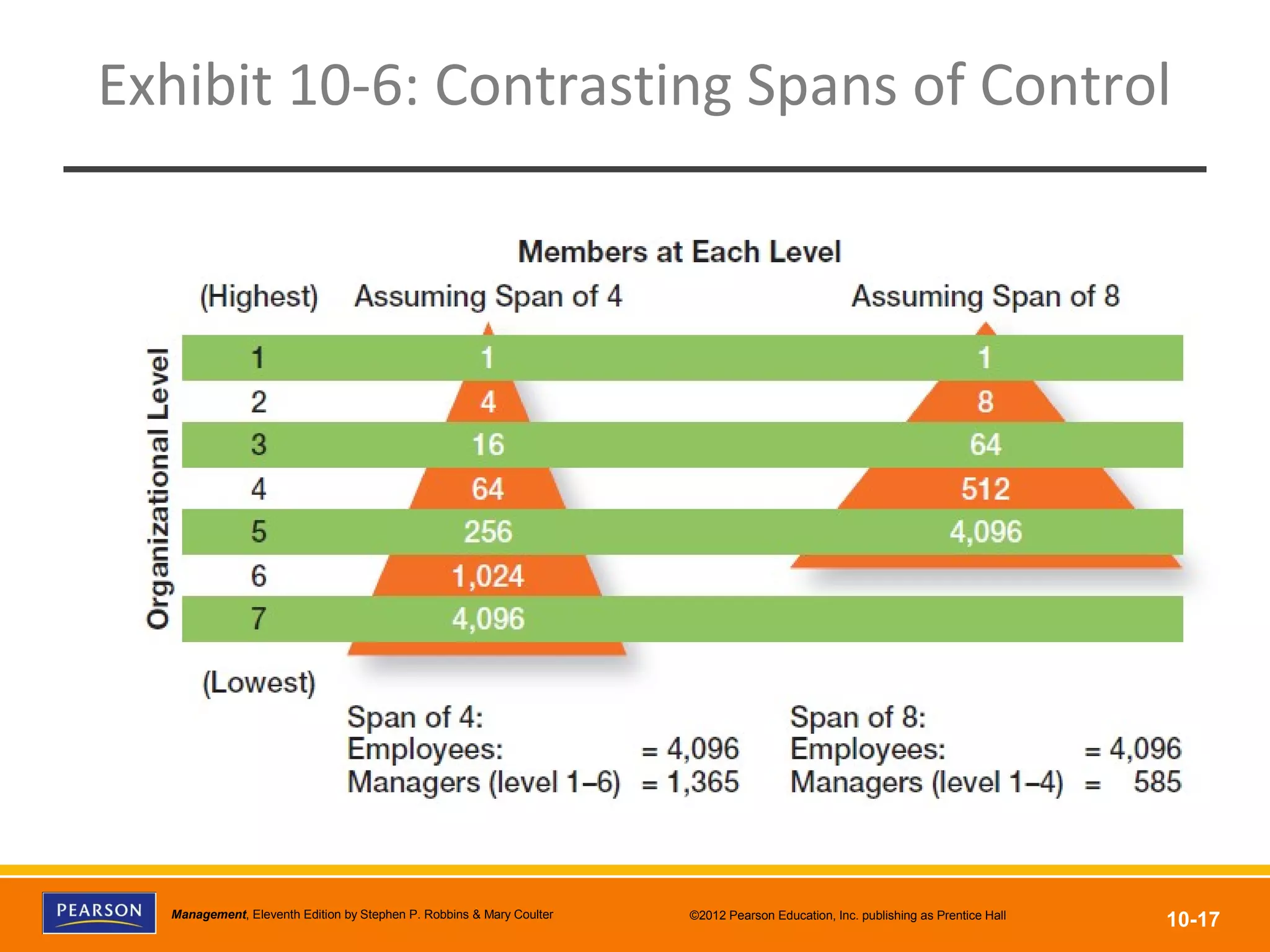
Exhibit 10-6: Contrasting Spans of Control
Copyright © 2012 Pearson Education, Inc.
Publishing as Prentice HallManagement, Eleventh Edition by Stephen P. Robbins & Mary Coulter ©2012 Pearson Education, Inc. publishing as Prentice Hall
10-18
Centralization
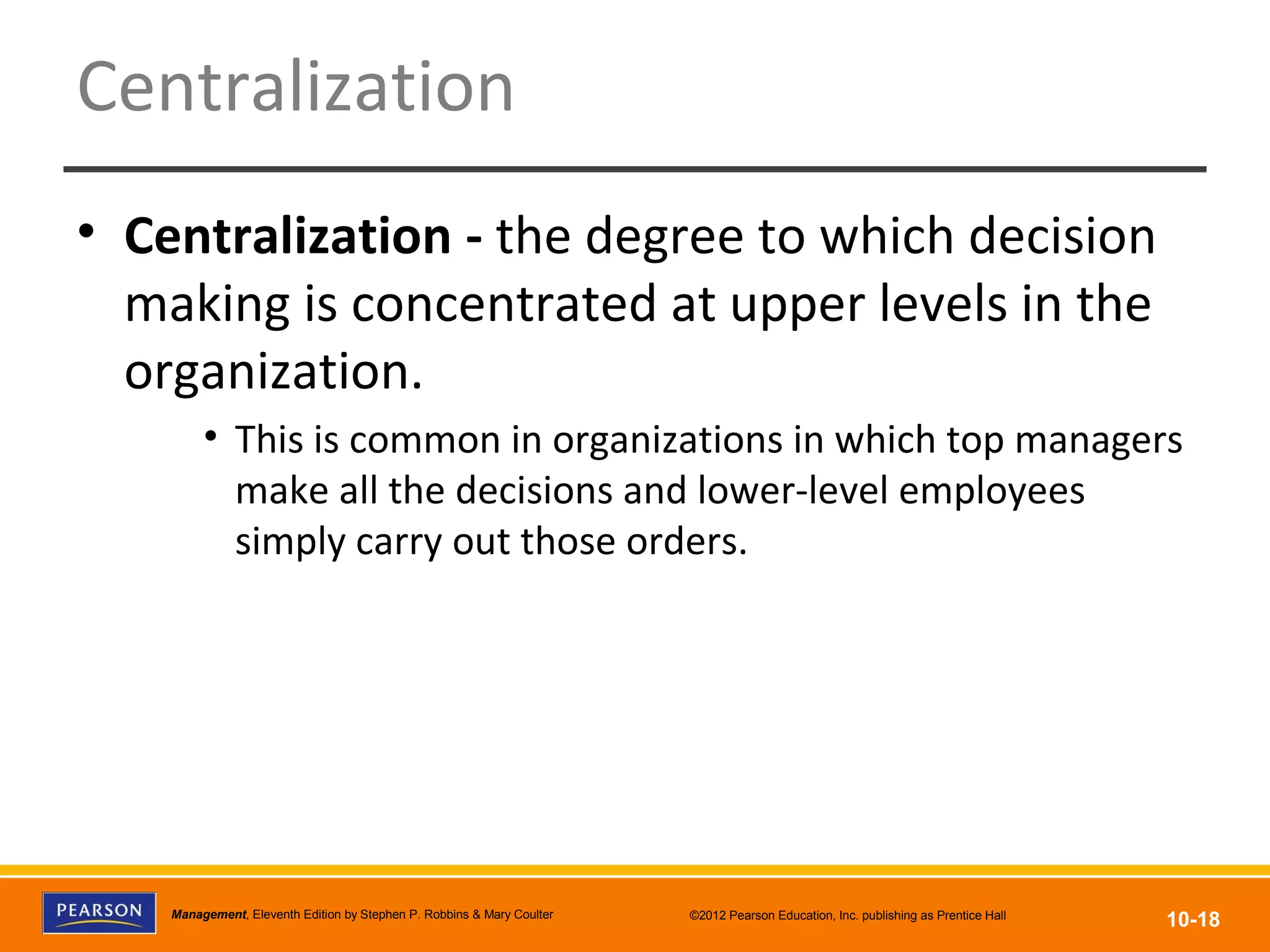
• Centralization - the degree to which decision
making is concentrated at upper levels in the
organization.
• This is common in organizations in which top managers
make all the decisions and lower-level employees
simply carry out those orders.
Copyright © 2012 Pearson Education, Inc.
Publishing as Prentice HallManagement, Eleventh Edition by Stephen P. Robbins & Mary Coulter ©2012 Pearson Education, Inc. publishing as Prentice Hall
10-19
Decentralization
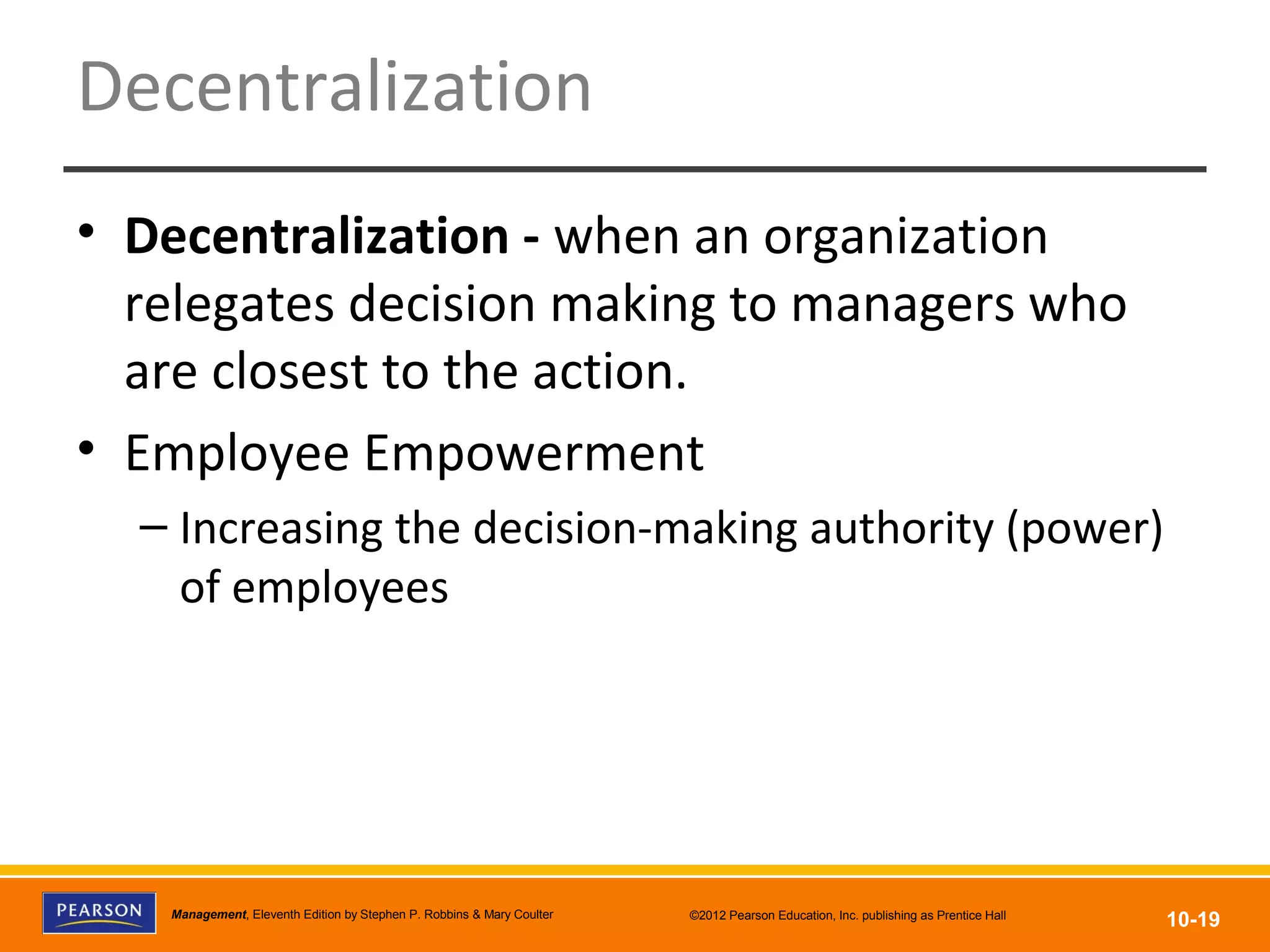
• Decentralization - when an organization
relegates decision making to managers who
are closest to the action.
• Employee Empowerment
– Increasing the decision-making authority (power)
of employees
Copyright © 2012 Pearson Education, Inc.
Publishing as Prentice HallManagement, Eleventh Edition by Stephen P. Robbins & Mary Coulter ©2012 Pearson Education, Inc. publishing as Prentice Hall
10-20
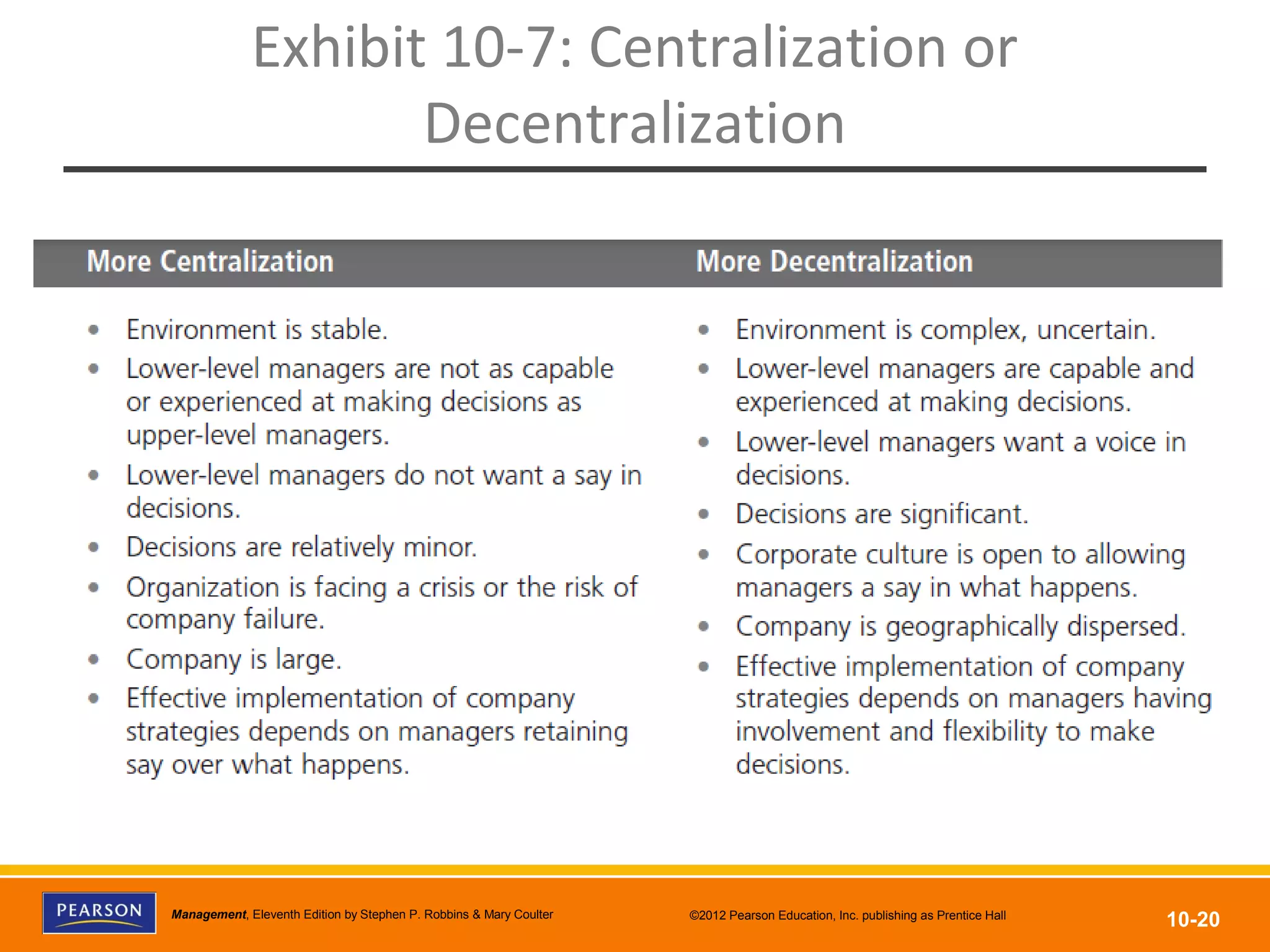
Exhibit 10-7: Centralization or
Decentralization
Copyright © 2012 Pearson Education, Inc.
Publishing as Prentice HallManagement, Eleventh Edition by Stephen P. Robbins & Mary Coulter ©2012 Pearson Education, Inc. publishing as Prentice Hall
10-21
Formalization
• Formalization - the degree to which jobs
within the organization are standardized and
the extent to which employee behavior is
guided by rules and procedures.
– Highly formalized jobs offer little discretion over
what is to be done.
– Low formalization means fewer constraints on
how employees do their work.
Copyright © 2012 Pearson Education, Inc.
Publishing as Prentice HallManagement, Eleventh Edition by Stephen P. Robbins & Mary Coulter ©2012 Pearson Education, Inc. publishing as Prentice Hall
10-22
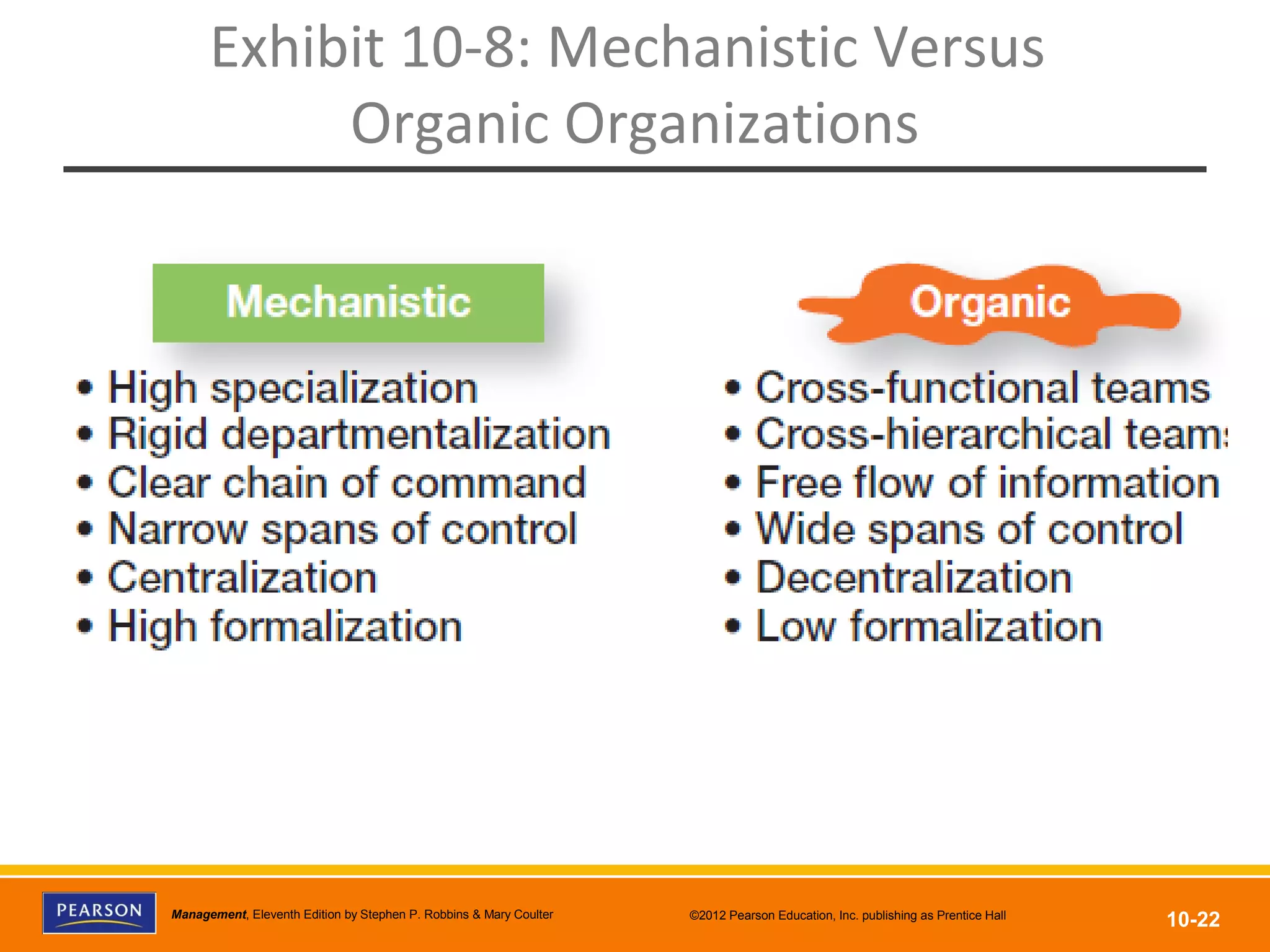
Exhibit 10-8: Mechanistic Versus
Organic Organizations
Copyright © 2012 Pearson Education, Inc.
Publishing as Prentice HallManagement, Eleventh Edition by Stephen P. Robbins & Mary Coulter ©2012 Pearson Education, Inc. publishing as Prentice Hall
10-23
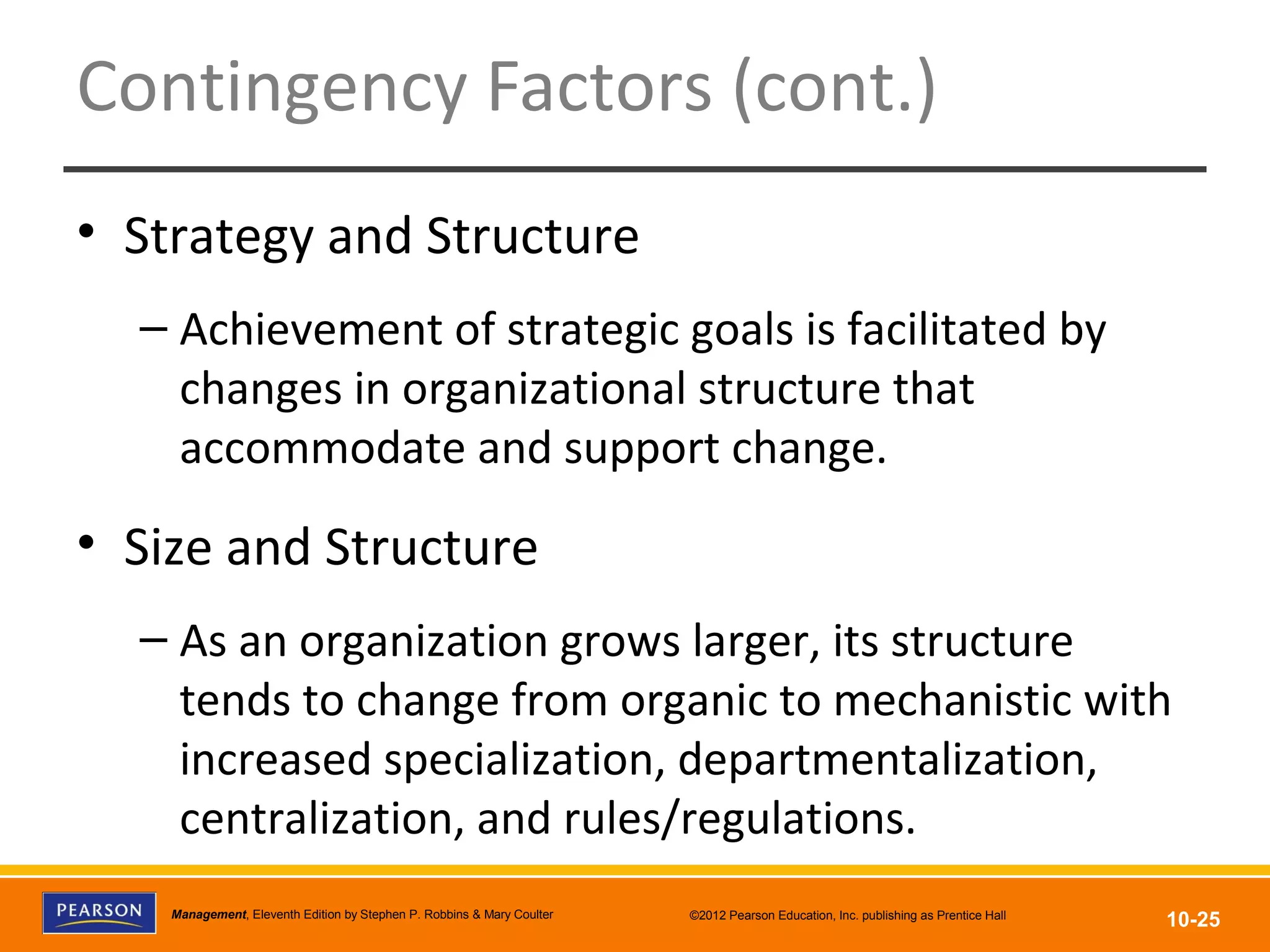
Contingency Factors
• Structural decisions are influenced by:
– Overall strategy of the organization
– Size of the organization
– Technology use employed by the organization
– Degree of environmental uncertainty
Copyright © 2012 Pearson Education, Inc.
Publishing as Prentice HallManagement, Eleventh Edition by Stephen P. Robbins & Mary Coulter ©2012 Pearson Education, Inc. publishing as Prentice Hall
10-24
Contingency Factors (cont.)
• Strategy Frameworks:
– Innovation
• Pursuing competitive advantage through meaningful
and unique innovations favors an organic structuring
– Cost minimization
• Focusing on tightly controlling costs requires a
mechanistic structure for the organization
Copyright © 2012 Pearson Education, Inc.
Publishing as Prentice HallManagement, Eleventh Edition by Stephen P. Robbins & Mary Coulter ©2012 Pearson Education, Inc. publishing as Prentice Hall
10-25
Contingency Factors (cont.)
• Strategy and Structure
– Achievement of strategic goals is facilitated by
changes in organizational structure that
accommodate and support change.
• Size and Structure
– As an organization grows larger, its structure
tends to change from organic to mechanistic with
increased specialization, departmentalization,
centralization, and rules/regulations.
Copyright © 2012 Pearson Education, Inc.
Publishing as Prentice HallManagement, Eleventh Edition by Stephen P. Robbins & Mary Coulter ©2012 Pearson Education, Inc. publishing as Prentice Hall
10-26
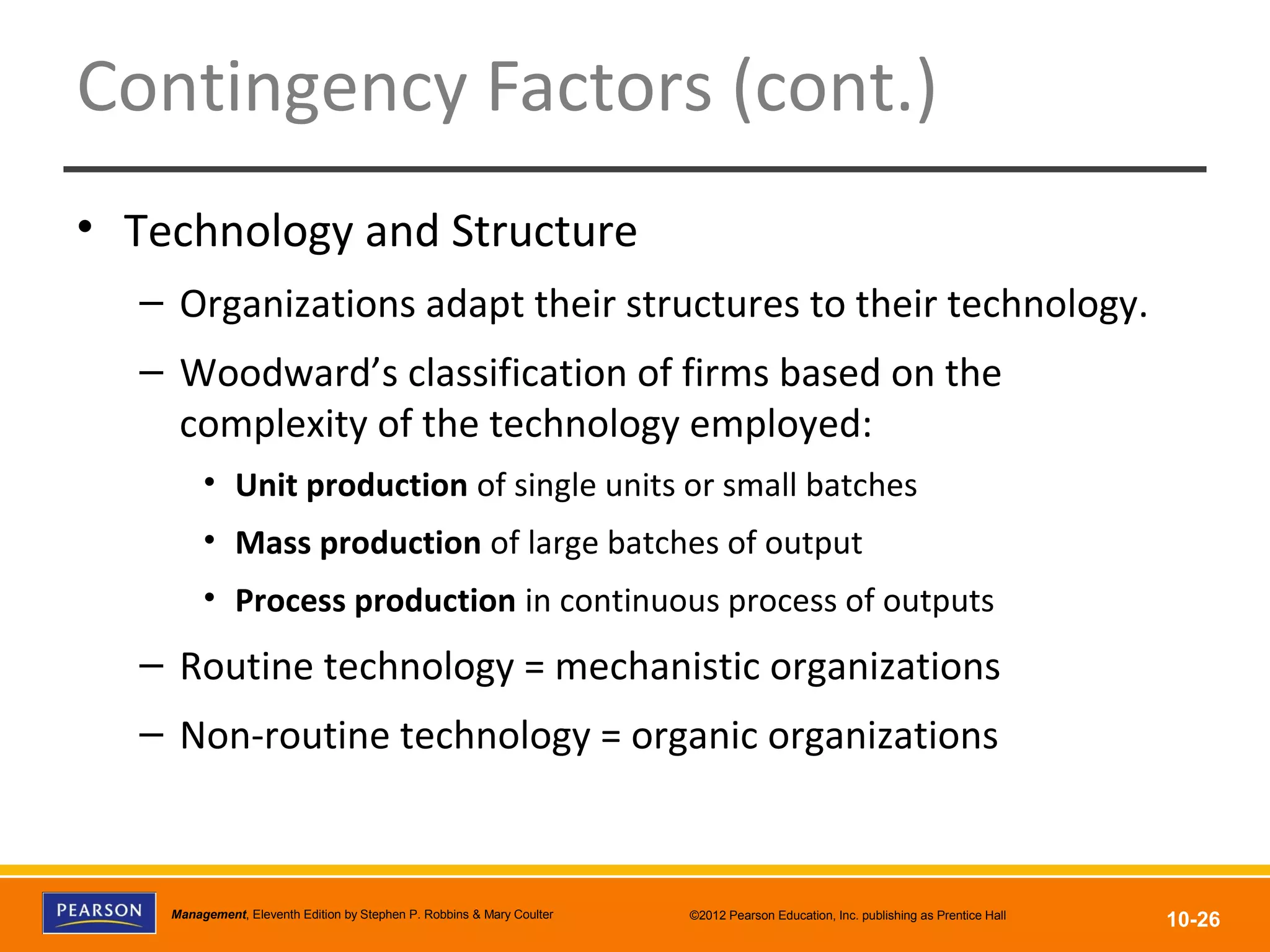
Contingency Factors (cont.)
• Technology and Structure
– Organizations adapt their structures to their technology.
– Woodward’s classification of firms based on the
complexity of the technology employed:
• Unit production of single units or small batches
• Mass production of large batches of output
• Process production in continuous process of outputs
– Routine technology = mechanistic organizations
– Non-routine technology = organic organizations
Copyright © 2012 Pearson Education, Inc.
Publishing as Prentice HallManagement, Eleventh Edition by Stephen P. Robbins & Mary Coulter ©2012 Pearson Education, Inc. publishing as Prentice Hall
10-27
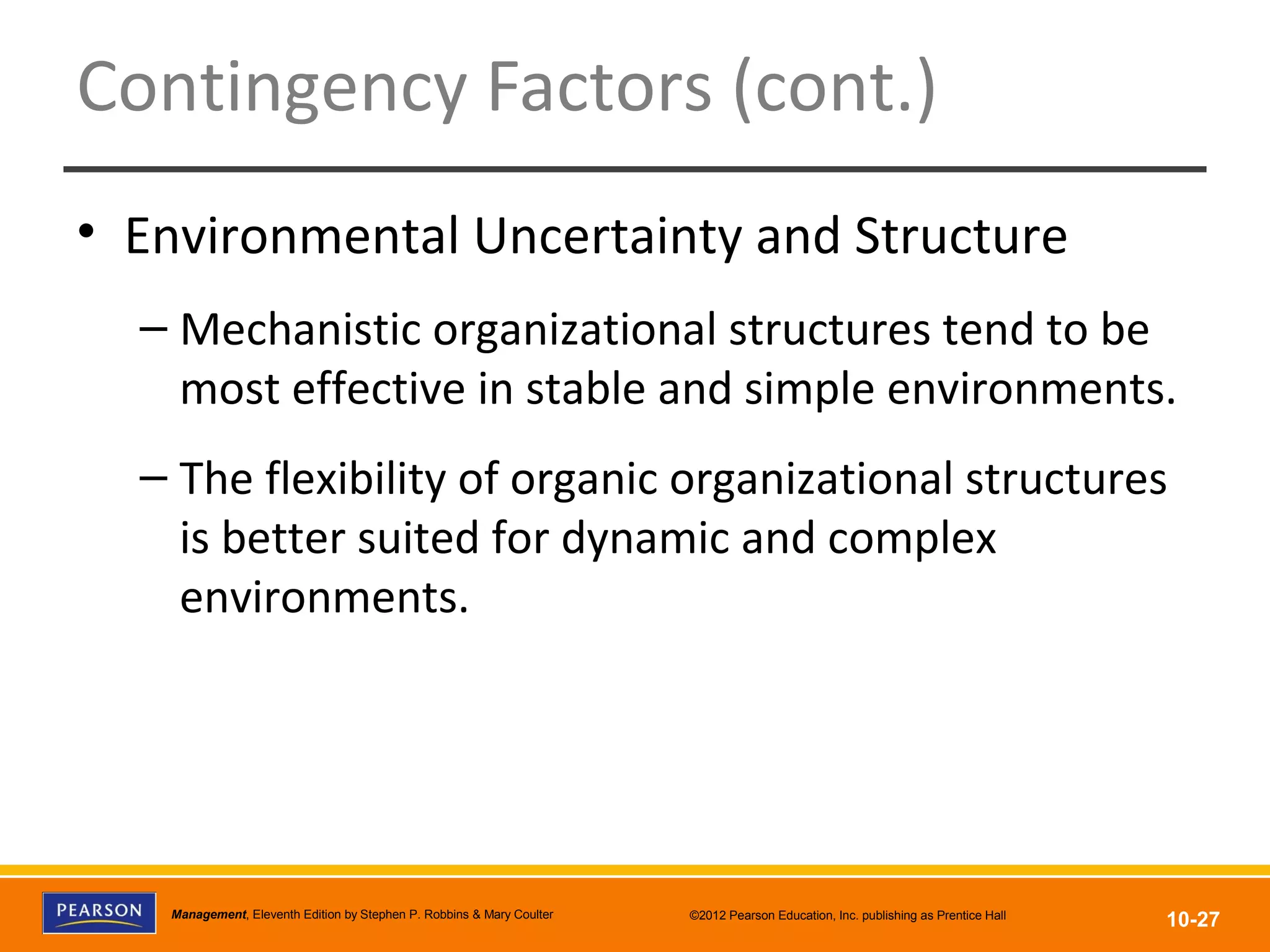
Contingency Factors (cont.)
• Environmental Uncertainty and Structure
– Mechanistic organizational structures tend to be
most effective in stable and simple environments.
– The flexibility of organic organizational structures
is better suited for dynamic and complex
environments.
Copyright © 2012 Pearson Education, Inc.
Publishing as Prentice HallManagement, Eleventh Edition by Stephen P. Robbins & Mary Coulter ©2012 Pearson Education, Inc. publishing as Prentice Hall
10-28
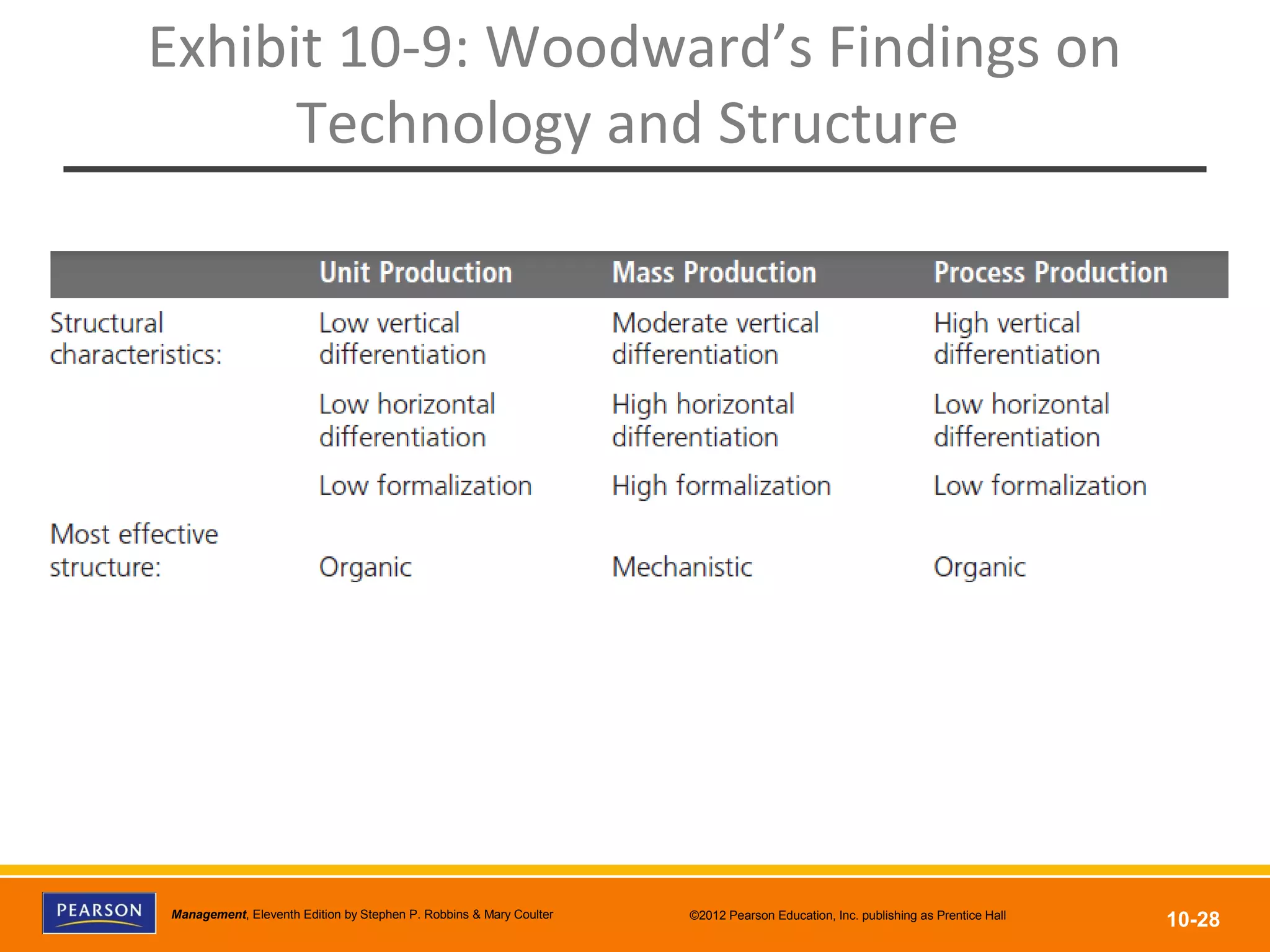
Exhibit 10-9: Woodward’s Findings on
Technology and Structure
Copyright © 2012 Pearson Education, Inc.
Publishing as Prentice HallManagement, Eleventh Edition by Stephen P. Robbins & Mary Coulter ©2012 Pearson Education, Inc. publishing as Prentice Hall
10-29
Traditional Designs
• Simple structure
• Low departmentalization, wide spans of control, centralized
authority, little formalization
• Functional structure
• Departmentalization by function
• Operations, finance, marketing, human resources, and product
research and development
• Divisional structure
• Composed of separate business units or divisions with limited
autonomy under the coordination and control of the parent
corporation
Copyright © 2012 Pearson Education, Inc.
Publishing as Prentice HallManagement, Eleventh Edition by Stephen P. Robbins & Mary Coulter ©2012 Pearson Education, Inc. publishing as Prentice Hall
10-30
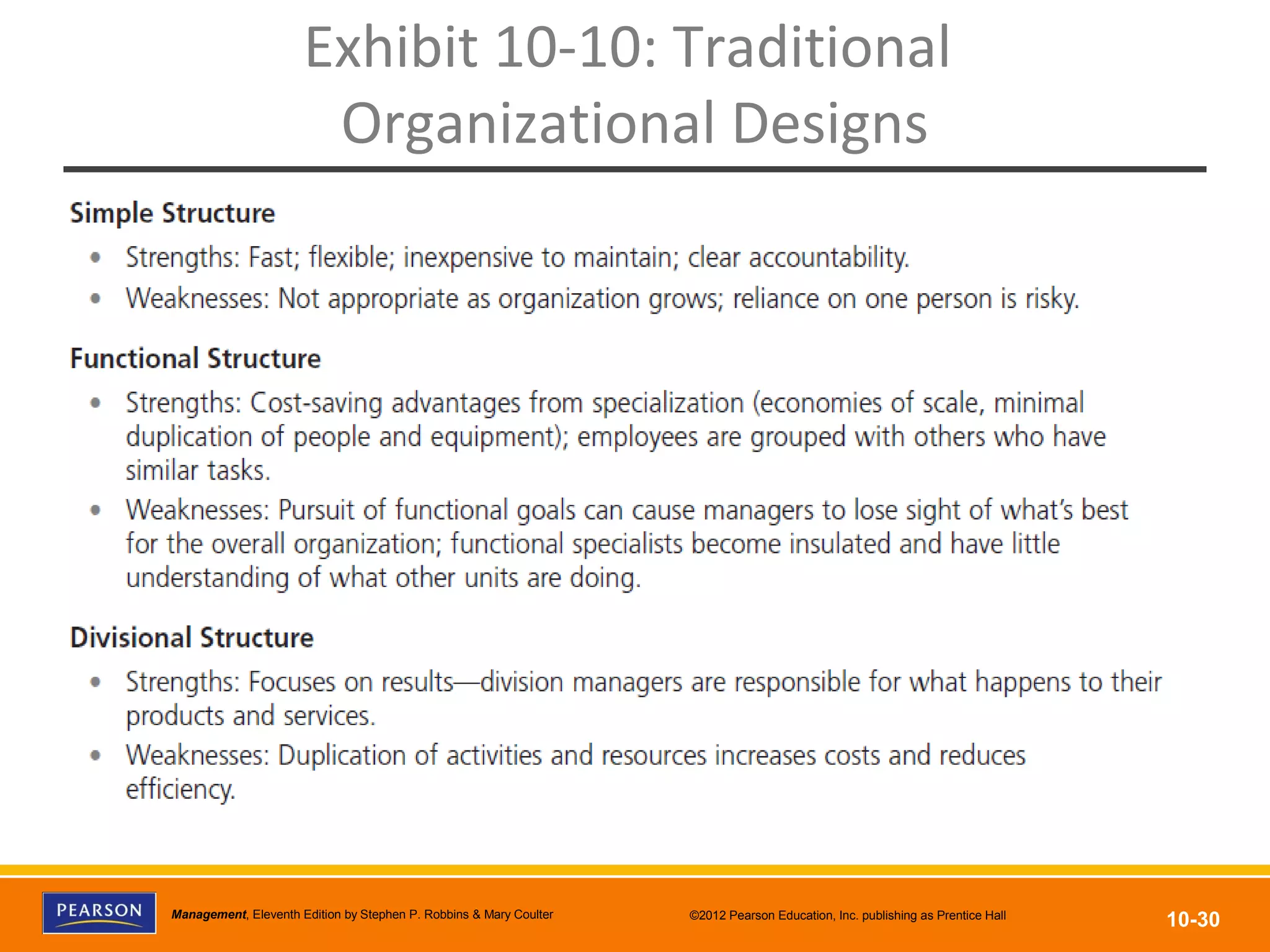
Exhibit 10-10: Traditional
Organizational Designs
Copyright © 2012 Pearson Education, Inc.
Publishing as Prentice HallManagement, Eleventh Edition by Stephen P. Robbins & Mary Coulter ©2012 Pearson Education, Inc. publishing as Prentice Hall
10-31
Terms to Know
• organizing
• organizational structure
• organizational chart
• organizational design
• work specialization
• departmentalization
• cross-functional teams
• chain of command
• authority
• responsibility
• unity of command
• span of control
• centralization
• decentralization
• employee empowerment
• formalization
• mechanistic organization
• organic organization
• unit production
• mass production
• process production
• simple structure
• functional structure
• divisional structure
• team structure
• matrix structure
• project structure
• boundaryless organization
• virtual organization
• network organization
• learning organization
Copyright © 2012 Pearson Education, Inc.
Publishing as Prentice HallManagement, Eleventh Edition by Stephen P. Robbins & Mary Coulter ©2012 Pearson Education, Inc. publishing as Prentice Hall
10-32

Ch 10 basic organization design

  • 1.
    Copyright © 2012Pearson Education, Inc. Publishing as Prentice HallManagement, Eleventh Edition by Stephen P. Robbins & Mary Coulter ©2012 Pearson Education, Inc. publishing as Prentice Hall 10-1
  • 2.
    Copyright © 2012Pearson Education, Inc. Publishing as Prentice HallManagement, Eleventh Edition by Stephen P. Robbins & Mary Coulter ©2012 Pearson Education, Inc. publishing as Prentice Hall 10-2 •Describe six key elements in organizational design •Contrast mechanistic and organic structures •Discuss the contingency factors that favor either the mechanistic model or the organic model of organizational design •Describe traditional organizational designs
  • 3.
    Copyright © 2012Pearson Education, Inc. Publishing as Prentice HallManagement, Eleventh Edition by Stephen P. Robbins & Mary Coulter ©2012 Pearson Education, Inc. publishing as Prentice Hall 10-3 Designing Organizational Structure • Organizing - arranging and structuring work to accomplish an organization’s goals. • Organizational Structure - the formal arrangement of jobs within an organization. • Organizational Design - a process involving decisions about six key elements: • Work specialization • Departmentalization • Chain of command • Span of control • Centralization and decentralization • Formalization
  • 4.
    Copyright © 2012Pearson Education, Inc. Publishing as Prentice HallManagement, Eleventh Edition by Stephen P. Robbins & Mary Coulter ©2012 Pearson Education, Inc. publishing as Prentice Hall 10-4 Exhibit 10-1: Purposes of Organizing
  • 5.
    Copyright © 2012Pearson Education, Inc. Publishing as Prentice HallManagement, Eleventh Edition by Stephen P. Robbins & Mary Coulter ©2012 Pearson Education, Inc. publishing as Prentice Hall 10-5 Organizational Structure • Work Specialization – The degree to which tasks in the organization are divided into separate jobs with each step completed by a different person. – Overspecialization can result in human diseconomies such as boredom, fatigue, stress, poor quality, increased absenteeism, and higher turnover.
  • 6.
    Copyright © 2012Pearson Education, Inc. Publishing as Prentice HallManagement, Eleventh Edition by Stephen P. Robbins & Mary Coulter ©2012 Pearson Education, Inc. publishing as Prentice Hall 10-6 Exhibit 10-2: Economies and Diseconomies of Work Specialization
  • 7.
    Copyright © 2012Pearson Education, Inc. Publishing as Prentice HallManagement, Eleventh Edition by Stephen P. Robbins & Mary Coulter ©2012 Pearson Education, Inc. publishing as Prentice Hall 10-7 Departmentalization by Type • Functional – Grouping jobs by functions performed • Product – Grouping jobs by product line • Geographical – Grouping jobs on the basis of territory or geography • Process – Grouping jobs on the basis of product or customer flow • Customer – Grouping jobs by type of customer and needs
  • 8.
    Copyright © 2012Pearson Education, Inc. Publishing as Prentice HallManagement, Eleventh Edition by Stephen P. Robbins & Mary Coulter ©2012 Pearson Education, Inc. publishing as Prentice Hall 10-8 Organizational Structure (cont.) • Chain of Command - the continuous line of authority that extends from upper levels of an organization to the lowest levels of the organization—clarifies who reports to whom.
  • 9.
    Copyright © 2012Pearson Education, Inc. Publishing as Prentice HallManagement, Eleventh Edition by Stephen P. Robbins & Mary Coulter ©2012 Pearson Education, Inc. publishing as Prentice Hall 10-9 Organizational Structure (cont.) • Authority - the rights inherent in a managerial position to tell people what to do and to expect them to do it. • Responsibility - the obligation or expectation to perform. • Unity of Command - the concept that a person should have one boss and should report only to that person.
  • 10.
    Copyright © 2012Pearson Education, Inc. Publishing as Prentice HallManagement, Eleventh Edition by Stephen P. Robbins & Mary Coulter ©2012 Pearson Education, Inc. publishing as Prentice Hall 10-10 Exhibit 10-3: The Five Common Forms of Departmentalization
  • 11.
    Copyright © 2012Pearson Education, Inc. Publishing as Prentice HallManagement, Eleventh Edition by Stephen P. Robbins & Mary Coulter ©2012 Pearson Education, Inc. publishing as Prentice Hall 10-11 Exhibit 10-3: The Five Common Forms of Departmentalization (cont.)
  • 12.
    Copyright © 2012Pearson Education, Inc. Publishing as Prentice HallManagement, Eleventh Edition by Stephen P. Robbins & Mary Coulter ©2012 Pearson Education, Inc. publishing as Prentice Hall 10-12 Exhibit 10-3: The Five Common Forms of Departmentalization (cont.)
  • 13.
    Copyright © 2012Pearson Education, Inc. Publishing as Prentice HallManagement, Eleventh Edition by Stephen P. Robbins & Mary Coulter ©2012 Pearson Education, Inc. publishing as Prentice Hall 10-13 Exhibit 10-4: Chain of Command and Line Authority
  • 14.
    Copyright © 2012Pearson Education, Inc. Publishing as Prentice HallManagement, Eleventh Edition by Stephen P. Robbins & Mary Coulter ©2012 Pearson Education, Inc. publishing as Prentice Hall 10-14 Exhibit 10-5: Line vs. Staff Authority
  • 15.
    Copyright © 2012Pearson Education, Inc. Publishing as Prentice HallManagement, Eleventh Edition by Stephen P. Robbins & Mary Coulter ©2012 Pearson Education, Inc. publishing as Prentice Hall 10-15 Span of Control • Span of Control - the number of employees who can be effectively and efficiently supervised by a manager.
  • 16.
    Copyright © 2012Pearson Education, Inc. Publishing as Prentice HallManagement, Eleventh Edition by Stephen P. Robbins & Mary Coulter ©2012 Pearson Education, Inc. publishing as Prentice Hall 10-16 Width of span is affected by: • Skills and abilities of the manager • Employee characteristics • Characteristics of the work being done • Similarity of tasks • Complexity of tasks • Physical proximity of subordinates • Standardization of tasks • Sophistication of the organization’s information system • Strength of the organization’s culture • Preferred style of the manager
  • 17.
    Copyright © 2012Pearson Education, Inc. Publishing as Prentice HallManagement, Eleventh Edition by Stephen P. Robbins & Mary Coulter ©2012 Pearson Education, Inc. publishing as Prentice Hall 10-17 Exhibit 10-6: Contrasting Spans of Control
  • 18.
    Copyright © 2012Pearson Education, Inc. Publishing as Prentice HallManagement, Eleventh Edition by Stephen P. Robbins & Mary Coulter ©2012 Pearson Education, Inc. publishing as Prentice Hall 10-18 Centralization • Centralization - the degree to which decision making is concentrated at upper levels in the organization. • This is common in organizations in which top managers make all the decisions and lower-level employees simply carry out those orders.
  • 19.
    Copyright © 2012Pearson Education, Inc. Publishing as Prentice HallManagement, Eleventh Edition by Stephen P. Robbins & Mary Coulter ©2012 Pearson Education, Inc. publishing as Prentice Hall 10-19 Decentralization • Decentralization - when an organization relegates decision making to managers who are closest to the action. • Employee Empowerment – Increasing the decision-making authority (power) of employees
  • 20.
    Copyright © 2012Pearson Education, Inc. Publishing as Prentice HallManagement, Eleventh Edition by Stephen P. Robbins & Mary Coulter ©2012 Pearson Education, Inc. publishing as Prentice Hall 10-20 Exhibit 10-7: Centralization or Decentralization
  • 21.
    Copyright © 2012Pearson Education, Inc. Publishing as Prentice HallManagement, Eleventh Edition by Stephen P. Robbins & Mary Coulter ©2012 Pearson Education, Inc. publishing as Prentice Hall 10-21 Formalization • Formalization - the degree to which jobs within the organization are standardized and the extent to which employee behavior is guided by rules and procedures. – Highly formalized jobs offer little discretion over what is to be done. – Low formalization means fewer constraints on how employees do their work.
  • 22.
    Copyright © 2012Pearson Education, Inc. Publishing as Prentice HallManagement, Eleventh Edition by Stephen P. Robbins & Mary Coulter ©2012 Pearson Education, Inc. publishing as Prentice Hall 10-22 Exhibit 10-8: Mechanistic Versus Organic Organizations
  • 23.
    Copyright © 2012Pearson Education, Inc. Publishing as Prentice HallManagement, Eleventh Edition by Stephen P. Robbins & Mary Coulter ©2012 Pearson Education, Inc. publishing as Prentice Hall 10-23 Contingency Factors • Structural decisions are influenced by: – Overall strategy of the organization – Size of the organization – Technology use employed by the organization – Degree of environmental uncertainty
  • 24.
    Copyright © 2012Pearson Education, Inc. Publishing as Prentice HallManagement, Eleventh Edition by Stephen P. Robbins & Mary Coulter ©2012 Pearson Education, Inc. publishing as Prentice Hall 10-24 Contingency Factors (cont.) • Strategy Frameworks: – Innovation • Pursuing competitive advantage through meaningful and unique innovations favors an organic structuring – Cost minimization • Focusing on tightly controlling costs requires a mechanistic structure for the organization
  • 25.
    Copyright © 2012Pearson Education, Inc. Publishing as Prentice HallManagement, Eleventh Edition by Stephen P. Robbins & Mary Coulter ©2012 Pearson Education, Inc. publishing as Prentice Hall 10-25 Contingency Factors (cont.) • Strategy and Structure – Achievement of strategic goals is facilitated by changes in organizational structure that accommodate and support change. • Size and Structure – As an organization grows larger, its structure tends to change from organic to mechanistic with increased specialization, departmentalization, centralization, and rules/regulations.
  • 26.
    Copyright © 2012Pearson Education, Inc. Publishing as Prentice HallManagement, Eleventh Edition by Stephen P. Robbins & Mary Coulter ©2012 Pearson Education, Inc. publishing as Prentice Hall 10-26 Contingency Factors (cont.) • Technology and Structure – Organizations adapt their structures to their technology. – Woodward’s classification of firms based on the complexity of the technology employed: • Unit production of single units or small batches • Mass production of large batches of output • Process production in continuous process of outputs – Routine technology = mechanistic organizations – Non-routine technology = organic organizations
  • 27.
    Copyright © 2012Pearson Education, Inc. Publishing as Prentice HallManagement, Eleventh Edition by Stephen P. Robbins & Mary Coulter ©2012 Pearson Education, Inc. publishing as Prentice Hall 10-27 Contingency Factors (cont.) • Environmental Uncertainty and Structure – Mechanistic organizational structures tend to be most effective in stable and simple environments. – The flexibility of organic organizational structures is better suited for dynamic and complex environments.
  • 28.
    Copyright © 2012Pearson Education, Inc. Publishing as Prentice HallManagement, Eleventh Edition by Stephen P. Robbins & Mary Coulter ©2012 Pearson Education, Inc. publishing as Prentice Hall 10-28 Exhibit 10-9: Woodward’s Findings on Technology and Structure
  • 29.
    Copyright © 2012Pearson Education, Inc. Publishing as Prentice HallManagement, Eleventh Edition by Stephen P. Robbins & Mary Coulter ©2012 Pearson Education, Inc. publishing as Prentice Hall 10-29 Traditional Designs • Simple structure • Low departmentalization, wide spans of control, centralized authority, little formalization • Functional structure • Departmentalization by function • Operations, finance, marketing, human resources, and product research and development • Divisional structure • Composed of separate business units or divisions with limited autonomy under the coordination and control of the parent corporation
  • 30.
    Copyright © 2012Pearson Education, Inc. Publishing as Prentice HallManagement, Eleventh Edition by Stephen P. Robbins & Mary Coulter ©2012 Pearson Education, Inc. publishing as Prentice Hall 10-30 Exhibit 10-10: Traditional Organizational Designs
  • 31.
    Copyright © 2012Pearson Education, Inc. Publishing as Prentice HallManagement, Eleventh Edition by Stephen P. Robbins & Mary Coulter ©2012 Pearson Education, Inc. publishing as Prentice Hall 10-31 Terms to Know • organizing • organizational structure • organizational chart • organizational design • work specialization • departmentalization • cross-functional teams • chain of command • authority • responsibility • unity of command • span of control • centralization • decentralization • employee empowerment • formalization • mechanistic organization • organic organization • unit production • mass production • process production • simple structure • functional structure • divisional structure • team structure • matrix structure • project structure • boundaryless organization • virtual organization • network organization • learning organization
  • 32.
    Copyright © 2012Pearson Education, Inc. Publishing as Prentice HallManagement, Eleventh Edition by Stephen P. Robbins & Mary Coulter ©2012 Pearson Education, Inc. publishing as Prentice Hall 10-32

Editor's Notes

  • #5 Organizational structure is the formal arrangement of jobs within an organization. This structure, which can be shown visually in an organizational chart, also serves many purposes. (See Exhibit 10-1.)
  • #7 As Exhibit 10-2 illustrates, at some point, the human diseconomies from division of labor—boredom, fatigue, stress, low productivity, poor quality, increased absenteeism, and high turnover—exceed the economic advantages.
  • #11 Five common forms of departmentalization are used, although an organization may develop its own unique classification. (For instance, a hotel might have departments such as front desk operations, sales and catering, housekeeping and laundry, and maintenance.) Exhibit 10-3 illustrates each type of departmentalization as well as the advantages and disadvantages of each.
  • #14 Line authority entitles a manager to direct the work of an employee. It is the employer-employee authority relationship that extends from the top of the organization to the lowest echelon, according to the chain of command, as shown in Exhibit 10-4.
  • #15 Exhibit 10-5 illustrates line and staff authority.
  • #18 Assume two organizations, both of which have approximately 4,100 employees. As Exhibit 10-6 shows, if one organization has a span of four and the other a span of eight, the organization with the wider span will have two fewer levels and approximately 800 fewer managers.
  • #21 Exhibit 10-7 lists some of the factors that affect an organization’s use of centralization or decentralization.
  • #23 Designing (or redesigning) an organizational structure that works is important. Basic organizational design revolves around two organizational forms that are described in Exhibit 10-8
  • #29 Joan Woodward linked structural design elements to organizational success when she divided firms into three distinct technologies that had increasing levels of complexity and sophistication. The first category, unit production, described the production of items in units or small batches. The second category, mass production, described large-batch manufacturing. Finally, the third and most technically complex group, process production, included continuous process production. A summary of her findings is shown in Exhibit 10-9.
  • #31 When designing a structure, managers may choose one of the traditional organizational designs. These structures tend to be more mechanistic in nature. A summary of the strengths and weaknesses of each can be found in Exhibit 10-10