OBJECTIVES
• Define uterinefibroids
• Describe the types of uterine fibroids
• State the causes of uterine fibroids
• Outline signs and symptoms of uterine fibroids
• Describe management of uterine fibroids
3.
PATHOPHYSIOLOGY:
- Fibroids arisefrom the uterus and can be solitary or multiple, in
lining(intra activity)
- In the muscle wall(intramural) and outside surface of the
uterus(serosal)
- They usually develop slowly in women between 25 – 40 years and
spurt of the growth enlargement may occur before menopause due to
high estrogen levels productions
4.
UTERINE FIBROID(Leiomyomas,Myomas)
Introduction
• Uterinefibroids is a benign or non cancerous tumour arise from
single uterine smooth muscle and its also referred to as ‘leiomyoma
• Uterine leiomyomas are the most common cause of solid pelvic
tumours
• Incidence : 20 to 40 % in the women of reproductive age
• more common in nulliparous, obese women and in those with a family
history
• They are multiple and can substantially increase the size of the uterus.
• There may be no symptoms in a woman with uterine fibroids
• The condition may simply be discovered during a routine examination
5.
UTERINE FIBROID(Leiomyomas,Myomas)
Introduction Cont..
•Fibroids are classified according to their location in relation to the uterine
wall
• leiomyomas have also been associated with infertility and recurrent
abortion
• An abdominal tumour is sometimes the first thing that the patient notices.
• Tumours tend to grow rapidly during pregnancy and can cause obstructed
labour leading to fetal malpresentation and fetal anomalies that requires a
Caesarean section
• Can also cause post-partum hemorrhage secondary to uterine atony
• Most fibroids are small and 75% is asymptomatic, but they can be
associated with the following conditions:
N/B Unless fibroids cause symptoms they do not require any treatment.
6.
SIGNS AND SYMPTOMS
•Tumour is non tender on palpation and rarely gives rise to pain, but occasionally
causes local discomfort when undergoing red degeneration
• Pressure syndrome - a feeling of weight, Frequency and retention of urine, with a
large tumour pressing on the bladder
• Abnormal uterine bleeding (Menorrhagia): menses increase in amount and
duration and may be accompanied by clots
• Pain is not a common symptom but when it occurs, it is generally an indication
that there is associated endometriosis or PID or some complications like torsion
• Colicky pain : a fibryomatous polyp extruded through the cervix and causing
uterine contractions
• Abortion: Affects child bearing
• Obstruct labour: submucous growth projecting into and distending the uterine
cavity and interstitial tumours
7.
SIGNS AND SYMPTOMSCONT..
• The uterus feels harder than it does when the enlargement is due to
pregnancy
• Uterine soufflé (a soft blowing sound made by the blood within the
arteries
• On pelvic examination the cervix may be found to be pushed down or
displaced to one side
• Infertility is usually a common presenting problem when the fibroid
is discovered during routine examination.
8.
diagnosis
• clinical featuresobtained from the history and examination help in the
diagnosis
• A full blood count; severe anaemia to rule out the presence of significant
fibroids.
• Abdominal pelvic ultrasound is used to helps in distinguishing between a uterine
fibroid and an ovarian tumour, and locating the position and size of fibroids)
• Trans abdominal ultrasound scan (TAUSS): good for detecting larger intramural
and sub serosal
• ultrasonography is also helpful to exclude hydronephrosis from pressure on the
ureters.
• Hysteroscopy: good for detecting submucosal fibroids and endometrial polyps;
• Magnetic resonance imaging (MRI): good for describing the morphology and
location of fibroids
9.
TYPES OF UTERINEFIBROIDS
a. subserous: (subperitoneal) fibroids lie outside of the uterus and are covered with
peritoneum
• The most common uterine fibroids
• They are found on the surface of the uterus and can push outside the uterus into the
pelvis
• Project from the uterus into the peritoneal cavity
• They can grow large and sometimes it have a stalk( pedunculated fibroids)
• They are not easily diagnosed and can cause pressure symptoms which includes pelvic
pain , frequent micturition and constipations
• They are usually multiple, ranging from small nodules on the surface of the uterus to
enormous masses weighing up to 20 kgs or more
• They tend to grow up into the abdomen and may become pendunculated so that on
bimanual examination, the tumour seems to be separated from the uterus and feel like an
ovarian tumour.
10.
TYPES OF UTERINEFIBROIDS CONT..
c. Submucous: (subendometrial) fibroids are near the endometrium or
hang into the cavity in which case they form a polyp with a long pedicle
• The stalk of the polyp contains a few blood vessels, which nourish it
• The uterine cavity may contract and hence the cervix dilates and
expels the polyp through it
11.
TYPES OF UTERINEFIBROIDS CONT..
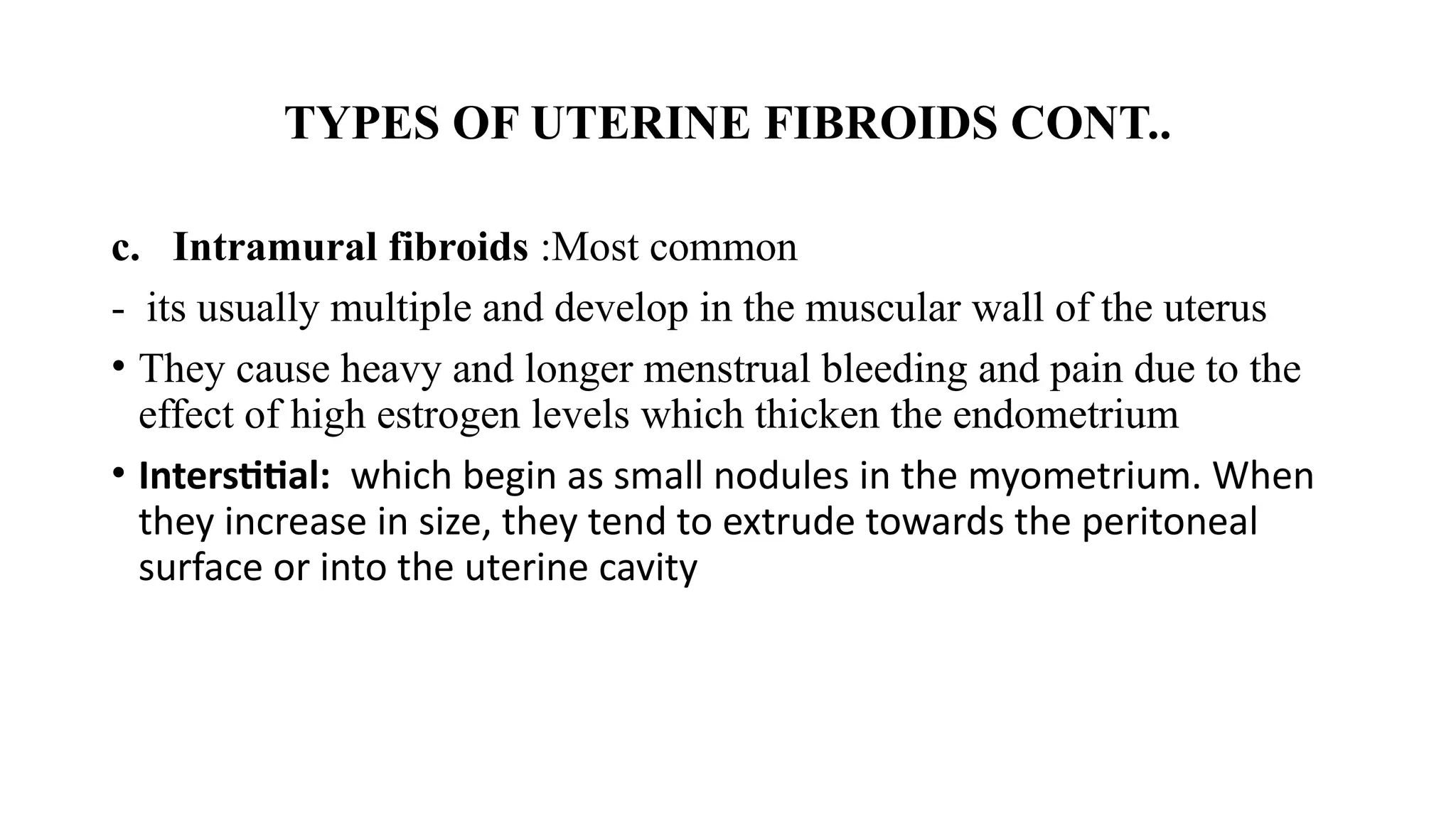
c. Intramural fibroids :Most common
- its usually multiple and develop in the muscular wall of the uterus
• They cause heavy and longer menstrual bleeding and pain due to the
effect of high estrogen levels which thicken the endometrium
• Interstitial: which begin as small nodules in the myometrium. When
they increase in size, they tend to extrude towards the peritoneal
surface or into the uterine cavity
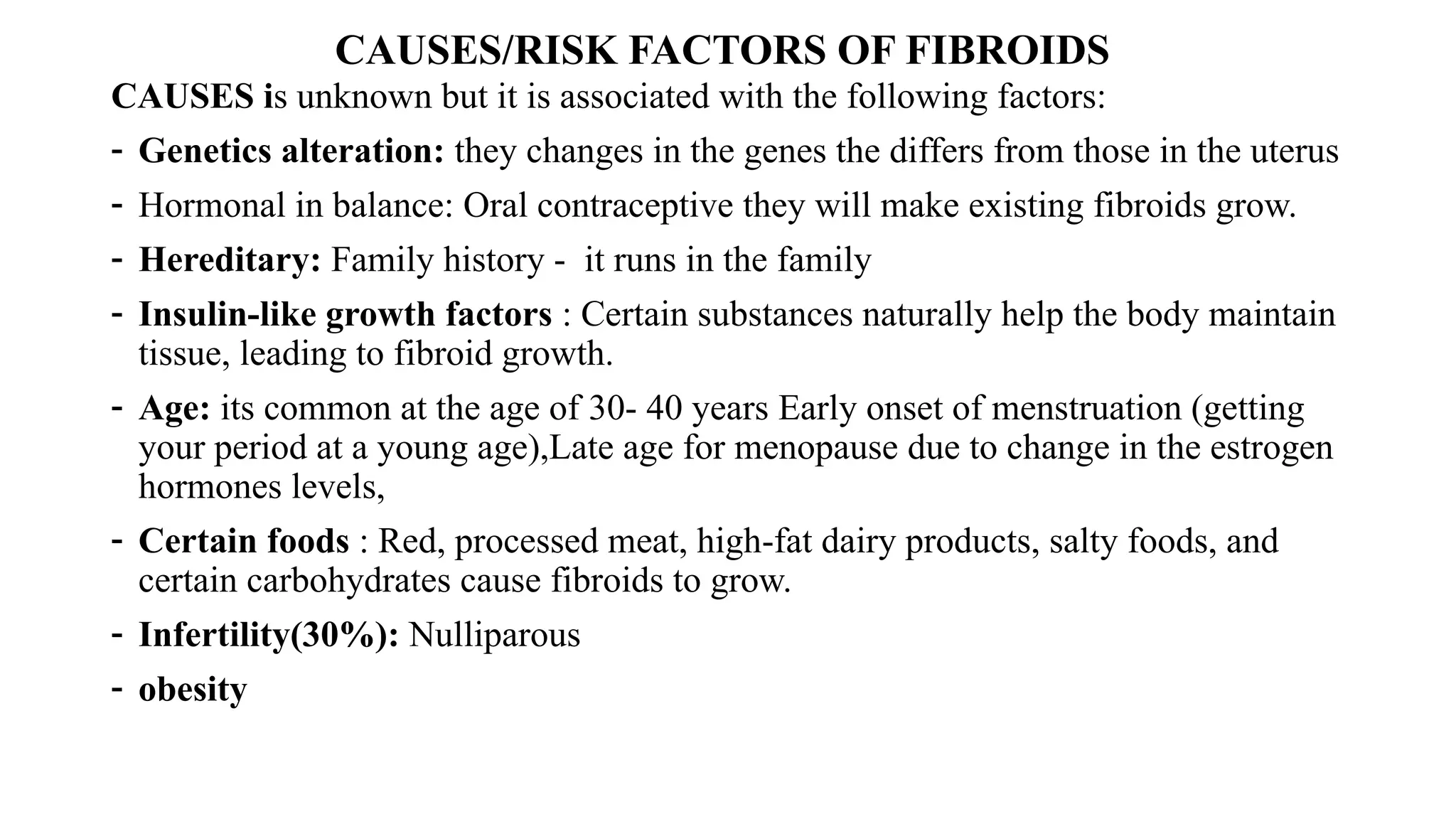
CAUSES/RISK FACTORS OFFIBROIDS
CAUSES is unknown but it is associated with the following factors:
- Genetics alteration: they changes in the genes the differs from those in the uterus
- Hormonal in balance: Oral contraceptive they will make existing fibroids grow.
- Hereditary: Family history - it runs in the family
- Insulin-like growth factors : Certain substances naturally help the body maintain
tissue, leading to fibroid growth.
- Age: its common at the age of 30- 40 years Early onset of menstruation (getting
your period at a young age),Late age for menopause due to change in the estrogen
hormones levels,
- Certain foods : Red, processed meat, high-fat dairy products, salty foods, and
certain carbohydrates cause fibroids to grow.
- Infertility(30%): Nulliparous
- obesity
14.
Cervical Fibroids
• Cervicalfibroids are rare
• Only 2% of uterine fibroids arise in the cervix
• Usually it is a single tumour, although there may be other tumours in the body of
the uterus
• It causes distortion and elongation of the cervical canal and displace the body of
uterus upwards
• A large one may cause retention of urine
• The development of uterine fibroids is related to the action of oestrogen in a way
not well understood
• They arise during the period of menstrual activity although there are rarely
symptoms before the age of 25 years
• The fibroids are more commonly found in nulliparous women or women who
have not been pregnant for some time
• They tend to occur three times more frequently in black women than in white
women and Reasons for this are not known
15.
MANAGEMENT
Medical treatment:
• Forsmall benign tumours that are not causing symptoms, no treatment
is required but the patient should be re-examined regularly (every six
to twelve months)
• If the tumour is found to be increasing in size, it should be treated
- Give the patient tranexamic acid, mefenamic acid and the combined
oral contraceptive pill (COCP)
- injectable gonadotrophin-releasing hormone (GnRH) agonists, which
induce a menopausal state by shutting down ovarian oestradiol
production
• The patient and family (especially spouse) should be counseled on the
effects of the tumour on menstruation, menopause and libido
16.
Medical treatment Cont:
•Tumours cease to grow once menopause has been reached
• At this point they grow slowly and seldom become malignant
• Surgical treatment is definitely indicated in case of heavy or prolonged
bleeding caused by large tumours, even if they are not causing
problems, and especially in young women because further growth is
probable
• It is also necessary in cases where there is possible malignant change,
such as a tumour, which grows after the menopause, where the tumour
leads to retention of urine or obstructs labour or if the tumour has
undergone torsion
17.
MANAGEMENT CONT..
• Myomectomyis the removal of only fibroid only and the uterus is retained
• This is indicated when the woman wishes to keep her uterus and also in
cases of infertility whereby no other cause of sterility can be found
Hysterectomy is the removal of the uterus with the fibroid
• This procedure is indicated in patients who are 40 years of age and above
• Pre and post-operative care are the same as for any other major surgery
• Its good for planning subsequent hysteroscopic surgical treatment to
remove polyps, adhesions and submucosal fibroids
18.
Prognosis
• Surgical therapyis curative.
• Pregnancy is possible after multiple myomectomy.
• Premature menopause will not occur in a well-executed
hysterectomy, where the ovaries are retained.
Adenomyosis
- Adenomyosis isa disorder in which endometrial glands and stroma are
found deep within the myometrium
- Adenomyosis it can be diagnosed following histopathological
examination of a hysterectomy specimen, where it is identified in 40%
of uteri from a general female population of reproductive age
This ectopic endometrium is responsive to cyclical hormonal changes
that result in bleeding within the myometrium, leading to increasingly
severe secondary dysmenorrhoea (pain throughout menses) and uterine
enlargement
21.
Adenomyosis Cont..
• Adenomyosisis common in multiparous women and diagnosed in
their late 30s or early 40s
• Examination may reveal a bulky and sometimes tender ‘boggy’
uterus, particularly if examined perimenstrually
• Ultrasound examination is used to diagnosis when adenomyosis is
localized, showing haemorrhage-filled, distended endometrial glands
• MRI is the investigation of choice although expensive, as it provides
excellent images of the myometrium, endometrium and areas of
adenomyosis
22.
Management of Adenomyosis
Medical:
•Tranexamic acid /non-steroidal anti-inflammatory drugs (NSAIDs)
• COCP: contains oestrogen
• GnRH-agonists: reduce fibroid volume prior to surgery but induce a
temporary oestrogen deficient ‘menopausal’ state precluding long-
term use
23.
Management of AdenomyosisCot..
Surgical:
Hysteroscopic myomectomy: minimally invasive, day-case procedure
for submucous fibroids
Myomectomy: Requires a laparotomy, but a less invasive
laparoscopic approach is possible with smaller and fewer fibroids
Hysterectomy: indicated for women with no future fertility desires.
May be done vaginally, laparoscopically or via open surgery depending
on the size of the uterus
Definitive, guaranteeing amenorrhoea but as invasive as myomectomy
24.
Management of AdenomyosisCont..
Radiological
Uterine artery embolization: minimally invasive, avoids general anaesthesia and
surgery
Although fertility sparing there are concerns over effect on subsequent reproductive
function
Equivalent patient satisfaction compared with myomectomy but the need for further
treatments much higher
Novel radiological treatments are currently being explored to destroy fibroids
through thermal ablation
These include MRI-guided transcutaneous focused ultrasound and transcervical
intrauterine ultrasound-guided radiofrequency ablation
However, the effectiveness and safety of these interventions need further study
before they can be considered for use in routine clinical practice