

Cerebral Palsy 
Little’s Disease, discovered by William John 
Little.
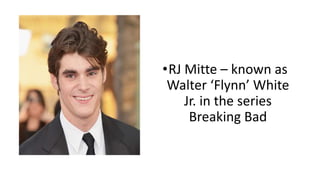
•RJ Mitte – known as 
Walter ‘Flynn’ White 
Jr. in the series 
Breaking Bad
•Geri Jewell – Award-winning 
actress, 
comedian, author, 
and motivational 
speaker.
Cerebral palsy describes a group of 
permanent disorders of the development of 
movement and posture, causing activity 
limitation, that are attributed to non-progressive 
disturbances that occurred in developing fetal or 
infant brain. The motor disorders of cerebral palsy 
are often accompanied by disturbances of 
sensation, perception, cognition, communication 
and behavior, by epilepsy, and by secondary 
musculoskeletal problems.
CAUSES 
 An insult or injury to the brain 
- Fixed, static lesion(s) 
- In single or multiple areas of the motor centers of the 
brain 
- Early in CNS development 
 Development Malformations 
 Neurological Damage 
- Can occur before, during or after delivery 
 Severe deprivation of oxygen or blood flow to the 
brain (CHIEF CAUSE)
RISK FACTORS 
oPremature birth 
oLow birth weight 
oBlood clotting problems 
oInability of the placenta to provide the 
developing fetus with oxygen and nutrients
RISK FACTORS 
o Infection of the mother with German measles or 
other viral diseases in early pregnancy 
o Bacterial infection of the mother, fetus or infant 
directly or indirectly attack the infant’s central 
nervous system 
o Prolonged loss of oxygen during the birth process 
o Severe jaundice after birth
DIAGNOSIS 
oComplete Medical History of Child’s 
Motor Development 
oPhysical Examination 
oCranial Ultrasound 
oComputed tomography (CT) scan 
oMagnetic resonance imaging (MRI) 
scan
CLASSIFICATION 
Physiological Grouping 
a.) Spastic – tense, contracted muscles 
b.) Athetoid – constant, uncontrolled motion of 
limbs, head and eyes 
c.) Ataxic – poor sense of balance, often 
causing falls and stumbles 
d.) Rigidity – tight muscles that resist effort to 
make them move 
e.) Tremor – uncontrollable shaking interfering 
with coordination
CLASSIFICATION 
Anatomic Grouping 
a.) Diplegia – refers to the involvement 
predominantly in the legs 
b.) Quadriplegia – four dysfunction of 
four extremities 
c.) Hemiplegia – refers to individuals with 
unilateral motor dysfunction;
PREVENTION 
Treatment 
o Physical Therapy 
o Occupational Therapy 
o Speech and Language 
o Psychology 
o Vision and Hearing Aids 
o Orthotics 
o Assistive Technology 
Prevention 
oRh Factor Test 
oImmunizations 
oPrenatal Care
Cerebral palsy

Cerebral palsy

  • 1.
    Cerebral Palsy Little’sDisease, discovered by William John Little.
  • 2.
    •RJ Mitte –known as Walter ‘Flynn’ White Jr. in the series Breaking Bad
  • 3.
    •Geri Jewell –Award-winning actress, comedian, author, and motivational speaker.
  • 4.
    Cerebral palsy describesa group of permanent disorders of the development of movement and posture, causing activity limitation, that are attributed to non-progressive disturbances that occurred in developing fetal or infant brain. The motor disorders of cerebral palsy are often accompanied by disturbances of sensation, perception, cognition, communication and behavior, by epilepsy, and by secondary musculoskeletal problems.
  • 5.
    CAUSES  Aninsult or injury to the brain - Fixed, static lesion(s) - In single or multiple areas of the motor centers of the brain - Early in CNS development  Development Malformations  Neurological Damage - Can occur before, during or after delivery  Severe deprivation of oxygen or blood flow to the brain (CHIEF CAUSE)
  • 6.
    RISK FACTORS oPrematurebirth oLow birth weight oBlood clotting problems oInability of the placenta to provide the developing fetus with oxygen and nutrients
  • 7.
    RISK FACTORS oInfection of the mother with German measles or other viral diseases in early pregnancy o Bacterial infection of the mother, fetus or infant directly or indirectly attack the infant’s central nervous system o Prolonged loss of oxygen during the birth process o Severe jaundice after birth
  • 8.
    DIAGNOSIS oComplete MedicalHistory of Child’s Motor Development oPhysical Examination oCranial Ultrasound oComputed tomography (CT) scan oMagnetic resonance imaging (MRI) scan
  • 9.
    CLASSIFICATION Physiological Grouping a.) Spastic – tense, contracted muscles b.) Athetoid – constant, uncontrolled motion of limbs, head and eyes c.) Ataxic – poor sense of balance, often causing falls and stumbles d.) Rigidity – tight muscles that resist effort to make them move e.) Tremor – uncontrollable shaking interfering with coordination
  • 10.
    CLASSIFICATION Anatomic Grouping a.) Diplegia – refers to the involvement predominantly in the legs b.) Quadriplegia – four dysfunction of four extremities c.) Hemiplegia – refers to individuals with unilateral motor dysfunction;
  • 11.
    PREVENTION Treatment oPhysical Therapy o Occupational Therapy o Speech and Language o Psychology o Vision and Hearing Aids o Orthotics o Assistive Technology Prevention oRh Factor Test oImmunizations oPrenatal Care