Cerebellum
Assignment
By
Wisha Asma
SLP 1st year
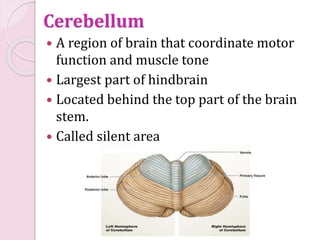
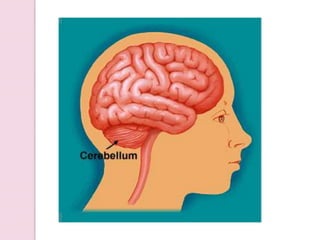
Cerebellum
 A region of brain that coordinate motor
function and muscle tone
 Largest part of hindbrain
 Located behind the top part of the brain
stem.
 Called silent area
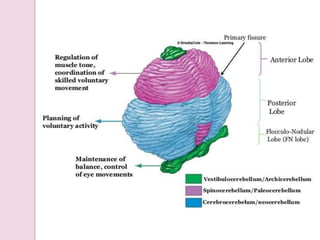
Functional divisions
 Vestibulocerebellum
 Spinocerebellum
 Corticocerebellum
Vestibulocerebellum
Inputs:
 From vestibular nuclei in brainstem
Function:
 Regulate movements underlying posture
and equilibrium
 Coordination of eye and head movements
Damage:
 Impairs ability to stand upright, maintain
posture and balance
 Cerebellar nystagmus
Spinocerebellum
Inputs:
 Directly from spinal cord
Function:
o Lateral portion
 Movement of distal muscle (ex. gross
movements during walking)
o Central portion (vermis)
 Movement of proximal muscles
Damage:
 Overshoot and intension tremor
 Impaired gait
Corticocerebellum
Inputs:
 Many areas of cerebral cortex (relayed thru Pons)
Function:
 Planning and timing of sequential movements
 Speech
Damage:
 Ataxia: Incoordination of complex, purposeful
movements of hands, fingers, feet and speech
apparatus
 Failure of smooth progression of movement
Lesions to any division of cerebellum result in
impairments on ipsilateral side of the body
Cerebellum parts and function

Cerebellum parts and function

  • 1.
  • 2.
    Cerebellum  A regionof brain that coordinate motor function and muscle tone  Largest part of hindbrain  Located behind the top part of the brain stem.  Called silent area
  • 4.
    Functional divisions  Vestibulocerebellum Spinocerebellum  Corticocerebellum
  • 5.
    Vestibulocerebellum Inputs:  From vestibularnuclei in brainstem Function:  Regulate movements underlying posture and equilibrium  Coordination of eye and head movements Damage:  Impairs ability to stand upright, maintain posture and balance  Cerebellar nystagmus
  • 6.
    Spinocerebellum Inputs:  Directly fromspinal cord Function: o Lateral portion  Movement of distal muscle (ex. gross movements during walking) o Central portion (vermis)  Movement of proximal muscles Damage:  Overshoot and intension tremor  Impaired gait
  • 7.
    Corticocerebellum Inputs:  Many areasof cerebral cortex (relayed thru Pons) Function:  Planning and timing of sequential movements  Speech Damage:  Ataxia: Incoordination of complex, purposeful movements of hands, fingers, feet and speech apparatus  Failure of smooth progression of movement Lesions to any division of cerebellum result in impairments on ipsilateral side of the body