
Slide
1
Slide
2
Slide
3
1. Passive Transport
A. Diffusion
B. Gradients
C. Osmosis
D. Hypotonic
E. Hypertonic
F. Isotonic
2. Active Transport (energy expenditure, direction)
A. Endocytosis (phagocytosis )
B. Exocytosis
Slide
4
1. Define diffusion
1. Define gradient
Slide
5
1. Define diffusion:
The movement of molecules from an
area in which they are highly
concentrated to an area in which they
are less concentrated.
2. Define gradient:
An increase or decrease in the amount
of a concentration observed in passing
from one point or moment to another.
Slide
6
Slide
7
• Draw a diagram of an
example of diffusion we
saw in class.
Remember:
tea bag,
food coloring drops,
sugar cubes,
etc.
Slide
8
Slide
9
Slide
10
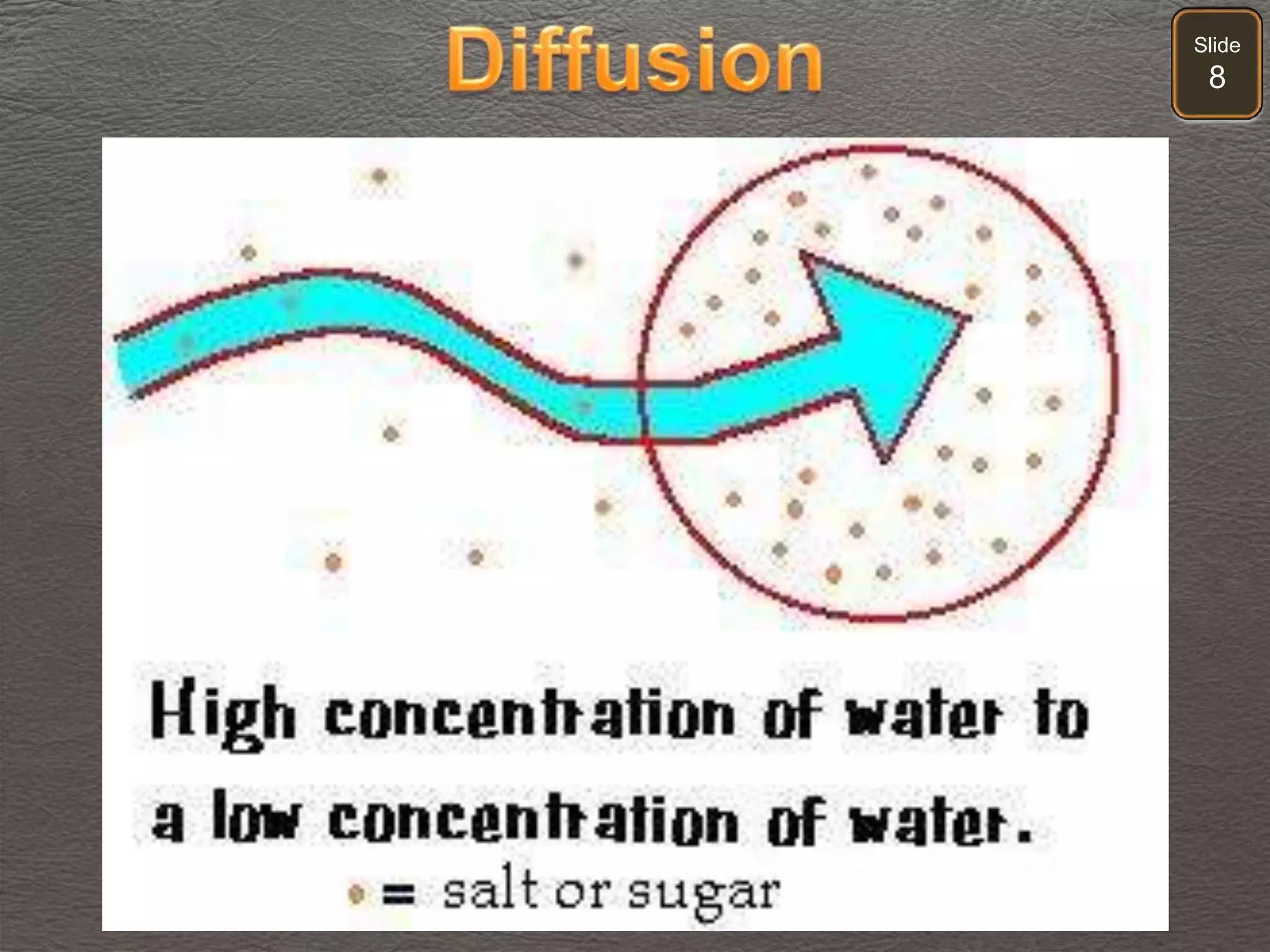
The diffusion of water through a semi-permeable
membrane.
Slide
11
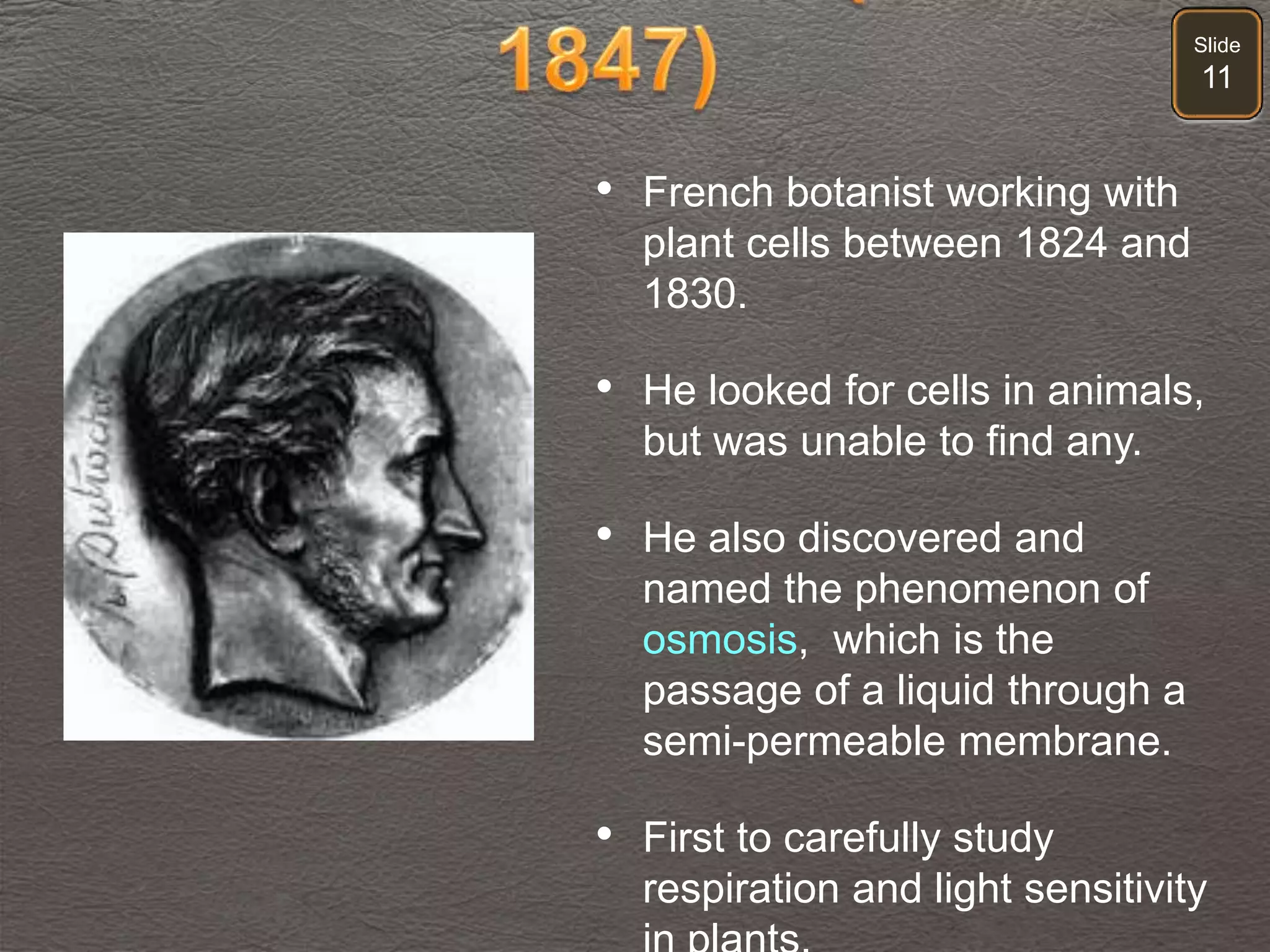
• French botanist working with
plant cells between 1824 and
1830.
• He looked for cells in animals,
but was unable to find any.
• He also discovered and
named the phenomenon of
osmosis, which is the
passage of a liquid through a
semi-permeable membrane.
• First to carefully study
respiration and light sensitivity
Slide
12
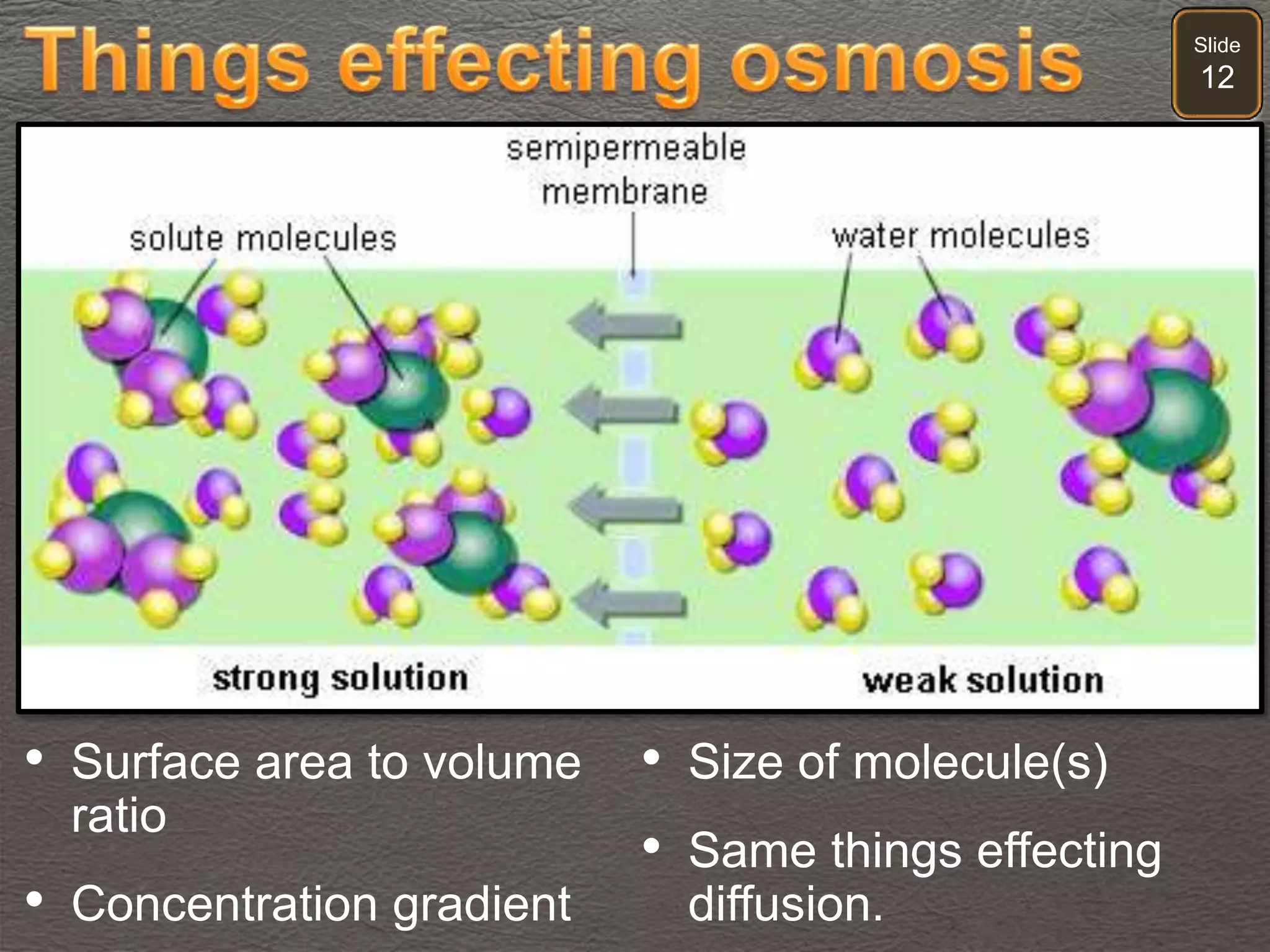
• Surface area to volume
ratio
• Concentration gradient
• Size of molecule(s)
• Same things effecting
diffusion.
Slide
13
Size matters
Slide
14
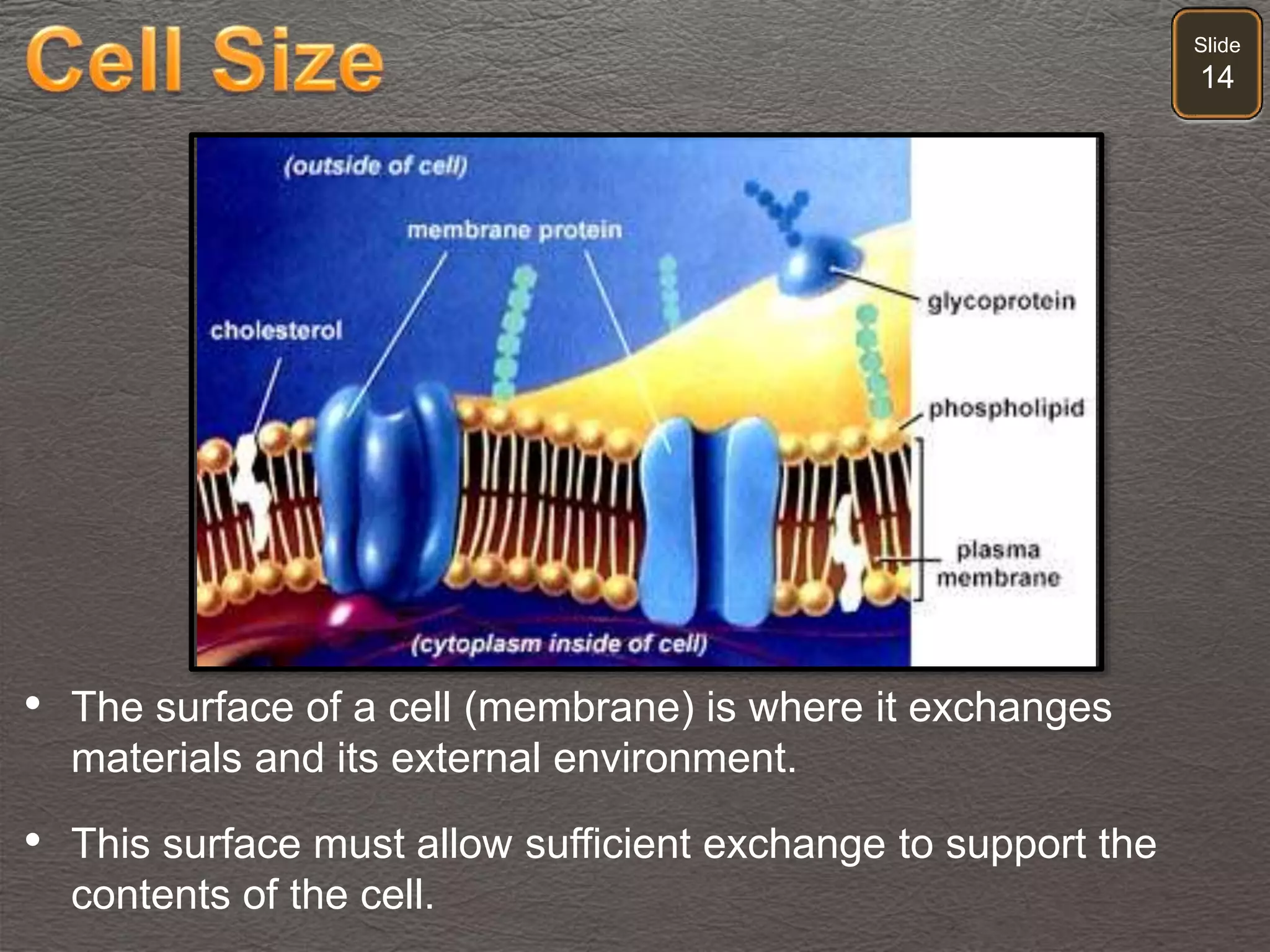
• The surface of a cell (membrane) is where it exchanges
materials and its external environment.
• This surface must allow sufficient exchange to support the
contents of the cell.
Slide
15
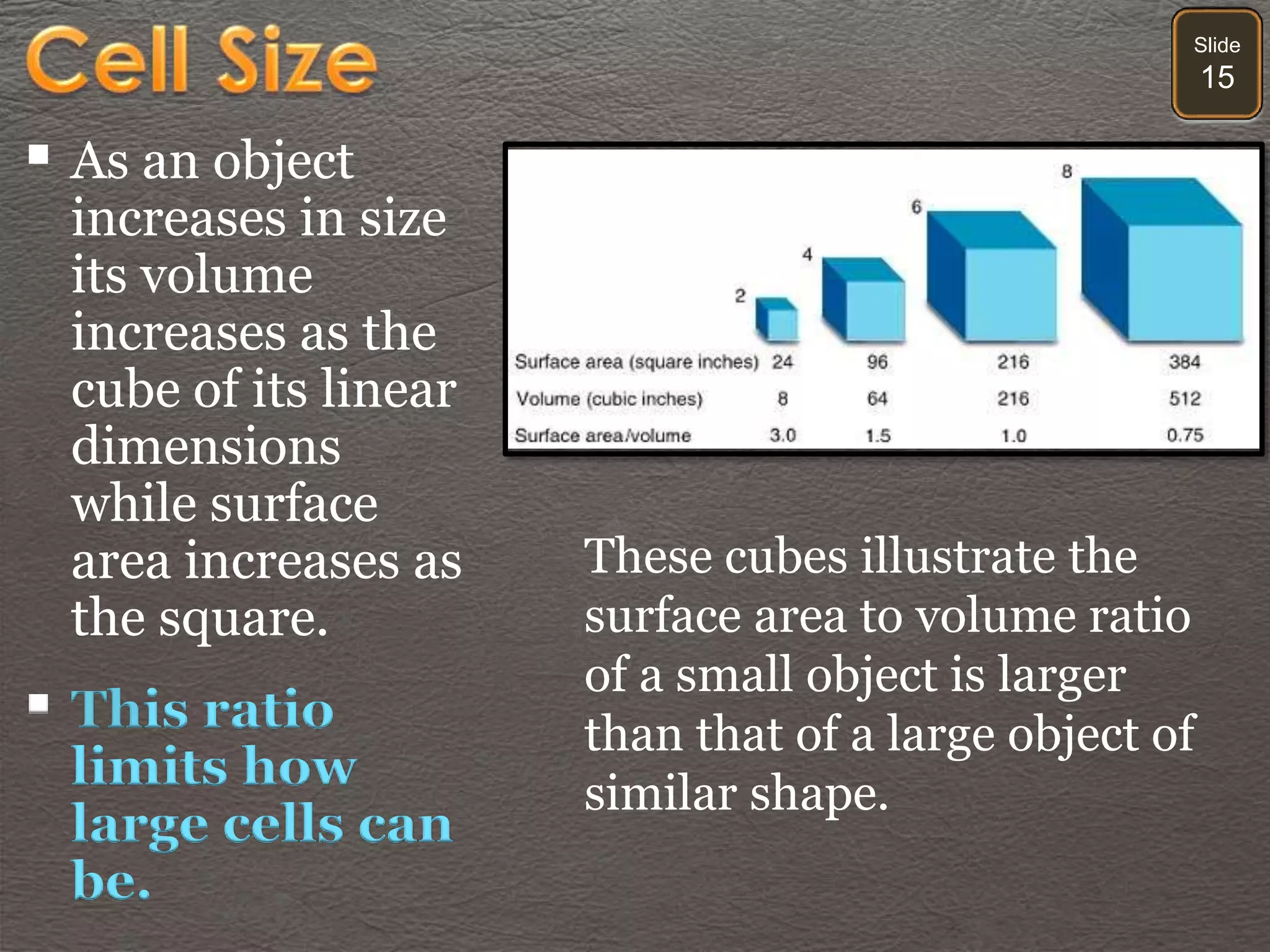
 As an object
increases in size
its volume
increases as the
cube of its linear
dimensions
while surface
area increases as
the square.
 This ratio
limits how
large cells can
be.
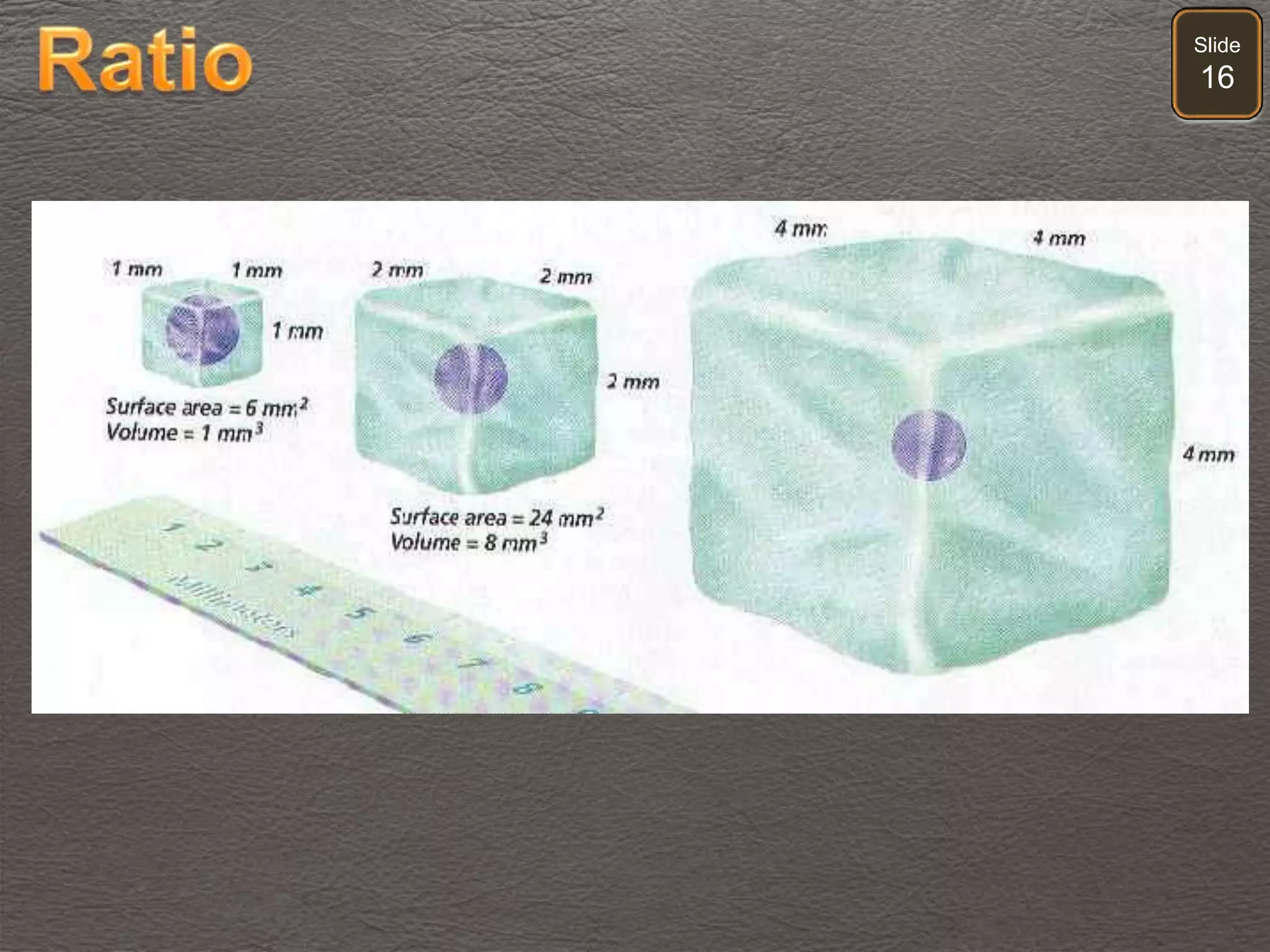
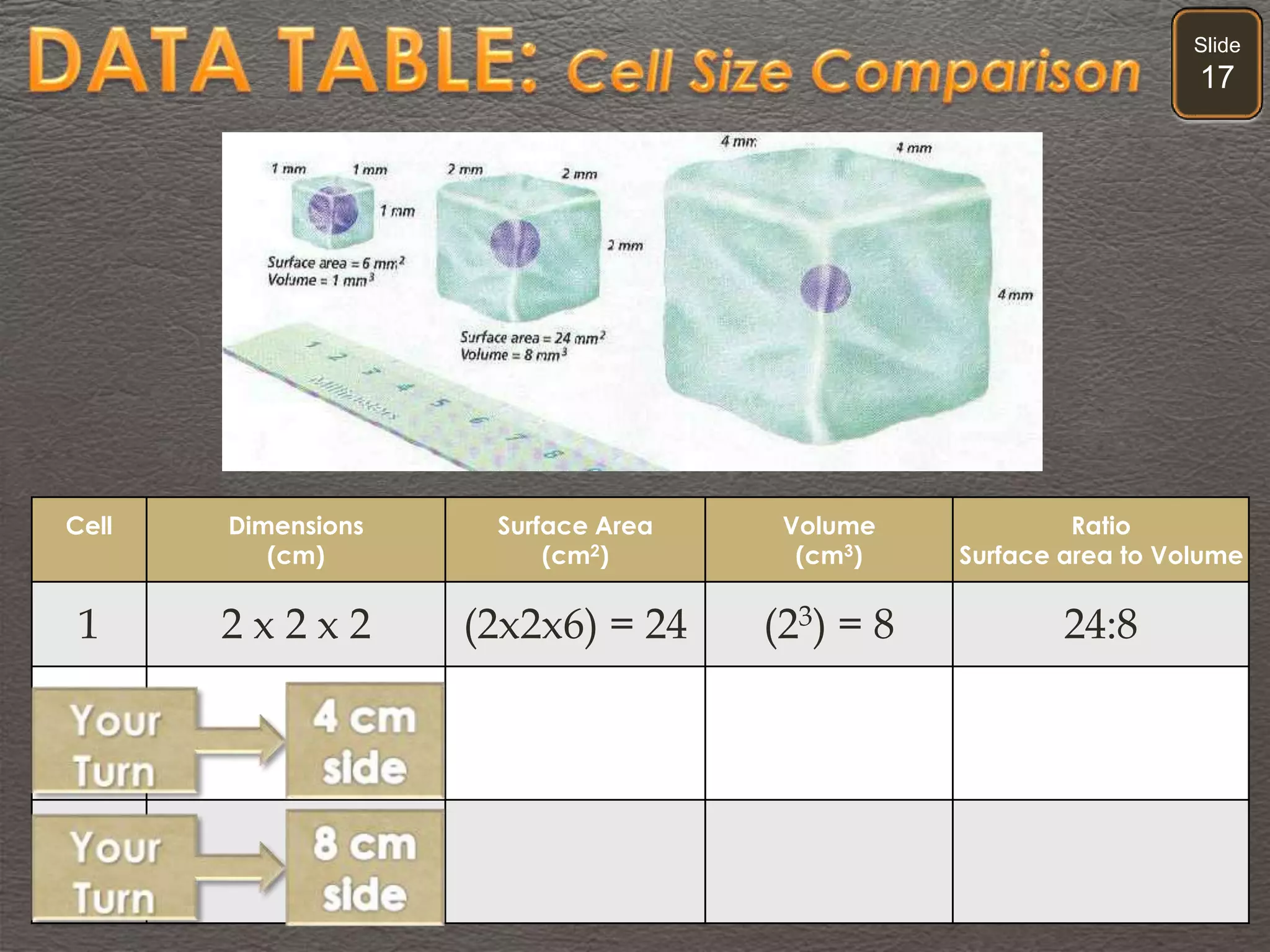
These cubes illustrate the
surface area to volume ratio
of a small object is larger
than that of a large object of
similar shape.
Slide
16
Slide
17
Cell Dimensions
(cm)
Surface Area
(cm2)
Volume
(cm3)
Ratio
Surface area to Volume
1 2 x 2 x 2 (2x2x6) = 24 (23) = 8 24:8
2
3
Slide
18
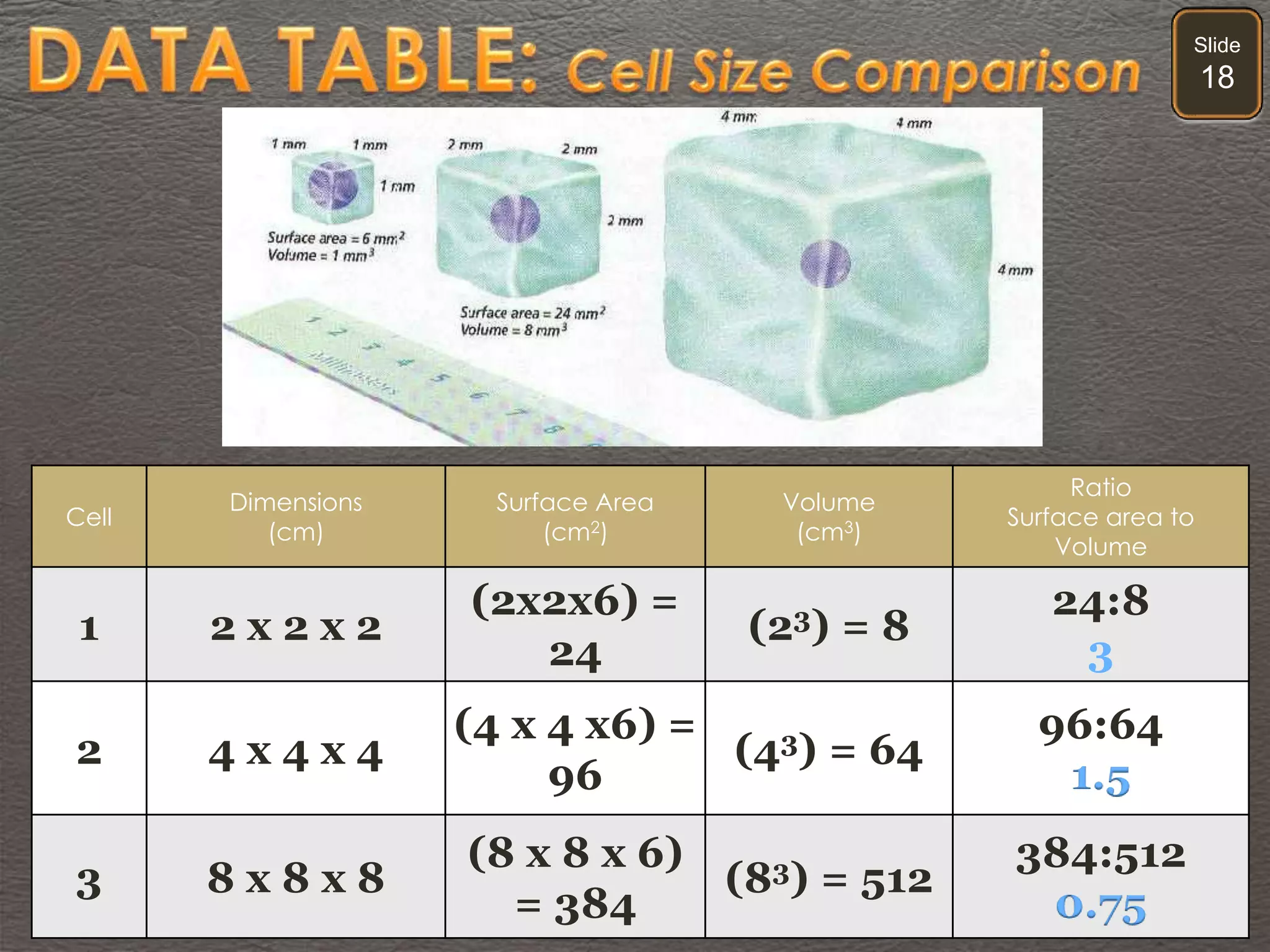
Cell
Dimensions
(cm)
Surface Area
(cm2)
Volume
(cm3)
Ratio
Surface area to
Volume
1 2 x 2 x 2
(2x2x6) =
24
(23) = 8
24:8
3
2 4 x 4 x 4
(4 x 4 x6) =
96
(43) = 64
96:64
1.5
3 8 x 8 x 8
(8 x 8 x 6)
= 384
(83) = 512
384:512
0.75
Slide
19
Controlling what comes in and out.
Slide
20
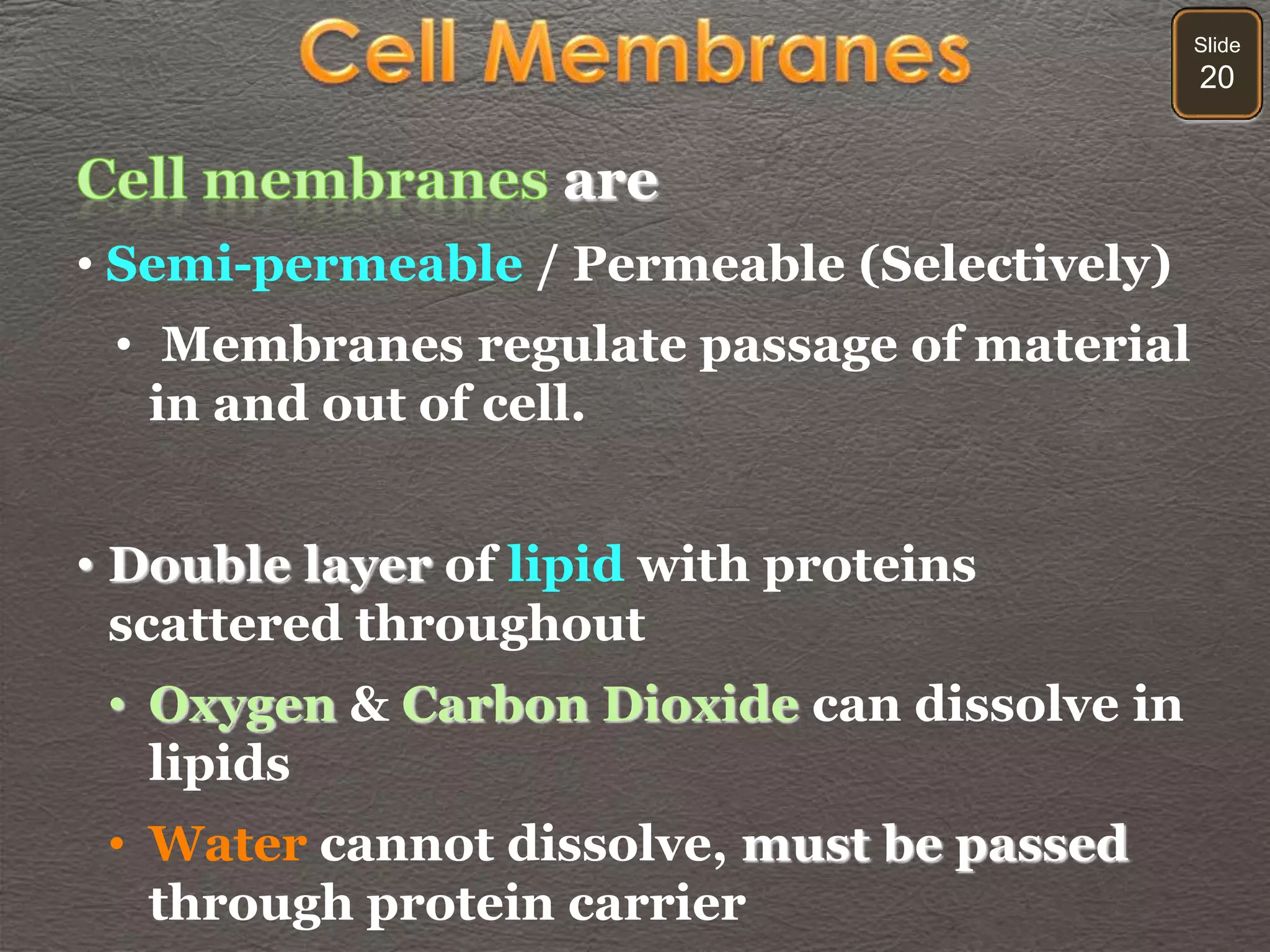
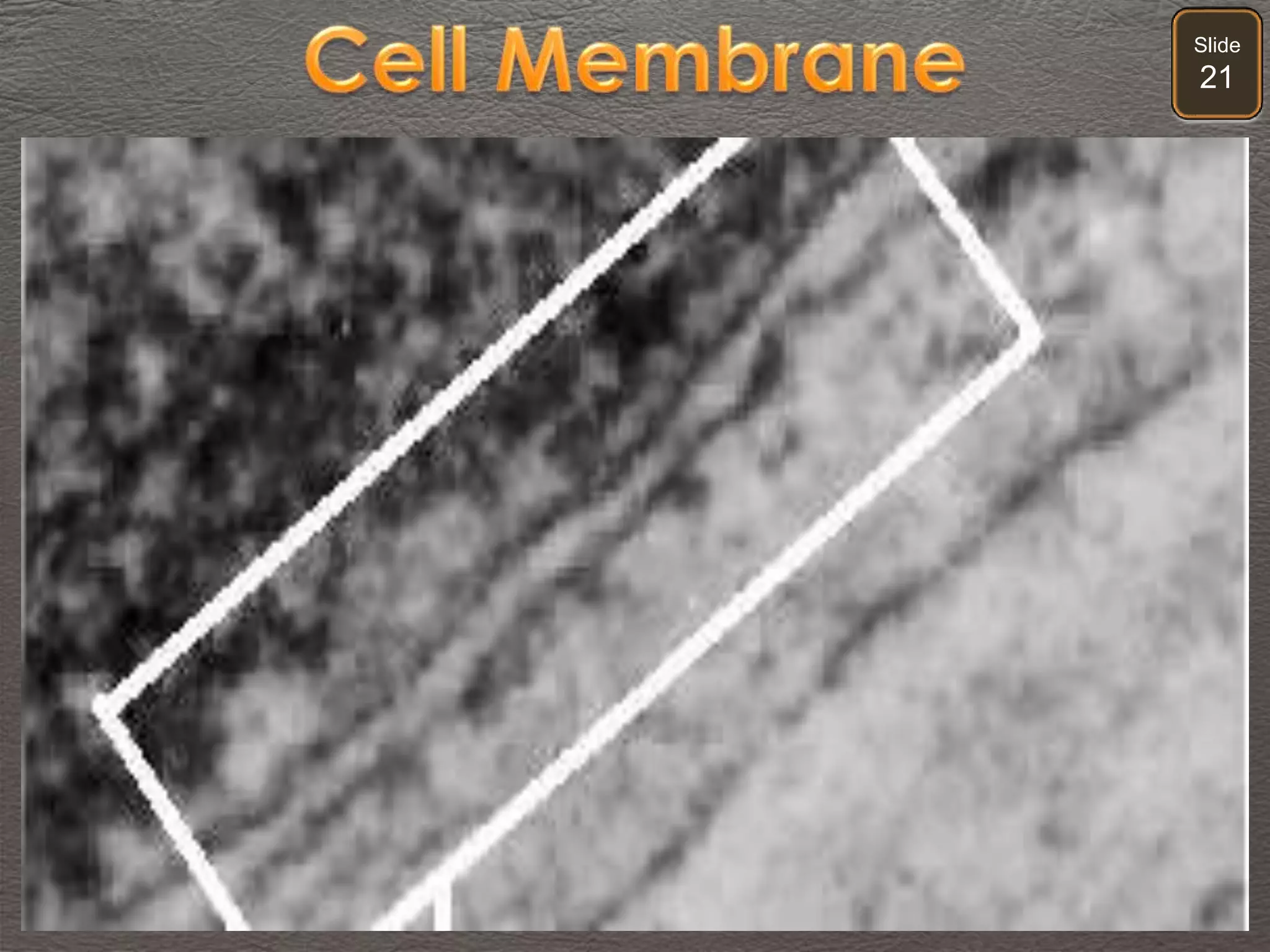
are
• Semi-permeable / Permeable (Selectively)
• Membranes regulate passage of material
in and out of cell.
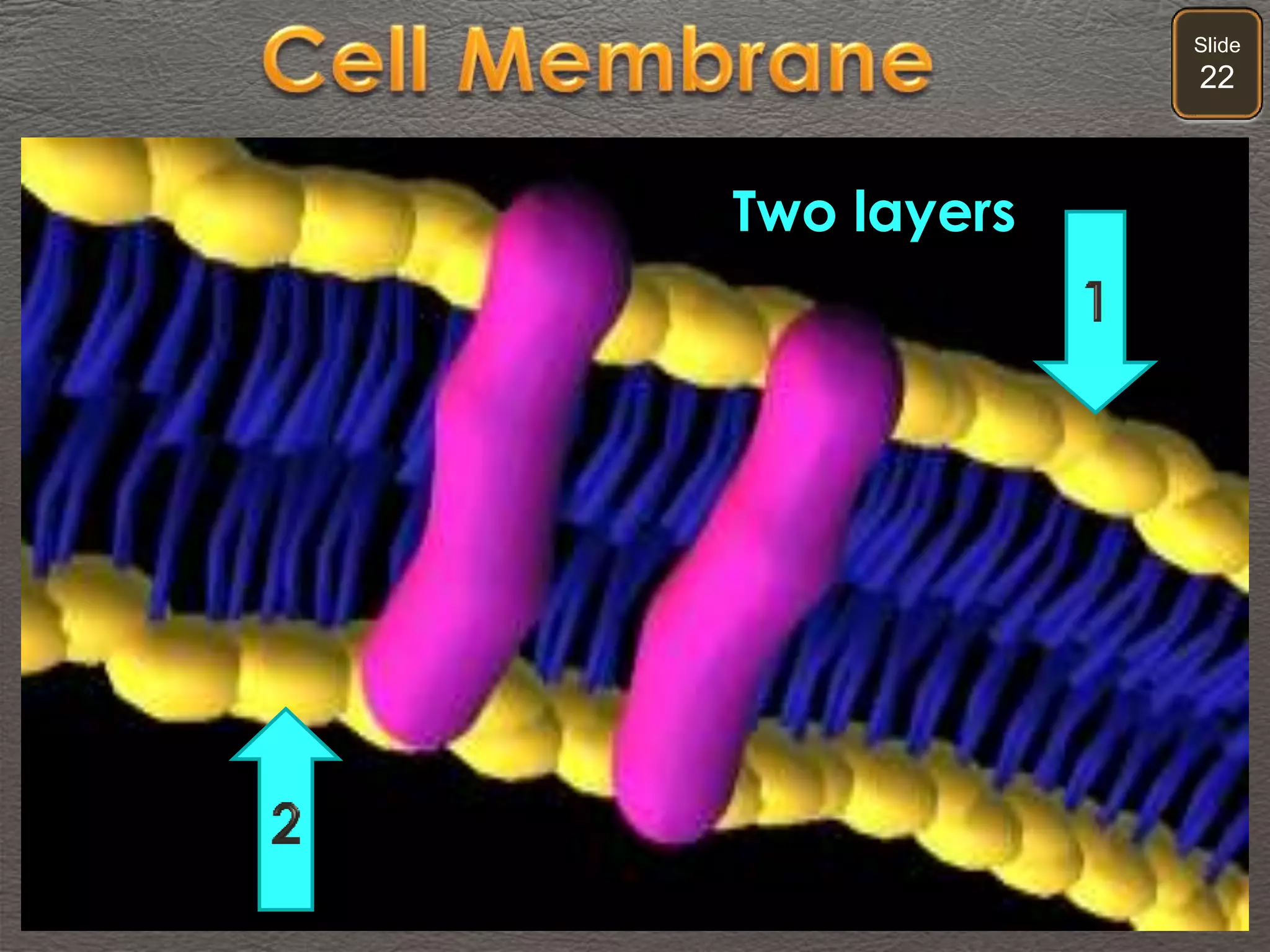
• Double layer of lipid with proteins
scattered throughout
• Oxygen & Carbon Dioxide can dissolve in
lipids
• Water cannot dissolve, must be passed
through protein carrier
Slide
21
Slide
22
Two layers
Slide
23
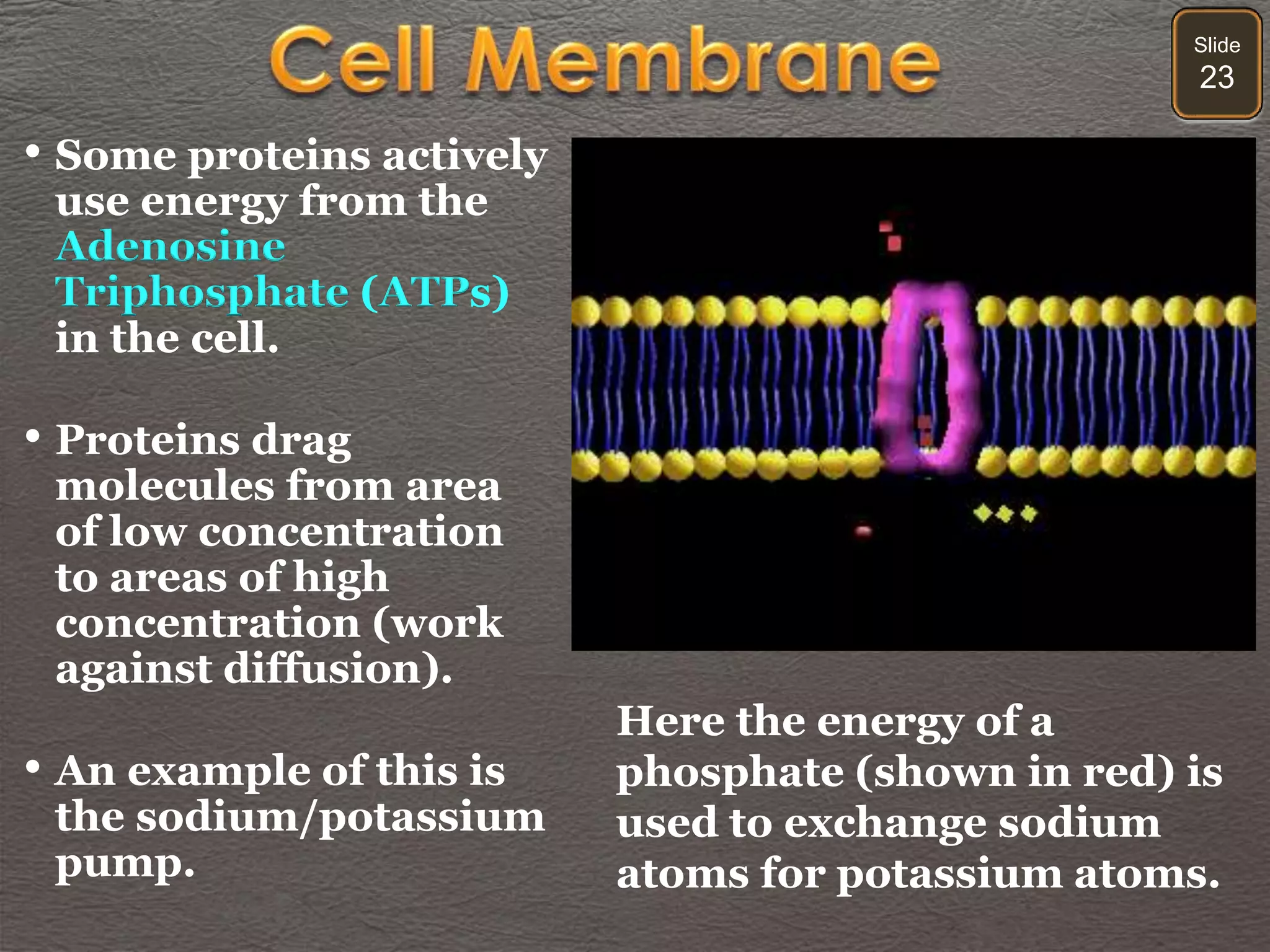
• Some proteins actively
use energy from the
Adenosine
Triphosphate (ATPs)
in the cell.
• Proteins drag
molecules from area
of low concentration
to areas of high
concentration (work
against diffusion).
• An example of this is
the sodium/potassium
pump.
Here the energy of a
phosphate (shown in red) is
used to exchange sodium
atoms for potassium atoms.
Slide
24
Diffusion of water through a semi-permeable
membrane
• Water is 70-95% of living cells
• Cell has no control over osmosis, dependant
on water concentration
Slide
25
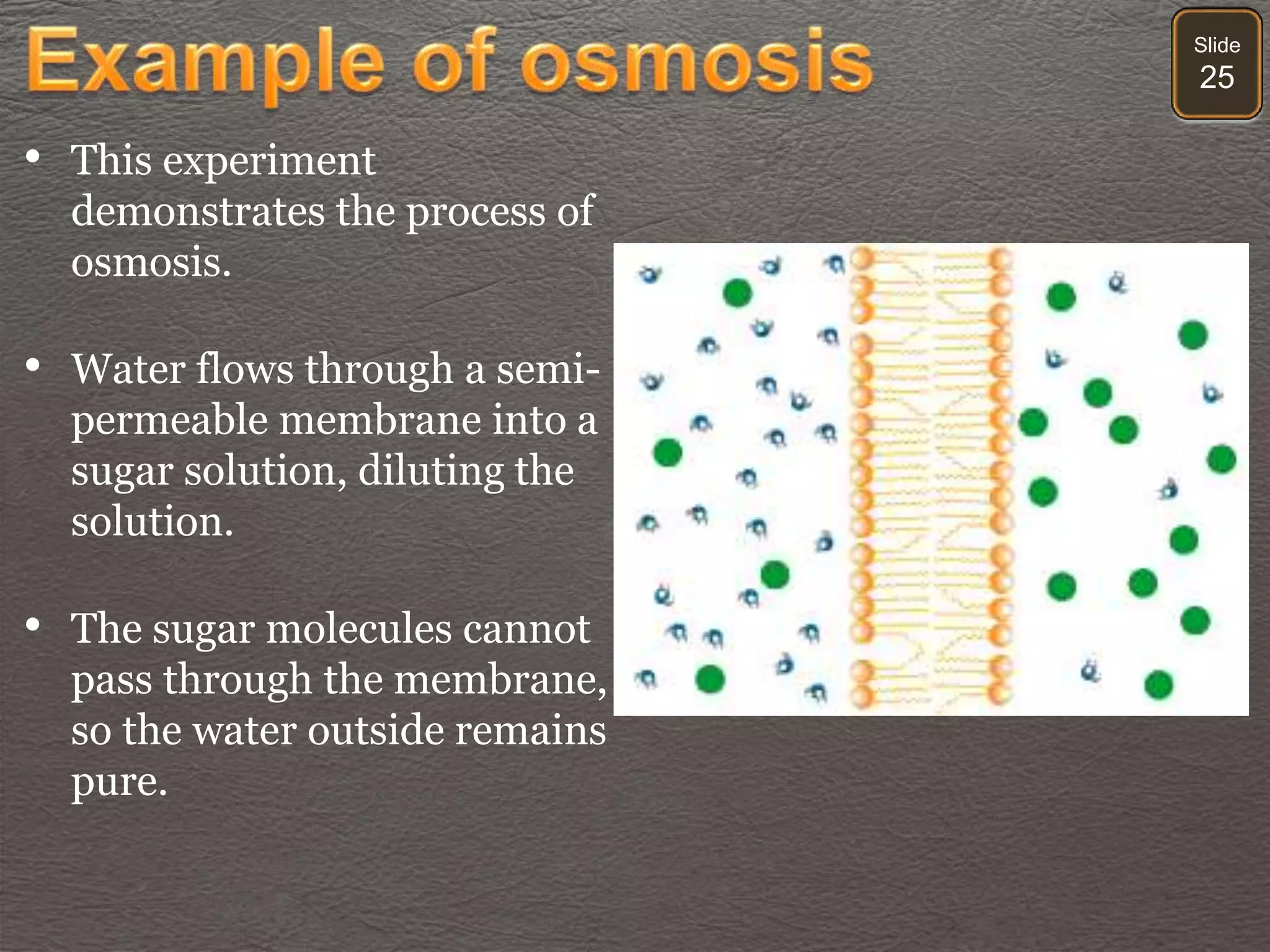
• This experiment
demonstrates the process of
osmosis.
• Water flows through a semi-
permeable membrane into a
sugar solution, diluting the
solution.
• The sugar molecules cannot
pass through the membrane,
so the water outside remains
pure.
Slide
26
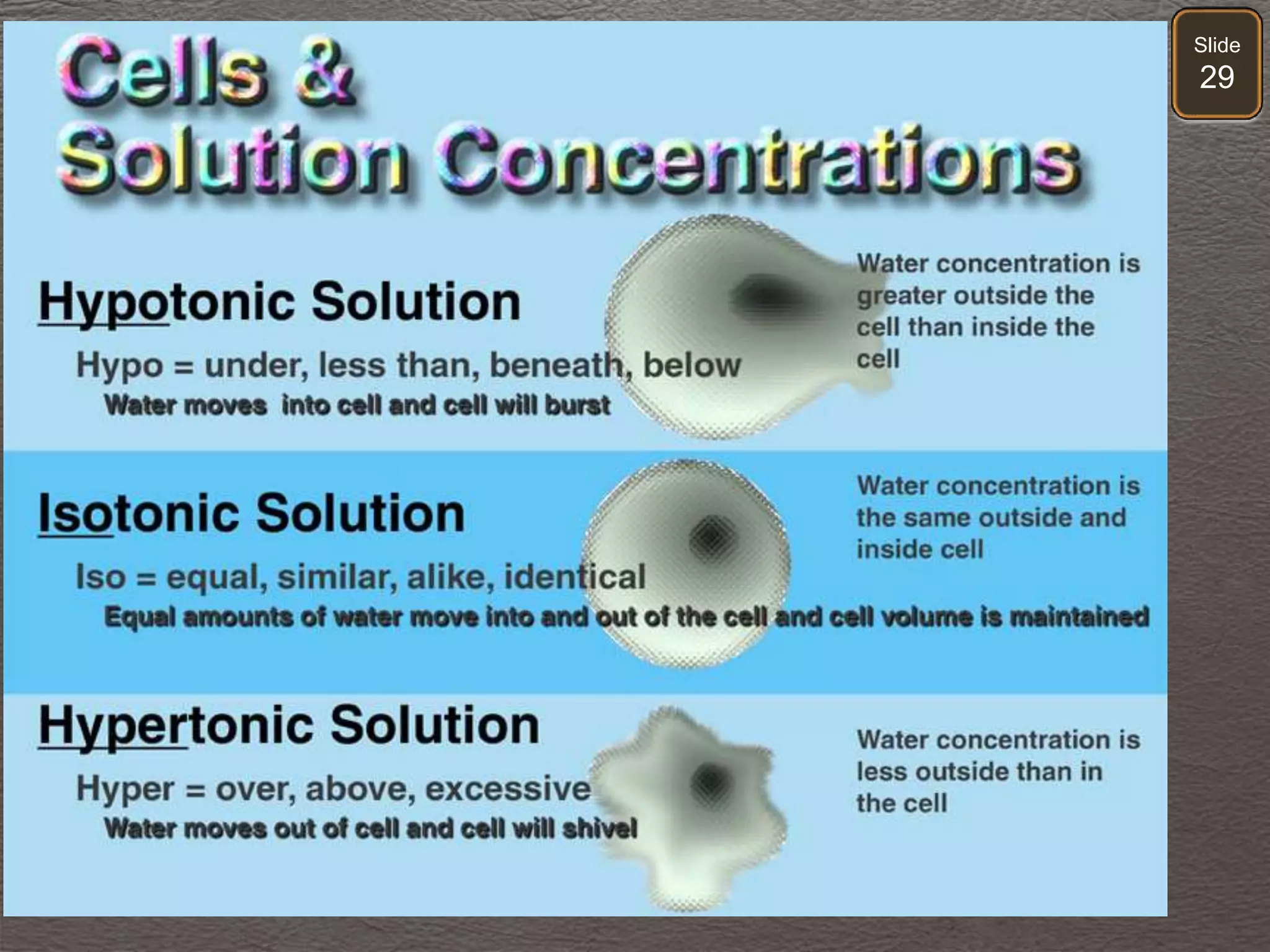
3 Solution Conditions
• Isotonic — equal, the
same
• Hypotonic —under
• Hypertonic —above, over
Slide
27
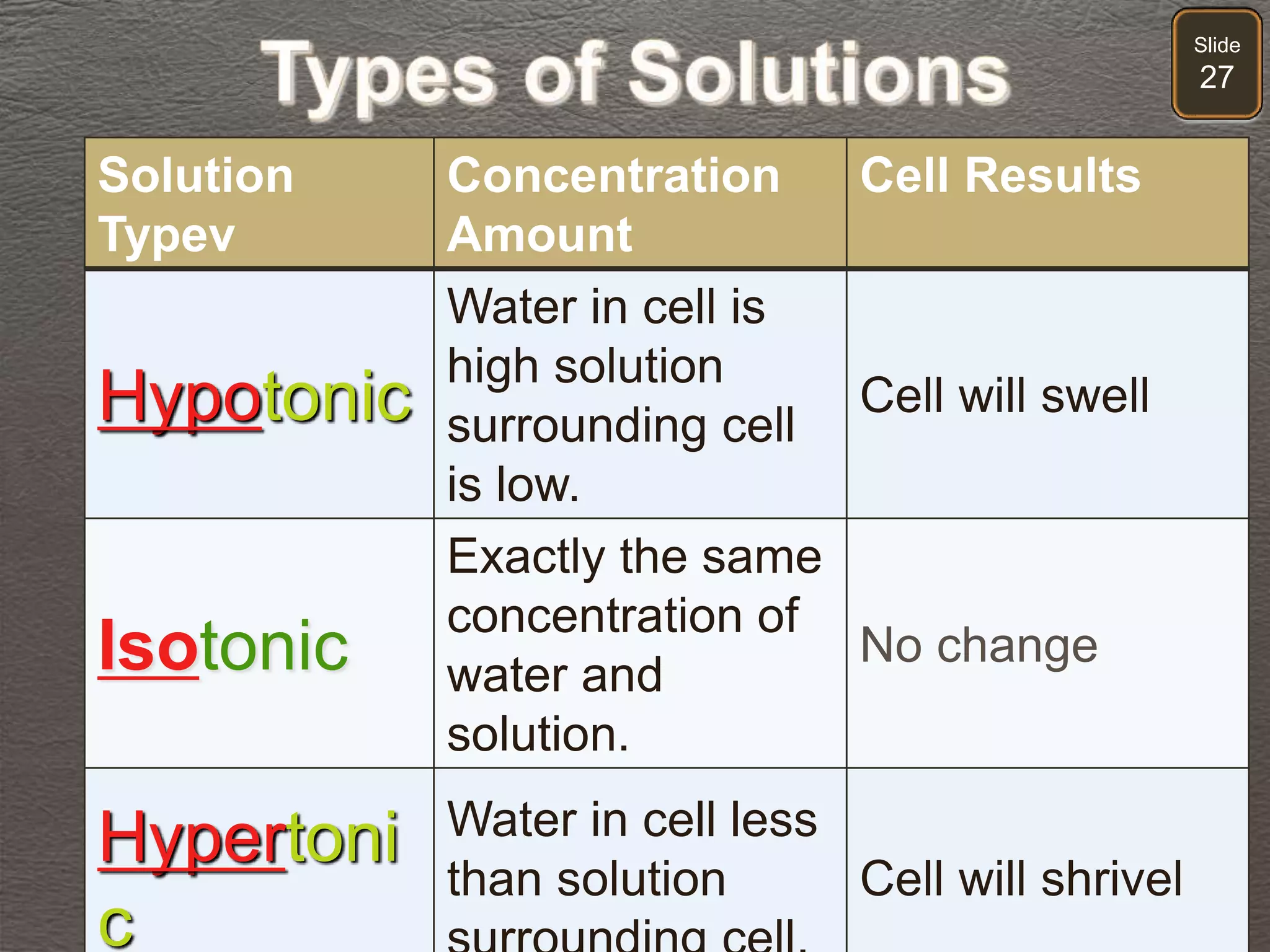
Solution
Typev
Concentration
Amount
Cell Results
Hypotonic
Water in cell is
high solution
surrounding cell
is low.
Cell will swell
Isotonic
Exactly the same
concentration of
water and
solution.
No change
Hypertoni
c
Water in cell less
than solution Cell will shrivel
Slide
28
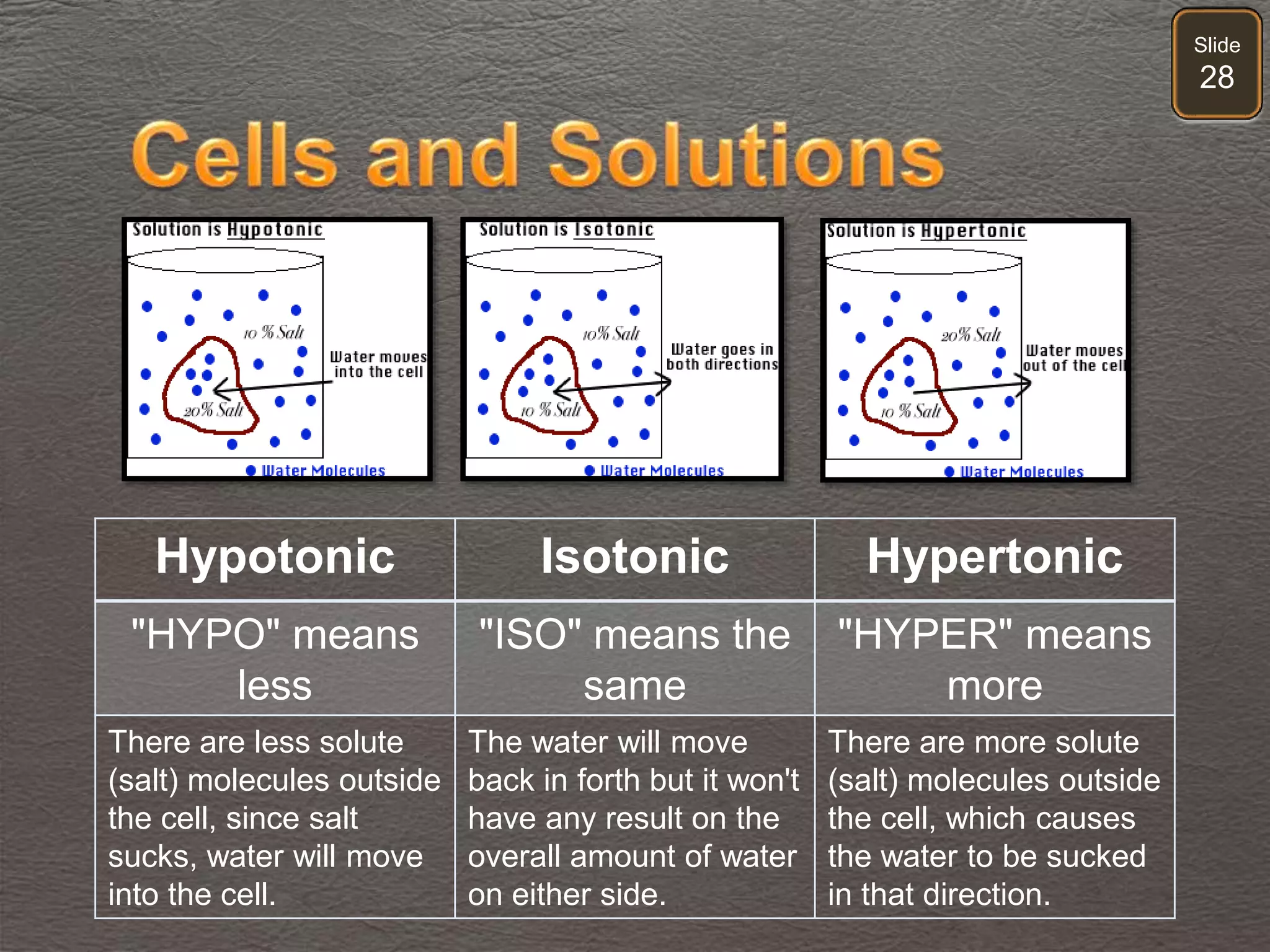
Hypotonic Isotonic Hypertonic
"HYPO" means
less
"ISO" means the
same
"HYPER" means
more
There are less solute
(salt) molecules outside
the cell, since salt
sucks, water will move
into the cell.
The water will move
back in forth but it won't
have any result on the
overall amount of water
on either side.
There are more solute
(salt) molecules outside
the cell, which causes
the water to be sucked
in that direction.
Slide
29
Slide
30
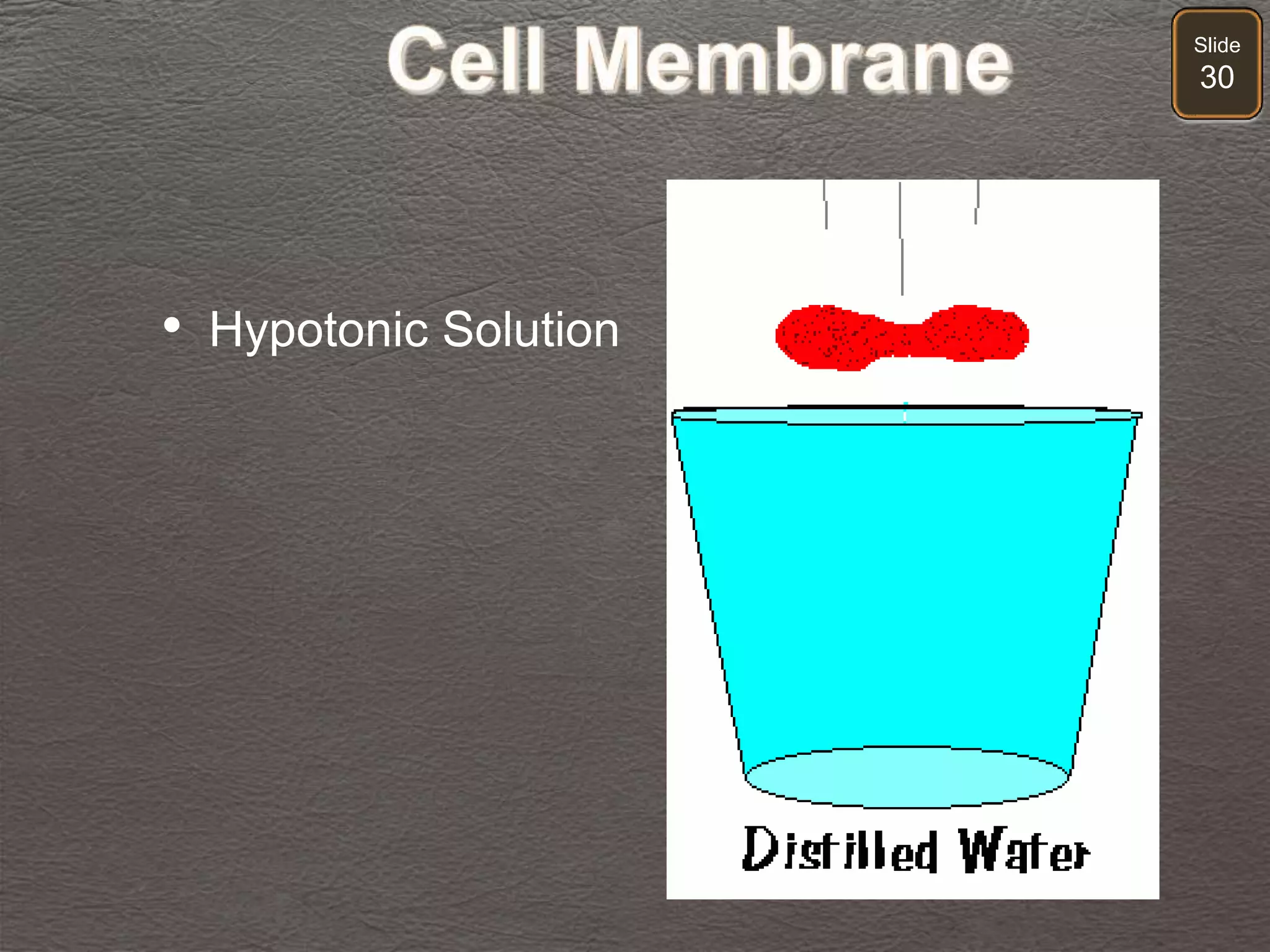
• Hypotonic Solution
Slide
31
When push comes to shove
Slide
32
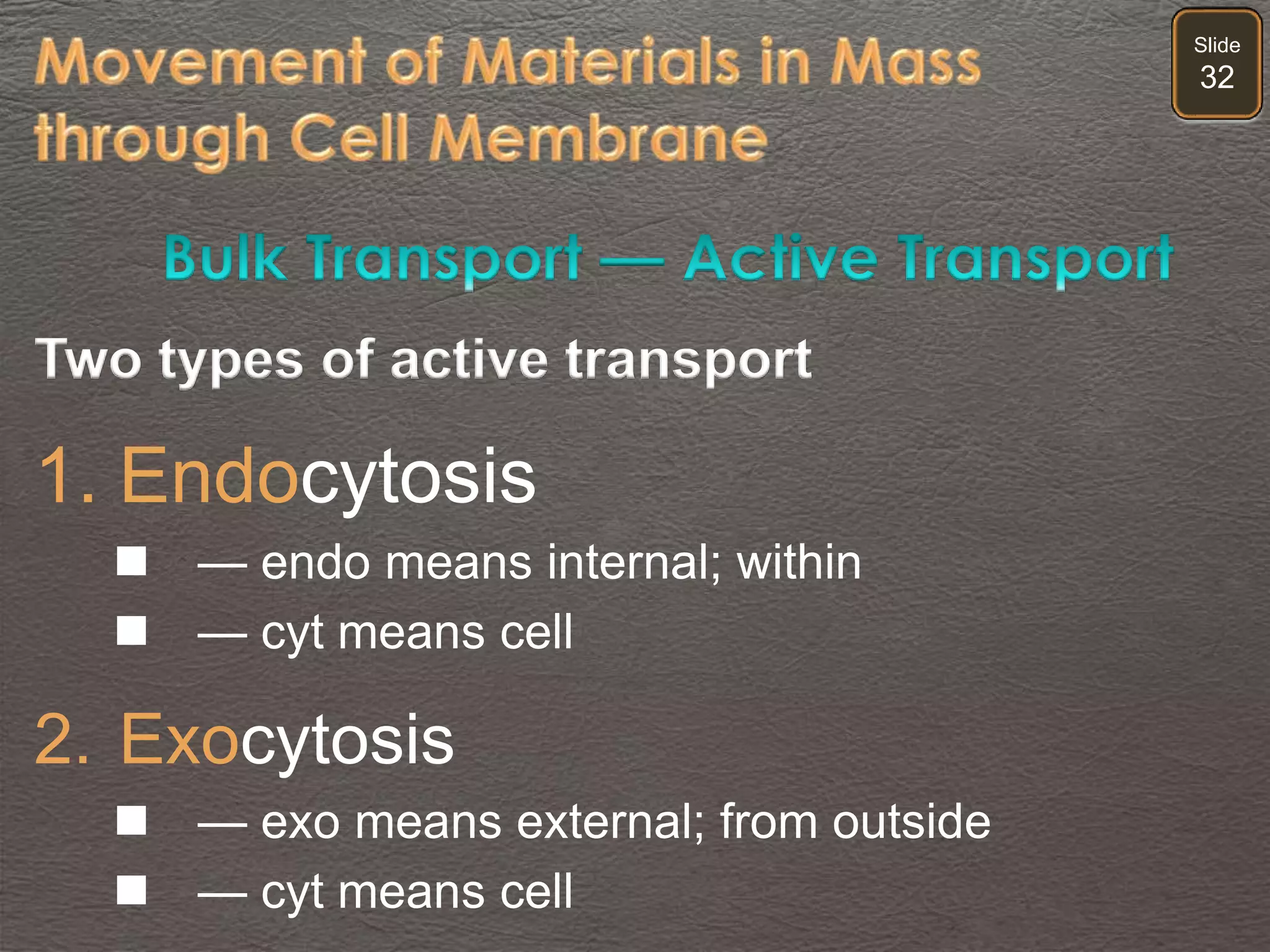
Two types of active transport
1. Endocytosis
 — endo means internal; within
 — cyt means cell
2. Exocytosis
 — exo means external; from outside
 — cyt means cell
Slide
33
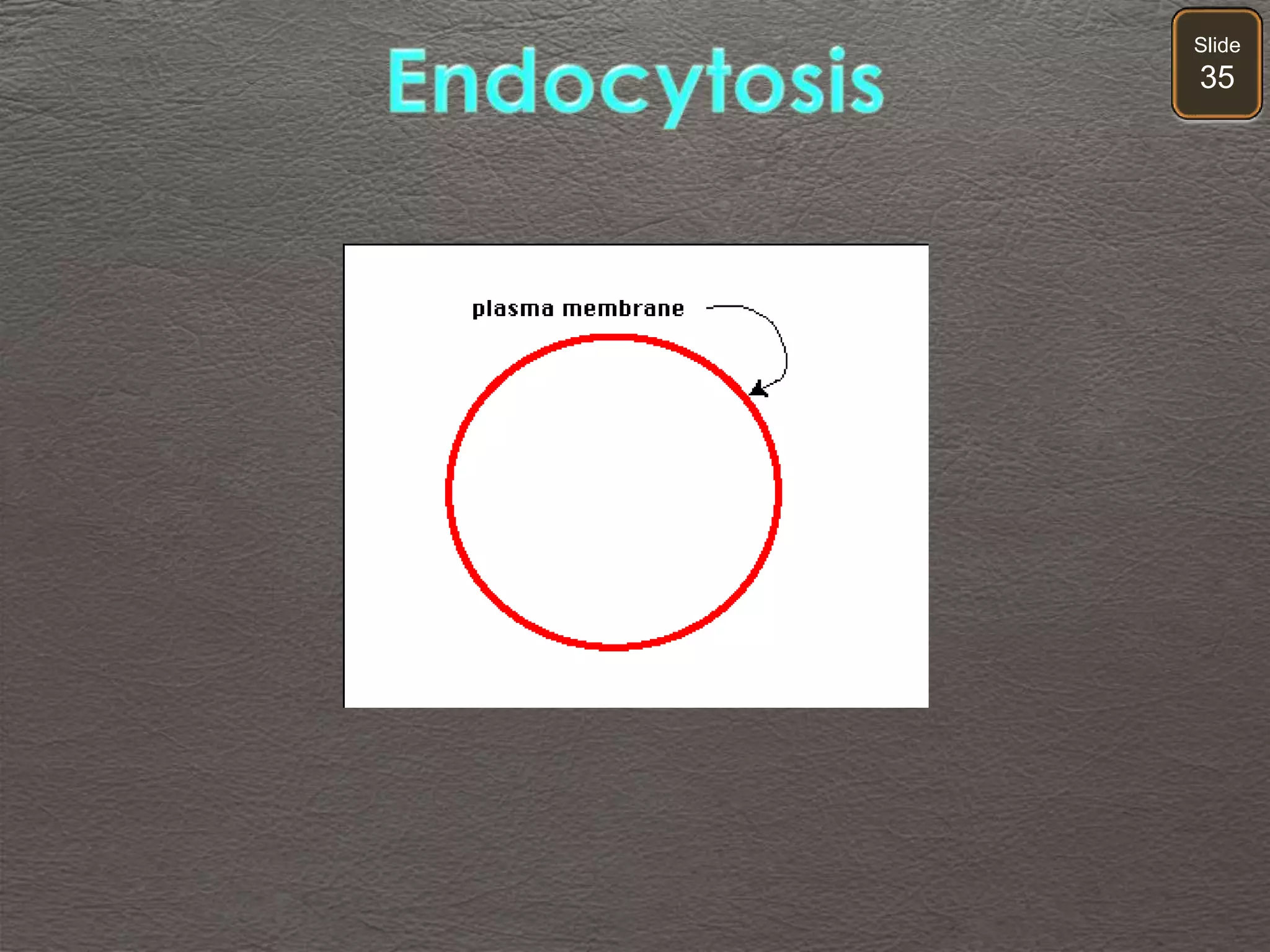
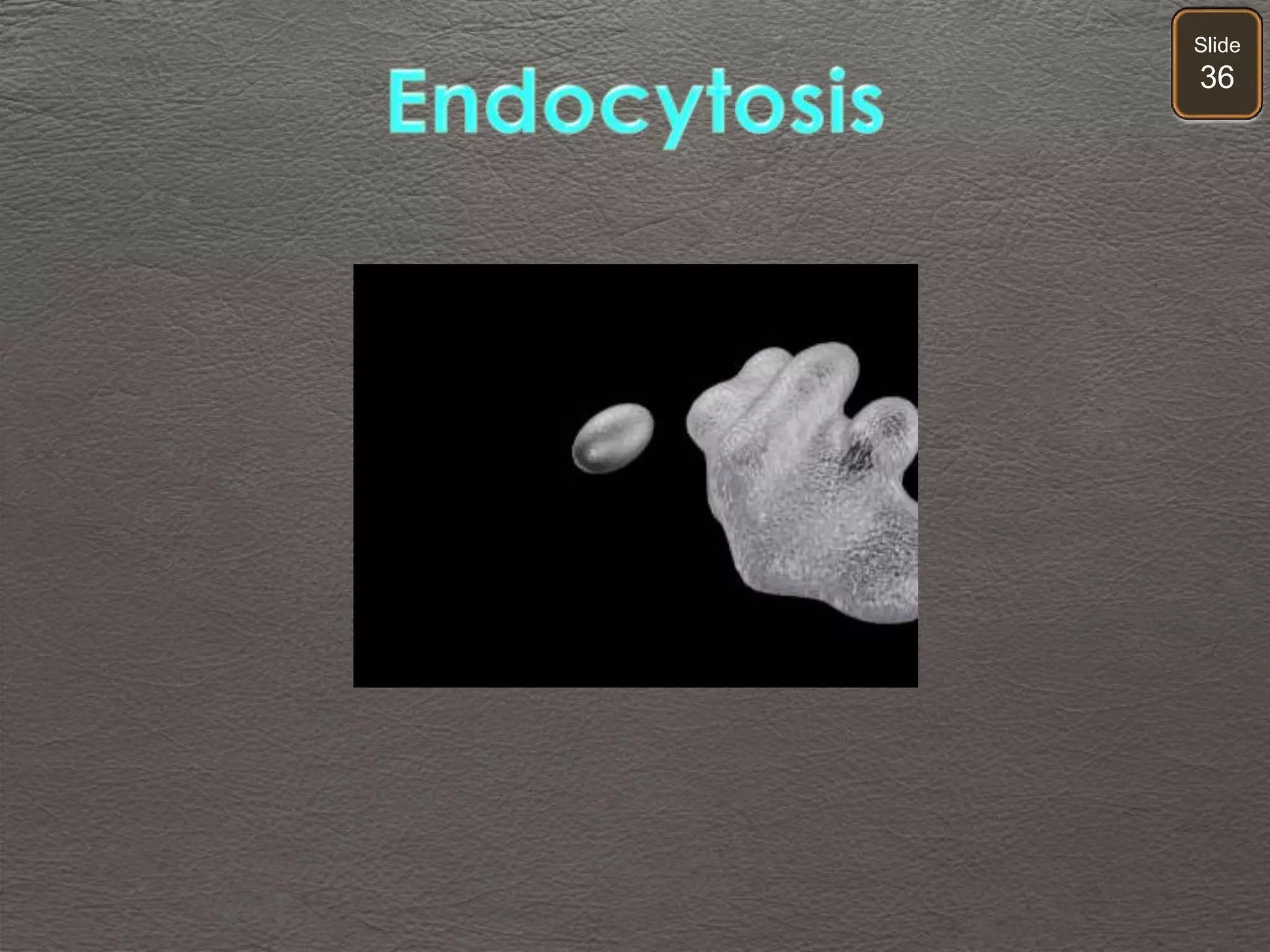
Involves moving material through the plasma
membrane and incorporation of the bulk
material into a vacuole.
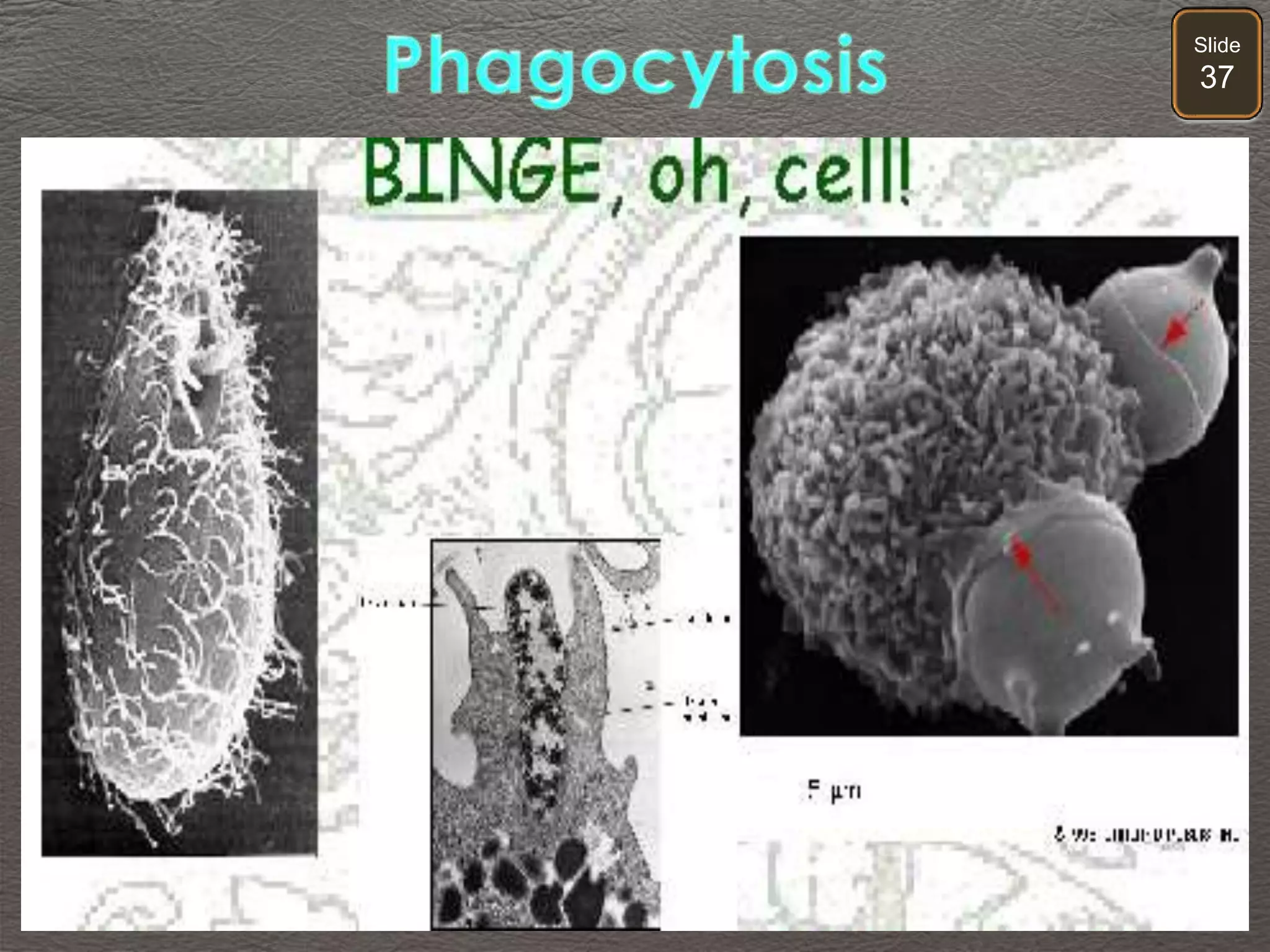
a)Phagocytosis involves the
engulfing of solid materials.
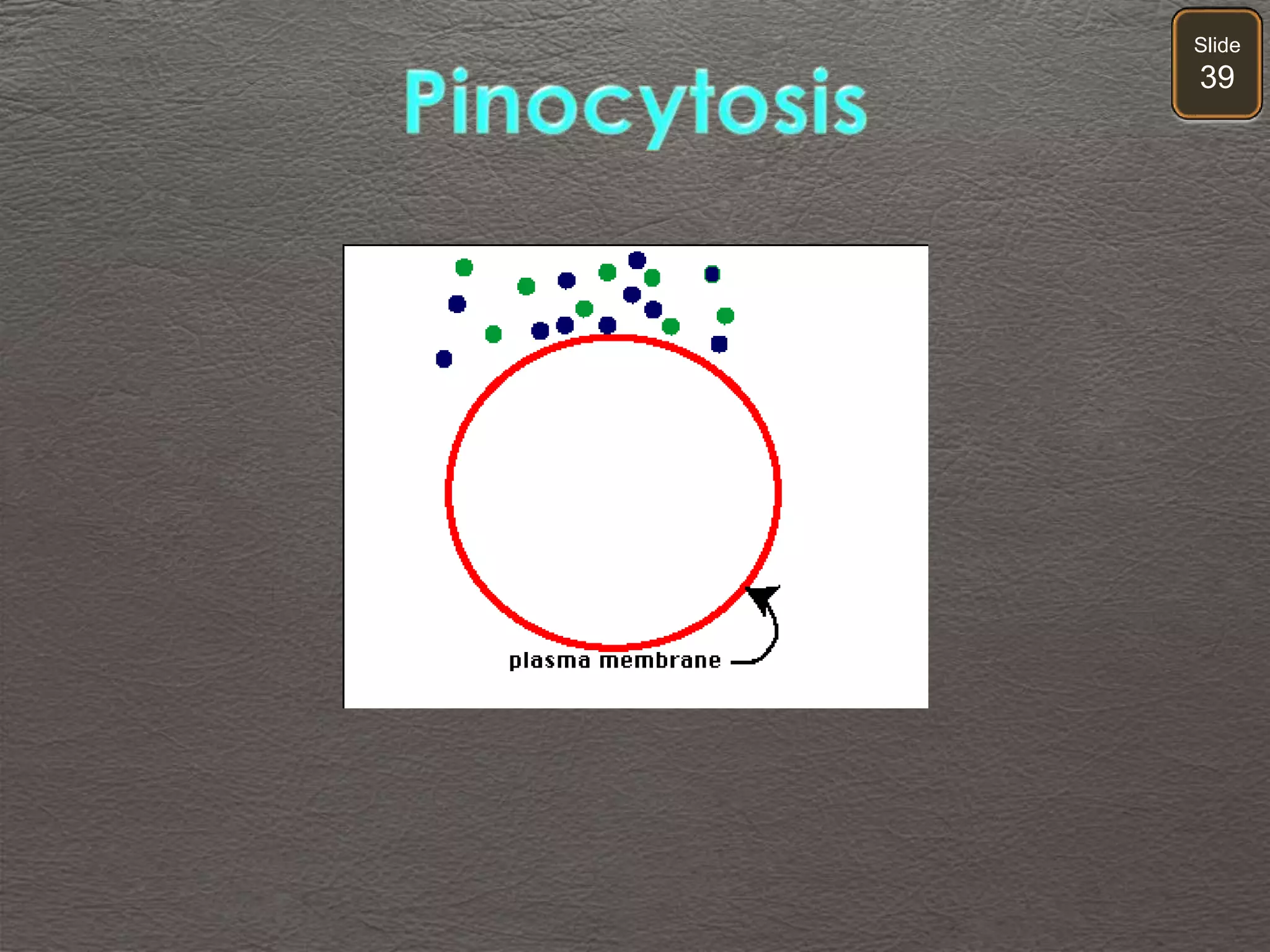
b)Pinocytosis involves the engulfing
of liquid materials.
Endocytosis
Slide
34
Is the expulsion of solid or liquid materials
by expulsion.
Exocytosis
Slide
35
Slide
36
Slide
37
Slide
38
Slide
39
Slide
40
Slide
41

Diffustion osmosis 2014