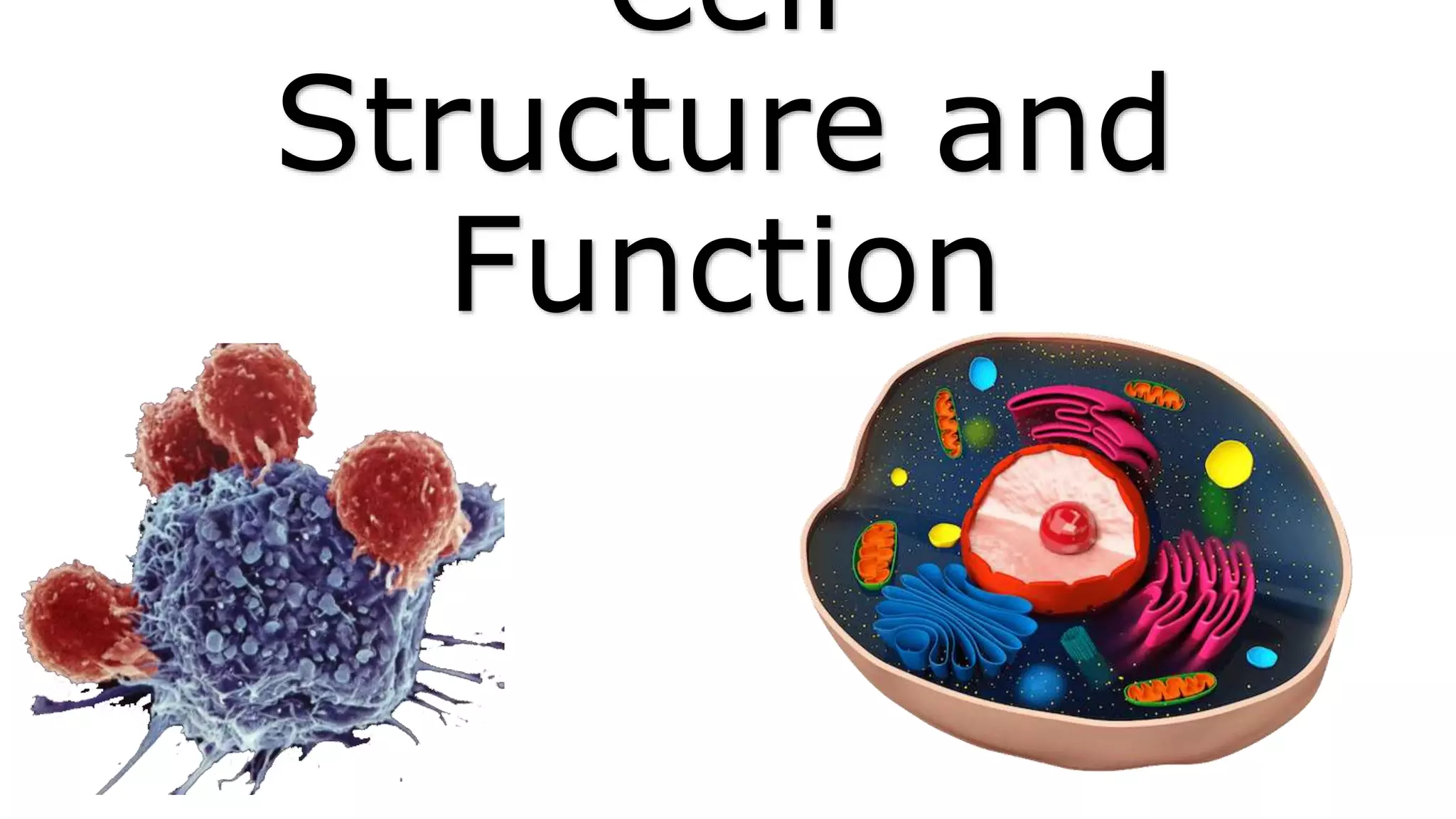
Cell
Structure and
Function
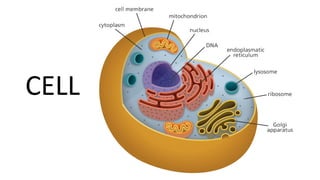
CELL
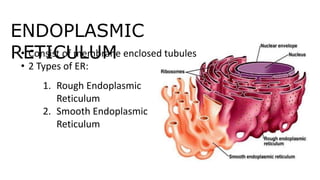
ENDOPLASMIC
RETICULUM• Consist of membrane enclosed tubules
• 2 Types of ER:
1. Rough Endoplasmic
Reticulum
2. Smooth Endoplasmic
Reticulum
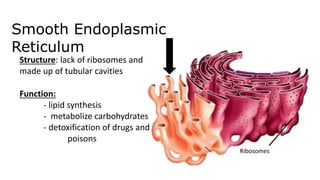
Smooth Endoplasmic
Reticulum
Ribosomes
Function:
- lipid synthesis
- metabolize carbohydrates
- detoxification of drugs and
poisons
Structure: lack of ribosomes and
made up of tubular cavities
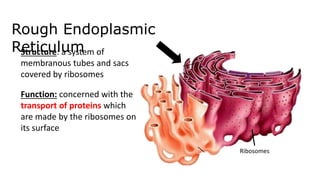
Rough Endoplasmic
Reticulum
Ribosomes
Structure: a system of
membranous tubes and sacs
covered by ribosomes
Function: concerned with the
transport of proteins which
are made by the ribosomes on
its surface
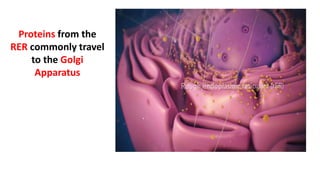
Proteins from the
RER commonly travel
to the Golgi
Apparatus
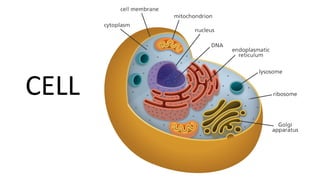
CELL
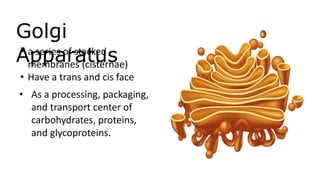
Golgi
Apparatus• a series of stacked
membranes (cisternae)
• Have a trans and cis face
• As a processing, packaging,
and transport center of
carbohydrates, proteins,
and glycoproteins.
Functions of Golgi
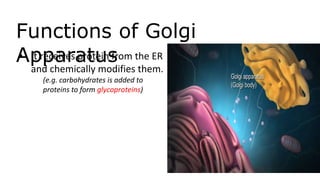
Apparatus• It receives protein from the ER
and chemically modifies them.
(e.g. carbohydrates is added to
proteins to form glycoproteins)
Functions of Golgi
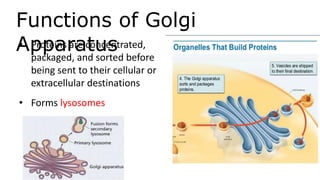
Apparatus• Proteins are concentrated,
packaged, and sorted before
being sent to their cellular or
extracellular destinations
• Forms lysosomes
Point of ER for easy
comprehension:
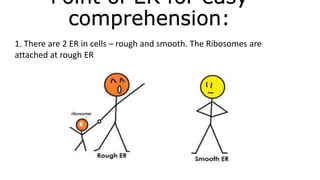
1. There are 2 ER in cells – rough and smooth. The Ribosomes are
attached at rough ER
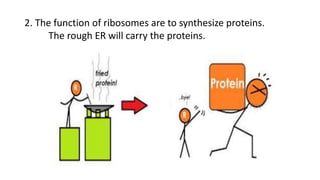
2. The function of ribosomes are to synthesize proteins.
The rough ER will carry the proteins.
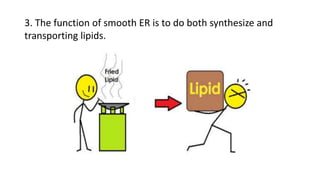
3. The function of smooth ER is to do both synthesize and
transporting lipids.
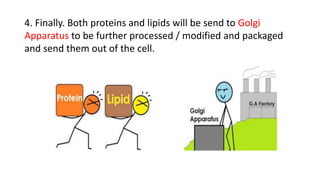
4. Finally. Both proteins and lipids will be send to Golgi
Apparatus to be further processed / modified and packaged
and send them out of the cell.
FIN

Cell's Structure: ER and Golgi Bodies