CELLPHONES

By: David Fortunato Juan, Freddy Caceres and Danilo Quintero.
HISTORY OF CELL PHONES


cellular phone is a wireless phone that most people these days communicate with.
It seem that not to long ago that people were still using house. Not little kids have
cell phones. in 1843 a man by the name of Michael Faraday studied to see if space
could conduct electricity. This man lead to the cell phone development. In the year
of 1865 Doctor Mahlon Loomis was the first person to communicate through
wireless atmosphere. He came up with the idea of transmitting and receiving
messages through atmosphere as a conductor. Loomis was awarded 50,000 for his
research.
n 1973   martin copper came up with Motorola. He took the project
and let the people of New York see it. In 1977 the first cell phone
was made in Chicago . When it first came out 2000 people was given
a free trial. Then other places started to make cell phones. When to
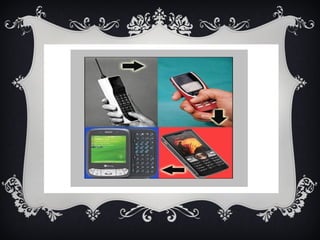
cell phone first came out they were huge. The people did not know
how to make the phone any more compact. In 1988 the big
company's started to make cell phones. There were over 54 places all
over the world.
THE FUTURE OF CELL
              PHONES


rom the year 1843 to now phones have changes a lot. in the year to come
they will change more. The numbers will change . They will be the your
social security number. This will change because the states numbers are
getting mixed up. This will also change because different people have the
same numbers. In the year 2010 you will be able to search the internet for
what every on the phone. This is now happening but in the future in will
become more advanced. Now the cell phone companies are trying to get
the house phone companies to shut down.
TECHNOLOGY
GSM Technology
•If your phone uses a SIM card, you are using GSM technology. This technology allows
"unlocked" devices (see below) to swap SIM cards between carriers without having to
notify the carrier of the new device.


CDMA Technology
•CDMA cell phones use an ESN (Electronic Serial Number) rather than a SIM card to
identify the phone. In order to use the phone, you must call your carrier and have them
put the ESN on your account; they are not swappable as easily as GSM devices.
TYPES

Basic Phones
•Mobile phones, most commonly referred to as "cell phones" in
North America and "mobiles" in most other parts of the world,
tend to offer a basic operating system that allows for calling, some
music capabilities and carrier-specific applications.


Smartphones


•Smartphones are non-touchscreen devices that offer a robust
mobile operating system, most commonly either Windows
USES

igital camera: Point-and-click! Phones capture pictures and let us save them for posterity or transfer them
to others and to computers.


udio recorder: Mobile phones can be used to record conversations or even brief notes to oneself.


ideo recorder: Phones are becoming video cameras also -- some of the newest cellphones can record an
hour or more of video.


ultimedia messaging: Everything recorded can be shared with others by using MMS.
mail client: The phone can be used to connect to any POP or IMAP server and allow
receiving and sending email. While most phones may not have the ease of use that a
Blackberry has with email, contacts and calendar, the fact that it is on the phone itself
and that there is no need for a separate device can be a big help (along with the lower
total cost of ownership).


eb client: Phones can also browse websites, via a WAP and/or HTML browser. Most
web sites may not look great on the small screen, but it is still possible to connect to
any web site.


aming platform: Mobile games have become big business in the past couple years as
people seek entertainment in the free time that they have on the device that they
always carry with them.
ADVANTAGES


You can carry a mobile phone with you so you don't
miss important calls


If you are lost, you can call for directions.


If you are in an accident, you can call the police or
DISADVANTAGES

Mobile phones can be expensive


They can damage your ear


Sometimes the reception is poor in some areas, limiting your connectivity (you can't talk underground or on
planes).


People use the phone while they are driving, and this can cause problems.


They can limit your face to face time with friends and family


They can get you in trouble at school


Can be expensive
BIBLIOGRAPHY


ttp://www.ehow.com/facts_4914968_types-mobile-phones.html

Cellphones david juan

  • 1.
    CELLPHONES By: David FortunatoJuan, Freddy Caceres and Danilo Quintero.
  • 2.
    HISTORY OF CELLPHONES cellular phone is a wireless phone that most people these days communicate with. It seem that not to long ago that people were still using house. Not little kids have cell phones. in 1843 a man by the name of Michael Faraday studied to see if space could conduct electricity. This man lead to the cell phone development. In the year of 1865 Doctor Mahlon Loomis was the first person to communicate through wireless atmosphere. He came up with the idea of transmitting and receiving messages through atmosphere as a conductor. Loomis was awarded 50,000 for his research.
  • 3.
    n 1973 martin copper came up with Motorola. He took the project and let the people of New York see it. In 1977 the first cell phone was made in Chicago . When it first came out 2000 people was given a free trial. Then other places started to make cell phones. When to cell phone first came out they were huge. The people did not know how to make the phone any more compact. In 1988 the big company's started to make cell phones. There were over 54 places all over the world.
  • 5.
    THE FUTURE OFCELL PHONES rom the year 1843 to now phones have changes a lot. in the year to come they will change more. The numbers will change . They will be the your social security number. This will change because the states numbers are getting mixed up. This will also change because different people have the same numbers. In the year 2010 you will be able to search the internet for what every on the phone. This is now happening but in the future in will become more advanced. Now the cell phone companies are trying to get the house phone companies to shut down.
  • 6.
    TECHNOLOGY GSM Technology •If yourphone uses a SIM card, you are using GSM technology. This technology allows "unlocked" devices (see below) to swap SIM cards between carriers without having to notify the carrier of the new device. CDMA Technology •CDMA cell phones use an ESN (Electronic Serial Number) rather than a SIM card to identify the phone. In order to use the phone, you must call your carrier and have them put the ESN on your account; they are not swappable as easily as GSM devices.
  • 7.
    TYPES Basic Phones •Mobile phones,most commonly referred to as "cell phones" in North America and "mobiles" in most other parts of the world, tend to offer a basic operating system that allows for calling, some music capabilities and carrier-specific applications. Smartphones •Smartphones are non-touchscreen devices that offer a robust mobile operating system, most commonly either Windows
  • 8.
    USES igital camera: Point-and-click!Phones capture pictures and let us save them for posterity or transfer them to others and to computers. udio recorder: Mobile phones can be used to record conversations or even brief notes to oneself. ideo recorder: Phones are becoming video cameras also -- some of the newest cellphones can record an hour or more of video. ultimedia messaging: Everything recorded can be shared with others by using MMS.
  • 9.
    mail client: Thephone can be used to connect to any POP or IMAP server and allow receiving and sending email. While most phones may not have the ease of use that a Blackberry has with email, contacts and calendar, the fact that it is on the phone itself and that there is no need for a separate device can be a big help (along with the lower total cost of ownership). eb client: Phones can also browse websites, via a WAP and/or HTML browser. Most web sites may not look great on the small screen, but it is still possible to connect to any web site. aming platform: Mobile games have become big business in the past couple years as people seek entertainment in the free time that they have on the device that they always carry with them.
  • 10.
    ADVANTAGES You can carrya mobile phone with you so you don't miss important calls If you are lost, you can call for directions. If you are in an accident, you can call the police or
  • 11.
    DISADVANTAGES Mobile phones canbe expensive They can damage your ear Sometimes the reception is poor in some areas, limiting your connectivity (you can't talk underground or on planes). People use the phone while they are driving, and this can cause problems. They can limit your face to face time with friends and family They can get you in trouble at school Can be expensive
  • 12.