LAURA 
CARRASCO 
PALMA 
1ºB
HOW 
IT 
ALL 
BEGAN? 
❑ The 
first 
telephone 
was 
invented 
by 
Alexander 
Graham 
Bell. 
It 
was 
an 
idea 
that 
he 
got 
because 
of 
an 
accident. 
❑ He 
was 
not 
the 
only 
person 
who 
tried 
to 
invent 
it, 
but 
the 
only 
one 
who 
managed 
to 
use 
it 
as 
useful 
inven=on. 
❑ Bell’s 
invention 
came 
out 
as 
an 
improvement 
of 
the 
telegraph; 
he 
wanted 
to 
improve 
the 
efficiency 
of 
sending 
messages, 
that 
was 
how 
the 
idea 
of 
the 
telephone 
appeared.The 
birth 
of 
the 
telephone 
was 
the 
loss 
of 
the 
telegraph.
❑ Bell 
patented 
the 
first 
electric 
telephone 
on 
March 
7th,1876. 
❑ The 
first 
telephone 
call 
was 
made 
in 
1876, 
between 
Alexander 
Graham 
Bell 
and 
Thomas 
Watson. 
The 
first 
words 
ever 
heard 
on 
a 
telephone 
were: 
“Mr 
Watson, 
Come 
here, 
I 
want 
to 
hear 
you” 
It 
was 
made 
by 
them. 
❑ The 
first 
transcontinental 
call 
was 
made 
between 
San 
Francisco, 
and 
New 
York: 
https://www.youtube.com/watch?v=gYCouRGXBWw
Alexander 
Graham 
Bell 
❑ Alexander 
Graham 
Bell 
was 
born 
on 
March 
3rd, 
1847, 
in 
Edinburgh, 
hIps://www.youtube.com/watch?v=BKQwih1uLdk 
❑ His 
educa=on 
was 
largely 
received 
through 
numerous 
experiments 
in 
sounds 
and 
the 
furthering 
of 
his 
father’s 
work 
on 
Visible 
Speech 
for 
the 
deaf. 
Bell 
worked 
with 
Thomas 
Watson 
on 
the 
design 
and 
patent 
of 
the 
first 
prac=cal 
telephone. 
❑ He 
died 
on 
August 
2nd, 
1922, 
in 
Cape 
Breton 
Island, 
Nova 
Sco=a, 
Canada. 
❑ Bell 
was 
one 
of 
the 
primary 
inventors 
of 
the 
telephone. 
He 
did 
important 
work 
in 
communica<on 
for 
the 
deaf 
people 
and 
held 
more 
than 
18 
patents.
❑ The 
evolution 
continued. 
It 
was 
rapid 
because 
this 
type 
of 
communication 
was 
rapidly 
a 
necessity. 
Bell’s 
patent 
was 
the 
key 
of 
the 
technological 
advancements. 
❑ 
These 
early 
phones 
were 
obviously 
made 
YYof 
wood 
and 
metal. 
Both 
ear 
buds 
intended 
to 
place 
on 
the 
ears. 
They 
used 
not 
to 
be 
bothered 
by 
outside 
noise. 
❑ 
A 
few 
years 
later, 
the 
phone 
supported 
a 
more 
modern 
form: 
the 
receiver 
and 
microphone 
were 
connected 
to 
the 
handset 
❑ After 
the 
rotary 
phone 
made 
YY 
its 
appearance. 
The 
numbers 
from 
0 
to 
9 
are 
used 
to 
dial 
the 
number 
of 
the 
party 
without 
having 
to 
go 
through 
an 
intermediary.
❑ The 
development 
of 
the 
telephone 
took 
place 
in 
the 
1990s 
with 
the 
advent 
of 
wireless 
phone. 
The 
cell 
phone 
had 
been 
the 
subject 
of 
prototypes 
in 
the 
1970s. 
❑ Other 
manufacturers 
were 
originally 
important 
innovations 
in 
the 
early 
2000s, 
including 
Bluetooth, 
camera, 
the 
emergence 
of 
games, 
music 
player, 
radio, 
internet 
browser 
and 
touch. 
The 
design 
became 
dominant 
in 
each 
of 
the 
manufacturers.
❑ Thomas 
A. 
Edison, 
Elisha 
Gray 
and 
Edward 
Hughes 
are 
linked 
to 
the 
development 
of 
the 
telephone. 
❑ I 
In 
the 
XX 
century, 
Antonio 
Meucci 
havve 
been 
recognized 
by 
the 
U.S. 
House 
of 
Representatives 
for 
his 
contributory 
work 
on 
the 
telephone, 
instead 
of 
Bell. 
Meucci 
could 
not 
published 
him 
invention, 
because 
of 
his 
economic 
crisis.
❑ People 
started 
to 
use 
cell 
phones, 
that 
looked 
really 
fancy. 
They 
used 
to 
have 
cameras, 
Bluetooth, 
some 
of 
them 
with 
wireless 
connection, 
and 
a 
keyboard. 
You 
can 
communicate 
with 
all 
people 
you 
want, 
by 
texting 
or 
calling. 
People 
also 
have 
wireless 
telephones 
in 
their 
homes. 
❑ Nowadays, 
phones 
change 
completely 
too 
fast. 
There 
are 
people 
who 
still 
use 
old-­‐fashionable 
telephones, 
but 
most 
of 
them 
not. 
Since 
the 
birth 
of 
some 
companies 
such 
as 
Android 
or 
Apple 
(IPhones 
were 
born 
on 
june 
29, 
2007) 
which 
are 
the 
most 
popular, 
cell 
phones 
are 
evaluated. 
❑ People 
have 
internet 
access 
(3G, 
and 
4G) 
where 
ever 
they 
want, 
touch 
screen, 
voice 
messages, 
download 
a 
lot 
of 
applications 
such 
as 
facebook, 
instagram, 
snapchat, 
whatsapp 
to 
keep 
in 
touch 
with 
people 
over 
the 
world.
❑ The 
mobile 
phone 
is 
the 
result 
of 
different 
technologies 
that 
already 
exist, 
mostly 
in 
the 
1940s 
and 
its 
invention 
is 
attributed 
to 
Dr. 
Martin 
Cooper 
of 
Motorola. 
❑ In 
spite 
of 
the 
fact 
that 
nowadays 
we 
have 
an 
amazing 
improvement 
with 
cell 
phones, 
we 
are 
expecting 
to 
have 
more 
innovations. 
The 
future: 
◆ Future 
phones 
are 
being 
touted 
as 
the 
ultimate 
multifunctional 
devices. 
Some 
experts 
predict 
that 
the 
mobiles 
of 
the 
future 
will 
become 
remote 
controls 
for 
our 
whole 
lives. 
◆ https://www.youtube.com/watch?v=DN__D5ixme0
Nokia 
has 
presented 
their 
vision 
for 
the 
future 
of 
mobile 
phones 
with 
The 
Morph 
phone, 
which 
it 
claims 
will 
"transform 
the 
user's 
experience". 
❑ Designed 
by 
Tapani 
Tyhanen, 
The 
Morph 
suggests 
that 
phones 
of 
the 
future 
will 
involve 
transparency 
and 
transformability. 
It’smeans 
future 
mobile 
phones 
may 
be 
bendy 
and 
come 
in 
many 
shapes 
and 
forms.
THE 
FUTURE:
REFERENCES 
IF 
YOU 
WANT 
MORE 
INFORMATION 
YOU 
CAN 
LOOK 
INTO 
THE 
FOLLOWING 
PAGES. 
http://www.howitworksdaily.com/how-­‐did-­‐the-­‐first-­‐ 
phone-­‐call-­‐work/ 
http://www.hongkiat.com/blog/30-­‐futuristic-­‐phones-­‐we-­‐ 
wish-­‐were-­‐real/

EVOLUTION OF THE PHONES

  • 1.
  • 2.
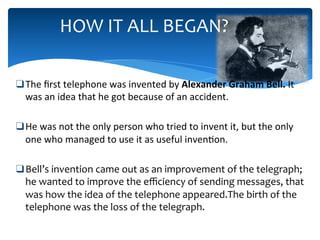
    HOW IT ALL BEGAN? ❑ The first telephone was invented by Alexander Graham Bell. It was an idea that he got because of an accident. ❑ He was not the only person who tried to invent it, but the only one who managed to use it as useful inven=on. ❑ Bell’s invention came out as an improvement of the telegraph; he wanted to improve the efficiency of sending messages, that was how the idea of the telephone appeared.The birth of the telephone was the loss of the telegraph.
  • 3.
    ❑ Bell patented the first electric telephone on March 7th,1876. ❑ The first telephone call was made in 1876, between Alexander Graham Bell and Thomas Watson. The first words ever heard on a telephone were: “Mr Watson, Come here, I want to hear you” It was made by them. ❑ The first transcontinental call was made between San Francisco, and New York: https://www.youtube.com/watch?v=gYCouRGXBWw
  • 4.
    Alexander Graham Bell ❑ Alexander Graham Bell was born on March 3rd, 1847, in Edinburgh, hIps://www.youtube.com/watch?v=BKQwih1uLdk ❑ His educa=on was largely received through numerous experiments in sounds and the furthering of his father’s work on Visible Speech for the deaf. Bell worked with Thomas Watson on the design and patent of the first prac=cal telephone. ❑ He died on August 2nd, 1922, in Cape Breton Island, Nova Sco=a, Canada. ❑ Bell was one of the primary inventors of the telephone. He did important work in communica<on for the deaf people and held more than 18 patents.
  • 5.
    ❑ The evolution continued. It was rapid because this type of communication was rapidly a necessity. Bell’s patent was the key of the technological advancements. ❑ These early phones were obviously made YYof wood and metal. Both ear buds intended to place on the ears. They used not to be bothered by outside noise. ❑ A few years later, the phone supported a more modern form: the receiver and microphone were connected to the handset ❑ After the rotary phone made YY its appearance. The numbers from 0 to 9 are used to dial the number of the party without having to go through an intermediary.
  • 6.
    ❑ The development of the telephone took place in the 1990s with the advent of wireless phone. The cell phone had been the subject of prototypes in the 1970s. ❑ Other manufacturers were originally important innovations in the early 2000s, including Bluetooth, camera, the emergence of games, music player, radio, internet browser and touch. The design became dominant in each of the manufacturers.
  • 7.
    ❑ Thomas A. Edison, Elisha Gray and Edward Hughes are linked to the development of the telephone. ❑ I In the XX century, Antonio Meucci havve been recognized by the U.S. House of Representatives for his contributory work on the telephone, instead of Bell. Meucci could not published him invention, because of his economic crisis.
  • 8.
    ❑ People started to use cell phones, that looked really fancy. They used to have cameras, Bluetooth, some of them with wireless connection, and a keyboard. You can communicate with all people you want, by texting or calling. People also have wireless telephones in their homes. ❑ Nowadays, phones change completely too fast. There are people who still use old-­‐fashionable telephones, but most of them not. Since the birth of some companies such as Android or Apple (IPhones were born on june 29, 2007) which are the most popular, cell phones are evaluated. ❑ People have internet access (3G, and 4G) where ever they want, touch screen, voice messages, download a lot of applications such as facebook, instagram, snapchat, whatsapp to keep in touch with people over the world.
  • 10.
    ❑ The mobile phone is the result of different technologies that already exist, mostly in the 1940s and its invention is attributed to Dr. Martin Cooper of Motorola. ❑ In spite of the fact that nowadays we have an amazing improvement with cell phones, we are expecting to have more innovations. The future: ◆ Future phones are being touted as the ultimate multifunctional devices. Some experts predict that the mobiles of the future will become remote controls for our whole lives. ◆ https://www.youtube.com/watch?v=DN__D5ixme0
  • 11.
    Nokia has presented their vision for the future of mobile phones with The Morph phone, which it claims will "transform the user's experience". ❑ Designed by Tapani Tyhanen, The Morph suggests that phones of the future will involve transparency and transformability. It’smeans future mobile phones may be bendy and come in many shapes and forms.
  • 12.
  • 13.
    REFERENCES IF YOU WANT MORE INFORMATION YOU CAN LOOK INTO THE FOLLOWING PAGES. http://www.howitworksdaily.com/how-­‐did-­‐the-­‐first-­‐ phone-­‐call-­‐work/ http://www.hongkiat.com/blog/30-­‐futuristic-­‐phones-­‐we-­‐ wish-­‐were-­‐real/