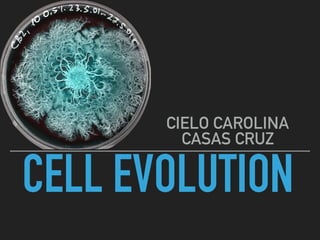
CELL EVOLUTION
CIELO CAROLINA
CASAS CRUZ
INTRODUCTION
Eukaryotic and prokaryotic cell
have many differences like the
organelles or nucleus but an
important similarity, the genetic
material.
Both have DNA, for this reason is
possible manipulate them as
experimental models.
Bacterial cell wall
can change and
produce antibiotic
resistance
Antibiotics can
inhibit the growth of
the bacterial also
can kill the cell.
The researches investigated the
peptidoglycan structure on the cell
wall in the acetic acid bacteria, one
of the findings was the modification
in the diaminopimelic acid a highly
conserved amino acid in the
peptidoglycan cell wall of Gram-
negative bacteria.
β-lactam antibiotics inhibit the
bacterial growth because they
interfere with the
peptidoglycan layer
biosynthesis, as a
consequence the cell dies.
“Bacteria are surrounded by
peptidoglycan that is the
major target of β-lactam
antibiotics such as Penicillin.”
As a result, the study show the
ability of bacteria to modify its
cell wall against predatory
enzymes and fly innate immunity.
This study is important for biology
because these bacteria have
develop structural adjustments to
create better cell walls, resistant to
any environment.
OBSERVATION
Although they have spent millions of years the cell continue to
be the most important unit in life. For this reason is important
to focus on the pursuit of biological knowledge because in
the cell are the answer to many questions.
Bacterias are related to human life, they are
involved in biological processes like
immunity and cause pathologies interfering
with health. Now bacterias can adapt its wall
structure avoiding the only way that science
could combat their damage, with antibiotics.
The vaccines can be
rapidly adapted to
mutating diseases
because the RNA can
be reprogrammed.
They managed to program RNA to
create antigens that would induce an
immune response, produce antibodies,
and prep the immune system for future
disease
The Massachusetts Institute of Technology
virologist
Dr. Jasdave Chahal
Dr. Omar Khan
“Chahal and Khan have successfully immunized mice to Ebola,
H1N1 influenza, and a relative of the parasite that causes
malaria, Toxoplasma gondii, with 100 percent effectiveness.”
Package the messenger RNA as
nanoparticles, which can enter cells,
mimic viral infections, raise cellular
alarms, and use the instructions
contained within the RNA to activate the
cell’s defenses.
“The programmable RNA
vaccines are fully synthetic, they
do not require living systems to
grow and the production method
is identical for any disease”
In just a matter of days, nano-
materials can be stockpiled and
disease-specific RNA vaccines can
be developed
Integrate areas of knowledge has led to progress in the search
for solutions to the major problems that we present today, the
development of new methods to diagnose and treat diseases
have reduced risks.
Nanotechnology gives the possibility to go
further and facilitates the development of
tools such as vaccine because it reduces the
production time and contributing to
immediate response to sudden Outbreaks.
OBSERVATION
“EPIDEMIC DISEASES AND
MULTIDRUG-RESISTANT PATIENTS
CAN BE CONTROLLED IN LESS TIME
IF WE CONTINUE TO INVESTIGATE THE
CELL BECAUSE EVEN IT REMAINS
UNKNOWN TO MAN.”
MEDICAL UTILITY
MEDICAL UTILITY
Both studies show the importance of
biology, the knowledge of cell allows
develop methods to implement in many
diseases that now are a public health
problematic.
In the immune area we can see
that a lot of studies are
focused to find the best
solution to antimicrobial
resistance because represent a
big problem for treatment to
many bacterial diseases.
MEDICAL UTILITY
AS WE CAN SEE, NANOTECHNOLOGY OPENED A NEW DOOR FOR
BIOLOGY, GENETIC AND MEDICINE BECAUSE NOW IS POSSIBLE TO
CREATE NEW TREATMENTS WHICH CAN REACH VULNERABLE
POPULATIONS AND IMPROVE THEIR QUALITY OF LIFE.
MEDICAL UTILITY
Martinez Sánchez LM. Biologia molecular. 8. ed. Medellín: UPB. Fac. de Medicina,
2015.
Alberts B, Bray D, Hopkin K. Johnson A, Lewis J, Raff M, Roberts K, Walter P.
Essential cell biology. 4th. ed. United States of America: Garland Sciense; 2014.
Digital Trends ( 2016, July 7). MIT researchers are designing programmable RNA
vaccines to combat diseases. Retrieved July 20, 2016: http://
www.digitaltrends.com/health-fitness/programmable-rna-vaccines/
#ixzz4FGkb8NZJ
MNT( 2016, July 11) How the bacterial protective shell is adapted to challenging
environments. Retrieved July 20, 2016: http://www.medicalnewstoday.com/
releases/311578.php
Katzung B. Farmacología básica y clínica. Novena edición. California:The
McGraw- Hill; 2004.
BIBLIOGRAPHY
"NO HAY MEDICINA QUE CURE LO QUE NO
CURA LA FELICIDAD"
— GABRIEL GARCÍA MÁRQUEZ

Cell evolution

  • 1.
  • 4.
    INTRODUCTION Eukaryotic and prokaryoticcell have many differences like the organelles or nucleus but an important similarity, the genetic material. Both have DNA, for this reason is possible manipulate them as experimental models.
  • 5.
    Bacterial cell wall canchange and produce antibiotic resistance Antibiotics can inhibit the growth of the bacterial also can kill the cell.
  • 6.
    The researches investigatedthe peptidoglycan structure on the cell wall in the acetic acid bacteria, one of the findings was the modification in the diaminopimelic acid a highly conserved amino acid in the peptidoglycan cell wall of Gram- negative bacteria.
  • 7.
    β-lactam antibiotics inhibitthe bacterial growth because they interfere with the peptidoglycan layer biosynthesis, as a consequence the cell dies. “Bacteria are surrounded by peptidoglycan that is the major target of β-lactam antibiotics such as Penicillin.”
  • 8.
    As a result,the study show the ability of bacteria to modify its cell wall against predatory enzymes and fly innate immunity. This study is important for biology because these bacteria have develop structural adjustments to create better cell walls, resistant to any environment.
  • 9.
    OBSERVATION Although they havespent millions of years the cell continue to be the most important unit in life. For this reason is important to focus on the pursuit of biological knowledge because in the cell are the answer to many questions. Bacterias are related to human life, they are involved in biological processes like immunity and cause pathologies interfering with health. Now bacterias can adapt its wall structure avoiding the only way that science could combat their damage, with antibiotics.
  • 10.
    The vaccines canbe rapidly adapted to mutating diseases because the RNA can be reprogrammed.
  • 11.
    They managed toprogram RNA to create antigens that would induce an immune response, produce antibodies, and prep the immune system for future disease The Massachusetts Institute of Technology virologist Dr. Jasdave Chahal Dr. Omar Khan
  • 12.
    “Chahal and Khanhave successfully immunized mice to Ebola, H1N1 influenza, and a relative of the parasite that causes malaria, Toxoplasma gondii, with 100 percent effectiveness.” Package the messenger RNA as nanoparticles, which can enter cells, mimic viral infections, raise cellular alarms, and use the instructions contained within the RNA to activate the cell’s defenses.
  • 13.
    “The programmable RNA vaccinesare fully synthetic, they do not require living systems to grow and the production method is identical for any disease” In just a matter of days, nano- materials can be stockpiled and disease-specific RNA vaccines can be developed
  • 14.
    Integrate areas ofknowledge has led to progress in the search for solutions to the major problems that we present today, the development of new methods to diagnose and treat diseases have reduced risks. Nanotechnology gives the possibility to go further and facilitates the development of tools such as vaccine because it reduces the production time and contributing to immediate response to sudden Outbreaks. OBSERVATION
  • 15.
    “EPIDEMIC DISEASES AND MULTIDRUG-RESISTANTPATIENTS CAN BE CONTROLLED IN LESS TIME IF WE CONTINUE TO INVESTIGATE THE CELL BECAUSE EVEN IT REMAINS UNKNOWN TO MAN.” MEDICAL UTILITY
  • 16.
    MEDICAL UTILITY Both studiesshow the importance of biology, the knowledge of cell allows develop methods to implement in many diseases that now are a public health problematic.
  • 17.
    In the immunearea we can see that a lot of studies are focused to find the best solution to antimicrobial resistance because represent a big problem for treatment to many bacterial diseases. MEDICAL UTILITY
  • 18.
    AS WE CANSEE, NANOTECHNOLOGY OPENED A NEW DOOR FOR BIOLOGY, GENETIC AND MEDICINE BECAUSE NOW IS POSSIBLE TO CREATE NEW TREATMENTS WHICH CAN REACH VULNERABLE POPULATIONS AND IMPROVE THEIR QUALITY OF LIFE. MEDICAL UTILITY
  • 19.
    Martinez Sánchez LM.Biologia molecular. 8. ed. Medellín: UPB. Fac. de Medicina, 2015. Alberts B, Bray D, Hopkin K. Johnson A, Lewis J, Raff M, Roberts K, Walter P. Essential cell biology. 4th. ed. United States of America: Garland Sciense; 2014. Digital Trends ( 2016, July 7). MIT researchers are designing programmable RNA vaccines to combat diseases. Retrieved July 20, 2016: http:// www.digitaltrends.com/health-fitness/programmable-rna-vaccines/ #ixzz4FGkb8NZJ MNT( 2016, July 11) How the bacterial protective shell is adapted to challenging environments. Retrieved July 20, 2016: http://www.medicalnewstoday.com/ releases/311578.php Katzung B. Farmacología básica y clínica. Novena edición. California:The McGraw- Hill; 2004. BIBLIOGRAPHY
  • 20.
    "NO HAY MEDICINAQUE CURE LO QUE NO CURA LA FELICIDAD" — GABRIEL GARCÍA MÁRQUEZ