CHAPTER 5 – CELL DIVISION
FROM 4 BIOLOGY
Replace dead cells in body
Unicellular organisms-
Reproduction
Replace damaged and wounded
tissues
Multicellular organisms-Growth
Why do cells divide?
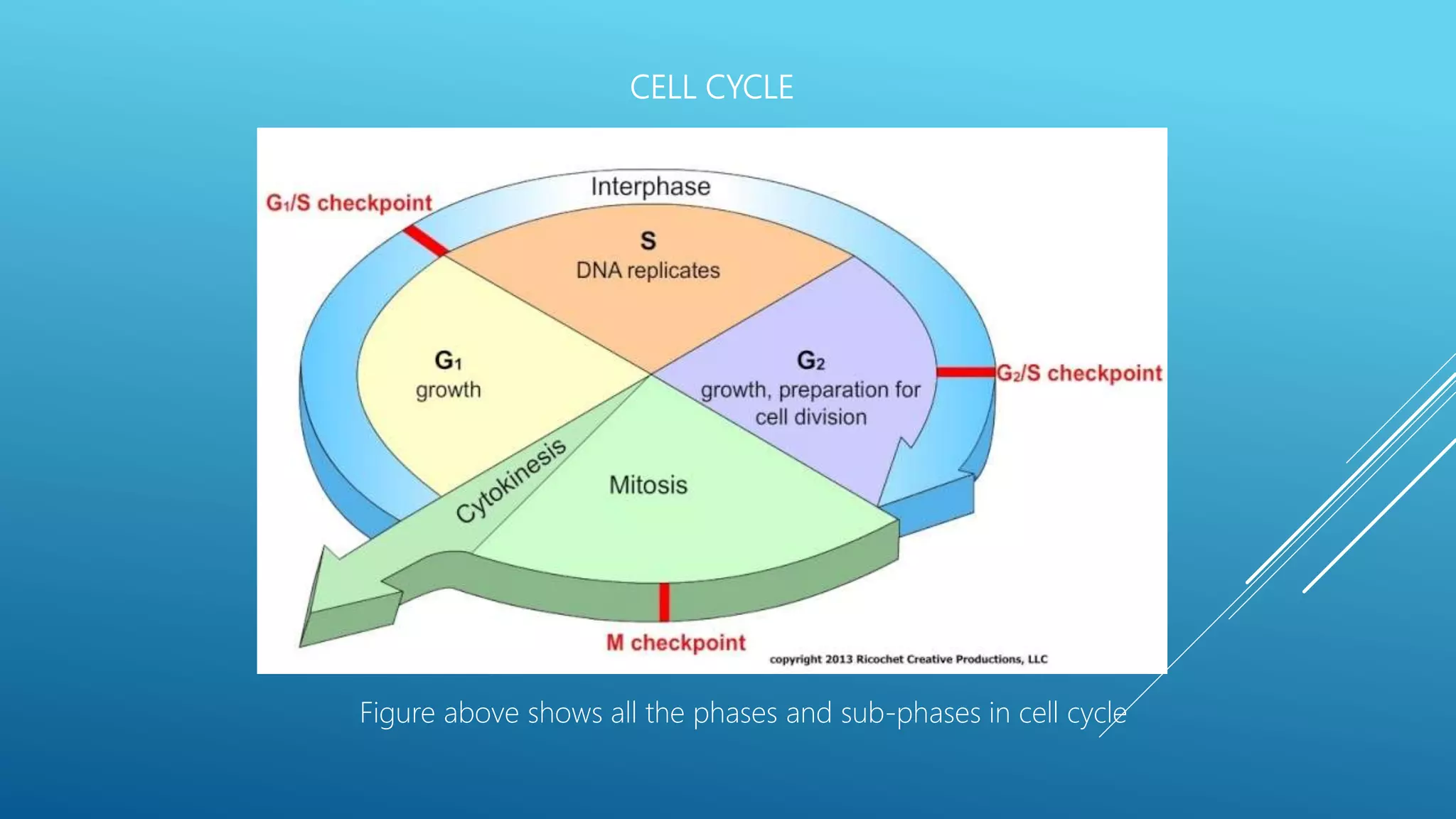
CELL CYCLE
Figure above shows all the phases and sub-phases in cell cycle
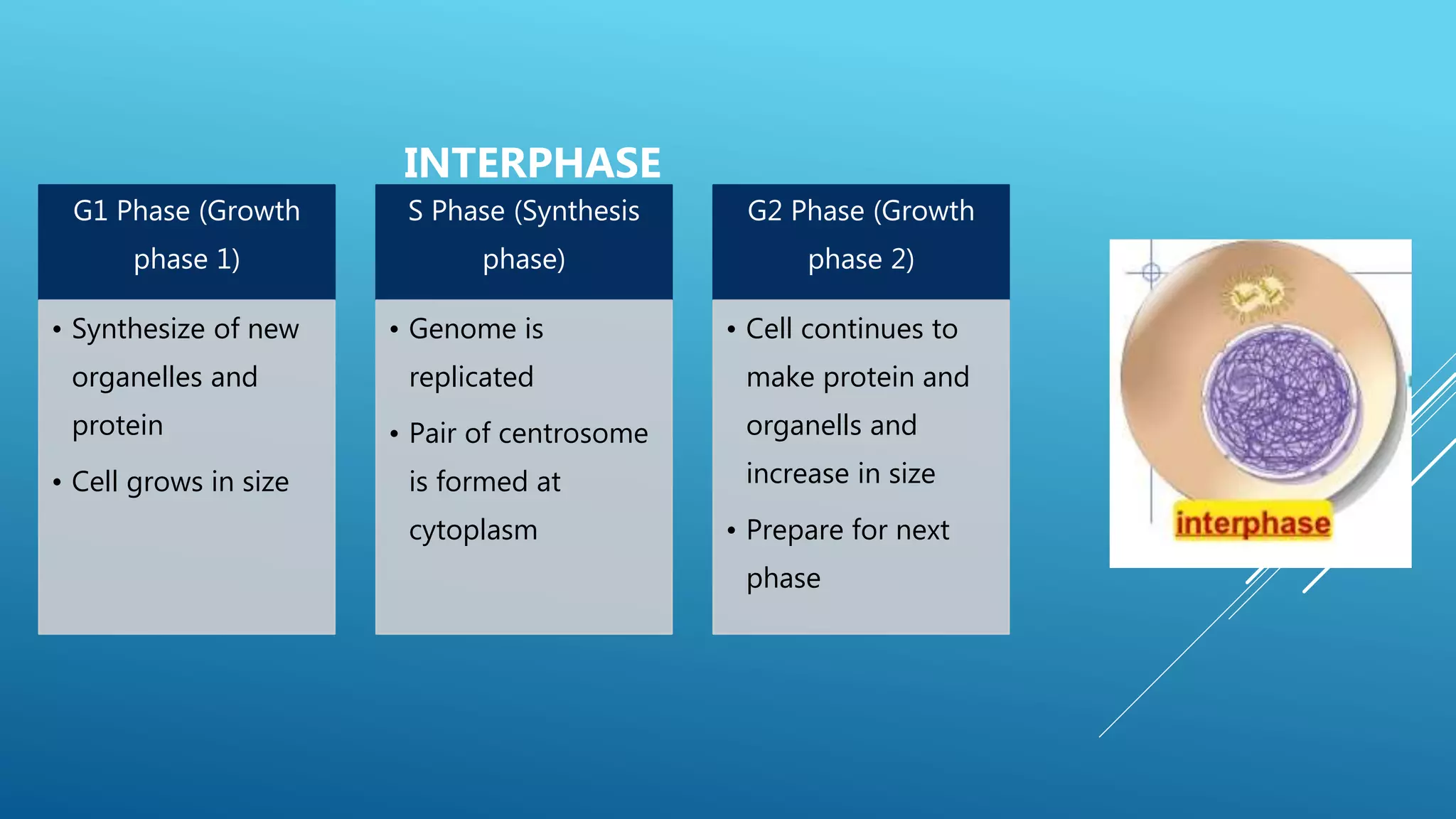
G1 Phase (Growth
phase 1)
• Synthesize of new
organelles and
protein
• Cell grows in size
S Phase (Synthesis
phase)
• Genome is
replicated
• Pair of centrosome
is formed at
cytoplasm
G2 Phase (Growth
phase 2)
• Cell continues to
make protein and
organells and
increase in size
• Prepare for next
phase
INTERPHASE
MITOSIS
Mitosis consists of four successive stages, which is prophase, metaphase,
anaphase and telophase. Note that above picture is for animal cells, while
plant cells don’t have centrioles.
Importance of controlled
mitosis process
Ensure newly formed
daughter cells are
genetically identical
To parental cell
Checkpoint in each
phases-ensure any
damages in genome
is repaired
Ensure that cell
division occurs only
when necessary (eg -
to repair damaged
tissue)
Ensure cell division
occurs in correct
frequency (different
cell type has
different frequency)
What if mitosis is
uncontrolled?
Production of tumour that
may form metastasis
Metastatic tumour may
destroy neighbouring cellsDamaged checkpoint may
result in damaged not
repaired
Porduction of too many cells
that are undifferentiated
APPLICATION OF MITOSIS
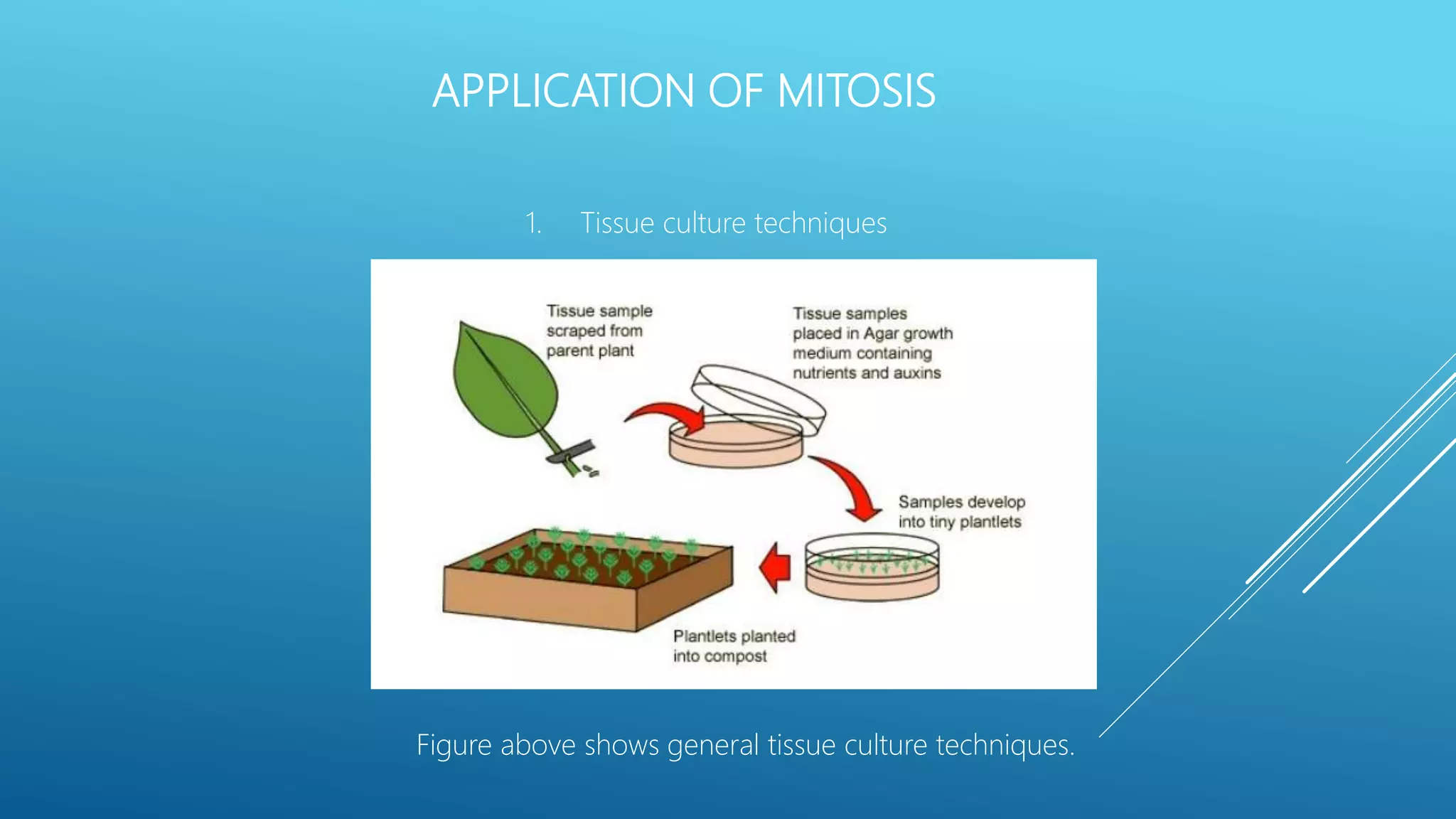
1. Tissue culture techniques
Figure above shows general tissue culture techniques.
2. Animal cloning
1. The nucleus is removed from the eggs
2. The somatic cell is isolated from donor
3. Using electric shock, the somatic cell is
fused with anucleated egg
4. The fused cells developed into embryo in
vitro before transplanted into foster mother
WHAT IS
MEIOSIS???
Occurs in reproductive organs (testes and ovaries
in human)
Number of chromosomes is halved in daughter
cells (haploid)
Two stages – MEIOSIS I AND MEOSIS II
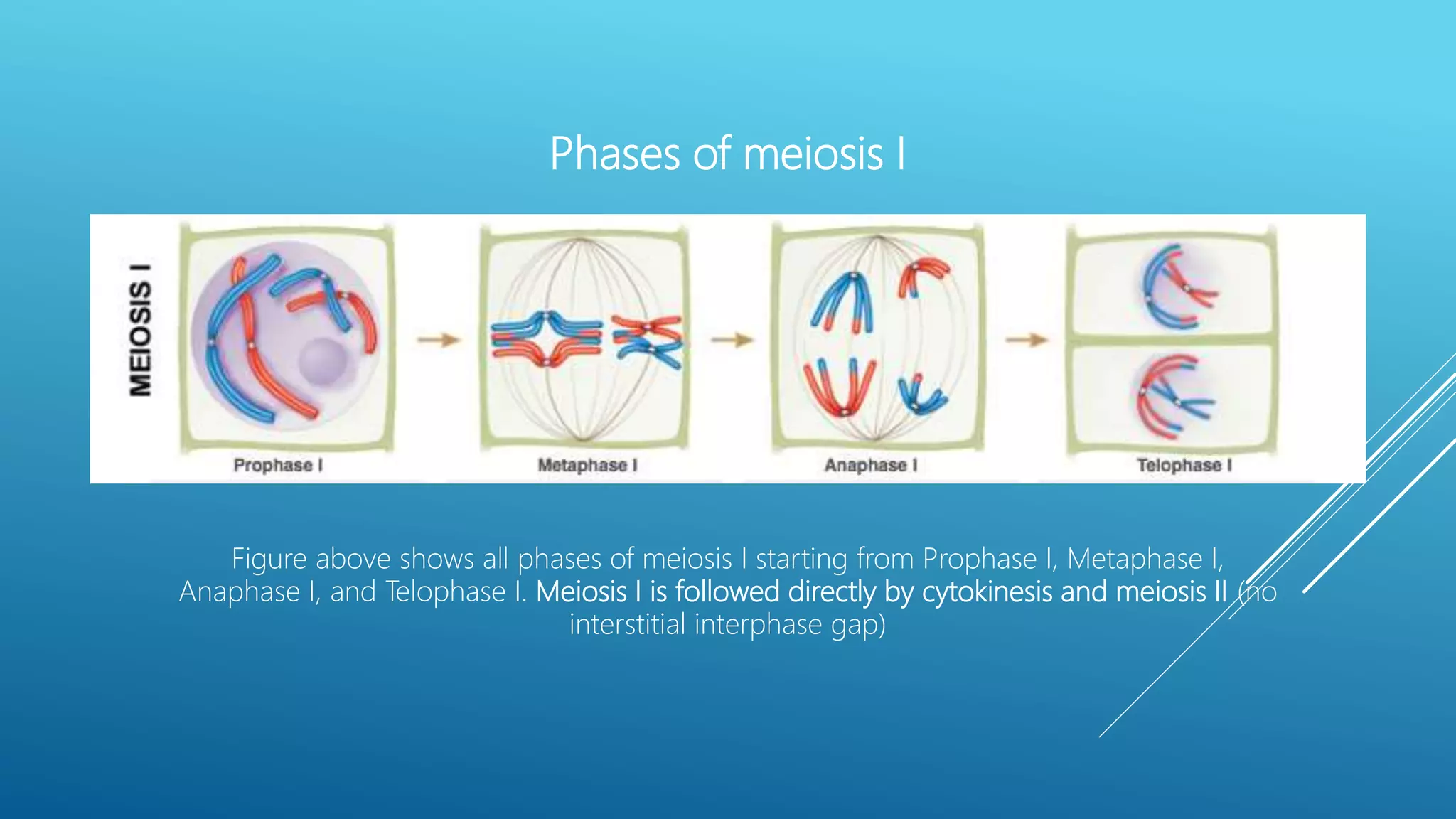
Phases of meiosis I
Figure above shows all phases of meiosis I starting from Prophase I, Metaphase I,
Anaphase I, and Telophase I. Meiosis I is followed directly by cytokinesis and meiosis II (no
interstitial interphase gap)
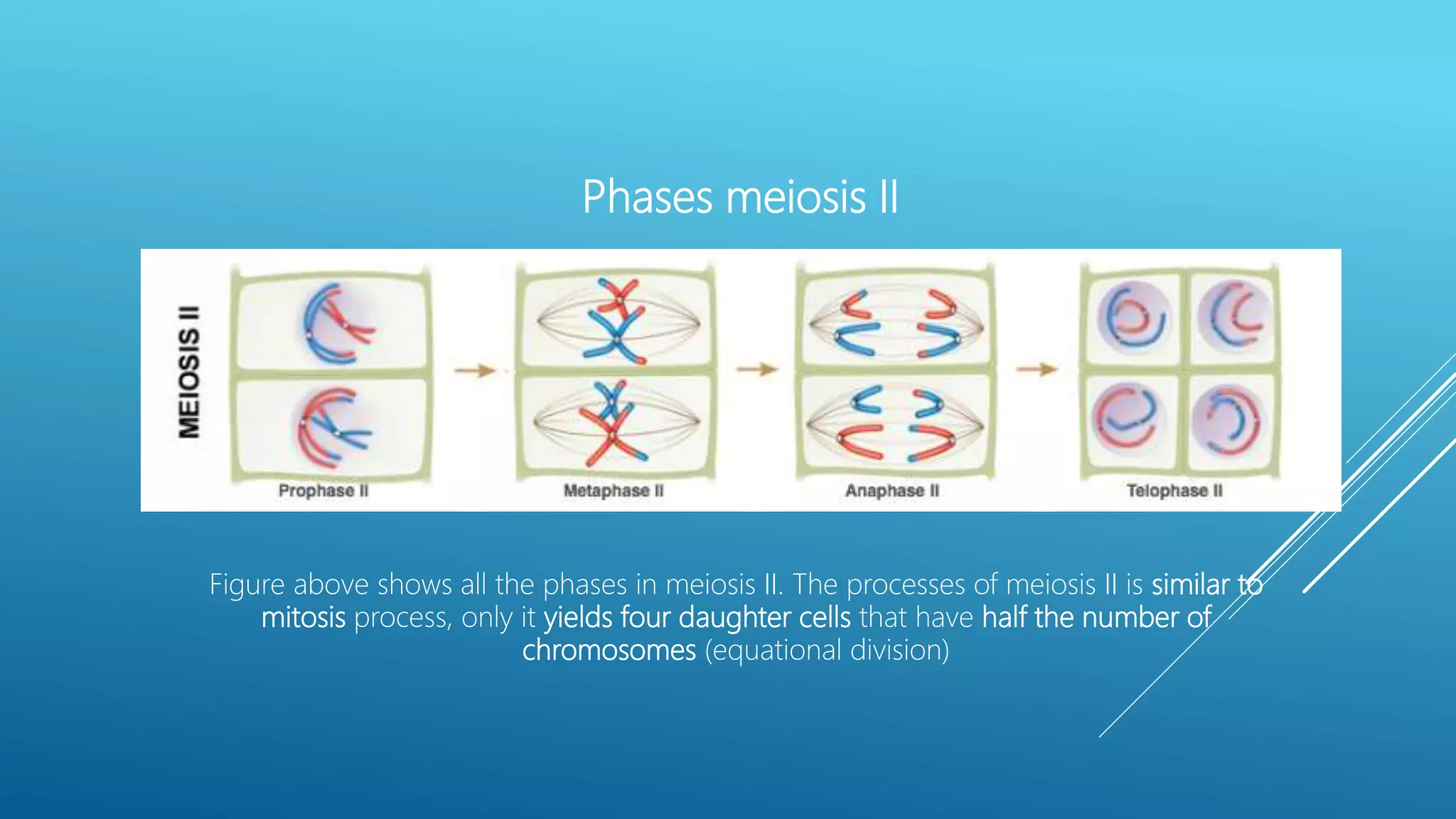
Phases meiosis II
Figure above shows all the phases in meiosis II. The processes of meiosis II is similar to
mitosis process, only it yields four daughter cells that have half the number of
chromosomes (equational division)
CYTOKINESIS
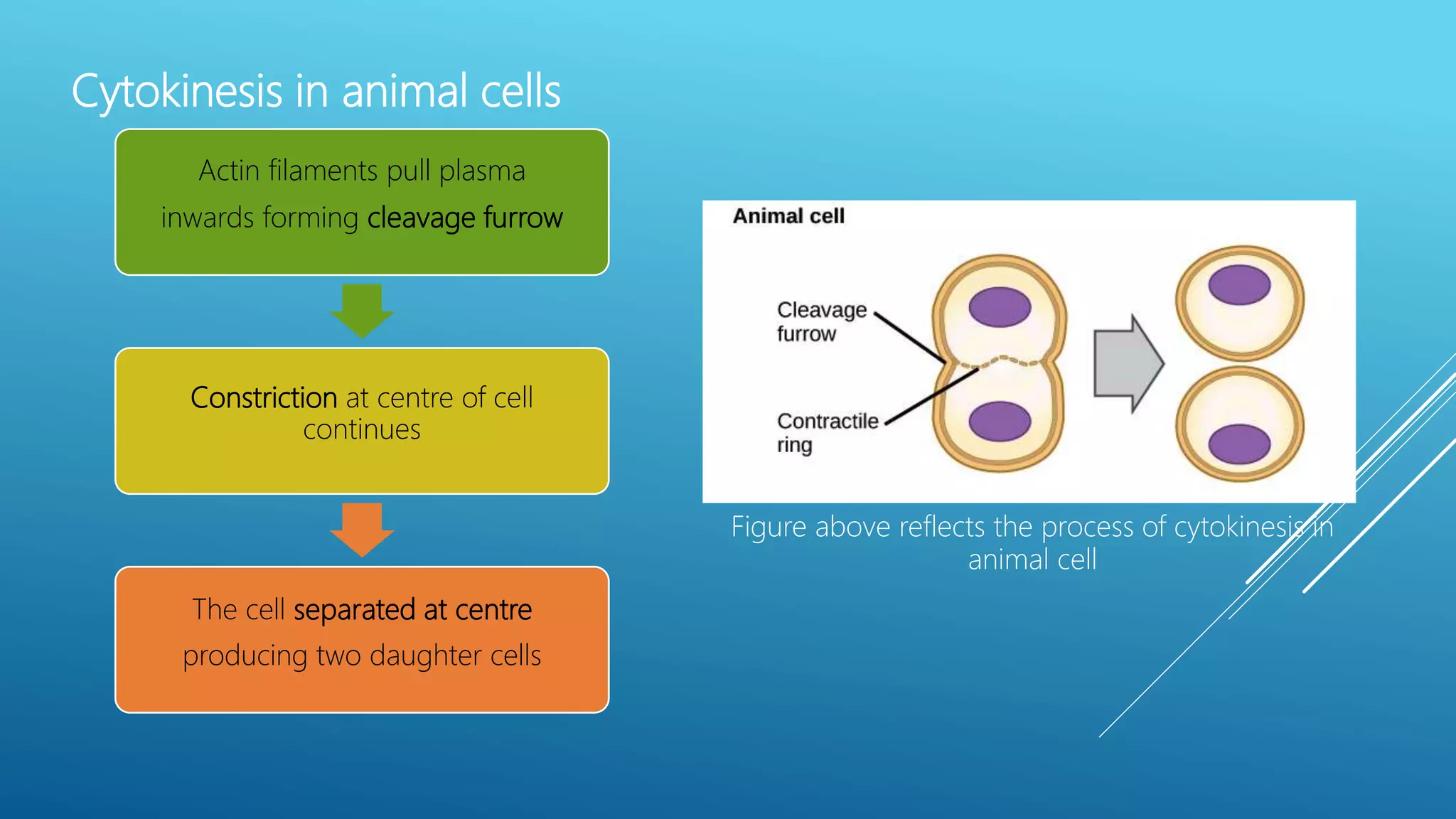
Cytokinesis in animal cells
Actin filaments pull plasma
inwards forming cleavage furrow
Constriction at centre of cell
continues
The cell separated at centre
producing two daughter cells
Figure above reflects the process of cytokinesis in
animal cell
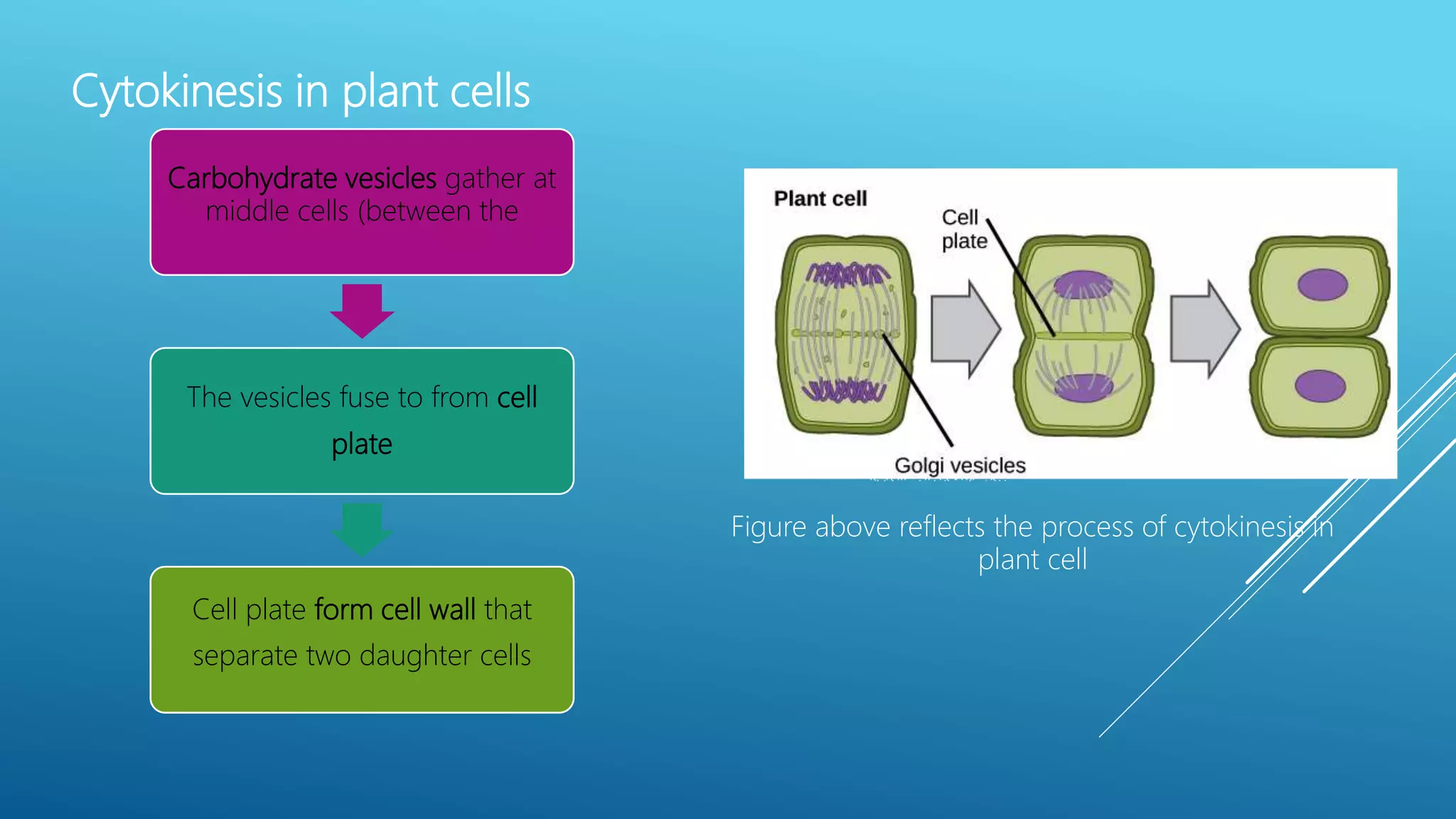
Cytokinesis in plant cells
Carbohydrate vesicles gather at
middle cells (between the
The vesicles fuse to from cell
plate
Cell plate form cell wall that
separate two daughter cells
Figure above reflects the process of cytokinesis in
plant cell
MITOSIS
VS
MEIOSIS
MITOSIS MEIOSIS
Similarities Involve Prophase, Metaphase, Anaphase and
Telophase
Production of new cells
Differences Only one cell division Involves two cell division
No synapsis Synapsis occur
Produce somatic cells Produce gamete cells
No cross over Crossing-over occurs
Produce two diploid
daughter cells
Produce four haploid
daughter cells
Gentically identical
daughter cells
Variation in daughter
cells
THANK YOU

Science Form 4 Chapter 5 – cell division

  • 1.
    CHAPTER 5 –CELL DIVISION FROM 4 BIOLOGY
  • 2.
    Replace dead cellsin body Unicellular organisms- Reproduction Replace damaged and wounded tissues Multicellular organisms-Growth Why do cells divide?
  • 3.
    CELL CYCLE Figure aboveshows all the phases and sub-phases in cell cycle
  • 4.
    G1 Phase (Growth phase1) • Synthesize of new organelles and protein • Cell grows in size S Phase (Synthesis phase) • Genome is replicated • Pair of centrosome is formed at cytoplasm G2 Phase (Growth phase 2) • Cell continues to make protein and organells and increase in size • Prepare for next phase INTERPHASE
  • 5.
    MITOSIS Mitosis consists offour successive stages, which is prophase, metaphase, anaphase and telophase. Note that above picture is for animal cells, while plant cells don’t have centrioles.
  • 6.
    Importance of controlled mitosisprocess Ensure newly formed daughter cells are genetically identical To parental cell Checkpoint in each phases-ensure any damages in genome is repaired Ensure that cell division occurs only when necessary (eg - to repair damaged tissue) Ensure cell division occurs in correct frequency (different cell type has different frequency)
  • 7.
    What if mitosisis uncontrolled? Production of tumour that may form metastasis Metastatic tumour may destroy neighbouring cellsDamaged checkpoint may result in damaged not repaired Porduction of too many cells that are undifferentiated
  • 8.
    APPLICATION OF MITOSIS 1.Tissue culture techniques Figure above shows general tissue culture techniques.
  • 9.
    2. Animal cloning 1.The nucleus is removed from the eggs 2. The somatic cell is isolated from donor 3. Using electric shock, the somatic cell is fused with anucleated egg 4. The fused cells developed into embryo in vitro before transplanted into foster mother
  • 10.
    WHAT IS MEIOSIS??? Occurs inreproductive organs (testes and ovaries in human) Number of chromosomes is halved in daughter cells (haploid) Two stages – MEIOSIS I AND MEOSIS II
  • 11.
    Phases of meiosisI Figure above shows all phases of meiosis I starting from Prophase I, Metaphase I, Anaphase I, and Telophase I. Meiosis I is followed directly by cytokinesis and meiosis II (no interstitial interphase gap)
  • 12.
    Phases meiosis II Figureabove shows all the phases in meiosis II. The processes of meiosis II is similar to mitosis process, only it yields four daughter cells that have half the number of chromosomes (equational division)
  • 13.
  • 14.
    Cytokinesis in animalcells Actin filaments pull plasma inwards forming cleavage furrow Constriction at centre of cell continues The cell separated at centre producing two daughter cells Figure above reflects the process of cytokinesis in animal cell
  • 15.
    Cytokinesis in plantcells Carbohydrate vesicles gather at middle cells (between the The vesicles fuse to from cell plate Cell plate form cell wall that separate two daughter cells Figure above reflects the process of cytokinesis in plant cell
  • 16.
  • 17.
    MITOSIS MEIOSIS Similarities InvolveProphase, Metaphase, Anaphase and Telophase Production of new cells Differences Only one cell division Involves two cell division No synapsis Synapsis occur Produce somatic cells Produce gamete cells No cross over Crossing-over occurs Produce two diploid daughter cells Produce four haploid daughter cells Gentically identical daughter cells Variation in daughter cells
  • 18.