Cell Biology HSA Review
Directions:
• Pick up an iPad or Log on to a
computer
• You may work with a partner (no
more than 2 people together)
• Go to website
• Use website to complete the review
• You have 45min to complete 
Organelles
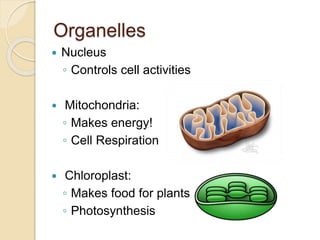
 Nucleus
◦ Controls cell activities
 Mitochondria:
◦ Makes energy!
◦ Cell Respiration
 Chloroplast:
◦ Makes food for plants
◦ Photosynthesis
Organelles
 Ribosome
◦ Makes protein
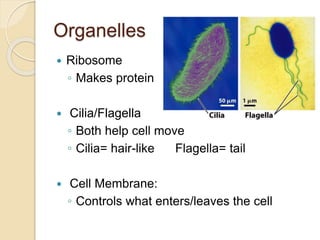
 Cilia/Flagella
◦ Both help cell move
◦ Cilia= hair-like Flagella= tail
 Cell Membrane:
◦ Controls what enters/leaves the cell
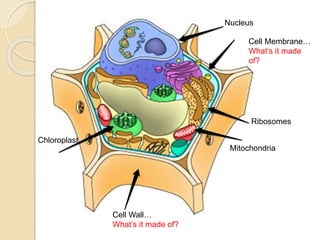
Nucleus
Cell Membrane…
What’s it made
of?
Ribosomes
Mitochondria
Chloroplast
Cell Wall…
What’s it made of?
Transport of Materials
 Cell Membrane
◦ Controls what enters/leaves the cell
 Circulatory System
◦ Carries oxygen, nutrients to cells
◦ BLOOD!
 Vascular Tissues
◦ Carries water, nutrients to plant cells
Body Systems
 Circulatory System
◦ Carries oxygen, nutrients to cells
◦ BLOOD!
 Reproductive System
◦ Makes eggs/sperm (gametes) to pass on
genes to next generation
 Excretory System
◦ Removes bulk waste
Body Systems
 Nervous System
◦ Controls everything, Controls movement
 Endocrine System
◦ Hormones
◦ “chemicals that regulate/act at different
sites in the body”
Body Systems
 Skeletal System
◦ Attaches to muscles for movement
◦ Bones
 Muscular System
◦ Attaches to bones for movement
◦ Muscles
Body Systems
 Digestive System
◦ Breaks down food and nutrients
 Respiratory System
◦ Breathing
◦ Takes in Oxygen, releases CO2
Asexual Reproduction
 Mitosis
◦ Cell division in body cells
◦ To make more IDENTICAL cells
 Binary Fission
◦ Division IN BACTERIA
 Cells After Asexual Reproduction
◦ IDENTICAL to original cell
◦ Cloning
Homeostasis
 Definition
◦ Maintaining stable internal conditions
◦ Keeping everything in the body “normal”
 Examples:
◦ Body temperature
◦ Blood sugar
◦ Blood pressure
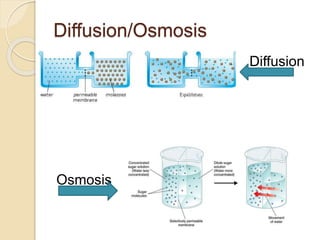
Diffusion/Osmosis
 Selectively Permeable
◦ Only allows certain things to move through
◦ The cell membrane is selectively permeable
 Diffusion
◦ Molecules move from high to low
concentration
◦ No energy required
 Osmosis
◦ WATER moves from high to low
concentration
◦ No energy required
Diffusion/Osmosis
Diffusion
Osmosis

Cell biology HSA review

  • 1.
    Cell Biology HSAReview Directions: • Pick up an iPad or Log on to a computer • You may work with a partner (no more than 2 people together) • Go to website • Use website to complete the review • You have 45min to complete 
  • 2.
    Organelles  Nucleus ◦ Controlscell activities  Mitochondria: ◦ Makes energy! ◦ Cell Respiration  Chloroplast: ◦ Makes food for plants ◦ Photosynthesis
  • 3.
    Organelles  Ribosome ◦ Makesprotein  Cilia/Flagella ◦ Both help cell move ◦ Cilia= hair-like Flagella= tail  Cell Membrane: ◦ Controls what enters/leaves the cell
  • 4.
    Nucleus Cell Membrane… What’s itmade of? Ribosomes Mitochondria Chloroplast Cell Wall… What’s it made of?
  • 5.
    Transport of Materials Cell Membrane ◦ Controls what enters/leaves the cell  Circulatory System ◦ Carries oxygen, nutrients to cells ◦ BLOOD!  Vascular Tissues ◦ Carries water, nutrients to plant cells
  • 6.
    Body Systems  CirculatorySystem ◦ Carries oxygen, nutrients to cells ◦ BLOOD!  Reproductive System ◦ Makes eggs/sperm (gametes) to pass on genes to next generation  Excretory System ◦ Removes bulk waste
  • 7.
    Body Systems  NervousSystem ◦ Controls everything, Controls movement  Endocrine System ◦ Hormones ◦ “chemicals that regulate/act at different sites in the body”
  • 8.
    Body Systems  SkeletalSystem ◦ Attaches to muscles for movement ◦ Bones  Muscular System ◦ Attaches to bones for movement ◦ Muscles
  • 9.
    Body Systems  DigestiveSystem ◦ Breaks down food and nutrients  Respiratory System ◦ Breathing ◦ Takes in Oxygen, releases CO2
  • 10.
    Asexual Reproduction  Mitosis ◦Cell division in body cells ◦ To make more IDENTICAL cells  Binary Fission ◦ Division IN BACTERIA  Cells After Asexual Reproduction ◦ IDENTICAL to original cell ◦ Cloning
  • 11.
    Homeostasis  Definition ◦ Maintainingstable internal conditions ◦ Keeping everything in the body “normal”  Examples: ◦ Body temperature ◦ Blood sugar ◦ Blood pressure
  • 12.
    Diffusion/Osmosis  Selectively Permeable ◦Only allows certain things to move through ◦ The cell membrane is selectively permeable  Diffusion ◦ Molecules move from high to low concentration ◦ No energy required  Osmosis ◦ WATER moves from high to low concentration ◦ No energy required
  • 13.