Session 02: Web As A Medium
CE-9506: Web Design - Structure, Function & Analysis
Structure of a Site
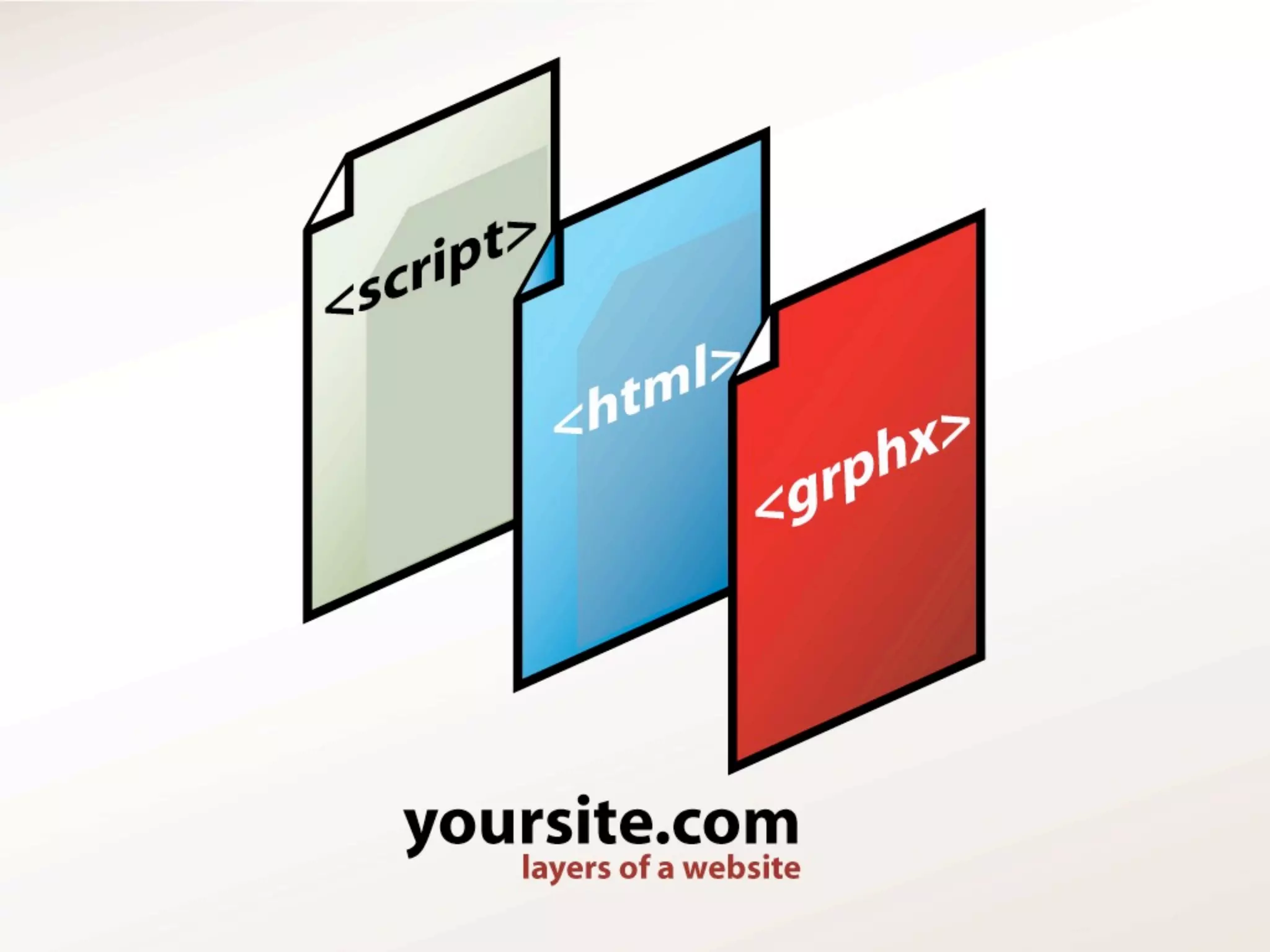
• Websites are multi-layered programs
  running on the OS called the Web which is
  running on the Internet
• usually consist of 3 layers
What makes up a web site?

• Information / Content
• information graphics (icons, pagination, etc.)
• media (pictures, video, animation,etc.)
• front end code (HTML / CSS)
• back end code (PHP, Ruby, .NET)
What kinds of web sites are there?


•   Mini-Site (1-3 pages)

•   Marketing Sites

•   Weblogs (Blogs)

•   e-commerce

•   Web Applications

•   enterprise e-magazine and news sites
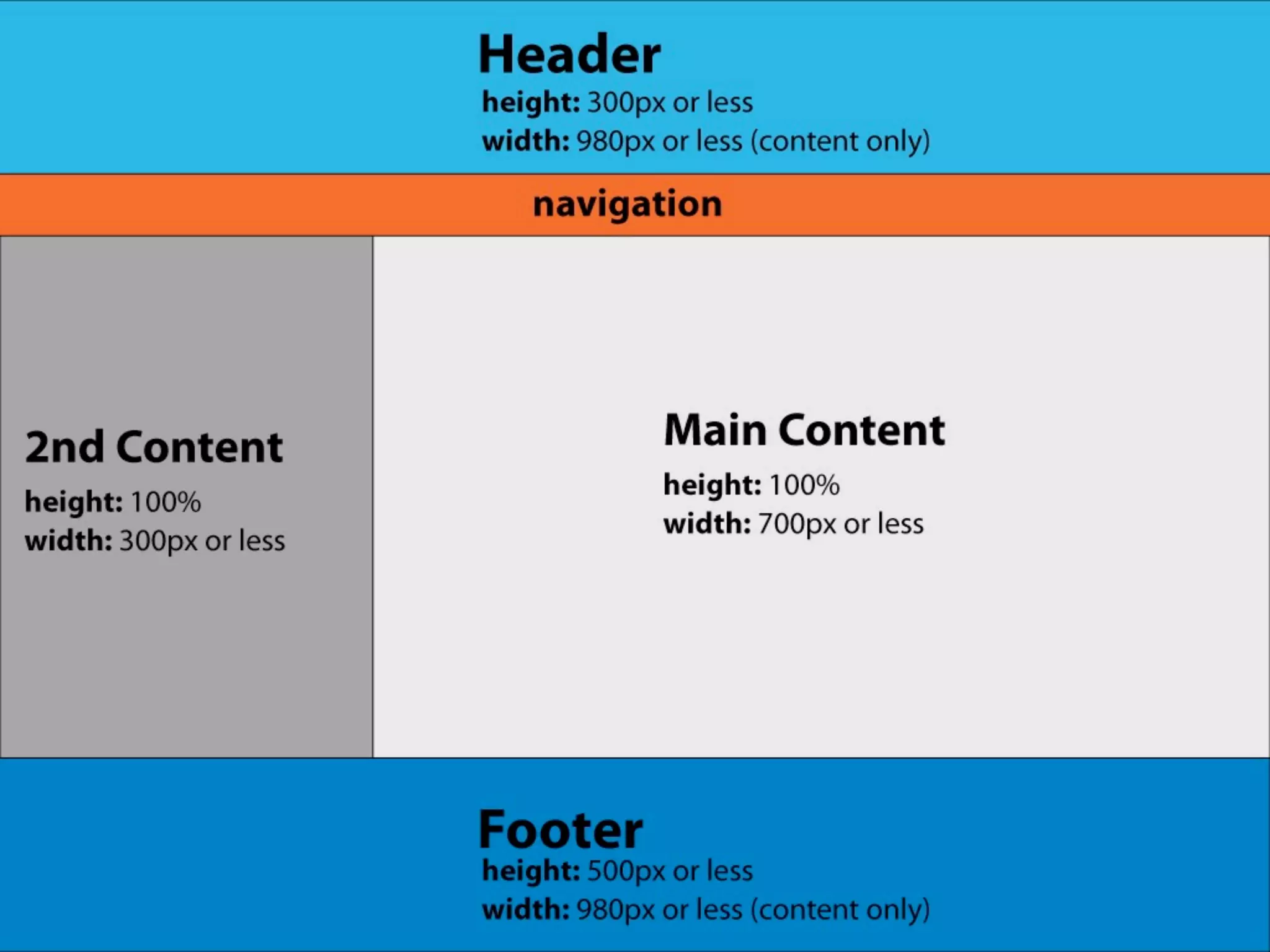
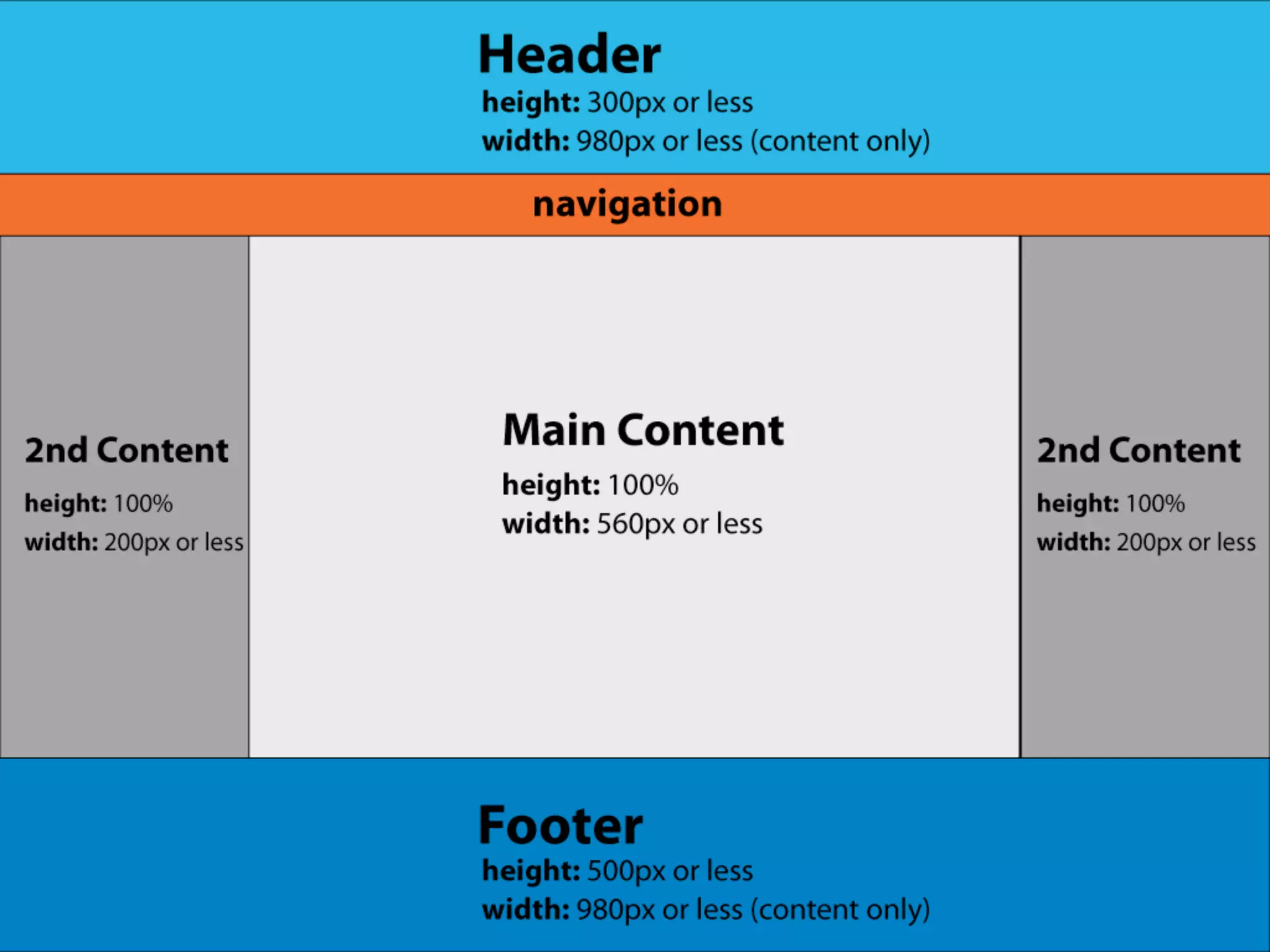
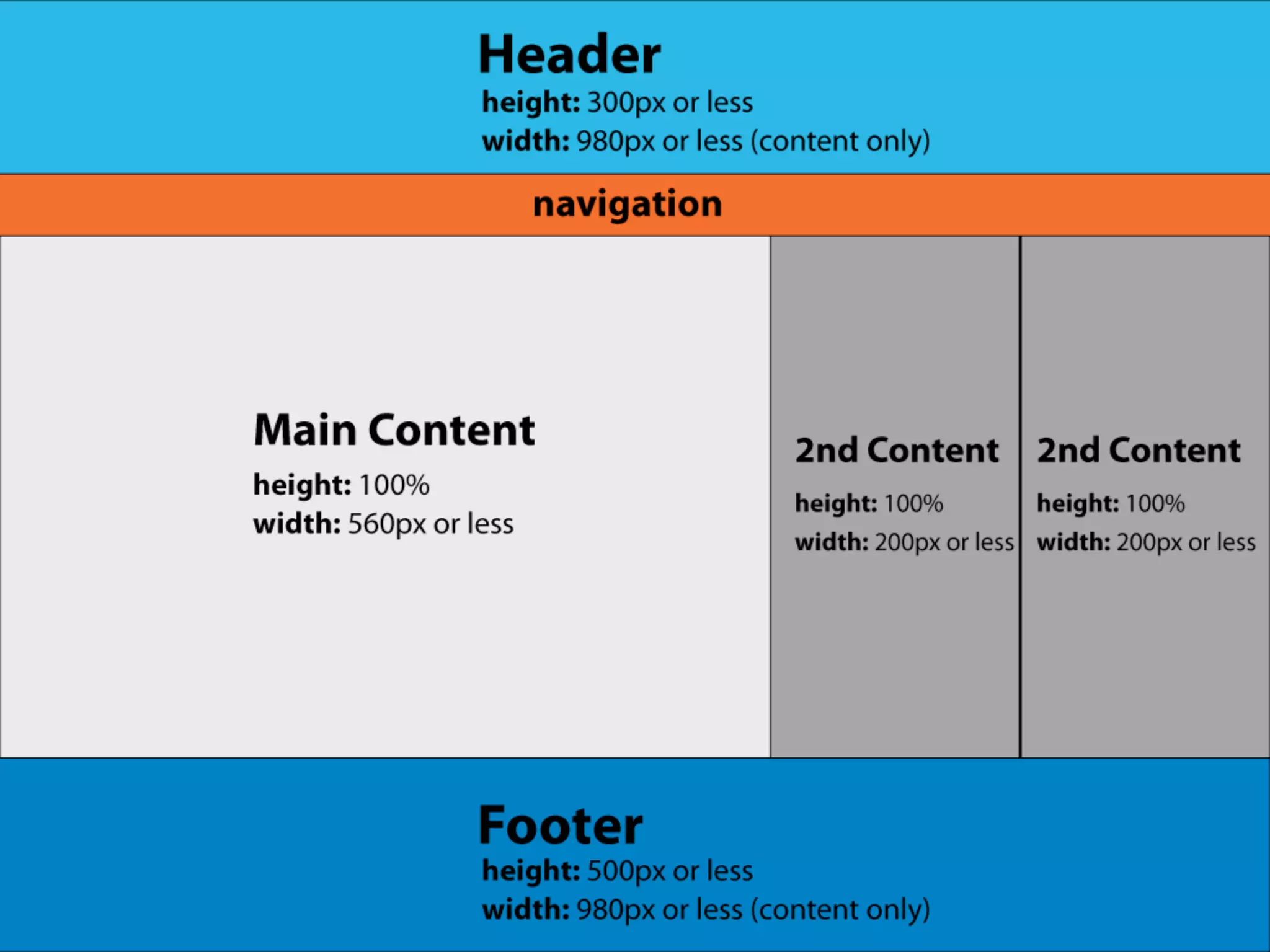
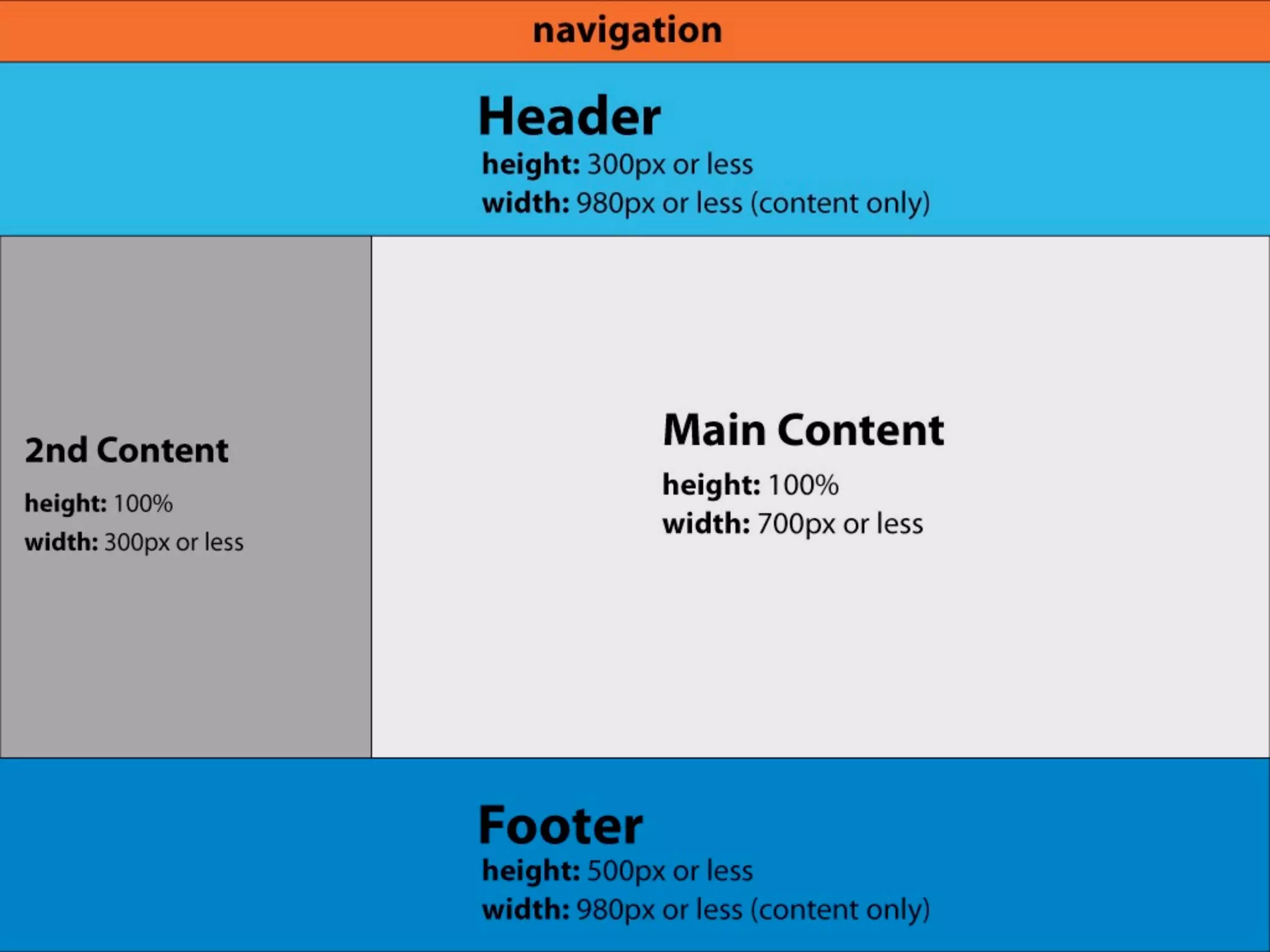
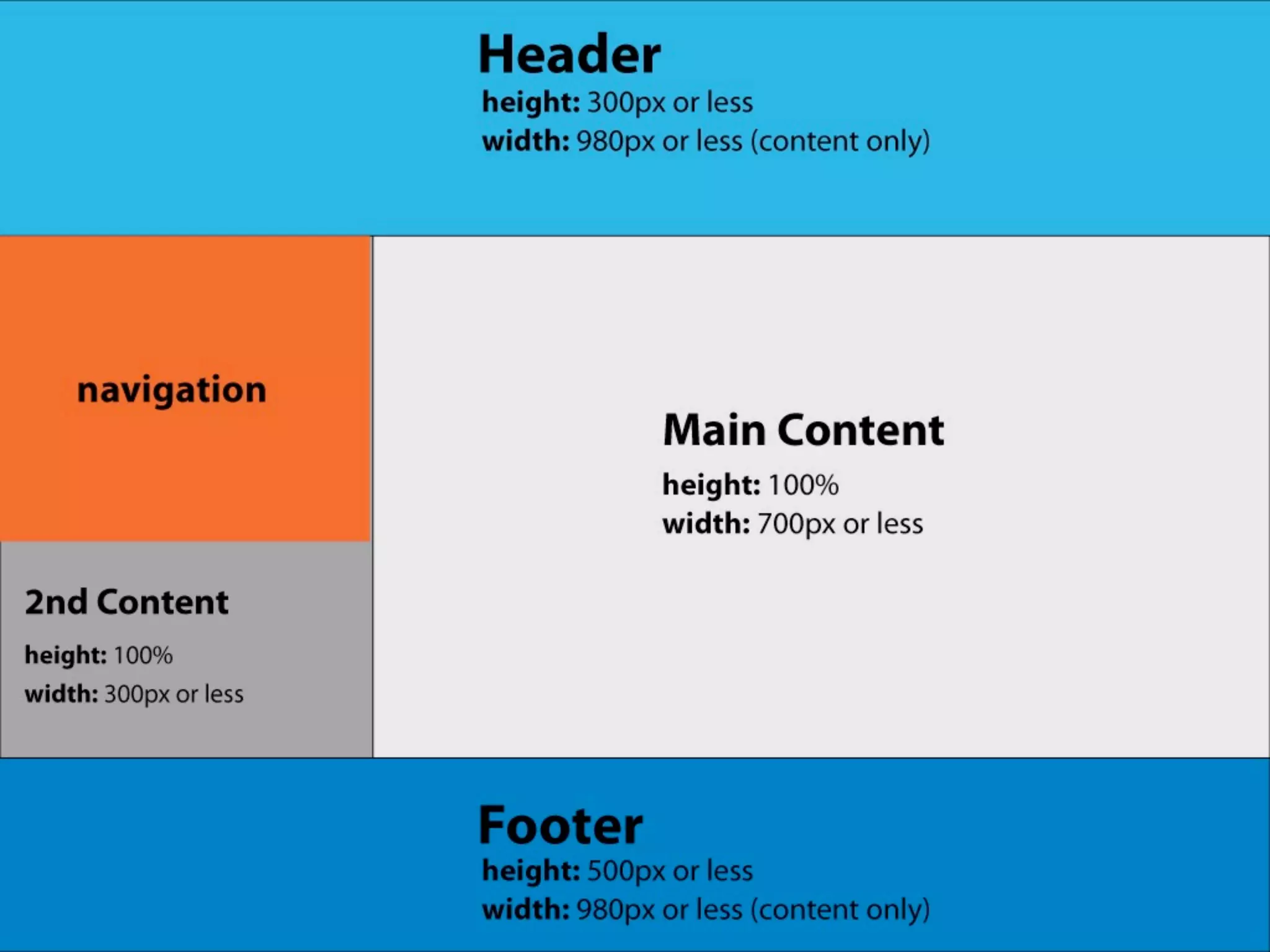
Web Page Breakdown
•   Header

•   Navigation

•   Content (multi-column)

    •   main content

    •   secondary content (sidebars)

•   Footer
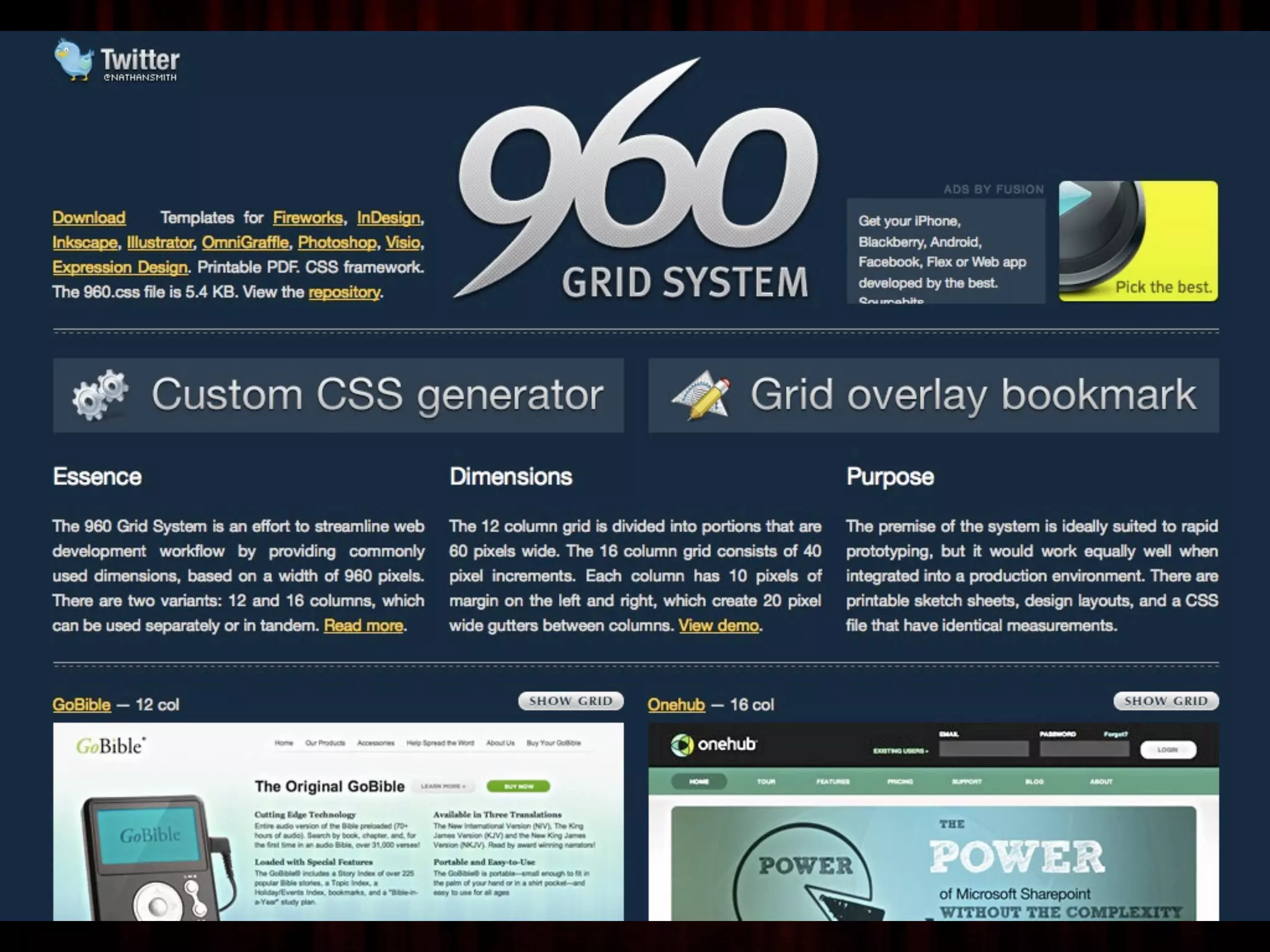
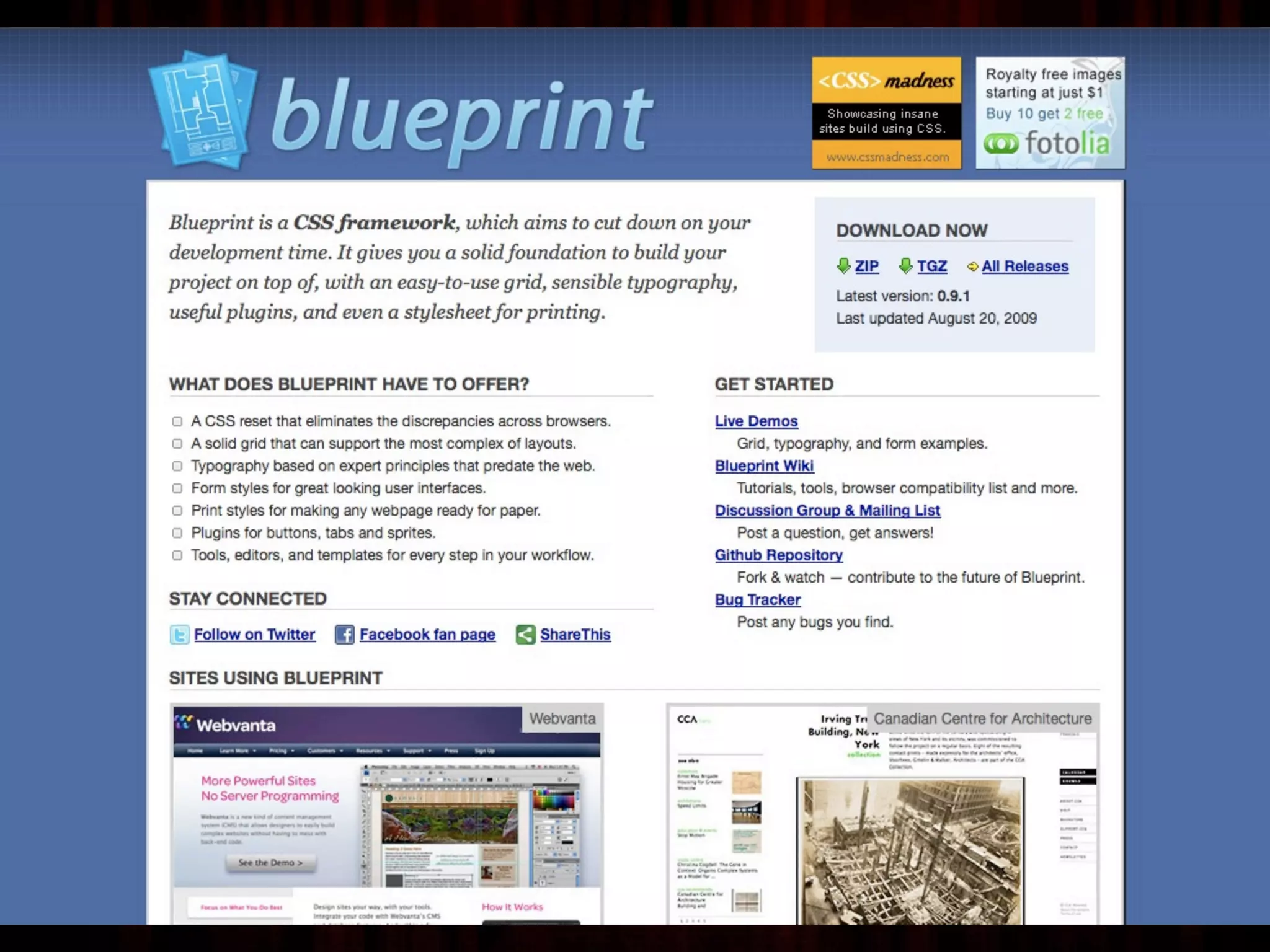
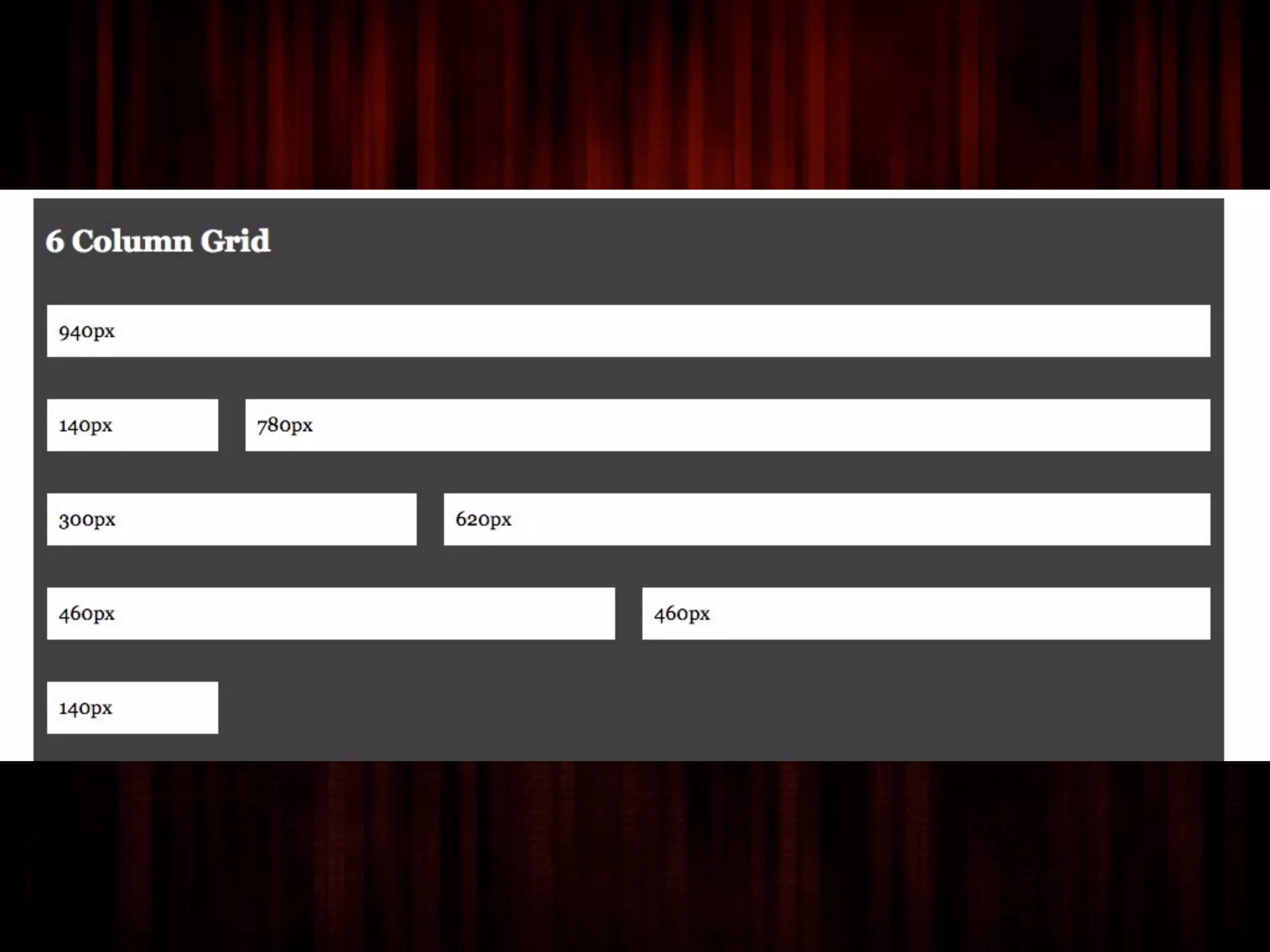
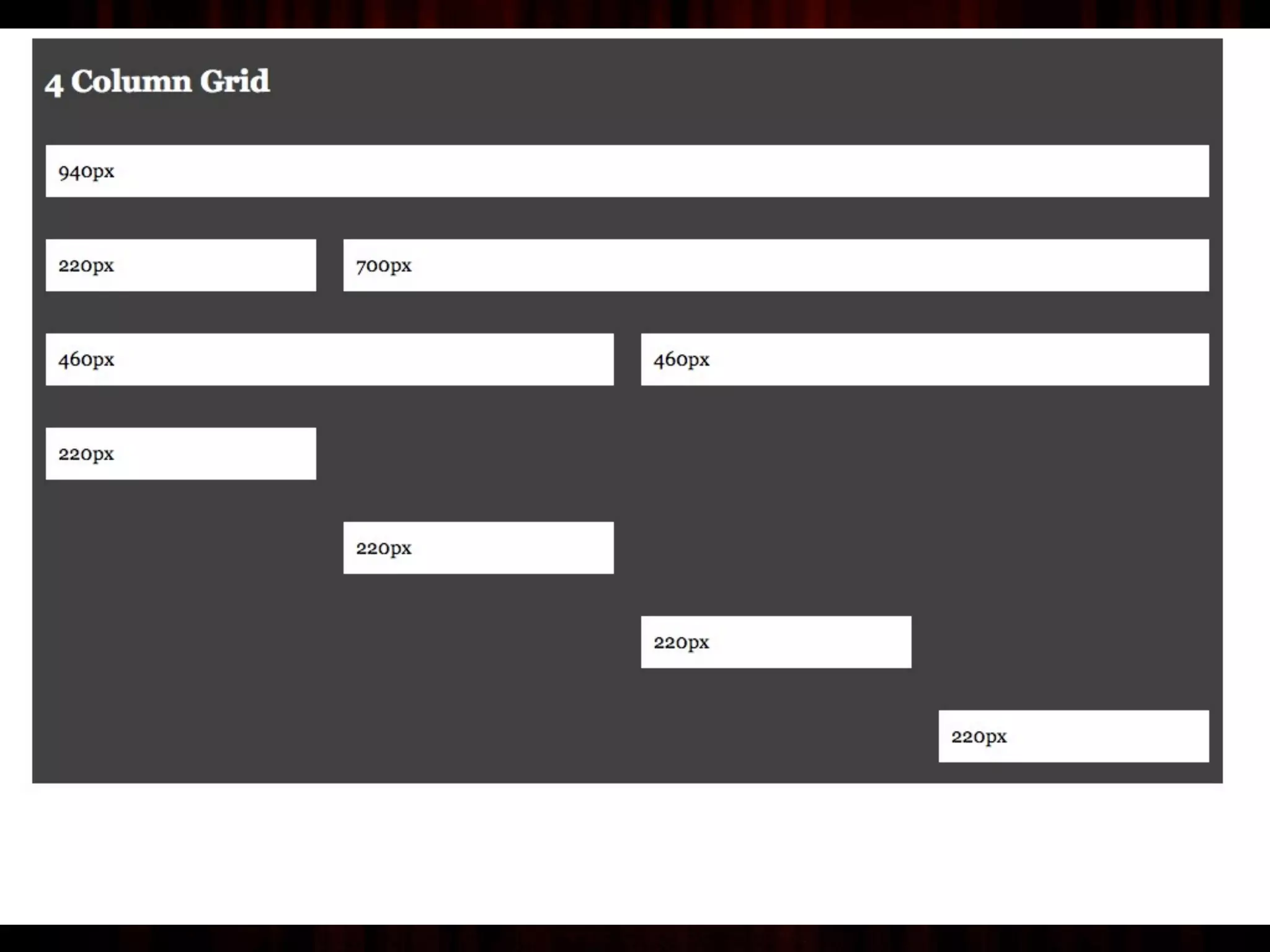
Grid Systems
• Aid in symmetric layout
• allow a designer to visualize column
  divisions
• give greater control over content structure
• Are completely customizable
• should be used in every web interface
Grid System

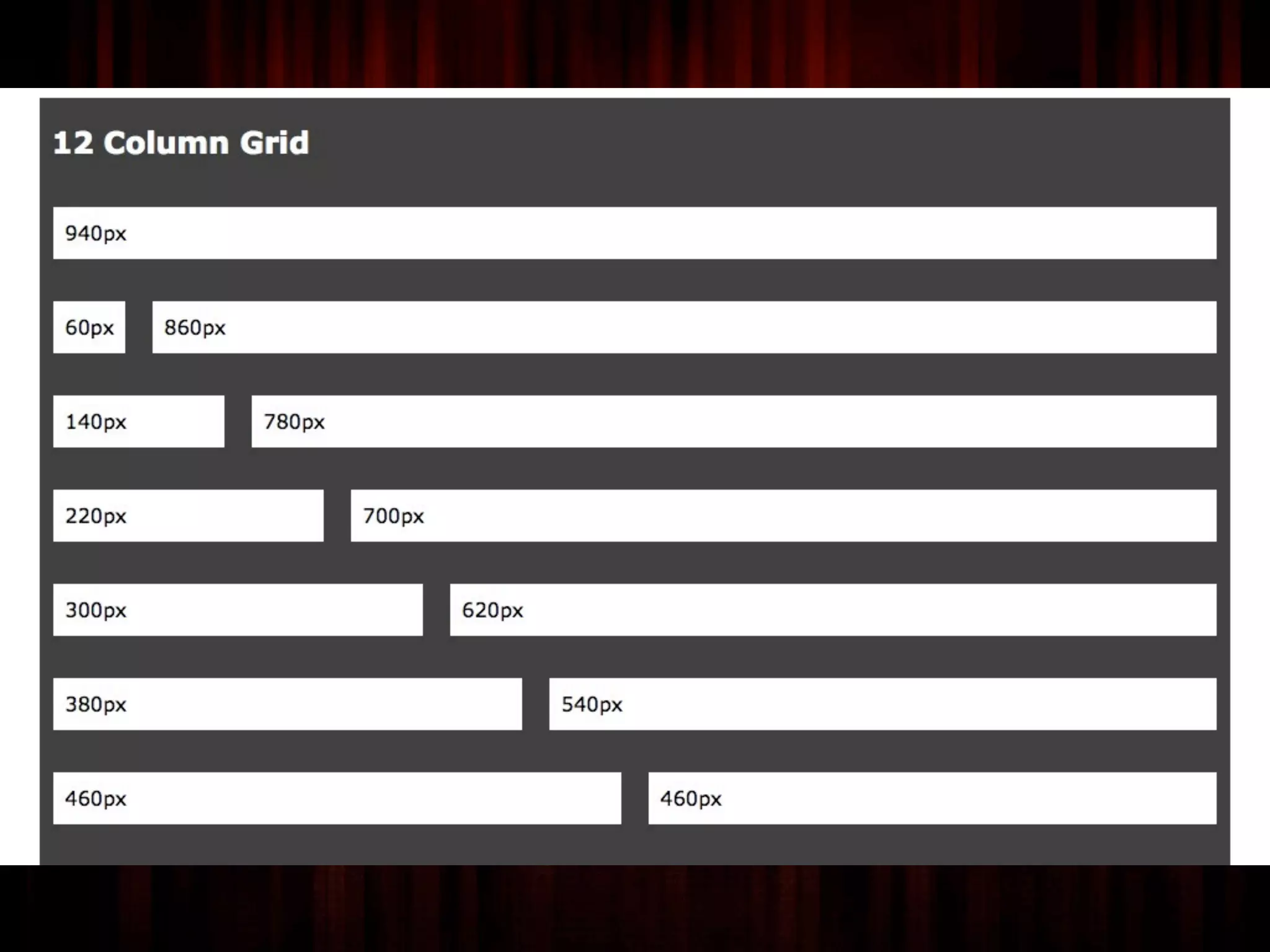
• should not exceed 980px wide
• made up of columns and gutters
• columns can have variable widths
• gutters should be at least 10-20px wide
• what about horizontal?
Design / Code Relationship


• Being familiar with code is a MUST!
• You do not need to be a code guru in
  order to be a good web designer
• HTML / CSS is an easy language to learn.
Design / Code Relationship


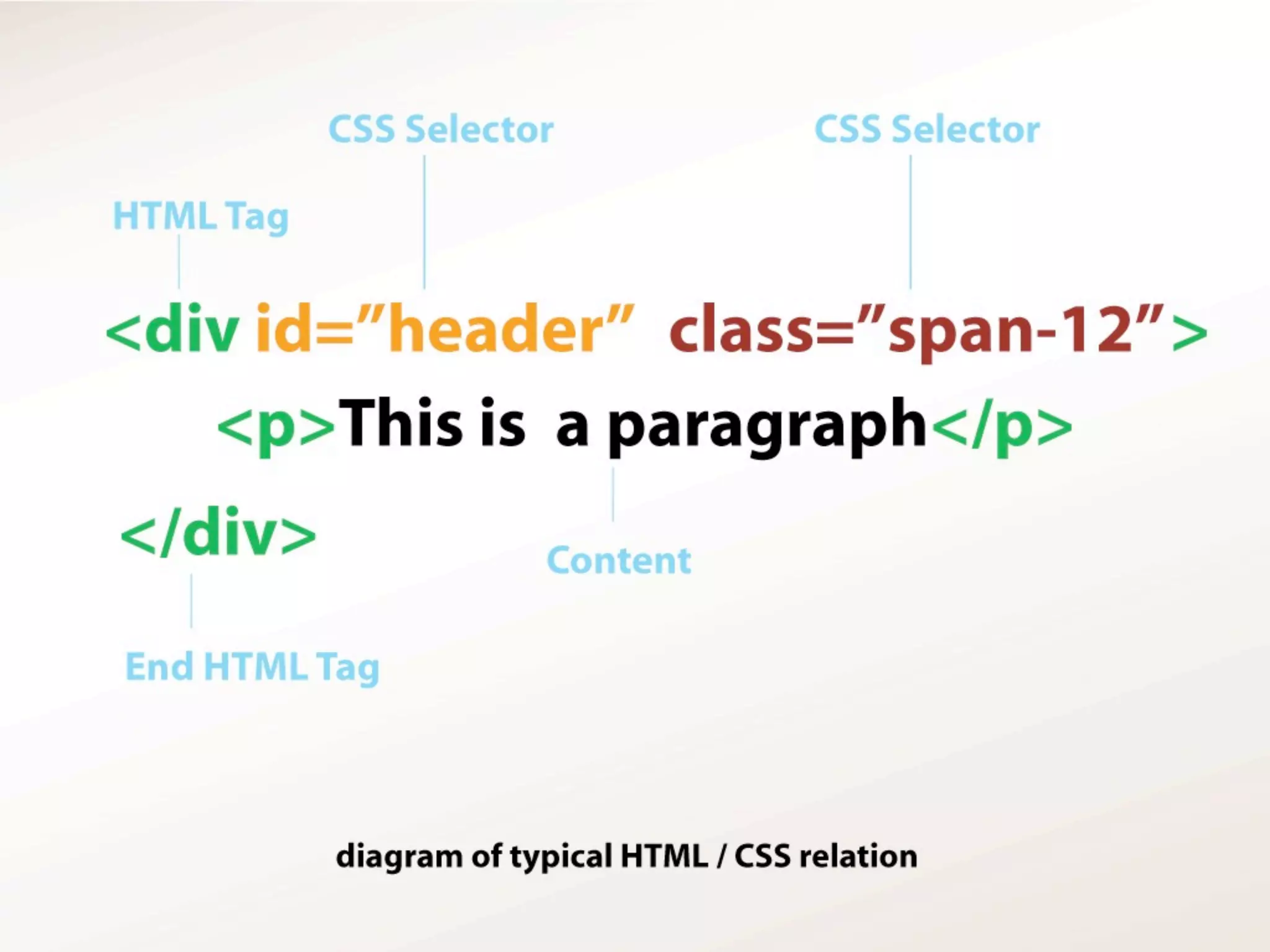
• Hyper-text Markup Language (HTML)
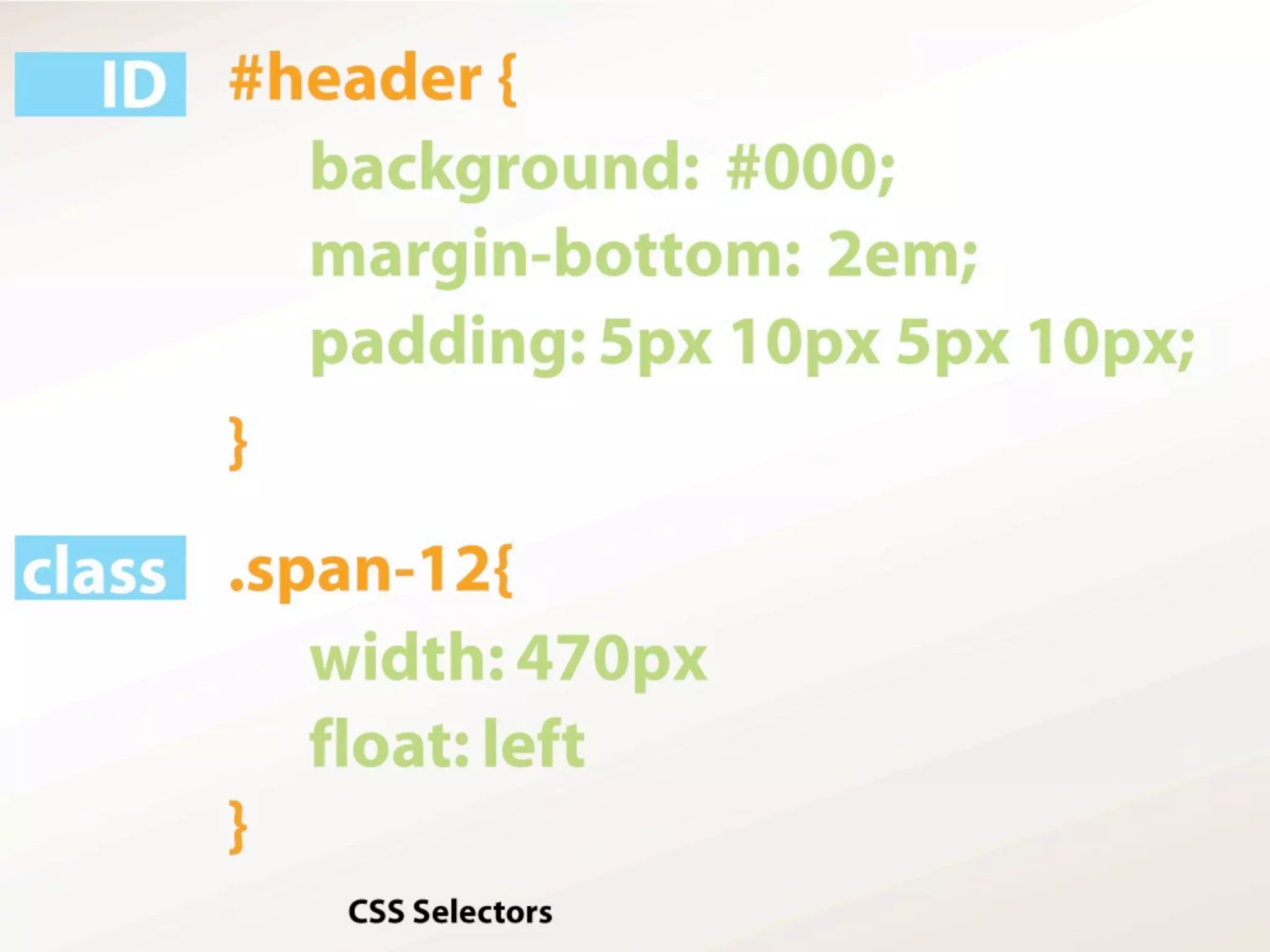
• Cascading Style Sheet (CSS)
Design / Code Relationship

• CSS / HTML Control the Grid
• CSS tells the HTML where to be and how
  to look
• Some graphic elements can be rendered by
  the code
• As much txt as possible should be
  rendered by the code.
That’s It!
For my next trick...

CE-9506_Session02

  • 1.
    Session 02: WebAs A Medium CE-9506: Web Design - Structure, Function & Analysis
  • 2.
    Structure of aSite • Websites are multi-layered programs running on the OS called the Web which is running on the Internet • usually consist of 3 layers
  • 4.
    What makes upa web site? • Information / Content • information graphics (icons, pagination, etc.) • media (pictures, video, animation,etc.) • front end code (HTML / CSS) • back end code (PHP, Ruby, .NET)
  • 5.
    What kinds ofweb sites are there? • Mini-Site (1-3 pages) • Marketing Sites • Weblogs (Blogs) • e-commerce • Web Applications • enterprise e-magazine and news sites
  • 6.
    Web Page Breakdown • Header • Navigation • Content (multi-column) • main content • secondary content (sidebars) • Footer
  • 12.
    Grid Systems • Aidin symmetric layout • allow a designer to visualize column divisions • give greater control over content structure • Are completely customizable • should be used in every web interface
  • 13.
    Grid System • shouldnot exceed 980px wide • made up of columns and gutters • columns can have variable widths • gutters should be at least 10-20px wide • what about horizontal?
  • 19.
    Design / CodeRelationship • Being familiar with code is a MUST! • You do not need to be a code guru in order to be a good web designer • HTML / CSS is an easy language to learn.
  • 20.
    Design / CodeRelationship • Hyper-text Markup Language (HTML) • Cascading Style Sheet (CSS)
  • 23.
    Design / CodeRelationship • CSS / HTML Control the Grid • CSS tells the HTML where to be and how to look • Some graphic elements can be rendered by the code • As much txt as possible should be rendered by the code.
  • 24.
    That’s It! For mynext trick...