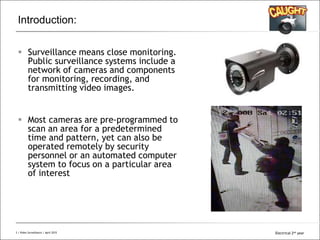
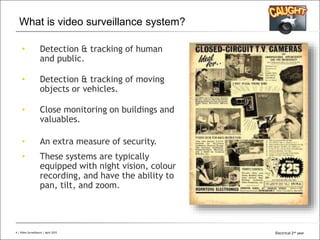
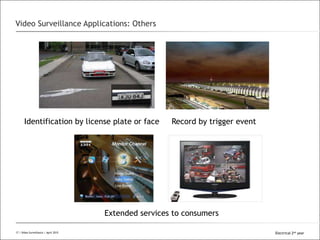
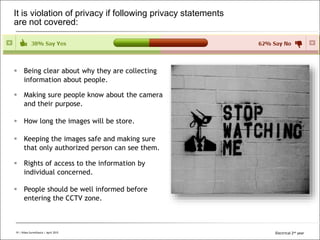
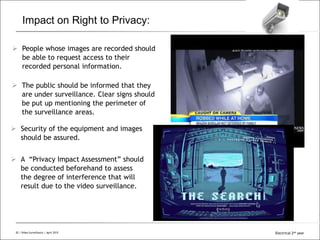
Video surveillance involves the close monitoring of an area through networked cameras that can pan, tilt, and zoom. It is used for security purposes like crime prevention but may violate privacy if proper privacy policies are not followed. Such policies include clearly informing the public about why surveillance is used, limiting access to recordings, deleting recordings in a timely manner, and allowing individuals to access any recordings of themselves. Violations of privacy can be reduced through signage informing people they are being monitored and securing both camera equipment and any images collected.