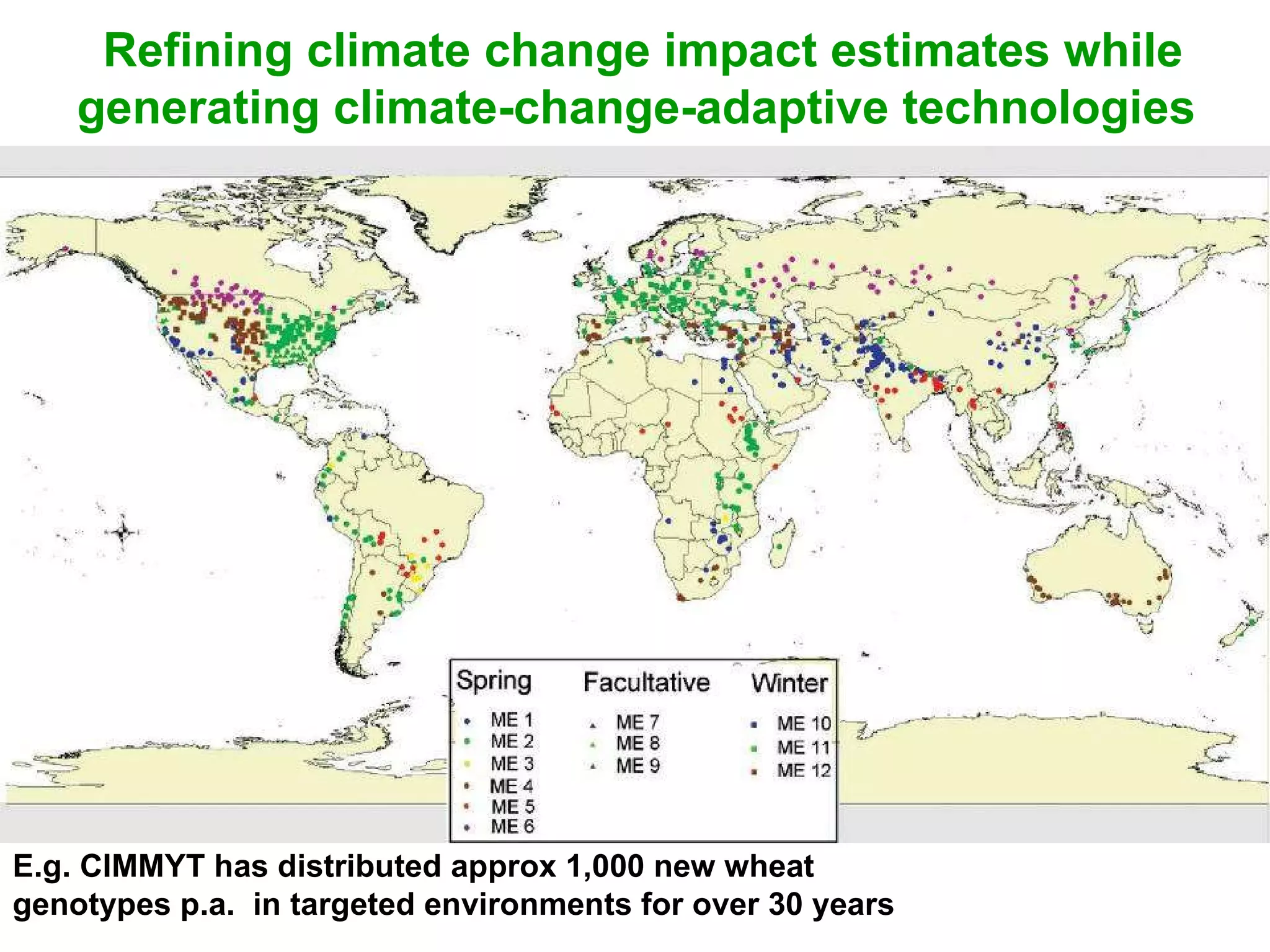
Refining climate change impact estimates while generating climate-change-adaptive technologies E.g. CIMMYT has distributed approx 1,000 new wheat genotypes p.a.  in targeted environments for over 30 years
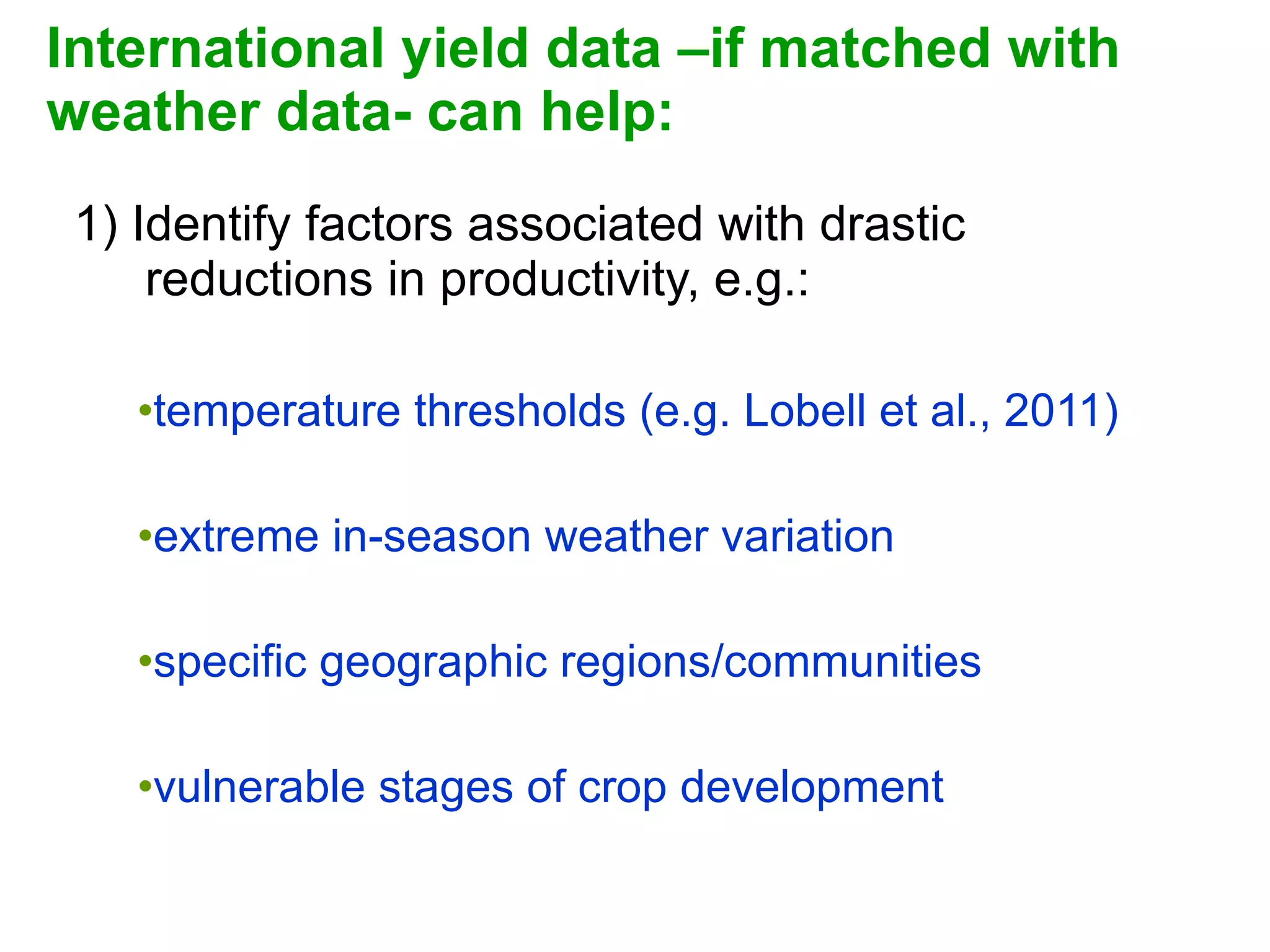
International yield data –if matched with weather data- can help:   1) Identify factors associated with drastic reductions in productivity, e.g.: temperature thresholds (e.g. Lobell et al., 2011) extreme in-season weather variation specific geographic regions/communities vulnerable stages of crop development
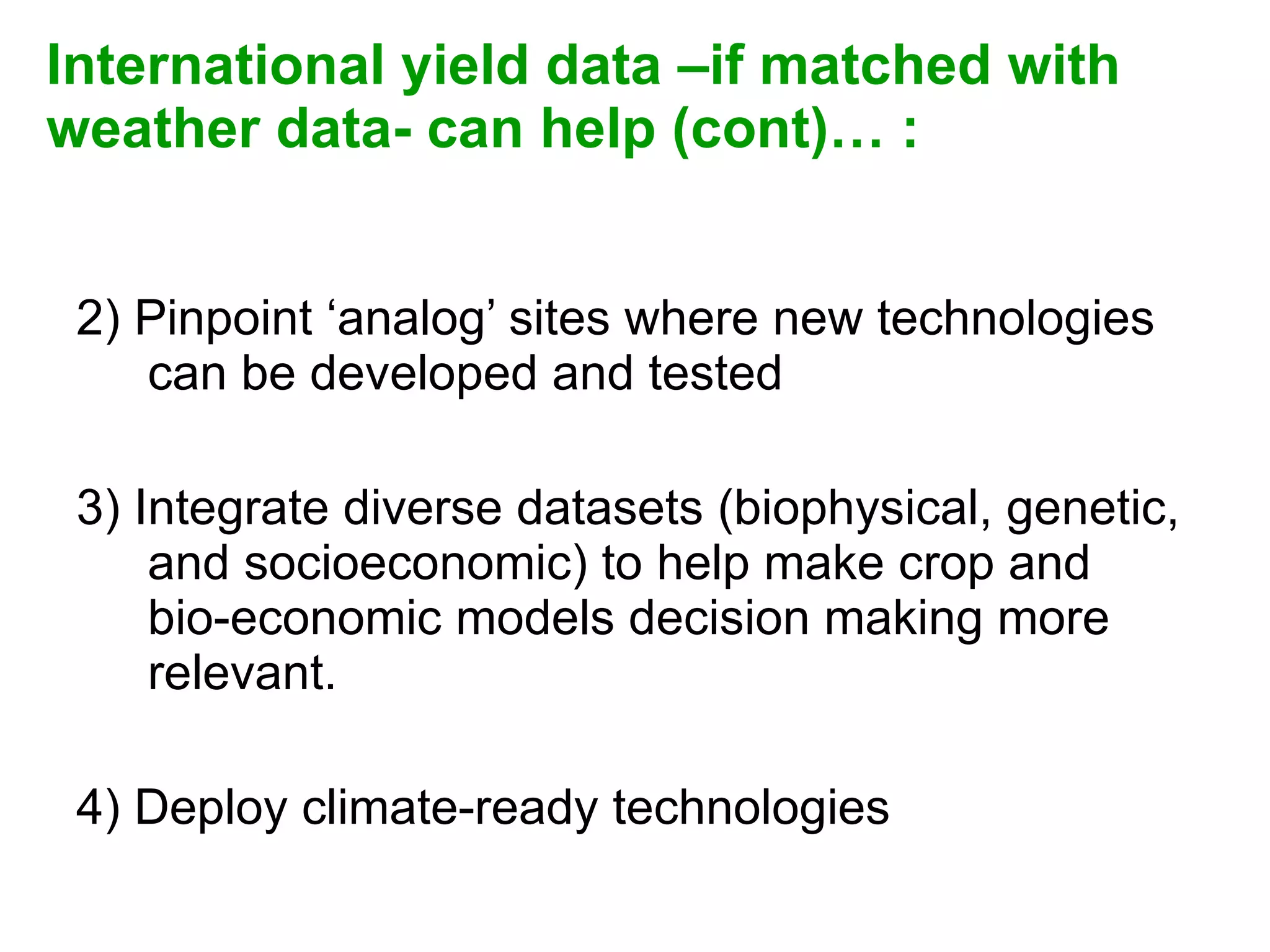
International yield data –if matched with weather data- can help (cont)… :   2) Pinpoint ‘analog’ sites where new technologies can be developed and tested 3) Integrate diverse datasets (biophysical, genetic, and socioeconomic) to help make crop and bio-economic models decision making more relevant. 4) Deploy climate-ready technologies
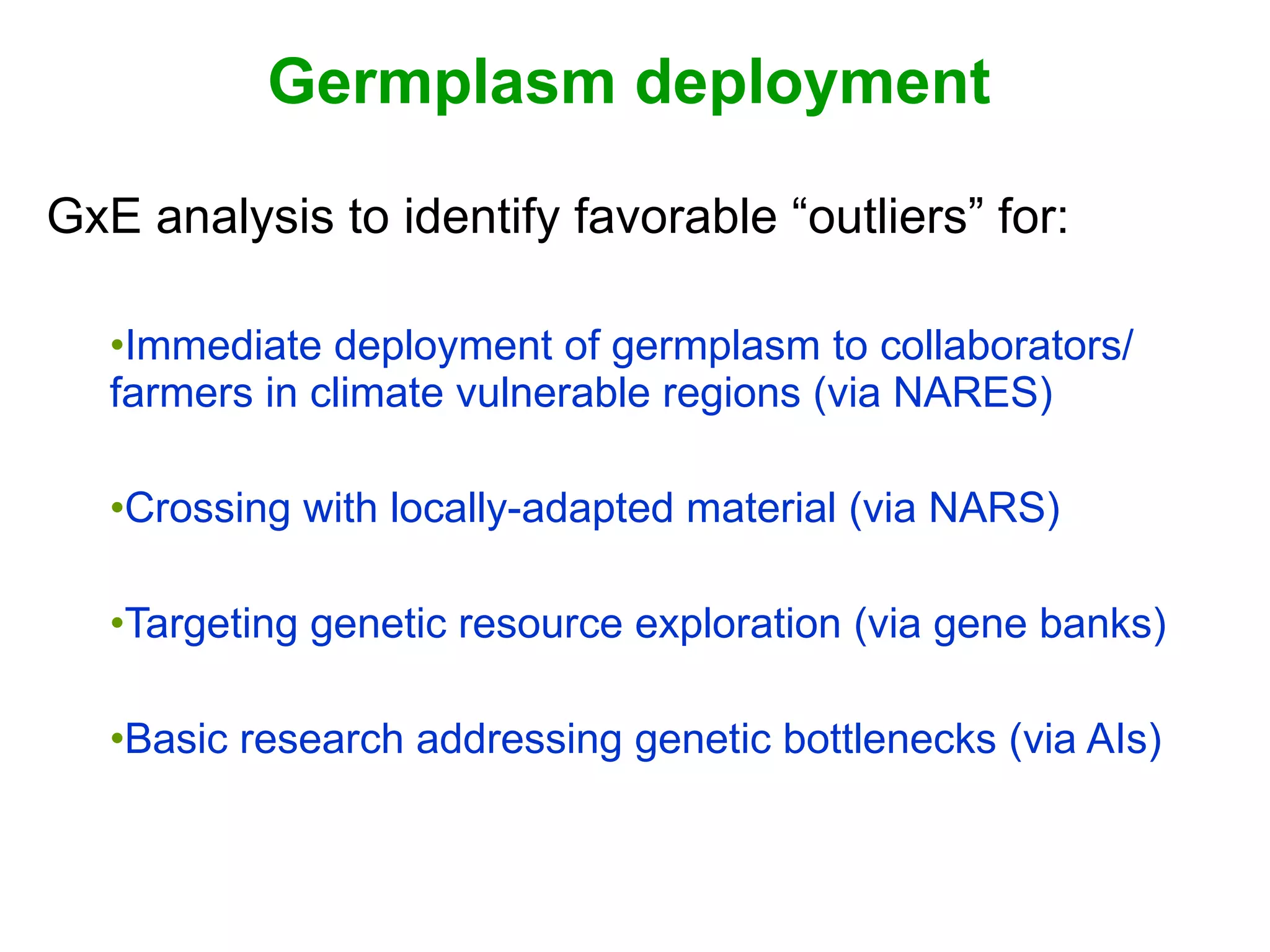
Germplasm deployment GxE analysis to identify favorable “outliers” for: Immediate deployment of germplasm to collaborators/ farmers in climate vulnerable regions (via NARES) Crossing with locally-adapted material (via NARS) Targeting genetic resource exploration (via gene banks) Basic research addressing genetic bottlenecks (via AIs)
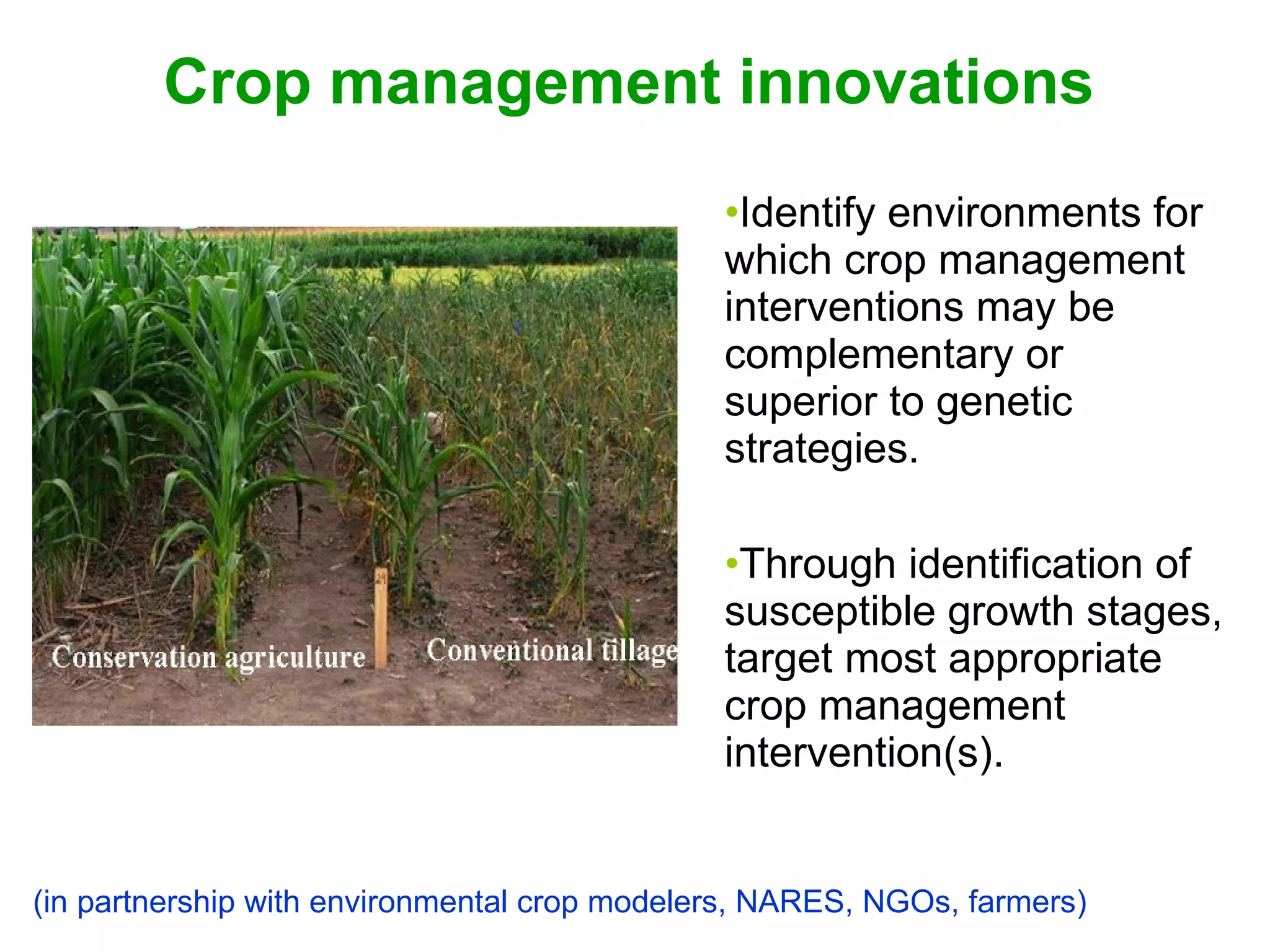
Crop management innovations Identify environments for which crop management interventions may be complementary or superior to genetic strategies. Through identification of susceptible growth stages, target most appropriate crop management intervention(s). (in partnership with environmental crop modelers, NARES, NGOs, farmers)
Links of yield analysis to GEC community Simulation of climate data Use of climate and socioeconomic models to prioritize crop adaptation strategies: Breeding objectives  Use of genetic resources (where low genetic variance identified) Genetic resource collection in terms of priority targets and rate of climate change (how urgent is it to collect genetic resources) Crop management interventions where genetic solutions may not be feasible. Poverty and vulnerability focus.
Links of yield analysis to GEC community Stratification of analogue sites over time (10y, 20y, 30y) as well as space Understand environmental basis of biological (rather than physical) analog sites (based on behavior of genotypes, GxE etc). Food security modeling (e.g. Lobell, Batisti, etc)
 
Mining historical yield data to steer crop adaptation strategies for climate change Objectives Use simulated climate data to identify adaptation needs of crops in a changing climate.   Predict potential resilience of crops and cultivars to future climates using historic yield and climate data. Integrate climate and crop models into a calibration and validation “reality check”.  
Objectives cont Use climate models to pinpoint specific analogue sites: Based on temperature thresholds Extreme weather variation Crop sensitive stages   Assess the full spectrum of environmental factors that determine crop adaptation (e.g. soil chemistry, salinity, water quality, pollution, soil degradation, altitude, maritime versus continental climate, etc)  Use climate models to identify regions with promising gene pools and to map genetic resource collection priorities.
Objectives cont Map adaptation potential of resilient crops and germplasm. Map adaptation gaps -i.e. environments where zero genetic resilience is expressed related to biophysical factors- to prioritize other types of intervention.   Map apparent yield gaps –of on farm trials- related to agronomic (fertility, irrigation, rotation etc), socioeconomic factors (poverty, population pressures, gender), and institutional factors (subsidies, corruption, political regimes).
TOOLS/RESOURCES Meteorological data bases Weather simulation groups Yield data (National programs, GCIAR, private sector) GxE analytical tools (PLS, factorial regression)  
CROPS Selected CG crops for which good historic performance data exist (on station/on farm)  Trees- Provenance Trials (Agro-forestry)
SPIN-OFFS Use variance parameters to develop confidence parameters on network data

Refining climate change impact estimates while generating climate-change-adaptive technologies

  • 1.
    Refining climate changeimpact estimates while generating climate-change-adaptive technologies E.g. CIMMYT has distributed approx 1,000 new wheat genotypes p.a. in targeted environments for over 30 years
  • 2.
    International yield data–if matched with weather data- can help:   1) Identify factors associated with drastic reductions in productivity, e.g.: temperature thresholds (e.g. Lobell et al., 2011) extreme in-season weather variation specific geographic regions/communities vulnerable stages of crop development
  • 3.
    International yield data–if matched with weather data- can help (cont)… :   2) Pinpoint ‘analog’ sites where new technologies can be developed and tested 3) Integrate diverse datasets (biophysical, genetic, and socioeconomic) to help make crop and bio-economic models decision making more relevant. 4) Deploy climate-ready technologies
  • 4.
    Germplasm deployment GxEanalysis to identify favorable “outliers” for: Immediate deployment of germplasm to collaborators/ farmers in climate vulnerable regions (via NARES) Crossing with locally-adapted material (via NARS) Targeting genetic resource exploration (via gene banks) Basic research addressing genetic bottlenecks (via AIs)
  • 5.
    Crop management innovationsIdentify environments for which crop management interventions may be complementary or superior to genetic strategies. Through identification of susceptible growth stages, target most appropriate crop management intervention(s). (in partnership with environmental crop modelers, NARES, NGOs, farmers)
  • 6.
    Links of yieldanalysis to GEC community Simulation of climate data Use of climate and socioeconomic models to prioritize crop adaptation strategies: Breeding objectives Use of genetic resources (where low genetic variance identified) Genetic resource collection in terms of priority targets and rate of climate change (how urgent is it to collect genetic resources) Crop management interventions where genetic solutions may not be feasible. Poverty and vulnerability focus.
  • 7.
    Links of yieldanalysis to GEC community Stratification of analogue sites over time (10y, 20y, 30y) as well as space Understand environmental basis of biological (rather than physical) analog sites (based on behavior of genotypes, GxE etc). Food security modeling (e.g. Lobell, Batisti, etc)
  • 8.
  • 9.
    Mining historical yielddata to steer crop adaptation strategies for climate change Objectives Use simulated climate data to identify adaptation needs of crops in a changing climate.   Predict potential resilience of crops and cultivars to future climates using historic yield and climate data. Integrate climate and crop models into a calibration and validation “reality check”.  
  • 10.
    Objectives cont Useclimate models to pinpoint specific analogue sites: Based on temperature thresholds Extreme weather variation Crop sensitive stages   Assess the full spectrum of environmental factors that determine crop adaptation (e.g. soil chemistry, salinity, water quality, pollution, soil degradation, altitude, maritime versus continental climate, etc) Use climate models to identify regions with promising gene pools and to map genetic resource collection priorities.
  • 11.
    Objectives cont Mapadaptation potential of resilient crops and germplasm. Map adaptation gaps -i.e. environments where zero genetic resilience is expressed related to biophysical factors- to prioritize other types of intervention.   Map apparent yield gaps –of on farm trials- related to agronomic (fertility, irrigation, rotation etc), socioeconomic factors (poverty, population pressures, gender), and institutional factors (subsidies, corruption, political regimes).
  • 12.
    TOOLS/RESOURCES Meteorological databases Weather simulation groups Yield data (National programs, GCIAR, private sector) GxE analytical tools (PLS, factorial regression)  
  • 13.
    CROPS Selected CGcrops for which good historic performance data exist (on station/on farm) Trees- Provenance Trials (Agro-forestry)
  • 14.
    SPIN-OFFS Use varianceparameters to develop confidence parameters on network data