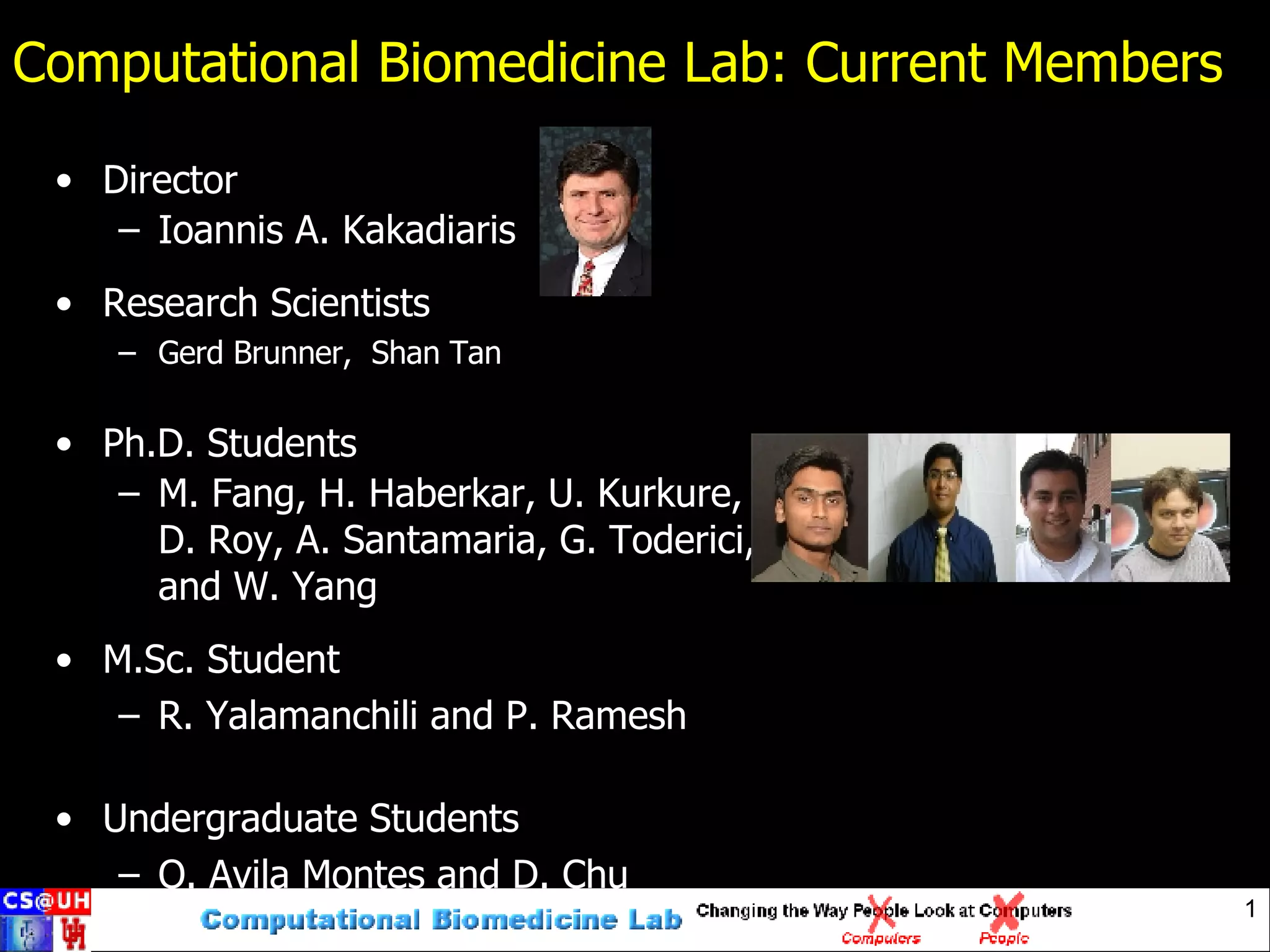
Computational Biomedicine Lab: Current Members Director Ioannis A. Kakadiaris   Research Scientists Gerd Brunner,  Shan Tan Ph.D. Students M. Fang, H. Haberkar, U. Kurkure, D. Roy, A. Santamaria, G. Toderici, and W. Yang   M.Sc. Student R. Yalamanchili and P. Ramesh Undergraduate Students O. Avila Montes and D. Chu
CBL Mission To develop a comprehensive framework that will lead to improved algorithms for analyzing  multidimensional   data  in search of  meaningful information .  To allow computers to aid humans in taking full advantage of the multitude of data sources available through today's technology to extract relevant information in a  reliable ,  accurate , and  timely manner .  To break the barriers of our own specialty and establish solid interdisciplinary teamwork on the basis of “grand challenge problems”.
CBL Roadmap New Computational Tools For Scientific Discovery From Algorithm to Bedside / TestBed Research Teams of the Future [email_address]
Research Teams of The Future: Collaborators Biologists/Neuroscientists Wah Chiu, Baylor College of Medicine Costa Colbert, UH Gregory Eichelle, Baylor College of Medicine Peter Saggau, Baylor College of Medicine Computer Scientists Theoharis Theoharis, Univ. of Athens Joe Warren, Rice University Engineers Stephane Carlier, CRF Craig Hartley, BCM Ralph Metcalfe, UH K. Ravi-Chandar, Aer. Engineering, UT Austin Mathematicians R. Azencott, E. Papadakis, UH Ioannis Konstantinidis, U of Maryland
From Algorithm to Bedside - Alan B. Lumsden and Neil Kleimann Morteza Naghavi Erling Falk - Juan Granada Ippokrateion Hospital -Manolis Vavuranakis - Matt Budoff Joel Morrisett
CS@UH research highlights: people’s hearts and minds [email_address] People’s hearts and minds
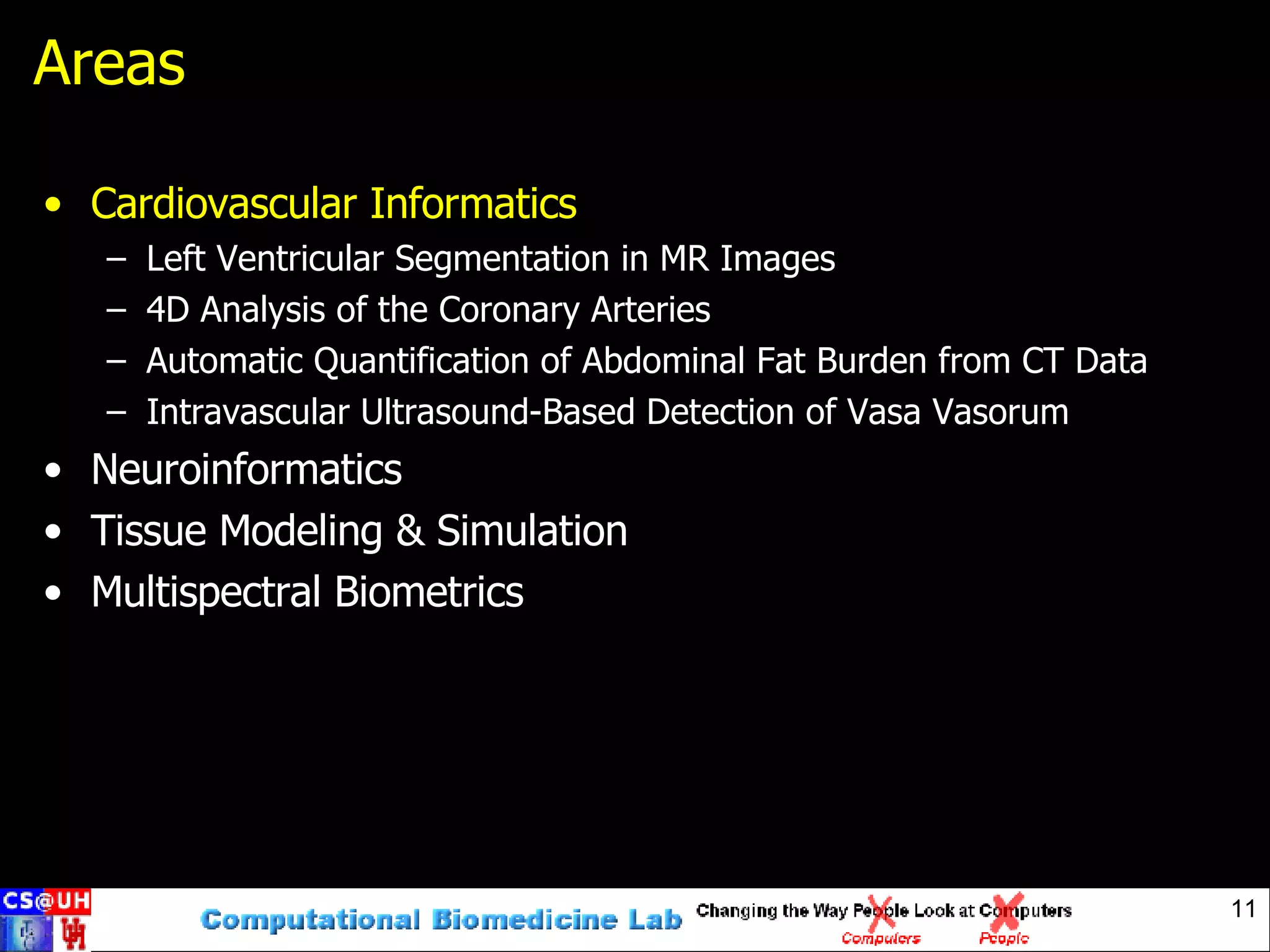
Areas Cardiovascular Informatics Neuroinformatics Tissue Modeling & Simulation
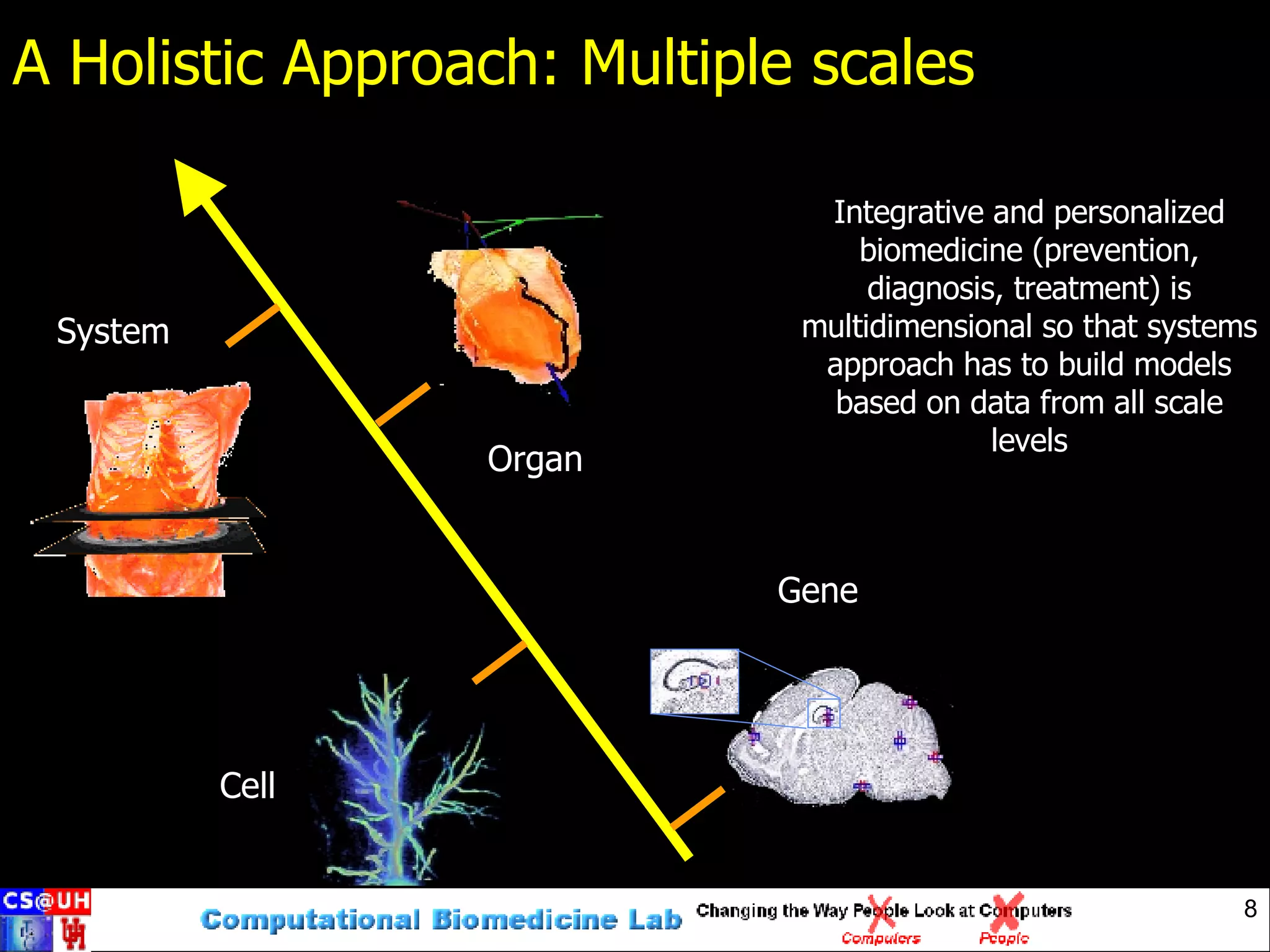
A Holistic Approach: Multiple scales Organ System Integrative and personalized biomedicine (prevention, diagnosis, treatment) is multidimensional so that systems approach has to build models based on data from all scale levels Cell Gene
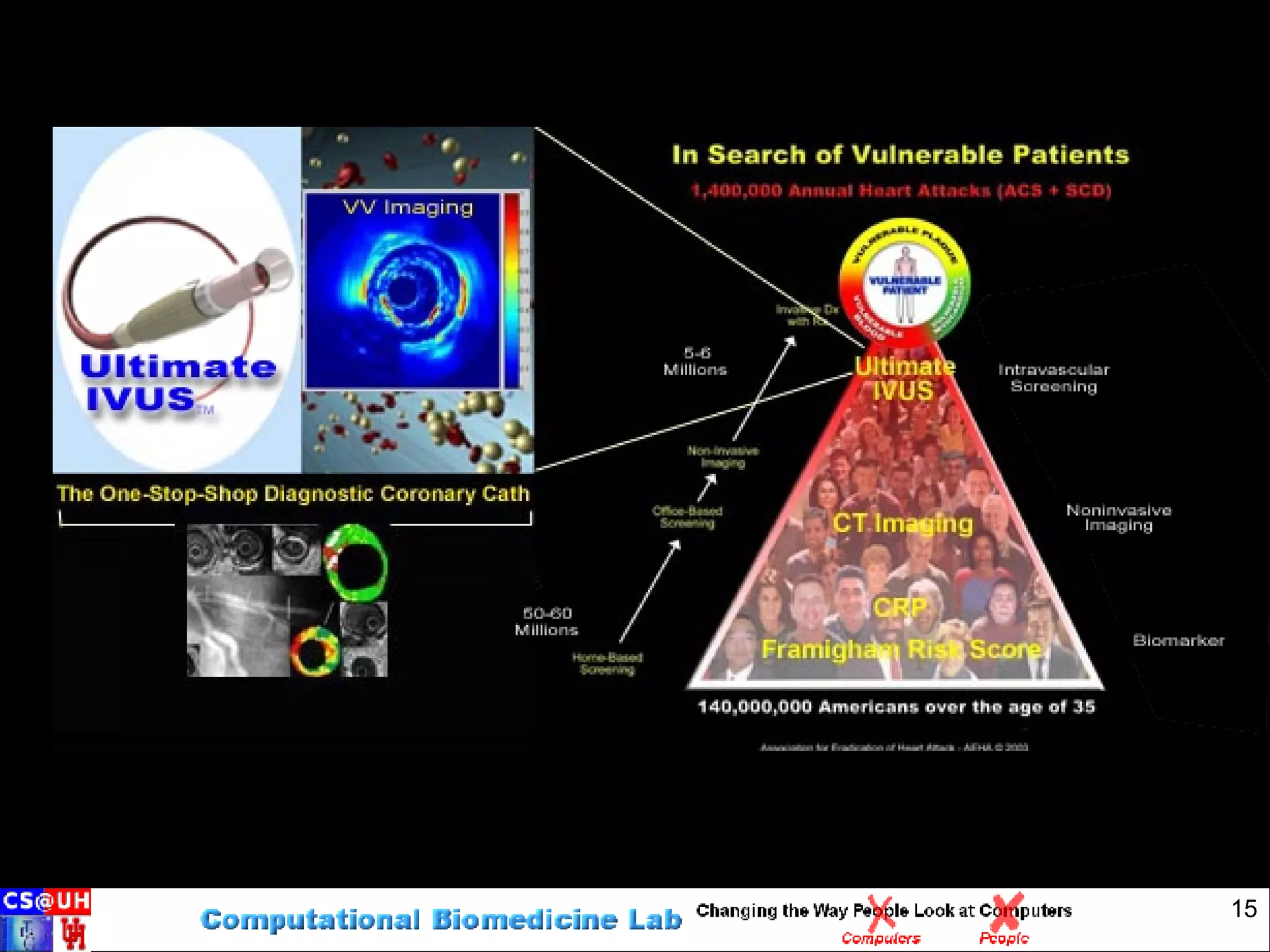
Cardiovascular Informatics To develop the computational tools to aid physicians in scoring the patients vulnerability and  the likelihood of a future coronary event.
Areas Cardiovascular Informatics Left Ventricular Segmentation in MR Images 4D Analysis of the Coronary Arteries Automatic Quantification of Abdominal Fat Burden from CT Data Intravascular Ultrasound-Based Detection of Vasa Vasorum Neuroinformatics Tissue Modeling & Simulation Multispectral Biometrics
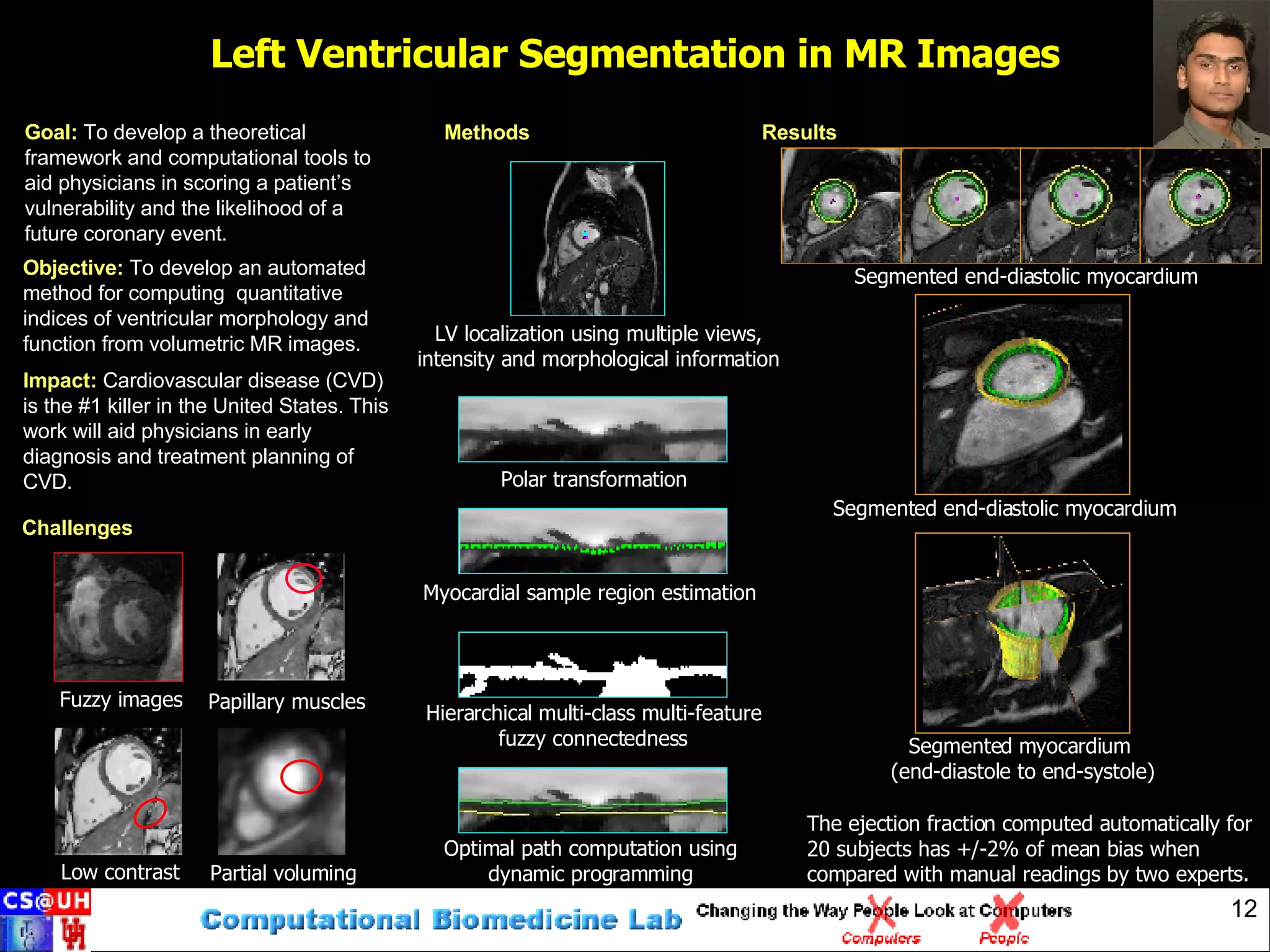
Left Ventricular Segmentation in MR Images Objective:  To develop an automated method for computing  quantitative indices of ventricular morphology and function from volumetric MR images. Papillary muscles Partial voluming Fuzzy images Low contrast Challenges Methods LV localization using multiple views, intensity and morphological information Myocardial sample region estimation Hierarchical multi-class multi-feature fuzzy connectedness Optimal path computation using dynamic programming Polar transformation Results Goal:  To develop a theoretical framework and computational tools to aid physicians in scoring a patient’s vulnerability and the likelihood of a future coronary event. Segmented end-diastolic myocardium The ejection fraction computed automatically for 20 subjects has +/-2% of mean bias when compared with manual readings by two experts. Segmented myocardium  (end-diastole to end-systole) Segmented end-diastolic myocardium Impact:  Cardiovascular disease (CVD) is the #1 killer in the United States. This work will aid physicians in early diagnosis and treatment planning of CVD.
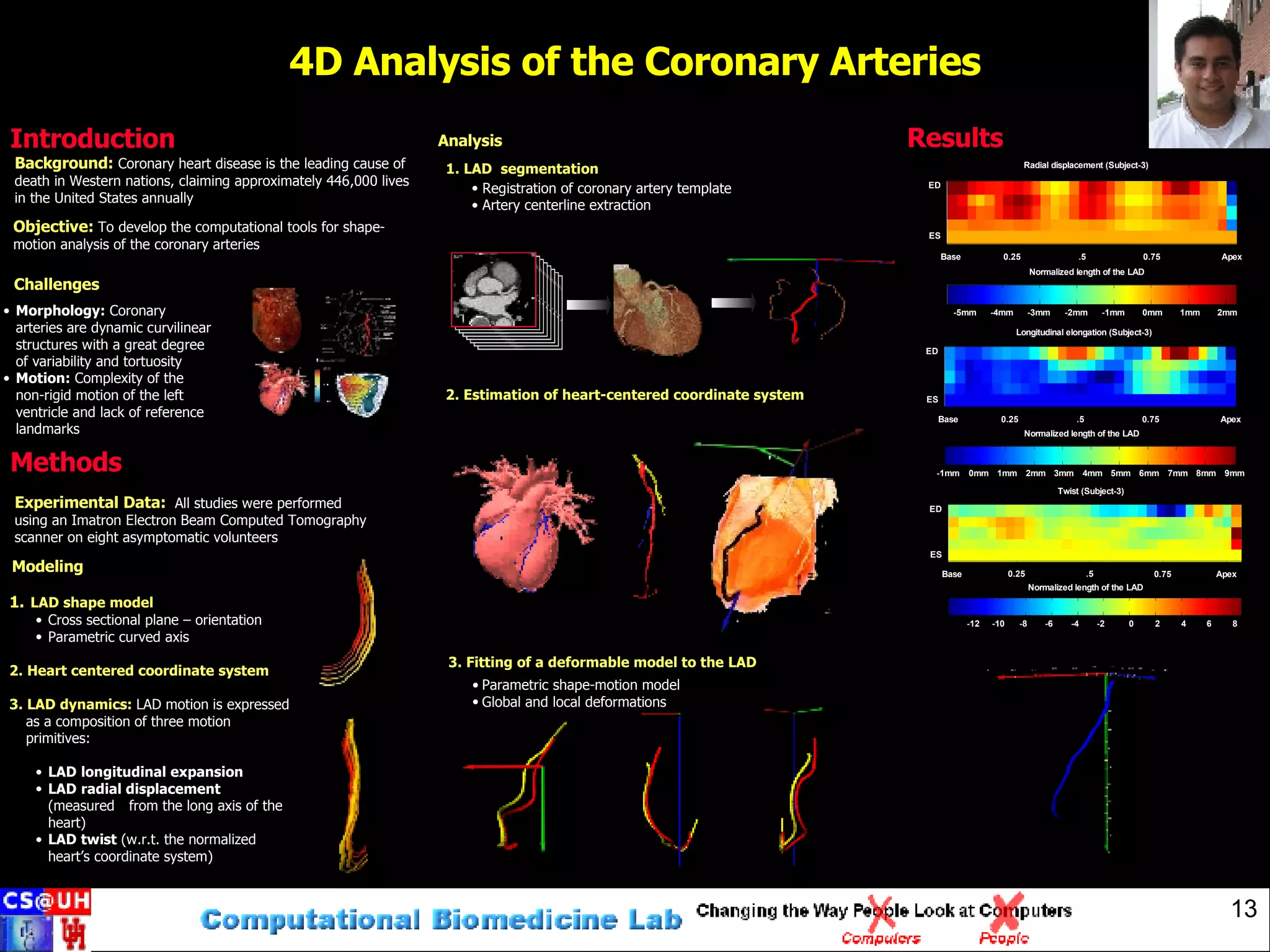
4D Analysis of the Coronary Arteries ED Introduction Results Methods LAD shape model Cross sectional plane – orientation Parametric curved axis 2. Heart centered coordinate system 3. LAD dynamics:   LAD motion is expressed as a composition of three motion primitives: LAD   longitudinal expansion LAD   radial displacement  (measured  from the long axis of the heart)  LAD twist  (w.r.t. the normalized heart’s coordinate system) Modeling Objective:  To develop the computational tools for shape-motion analysis of the coronary arteries Experimental Data:   All studies were performed using an Imatron Electron Beam Computed Tomography scanner on eight asymptomatic volunteers Background:   Coronary heart disease is the leading cause of death in Western nations, claiming approximately 446,000 lives in the United States annually  Challenges   Analysis 1. LAD  segmentation 2. Estimation of heart-centered coordinate system 3. Fitting of a deformable model to the LAD Parametric shape-motion model Global and local deformations Registration of coronary artery template Artery centerline extraction Morphology:  Coronary arteries are dynamic curvilinear structures with a great degree of variability and tortuosity Motion:  Complexity of the non-rigid motion of the left ventricle and lack of reference landmarks Radial displacement (Subject-3) Normalized length of the LAD Base 0.25 .5 0.75 Apex ED ES -5mm -4mm -3mm -2mm -1mm 0mm 1mm 2mm Longitudinal elongation (Subject-3) Normalized length of the LAD Base 0.25 .5 0.75 Apex ED ES -1mm 0mm 1mm 2mm 3mm 4mm 5mm 6mm 7mm 8mm 9mm Twist (Subject-3) Normalized length of the LAD Base 0.25 .5 0.75 Apex ED ES -12 -10 -8  -6  -4  -2  0 2 4 6 8
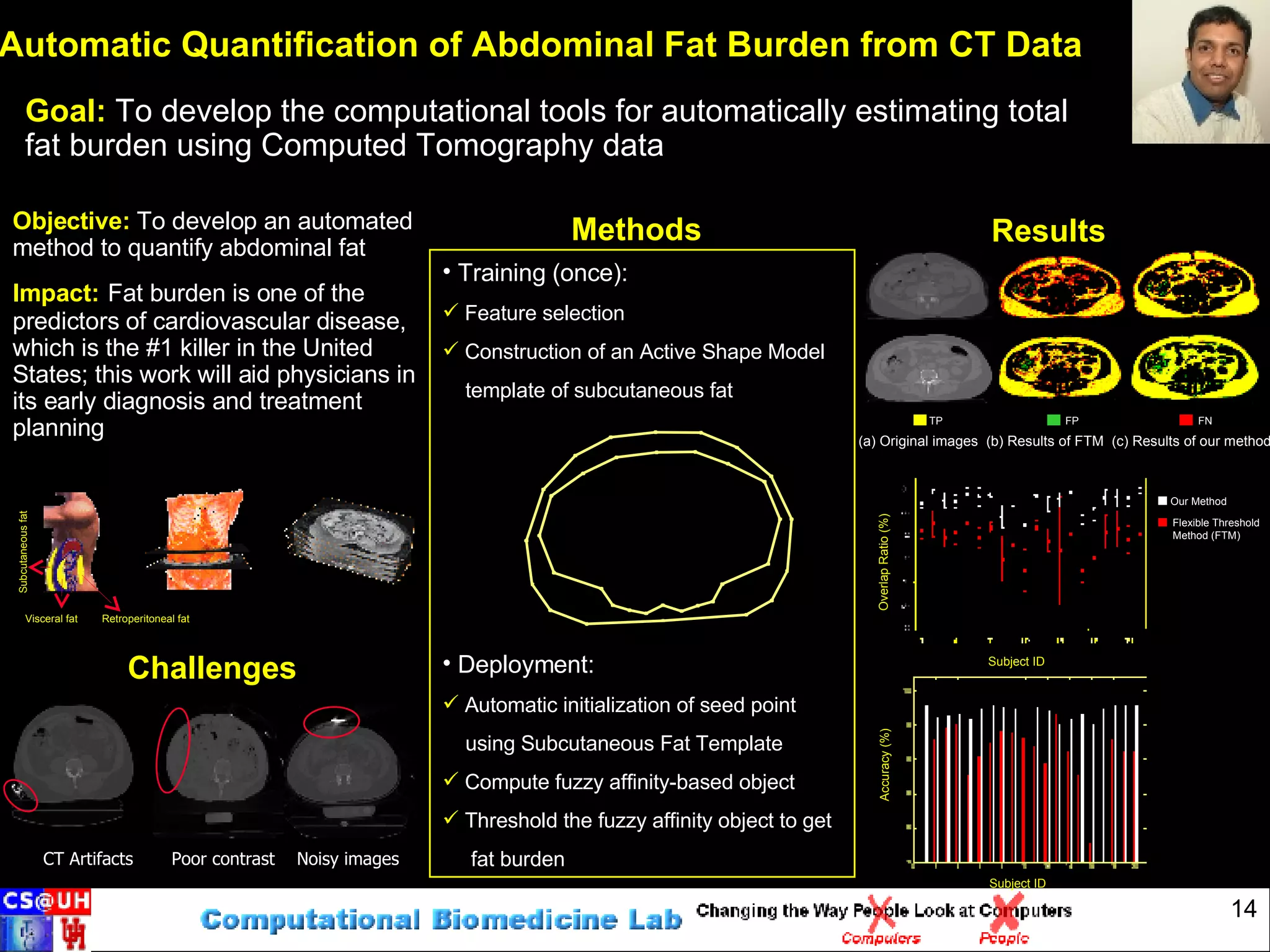
Training (once): Feature selection Construction of an Active Shape Model template of subcutaneous fat  Deployment: Automatic initialization of seed point using Subcutaneous Fat Template Compute fuzzy affinity-based object Threshold the fuzzy affinity object to get  fat burden (a) Original images  (b) Results of FTM  (c) Results of our method Automatic Quantification of Abdominal Fat Burden from CT Data Goal:   To develop the computational tools for automatically estimating total  fat burden using Computed Tomography data Results Methods Impact:   Fat burden is one of the predictors of cardiovascular disease, which is the #1 killer in the United States; this work will aid physicians in its early diagnosis and treatment planning Objective:   To develop an automated method to quantify abdominal fat TP FP FN Challenges CT Artifacts  Poor contrast  Noisy images Subcutaneous fat Visceral fat Retroperitoneal fat Subject ID Accuracy (%) Subject ID Overlap Ratio (%) Our Method Flexible Threshold Method (FTM)
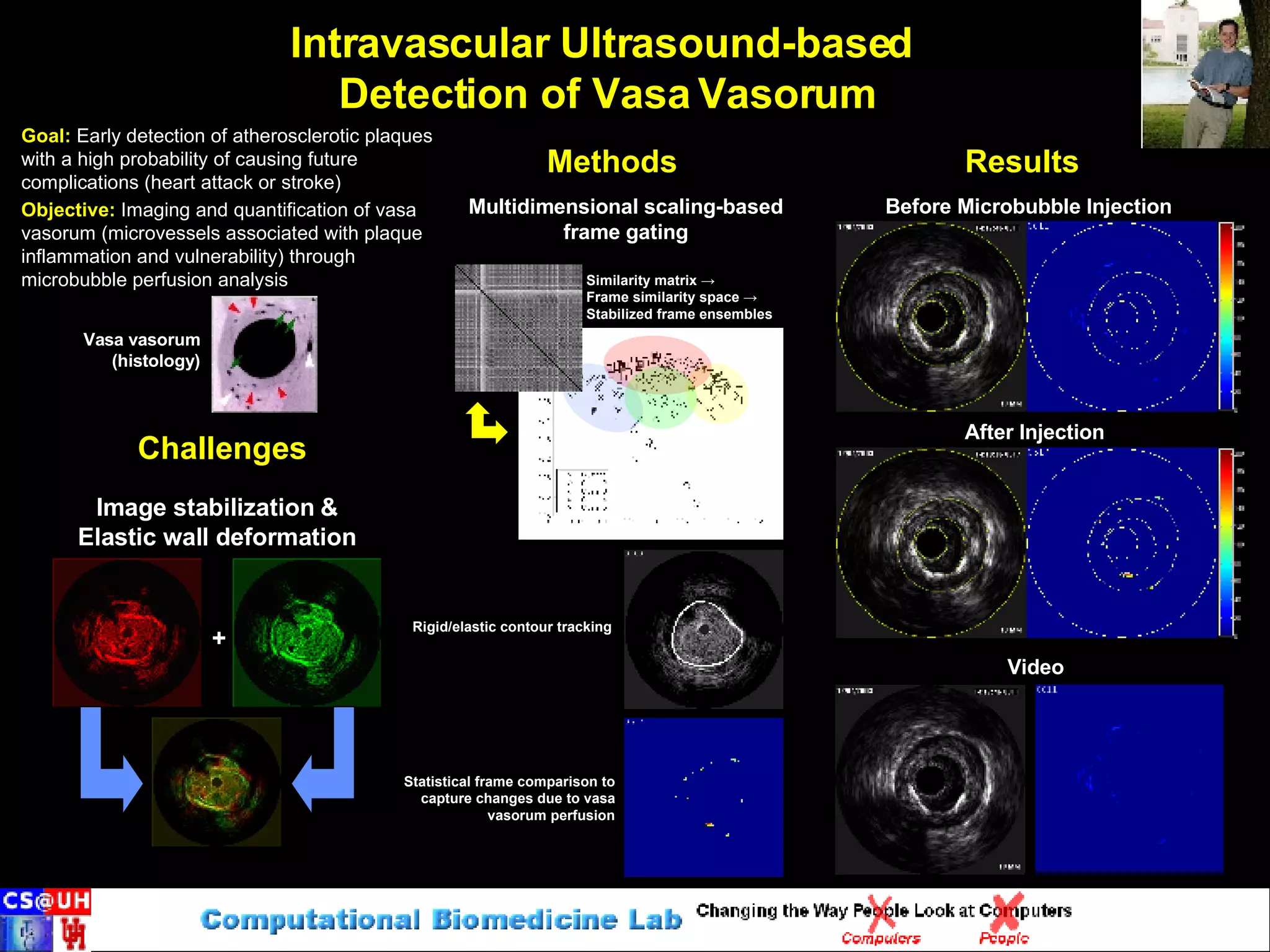
Intravascular Ultrasound-based  Detection of Vasa Vasorum Challenges Results Methods Inter-frame motion Image stabilization & Elastic wall deformation Vasa vasorum (histology) After Injection Goal:   Early detection of atherosclerotic plaques with a high probability of causing future complications (heart attack or stroke) Objective:   Imaging and quantification of vasa vasorum (microvessels associated with plaque inflammation and vulnerability) through microbubble perfusion analysis Video Multidimensional scaling-based frame gating Rigid/elastic contour tracking Statistical frame comparison to capture changes due to vasa vasorum perfusion Before Microbubble Injection + Similarity matrix  -> Frame similarity space  ->   Stabilized frame ensembles
Areas Cardiovascular Informatics Neuroinformatics Online Reconstruction and Functional Imaging of Neurons Statistical Models for Segmentation of Mouse Brain Tissue Slices Containing Gene Expression Data Tissue Modelling & Simulation
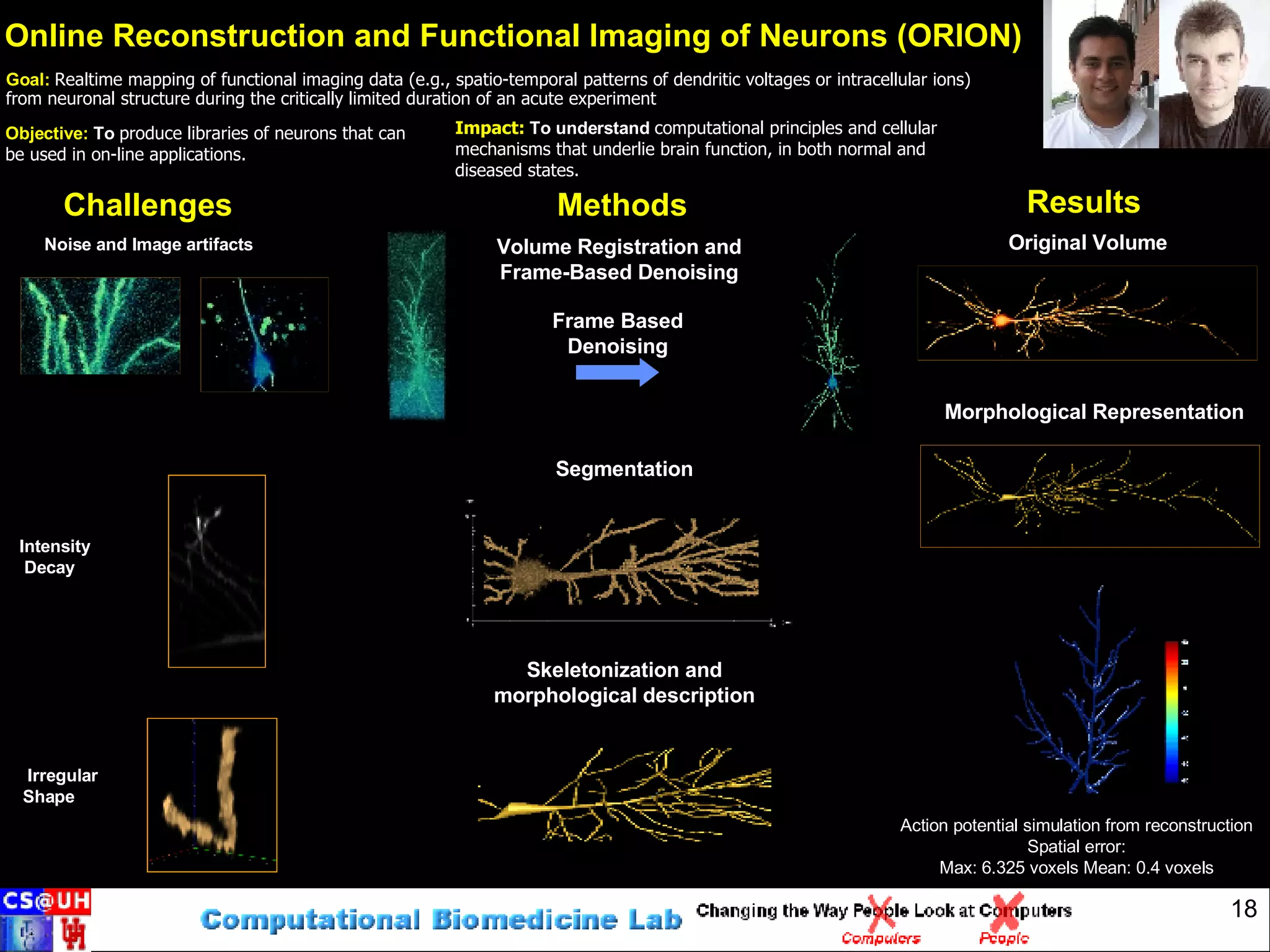
Online Reconstruction and Functional Imaging of Neurons (ORION) Challenges Results Methods Objective:   To  produce libraries of neurons that can be used in on-line applications. Impact:   To understand  computational principles and cellular mechanisms that underlie brain function, in both normal and diseased states. Goal:   Realtime mapping of functional imaging data (e.g., spatio-temporal patterns of dendritic voltages or intracellular ions) from neuronal structure during the critically limited duration of an acute experiment Original Volume Morphological Representation Intensity Decay Irregular Shape Noise and Image artifacts Frame Based Denoising Action potential simulation from reconstruction Spatial error: Max: 6.325 voxels Mean: 0.4 voxels Skeletonization and morphological description Segmentation Volume Registration and Frame-Based Denoising 100   µ m
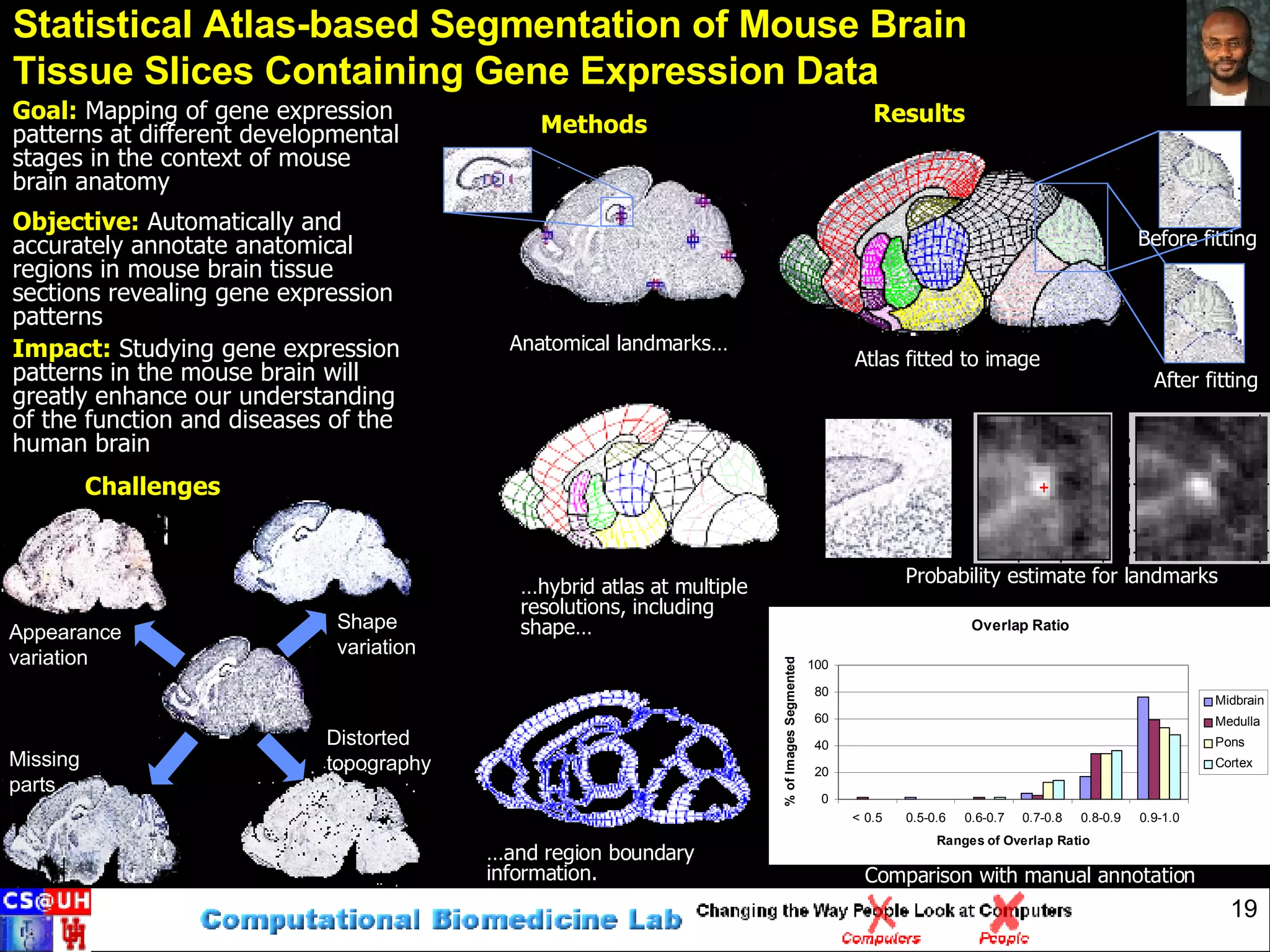
Statistical Atlas-based Segmentation of Mouse Brain  Tissue Slices Containing Gene Expression Data Objective:  Automatically and accurately annotate anatomical regions in mouse brain tissue sections revealing gene expression patterns Methods Anatomical landmarks… … and region boundary information. Results Challenges Distorted topography Before fitting After fitting … hybrid atlas at multiple resolutions, including shape… Goal:  Mapping of gene expression patterns at different developmental stages in the context of mouse brain anatomy Comparison with manual annotation Impact:  Studying gene expression patterns in the mouse brain will greatly enhance our understanding of the function and diseases of the human brain Appearance variation Shape variation Missing parts Distorted topography Probability estimate for landmarks Atlas fitted to image
Areas Cardiovascular Informatics Neuroinformatics Tissue Modelling & Simulation Computer-Assisted Post Mastectomy Breast Reconstructive Surgery
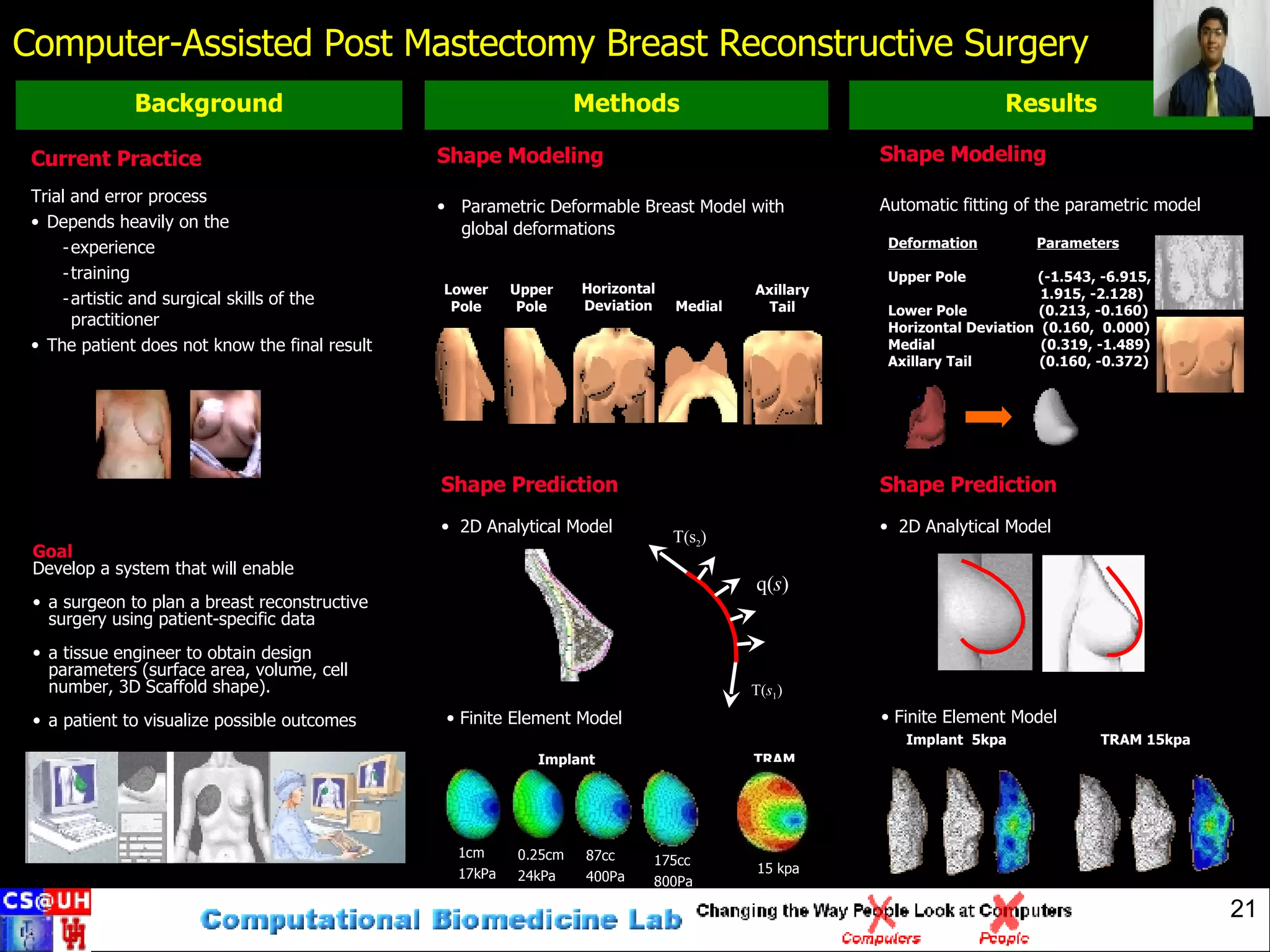
Computer-Assisted Post Mastectomy Breast Reconstructive Surgery Goal Develop a system that will enable a surgeon to plan a breast reconstructive surgery using patient-specific data a tissue engineer to obtain design parameters (surface area, volume, cell number, 3D Scaffold shape). a patient to visualize possible outcomes Background Methods Results Current Practice Trial and error process Depends heavily on the experience training artistic and surgical skills of the practitioner The patient does not know the final result Shape Modeling Parametric Deformable Breast Model with  global deformations  Shape Prediction 2D Analytical Model Finite Element Model TRAM Implant Shape Modeling Automatic fitting of the parametric model  T( s 1 ) Deformation   Parameters Upper Pole  (-1.543, -6.915, 1.915, -2.128) Lower Pole  (0.213, -0.160) Horizontal Deviation  (0.160,  0.000) Medial  (0.319, -1.489) Axillary Tail  (0.160, -0.372) Shape Prediction 2D Analytical Model Finite Element Model 1cm  17kPa 0.25cm  24kPa 87cc 400Pa 175cc  800Pa 15 kpa Horizontal Deviation Upper Pole Medial Lower Pole Axillary Tail Implant  5kpa TRAM 15kpa T(s 2 ) q( s )
Overview Biomedical Sciences & Engineering Overview of CBL Role of UH
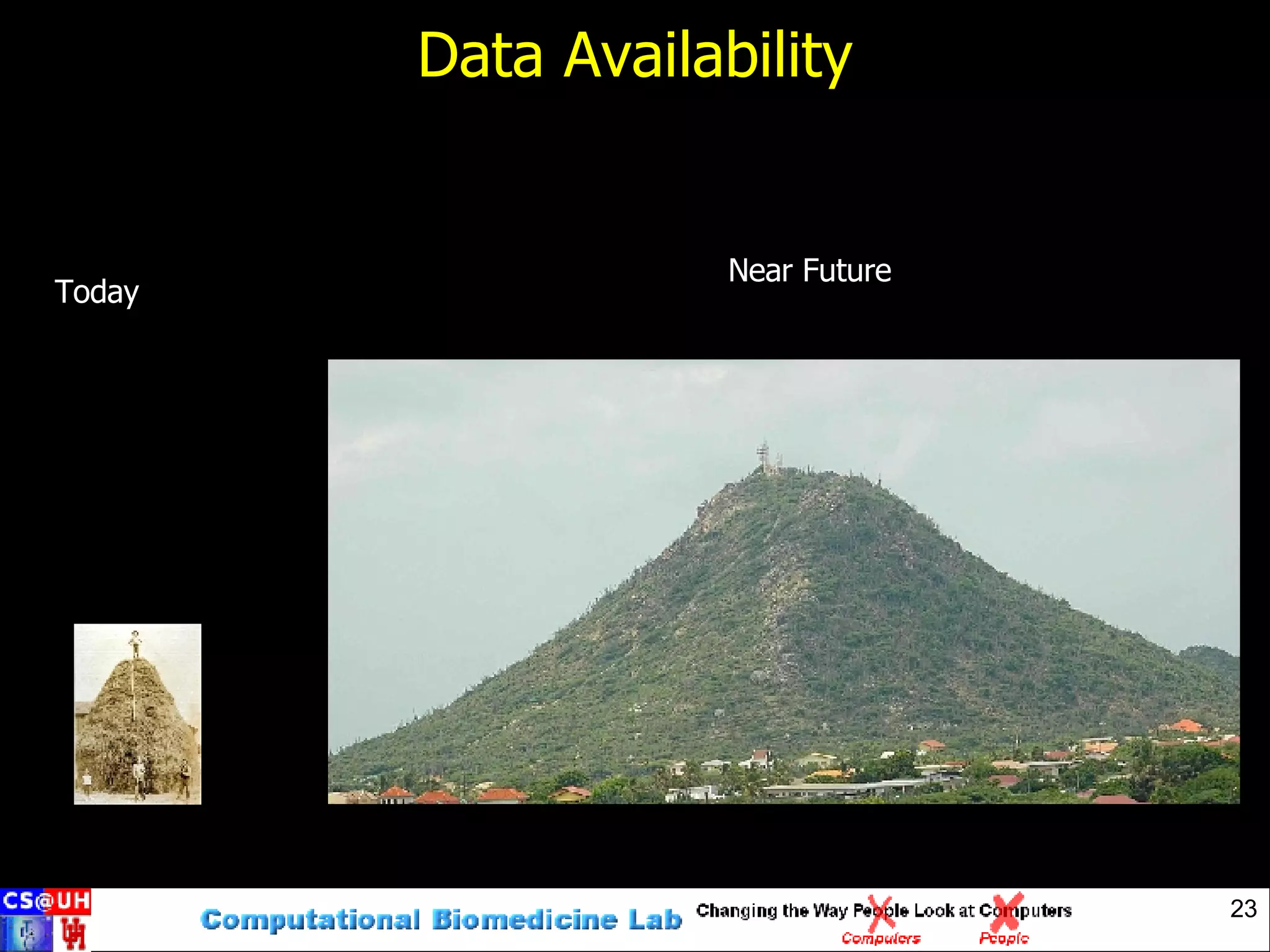
Data Availability Today Near Future
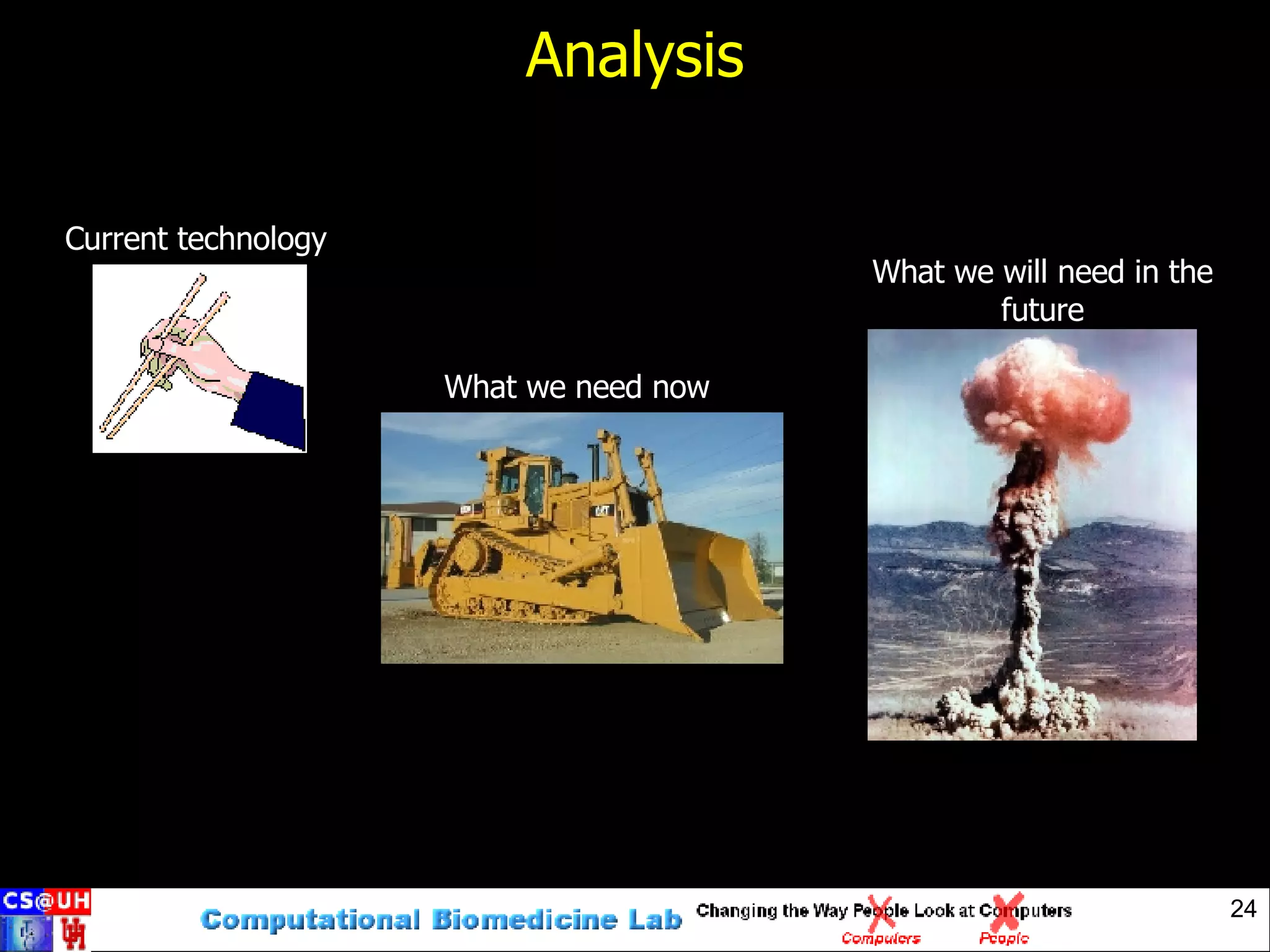
Analysis What we need now What we will need in the future Current technology
Roadmap New Computational Tools For Scientific Discovery From Algorithm to Bedside / TestBed Research Teams of the Future [email_address]
Ask UH Email: Ioannis Kakadiaris (ioannisk@uh.edu)
Contact Us Computational Biomedicine Lab http://www.cbl.uh.edu/ Prof. Ioannis A. Kakadiaris http://www.cbl.uh.edu/~ioannisk [email_address]

Computational Biomedicine Lab: Current Members, pumpsandpipesmdhc

  • 1.
    Computational Biomedicine Lab:Current Members Director Ioannis A. Kakadiaris Research Scientists Gerd Brunner, Shan Tan Ph.D. Students M. Fang, H. Haberkar, U. Kurkure, D. Roy, A. Santamaria, G. Toderici, and W. Yang M.Sc. Student R. Yalamanchili and P. Ramesh Undergraduate Students O. Avila Montes and D. Chu
  • 2.
    CBL Mission Todevelop a comprehensive framework that will lead to improved algorithms for analyzing multidimensional data in search of meaningful information . To allow computers to aid humans in taking full advantage of the multitude of data sources available through today's technology to extract relevant information in a reliable , accurate , and timely manner . To break the barriers of our own specialty and establish solid interdisciplinary teamwork on the basis of “grand challenge problems”.
  • 3.
    CBL Roadmap NewComputational Tools For Scientific Discovery From Algorithm to Bedside / TestBed Research Teams of the Future [email_address]
  • 4.
    Research Teams ofThe Future: Collaborators Biologists/Neuroscientists Wah Chiu, Baylor College of Medicine Costa Colbert, UH Gregory Eichelle, Baylor College of Medicine Peter Saggau, Baylor College of Medicine Computer Scientists Theoharis Theoharis, Univ. of Athens Joe Warren, Rice University Engineers Stephane Carlier, CRF Craig Hartley, BCM Ralph Metcalfe, UH K. Ravi-Chandar, Aer. Engineering, UT Austin Mathematicians R. Azencott, E. Papadakis, UH Ioannis Konstantinidis, U of Maryland
  • 5.
    From Algorithm toBedside - Alan B. Lumsden and Neil Kleimann Morteza Naghavi Erling Falk - Juan Granada Ippokrateion Hospital -Manolis Vavuranakis - Matt Budoff Joel Morrisett
  • 6.
    CS@UH research highlights:people’s hearts and minds [email_address] People’s hearts and minds
  • 7.
    Areas Cardiovascular InformaticsNeuroinformatics Tissue Modeling & Simulation
  • 8.
    A Holistic Approach:Multiple scales Organ System Integrative and personalized biomedicine (prevention, diagnosis, treatment) is multidimensional so that systems approach has to build models based on data from all scale levels Cell Gene
  • 9.
    Cardiovascular Informatics Todevelop the computational tools to aid physicians in scoring the patients vulnerability and the likelihood of a future coronary event.
  • 11.
    Areas Cardiovascular InformaticsLeft Ventricular Segmentation in MR Images 4D Analysis of the Coronary Arteries Automatic Quantification of Abdominal Fat Burden from CT Data Intravascular Ultrasound-Based Detection of Vasa Vasorum Neuroinformatics Tissue Modeling & Simulation Multispectral Biometrics
  • 12.
    Left Ventricular Segmentationin MR Images Objective: To develop an automated method for computing quantitative indices of ventricular morphology and function from volumetric MR images. Papillary muscles Partial voluming Fuzzy images Low contrast Challenges Methods LV localization using multiple views, intensity and morphological information Myocardial sample region estimation Hierarchical multi-class multi-feature fuzzy connectedness Optimal path computation using dynamic programming Polar transformation Results Goal: To develop a theoretical framework and computational tools to aid physicians in scoring a patient’s vulnerability and the likelihood of a future coronary event. Segmented end-diastolic myocardium The ejection fraction computed automatically for 20 subjects has +/-2% of mean bias when compared with manual readings by two experts. Segmented myocardium (end-diastole to end-systole) Segmented end-diastolic myocardium Impact: Cardiovascular disease (CVD) is the #1 killer in the United States. This work will aid physicians in early diagnosis and treatment planning of CVD.
  • 13.
    4D Analysis ofthe Coronary Arteries ED Introduction Results Methods LAD shape model Cross sectional plane – orientation Parametric curved axis 2. Heart centered coordinate system 3. LAD dynamics: LAD motion is expressed as a composition of three motion primitives: LAD longitudinal expansion LAD radial displacement (measured from the long axis of the heart) LAD twist (w.r.t. the normalized heart’s coordinate system) Modeling Objective: To develop the computational tools for shape-motion analysis of the coronary arteries Experimental Data: All studies were performed using an Imatron Electron Beam Computed Tomography scanner on eight asymptomatic volunteers Background: Coronary heart disease is the leading cause of death in Western nations, claiming approximately 446,000 lives in the United States annually Challenges Analysis 1. LAD segmentation 2. Estimation of heart-centered coordinate system 3. Fitting of a deformable model to the LAD Parametric shape-motion model Global and local deformations Registration of coronary artery template Artery centerline extraction Morphology: Coronary arteries are dynamic curvilinear structures with a great degree of variability and tortuosity Motion: Complexity of the non-rigid motion of the left ventricle and lack of reference landmarks Radial displacement (Subject-3) Normalized length of the LAD Base 0.25 .5 0.75 Apex ED ES -5mm -4mm -3mm -2mm -1mm 0mm 1mm 2mm Longitudinal elongation (Subject-3) Normalized length of the LAD Base 0.25 .5 0.75 Apex ED ES -1mm 0mm 1mm 2mm 3mm 4mm 5mm 6mm 7mm 8mm 9mm Twist (Subject-3) Normalized length of the LAD Base 0.25 .5 0.75 Apex ED ES -12 -10 -8 -6 -4 -2 0 2 4 6 8
  • 14.
    Training (once): Featureselection Construction of an Active Shape Model template of subcutaneous fat Deployment: Automatic initialization of seed point using Subcutaneous Fat Template Compute fuzzy affinity-based object Threshold the fuzzy affinity object to get fat burden (a) Original images (b) Results of FTM (c) Results of our method Automatic Quantification of Abdominal Fat Burden from CT Data Goal: To develop the computational tools for automatically estimating total fat burden using Computed Tomography data Results Methods Impact: Fat burden is one of the predictors of cardiovascular disease, which is the #1 killer in the United States; this work will aid physicians in its early diagnosis and treatment planning Objective: To develop an automated method to quantify abdominal fat TP FP FN Challenges CT Artifacts Poor contrast Noisy images Subcutaneous fat Visceral fat Retroperitoneal fat Subject ID Accuracy (%) Subject ID Overlap Ratio (%) Our Method Flexible Threshold Method (FTM)
  • 16.
    Intravascular Ultrasound-based Detection of Vasa Vasorum Challenges Results Methods Inter-frame motion Image stabilization & Elastic wall deformation Vasa vasorum (histology) After Injection Goal: Early detection of atherosclerotic plaques with a high probability of causing future complications (heart attack or stroke) Objective: Imaging and quantification of vasa vasorum (microvessels associated with plaque inflammation and vulnerability) through microbubble perfusion analysis Video Multidimensional scaling-based frame gating Rigid/elastic contour tracking Statistical frame comparison to capture changes due to vasa vasorum perfusion Before Microbubble Injection + Similarity matrix -> Frame similarity space -> Stabilized frame ensembles
  • 17.
    Areas Cardiovascular InformaticsNeuroinformatics Online Reconstruction and Functional Imaging of Neurons Statistical Models for Segmentation of Mouse Brain Tissue Slices Containing Gene Expression Data Tissue Modelling & Simulation
  • 18.
    Online Reconstruction andFunctional Imaging of Neurons (ORION) Challenges Results Methods Objective: To produce libraries of neurons that can be used in on-line applications. Impact: To understand computational principles and cellular mechanisms that underlie brain function, in both normal and diseased states. Goal: Realtime mapping of functional imaging data (e.g., spatio-temporal patterns of dendritic voltages or intracellular ions) from neuronal structure during the critically limited duration of an acute experiment Original Volume Morphological Representation Intensity Decay Irregular Shape Noise and Image artifacts Frame Based Denoising Action potential simulation from reconstruction Spatial error: Max: 6.325 voxels Mean: 0.4 voxels Skeletonization and morphological description Segmentation Volume Registration and Frame-Based Denoising 100 µ m
  • 19.
    Statistical Atlas-based Segmentationof Mouse Brain Tissue Slices Containing Gene Expression Data Objective: Automatically and accurately annotate anatomical regions in mouse brain tissue sections revealing gene expression patterns Methods Anatomical landmarks… … and region boundary information. Results Challenges Distorted topography Before fitting After fitting … hybrid atlas at multiple resolutions, including shape… Goal: Mapping of gene expression patterns at different developmental stages in the context of mouse brain anatomy Comparison with manual annotation Impact: Studying gene expression patterns in the mouse brain will greatly enhance our understanding of the function and diseases of the human brain Appearance variation Shape variation Missing parts Distorted topography Probability estimate for landmarks Atlas fitted to image
  • 20.
    Areas Cardiovascular InformaticsNeuroinformatics Tissue Modelling & Simulation Computer-Assisted Post Mastectomy Breast Reconstructive Surgery
  • 21.
    Computer-Assisted Post MastectomyBreast Reconstructive Surgery Goal Develop a system that will enable a surgeon to plan a breast reconstructive surgery using patient-specific data a tissue engineer to obtain design parameters (surface area, volume, cell number, 3D Scaffold shape). a patient to visualize possible outcomes Background Methods Results Current Practice Trial and error process Depends heavily on the experience training artistic and surgical skills of the practitioner The patient does not know the final result Shape Modeling Parametric Deformable Breast Model with global deformations Shape Prediction 2D Analytical Model Finite Element Model TRAM Implant Shape Modeling Automatic fitting of the parametric model T( s 1 ) Deformation Parameters Upper Pole (-1.543, -6.915, 1.915, -2.128) Lower Pole (0.213, -0.160) Horizontal Deviation (0.160, 0.000) Medial (0.319, -1.489) Axillary Tail (0.160, -0.372) Shape Prediction 2D Analytical Model Finite Element Model 1cm 17kPa 0.25cm 24kPa 87cc 400Pa 175cc 800Pa 15 kpa Horizontal Deviation Upper Pole Medial Lower Pole Axillary Tail Implant 5kpa TRAM 15kpa T(s 2 ) q( s )
  • 22.
    Overview Biomedical Sciences& Engineering Overview of CBL Role of UH
  • 23.
  • 24.
    Analysis What weneed now What we will need in the future Current technology
  • 25.
    Roadmap New ComputationalTools For Scientific Discovery From Algorithm to Bedside / TestBed Research Teams of the Future [email_address]
  • 26.
    Ask UH Email:Ioannis Kakadiaris (ioannisk@uh.edu)
  • 27.
    Contact Us ComputationalBiomedicine Lab http://www.cbl.uh.edu/ Prof. Ioannis A. Kakadiaris http://www.cbl.uh.edu/~ioannisk [email_address]