DR KAUSAR BANU
DEPARTMENT OF CONSERVATIVE DENTISTRY AND ENDODONTICS
Flowchart
 INTRODUCTION
 ROLE OF IMAGING IN ENDODONTICS
 COMPARISION OF 2D&3D IMAGING
 PRINCIPLES OF CBCT
 TYPES OF CBCT EQUIPMENT
 LIMITATIONS AND DRAWBACKS
 ADVANTAGES OF CBCT
CLINICAL APPLICATIONS
 EVALUATION OF ROOTCANALANATOMY&COMPLEX
MORPHOLOGY
 DETECTION OF APICAL PERIODONTITIS
 ASSESSMENT OF OUTCOME OF ROOTCANAL TREATMENT
 PRESURGICAL PLANNING
 ASSESSMENT OF DENTAL TRAUMA
 ASSESSMENT OF VERTICAL ROOT
FRACTURE,RESORPTION&PERFORATION
 DENTALANOMALIES
• APPENDIX
• CONCLUSION
• REFERENCE
Introduction
 Cone Beam Computed Tomography (CBCT) is a diagnostic imaging
modality that provides high-quality, accurate three-dimensional
representations of the osseous elements of the maxillofacial skeleton
 A technique that enables three-dimensional reconstruction, but using a cone
beam to decrease the dose to the patient when compared to conventional
computerized tomography. (A Dictionary of Dentistry in Medicine)
 CBCT systems are available that provide small field of view images at low
dose with sufficient spatial resolution for applications in endodontic
diagnosis, treatment guidance, and post treatment evaluation
 The unprecedented interest in CBCT from all fields of dentistry is because
it has created a revolution in maxillofacial imaging - facilitating the
transition of dental imaging from 2D to 3D...”
ROLE OF IMAGING IN ENDODONTICS
 Throughout the decades, imaging services have served a fundamental role in
all stages of the endodontic treatment process
Preoperative
 To analyze dental and alveolar hard tissue morphology
 Pathological alterations
 Morphology of tooth, including location and number of root canals, pulp
chamber size, calcifications, root structure ,directions and curvatures
 Iatrogenic defects
 Crown and root fractures
Intraoperative
 To determine proper working length of root canal system
 Tooth and bone changes
Post operative
 To evaluate the root canal obturation and seal
 Tooth and periapical hard tissue changes after treatment
 Planning for surgical considerations
Deepak BS, Subash TS, Narmatha VJ, Anamika T, Snehil TK, Nandini
DB. Imaging techniques in endodontics: an overview. Journal of
clinical imaging science. 2012 Jan 1;2(1):13
COMPARISION OF 2D AND 3D IMAGING
 Intraoral radiography is based on the transmission, attenuation, and recording of X-rays on an
analog film or digital receptor, and requires optimized geometric configuration of the X-ray
generator, tooth, and sensor to provide an accurate projection of the tooth.
 The image produced is a two-dimensional (2D) representation of a three-dimensional (3D)
object.
 complex dental anatomy and surrounding structures can make interpretation of 2D “shadows”
difficult and can contribute to non healing of endodontic cases
cone-shaped beam and digital processing to reconstruct 3D images
differentiate between many types of structures and airspaces
including bone, teeth, airway, paranasal sinuses sometimes soft tissue
while avoiding diagnostic limitations inherent in 2D images,
including superimposition of structures, non uniform magnification
and distortion and no depth information
to visualize the patient as he or she truly exists and the ability to
view the anatomy from a variety of slice thicknesses
CBCT & endodontics: Get it right the first time with CBCTby Emanuele Ambu, DDS;
Carlos Estrela, DDS, MSc, PhD; and José Antonio Poli de Figueiredo, BDS, MSc, PhD
PRINCIPLES OF CBCT
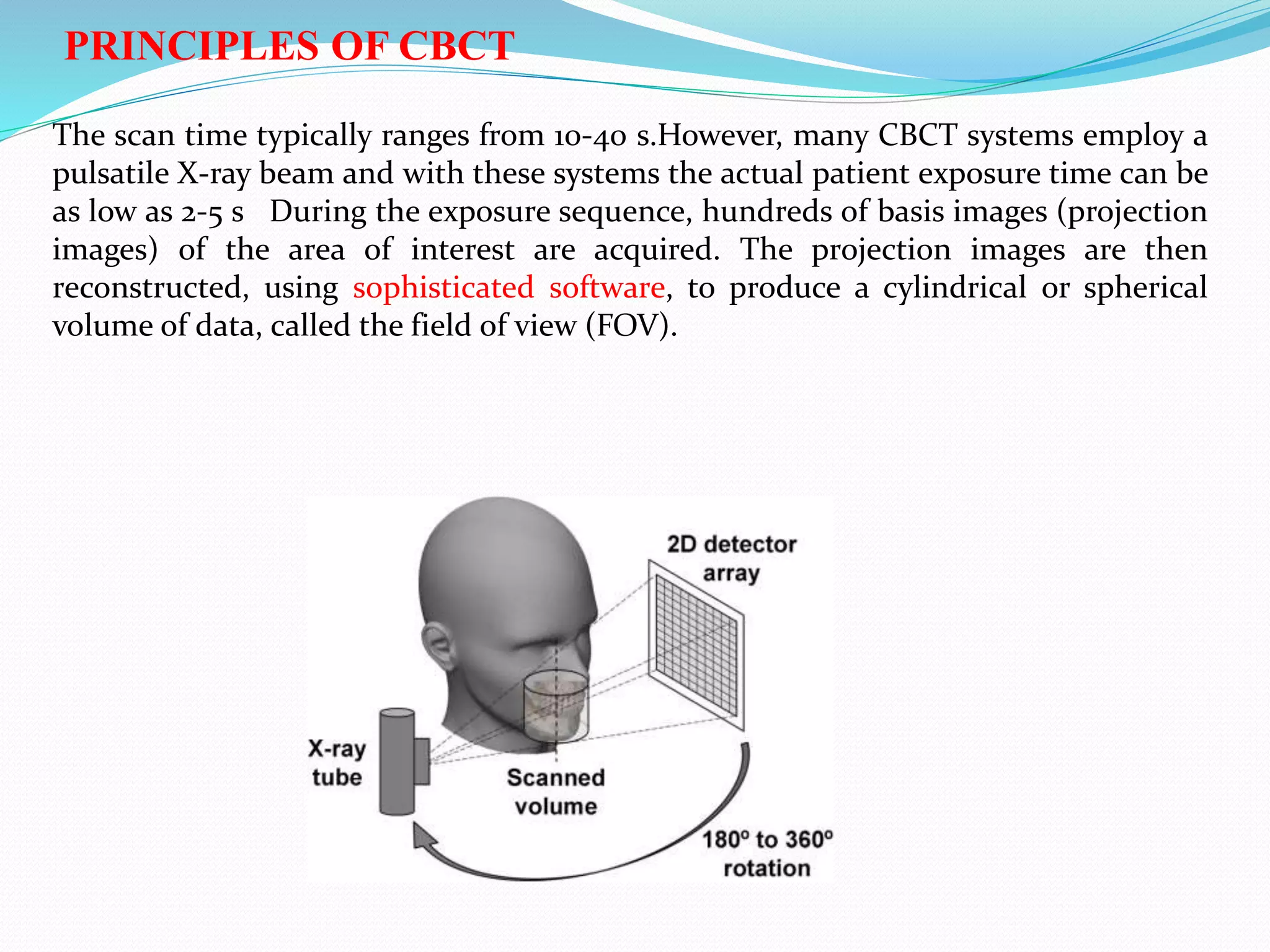
The scan time typically ranges from 10-40 s.However, many CBCT systems employ a
pulsatile X-ray beam and with these systems the actual patient exposure time can be
as low as 2-5 s During the exposure sequence, hundreds of basis images (projection
images) of the area of interest are acquired. The projection images are then
reconstructed, using sophisticated software, to produce a cylindrical or spherical
volume of data, called the field of view (FOV).
 The FOV ranges from as small as a portion of a dental arch to an area as large as the entire
head
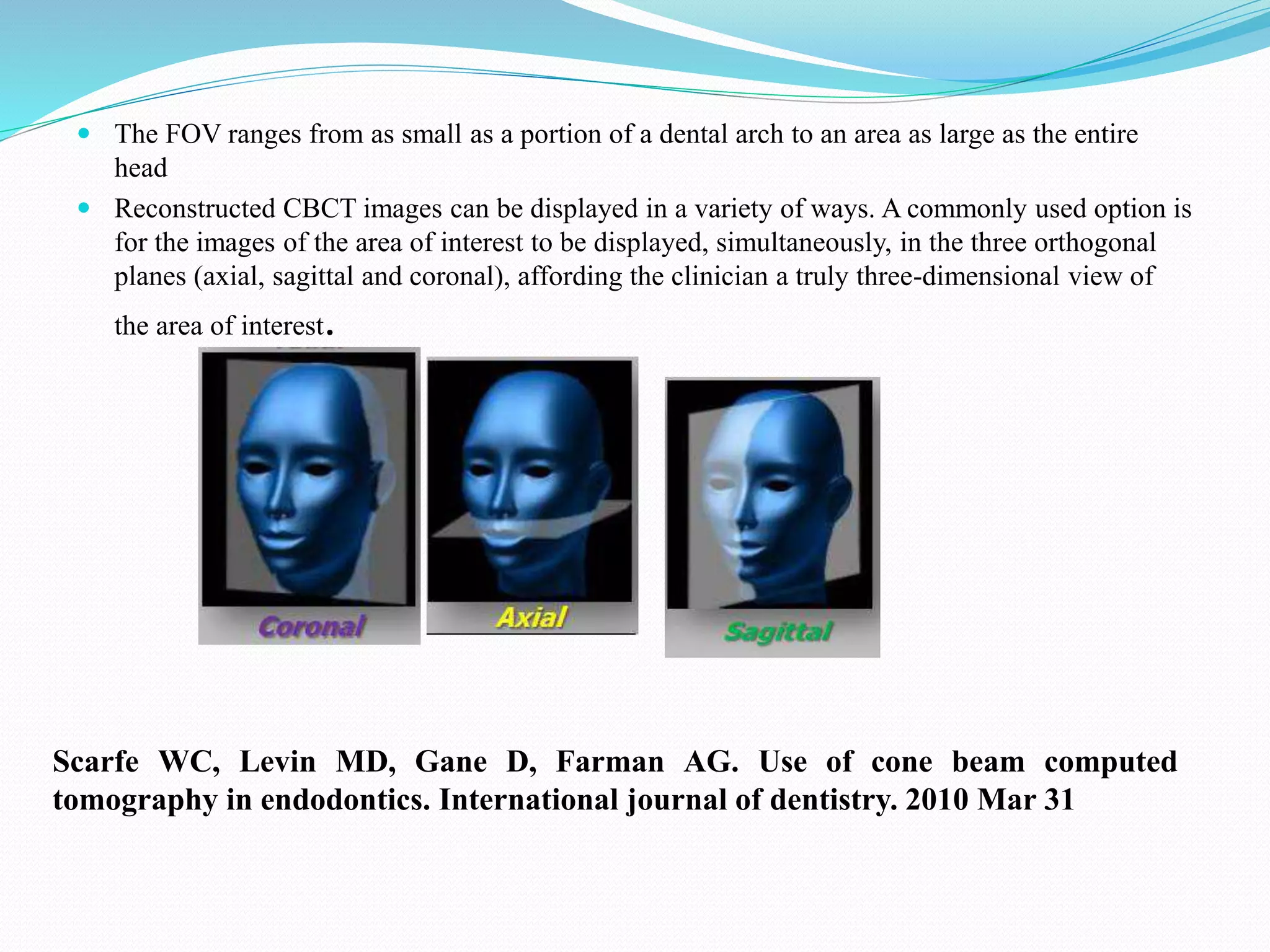
 Reconstructed CBCT images can be displayed in a variety of ways. A commonly used option is
for the images of the area of interest to be displayed, simultaneously, in the three orthogonal
planes (axial, sagittal and coronal), affording the clinician a truly three-dimensional view of
the area of interest.
Scarfe WC, Levin MD, Gane D, Farman AG. Use of cone beam computed
tomography in endodontics. International journal of dentistry. 2010 Mar 31
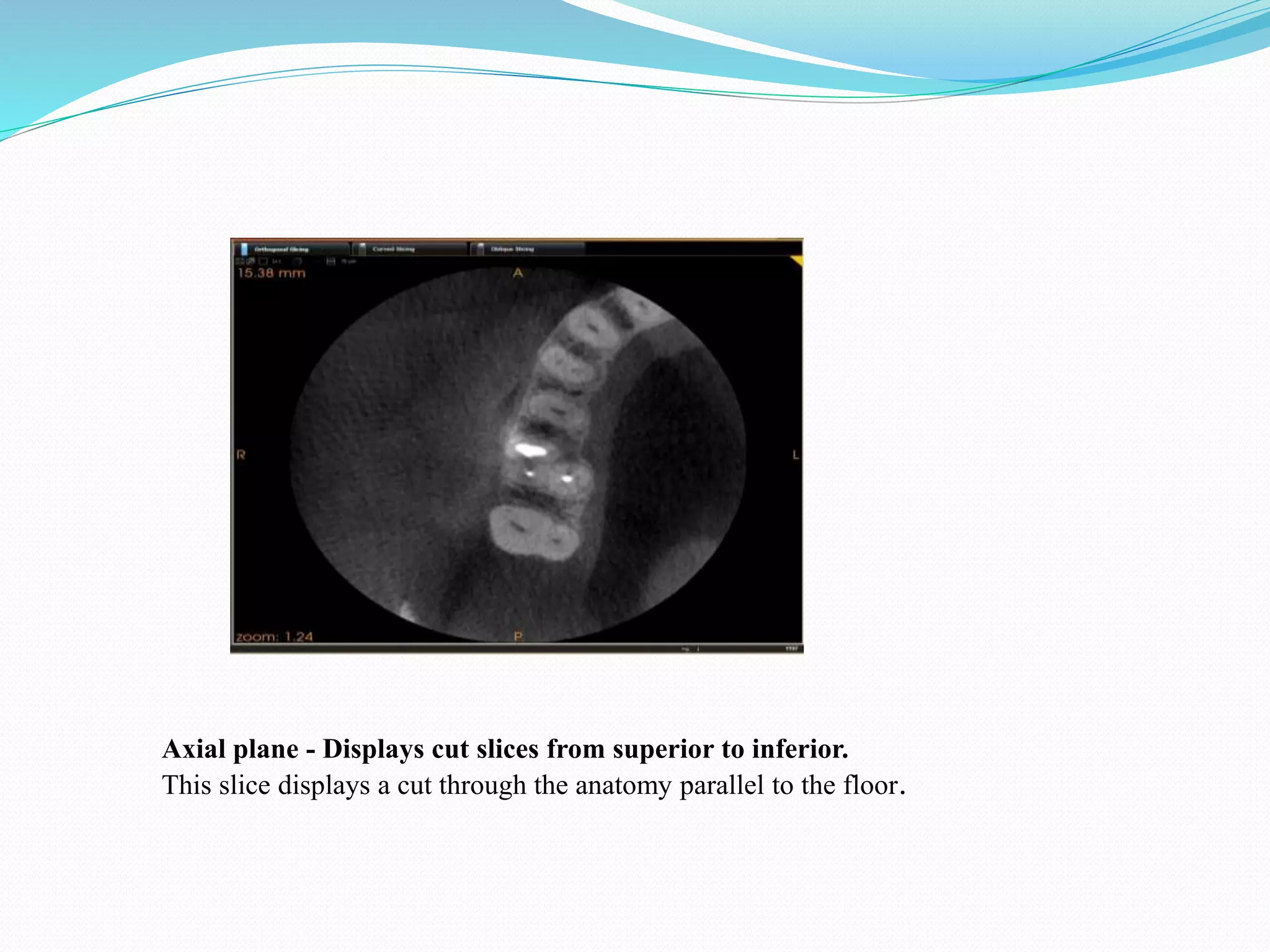
Axial plane - Displays cut slices from superior to inferior.
This slice displays a cut through the anatomy parallel to the floor.
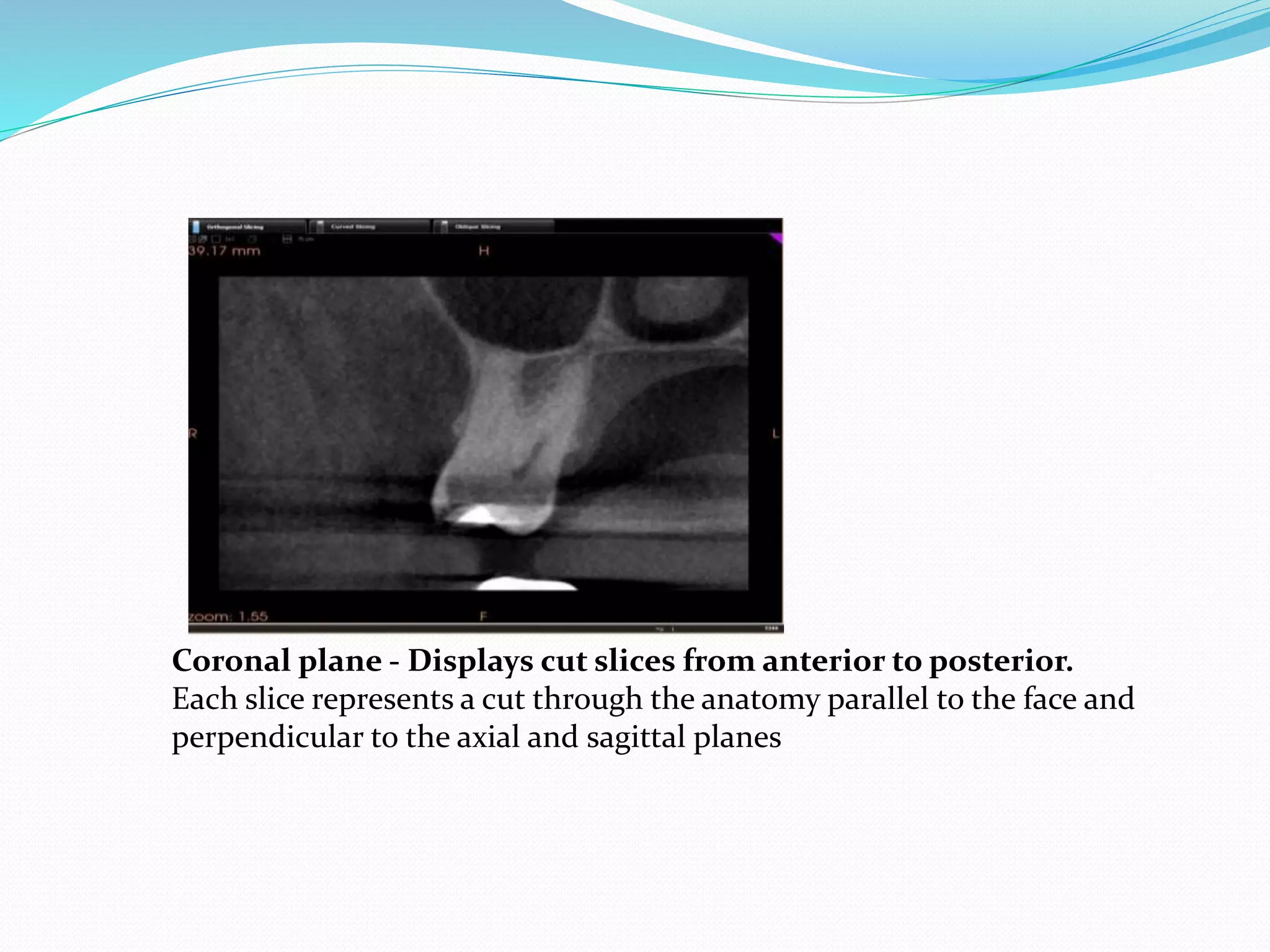
Coronal plane - Displays cut slices from anterior to posterior.
Each slice represents a cut through the anatomy parallel to the face and
perpendicular to the axial and sagittal planes
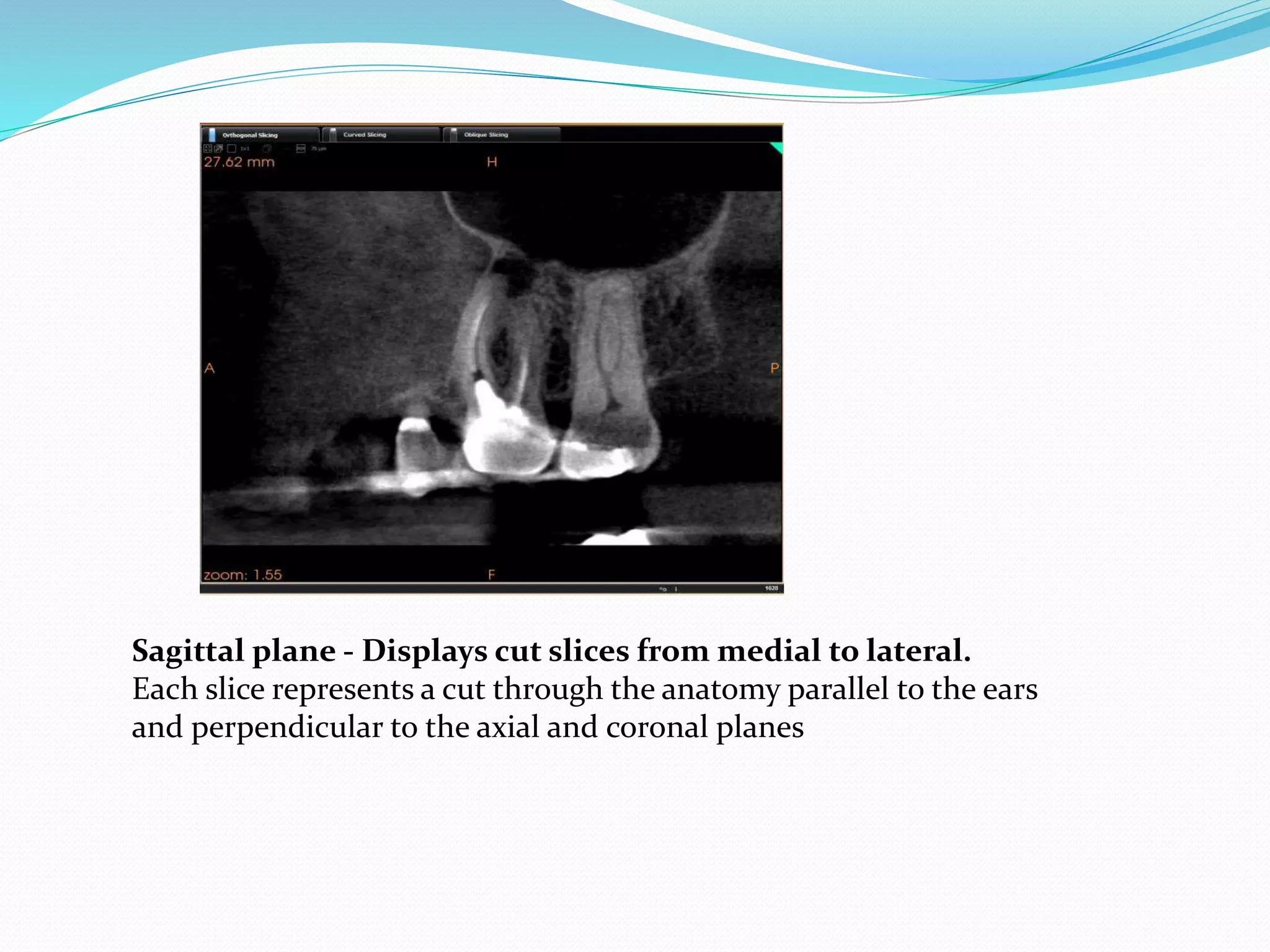
Sagittal plane - Displays cut slices from medial to lateral.
Each slice represents a cut through the anatomy parallel to the ears
and perpendicular to the axial and coronal planes
TYPES OF CBCT EQUIPMENT
CBCT systems can be categorized according to the
 orientation of the patient
 scan volume irradiated
 clinical functionality
Patient Positioning
 Depending on the system employed, maxillofacial CBCT can be performed with the
patient in three possible positions:
sitting
standing
supine
Pauwels R, Araki K, Siewerdsen JH, Thongvigitmanee SS. Technical
aspects of dental CBCT: state of the art. Dentomaxillofacial Radiology.
2014 Oct 30;44(1):20140224
 Equipment that requires the patient to be supine has a larger physical footprint and may not be
readily accessible for patients with physical disabilities.
 Standing units may not be able to be adjusted to a height to accommodate wheelchair bound
patients.
 Seated units are the most comfortable; however fixed seats may not allow ready scanning of
physicallydisabled or wheelchair bound patients.
 Scan volume
Based on available or selected scan volume height, the use of units can be
designed as:
 Localized region - approx. 5cm or less (e.g. dento-alveolar, TMJ),
 Single arch - 5cm to 7cm (e.g. maxilla or mandible),
 Inter-arch - 7cm to 10cm (e.g. mandible and superiorly to include the
inferior concha),
 Maxillofacial- 10cm to 15cm (e.g. mandible and extending to nasion)
 Craniofacial- greater than 15cm (e.g. from the lower border of the mandible
to the vertex of the head).
Scarfe WC, Levin MD, Gane D, Farman AG. Use of cone beam computed
tomography in endodontics. International journal of dentistry. 2010 Mar 31
 Extended FOV scanning incorporating the craniofacial region is difficult to
incorporate into cone beam design because of the high cost of large area detectors.
The expansion of scan volume height has been accomplished by one unit (i-CAT
Extended Field of View model) by software addition of two rotational scans to
produce a single volume with 22cm height
 In general, the smaller scan volume causes the higher spatial resolution of the image.
 It is favorable that the optimal resolution of any CBCT imaging system used in
endodontics does not exceed the average width of the periodontal ligament space
(200 μm), considering the the earliest sign of periapical pathology being the
discontinuity in the lamina dura and widening of the periodontal ligament space
 Multimodality
Hybrid multimodal systems combine digital panoramic radiography with a
relatively small-to medium-FOV CBCT system
The ProMax 3D CBVT (Planmeca Oy, Helsinki,Finland) was the first to
incorporate a small FOV
Examples of other hybrid units are the Veraviewepocs 3D (J. Morita,
Corporation, Kyoto, Japan), the Picasso Trio(Vatech /E. Woo Corporation,
Korea), and the Kodak DentalImaging 9000 DS (Kodak Dental
Imaging/Practice works Atlanta, GA, USA)
RADIATION DOSAGE
 Effective dose of CBCT is almost similar to that of panoramic radiographs and
equivalent to a few periapical radiograph.
 one of the advantages of CBCT over computed tomography is the lower effective
radiation dose.
 The dose depends on the region of the jaw to be scanned, size of FOV, exposure
time, the energy/potential(kV) and the tube current.
 Radiation dose can be reduced using smaller FOV, fewer projections(180 degree)and
a bigger voxel size.
 For endodontic applications ,the FOV should be limited to the region of interest, the
FOV should encompass the tooth under investigation and the surrounding structures.
This is the way to reduce radiation dose.
Li G. Patient radiation dose and protection from cone-beam computed
tomography. Imaging science in dentistry. 2013 Jun 1;43(2):63-9.
ADVANTAGES OF CBCT
 Very Compact equipment
 Higher resolution resulting in sharper images and better diagnosis
 Produces a 3D rendition of a 2D image and provides geometrically
accurate images
 Increased specificity for caries, periodontal and periapical lesions
when compared to conventional CT and periapical radiographs .
 Small FOV hence possible to have images of only the area of
interest.
 Fewer metal devices
 Less exposure time and lower radiation dose when compared to
medical CT.
 Patient comfort
 Good soft tissue rendition when compared to the traditional 2D
imaging.
Hegde MN, Hegde P, Hegde A. RESEARCH AND REVIEWS:
JOURNAL OF DENTAL SCIENCE 2014
LIMITATIONS AND DRAWBACKS
 Despite the provision of the third dimension, the spatial resolution of CBCT
image is inferior to conventional film-based or digital intraoral radiography
 CBCT has the problem of scattering and beam hardening artifacts caused by
high density structure which diminishes the contrast and limits the imaging of
soft tissues. Therefore, CBCT is primarily indicated for imaging hard tissues.
 CBCT has lengthy scan times (15-20 sec) and they need the person to stay
completely firmed
Patel S, Durack C, Abella F, Shemesh H, Roig M, Lemberg K. Cone beam
computed tomography in endodontics–a review. International endodontic journal.
2015 Jan 1;48(1):3-15.
Artifacts
 CBCT X-ray beam encounters an object of very high density, such as enamel or
metallic restorations, lower energy photons in the beam are absorbed by the
structure, in preference to higher energy photons. The result is that the mean energy
of the X-ray beam increases. This is called ‘beam hardening’ and the phenomenon
produces two types of artifact
 distortion of metallic structures, called ‘cupping artifact’, and the appearance of
streaks and dark bands between two dense structures.
 These artifacts can reduce the diagnostic yield of the images. Furthermore, patient
movement during the scan can adversely affect the sharpness of the final image
Patient Selection Criteria
CBCT must not be used routinely for endodontic diagnosis or for screening purposes in
the absence of clinical signs and symptoms. The patient’s history and clinical
examination must justify the use of CBCT by demonstrating that the benefits to the
patient outweigh the potential risks
Clinical applications
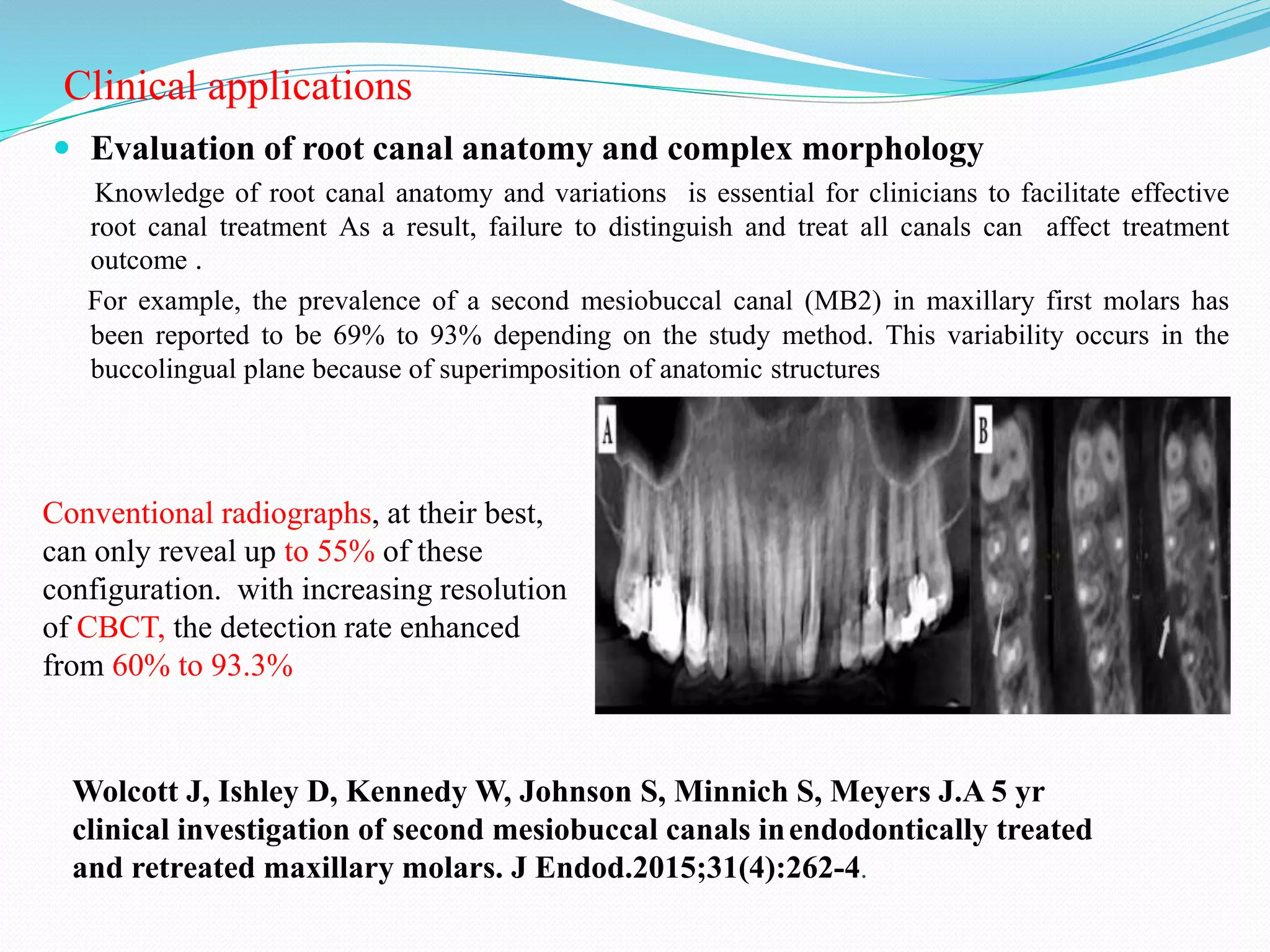
 Evaluation of root canal anatomy and complex morphology
Knowledge of root canal anatomy and variations is essential for clinicians to facilitate effective
root canal treatment As a result, failure to distinguish and treat all canals can affect treatment
outcome .
For example, the prevalence of a second mesiobuccal canal (MB2) in maxillary first molars has
been reported to be 69% to 93% depending on the study method. This variability occurs in the
buccolingual plane because of superimposition of anatomic structures
Conventional radiographs, at their best,
can only reveal up to 55% of these
configuration. with increasing resolution
of CBCT, the detection rate enhanced
from 60% to 93.3%
Wolcott J, Ishley D, Kennedy W, Johnson S, Minnich S, Meyers J.A 5 yr
clinical investigation of second mesiobuccal canals inendodontically treated
and retreated maxillary molars. J Endod.2015;31(4):262-4.
Assess the degree of curvatures
associated with the roots of teeth
Teeth with anatomical and
morphological anomalies such as dens
invaginatus and tooth fusion
In a study that evaluated 608 permanent mandibular second
molars using CBCT a higher prevalence of “C” shaped
canals was noticed [26,27]. CBCT is an effective tool for the
detection of additional distolingual roots and C-shaped
canals
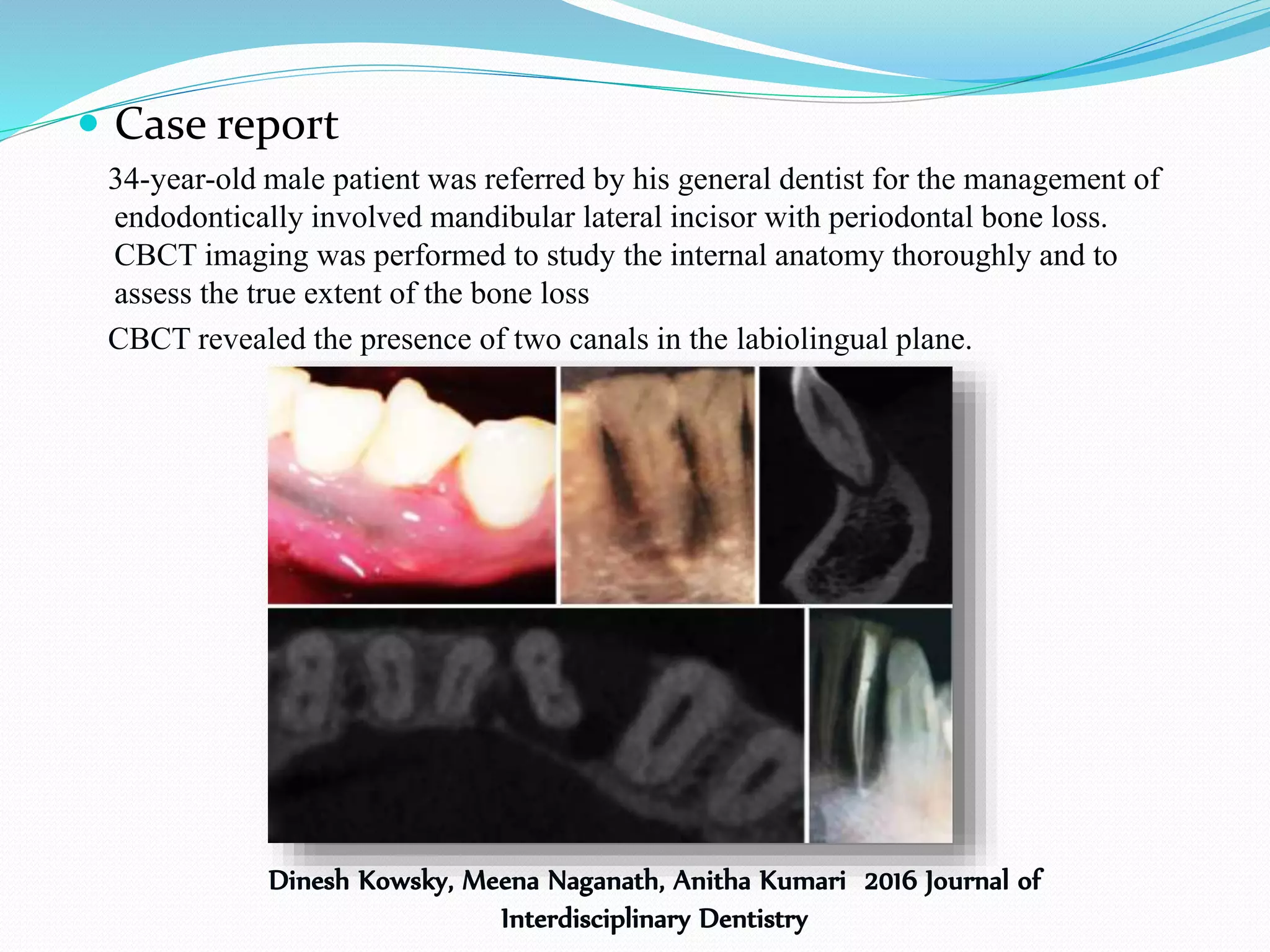
 Case report
34-year-old male patient was referred by his general dentist for the management of
endodontically involved mandibular lateral incisor with periodontal bone loss.
CBCT imaging was performed to study the internal anatomy thoroughly and to
assess the true extent of the bone loss
CBCT revealed the presence of two canals in the labiolingual plane.
Dinesh Kowsky, Meena Naganath, Anitha Kumari 2016 Journal of
Interdisciplinary Dentistry
Detection of Apical Periodontitis
 The most common pathologic conditions affecting the teeth are the inflammatory
lesions of the pulp and periapical areas . In this regard CBCT is significantly more
accurate and sensitive than conventional radiography in the identification of apical
periodontitis in humans , periapical bone destruction associated with endodontic
infection can be identified using CBCT before the evidence of their existence
becomes identifiable on conventional radiographs.
bone defects of the cancellous bone and cortical bone
separately.
CBCT presented significantly more findings, such as
expansion of lesions into the maxillary sinus, sinus
membrane thickening and missed canals.
 Patel et al used an in vitro model consisting of 2 mm diameter defects placed in
the cancellous bone at the apices of 10 first molar teeth on six partially dentate
intact human dry mandibles. They reported a detection rate of 24.8% and 100%
for intraoral radiography and CBCT imaging, respectively. Thus, CBCT is found
to be a more sensitive diagnostic method for detecting apical periodontitis
Patel S, Dawood A, Mannocci F, Wilson R, Pitt Ford T. Detectionof periapical bone defects
in human jaws using cone beamcomputed tomography and intraoral radiography. Int
Endod J.2009;42(6):507-15.
Assessment of the outcome of root canal treatment
 The most important area in which CBCT can be applied in endodontics is in
determining the outcome of treatment. Earlier identification of periapical radiolucent
changes using CBCT may result in earlier diagnosis and more effective management
of periapical disease
de Paula-Silva et al evaluated periapical repair after root
canal treatment in using CBCT and Periapical
radiographs Six months after treatment, a favourable
outcome was detected in 79% of teeth assessed with
periapical radiographs in comparison to 35% when
CBCT was used
de Paula-Silva FW, Wu MK, Leonardo MR, da Silva LA, Wesselink PR. Accuracy of periapical
radiography and cone-beam com-puted tomography scans in diagnosing apical periodontitis
using histopathological findings as a gold standard. J Endod 2012;35: 1009—12
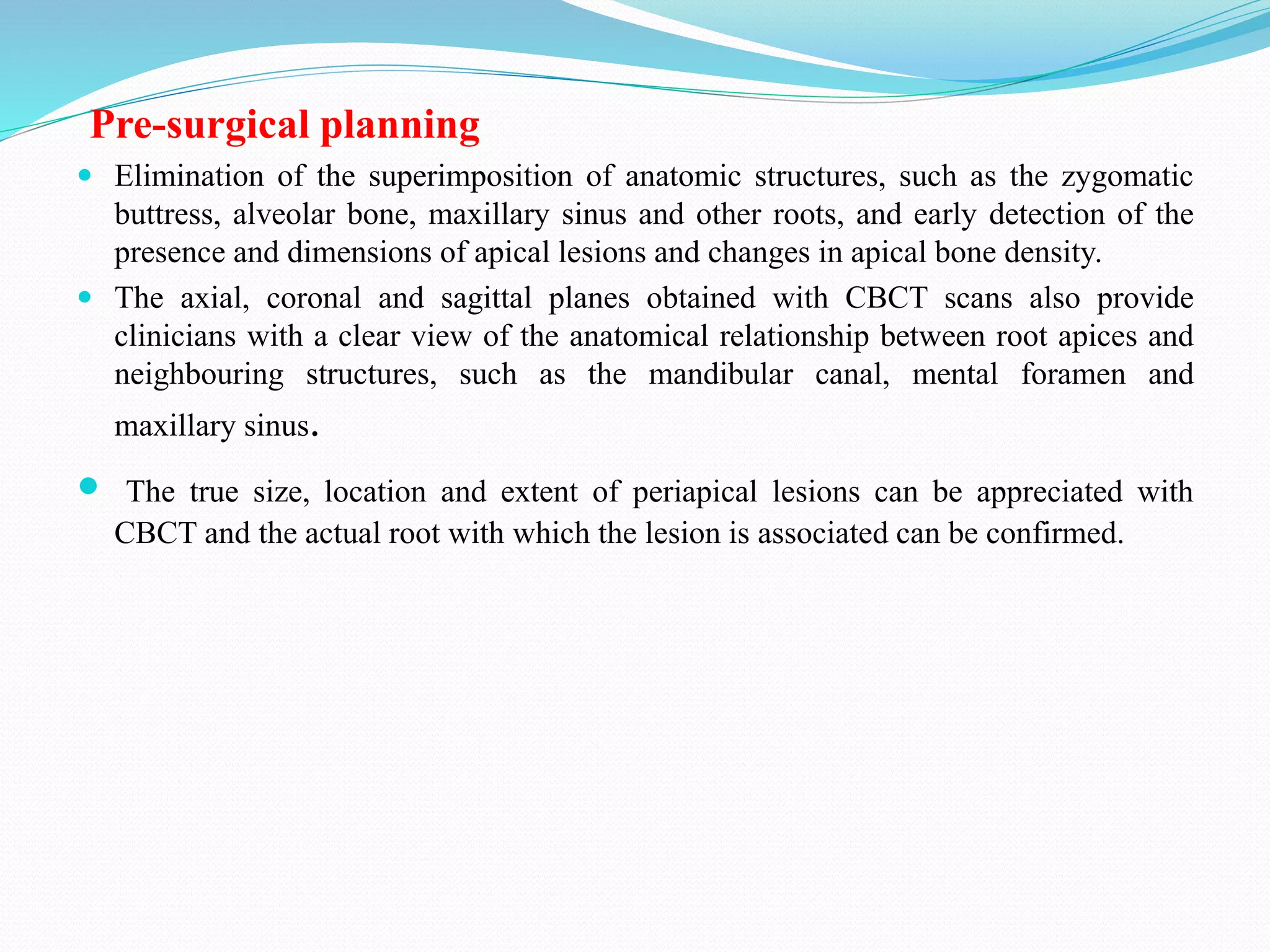
In addition, it was found that the root canal curvature, failure to disinfect gutta-
percha, the presence of missed canals and inadequate definitive coronal restoration
at follow-up were prognostic factors that negatively influenced the outcome of
treatment
Pre-surgical planning
 Elimination of the superimposition of anatomic structures, such as the zygomatic
buttress, alveolar bone, maxillary sinus and other roots, and early detection of the
presence and dimensions of apical lesions and changes in apical bone density.
 The axial, coronal and sagittal planes obtained with CBCT scans also provide
clinicians with a clear view of the anatomical relationship between root apices and
neighbouring structures, such as the mandibular canal, mental foramen and
maxillary sinus.
 The true size, location and extent of periapical lesions can be appreciated with
CBCT and the actual root with which the lesion is associated can be confirmed.
 Case report
A 32-year-old patient reported to Department of Conservative Dentistry and
Endodontics complaining of pain and huge swelling on the inner aspect of upper
jaw. The patient gave a history of trauma to the maxillary teeth about 5 years ago.
Radiographically the lesion appeared to extend from the periapex of lateral incisor
to the first molar. The exact extent and outline of the lesion was not clear on the
radiograph especially in the posterior region probably because of anatomic
superimposition. CBCT image revealed complete destruction of the buccal and
palatal bone along with resorption of palatal and maxillary walls of the left
maxillary sinus
Assessment of dental trauma
 Traumatic dental injuries present a
challenge to clinicians worldwide.
Horizontal root fractures usually affect
maxillary central incisors and are typically
traumatic in origin, associated with
accidents, sports injuries or fights
 The absence of radiographic signs when
the X-ray beam is not parallel to the plane
of the root fracture, tooth displacement
and/or alveolar bone fracture is a
limitation of intra-oral Periapical
radiographs. Use of CBCT allows accurate
diagnosis of the presence or absence, as
well as the exact location, extent and
direction, of a horizontal fracture line
Abella F, Morales K, Garrido I, Pascual J, Duran-Sindreu F, Roig M.
Endodontic applications of cone beam computed tomography: Case series
and literature review. Giornale Italiano di Endodonzia. 2015 Nov
30;29(2):38-50.
Assessment of vertical root fracture, resorption or perforation
 Identifying the presence of vertical root fractures (VRF) is often a challenge in
endodontics .Twenty cases with suspected vertical root fractures were subjected to
radiographic imaging. They found that CBCT was significantly better than
conventional radiographs in the diagnosis of vertical root fractures. However, fine
vertical cracks appear to not be revealed on CBCT images at current CBCT
resolutions
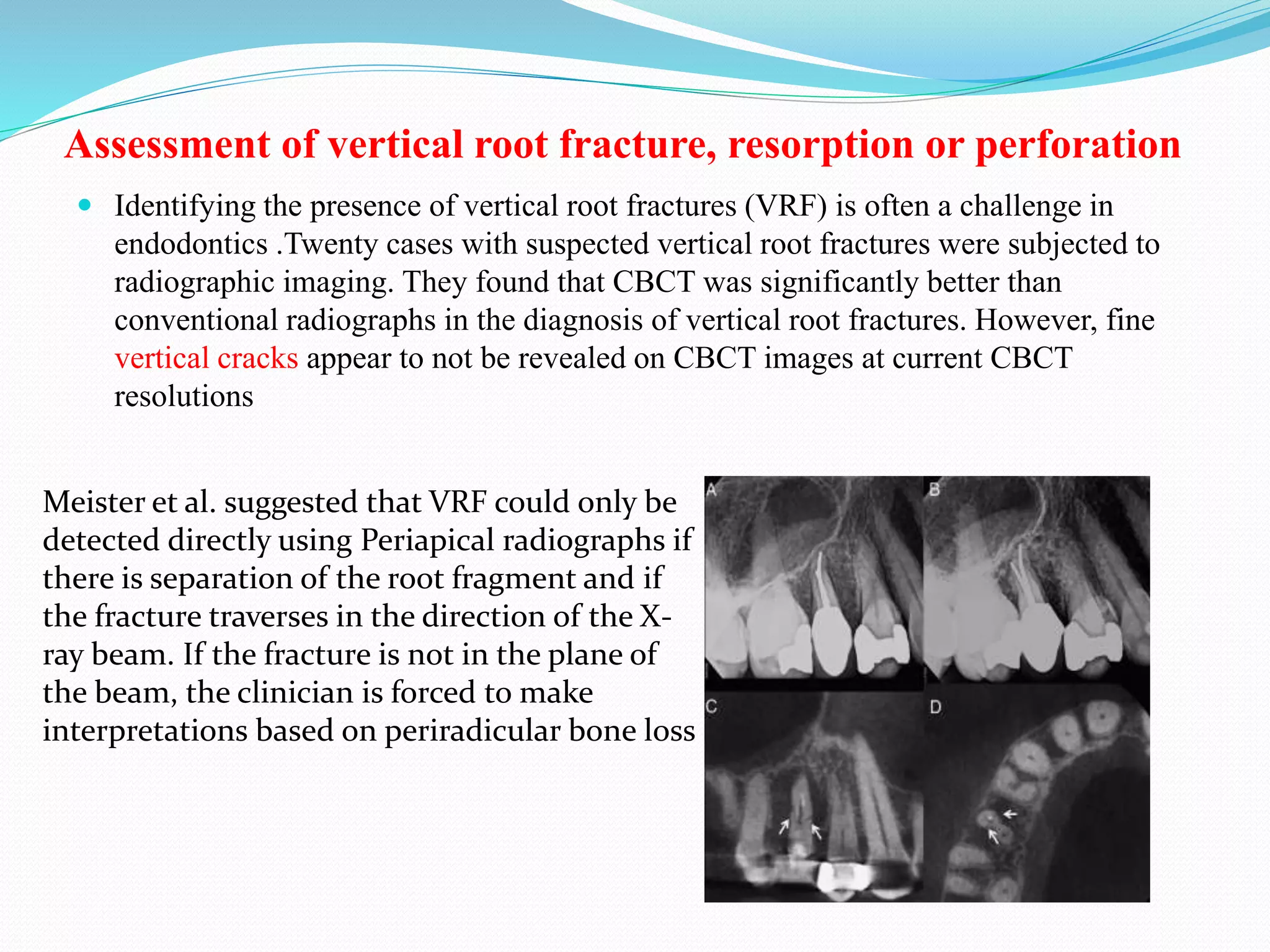
Meister et al. suggested that VRF could only be
detected directly using Periapical radiographs if
there is separation of the root fragment and if
the fracture traverses in the direction of the X-
ray beam. If the fracture is not in the plane of
the beam, the clinician is forced to make
interpretations based on periradicular bone loss
 Case report
35-year-old male patient reported with chief complaints of pain in the upper front
tooth. The patient gave a history of trauma approximately 3 years ago. The involved
tooth (maxillary right central incisor) was tender on percussion. The tooth had a
ceramo-metal crown. In the present case, the presence of vertical root fracture was
not seen on the radiograph CBCT images clearly revealed the presence of vertical
root fracture and helped to modify and perform appropriate treatment.
Kowsky D, Naganath M, Kumari A. Endodontic
applications of cone beam computed
tomography: A series of case reports. Journal of
Interdisciplinary Dentistry. 2016 May 1;6(2):80.
 Root resorption is defined as the loss of dental hard tissues as a result of osteoclastic
activities. [58] It can be a physiological or a pathological phenomenon. The
diagnosis of root resorption is based primarily on radiographic examination, with
Internal root resorption (IRR) is a relatively rare occurrence, characterized by
structural changes of the tooth that appear as a widening of the root canal. IRR is
usually asymptomatic and is often detected on routine periapical and panoramic
radiographs (L. Levin and Trope, 2002; Patel and Dawood, 2007).
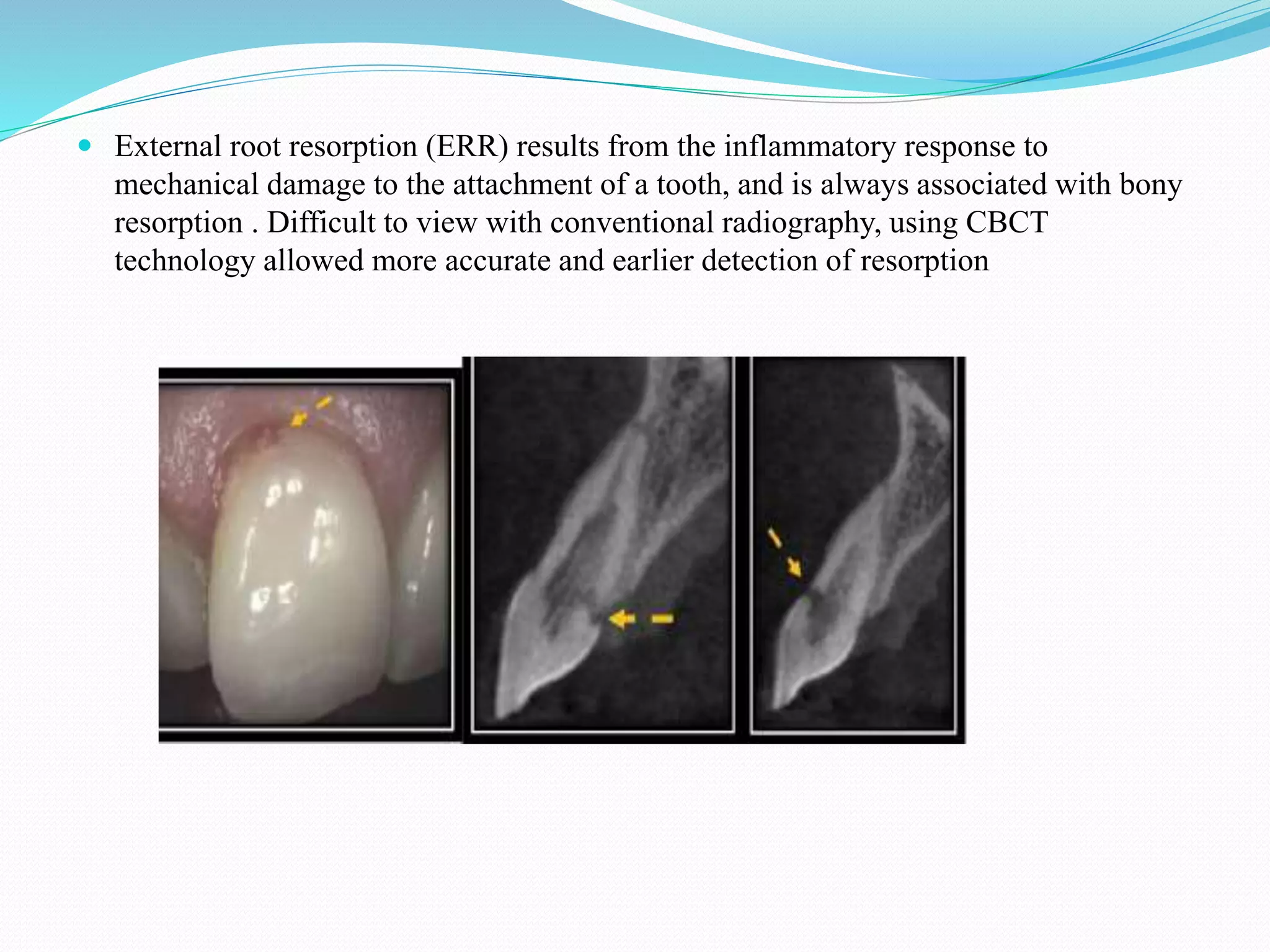
 External root resorption (ERR) results from the inflammatory response to
mechanical damage to the attachment of a tooth, and is always associated with bony
resorption . Difficult to view with conventional radiography, using CBCT
technology allowed more accurate and earlier detection of resorption
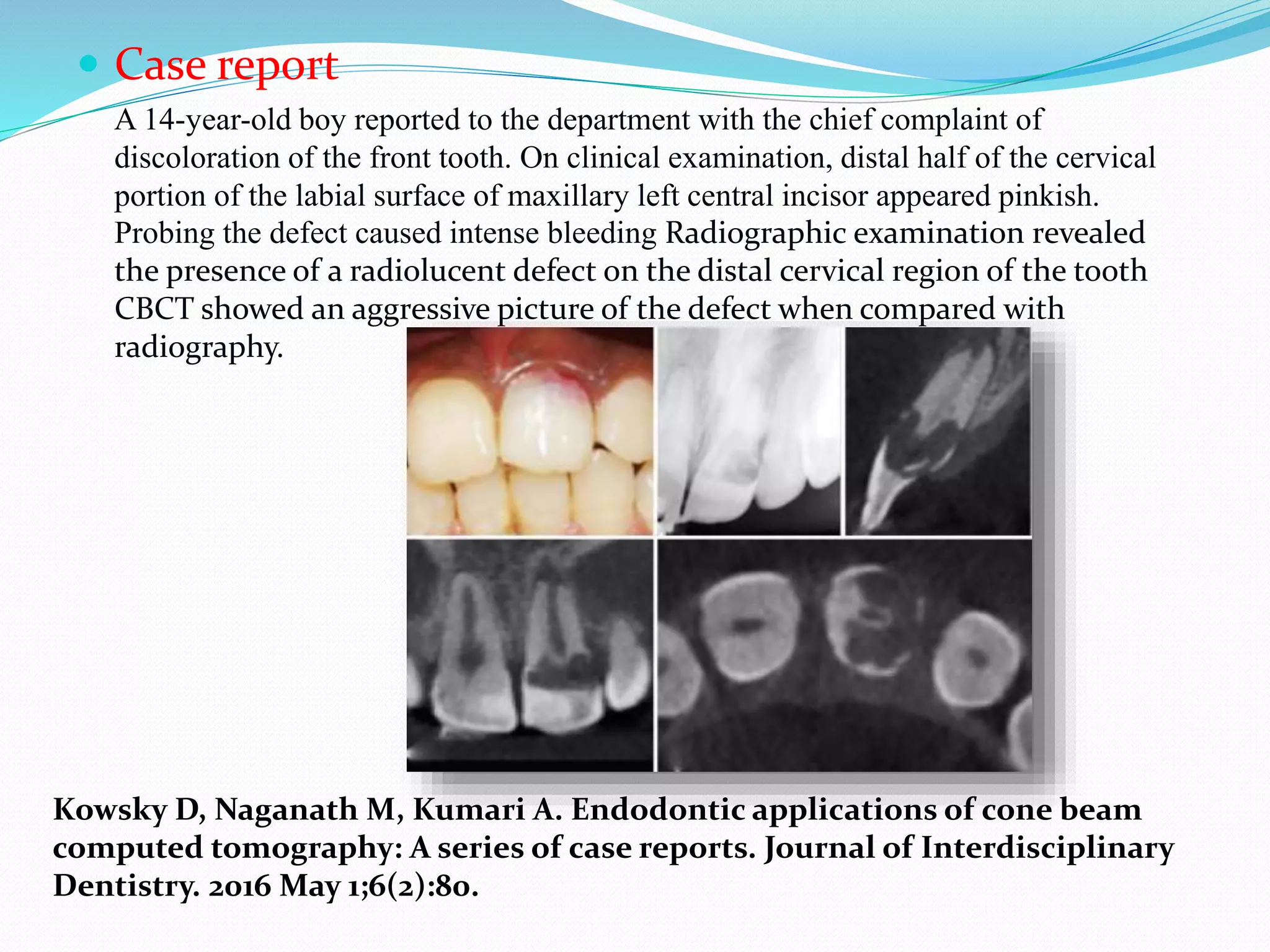
 Case report
A 14-year-old boy reported to the department with the chief complaint of
discoloration of the front tooth. On clinical examination, distal half of the cervical
portion of the labial surface of maxillary left central incisor appeared pinkish.
Probing the defect caused intense bleeding Radiographic examination revealed
the presence of a radiolucent defect on the distal cervical region of the tooth
CBCT showed an aggressive picture of the defect when compared with
radiography.
Kowsky D, Naganath M, Kumari A. Endodontic applications of cone beam
computed tomography: A series of case reports. Journal of Interdisciplinary
Dentistry. 2016 May 1;6(2):80.
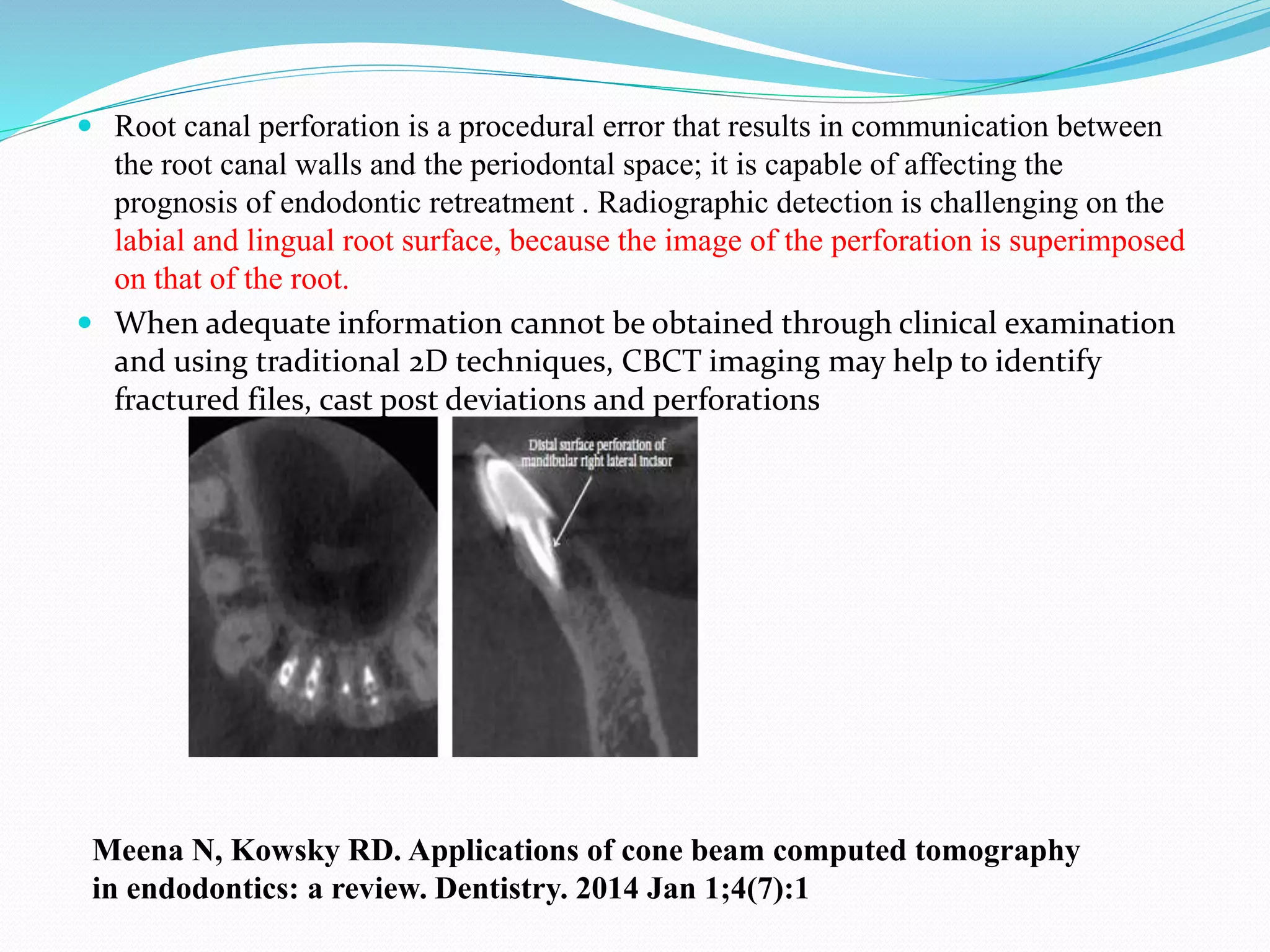
 Root canal perforation is a procedural error that results in communication between
the root canal walls and the periodontal space; it is capable of affecting the
prognosis of endodontic retreatment . Radiographic detection is challenging on the
labial and lingual root surface, because the image of the perforation is superimposed
on that of the root.
 When adequate information cannot be obtained through clinical examination
and using traditional 2D techniques, CBCT imaging may help to identify
fractured files, cast post deviations and perforations
Meena N, Kowsky RD. Applications of cone beam computed tomography
in endodontics: a review. Dentistry. 2014 Jan 1;4(7):1
 Dental Anomalies
Dental anomalies include dens invaginatus (DI), short roots, microdontia
taurodontism, gemination, supernumerary teeth ,dentinogenesis imperfecta,
agenesis, and malformations resulting from trauma. The radiographic features of
these anomalies have been studied extensively and are well represented in the
literature, showing that deviations from normal anatomy can cause difficulties in
diagnosis and treatment. CBCT provides detailed information that can allow
visualization of the root morphology, resulting in better treatment planning and
postoperative assessments
 Case report
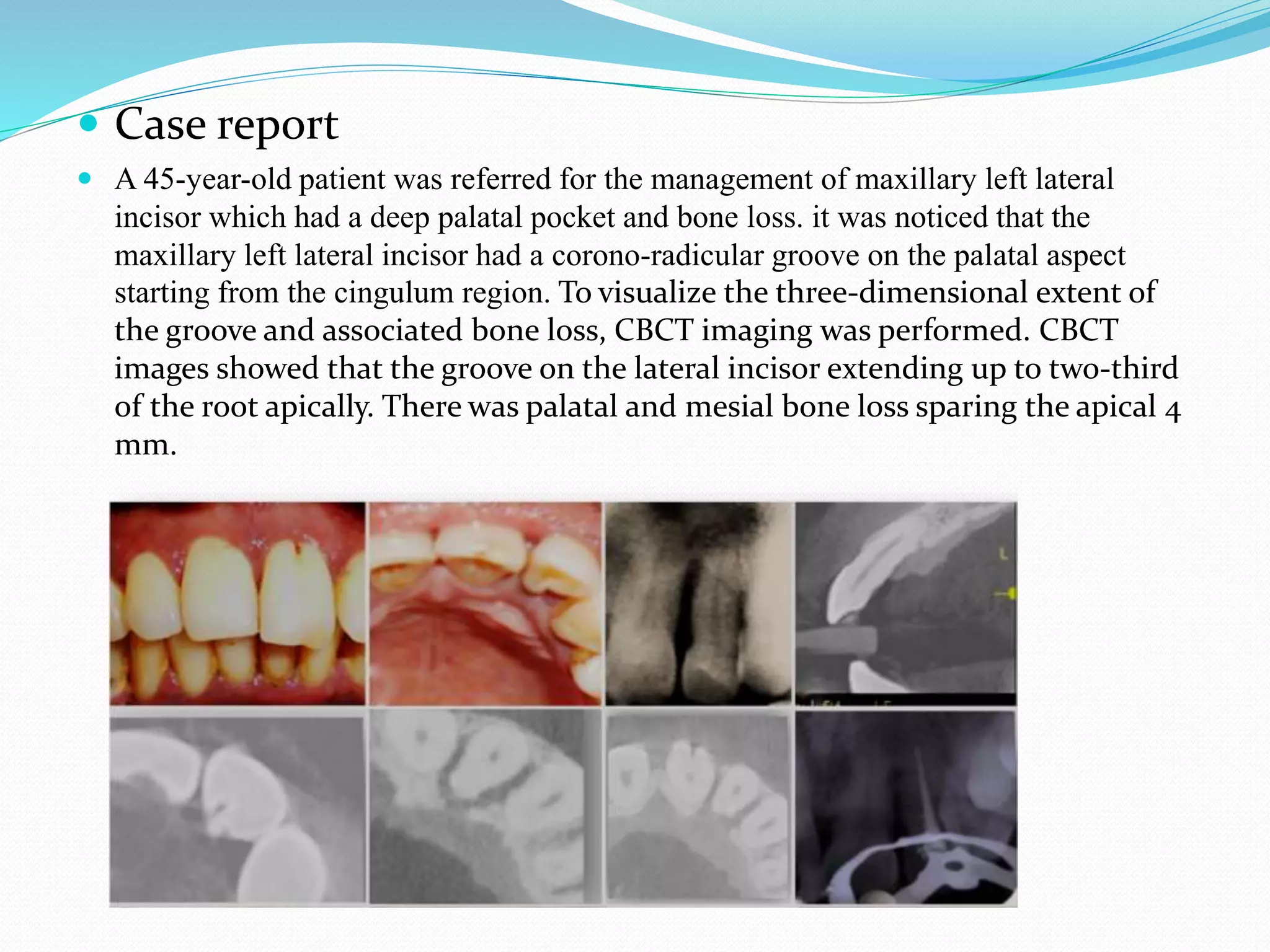
 A 45-year-old patient was referred for the management of maxillary left lateral
incisor which had a deep palatal pocket and bone loss. it was noticed that the
maxillary left lateral incisor had a corono-radicular groove on the palatal aspect
starting from the cingulum region. To visualize the three-dimensional extent of
the groove and associated bone loss, CBCT imaging was performed. CBCT
images showed that the groove on the lateral incisor extending up to two-third
of the root apically. There was palatal and mesial bone loss sparing the apical 4
mm.
conclusion
 This three-dimensional imaging technique overcomes the limitations of
conventional radiography and is a beneficial adjunct to the endodontist’s
armamentarium. CBCT is an emerging technology with the potential to
revolutionize the diagnosis and management of endodontic problems. An increasing
number of specific applications of CBCT in endodontics are being identified as use
of the technology becomes more wide-spread.
 The decision to prescribe CBCT scans in the management of endodontic problems
must be made on a case-by-case basis and only when sufficient diagnostic
information is not attainable from other diagnostic tests, be they clinical or
radiographic . Furthermore, practitioners of CBCT must be adequately trained in
CBCT radiology as well as in the interpretation of the images obtained, because the
modality is completely different from conventional radiography. In summary, a
cautious and rational approach is advised when considering the use of CBCT
imaging in endodontics
APPENDIX OF CBCT CASES
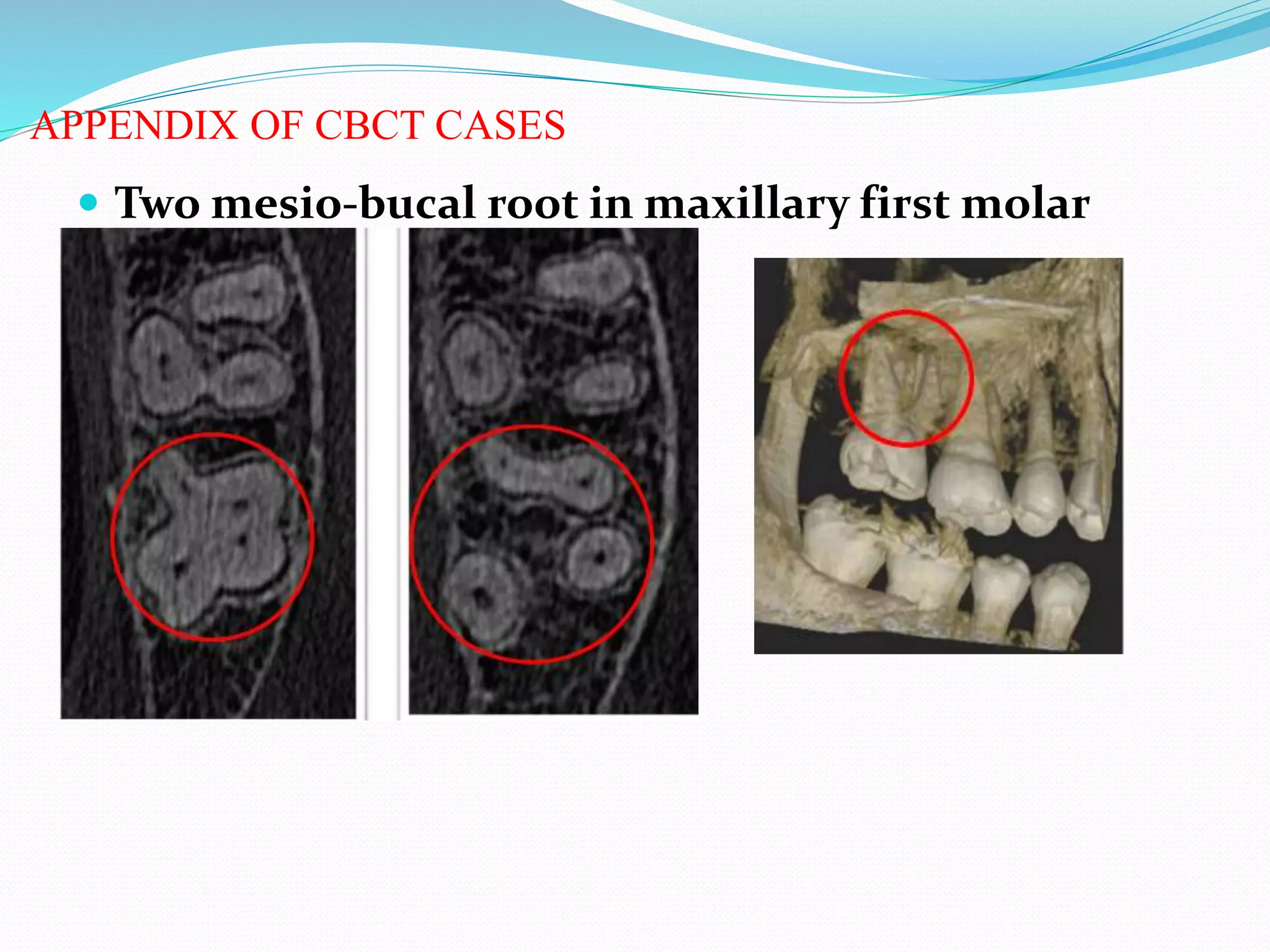
 Two mesio-bucal root in maxillary first molar
 Two canals in palatal root of maxillary second
molar
 Periapical Lesion in maxillary lateral incisor With
palato-gingival groove
 Horizontal root fracture in maxillary lateral
incisor
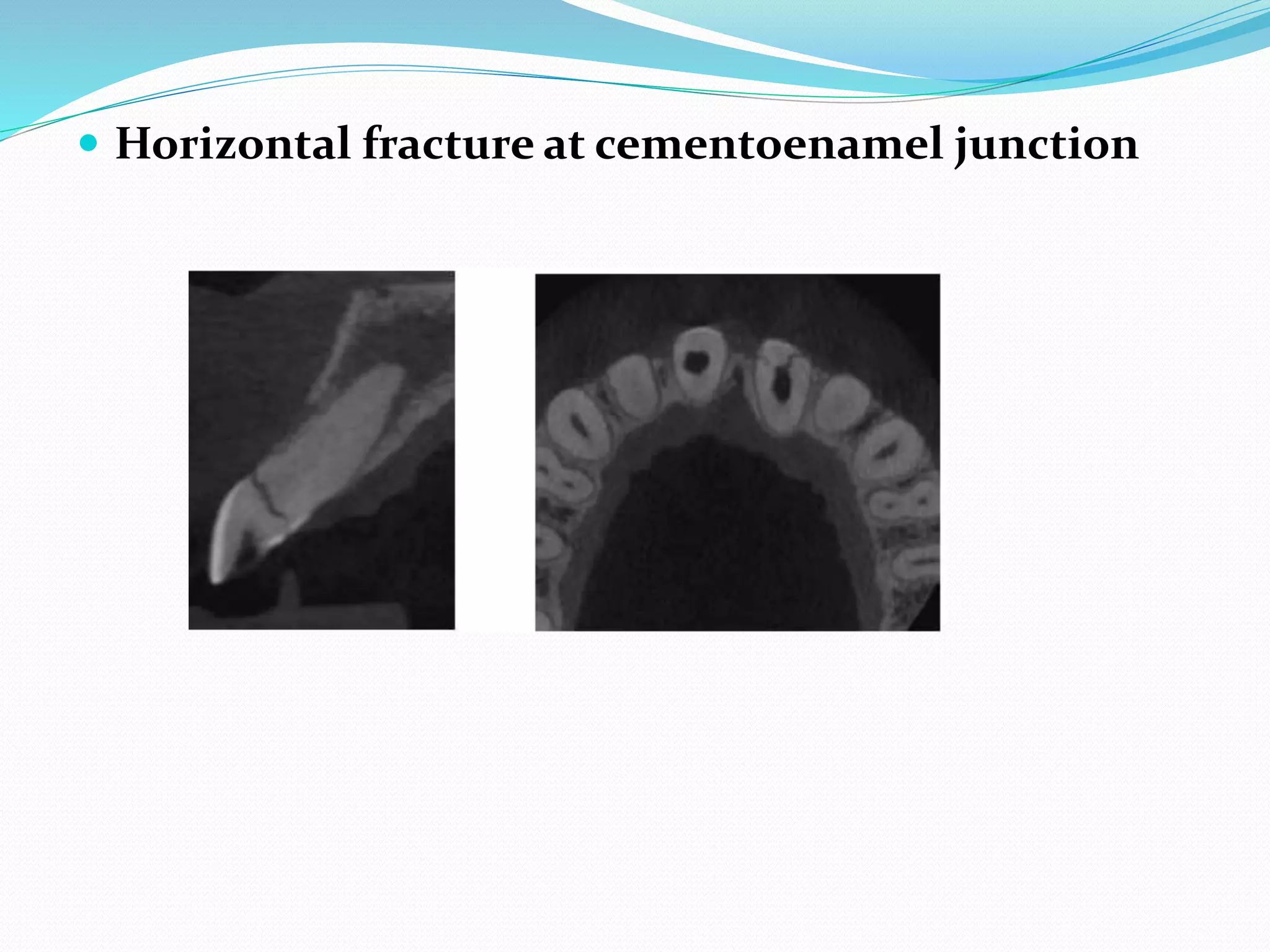
 Horizontal fracture at cementoenamel junction
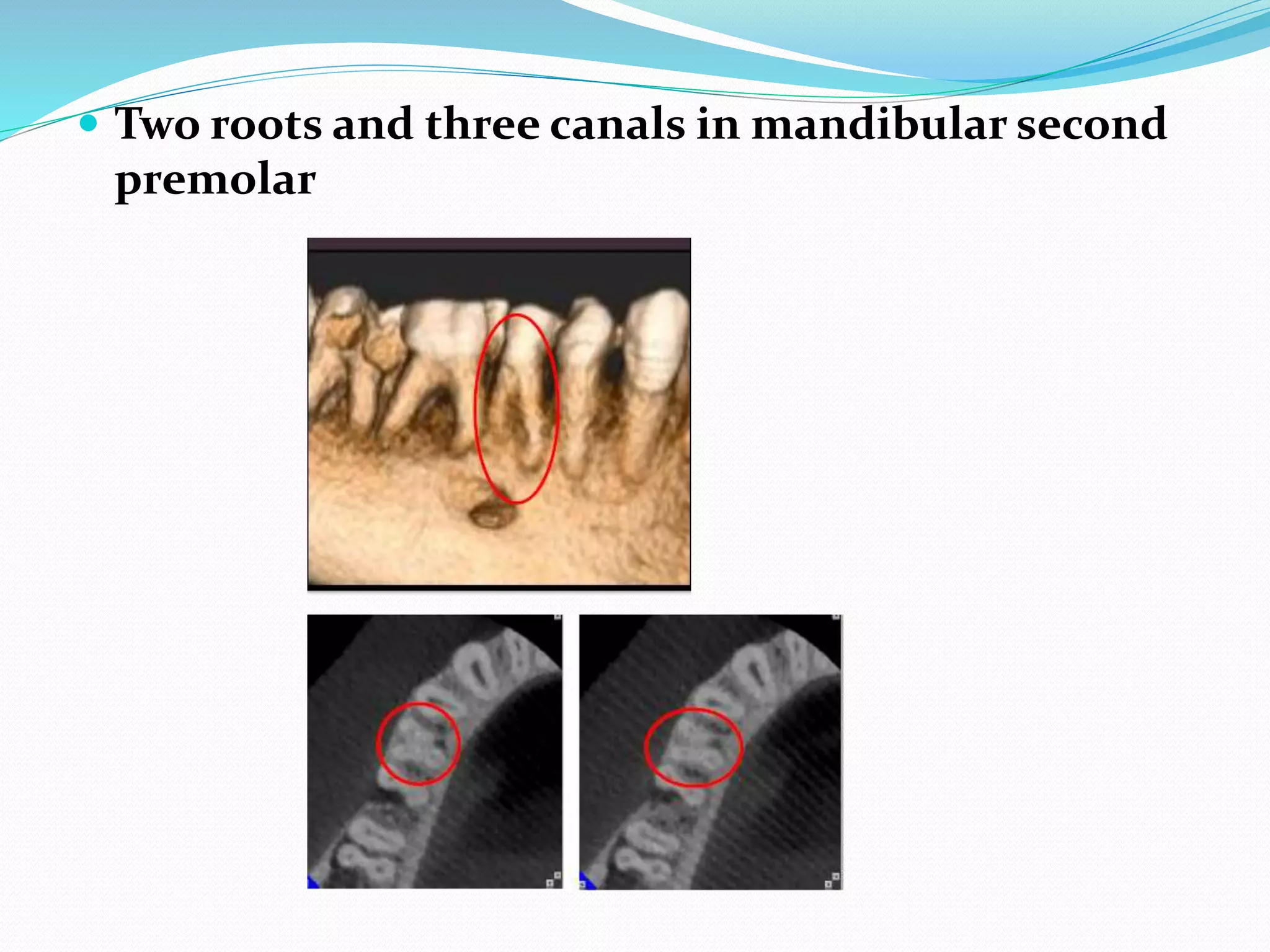
 Two roots and three canals in mandibular second
premolar
References Scarfe WC, Levin MD, Gane D, Farman AG. Use of cone beam computed tomography in endodontics.
International journal of dentistry. 2010 Mar 31;2009.
 The applications of small field of view cone beam computerised tomography in endodontics
 Published for the Dental Professional Community by the American Association of Endodontists Summer
2011 Cone Beam-Computed Tomography in Endodontics
 Baranwal AK, Srivastava A. Radiographic Imaging in Dentistry: New Diagnostic Horizon with Recent
Advancements.
 CBCT & endodontics: Get it right the first time with CBCTby Emanuele Ambu, DDS; Carlos Estrela, DDS,
MSc, PhD; and José Antonio Poli de Figueiredo, BDS, MSc, PhD
 Hegde MN, Hegde P, Hegde A. RESEARCH AND REVIEWS: JOURNAL OF DENTAL SCIENCE
 Deepak BS, Subash TS, Narmatha VJ, Anamika T, Snehil TK, Nandini DB. Imaging techniques in
endodontics: an overview. Journal of clinical imaging science. 2012 Jan 1;2(1):13.
 Pauwels R, Araki K, Siewerdsen JH, Thongvigitmanee SS. Technical aspects of dental CBCT: state of the
art. Dentomaxillofacial Radiology. 2014 Oct 30;44(1):20140224.
 Scarfe WC, Farman AG. What is cone-beam CT and how does it work?. Dental Clinics of North America.
2008 Oct 31;52(4):707-30.
 Khambete N, Kumar R. Cone beam computed tomography: a third eye for dental practitioners. International
Journal of Stomatological Research. 2015;4(1):1-7.
 Li G. Patient radiation dose and protection from cone-beam computed tomography. Imaging science in
dentistry. 2013 Jun 1;43(2):63-9.
 Patel S, Durack C, Abella F, Shemesh H, Roig M, Lemberg K. Cone beam computed tomography in
endodontics–a review. International endodontic journal. 2015 Jan 1;48(1):3-15.
 Scarfe WC, Farman AG, Sukovic P. Clinical applications of cone beam computed tomography in dental
practice. J Canadian Dent Assoc 2006;72:75-80
 Estrela C, Bueno MR, Azevedo BC, Azevedo JR, Pecora JD. A new periapical index based on cone
beam computed tomography. J Endod. 2008;34(11):1325-31.
 Patel S. The use of cone beam computed tomography in the conservative management of dens
invaginatus: a case report. Int Endod J. 2010;43(8):707-13.
 Durack C, Patel S. The use of cone beam computed tomography in the management of dens
invaginatus affecting a strategic tooth in a patient affected by hypodontia: a case report. Int Endod
J.2011;44(5):474-83.
 Estrela C, Bueno MR, Leles CR, Azevedo B, Azevedo JR. Accuracyof cone beam computed
tomography and panoramic and periapical radiography for detection of apical periodontitis. J Endod.
2008;34(3):273-9.
 Patel S, Dawood A, Mannocci F, Wilson R, Pitt Ford T. Detection of periapical bone defects in human
jaws using cone beam computed tomography and intraoral radiography. Int Endod J. 2009;42(6):507-
15.
 Patel S, Dawood A, Whaites E, Pitt Ford T. New dimensions in endodontic imaging: part 1.
Conventional and alternative radiographic systems. Int Endod J 2009; 42:447—62.
 Miguel Teixido, The Use of Cone-beam Computed Tomography in the Preservation of Pulp Vitality in
a Maxillary Canine with Type 3 Dens Invaginatus and an Associated Periradicular Lesion, JOE —
Volume 40, Number 9, September 20
 Durack C, Patel S. Cone beam computed tomography in endodontics. Brazilian dental journal.
2012;23(3):179-91.
 Abella F, Morales K, Garrido I, Pascual J, Duran-Sindreu F, Roig M. Endodontic applications of cone
beam computed tomography: Case series and literature review. Giornale Italiano di Endodonzia. 2015
Nov 30;29(2):38-50.
 *Dr. Kausar Banu. "Cone Beam Computed Tomography The 3D Imaging Modality In
Endodontics: A Review." IOSR Journal of Dental and Medical Sciences (IOSR-JDMS) 16.11
(2017): 28-33

Cbct in endodontics ppt

  • 1.
    DR KAUSAR BANU DEPARTMENTOF CONSERVATIVE DENTISTRY AND ENDODONTICS
  • 2.
    Flowchart  INTRODUCTION  ROLEOF IMAGING IN ENDODONTICS  COMPARISION OF 2D&3D IMAGING  PRINCIPLES OF CBCT  TYPES OF CBCT EQUIPMENT  LIMITATIONS AND DRAWBACKS  ADVANTAGES OF CBCT CLINICAL APPLICATIONS  EVALUATION OF ROOTCANALANATOMY&COMPLEX MORPHOLOGY  DETECTION OF APICAL PERIODONTITIS  ASSESSMENT OF OUTCOME OF ROOTCANAL TREATMENT  PRESURGICAL PLANNING  ASSESSMENT OF DENTAL TRAUMA  ASSESSMENT OF VERTICAL ROOT FRACTURE,RESORPTION&PERFORATION  DENTALANOMALIES • APPENDIX • CONCLUSION • REFERENCE
  • 3.
    Introduction  Cone BeamComputed Tomography (CBCT) is a diagnostic imaging modality that provides high-quality, accurate three-dimensional representations of the osseous elements of the maxillofacial skeleton  A technique that enables three-dimensional reconstruction, but using a cone beam to decrease the dose to the patient when compared to conventional computerized tomography. (A Dictionary of Dentistry in Medicine)  CBCT systems are available that provide small field of view images at low dose with sufficient spatial resolution for applications in endodontic diagnosis, treatment guidance, and post treatment evaluation
  • 4.
     The unprecedentedinterest in CBCT from all fields of dentistry is because it has created a revolution in maxillofacial imaging - facilitating the transition of dental imaging from 2D to 3D...”
  • 5.
    ROLE OF IMAGINGIN ENDODONTICS  Throughout the decades, imaging services have served a fundamental role in all stages of the endodontic treatment process Preoperative  To analyze dental and alveolar hard tissue morphology  Pathological alterations  Morphology of tooth, including location and number of root canals, pulp chamber size, calcifications, root structure ,directions and curvatures  Iatrogenic defects  Crown and root fractures Intraoperative  To determine proper working length of root canal system  Tooth and bone changes
  • 6.
    Post operative  Toevaluate the root canal obturation and seal  Tooth and periapical hard tissue changes after treatment  Planning for surgical considerations Deepak BS, Subash TS, Narmatha VJ, Anamika T, Snehil TK, Nandini DB. Imaging techniques in endodontics: an overview. Journal of clinical imaging science. 2012 Jan 1;2(1):13
  • 7.
    COMPARISION OF 2DAND 3D IMAGING  Intraoral radiography is based on the transmission, attenuation, and recording of X-rays on an analog film or digital receptor, and requires optimized geometric configuration of the X-ray generator, tooth, and sensor to provide an accurate projection of the tooth.  The image produced is a two-dimensional (2D) representation of a three-dimensional (3D) object.  complex dental anatomy and surrounding structures can make interpretation of 2D “shadows” difficult and can contribute to non healing of endodontic cases cone-shaped beam and digital processing to reconstruct 3D images differentiate between many types of structures and airspaces including bone, teeth, airway, paranasal sinuses sometimes soft tissue while avoiding diagnostic limitations inherent in 2D images, including superimposition of structures, non uniform magnification and distortion and no depth information to visualize the patient as he or she truly exists and the ability to view the anatomy from a variety of slice thicknesses CBCT & endodontics: Get it right the first time with CBCTby Emanuele Ambu, DDS; Carlos Estrela, DDS, MSc, PhD; and José Antonio Poli de Figueiredo, BDS, MSc, PhD
  • 8.
    PRINCIPLES OF CBCT Thescan time typically ranges from 10-40 s.However, many CBCT systems employ a pulsatile X-ray beam and with these systems the actual patient exposure time can be as low as 2-5 s During the exposure sequence, hundreds of basis images (projection images) of the area of interest are acquired. The projection images are then reconstructed, using sophisticated software, to produce a cylindrical or spherical volume of data, called the field of view (FOV).
  • 9.
     The FOVranges from as small as a portion of a dental arch to an area as large as the entire head  Reconstructed CBCT images can be displayed in a variety of ways. A commonly used option is for the images of the area of interest to be displayed, simultaneously, in the three orthogonal planes (axial, sagittal and coronal), affording the clinician a truly three-dimensional view of the area of interest. Scarfe WC, Levin MD, Gane D, Farman AG. Use of cone beam computed tomography in endodontics. International journal of dentistry. 2010 Mar 31
  • 10.
    Axial plane -Displays cut slices from superior to inferior. This slice displays a cut through the anatomy parallel to the floor.
  • 11.
    Coronal plane -Displays cut slices from anterior to posterior. Each slice represents a cut through the anatomy parallel to the face and perpendicular to the axial and sagittal planes
  • 12.
    Sagittal plane -Displays cut slices from medial to lateral. Each slice represents a cut through the anatomy parallel to the ears and perpendicular to the axial and coronal planes
  • 13.
    TYPES OF CBCTEQUIPMENT CBCT systems can be categorized according to the  orientation of the patient  scan volume irradiated  clinical functionality Patient Positioning  Depending on the system employed, maxillofacial CBCT can be performed with the patient in three possible positions: sitting standing supine Pauwels R, Araki K, Siewerdsen JH, Thongvigitmanee SS. Technical aspects of dental CBCT: state of the art. Dentomaxillofacial Radiology. 2014 Oct 30;44(1):20140224
  • 14.
     Equipment thatrequires the patient to be supine has a larger physical footprint and may not be readily accessible for patients with physical disabilities.  Standing units may not be able to be adjusted to a height to accommodate wheelchair bound patients.  Seated units are the most comfortable; however fixed seats may not allow ready scanning of physicallydisabled or wheelchair bound patients.
  • 15.
     Scan volume Basedon available or selected scan volume height, the use of units can be designed as:  Localized region - approx. 5cm or less (e.g. dento-alveolar, TMJ),  Single arch - 5cm to 7cm (e.g. maxilla or mandible),  Inter-arch - 7cm to 10cm (e.g. mandible and superiorly to include the inferior concha),  Maxillofacial- 10cm to 15cm (e.g. mandible and extending to nasion)  Craniofacial- greater than 15cm (e.g. from the lower border of the mandible to the vertex of the head). Scarfe WC, Levin MD, Gane D, Farman AG. Use of cone beam computed tomography in endodontics. International journal of dentistry. 2010 Mar 31
  • 16.
     Extended FOVscanning incorporating the craniofacial region is difficult to incorporate into cone beam design because of the high cost of large area detectors. The expansion of scan volume height has been accomplished by one unit (i-CAT Extended Field of View model) by software addition of two rotational scans to produce a single volume with 22cm height
  • 17.
     In general,the smaller scan volume causes the higher spatial resolution of the image.  It is favorable that the optimal resolution of any CBCT imaging system used in endodontics does not exceed the average width of the periodontal ligament space (200 μm), considering the the earliest sign of periapical pathology being the discontinuity in the lamina dura and widening of the periodontal ligament space
  • 18.
     Multimodality Hybrid multimodalsystems combine digital panoramic radiography with a relatively small-to medium-FOV CBCT system The ProMax 3D CBVT (Planmeca Oy, Helsinki,Finland) was the first to incorporate a small FOV Examples of other hybrid units are the Veraviewepocs 3D (J. Morita, Corporation, Kyoto, Japan), the Picasso Trio(Vatech /E. Woo Corporation, Korea), and the Kodak DentalImaging 9000 DS (Kodak Dental Imaging/Practice works Atlanta, GA, USA)
  • 19.
    RADIATION DOSAGE  Effectivedose of CBCT is almost similar to that of panoramic radiographs and equivalent to a few periapical radiograph.  one of the advantages of CBCT over computed tomography is the lower effective radiation dose.  The dose depends on the region of the jaw to be scanned, size of FOV, exposure time, the energy/potential(kV) and the tube current.  Radiation dose can be reduced using smaller FOV, fewer projections(180 degree)and a bigger voxel size.  For endodontic applications ,the FOV should be limited to the region of interest, the FOV should encompass the tooth under investigation and the surrounding structures. This is the way to reduce radiation dose. Li G. Patient radiation dose and protection from cone-beam computed tomography. Imaging science in dentistry. 2013 Jun 1;43(2):63-9.
  • 20.
    ADVANTAGES OF CBCT Very Compact equipment  Higher resolution resulting in sharper images and better diagnosis  Produces a 3D rendition of a 2D image and provides geometrically accurate images  Increased specificity for caries, periodontal and periapical lesions when compared to conventional CT and periapical radiographs .  Small FOV hence possible to have images of only the area of interest.  Fewer metal devices  Less exposure time and lower radiation dose when compared to medical CT.  Patient comfort  Good soft tissue rendition when compared to the traditional 2D imaging. Hegde MN, Hegde P, Hegde A. RESEARCH AND REVIEWS: JOURNAL OF DENTAL SCIENCE 2014
  • 21.
    LIMITATIONS AND DRAWBACKS Despite the provision of the third dimension, the spatial resolution of CBCT image is inferior to conventional film-based or digital intraoral radiography  CBCT has the problem of scattering and beam hardening artifacts caused by high density structure which diminishes the contrast and limits the imaging of soft tissues. Therefore, CBCT is primarily indicated for imaging hard tissues.  CBCT has lengthy scan times (15-20 sec) and they need the person to stay completely firmed Patel S, Durack C, Abella F, Shemesh H, Roig M, Lemberg K. Cone beam computed tomography in endodontics–a review. International endodontic journal. 2015 Jan 1;48(1):3-15.
  • 22.
    Artifacts  CBCT X-raybeam encounters an object of very high density, such as enamel or metallic restorations, lower energy photons in the beam are absorbed by the structure, in preference to higher energy photons. The result is that the mean energy of the X-ray beam increases. This is called ‘beam hardening’ and the phenomenon produces two types of artifact  distortion of metallic structures, called ‘cupping artifact’, and the appearance of streaks and dark bands between two dense structures.  These artifacts can reduce the diagnostic yield of the images. Furthermore, patient movement during the scan can adversely affect the sharpness of the final image
  • 23.
    Patient Selection Criteria CBCTmust not be used routinely for endodontic diagnosis or for screening purposes in the absence of clinical signs and symptoms. The patient’s history and clinical examination must justify the use of CBCT by demonstrating that the benefits to the patient outweigh the potential risks
  • 24.
    Clinical applications  Evaluationof root canal anatomy and complex morphology Knowledge of root canal anatomy and variations is essential for clinicians to facilitate effective root canal treatment As a result, failure to distinguish and treat all canals can affect treatment outcome . For example, the prevalence of a second mesiobuccal canal (MB2) in maxillary first molars has been reported to be 69% to 93% depending on the study method. This variability occurs in the buccolingual plane because of superimposition of anatomic structures Conventional radiographs, at their best, can only reveal up to 55% of these configuration. with increasing resolution of CBCT, the detection rate enhanced from 60% to 93.3% Wolcott J, Ishley D, Kennedy W, Johnson S, Minnich S, Meyers J.A 5 yr clinical investigation of second mesiobuccal canals inendodontically treated and retreated maxillary molars. J Endod.2015;31(4):262-4.
  • 25.
    Assess the degreeof curvatures associated with the roots of teeth Teeth with anatomical and morphological anomalies such as dens invaginatus and tooth fusion In a study that evaluated 608 permanent mandibular second molars using CBCT a higher prevalence of “C” shaped canals was noticed [26,27]. CBCT is an effective tool for the detection of additional distolingual roots and C-shaped canals
  • 26.
     Case report 34-year-oldmale patient was referred by his general dentist for the management of endodontically involved mandibular lateral incisor with periodontal bone loss. CBCT imaging was performed to study the internal anatomy thoroughly and to assess the true extent of the bone loss CBCT revealed the presence of two canals in the labiolingual plane. Dinesh Kowsky, Meena Naganath, Anitha Kumari 2016 Journal of Interdisciplinary Dentistry
  • 27.
    Detection of ApicalPeriodontitis  The most common pathologic conditions affecting the teeth are the inflammatory lesions of the pulp and periapical areas . In this regard CBCT is significantly more accurate and sensitive than conventional radiography in the identification of apical periodontitis in humans , periapical bone destruction associated with endodontic infection can be identified using CBCT before the evidence of their existence becomes identifiable on conventional radiographs. bone defects of the cancellous bone and cortical bone separately. CBCT presented significantly more findings, such as expansion of lesions into the maxillary sinus, sinus membrane thickening and missed canals.
  • 28.
     Patel etal used an in vitro model consisting of 2 mm diameter defects placed in the cancellous bone at the apices of 10 first molar teeth on six partially dentate intact human dry mandibles. They reported a detection rate of 24.8% and 100% for intraoral radiography and CBCT imaging, respectively. Thus, CBCT is found to be a more sensitive diagnostic method for detecting apical periodontitis Patel S, Dawood A, Mannocci F, Wilson R, Pitt Ford T. Detectionof periapical bone defects in human jaws using cone beamcomputed tomography and intraoral radiography. Int Endod J.2009;42(6):507-15.
  • 29.
    Assessment of theoutcome of root canal treatment  The most important area in which CBCT can be applied in endodontics is in determining the outcome of treatment. Earlier identification of periapical radiolucent changes using CBCT may result in earlier diagnosis and more effective management of periapical disease de Paula-Silva et al evaluated periapical repair after root canal treatment in using CBCT and Periapical radiographs Six months after treatment, a favourable outcome was detected in 79% of teeth assessed with periapical radiographs in comparison to 35% when CBCT was used de Paula-Silva FW, Wu MK, Leonardo MR, da Silva LA, Wesselink PR. Accuracy of periapical radiography and cone-beam com-puted tomography scans in diagnosing apical periodontitis using histopathological findings as a gold standard. J Endod 2012;35: 1009—12
  • 30.
    In addition, itwas found that the root canal curvature, failure to disinfect gutta- percha, the presence of missed canals and inadequate definitive coronal restoration at follow-up were prognostic factors that negatively influenced the outcome of treatment
  • 31.
    Pre-surgical planning  Eliminationof the superimposition of anatomic structures, such as the zygomatic buttress, alveolar bone, maxillary sinus and other roots, and early detection of the presence and dimensions of apical lesions and changes in apical bone density.  The axial, coronal and sagittal planes obtained with CBCT scans also provide clinicians with a clear view of the anatomical relationship between root apices and neighbouring structures, such as the mandibular canal, mental foramen and maxillary sinus.  The true size, location and extent of periapical lesions can be appreciated with CBCT and the actual root with which the lesion is associated can be confirmed.
  • 32.
     Case report A32-year-old patient reported to Department of Conservative Dentistry and Endodontics complaining of pain and huge swelling on the inner aspect of upper jaw. The patient gave a history of trauma to the maxillary teeth about 5 years ago. Radiographically the lesion appeared to extend from the periapex of lateral incisor to the first molar. The exact extent and outline of the lesion was not clear on the radiograph especially in the posterior region probably because of anatomic superimposition. CBCT image revealed complete destruction of the buccal and palatal bone along with resorption of palatal and maxillary walls of the left maxillary sinus
  • 33.
    Assessment of dentaltrauma  Traumatic dental injuries present a challenge to clinicians worldwide. Horizontal root fractures usually affect maxillary central incisors and are typically traumatic in origin, associated with accidents, sports injuries or fights  The absence of radiographic signs when the X-ray beam is not parallel to the plane of the root fracture, tooth displacement and/or alveolar bone fracture is a limitation of intra-oral Periapical radiographs. Use of CBCT allows accurate diagnosis of the presence or absence, as well as the exact location, extent and direction, of a horizontal fracture line Abella F, Morales K, Garrido I, Pascual J, Duran-Sindreu F, Roig M. Endodontic applications of cone beam computed tomography: Case series and literature review. Giornale Italiano di Endodonzia. 2015 Nov 30;29(2):38-50.
  • 34.
    Assessment of verticalroot fracture, resorption or perforation  Identifying the presence of vertical root fractures (VRF) is often a challenge in endodontics .Twenty cases with suspected vertical root fractures were subjected to radiographic imaging. They found that CBCT was significantly better than conventional radiographs in the diagnosis of vertical root fractures. However, fine vertical cracks appear to not be revealed on CBCT images at current CBCT resolutions Meister et al. suggested that VRF could only be detected directly using Periapical radiographs if there is separation of the root fragment and if the fracture traverses in the direction of the X- ray beam. If the fracture is not in the plane of the beam, the clinician is forced to make interpretations based on periradicular bone loss
  • 35.
     Case report 35-year-oldmale patient reported with chief complaints of pain in the upper front tooth. The patient gave a history of trauma approximately 3 years ago. The involved tooth (maxillary right central incisor) was tender on percussion. The tooth had a ceramo-metal crown. In the present case, the presence of vertical root fracture was not seen on the radiograph CBCT images clearly revealed the presence of vertical root fracture and helped to modify and perform appropriate treatment. Kowsky D, Naganath M, Kumari A. Endodontic applications of cone beam computed tomography: A series of case reports. Journal of Interdisciplinary Dentistry. 2016 May 1;6(2):80.
  • 36.
     Root resorptionis defined as the loss of dental hard tissues as a result of osteoclastic activities. [58] It can be a physiological or a pathological phenomenon. The diagnosis of root resorption is based primarily on radiographic examination, with Internal root resorption (IRR) is a relatively rare occurrence, characterized by structural changes of the tooth that appear as a widening of the root canal. IRR is usually asymptomatic and is often detected on routine periapical and panoramic radiographs (L. Levin and Trope, 2002; Patel and Dawood, 2007).
  • 37.
     External rootresorption (ERR) results from the inflammatory response to mechanical damage to the attachment of a tooth, and is always associated with bony resorption . Difficult to view with conventional radiography, using CBCT technology allowed more accurate and earlier detection of resorption
  • 38.
     Case report A14-year-old boy reported to the department with the chief complaint of discoloration of the front tooth. On clinical examination, distal half of the cervical portion of the labial surface of maxillary left central incisor appeared pinkish. Probing the defect caused intense bleeding Radiographic examination revealed the presence of a radiolucent defect on the distal cervical region of the tooth CBCT showed an aggressive picture of the defect when compared with radiography. Kowsky D, Naganath M, Kumari A. Endodontic applications of cone beam computed tomography: A series of case reports. Journal of Interdisciplinary Dentistry. 2016 May 1;6(2):80.
  • 39.
     Root canalperforation is a procedural error that results in communication between the root canal walls and the periodontal space; it is capable of affecting the prognosis of endodontic retreatment . Radiographic detection is challenging on the labial and lingual root surface, because the image of the perforation is superimposed on that of the root.  When adequate information cannot be obtained through clinical examination and using traditional 2D techniques, CBCT imaging may help to identify fractured files, cast post deviations and perforations Meena N, Kowsky RD. Applications of cone beam computed tomography in endodontics: a review. Dentistry. 2014 Jan 1;4(7):1
  • 40.
     Dental Anomalies Dentalanomalies include dens invaginatus (DI), short roots, microdontia taurodontism, gemination, supernumerary teeth ,dentinogenesis imperfecta, agenesis, and malformations resulting from trauma. The radiographic features of these anomalies have been studied extensively and are well represented in the literature, showing that deviations from normal anatomy can cause difficulties in diagnosis and treatment. CBCT provides detailed information that can allow visualization of the root morphology, resulting in better treatment planning and postoperative assessments
  • 41.
     Case report A 45-year-old patient was referred for the management of maxillary left lateral incisor which had a deep palatal pocket and bone loss. it was noticed that the maxillary left lateral incisor had a corono-radicular groove on the palatal aspect starting from the cingulum region. To visualize the three-dimensional extent of the groove and associated bone loss, CBCT imaging was performed. CBCT images showed that the groove on the lateral incisor extending up to two-third of the root apically. There was palatal and mesial bone loss sparing the apical 4 mm.
  • 42.
    conclusion  This three-dimensionalimaging technique overcomes the limitations of conventional radiography and is a beneficial adjunct to the endodontist’s armamentarium. CBCT is an emerging technology with the potential to revolutionize the diagnosis and management of endodontic problems. An increasing number of specific applications of CBCT in endodontics are being identified as use of the technology becomes more wide-spread.  The decision to prescribe CBCT scans in the management of endodontic problems must be made on a case-by-case basis and only when sufficient diagnostic information is not attainable from other diagnostic tests, be they clinical or radiographic . Furthermore, practitioners of CBCT must be adequately trained in CBCT radiology as well as in the interpretation of the images obtained, because the modality is completely different from conventional radiography. In summary, a cautious and rational approach is advised when considering the use of CBCT imaging in endodontics
  • 43.
    APPENDIX OF CBCTCASES  Two mesio-bucal root in maxillary first molar
  • 44.
     Two canalsin palatal root of maxillary second molar
  • 45.
     Periapical Lesionin maxillary lateral incisor With palato-gingival groove
  • 46.
     Horizontal rootfracture in maxillary lateral incisor
  • 47.
     Horizontal fractureat cementoenamel junction
  • 48.
     Two rootsand three canals in mandibular second premolar
  • 49.
    References Scarfe WC,Levin MD, Gane D, Farman AG. Use of cone beam computed tomography in endodontics. International journal of dentistry. 2010 Mar 31;2009.  The applications of small field of view cone beam computerised tomography in endodontics  Published for the Dental Professional Community by the American Association of Endodontists Summer 2011 Cone Beam-Computed Tomography in Endodontics  Baranwal AK, Srivastava A. Radiographic Imaging in Dentistry: New Diagnostic Horizon with Recent Advancements.  CBCT & endodontics: Get it right the first time with CBCTby Emanuele Ambu, DDS; Carlos Estrela, DDS, MSc, PhD; and José Antonio Poli de Figueiredo, BDS, MSc, PhD  Hegde MN, Hegde P, Hegde A. RESEARCH AND REVIEWS: JOURNAL OF DENTAL SCIENCE  Deepak BS, Subash TS, Narmatha VJ, Anamika T, Snehil TK, Nandini DB. Imaging techniques in endodontics: an overview. Journal of clinical imaging science. 2012 Jan 1;2(1):13.  Pauwels R, Araki K, Siewerdsen JH, Thongvigitmanee SS. Technical aspects of dental CBCT: state of the art. Dentomaxillofacial Radiology. 2014 Oct 30;44(1):20140224.  Scarfe WC, Farman AG. What is cone-beam CT and how does it work?. Dental Clinics of North America. 2008 Oct 31;52(4):707-30.  Khambete N, Kumar R. Cone beam computed tomography: a third eye for dental practitioners. International Journal of Stomatological Research. 2015;4(1):1-7.  Li G. Patient radiation dose and protection from cone-beam computed tomography. Imaging science in dentistry. 2013 Jun 1;43(2):63-9.  Patel S, Durack C, Abella F, Shemesh H, Roig M, Lemberg K. Cone beam computed tomography in endodontics–a review. International endodontic journal. 2015 Jan 1;48(1):3-15.  Scarfe WC, Farman AG, Sukovic P. Clinical applications of cone beam computed tomography in dental practice. J Canadian Dent Assoc 2006;72:75-80
  • 50.
     Estrela C,Bueno MR, Azevedo BC, Azevedo JR, Pecora JD. A new periapical index based on cone beam computed tomography. J Endod. 2008;34(11):1325-31.  Patel S. The use of cone beam computed tomography in the conservative management of dens invaginatus: a case report. Int Endod J. 2010;43(8):707-13.  Durack C, Patel S. The use of cone beam computed tomography in the management of dens invaginatus affecting a strategic tooth in a patient affected by hypodontia: a case report. Int Endod J.2011;44(5):474-83.  Estrela C, Bueno MR, Leles CR, Azevedo B, Azevedo JR. Accuracyof cone beam computed tomography and panoramic and periapical radiography for detection of apical periodontitis. J Endod. 2008;34(3):273-9.  Patel S, Dawood A, Mannocci F, Wilson R, Pitt Ford T. Detection of periapical bone defects in human jaws using cone beam computed tomography and intraoral radiography. Int Endod J. 2009;42(6):507- 15.  Patel S, Dawood A, Whaites E, Pitt Ford T. New dimensions in endodontic imaging: part 1. Conventional and alternative radiographic systems. Int Endod J 2009; 42:447—62.  Miguel Teixido, The Use of Cone-beam Computed Tomography in the Preservation of Pulp Vitality in a Maxillary Canine with Type 3 Dens Invaginatus and an Associated Periradicular Lesion, JOE — Volume 40, Number 9, September 20  Durack C, Patel S. Cone beam computed tomography in endodontics. Brazilian dental journal. 2012;23(3):179-91.  Abella F, Morales K, Garrido I, Pascual J, Duran-Sindreu F, Roig M. Endodontic applications of cone beam computed tomography: Case series and literature review. Giornale Italiano di Endodonzia. 2015 Nov 30;29(2):38-50.  *Dr. Kausar Banu. "Cone Beam Computed Tomography The 3D Imaging Modality In Endodontics: A Review." IOSR Journal of Dental and Medical Sciences (IOSR-JDMS) 16.11 (2017): 28-33