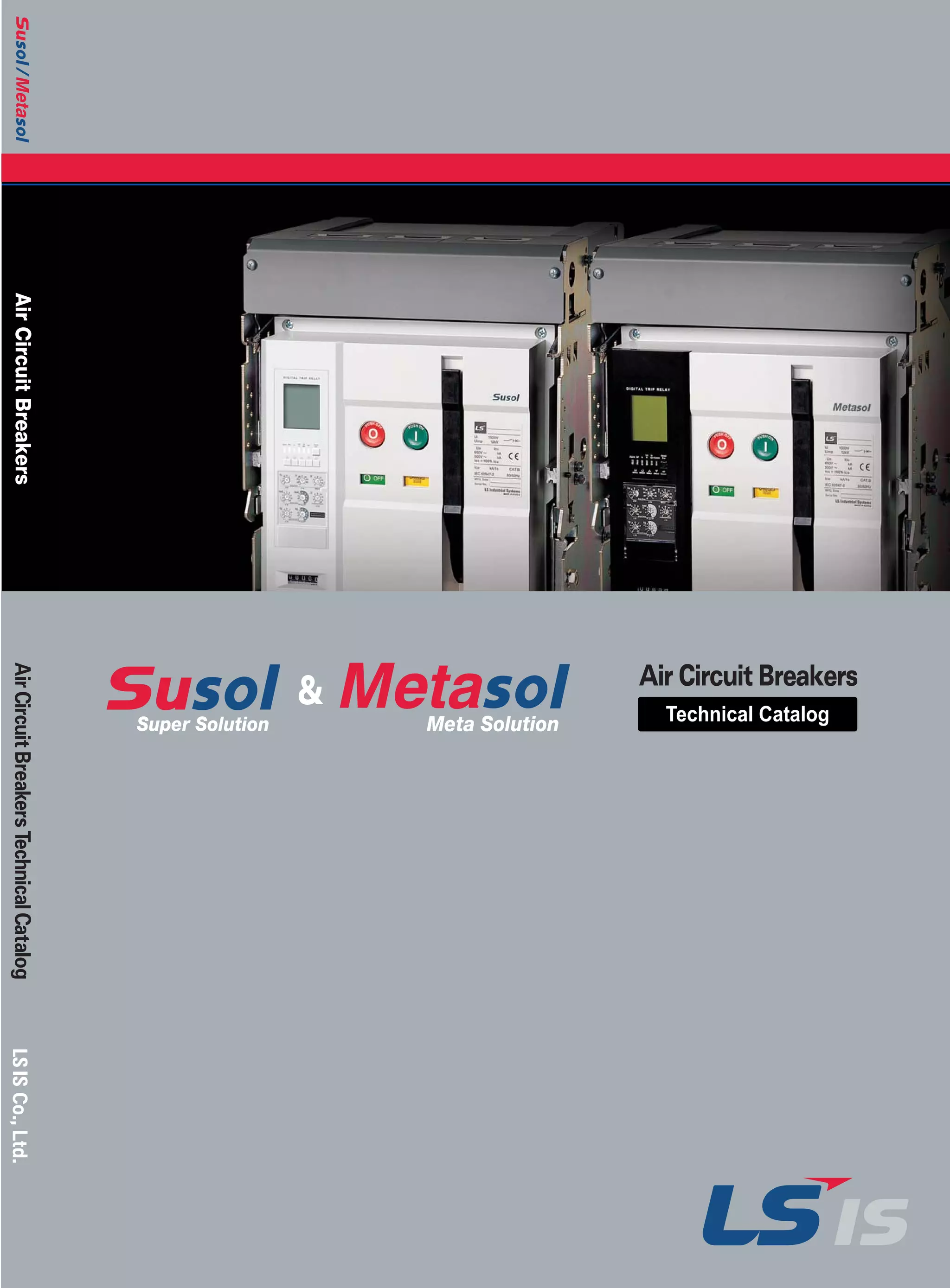
AirCircuitBreakers
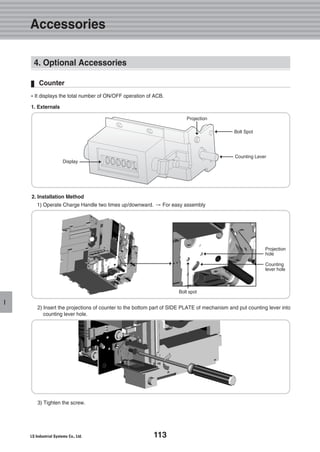
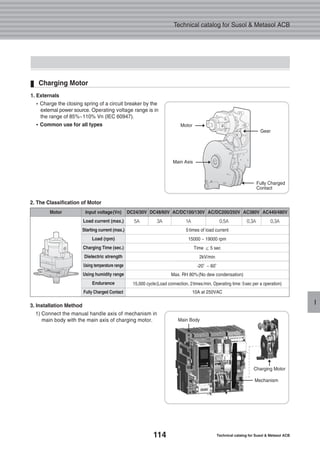
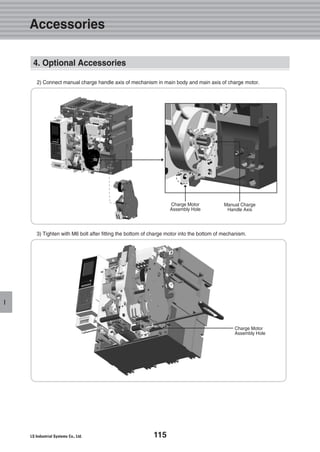
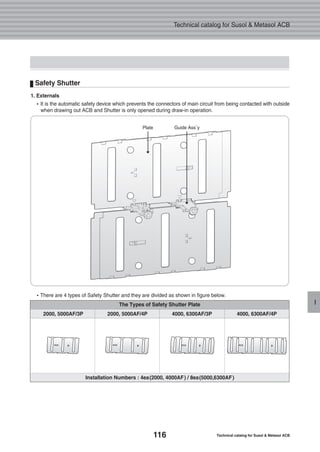
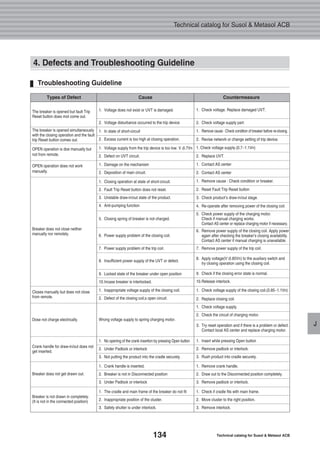
Technical CatalogSuper Solution Meta Solution
AirCircuitBreakersTechnicalCatalog
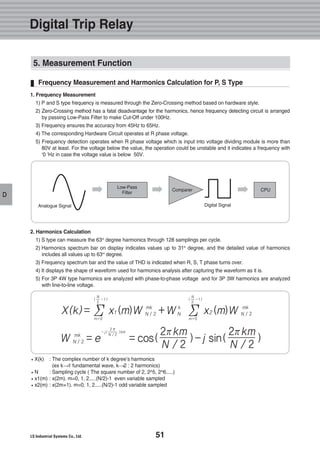
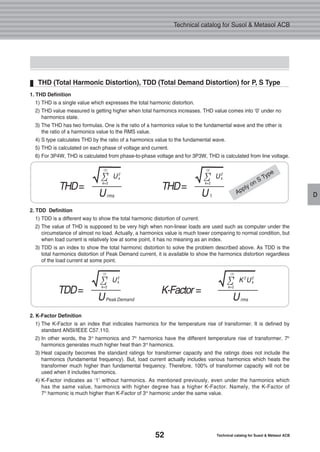
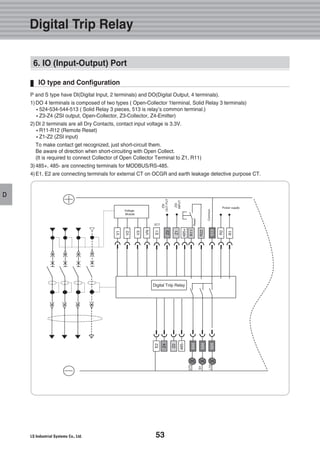
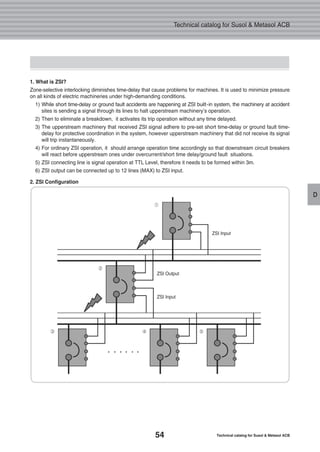
Tư vấn chọn sản phẩm
Giao hàng tận nơi
Hỗ trợ kỹ thuật
Chính sách hậu mãi đa dạng
DỊCH VỤ CHĂM SÓC KHÁCH HÀNG TOÀN DIỆN
Nhà cung cấp thiết bị điện chuyên nghiệp
Email: contact@beeteco.com
Hotline: 0909 41 61 43
CÔNG TY TNHH THƯƠNG MẠI KỸ THUẬT ASTER
Số 7/31 KDC Thương Mại Sóng Thần, Kp. Nhị Đồng 1, P. Dĩ An, Tx. Dĩ An, Bình Dương
Tel: (0650) 3617 012
Fax: (0650) 3617 011
11
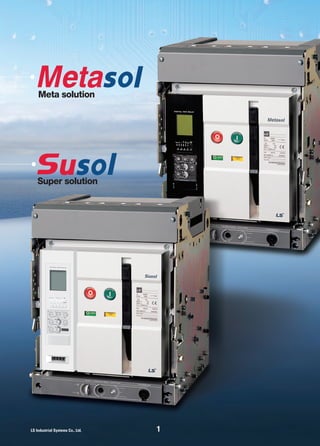
Super solution
Meta solution
Technical catalog for Susol & Metasol ACB
This technical document can be revised or withdrawn at any time
without prior notice. No part of this publication shall be reproduced
or utilized in any form or by any means. The persons who are in
breach of terms and conditions will be subjected to compensate
for any loss lf our company.
All patent rights are reserved.
Title : Technical catalogue of Susol&metasol ACB
Document No : Tech, ACB 695-001
Issued team : Electric equip.)
Technology management team
Issued date : June, 2007
154 Technical materials for Susol & Metasol ACB
2 Technical catalog for Susol & Metasol ACB
3
18
22
27
58
68
76
81
91
128
135
150
A Overview
B Structure and Operation
C Internal Electrical Accessory
D Digital Trip Relay
E Digital Trip Relay Accessory
F Installation and Service Condition
G Operation
H Protective Coordination
I Accessories
J Handling and Maintenance
K Control Circuit and Dimension
L Ordering Sheet
Contents
A.Overview
4
6
8
9
17
1. Product Introduction
2. Accessories
3. Introduction of Digital Trip Relay
4. Ratings
5. Externals and Inscriptions
3
4 Technical catalog for Susol & Metasol ACB
Technical catalog for Susol & Metasol ACB
A
Background Information on Development of Susol / Metasol Series
It is developed to meet high breaking capacity required for elevated electricity demand, to satisfy compact
distribution panel size demanded in markets, to achieve 100% N phase current conducting capacity on single
phase load(3φ4w line), and to increase users’convenience by providing various accessories and connecting
methods. Moreover, providing total solutions for customers by developing a relay, to achieve absolute protective
coordination, and to correspond with IT system.
Susol / Metasol Series Characteristics
�Ics = 100%Icu
�N phase current conducting capacity : 100%
�Suitable for installment with IT system
�Possess various customer oriented digital trips
(N,A,P,S Type)
�Various Accessories Possession.
�Appropriate products for confronting IEC and ANSI
(include nuclear energy plant purpose) standard
�Acquire multi-rating (690Vac, 500Vac)
standard for all models
�Impulse Withstand Voltage (Uimp) : 12kV
1. Product Introduction
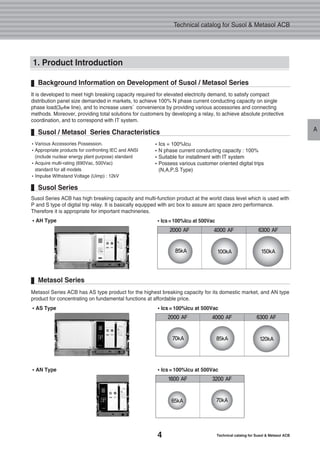
Susol Series
Susol Series ACB has high breaking capacity and multi-function product at the world class level which is used with
P and S type of digital trip relay. It is basically equipped with arc box to assure arc space zero performance.
Therefore it is appropriate for important machineries.
��AH Type
Metasol Series
Metasol Series ACB has AS type product for the highest breaking capacity for its domestic market, and AN type
product for concentrating on fundamental functions at affordable price.
��AS Type ��Ics = 100%Icu at 500Vac
��AN Type ��Ics = 100%Icu at 500Vac
2000 AF 4000 AF 6300 AF
150kA100kA85kA
��Ics= 100%Icu at 500Vac
2000 AF 4000 AF 6300 AF
120kA85kA70kA
1600 AF 3200 AF
70kA65kA
5
Overview
A
The CE Marking indicates that a product complies with the requirements of the applicable European Directives.
These Directives for products set out essential requirements which must be met before products may be marketed
or traded within the European Economic Area. Thus, a displayed CE Marking indicates that a product complies with
the applicable Directives.
CE Conformance Marking
�Certificate of conformance test (KEMA - IEC 60947)
�Test report (KEMA / KERI)
Susol / Metasol ACB have obtained following certificates and They are available upon a request
1. Product Introduction
��IEC 60947-1
Low-voltage switchgear and controlgear - Part 1: General rules
��IEC 60947-2
Low-voltage switchgear and controlgear - Part 2: Circuit-breakers
Standard and Approvals
It has obtained approvals in accordance with following international standard and can be applicable to service
condition defined from international standard.
6 Technical catalog for Susol & Metasol ACB
Technical catalog for Susol & Metasol ACB
A
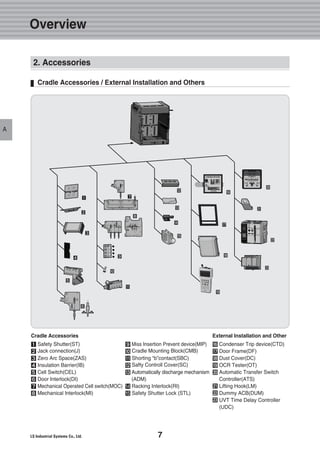
2. Accessories
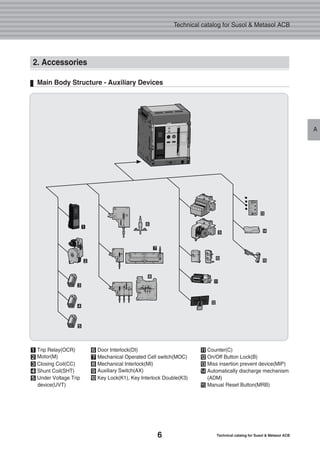
Main Body Structure - Auxiliary Devices
� Door Interlock(DI)
� Mechanical Operated Cell switch(MOC)
� Mechanical Interlock(MI)
� Auxiliary Switch(AX)
� Key Lock(K1), Key Interlock Double(K3)
� Counter(C)
� On/Off Button Lock(B)
� Miss insertion prevent device(MIP)
� Automatically discharge mechanism
(ADM)
� Manual Reset Button(MRB)
� Trip Relay(OCR)
� Motor(M)
� Closing Coil(CC)
� Shunt Coil(SHT)
� Under Voltage Trip
device(UVT)
�
�
�
�
�
�
��
�
�
�
�
�
�
�
7
A
Cradle Accessories / External Installation and Others
� Safety Shutter(ST)
� Jack connection(J)
� Zero Arc Space(ZAS)
� Insulation Barrier(IB)
� Cell Switch(CEL)
� Door Interlock(DI)
� Mechanical Operated Cell switch(MOC)
� Mechanical Interlock(MI)
� Miss Insertion Prevent device(MIP)
� Cradle Mounting Block(CMB)
� Shorting “b”contact(SBC)
� Safty Controll Cover(SC)
� Automatically discharge mechanism
(ADM)
� Racking Interlock(RI)
� Safety Shutter Lock (STL)
Cradle Accessories External Installation and Other
� Condenser Trip device(CTD)
� Door Frame(DF)
� Dust Cover(DC)
� OCR Tester(OT)
� Automatic Transfer Switch
Controller(ATS)
Lifting Hook(LM)
Dummy ACB(DUM)
UVT Time Delay Controller
(UDC)
Overview
2. Accessories
21
22
23
�
�
�
�
�
�
�
�
�
�
�
�
�
�
�
�
�
�
�
�
8 Technical catalog for Susol & Metasol ACB
Technical catalog for Susol & Metasol ACB
A
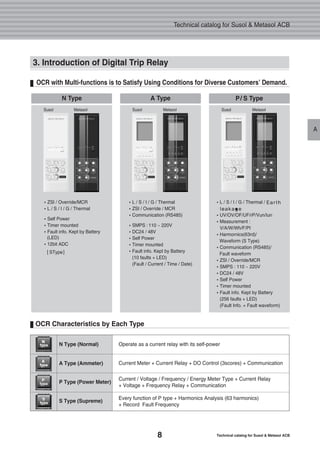
OCR with Multi-functions is to Satisfy Using Conditions for Diverse Customers’ Demand.
N Type A Type P/ S Type
N Type (Normal)
A Type (Ammeter)
P Type (Power Meter)
S Type (Supreme)
Operate as a current relay with its self-power
Current Meter + Current Relay + DO Control (3scores) + Communication
Current / Voltage / Frequency / Energy Meter Type + Current Relay
+ Voltage + Frequency Relay + Communication
Every function of P type + Harmonics Analysis (63 harmonics)
+ Record Fault Frequency
�L / S / I / G / Thermal / Earth
leakage
�UV/OV/OF/UF/rP/Vun/Iun
�Measurement :
V/A/W/Wh/F/PI
�Harmornics(63rd)/
Waveform (S Type)
�Communication (RS485)/
Fault waveform
�ZSI / Override/MCR
�SMPS : 110 ~ 220V
�DC24 / 48V
�Self Power
�Timer mounted
�Fault info. Kept by Battery
(256 faults + LED)
(Fault Info. + Fault waveform)
�L / S / I / G / Thermal
�ZSI / Override / MCR
�Communication (RS485)
�SMPS : 110 ~ 220V
�DC24 / 48V
�Self Power
�Timer mounted
�Fault info. Kept by Battery
(10 faults + LED)
(Fault / Current / Time / Date)
�ZSI / Override/MCR
�L / S / I / G / Thermal
�Self Power
�Timer mounted
�Fault info. Kept by Battery
(LED)
�12bit ADC
� SType�
3. Introduction of Digital Trip Relay
OCR Characteristics by Each Type
Susol Metasol Susol Metasol Susol Metasol
9
Overview
A
Susol Series
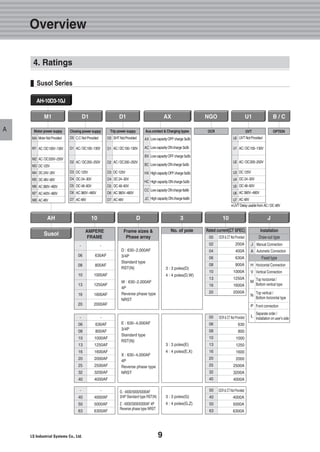
4. Ratings
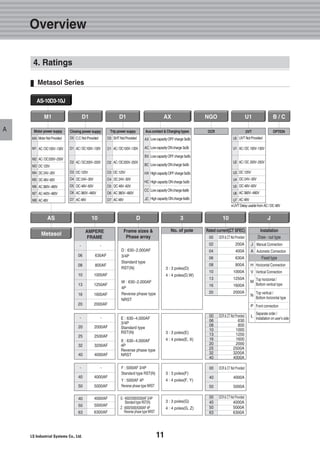
AH-10D3-10J
Susol
Rated current(CT SFEC)
OCR & CT Not Provided
200A
400A
630A
800A
1000A
1250A
1600A
2000A
00
02
04
06
08
10
13
16
20
OCR & CT Not Provided
4000A
5000A
6300A
00
40
50
63
No. of pole
3 : 3 poles(D)
4 : 4 poles(D,W)
3 : 3 poles(G)
4 : 4 poles(G,Z)
D : 630~2,000AF
3/4P
Standard type
RST(N)
W : 630~2,000AF
4P
Reverse phase type
NRST
G : 4000/5000/6300AF
3/4P Standard type RST(N)
Z : 4000/5000/6300AF 4P
Reverse phase type NRST
AH 103D10
AMPERE
FRAME
Frame sizes &
Phase array
-
06
08
10
13
16
20
-
630AF
800AF
1000AF
1250AF
1600AF
2000AF
-
4000AF
5000AF
6300AF
-
40
50
63
3 : 3 poles(E)
4 : 4 poles(E,X)
-
06
08
10
13
16
20
25
32
40
-
630AF
800AF
1000AF
1250AF
1600AF
2000AF
2500AF
3200AF
4000AF
00
06
08
10
13
16
20
25
32
40
Installation
J
A
H
V
M
N
P
L
J
Draw-out type
Fixed type
Horizontal Connection
Vertical Connection
Top horizontal /
Bottom vertical type
Top vertical /
Bottom horizontal type
Front connection
Separate order /
Installation on user’s side
Manual Connection
Autometic Connection
D1
Closing power suppy
D0
D1
D2
D3
D4
D5
D6
D7
C.CNotProvided
AC/DC100~130V
AC/DC200~250V
DC125V
DC24~30V
DC48~60V
AC380V~480V
AC48V
D1
Trip power suppy
D0
D1
D2
D3
D4
D5
D6
D7
SHTNotProvided
AC/DC100~130V
AC/DC200~250V
DC125V
DC24~30V
DC48~60V
AC380V~480V
AC48V
AX
Aux.contact & Charging types
AX
AC
BX
BC
HX
HC
CC
JC
LowcapacityOFFcharge3a3b
LowcapacityONcharge3a3b
LowcapacityOFFcharge5a5b
LowcapacityONcharge5a5b
HighcapacityOFFcharge5a5b
HighcapacityONcharge5a5b
LowcapacityONcharge6a6b
HighcapacityONcharge6a6b
NGO
OCR
U1
UVT
U0
U1
U2
U3
U4
U5
U6
U7
UVTNotProvided
AC/DC100~130V
AC/DC200~250V
DC125V
DC24~30V
DC48~60V
AC380V~480V
AC48V
�UVTDelayusablefromAC/DC48V
B / C
OPTION
M1
Motor power suppy
MA
M1
M2
M3
M4
M5
M6
M7
M8
MotorNotProvided
AC/DC100V~130V
AC/DC200V~250V
DC125V
DC24V~30V
DC48V~60V
AC380V~480V
AC440V~480V
AC48V
E : 630~4,000AF
3/4P
Standard type
RST(N)
X : 630~4,000AF
4P
Reverse phase type
NRST
OCR & CT Not Provided
630
800
1000
1250
1600
2000
2500A
3200A
4000A
10 Technical catalog for Susol & Metasol ACB
Technical catalog for Susol & Metasol ACB
A
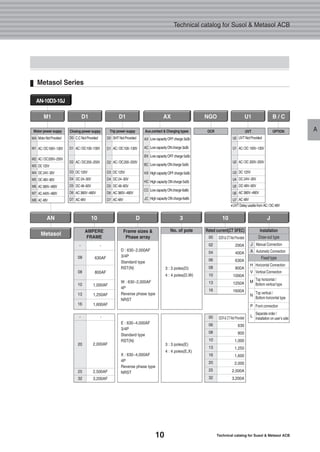
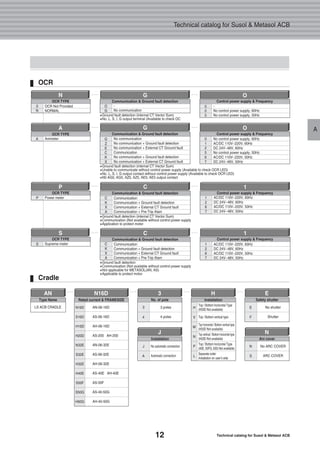
AN-10D3-10J
Metasol Series
D1
Closing power suppy
D0
D1
D2
D3
D4
D5
D6
D7
C.CNotProvided
AC/DC100~130V
AC/DC200~250V
DC125V
DC24~30V
DC48~60V
AC380V~480V
AC48V
D1
Trip power suppy
D0
D1
D2
D3
D4
D5
D6
D7
SHTNotProvided
AC/DC100~130V
AC/DC200~250V
DC125V
DC24~30V
DC48~60V
AC380V~480V
AC48V
AX
Aux.contact & Charging types
AX
AC
BX
BC
HX
HC
CC
JC
LowcapacityOFFcharge3a3b
LowcapacityONcharge3a3b
LowcapacityOFFcharge5a5b
LowcapacityONcharge5a5b
HighcapacityOFFcharge5a5b
HighcapacityONcharge5a5b
LowcapacityONcharge6a6b
HighcapacityONcharge6a6b
NGO
OCR
B / C
OPTION
M1
Motor power suppy
MA
M1
M2
M3
M4
M5
M6
M7
M8
MotorNotProvided
AC/DC100V~130V
AC/DC200V~250V
DC125V
DC24V~30V
DC48V~60V
AC380V~480V
AC440V~480V
AC48V
U1
UVT
U0
U1
U2
U3
U4
U5
U6
U7
UVTNotProvided
AC/DC 100V~130V
AC/DC 200V~250V
DC125V
DC24V~30V
DC48V~60V
AC380V~480V
AC48V
�UVTDelayusablefromAC/DC48V
Metasol
Rated current(CT SFEC)
OCR & CT Not Provided
200A
400A
630A
800A
1000A
1250A
1600A
00
02
04
06
08
10
13
16
No. of pole
3 : 3 poles(D)
4 : 4 poles(D,W)
D : 630~2,000AF
3/4P
Standard type
RST(N)
W : 630~2,000AF
4P
Reverse phase type
NRST
Frame sizes &
Phase array
AN 103D10
10
13
16
-
08
08
2,000AF
2,500AF
3,200AF
3 : 3 poles(E)
4 : 4 poles(E,X)
-
20
25
32
- 00
06
08
10
13
16
20
25
32
OCR & CT Not Provided
630
800
1,000
1,250
1,600
2,000
2,500A
3,200A
-
630AF
800AF
1,000AF
1,250AF
1,600AF
Installation
J
A
H
V
M
N
P
L
J
Draw-out type
Fixed type
Manual Connection
Autometic Connection
AMPERE
FRAME
E : 630~4,000AF
3/4P
Standard type
RST(N)
X : 630~4,000AF
4P
Reverse phase type
NRST
Horizontal Connection
Vertical Connection
Top horizontal /
Bottom vertical type
Top vertical /
Bottom horizontal type
Front connection
Separate order /
Installation on user’s side
11
Overview
A
AS-10D3-10J
Metasol Series
M1
Motor power suppy
MA
M1
M2
M3
M4
M5
M6
M7
M8
MotorNotProvided
AC/DC100V~130V
AC/DC200V~250V
DC125V
DC24V~30V
DC48V~60V
AC380V~480V
AC440V~480V
AC48V
D1
Closing power suppy
D0
D1
D2
D3
D4
D5
D6
D7
C.CNotProvided
AC/DC100V~130V
AC/DC200V~250V
DC125V
DC24V~30V
DC48V~60V
AC380V~480V
AC48V
D1
Trip power suppy
D0
D1
D2
D3
D4
D5
D6
D7
SHTNotProvided
AC/DC100V~130V
AC/DC200V~250V
DC125V
DC24V~30V
DC48V~60V
AC380V~480V
AC48V
AX
Aux.contact & Charging types
AX
AC
BX
BC
HX
HC
CC
JC
LowcapacityOFFcharge3a3b
LowcapacityONcharge3a3b
LowcapacityOFFcharge5a5b
LowcapacityONcharge5a5b
HighcapacityOFFcharge5a5b
HighcapacityONcharge5a5b
LowcapacityONcharge6a6b
HighcapacityONcharge6a6b
NGO
OCR
U1
UVT
U0
U1
U2
U3
U4
U5
U6
U7
UVTNotProvided
AC/DC 100V~130V
AC/DC 200V~250V
DC125V
DC24V~30V
DC48V~60V
AC380V~480V
AC48V
�UVTDelayusablefromAC/DC48V
B / C
OPTION
Metasol
Rated current(CT SFEC)
OCR & CT Not Provided
200A
400A
630A
800A
1000A
1250A
1600A
2000A
00
02
04
06
08
10
13
16
20
OCR & CT Not Provided
4000A
5000A
6300A
00
40
50
63
No. of pole
3 : 3 poles(D)
4 : 4 poles(D,W)
3 : 3 poles(E)
4 : 4 poles(E, X)
3 : 3 poles(G)
4 : 4 poles(G, Z)
D : 630~2,000AF
3/4P
Standard type
RST(N)
W : 630~2,000AF
4P
Reverse phase type
NRST
E : 630~4,000AF
3/4P
Standard type
RST(N)
X : 630~4,000AF
4P
Reverse phase type
NRST
G : 4000/5000/6300AF 3/4P
Standard type RST(N)
Z : 4000/5000/6300AF 4P
Reverse phase type NRST
Frame sizes &
Phase array
AS 103D10
AMPERE
FRAME
-
06
08
10
13
16
20
-
630AF
800AF
1000AF
1250AF
1600AF
2000AF
4000AF
5000AF
6300AF
40
50
63
3 : 3 poles(F)
4 : 4 poles(F, Y)
-
20
25
32
40
-
2000AF
2500AF
3200AF
4000AF
-
4000AF
5000AF
-
40
50
OCR & CT Not Provided
4000A
5000A
00
40
50
00
06
08
10
13
16
20
25
32
40
Installation
J
A
H
V
M
N
P
L
J
Draw - out type
Fixed type
Horizontal Connection
Vertical Connection
Top horizontal /
Bottom vertical type
Top vertical /
Bottom horizontal type
Front connection
Separate order /
Installation on user’s side
Manual Connection
Autometic Connection
4. Ratings
F : 5000AF 3/4P
Standard type RST(N)
Y : 5000AF 4P
Reverse phase type NRST
OCR & CT Not Provided
630
800
1000
1250
1600
2000
2500A
3200A
4000A
12 Technical catalog for Susol & Metasol ACB
Technical catalog for Susol & Metasol ACB
A
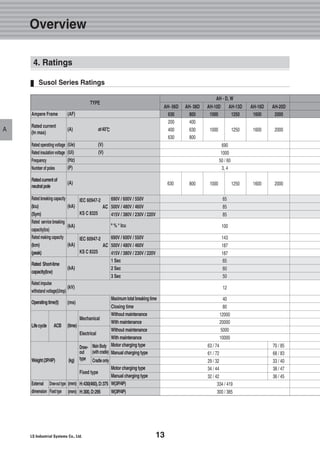
AN N16D H
OCR TYPE
0
N
OCR Not Provided
NORMAL
N
Type Name
LS ACB CRADLE
Rated current & FRAMESIZE
3
No. of pole
3
4
3 poles
4 poles
AN-06-16D
AS-06-16D
AH-06-16D
AS-200 AH-200
AN-06-32E
AS-06-32E
AH-06-32E
AS-40E AH-40E
AS-50F
AS-40-50G
AH-40-50G
E
Safety shutter
E
F
No shutter
Shutter
J
Installation
J
A
No automatic connection
Automatic connection
N
Arc cover
N
S
No ARC COVER
ARC COVER
Installation
Control power supply & Frequency
0
0
5
-
No control power supply, 60Hz
No control power supply, 50Hz
O
H
V
M
N
P
L
N16D
S16D
H16D
H20D
N32E
S32E
H32E
H40E
S50F
S50G
H50G
Top / Bottom horizontal Type
(H20D Not available)
Top / Bottom vertical type
Top horizontal / Bottom vertical type
(H20D Not available)
Top vertical / Bottom horizontal type
(H20D Not available)
Top / Bottom horizontal Type
(40E, 50FG, 63G Not available)
Separate order
Installation on user’s side
G
O
G
-
No communication
�Ground fault detection (internal CT Vector Sum)
�No. L, S, I, G output terminal (Available to check OC
�Ground fault detection (internal CT Vector Sum)
�Unable to communicate without control power supply (Available to check OCR LED)
�No. L, S, I, G output contact without control power supply (Available to check OCR LED)
�N0 AG0, AG5, AZ0, AZ5, AE0, AE5 output contact
A
OCR TYPE
A Ammeter
O
Control power supply & Frequency
0
1
2
5
6
7
No control power supply, 60Hz
AC/DC 110V~220V, 60Hz
DC 24V~48V, 60Hz
No control power supply, 50Hz
AC/DC 110V~220V, 50Hz
DC 24V~48V, 50Hz
G
Communication & Ground fault detection
G
Z
E
C
K
X
No communication
No communication + Ground fault detection
No communication + External CT Ground fault
Communication
No communication + Ground fault detection
No communication + External CT Ground fault
�Ground fault detection (internal CT Vector Sum)
�Communication (Not available without control power supply
�Application to protect motor
�Ground fault detection
�Communication (Not available without control power supply
�Not applicable for METASOL(AN, AS)
�Applicable to protect motor
P
OCR TYPE
P Power meter
S
OCR TYPE
S Supreme meter
1
Control power supply & Frequency
1
2
6
7
AC/DC 110V~220V, 60Hz
DC 24V~48V, 60Hz
AC/DC 110V~220V, 50Hz
DC 24V~48V, 50Hz
1
Control power supply & Frequency
1
2
6
7
AC/DC 110V~220V, 60Hz
DC 24V~48V, 60Hz
AC/DC 110V~220V, 50Hz
DC 24V~48V, 50Hz
C
Communication & Ground fault detection
C
K
X
A
Communication
Communication + Ground fault detection
Communication + External CT Ground fault
Communication + Pre-Trip Alam
C
Communication & Ground fault detection
C
K
X
A
Communication
Communication + Ground fault detection
Communication + External CT Ground fault
Communication + Pre-Trip Alam
Communication & Ground fault detection
OCR
Cradle
13
Overview
A
TYPE
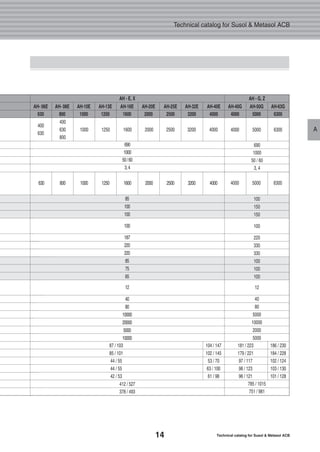
AH - D, W
Ampere Frame
Rated current
(In max)
Ratedcurrentof
neutralpole
690V / 600V / 550V
500V / 480V / 460V
415V / 380V / 230V / 220V
690V / 600V / 550V
500V / 480V / 460V
415V / 380V / 230V / 220V
1 Sec
2 Sec
3 Sec
Maximumtotalbreakingtime
Closing time
Motor charging type
Manual charging type
Motor charging type
Manual charging type
W(3P/4P)
W(3P/4P)
Without maintenance
With maintenance
Without maintenance
With maintenance
Rated making capacity
(Icm)
(peak)
III
% * Icu
Rated Short-time
capacity(Icw)
Rated impulse
withstand voltage(Uimp)
Operatingtime(t)
Lifecycle
Weight(3P/4P)
External
dimension
Draw-outtype
Fixedtype
ACB
Mechanical
Electrical
Draw-
out
type
Fixed type
Cradleonly
MainBody
(withcradle)
(AF)
(A) at40℃℃
(A)
(kA)
IEC 60947-2
AC
KS C 8325
IEC 60947-2
AC
KS C 8325
(kA)
(kA)
(kA)
(kV)
(ms)
(mm)
(mm)
H:430(460),D:375
H:300,D:295
(time)
(kg)
(Ue) (V)
(Ui) (V)
(Hz)
(P)
690
1000
50 / 60
3, 4
65
85
85
100
143
187
187
65
60
50
12
40
80
12000
20000
5000
10000
334 / 419
300 / 385
63 / 74 70 / 85
61 / 72 68 / 83
29 / 32 33 / 40
34 / 44 38 / 47
32 / 42 36 / 45
Rated operating voltage
Ratedinsulationvoltage
Frequency
Number of poles
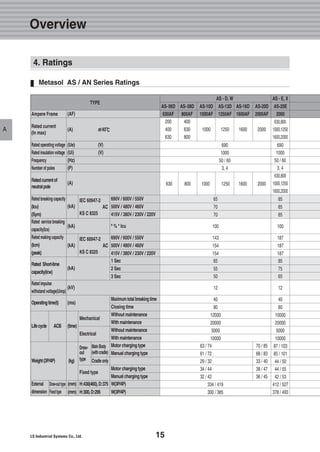
AH- 06D AH- 08D AH-10D AH-13D AH-16D AH-20D
630 800 1000 1250 1600 2000
200 400
400 630 1000 1250 1600 2000
630 800
800 1000 1250 1600 2000630
Rated breaking capacity
(Icu)
(Sym)
Rated service breaking
capacity(Ics)
Susol Series Ratings
4. Ratings
14 Technical catalog for Susol & Metasol ACB
Technical catalog for Susol & Metasol ACB
A
690
1000
50/60
3,4
690
1000
50 / 60
3, 4
412 / 527
378 / 493
785 / 1015
751 / 981
87 / 103 104 / 147
85 / 101 102 / 145
44 / 55 53 / 70
44 / 55 63 / 100
42 / 53 61 / 98
181 / 223 186 / 230
179 / 221 184 / 228
97 / 117 102 / 124
98 / 123 103 / 130
96 / 121 101 / 128
400
630 1000 1250 1600 2000 2500 3200 4000
800
630 800 1000 1250 1600 2000 2500 3200 4000
400
630
AH - E, X AH - G, Z
AH- 06E AH- 08E AH-10E AH-13E AH-16E AH-20E AH-25E AH-32E AH-40E
630 800 1000 1250 1600 2000 2500 3200 4000
AH-40G AH-50G AH-63G
4000 5000 6300
4000 5000 6300
4000 5000 6300
85
100
100
100
187
220
220
85
75
65
12
40
80
10000
20000
5000
10000
100
150
150
100
220
330
330
100
100
100
12
40
80
5000
10000
2000
5000
15
Overview
A
TYPE
AS - D, W
Ampere Frame
Rated current
(In max)
Ratedcurrentof
neutralpole
690V / 600V / 550V
500V / 480V / 460V
415V / 380V / 230V / 220V
690V / 600V / 550V
500V / 480V / 460V
415V / 380V / 230V / 220V
1 Sec
2 Sec
3 Sec
Maximumtotalbreakingtime
Closing time
Motor charging type
Manual charging type
Motor charging type
Manual charging type
W(3P/4P)
W(3P/4P)
Without maintenance
With maintenance
Without maintenance
With maintenance
Rated making capacity
(Icm)
(peak)
III
% * Icu
Rated Short-time
capacity(Icw)
Rated impulse
withstand voltage(Uimp)
Operatingtime(t)
Lifecycle
Weight(3P/4P)
External
dimension
ACB
Mechanical
Electrical
Draw-
out
type
Fixed type
Cradleonly
MainBody
(withcradle)
(AF)
(A) at40℃℃
(A)
(kA)
IEC 60947-2
AC
KS C 8325
IEC 60947-2
AC
KS C 8325
(kA)
(kA)
(kA)
(kV)
(ms)
Draw-outtype
Fixedtype
(mm)
(mm)
H:430(460),D:375
H:300,D:295
(time)
(kg)
(Ue) (V)
(Ui) (V)
(Hz)
(P)
690
1000
50 / 60
3, 4
690
1000
50 / 60
3, 4
65
70
70
100
143
154
154
65
55
50
12
40
80
12000
20000
5000
10000
334 / 419
300 / 385
63 / 74 70 / 85
61 / 72 68 / 83
29 / 32 33 / 40
34 / 44 38 / 47
32 / 42 36 / 45
87 / 103
85 / 101
44 / 50
44 / 55
42 / 53
412 / 527
378 / 493
Rated operating voltage
Ratedinsulationvoltage
Frequency
Number of poles
800 1000 1250 1600 2000630
630,800
1000,1250
1600,2000
Rated breaking capacity
(Icu)
(Sym)
Rated service breaking
capacity(Ics)
AS - E, X
630,800
1000,1250
1600,2000
85
85
85
100
187
187
187
85
75
65
12
40
80
10000
20000
5000
10000
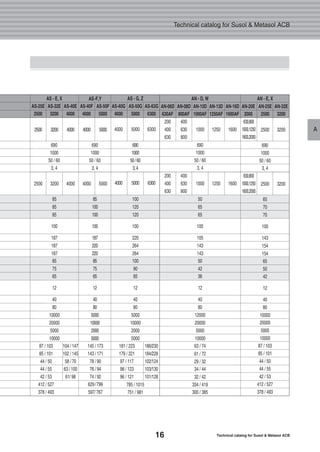
AS-06D AS-08D AS-10D AS-13D AS-16D AS-20D AS-20E
630AF 800AF 1000AF 1250AF 1600AF 2000AF 2000
200 400
400 630 1000 1250 1600 2000
630 800
Metasol AS / AN Series Ratings
4. Ratings
16 Technical catalog for Susol & Metasol ACB
Technical catalog for Susol & Metasol ACB
A
690
1000
50 / 60
3, 4
690
1000
50 / 60
3, 4
690
1000
50/60
3,4
690
1000
50 / 60
3, 4
690
1000
50 / 60
3, 4
785 / 1015
751 / 981
87 / 103 104 / 147 145 / 173
85 / 101 102 / 145 143 / 171
44 / 50 58 / 70 78 / 90
44 / 55 63 / 100 76 / 94
42 / 53 61/ 98 74 / 92
412 / 527 629/799
378 / 493 597/ 767
181 / 223 186/230
179 / 221 184/228
97 / 117 102/124
98 / 123 103/130
96 / 121 101/128
AS - E, X AS-F,Y AS - G, Z
AS-25E AS-32E AS-40E AS-40F AS-50F
2500 3200 4000 4000 5000
2500 3200 4000 4000 5000
2500 3200 4000 4000 5000
AS-40G AS-50G AS-63G
4000 5000 6300
4000 5000 6300
630,800
1000,1250
1600,2000
AN-06D AN-08D AN-10D AN-13D AN-16D
630AF 800AF 1000AF 1250AF 1600AF
2500 3200
AN-20E AN-25E AN-32E
2000 2500 3200
4000 5000 6300
85
100
100
100
187
220
220
85
75
65
12
40
80
5000
10000
2000
5000
85
85
85
100
187
187
187
85
75
65
12
40
80
10000
20000
5000
10000
100
120
120
100
220
264
264
100
90
85
12
40
80
5000
10000
2000
5000
200 400
400 630 1000 1250 1600
630 800
630,800
1000,1250
1600,2000
2500 3200
200 400
400 630 1000 1250 1600
630 800
AN - D, W AN - E, X
50
65
65
100
105
143
143
50
42
36
12
40
80
12000
20000
5000
10000
63 / 74
61 / 72
29 / 32
34 / 44
32 / 42
334 / 419
300 / 385
65
70
70
100
143
154
154
65
50
42
12
40
80
10000
20000
5000
10000
87 / 103
85 / 101
44 / 50
44 / 55
42 / 53
412 / 527
378 / 493
17
Overview
A
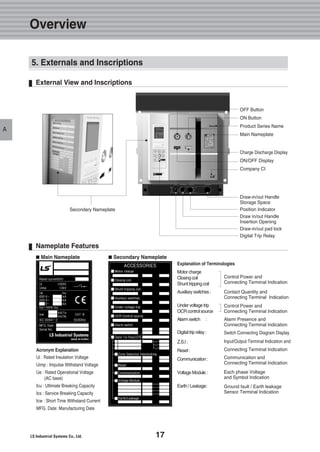
Ui : Rated Insulation Voltage
Uimp : Impulse Withstand Voltage
Ue : Rated Operational Voltage
(AC base)
Icu : Ultimate Breaking Capacity
Ics : Service Breaking Capacity
Icw : Short Time Withstand Current
MFG. Date: Manufacturing Date
Acronym Explanation
■■Main Nameplate
Motor charge
Closing coil
Shunt tripping coil
Auxiliary switches :
Under voltage trip
OCR control source
Alarm switch :
Digital trip relay :
Z.S.I :
Reset :
Communication :
Voltage Module :
Earth / Leakage:
Control Power and
Connecting Terminal Indication
Contact Quantity and
Connecting Terminal Indication
Control Power and
Connecting Terminal Indication
Alarm Presence and
Connecting Terminal Indication
Switch Connecting Diagram Display
Input/Output Terminal Indication and
Connecting Terminal Indication
Communication and
Connecting Terminal Indication
Each phase Voltage
and Symbol Indication
Ground fault / Earth leakage
Sensor Terminal Indication
Explanation of Terminologies
■■Secondary Nameplate
Draw-in/out Handle
Storage Space
Position Indicator
Draw in/out Handle
Insertion Opening
Draw-in/out pad lock
Digital Trip Relay
Charge Discharge Display
ON/OFF Display
Company CI
OFF Button
ON Button
Product Series Name
Main Nameplate
Secondary Nameplate
External View and Inscriptions
Nameplate Features
5. Externals and Inscriptions
B.Structure and
Operation
19
21
1. Internal Structure and
Components
2. Basic Function and
Breaking Operation
18 Technical catalog for Susol & Metasol ACB
Technical catalog for Susol & Metasol ACB
19
Structure and Operation
B
Components
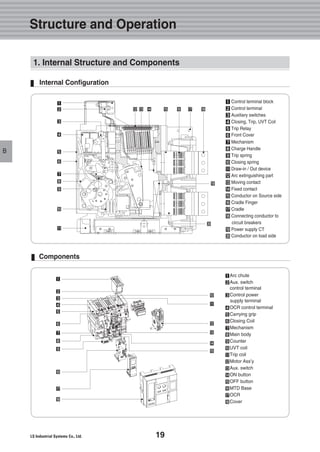
�Arc chute
�Aux. switch
control terminal
�Control power
supply terminal
�OCR control terminal
�Carrying grip
�Closing Coil
�Mechanism
�Main body
�Counter
�UVT coil
�Trip coil
�Motor Ass’y
�Aux. switch
�ON button
�OFF button
�MTD Base
�OCR
�Cover
�
�
�
�
�
�
�
�
�
�
�
�
�
�
�
�
�
Internal Configuration
1. Internal Structure and Components
�
�
� � � � � � �
�
�
�
�
�
�
�
�
�
�
�
�
� Control terminal block
� Control terminal
� Auxiliary switches
� Closing, Trip, UVT Coil
� Trip Relay
� Front Cover
� Mechanism
� Charge Handle
� Trip spring
� Closing spring
� Draw-in / Out device
� Arc extinguishing part
� Moving contact
� Fixed contact
� Conductor on Source side
� Cradle Finger
� Cradle
� Connecting conductor to
circuit breakers
� Power supply CT
� Conductor on load side
20 Technical catalog for Susol & Metasol ACB
Technical catalog for Susol & Metasol ACB
B
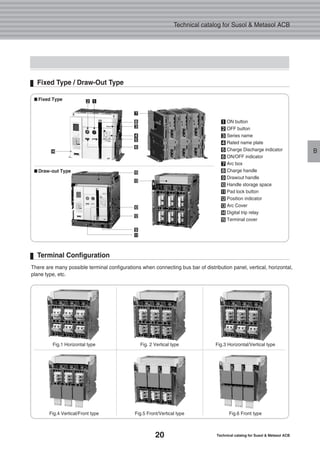
There are many possible terminal configurations when connecting bus bar of distribution panel, vertical, horizontal,
plane type, etc.
� ON button
� OFF button
� Series name
� Rated name plate
� Charge Discharge indicator
� ON/OFF indicator
� Arc box
� Charge handle
� Drawout handle
� Handle storage space
� Pad lock button
� Position indicator
� Arc Cover
� Digital trip relay
� Terminal cover
��
�
�
�
�
�
�
■Fixed Type
■Draw-out Type
Fig.1 Horizontal type Fig. 2 Vertical type Fig.3 Horizontal/Vertical type
Fig.4 Vertical/Front type Fig.5 Front/Vertical type Fig.6 Front type
�
�
�
�
�
�
�
Fixed Type / Draw-Out Type
Terminal Configuration
21
Structure and Operation
B
1. Circuit Closing
The closing operation of mechanism applies the current to the load. When energized, some loads makes inrush
current much greater than rated current (In) (e.g. Motor takes in 7~8times of In for a few seconds).To prevent
these over current which causes the dangerous phenomena for contacts (Erosion by arcs), closing operation
should be prompt. If a circuit breaker is in accordance with all standard cases, it should be able to endure 15~20
times of the rated current and be opened promptly for the faults occurred during closing operation or after it has closed.
2. Current Conducting
A circuit breaker must not be exceeding an acceptable temperature rise under normal current conducting and
there must be safe current conducting within specified breaking time under over current.
Furthermore, if a circuit breaker is of the discriminated type, it must has the structure which can withstand the
high electrodynamics to accept the short-circuit current while a circuit breaker in downstream is operating tobreak it.
3. Circuit Opening, Current Breaking
1) Current can be broken manually or remotely by voluntary operation on mechanism.
2) A circuit breaker opens a circuit automatically under condition of current which may has any values at
this time by an auxiliary trip unit (Under voltage, Ground fault, etc.)
3) A circuit breaker opens a circuit automatically against the over current because it is operated by OCR
(the trip unit) even if it is in the closed position.
4. Isolation
When a circuit breaker is open, a certain isolation level is required between charging and non-charging parts.
The Isolation Level is decided by following tests.
1) A maximum leakage current test under rated using voltage (Max. Ue)
2) An impulse voltage
1. Instantaneous Trip
When short-circuit current flows in, ACB trips instantly to minimize side effect due to the accident on load side.
It is called instantaneous trip.
2. Time delay Breaking
When abnormal current flows in such as inrush current of transformer or condenser, and starting current of motor,
ACB keeps the conducting condition for a regular time and break the current if it is continuously remained.
In case of short-circuit, ACB minimizes the damage from accident by keeping the circuit for the time previously set
concerning the operating time of branch breakers under selective discrimination.
However, it breaks the circuit after the delayed time in case abnormal current continuously flows in due to the
breaking failure of branch breakers. It is called as Time delayed breaking.
3. Overload Trip
If the current which exceeds the rated current flows in continuously, the cable is getting hotter and it causes
the big fire. Therefore, ACB breaks the current before the temperature of cable reaches the dangerous level.
It is called overload trip.
4. Ground-Fault Trip
Ground fault defines as current flows into the ground from circuit or charging part of load due to breakdown.
If ground fault current flows, it is inducted to other cables nearby owing to electronic induction, voltage level is risen
and it finally cause severe effects or damage on other device.
Furthermore, in case personnel hands are touched, it may result in electrical shock. Ground fault breaking is to prevent
any possible accident occurred from ground fault.
ACB Prevents a Fire,a Property Damage,the Breakage of an Electrical Equipment
on Load capital side by Protecting a Circuit from the capital fault Currents.
2. Basic Function and Breaking Operation
There are Following Breaking Principles Regarding Over Current.
C.
Internal
Electrical
Accessories
23
24
25
26
1. Closing & SHT Coil
2. Under Voltage Trip
Device(UVT)
3. UVT Time Delay Controller
4. Trip Alarm Switch(AL)
22 Technical catalog for Susol & Metasol ACB
Technical catalog for Susol & Metasol ACB
23
Internal Electrical Accessories
C
�It is a control device which closes or trips a circuit breaker from remote place when applying voltage
continuously or instantaneously to coil terminals (C1, C2).
Refer to the below table regarding the
length of wire when using trip coil with
24~30[V] or 48~60[V] of rated voltage
as power consumption due to inrush
current is about 200VA for coil operation.
Coil can be non-operating in case of not
corresponding with the wire specification
listed below.
The Specification of Using Wire
Rated Voltage[Vn] Power Consumption(VA or W)Operating Voltage Range[V] Trip Time [ms]
Shunt
Coil
Closing
Coil
Shunt
Coil
Closing
Coil
24 ~ 30
48 ~ 60
100 ~ 130
200 ~ 250
-
-
48
100 ~ 130
200 ~ 250
380 ~ 480
0.75 ~ 1.1 Vn
0.75 ~ 1.1 Vn
0.75 ~ 1.1 Vn
0.75 ~ 1.1 Vn
0.75 ~ 1.1 Vn
0.6 ~ 1.1 Vn
0.6 ~ 1.1 Vn
0.56 ~ 1.1 Vn
0.56 ~ 1.1 Vn
0.56 ~ 1.1 Vn
200
�Note) Operating voltage range is the min. rated standard for each rated voltage (Vh).
The Recommended Max. Wire Length
Closing Coil Shunt Coil
5
Less
than
40ms
Less
than
65ms
DC [V] AC [V]
Wire type
100%
85%
#14 AWG
(2.08mm2)
Operating
voltage
95.7 m
314 ft
62.5 m
205 ft
Rated Voltage [Vn]
DC 24~30 [V] DC/AC 48 [V]
#16 AWG
(1.31mm2)
61 m
200 ft
38.4 m
126 ft
#14 AWG
(2.08mm2)
457.8 m
1,503 ft
291.7 m
957 ft
#16 AWG
(1.31mm2)
287.7 m
944 ft
183.2 m
601 ft
Rated Voltage and Characteristics of Closing / Shunt coil
External Configuration and Wiring Diagram
Inrush Steady-State
External Configuration External ConfigurationWiring Diagram Wiring Diagram
1. Closing and Shunt Coil
24 Technical catalog for Susol & Metasol ACB
Technical catalog for Susol & Metasol ACB
C
External Configuration
�UVT installed inside of the circuit breaker opens the circuit breaker when its supply or control voltage drops below
the specified voltage.Please connect with UVT time-delay device in order to present the time-delay function
because UVT is technically instantaneous type.
�The closing of a circuit breaker is impossible mechanically or electrically if control power not supplied to UVT.
To close the circuit breaker, 65~85% of rated voltage should be applied to both terminals of UVT coil (D1, D2).
Rated Voltage[Vn] Power Consumption(VA or W)Operating Voltage Range [V] Trip Time
[ms]
24 ~ 30
48 ~ 60
100 ~ 130
200 ~ 250
-
0.65 ~ 0.85 Vn 0.4 ~ 0.6 Vn 200 5
�Note) Operating voltage range is the min. rated standard for each rated voltage (Vh).
Less than
50ms
DC [V]
-
48
100 ~ 130
200 ~ 250
380 ~ 480
AC [V] InrushDrop-OutPick-Up Steady-State
Refer to the below table regarding the
length of wire when using trip coil with
24~30[V] or 48~60[V] of rated voltage
as power consumption due to inrush
current is about 200VA for coil operation.
Coil can be non-operating in case of not
corresponding with the wire specification
listed below.
The Specification of Using Wire
The Recommended Max. Wire Length
Wire Type
100%
85%
#14 AWG
(2.08mm2)
Operating
Voltage
48.5 m
159 ft
13.4 m
44 ft
Rated Voltage [Vn]
DC 24~30 [V] DC/AC 48 [V]
#16 AWG
(1.31mm2)
30.5 m
100 ft
8.8 m
29 ft
#14 AWG
(2.08mm2)
233.2 m
765 ft
62.5 m
205 ft
#16 AWG
(1.31mm2)
143.9 m
472 ft
39.3 m
129 ft
Rated Voltage and Characteristics of UVT
External Configuration and Wiring Diagram
2. Under Voltage Trip device, UVT
Wiring Diagram
25
Internal Electrical Accessories
C
�Use UVT time delay controller to prevent the trip of a circuit breaker due to the operation of instantaneous type
UVT when voltage dips occurred instantly on main or control power supply.
�If combining UVT time delay controller and instantaneous type UVT mounted in circuit breaker, it makes a trip
operation after a certain time when its main or control voltage drop below specified value to prevent the
unexpected trip operation caused from instant blackout.
�It is the outdoor type and can be used by mounting to inside distribution panel or the cradle of circuit breaker.
�It provides control signal (output contact) to indicate the trip status of circuit breaker caused from UVToperation
for indoor type. If control voltage supplied to UVT under normal operation, b contact is conducted and if circuit
breaker is tripped due to UVT operation, a contact is conducted.
Rated Voltage[Vn] Power Consumption(VA or W)Operating Voltage Range [V] Trip Time
[s]
24 ~ 30
100 ~ 130
200 ~ 250
-
0.65 ~ 0.85 Vn 0.4 ~ 0.65 Vn 200 5
�Note) Operating Voltage Range is the min. rated standard for each rated voltage (Vh).
0.5, 1,
1.5, 3
DC [V]
48
100 ~ 130
200 ~ 250
380 ~ 480
AC [V] InrushPick-Up Drop-Out Steady-State
Rated Voltage and Characteristics of UVT Time Delay Controller
Rated Voltage[V] Rated Current(A), Resistive Load Max. Switching Voltage(V) Max. Switching Current(V)
24V DC
120V AC
250V AC
12
12
10
110V DC
250V A C
15
Rated Output Contact
External Configuration and Wiring Diagram
3. UVT Time Delay Controller
External Configuration Wiring Diagram
26 Technical catalog for Susol & Metasol ACB
Technical catalog for Susol & Metasol ACB
C
�In case a circuit breaker is tripped by OCR which operates against the faulty current (Over Current Relay),
Trip Alarm switch provides the information regarding the trip of circuit breaker by sending the electrical signal from
the mechanical indicator on main cover of main circuit breaker or internal auxiliary switch.
�When a circuit breaker tripped by faulty current, a mechanical trip indicator (MRB, Manual Reset Button) pops out
from the main cover and the switch (AL) which sends control signal electrically is conducted to output the
information occurred from faulty circuit breaker.
�MRB can be operated only by OCR but not by OFF operation of circuit breaker.
�To re-close a circuit breaker after a trip, press MRB to reset it for closing.
�2pcs of Electrical trip switch (AL1, AL2, 1a) are provided (OPTION)
4. Trip Alarm Switch, AL
Rated Voltage
[Vn]
Non-Inductive Load (A) Rated Voltage Inrush
Current
8V DC
30V DC
125V DC
250V DC
250V AC
11
10
0.6
0.3
11
3
3
0.1
0.05
1.5
6
6
0.6
0.3
6
3
3
0.1
0.05
2
MAX. 24A
Resistive Load Lamp Load Motor LoadInductive Load (A)
Electrical Characteristics of AL Switch
Externals
AL2, 1a
AL1, 1a
D.Digital
Trip Relay
28
29
31
32
44
53
1. Comparison Table upon Types
2. Externals and Configuration
3. Internal Circuit Diagram
4. Relay Function
5. Measurement Function
6. IO(Input-Output)Port
27
28 Technical catalog for Susol & Metasol ACB
Technical catalog for Susol & Metasol ACB
D
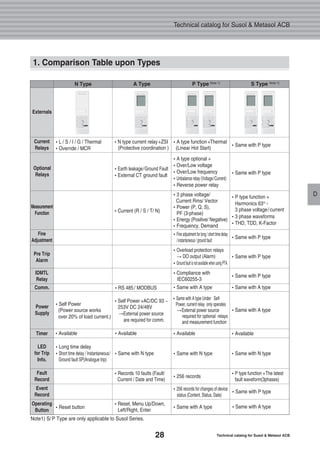
1. Comparison Table upon Types
N Type
Externals
Current
Relays
�L / S / I / G / Thermal
�Override / MCR
�N type current relay+ZSI
(Protective coordination )
�Earth leakage/Ground Fault
�External CT ground fault
�Current (R / S / T/ N)
�A type optional +
�Over/Low voltage
�Over/Low frequency
�Unbalance relay (Voltage/Current)
�Reverse power relay
�3 phase voltage/
Current Rms/ Vector
�Power (P, Q, S),
PF (3-phase)
�Energy (Positive/ Negative)
�Frequency, Demand
�Fineadjustmentforlong/shorttimedelay
/instantaneous/groundfault
�Overload protection relays
DO output (Alarm)
�GroundfaultisnotavailablewhenusingPTA.
�Compliance with
IEC60255-3
�Same with A type
�Available�Available�Available
�Reset button
Note1) S/ P Type are only applicable to Susol Series.
�Reset, Menu Up/Down,
Left/Right, Enter
�Records 10 faults (Fault/
Current / Date and Time)
�Same with N type
�Long time delay
�Short time delay / Instantaneous/
Ground fault SP(Analogue trip)
�RS 485/ MODBUS
�Self Power+AC/DC 93 ~
253V DC 24/48V
External power source
are required for comm.
�Self Power
(Power source works
over 20% of load current.)
�Same with N type
�256 records
�256 records for changes of device
status (Content, Status, Date)
�Same with A type
�Same with A type Under Self-
Power, current relay only operates
External power source
required for optional relays
and measurement function
�A type function+Thermal
(Linear Hot Start)
�Same with P type
�Same with P type
�Same with P type
�Same with P type
�Same with P type
�Same with A type
�Same with P type
�P type function +The latest
fault waveform(3phases)
�Same with A type
�Same with A type
�Available
�Same with N type
�P type function +
Harmonics 63rd
-
3 phase voltage/current
�3 phase waveforms
�THD, TDD, K-Factor
Optional
Relays
Measurement
Function
Fine
Adjustment
IDMTL
Relay
Comm.
Timer
Power
Supply
LED
for Trip
Info.
Fault
Record
Event
Record
Operating
Button
Pre Trip
Alarm
A Type P Type
D
Note 1) Note 1)S Type
29
D
Digital Trip Relay
D
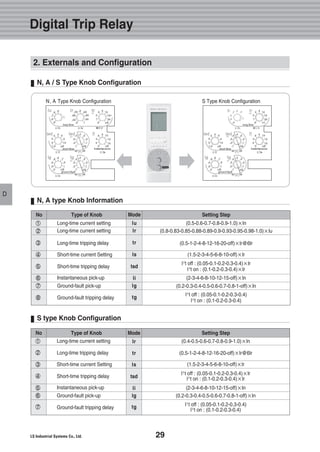
(0.4-0.5-0.6-0.7-0.8-0.9-1.0)×ln
(0.5-1-2-4-8-12-16-20-off)×lr@6lr
(1.5-2-3-4-5-6-8-10-off)×lr
l2
t off : (0.05-0.1-0.2-0.3-0.4)×lr
l2
t on : (0.1-0.2-0.3-0.4)×lr
(2-3-4-6-8-10-12-15-off)×ln
(0.2-0.3-0.4-0.5-0.6-0.7-0.8-1-off)×ln
l2
t off : (0.05-0.1-0.2-0.3-0.4)
l2
t on : (0.1-0.2-0.3-0.4)
(0.5-0.6-0.7-0.8-0.9-1.0)×ln
(0.8-0.83-0.85-0.88-0.89-0.9-0.93-0.95-0.98-1.0)×lu
(0.5-1-2-4-8-12-16-20-off)×lr@6lr
(1.5-2-3-4-5-6-8-10-off)×lr
l2
t off : (0.05-0.1-0.2-0.3-0.4)×lr
l2
t on : (0.1-0.2-0.3-0.4)×lr
(2-3-4-6-8-10-12-15-off)×ln
(0.2-0.3-0.4-0.5-0.6-0.7-0.8-1-off)×ln
l2
t off : (0.05-0.1-0.2-0.3-0.4)
l2
t on : (0.1-0.2-0.3-0.4)
2. Externals and Configuration
N, A type Knob Information
N, A / S Type Knob Configuration
S type Knob Configuration
①①
②②
③③
④④
⑤⑤
⑥⑥
⑦⑦
⑧⑧
lu
lr
tr
ls
tsd
li
lg
tg
No ModeType of Knob Setting Step
Long-time current setting
Long-time tripping delay
Short-time current Setting
Short-time tripping delay
Instantaneous pick-up
Ground-fault pick-up
Ground-fault tripping delay
①①
②②
③③
④④
⑤⑤
⑥⑥
⑦⑦
lr
tr
ls
tsd
li
lg
tg
No ModeType of Knob Setting Step
Long-time current setting
Long-time tripping delay
Short-time current Setting
Short-time tripping delay
Instantaneous pick-up
Ground-fault pick-up
Ground-fault tripping delay
N, A Type Knob Configuration S Type Knob Configuration
� �
30 Technical catalog for Susol & Metasol ACB
Technical catalog for Susol & Metasol ACB
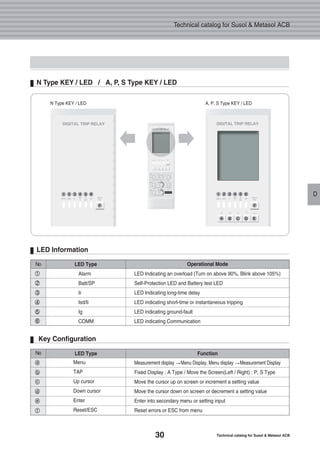
DD
ⓐⓐ
ⓑⓑ
ⓒⓒ
ⓓⓓ
ⓔⓔ
ⓕⓕ
No LED Type Function
Menu
TAP
Up cursor
Down cursor
Enter
Reset/ESC
Measurement display Menu Display, Menu display Measurement Display
Fixed Display : A Type / Move the Screen(Left / Right) : P, S Type
Move the cursor up on screen or increment a setting value
Move the cursor down on screen or decrement a setting value
Enter into secondary menu or setting input
Reset errors or ESC from menu
LED Information
Key Configuration
①①
②②
③③
④④
⑤⑤
⑥⑥
No Operational Mode
Alarm
Batt/SP
Ir
Isd/Ii
Ig
COMM
LED Indicating an overload (Turn on above 90%, Blink above 105%)
Self-Protection LED and Battery test LED
LED Indicating long-time delay
LED indicating short-time or instantaneous tripping
LED indicating ground-fault
LED indicating Communication
LED Type
N Type KEY / LED / A, P, S Type KEY / LED
N Type KEY / LED A, P, S Type KEY / LED
� �
31
D
Digital Trip Relay
D
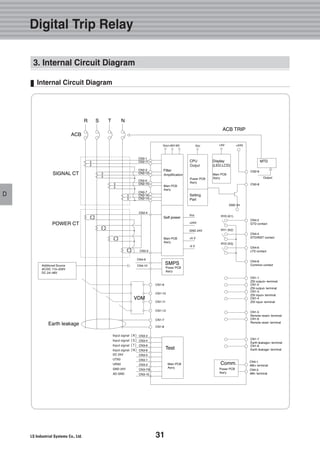
3. Internal Circuit Diagram
Internal Circuit Diagram
32 Technical catalog for Susol & Metasol ACB
Technical catalog for Susol & Metasol ACB
DD
4. Relay Function
Long- Time Delay Relays
Long-Time
Delay(L)
Short-Time
Delay(S)
Instantane
ous(I)
Ground
Fault
Maximum time delay(sec)
Accuracy:±15% or below 100ms
Continuous Thermal Memory Time
Current Setting(A)
Accuracy:±10% or below 50ms
Maximum time delay(s)
@ 10×Ir
Current Setting(A)
Tripping time
Current Setting(A)
Accuracy:±10%(Ig≥0.4In)
±20%(Ig≥0.4In) or below 50ms
Maximum time delay(s)
@ 1×In
tr@(1.5×Ir)
tr@(6.0×Ir)
tr@(7.2×Ir)
Isd=Ir× ...
Tsd
Ii=In× ...
Ig=In× ...
tg
12.5
0.5
0.34
1.5
0.05
20
80
2
0.2
0.05
20
80
25
1
0.69
2
0.1
0.1
80
140
3
0.3
0.1
0.1
80
140
50
2
1.38
3
0.2
0.2
160
240
4
0.4
0.2
0.2
160
240
100
4
2.7
4
0.3
0.3
260
340
6
0.5
0.3
0.3
260
340
200
8
5.5
5
0.4
0.4
360
440
8
0.6
0.4
0.4
360
440
300
12
8.3
6
10
0.7
400
16
11
8
12
0.8
500
20
13.8
10
15
1.0
off
off
off
off
off
off
I2T off
I2T on
Min. Trip
Time(ms)
Max. Trip
Time(ms)
I2t off
I2t on
Min. Trip
Time(ms)
Max. Trip
Time(ms)
Current Setting(A) (1.15××Ir) Ir = In ×× ... 0.4 0.5 0.6 0.7 0.8 0.9 1.0
below 50ms
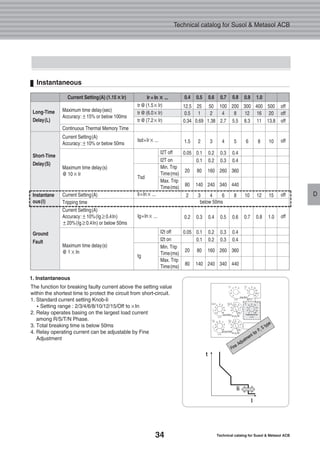
1. Long- Time Delay
The function for overload protection which has time delayed
characteristic in inverse ratio to fault current. (T = I^2 / K).
1) Standard current setting Knob-Ir
�Setting range : (0.4, 0.5, 0.6, 0.7, 0.8, 0.9, 1.0) In
2) Time delay setting Knob-Tr
�Standard operating time is based on the time of 6lr.
�Setting range : 0.5/ 1/ 2/ 4/ 8/ 12/ 16/ 20/ Off sec (9 modes)
3) Relay starting current
�When current over (1.15) Ir flows in, relay is picked up.
4) Long-Time Delay Operating Characteristic Formula
�T = τXln(I X Ip )/(I X K )
T = Operating time [ ms ] τ= 29250*Tr
I = Overload rate Ip = Load rate before Overload
K = 1.10(Service Factor)
5) Relay operates basing on the largest load current
among R/S/T/N Phase.
6) Rated current can be adjustable by Fine Adjustment Note1)
Note1) Fine Adjustment
The function for adjusting relay operating current much more
detailed than the value of knob
2 2 2 2
33
D
Digital Trip Relay
D
4. Relay Function
Short-Time Delay Relays
Long-Time
Delay(L)
Short-Time
Delay(S)
Instantane
ous(I)
Ground
Fault
Maximum time delay(sec)
Accuracy:±15% or below 100ms
Continuous Thermal Memory Time
Current Setting(A)
Accuracy:±10% or below 50ms
Maximum time delay(s)
@ 10×Ir
Current Setting(A)
Tripping time
Current Setting(A)
Accuracy:±10%(Ig≥0.4In)
±20%(Ig≥0.4In) or below 50ms
Maximum time delay(s)
@ 1×In
tr@(1.5×Ir)
tr@(6.0×Ir)
tr@(7.2×Ir)
Isd=Ir× ...
Tsd
Ii=In× ...
Ig=In× ...
tg
12.5
0.5
0.34
1.5
0.05
20
80
2
0.2
0.05
20
80
25
1
0.69
2
0.1
0.1
80
140
3
0.3
0.1
0.1
80
140
50
2
1.38
3
0.2
0.2
160
240
4
0.4
0.2
0.2
160
240
100
4
2.7
4
0.3
0.3
260
340
6
0.5
0.3
0.3
260
340
200
8
5.5
5
0.4
0.4
360
440
8
0.6
0.4
0.4
360
440
300
12
8.3
6
10
0.7
400
16
11
8
12
0.8
500
20
13.8
10
15
1.0
off
off
off
off
off
off
I2T off
I2T on
Min. Trip
Time(ms)
Max. Trip
Time(ms)
I2t off
I2t on
Min. Trip
Time(ms)
Max. Trip
Time(ms)
Current Setting(A) (1.15××Ir) Ir = In ×× ... 0.4 0.5 0.6 0.7 0.8 0.9 1.0
below 50ms
The function for fault current (over current) protection which
has time delayed and definite time characteristic in inverse
ratio to fault current.
1) Standard current setting Knob-Isd
�Setting range : 1.5/ 2/ 3/ 4/ 5/ 6/ 8/ 10/ OFF Ir
2) Time delay setting Knob-Tsd
�Standard operating time is based on the time of 10lr.
�Inverse time (I2T On ) : 0.1/0.2/0.3/0.4 Sec
�Definite time (I2T Off) : 0.05/0.1/0.2/0.3/0.4 Sec
3) Short-Time Delay Operating Characteristic Formula
�T = td / I
T= Operating time [ms] Td = 1000*Tsd
I = Overload rate (Over current/Ir)
4) Relay operates basing on the largest load current among
R/S/T/N Phase.
5) Relay operating current can be adjustable by Fine Adjustment
6) Relay can operate at instantaneous current through ZSInote1)
Note1) ZSI : Zone Selective Interlocking
The Lowest equipment pre-arranged with ZSI will operate
instantaneously regardless of time delay setting.
1. Short-Time Delay
2
34 Technical catalog for Susol & Metasol ACB
Technical catalog for Susol & Metasol ACB
DD
Instantaneous
Long-Time
Delay(L)
Short-Time
Delay(S)
Instantane
ous(I)
Ground
Fault
Maximum time delay(sec)
Accuracy:±15% or below 100ms
Continuous Thermal Memory Time
Current Setting(A)
Accuracy:±10% or below 50ms
Maximum time delay(s)
@ 10×Ir
Current Setting(A)
Tripping time
Current Setting(A)
Accuracy:±10%(Ig≥0.4In)
±20%(Ig≥0.4In) or below 50ms
Maximum time delay(s)
@ 1×In
tr@(1.5×Ir)
tr@(6.0×Ir)
tr@(7.2×Ir)
Isd=Ir× ...
Tsd
Ii=In× ...
Ig=In× ...
tg
12.5
0.5
0.34
1.5
0.05
20
80
2
0.2
0.05
20
80
25
1
0.69
2
0.1
0.1
80
140
3
0.3
0.1
0.1
80
140
50
2
1.38
3
0.2
0.2
160
240
4
0.4
0.2
0.2
160
240
100
4
2.7
4
0.3
0.3
260
340
6
0.5
0.3
0.3
260
340
200
8
5.5
5
0.4
0.4
360
440
8
0.6
0.4
0.4
360
440
300
12
8.3
6
10
0.7
400
16
11
8
12
0.8
500
20
13.8
10
15
1.0
off
off
off
off
off
off
I2T off
I2T on
Min. Trip
Time(ms)
Max. Trip
Time(ms)
I2t off
I2t on
Min. Trip
Time(ms)
Max. Trip
Time(ms)
Current Setting(A) (1.15××Ir) Ir = In ×× ... 0.4 0.5 0.6 0.7 0.8 0.9 1.0
below 50ms
The function for breaking faulty current above the setting value
within the shortest time to protect the circuit from short-circuit.
1. Standard current setting Knob-Ii
�Setting range : 2/3/4/6/8/10/12/15/Off to In
2. Relay operates basing on the largest load current
among R/S/T/N Phase.
3. Total breaking time is below 50ms
4. Relay operating current can be adjustable by Fine
Adjustment
1. Instantaneous
35
D
Digital Trip Relay
D
4. Relay Function
Ground Fault
Long-Time
Delay(L)
Short-Time
Delay(S)
Instantane
ous(I)
Ground
Fault
Maximum time delay(sec)
Accuracy:±15% or below 100ms
Continuous Thermal Memory Time
Current Setting(A)
Accuracy:±10% or below 50ms
Maximum time delay(s)
@ 10×Ir
Current Setting(A)
Tripping time
Current Setting(A)
Accuracy:±10%(Ig≥0.4In)
±20%(Ig≥0.4In) or below 50ms
Maximum time delay(s)
@ 1×In
tr@(1.5×Ir)
tr@(6.0×Ir)
tr@(7.2×Ir)
Isd=Ir× ...
Tsd
Ii=In× ...
Ig=In× ...
tg
12.5
0.5
0.34
1.5
0.05
20
80
2
0.2
0.05
20
80
25
1
0.69
2
0.1
0.1
80
140
3
0.3
0.1
0.1
80
140
50
2
1.38
3
0.2
0.2
160
240
4
0.4
0.2
0.2
160
240
100
4
2.7
4
0.3
0.3
260
340
6
0.5
0.3
0.3
260
340
200
8
5.5
5
0.4
0.4
360
440
8
0.6
0.4
0.4
360
440
300
12
8.3
6
10
0.7
400
16
11
8
12
0.8
500
20
13.8
10
15
1.0
off
off
off
off
off
off
I2T off
I2T on
Min. Trip
Time(ms)
Max. Trip
Time(ms)
I2t off
I2t on
Min. Trip
Time(ms)
Max. Trip
Time(ms)
Current Setting(A) (1.15××Ir) Ir = In ×× ... 0.4 0.5 0.6 0.7 0.8 0.9 1.0
below 50ms
The function for breaking ground fault current above setting
value after time-delay to protect the circuit from ground fault.
1. Standard current setting Knob-Ig
�Setting range: 0.2/0.3/0.4/0.5/0.6/0.7/0.8//1.0/OFF In
2. Time delay setting Knob-Tg
�Inverse time (I2T On ) : 0.1/0.2/0.3/0.4 Sec
�Definite time (I2T Off) : 0.05/0.1/0.2/0.3/0.4 Sec
3. Ground Fault Operating Characteristic Formula �T = td / I2
T= Operating time [ms] Td = 1000*Tsd
I = Overload rate (Ground fault current/Standard current)
4. Ground Fault Current = R + S + T + N (Vector Sum)
5. Relay operating current can be adjustable with detailed setting.
6. Relay can operate at instantaneous current through ZSI.
7. Categorize Internal CT Type (Standard Type)note1) and
External CT Type (Separate Order)note2)
Note1) Internal CT Type : Correct relay as the vector sum of
CT on internal R/S/T/N phase
Note2) External CT Type : Install an external CT to be suitable for the
value of ground fault current and then connect to inside of ACB.
In this case, arrange 5A for secondary rating output of CT and set 5A
for standard rating of relays.
1. Ground Fault
36 Technical catalog for Susol & Metasol ACB
Technical catalog for Susol & Metasol ACB
DD
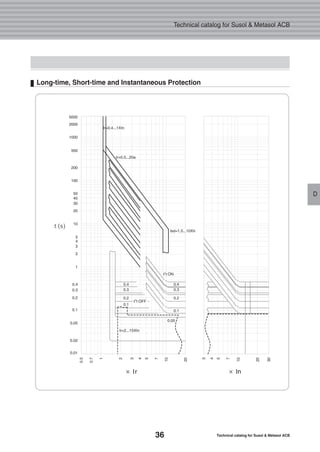
Long-time, Short-time and Instantaneous Protection
37
D
Digital Trip Relay
D
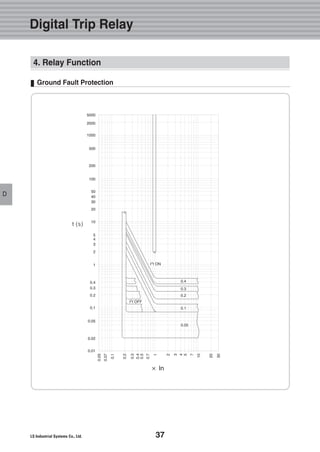
Ground Fault Protection
4. Relay Function
38 Technical catalog for Susol & Metasol ACB
Technical catalog for Susol & Metasol ACB
DD
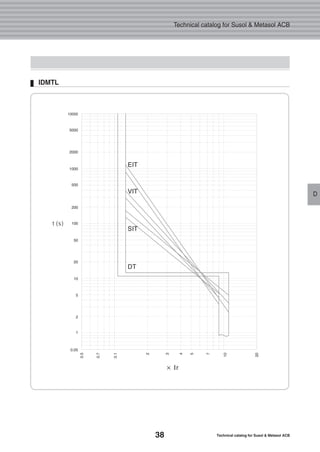
IDMTL
39
D
Digital Trip Relay
D
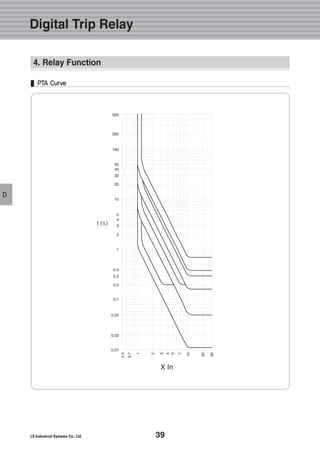
PTA Curve
4. Relay Function
40 Technical catalog for Susol & Metasol ACB
Technical catalog for Susol & Metasol ACB
D
UV, under voltage 80V ~ OV_pickup ±5% 1V
OV, over voltage UV_pickup ~ 980V ±5% 1V
Vunbal, Voltage Unbalance 6% ~ 99% ±2.5% or *±10% 1%
rP, Reverse Power 10 ~ 500kW ±10% 1kW
Lunbal, Current Unbalance 6% ~ 99% ±2.5% or *±10% 1% 1.2 ~ 40 0.1 ±0.1
60Hz UF_pickup ~ 65 ±0.1Hz 1Hz sec sec sec
50Hz UF_pickup ~ 55 ±0.1Hz 1Hz
60Hz 55Hz ~ OF_pickup ±0.1Hz 1Hz
50Hz 45Hz ~ OF_pickup ±0.1Hz 1Hz
OF, over
frequency
UF, under
frequency
1. UVR - Under Voltage Relay
Off/Alarm/DO is available when under voltage occurs to one of the 3 phases.
1) Pickup standard voltage setting (UV_pickup): 80 ~ OVR_PickUp Note1
) V (Step: 1V)
2) Delay Time (tuvp): 1.2 ~ 40 sec (Step : 0.1 sec)
3) Relay error: Pickup value 5%, Operating time 0.1sec.
4) Remark: From 3P Voltage, Max. voltage operate at above 60V.
2. OVR - OVER Voltage Relay
Off/Alarm/DO is available when under voltage occurs to one of the 3 phases.
1) Pickup standard voltage setting (OV_pickup): UV_pickupNote2
) ~ 900V (Step: 1V)
2) Pickup time delay setting (tovp): 1.2 ~ 40 sec (Step: 0.1 sec)
3) Relay error: Pickup value 5%, operating time 0.1 sec.
3. rPower - Reverse Power Protection
Off/Alarm/DO setting available when total active power of 3P flows reverse above the setting.
1) Pickup setting: 10 ~ 500kW (Step: 1kW)
2) Pickup time delay setting: 1.2 ~ 40 sec (Step: 0.1 sec)
3) relay error: Pickup value 10%, Operating time 0.1sec.
4) Calculating formula and Remark: absolute power phase angle difference
(Voltage phase difference- Current phase difference) 0 ~ 60°
Note 1) OVR_PickUp - OVR Pickup setting voltage
2) UV_PickUp - UVR Pickup setting voltage
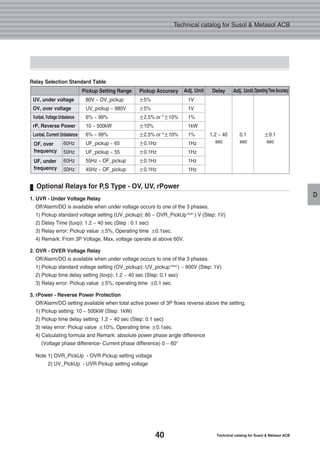
Relay Selection Standard Table
Optional Relays for P,S Type - OV, UV, rPower
DelayPickup AccuracyPickup Setting Range OperatingTimeAccuracyAdj. UnitAdj. Unit
41
D
4. Relay Function
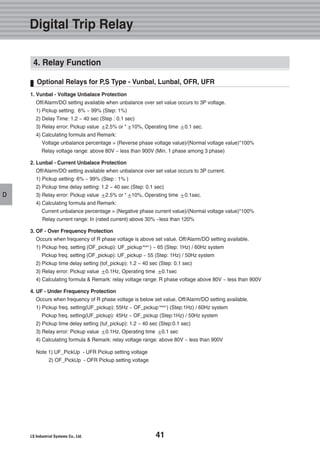
Optional Relays for P,S Type - Vunbal, Lunbal, OFR, UFR
1. Vunbal - Voltage Unbalace Protection
Off/Alarm/DO setting available when unbalance over set value occurs to 3P voltage.
1) Pickup setting: 6% ~ 99% (Step: 1%)
2) Delay Time: 1.2 ~ 40 sec (Step : 0.1 sec)
3) Relay error: Pickup value 2.5% or * 10%, Operating time 0.1 sec.
4) Calculating formula and Remark:
Voltage unbalance percentage = (Reverse phase voltage value)/(Normal voltage value)*100%
Relay voltage range: above 80V ~ less than 900V (Min. 1 phase among 3 phase)
2. Lunbal - Current Unbalace Protection
Off/Alarm/DO setting available when unbalance over set value occurs to 3P current.
1) Pickup setting: 6% ~ 99% (Step : 1% )
2) Pickup time delay setting: 1.2 ~ 40 sec (Step: 0.1 sec)
3) Relay error: Pickup value 2.5% or * 10%, Operating time 0.1sec.
4) Calculating formula and Remark:
Current unbalance percentage = (Negative phase current value)/(Normal voltage value)*100%
Relay current range: In (rated current) above 30% ~less than 120%
3. OF - Over Frequency Protection
Occurs when frequency of R phase voltage is above set value. Off/Alarm/DO setting available.
1) Pickup freq. setting (OF_pickup): UF_pickupNote1
) ~ 65 (Step: 1Hz) / 60Hz system
Pickup freq. setting (OF_pickup): UF_pickup ~ 55 (Step: 1Hz) / 50Hz system
2) Pickup time delay setting (tof_pickup): 1.2 ~ 40 sec (Step: 0.1 sec)
3) Relay error: Pickup value 0.1Hz, Operating time 0.1sec
4) Calculating formula & Remark: relay voltage range: R phase voltage above 80V ~ less than 900V
4. UF - Under Frequency Protection
Occurs when frequency of R phase voltage is below set value. Off/Alarm/DO setting available.
1) Pickup freq. setting(UF_pickup): 55Hz ~ OF_pickup Note2
) (Step:1Hz) / 60Hz system
Pickup freq. setting(UF_pickup): 45Hz ~ OF_pickup (Step:1Hz) / 50Hz system
2) Pickup time delay setting (tuf_pickup): 1.2 ~ 40 sec (Step:0.1 sec)
3) Relay error: Pickup value 0.1Hz, Operating time 0.1 sec
4) Calculating formula & Remark: relay voltage range: above 80V ~ less than 900V
Note 1) UF_PickUp - UFR Pickup setting voltage
2) OF_PickUp - OFR Pickup setting voltage
Digital Trip Relay
42 Technical catalog for Susol & Metasol ACB
Technical catalog for Susol & Metasol ACB
D
R S T N
Optional Relay - External CT Earth Leakage
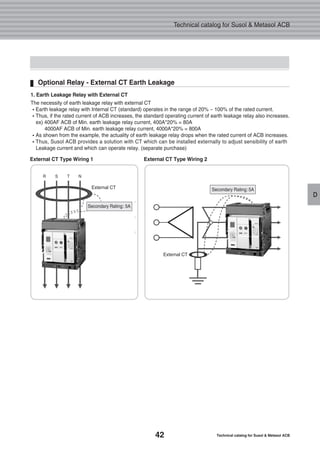
1. Earth Leakage Relay with External CT
The necessity of earth leakage relay with external CT
Earth leakage relay with Internal CT (standard) operates in the range of 20% ~ 100% of the rated current.
Thus, if the rated current of ACB increases, the standard operating current of earth leakage relay also increases.
ex) 400AF ACB of Min. earth leakage relay current, 400A*20% = 80A
4000AF ACB of Min. earth leakage relay current, 4000A*20% = 800A
As shown from the example, the actuality of earth leakage relay drops when the rated current of ACB increases.
Thus, Susol ACB provides a solution with CT which can be installed externally to adjust sensibility of earth
Leakage current and which can operate relay. (separate purchase)
External CT Type Wiring 1
External CT
External CT
External CT Type Wiring 2
Secondary Rating: 5A
Secondary Rating:5A
43
D
R S T N
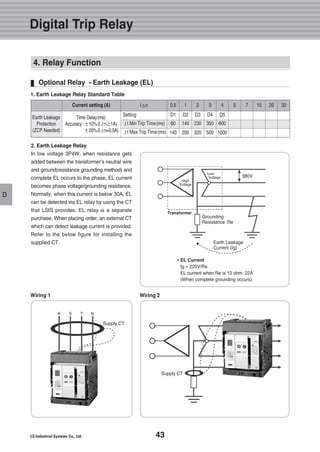
EL Current
Ig = 220V/Re
EL current when Re is 10 ohm: 22A
(When complete grounding occurs)
High
Voltage
Transformer
Grounding
Resistance :Re
Earth Leakage
Current (Ig)
Low
Voltage 380V
Supply CT
Supply CT
2. Earth Leakage Relay
In low voltage 3P4W, when resistance gets
added between the transformer’s neutral wire
and ground(resistance grounding method) and
complete EL occurs to the phase, EL current
becomes phase voltage/grounding resistance.
Normally, when this current is below 30A, EL
can be detected via EL relay by using the CT
that LSIS provides. EL relay is a separate
purchase, When placing order, an external CT
which can detect leakage current is provided.
Refer to the below figure for installing the
supplied CT.
Wiring 1 Wiring 2
Digital Trip Relay
4. Relay Function
Optional Relay - Earth Leakage (EL)
Earth Leakage
Protection
(ZCP Needed)
Time Delay(ms)
Accuracy :±10%(IΔn≥1A)
±20%(IΔn=0.5A)
Setting
Δt Min Trip Time(ms)
Δt Max Trip Time(ms)
D2
140
200
D1
60
140
D3
230
320
D4
350
500
D5
800
1000
Current setting (A) IΔn 10.5 2 3 4 5 7 10 20 30
1. Earth Leakage Relay Standard Table
44 Technical catalog for Susol & Metasol ACB
Technical catalog for Susol & Metasol ACB
D
F/S
F/S
F/S
3P3W
3P4W
3P4W
F/S
F/S
F/S
F/S
F/S
F/S
-
-
-
-
-
1%
1%
3%
-
-
1
1
1
3 %
3 %
3 %
3 %
3 %
3 %
0.05Hz
-
-
-
-
-
Vab,Vbc,Vca
Va,Vb,Vc
V1(no accuracy)
V2(no accuracy)
Ia,Ib,Ic
I1(no accuracy)
I2(no accuracy)
VabIa, VabIb, VabIc, VabVbc, VabVca
VaVb, VaVc
VaIa, VbIb, VcIc
Pa(ab), Pb(bc), Pc(ca), P
Qa(ab), Qb(bc), Qc(ca), Q
Sa(ab), Sb(bc), Sc(ca), S
WHa(ab), WHb(bc), WHc(ca), WH
VARHa(ab), VARHb(bc), VARHc(ca), VARH
rWHa(ab), rWHb(bc), rWHc(ca), rWH
Frequency(Hz)
PFa(ab), PFb(bc), PFc(ca), PF
1nd~63th harmonics anTHD of Va(ab), Vb(bc), Vc(ca)
1nd ~ 63th harmonics and THD, TDD, K-Factor of Ia, Ib, Ic
Peak demand
Peak demand
Line voltage
Phase voltage
Normal voltage
Reverse voltage
Line current
Normal current
Reverse current
line-to-line, current-to-current
phase-to-phase
Phase-to-current
Active power
Reactive power
Apparent power
Active electric energy
Reactive electric energy
Reverse active electric energy
Frequency
Power factor(PF)
Voltage harmonics
Current harmonics
Active power
Current Demand
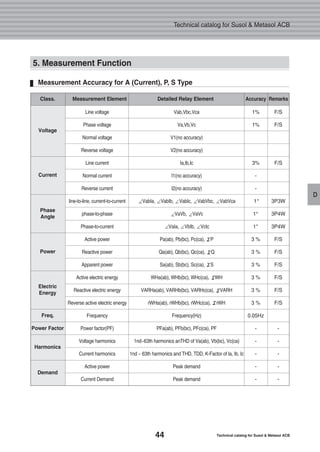
5. Measurement Function
Measurement Accuracy for A (Current), P, S Type
Voltage
Current
Phase
Angle
Power
Electric
Energy
Freq.
Power Factor
Harmonics
Demand
Class. Accuracy RemarksMeasurement Element Detailed Relay Element
45
D
Voltage Input / Specification for P, S Type
1. Voltage Input
1) Rated voltage input
Measurement range 60V ~ 690V
Relay range 80V ~ 900V
2) Voltage input method
3P4W : Connect R/S/T/N phase to the corresponding terminal of voltage dividing module
3P3W : Attach voltage of S phase to the terminal of N phase after connecting R/S/T phase to the corresponding
terminal of voltage dividing module
3) Voltage accuracy : 1.0% (F/S) (min. indication unit: 1V)
3P 4W Voltage Wiring 3P 3W Voltage Wiring
[Voltage Dividing Module]
V0
V3
V2
V1
V0
V3
V2
V1
Vr Vs Vt Vn Vr Vs Vt
3P voltage
[Voltage Dividing Module] [Voltage Dividing Module]
Digital Trip Relay
5. Measurement Function
46 Technical catalog for Susol & Metasol ACB
Technical catalog for Susol & Metasol ACB
D
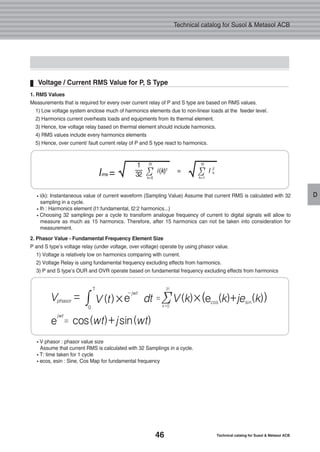
Voltage / Current RMS Value for P, S Type
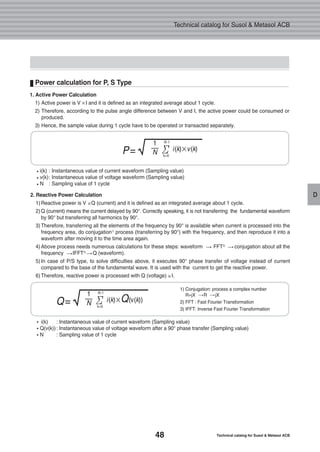
i(k): Instantaneous value of current waveform (Sampling Value) Assume that current RMS is calculated with 32
sampling in a cycle.
Ih : Harmonics element (I1:fundamental, I2:2 harmonics...)
Choosing 32 samplings per a cycle to transform analogue frequency of current to digital signals will allow to
measure as much as 15 harmonics. Therefore, after 15 harmonics can not be taken into consideration for
measurement.
V phasor : phasor value size
Assume that current RMS is calculated with 32 Samplings in a cycle.
T: time taken for 1 cycle
ecos, esin : Sine, Cos Map for fundamental frequency
Irms =√1
32
i(k)2
I 2
h=Σ
31
k=0
√Σ
15
h=1
1. RMS Values
Measurements that is required for every over current relay of P and S type are based on RMS values.
1) Low voltage system enclose much of harmonics elements due to non-linear loads at the feeder level.
2) Harmonics current overheats loads and equipments from its thermal element.
3) Hence, low voltage relay based on thermal element should include harmonics.
4) RMS values include every harmonics elements
5) Hence, over current/ fault current relay of P and S type react to harmonics.
2. Phasor Value - Fundamental Frequency Element Size
P and S type’s voltage relay (under voltage, over voltage) operate by using phasor value.
1) Voltage is relatively low on harmonics comparing with current.
2) Voltage Relay is using fundamental frequency excluding effects from harmonics.
3) P and S type’s OUR and OVR operate based on fundamental frequency excluding effects from harmonics
jwt
=e cos(wt)+jsin(wt)
Vphasor =∫
T
-jwt
0
=V (t)×e dt V(k)×(e (k)+je (k))Σ
31
k=0
cos sin
47
D
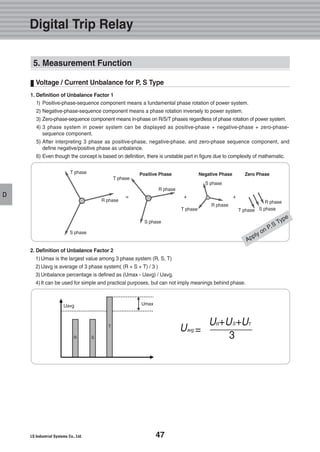
Voltage / Current Unbalance for P, S Type
U =
3
avg
U + +R US UT
1. Definition of Unbalance Factor 1
2. Definition of Unbalance Factor 2
1) Umax is the largest value among 3 phase system (R, S, T)
2) Uavg is average of 3 phase system( (R + S + T) / 3 )
3) Unbalance percentage is defined as (Umax - Uavg) / Uavg.
4) It can be used for simple and practical purposes, but can not imply meanings behind phase.
T phase Positive Phase Negative Phase Zero Phase
T phase
= + +
T phase T phase
R phase
Uavg
R S
T
Umax
R phase
R phase
R phase
S phase
S phase
S phase
S phase
Digital Trip Relay
5. Measurement Function
1) Positive-phase-sequence component means a fundamental phase rotation of power system.
2) Negative-phase-sequence component means a phase rotation inversely to power system.
3) Zero-phase-sequence component means in-phase on R/S/T phases regardless of phase rotation of power system.
4) 3 phase system in power system can be displayed as positive-phase + negative-phase + zero-phase-
sequence component.
5) After interpreting 3 phase as positive-phase, negative-phase, and zero-phase sequence component, and
define negative/positive phase as unbalance.
6) Even though the concept is based on definition, there is unstable part in figure due to complexity of mathematic.
Apply on P,S Type
48 Technical catalog for Susol & Metasol ACB
Technical catalog for Susol & Metasol ACB
D2. Reactive Power Calculation
1)Reactive power is V Q (current) and it is defined as an integrated average about 1 cycle.
2) Q (current) means the current delayed by 90°. Correctly speaking, it is not transferring the fundamental waveform
by 90° but transferring all harmonics by 90°.
3)Therefore, transferring all the elements of the frequency by 90° is available when current is processed into the
frequency area, do conjugation1)
process (transferring by 90°) with the frequency, and then reproduce it into a
waveform after moving it to the time area again.
4)Above process needs numerous calculations for these steps: waveform FFT2)
conjugation about all the
frequency IFFT3)
Q (waveform).
5)In case of P/S type, to solve difficulties above, it executes 90° phase transfer of voltage instead of current
compared to the base of the fundamental wave. It is used with the current to get the reactive power.
6)Therefore, reactive power is processed with Q (voltage) I.
Power calculation for P, S Type
i(k) : Instantaneous value of current waveform (Sampling value)
v(k): Instantaneous value of voltage waveform (Sampling value)
N : Sampling value of 1 cycle
i(k) : Instantaneous value of current waveform (Sampling value)
Q(v(k)): Instantaneous value of voltage waveform after a 90° phase transfer (Sampling value)
N : Sampling value of 1 cycle
1) Conjugation: process a complex number
R+jX R jX
2) FFT : Fast Fourier Transformation
3) IFFT: Inverse Fast Fourier Transformation
P=√1
N i(k)×v(k)Σ
N-1
k=0
Q=√1
N i(k)×Q(v(k))Σ
N-1
k=0
1. Active Power Calculation
1) Active power is V I and it is defined as an integrated average about 1 cycle.
2) Therefore, according to the pulse angle difference between V and I, the active power could be consumed or
produced.
3) Hence, the sample value during 1 cycle have to be operated or transacted separately.
49
D
: Power Production
: Power Consumption
3. Apparent Power Calculation
1) Apparent power defines as current RMS value x voltage RMS value.
2) In case of no harmonic factors, the power equation formulates.
3) However, if harmonic is included, the equation of power does not formulate.
4) Thus, to avoid confusion of P and S type users, evaluate active and reactive power first and then evaluate
apparent power by using, not by using current RMS value x voltage RMS value.
4. Power Factor Calculation
1) Evaluate the size of power factor with the Pf = active power/apparent power equation.
5. Indication of Power and Power Factor According to Phase
6. Electric Energy - Bidirectional Metering
Integrate separately by classifying power into receiving and transmission.
1. Active electric energy, reactive electric energy, reverse active electric energy, reverse reactive electric energy
2. Refer to above figure for classification of corresponding factors.
3. Concerning the size of power factor, the symbols have the meaning as the above figure.
I
V
I
V
I
V
I
V
1 quadrant
Power > 0
Reactive Power < 0
PF > 0
90
0180
270
4 quadran
Power > 0
Reactive Power > 0
PF > 0
3 quadrant
Power < 0
Reactive Power > 0
PF < 0
2 quadrant
Power < 0
Reactive Power < 0
PF < 0
S=√P+Q
2 2
S=√P+Q
2 2
Digital Trip Relay
5. Measurement Function
Lag Lead
LagLead
50 Technical catalog for Susol & Metasol ACB
Technical catalog for Susol & Metasol ACB
D
Demand / Peak Demand for P, S Type
1. Demand Measurement, Peak Demand Record
1) P and S type Demands are calculated with an average of the active power during the Demand cycle.
2) Demand cycle can be set by divisors of 60 minutes (1, 2, 3, 4, 5, 6, 10, 15, 20, 30, 60 minutes).
3) These are Block Demand and Rolling Demand for the Demand measuring method.
P and S type only provide Block Demand for Demand method.
4) Block Demand measures by synchronizing with the minutes of internal timer of the P and S type.
In short, under condition of Demand cycle is set as 15 minutes, if it is turned on at 11:05, Demand can be
measured on 11:15 by using the average power during 10mins. After that, Demand can be measured again by
using the average power during 15mins on 11:30.
5) The maximum Demand value measured from every cycle is set as Peak Demand and its occurred date and the
value are recorded at nonvolatile memory.
Demand cycle
Block Demand
Demand
measurement 1
Demand
measurement 1
Demand
measurement 4
measurement 3
measurement 2
measurement 1
Demand
measurement 3
Demand
measurement 2
Demand
measure
ment 1
Demand
measurement 3
Demand
measurement 2
Rolling Demand
0 5
Power-On
15 30 45
Demand cycle
Demand cycle(15min)
minutes
51
D
Frequency Measurement and Harmonics Calculation for P, S Type
X(k) : The complex number of k degree’s harmonics
(ex k 1 fundamental wave, k 2 : 2 harmonics)
N : Sampling cycle ( The square number of 2, 2^5, 2^6.....)
x1(m) : x(2m). m=0, 1, 2.....(N/2)-1 even variable sampled
x2(m) : x(2m+1). m=0, 1, 2.....(N/2)-1 odd variable sampled
1. Frequency Measurement
1) P and S type frequency is measured through the Zero-Crossing method based on hardware style.
2) Zero-Crossing method has a fatal disadvantage for the harmonics, hence frequency detecting circuit is arranged
by passing Low-Pass Filter to make Cut-Off under 100Hz.
3) Frequency ensures the accuracy from 45Hz to 65Hz.
4) The corresponding Hardware Circuit operates at R phase voltage.
5) Frequency detection operates when R phase voltage which is input into voltage dividing module is more than
80V at least. For the voltage below the value, the operation could be unstable and it indicates a frequency with
‘0 ‘Hz in case the voltage value is below 50V.
2. Harmonics Calculation
1) S type can measure the 63rd
degree harmonics through 128 samplings per cycle.
2) Harmonics spectrum bar on display indicates values up to 31st
degree, and the detailed value of harmonics
includes all values up to 63rd
degree.
3) Frequency spectrum bar and the value of THD is indicated when R, S, T phase turns over.
4) It displays the shape of waveform used for harmonics analysis after capturing the waveform as it is.
5) For 3P 4W type harmonics are analyzed with phase-to-phase voltage and for 3P 3W harmonics are analyzed
with line-to-line voltage.
X(k) = x1 (m)W N / 2 +W N x2 (m)W N / 2Σ
N
2
- 1( )
m=0
Σ
N
2
- 1( )
m=0
mk mkk
W N / 2 = e = cos( )-j sin( )
2 π
N / 2
km- j( ) 2πkm
N / 2
2πkm
N / 2
mk
Low-Pass
Filter
Analogue Signal Digital Signal
CPUComparer
Digital Trip Relay
5. Measurement Function
52 Technical catalog for Susol & Metasol ACB
Technical catalog for Susol & Metasol ACB
D
THD (Total Harmonic Distortion), TDD (Total Demand Distortion) for P, S Type
THD=
U
U2
k
√Σ
∝
k=2
rms
TDD=
U
U2
k
√Σ
∝
k=2
Peak Demand
K-Factor =
U
K2
U2
k
√Σ
∝
k=2
rms
THD=
U
U2
k
√Σ
∝
k=2
1
1. THD Definition
1) THD is a single value which expresses the total harmonic distortion.
2) THD value measured is getting higher when total harmonics increases. THD value comes into ‘0’ under no
harmonics state.
3) The THD has two formulas. One is the ratio of a harmonics value to the fundamental wave and the other is
the ratio of a harmonics value to the RMS value.
4) S type calculates THD by the ratio of a harmonics value to the fundamental wave.
5) THD is calculated on each phase of voltage and current.
6) For 3P4W, THD is calculated from phase-to-phase voltage and for 3P3W, THD is calculated from line voltage.
2. TDD Definition
1) TDD is a different way to show the total harmonic distortion of current.
2) The value of THD is supposed to be very high when non-linear loads are used such as computer under the
circumstance of almost no load. Actually, a harmonics value is much lower comparing to normal condition, but
when load current is relatively low at some point, it has no meaning as an index.
3) TDD is an index to show the total harmonic distortion to solve the problem described above. As TDD is the
total harmonics distortion of Peak Demand current, it is available to show the harmonics distortion regardless
of the load current at some point.
2. K-Factor Definition
1) The K-Factor is an index that indicates harmonics for the temperature rise of transformer. It is defined by
standard ANSI/IEEE C57.110.
2) In other words, the 3rd
harmonics and 7th
harmonics have the different temperature rise of transformer. 7th
harmonics generates much higher heat than 3rd
harmonics.
3) Heat capacity becomes the standard ratings for transformer capacity and the ratings does not include the
harmonics (fundamental frequency). But, load current actually includes various harmonics which heats the
transformer much higher than fundamental frequency. Therefore, 100% of transformer capacity will not be
used when it includes harmonics.
4) K-Factor indicates as ‘1’ without harmonics. As mentioned previously, even under the harmonics which
has the same value, harmonics with higher degree has a higher K-Factor. Namely, the K-Factor of
7th
harmonic is much higher than K-Factor of 3rd
harmonic under the same value.
Apply on S Type
53
D
6. IO (Input-Output) Port
IO type and Configuration
P and S type have DI(Digital Input, 2 terminals) and DO(Digital Output, 4 terminals).
1)DO 4 terminals is composed of two types ( Open-Collector 1terminal, Solid Relay 3 terminals)
524-534-544-513 ( Solid Relay 3 pieces, 513 is relay’s common terminal.)
Z3-Z4 (ZSI output, Open-Collector, Z3-Collector, Z4-Emitter)
2)DI 2 terminals are all Dry Contacts, contact input voltage is 3.3V.
R11-R12 (Remote Reset)
Z1-Z2 (ZSI input)
To make contact get recognized, just short-circuit them.
Be aware of direction when short-circuiting with Open Collect.
(It is required to connect Collector of Open Collector Terminal to Z1, R11)
3)485+, 485- are connecting terminals for MODBUS/RS-485.
4)E1, E2 are connecting terminals for external CT on OCGR and earth leakage detective purpose CT.
Digital Triip Relay
Digital Trip Relay
54 Technical catalog for Susol & Metasol ACB
Technical catalog for Susol & Metasol ACB
D
1. What is ZSI?
Zone-selective interlocking diminishes time-delay that cause problems for machines. It is used to minimize pressure
on all kinds of electric machineries under high-demanding conditions.
1) While short time-delay or ground fault accidents are happening at ZSI built-in system, the machinery at accident
sites is sending a signal through its lines to halt upperstream machinery’s operation.
2) Then to eliminate a breakdown, it activates its trip operation without any time delayed.
3) The upperstream machinery that received ZSI signal adhere to pre-set short time-delay or ground fault time-
delay for protective coordination in the system, however upperstream machinery that did not receive its signal
will trip instantaneously.
4) For ordinary ZSI operation, it should arrange operation time accordingly so that downstream circuit breakers
will react before upperstream ones under overcurrent/short time delay/ground fault situations.
5) ZSI connecting line is signal operation at TTL Level, therefore it needs to be formed within 3m.
6) ZSI output can be connected up to 12 lines (MAX) to ZSI input.
2. ZSI Configuration
①
ZSI Input
ZSI Output
ZSI Input
②
③ ④ ⑤
55
D
The use of Remote Reset
In case the ACB operates due to accidents or over current, the OCR indicates the information of the accident
through the LCD and LED. To operate it for the next accident, the P and S type have to be Reset.
1) Methods to Reset the P and S type are to push the Reset button and to Reset by short-circuiting Remote
Reset. Therefore, the Remote Reset does the same action as the Reset Key on the frontal side of the OCR.
2) Short-circuiting terminals R11-R22 resets.
3) R11-R22 are Dry Contacts that hold 3.3V of recognition voltage. When short-circuiting with SSR (Solid State
Relay) or Open-Collector, connect Collector (Drain) to R11.
4) For general Solid Relays, attach contacts disregarding directions.
Digital Triip Relay
Digital Trip Relay
6. IO (Input-Output) Port
56 Technical catalog for Susol & Metasol ACB
Technical catalog for Susol & Metasol ACB
D
Overlapped Setting Possible
Relay for
signal
Classification
Contact switching capacity
Max. switching capacity
Contact switching capacity
Max. switching capacity
RemarksApplied range
Resistance load cos =1
Induction load
(cos =0.4, L/R=7ms)
AC230V 12A / DC25V 12A
2760VA, 300W
AC230V 6A / DC25V 6A
1880VA, 150W
DO#1
DO#2
DO#3
UFROFRIunbalVunbalrPowerUVROVRGroundInst.ShortLongOverload
Alarm
1. The use of Solid Relay
P and S type are equipped with 3 Solid Relays.
1) Terminal number is 524-534-544-513 (513 is Relay common terminal) and are contacts at Normal Open state.
2) Relay of 3 can be variously (overlapping) used by setting the environment.
Accident indication (Long/short time delay, instantaneous, ground fault, UVR, OVR, UFR, OFR, rPower,
Vunbal, Iunbal)
Closes set Relay when corresponding accident occurs.
(Maintains state as Latch form until user pushes Reset)
For overload alarm (Closes corresponding Relay at over 90%)
General purpose DO (Can remotely Close/Open the corresponding Relay)
2. Rated Output
3. Possible Relay Composition
57
D
4. RS-485 MODBUS COMM.
P and S type are equipped with RS-485 communica-
tion terminal.
1) Terminal number is 485+ 485-.
2) Communication available at speed of 9600bps,
19200bps, 38400bps, 57600bps.
3) There is no terminating resistance within the
device. Thus, add a 150 terminating resis-
tance at the end after composing RS-485 line.
4) Monitoring all the measurement item and record-
ing elements of P/S type are available via com-
munication.
5) MODBUS communication map is put in a
separate manual. (Refer to P/S type MODBUS
map)
6) Various data of P, S type can be initialized
and reset, when the device is set at Remote.
Also, DO related control can be performed.
2. Profibus -DP COMM.
P and S type are equipped with RS-485 communica-
tion terminal.
1) Terminal number is 485+ 485-.
2) Possible to transmit data by installing Profibus-
DP module on the exterior, which is often used
in factor automation.
3) There is no terminating resistance within the
device. Thus, add a 150 terminating resis-
tance at the end after composing RS-485 line.
4) For details on Profibus-DP communication, refer
to Profibus-DP communication module manual.
Other Network
Local
Systems RTU
Standard for P, S Type
Profibus-DP comm.
module
PLC
FA Network
Separate
purchase
RS-485 Line
RS-485 Line
485+ 485-
150Ω
485+ 485- 485+ 485-
150Ω
Terminating
Resistance
Terminating
Resistance
Digital Trip Relay
6. IO (Input-Output) Port
E.
DigitalTrip
RelayAccessory
59
63
65
66
67
1. TRIO Unit
2. Profibus-DP
Communication
3. MODBUS
4. Temperature
5. OCR Tester
58 Technical catalog for Susol & Metasol ACB
Technical catalog for Susol & Metasol ACB
59
E
1. TRIO Unit
Function and Characteristics
External View and Composition
Switch Setting
1) Temperature and Remote I/O Unit (Below TRIO Unit) has remote closing, breaking, and temperature monitoring
functions.
2) TRIO Unit aim for the open network selected by international communication protocol standard.
3) TRIO Unit can transfer information collected from ACB using RS-485/MODBUS and Profibus-DP communication.
4) TRIO Unit can detect ACB’s abnormal temperatures through its temperature monitoring function.
5) It establishes communication speed automatically according to master’s communication speed, thus maintain
flexible communication relationships.
But, only when Profibus-DP was applied.
When MODBUS communication is being used, speed is decided upon its applied deep switch operation.
6) TRIO Unit obtain reliability by adding SBO (Select Before Operation).
* Supports when MODBUS Communication is used. Profibus-DP is automatically arranged according to master.
** Supports on both system(MODBUS and Profibus-DP).
Subject
Communication
Terminal Block
CB / DO control,
Communication
CB / DO condition
TRIOU condition Indication
Communication Speed Setting
(MODBUS Mode), Address Setting
Control power, DI, and Temperature
Sensor Terminal
Temperature
Information Indication
Power
Terminal Block
RS-485 Profibus-DP, MODBUS
LED
LED
DIP Switch
1
2
3
4
5
6
Function
FunctionNo
No
DO Setting
Address
Setting**
Baud Rate
Setting*
00 : No use
01 : Connect to DI #1
10 : Connect to DI #2
11 : Temperature Indication
and Connection
11 : 9600 bps
10 : 19200 bps
00 : 38400 bps (Default)
1~255 (decimal)MODBUS
Profibus 3~124 (decimal)
1
2
3
Explanation
1 2 3 4
0
1
0
1
ON ON
1 2 3 4 5 6 7 8
100
119 82.5
Digital Trip Relay Accessory
60 Technical catalog for Susol & Metasol ACB
Technical catalog for Susol & Metasol ACB
E
Terminal Configuration 1
1
2
3
4
5
6
7
8
9
10
11
12
No Mark Explanation
Power(+)
Power(-)
CB Close (+)
CB Open (+)
Digital input #1 (+)
Digital input #2 (+)
CB, Digital Input Com
Temperature Sensor #1
Temperature Sensor #2
Temperature Sensor #3
Temperature Sensor #4
Temperature Sensor COM
Power Input Terminal (+)
Power Input Terminal (-)
Circuit Break Close Terminal (+)
Circuit Break Open Terminal (+)
Digital Input #1 Terminal (+)
Digital Input #2 Terminal (+)
CB, Digital Input Common Terminal
Temperature Sensor
Temperature Sensor
Temperature Sensor
Temperature Sensor
Temperature Sensor Common Terminal
Terminal Configuration 2
1
2
3
4
5
6
7
8
No Mark Explanation
CB Close Relay (+)
CB Close Relay (-)
CB Open Relay (+)
CB Open Relay (-)
Digital Out Relay (+)
Digital Out Relay (-)
RS-485 (-)
RS-485 (+)
Circuit Break Close Relay Terminal (+)
Circuit Break Close Relay Terminal (-)
Circuit Break Open Terminal (+)
Circuit Break Open Terminal (-)
Digital Out Relay (+)
Digital Out Relay (-)
RS-485 Communication Connecting Terminal (-)
RS-485 Communication Connecting Terminal(+)
61
E
ExplanationMark
10~150,
Warning
Display
LED1
Terminal Configuration 3
LED Configuration
1
2
3
4
5
6
7
8
No Mark Explanation
Digital Input #1
Digital Input #2
Digital Out close
Digital Out open
CB On
CB Off
Run
CB Control Err
Indicate Digital Input #1 condition
Indicate Digital Input #2 condition
Indicate Digital Out Close condition
Indicate Digital Out Open condition
Indicate Circuit Break Close condition
Indicate Circuit Break Open condition
TRIOU run condition
Indicate Circuit Break Terminal Disconnection / Control Err Condition
LED2
Maximum
Temperature
Value
LED2LED1 Warring
150
.
.
.
.
.
.
.
.
.
.
20
10
1
3
5
7
2
4
6
8
1
2
3
4
5
6
7
8
9
No Pin
Female
Profibus - DPMODBUS
Explanation
No use
No use
Tx (+)
No use
No use
No use
No use
Tx (-)
No use
No use
No use
RED B
RTS*
GND
5V (+)
No use
Green A
No use
* Connect only when using repeater.
54321
9876
Digital Trip Relay Accessory
1. TRIO Unit
62 Technical catalog for Susol & Metasol ACB
Technical catalog for Susol & Metasol ACB
E
Product Input Rating
Apply Voltage
Rated Frequency
Rated Control Power
CB Condition General Type DI
Power Consumption
Category Scope Note
220V
60Hz
AC 92 ~ 253V ( Free Voltage )
TTL, Dry Type [Voltage 3.3V~5V]
Normal : Below 5W Operation : Below 10W In Operation - Relay Output
Product Output Rating
Internal Configuration
CB Control Relay
Alarm, Control
Relay
Category Scope Note
Contact Switching Capacity
Maximum Switching Capacity
Contact Switching Capacity
Maximum Switching Capacity
AC230V 16A / DC30V 16A
3680VA, 480W
AC230V 6A / DC25V 6A
1880VA, 150W
Inductive load
(cos =0.4, L/R=7ms)
Temperature
sensor comm.
Diagnosis
for Circuit
Break
Diagnosis
for Digital
Input
Temperature
sensor ADC
OCR
Comm.
MODBUS
Profibus-DP
for higher
level Comm.
RS-485
Power
63
E
Communication Standard
Module Type
Network Type
Standard
Media Access
Communication Method
Communication Cable
Communication Distance
I/O Data Length
Communication Parameter Setting*
Configuration Tool*
Category TRIOU
Slave
Profibus-DP
EN50170 / DIN 19245
Master-Slave (passive station)
Bus
Shielded Twisted Pair
1200m (9.6k ~ 187kbps)
400m (500kbps)
200m (1.5Mbps)
100m (3M ~ 12Mbps)
32byte
Note (Setting its parameter through GMWIN high-speed link and Sycon)
Note (Sycon)
Profibus is selected, applied, and produced independently by the manufacturer (Vender-independence). It is approved
for vender’s independence and openness according to Profibus standard EN50170 which is a open field-bus standard
that is extensively used in a process automation. Among them, DP is the most commonly used communication profile. It
is applicable for Master-Slave communication between Master automation device which has a device level and decentrali-
zed slave I/O device to optimize the communication speed and price with the network which is suitable for FA service
condition of Field Level.
For more details on Profibus-DP, please refer to ‘‘Korean Profibus Association’’ Homepage.
( http://www.profibus.co.kr)
Profibus - DP Communication Introduction
Note. * Support through LSIS GM3/4/6 master modules.(G3L-PUEA/G3L-PUEB/G4L-PUEA/G4L-PUEB)
* When using other manufacturers’ masters, use applicable parameter tool and configuration tool.
Digital Trip Relay Accessory
2. Profibus - DP Communication
64 Technical catalog for Susol & Metasol ACB
Technical catalog for Susol & Metasol ACB
E
AWG
Type
Insulation
Insulation Intensity
Electrostatic Capacity
Characteristic Impedance
Number of Cores
Category Twinax
Under TRIOU’s data exchange condition, it exchanges data periodically at pre-defined communication speeds.
It handles new data by comparing with previous ones.
It is processed through using SBO function, when handling important commands such as breaker CB or DO control.
TRIOU’s output data will be sent to master every 1.5 second about its applicable information from trip relay
without a master’s command.
RS-485 transferring method : To connect profibus load, bus
configuration is displayed using bus connector and bus terminal.
Simple and standardized loading and connecting concept
Easy installation
Data Exchange
Recommend Belden Network Cables.
Type : Network Components
Protocol : DP
Certification : No
Cable Order No : 3077F
3079A
Communication Cable Standard
Electric network can be composed of bus or tree.
Electric Network
Terminating connection Branch connection
Cable
Connecting
Terminal
Block
Terminating Terminal
Setting Switch
On : Terminating
Terminal
OFF : No Terminating
Terminal
Network Configuration
22
BC-Bare Copper
PE-Polyethylen
0.035 (Inch)
8500 pF/ft
150
Cores
Shield
Aluminum Foil-Polyester
Tape / Braid shild
Connecting Connector
65
E
3. MODBUS
Communication Frame
END
CRC
16bitsSTART
Char. Time
Address
8bits
Function
8bits
Data
1. Address Range
Valid slave device address range : 0~247 decimal
TRIO Unit address range that is actually used :
1~247 decimal
In case the slave device address of frame where
Master request to Slave is in the range of zero, it is
the address where Master device is broadcasting to
all Slaves.
When Master requests to Slave, transmit address
field after filling it out with corresponding address.
2. Function Range
It displays certain types of function that should be
dealt by slave.
TRIO Unit use 03, 04, 05, and 10 among its function
codes.
In case of no error, Slave turns back the value sent
from Master, otherwise it gives a response after
setting MSB of the value sent from Master as 1.
EX) 0000 0001 0000 0001(normal)
1000 0001(error)
3. CRC Range
Use 2 bits CRC check procedures. Each of 8 bit data’s
result (Address, Function, Data) is accumulated and
CRC checked. Final data checked will be included in
CRC field.
Under RTU Mode, a data is processed on the bit-basis allowing to use only 8 bits when processing one data. More
heavily condensed code will enable RTU Mode to handle large quantity of information comparing with other buses at
the same transferring speed.
When master sends request-frame to slave, slave
sends response-frame.
Protocol
Physical Layer
Asynchronous Format
Baud Rate
Data Bits
Parity
Stop Bit
Communication Method
Communication Port RS-485
A1 character = 10bit(1 start bit + 8 data bits + 1 stop bit)
9600, 19200, 38400 bps
8 bits
No parity
1 bit
Master - Slave
Data Link Layer
Slave Address
Function Code
Data
CRC
Dead Time
Description Size
1 byte
1 byte
N byte
2 byte
3.5 bytes transmission time
Slave Address
Definition of Slave action
Additional information
to perform requested
actions from Slave
CRC
SIZEMaster
Device Address
Function Code
Data
Error check
Char. Time
Slave Address
Echo or MSB=1
Requested data or
Exception code
CRC
Response Slave
Device Address
Function Code
Data
Error check
Digital Trip Relay Accessory
66 Technical catalog for Susol & Metasol ACB
Technical catalog for Susol & Metasol ACB
E
4. Temperature Sensor
Resistance Temperature Detector
Provide stable output from wide range
of temperature
Re-adjustable while checking its
precision
Steady for a long time
More linear characteristic than thermo
couple
If highly sensitive, instruct precise
temperature within small temperature
ranges.
TRIO Unit can measure temperatures among ACB’s terminals, and detect its degree of loads from the heat.
In this equipment, it is possible to measure breaker’s terminal temperature by using thermistor and RTD.
Ambient temperature subtracted from temperature measured is the Temperature-rise Limit.
Temperature-rise Limit for external connecting terminal is bound to 80° by the standard.
From TRIO Unit, it will send a warning message at 80° to user through its alarm.
RTD Summary Temperature-rise Limit Regulation (IEC60947-2)
TRIO Unit Temperature Measuring Operation
Components Temp. Increase Limit (K)
External connecting terminal
Manual Operating Method
Metal
Non-Metal
Contact is possible, but not by hands
Metal
Non-Metal
Under normal operation,
contact is not necessary
Metal
Non-Metal
80
25
35
40
50
50
60
CS103FU
(Thermistor)
Temperature
Sensor
Temperature
Test Range
Percentage
of Error
Measurable
Temperature
25° ~ 110°
Within 4°
20° ~ 120°
RS-485
The measured value by a temperature sensor
becomes a sampling through MCU’s internal
ADC, and exchange information with upstream
through 485 communication line.
TRIOU Temp. Sensor Specification Measured Temp. Values (110°~25°)Measured Temp. Values (25°~110°)
1. Operation Circuit
Temp. Sensor 1
Temp. Sensor 2
Temp. Sensor 3
Temp. Sensor 4
Temp. Sensor COMM.
67
E
5. OCR Tester
Under no power condition, simple tests can be performed regarding trip relay’s long time delay/short time delay /
instantaneous / ground fault.
1. Maximum of 17In can be entered.
2. Enter current value size and phase on each of R/ S/ T/ N.
3. Frequency can be adjusted.
4. Test to see how precisely and accurately trip relay can operate to simulations.
OCR Tester Characteristic
1. OCR Tester enter its signals between integrator and amplifier.
2. Therefore, devices after amplifier like CPU MTD (Magnetic Trip Device) and ACB operation can be checked.
3. But, it can not check for integrator or Rogowski sensor.
Rogowski
Sensor
R, S, T, N phase signal input
(Size/Phase)
Increase / Decrease Signal Input (Size / Phase)
Signal Input / Cancel
Waveform occur and stop
Select frequency
OCR Tester Check List
Explanation on Function Key
200% R phase Over-current Test
Inter
grator
Signal
Amplifier
Input
Input
Occur
Occur
BREAK
CPU
ACB
PHASE R SET
AMP=2.0
PHA=0.0
RANGE-(0~360.0)
Fault Current Test(ACB’s 8In)
PHASE S SET
AMP=8.0
PHA=0.0
RANGE-(0~360.0)
R : 2.0∠ 0.0
S : 1.0∠ 240.0
T : 1.0∠ 120.0
N : 0.0∠ 0.0
R : 1.0∠ 0.0
S : 8.0∠ 240.0
T : 1.0∠ 120.0
N : 0.0∠ 0.0
Digital Trip Relay Accessory
MTD
F.
Installationand
ServiceCondition
69
72
73
74
1. Safety Precaution
2. Receiving and Unpacking
3. Installation Method
4. Service Condition
68 Technical catalog for Susol & Metasol ACB
Technical catalog for Susol & Metasol ACB
69
F
Not following the instruction
may result in serious injury
and even death
This manual does not cover all possible contingencies, variations and details that may arise during installation,
operation or maintenance of this equipment. If the user has questions regarding a particular installation, contact
the local LSIS sales office. For application information, consult your nearest LSIS sales office.
The information contained herein is general in nature and not intended for specific application purposes. It does
not relieve the user of responsibility to use sound practices in application, installation, operation, and maintenance
of the equipment purchased. LSIS’s reserves the right to make changes in the specifications shown herein or to
make improvements at any time without notice or obligations. If a conflict arise between the general information
contained in this publication and the contents of drawings or supplementary material or both, the latter shall take
precedence
1. Safety Precaution
Outline for Safety Operation
For the purpose of this manual and product labels, a qualified person should be with suitable knowledge of
installation, construction, operation, or maintenance of the equipment and the hazards involved.
In addition, this person should have the following qualifications:
(a) is trained and authorized to energize, de-energize, clear, ground, and connect circuits and equipment in
accordance with established safety practices.
(b) is trained in the proper care and use of protective equipment such as rubber gloves, hard hat, safety glasses,
face shields, or flash clothing, etc., in accordance with safety practices.
(c) is trained in rendering first aid.
These instructions do not cover all details or variations in equipment, nor to provide for every possible contingency
to be met in connection with installation, operation, or maintenance. In case particular problems arise which are
not covered sufficiently for the purchaser’s purposes further information should be desired or the matter should be
referred to the local LSIS’s sales office. The contents of this instruction manual shall not become part of or modify
any prior or existing agreement, commitment or relationship.
Qualified Person
Read these instructions carefully and look at the equipment to become familiar with the device before trying to install,
operate, or maintain it. The following special messages may appear throughout this manual to warn of potential
hazard and to call attention to additional information which clarifies or simplifies a procedure.
Safety precaution is classified by danger, warning, caution and the meaning is as follows.
Danger, Warning, Caution
In addition to other procedures described in this manual as dangerous, user must adhere to the following:
1. Always work only on de-energized equipment. Always de-energize a contactor, and remove it from the equip-
ment before performing any tests, maintenance or repair.
2. Always let an interlock device or safety mechanism perform its function without forcing or defeating the device.
Dangerous Procedures
Danger
Not following the instruc-
tion may result in serious
injury and even deathWarning
Not following the instruction
may result in minor or moderate
injury, or property damageCaution
Installation and Service Condition
70 Technical catalog for Susol & Metasol ACB
Technical catalog for Susol & Metasol ACB
F
1. Be sure to tighten the terminal screws to the torque specified in the instruction manual.
2. Do not install in areas subject to high temperature, high humidity, dust, corrosive gas, vibrations, and
shocks. To do so may result in malfunction or fire.
3. To get ACB tripped automatically, always clear the source of the malfunction before closing the ACB
again. Failure to do so may result in fire.
4. Terminal screws should be checked and tightened periodically. Failure to do so may result in fire.
5. Use the ACB in 50/60Hz. Failure to do so may result in malfunction or fire.
Caution
1. Only qualified electrical workers with training and experience on high voltage circuits should perform
work described in this set of instructions. These workers must understand the hazards involved in
working with or near high voltage equipment. Such work should be performed only after reading this
complete set of instructions.
2. The successful operation of Susol ACBs depends upon proper handling, installation, operation, and
maintenance. Neglecting fundamental installation and maintenance requirements may lead to personal
injury as well as damage to electrical equipment or other property.
3. Susol ACBs have features designed to prevent unsafe operation, but it is not possible to eliminate every
hazard with these features. Therefore, the person using this device is responsible for recognizing the
potential hazards, for wearing protective safety equipment, and for taking adequate safety precautions.
4. Do not make any adjustment to the equipment or operate the system with safety features removed.
Contact your local LSIS representative for additional instructions if the Susol ACB does not function as
described in this manual.
5. Before performing visual inspections, tests, or maintenance on this device, disconnect all sources of
electric power. Assume that all circuits are live until they have been completely de-energized, tested,
grounded, and connected. Pay particular attention to the design of the power system. Consider all
sources of power, including the possibility of back feeding.
6. Before replacing covers or closing doors, carefully inspect the bus work area for tools and objects left
inside the equipment. Use care while removing or installing panels so that they do not extend into
energized bus.
7. Before making any electrical connection, take every precaution to see that all connections are de-
energized and grounded.
8. Introducing foreign objects into this equipment can cause a short circuit which can result in severe
damage, personal injury, or death. Short circuits can release large amounts of energy due to a rapid
expansion of super-heated, ionized gases. Products of this instantaneous expansion can quickly engulf
and burn personnel before preventive action can be taken. The short circuit source can cause additional
injuries by propelling personnel or objects several feet from the equipment. Some foreign objects that
can cause short circuits are tools, test leads and instruments not designed for high voltage circuits,
wire, and other conducting or semi conducting materials. Workers must also be careful to keep clothing
and body parts out of the equipment. Failure to observe these precautions could result in severe
personal injury, death, or equipment
Hazard of Bodidy Injury or Equipment Damage
Danger
71
F
A visual inspection - inside and out - should be performed immediately upon receipt of the ACB and before
removing it from the truck. Shipping papers should be checked to ensure all boxes or other accompanying
pieces have been received. If any damage or shortages are evident, a claim should be filed at once with
the carrier, and the nearest LSIS sales office. Claims for shortages or other errors must be made in writing
to LSIS within 30days after receipt of ACB. Failure to do so constitutes unqualified acceptance and a
waiver of all such claims by the purchaser.
Receiving
Removable lifting plates are provided on the top of the Susol ACB structure for insertion of hooks to lift the
complete structure. This is the only recommended method of moving the Susol ACB structure. Extreme
care should be used not to damage or deform the unit if other moving methods are employed.
Handling
If it is necessary to store the equipment before installation, keep it in a clean, dry location with ample air
circulation and heat to prevent condensation. Like all electrical apparatus, these units contain insulation
that must be protected against dirt and moisture. Outdoor units may be stored outside only if roof caps are
installed, space heaters energized and any openings are enclosed.
Storage
1. Do not pass cables or ropes through support holes.
2. Always use load rated shackles or safety hooks in support holes.
3. Rig so that legs of sling are no less than 45 degrees from horizontal.
Lifting Instructions
A crane or hoist can also be used to handle the breaker, if the lifting device is not available. If a forklift is
utilized, the following precautions should be taken when moving circuit breakers:
1. Keep the breaker in an upright position only.
2. Make sure the load is properly balanced on the forks.
3. Place protective material between the breaker and the forklift to prevent bending or scratching.
4. Securely strap the breaker to the forklift to prevent shifting or tipping.
5. Excessive speeds and sudden starts, stops, and turns must be avoided when handling the breaker.
6. Lift the breaker only high enough to clear obstructions on the floor.
7. Take care to avoid collisions with structures, other equipment, or personnel when moving the breaker.
8. Never lift a breaker above an area where personnel is.
Moving
Warning
Installation and Service Condition
1. Safety Precaution
72 Technical catalog for Susol & Metasol ACB
Technical catalog for Susol & Metasol ACB
F
2. Receiving and Unpacking
3. Installation Method
Securely install the left and right mounting frames with M12 bolts (4EA).
Installation of Fixed Type
A visual inspection - inside and out - should be performed immediately upon receipt of the ACB and before removing
it from the truck. Shipping papers should be checked to ensure all boxes or other accompanying pieces have been
received. If any damage or shortages are evident, a claim should be filed at once with the carrier, and the nearest
LSIS sales office. Claims for shortages or other errors must be made in writing to LSIS within 30 days after receipt of
ACB. Failure to do so constitutes unqualified acceptance and a waiver of all such claims by the purchaser.
Receiving
1. Before unpacking the breaker, check that all
boxes and packing are in good condition.
2. While unpacking, check the breaker is in good
condition.
3. Check that the information given on the rating
/accessory nameplates corresponds to the
purchase order.
4. Care about the unpacking to avoid damaging
the products. Unpacking them attentively to
avoid dropping the products from carrying
components and pallets.
5. Install the products to the final installation place
after unpacking as soon as possible. If you
cannot install the products immediately, you had
better not unpacking them. Keep the products indoor around 15° and under 50% of humidity. Standard packing
condition for domestic portage is not suited to outdoor storage.
If you cannot keep the maintenance above, you should inspect a degree of the damages before you install the
products. Unsuitable keeping does not guarantee good qualities of the products and could occur additional danger
of an accident.
Unpacking
≤3
(Below 2000AF
Below 4000AF 3P)
≤2
(Below 4000AF 4P)
≤1
(Below 6300AF)
4(6)-M12
73
F
3. Installation Method
Install draw-out type according to the
instruction given below.
1. Securely install the cradle at the
bottom with M12 bolts (4EA).
2. Pull the extension rails of cradle
forward.
3. Put the breaker on the rail as shown
in picture by using lifting device.
4. Please check if the circuit breaker
fits well to the cradle.
5. Slowly push the circuit breaker by
moving the rail handle.
Installation of Draw-out Type
1. Do not lay down a breaker on the
side or stand with the side of it.
2. Install a circuit breaker on perfect
even ground. (Within 2mm of the
level difference)
3. Do not install a circuit breaker with
same direction of a rail when you
use an angle.
4. Install a circuit breaker at a right angle
to the direction of a rail to decentralize
weight of the circuit breaker.
Caution
Insert insulating barriers between the phases after installing of a circuit breaker for the safety. (option)
Installation of Insulation Barrier
A (Cradle rail)
B (ACB frame) C (Cradle rail)
C
1
2
Installation and Service Condition
74 Technical catalog for Susol & Metasol ACB
Technical catalog for Susol & Metasol ACB
F
Table A. The Compensation of Rated Current According to Ambient Demperature
40℃
200A
400A
630A
800A
1,000A
1,250A
1,600A
2,000A
630A
800A
1,000A
1,250A
1,600A
2,000A
2,500A
3,200A
4,000A
4,000A
5,000A
4,000A
5,000A
6,300A
5t�40�2ea
5t�50�2ea
5t�60�2ea
5t�80�2ea
5t�100�2ea
5t�100�3ea
5t�40�2ea
5t�50�2ea
5t�60�2ea
5t�80�2ea
5t�100�2ea
5t�100�3ea
5t�100�4ea
10t�100�3ea
10t�100�4ea
10t�100�4ea
10t�125�4ea
10t�100�4ea
10t�125�4ea
10t�150�4ea
200A
400A
630A
800A
1,000A
1,250A
1,600A
2,000A
630A
800A
1,000A
1,250A
1,600A
2,000A
2,500A
3,200A
4,000A
4,000A
5,000A
4,000A
5,000A
6,300A
45℃
200A
400A
630A
800A
1,000A
1,250A
1,600A
2,000A
630A
800A
1,000A
1,250A
1,600A
2,000A
2,500A
3,200A
3,900A
3,900A
5,000A
4,000A
5,000A
6,300A
50℃
200A
400A
630A
800A
1,000A
1,250A
1,600A
1,950A
630A
800A
1,000A
1,250A
1,600A
2,000A
2,500A
3,100A
3,800A
3,800A
4,900A
4,000A
5,000A
6,200A
55℃
200A
400A
630A
800A
1,000A
1,250A
1,550A
1,900A
630A
800A
1,000A
1,250A
1,600A
2,000A
2,400A
3,000A
3,700A
3,700A
4,800A
3,900A
4,900A
6,100A
60℃
200A
400A
630A
800A
1,000A
1,250A
1,500A
1,850A
630A
800A
1,000A
1,250A
1,600A
2,000A
2,300A
2,900A
3,600A
3,600A
4,700A
3,800A
4,800A
6,000A
40℃
200A
400A
630A
800A
1,000A
1,250A
1,600A
2,000A
630A
800A
1,000A
1,250A
1,600A
2,000A
2,500A
3,200A
4,000A
4,000A
5,000A
4,000A
5,000A
6,300A
45℃
200A
400A
630A
800A
1,000A
1,250A
1,600A
2,000A
630A
800A
1,000A
1,250A
1,600A
2,000A
2,500A
3,200A
3,950A
3,950A
5,000A
4,000A
5,000A
6,300A
50℃
200A
400A
630A
800A
1,000A
1,250A
1,600A
2,000A
630A
800A
1,000A
1,250A
1,600A
2,000A
2,500A
3,150A
3,850A
3,850A
4,950A
4,000A
5,000A
6,250A
55℃
200A
400A
630A
800A
1,000A
1,250A
1,600A
1,950A
630A
800A
1,000A
1,250A
1,600A
2,000A
2,450A
3,050A
3,750A
3,750A
4,850A
3,950A
4,950A
6,150A
60℃
200A
400A
630A
800A
1,000A
1,250A
1,550A
1,900A
630A
800A
1,000A
1,250A
1,600A
2,000A
2,350A
2,950A
3,650A
3,650A
4,750A
3,850A
4,850A
6,050A
2,000AF
(AN, AS,
AH-D)
5,000AF
(AS-F)
6,000AF
(AN, AS,
AH-G)
4,000AF
(AN, AS,
AH-E)
FRAME
Rated
Current
ACBTerminal
Applicable
Busbar Size
5t�30�2ea
HorizontalType VerticalType
15t�50�1ea
15t�75�1ea
10t�100�3ea
20t�125�2ea
20t�125�2ea
20t�150�2ea
20t�75�1ea
4. Service Condition
If under ordinary conditions the following normal working conditions are all satisfied, Susol ACB should be used under this condition
unless otherwise specified.
1) Ambient temperature : A range of max. +40° to min. -5° is recommended. However, the average temperature of 24 hours
does not exceed +35°.
2) Altitude : 2,000m or less.
3) Environmental conditions : The air must be clean, and the relative humidity does not exceed 85% at a max. of +40°and
90% at 20°. Do not use and store in presence of corrosive or ammonia gas. (H2S °¬ 0.01ppm, SO2 °¬ 0.01ppm, NH3 °¬ a few ppm)
4) Installation conditions : When installing Susol ACB, refer to catalogue or the installation instructions in the instruction manual.
5) Storage temperature : A range of max. +60° to min. -20° is recommended. However, the average temperature of 24 hours
does not exceed +35°.
6) Replacement : Approx. 10 years (depends on number of breaking of over current or service condition). Please see maintenance
and inspection for further detail.
Normal Service Conditions
In the case of special service condition, modified air circuit breakers are available. Please specify when ordering. Service life may be
shorter, it depends on service conditions.
1) Special environmental conditions : If it is used at high temperature and/or high humidity, the insulation durability and other
electrical or mechanical features may deteriorate. Therefore, the breaker should be specially treated. Moisture fungus treatment
with increased corrosion-resistance is recommended. When using products under this condition, please contact LS service
team or nearest sales representatives.
2) Special ambient temperature : If the ambient temperature exceeds +40°, reduce the continuous conducting current for a
use referring to Table. A.
3) Special altitude : If it is used at the 2,000m or higher the heat radiation rate is reduced and the operating voltage, continuous
current capacity and breaking capacity are decreased. Moreover the durability of the insulation is also decreased owing to
the atmospheric pressure. Contact us for further detail.
Special service conditions
75
F
Susol ACB is designed for operation at altitudes under 2000m. At altitudes higher than 2000m, change the ratings
upon a service condition.
Altitude
2,000Altitude [m]Item 3,000 4,000 5,000
Withstand voltage [V]
Average insulating voltage [v]
Max. using voltage [V]
Current compensation constant
3,500
1,000
690
1 × In
3,150
900
590
0.99 × In
2,500
700
250
0.96 × In
2,100
600
460
0.94 × In
When drawing the electric power supply panel, please keep the distance of Insulation clearance between Susol ACB
and panel as listed in table.
Insulation Clearance
Min. Insulation Clearance (X min)Insulating Voltage (Ui)
600V
1,000V
The dimension of all charging parts should be over the mini-
mum insulation clearance.
Minimum Insulation Clearance
Installation and Service Condition
4. Service Condition
Fixed [H]
50
150
Draw out [H]
50
0
Note1) High Capacity(H type) Draw-Out type : Arc Space Zero(Option)
Fixed [N /S / H]Type
A
B
50
150
Draw out [N /S] Draw out [H]
Note1)
Note1)
8mm
14mm
G.Operation
77
78
79
80
1. Manual Operation
2. Electrical Operation
3. Draw-in Operation
4. Draw-out Operation
76 Technical catalog for Susol & Metasol ACB
Technical catalog for Susol & Metasol ACB
77
G
1. Manual Operation
1. Charge the handle 7~ 8 times with full strokes.
2. When the closing spring is completely charged, the charging indicator shows ‘‘CHARGED’’.
Manual Charging
1. Push ON button.
2. The breaker will be closed.
3. The ON/OFF indicator shows ‘‘ON’’
and the charging indicator shows
‘‘DISCHARGED’’.
Manual Closing
1. Push the OFF button and breaker will
be tripped.
2. The ON/OFF indicator shows ‘‘OFF’’
Manual Tripping
Before opening or closing the breaker equipped with an under voltage tripping device, control voltage should
be applied.Caution
Charge
handle
ACB off and charged
Operation
78 Technical catalog for Susol & Metasol ACB
Technical catalog for Susol & Metasol ACB
G
2. Electrical Operation
3. Draw-in Operation
Closing operation is done by charging the closing spring from remote control.
If pushing trip button, closing spring is automatically charged by a geared
motor and a circuit breaker is closed by closing button.
Electrical Operation
1. Remote closing can be made by energizing the closing coil (CC). Apply
the rated voltage to the control terminals A1 and A2 and close the breaker.
Electrical Closing
1. Remote opening can be made by energizing the shunt trip device or under
voltage trip device.
2. In the case of SHT, apply the rated voltage to the terminal C1 and C2.
3. In the case of UVT, remote opening is also possible by applying a short -
circuit across terminals D1 and D2 of the UVT controller.
Electrical Trip
1. Pull the extension rails of cradle forward
2. Put the breaker on the rail by using lifting device. Please check if the circuit breaker fits well to the cradle.
3. Slowly push the circuit breaker by moving the rail handle until it stops.
Draw-in Operation Procedure
Lock botton
① ② ③
79
G
1.수동조작
4. Keep pushing the OFF button when the circuit breaker in a trip condition, and insert a handle to the body of the
circuit breaker.
5. Check the draw-out handle properly inserted and then push the lock plate and turn the draw-out handle clockwise
in order to insert the breaker.
6. When the breaker reaches the TEST position, the lock plate automatically projects and the draw-out handle is locked.
7. Push in the lock plate and turn the draw-out handle again clockwise until the lock plate projects, the inserting
operation is finished. At this time, the draw-out position indicator shows CONNECTED position.
1. Operating handle of cradle only can be inserted when
pushing OFF button.
2. If locking device for draw in/out protrudes, stop handle
operation and move to next procedure as it indicates
the complete operation of ongoing process.
Caution
3. Draw-in Operation
Disconnected
Position
Tested
Position
Connected
Position
Operation
80 Technical catalog for Susol & Metasol ACB
Technical catalog for Susol & Metasol ACB
G
4. Draw-Out Operation
1. Please stop handle operation when draw in/out locking device protrudes.
2. Draw in or out by moving handle right or left side when draw in/out locking device can not be inserted.Caution
1. Keep pushing the OFF button when the circuit breaker in a trip condition,
and insert a handle to the body of the circuit breaker.
2.Check the draw-out handle properly inserted and then push the lock plate
and turn the draw-out handle counterclockwise in order to insert the
breaker.
3. When the breaker reaches the TEST position, the lock plate automatically
projects and the draw-out handle is locked.
4. Push in the lock plate and turn the draw-out handle again counter-
clockwise until the lock plate projects, At this time, the draw-out operation
is finished with indicator which shows DISCONNECTED position.
5. The circuit breaker indicated with ‘DISCONNECTED’ can be separated safely from the cradle by removing a draw
in/out handle and releasing right and left locks.
6. Use a lifting hook to separate a circuit breaker from a cradle.
Draw-Out Operation Procedure
82
83
88
1. Protective Coordination
2. Selectivity Techniques
3. Discrimination Table
H.Protective
Coordination
81
82 Technical catalog for Susol & Metasol ACB
Technical catalog for Susol & Metasol ACB
H
The recent development on low voltage protective device is on steady increase in quantity and high breaking
capacity achievement is on the way by breakthroughs in technology to accommodate larger power supply system.
Result from these process is a development of over 6000A product type and 150kA breaking capacity circuit
breaker to satisfy requests from bigger power supply system. In addition, when building a power distribution
system, it is critical to deliver and provide electricity to loads continuously along with maximum safe. To
accomplish these principles, necessity of protective coordination using proper protective devices is being
emphasized in the power system. When fault accident or overload conditions were detected by a protective
device, it should disconnect quickly from the accident area, yet continue to supply electricity to unharmed circuits.
It should also minimize damages on load machineries, and restore from the accident as soon as possible. In
general, methods that are implemented in low voltage system for short protection coordination are 1)fully rated,
2)discrimination, and 3)cascading. It is feasible to build economical and reliable low voltage distribution protection
system when these methods are properly implemented with load’s substance and nature. Before proceed with
protective coordination explanations, structure of low voltage circuit breaker characteristic curve will be mentioned
first. Below picture 1 illustrates typical low voltage circuit breaker’s characteristic curve.
Mainly characteristic curve can be divided into two parts.
1. Overload Protection
Classify as long time delay area. Within this section, there are thermal and electronic types for MCCB. However
only the electronic type is available for ACB. And for thermal and electronic types have the same characteristics.
2. Short Protection
For electronic type case (include ACB), it is divided into short time delay and instantaneous operation area. For
thermal type case, there is only instantaneous operation area. When performing protective coordination, it is
guaranteeing that responsible breaker will operate according to its obligations under overload or short protection
area.
1. Protective Coordination
Picture1. Low Voltage Circuit Breaker’s Characteristic Curve
Long-time
Short-time
Instantaneous
Long-time
Threshold
Short-time
Threshold
Instant
Threshold
Override I
t
0.4ms
20ms
83
H
2. Selectivity Techniques
Discrimination can be described as below picture #2. When the accident happens at S1, only MCCB2 will operate,
leaving MCCB3 or upstream MCCB1 at rest. Discrimination is a method of protective coordination which will
activate only the protective device that is directly related to the fault circuit, and leaving other normal circuits to be
supplied with electricity continuously. By implementing the discrimination, this distribution system allows to
minimizes areas of power failure. Thus it enhance reliability on power supply. To achieve discrimination
coordination, MCCB should satisfy following conditions.
�Main breaker’s trip operation launch time should be longer than branch breaker’s total breaking time.
�In relation to main breaker’s trip time rise, short time withstand current capacity and short time delay factor
should be added to endure conducting peak current Ip and conducting energy I2
t.
In fully rated system, every breaker is arranged to operate independently on its own rating. Breaker possess
breaking capacity which can resolve maximum short current that can be happened near its installed spot in the
power supply. This system is highly reliable, but discrimination function is limited to a few circumstances. And the
drawback is expensive installment cost for branch breakers. Fully rated system is relatively inexpensive to
discrimination system, however it is more expensive comparing to cascading. Every breaker should be able to
handle the maximum short current that might arise in its applied area. Continuity of electricity supply is inferior to
the discrimination system.
There are three basic approach to build power protection system; fully rated, discrimination, and cascading (series
-combination rated). Common goal of different approach is to protect system and machineries, yet installment
expenses or continuity of power supply under accidents have discrepancies for each approach.
Discrimination Protection
Fully Rated Protection
Picture 2. Discrimination Coordination
ACB
Main Breake
ACB
Operation Characteristic
MCCB1
Operation
Characteristic
MCCB2
Operation
Characteristic
MCCB
Operation
CharacteristicS1 Fault
Current
Operation
Characteristic
Protective Coordination
84 Technical catalog for Susol & Metasol ACB
Technical catalog for Susol & Metasol ACB
H
By utilizing discrimination system, continuity of electricity supply can be maximized. Fully rated system require
every breaker to have breaking capacity that can cover maximum fault current. However by applying discrimination
system, breaker that is the closest to accident point will only be operated to disconnect the fault block from its
power system.
The requirement from discrimination system is that each upstream breaker must have a short time delay trip unit.
Upstream breaker should be able to withstand heat and magnetic stress without tripping while the other breaker
that is close to accident point is activated to break fault current.
Using discrimination system, initial installment expense is relatively high to fully rated or cascading system.
However total expense for the system can be reduced to certain level if partial discrimination is applied rather than
whole discrimination. Discrimination system is the most expensive one from three of basic protecting methods.
Every breaker should have fully rated and upstream breaker should contain short time delay control system, and
also withstand heat and magnetic stress while downstream breaker operate its breaking function. Continuity of
power supply is absolutely guaranteed.
Discrimination method consists of 1)current discrimination that is based on fault current size at accident point,
2)time discrimination that is based on breaking time, 3)complete selectivity method that combines previous two
discriminations, and 4)energy-based discrimination that is based on arc energy. Choosing the system out of these
options varies according to initial power supply plan parameter.
1. Complete Selectivity
Upstream breaker requires more extensive trip
operating time than downstream breaker for all values
of the fault current, and guarantee selective discrimi
nation to all fault current. In other words, to achieve
complete selectivity, time-current curves of the two
breaker should not cross each other. And also there
should be sufficient time gap between the two curves.
This time gap should provide enough time for the
successive breaker to operate its breaking function
correctly so that upstream breaker will not activate its
trip unit.
2. Current Selectivity
Current selectivity is arranged when successive
circuit-breaker’s rating and instantaneous trip value
are lower than its upstream breaker. Current selec
tivity improves along with difference increase between
two breaker’s breaking ratings and instantaneous trip
values. If current limiting breaker were used as a
downstream breaker, selectivity can be improved
further. Furthermore, current limiting breaker used at
feeder level will reduce thermal, magnetic stress on a
upstream breaker. Current selectivity concept is
portrayed in picture 3. Picture 3. Current Selectivity
Discrimination zone
for short-circuits
D2t
II ins2 I ins1
D1
Discrimination limit
for short-circuits
85
H
3. Time Selectivity
Time selectivity is achieved when upstream breaker has longer time delay than downstream breaker about the
same accident current. The optimum arrangement of this system can be organized with upstream breaker’s
electronic trip unit which can perform short time delay setting. Upstream breaker should be able to perform time
-delay function long enough for downstream breaker to eliminate the accident. Therefore upstream breaker can
withstand thermal and magnetic stress for the duration of operation time by downstream breaker. Below picture
3, time selectivity concept is illustrated.
Picture 4(a) illustrates time discrimination in general, picture 4(b) illustrates pseudo-time discrimination that extend
time discrimination by modifying its previous line from right angle to tilt between instantaneous and long time delay
areas. In general, ACB is designed with pseudo-time discrimination, and MCCB is equipped with general time
discrimination.
Using time discrimination to achieve selective protection between two breakers is limited to short time delay area
explained in picture 1. Because most of breakers operate at similar operation speed under instantaneous area.
Picture 4. Time Selectivity
(a) Time Selectivity (b) Pseudo-Time Selectivity
D1: Short Time Delay (Delay0~3)
Circuit Breaker
D2 : Current Limiting Circuit Breaker
D2 : Iins2 as Instantaneous
Operation Current Breaker
Time Delay
from Delay1
Delay3
Delay2
Delay1
Delay0
Short / Inverse Time Delay
Characteristic
�Inverse time characteristic
improve protective
coordination comparing to
definite time.
D2 D1
t
I ins2 I ins1 I
D2 D1
t
I ins2 I ins1 I
Protective Coordination
2. Selectivity Techniques
86 Technical catalog for Susol & Metasol ACB
Technical catalog for Susol & Metasol ACB
H
Picture 6. ZSI Operation Principle Picture 7. ZSI Applied in Power Supply
This ZSI technique allow breakers to exchange communication signals and to provide more precise discrimination
at upstream trip unit level. For instance (see picture 6), ZSI technique is applied to D2 and D1, and hypothesize
that both trip units detected the fault in downstream area. For this case, D2 is activated instantaneously and sends
its delay signal (pre-arranged) to D1. D1 breaker operates its breaking function if the fault event is not eliminated
after its delay time.
ZSI (Zone Selective Interlocking)
To further explanations, another example is illustrated on picture 7 where three breakers are installed in series.
Suppose each CB3, CB2, and CB1 breaker under picture 7 is predetermined its operating time as follows.
If fault occurred in downstream of CB2(fault point #2 from the picture), without ZSI technique the breaker will
function after 0.1second (its original prearranged delay time) however with ZSI technique the breaker will
recognize it as an accident. Because CB3 breaker can not monitor the fault current at fault point #2, and failed to
send its ZSI signal to CB2. Therefore, CB2 breaker detects fault currents and from not receiving ZSI signals will
perceive that this accident should be dealt at its level. For this case, CB2 operates instantaneously after sending
its ZSI signals. For CB1 breaker, it operates after 0.2 seconds which is prearranged for its delay time after
receiving ZSI signals.
In other words, a breaker with ZSI technique will operate under following these three cases.
1) Case 1 : Fault current was detected, however ZSI signal was not received � The breaker is responsible for an
instantaneous operation. If there is a breaker in upstream, send ZSI signals to the breaker, and operate
instantaneously.
2) Case 2 : Fault current was detected, and received ZSI signals � If there is a breaker tied with ZSI signal in
upstream, send ZSI signal and operate at prearranged delay time.
3) Case 3 : Fault current was not detected. But ZSI signal was received when fault current did not reach its short
time delay range. � Even though there is a breaker tied with ZSI signal, it will not send ZSI signal. It
operates after its prearranged delay time.
1) CB3-No Forced Time
Delay
2) CB2-Delay Time 0.1S
3) CB1-Delay Time 0.2S
Forced Time
Delay : 0.2S
Forced Time
Delay : 0.2S
CB1
CB2
CB3
Instantaneous
OperationLogic wait
instruction
D1
D2
Trip
Unit
Trip
Unit
Instantaneous
Operation
Fault Point 2
Fault Point 1
Forced Time
Delay : 0.1S
Zone selective
interlocking
87
H
Picture 8. Characteristics of IDMTL
IDMTL (shown on picture 8) is a method to select a degree of slope under long time delay range.
IDMTL is used to improve breaker’s discrimination ability under overload protecting area. Not only long time delay
characteristic curve’s trip threshold can be changed but also degree of slope can be adjusted during its time delay
area. It is convenient to set up discrimination with high voltage protective devices (especially fuse) at steep slopes.
IDMTL (Inverse Definite Minimum Time Lag)
Protective Coordination
2. Selectivity Techniques
88 Technical catalog for Susol & Metasol ACB
Technical catalog for Susol & Metasol ACB
H
3. Discrimination Table
Main Breaker : Susol ACB / Branch Breaker : Susol MCCB
Below protective coordination table is based on ACB equipped with OCR under arrangement of short time delay
trip current as 10 times of rated current.
Note) 1. On table, protective coordination is not available for areas where number is missing.
2. On table, marked number is breaking capacity limit (Unit : KA) for protective coordination.
3. On table, areas that is marked as T are capable of total discrimination up to its branch breaker’s rated short breaking capacity.
Rated Voltage : AC 220/240V
TD100N 100 85
TD100H 100 100
TD100L 100 200
TD160N 160 85
TD160H 160 100
TD160L 160 200
TS100N 100 100
TS100H 100 120
TS100L 100 200
TS160N 160 100
TS160H 160 120
TS160L 160 200
TS250N 250 100
TS250H 250 120
TS250L 250 200
TS400N 400 100
TS400H 400 120
TS400L 400 200
TS630N 630 100
500
630
500
630
700
800
700
800
700
800
TS630H 120
TS630L 200
TS800N 100
TS800H 120
TS800L 200
Susol AH Series
AH-D, W
AH-06D AH-08D AH-06E
AH-
10D
AH-
13D
AH-
16D
AH-
20D
AH-
08E
AH-
10E
AH-
13E
AH-
16E
AH-
20E
AH-
25E
AH-
32E
AH-
40G
AH-
50G
AH-
63G
AH-
40E
AH-E, X AH-G, Z
200 400 630 400 630 800 1,000 1,250 1,600 2,000 400 630
2 4 6.3 4 6.3 8 10 12.5 16 20 4 6.3
800 1,000 1,250 1,600 2,000 2,500 3,200 4,000 4,000 5,000 6,300
8 10 12.5 16 20 25 32 40 40 50 63
- 4 9 4 9 17 29 50 T T 4 9 17 29 50 T T T T T
- 4 9 4 9 17 29 50 85 T 4 9 17 29 50 85 T T T T
- 4 9 4 9 17 29 50 85 180 4 9 17 29 50 85 180 T T T
- 4 9 4 9 17 29 50 T T 4 9 17 29 50 T T T T T
- 4 9 4 9 17 29 50 85 T 4 9 17 29 50 85 T T T T
- 4 9 4 9 17 29 50 85 180 4 9 17 29 50 85 180 T T T
- 4 7 4 7 12 20 35 60 T 4 7 12 20 35 60 T T T T
- 4 7 4 7 12 20 35 60 100 4 7 12 20 35 60 100 T T T
- 4 7 4 7 12 20 35 60 T 4 7 12 20 35 60 T T T T
- 4 7 4 7 12 20 35 60 100 4 7 12 20 35 60 100 T T T
- 4 7 4 7 12 20 35 60 T 4 7 12 20 35 60 T T T T
- 4 7 4 7 12 20 35 60 100 4 7 12 20 35 60 100 T T T
- - - - - 8 10 12.5 16 20 - - 8 10 12.5 16 20 30 50 T
- - - - - 8 10 12.5 16 20 - - 8 10 12.5 16 20 30 50 120
- - - - - 8 10 12.5 16 20 - - 8 10 12.5 16 20 30 50 T
- - - - - 8 10 12.5 16 20 - - 8 10 12.5 16 20 30 50 120
- - - - - 8 10 12.5 16 20 - - 8 10 12.5 16 20 30 50 120
- - - - - - 10 12.5 16 20 - - - 10 12.5 16 20 25 32 50
- - - - - - 10 12.5 16 20 - - - 10 12.5 16 20 25 32 50
- - - - - - 10 12.5 16 20 - - - 10 12.5 16 20 25 32 50
- - - - - - 10 12.5 16 20 - - - 10 12.5 16 20 25 32 50
- - - - - - 10 12.5 16 20 - - - 10 12.5 16 20 25 32 50
- - - - - - 10 12.5 16 20 - - - 10 12.5 16 20 25 32 50
T T T
T T T
T T T
T T T
T T T
T T T
T T T
T T T
T T T
T T T
T T T
T T T
T T T
T T T
T T T
T T T
T T T
120 T T
T T T
T T T
T T T
120 T T
120 T T
50 T T
50 T T
50 T T
50 T T
50 120 T
50 120 T
85 100 150
SusolMCCB
Model
Rated
Current
[A]
Rated
Current[A]
Short Time
Delay Trip
Current
(Max. 10In)
Is[kA]
Product
Type
Upstream
Breaker
Branch
Breaker
Ultimate
Breaking
Capacity
Icu[kA]
89
H
Protective Coordination
3. Discrimination Table
Main Breaker : Susol ACB / Branch Breaker : Susol MCCB
Below protective coordination table is based on ACB equipped with OCR under arrangement of short time delay
trip current as 10 times of rated current.
Note) 1. On table, protective coordination is not available for areas where number is missing.
2. On table, marked number is breaking capacity limit (Unit : KA) for protective coordination.
3. On table, areas that is marked as T are capable of total discrimination up to its branch breaker’s rated short breaking capacity.
Rated Voltage : AC 380/415V
TD100N 100 50
TD100H 100 85
TD100L 100 150
TD160N 160 50
TD160H 160 85
TD160L 160 150
TS100N 100 50
TS100H 100 85
TS100L 100 150
TS160N 160 50
TS160H 160 85
TS160L 160 150
TS250N 250 50
TS250H 250 85
TS250L 250 150
TS400N 400 65
TS400H 400 85
TS400L 400 150
TS630N 630 65
500
630
500
630
700
800
700
800
700
800
TS630H 85
TS630L 150
TS800N 65
TS800H 100
TS800L 150
Susol AH Series
AH-D, W
AH-06D AH-08D AH-06E
AH-
10D
AH-
13D
AH-
16D
AH-
20D
AH-
08E
AH-
10E
AH-
13E
AH-
16E
AH-
20E
AH-
25E
AH-
32E
AH-
40G
AH-
50G
AH-
63G
AH-
40E
AH-E, X AH-G, Z
200 400 630 400 630 800 1,000 1,250 1,600 2,000 400 630
2 4 6.3 4 6.3 8 10 12.5 16 20 4 6.3
800 1,000 1,250 1,600 2,000 2,500 3,200 4,000 4,000 5,000 6,300
8 10 12.5 16 20 25 32 40 40 50 63
- 4 6.3 4 6.3 9 13.5 22 38 T 4 6.3 9 13.5 22 38 T T T T
- 4 6.3 4 6.3 9 13.5 22 38 60 4 6.3 9 13.5 22 38 60 T T T
- 4 6.3 4 6.3 9 13.5 22 38 60 4 6.3 9 13.5 22 38 60 120 T T
- 4 6.3 4 6.3 9 13.5 22 38 T 4 6.3 9 13.5 22 38 T T T T
- 4 6.3 4 6.3 9 13.5 22 38 60 4 6.3 9 13.5 22 38 60 T T T
- 4 6.3 4 6.3 9 13.5 22 38 60 4 6.3 9 13.5 22 38 60 120 T T
- 4 6.3 4 6.3 8 10 15 26 43 4 6.3 8 10 15 26 43 T T T
- 4 6.3 4 6.3 8 10 15 26 43 4 6.3 8 10 15 26 43 70 T T
- 4 6.3 4 6.3 8 10 15 26 43 4 6.3 8 10 15 26 43 70 120 T
- 4 6.3 4 6.3 8 10 15 26 43 4 6.3 8 10 15 26 43 T T T
- 4 6.3 4 6.3 8 10 15 26 43 4 6.3 8 10 15 26 43 70 T T
- 4 6.3 4 6.3 8 10 15 26 43 4 6.3 8 10 15 26 43 70 120 T
- 4 6.3 4 6.3 8 10 15 26 43 4 6.3 8 10 15 26 43 T T T
- 4 6.3 4 6.3 8 10 15 26 43 4 6.3 8 10 15 26 43 70 T T
- 4 6.3 4 6.3 8 10 15 26 43 4 6.3 8 10 15 26 43 70 120 T
- - - - - 8 10 12.5 16 20 - - 8 10 12.5 16 20 25 35 T
- - - - - 8 10 12.5 16 20 - - 8 10 12.5 16 20 25 35 65
- - - - - 8 10 12.5 16 20 - - 8 10 12.5 16 20 25 35 65
- - - - - 8 10 12.5 16 20 - - 8 10 12.5 16 20 25 35 T
- - - - - 8 10 12.5 16 20 - - 8 10 12.5 16 20 25 35 65
- - - - - 8 10 12.5 16 20 - - 8 10 12.5 16 20 25 35 65
- - - - - 8 10 12.5 16 20 - - 8 10 12.5 16 20 25 35 65
- - - - - 8 10 12.5 16 20 - - 8 10 12.5 16 20 25 35 65
- - - - - - 10 12.5 16 20 - - - 10 12.5 16 20 25 32 40
- - - - - - 10 12.5 16 20 - - - 10 12.5 16 20 25 32 40
- - - - - - 10 12.5 16 20 - - - 10 12.5 16 20 25 32 40
- - - - - - 10 12.5 16 20 - - - 10 12.5 16 20 25 32 40
- - - - - - 10 12.5 16 20 - - - 10 12.5 16 20 25 32 40
- - - - - - 10 12.5 16 20 - - - 10 12.5 16 20 25 32 40
T T T
T T T
T T T
T T T
T T T
T T T
T T T
T T T
T T T
T T T
T T T
T T T
T T T
T T T
T T T
T T T
65 T T
65 130 T
T T T
65 T T
65 T T
65 130 T
65 130 T
40 T T
40 T T
40 65 T
40 65 T
40 65 110
40 65 110
85 100 150
SusolMCCB
Model
Rated
Current
[A]
Rated
Current[A]
Short Time
Delay Trip
Current
(Max. 10In)
Is[kA]
Product
Type
Upstream
Breaker
Branch
Breaker
Ultimate
Breaking
Capacity
Icu[kA]
90 Technical catalog for Susol & Metasol ACB
Technical catalog for Susol & Metasol ACB
H
Main Breaker : Susol ACB / Branch Breaker : Susol MCCB
Below protective coordination table is based on ACB equipped with OCR under arrangement of short time delay
trip current as 10 times of rated current.
Note) 1. On table, protective coordination is not available for areas where number is missing.
2. On table, marked number is breaking capacity limit (Unit : KA) for protective coordination.
3. On table, areas that is marked as T are capable of total discrimination up to its branch breaker’s rated short breaking capacity.
Rated Voltage : AC 480/500V
TD100N 100 30
TD100H 100 50
TD100L 100 65
TD160N 160 30
TD160H 160 50
TD160L 160 65
TS100N 100 42
TS100H 100 65
TS100L 100 85
TS160N 160 42
TS160H 160 65
TS160L 160 85
TS250N 250 42
TS250H 250 65
TS250L 250 85
TS400N 400 42
TS400H 400 65
TS400L 400 85
TS630N 630 42
500
630
500
630
700
800
700
800
700
800
TS630H 65
TS630L 85
TS800N 42
TS800H 85
TS800L 100
Susol AH Series
AH-D, W
AH-06D AH-08D AH-06E
AH-
10D
AH-
13D
AH-
16D
AH-
20D
AH-
08E
AH-
10E
AH-
13E
AH-
16E
AH-
20E
AH-
25E
AH-
32E
AH-
40G
AH-
50G
AH-
63G
AH-
40E
AH-E, X AH-G, Z
200 400 630 400 630 800 1,000 1,250 1,600 2,000 400 630
2 4 6.3 4 6.3 8 10 12.5 16 20 4 6.3
800 1,000 1,250 1,600 2,000 2,500 3,200 4,000 4,000 5,000 6,300
8 10 12.5 16 20 25 32 40 40 50 63
- 4 6.3 4 6.3 8 10 17 T T 4 6.3 8 10 17 T T T T T
- 4 6.3 4 6.3 8 10 17 30 T 4 6.3 8 10 17 30 T T T T
- 4 6.3 4 6.3 8 10 17 30 55 4 6.3 8 10 17 30 55 T T T
- 4 6.3 4 6.3 8 10 17 T T 4 6.3 8 10 17 T T T T T
- 4 6.3 4 6.3 8 10 17 30 T 4 6.3 8 10 17 30 T T T T
- 4 6.3 4 6.3 8 10 17 30 55 4 6.3 8 10 17 30 55 T T T
- 4 6.3 4 6.3 8 10 14 25 T 4 6.3 8 10 14 25 T T T T
- 4 6.3 4 6.3 8 10 14 25 42.5 4 6.3 8 10 14 25 42.5 T T T
- 4 6.3 4 6.3 8 10 14 25 42.5 4 6.3 8 10 14 25 42.5 70 T T
- 4 6.3 4 6.3 8 10 14 25 T 4 6.3 8 10 14 25 T T T T
- 4 6.3 4 6.3 8 10 14 25 42.5 4 6.3 8 10 14 25 42.5 T T T
- 4 6.3 4 6.3 8 10 14 25 42.5 4 6.3 8 10 14 25 42.5 70 T T
- 4 6.3 4 6.3 8 10 14 25 T 4 6.3 8 10 14 25 T T T T
- 4 6.3 4 6.3 8 10 14 25 42.5 4 6.3 8 10 14 25 42.5 T T T
- 4 6.3 4 6.3 8 10 14 25 42.5 4 6.3 8 10 14 25 42.5 70 T T
- - - - - 8 10 12.5 16 20 - - 8 10 12.5 16 20 25 32 T
- - - - - 8 10 12.5 16 20 - - 8 10 12.5 16 20 25 32 52.5
- - - - - 8 10 12.5 16 20 - - 8 10 12.5 16 20 25 32 52.5
- - - - - 8 10 12.5 16 20 - - 8 10 12.5 16 20 25 32 T
- - - - - 8 10 12.5 16 20 - - 8 10 12.5 16 20 25 32 52.5
- - - - - 8 10 12.5 16 20 - - 8 10 12.5 16 20 25 32 52.5
- - - - - 8 10 12.5 16 20 - - 8 10 12.5 16 20 25 32 52.5
- - - - - 8 10 12.5 16 20 - - 8 10 12.5 16 20 25 32 52.5
- - - - - - 10 12.5 16 20 - - - 10 12.5 16 20 25 32 40
- - - - - - 10 12.5 16 20 - - - 10 12.5 16 20 25 32 40
- - - - - - 10 12.5 16 20 - - - 10 12.5 16 20 25 32 40
- - - - - - 10 12.5 16 20 - - - 10 12.5 16 20 25 32 40
- - - - - - 10 12.5 16 20 - - - 10 12.5 16 20 25 32 40
- - - - - - 10 12.5 16 20 - - - 10 12.5 16 20 25 32 40
T T T
T T T
T T T
T T T
T T T
T T T
T T T
T T T
T T T
T T T
T T T
T T T
T T T
T T T
T T T
T T T
52.5 T T
52.5 T T
T T T
52.5 T T
52.5 T T
52.5 T T
52.5 T T
40 T T
40 T T
40 55 T
40 55 T
40 55 90
40 55 90
85 100 150
SusolMCCB
Model
Rated
Current
[A]
Rated
Current[A]
Short Time
Delay Trip
Current
(Max. 10In)
Is[kA]
Product
Type
Upstream
Breaker
Branch
Breaker
Ultimate
Breaking
Capacity
Icu[kA]
92
94
100
109
1. Main Body Mounting
2. Cradle Mounting
3. External Mounting
4. Optional Accessories
I.Accessories
91
92 Technical catalog for Susol & Metasol ACB
Technical catalog for Susol & Metasol ACB
I
1. Main Body Mounting
To prevent the manual operation of closing / Trip button by mistake
1. Installation Method
1) Install it to the correct place of Front cover.
ON / OFF Button Lock
2) Install ON / OFF BUTTON LOCK by using two bolt screws to pass through the holes on inside Front cover as
shown in figure above.
ON /OFF BUTTON LOCK
93
Accessories
I
1. Externals
�Prevent the arc which may arise and result in short-circuit between
phases in advance
�The installation methods are divided into Fixed type and Draw-out type.
(�Common use for all types)
�As “C” stands for “CRADLE”, install the insulating barrier in the direction
of “C” in case of Draw-out type.
�As “A” stands for ACB main frame, install the insulating barrier in the
direction of “A” in case of Fixed type.
�The red dotted line on the figures shown below indicates the assembling
parts of insulating barrier.
2. Installation Method
Insulating Barrier Between Poles / Phases
Inserting
direction
to Cradle
Inserting
direction
to main
body
Draw-Out Type
Fixed Type
1. Main Body Mounting
�
�
94 Technical catalog for Susol & Metasol ACB
Technical catalog for Susol & Metasol ACB
I
2. Cradle Mounting
It interlocks two or three circuit breakers mechanically by controlling closing and trip operation mutually. It is used
for distribution panel or protecting device and has two types, Bar type (Interlocking of two ACBs) and Wire type
(Interlocking of three ACBs)
1. Externals
2. Installation Method
Install on the right plate of cradle by bolting.
Mechanical Interlock
It is a safety device which does not allow the panel door to open when a circuit breaker is in the “ON” position.
1. Externals
2. Installation Method
Install on the right plate of cradle by bolting and install the another one on the panel door.
Door Interlock : DI
Interlocking with
ACB
Interlocking with
PNL door
95
Accessories
I
2. Cradle Mounting
MOC (Mechanical Operated Cell Switch, MOC)
It is the contacts (10a10b) which indicate the ON / OFF condition of ACB by operating mechanically only when
ACB is in “CONNECTED” position and two types are available, Standard type and High capacity type. The contact
capacity is as same as aux. contacts listed on page of D1-26.
1. Externals
2. Installation Method
It can be assembled on the panel with relevant bolts.
1. Externals
It is a locking device which prevents safety shutter
from being opened when it is closed.
�As “C” stands for “CRADLE”, install the insulating
barrier in the direction of “C” in case of Draw-out
type.
�As “A” stands for ACB main frame, install the
insulating barrier in the direction of “A” in case of
Fixed type.
Safety Shutter Lock
Guide Shutter
Shutter Lock
Key Lock Shutter Plate
96 Technical catalog for Susol & Metasol ACB
Technical catalog for Susol & Metasol ACB
I
2. Installation Method
1) The figures below show the Safety shutter connected with Sutter lock. The arrow printed on Guide shutter
and Shutter lock should be upwards.
Mounting direction of Shutter lock Guide shutter
2) Lock after setting up Key lock through Shutter lock as shown in figure to make Guide shutter not pushed.
Apply same installation method to opposite side.
Guide Shutter
Shutter Lock
Key
Key Lock
97
I
Accessories
It is a conctat which indicates the present position of ACB (CONNECTED, TEST, DISCONNECTED)
(�Common use for all types)
�Contact configuration
4C : 1 Disconnected 1 Test 2 Connected
8C : 2 Disconnected 2 Test 4 Connected(4CX2EA)
※ Contact configuration can be changeable if necessary.
1. Externals 2. Operating Characteristics
3. Installation Method
Install Cell switch on the right plate as shown in
figure as it interlocks with Main shaft on cradle.
Cell Switch, C
ACB Position
Draw-in and Draw-out Position
DISCONNECTED
ContactOperationContactCapacity
CL-C
(CONNECTED)
CL-T
(TEST)
CL-D
(DISCONNECTED)
Voltage(V)
AC
460
250
125
250
125
30
DC
Contact Number 4C
DISCONNECTED
CONNECTED
CONNECTEDTEST
Resistive load
5
10
3
10
10
OFF
OFF
OFF
ON
ON
ON
Inductive load
2.5
10
1.5
6
10
2. Cradle Mounting
98 Technical catalog for Susol & Metasol ACB
Technical catalog for Susol & Metasol ACB
I
2. Installation Method
�Install MIP on the left plate of cradle by bolting as shown in figure.
�Install MIP which is mounted to main frame on the rear base of left side by tightening two bolts.
�If the ratings of ACB does not match with cradle, it mechanically prevents ACB from being inserted into cradle
of ACB.
�Classification upon ratings
1. Externals and Operating Characteristics
Miss Insertion Prevent Device (MIP)
Naming holes according
to the position
<Cradle>
A
B
C
D
E
F
G
1
2
3
4
5
7
6
<Main Body>
99
I
Accessories
3. The List of Combination
Cradle Main Body Cradle Main Body
ABCD 567 BCDE 167
ABCE 467 BCDF 157
ABCF 457 BCDG 147
ABCG 456 BCEF 146
ABDE 367 BCEG 137
ABDF 357 BDEF 136
ABDG 356 BDEG 135
ABEF 347 BDFG 134
ABEG 346 CEDF 127
ABFG 345 CEDG 126
ACDE 267 CEFG 124
ACDF 257 DEFG 123
ACDG 256
ACEF 247
ACEG 246
ACFG 245
ADEF 237
ADEG 236
ADFG 235
AEFG 234
2. Cradle Mounting
100 Technical catalog for Susol & Metasol ACB
Technical catalog for Susol & Metasol ACB
I
3. External Mounting
It is a device for easy transport of ACB.
1. Externals
Lift Hooking
2. Installation Method
Hook Lifter to the both sides of Arc cover and insert the Lift hooking through holes of Lifter to lift up ACB.
Lift hooking hole
The mechanical interlock has two types, Bar Type, Wire Type and ATS Controller is required additionally to
achieve the function of electrical interlock. In order to consist of ATS with ACBs, Motor charging closing mode,
Voltage trip coil, Closing coil, Aux. contact, charge complete contact are needed basically.
1. The Ratings of ATS Controller
The operating voltage of ATS Controller and a circuit breaker should be corresponding together as the
operating voltage of ATS Controller operates the motor of a circuit breaker.
ATS Controller with ACBs
Arc cover
Lifter
101
Accessories
I
Model Type ATSC-110 ATSC-110-C ATSC-220 ATSC-220-C
Rated Voltage AC110V AC220V
Possible Voltage Range AC 93.5(±5%) ~ 126.5V(±5%) AC 187(±5%) ~ 235V(±5%)
Frequency 50Hz / 60Hz
Power Consumption
15.4W
(apparent power)
4-Location Switch
■ ■ ■ ■
(Stop, N, R, Auto)
Test Function ■ ■ ■ ■
Generator Control Function ■ ■ ■ ■
NRS Function ■ ■ ■ ■
N Power Source Setting
■ ■ ■ ■
(phase-to-phase)
Time Setting(t1~t6) ■ ■ ■ ■
Fault Function
■ ■ ■ ■
(OCR/Circuit Breaker Trouble)
Output Contact
■ ■ ■ ■
(Auto, Load Burden)
Communication Function
■ ■ ■ ■
(RS-485)
T1 : The delayed time from when UN (power supply of electric company) is tripped
to when Generator start-up signal contact is closed.
(t1 : 0.1, 0.5, 1, 2, 4, 8, 15, 30, 40, 50secs)
T2 : The delayed time from when UN is closed to when ACB2 is tripped.
(t2 : 0.1, 1, 2, 4, 8, 15, 30, 60, 120, 240secs)
T3 : The delayed time from when ACB1 is tripped to when ACB2 is closed.
(t3 : 0.5, 1, 2, 5, 10, 15, 20, 25, 30, 40secs)
T4 : The delayed time from when ACB2 is tripped to when ACB1 is closed.
(t4 : 0.5, 1, 2, 5, 10, 15, 20, 25, 30, 40secs)
T5 : The delayed time when ACB1 is closed to when Generator start-up Signal
contact is opened. (t5 : 60, 120, 180, 240, 300, 360, 420, 480, 540, 600secs)
Stop-mode : This mode is for compulsory trip of ACB1(electric power company) or ACB2 (power station) when UN
(power supply of electric power company) or UR (power supply of power station) is available
�UN or UR should be kept in ON position
N-mode : This mode is for compulsory closing of ACB1 when UN is available.
�It does not matter to ON or OFF position of UR and if converting to N-mode while using UR, Generator
Start-up signal contact is opened.
R-mode : This mode is for compulsory closing of ACB2 during the use of UR in case UN is available or not.
Auto-mode : This mode is for transferring a circuit breaker automatically to available power supply of
UN or UR. In short, it trips the circuit breaker where power supply is not available and it close the
circuit breaker where power supply is available.
3. External Mounting
102 Technical catalog for Susol & Metasol ACB
Technical catalog for Susol & Metasol ACB
I
2. In Case of 2 ACBs with ATS Controller
If one of ACB is closed, another is not closed mechanically or electrically due to interlocking system.
Operating Status
ACB1 ACB2
OFF OFF
ON OFF
OFF ON
3. In Case of 3 ACBs with ATS Controller
If two ACBs among three of them are closed, the other is not closed mechanically or electrically due to
interlocking system.
Operating Status
5. WIRE Type
Interlocking is available regardless of Ampere Frame and number of poles. The standard length of wire is 2m.
4. BAR Type
ACB1 ACB2 ACB3
OFF OFF OFF
ON OFF OFF
ON ON OFF
OFF ON ON
OFF OFF ON
ON OFF ON
ACB1 ACB2 ACB3
2000AF 2000AF 2000AF
4000AF 4000AF 4000AF
3Pole 3Pole 3Pole
4Pole 4Pole 4Pole
ACB1
ACB1
ACB2
ACB3
ACB2
�
�
103
Accessories
I
It is a device which makes ACB tripped automatically to prevent the accident on load side due to under voltage or
power breakdown. There are two types, Instantaneous type and time delay type.
1. Externals 2. Wring Diagram
Note) Operating voltage range is the min. rated standard for each rated voltage (Vh).
Rated Voltage[Vn] Operating Voltage Range[V] Power Consumption[VA or W]
Pick-up Drop-out Inrush Steady-state
0.65 ~ 0.85 Vn 0.4 ~ 0.65 Vn 200 5
DC[V] AC[V]
48~60 48
100~130 100~130
200~250 200~250
- 380~480
Trip Time
[S]
0.5, 1, 1.5, 3
UVT Time Delay Controller
UVT DELAY
CONTROLLER
UVT
Delay Trip
Command
Instaneous
Trip
Command
Operating 18(a)
Output 19(c)
Contact 20(b)
5 7
14
D1
D2
16
3. External Mounting
104 Technical catalog for Susol & Metasol ACB
Technical catalog for Susol & Metasol ACB
I
2. Installation Method
1) Tighten one screw for upper left side and another for lower right side of UVT Controller.
2) Tighten bolt through hole on LEFT PLATE of Cradle.
Mounting bolt holes
Tighten with proper force
not to damage the mold.
※ Caution
Guide
Holder
Rail
UVT Controller
Cradle Side Plate
105
Accessories
I
It is an exclusive testing device which can test the function of OCR.
�Portable Test Kit
�Full-function Test kit � Able to check the operating time of long /short time delay setting and phase current.
OCR Tester
Main cover
※ Caution
Connector should be connected with the correct
direction specified.
X
OCR
OCR
Connector
OCR Tester
Magnification of connector connecting part
3. External Mounting
106 Technical catalog for Susol & Metasol ACB
Technical catalog for Susol & Metasol ACB
I
Rubber Frame
Panel
Door
Frame
ACB
It is used as an external guide when structuring the protrude type of panel and it improves the appearance of ACB
by attaching it to the panel door.
1. Externals
2. Installation Method
Insert Door frame to the panel cut-out on panel door and tighten it with 10pcs of M5 bolts.
Door Frame
107
I
1. Externals
�Attach it to Door frame
�It protects the product against the dust (IP5X) which
may cause faulty operation and mounted to protrude
type of panel.
�It is transparency to show users the front side of ACB
and Cover can be closed even if ACB is drawn out to
TEST position.
Dust Cover
1. Externals
�It isthe contact which keeps the external control circuit
in normal condition by Aux. contact which disconnects
“shorting b-contact” when ACB is moved from
CONNECTED position to TEST position. The number
of“shorting b-contact”corresponds to the number of
“Axb”(4b).
2. Contact Condition (Link between Axb and Shorting““b””Contact)
Shorting b-Contact
ACB Location
ACB Condition CLOSE
OFF
ON
OFF
OFF
OPEN
OFF
ON
ON
ON
Shorting b Contact
CONNECTED location
TEST location
CONNECTED location
TEST location
Auxiliary Contact (Axb)
3. External Mounting
Accessories
108 Technical catalog for Susol & Metasol ACB
Technical catalog for Susol & Metasol ACB
I
1. Externals and Ratings
�It gets a circuit breaker tripped electrically within regular
time when control power supply is broken down and is
used with Shunt coil, SHT.
In case there is no DC power, It can be used as the
rectifier which supplies DC power to a circuit breaker by
rectifying AC power.
2. Ratings 3. Circuit Diagram
Condenser Trip Device (CTD)
Ratings Specification
CTD-100
AC 100/110
50/60
140/145
Within 5S
Over 3 MIN
85~110
400㎌
CTD-200
AC 200/220
50/60
280/310
Within 5S
Over 2 MIN
85~111
160㎌
Type name
Rated input voltage (V)
Frequency (Hz)
Rated charge voltage (V)
Charging time
Trip possible time
Range of Input voltage (%)
Condenser capacity
4. External Dimension
Front View Side View Rear View
AC
(INPUT)
1 6
3 5
DC
(OUTPUT)
109
I
4. Optional Accessories
Key Lock : K1
�It is locking device which prevents a certain circuit breaker from being operated by user’s discretion when two or
more circuit breakers are used at the same time.
�K1: Preventing mechanical closing
1. Installation Method
1) Mount Key lock to the upper plate of mechanism by using the mounting projection and hook placed on the
bottom of Key lock as shown in fig. below.
2) Finish the installation by tightening the corresponding screws.
Magnification of
assembly part
Mounting projection
Hook
Guide hole
Mounting hole
Accessories
110 Technical catalog for Susol & Metasol ACB
Technical catalog for Susol & Metasol ACB
I
�3 circuit breakers can be arranged for the continuous power supply to the load side and be interlocked mutually
by using Key Lock embedded in each circuit breaker.
In case of extended ACB compartment
Key Interlock : K2
�Only when two Key Interlocks are released at the same time, circuit breakers operate.
Installation method is same as K1.
Key Interlock Double
LOAD-1
ACB-1 ACB-2
ACB-3
LOAD-2
ACB-1 ACB-2 ACB-3 Status
● ● ● LOAD 1, 2-OFF
● ○ ○ LOAD 1-OFF / LOAD 2-ON
○ ● ● LOAD 1-ON / LOAD 2-OFF
○ ○ ● LOAD 1, 2-ON
● ● ○ LOAD 1, 2-OFF
● ○ ● LOAD 1-OFF / LOAD 2-ON
○ ● ● LOAD 1-ON / LOAD 2-OFF
○ RELEASE
● LOCK
ACB1 ACB2 ACB3
111
I
It is to monitor ON/OFF position of ACB from remote place.
1. Standard Classification
High CapacityLow Capacity
2000, 5000AF 4000, 6300AF 2000, 5000AF 4000, 6300AF
Auxiliary contact (AX)
4. Optional Accessories
Accessories
Ratings
Classification
Contact
Capacity
No. of Contact
that can be used
AC
490V
250V
125V
250V
125V
30V
AX
BX
HX
AC
BC
CC
HC
JC
DC
Standard Charging
Type
Rapid Auto-reclosing
Charging Type
Supply Method
AUX.Contact & Charging Types
AX AC BX BC HX HC CC JC
Remark
High CapacityStandard
Inductive LoadResistive Load Inductive LoadResistive Load
3a3b -
5a5b -
- 5a5b
3a3b -
5a5b -
6a6b -
- 5a5b
- 6a6b
Standard Option
5A 6A 5A 2.5A
10A 6A 10A 10A
10A 6A 10A 10A
0.3A 0.3A 3A 1.5A
0.6A 0.6A 10A 6A
10A 6A 10A 10A
Contact Operation
Low Capacity OFF
Charge 3a3b
Low Capacity ON
Charge 3a3b
Low Capacity OFF
Charge 5a5b
Low Capacity ON
Charge 5a5b
High Capacity OFF
Charge 5a5b
High Capacity ON
Charge 5a5b
Low Capacity ON
Charge 6a6b
High Capacity ON
Charge 6a6b
112 Technical catalog for Susol & Metasol ACB
Technical catalog for Susol & Metasol ACB
I
2. Installation Method
1) Put the projections on the bottom of aux. switch into the holes on UPPER PLATE of mechanism and then
assemble Main shaft link and Aux. switch link.
2) Install ON/OFF BUTTON LOCK to the holes of Front base by tightening 2 bolts as shown in figure below.
3) Installation method is same for low/high capacity of Aux. contact.
113
I
�It displays the total number of ON/OFF operation of ACB.
1. Externals
Counter
Display
2. Installation Method
1) Operate Charge Handle two times up/downward. � For easy assembly
2) Insert the projections of counter to the bottom part of SIDE PLATE of mechanism and put counting lever into
counting lever hole.
3) Tighten the screw.
Projection
hole
Counting
lever hole
Bolt spot
Projection
Bolt Spot
Counting Lever
4. Optional Accessories
Accessories
114 Technical catalog for Susol & Metasol ACB
Technical catalog for Susol & Metasol ACB
I
1. Externals
�Charge the closing spring of a circuit breaker by the
external power source. Operating voltage range is in
the range of 85%~110% Vn (IEC 60947).
��Common use for all types
Charging Motor
Motor
2. The Classification of Motor
3. Installation Method
1) Connect the manual handle axis of mechanism in
main body with the main axis of charging motor.
Main Axis
Gear
Fully Charged
Contact
Main Body
Charging Motor
Mechanism
Input voltage(Vn)
Load current (max.)
Starting current (max.)
Load (rpm)
Charging Time (sec.)
Dielectric strength
Using temperature range
Using humidity range
Endurance
Fully Charged Contact
5times of load current
15000 ~ 19000 rpm
Time 5 sec
2kV/min
-20。~ 60。
Max. RH 80%(No dew condensation)
15,000 cycle(Load connection, 2times/min, Operating time:5sec per a operation)
10A at 250VAC
Motor DC24/30V DC48/60V AC380V AC440/480VAC/DC100/130V AC/DC200/250V
5A 3A 0.3A 0.3A1A 0.5A
115
I
2) Connect manual charge handle axis of mechanism in main body and main axis of charge motor.
Manual Charge
Handle Axis
Charge Motor
Assembly Hole
3) Tighten with M6 bolt after fitting the bottom of charge motor into the bottom of mechanism.
Charge Motor
Assembly Hole
4. Optional Accessories
Accessories
116 Technical catalog for Susol & Metasol ACB
Technical catalog for Susol & Metasol ACB
I
1. Externals
�It is the automatic safety device which prevents the connectors of main circuit from being contacted with outside
when drawing out ACB and Shutter is only opened during draw-in operation.
�There are 4 types of Safety Shutter and they are divided as shown in figure below.
The Types of Safety Shutter Plate
2000, 5000AF/3P 2000, 5000AF/4P 4000, 6300AF/3P 4000, 6300AF/4P
Installation Numbers : 4ea(2000, 4000AF) / 8ea(5000,6300AF)
Safety Shutter
Plate Guide Ass’y
117
I
2. Installation Method
1) It is mounted into cradle and easily attachable. Insert 2 GUIDE ASS’Y into the hole on BASE ASS’Y of cradle
first as shown in figure below.
Note 1. It can be installed only when putting it into the knob with its own particular direction.
Note 2. Two of GUIDE ASS’Y has the exactly opposite direction for insertion.
CRADLE
No.1. GUIDE ASS’Y No.2. GUIDE ASS’Y
GUIDE ASS’Y
4. Optional Accessories
Accessories
118 Technical catalog for Susol & Metasol ACB
Technical catalog for Susol & Metasol ACB
I
2) Arrange two shutter plates facing each other in the assembly process.
3) Place Shutter plate at an angle as shown in figure below after pushing GUIDE ASS’Y completely. Insert the
bottom of Shutter plate first and then put the projections of BASE into the assembly hole of Shutter.
4) Move Shutter plate toward right side.
Before Assembly After Assembly
Projections for Assembling Shutter of BASE
Shutter Plate Assembly Groove
119
I
5) Fit the projections of Shutter plate and the hole of guide for the operation of Shutter plate and then release the
Guide pushed.
6) The following shows the finished
installation of safety shutter to
cradle. However, apply the same
procedure for installation of safety
shutter for bottom.
Shutter Plate
Projections and groove for operating Shutter plate
Place a projection matching with its groove, or
position two triangle labels to be on the same line.
When finishing installing Safety Shutter as
shown in figure, it automatically closes
conducting part not to be exposure to outside.
Shutter
Plate
Guide
Guide
4. Optional Accessories
Accessories
120 Technical catalog for Susol & Metasol ACB
Technical catalog for Susol & Metasol ACB
I
�It trips a circuit breaker automatically when its supply/control voltage drops under specified value and it is mounted
to internal circuit breaker. In case of using it with time delay type, connect it with UVT time delay controller as It is
the instantaneous type.
�Refer to“C. Electrical trip device”for the rated voltage and characteristics of UVT and the wire specification.
1. Externals and Wiring Diagram 2. Installation Method
2. Installation Method
Install UVT coil with M4, L16 into the holes on Upper
plate of Mechanism corresponding to the correct place
of UVT which is in the middle of CC coil and SHT coil
as shown in left figure.
Under Voltage Trip Device, UVT
CC Coil
UVT Coil
Closing
Command
D1
D2
UVT
Externals Wiring Diagram
SHT Coil
121
I
1. Externals
�It interlocks with the mechanism of circuit breaker
and indicates the status that the circuit breaker is
ready to do closing operation.
�When mechanism is in OFF position or in CHARGE.
Contact is output with“ON”and it indicates that
mechanism can be closed.
2. Installation Method
1) Put ready-to-close contact into the inserting/assembly hole of mechanism.
Ready-to-Close Contact
2) Tighten with M4 bolt by using wrench.
“A”Contact
Assembly
Hole
Inserting
Hole
Contact Part
4. Optional Accessories
Accessories
122 Technical catalog for Susol & Metasol ACB
Technical catalog for Susol & Metasol ACB
I
1. Externals
ACB can be positioned in CONNECTED, TEST,
DISCONNECTED. If main body of ACB is placed
in 3 positions, It is locked and stopped when
drawing in/out as operating handle does not operate.
1) If Lock operates, Draw-in/out button pops out as
shown in fig.
2) Release Lock by pushing Draw-in/out button to
continue Draw-in/out operation.
3) If fastening the lock as the figure on right side, the
main body of ACB can not be drawn in/out from
cradle.
4) Separate purchase for a lock.
Pad Lock / Position Lock
Draw-in
Button Forward & Retreat
1. Externals and Specification
�Arc which may arise while breaking faulty current is extinguished first by arc box in main body of circuit breaker
and then completely extinguished by Zero arc space. 8 types upon the length of Cover
2000AF 3P
2000AF 4P
4000AF 3P
4000AF 4P
5000AF 3P
5000AF 4P
6300AF 3P
6300AF 4P
281.4
366.4
359.4
474.4
576.4
746.4
732.4
962.4
Arc Cover (Component for Zero arc space)
Assembly Parts
CoverFrame Cover Length
Length
123
I
2. Installation Method
1) Put the 6pcs of M6 Nut into both Arc Covers.
2) Put 6pcs of M6 Bolt into holes of Arc cover and both Side plates and then tighten them.
M6 NUT
Magnification
M6 Bolt
4. Optional Accessories
Accessories
124 Technical catalog for Susol & Metasol ACB
Technical catalog for Susol & Metasol ACB
I
Magnification
2. Installation Method
Tighten two M6 round-head screws to the holes of both control terminals.
1. Externals and Frame sizes
�It protects a circuit breaker from control terminals and foreign objects and name plate which describes the control
terminal PIN is attached on to help user with easy operation.
�8 types based on Cover Length
Control terminal block COVER
2000AF 3P
2000AF 4P
4000AF 3P
4000AF 4P
5000AF 3P
5000AF 4P
6300AF 3P
6300AF 4P
334
419
412
527
629
799
785
1015
Frame Cover Length
Cover Length
125
I
11.. EExxtteerrnnaallss
It interlocks the main body of circuit breaker and cradle mechanically to fix the former in connected position.
Therefore, all draw-in/outs are not available.
Fixing Block
�Draw in/out handle will not be inserted when panel door is opened. Thus. Panel handle can be inserted only when
panel door is closed.
�Door plate should be moved left side to get handle inserted. When opening panel door, Racking interlock will pop
out by spring and Door plate can not be moved to left side as it is stuck to Racking interlock.Therefore, handle can
not be inserted.
1. Externals and Structure
Racking Interlock
Fixing Block
Door Plate
Racking InterlockHandle Inserting Hole
4. Optional Accessories
Accessories
Magnification
126 Technical catalog for Susol & Metasol ACB
Technical catalog for Susol & Metasol ACB
I
�When a circuit breaker tripped by faulty current, a mechanical trip indicator (MRB, Manual Reset Button) pops out
from the main cover and the switch(AL)which sends control signal electrically is conducted to output the information
occurred from faulty circuit breaker.
�MRB can be operated only by OCR but not by OFF operation of circuit breaker.
To re-close a circuit breaker after a trip, press MRB to reset it for closing.
MRB (Manual Reset Button)
�It alarms users through OCR when the temperature of circuit
breaker is over specified value
�It interlocks with the extra module for sensing the temperature.
�The output line of sensor is connected to control terminal block
and temperature measuring sensor is also connected to it.
Temperature Measuring Sensor
Temperature Sensor
Inserting Hole
MRB Reset Lever
Manual Reset Button
Temperature Output Line
RS-485
Temp. Sensor 1
Temp. Sensor 2
Temp. Sensor 3
Temp. Sensor 4
Temp. Sensor COMM.
Operating Circuit
127
I
It is the Jig which makes it possible to check the contacting status between arc contact and main contact visually
by slowing down the operating speed of them when closing under fully charged condition.
SLOW Closing Lever
�If a circuit breaker is put into service and mechanism is in“charged”or“closed”position, safety device is required
during draw-in/out operation to ensure the safety in advance.
1.CASE : when drawing out under“charged”position of circuit breaker
�� Closing and Trip operation occurred in series
2.CASE : when drawing out under“closed”position of circuit breaker
�� Trip operation
1. Externals and Structure
2. Installation Method
�Trip Guide is mounted to right internal side plate of cradle by tightening bolts.
�Closing and Trip Link is mounted to right external side of mechanism.
Automatic Spring Release (Energy Release)
Trip Link
Trip Lever
Trip Guide
Closing Link
Closing Lever
When it reaches to correct position by
interlocking with the bottom of cradle,
closing lever and link operate to close
the circuit breaker.
Track is designed for smooth
operation of between
Trip Guide and Trip Lever
during“Draw-out” operation.
4. Optional Accessories
Accessories
Handling and
Maintenance
129
131
132
134
1. Transporting and Storage
2. Check points before inspection
3. Inspection and maintenance
4. Defects and Troubleshooting
guideline
J.
128 Technical catalog for Susol & Metasol ACB
Technical catalog for Susol & Metasol ACB
129
J
1. Transporting and Storage
Fig 1. Lifting by forklift
�When lifting products with forklift, be careful with the bottom plane not to be beyond the rear side of products.
(Refer to fig.1)
This breaker and cradle are designed to move easily by overhead lifting devices such as hoisters. You can use lifting
hooks which is optional to move them without difficulty. All the carrying devices should be suited to the product’s
permissible weight which is presented in Table.1. In case of using forklift, refer to figure.1.
Type
2,000AF 4,000AF
Fixed Type
Draw-out Type
Cradle
Draw-in/Out
Load
[kgf.cm]
3P
34
63
29
60/35
4P
44
74
32
70/45
3P
38
70
33
70/45
4P
47
85
40
80/50
3P
44
87
44
105/54
4P
55
103
50
110/55
3P
63
104
58
125/58
4P
100
147
70
135/60
3P
76
145
78
160/65
4P
94
173
90
170/70
3P
103
186
102
190/75
4P
130
230
124
195/85
1,600A 2,000A 3,000A
5,000AF 6,300AF
4,000A [Fork-Type]
Handling and Maintenance
[Based on kgf, IEC]
130 Technical catalog for Susol & Metasol ACB
Technical catalog for Susol & Metasol ACB
J
Fig. 2. Transporting method of Fixed type
∅ 10
Fig. 3. Transporting method of Draw-out type
1.To lift the breaker (Fixed type), use the lifting hooks on the sides of the breaker, and lift with rope or
something similar.
2. When placing the breaker on the ground, be careful not to drop or to impact the breaker.
3. When the draw-out breaker is lifted with the cradle, lift it in the connected position.
4. Never slide the breaker when handling.
Precaution of Transporting
Fig. 4. Storage method
When storing a circuit breaker for a long term,
1. Keep the breaker at OFF position with the charging spring discharged.
2. Store the draw-out type breaker on the flat place after the TEST position inserted.
Precaution of Storage
1. Store the breaker in a dust free and dry environment.
2. Keep the breaker in OFF position with the charging spring discharged.
3. Cover the breaker with a vinyl sheet or a similar cover. When putting the breaker into service after long
term storage, it is unnecessary to lubricate the parts of the breakers.
4. Keep the breaker indoor as it was packaged around 15℃ and under 50% of humidity.
5. Standard packing condition for domestic portage is not suited to outdoor storage. If you cannot keep the
maintenance above, you should inspect a degree of the damages before you install the products.
6. Unsuitable keeping does not guarantee good qualities of the products and could occur additional danger
of an accident.
Storage Method
131
J
2. Check Points Before Inspection
1. A visual inspection-inside and out-should be performed immediately upon receipt of the ACB and before removing it from the
truck. If any damage or shortages are evident, a claim should be filed at once with the carrier to the nearest LSIS sales office.
2. Unpacking them attentively to avoid dropping the products from carrying components and pallets.
3. Install the products to the final installation place after unpacking as soon as possible. If you cannot install the products
immediately, you had better not unpacking them. Keep the products indoor around 15℃and under 50% of humidity. Standard
packing condition for domestic portage is not suited to outdoor storage.If you cannot keep the maintenance above, you should
inspect a degree of the damages before you install the products. Unsuitable keeping does not guarantee good qualities of the
products and could occur additional danger of an accident.
Please read the following check points and caution carefully as they imply the critical contents which should be confirmed before
performing the unpacking, inspection, or installation, etc.
Check Points Upon Receiving
1. Confirm all power sources are completely de-energized first.
2. Disconnect all electrical switches which may operate during inspection.
3. Disconnect all plugs connected to operating part of product (Shunt coil, OCR, etc.)
4. In case of Draw-out type, pull out the product until guideline comes to TESTED position from cradle.
(Basic inspection is available under TEST position.)
5. In case of detailed inspection, remove the product form cradle securely and put it to the even stand.
6. Inspect product.
Caution for Installation Inspection
3. Inspection and Maintenance
The purpose of inspection for ACB is to prevent the accidents in advance and maintain the performance of it by changing timely
the consumable and deteriorative parts. Please make sure the following guideline specified the method for inspection and cycles
before using of the equipment.
Using Condition
General
environment
for a use
Location with
clean & dry air
Indoor location
with little dust
Location without
corrosive gases
Electrical rooms
with dust proof
& air-conditioner
Distribution panel or
individual electrical
room without dust
proof & air conditioner
Once every
2 years
Within approx.
10 years
Environments Specific Examples Inspection Cycle Replacement Cycle
Special
environment
for a use
Location with salinity,
high temperature gases
such as sulphur dioxide
and hydrogen sulphide
Locations with
harmful or corrosive
gases where humans
cannot stay for a
long time
Geothermal power
plants, waste water
treatment plants,
steel mills, paper
factories, pulp
factories, etc.
Chemical factories,
quarries, mining
areas, etc.
Once every
1 year
Once every
half a year
Within approx.
7 years
Within approx.
5 years
1. Maintenance cycle upon using condition
Handling and Maintenance
132 Technical catalog for Susol & Metasol ACB
Technical catalog for Susol & Metasol ACB
J
Fig. 7. Separate procedure of Arc chamber
2. Inspection method after trip operation of circuit breaker
1) Figure out what cause the trip operation.
�Do not perform the closing operation before figuring out the cause of trip and removing it completely.
�The relevant cause will be indicated with LED of OCR in advance and be reported to the circuit breaker by
output signal of SDE contact.
�There can be various possible causes for trip operation of circuit breaker. The trip operation can be done due
to the basic function test of facilities or the warning for accident.
2) If short-circuit occurred, check the condition of circuit breaker with the following inspection items suggested
below. (All power source should be disconnected from circuit breakers for the inspection.)
�Check Arc chamber. (Refer to C. Inspection method of Arc chamber.)
�Check contacts. (Refer to D. Inspection method of Moving contact condition)
�Check connection parts are well connected. (ex. Bolt tightened parts, Busbar connected parts, etc,.)
�Check Cluster. (Refer to fig. 9.)
3) Re-close after removing the causes for trip operation by checking all inspection items listed above.
3. Inspection method of Arc chamber
1) Remove the mounting screws of the arc chamber.
2) Separate the arc chamber by lifting it up using two screw drivers as shown in fig. 7 below.
3) Check the condition of the disassembled arc chamber.
�Check if there are any damage on Grid ass’y of arc chamber or parts and replace them if necessary.
① ②
③
④
3. Inspection and Maintenance
133
J
Fig 9. Mounting and separation of Cluster
Fig 8. The standard figure for contact replacement
4. Inspection method for moving contact condition
The degree of damage of contact can be checked upon following inspection method periodically.
1) Separate arc chamber.
2) Close the circuit breaker and compare the condition of the moving contact with the below figure to decide
whether it is to be replaced or not.
5. Inspection method for Cluster
1) Inspect the external appearance and check for
following possible damages.
�Check for discolored parts
�Check for worn-off coating
�Check for damages on the plate spring
�Check for assembly condition of cluster
�Check for other possible damages on the cluster
2) Inspect the contact part of the cluster and terminal block
and check the followings.
�Check if there is enough conducting grease on the
contacting part.
�Check if conducting grease has hardened.
�Check for other possible problems on the contacting part.
3) Remove the cluster by hand and replace it with a new
one when damage of the cluster is confirmed. (refer to fig. 9)
4) If grease on the contacting part has been hardened or
foreign body has got into the parts, remove it clean and
apply new grease.
Handling and Maintenance
New Product
Standard Line Standard Line
Observation spot Replacement Needed
3. Inspection and Maintenance
630~
4000A
5000~
6300A
134 Technical catalog for Susol & Metasol ACB
Technical catalog for Susol & Metasol ACB
J
4. Defects and Troubleshooting Guideline
Troubleshooting Guideline
The breaker is opened but fault Trip
Reset button does mot come out.
1. Voltage does not exist or UVT is damaged.
1. In state of short-circuit
2. Excess current is too high at closing operation.
1. Voltage supply from the trip device is too low. V 0.7Vn
2. Defect on UVT circuit.
1. Damage on the mechanism
2. Deposition of main circuit.
1. Closing operation at state of short-circuit.
2. Fault Trip Reset button does not reset.
3. Unstable draw-in/out state of the product.
4. Anti-pumping function
5. Closing spring of breaker is not charged.
5. Check power supply of the charging motor.
Check if manual charging works.
Contact AS center or replace charging motor if necessary.
6. Remove power supply of the closing coil. Apply power
again after checking the breaker’s closing availability.
Contact AS center if manual charging is unavailable.
8. Apply voltage(V 0.85Vn) to the auxiliary switch and
try closing operation using the closing coil.
1. Check voltage supply of the closing coil.(0.85~1.1Vn)
7. Remove power supply of the trip coil.
3. Try reset operation and if there is a problem or defect.
Contact local AS center and replace charging motor.
1. Remove crank handle.
2. Draw out to the Disconnected position completely.
3. Remove padlock or interlock.
9. Check if the closing error state is normal.
10.Release interlock.
2. Replace closing coil.
1. Check voltage supply.
2. Check the circuit of charging motor.
1. Insert while pressing Open button
2. Remove padlock or interlock.
3. Rush product into cradle securely.
1. Check voltage. Replace damaged UVT.
2. Check voltage supply part.
1. Remove cause : Check condition of breaker before re-closing.
2. Revise network or change setting of trip device.
1. Check voltage supply.(0.7~1.1Vn)
2. Replace UVT.
1. Contact AS center
2. Contact AS center
1. Remove cause : Check condition or breaker.
2. Reset Fault Trip Reset button
3. Check product’s draw-in/out stage.
4. Re-operate after removing power of the closing coil.
6. Power supply problem of the closing coil.
8. Insufficient power supply of the UVT or defect.
9. Locked state of the breaker under open position
10.Incase breaker is interlocked.
1. Inappropriate voltage supply of the closing coil.
2. Defect of the closing coil,s open circuit.
1. No opening of the crank insertion by pressing Open button
2. Under Padlock or interlock
3. Not putting the product into the cradle securely.
1. Crank handle is inserted.
2. Breaker is not in Disconnected position
3. Under Padlock or interlock
1. The cradle and main frame of the breaker do not fit
2. Inappropriate position of the cluster.
3. Safety shutter is under interlock.
1. Check if cradle fits with main frame.
2. Move cluster to the right position.
3. Remove interlock.
Wrong voltage supply to spring charging motor.
7. Power supply problem of the trip coil.
2. Voltage disturbance occurred to the trip device
OPEN operation is doe manually but
not from remote.
OPEN operation does not work
manually.
Closes manually but does not close
from remote.
Dose not charge electrically.
Crank handle for draw-in/out does not
get inserted.
Breaker does not get drawn out.
Breaker is not drawn in completely.
(It is not in the connected position)
Breaker does not close neither
manually nor remotely.
The breaker is opened simultaneously
with the closing operation and the fault
trip Reset button comes out.
Types of Defect Cause Countermeasure
K.
136
138
1. Control Circuit
2. External Dimension
Control Circuit
and Dimension
135
136 Technical catalog for Susol & Metasol ACB
Technical catalog for Susol & Metasol ACB
K
1. Control Circuit
This diagram is based on“CONNECTED”
position of a circuit breaker and Opening,
Motor charging, Releasing of locking plate
should be normal condition.
137
K
Control Circuit and Dimension
1. Control Circuit
Auxiliary switch“a”
Auxiliary switch“b”
Charged signal
Charged signal communication
Motor charging
Closing Coil
Shunt Trip
2nd Shunt Trip
Voltage input terminal of UVT
Alarm1“a”
Alarm2“a”
Ready to close switch
Control Power
Alarm Contact
Alarm Reset
(trip cause LED, Alarm contact)
ZSI Input
ZSI Output
ZCT
Voltage module
Temperature module
~13
※Option : RCS, AL, SHT2, UVT, Charged contact, Aux, S/W
Auxiliary switch
Long time delay trip
indicator
Ground fault trip
indicator
Cell switch
Motor
Closing coil
Shunt tripping device 1
Shunt tripping device 2
UVT Coil
~
~
~
~
AX
LTD
S/I
GTD
CL
M
CC
SHT1
SHT2
UVT
14 63 64
11 12 61 62
413 414
423 424
U1 U2
A1 A2
C1 C2
C11 C12
D1 D2
83 84
251 252
183 184
R1 R2
513 544
R11 R22
Z1 Z2
Z3 Z4
E1 E2
VN V3
TC T3
138 Technical catalog for Susol & Metasol ACB
Technical catalog for Susol & Metasol ACB
K
2. External Dimension
Fixed Type 2000AF (630A~1600A)
Front View [3P] Front View [4P] Conductor
■■ Horizontal Type(3P Plan View) ■■ Horizontal Type(4P Plan View) ■■ Horizontal Type(Side View)
■■ Vertical Type(3P Plan View) ■■ Vertical Type(4P Plan View) ■■ Vertical Type(Side View)
■■ Front Connection Type(3P Plan View) ■■ Front Connection Type(4P Plan View) ■■ Front Connection Type(Side View)
139
K
Draw-out Type 2000AF (630A~1600A)
Control Circuit and Dimension
Front View [3P] Front View [4P] Conductor
■■ Horizontal Type(3P Plan View) ■■ Horizontal Type(4P Plan View) ■■ Horizontal Type(Side View)
■■ Vertical Type(3P Plan View) ■■ Vertical Type(4P Plan View) ■■ Vertical Type(Side View)
■■ Front Connection Type(3P Plan View) ■■ Front Connection Type(4P Plan View) ■■ Front Connection Type(Side View)
2. External Dimension
140 Technical catalog for Susol & Metasol ACB
Technical catalog for Susol & Metasol ACB
K
Fixed Type 2000AF (2000A)
■■ Horizontal Type(3P Plan View) ■■ Horizontal Type(4P Plan View) ■■ Horizontal Type(Side View)
■■ Front Connection Type(3P Plan View) ■■ Front Connection Type(4P Plan View) ■■ Front Connection Type(Side View)
Front View [3P] Front View [4P] Conductor
141
K
Draw-out type 2000AF (2000A)
Control Circuit and Dimension
■■ Horizontal Type(3P Plan View) ■■ Horizontal Type(4P Plan View) ■■ Horizontal Type(Side View)
■■ Front Connection Type(3P Plan View) ■■ Front Connection Type(4P Plan View) ■■ Front Connection Type(Side View)
Front View [3P] Front View [4P] Conductor
2. External Dimension
142 Technical catalog for Susol & Metasol ACB
Technical catalog for Susol & Metasol ACB
K
Fixed Type 4000AF (630A~3200A)
75
■■ Horizontal Type(3P Plan View) ■■ Horizontal Type(4P Plan View) ■■ Horizontal Type(Side View)
■■ Vertical Type(3P Plan View) ■■ Vertical Type(4P Plan View) ■■ Vertical Type(Side View)
■■ Front Connection Type(3P Plan View) ■■ Front Connection Type(4P Plan View) ■■ Front Connection Type(Side View)
Front View [3P] Front View [4P] Conductor
143
K
Draw-out Type 4000AF (630A~3200A)
Control Circuit and Dimension
■■ Horizontal Type(3P Plan View) ■■ Horizontal Type(4P Plan View) ■■ Horizontal Type(Side View)
■■ Vertical Type(3P Plan View) ■■ Vertical Type(4P Plan View) ■■ Vertical Type(Side View)
■■ Front Connection Type(3P Plan View) ■■ Front Connection Type(4P Plan View) ■■ Front Connection Type(Side View)
Front View [3P] Front View [4P] Conductor
2. External Dimension
144 Technical catalog for Susol & Metasol ACB
Technical catalog for Susol & Metasol ACB
K
Fixed Type 4000AF (4000A)
12.512.59.5
■■ Horizontal Type(3P Plan View) ■■ Horizontal Type(4P Plan View) ■■ Horizontal Type(Side View)
■■ Vertical Type(3P Plan View) ■■ Vertical Type(4P Plan View) ■■ Vertical Type(Side View)
Front View [3P] Front View [4P] Conductor
145
K
Draw-out Type 4000AF (4000A)
Control Circuit and Dimension
■■ Horizontal Type(3P Plan View) ■■ Horizontal Type(4P Plan View) ■■ Horizontal Type(Side View)
■■ Vertical Type(3P Plan View) ■■ Vertical Type(4P Plan View) ■■ Vertical Type(Side View)
Front View [3P] Front View [4P] Conductor
2. External Dimension
140
100 12.5
260
412
140
200115
OPERATING PANEL CENTER
146 Technical catalog for Susol & Metasol ACB
Technical catalog for Susol & Metasol ACB
K
Fixed Type 5000AF
■■ Horizontal Type(3P Plan View) ■■ Horizontal Type(4P Plan View) ■■ Horizontal Type(Side View)
■■ Vertical Type(3P Plan View) ■■ Vertical Type(4P Plan View) ■■ Vertical Type(Side View)
Front View [3P] Front View [4P] Conductor
147
K
Draw-out Type 5000AF
Control Circuit and Dimension
■■ Horizontal Type(3P Plan View) ■■ Horizontal Type(4P Plan View) ■■ Horizontal Type(Side View)
■■ Vertical Type(3P Plan View) ■■ Vertical Type(4P Plan View) ■■ Vertical Type(Side View)
Front View [3P] Front View [4P] Conductor
2. External Dimension
148 Technical catalog for Susol & Metasol ACB
Technical catalog for Susol & Metasol ACB
K
Fixed Type 6300AF (4000~6300A)
■■ Horizontal Type(3P Plan View) ■■ Horizontal Type(4P Plan View) ■■ Horizontal Type(Side View)
■■ Vertical Type(3P Plan View) ■■ Vertical Type(4P Plan View) ■■ Vertical Type(Side View)
Front View [3P] Front View [4P] Conductor
149
K
Draw-out Type 6300AF(4000~6300A)
Control Circuit and Dimension
Panel Cutting Dimension
CRADLE BOTTOM
�D, E = 170 / F, G = 200
165 165
120120
170(200)
128
OPERATING PANEL CENTER
315(PANEL CUTTING DIMENSION)
353(PANELCUTTINGDIMENSION)
10 - 5
■■Common use for all types
■■ Horizontal Type(3P Plan View) ■■ Horizontal Type(4P Plan View) ■■ Horizontal Type(Side View)
■■ Vertical Type(3P Plan View) ■■ Vertical Type(4P Plan View) ■■ Vertical Type(Side View)
Front View [3P] Front View [4P] Conductor
2. External Dimension
Technical catalog for Susol & Metasol ACB
L.Ordering Sheet
1511. Susol/Metasol ACB
150 Technical catalog for Susol & Metasol ACB
3. AN, AS type is not available for S Meter
Charge method : Charging completion contact(1b) is basically installed
Automatic spring discharge device
Lifting Hook
TRIOU(Remote Closing/Trip, Modbus is basically installed) additional function(Multiple selection is available)
Condensor Trip Device(CTD) Voltage Divide Module(VDM)
Profibus-DP Comm Temperature Monitoring
Note 3)
4. P(Power), S(Supreme) Meter is also available for Generator protection 5. P, S Meter needs the accessory(VDM) for voltage measurement
Electrical Remote Reset
1. Susol/Metasol ACB
151
Ordering Sheet
152 Technical catalog for Susol & Metasol ACB
Technical catalog for Susol & Metasol ACB
Memo
153
Technical Materials
Memo
11
Super solution
Meta solution
Technical catalog for Susol & Metasol ACB
This technical document can be revised or withdrawn at any time
without prior notice. No part of this publication shall be reproduced
or utilized in any form or by any means. The persons who are in
breach of terms and conditions will be subjected to compensate
for any loss lf our company.
All patent rights are reserved.
Title : Technical catalogue of Susol&metasol ACB
Document No : Tech, ACB 695-001
Issued team : Electric equip.)
Technology management team
Issued date : June, 2007
154 Technical materials for Susol & Metasol ACB
S u p e r S o l u t i o n
Technical Catalog for Susol&Metasol ACB 2007.07/(02) 2012.10 HUMANPOWER
�� HEAD OFFICE
Yonsei Jaedan Severance Bldg., 84-11, Namdaemunro 5-ga, Jung-gu,
Seoul 100-753, Korea
Te l. (82-2)2034-4870 Fax. (82-2)2034-4713
�� Cheong-Ju Plant
Cheong-Ju Plant #1, Song Jung Dong, Hung Duk Ku, Cheong Ju,
361-720, Korea
Te l. (82-43)261-6001 Fax. (82-43)261-6410
Specifications in this technical catalog are subject to change without
notice due to continuous products development and improvement.

Catalog Metasol Susol ACB LS technical

  • 1.
    AirCircuitBreakers Technical CatalogSuper SolutionMeta Solution AirCircuitBreakersTechnicalCatalog
  • 2.
    Tư vấn chọnsản phẩm Giao hàng tận nơi Hỗ trợ kỹ thuật Chính sách hậu mãi đa dạng DỊCH VỤ CHĂM SÓC KHÁCH HÀNG TOÀN DIỆN Nhà cung cấp thiết bị điện chuyên nghiệp Email: contact@beeteco.com Hotline: 0909 41 61 43 CÔNG TY TNHH THƯƠNG MẠI KỸ THUẬT ASTER Số 7/31 KDC Thương Mại Sóng Thần, Kp. Nhị Đồng 1, P. Dĩ An, Tx. Dĩ An, Bình Dương Tel: (0650) 3617 012 Fax: (0650) 3617 011
  • 3.
    11 Super solution Meta solution Technicalcatalog for Susol & Metasol ACB This technical document can be revised or withdrawn at any time without prior notice. No part of this publication shall be reproduced or utilized in any form or by any means. The persons who are in breach of terms and conditions will be subjected to compensate for any loss lf our company. All patent rights are reserved. Title : Technical catalogue of Susol&metasol ACB Document No : Tech, ACB 695-001 Issued team : Electric equip.) Technology management team Issued date : June, 2007 154 Technical materials for Susol & Metasol ACB
  • 4.
    2 Technical catalogfor Susol & Metasol ACB 3 18 22 27 58 68 76 81 91 128 135 150 A Overview B Structure and Operation C Internal Electrical Accessory D Digital Trip Relay E Digital Trip Relay Accessory F Installation and Service Condition G Operation H Protective Coordination I Accessories J Handling and Maintenance K Control Circuit and Dimension L Ordering Sheet Contents
  • 5.
    A.Overview 4 6 8 9 17 1. Product Introduction 2.Accessories 3. Introduction of Digital Trip Relay 4. Ratings 5. Externals and Inscriptions 3
  • 6.
    4 Technical catalogfor Susol & Metasol ACB Technical catalog for Susol & Metasol ACB A Background Information on Development of Susol / Metasol Series It is developed to meet high breaking capacity required for elevated electricity demand, to satisfy compact distribution panel size demanded in markets, to achieve 100% N phase current conducting capacity on single phase load(3φ4w line), and to increase users’convenience by providing various accessories and connecting methods. Moreover, providing total solutions for customers by developing a relay, to achieve absolute protective coordination, and to correspond with IT system. Susol / Metasol Series Characteristics �Ics = 100%Icu �N phase current conducting capacity : 100% �Suitable for installment with IT system �Possess various customer oriented digital trips (N,A,P,S Type) �Various Accessories Possession. �Appropriate products for confronting IEC and ANSI (include nuclear energy plant purpose) standard �Acquire multi-rating (690Vac, 500Vac) standard for all models �Impulse Withstand Voltage (Uimp) : 12kV 1. Product Introduction Susol Series Susol Series ACB has high breaking capacity and multi-function product at the world class level which is used with P and S type of digital trip relay. It is basically equipped with arc box to assure arc space zero performance. Therefore it is appropriate for important machineries. ��AH Type Metasol Series Metasol Series ACB has AS type product for the highest breaking capacity for its domestic market, and AN type product for concentrating on fundamental functions at affordable price. ��AS Type ��Ics = 100%Icu at 500Vac ��AN Type ��Ics = 100%Icu at 500Vac 2000 AF 4000 AF 6300 AF 150kA100kA85kA ��Ics= 100%Icu at 500Vac 2000 AF 4000 AF 6300 AF 120kA85kA70kA 1600 AF 3200 AF 70kA65kA
  • 7.
    5 Overview A The CE Markingindicates that a product complies with the requirements of the applicable European Directives. These Directives for products set out essential requirements which must be met before products may be marketed or traded within the European Economic Area. Thus, a displayed CE Marking indicates that a product complies with the applicable Directives. CE Conformance Marking �Certificate of conformance test (KEMA - IEC 60947) �Test report (KEMA / KERI) Susol / Metasol ACB have obtained following certificates and They are available upon a request 1. Product Introduction ��IEC 60947-1 Low-voltage switchgear and controlgear - Part 1: General rules ��IEC 60947-2 Low-voltage switchgear and controlgear - Part 2: Circuit-breakers Standard and Approvals It has obtained approvals in accordance with following international standard and can be applicable to service condition defined from international standard.
  • 8.
    6 Technical catalogfor Susol & Metasol ACB Technical catalog for Susol & Metasol ACB A 2. Accessories Main Body Structure - Auxiliary Devices � Door Interlock(DI) � Mechanical Operated Cell switch(MOC) � Mechanical Interlock(MI) � Auxiliary Switch(AX) � Key Lock(K1), Key Interlock Double(K3) � Counter(C) � On/Off Button Lock(B) � Miss insertion prevent device(MIP) � Automatically discharge mechanism (ADM) � Manual Reset Button(MRB) � Trip Relay(OCR) � Motor(M) � Closing Coil(CC) � Shunt Coil(SHT) � Under Voltage Trip device(UVT) � � � � � � �� � � � � � � �
  • 9.
    7 A Cradle Accessories /External Installation and Others � Safety Shutter(ST) � Jack connection(J) � Zero Arc Space(ZAS) � Insulation Barrier(IB) � Cell Switch(CEL) � Door Interlock(DI) � Mechanical Operated Cell switch(MOC) � Mechanical Interlock(MI) � Miss Insertion Prevent device(MIP) � Cradle Mounting Block(CMB) � Shorting “b”contact(SBC) � Safty Controll Cover(SC) � Automatically discharge mechanism (ADM) � Racking Interlock(RI) � Safety Shutter Lock (STL) Cradle Accessories External Installation and Other � Condenser Trip device(CTD) � Door Frame(DF) � Dust Cover(DC) � OCR Tester(OT) � Automatic Transfer Switch Controller(ATS) Lifting Hook(LM) Dummy ACB(DUM) UVT Time Delay Controller (UDC) Overview 2. Accessories 21 22 23 � � � � � � � � � � � � � � � � � � � �
  • 10.
    8 Technical catalogfor Susol & Metasol ACB Technical catalog for Susol & Metasol ACB A OCR with Multi-functions is to Satisfy Using Conditions for Diverse Customers’ Demand. N Type A Type P/ S Type N Type (Normal) A Type (Ammeter) P Type (Power Meter) S Type (Supreme) Operate as a current relay with its self-power Current Meter + Current Relay + DO Control (3scores) + Communication Current / Voltage / Frequency / Energy Meter Type + Current Relay + Voltage + Frequency Relay + Communication Every function of P type + Harmonics Analysis (63 harmonics) + Record Fault Frequency �L / S / I / G / Thermal / Earth leakage �UV/OV/OF/UF/rP/Vun/Iun �Measurement : V/A/W/Wh/F/PI �Harmornics(63rd)/ Waveform (S Type) �Communication (RS485)/ Fault waveform �ZSI / Override/MCR �SMPS : 110 ~ 220V �DC24 / 48V �Self Power �Timer mounted �Fault info. Kept by Battery (256 faults + LED) (Fault Info. + Fault waveform) �L / S / I / G / Thermal �ZSI / Override / MCR �Communication (RS485) �SMPS : 110 ~ 220V �DC24 / 48V �Self Power �Timer mounted �Fault info. Kept by Battery (10 faults + LED) (Fault / Current / Time / Date) �ZSI / Override/MCR �L / S / I / G / Thermal �Self Power �Timer mounted �Fault info. Kept by Battery (LED) �12bit ADC � SType� 3. Introduction of Digital Trip Relay OCR Characteristics by Each Type Susol Metasol Susol Metasol Susol Metasol
  • 11.
    9 Overview A Susol Series 4. Ratings AH-10D3-10J Susol Ratedcurrent(CT SFEC) OCR & CT Not Provided 200A 400A 630A 800A 1000A 1250A 1600A 2000A 00 02 04 06 08 10 13 16 20 OCR & CT Not Provided 4000A 5000A 6300A 00 40 50 63 No. of pole 3 : 3 poles(D) 4 : 4 poles(D,W) 3 : 3 poles(G) 4 : 4 poles(G,Z) D : 630~2,000AF 3/4P Standard type RST(N) W : 630~2,000AF 4P Reverse phase type NRST G : 4000/5000/6300AF 3/4P Standard type RST(N) Z : 4000/5000/6300AF 4P Reverse phase type NRST AH 103D10 AMPERE FRAME Frame sizes & Phase array - 06 08 10 13 16 20 - 630AF 800AF 1000AF 1250AF 1600AF 2000AF - 4000AF 5000AF 6300AF - 40 50 63 3 : 3 poles(E) 4 : 4 poles(E,X) - 06 08 10 13 16 20 25 32 40 - 630AF 800AF 1000AF 1250AF 1600AF 2000AF 2500AF 3200AF 4000AF 00 06 08 10 13 16 20 25 32 40 Installation J A H V M N P L J Draw-out type Fixed type Horizontal Connection Vertical Connection Top horizontal / Bottom vertical type Top vertical / Bottom horizontal type Front connection Separate order / Installation on user’s side Manual Connection Autometic Connection D1 Closing power suppy D0 D1 D2 D3 D4 D5 D6 D7 C.CNotProvided AC/DC100~130V AC/DC200~250V DC125V DC24~30V DC48~60V AC380V~480V AC48V D1 Trip power suppy D0 D1 D2 D3 D4 D5 D6 D7 SHTNotProvided AC/DC100~130V AC/DC200~250V DC125V DC24~30V DC48~60V AC380V~480V AC48V AX Aux.contact & Charging types AX AC BX BC HX HC CC JC LowcapacityOFFcharge3a3b LowcapacityONcharge3a3b LowcapacityOFFcharge5a5b LowcapacityONcharge5a5b HighcapacityOFFcharge5a5b HighcapacityONcharge5a5b LowcapacityONcharge6a6b HighcapacityONcharge6a6b NGO OCR U1 UVT U0 U1 U2 U3 U4 U5 U6 U7 UVTNotProvided AC/DC100~130V AC/DC200~250V DC125V DC24~30V DC48~60V AC380V~480V AC48V �UVTDelayusablefromAC/DC48V B / C OPTION M1 Motor power suppy MA M1 M2 M3 M4 M5 M6 M7 M8 MotorNotProvided AC/DC100V~130V AC/DC200V~250V DC125V DC24V~30V DC48V~60V AC380V~480V AC440V~480V AC48V E : 630~4,000AF 3/4P Standard type RST(N) X : 630~4,000AF 4P Reverse phase type NRST OCR & CT Not Provided 630 800 1000 1250 1600 2000 2500A 3200A 4000A
  • 12.
    10 Technical catalogfor Susol & Metasol ACB Technical catalog for Susol & Metasol ACB A AN-10D3-10J Metasol Series D1 Closing power suppy D0 D1 D2 D3 D4 D5 D6 D7 C.CNotProvided AC/DC100~130V AC/DC200~250V DC125V DC24~30V DC48~60V AC380V~480V AC48V D1 Trip power suppy D0 D1 D2 D3 D4 D5 D6 D7 SHTNotProvided AC/DC100~130V AC/DC200~250V DC125V DC24~30V DC48~60V AC380V~480V AC48V AX Aux.contact & Charging types AX AC BX BC HX HC CC JC LowcapacityOFFcharge3a3b LowcapacityONcharge3a3b LowcapacityOFFcharge5a5b LowcapacityONcharge5a5b HighcapacityOFFcharge5a5b HighcapacityONcharge5a5b LowcapacityONcharge6a6b HighcapacityONcharge6a6b NGO OCR B / C OPTION M1 Motor power suppy MA M1 M2 M3 M4 M5 M6 M7 M8 MotorNotProvided AC/DC100V~130V AC/DC200V~250V DC125V DC24V~30V DC48V~60V AC380V~480V AC440V~480V AC48V U1 UVT U0 U1 U2 U3 U4 U5 U6 U7 UVTNotProvided AC/DC 100V~130V AC/DC 200V~250V DC125V DC24V~30V DC48V~60V AC380V~480V AC48V �UVTDelayusablefromAC/DC48V Metasol Rated current(CT SFEC) OCR & CT Not Provided 200A 400A 630A 800A 1000A 1250A 1600A 00 02 04 06 08 10 13 16 No. of pole 3 : 3 poles(D) 4 : 4 poles(D,W) D : 630~2,000AF 3/4P Standard type RST(N) W : 630~2,000AF 4P Reverse phase type NRST Frame sizes & Phase array AN 103D10 10 13 16 - 08 08 2,000AF 2,500AF 3,200AF 3 : 3 poles(E) 4 : 4 poles(E,X) - 20 25 32 - 00 06 08 10 13 16 20 25 32 OCR & CT Not Provided 630 800 1,000 1,250 1,600 2,000 2,500A 3,200A - 630AF 800AF 1,000AF 1,250AF 1,600AF Installation J A H V M N P L J Draw-out type Fixed type Manual Connection Autometic Connection AMPERE FRAME E : 630~4,000AF 3/4P Standard type RST(N) X : 630~4,000AF 4P Reverse phase type NRST Horizontal Connection Vertical Connection Top horizontal / Bottom vertical type Top vertical / Bottom horizontal type Front connection Separate order / Installation on user’s side
  • 13.
    11 Overview A AS-10D3-10J Metasol Series M1 Motor powersuppy MA M1 M2 M3 M4 M5 M6 M7 M8 MotorNotProvided AC/DC100V~130V AC/DC200V~250V DC125V DC24V~30V DC48V~60V AC380V~480V AC440V~480V AC48V D1 Closing power suppy D0 D1 D2 D3 D4 D5 D6 D7 C.CNotProvided AC/DC100V~130V AC/DC200V~250V DC125V DC24V~30V DC48V~60V AC380V~480V AC48V D1 Trip power suppy D0 D1 D2 D3 D4 D5 D6 D7 SHTNotProvided AC/DC100V~130V AC/DC200V~250V DC125V DC24V~30V DC48V~60V AC380V~480V AC48V AX Aux.contact & Charging types AX AC BX BC HX HC CC JC LowcapacityOFFcharge3a3b LowcapacityONcharge3a3b LowcapacityOFFcharge5a5b LowcapacityONcharge5a5b HighcapacityOFFcharge5a5b HighcapacityONcharge5a5b LowcapacityONcharge6a6b HighcapacityONcharge6a6b NGO OCR U1 UVT U0 U1 U2 U3 U4 U5 U6 U7 UVTNotProvided AC/DC 100V~130V AC/DC 200V~250V DC125V DC24V~30V DC48V~60V AC380V~480V AC48V �UVTDelayusablefromAC/DC48V B / C OPTION Metasol Rated current(CT SFEC) OCR & CT Not Provided 200A 400A 630A 800A 1000A 1250A 1600A 2000A 00 02 04 06 08 10 13 16 20 OCR & CT Not Provided 4000A 5000A 6300A 00 40 50 63 No. of pole 3 : 3 poles(D) 4 : 4 poles(D,W) 3 : 3 poles(E) 4 : 4 poles(E, X) 3 : 3 poles(G) 4 : 4 poles(G, Z) D : 630~2,000AF 3/4P Standard type RST(N) W : 630~2,000AF 4P Reverse phase type NRST E : 630~4,000AF 3/4P Standard type RST(N) X : 630~4,000AF 4P Reverse phase type NRST G : 4000/5000/6300AF 3/4P Standard type RST(N) Z : 4000/5000/6300AF 4P Reverse phase type NRST Frame sizes & Phase array AS 103D10 AMPERE FRAME - 06 08 10 13 16 20 - 630AF 800AF 1000AF 1250AF 1600AF 2000AF 4000AF 5000AF 6300AF 40 50 63 3 : 3 poles(F) 4 : 4 poles(F, Y) - 20 25 32 40 - 2000AF 2500AF 3200AF 4000AF - 4000AF 5000AF - 40 50 OCR & CT Not Provided 4000A 5000A 00 40 50 00 06 08 10 13 16 20 25 32 40 Installation J A H V M N P L J Draw - out type Fixed type Horizontal Connection Vertical Connection Top horizontal / Bottom vertical type Top vertical / Bottom horizontal type Front connection Separate order / Installation on user’s side Manual Connection Autometic Connection 4. Ratings F : 5000AF 3/4P Standard type RST(N) Y : 5000AF 4P Reverse phase type NRST OCR & CT Not Provided 630 800 1000 1250 1600 2000 2500A 3200A 4000A
  • 14.
    12 Technical catalogfor Susol & Metasol ACB Technical catalog for Susol & Metasol ACB A AN N16D H OCR TYPE 0 N OCR Not Provided NORMAL N Type Name LS ACB CRADLE Rated current & FRAMESIZE 3 No. of pole 3 4 3 poles 4 poles AN-06-16D AS-06-16D AH-06-16D AS-200 AH-200 AN-06-32E AS-06-32E AH-06-32E AS-40E AH-40E AS-50F AS-40-50G AH-40-50G E Safety shutter E F No shutter Shutter J Installation J A No automatic connection Automatic connection N Arc cover N S No ARC COVER ARC COVER Installation Control power supply & Frequency 0 0 5 - No control power supply, 60Hz No control power supply, 50Hz O H V M N P L N16D S16D H16D H20D N32E S32E H32E H40E S50F S50G H50G Top / Bottom horizontal Type (H20D Not available) Top / Bottom vertical type Top horizontal / Bottom vertical type (H20D Not available) Top vertical / Bottom horizontal type (H20D Not available) Top / Bottom horizontal Type (40E, 50FG, 63G Not available) Separate order Installation on user’s side G O G - No communication �Ground fault detection (internal CT Vector Sum) �No. L, S, I, G output terminal (Available to check OC �Ground fault detection (internal CT Vector Sum) �Unable to communicate without control power supply (Available to check OCR LED) �No. L, S, I, G output contact without control power supply (Available to check OCR LED) �N0 AG0, AG5, AZ0, AZ5, AE0, AE5 output contact A OCR TYPE A Ammeter O Control power supply & Frequency 0 1 2 5 6 7 No control power supply, 60Hz AC/DC 110V~220V, 60Hz DC 24V~48V, 60Hz No control power supply, 50Hz AC/DC 110V~220V, 50Hz DC 24V~48V, 50Hz G Communication & Ground fault detection G Z E C K X No communication No communication + Ground fault detection No communication + External CT Ground fault Communication No communication + Ground fault detection No communication + External CT Ground fault �Ground fault detection (internal CT Vector Sum) �Communication (Not available without control power supply �Application to protect motor �Ground fault detection �Communication (Not available without control power supply �Not applicable for METASOL(AN, AS) �Applicable to protect motor P OCR TYPE P Power meter S OCR TYPE S Supreme meter 1 Control power supply & Frequency 1 2 6 7 AC/DC 110V~220V, 60Hz DC 24V~48V, 60Hz AC/DC 110V~220V, 50Hz DC 24V~48V, 50Hz 1 Control power supply & Frequency 1 2 6 7 AC/DC 110V~220V, 60Hz DC 24V~48V, 60Hz AC/DC 110V~220V, 50Hz DC 24V~48V, 50Hz C Communication & Ground fault detection C K X A Communication Communication + Ground fault detection Communication + External CT Ground fault Communication + Pre-Trip Alam C Communication & Ground fault detection C K X A Communication Communication + Ground fault detection Communication + External CT Ground fault Communication + Pre-Trip Alam Communication & Ground fault detection OCR Cradle
  • 15.
    13 Overview A TYPE AH - D,W Ampere Frame Rated current (In max) Ratedcurrentof neutralpole 690V / 600V / 550V 500V / 480V / 460V 415V / 380V / 230V / 220V 690V / 600V / 550V 500V / 480V / 460V 415V / 380V / 230V / 220V 1 Sec 2 Sec 3 Sec Maximumtotalbreakingtime Closing time Motor charging type Manual charging type Motor charging type Manual charging type W(3P/4P) W(3P/4P) Without maintenance With maintenance Without maintenance With maintenance Rated making capacity (Icm) (peak) III % * Icu Rated Short-time capacity(Icw) Rated impulse withstand voltage(Uimp) Operatingtime(t) Lifecycle Weight(3P/4P) External dimension Draw-outtype Fixedtype ACB Mechanical Electrical Draw- out type Fixed type Cradleonly MainBody (withcradle) (AF) (A) at40℃℃ (A) (kA) IEC 60947-2 AC KS C 8325 IEC 60947-2 AC KS C 8325 (kA) (kA) (kA) (kV) (ms) (mm) (mm) H:430(460),D:375 H:300,D:295 (time) (kg) (Ue) (V) (Ui) (V) (Hz) (P) 690 1000 50 / 60 3, 4 65 85 85 100 143 187 187 65 60 50 12 40 80 12000 20000 5000 10000 334 / 419 300 / 385 63 / 74 70 / 85 61 / 72 68 / 83 29 / 32 33 / 40 34 / 44 38 / 47 32 / 42 36 / 45 Rated operating voltage Ratedinsulationvoltage Frequency Number of poles AH- 06D AH- 08D AH-10D AH-13D AH-16D AH-20D 630 800 1000 1250 1600 2000 200 400 400 630 1000 1250 1600 2000 630 800 800 1000 1250 1600 2000630 Rated breaking capacity (Icu) (Sym) Rated service breaking capacity(Ics) Susol Series Ratings 4. Ratings
  • 16.
    14 Technical catalogfor Susol & Metasol ACB Technical catalog for Susol & Metasol ACB A 690 1000 50/60 3,4 690 1000 50 / 60 3, 4 412 / 527 378 / 493 785 / 1015 751 / 981 87 / 103 104 / 147 85 / 101 102 / 145 44 / 55 53 / 70 44 / 55 63 / 100 42 / 53 61 / 98 181 / 223 186 / 230 179 / 221 184 / 228 97 / 117 102 / 124 98 / 123 103 / 130 96 / 121 101 / 128 400 630 1000 1250 1600 2000 2500 3200 4000 800 630 800 1000 1250 1600 2000 2500 3200 4000 400 630 AH - E, X AH - G, Z AH- 06E AH- 08E AH-10E AH-13E AH-16E AH-20E AH-25E AH-32E AH-40E 630 800 1000 1250 1600 2000 2500 3200 4000 AH-40G AH-50G AH-63G 4000 5000 6300 4000 5000 6300 4000 5000 6300 85 100 100 100 187 220 220 85 75 65 12 40 80 10000 20000 5000 10000 100 150 150 100 220 330 330 100 100 100 12 40 80 5000 10000 2000 5000
  • 17.
    15 Overview A TYPE AS - D,W Ampere Frame Rated current (In max) Ratedcurrentof neutralpole 690V / 600V / 550V 500V / 480V / 460V 415V / 380V / 230V / 220V 690V / 600V / 550V 500V / 480V / 460V 415V / 380V / 230V / 220V 1 Sec 2 Sec 3 Sec Maximumtotalbreakingtime Closing time Motor charging type Manual charging type Motor charging type Manual charging type W(3P/4P) W(3P/4P) Without maintenance With maintenance Without maintenance With maintenance Rated making capacity (Icm) (peak) III % * Icu Rated Short-time capacity(Icw) Rated impulse withstand voltage(Uimp) Operatingtime(t) Lifecycle Weight(3P/4P) External dimension ACB Mechanical Electrical Draw- out type Fixed type Cradleonly MainBody (withcradle) (AF) (A) at40℃℃ (A) (kA) IEC 60947-2 AC KS C 8325 IEC 60947-2 AC KS C 8325 (kA) (kA) (kA) (kV) (ms) Draw-outtype Fixedtype (mm) (mm) H:430(460),D:375 H:300,D:295 (time) (kg) (Ue) (V) (Ui) (V) (Hz) (P) 690 1000 50 / 60 3, 4 690 1000 50 / 60 3, 4 65 70 70 100 143 154 154 65 55 50 12 40 80 12000 20000 5000 10000 334 / 419 300 / 385 63 / 74 70 / 85 61 / 72 68 / 83 29 / 32 33 / 40 34 / 44 38 / 47 32 / 42 36 / 45 87 / 103 85 / 101 44 / 50 44 / 55 42 / 53 412 / 527 378 / 493 Rated operating voltage Ratedinsulationvoltage Frequency Number of poles 800 1000 1250 1600 2000630 630,800 1000,1250 1600,2000 Rated breaking capacity (Icu) (Sym) Rated service breaking capacity(Ics) AS - E, X 630,800 1000,1250 1600,2000 85 85 85 100 187 187 187 85 75 65 12 40 80 10000 20000 5000 10000 AS-06D AS-08D AS-10D AS-13D AS-16D AS-20D AS-20E 630AF 800AF 1000AF 1250AF 1600AF 2000AF 2000 200 400 400 630 1000 1250 1600 2000 630 800 Metasol AS / AN Series Ratings 4. Ratings
  • 18.
    16 Technical catalogfor Susol & Metasol ACB Technical catalog for Susol & Metasol ACB A 690 1000 50 / 60 3, 4 690 1000 50 / 60 3, 4 690 1000 50/60 3,4 690 1000 50 / 60 3, 4 690 1000 50 / 60 3, 4 785 / 1015 751 / 981 87 / 103 104 / 147 145 / 173 85 / 101 102 / 145 143 / 171 44 / 50 58 / 70 78 / 90 44 / 55 63 / 100 76 / 94 42 / 53 61/ 98 74 / 92 412 / 527 629/799 378 / 493 597/ 767 181 / 223 186/230 179 / 221 184/228 97 / 117 102/124 98 / 123 103/130 96 / 121 101/128 AS - E, X AS-F,Y AS - G, Z AS-25E AS-32E AS-40E AS-40F AS-50F 2500 3200 4000 4000 5000 2500 3200 4000 4000 5000 2500 3200 4000 4000 5000 AS-40G AS-50G AS-63G 4000 5000 6300 4000 5000 6300 630,800 1000,1250 1600,2000 AN-06D AN-08D AN-10D AN-13D AN-16D 630AF 800AF 1000AF 1250AF 1600AF 2500 3200 AN-20E AN-25E AN-32E 2000 2500 3200 4000 5000 6300 85 100 100 100 187 220 220 85 75 65 12 40 80 5000 10000 2000 5000 85 85 85 100 187 187 187 85 75 65 12 40 80 10000 20000 5000 10000 100 120 120 100 220 264 264 100 90 85 12 40 80 5000 10000 2000 5000 200 400 400 630 1000 1250 1600 630 800 630,800 1000,1250 1600,2000 2500 3200 200 400 400 630 1000 1250 1600 630 800 AN - D, W AN - E, X 50 65 65 100 105 143 143 50 42 36 12 40 80 12000 20000 5000 10000 63 / 74 61 / 72 29 / 32 34 / 44 32 / 42 334 / 419 300 / 385 65 70 70 100 143 154 154 65 50 42 12 40 80 10000 20000 5000 10000 87 / 103 85 / 101 44 / 50 44 / 55 42 / 53 412 / 527 378 / 493
  • 19.
    17 Overview A Ui : RatedInsulation Voltage Uimp : Impulse Withstand Voltage Ue : Rated Operational Voltage (AC base) Icu : Ultimate Breaking Capacity Ics : Service Breaking Capacity Icw : Short Time Withstand Current MFG. Date: Manufacturing Date Acronym Explanation ■■Main Nameplate Motor charge Closing coil Shunt tripping coil Auxiliary switches : Under voltage trip OCR control source Alarm switch : Digital trip relay : Z.S.I : Reset : Communication : Voltage Module : Earth / Leakage: Control Power and Connecting Terminal Indication Contact Quantity and Connecting Terminal Indication Control Power and Connecting Terminal Indication Alarm Presence and Connecting Terminal Indication Switch Connecting Diagram Display Input/Output Terminal Indication and Connecting Terminal Indication Communication and Connecting Terminal Indication Each phase Voltage and Symbol Indication Ground fault / Earth leakage Sensor Terminal Indication Explanation of Terminologies ■■Secondary Nameplate Draw-in/out Handle Storage Space Position Indicator Draw in/out Handle Insertion Opening Draw-in/out pad lock Digital Trip Relay Charge Discharge Display ON/OFF Display Company CI OFF Button ON Button Product Series Name Main Nameplate Secondary Nameplate External View and Inscriptions Nameplate Features 5. Externals and Inscriptions
  • 20.
    B.Structure and Operation 19 21 1. InternalStructure and Components 2. Basic Function and Breaking Operation 18 Technical catalog for Susol & Metasol ACB Technical catalog for Susol & Metasol ACB
  • 21.
    19 Structure and Operation B Components �Arcchute �Aux. switch control terminal �Control power supply terminal �OCR control terminal �Carrying grip �Closing Coil �Mechanism �Main body �Counter �UVT coil �Trip coil �Motor Ass’y �Aux. switch �ON button �OFF button �MTD Base �OCR �Cover � � � � � � � � � � � � � � � � � Internal Configuration 1. Internal Structure and Components � � � � � � � � � � � � � � � � � � � � � � Control terminal block � Control terminal � Auxiliary switches � Closing, Trip, UVT Coil � Trip Relay � Front Cover � Mechanism � Charge Handle � Trip spring � Closing spring � Draw-in / Out device � Arc extinguishing part � Moving contact � Fixed contact � Conductor on Source side � Cradle Finger � Cradle � Connecting conductor to circuit breakers � Power supply CT � Conductor on load side
  • 22.
    20 Technical catalogfor Susol & Metasol ACB Technical catalog for Susol & Metasol ACB B There are many possible terminal configurations when connecting bus bar of distribution panel, vertical, horizontal, plane type, etc. � ON button � OFF button � Series name � Rated name plate � Charge Discharge indicator � ON/OFF indicator � Arc box � Charge handle � Drawout handle � Handle storage space � Pad lock button � Position indicator � Arc Cover � Digital trip relay � Terminal cover �� � � � � � � ■Fixed Type ■Draw-out Type Fig.1 Horizontal type Fig. 2 Vertical type Fig.3 Horizontal/Vertical type Fig.4 Vertical/Front type Fig.5 Front/Vertical type Fig.6 Front type � � � � � � � Fixed Type / Draw-Out Type Terminal Configuration
  • 23.
    21 Structure and Operation B 1.Circuit Closing The closing operation of mechanism applies the current to the load. When energized, some loads makes inrush current much greater than rated current (In) (e.g. Motor takes in 7~8times of In for a few seconds).To prevent these over current which causes the dangerous phenomena for contacts (Erosion by arcs), closing operation should be prompt. If a circuit breaker is in accordance with all standard cases, it should be able to endure 15~20 times of the rated current and be opened promptly for the faults occurred during closing operation or after it has closed. 2. Current Conducting A circuit breaker must not be exceeding an acceptable temperature rise under normal current conducting and there must be safe current conducting within specified breaking time under over current. Furthermore, if a circuit breaker is of the discriminated type, it must has the structure which can withstand the high electrodynamics to accept the short-circuit current while a circuit breaker in downstream is operating tobreak it. 3. Circuit Opening, Current Breaking 1) Current can be broken manually or remotely by voluntary operation on mechanism. 2) A circuit breaker opens a circuit automatically under condition of current which may has any values at this time by an auxiliary trip unit (Under voltage, Ground fault, etc.) 3) A circuit breaker opens a circuit automatically against the over current because it is operated by OCR (the trip unit) even if it is in the closed position. 4. Isolation When a circuit breaker is open, a certain isolation level is required between charging and non-charging parts. The Isolation Level is decided by following tests. 1) A maximum leakage current test under rated using voltage (Max. Ue) 2) An impulse voltage 1. Instantaneous Trip When short-circuit current flows in, ACB trips instantly to minimize side effect due to the accident on load side. It is called instantaneous trip. 2. Time delay Breaking When abnormal current flows in such as inrush current of transformer or condenser, and starting current of motor, ACB keeps the conducting condition for a regular time and break the current if it is continuously remained. In case of short-circuit, ACB minimizes the damage from accident by keeping the circuit for the time previously set concerning the operating time of branch breakers under selective discrimination. However, it breaks the circuit after the delayed time in case abnormal current continuously flows in due to the breaking failure of branch breakers. It is called as Time delayed breaking. 3. Overload Trip If the current which exceeds the rated current flows in continuously, the cable is getting hotter and it causes the big fire. Therefore, ACB breaks the current before the temperature of cable reaches the dangerous level. It is called overload trip. 4. Ground-Fault Trip Ground fault defines as current flows into the ground from circuit or charging part of load due to breakdown. If ground fault current flows, it is inducted to other cables nearby owing to electronic induction, voltage level is risen and it finally cause severe effects or damage on other device. Furthermore, in case personnel hands are touched, it may result in electrical shock. Ground fault breaking is to prevent any possible accident occurred from ground fault. ACB Prevents a Fire,a Property Damage,the Breakage of an Electrical Equipment on Load capital side by Protecting a Circuit from the capital fault Currents. 2. Basic Function and Breaking Operation There are Following Breaking Principles Regarding Over Current.
  • 24.
    C. Internal Electrical Accessories 23 24 25 26 1. Closing &SHT Coil 2. Under Voltage Trip Device(UVT) 3. UVT Time Delay Controller 4. Trip Alarm Switch(AL) 22 Technical catalog for Susol & Metasol ACB Technical catalog for Susol & Metasol ACB
  • 25.
    23 Internal Electrical Accessories C �Itis a control device which closes or trips a circuit breaker from remote place when applying voltage continuously or instantaneously to coil terminals (C1, C2). Refer to the below table regarding the length of wire when using trip coil with 24~30[V] or 48~60[V] of rated voltage as power consumption due to inrush current is about 200VA for coil operation. Coil can be non-operating in case of not corresponding with the wire specification listed below. The Specification of Using Wire Rated Voltage[Vn] Power Consumption(VA or W)Operating Voltage Range[V] Trip Time [ms] Shunt Coil Closing Coil Shunt Coil Closing Coil 24 ~ 30 48 ~ 60 100 ~ 130 200 ~ 250 - - 48 100 ~ 130 200 ~ 250 380 ~ 480 0.75 ~ 1.1 Vn 0.75 ~ 1.1 Vn 0.75 ~ 1.1 Vn 0.75 ~ 1.1 Vn 0.75 ~ 1.1 Vn 0.6 ~ 1.1 Vn 0.6 ~ 1.1 Vn 0.56 ~ 1.1 Vn 0.56 ~ 1.1 Vn 0.56 ~ 1.1 Vn 200 �Note) Operating voltage range is the min. rated standard for each rated voltage (Vh). The Recommended Max. Wire Length Closing Coil Shunt Coil 5 Less than 40ms Less than 65ms DC [V] AC [V] Wire type 100% 85% #14 AWG (2.08mm2) Operating voltage 95.7 m 314 ft 62.5 m 205 ft Rated Voltage [Vn] DC 24~30 [V] DC/AC 48 [V] #16 AWG (1.31mm2) 61 m 200 ft 38.4 m 126 ft #14 AWG (2.08mm2) 457.8 m 1,503 ft 291.7 m 957 ft #16 AWG (1.31mm2) 287.7 m 944 ft 183.2 m 601 ft Rated Voltage and Characteristics of Closing / Shunt coil External Configuration and Wiring Diagram Inrush Steady-State External Configuration External ConfigurationWiring Diagram Wiring Diagram 1. Closing and Shunt Coil
  • 26.
    24 Technical catalogfor Susol & Metasol ACB Technical catalog for Susol & Metasol ACB C External Configuration �UVT installed inside of the circuit breaker opens the circuit breaker when its supply or control voltage drops below the specified voltage.Please connect with UVT time-delay device in order to present the time-delay function because UVT is technically instantaneous type. �The closing of a circuit breaker is impossible mechanically or electrically if control power not supplied to UVT. To close the circuit breaker, 65~85% of rated voltage should be applied to both terminals of UVT coil (D1, D2). Rated Voltage[Vn] Power Consumption(VA or W)Operating Voltage Range [V] Trip Time [ms] 24 ~ 30 48 ~ 60 100 ~ 130 200 ~ 250 - 0.65 ~ 0.85 Vn 0.4 ~ 0.6 Vn 200 5 �Note) Operating voltage range is the min. rated standard for each rated voltage (Vh). Less than 50ms DC [V] - 48 100 ~ 130 200 ~ 250 380 ~ 480 AC [V] InrushDrop-OutPick-Up Steady-State Refer to the below table regarding the length of wire when using trip coil with 24~30[V] or 48~60[V] of rated voltage as power consumption due to inrush current is about 200VA for coil operation. Coil can be non-operating in case of not corresponding with the wire specification listed below. The Specification of Using Wire The Recommended Max. Wire Length Wire Type 100% 85% #14 AWG (2.08mm2) Operating Voltage 48.5 m 159 ft 13.4 m 44 ft Rated Voltage [Vn] DC 24~30 [V] DC/AC 48 [V] #16 AWG (1.31mm2) 30.5 m 100 ft 8.8 m 29 ft #14 AWG (2.08mm2) 233.2 m 765 ft 62.5 m 205 ft #16 AWG (1.31mm2) 143.9 m 472 ft 39.3 m 129 ft Rated Voltage and Characteristics of UVT External Configuration and Wiring Diagram 2. Under Voltage Trip device, UVT Wiring Diagram
  • 27.
    25 Internal Electrical Accessories C �UseUVT time delay controller to prevent the trip of a circuit breaker due to the operation of instantaneous type UVT when voltage dips occurred instantly on main or control power supply. �If combining UVT time delay controller and instantaneous type UVT mounted in circuit breaker, it makes a trip operation after a certain time when its main or control voltage drop below specified value to prevent the unexpected trip operation caused from instant blackout. �It is the outdoor type and can be used by mounting to inside distribution panel or the cradle of circuit breaker. �It provides control signal (output contact) to indicate the trip status of circuit breaker caused from UVToperation for indoor type. If control voltage supplied to UVT under normal operation, b contact is conducted and if circuit breaker is tripped due to UVT operation, a contact is conducted. Rated Voltage[Vn] Power Consumption(VA or W)Operating Voltage Range [V] Trip Time [s] 24 ~ 30 100 ~ 130 200 ~ 250 - 0.65 ~ 0.85 Vn 0.4 ~ 0.65 Vn 200 5 �Note) Operating Voltage Range is the min. rated standard for each rated voltage (Vh). 0.5, 1, 1.5, 3 DC [V] 48 100 ~ 130 200 ~ 250 380 ~ 480 AC [V] InrushPick-Up Drop-Out Steady-State Rated Voltage and Characteristics of UVT Time Delay Controller Rated Voltage[V] Rated Current(A), Resistive Load Max. Switching Voltage(V) Max. Switching Current(V) 24V DC 120V AC 250V AC 12 12 10 110V DC 250V A C 15 Rated Output Contact External Configuration and Wiring Diagram 3. UVT Time Delay Controller External Configuration Wiring Diagram
  • 28.
    26 Technical catalogfor Susol & Metasol ACB Technical catalog for Susol & Metasol ACB C �In case a circuit breaker is tripped by OCR which operates against the faulty current (Over Current Relay), Trip Alarm switch provides the information regarding the trip of circuit breaker by sending the electrical signal from the mechanical indicator on main cover of main circuit breaker or internal auxiliary switch. �When a circuit breaker tripped by faulty current, a mechanical trip indicator (MRB, Manual Reset Button) pops out from the main cover and the switch (AL) which sends control signal electrically is conducted to output the information occurred from faulty circuit breaker. �MRB can be operated only by OCR but not by OFF operation of circuit breaker. �To re-close a circuit breaker after a trip, press MRB to reset it for closing. �2pcs of Electrical trip switch (AL1, AL2, 1a) are provided (OPTION) 4. Trip Alarm Switch, AL Rated Voltage [Vn] Non-Inductive Load (A) Rated Voltage Inrush Current 8V DC 30V DC 125V DC 250V DC 250V AC 11 10 0.6 0.3 11 3 3 0.1 0.05 1.5 6 6 0.6 0.3 6 3 3 0.1 0.05 2 MAX. 24A Resistive Load Lamp Load Motor LoadInductive Load (A) Electrical Characteristics of AL Switch Externals AL2, 1a AL1, 1a
  • 29.
    D.Digital Trip Relay 28 29 31 32 44 53 1. ComparisonTable upon Types 2. Externals and Configuration 3. Internal Circuit Diagram 4. Relay Function 5. Measurement Function 6. IO(Input-Output)Port 27
  • 30.
    28 Technical catalogfor Susol & Metasol ACB Technical catalog for Susol & Metasol ACB D 1. Comparison Table upon Types N Type Externals Current Relays �L / S / I / G / Thermal �Override / MCR �N type current relay+ZSI (Protective coordination ) �Earth leakage/Ground Fault �External CT ground fault �Current (R / S / T/ N) �A type optional + �Over/Low voltage �Over/Low frequency �Unbalance relay (Voltage/Current) �Reverse power relay �3 phase voltage/ Current Rms/ Vector �Power (P, Q, S), PF (3-phase) �Energy (Positive/ Negative) �Frequency, Demand �Fineadjustmentforlong/shorttimedelay /instantaneous/groundfault �Overload protection relays DO output (Alarm) �GroundfaultisnotavailablewhenusingPTA. �Compliance with IEC60255-3 �Same with A type �Available�Available�Available �Reset button Note1) S/ P Type are only applicable to Susol Series. �Reset, Menu Up/Down, Left/Right, Enter �Records 10 faults (Fault/ Current / Date and Time) �Same with N type �Long time delay �Short time delay / Instantaneous/ Ground fault SP(Analogue trip) �RS 485/ MODBUS �Self Power+AC/DC 93 ~ 253V DC 24/48V External power source are required for comm. �Self Power (Power source works over 20% of load current.) �Same with N type �256 records �256 records for changes of device status (Content, Status, Date) �Same with A type �Same with A type Under Self- Power, current relay only operates External power source required for optional relays and measurement function �A type function+Thermal (Linear Hot Start) �Same with P type �Same with P type �Same with P type �Same with P type �Same with P type �Same with A type �Same with P type �P type function +The latest fault waveform(3phases) �Same with A type �Same with A type �Available �Same with N type �P type function + Harmonics 63rd - 3 phase voltage/current �3 phase waveforms �THD, TDD, K-Factor Optional Relays Measurement Function Fine Adjustment IDMTL Relay Comm. Timer Power Supply LED for Trip Info. Fault Record Event Record Operating Button Pre Trip Alarm A Type P Type D Note 1) Note 1)S Type
  • 31.
    29 D Digital Trip Relay D (0.4-0.5-0.6-0.7-0.8-0.9-1.0)×ln (0.5-1-2-4-8-12-16-20-off)×lr@6lr (1.5-2-3-4-5-6-8-10-off)×lr l2 toff : (0.05-0.1-0.2-0.3-0.4)×lr l2 t on : (0.1-0.2-0.3-0.4)×lr (2-3-4-6-8-10-12-15-off)×ln (0.2-0.3-0.4-0.5-0.6-0.7-0.8-1-off)×ln l2 t off : (0.05-0.1-0.2-0.3-0.4) l2 t on : (0.1-0.2-0.3-0.4) (0.5-0.6-0.7-0.8-0.9-1.0)×ln (0.8-0.83-0.85-0.88-0.89-0.9-0.93-0.95-0.98-1.0)×lu (0.5-1-2-4-8-12-16-20-off)×lr@6lr (1.5-2-3-4-5-6-8-10-off)×lr l2 t off : (0.05-0.1-0.2-0.3-0.4)×lr l2 t on : (0.1-0.2-0.3-0.4)×lr (2-3-4-6-8-10-12-15-off)×ln (0.2-0.3-0.4-0.5-0.6-0.7-0.8-1-off)×ln l2 t off : (0.05-0.1-0.2-0.3-0.4) l2 t on : (0.1-0.2-0.3-0.4) 2. Externals and Configuration N, A type Knob Information N, A / S Type Knob Configuration S type Knob Configuration ①① ②② ③③ ④④ ⑤⑤ ⑥⑥ ⑦⑦ ⑧⑧ lu lr tr ls tsd li lg tg No ModeType of Knob Setting Step Long-time current setting Long-time current setting Long-time tripping delay Short-time current Setting Short-time tripping delay Instantaneous pick-up Ground-fault pick-up Ground-fault tripping delay ①① ②② ③③ ④④ ⑤⑤ ⑥⑥ ⑦⑦ lr tr ls tsd li lg tg No ModeType of Knob Setting Step Long-time current setting Long-time tripping delay Short-time current Setting Short-time tripping delay Instantaneous pick-up Ground-fault pick-up Ground-fault tripping delay N, A Type Knob Configuration S Type Knob Configuration � �
  • 32.
    30 Technical catalogfor Susol & Metasol ACB Technical catalog for Susol & Metasol ACB DD ⓐⓐ ⓑⓑ ⓒⓒ ⓓⓓ ⓔⓔ ⓕⓕ No LED Type Function Menu TAP Up cursor Down cursor Enter Reset/ESC Measurement display Menu Display, Menu display Measurement Display Fixed Display : A Type / Move the Screen(Left / Right) : P, S Type Move the cursor up on screen or increment a setting value Move the cursor down on screen or decrement a setting value Enter into secondary menu or setting input Reset errors or ESC from menu LED Information Key Configuration ①① ②② ③③ ④④ ⑤⑤ ⑥⑥ No Operational Mode Alarm Batt/SP Ir Isd/Ii Ig COMM LED Indicating an overload (Turn on above 90%, Blink above 105%) Self-Protection LED and Battery test LED LED Indicating long-time delay LED indicating short-time or instantaneous tripping LED indicating ground-fault LED indicating Communication LED Type N Type KEY / LED / A, P, S Type KEY / LED N Type KEY / LED A, P, S Type KEY / LED � �
  • 33.
    31 D Digital Trip Relay D 3.Internal Circuit Diagram Internal Circuit Diagram
  • 34.
    32 Technical catalogfor Susol & Metasol ACB Technical catalog for Susol & Metasol ACB DD 4. Relay Function Long- Time Delay Relays Long-Time Delay(L) Short-Time Delay(S) Instantane ous(I) Ground Fault Maximum time delay(sec) Accuracy:±15% or below 100ms Continuous Thermal Memory Time Current Setting(A) Accuracy:±10% or below 50ms Maximum time delay(s) @ 10×Ir Current Setting(A) Tripping time Current Setting(A) Accuracy:±10%(Ig≥0.4In) ±20%(Ig≥0.4In) or below 50ms Maximum time delay(s) @ 1×In tr@(1.5×Ir) tr@(6.0×Ir) tr@(7.2×Ir) Isd=Ir× ... Tsd Ii=In× ... Ig=In× ... tg 12.5 0.5 0.34 1.5 0.05 20 80 2 0.2 0.05 20 80 25 1 0.69 2 0.1 0.1 80 140 3 0.3 0.1 0.1 80 140 50 2 1.38 3 0.2 0.2 160 240 4 0.4 0.2 0.2 160 240 100 4 2.7 4 0.3 0.3 260 340 6 0.5 0.3 0.3 260 340 200 8 5.5 5 0.4 0.4 360 440 8 0.6 0.4 0.4 360 440 300 12 8.3 6 10 0.7 400 16 11 8 12 0.8 500 20 13.8 10 15 1.0 off off off off off off I2T off I2T on Min. Trip Time(ms) Max. Trip Time(ms) I2t off I2t on Min. Trip Time(ms) Max. Trip Time(ms) Current Setting(A) (1.15××Ir) Ir = In ×× ... 0.4 0.5 0.6 0.7 0.8 0.9 1.0 below 50ms 1. Long- Time Delay The function for overload protection which has time delayed characteristic in inverse ratio to fault current. (T = I^2 / K). 1) Standard current setting Knob-Ir �Setting range : (0.4, 0.5, 0.6, 0.7, 0.8, 0.9, 1.0) In 2) Time delay setting Knob-Tr �Standard operating time is based on the time of 6lr. �Setting range : 0.5/ 1/ 2/ 4/ 8/ 12/ 16/ 20/ Off sec (9 modes) 3) Relay starting current �When current over (1.15) Ir flows in, relay is picked up. 4) Long-Time Delay Operating Characteristic Formula �T = τXln(I X Ip )/(I X K ) T = Operating time [ ms ] τ= 29250*Tr I = Overload rate Ip = Load rate before Overload K = 1.10(Service Factor) 5) Relay operates basing on the largest load current among R/S/T/N Phase. 6) Rated current can be adjustable by Fine Adjustment Note1) Note1) Fine Adjustment The function for adjusting relay operating current much more detailed than the value of knob 2 2 2 2
  • 35.
    33 D Digital Trip Relay D 4.Relay Function Short-Time Delay Relays Long-Time Delay(L) Short-Time Delay(S) Instantane ous(I) Ground Fault Maximum time delay(sec) Accuracy:±15% or below 100ms Continuous Thermal Memory Time Current Setting(A) Accuracy:±10% or below 50ms Maximum time delay(s) @ 10×Ir Current Setting(A) Tripping time Current Setting(A) Accuracy:±10%(Ig≥0.4In) ±20%(Ig≥0.4In) or below 50ms Maximum time delay(s) @ 1×In tr@(1.5×Ir) tr@(6.0×Ir) tr@(7.2×Ir) Isd=Ir× ... Tsd Ii=In× ... Ig=In× ... tg 12.5 0.5 0.34 1.5 0.05 20 80 2 0.2 0.05 20 80 25 1 0.69 2 0.1 0.1 80 140 3 0.3 0.1 0.1 80 140 50 2 1.38 3 0.2 0.2 160 240 4 0.4 0.2 0.2 160 240 100 4 2.7 4 0.3 0.3 260 340 6 0.5 0.3 0.3 260 340 200 8 5.5 5 0.4 0.4 360 440 8 0.6 0.4 0.4 360 440 300 12 8.3 6 10 0.7 400 16 11 8 12 0.8 500 20 13.8 10 15 1.0 off off off off off off I2T off I2T on Min. Trip Time(ms) Max. Trip Time(ms) I2t off I2t on Min. Trip Time(ms) Max. Trip Time(ms) Current Setting(A) (1.15××Ir) Ir = In ×× ... 0.4 0.5 0.6 0.7 0.8 0.9 1.0 below 50ms The function for fault current (over current) protection which has time delayed and definite time characteristic in inverse ratio to fault current. 1) Standard current setting Knob-Isd �Setting range : 1.5/ 2/ 3/ 4/ 5/ 6/ 8/ 10/ OFF Ir 2) Time delay setting Knob-Tsd �Standard operating time is based on the time of 10lr. �Inverse time (I2T On ) : 0.1/0.2/0.3/0.4 Sec �Definite time (I2T Off) : 0.05/0.1/0.2/0.3/0.4 Sec 3) Short-Time Delay Operating Characteristic Formula �T = td / I T= Operating time [ms] Td = 1000*Tsd I = Overload rate (Over current/Ir) 4) Relay operates basing on the largest load current among R/S/T/N Phase. 5) Relay operating current can be adjustable by Fine Adjustment 6) Relay can operate at instantaneous current through ZSInote1) Note1) ZSI : Zone Selective Interlocking The Lowest equipment pre-arranged with ZSI will operate instantaneously regardless of time delay setting. 1. Short-Time Delay 2
  • 36.
    34 Technical catalogfor Susol & Metasol ACB Technical catalog for Susol & Metasol ACB DD Instantaneous Long-Time Delay(L) Short-Time Delay(S) Instantane ous(I) Ground Fault Maximum time delay(sec) Accuracy:±15% or below 100ms Continuous Thermal Memory Time Current Setting(A) Accuracy:±10% or below 50ms Maximum time delay(s) @ 10×Ir Current Setting(A) Tripping time Current Setting(A) Accuracy:±10%(Ig≥0.4In) ±20%(Ig≥0.4In) or below 50ms Maximum time delay(s) @ 1×In tr@(1.5×Ir) tr@(6.0×Ir) tr@(7.2×Ir) Isd=Ir× ... Tsd Ii=In× ... Ig=In× ... tg 12.5 0.5 0.34 1.5 0.05 20 80 2 0.2 0.05 20 80 25 1 0.69 2 0.1 0.1 80 140 3 0.3 0.1 0.1 80 140 50 2 1.38 3 0.2 0.2 160 240 4 0.4 0.2 0.2 160 240 100 4 2.7 4 0.3 0.3 260 340 6 0.5 0.3 0.3 260 340 200 8 5.5 5 0.4 0.4 360 440 8 0.6 0.4 0.4 360 440 300 12 8.3 6 10 0.7 400 16 11 8 12 0.8 500 20 13.8 10 15 1.0 off off off off off off I2T off I2T on Min. Trip Time(ms) Max. Trip Time(ms) I2t off I2t on Min. Trip Time(ms) Max. Trip Time(ms) Current Setting(A) (1.15××Ir) Ir = In ×× ... 0.4 0.5 0.6 0.7 0.8 0.9 1.0 below 50ms The function for breaking faulty current above the setting value within the shortest time to protect the circuit from short-circuit. 1. Standard current setting Knob-Ii �Setting range : 2/3/4/6/8/10/12/15/Off to In 2. Relay operates basing on the largest load current among R/S/T/N Phase. 3. Total breaking time is below 50ms 4. Relay operating current can be adjustable by Fine Adjustment 1. Instantaneous
  • 37.
    35 D Digital Trip Relay D 4.Relay Function Ground Fault Long-Time Delay(L) Short-Time Delay(S) Instantane ous(I) Ground Fault Maximum time delay(sec) Accuracy:±15% or below 100ms Continuous Thermal Memory Time Current Setting(A) Accuracy:±10% or below 50ms Maximum time delay(s) @ 10×Ir Current Setting(A) Tripping time Current Setting(A) Accuracy:±10%(Ig≥0.4In) ±20%(Ig≥0.4In) or below 50ms Maximum time delay(s) @ 1×In tr@(1.5×Ir) tr@(6.0×Ir) tr@(7.2×Ir) Isd=Ir× ... Tsd Ii=In× ... Ig=In× ... tg 12.5 0.5 0.34 1.5 0.05 20 80 2 0.2 0.05 20 80 25 1 0.69 2 0.1 0.1 80 140 3 0.3 0.1 0.1 80 140 50 2 1.38 3 0.2 0.2 160 240 4 0.4 0.2 0.2 160 240 100 4 2.7 4 0.3 0.3 260 340 6 0.5 0.3 0.3 260 340 200 8 5.5 5 0.4 0.4 360 440 8 0.6 0.4 0.4 360 440 300 12 8.3 6 10 0.7 400 16 11 8 12 0.8 500 20 13.8 10 15 1.0 off off off off off off I2T off I2T on Min. Trip Time(ms) Max. Trip Time(ms) I2t off I2t on Min. Trip Time(ms) Max. Trip Time(ms) Current Setting(A) (1.15××Ir) Ir = In ×× ... 0.4 0.5 0.6 0.7 0.8 0.9 1.0 below 50ms The function for breaking ground fault current above setting value after time-delay to protect the circuit from ground fault. 1. Standard current setting Knob-Ig �Setting range: 0.2/0.3/0.4/0.5/0.6/0.7/0.8//1.0/OFF In 2. Time delay setting Knob-Tg �Inverse time (I2T On ) : 0.1/0.2/0.3/0.4 Sec �Definite time (I2T Off) : 0.05/0.1/0.2/0.3/0.4 Sec 3. Ground Fault Operating Characteristic Formula �T = td / I2 T= Operating time [ms] Td = 1000*Tsd I = Overload rate (Ground fault current/Standard current) 4. Ground Fault Current = R + S + T + N (Vector Sum) 5. Relay operating current can be adjustable with detailed setting. 6. Relay can operate at instantaneous current through ZSI. 7. Categorize Internal CT Type (Standard Type)note1) and External CT Type (Separate Order)note2) Note1) Internal CT Type : Correct relay as the vector sum of CT on internal R/S/T/N phase Note2) External CT Type : Install an external CT to be suitable for the value of ground fault current and then connect to inside of ACB. In this case, arrange 5A for secondary rating output of CT and set 5A for standard rating of relays. 1. Ground Fault
  • 38.
    36 Technical catalogfor Susol & Metasol ACB Technical catalog for Susol & Metasol ACB DD Long-time, Short-time and Instantaneous Protection
  • 39.
    37 D Digital Trip Relay D GroundFault Protection 4. Relay Function
  • 40.
    38 Technical catalogfor Susol & Metasol ACB Technical catalog for Susol & Metasol ACB DD IDMTL
  • 41.
    39 D Digital Trip Relay D PTACurve 4. Relay Function
  • 42.
    40 Technical catalogfor Susol & Metasol ACB Technical catalog for Susol & Metasol ACB D UV, under voltage 80V ~ OV_pickup ±5% 1V OV, over voltage UV_pickup ~ 980V ±5% 1V Vunbal, Voltage Unbalance 6% ~ 99% ±2.5% or *±10% 1% rP, Reverse Power 10 ~ 500kW ±10% 1kW Lunbal, Current Unbalance 6% ~ 99% ±2.5% or *±10% 1% 1.2 ~ 40 0.1 ±0.1 60Hz UF_pickup ~ 65 ±0.1Hz 1Hz sec sec sec 50Hz UF_pickup ~ 55 ±0.1Hz 1Hz 60Hz 55Hz ~ OF_pickup ±0.1Hz 1Hz 50Hz 45Hz ~ OF_pickup ±0.1Hz 1Hz OF, over frequency UF, under frequency 1. UVR - Under Voltage Relay Off/Alarm/DO is available when under voltage occurs to one of the 3 phases. 1) Pickup standard voltage setting (UV_pickup): 80 ~ OVR_PickUp Note1 ) V (Step: 1V) 2) Delay Time (tuvp): 1.2 ~ 40 sec (Step : 0.1 sec) 3) Relay error: Pickup value 5%, Operating time 0.1sec. 4) Remark: From 3P Voltage, Max. voltage operate at above 60V. 2. OVR - OVER Voltage Relay Off/Alarm/DO is available when under voltage occurs to one of the 3 phases. 1) Pickup standard voltage setting (OV_pickup): UV_pickupNote2 ) ~ 900V (Step: 1V) 2) Pickup time delay setting (tovp): 1.2 ~ 40 sec (Step: 0.1 sec) 3) Relay error: Pickup value 5%, operating time 0.1 sec. 3. rPower - Reverse Power Protection Off/Alarm/DO setting available when total active power of 3P flows reverse above the setting. 1) Pickup setting: 10 ~ 500kW (Step: 1kW) 2) Pickup time delay setting: 1.2 ~ 40 sec (Step: 0.1 sec) 3) relay error: Pickup value 10%, Operating time 0.1sec. 4) Calculating formula and Remark: absolute power phase angle difference (Voltage phase difference- Current phase difference) 0 ~ 60° Note 1) OVR_PickUp - OVR Pickup setting voltage 2) UV_PickUp - UVR Pickup setting voltage Relay Selection Standard Table Optional Relays for P,S Type - OV, UV, rPower DelayPickup AccuracyPickup Setting Range OperatingTimeAccuracyAdj. UnitAdj. Unit
  • 43.
    41 D 4. Relay Function OptionalRelays for P,S Type - Vunbal, Lunbal, OFR, UFR 1. Vunbal - Voltage Unbalace Protection Off/Alarm/DO setting available when unbalance over set value occurs to 3P voltage. 1) Pickup setting: 6% ~ 99% (Step: 1%) 2) Delay Time: 1.2 ~ 40 sec (Step : 0.1 sec) 3) Relay error: Pickup value 2.5% or * 10%, Operating time 0.1 sec. 4) Calculating formula and Remark: Voltage unbalance percentage = (Reverse phase voltage value)/(Normal voltage value)*100% Relay voltage range: above 80V ~ less than 900V (Min. 1 phase among 3 phase) 2. Lunbal - Current Unbalace Protection Off/Alarm/DO setting available when unbalance over set value occurs to 3P current. 1) Pickup setting: 6% ~ 99% (Step : 1% ) 2) Pickup time delay setting: 1.2 ~ 40 sec (Step: 0.1 sec) 3) Relay error: Pickup value 2.5% or * 10%, Operating time 0.1sec. 4) Calculating formula and Remark: Current unbalance percentage = (Negative phase current value)/(Normal voltage value)*100% Relay current range: In (rated current) above 30% ~less than 120% 3. OF - Over Frequency Protection Occurs when frequency of R phase voltage is above set value. Off/Alarm/DO setting available. 1) Pickup freq. setting (OF_pickup): UF_pickupNote1 ) ~ 65 (Step: 1Hz) / 60Hz system Pickup freq. setting (OF_pickup): UF_pickup ~ 55 (Step: 1Hz) / 50Hz system 2) Pickup time delay setting (tof_pickup): 1.2 ~ 40 sec (Step: 0.1 sec) 3) Relay error: Pickup value 0.1Hz, Operating time 0.1sec 4) Calculating formula & Remark: relay voltage range: R phase voltage above 80V ~ less than 900V 4. UF - Under Frequency Protection Occurs when frequency of R phase voltage is below set value. Off/Alarm/DO setting available. 1) Pickup freq. setting(UF_pickup): 55Hz ~ OF_pickup Note2 ) (Step:1Hz) / 60Hz system Pickup freq. setting(UF_pickup): 45Hz ~ OF_pickup (Step:1Hz) / 50Hz system 2) Pickup time delay setting (tuf_pickup): 1.2 ~ 40 sec (Step:0.1 sec) 3) Relay error: Pickup value 0.1Hz, Operating time 0.1 sec 4) Calculating formula & Remark: relay voltage range: above 80V ~ less than 900V Note 1) UF_PickUp - UFR Pickup setting voltage 2) OF_PickUp - OFR Pickup setting voltage Digital Trip Relay
  • 44.
    42 Technical catalogfor Susol & Metasol ACB Technical catalog for Susol & Metasol ACB D R S T N Optional Relay - External CT Earth Leakage 1. Earth Leakage Relay with External CT The necessity of earth leakage relay with external CT Earth leakage relay with Internal CT (standard) operates in the range of 20% ~ 100% of the rated current. Thus, if the rated current of ACB increases, the standard operating current of earth leakage relay also increases. ex) 400AF ACB of Min. earth leakage relay current, 400A*20% = 80A 4000AF ACB of Min. earth leakage relay current, 4000A*20% = 800A As shown from the example, the actuality of earth leakage relay drops when the rated current of ACB increases. Thus, Susol ACB provides a solution with CT which can be installed externally to adjust sensibility of earth Leakage current and which can operate relay. (separate purchase) External CT Type Wiring 1 External CT External CT External CT Type Wiring 2 Secondary Rating: 5A Secondary Rating:5A
  • 45.
    43 D R S TN EL Current Ig = 220V/Re EL current when Re is 10 ohm: 22A (When complete grounding occurs) High Voltage Transformer Grounding Resistance :Re Earth Leakage Current (Ig) Low Voltage 380V Supply CT Supply CT 2. Earth Leakage Relay In low voltage 3P4W, when resistance gets added between the transformer’s neutral wire and ground(resistance grounding method) and complete EL occurs to the phase, EL current becomes phase voltage/grounding resistance. Normally, when this current is below 30A, EL can be detected via EL relay by using the CT that LSIS provides. EL relay is a separate purchase, When placing order, an external CT which can detect leakage current is provided. Refer to the below figure for installing the supplied CT. Wiring 1 Wiring 2 Digital Trip Relay 4. Relay Function Optional Relay - Earth Leakage (EL) Earth Leakage Protection (ZCP Needed) Time Delay(ms) Accuracy :±10%(IΔn≥1A) ±20%(IΔn=0.5A) Setting Δt Min Trip Time(ms) Δt Max Trip Time(ms) D2 140 200 D1 60 140 D3 230 320 D4 350 500 D5 800 1000 Current setting (A) IΔn 10.5 2 3 4 5 7 10 20 30 1. Earth Leakage Relay Standard Table
  • 46.
    44 Technical catalogfor Susol & Metasol ACB Technical catalog for Susol & Metasol ACB D F/S F/S F/S 3P3W 3P4W 3P4W F/S F/S F/S F/S F/S F/S - - - - - 1% 1% 3% - - 1 1 1 3 % 3 % 3 % 3 % 3 % 3 % 0.05Hz - - - - - Vab,Vbc,Vca Va,Vb,Vc V1(no accuracy) V2(no accuracy) Ia,Ib,Ic I1(no accuracy) I2(no accuracy) VabIa, VabIb, VabIc, VabVbc, VabVca VaVb, VaVc VaIa, VbIb, VcIc Pa(ab), Pb(bc), Pc(ca), P Qa(ab), Qb(bc), Qc(ca), Q Sa(ab), Sb(bc), Sc(ca), S WHa(ab), WHb(bc), WHc(ca), WH VARHa(ab), VARHb(bc), VARHc(ca), VARH rWHa(ab), rWHb(bc), rWHc(ca), rWH Frequency(Hz) PFa(ab), PFb(bc), PFc(ca), PF 1nd~63th harmonics anTHD of Va(ab), Vb(bc), Vc(ca) 1nd ~ 63th harmonics and THD, TDD, K-Factor of Ia, Ib, Ic Peak demand Peak demand Line voltage Phase voltage Normal voltage Reverse voltage Line current Normal current Reverse current line-to-line, current-to-current phase-to-phase Phase-to-current Active power Reactive power Apparent power Active electric energy Reactive electric energy Reverse active electric energy Frequency Power factor(PF) Voltage harmonics Current harmonics Active power Current Demand 5. Measurement Function Measurement Accuracy for A (Current), P, S Type Voltage Current Phase Angle Power Electric Energy Freq. Power Factor Harmonics Demand Class. Accuracy RemarksMeasurement Element Detailed Relay Element
  • 47.
    45 D Voltage Input /Specification for P, S Type 1. Voltage Input 1) Rated voltage input Measurement range 60V ~ 690V Relay range 80V ~ 900V 2) Voltage input method 3P4W : Connect R/S/T/N phase to the corresponding terminal of voltage dividing module 3P3W : Attach voltage of S phase to the terminal of N phase after connecting R/S/T phase to the corresponding terminal of voltage dividing module 3) Voltage accuracy : 1.0% (F/S) (min. indication unit: 1V) 3P 4W Voltage Wiring 3P 3W Voltage Wiring [Voltage Dividing Module] V0 V3 V2 V1 V0 V3 V2 V1 Vr Vs Vt Vn Vr Vs Vt 3P voltage [Voltage Dividing Module] [Voltage Dividing Module] Digital Trip Relay 5. Measurement Function
  • 48.
    46 Technical catalogfor Susol & Metasol ACB Technical catalog for Susol & Metasol ACB D Voltage / Current RMS Value for P, S Type i(k): Instantaneous value of current waveform (Sampling Value) Assume that current RMS is calculated with 32 sampling in a cycle. Ih : Harmonics element (I1:fundamental, I2:2 harmonics...) Choosing 32 samplings per a cycle to transform analogue frequency of current to digital signals will allow to measure as much as 15 harmonics. Therefore, after 15 harmonics can not be taken into consideration for measurement. V phasor : phasor value size Assume that current RMS is calculated with 32 Samplings in a cycle. T: time taken for 1 cycle ecos, esin : Sine, Cos Map for fundamental frequency Irms =√1 32 i(k)2 I 2 h=Σ 31 k=0 √Σ 15 h=1 1. RMS Values Measurements that is required for every over current relay of P and S type are based on RMS values. 1) Low voltage system enclose much of harmonics elements due to non-linear loads at the feeder level. 2) Harmonics current overheats loads and equipments from its thermal element. 3) Hence, low voltage relay based on thermal element should include harmonics. 4) RMS values include every harmonics elements 5) Hence, over current/ fault current relay of P and S type react to harmonics. 2. Phasor Value - Fundamental Frequency Element Size P and S type’s voltage relay (under voltage, over voltage) operate by using phasor value. 1) Voltage is relatively low on harmonics comparing with current. 2) Voltage Relay is using fundamental frequency excluding effects from harmonics. 3) P and S type’s OUR and OVR operate based on fundamental frequency excluding effects from harmonics jwt =e cos(wt)+jsin(wt) Vphasor =∫ T -jwt 0 =V (t)×e dt V(k)×(e (k)+je (k))Σ 31 k=0 cos sin
  • 49.
    47 D Voltage / CurrentUnbalance for P, S Type U = 3 avg U + +R US UT 1. Definition of Unbalance Factor 1 2. Definition of Unbalance Factor 2 1) Umax is the largest value among 3 phase system (R, S, T) 2) Uavg is average of 3 phase system( (R + S + T) / 3 ) 3) Unbalance percentage is defined as (Umax - Uavg) / Uavg. 4) It can be used for simple and practical purposes, but can not imply meanings behind phase. T phase Positive Phase Negative Phase Zero Phase T phase = + + T phase T phase R phase Uavg R S T Umax R phase R phase R phase S phase S phase S phase S phase Digital Trip Relay 5. Measurement Function 1) Positive-phase-sequence component means a fundamental phase rotation of power system. 2) Negative-phase-sequence component means a phase rotation inversely to power system. 3) Zero-phase-sequence component means in-phase on R/S/T phases regardless of phase rotation of power system. 4) 3 phase system in power system can be displayed as positive-phase + negative-phase + zero-phase- sequence component. 5) After interpreting 3 phase as positive-phase, negative-phase, and zero-phase sequence component, and define negative/positive phase as unbalance. 6) Even though the concept is based on definition, there is unstable part in figure due to complexity of mathematic. Apply on P,S Type
  • 50.
    48 Technical catalogfor Susol & Metasol ACB Technical catalog for Susol & Metasol ACB D2. Reactive Power Calculation 1)Reactive power is V Q (current) and it is defined as an integrated average about 1 cycle. 2) Q (current) means the current delayed by 90°. Correctly speaking, it is not transferring the fundamental waveform by 90° but transferring all harmonics by 90°. 3)Therefore, transferring all the elements of the frequency by 90° is available when current is processed into the frequency area, do conjugation1) process (transferring by 90°) with the frequency, and then reproduce it into a waveform after moving it to the time area again. 4)Above process needs numerous calculations for these steps: waveform FFT2) conjugation about all the frequency IFFT3) Q (waveform). 5)In case of P/S type, to solve difficulties above, it executes 90° phase transfer of voltage instead of current compared to the base of the fundamental wave. It is used with the current to get the reactive power. 6)Therefore, reactive power is processed with Q (voltage) I. Power calculation for P, S Type i(k) : Instantaneous value of current waveform (Sampling value) v(k): Instantaneous value of voltage waveform (Sampling value) N : Sampling value of 1 cycle i(k) : Instantaneous value of current waveform (Sampling value) Q(v(k)): Instantaneous value of voltage waveform after a 90° phase transfer (Sampling value) N : Sampling value of 1 cycle 1) Conjugation: process a complex number R+jX R jX 2) FFT : Fast Fourier Transformation 3) IFFT: Inverse Fast Fourier Transformation P=√1 N i(k)×v(k)Σ N-1 k=0 Q=√1 N i(k)×Q(v(k))Σ N-1 k=0 1. Active Power Calculation 1) Active power is V I and it is defined as an integrated average about 1 cycle. 2) Therefore, according to the pulse angle difference between V and I, the active power could be consumed or produced. 3) Hence, the sample value during 1 cycle have to be operated or transacted separately.
  • 51.
    49 D : Power Production :Power Consumption 3. Apparent Power Calculation 1) Apparent power defines as current RMS value x voltage RMS value. 2) In case of no harmonic factors, the power equation formulates. 3) However, if harmonic is included, the equation of power does not formulate. 4) Thus, to avoid confusion of P and S type users, evaluate active and reactive power first and then evaluate apparent power by using, not by using current RMS value x voltage RMS value. 4. Power Factor Calculation 1) Evaluate the size of power factor with the Pf = active power/apparent power equation. 5. Indication of Power and Power Factor According to Phase 6. Electric Energy - Bidirectional Metering Integrate separately by classifying power into receiving and transmission. 1. Active electric energy, reactive electric energy, reverse active electric energy, reverse reactive electric energy 2. Refer to above figure for classification of corresponding factors. 3. Concerning the size of power factor, the symbols have the meaning as the above figure. I V I V I V I V 1 quadrant Power > 0 Reactive Power < 0 PF > 0 90 0180 270 4 quadran Power > 0 Reactive Power > 0 PF > 0 3 quadrant Power < 0 Reactive Power > 0 PF < 0 2 quadrant Power < 0 Reactive Power < 0 PF < 0 S=√P+Q 2 2 S=√P+Q 2 2 Digital Trip Relay 5. Measurement Function Lag Lead LagLead
  • 52.
    50 Technical catalogfor Susol & Metasol ACB Technical catalog for Susol & Metasol ACB D Demand / Peak Demand for P, S Type 1. Demand Measurement, Peak Demand Record 1) P and S type Demands are calculated with an average of the active power during the Demand cycle. 2) Demand cycle can be set by divisors of 60 minutes (1, 2, 3, 4, 5, 6, 10, 15, 20, 30, 60 minutes). 3) These are Block Demand and Rolling Demand for the Demand measuring method. P and S type only provide Block Demand for Demand method. 4) Block Demand measures by synchronizing with the minutes of internal timer of the P and S type. In short, under condition of Demand cycle is set as 15 minutes, if it is turned on at 11:05, Demand can be measured on 11:15 by using the average power during 10mins. After that, Demand can be measured again by using the average power during 15mins on 11:30. 5) The maximum Demand value measured from every cycle is set as Peak Demand and its occurred date and the value are recorded at nonvolatile memory. Demand cycle Block Demand Demand measurement 1 Demand measurement 1 Demand measurement 4 measurement 3 measurement 2 measurement 1 Demand measurement 3 Demand measurement 2 Demand measure ment 1 Demand measurement 3 Demand measurement 2 Rolling Demand 0 5 Power-On 15 30 45 Demand cycle Demand cycle(15min) minutes
  • 53.
    51 D Frequency Measurement andHarmonics Calculation for P, S Type X(k) : The complex number of k degree’s harmonics (ex k 1 fundamental wave, k 2 : 2 harmonics) N : Sampling cycle ( The square number of 2, 2^5, 2^6.....) x1(m) : x(2m). m=0, 1, 2.....(N/2)-1 even variable sampled x2(m) : x(2m+1). m=0, 1, 2.....(N/2)-1 odd variable sampled 1. Frequency Measurement 1) P and S type frequency is measured through the Zero-Crossing method based on hardware style. 2) Zero-Crossing method has a fatal disadvantage for the harmonics, hence frequency detecting circuit is arranged by passing Low-Pass Filter to make Cut-Off under 100Hz. 3) Frequency ensures the accuracy from 45Hz to 65Hz. 4) The corresponding Hardware Circuit operates at R phase voltage. 5) Frequency detection operates when R phase voltage which is input into voltage dividing module is more than 80V at least. For the voltage below the value, the operation could be unstable and it indicates a frequency with ‘0 ‘Hz in case the voltage value is below 50V. 2. Harmonics Calculation 1) S type can measure the 63rd degree harmonics through 128 samplings per cycle. 2) Harmonics spectrum bar on display indicates values up to 31st degree, and the detailed value of harmonics includes all values up to 63rd degree. 3) Frequency spectrum bar and the value of THD is indicated when R, S, T phase turns over. 4) It displays the shape of waveform used for harmonics analysis after capturing the waveform as it is. 5) For 3P 4W type harmonics are analyzed with phase-to-phase voltage and for 3P 3W harmonics are analyzed with line-to-line voltage. X(k) = x1 (m)W N / 2 +W N x2 (m)W N / 2Σ N 2 - 1( ) m=0 Σ N 2 - 1( ) m=0 mk mkk W N / 2 = e = cos( )-j sin( ) 2 π N / 2 km- j( ) 2πkm N / 2 2πkm N / 2 mk Low-Pass Filter Analogue Signal Digital Signal CPUComparer Digital Trip Relay 5. Measurement Function
  • 54.
    52 Technical catalogfor Susol & Metasol ACB Technical catalog for Susol & Metasol ACB D THD (Total Harmonic Distortion), TDD (Total Demand Distortion) for P, S Type THD= U U2 k √Σ ∝ k=2 rms TDD= U U2 k √Σ ∝ k=2 Peak Demand K-Factor = U K2 U2 k √Σ ∝ k=2 rms THD= U U2 k √Σ ∝ k=2 1 1. THD Definition 1) THD is a single value which expresses the total harmonic distortion. 2) THD value measured is getting higher when total harmonics increases. THD value comes into ‘0’ under no harmonics state. 3) The THD has two formulas. One is the ratio of a harmonics value to the fundamental wave and the other is the ratio of a harmonics value to the RMS value. 4) S type calculates THD by the ratio of a harmonics value to the fundamental wave. 5) THD is calculated on each phase of voltage and current. 6) For 3P4W, THD is calculated from phase-to-phase voltage and for 3P3W, THD is calculated from line voltage. 2. TDD Definition 1) TDD is a different way to show the total harmonic distortion of current. 2) The value of THD is supposed to be very high when non-linear loads are used such as computer under the circumstance of almost no load. Actually, a harmonics value is much lower comparing to normal condition, but when load current is relatively low at some point, it has no meaning as an index. 3) TDD is an index to show the total harmonic distortion to solve the problem described above. As TDD is the total harmonics distortion of Peak Demand current, it is available to show the harmonics distortion regardless of the load current at some point. 2. K-Factor Definition 1) The K-Factor is an index that indicates harmonics for the temperature rise of transformer. It is defined by standard ANSI/IEEE C57.110. 2) In other words, the 3rd harmonics and 7th harmonics have the different temperature rise of transformer. 7th harmonics generates much higher heat than 3rd harmonics. 3) Heat capacity becomes the standard ratings for transformer capacity and the ratings does not include the harmonics (fundamental frequency). But, load current actually includes various harmonics which heats the transformer much higher than fundamental frequency. Therefore, 100% of transformer capacity will not be used when it includes harmonics. 4) K-Factor indicates as ‘1’ without harmonics. As mentioned previously, even under the harmonics which has the same value, harmonics with higher degree has a higher K-Factor. Namely, the K-Factor of 7th harmonic is much higher than K-Factor of 3rd harmonic under the same value. Apply on S Type
  • 55.
    53 D 6. IO (Input-Output)Port IO type and Configuration P and S type have DI(Digital Input, 2 terminals) and DO(Digital Output, 4 terminals). 1)DO 4 terminals is composed of two types ( Open-Collector 1terminal, Solid Relay 3 terminals) 524-534-544-513 ( Solid Relay 3 pieces, 513 is relay’s common terminal.) Z3-Z4 (ZSI output, Open-Collector, Z3-Collector, Z4-Emitter) 2)DI 2 terminals are all Dry Contacts, contact input voltage is 3.3V. R11-R12 (Remote Reset) Z1-Z2 (ZSI input) To make contact get recognized, just short-circuit them. Be aware of direction when short-circuiting with Open Collect. (It is required to connect Collector of Open Collector Terminal to Z1, R11) 3)485+, 485- are connecting terminals for MODBUS/RS-485. 4)E1, E2 are connecting terminals for external CT on OCGR and earth leakage detective purpose CT. Digital Triip Relay Digital Trip Relay
  • 56.
    54 Technical catalogfor Susol & Metasol ACB Technical catalog for Susol & Metasol ACB D 1. What is ZSI? Zone-selective interlocking diminishes time-delay that cause problems for machines. It is used to minimize pressure on all kinds of electric machineries under high-demanding conditions. 1) While short time-delay or ground fault accidents are happening at ZSI built-in system, the machinery at accident sites is sending a signal through its lines to halt upperstream machinery’s operation. 2) Then to eliminate a breakdown, it activates its trip operation without any time delayed. 3) The upperstream machinery that received ZSI signal adhere to pre-set short time-delay or ground fault time- delay for protective coordination in the system, however upperstream machinery that did not receive its signal will trip instantaneously. 4) For ordinary ZSI operation, it should arrange operation time accordingly so that downstream circuit breakers will react before upperstream ones under overcurrent/short time delay/ground fault situations. 5) ZSI connecting line is signal operation at TTL Level, therefore it needs to be formed within 3m. 6) ZSI output can be connected up to 12 lines (MAX) to ZSI input. 2. ZSI Configuration ① ZSI Input ZSI Output ZSI Input ② ③ ④ ⑤
  • 57.
    55 D The use ofRemote Reset In case the ACB operates due to accidents or over current, the OCR indicates the information of the accident through the LCD and LED. To operate it for the next accident, the P and S type have to be Reset. 1) Methods to Reset the P and S type are to push the Reset button and to Reset by short-circuiting Remote Reset. Therefore, the Remote Reset does the same action as the Reset Key on the frontal side of the OCR. 2) Short-circuiting terminals R11-R22 resets. 3) R11-R22 are Dry Contacts that hold 3.3V of recognition voltage. When short-circuiting with SSR (Solid State Relay) or Open-Collector, connect Collector (Drain) to R11. 4) For general Solid Relays, attach contacts disregarding directions. Digital Triip Relay Digital Trip Relay 6. IO (Input-Output) Port
  • 58.
    56 Technical catalogfor Susol & Metasol ACB Technical catalog for Susol & Metasol ACB D Overlapped Setting Possible Relay for signal Classification Contact switching capacity Max. switching capacity Contact switching capacity Max. switching capacity RemarksApplied range Resistance load cos =1 Induction load (cos =0.4, L/R=7ms) AC230V 12A / DC25V 12A 2760VA, 300W AC230V 6A / DC25V 6A 1880VA, 150W DO#1 DO#2 DO#3 UFROFRIunbalVunbalrPowerUVROVRGroundInst.ShortLongOverload Alarm 1. The use of Solid Relay P and S type are equipped with 3 Solid Relays. 1) Terminal number is 524-534-544-513 (513 is Relay common terminal) and are contacts at Normal Open state. 2) Relay of 3 can be variously (overlapping) used by setting the environment. Accident indication (Long/short time delay, instantaneous, ground fault, UVR, OVR, UFR, OFR, rPower, Vunbal, Iunbal) Closes set Relay when corresponding accident occurs. (Maintains state as Latch form until user pushes Reset) For overload alarm (Closes corresponding Relay at over 90%) General purpose DO (Can remotely Close/Open the corresponding Relay) 2. Rated Output 3. Possible Relay Composition
  • 59.
    57 D 4. RS-485 MODBUSCOMM. P and S type are equipped with RS-485 communica- tion terminal. 1) Terminal number is 485+ 485-. 2) Communication available at speed of 9600bps, 19200bps, 38400bps, 57600bps. 3) There is no terminating resistance within the device. Thus, add a 150 terminating resis- tance at the end after composing RS-485 line. 4) Monitoring all the measurement item and record- ing elements of P/S type are available via com- munication. 5) MODBUS communication map is put in a separate manual. (Refer to P/S type MODBUS map) 6) Various data of P, S type can be initialized and reset, when the device is set at Remote. Also, DO related control can be performed. 2. Profibus -DP COMM. P and S type are equipped with RS-485 communica- tion terminal. 1) Terminal number is 485+ 485-. 2) Possible to transmit data by installing Profibus- DP module on the exterior, which is often used in factor automation. 3) There is no terminating resistance within the device. Thus, add a 150 terminating resis- tance at the end after composing RS-485 line. 4) For details on Profibus-DP communication, refer to Profibus-DP communication module manual. Other Network Local Systems RTU Standard for P, S Type Profibus-DP comm. module PLC FA Network Separate purchase RS-485 Line RS-485 Line 485+ 485- 150Ω 485+ 485- 485+ 485- 150Ω Terminating Resistance Terminating Resistance Digital Trip Relay 6. IO (Input-Output) Port
  • 60.
    E. DigitalTrip RelayAccessory 59 63 65 66 67 1. TRIO Unit 2.Profibus-DP Communication 3. MODBUS 4. Temperature 5. OCR Tester 58 Technical catalog for Susol & Metasol ACB Technical catalog for Susol & Metasol ACB
  • 61.
    59 E 1. TRIO Unit Functionand Characteristics External View and Composition Switch Setting 1) Temperature and Remote I/O Unit (Below TRIO Unit) has remote closing, breaking, and temperature monitoring functions. 2) TRIO Unit aim for the open network selected by international communication protocol standard. 3) TRIO Unit can transfer information collected from ACB using RS-485/MODBUS and Profibus-DP communication. 4) TRIO Unit can detect ACB’s abnormal temperatures through its temperature monitoring function. 5) It establishes communication speed automatically according to master’s communication speed, thus maintain flexible communication relationships. But, only when Profibus-DP was applied. When MODBUS communication is being used, speed is decided upon its applied deep switch operation. 6) TRIO Unit obtain reliability by adding SBO (Select Before Operation). * Supports when MODBUS Communication is used. Profibus-DP is automatically arranged according to master. ** Supports on both system(MODBUS and Profibus-DP). Subject Communication Terminal Block CB / DO control, Communication CB / DO condition TRIOU condition Indication Communication Speed Setting (MODBUS Mode), Address Setting Control power, DI, and Temperature Sensor Terminal Temperature Information Indication Power Terminal Block RS-485 Profibus-DP, MODBUS LED LED DIP Switch 1 2 3 4 5 6 Function FunctionNo No DO Setting Address Setting** Baud Rate Setting* 00 : No use 01 : Connect to DI #1 10 : Connect to DI #2 11 : Temperature Indication and Connection 11 : 9600 bps 10 : 19200 bps 00 : 38400 bps (Default) 1~255 (decimal)MODBUS Profibus 3~124 (decimal) 1 2 3 Explanation 1 2 3 4 0 1 0 1 ON ON 1 2 3 4 5 6 7 8 100 119 82.5 Digital Trip Relay Accessory
  • 62.
    60 Technical catalogfor Susol & Metasol ACB Technical catalog for Susol & Metasol ACB E Terminal Configuration 1 1 2 3 4 5 6 7 8 9 10 11 12 No Mark Explanation Power(+) Power(-) CB Close (+) CB Open (+) Digital input #1 (+) Digital input #2 (+) CB, Digital Input Com Temperature Sensor #1 Temperature Sensor #2 Temperature Sensor #3 Temperature Sensor #4 Temperature Sensor COM Power Input Terminal (+) Power Input Terminal (-) Circuit Break Close Terminal (+) Circuit Break Open Terminal (+) Digital Input #1 Terminal (+) Digital Input #2 Terminal (+) CB, Digital Input Common Terminal Temperature Sensor Temperature Sensor Temperature Sensor Temperature Sensor Temperature Sensor Common Terminal Terminal Configuration 2 1 2 3 4 5 6 7 8 No Mark Explanation CB Close Relay (+) CB Close Relay (-) CB Open Relay (+) CB Open Relay (-) Digital Out Relay (+) Digital Out Relay (-) RS-485 (-) RS-485 (+) Circuit Break Close Relay Terminal (+) Circuit Break Close Relay Terminal (-) Circuit Break Open Terminal (+) Circuit Break Open Terminal (-) Digital Out Relay (+) Digital Out Relay (-) RS-485 Communication Connecting Terminal (-) RS-485 Communication Connecting Terminal(+)
  • 63.
    61 E ExplanationMark 10~150, Warning Display LED1 Terminal Configuration 3 LEDConfiguration 1 2 3 4 5 6 7 8 No Mark Explanation Digital Input #1 Digital Input #2 Digital Out close Digital Out open CB On CB Off Run CB Control Err Indicate Digital Input #1 condition Indicate Digital Input #2 condition Indicate Digital Out Close condition Indicate Digital Out Open condition Indicate Circuit Break Close condition Indicate Circuit Break Open condition TRIOU run condition Indicate Circuit Break Terminal Disconnection / Control Err Condition LED2 Maximum Temperature Value LED2LED1 Warring 150 . . . . . . . . . . 20 10 1 3 5 7 2 4 6 8 1 2 3 4 5 6 7 8 9 No Pin Female Profibus - DPMODBUS Explanation No use No use Tx (+) No use No use No use No use Tx (-) No use No use No use RED B RTS* GND 5V (+) No use Green A No use * Connect only when using repeater. 54321 9876 Digital Trip Relay Accessory 1. TRIO Unit
  • 64.
    62 Technical catalogfor Susol & Metasol ACB Technical catalog for Susol & Metasol ACB E Product Input Rating Apply Voltage Rated Frequency Rated Control Power CB Condition General Type DI Power Consumption Category Scope Note 220V 60Hz AC 92 ~ 253V ( Free Voltage ) TTL, Dry Type [Voltage 3.3V~5V] Normal : Below 5W Operation : Below 10W In Operation - Relay Output Product Output Rating Internal Configuration CB Control Relay Alarm, Control Relay Category Scope Note Contact Switching Capacity Maximum Switching Capacity Contact Switching Capacity Maximum Switching Capacity AC230V 16A / DC30V 16A 3680VA, 480W AC230V 6A / DC25V 6A 1880VA, 150W Inductive load (cos =0.4, L/R=7ms) Temperature sensor comm. Diagnosis for Circuit Break Diagnosis for Digital Input Temperature sensor ADC OCR Comm. MODBUS Profibus-DP for higher level Comm. RS-485 Power
  • 65.
    63 E Communication Standard Module Type NetworkType Standard Media Access Communication Method Communication Cable Communication Distance I/O Data Length Communication Parameter Setting* Configuration Tool* Category TRIOU Slave Profibus-DP EN50170 / DIN 19245 Master-Slave (passive station) Bus Shielded Twisted Pair 1200m (9.6k ~ 187kbps) 400m (500kbps) 200m (1.5Mbps) 100m (3M ~ 12Mbps) 32byte Note (Setting its parameter through GMWIN high-speed link and Sycon) Note (Sycon) Profibus is selected, applied, and produced independently by the manufacturer (Vender-independence). It is approved for vender’s independence and openness according to Profibus standard EN50170 which is a open field-bus standard that is extensively used in a process automation. Among them, DP is the most commonly used communication profile. It is applicable for Master-Slave communication between Master automation device which has a device level and decentrali- zed slave I/O device to optimize the communication speed and price with the network which is suitable for FA service condition of Field Level. For more details on Profibus-DP, please refer to ‘‘Korean Profibus Association’’ Homepage. ( http://www.profibus.co.kr) Profibus - DP Communication Introduction Note. * Support through LSIS GM3/4/6 master modules.(G3L-PUEA/G3L-PUEB/G4L-PUEA/G4L-PUEB) * When using other manufacturers’ masters, use applicable parameter tool and configuration tool. Digital Trip Relay Accessory 2. Profibus - DP Communication
  • 66.
    64 Technical catalogfor Susol & Metasol ACB Technical catalog for Susol & Metasol ACB E AWG Type Insulation Insulation Intensity Electrostatic Capacity Characteristic Impedance Number of Cores Category Twinax Under TRIOU’s data exchange condition, it exchanges data periodically at pre-defined communication speeds. It handles new data by comparing with previous ones. It is processed through using SBO function, when handling important commands such as breaker CB or DO control. TRIOU’s output data will be sent to master every 1.5 second about its applicable information from trip relay without a master’s command. RS-485 transferring method : To connect profibus load, bus configuration is displayed using bus connector and bus terminal. Simple and standardized loading and connecting concept Easy installation Data Exchange Recommend Belden Network Cables. Type : Network Components Protocol : DP Certification : No Cable Order No : 3077F 3079A Communication Cable Standard Electric network can be composed of bus or tree. Electric Network Terminating connection Branch connection Cable Connecting Terminal Block Terminating Terminal Setting Switch On : Terminating Terminal OFF : No Terminating Terminal Network Configuration 22 BC-Bare Copper PE-Polyethylen 0.035 (Inch) 8500 pF/ft 150 Cores Shield Aluminum Foil-Polyester Tape / Braid shild Connecting Connector
  • 67.
    65 E 3. MODBUS Communication Frame END CRC 16bitsSTART Char.Time Address 8bits Function 8bits Data 1. Address Range Valid slave device address range : 0~247 decimal TRIO Unit address range that is actually used : 1~247 decimal In case the slave device address of frame where Master request to Slave is in the range of zero, it is the address where Master device is broadcasting to all Slaves. When Master requests to Slave, transmit address field after filling it out with corresponding address. 2. Function Range It displays certain types of function that should be dealt by slave. TRIO Unit use 03, 04, 05, and 10 among its function codes. In case of no error, Slave turns back the value sent from Master, otherwise it gives a response after setting MSB of the value sent from Master as 1. EX) 0000 0001 0000 0001(normal) 1000 0001(error) 3. CRC Range Use 2 bits CRC check procedures. Each of 8 bit data’s result (Address, Function, Data) is accumulated and CRC checked. Final data checked will be included in CRC field. Under RTU Mode, a data is processed on the bit-basis allowing to use only 8 bits when processing one data. More heavily condensed code will enable RTU Mode to handle large quantity of information comparing with other buses at the same transferring speed. When master sends request-frame to slave, slave sends response-frame. Protocol Physical Layer Asynchronous Format Baud Rate Data Bits Parity Stop Bit Communication Method Communication Port RS-485 A1 character = 10bit(1 start bit + 8 data bits + 1 stop bit) 9600, 19200, 38400 bps 8 bits No parity 1 bit Master - Slave Data Link Layer Slave Address Function Code Data CRC Dead Time Description Size 1 byte 1 byte N byte 2 byte 3.5 bytes transmission time Slave Address Definition of Slave action Additional information to perform requested actions from Slave CRC SIZEMaster Device Address Function Code Data Error check Char. Time Slave Address Echo or MSB=1 Requested data or Exception code CRC Response Slave Device Address Function Code Data Error check Digital Trip Relay Accessory
  • 68.
    66 Technical catalogfor Susol & Metasol ACB Technical catalog for Susol & Metasol ACB E 4. Temperature Sensor Resistance Temperature Detector Provide stable output from wide range of temperature Re-adjustable while checking its precision Steady for a long time More linear characteristic than thermo couple If highly sensitive, instruct precise temperature within small temperature ranges. TRIO Unit can measure temperatures among ACB’s terminals, and detect its degree of loads from the heat. In this equipment, it is possible to measure breaker’s terminal temperature by using thermistor and RTD. Ambient temperature subtracted from temperature measured is the Temperature-rise Limit. Temperature-rise Limit for external connecting terminal is bound to 80° by the standard. From TRIO Unit, it will send a warning message at 80° to user through its alarm. RTD Summary Temperature-rise Limit Regulation (IEC60947-2) TRIO Unit Temperature Measuring Operation Components Temp. Increase Limit (K) External connecting terminal Manual Operating Method Metal Non-Metal Contact is possible, but not by hands Metal Non-Metal Under normal operation, contact is not necessary Metal Non-Metal 80 25 35 40 50 50 60 CS103FU (Thermistor) Temperature Sensor Temperature Test Range Percentage of Error Measurable Temperature 25° ~ 110° Within 4° 20° ~ 120° RS-485 The measured value by a temperature sensor becomes a sampling through MCU’s internal ADC, and exchange information with upstream through 485 communication line. TRIOU Temp. Sensor Specification Measured Temp. Values (110°~25°)Measured Temp. Values (25°~110°) 1. Operation Circuit Temp. Sensor 1 Temp. Sensor 2 Temp. Sensor 3 Temp. Sensor 4 Temp. Sensor COMM.
  • 69.
    67 E 5. OCR Tester Underno power condition, simple tests can be performed regarding trip relay’s long time delay/short time delay / instantaneous / ground fault. 1. Maximum of 17In can be entered. 2. Enter current value size and phase on each of R/ S/ T/ N. 3. Frequency can be adjusted. 4. Test to see how precisely and accurately trip relay can operate to simulations. OCR Tester Characteristic 1. OCR Tester enter its signals between integrator and amplifier. 2. Therefore, devices after amplifier like CPU MTD (Magnetic Trip Device) and ACB operation can be checked. 3. But, it can not check for integrator or Rogowski sensor. Rogowski Sensor R, S, T, N phase signal input (Size/Phase) Increase / Decrease Signal Input (Size / Phase) Signal Input / Cancel Waveform occur and stop Select frequency OCR Tester Check List Explanation on Function Key 200% R phase Over-current Test Inter grator Signal Amplifier Input Input Occur Occur BREAK CPU ACB PHASE R SET AMP=2.0 PHA=0.0 RANGE-(0~360.0) Fault Current Test(ACB’s 8In) PHASE S SET AMP=8.0 PHA=0.0 RANGE-(0~360.0) R : 2.0∠ 0.0 S : 1.0∠ 240.0 T : 1.0∠ 120.0 N : 0.0∠ 0.0 R : 1.0∠ 0.0 S : 8.0∠ 240.0 T : 1.0∠ 120.0 N : 0.0∠ 0.0 Digital Trip Relay Accessory MTD
  • 70.
    F. Installationand ServiceCondition 69 72 73 74 1. Safety Precaution 2.Receiving and Unpacking 3. Installation Method 4. Service Condition 68 Technical catalog for Susol & Metasol ACB Technical catalog for Susol & Metasol ACB
  • 71.
    69 F Not following theinstruction may result in serious injury and even death This manual does not cover all possible contingencies, variations and details that may arise during installation, operation or maintenance of this equipment. If the user has questions regarding a particular installation, contact the local LSIS sales office. For application information, consult your nearest LSIS sales office. The information contained herein is general in nature and not intended for specific application purposes. It does not relieve the user of responsibility to use sound practices in application, installation, operation, and maintenance of the equipment purchased. LSIS’s reserves the right to make changes in the specifications shown herein or to make improvements at any time without notice or obligations. If a conflict arise between the general information contained in this publication and the contents of drawings or supplementary material or both, the latter shall take precedence 1. Safety Precaution Outline for Safety Operation For the purpose of this manual and product labels, a qualified person should be with suitable knowledge of installation, construction, operation, or maintenance of the equipment and the hazards involved. In addition, this person should have the following qualifications: (a) is trained and authorized to energize, de-energize, clear, ground, and connect circuits and equipment in accordance with established safety practices. (b) is trained in the proper care and use of protective equipment such as rubber gloves, hard hat, safety glasses, face shields, or flash clothing, etc., in accordance with safety practices. (c) is trained in rendering first aid. These instructions do not cover all details or variations in equipment, nor to provide for every possible contingency to be met in connection with installation, operation, or maintenance. In case particular problems arise which are not covered sufficiently for the purchaser’s purposes further information should be desired or the matter should be referred to the local LSIS’s sales office. The contents of this instruction manual shall not become part of or modify any prior or existing agreement, commitment or relationship. Qualified Person Read these instructions carefully and look at the equipment to become familiar with the device before trying to install, operate, or maintain it. The following special messages may appear throughout this manual to warn of potential hazard and to call attention to additional information which clarifies or simplifies a procedure. Safety precaution is classified by danger, warning, caution and the meaning is as follows. Danger, Warning, Caution In addition to other procedures described in this manual as dangerous, user must adhere to the following: 1. Always work only on de-energized equipment. Always de-energize a contactor, and remove it from the equip- ment before performing any tests, maintenance or repair. 2. Always let an interlock device or safety mechanism perform its function without forcing or defeating the device. Dangerous Procedures Danger Not following the instruc- tion may result in serious injury and even deathWarning Not following the instruction may result in minor or moderate injury, or property damageCaution Installation and Service Condition
  • 72.
    70 Technical catalogfor Susol & Metasol ACB Technical catalog for Susol & Metasol ACB F 1. Be sure to tighten the terminal screws to the torque specified in the instruction manual. 2. Do not install in areas subject to high temperature, high humidity, dust, corrosive gas, vibrations, and shocks. To do so may result in malfunction or fire. 3. To get ACB tripped automatically, always clear the source of the malfunction before closing the ACB again. Failure to do so may result in fire. 4. Terminal screws should be checked and tightened periodically. Failure to do so may result in fire. 5. Use the ACB in 50/60Hz. Failure to do so may result in malfunction or fire. Caution 1. Only qualified electrical workers with training and experience on high voltage circuits should perform work described in this set of instructions. These workers must understand the hazards involved in working with or near high voltage equipment. Such work should be performed only after reading this complete set of instructions. 2. The successful operation of Susol ACBs depends upon proper handling, installation, operation, and maintenance. Neglecting fundamental installation and maintenance requirements may lead to personal injury as well as damage to electrical equipment or other property. 3. Susol ACBs have features designed to prevent unsafe operation, but it is not possible to eliminate every hazard with these features. Therefore, the person using this device is responsible for recognizing the potential hazards, for wearing protective safety equipment, and for taking adequate safety precautions. 4. Do not make any adjustment to the equipment or operate the system with safety features removed. Contact your local LSIS representative for additional instructions if the Susol ACB does not function as described in this manual. 5. Before performing visual inspections, tests, or maintenance on this device, disconnect all sources of electric power. Assume that all circuits are live until they have been completely de-energized, tested, grounded, and connected. Pay particular attention to the design of the power system. Consider all sources of power, including the possibility of back feeding. 6. Before replacing covers or closing doors, carefully inspect the bus work area for tools and objects left inside the equipment. Use care while removing or installing panels so that they do not extend into energized bus. 7. Before making any electrical connection, take every precaution to see that all connections are de- energized and grounded. 8. Introducing foreign objects into this equipment can cause a short circuit which can result in severe damage, personal injury, or death. Short circuits can release large amounts of energy due to a rapid expansion of super-heated, ionized gases. Products of this instantaneous expansion can quickly engulf and burn personnel before preventive action can be taken. The short circuit source can cause additional injuries by propelling personnel or objects several feet from the equipment. Some foreign objects that can cause short circuits are tools, test leads and instruments not designed for high voltage circuits, wire, and other conducting or semi conducting materials. Workers must also be careful to keep clothing and body parts out of the equipment. Failure to observe these precautions could result in severe personal injury, death, or equipment Hazard of Bodidy Injury or Equipment Damage Danger
  • 73.
    71 F A visual inspection- inside and out - should be performed immediately upon receipt of the ACB and before removing it from the truck. Shipping papers should be checked to ensure all boxes or other accompanying pieces have been received. If any damage or shortages are evident, a claim should be filed at once with the carrier, and the nearest LSIS sales office. Claims for shortages or other errors must be made in writing to LSIS within 30days after receipt of ACB. Failure to do so constitutes unqualified acceptance and a waiver of all such claims by the purchaser. Receiving Removable lifting plates are provided on the top of the Susol ACB structure for insertion of hooks to lift the complete structure. This is the only recommended method of moving the Susol ACB structure. Extreme care should be used not to damage or deform the unit if other moving methods are employed. Handling If it is necessary to store the equipment before installation, keep it in a clean, dry location with ample air circulation and heat to prevent condensation. Like all electrical apparatus, these units contain insulation that must be protected against dirt and moisture. Outdoor units may be stored outside only if roof caps are installed, space heaters energized and any openings are enclosed. Storage 1. Do not pass cables or ropes through support holes. 2. Always use load rated shackles or safety hooks in support holes. 3. Rig so that legs of sling are no less than 45 degrees from horizontal. Lifting Instructions A crane or hoist can also be used to handle the breaker, if the lifting device is not available. If a forklift is utilized, the following precautions should be taken when moving circuit breakers: 1. Keep the breaker in an upright position only. 2. Make sure the load is properly balanced on the forks. 3. Place protective material between the breaker and the forklift to prevent bending or scratching. 4. Securely strap the breaker to the forklift to prevent shifting or tipping. 5. Excessive speeds and sudden starts, stops, and turns must be avoided when handling the breaker. 6. Lift the breaker only high enough to clear obstructions on the floor. 7. Take care to avoid collisions with structures, other equipment, or personnel when moving the breaker. 8. Never lift a breaker above an area where personnel is. Moving Warning Installation and Service Condition 1. Safety Precaution
  • 74.
    72 Technical catalogfor Susol & Metasol ACB Technical catalog for Susol & Metasol ACB F 2. Receiving and Unpacking 3. Installation Method Securely install the left and right mounting frames with M12 bolts (4EA). Installation of Fixed Type A visual inspection - inside and out - should be performed immediately upon receipt of the ACB and before removing it from the truck. Shipping papers should be checked to ensure all boxes or other accompanying pieces have been received. If any damage or shortages are evident, a claim should be filed at once with the carrier, and the nearest LSIS sales office. Claims for shortages or other errors must be made in writing to LSIS within 30 days after receipt of ACB. Failure to do so constitutes unqualified acceptance and a waiver of all such claims by the purchaser. Receiving 1. Before unpacking the breaker, check that all boxes and packing are in good condition. 2. While unpacking, check the breaker is in good condition. 3. Check that the information given on the rating /accessory nameplates corresponds to the purchase order. 4. Care about the unpacking to avoid damaging the products. Unpacking them attentively to avoid dropping the products from carrying components and pallets. 5. Install the products to the final installation place after unpacking as soon as possible. If you cannot install the products immediately, you had better not unpacking them. Keep the products indoor around 15° and under 50% of humidity. Standard packing condition for domestic portage is not suited to outdoor storage. If you cannot keep the maintenance above, you should inspect a degree of the damages before you install the products. Unsuitable keeping does not guarantee good qualities of the products and could occur additional danger of an accident. Unpacking ≤3 (Below 2000AF Below 4000AF 3P) ≤2 (Below 4000AF 4P) ≤1 (Below 6300AF) 4(6)-M12
  • 75.
    73 F 3. Installation Method Installdraw-out type according to the instruction given below. 1. Securely install the cradle at the bottom with M12 bolts (4EA). 2. Pull the extension rails of cradle forward. 3. Put the breaker on the rail as shown in picture by using lifting device. 4. Please check if the circuit breaker fits well to the cradle. 5. Slowly push the circuit breaker by moving the rail handle. Installation of Draw-out Type 1. Do not lay down a breaker on the side or stand with the side of it. 2. Install a circuit breaker on perfect even ground. (Within 2mm of the level difference) 3. Do not install a circuit breaker with same direction of a rail when you use an angle. 4. Install a circuit breaker at a right angle to the direction of a rail to decentralize weight of the circuit breaker. Caution Insert insulating barriers between the phases after installing of a circuit breaker for the safety. (option) Installation of Insulation Barrier A (Cradle rail) B (ACB frame) C (Cradle rail) C 1 2 Installation and Service Condition
  • 76.
    74 Technical catalogfor Susol & Metasol ACB Technical catalog for Susol & Metasol ACB F Table A. The Compensation of Rated Current According to Ambient Demperature 40℃ 200A 400A 630A 800A 1,000A 1,250A 1,600A 2,000A 630A 800A 1,000A 1,250A 1,600A 2,000A 2,500A 3,200A 4,000A 4,000A 5,000A 4,000A 5,000A 6,300A 5t�40�2ea 5t�50�2ea 5t�60�2ea 5t�80�2ea 5t�100�2ea 5t�100�3ea 5t�40�2ea 5t�50�2ea 5t�60�2ea 5t�80�2ea 5t�100�2ea 5t�100�3ea 5t�100�4ea 10t�100�3ea 10t�100�4ea 10t�100�4ea 10t�125�4ea 10t�100�4ea 10t�125�4ea 10t�150�4ea 200A 400A 630A 800A 1,000A 1,250A 1,600A 2,000A 630A 800A 1,000A 1,250A 1,600A 2,000A 2,500A 3,200A 4,000A 4,000A 5,000A 4,000A 5,000A 6,300A 45℃ 200A 400A 630A 800A 1,000A 1,250A 1,600A 2,000A 630A 800A 1,000A 1,250A 1,600A 2,000A 2,500A 3,200A 3,900A 3,900A 5,000A 4,000A 5,000A 6,300A 50℃ 200A 400A 630A 800A 1,000A 1,250A 1,600A 1,950A 630A 800A 1,000A 1,250A 1,600A 2,000A 2,500A 3,100A 3,800A 3,800A 4,900A 4,000A 5,000A 6,200A 55℃ 200A 400A 630A 800A 1,000A 1,250A 1,550A 1,900A 630A 800A 1,000A 1,250A 1,600A 2,000A 2,400A 3,000A 3,700A 3,700A 4,800A 3,900A 4,900A 6,100A 60℃ 200A 400A 630A 800A 1,000A 1,250A 1,500A 1,850A 630A 800A 1,000A 1,250A 1,600A 2,000A 2,300A 2,900A 3,600A 3,600A 4,700A 3,800A 4,800A 6,000A 40℃ 200A 400A 630A 800A 1,000A 1,250A 1,600A 2,000A 630A 800A 1,000A 1,250A 1,600A 2,000A 2,500A 3,200A 4,000A 4,000A 5,000A 4,000A 5,000A 6,300A 45℃ 200A 400A 630A 800A 1,000A 1,250A 1,600A 2,000A 630A 800A 1,000A 1,250A 1,600A 2,000A 2,500A 3,200A 3,950A 3,950A 5,000A 4,000A 5,000A 6,300A 50℃ 200A 400A 630A 800A 1,000A 1,250A 1,600A 2,000A 630A 800A 1,000A 1,250A 1,600A 2,000A 2,500A 3,150A 3,850A 3,850A 4,950A 4,000A 5,000A 6,250A 55℃ 200A 400A 630A 800A 1,000A 1,250A 1,600A 1,950A 630A 800A 1,000A 1,250A 1,600A 2,000A 2,450A 3,050A 3,750A 3,750A 4,850A 3,950A 4,950A 6,150A 60℃ 200A 400A 630A 800A 1,000A 1,250A 1,550A 1,900A 630A 800A 1,000A 1,250A 1,600A 2,000A 2,350A 2,950A 3,650A 3,650A 4,750A 3,850A 4,850A 6,050A 2,000AF (AN, AS, AH-D) 5,000AF (AS-F) 6,000AF (AN, AS, AH-G) 4,000AF (AN, AS, AH-E) FRAME Rated Current ACBTerminal Applicable Busbar Size 5t�30�2ea HorizontalType VerticalType 15t�50�1ea 15t�75�1ea 10t�100�3ea 20t�125�2ea 20t�125�2ea 20t�150�2ea 20t�75�1ea 4. Service Condition If under ordinary conditions the following normal working conditions are all satisfied, Susol ACB should be used under this condition unless otherwise specified. 1) Ambient temperature : A range of max. +40° to min. -5° is recommended. However, the average temperature of 24 hours does not exceed +35°. 2) Altitude : 2,000m or less. 3) Environmental conditions : The air must be clean, and the relative humidity does not exceed 85% at a max. of +40°and 90% at 20°. Do not use and store in presence of corrosive or ammonia gas. (H2S °¬ 0.01ppm, SO2 °¬ 0.01ppm, NH3 °¬ a few ppm) 4) Installation conditions : When installing Susol ACB, refer to catalogue or the installation instructions in the instruction manual. 5) Storage temperature : A range of max. +60° to min. -20° is recommended. However, the average temperature of 24 hours does not exceed +35°. 6) Replacement : Approx. 10 years (depends on number of breaking of over current or service condition). Please see maintenance and inspection for further detail. Normal Service Conditions In the case of special service condition, modified air circuit breakers are available. Please specify when ordering. Service life may be shorter, it depends on service conditions. 1) Special environmental conditions : If it is used at high temperature and/or high humidity, the insulation durability and other electrical or mechanical features may deteriorate. Therefore, the breaker should be specially treated. Moisture fungus treatment with increased corrosion-resistance is recommended. When using products under this condition, please contact LS service team or nearest sales representatives. 2) Special ambient temperature : If the ambient temperature exceeds +40°, reduce the continuous conducting current for a use referring to Table. A. 3) Special altitude : If it is used at the 2,000m or higher the heat radiation rate is reduced and the operating voltage, continuous current capacity and breaking capacity are decreased. Moreover the durability of the insulation is also decreased owing to the atmospheric pressure. Contact us for further detail. Special service conditions
  • 77.
    75 F Susol ACB isdesigned for operation at altitudes under 2000m. At altitudes higher than 2000m, change the ratings upon a service condition. Altitude 2,000Altitude [m]Item 3,000 4,000 5,000 Withstand voltage [V] Average insulating voltage [v] Max. using voltage [V] Current compensation constant 3,500 1,000 690 1 × In 3,150 900 590 0.99 × In 2,500 700 250 0.96 × In 2,100 600 460 0.94 × In When drawing the electric power supply panel, please keep the distance of Insulation clearance between Susol ACB and panel as listed in table. Insulation Clearance Min. Insulation Clearance (X min)Insulating Voltage (Ui) 600V 1,000V The dimension of all charging parts should be over the mini- mum insulation clearance. Minimum Insulation Clearance Installation and Service Condition 4. Service Condition Fixed [H] 50 150 Draw out [H] 50 0 Note1) High Capacity(H type) Draw-Out type : Arc Space Zero(Option) Fixed [N /S / H]Type A B 50 150 Draw out [N /S] Draw out [H] Note1) Note1) 8mm 14mm
  • 78.
    G.Operation 77 78 79 80 1. Manual Operation 2.Electrical Operation 3. Draw-in Operation 4. Draw-out Operation 76 Technical catalog for Susol & Metasol ACB Technical catalog for Susol & Metasol ACB
  • 79.
    77 G 1. Manual Operation 1.Charge the handle 7~ 8 times with full strokes. 2. When the closing spring is completely charged, the charging indicator shows ‘‘CHARGED’’. Manual Charging 1. Push ON button. 2. The breaker will be closed. 3. The ON/OFF indicator shows ‘‘ON’’ and the charging indicator shows ‘‘DISCHARGED’’. Manual Closing 1. Push the OFF button and breaker will be tripped. 2. The ON/OFF indicator shows ‘‘OFF’’ Manual Tripping Before opening or closing the breaker equipped with an under voltage tripping device, control voltage should be applied.Caution Charge handle ACB off and charged Operation
  • 80.
    78 Technical catalogfor Susol & Metasol ACB Technical catalog for Susol & Metasol ACB G 2. Electrical Operation 3. Draw-in Operation Closing operation is done by charging the closing spring from remote control. If pushing trip button, closing spring is automatically charged by a geared motor and a circuit breaker is closed by closing button. Electrical Operation 1. Remote closing can be made by energizing the closing coil (CC). Apply the rated voltage to the control terminals A1 and A2 and close the breaker. Electrical Closing 1. Remote opening can be made by energizing the shunt trip device or under voltage trip device. 2. In the case of SHT, apply the rated voltage to the terminal C1 and C2. 3. In the case of UVT, remote opening is also possible by applying a short - circuit across terminals D1 and D2 of the UVT controller. Electrical Trip 1. Pull the extension rails of cradle forward 2. Put the breaker on the rail by using lifting device. Please check if the circuit breaker fits well to the cradle. 3. Slowly push the circuit breaker by moving the rail handle until it stops. Draw-in Operation Procedure Lock botton ① ② ③
  • 81.
    79 G 1.수동조작 4. Keep pushingthe OFF button when the circuit breaker in a trip condition, and insert a handle to the body of the circuit breaker. 5. Check the draw-out handle properly inserted and then push the lock plate and turn the draw-out handle clockwise in order to insert the breaker. 6. When the breaker reaches the TEST position, the lock plate automatically projects and the draw-out handle is locked. 7. Push in the lock plate and turn the draw-out handle again clockwise until the lock plate projects, the inserting operation is finished. At this time, the draw-out position indicator shows CONNECTED position. 1. Operating handle of cradle only can be inserted when pushing OFF button. 2. If locking device for draw in/out protrudes, stop handle operation and move to next procedure as it indicates the complete operation of ongoing process. Caution 3. Draw-in Operation Disconnected Position Tested Position Connected Position Operation
  • 82.
    80 Technical catalogfor Susol & Metasol ACB Technical catalog for Susol & Metasol ACB G 4. Draw-Out Operation 1. Please stop handle operation when draw in/out locking device protrudes. 2. Draw in or out by moving handle right or left side when draw in/out locking device can not be inserted.Caution 1. Keep pushing the OFF button when the circuit breaker in a trip condition, and insert a handle to the body of the circuit breaker. 2.Check the draw-out handle properly inserted and then push the lock plate and turn the draw-out handle counterclockwise in order to insert the breaker. 3. When the breaker reaches the TEST position, the lock plate automatically projects and the draw-out handle is locked. 4. Push in the lock plate and turn the draw-out handle again counter- clockwise until the lock plate projects, At this time, the draw-out operation is finished with indicator which shows DISCONNECTED position. 5. The circuit breaker indicated with ‘DISCONNECTED’ can be separated safely from the cradle by removing a draw in/out handle and releasing right and left locks. 6. Use a lifting hook to separate a circuit breaker from a cradle. Draw-Out Operation Procedure
  • 83.
    82 83 88 1. Protective Coordination 2.Selectivity Techniques 3. Discrimination Table H.Protective Coordination 81
  • 84.
    82 Technical catalogfor Susol & Metasol ACB Technical catalog for Susol & Metasol ACB H The recent development on low voltage protective device is on steady increase in quantity and high breaking capacity achievement is on the way by breakthroughs in technology to accommodate larger power supply system. Result from these process is a development of over 6000A product type and 150kA breaking capacity circuit breaker to satisfy requests from bigger power supply system. In addition, when building a power distribution system, it is critical to deliver and provide electricity to loads continuously along with maximum safe. To accomplish these principles, necessity of protective coordination using proper protective devices is being emphasized in the power system. When fault accident or overload conditions were detected by a protective device, it should disconnect quickly from the accident area, yet continue to supply electricity to unharmed circuits. It should also minimize damages on load machineries, and restore from the accident as soon as possible. In general, methods that are implemented in low voltage system for short protection coordination are 1)fully rated, 2)discrimination, and 3)cascading. It is feasible to build economical and reliable low voltage distribution protection system when these methods are properly implemented with load’s substance and nature. Before proceed with protective coordination explanations, structure of low voltage circuit breaker characteristic curve will be mentioned first. Below picture 1 illustrates typical low voltage circuit breaker’s characteristic curve. Mainly characteristic curve can be divided into two parts. 1. Overload Protection Classify as long time delay area. Within this section, there are thermal and electronic types for MCCB. However only the electronic type is available for ACB. And for thermal and electronic types have the same characteristics. 2. Short Protection For electronic type case (include ACB), it is divided into short time delay and instantaneous operation area. For thermal type case, there is only instantaneous operation area. When performing protective coordination, it is guaranteeing that responsible breaker will operate according to its obligations under overload or short protection area. 1. Protective Coordination Picture1. Low Voltage Circuit Breaker’s Characteristic Curve Long-time Short-time Instantaneous Long-time Threshold Short-time Threshold Instant Threshold Override I t 0.4ms 20ms
  • 85.
    83 H 2. Selectivity Techniques Discriminationcan be described as below picture #2. When the accident happens at S1, only MCCB2 will operate, leaving MCCB3 or upstream MCCB1 at rest. Discrimination is a method of protective coordination which will activate only the protective device that is directly related to the fault circuit, and leaving other normal circuits to be supplied with electricity continuously. By implementing the discrimination, this distribution system allows to minimizes areas of power failure. Thus it enhance reliability on power supply. To achieve discrimination coordination, MCCB should satisfy following conditions. �Main breaker’s trip operation launch time should be longer than branch breaker’s total breaking time. �In relation to main breaker’s trip time rise, short time withstand current capacity and short time delay factor should be added to endure conducting peak current Ip and conducting energy I2 t. In fully rated system, every breaker is arranged to operate independently on its own rating. Breaker possess breaking capacity which can resolve maximum short current that can be happened near its installed spot in the power supply. This system is highly reliable, but discrimination function is limited to a few circumstances. And the drawback is expensive installment cost for branch breakers. Fully rated system is relatively inexpensive to discrimination system, however it is more expensive comparing to cascading. Every breaker should be able to handle the maximum short current that might arise in its applied area. Continuity of electricity supply is inferior to the discrimination system. There are three basic approach to build power protection system; fully rated, discrimination, and cascading (series -combination rated). Common goal of different approach is to protect system and machineries, yet installment expenses or continuity of power supply under accidents have discrepancies for each approach. Discrimination Protection Fully Rated Protection Picture 2. Discrimination Coordination ACB Main Breake ACB Operation Characteristic MCCB1 Operation Characteristic MCCB2 Operation Characteristic MCCB Operation CharacteristicS1 Fault Current Operation Characteristic Protective Coordination
  • 86.
    84 Technical catalogfor Susol & Metasol ACB Technical catalog for Susol & Metasol ACB H By utilizing discrimination system, continuity of electricity supply can be maximized. Fully rated system require every breaker to have breaking capacity that can cover maximum fault current. However by applying discrimination system, breaker that is the closest to accident point will only be operated to disconnect the fault block from its power system. The requirement from discrimination system is that each upstream breaker must have a short time delay trip unit. Upstream breaker should be able to withstand heat and magnetic stress without tripping while the other breaker that is close to accident point is activated to break fault current. Using discrimination system, initial installment expense is relatively high to fully rated or cascading system. However total expense for the system can be reduced to certain level if partial discrimination is applied rather than whole discrimination. Discrimination system is the most expensive one from three of basic protecting methods. Every breaker should have fully rated and upstream breaker should contain short time delay control system, and also withstand heat and magnetic stress while downstream breaker operate its breaking function. Continuity of power supply is absolutely guaranteed. Discrimination method consists of 1)current discrimination that is based on fault current size at accident point, 2)time discrimination that is based on breaking time, 3)complete selectivity method that combines previous two discriminations, and 4)energy-based discrimination that is based on arc energy. Choosing the system out of these options varies according to initial power supply plan parameter. 1. Complete Selectivity Upstream breaker requires more extensive trip operating time than downstream breaker for all values of the fault current, and guarantee selective discrimi nation to all fault current. In other words, to achieve complete selectivity, time-current curves of the two breaker should not cross each other. And also there should be sufficient time gap between the two curves. This time gap should provide enough time for the successive breaker to operate its breaking function correctly so that upstream breaker will not activate its trip unit. 2. Current Selectivity Current selectivity is arranged when successive circuit-breaker’s rating and instantaneous trip value are lower than its upstream breaker. Current selec tivity improves along with difference increase between two breaker’s breaking ratings and instantaneous trip values. If current limiting breaker were used as a downstream breaker, selectivity can be improved further. Furthermore, current limiting breaker used at feeder level will reduce thermal, magnetic stress on a upstream breaker. Current selectivity concept is portrayed in picture 3. Picture 3. Current Selectivity Discrimination zone for short-circuits D2t II ins2 I ins1 D1 Discrimination limit for short-circuits
  • 87.
    85 H 3. Time Selectivity Timeselectivity is achieved when upstream breaker has longer time delay than downstream breaker about the same accident current. The optimum arrangement of this system can be organized with upstream breaker’s electronic trip unit which can perform short time delay setting. Upstream breaker should be able to perform time -delay function long enough for downstream breaker to eliminate the accident. Therefore upstream breaker can withstand thermal and magnetic stress for the duration of operation time by downstream breaker. Below picture 3, time selectivity concept is illustrated. Picture 4(a) illustrates time discrimination in general, picture 4(b) illustrates pseudo-time discrimination that extend time discrimination by modifying its previous line from right angle to tilt between instantaneous and long time delay areas. In general, ACB is designed with pseudo-time discrimination, and MCCB is equipped with general time discrimination. Using time discrimination to achieve selective protection between two breakers is limited to short time delay area explained in picture 1. Because most of breakers operate at similar operation speed under instantaneous area. Picture 4. Time Selectivity (a) Time Selectivity (b) Pseudo-Time Selectivity D1: Short Time Delay (Delay0~3) Circuit Breaker D2 : Current Limiting Circuit Breaker D2 : Iins2 as Instantaneous Operation Current Breaker Time Delay from Delay1 Delay3 Delay2 Delay1 Delay0 Short / Inverse Time Delay Characteristic �Inverse time characteristic improve protective coordination comparing to definite time. D2 D1 t I ins2 I ins1 I D2 D1 t I ins2 I ins1 I Protective Coordination 2. Selectivity Techniques
  • 88.
    86 Technical catalogfor Susol & Metasol ACB Technical catalog for Susol & Metasol ACB H Picture 6. ZSI Operation Principle Picture 7. ZSI Applied in Power Supply This ZSI technique allow breakers to exchange communication signals and to provide more precise discrimination at upstream trip unit level. For instance (see picture 6), ZSI technique is applied to D2 and D1, and hypothesize that both trip units detected the fault in downstream area. For this case, D2 is activated instantaneously and sends its delay signal (pre-arranged) to D1. D1 breaker operates its breaking function if the fault event is not eliminated after its delay time. ZSI (Zone Selective Interlocking) To further explanations, another example is illustrated on picture 7 where three breakers are installed in series. Suppose each CB3, CB2, and CB1 breaker under picture 7 is predetermined its operating time as follows. If fault occurred in downstream of CB2(fault point #2 from the picture), without ZSI technique the breaker will function after 0.1second (its original prearranged delay time) however with ZSI technique the breaker will recognize it as an accident. Because CB3 breaker can not monitor the fault current at fault point #2, and failed to send its ZSI signal to CB2. Therefore, CB2 breaker detects fault currents and from not receiving ZSI signals will perceive that this accident should be dealt at its level. For this case, CB2 operates instantaneously after sending its ZSI signals. For CB1 breaker, it operates after 0.2 seconds which is prearranged for its delay time after receiving ZSI signals. In other words, a breaker with ZSI technique will operate under following these three cases. 1) Case 1 : Fault current was detected, however ZSI signal was not received � The breaker is responsible for an instantaneous operation. If there is a breaker in upstream, send ZSI signals to the breaker, and operate instantaneously. 2) Case 2 : Fault current was detected, and received ZSI signals � If there is a breaker tied with ZSI signal in upstream, send ZSI signal and operate at prearranged delay time. 3) Case 3 : Fault current was not detected. But ZSI signal was received when fault current did not reach its short time delay range. � Even though there is a breaker tied with ZSI signal, it will not send ZSI signal. It operates after its prearranged delay time. 1) CB3-No Forced Time Delay 2) CB2-Delay Time 0.1S 3) CB1-Delay Time 0.2S Forced Time Delay : 0.2S Forced Time Delay : 0.2S CB1 CB2 CB3 Instantaneous OperationLogic wait instruction D1 D2 Trip Unit Trip Unit Instantaneous Operation Fault Point 2 Fault Point 1 Forced Time Delay : 0.1S Zone selective interlocking
  • 89.
    87 H Picture 8. Characteristicsof IDMTL IDMTL (shown on picture 8) is a method to select a degree of slope under long time delay range. IDMTL is used to improve breaker’s discrimination ability under overload protecting area. Not only long time delay characteristic curve’s trip threshold can be changed but also degree of slope can be adjusted during its time delay area. It is convenient to set up discrimination with high voltage protective devices (especially fuse) at steep slopes. IDMTL (Inverse Definite Minimum Time Lag) Protective Coordination 2. Selectivity Techniques
  • 90.
    88 Technical catalogfor Susol & Metasol ACB Technical catalog for Susol & Metasol ACB H 3. Discrimination Table Main Breaker : Susol ACB / Branch Breaker : Susol MCCB Below protective coordination table is based on ACB equipped with OCR under arrangement of short time delay trip current as 10 times of rated current. Note) 1. On table, protective coordination is not available for areas where number is missing. 2. On table, marked number is breaking capacity limit (Unit : KA) for protective coordination. 3. On table, areas that is marked as T are capable of total discrimination up to its branch breaker’s rated short breaking capacity. Rated Voltage : AC 220/240V TD100N 100 85 TD100H 100 100 TD100L 100 200 TD160N 160 85 TD160H 160 100 TD160L 160 200 TS100N 100 100 TS100H 100 120 TS100L 100 200 TS160N 160 100 TS160H 160 120 TS160L 160 200 TS250N 250 100 TS250H 250 120 TS250L 250 200 TS400N 400 100 TS400H 400 120 TS400L 400 200 TS630N 630 100 500 630 500 630 700 800 700 800 700 800 TS630H 120 TS630L 200 TS800N 100 TS800H 120 TS800L 200 Susol AH Series AH-D, W AH-06D AH-08D AH-06E AH- 10D AH- 13D AH- 16D AH- 20D AH- 08E AH- 10E AH- 13E AH- 16E AH- 20E AH- 25E AH- 32E AH- 40G AH- 50G AH- 63G AH- 40E AH-E, X AH-G, Z 200 400 630 400 630 800 1,000 1,250 1,600 2,000 400 630 2 4 6.3 4 6.3 8 10 12.5 16 20 4 6.3 800 1,000 1,250 1,600 2,000 2,500 3,200 4,000 4,000 5,000 6,300 8 10 12.5 16 20 25 32 40 40 50 63 - 4 9 4 9 17 29 50 T T 4 9 17 29 50 T T T T T - 4 9 4 9 17 29 50 85 T 4 9 17 29 50 85 T T T T - 4 9 4 9 17 29 50 85 180 4 9 17 29 50 85 180 T T T - 4 9 4 9 17 29 50 T T 4 9 17 29 50 T T T T T - 4 9 4 9 17 29 50 85 T 4 9 17 29 50 85 T T T T - 4 9 4 9 17 29 50 85 180 4 9 17 29 50 85 180 T T T - 4 7 4 7 12 20 35 60 T 4 7 12 20 35 60 T T T T - 4 7 4 7 12 20 35 60 100 4 7 12 20 35 60 100 T T T - 4 7 4 7 12 20 35 60 100 4 7 12 20 35 60 100 T T T - 4 7 4 7 12 20 35 60 T 4 7 12 20 35 60 T T T T - 4 7 4 7 12 20 35 60 100 4 7 12 20 35 60 100 T T T - 4 7 4 7 12 20 35 60 100 4 7 12 20 35 60 100 T T T - 4 7 4 7 12 20 35 60 T 4 7 12 20 35 60 T T T T - 4 7 4 7 12 20 35 60 100 4 7 12 20 35 60 100 T T T - 4 7 4 7 12 20 35 60 100 4 7 12 20 35 60 100 T T T - - - - - 8 10 12.5 16 20 - - 8 10 12.5 16 20 30 50 T - - - - - 8 10 12.5 16 20 - - 8 10 12.5 16 20 30 50 T - - - - - 8 10 12.5 16 20 - - 8 10 12.5 16 20 30 50 120 - - - - - 8 10 12.5 16 20 - - 8 10 12.5 16 20 30 50 T - - - - - 8 10 12.5 16 20 - - 8 10 12.5 16 20 30 50 T - - - - - 8 10 12.5 16 20 - - 8 10 12.5 16 20 30 50 T - - - - - 8 10 12.5 16 20 - - 8 10 12.5 16 20 30 50 120 - - - - - 8 10 12.5 16 20 - - 8 10 12.5 16 20 30 50 120 - - - - - - 10 12.5 16 20 - - - 10 12.5 16 20 25 32 50 - - - - - - 10 12.5 16 20 - - - 10 12.5 16 20 25 32 50 - - - - - - 10 12.5 16 20 - - - 10 12.5 16 20 25 32 50 - - - - - - 10 12.5 16 20 - - - 10 12.5 16 20 25 32 50 - - - - - - 10 12.5 16 20 - - - 10 12.5 16 20 25 32 50 - - - - - - 10 12.5 16 20 - - - 10 12.5 16 20 25 32 50 T T T T T T T T T T T T T T T T T T T T T T T T T T T T T T T T T T T T T T T T T T T T T T T T T T T 120 T T T T T T T T T T T 120 T T 120 T T 50 T T 50 T T 50 T T 50 T T 50 120 T 50 120 T 85 100 150 SusolMCCB Model Rated Current [A] Rated Current[A] Short Time Delay Trip Current (Max. 10In) Is[kA] Product Type Upstream Breaker Branch Breaker Ultimate Breaking Capacity Icu[kA]
  • 91.
    89 H Protective Coordination 3. DiscriminationTable Main Breaker : Susol ACB / Branch Breaker : Susol MCCB Below protective coordination table is based on ACB equipped with OCR under arrangement of short time delay trip current as 10 times of rated current. Note) 1. On table, protective coordination is not available for areas where number is missing. 2. On table, marked number is breaking capacity limit (Unit : KA) for protective coordination. 3. On table, areas that is marked as T are capable of total discrimination up to its branch breaker’s rated short breaking capacity. Rated Voltage : AC 380/415V TD100N 100 50 TD100H 100 85 TD100L 100 150 TD160N 160 50 TD160H 160 85 TD160L 160 150 TS100N 100 50 TS100H 100 85 TS100L 100 150 TS160N 160 50 TS160H 160 85 TS160L 160 150 TS250N 250 50 TS250H 250 85 TS250L 250 150 TS400N 400 65 TS400H 400 85 TS400L 400 150 TS630N 630 65 500 630 500 630 700 800 700 800 700 800 TS630H 85 TS630L 150 TS800N 65 TS800H 100 TS800L 150 Susol AH Series AH-D, W AH-06D AH-08D AH-06E AH- 10D AH- 13D AH- 16D AH- 20D AH- 08E AH- 10E AH- 13E AH- 16E AH- 20E AH- 25E AH- 32E AH- 40G AH- 50G AH- 63G AH- 40E AH-E, X AH-G, Z 200 400 630 400 630 800 1,000 1,250 1,600 2,000 400 630 2 4 6.3 4 6.3 8 10 12.5 16 20 4 6.3 800 1,000 1,250 1,600 2,000 2,500 3,200 4,000 4,000 5,000 6,300 8 10 12.5 16 20 25 32 40 40 50 63 - 4 6.3 4 6.3 9 13.5 22 38 T 4 6.3 9 13.5 22 38 T T T T - 4 6.3 4 6.3 9 13.5 22 38 60 4 6.3 9 13.5 22 38 60 T T T - 4 6.3 4 6.3 9 13.5 22 38 60 4 6.3 9 13.5 22 38 60 120 T T - 4 6.3 4 6.3 9 13.5 22 38 T 4 6.3 9 13.5 22 38 T T T T - 4 6.3 4 6.3 9 13.5 22 38 60 4 6.3 9 13.5 22 38 60 T T T - 4 6.3 4 6.3 9 13.5 22 38 60 4 6.3 9 13.5 22 38 60 120 T T - 4 6.3 4 6.3 8 10 15 26 43 4 6.3 8 10 15 26 43 T T T - 4 6.3 4 6.3 8 10 15 26 43 4 6.3 8 10 15 26 43 70 T T - 4 6.3 4 6.3 8 10 15 26 43 4 6.3 8 10 15 26 43 70 120 T - 4 6.3 4 6.3 8 10 15 26 43 4 6.3 8 10 15 26 43 T T T - 4 6.3 4 6.3 8 10 15 26 43 4 6.3 8 10 15 26 43 70 T T - 4 6.3 4 6.3 8 10 15 26 43 4 6.3 8 10 15 26 43 70 120 T - 4 6.3 4 6.3 8 10 15 26 43 4 6.3 8 10 15 26 43 T T T - 4 6.3 4 6.3 8 10 15 26 43 4 6.3 8 10 15 26 43 70 T T - 4 6.3 4 6.3 8 10 15 26 43 4 6.3 8 10 15 26 43 70 120 T - - - - - 8 10 12.5 16 20 - - 8 10 12.5 16 20 25 35 T - - - - - 8 10 12.5 16 20 - - 8 10 12.5 16 20 25 35 65 - - - - - 8 10 12.5 16 20 - - 8 10 12.5 16 20 25 35 65 - - - - - 8 10 12.5 16 20 - - 8 10 12.5 16 20 25 35 T - - - - - 8 10 12.5 16 20 - - 8 10 12.5 16 20 25 35 65 - - - - - 8 10 12.5 16 20 - - 8 10 12.5 16 20 25 35 65 - - - - - 8 10 12.5 16 20 - - 8 10 12.5 16 20 25 35 65 - - - - - 8 10 12.5 16 20 - - 8 10 12.5 16 20 25 35 65 - - - - - - 10 12.5 16 20 - - - 10 12.5 16 20 25 32 40 - - - - - - 10 12.5 16 20 - - - 10 12.5 16 20 25 32 40 - - - - - - 10 12.5 16 20 - - - 10 12.5 16 20 25 32 40 - - - - - - 10 12.5 16 20 - - - 10 12.5 16 20 25 32 40 - - - - - - 10 12.5 16 20 - - - 10 12.5 16 20 25 32 40 - - - - - - 10 12.5 16 20 - - - 10 12.5 16 20 25 32 40 T T T T T T T T T T T T T T T T T T T T T T T T T T T T T T T T T T T T T T T T T T T T T T T T 65 T T 65 130 T T T T 65 T T 65 T T 65 130 T 65 130 T 40 T T 40 T T 40 65 T 40 65 T 40 65 110 40 65 110 85 100 150 SusolMCCB Model Rated Current [A] Rated Current[A] Short Time Delay Trip Current (Max. 10In) Is[kA] Product Type Upstream Breaker Branch Breaker Ultimate Breaking Capacity Icu[kA]
  • 92.
    90 Technical catalogfor Susol & Metasol ACB Technical catalog for Susol & Metasol ACB H Main Breaker : Susol ACB / Branch Breaker : Susol MCCB Below protective coordination table is based on ACB equipped with OCR under arrangement of short time delay trip current as 10 times of rated current. Note) 1. On table, protective coordination is not available for areas where number is missing. 2. On table, marked number is breaking capacity limit (Unit : KA) for protective coordination. 3. On table, areas that is marked as T are capable of total discrimination up to its branch breaker’s rated short breaking capacity. Rated Voltage : AC 480/500V TD100N 100 30 TD100H 100 50 TD100L 100 65 TD160N 160 30 TD160H 160 50 TD160L 160 65 TS100N 100 42 TS100H 100 65 TS100L 100 85 TS160N 160 42 TS160H 160 65 TS160L 160 85 TS250N 250 42 TS250H 250 65 TS250L 250 85 TS400N 400 42 TS400H 400 65 TS400L 400 85 TS630N 630 42 500 630 500 630 700 800 700 800 700 800 TS630H 65 TS630L 85 TS800N 42 TS800H 85 TS800L 100 Susol AH Series AH-D, W AH-06D AH-08D AH-06E AH- 10D AH- 13D AH- 16D AH- 20D AH- 08E AH- 10E AH- 13E AH- 16E AH- 20E AH- 25E AH- 32E AH- 40G AH- 50G AH- 63G AH- 40E AH-E, X AH-G, Z 200 400 630 400 630 800 1,000 1,250 1,600 2,000 400 630 2 4 6.3 4 6.3 8 10 12.5 16 20 4 6.3 800 1,000 1,250 1,600 2,000 2,500 3,200 4,000 4,000 5,000 6,300 8 10 12.5 16 20 25 32 40 40 50 63 - 4 6.3 4 6.3 8 10 17 T T 4 6.3 8 10 17 T T T T T - 4 6.3 4 6.3 8 10 17 30 T 4 6.3 8 10 17 30 T T T T - 4 6.3 4 6.3 8 10 17 30 55 4 6.3 8 10 17 30 55 T T T - 4 6.3 4 6.3 8 10 17 T T 4 6.3 8 10 17 T T T T T - 4 6.3 4 6.3 8 10 17 30 T 4 6.3 8 10 17 30 T T T T - 4 6.3 4 6.3 8 10 17 30 55 4 6.3 8 10 17 30 55 T T T - 4 6.3 4 6.3 8 10 14 25 T 4 6.3 8 10 14 25 T T T T - 4 6.3 4 6.3 8 10 14 25 42.5 4 6.3 8 10 14 25 42.5 T T T - 4 6.3 4 6.3 8 10 14 25 42.5 4 6.3 8 10 14 25 42.5 70 T T - 4 6.3 4 6.3 8 10 14 25 T 4 6.3 8 10 14 25 T T T T - 4 6.3 4 6.3 8 10 14 25 42.5 4 6.3 8 10 14 25 42.5 T T T - 4 6.3 4 6.3 8 10 14 25 42.5 4 6.3 8 10 14 25 42.5 70 T T - 4 6.3 4 6.3 8 10 14 25 T 4 6.3 8 10 14 25 T T T T - 4 6.3 4 6.3 8 10 14 25 42.5 4 6.3 8 10 14 25 42.5 T T T - 4 6.3 4 6.3 8 10 14 25 42.5 4 6.3 8 10 14 25 42.5 70 T T - - - - - 8 10 12.5 16 20 - - 8 10 12.5 16 20 25 32 T - - - - - 8 10 12.5 16 20 - - 8 10 12.5 16 20 25 32 52.5 - - - - - 8 10 12.5 16 20 - - 8 10 12.5 16 20 25 32 52.5 - - - - - 8 10 12.5 16 20 - - 8 10 12.5 16 20 25 32 T - - - - - 8 10 12.5 16 20 - - 8 10 12.5 16 20 25 32 52.5 - - - - - 8 10 12.5 16 20 - - 8 10 12.5 16 20 25 32 52.5 - - - - - 8 10 12.5 16 20 - - 8 10 12.5 16 20 25 32 52.5 - - - - - 8 10 12.5 16 20 - - 8 10 12.5 16 20 25 32 52.5 - - - - - - 10 12.5 16 20 - - - 10 12.5 16 20 25 32 40 - - - - - - 10 12.5 16 20 - - - 10 12.5 16 20 25 32 40 - - - - - - 10 12.5 16 20 - - - 10 12.5 16 20 25 32 40 - - - - - - 10 12.5 16 20 - - - 10 12.5 16 20 25 32 40 - - - - - - 10 12.5 16 20 - - - 10 12.5 16 20 25 32 40 - - - - - - 10 12.5 16 20 - - - 10 12.5 16 20 25 32 40 T T T T T T T T T T T T T T T T T T T T T T T T T T T T T T T T T T T T T T T T T T T T T T T T 52.5 T T 52.5 T T T T T 52.5 T T 52.5 T T 52.5 T T 52.5 T T 40 T T 40 T T 40 55 T 40 55 T 40 55 90 40 55 90 85 100 150 SusolMCCB Model Rated Current [A] Rated Current[A] Short Time Delay Trip Current (Max. 10In) Is[kA] Product Type Upstream Breaker Branch Breaker Ultimate Breaking Capacity Icu[kA]
  • 93.
    92 94 100 109 1. Main BodyMounting 2. Cradle Mounting 3. External Mounting 4. Optional Accessories I.Accessories 91
  • 94.
    92 Technical catalogfor Susol & Metasol ACB Technical catalog for Susol & Metasol ACB I 1. Main Body Mounting To prevent the manual operation of closing / Trip button by mistake 1. Installation Method 1) Install it to the correct place of Front cover. ON / OFF Button Lock 2) Install ON / OFF BUTTON LOCK by using two bolt screws to pass through the holes on inside Front cover as shown in figure above. ON /OFF BUTTON LOCK
  • 95.
    93 Accessories I 1. Externals �Prevent thearc which may arise and result in short-circuit between phases in advance �The installation methods are divided into Fixed type and Draw-out type. (�Common use for all types) �As “C” stands for “CRADLE”, install the insulating barrier in the direction of “C” in case of Draw-out type. �As “A” stands for ACB main frame, install the insulating barrier in the direction of “A” in case of Fixed type. �The red dotted line on the figures shown below indicates the assembling parts of insulating barrier. 2. Installation Method Insulating Barrier Between Poles / Phases Inserting direction to Cradle Inserting direction to main body Draw-Out Type Fixed Type 1. Main Body Mounting � �
  • 96.
    94 Technical catalogfor Susol & Metasol ACB Technical catalog for Susol & Metasol ACB I 2. Cradle Mounting It interlocks two or three circuit breakers mechanically by controlling closing and trip operation mutually. It is used for distribution panel or protecting device and has two types, Bar type (Interlocking of two ACBs) and Wire type (Interlocking of three ACBs) 1. Externals 2. Installation Method Install on the right plate of cradle by bolting. Mechanical Interlock It is a safety device which does not allow the panel door to open when a circuit breaker is in the “ON” position. 1. Externals 2. Installation Method Install on the right plate of cradle by bolting and install the another one on the panel door. Door Interlock : DI Interlocking with ACB Interlocking with PNL door
  • 97.
    95 Accessories I 2. Cradle Mounting MOC(Mechanical Operated Cell Switch, MOC) It is the contacts (10a10b) which indicate the ON / OFF condition of ACB by operating mechanically only when ACB is in “CONNECTED” position and two types are available, Standard type and High capacity type. The contact capacity is as same as aux. contacts listed on page of D1-26. 1. Externals 2. Installation Method It can be assembled on the panel with relevant bolts. 1. Externals It is a locking device which prevents safety shutter from being opened when it is closed. �As “C” stands for “CRADLE”, install the insulating barrier in the direction of “C” in case of Draw-out type. �As “A” stands for ACB main frame, install the insulating barrier in the direction of “A” in case of Fixed type. Safety Shutter Lock Guide Shutter Shutter Lock Key Lock Shutter Plate
  • 98.
    96 Technical catalogfor Susol & Metasol ACB Technical catalog for Susol & Metasol ACB I 2. Installation Method 1) The figures below show the Safety shutter connected with Sutter lock. The arrow printed on Guide shutter and Shutter lock should be upwards. Mounting direction of Shutter lock Guide shutter 2) Lock after setting up Key lock through Shutter lock as shown in figure to make Guide shutter not pushed. Apply same installation method to opposite side. Guide Shutter Shutter Lock Key Key Lock
  • 99.
    97 I Accessories It is aconctat which indicates the present position of ACB (CONNECTED, TEST, DISCONNECTED) (�Common use for all types) �Contact configuration 4C : 1 Disconnected 1 Test 2 Connected 8C : 2 Disconnected 2 Test 4 Connected(4CX2EA) ※ Contact configuration can be changeable if necessary. 1. Externals 2. Operating Characteristics 3. Installation Method Install Cell switch on the right plate as shown in figure as it interlocks with Main shaft on cradle. Cell Switch, C ACB Position Draw-in and Draw-out Position DISCONNECTED ContactOperationContactCapacity CL-C (CONNECTED) CL-T (TEST) CL-D (DISCONNECTED) Voltage(V) AC 460 250 125 250 125 30 DC Contact Number 4C DISCONNECTED CONNECTED CONNECTEDTEST Resistive load 5 10 3 10 10 OFF OFF OFF ON ON ON Inductive load 2.5 10 1.5 6 10 2. Cradle Mounting
  • 100.
    98 Technical catalogfor Susol & Metasol ACB Technical catalog for Susol & Metasol ACB I 2. Installation Method �Install MIP on the left plate of cradle by bolting as shown in figure. �Install MIP which is mounted to main frame on the rear base of left side by tightening two bolts. �If the ratings of ACB does not match with cradle, it mechanically prevents ACB from being inserted into cradle of ACB. �Classification upon ratings 1. Externals and Operating Characteristics Miss Insertion Prevent Device (MIP) Naming holes according to the position <Cradle> A B C D E F G 1 2 3 4 5 7 6 <Main Body>
  • 101.
    99 I Accessories 3. The Listof Combination Cradle Main Body Cradle Main Body ABCD 567 BCDE 167 ABCE 467 BCDF 157 ABCF 457 BCDG 147 ABCG 456 BCEF 146 ABDE 367 BCEG 137 ABDF 357 BDEF 136 ABDG 356 BDEG 135 ABEF 347 BDFG 134 ABEG 346 CEDF 127 ABFG 345 CEDG 126 ACDE 267 CEFG 124 ACDF 257 DEFG 123 ACDG 256 ACEF 247 ACEG 246 ACFG 245 ADEF 237 ADEG 236 ADFG 235 AEFG 234 2. Cradle Mounting
  • 102.
    100 Technical catalogfor Susol & Metasol ACB Technical catalog for Susol & Metasol ACB I 3. External Mounting It is a device for easy transport of ACB. 1. Externals Lift Hooking 2. Installation Method Hook Lifter to the both sides of Arc cover and insert the Lift hooking through holes of Lifter to lift up ACB. Lift hooking hole The mechanical interlock has two types, Bar Type, Wire Type and ATS Controller is required additionally to achieve the function of electrical interlock. In order to consist of ATS with ACBs, Motor charging closing mode, Voltage trip coil, Closing coil, Aux. contact, charge complete contact are needed basically. 1. The Ratings of ATS Controller The operating voltage of ATS Controller and a circuit breaker should be corresponding together as the operating voltage of ATS Controller operates the motor of a circuit breaker. ATS Controller with ACBs Arc cover Lifter
  • 103.
    101 Accessories I Model Type ATSC-110ATSC-110-C ATSC-220 ATSC-220-C Rated Voltage AC110V AC220V Possible Voltage Range AC 93.5(±5%) ~ 126.5V(±5%) AC 187(±5%) ~ 235V(±5%) Frequency 50Hz / 60Hz Power Consumption 15.4W (apparent power) 4-Location Switch ■ ■ ■ ■ (Stop, N, R, Auto) Test Function ■ ■ ■ ■ Generator Control Function ■ ■ ■ ■ NRS Function ■ ■ ■ ■ N Power Source Setting ■ ■ ■ ■ (phase-to-phase) Time Setting(t1~t6) ■ ■ ■ ■ Fault Function ■ ■ ■ ■ (OCR/Circuit Breaker Trouble) Output Contact ■ ■ ■ ■ (Auto, Load Burden) Communication Function ■ ■ ■ ■ (RS-485) T1 : The delayed time from when UN (power supply of electric company) is tripped to when Generator start-up signal contact is closed. (t1 : 0.1, 0.5, 1, 2, 4, 8, 15, 30, 40, 50secs) T2 : The delayed time from when UN is closed to when ACB2 is tripped. (t2 : 0.1, 1, 2, 4, 8, 15, 30, 60, 120, 240secs) T3 : The delayed time from when ACB1 is tripped to when ACB2 is closed. (t3 : 0.5, 1, 2, 5, 10, 15, 20, 25, 30, 40secs) T4 : The delayed time from when ACB2 is tripped to when ACB1 is closed. (t4 : 0.5, 1, 2, 5, 10, 15, 20, 25, 30, 40secs) T5 : The delayed time when ACB1 is closed to when Generator start-up Signal contact is opened. (t5 : 60, 120, 180, 240, 300, 360, 420, 480, 540, 600secs) Stop-mode : This mode is for compulsory trip of ACB1(electric power company) or ACB2 (power station) when UN (power supply of electric power company) or UR (power supply of power station) is available �UN or UR should be kept in ON position N-mode : This mode is for compulsory closing of ACB1 when UN is available. �It does not matter to ON or OFF position of UR and if converting to N-mode while using UR, Generator Start-up signal contact is opened. R-mode : This mode is for compulsory closing of ACB2 during the use of UR in case UN is available or not. Auto-mode : This mode is for transferring a circuit breaker automatically to available power supply of UN or UR. In short, it trips the circuit breaker where power supply is not available and it close the circuit breaker where power supply is available. 3. External Mounting
  • 104.
    102 Technical catalogfor Susol & Metasol ACB Technical catalog for Susol & Metasol ACB I 2. In Case of 2 ACBs with ATS Controller If one of ACB is closed, another is not closed mechanically or electrically due to interlocking system. Operating Status ACB1 ACB2 OFF OFF ON OFF OFF ON 3. In Case of 3 ACBs with ATS Controller If two ACBs among three of them are closed, the other is not closed mechanically or electrically due to interlocking system. Operating Status 5. WIRE Type Interlocking is available regardless of Ampere Frame and number of poles. The standard length of wire is 2m. 4. BAR Type ACB1 ACB2 ACB3 OFF OFF OFF ON OFF OFF ON ON OFF OFF ON ON OFF OFF ON ON OFF ON ACB1 ACB2 ACB3 2000AF 2000AF 2000AF 4000AF 4000AF 4000AF 3Pole 3Pole 3Pole 4Pole 4Pole 4Pole ACB1 ACB1 ACB2 ACB3 ACB2 � �
  • 105.
    103 Accessories I It is adevice which makes ACB tripped automatically to prevent the accident on load side due to under voltage or power breakdown. There are two types, Instantaneous type and time delay type. 1. Externals 2. Wring Diagram Note) Operating voltage range is the min. rated standard for each rated voltage (Vh). Rated Voltage[Vn] Operating Voltage Range[V] Power Consumption[VA or W] Pick-up Drop-out Inrush Steady-state 0.65 ~ 0.85 Vn 0.4 ~ 0.65 Vn 200 5 DC[V] AC[V] 48~60 48 100~130 100~130 200~250 200~250 - 380~480 Trip Time [S] 0.5, 1, 1.5, 3 UVT Time Delay Controller UVT DELAY CONTROLLER UVT Delay Trip Command Instaneous Trip Command Operating 18(a) Output 19(c) Contact 20(b) 5 7 14 D1 D2 16 3. External Mounting
  • 106.
    104 Technical catalogfor Susol & Metasol ACB Technical catalog for Susol & Metasol ACB I 2. Installation Method 1) Tighten one screw for upper left side and another for lower right side of UVT Controller. 2) Tighten bolt through hole on LEFT PLATE of Cradle. Mounting bolt holes Tighten with proper force not to damage the mold. ※ Caution Guide Holder Rail UVT Controller Cradle Side Plate
  • 107.
    105 Accessories I It is anexclusive testing device which can test the function of OCR. �Portable Test Kit �Full-function Test kit � Able to check the operating time of long /short time delay setting and phase current. OCR Tester Main cover ※ Caution Connector should be connected with the correct direction specified. X OCR OCR Connector OCR Tester Magnification of connector connecting part 3. External Mounting
  • 108.
    106 Technical catalogfor Susol & Metasol ACB Technical catalog for Susol & Metasol ACB I Rubber Frame Panel Door Frame ACB It is used as an external guide when structuring the protrude type of panel and it improves the appearance of ACB by attaching it to the panel door. 1. Externals 2. Installation Method Insert Door frame to the panel cut-out on panel door and tighten it with 10pcs of M5 bolts. Door Frame
  • 109.
    107 I 1. Externals �Attach itto Door frame �It protects the product against the dust (IP5X) which may cause faulty operation and mounted to protrude type of panel. �It is transparency to show users the front side of ACB and Cover can be closed even if ACB is drawn out to TEST position. Dust Cover 1. Externals �It isthe contact which keeps the external control circuit in normal condition by Aux. contact which disconnects “shorting b-contact” when ACB is moved from CONNECTED position to TEST position. The number of“shorting b-contact”corresponds to the number of “Axb”(4b). 2. Contact Condition (Link between Axb and Shorting““b””Contact) Shorting b-Contact ACB Location ACB Condition CLOSE OFF ON OFF OFF OPEN OFF ON ON ON Shorting b Contact CONNECTED location TEST location CONNECTED location TEST location Auxiliary Contact (Axb) 3. External Mounting Accessories
  • 110.
    108 Technical catalogfor Susol & Metasol ACB Technical catalog for Susol & Metasol ACB I 1. Externals and Ratings �It gets a circuit breaker tripped electrically within regular time when control power supply is broken down and is used with Shunt coil, SHT. In case there is no DC power, It can be used as the rectifier which supplies DC power to a circuit breaker by rectifying AC power. 2. Ratings 3. Circuit Diagram Condenser Trip Device (CTD) Ratings Specification CTD-100 AC 100/110 50/60 140/145 Within 5S Over 3 MIN 85~110 400㎌ CTD-200 AC 200/220 50/60 280/310 Within 5S Over 2 MIN 85~111 160㎌ Type name Rated input voltage (V) Frequency (Hz) Rated charge voltage (V) Charging time Trip possible time Range of Input voltage (%) Condenser capacity 4. External Dimension Front View Side View Rear View AC (INPUT) 1 6 3 5 DC (OUTPUT)
  • 111.
    109 I 4. Optional Accessories KeyLock : K1 �It is locking device which prevents a certain circuit breaker from being operated by user’s discretion when two or more circuit breakers are used at the same time. �K1: Preventing mechanical closing 1. Installation Method 1) Mount Key lock to the upper plate of mechanism by using the mounting projection and hook placed on the bottom of Key lock as shown in fig. below. 2) Finish the installation by tightening the corresponding screws. Magnification of assembly part Mounting projection Hook Guide hole Mounting hole Accessories
  • 112.
    110 Technical catalogfor Susol & Metasol ACB Technical catalog for Susol & Metasol ACB I �3 circuit breakers can be arranged for the continuous power supply to the load side and be interlocked mutually by using Key Lock embedded in each circuit breaker. In case of extended ACB compartment Key Interlock : K2 �Only when two Key Interlocks are released at the same time, circuit breakers operate. Installation method is same as K1. Key Interlock Double LOAD-1 ACB-1 ACB-2 ACB-3 LOAD-2 ACB-1 ACB-2 ACB-3 Status ● ● ● LOAD 1, 2-OFF ● ○ ○ LOAD 1-OFF / LOAD 2-ON ○ ● ● LOAD 1-ON / LOAD 2-OFF ○ ○ ● LOAD 1, 2-ON ● ● ○ LOAD 1, 2-OFF ● ○ ● LOAD 1-OFF / LOAD 2-ON ○ ● ● LOAD 1-ON / LOAD 2-OFF ○ RELEASE ● LOCK ACB1 ACB2 ACB3
  • 113.
    111 I It is tomonitor ON/OFF position of ACB from remote place. 1. Standard Classification High CapacityLow Capacity 2000, 5000AF 4000, 6300AF 2000, 5000AF 4000, 6300AF Auxiliary contact (AX) 4. Optional Accessories Accessories Ratings Classification Contact Capacity No. of Contact that can be used AC 490V 250V 125V 250V 125V 30V AX BX HX AC BC CC HC JC DC Standard Charging Type Rapid Auto-reclosing Charging Type Supply Method AUX.Contact & Charging Types AX AC BX BC HX HC CC JC Remark High CapacityStandard Inductive LoadResistive Load Inductive LoadResistive Load 3a3b - 5a5b - - 5a5b 3a3b - 5a5b - 6a6b - - 5a5b - 6a6b Standard Option 5A 6A 5A 2.5A 10A 6A 10A 10A 10A 6A 10A 10A 0.3A 0.3A 3A 1.5A 0.6A 0.6A 10A 6A 10A 6A 10A 10A Contact Operation Low Capacity OFF Charge 3a3b Low Capacity ON Charge 3a3b Low Capacity OFF Charge 5a5b Low Capacity ON Charge 5a5b High Capacity OFF Charge 5a5b High Capacity ON Charge 5a5b Low Capacity ON Charge 6a6b High Capacity ON Charge 6a6b
  • 114.
    112 Technical catalogfor Susol & Metasol ACB Technical catalog for Susol & Metasol ACB I 2. Installation Method 1) Put the projections on the bottom of aux. switch into the holes on UPPER PLATE of mechanism and then assemble Main shaft link and Aux. switch link. 2) Install ON/OFF BUTTON LOCK to the holes of Front base by tightening 2 bolts as shown in figure below. 3) Installation method is same for low/high capacity of Aux. contact.
  • 115.
    113 I �It displays thetotal number of ON/OFF operation of ACB. 1. Externals Counter Display 2. Installation Method 1) Operate Charge Handle two times up/downward. � For easy assembly 2) Insert the projections of counter to the bottom part of SIDE PLATE of mechanism and put counting lever into counting lever hole. 3) Tighten the screw. Projection hole Counting lever hole Bolt spot Projection Bolt Spot Counting Lever 4. Optional Accessories Accessories
  • 116.
    114 Technical catalogfor Susol & Metasol ACB Technical catalog for Susol & Metasol ACB I 1. Externals �Charge the closing spring of a circuit breaker by the external power source. Operating voltage range is in the range of 85%~110% Vn (IEC 60947). ��Common use for all types Charging Motor Motor 2. The Classification of Motor 3. Installation Method 1) Connect the manual handle axis of mechanism in main body with the main axis of charging motor. Main Axis Gear Fully Charged Contact Main Body Charging Motor Mechanism Input voltage(Vn) Load current (max.) Starting current (max.) Load (rpm) Charging Time (sec.) Dielectric strength Using temperature range Using humidity range Endurance Fully Charged Contact 5times of load current 15000 ~ 19000 rpm Time 5 sec 2kV/min -20。~ 60。 Max. RH 80%(No dew condensation) 15,000 cycle(Load connection, 2times/min, Operating time:5sec per a operation) 10A at 250VAC Motor DC24/30V DC48/60V AC380V AC440/480VAC/DC100/130V AC/DC200/250V 5A 3A 0.3A 0.3A1A 0.5A
  • 117.
    115 I 2) Connect manualcharge handle axis of mechanism in main body and main axis of charge motor. Manual Charge Handle Axis Charge Motor Assembly Hole 3) Tighten with M6 bolt after fitting the bottom of charge motor into the bottom of mechanism. Charge Motor Assembly Hole 4. Optional Accessories Accessories
  • 118.
    116 Technical catalogfor Susol & Metasol ACB Technical catalog for Susol & Metasol ACB I 1. Externals �It is the automatic safety device which prevents the connectors of main circuit from being contacted with outside when drawing out ACB and Shutter is only opened during draw-in operation. �There are 4 types of Safety Shutter and they are divided as shown in figure below. The Types of Safety Shutter Plate 2000, 5000AF/3P 2000, 5000AF/4P 4000, 6300AF/3P 4000, 6300AF/4P Installation Numbers : 4ea(2000, 4000AF) / 8ea(5000,6300AF) Safety Shutter Plate Guide Ass’y
  • 119.
    117 I 2. Installation Method 1)It is mounted into cradle and easily attachable. Insert 2 GUIDE ASS’Y into the hole on BASE ASS’Y of cradle first as shown in figure below. Note 1. It can be installed only when putting it into the knob with its own particular direction. Note 2. Two of GUIDE ASS’Y has the exactly opposite direction for insertion. CRADLE No.1. GUIDE ASS’Y No.2. GUIDE ASS’Y GUIDE ASS’Y 4. Optional Accessories Accessories
  • 120.
    118 Technical catalogfor Susol & Metasol ACB Technical catalog for Susol & Metasol ACB I 2) Arrange two shutter plates facing each other in the assembly process. 3) Place Shutter plate at an angle as shown in figure below after pushing GUIDE ASS’Y completely. Insert the bottom of Shutter plate first and then put the projections of BASE into the assembly hole of Shutter. 4) Move Shutter plate toward right side. Before Assembly After Assembly Projections for Assembling Shutter of BASE Shutter Plate Assembly Groove
  • 121.
    119 I 5) Fit theprojections of Shutter plate and the hole of guide for the operation of Shutter plate and then release the Guide pushed. 6) The following shows the finished installation of safety shutter to cradle. However, apply the same procedure for installation of safety shutter for bottom. Shutter Plate Projections and groove for operating Shutter plate Place a projection matching with its groove, or position two triangle labels to be on the same line. When finishing installing Safety Shutter as shown in figure, it automatically closes conducting part not to be exposure to outside. Shutter Plate Guide Guide 4. Optional Accessories Accessories
  • 122.
    120 Technical catalogfor Susol & Metasol ACB Technical catalog for Susol & Metasol ACB I �It trips a circuit breaker automatically when its supply/control voltage drops under specified value and it is mounted to internal circuit breaker. In case of using it with time delay type, connect it with UVT time delay controller as It is the instantaneous type. �Refer to“C. Electrical trip device”for the rated voltage and characteristics of UVT and the wire specification. 1. Externals and Wiring Diagram 2. Installation Method 2. Installation Method Install UVT coil with M4, L16 into the holes on Upper plate of Mechanism corresponding to the correct place of UVT which is in the middle of CC coil and SHT coil as shown in left figure. Under Voltage Trip Device, UVT CC Coil UVT Coil Closing Command D1 D2 UVT Externals Wiring Diagram SHT Coil
  • 123.
    121 I 1. Externals �It interlockswith the mechanism of circuit breaker and indicates the status that the circuit breaker is ready to do closing operation. �When mechanism is in OFF position or in CHARGE. Contact is output with“ON”and it indicates that mechanism can be closed. 2. Installation Method 1) Put ready-to-close contact into the inserting/assembly hole of mechanism. Ready-to-Close Contact 2) Tighten with M4 bolt by using wrench. “A”Contact Assembly Hole Inserting Hole Contact Part 4. Optional Accessories Accessories
  • 124.
    122 Technical catalogfor Susol & Metasol ACB Technical catalog for Susol & Metasol ACB I 1. Externals ACB can be positioned in CONNECTED, TEST, DISCONNECTED. If main body of ACB is placed in 3 positions, It is locked and stopped when drawing in/out as operating handle does not operate. 1) If Lock operates, Draw-in/out button pops out as shown in fig. 2) Release Lock by pushing Draw-in/out button to continue Draw-in/out operation. 3) If fastening the lock as the figure on right side, the main body of ACB can not be drawn in/out from cradle. 4) Separate purchase for a lock. Pad Lock / Position Lock Draw-in Button Forward & Retreat 1. Externals and Specification �Arc which may arise while breaking faulty current is extinguished first by arc box in main body of circuit breaker and then completely extinguished by Zero arc space. 8 types upon the length of Cover 2000AF 3P 2000AF 4P 4000AF 3P 4000AF 4P 5000AF 3P 5000AF 4P 6300AF 3P 6300AF 4P 281.4 366.4 359.4 474.4 576.4 746.4 732.4 962.4 Arc Cover (Component for Zero arc space) Assembly Parts CoverFrame Cover Length Length
  • 125.
    123 I 2. Installation Method 1)Put the 6pcs of M6 Nut into both Arc Covers. 2) Put 6pcs of M6 Bolt into holes of Arc cover and both Side plates and then tighten them. M6 NUT Magnification M6 Bolt 4. Optional Accessories Accessories
  • 126.
    124 Technical catalogfor Susol & Metasol ACB Technical catalog for Susol & Metasol ACB I Magnification 2. Installation Method Tighten two M6 round-head screws to the holes of both control terminals. 1. Externals and Frame sizes �It protects a circuit breaker from control terminals and foreign objects and name plate which describes the control terminal PIN is attached on to help user with easy operation. �8 types based on Cover Length Control terminal block COVER 2000AF 3P 2000AF 4P 4000AF 3P 4000AF 4P 5000AF 3P 5000AF 4P 6300AF 3P 6300AF 4P 334 419 412 527 629 799 785 1015 Frame Cover Length Cover Length
  • 127.
    125 I 11.. EExxtteerrnnaallss It interlocksthe main body of circuit breaker and cradle mechanically to fix the former in connected position. Therefore, all draw-in/outs are not available. Fixing Block �Draw in/out handle will not be inserted when panel door is opened. Thus. Panel handle can be inserted only when panel door is closed. �Door plate should be moved left side to get handle inserted. When opening panel door, Racking interlock will pop out by spring and Door plate can not be moved to left side as it is stuck to Racking interlock.Therefore, handle can not be inserted. 1. Externals and Structure Racking Interlock Fixing Block Door Plate Racking InterlockHandle Inserting Hole 4. Optional Accessories Accessories Magnification
  • 128.
    126 Technical catalogfor Susol & Metasol ACB Technical catalog for Susol & Metasol ACB I �When a circuit breaker tripped by faulty current, a mechanical trip indicator (MRB, Manual Reset Button) pops out from the main cover and the switch(AL)which sends control signal electrically is conducted to output the information occurred from faulty circuit breaker. �MRB can be operated only by OCR but not by OFF operation of circuit breaker. To re-close a circuit breaker after a trip, press MRB to reset it for closing. MRB (Manual Reset Button) �It alarms users through OCR when the temperature of circuit breaker is over specified value �It interlocks with the extra module for sensing the temperature. �The output line of sensor is connected to control terminal block and temperature measuring sensor is also connected to it. Temperature Measuring Sensor Temperature Sensor Inserting Hole MRB Reset Lever Manual Reset Button Temperature Output Line RS-485 Temp. Sensor 1 Temp. Sensor 2 Temp. Sensor 3 Temp. Sensor 4 Temp. Sensor COMM. Operating Circuit
  • 129.
    127 I It is theJig which makes it possible to check the contacting status between arc contact and main contact visually by slowing down the operating speed of them when closing under fully charged condition. SLOW Closing Lever �If a circuit breaker is put into service and mechanism is in“charged”or“closed”position, safety device is required during draw-in/out operation to ensure the safety in advance. 1.CASE : when drawing out under“charged”position of circuit breaker �� Closing and Trip operation occurred in series 2.CASE : when drawing out under“closed”position of circuit breaker �� Trip operation 1. Externals and Structure 2. Installation Method �Trip Guide is mounted to right internal side plate of cradle by tightening bolts. �Closing and Trip Link is mounted to right external side of mechanism. Automatic Spring Release (Energy Release) Trip Link Trip Lever Trip Guide Closing Link Closing Lever When it reaches to correct position by interlocking with the bottom of cradle, closing lever and link operate to close the circuit breaker. Track is designed for smooth operation of between Trip Guide and Trip Lever during“Draw-out” operation. 4. Optional Accessories Accessories
  • 130.
    Handling and Maintenance 129 131 132 134 1. Transportingand Storage 2. Check points before inspection 3. Inspection and maintenance 4. Defects and Troubleshooting guideline J. 128 Technical catalog for Susol & Metasol ACB Technical catalog for Susol & Metasol ACB
  • 131.
    129 J 1. Transporting andStorage Fig 1. Lifting by forklift �When lifting products with forklift, be careful with the bottom plane not to be beyond the rear side of products. (Refer to fig.1) This breaker and cradle are designed to move easily by overhead lifting devices such as hoisters. You can use lifting hooks which is optional to move them without difficulty. All the carrying devices should be suited to the product’s permissible weight which is presented in Table.1. In case of using forklift, refer to figure.1. Type 2,000AF 4,000AF Fixed Type Draw-out Type Cradle Draw-in/Out Load [kgf.cm] 3P 34 63 29 60/35 4P 44 74 32 70/45 3P 38 70 33 70/45 4P 47 85 40 80/50 3P 44 87 44 105/54 4P 55 103 50 110/55 3P 63 104 58 125/58 4P 100 147 70 135/60 3P 76 145 78 160/65 4P 94 173 90 170/70 3P 103 186 102 190/75 4P 130 230 124 195/85 1,600A 2,000A 3,000A 5,000AF 6,300AF 4,000A [Fork-Type] Handling and Maintenance [Based on kgf, IEC]
  • 132.
    130 Technical catalogfor Susol & Metasol ACB Technical catalog for Susol & Metasol ACB J Fig. 2. Transporting method of Fixed type ∅ 10 Fig. 3. Transporting method of Draw-out type 1.To lift the breaker (Fixed type), use the lifting hooks on the sides of the breaker, and lift with rope or something similar. 2. When placing the breaker on the ground, be careful not to drop or to impact the breaker. 3. When the draw-out breaker is lifted with the cradle, lift it in the connected position. 4. Never slide the breaker when handling. Precaution of Transporting Fig. 4. Storage method When storing a circuit breaker for a long term, 1. Keep the breaker at OFF position with the charging spring discharged. 2. Store the draw-out type breaker on the flat place after the TEST position inserted. Precaution of Storage 1. Store the breaker in a dust free and dry environment. 2. Keep the breaker in OFF position with the charging spring discharged. 3. Cover the breaker with a vinyl sheet or a similar cover. When putting the breaker into service after long term storage, it is unnecessary to lubricate the parts of the breakers. 4. Keep the breaker indoor as it was packaged around 15℃ and under 50% of humidity. 5. Standard packing condition for domestic portage is not suited to outdoor storage. If you cannot keep the maintenance above, you should inspect a degree of the damages before you install the products. 6. Unsuitable keeping does not guarantee good qualities of the products and could occur additional danger of an accident. Storage Method
  • 133.
    131 J 2. Check PointsBefore Inspection 1. A visual inspection-inside and out-should be performed immediately upon receipt of the ACB and before removing it from the truck. If any damage or shortages are evident, a claim should be filed at once with the carrier to the nearest LSIS sales office. 2. Unpacking them attentively to avoid dropping the products from carrying components and pallets. 3. Install the products to the final installation place after unpacking as soon as possible. If you cannot install the products immediately, you had better not unpacking them. Keep the products indoor around 15℃and under 50% of humidity. Standard packing condition for domestic portage is not suited to outdoor storage.If you cannot keep the maintenance above, you should inspect a degree of the damages before you install the products. Unsuitable keeping does not guarantee good qualities of the products and could occur additional danger of an accident. Please read the following check points and caution carefully as they imply the critical contents which should be confirmed before performing the unpacking, inspection, or installation, etc. Check Points Upon Receiving 1. Confirm all power sources are completely de-energized first. 2. Disconnect all electrical switches which may operate during inspection. 3. Disconnect all plugs connected to operating part of product (Shunt coil, OCR, etc.) 4. In case of Draw-out type, pull out the product until guideline comes to TESTED position from cradle. (Basic inspection is available under TEST position.) 5. In case of detailed inspection, remove the product form cradle securely and put it to the even stand. 6. Inspect product. Caution for Installation Inspection 3. Inspection and Maintenance The purpose of inspection for ACB is to prevent the accidents in advance and maintain the performance of it by changing timely the consumable and deteriorative parts. Please make sure the following guideline specified the method for inspection and cycles before using of the equipment. Using Condition General environment for a use Location with clean & dry air Indoor location with little dust Location without corrosive gases Electrical rooms with dust proof & air-conditioner Distribution panel or individual electrical room without dust proof & air conditioner Once every 2 years Within approx. 10 years Environments Specific Examples Inspection Cycle Replacement Cycle Special environment for a use Location with salinity, high temperature gases such as sulphur dioxide and hydrogen sulphide Locations with harmful or corrosive gases where humans cannot stay for a long time Geothermal power plants, waste water treatment plants, steel mills, paper factories, pulp factories, etc. Chemical factories, quarries, mining areas, etc. Once every 1 year Once every half a year Within approx. 7 years Within approx. 5 years 1. Maintenance cycle upon using condition Handling and Maintenance
  • 134.
    132 Technical catalogfor Susol & Metasol ACB Technical catalog for Susol & Metasol ACB J Fig. 7. Separate procedure of Arc chamber 2. Inspection method after trip operation of circuit breaker 1) Figure out what cause the trip operation. �Do not perform the closing operation before figuring out the cause of trip and removing it completely. �The relevant cause will be indicated with LED of OCR in advance and be reported to the circuit breaker by output signal of SDE contact. �There can be various possible causes for trip operation of circuit breaker. The trip operation can be done due to the basic function test of facilities or the warning for accident. 2) If short-circuit occurred, check the condition of circuit breaker with the following inspection items suggested below. (All power source should be disconnected from circuit breakers for the inspection.) �Check Arc chamber. (Refer to C. Inspection method of Arc chamber.) �Check contacts. (Refer to D. Inspection method of Moving contact condition) �Check connection parts are well connected. (ex. Bolt tightened parts, Busbar connected parts, etc,.) �Check Cluster. (Refer to fig. 9.) 3) Re-close after removing the causes for trip operation by checking all inspection items listed above. 3. Inspection method of Arc chamber 1) Remove the mounting screws of the arc chamber. 2) Separate the arc chamber by lifting it up using two screw drivers as shown in fig. 7 below. 3) Check the condition of the disassembled arc chamber. �Check if there are any damage on Grid ass’y of arc chamber or parts and replace them if necessary. ① ② ③ ④ 3. Inspection and Maintenance
  • 135.
    133 J Fig 9. Mountingand separation of Cluster Fig 8. The standard figure for contact replacement 4. Inspection method for moving contact condition The degree of damage of contact can be checked upon following inspection method periodically. 1) Separate arc chamber. 2) Close the circuit breaker and compare the condition of the moving contact with the below figure to decide whether it is to be replaced or not. 5. Inspection method for Cluster 1) Inspect the external appearance and check for following possible damages. �Check for discolored parts �Check for worn-off coating �Check for damages on the plate spring �Check for assembly condition of cluster �Check for other possible damages on the cluster 2) Inspect the contact part of the cluster and terminal block and check the followings. �Check if there is enough conducting grease on the contacting part. �Check if conducting grease has hardened. �Check for other possible problems on the contacting part. 3) Remove the cluster by hand and replace it with a new one when damage of the cluster is confirmed. (refer to fig. 9) 4) If grease on the contacting part has been hardened or foreign body has got into the parts, remove it clean and apply new grease. Handling and Maintenance New Product Standard Line Standard Line Standard Line Standard Line Observation spot Replacement Needed 3. Inspection and Maintenance 630~ 4000A 5000~ 6300A
  • 136.
    134 Technical catalogfor Susol & Metasol ACB Technical catalog for Susol & Metasol ACB J 4. Defects and Troubleshooting Guideline Troubleshooting Guideline The breaker is opened but fault Trip Reset button does mot come out. 1. Voltage does not exist or UVT is damaged. 1. In state of short-circuit 2. Excess current is too high at closing operation. 1. Voltage supply from the trip device is too low. V 0.7Vn 2. Defect on UVT circuit. 1. Damage on the mechanism 2. Deposition of main circuit. 1. Closing operation at state of short-circuit. 2. Fault Trip Reset button does not reset. 3. Unstable draw-in/out state of the product. 4. Anti-pumping function 5. Closing spring of breaker is not charged. 5. Check power supply of the charging motor. Check if manual charging works. Contact AS center or replace charging motor if necessary. 6. Remove power supply of the closing coil. Apply power again after checking the breaker’s closing availability. Contact AS center if manual charging is unavailable. 8. Apply voltage(V 0.85Vn) to the auxiliary switch and try closing operation using the closing coil. 1. Check voltage supply of the closing coil.(0.85~1.1Vn) 7. Remove power supply of the trip coil. 3. Try reset operation and if there is a problem or defect. Contact local AS center and replace charging motor. 1. Remove crank handle. 2. Draw out to the Disconnected position completely. 3. Remove padlock or interlock. 9. Check if the closing error state is normal. 10.Release interlock. 2. Replace closing coil. 1. Check voltage supply. 2. Check the circuit of charging motor. 1. Insert while pressing Open button 2. Remove padlock or interlock. 3. Rush product into cradle securely. 1. Check voltage. Replace damaged UVT. 2. Check voltage supply part. 1. Remove cause : Check condition of breaker before re-closing. 2. Revise network or change setting of trip device. 1. Check voltage supply.(0.7~1.1Vn) 2. Replace UVT. 1. Contact AS center 2. Contact AS center 1. Remove cause : Check condition or breaker. 2. Reset Fault Trip Reset button 3. Check product’s draw-in/out stage. 4. Re-operate after removing power of the closing coil. 6. Power supply problem of the closing coil. 8. Insufficient power supply of the UVT or defect. 9. Locked state of the breaker under open position 10.Incase breaker is interlocked. 1. Inappropriate voltage supply of the closing coil. 2. Defect of the closing coil,s open circuit. 1. No opening of the crank insertion by pressing Open button 2. Under Padlock or interlock 3. Not putting the product into the cradle securely. 1. Crank handle is inserted. 2. Breaker is not in Disconnected position 3. Under Padlock or interlock 1. The cradle and main frame of the breaker do not fit 2. Inappropriate position of the cluster. 3. Safety shutter is under interlock. 1. Check if cradle fits with main frame. 2. Move cluster to the right position. 3. Remove interlock. Wrong voltage supply to spring charging motor. 7. Power supply problem of the trip coil. 2. Voltage disturbance occurred to the trip device OPEN operation is doe manually but not from remote. OPEN operation does not work manually. Closes manually but does not close from remote. Dose not charge electrically. Crank handle for draw-in/out does not get inserted. Breaker does not get drawn out. Breaker is not drawn in completely. (It is not in the connected position) Breaker does not close neither manually nor remotely. The breaker is opened simultaneously with the closing operation and the fault trip Reset button comes out. Types of Defect Cause Countermeasure
  • 137.
    K. 136 138 1. Control Circuit 2.External Dimension Control Circuit and Dimension 135
  • 138.
    136 Technical catalogfor Susol & Metasol ACB Technical catalog for Susol & Metasol ACB K 1. Control Circuit This diagram is based on“CONNECTED” position of a circuit breaker and Opening, Motor charging, Releasing of locking plate should be normal condition.
  • 139.
    137 K Control Circuit andDimension 1. Control Circuit Auxiliary switch“a” Auxiliary switch“b” Charged signal Charged signal communication Motor charging Closing Coil Shunt Trip 2nd Shunt Trip Voltage input terminal of UVT Alarm1“a” Alarm2“a” Ready to close switch Control Power Alarm Contact Alarm Reset (trip cause LED, Alarm contact) ZSI Input ZSI Output ZCT Voltage module Temperature module ~13 ※Option : RCS, AL, SHT2, UVT, Charged contact, Aux, S/W Auxiliary switch Long time delay trip indicator Ground fault trip indicator Cell switch Motor Closing coil Shunt tripping device 1 Shunt tripping device 2 UVT Coil ~ ~ ~ ~ AX LTD S/I GTD CL M CC SHT1 SHT2 UVT 14 63 64 11 12 61 62 413 414 423 424 U1 U2 A1 A2 C1 C2 C11 C12 D1 D2 83 84 251 252 183 184 R1 R2 513 544 R11 R22 Z1 Z2 Z3 Z4 E1 E2 VN V3 TC T3
  • 140.
    138 Technical catalogfor Susol & Metasol ACB Technical catalog for Susol & Metasol ACB K 2. External Dimension Fixed Type 2000AF (630A~1600A) Front View [3P] Front View [4P] Conductor ■■ Horizontal Type(3P Plan View) ■■ Horizontal Type(4P Plan View) ■■ Horizontal Type(Side View) ■■ Vertical Type(3P Plan View) ■■ Vertical Type(4P Plan View) ■■ Vertical Type(Side View) ■■ Front Connection Type(3P Plan View) ■■ Front Connection Type(4P Plan View) ■■ Front Connection Type(Side View)
  • 141.
    139 K Draw-out Type 2000AF(630A~1600A) Control Circuit and Dimension Front View [3P] Front View [4P] Conductor ■■ Horizontal Type(3P Plan View) ■■ Horizontal Type(4P Plan View) ■■ Horizontal Type(Side View) ■■ Vertical Type(3P Plan View) ■■ Vertical Type(4P Plan View) ■■ Vertical Type(Side View) ■■ Front Connection Type(3P Plan View) ■■ Front Connection Type(4P Plan View) ■■ Front Connection Type(Side View) 2. External Dimension
  • 142.
    140 Technical catalogfor Susol & Metasol ACB Technical catalog for Susol & Metasol ACB K Fixed Type 2000AF (2000A) ■■ Horizontal Type(3P Plan View) ■■ Horizontal Type(4P Plan View) ■■ Horizontal Type(Side View) ■■ Front Connection Type(3P Plan View) ■■ Front Connection Type(4P Plan View) ■■ Front Connection Type(Side View) Front View [3P] Front View [4P] Conductor
  • 143.
    141 K Draw-out type 2000AF(2000A) Control Circuit and Dimension ■■ Horizontal Type(3P Plan View) ■■ Horizontal Type(4P Plan View) ■■ Horizontal Type(Side View) ■■ Front Connection Type(3P Plan View) ■■ Front Connection Type(4P Plan View) ■■ Front Connection Type(Side View) Front View [3P] Front View [4P] Conductor 2. External Dimension
  • 144.
    142 Technical catalogfor Susol & Metasol ACB Technical catalog for Susol & Metasol ACB K Fixed Type 4000AF (630A~3200A) 75 ■■ Horizontal Type(3P Plan View) ■■ Horizontal Type(4P Plan View) ■■ Horizontal Type(Side View) ■■ Vertical Type(3P Plan View) ■■ Vertical Type(4P Plan View) ■■ Vertical Type(Side View) ■■ Front Connection Type(3P Plan View) ■■ Front Connection Type(4P Plan View) ■■ Front Connection Type(Side View) Front View [3P] Front View [4P] Conductor
  • 145.
    143 K Draw-out Type 4000AF(630A~3200A) Control Circuit and Dimension ■■ Horizontal Type(3P Plan View) ■■ Horizontal Type(4P Plan View) ■■ Horizontal Type(Side View) ■■ Vertical Type(3P Plan View) ■■ Vertical Type(4P Plan View) ■■ Vertical Type(Side View) ■■ Front Connection Type(3P Plan View) ■■ Front Connection Type(4P Plan View) ■■ Front Connection Type(Side View) Front View [3P] Front View [4P] Conductor 2. External Dimension
  • 146.
    144 Technical catalogfor Susol & Metasol ACB Technical catalog for Susol & Metasol ACB K Fixed Type 4000AF (4000A) 12.512.59.5 ■■ Horizontal Type(3P Plan View) ■■ Horizontal Type(4P Plan View) ■■ Horizontal Type(Side View) ■■ Vertical Type(3P Plan View) ■■ Vertical Type(4P Plan View) ■■ Vertical Type(Side View) Front View [3P] Front View [4P] Conductor
  • 147.
    145 K Draw-out Type 4000AF(4000A) Control Circuit and Dimension ■■ Horizontal Type(3P Plan View) ■■ Horizontal Type(4P Plan View) ■■ Horizontal Type(Side View) ■■ Vertical Type(3P Plan View) ■■ Vertical Type(4P Plan View) ■■ Vertical Type(Side View) Front View [3P] Front View [4P] Conductor 2. External Dimension 140 100 12.5 260 412 140 200115 OPERATING PANEL CENTER
  • 148.
    146 Technical catalogfor Susol & Metasol ACB Technical catalog for Susol & Metasol ACB K Fixed Type 5000AF ■■ Horizontal Type(3P Plan View) ■■ Horizontal Type(4P Plan View) ■■ Horizontal Type(Side View) ■■ Vertical Type(3P Plan View) ■■ Vertical Type(4P Plan View) ■■ Vertical Type(Side View) Front View [3P] Front View [4P] Conductor
  • 149.
    147 K Draw-out Type 5000AF ControlCircuit and Dimension ■■ Horizontal Type(3P Plan View) ■■ Horizontal Type(4P Plan View) ■■ Horizontal Type(Side View) ■■ Vertical Type(3P Plan View) ■■ Vertical Type(4P Plan View) ■■ Vertical Type(Side View) Front View [3P] Front View [4P] Conductor 2. External Dimension
  • 150.
    148 Technical catalogfor Susol & Metasol ACB Technical catalog for Susol & Metasol ACB K Fixed Type 6300AF (4000~6300A) ■■ Horizontal Type(3P Plan View) ■■ Horizontal Type(4P Plan View) ■■ Horizontal Type(Side View) ■■ Vertical Type(3P Plan View) ■■ Vertical Type(4P Plan View) ■■ Vertical Type(Side View) Front View [3P] Front View [4P] Conductor
  • 151.
    149 K Draw-out Type 6300AF(4000~6300A) ControlCircuit and Dimension Panel Cutting Dimension CRADLE BOTTOM �D, E = 170 / F, G = 200 165 165 120120 170(200) 128 OPERATING PANEL CENTER 315(PANEL CUTTING DIMENSION) 353(PANELCUTTINGDIMENSION) 10 - 5 ■■Common use for all types ■■ Horizontal Type(3P Plan View) ■■ Horizontal Type(4P Plan View) ■■ Horizontal Type(Side View) ■■ Vertical Type(3P Plan View) ■■ Vertical Type(4P Plan View) ■■ Vertical Type(Side View) Front View [3P] Front View [4P] Conductor 2. External Dimension
  • 152.
    Technical catalog forSusol & Metasol ACB L.Ordering Sheet 1511. Susol/Metasol ACB 150 Technical catalog for Susol & Metasol ACB
  • 153.
    3. AN, AStype is not available for S Meter Charge method : Charging completion contact(1b) is basically installed Automatic spring discharge device Automatic spring discharge device Lifting Hook TRIOU(Remote Closing/Trip, Modbus is basically installed) additional function(Multiple selection is available) Condensor Trip Device(CTD) Voltage Divide Module(VDM) Profibus-DP Comm Temperature Monitoring Note 3) 4. P(Power), S(Supreme) Meter is also available for Generator protection 5. P, S Meter needs the accessory(VDM) for voltage measurement Electrical Remote Reset 1. Susol/Metasol ACB 151 Ordering Sheet
  • 154.
    152 Technical catalogfor Susol & Metasol ACB Technical catalog for Susol & Metasol ACB Memo
  • 155.
  • 156.
    11 Super solution Meta solution Technicalcatalog for Susol & Metasol ACB This technical document can be revised or withdrawn at any time without prior notice. No part of this publication shall be reproduced or utilized in any form or by any means. The persons who are in breach of terms and conditions will be subjected to compensate for any loss lf our company. All patent rights are reserved. Title : Technical catalogue of Susol&metasol ACB Document No : Tech, ACB 695-001 Issued team : Electric equip.) Technology management team Issued date : June, 2007 154 Technical materials for Susol & Metasol ACB
  • 157.
    S u pe r S o l u t i o n Technical Catalog for Susol&Metasol ACB 2007.07/(02) 2012.10 HUMANPOWER �� HEAD OFFICE Yonsei Jaedan Severance Bldg., 84-11, Namdaemunro 5-ga, Jung-gu, Seoul 100-753, Korea Te l. (82-2)2034-4870 Fax. (82-2)2034-4713 �� Cheong-Ju Plant Cheong-Ju Plant #1, Song Jung Dong, Hung Duk Ku, Cheong Ju, 361-720, Korea Te l. (82-43)261-6001 Fax. (82-43)261-6410 Specifications in this technical catalog are subject to change without notice due to continuous products development and improvement.