By:
Leong Shin Yi
Noor Munirah binti Awang Abu Bakar
-Optometrist-
According to International Diabetes Federation :
 415 million people have diabetes in the world
◦ Almost 153 million people in the Western Pacific Region; by 2040
will rise to 215 million.
 There were 3.3 million cases of diabetes in Malaysia in 2015
 Estimated about 15,000 to 39,000 people lose their sight
because of diabetes
 About 14.6% of Non-Insulin-Dependent DM developed DR
after 5 years duration of diabetic condition and 50% develop
evidence of nerve damage after over 15 years of having DM.
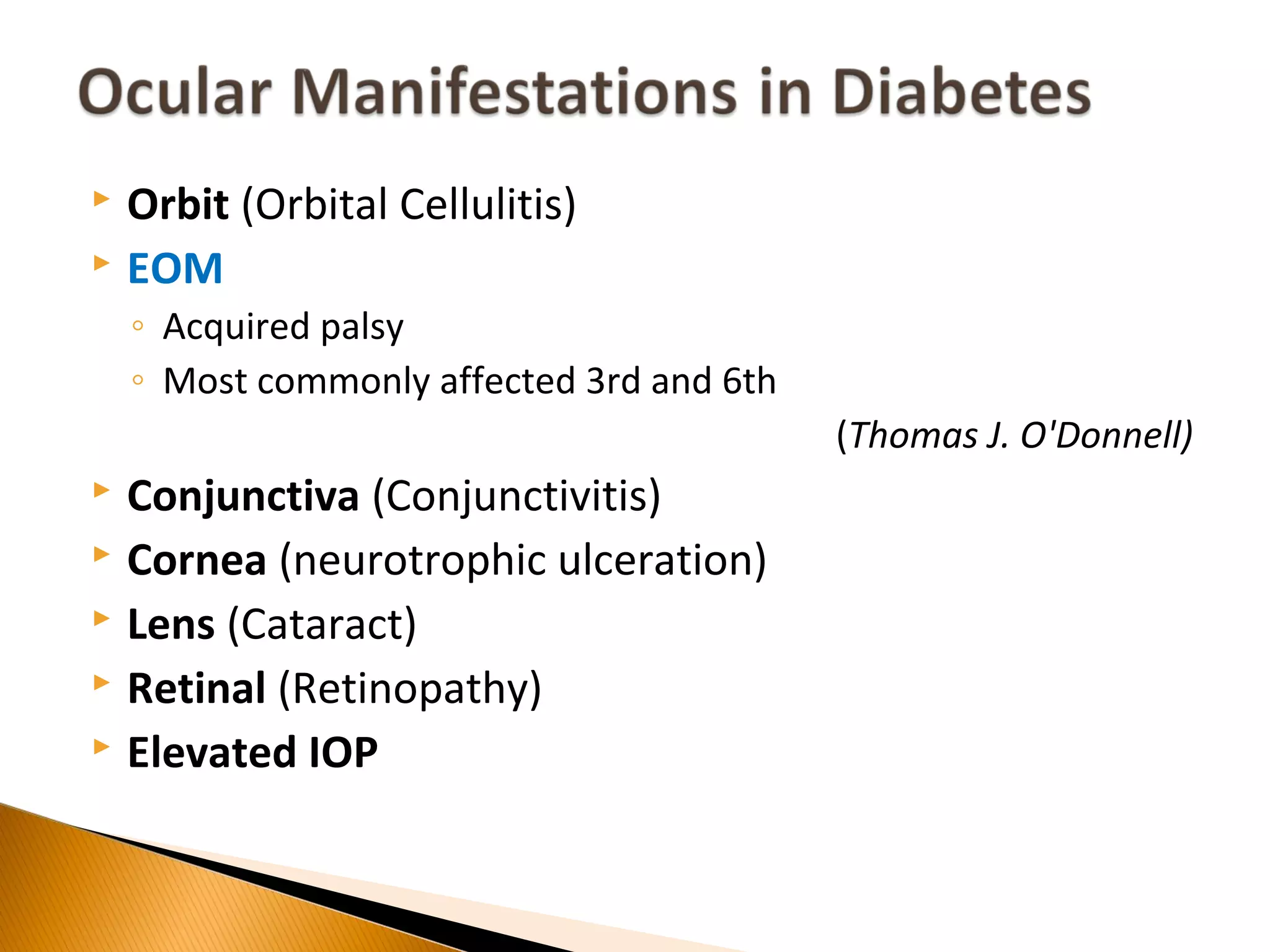
 Orbit (Orbital Cellulitis)
 EOM
◦ Acquired palsy
◦ Most commonly affected 3rd and 6th
(Thomas J. O'Donnell)
 Conjunctiva (Conjunctivitis)
 Cornea (neurotrophic ulceration)
 Lens (Cataract)
 Retinal (Retinopathy)
 Elevated IOP
 54 /M/M on 10/3/2016
 Referred from PCC clinic
 C/O :
◦ LE deviated inward constantly x 1 month ago associated with
binocular horizontal double vision at distance and near (D>N).
◦ It somehow bothering his daily activities esp driving. He overcame
the problem by wearing sunglasses and patch left side lens with
masking tape.
◦ No AHP was noted on him.
◦ He did not bring his own glasses during the visit and he claimed that
the prescription is for distance used. He occasionally wearing the
glasses.
◦ So, he came to our binocular visual clinic to seek for solution.
Previous visit, he was suggested to be treated with froster occlusion
and patient is keen.
 Ocular History
◦ BE pseudophakia: Operations done in PPUKM in year 2012
◦ Still being followed up for his diabetic retinopathy and
glaucoma (POAG)
◦ Diagnosed with left eye 6th
nerve palsy secondary to
mononeuritis multiplex in January 2016.
- (CT brain done: no space occupying lesion)
◦ Currently on 2 antiglaucoma drugs: G. Timolol and G.
Xalatan
TESTS 2/3/2016 10/3/2016 25/3/2016 31/3/2016 8/4/2016
Unaided VA OD: 6/18, PH: 6/9-1
OS: 6/18, PH: 6/12
OD: 6/9.5-2
OS: 6/15-1
,PH: 6/12-1
Referral letter to
see ophthalmoloist
Reply letter
obtained
from
ophthalmolo
gist
OD: 6/18, PH: 6/9-1
OS: 6/18, PH: 6/12
Hirschberg Test LE corneal light
reflected near the
temporal pupil
margin
LE corneal light reflected
near the temporal pupil
margin
Unaided CT (Dist)
Unaided CT (Near)
Large LE ET with
moderate recovery
Large LE ET with
moderate recovery
Prism Cover Test (Dist)
Prism Cover Test (Near)
20 Δ BO ET
8 Δ BO ET
18Δ BO ET
8 Δ BO ET
EOM Diplopia at all left
gaze
Abduction (-2)
Diplopia at all left gaze
Left gaze Abduction (-2)
Worth 4 dots (Dist)
Worth 4 dots (Near)
6 circles noted
(Diplopia)
Old RX OD: -0.25/-1.00 x 90
OS: Pl/ -2.00 x 90
Retinoscopy OD: -1.00 (6/6)
OS: -0.75 (6/6)
Subjective Refraction OD: -1.00/-0.50 x 75 (6/6)
OS: -0.75/-1.25 x75 (6/6)
ADD: +2.25, N5
OD: -1.00/-0.50 x 75 (6/6)
OS: -0.75/-1.25 x75 (6/6)
ADD: +2.00, N5
NFV (Dist)
NFV (Near)
30 BI, no recovery.
Diplopia before
placement of prism,
not recovery
 Hess Chart
RE overaction of medial rectus
LE limited lateral rectus action
(No deterioration or improvement
seen )
RE overaction of medial rectus
LE limited lateral rectus action
(No deterioration or improvement
seen )
2/3/2016 10/3/2016
Medical Examination
 CT brain scan-No space-occupying lesions
Lens OU: PCIOL stable
Fundus
examination
OU: Moderate NPDR
OU: Glaucoma
 Diagnosis
◦ LE 6th
nerve palsy secondary to mononeuritis multiplex
(diagnosed in January 2016)
 Currently BE EOM is improving, lateral gaze was recovered about
90%
◦ BE pseudophakia
◦ BE moderate non proliferative diabetic retinopathy (NPDR)
◦ BE primary open angle glaucoma
 Management on 10/3/2016
◦ TCA on 15/3/2016 to consider for binasal occlusion. He was
advised to bring his current glasses. To re-asses the EOM
function with Hess chart
◦ Consult patient regarding monocular visual field: he was
advised to turn his face in order to view at the peripheral side
of occluded eye instead of eye glancing.
 Management on 25/3/2016
◦ Referral letter with current BV assessment findings was given
to HUKM Ophthalmologist to seek for medical report before
proceed with a vision therapy programme.
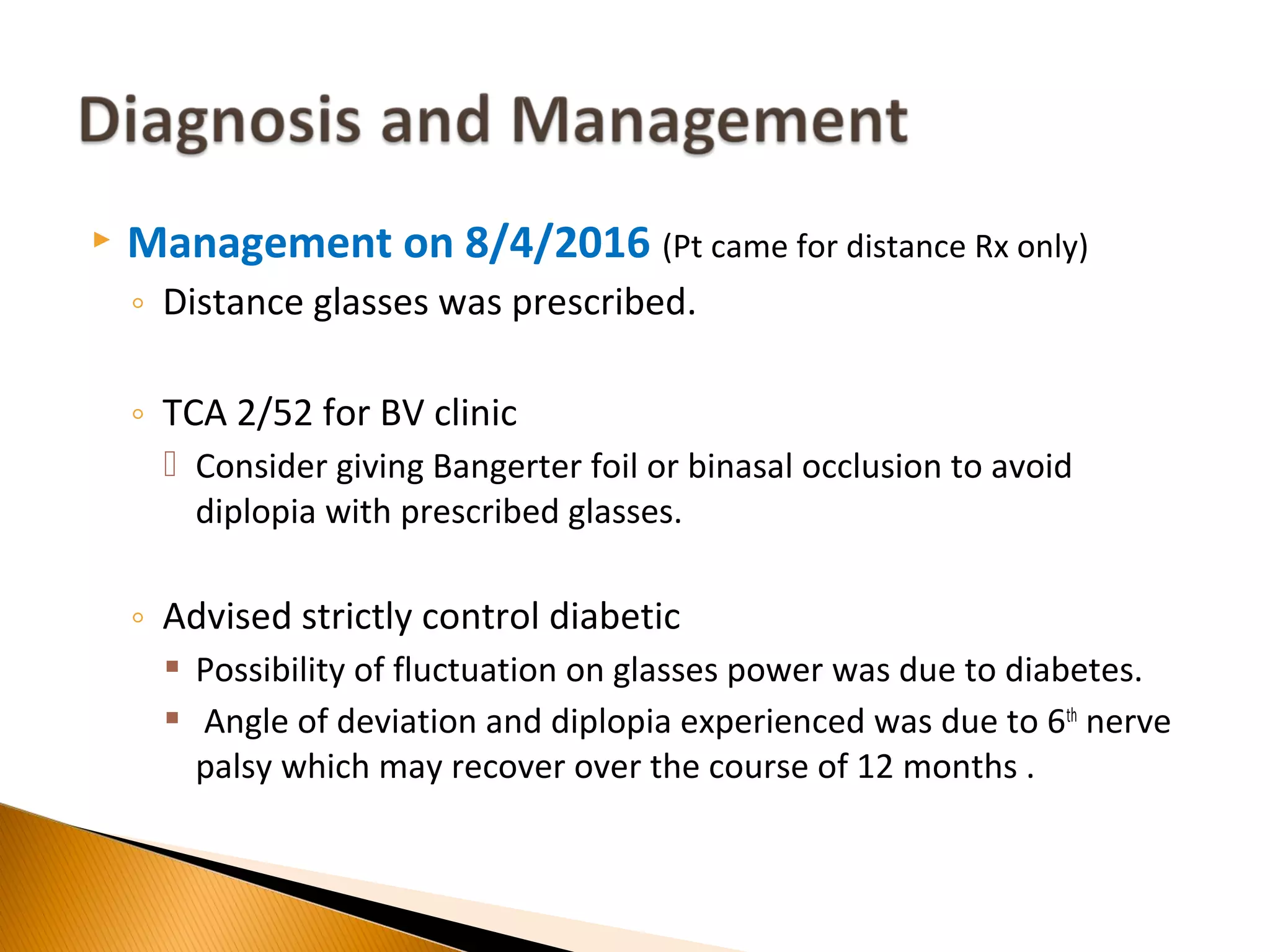
 Management on 8/4/2016 (Pt came for distance Rx only)
◦ Distance glasses was prescribed.
◦ TCA 2/52 for BV clinic
 Consider giving Bangerter foil or binasal occlusion to avoid
diplopia with prescribed glasses.
◦ Advised strictly control diabetic
 Possibility of fluctuation on glasses power was due to diabetes.
 Angle of deviation and diplopia experienced was due to 6th
nerve
palsy which may recover over the course of 12 months .
 Mononeuritis multiplex = A painful, asymmetrical, asynchronous
sensory and motor peripheral neuropathy involving isolated
damage to at least one separate nerve areas
 This nerve damaging disorders can be associated with many
different conditions including
◦ Infection (Vasculitis)
◦ Cancer-related condition (Tumour)
◦ Rheumatological disorders (Rheumatoid arthritis)
◦ Hematologic condition (Hypereosinophilia)
◦ Chronic conditions (Diabetes mellitus)
 Mononeuritis multiplex is a relatively common condition
associated with diabetic neuropathy
BE POAG
BE Mod
NPDR
LE 6th
nerve palsy
BE cataract
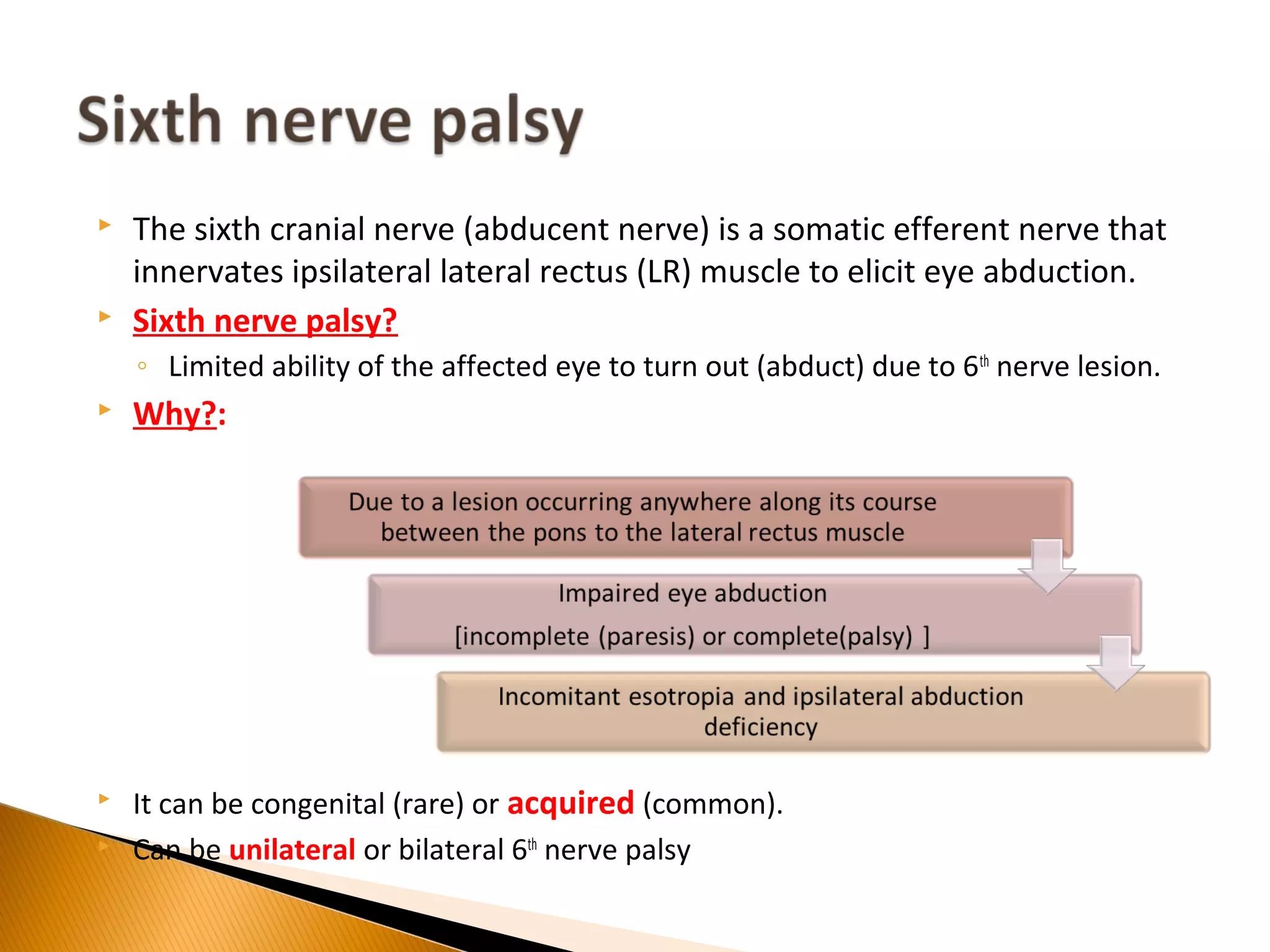
 The sixth cranial nerve (abducent nerve) is a somatic efferent nerve that
innervates ipsilateral lateral rectus (LR) muscle to elicit eye abduction.
 Sixth nerve palsy?
◦ Limited ability of the affected eye to turn out (abduct) due to 6th
nerve lesion.
 Why?:
 It can be congenital (rare) or acquired (common).
 Can be unilateral or bilateral 6th
nerve palsy
 Ophthalmologist will do some medical examination
to isolate any cranial nerve weakness.
◦ CT
◦ MRI scan
◦ CSF
◦ HbA1C
1. Patching either eye or binasal occlusion
2. Fresnel Prism
◦ To treat diplopia and alleviate face turn. Can be tried for small eso deviations or
postoperatively if needed
1. Botolinum toxin A
◦ Prevent contracture of medial rectus
◦ Successful use of botulinum toxin A in the early treatment of diplopia caused by
6th
nerve palsy in two type 2 diabetic patients. (Anna Broniarezyk-Loba, 2004)
1. Eye muscle surgery
◦ Longstanding esotropia ~ 6 months and above
1. Control blood pressure and blood sugar
◦ High sugar and blood pressure not only impact the eye but has increased risk of
stroke
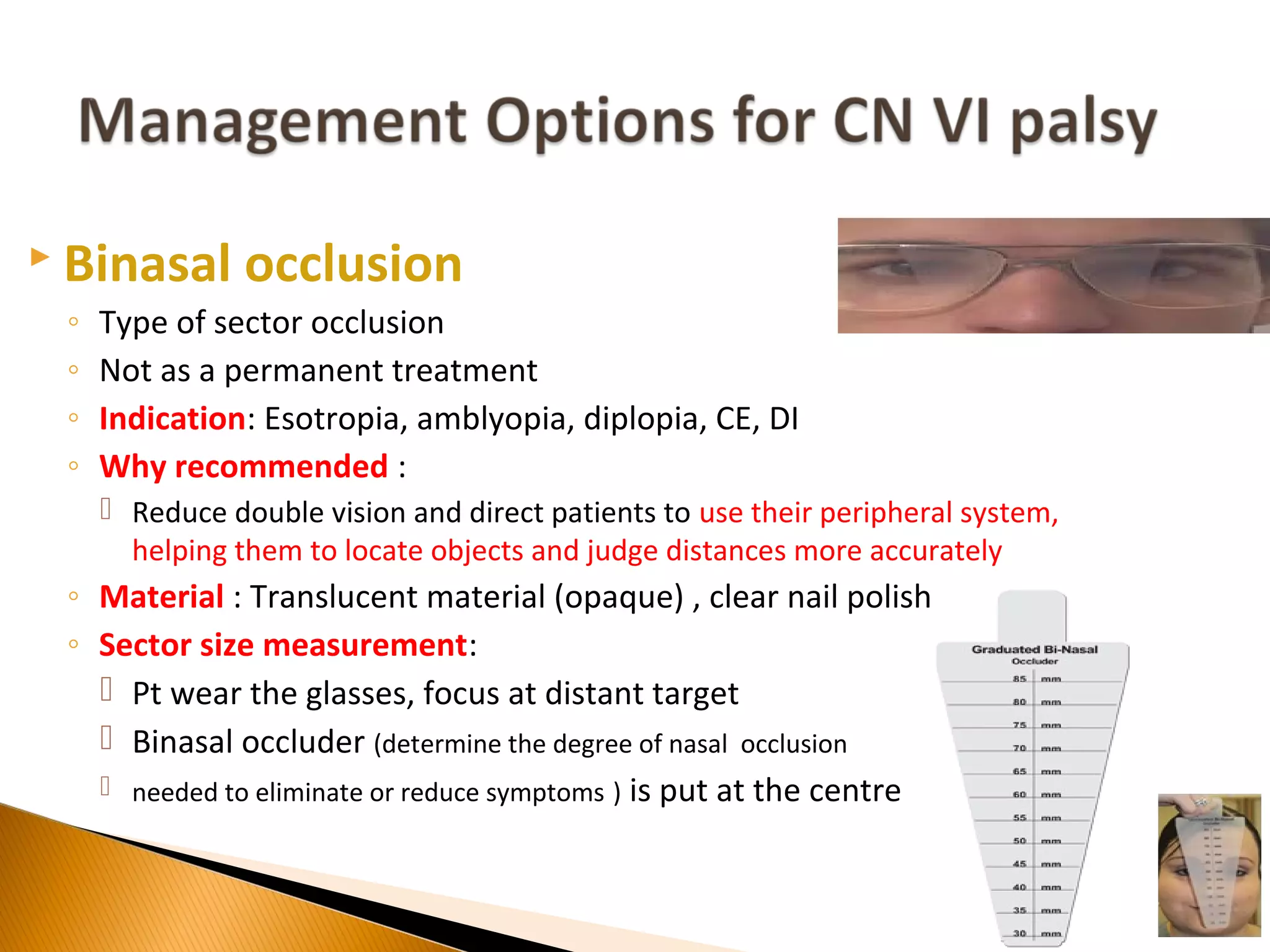
 Binasal occlusion
◦ Type of sector occlusion
◦ Not as a permanent treatment
◦ Indication: Esotropia, amblyopia, diplopia, CE, DI
◦ Why recommended :
 Reduce double vision and direct patients to use their peripheral system,
helping them to locate objects and judge distances more accurately
◦ Material : Translucent material (opaque) , clear nail polish
◦ Sector size measurement:
 Pt wear the glasses, focus at distant target
 Binasal occluder (determine the degree of nasal occlusion
 needed to eliminate or reduce symptoms ) is put at the centre
 Further reading on binasal occlusion
www.oepf.org/sites/default/files/journals/jbo-volume-1-
issue.../1-1%20Tassinari.pdf
www.oepf.org/sites/default/files/journals/jbo-volume-1-
issue.../1-1%20Tassinari.pdf
“Fortunately, diplopia related to diabetes typically is
caused by dysfunction of only one nerve at a time (and on
one side), and resolves without intervention in the majority
of cases within 3 to 6 months”.
“Fortunately, diplopia related to diabetes typically is
caused by dysfunction of only one nerve at a time (and on
one side), and resolves without intervention in the majority
of cases within 3 to 6 months”.
“People with diabetes can reduce their chances of developing
cranial neuropathy and double vision by maintaining
excellent blood glucose, blood pressure, and blood lipid control”.
“People with diabetes can reduce their chances of developing
cranial neuropathy and double vision by maintaining
excellent blood glucose, blood pressure, and blood lipid control”.
(Chous, 2013)
 Full eye examination, ruled out other underlying causes
(brain tumour by RAPD test)
 Temporally patching either eye
 Prescribe Prism glasses or to consider eye muscle surgery
◦ paralysis nerve is permanent
 Advised strictly control DM and HPT
 Advised annual medical examination
 Microvascular Cranial Nerve Palsy causes, Amercan Academy
of Ophthalmology, 2012.
 International Diabetes Federation, Malaysia
 Boulton, A.J.M., MD, FRCP, Malik, R.A., MB, PHD, Arezzo, J.C.,
PHD, Sosenko, J.M., MD, MS., Diabetic Somatic Neuropathies,
(2004), Amerian Diabetes Association, Vol. 27(6), Pg.1458-
1486.
 Tracy, J.A., MD, and Dyck, P.J.B., MD, The Spectrum of
Diabetic Neuropathy,(2008), Public Medical Journal, Vol.
19(1).
 O’Donnell, T. J., MD, Buckley, E.G., MD, Sixth Nerve Palsy,
(2006), Vol.7(5, Pg. 215-221.
 Mononeurities Multiplex, ADAM.
 Broniarczyl-Loba, A., MD, PHD, Czupryniak, L., MD,PHD,
Nowakowska, O., MD, PHD, Loba, J., MD,PHD., () Botulinum
Toxin A In The Early Treatment of Sixth Nerve Palsy-Induced
Diplopia in Type 2 Diabetes.
 National diabetes registry report vol., 2009-2012
 Eye Care of the patient with diabetes mellitus, American
optometric association
 Rinehart, W., Sloan, D., and Hurd, C., Exam cram NCLEX-RN,
4th
Edition

Case study: Sixth Nerve Palsy (Optometric Management)

  • 1.
    By: Leong Shin Yi NoorMunirah binti Awang Abu Bakar -Optometrist-
  • 2.
    According to InternationalDiabetes Federation :  415 million people have diabetes in the world ◦ Almost 153 million people in the Western Pacific Region; by 2040 will rise to 215 million.  There were 3.3 million cases of diabetes in Malaysia in 2015  Estimated about 15,000 to 39,000 people lose their sight because of diabetes  About 14.6% of Non-Insulin-Dependent DM developed DR after 5 years duration of diabetic condition and 50% develop evidence of nerve damage after over 15 years of having DM.
  • 3.
     Orbit (OrbitalCellulitis)  EOM ◦ Acquired palsy ◦ Most commonly affected 3rd and 6th (Thomas J. O'Donnell)  Conjunctiva (Conjunctivitis)  Cornea (neurotrophic ulceration)  Lens (Cataract)  Retinal (Retinopathy)  Elevated IOP
  • 4.
     54 /M/Mon 10/3/2016  Referred from PCC clinic  C/O : ◦ LE deviated inward constantly x 1 month ago associated with binocular horizontal double vision at distance and near (D>N). ◦ It somehow bothering his daily activities esp driving. He overcame the problem by wearing sunglasses and patch left side lens with masking tape. ◦ No AHP was noted on him. ◦ He did not bring his own glasses during the visit and he claimed that the prescription is for distance used. He occasionally wearing the glasses. ◦ So, he came to our binocular visual clinic to seek for solution. Previous visit, he was suggested to be treated with froster occlusion and patient is keen.
  • 5.
     Ocular History ◦BE pseudophakia: Operations done in PPUKM in year 2012 ◦ Still being followed up for his diabetic retinopathy and glaucoma (POAG) ◦ Diagnosed with left eye 6th nerve palsy secondary to mononeuritis multiplex in January 2016. - (CT brain done: no space occupying lesion) ◦ Currently on 2 antiglaucoma drugs: G. Timolol and G. Xalatan
  • 6.
    TESTS 2/3/2016 10/3/201625/3/2016 31/3/2016 8/4/2016 Unaided VA OD: 6/18, PH: 6/9-1 OS: 6/18, PH: 6/12 OD: 6/9.5-2 OS: 6/15-1 ,PH: 6/12-1 Referral letter to see ophthalmoloist Reply letter obtained from ophthalmolo gist OD: 6/18, PH: 6/9-1 OS: 6/18, PH: 6/12 Hirschberg Test LE corneal light reflected near the temporal pupil margin LE corneal light reflected near the temporal pupil margin Unaided CT (Dist) Unaided CT (Near) Large LE ET with moderate recovery Large LE ET with moderate recovery Prism Cover Test (Dist) Prism Cover Test (Near) 20 Δ BO ET 8 Δ BO ET 18Δ BO ET 8 Δ BO ET EOM Diplopia at all left gaze Abduction (-2) Diplopia at all left gaze Left gaze Abduction (-2) Worth 4 dots (Dist) Worth 4 dots (Near) 6 circles noted (Diplopia) Old RX OD: -0.25/-1.00 x 90 OS: Pl/ -2.00 x 90 Retinoscopy OD: -1.00 (6/6) OS: -0.75 (6/6) Subjective Refraction OD: -1.00/-0.50 x 75 (6/6) OS: -0.75/-1.25 x75 (6/6) ADD: +2.25, N5 OD: -1.00/-0.50 x 75 (6/6) OS: -0.75/-1.25 x75 (6/6) ADD: +2.00, N5 NFV (Dist) NFV (Near) 30 BI, no recovery. Diplopia before placement of prism, not recovery
  • 7.
     Hess Chart REoveraction of medial rectus LE limited lateral rectus action (No deterioration or improvement seen ) RE overaction of medial rectus LE limited lateral rectus action (No deterioration or improvement seen ) 2/3/2016 10/3/2016
  • 8.
    Medical Examination  CTbrain scan-No space-occupying lesions Lens OU: PCIOL stable Fundus examination OU: Moderate NPDR OU: Glaucoma
  • 9.
     Diagnosis ◦ LE6th nerve palsy secondary to mononeuritis multiplex (diagnosed in January 2016)  Currently BE EOM is improving, lateral gaze was recovered about 90% ◦ BE pseudophakia ◦ BE moderate non proliferative diabetic retinopathy (NPDR) ◦ BE primary open angle glaucoma
  • 10.
     Management on10/3/2016 ◦ TCA on 15/3/2016 to consider for binasal occlusion. He was advised to bring his current glasses. To re-asses the EOM function with Hess chart ◦ Consult patient regarding monocular visual field: he was advised to turn his face in order to view at the peripheral side of occluded eye instead of eye glancing.  Management on 25/3/2016 ◦ Referral letter with current BV assessment findings was given to HUKM Ophthalmologist to seek for medical report before proceed with a vision therapy programme.
  • 11.
     Management on8/4/2016 (Pt came for distance Rx only) ◦ Distance glasses was prescribed. ◦ TCA 2/52 for BV clinic  Consider giving Bangerter foil or binasal occlusion to avoid diplopia with prescribed glasses. ◦ Advised strictly control diabetic  Possibility of fluctuation on glasses power was due to diabetes.  Angle of deviation and diplopia experienced was due to 6th nerve palsy which may recover over the course of 12 months .
  • 13.
     Mononeuritis multiplex= A painful, asymmetrical, asynchronous sensory and motor peripheral neuropathy involving isolated damage to at least one separate nerve areas  This nerve damaging disorders can be associated with many different conditions including ◦ Infection (Vasculitis) ◦ Cancer-related condition (Tumour) ◦ Rheumatological disorders (Rheumatoid arthritis) ◦ Hematologic condition (Hypereosinophilia) ◦ Chronic conditions (Diabetes mellitus)  Mononeuritis multiplex is a relatively common condition associated with diabetic neuropathy
  • 16.
    BE POAG BE Mod NPDR LE6th nerve palsy BE cataract
  • 17.
     The sixthcranial nerve (abducent nerve) is a somatic efferent nerve that innervates ipsilateral lateral rectus (LR) muscle to elicit eye abduction.  Sixth nerve palsy? ◦ Limited ability of the affected eye to turn out (abduct) due to 6th nerve lesion.  Why?:  It can be congenital (rare) or acquired (common).  Can be unilateral or bilateral 6th nerve palsy
  • 20.
     Ophthalmologist willdo some medical examination to isolate any cranial nerve weakness. ◦ CT ◦ MRI scan ◦ CSF ◦ HbA1C
  • 21.
    1. Patching eithereye or binasal occlusion 2. Fresnel Prism ◦ To treat diplopia and alleviate face turn. Can be tried for small eso deviations or postoperatively if needed 1. Botolinum toxin A ◦ Prevent contracture of medial rectus ◦ Successful use of botulinum toxin A in the early treatment of diplopia caused by 6th nerve palsy in two type 2 diabetic patients. (Anna Broniarezyk-Loba, 2004) 1. Eye muscle surgery ◦ Longstanding esotropia ~ 6 months and above 1. Control blood pressure and blood sugar ◦ High sugar and blood pressure not only impact the eye but has increased risk of stroke
  • 22.
     Binasal occlusion ◦Type of sector occlusion ◦ Not as a permanent treatment ◦ Indication: Esotropia, amblyopia, diplopia, CE, DI ◦ Why recommended :  Reduce double vision and direct patients to use their peripheral system, helping them to locate objects and judge distances more accurately ◦ Material : Translucent material (opaque) , clear nail polish ◦ Sector size measurement:  Pt wear the glasses, focus at distant target  Binasal occluder (determine the degree of nasal occlusion  needed to eliminate or reduce symptoms ) is put at the centre
  • 23.
     Further readingon binasal occlusion www.oepf.org/sites/default/files/journals/jbo-volume-1- issue.../1-1%20Tassinari.pdf www.oepf.org/sites/default/files/journals/jbo-volume-1- issue.../1-1%20Tassinari.pdf
  • 24.
    “Fortunately, diplopia relatedto diabetes typically is caused by dysfunction of only one nerve at a time (and on one side), and resolves without intervention in the majority of cases within 3 to 6 months”. “Fortunately, diplopia related to diabetes typically is caused by dysfunction of only one nerve at a time (and on one side), and resolves without intervention in the majority of cases within 3 to 6 months”. “People with diabetes can reduce their chances of developing cranial neuropathy and double vision by maintaining excellent blood glucose, blood pressure, and blood lipid control”. “People with diabetes can reduce their chances of developing cranial neuropathy and double vision by maintaining excellent blood glucose, blood pressure, and blood lipid control”. (Chous, 2013)
  • 25.
     Full eyeexamination, ruled out other underlying causes (brain tumour by RAPD test)  Temporally patching either eye  Prescribe Prism glasses or to consider eye muscle surgery ◦ paralysis nerve is permanent  Advised strictly control DM and HPT  Advised annual medical examination
  • 26.
     Microvascular CranialNerve Palsy causes, Amercan Academy of Ophthalmology, 2012.  International Diabetes Federation, Malaysia  Boulton, A.J.M., MD, FRCP, Malik, R.A., MB, PHD, Arezzo, J.C., PHD, Sosenko, J.M., MD, MS., Diabetic Somatic Neuropathies, (2004), Amerian Diabetes Association, Vol. 27(6), Pg.1458- 1486.  Tracy, J.A., MD, and Dyck, P.J.B., MD, The Spectrum of Diabetic Neuropathy,(2008), Public Medical Journal, Vol. 19(1).  O’Donnell, T. J., MD, Buckley, E.G., MD, Sixth Nerve Palsy, (2006), Vol.7(5, Pg. 215-221.  Mononeurities Multiplex, ADAM.
  • 27.
     Broniarczyl-Loba, A.,MD, PHD, Czupryniak, L., MD,PHD, Nowakowska, O., MD, PHD, Loba, J., MD,PHD., () Botulinum Toxin A In The Early Treatment of Sixth Nerve Palsy-Induced Diplopia in Type 2 Diabetes.  National diabetes registry report vol., 2009-2012  Eye Care of the patient with diabetes mellitus, American optometric association  Rinehart, W., Sloan, D., and Hurd, C., Exam cram NCLEX-RN, 4th Edition