INTRODUCTION
WHAT IS ACID RAIN?
• Acid Rain is rain that is more acidic than normal.
• Acid rain’s spread and damage involves weather, chemistry, soil, and the life
cycles of plants and animals on the land and from acid rain in the water.
• Sulfur dioxide and nitrogen oxides, the major sources of acid rain.
CAUSES OF ACID RAIN
CAUSES OF ACID RAIN
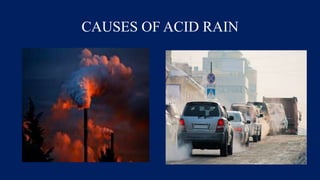
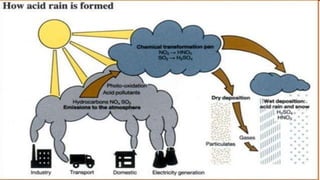
Burning Coal, Oil and natural gas in power stations makes electricity, giving off
sulphur dioxide gas.
Burning petrol and oil in vehicle engines gives off nitrogen oxides as gases.
These gases mix with water vapour and rainwater in the atmosphere producing
weak solutions of sulphuric and nitric acids - which falls as acid rain.
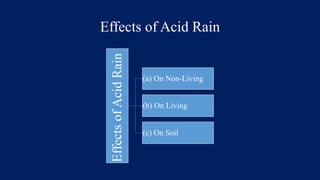
Effects of Acid Rain
Effects
of
Acid
Rain
(a) On Non-Living
(b) On Living
(c) On Soil
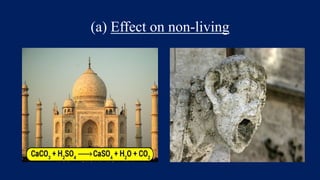
(a) Effect on non-living
The Taj Mahal in Agra, suffering from Sulphur di oxide, Sulphuric acid and other
fumes pollutants released from Mathura Refinery.
Acid Rain causes extensive damage to building, statutes, bridges & structural
materials of marble, lime stone, etc.
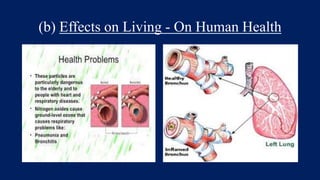
(b) Effects on Living - On Human Health
The Sulphur di oxide and nitrogen oxide gases, causes respiratory diseases like
asthma, chronic bronchitis, etc.
Tiny Particles cause difficulty in breathing for humans and animals & also lead to
permanent lung damage.
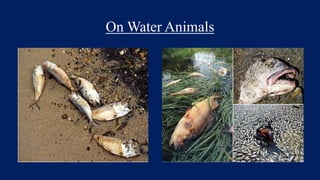
On Water Animals
On Water Animals
Acid Rain increases the acidity of lakes & rivers, which is directly affect the
aquatic ecosystem.
(c) On Trees & Soil
(c) On Trees & Soil
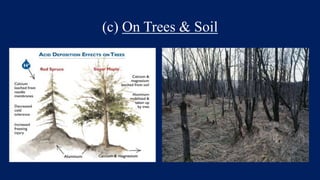
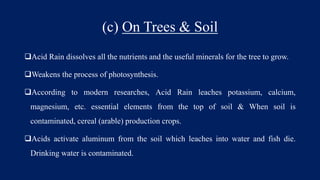
Acid Rain dissolves all the nutrients and the useful minerals for the tree to grow.
Weakens the process of photosynthesis.
According to modern researches, Acid Rain leaches potassium, calcium,
magnesium, etc. essential elements from the top of soil & When soil is
contaminated, cereal (arable) production crops.
Acids activate aluminum from the soil which leaches into water and fish die.
Drinking water is contaminated.
A Case Study on Taj Mahal
Facts of the Case Study
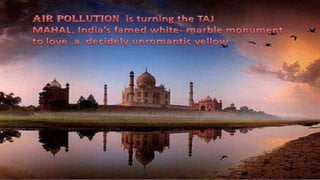
Acid Rain was discovered in 1853. The term “acid rain” was coined in 1872 by
Robert Angus Smith. ACID RAINS are turning the TAJ MAHAL, India’s famed
white- marble monument to love, a decidedly unromantic yellow.
• Marble is CaCO3.
• When acids come in contact, these corrodes by chemical reaction.
• The CaOH formed get deposited over the marble and looks like a cancerous
growth.
• This phenomenon is known as Marble Cancer.
THE PROBLEM IS… The Mathura oil refinery and other nearby industries
pushed into atmosphere pollutants that contains oxides of Sulphur and Nitrogen.
These gases causes acid rain.
The Supreme Court has taken several steps to save the Taj. It has ordered
industries to switch to cleaner fuels like CNG and LPG. Moreover the automobiles
should switch over to unleaded petrol to the Taj Zone.
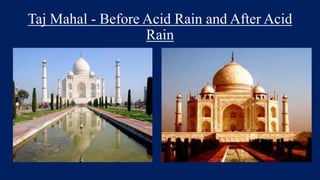
Taj Mahal - Before Acid Rain and After Acid
Rain
Remedial Measures - Acid Rain
Fit Scrubbers into factory’s chimneys, which are chemical filters that remove
impurities such as sulphur from smoke.
Cars can be fitted with special converters which remove dangerous chemicals.
Governments need to spend more money on pollution control.
Governments need to invest in researching different ways to produce energy.
THANK YOU
BY
JEBARSON MERSON. E
16BLA1029

Case study on acid rain

  • 2.
    INTRODUCTION WHAT IS ACIDRAIN? • Acid Rain is rain that is more acidic than normal. • Acid rain’s spread and damage involves weather, chemistry, soil, and the life cycles of plants and animals on the land and from acid rain in the water. • Sulfur dioxide and nitrogen oxides, the major sources of acid rain.
  • 3.
  • 4.
    CAUSES OF ACIDRAIN Burning Coal, Oil and natural gas in power stations makes electricity, giving off sulphur dioxide gas. Burning petrol and oil in vehicle engines gives off nitrogen oxides as gases. These gases mix with water vapour and rainwater in the atmosphere producing weak solutions of sulphuric and nitric acids - which falls as acid rain.
  • 6.
    Effects of AcidRain Effects of Acid Rain (a) On Non-Living (b) On Living (c) On Soil
  • 7.
    (a) Effect onnon-living
  • 8.
    (a) Effect onnon-living The Taj Mahal in Agra, suffering from Sulphur di oxide, Sulphuric acid and other fumes pollutants released from Mathura Refinery. Acid Rain causes extensive damage to building, statutes, bridges & structural materials of marble, lime stone, etc.
  • 9.
    (b) Effects onLiving - On Human Health
  • 10.
    (b) Effects onLiving - On Human Health The Sulphur di oxide and nitrogen oxide gases, causes respiratory diseases like asthma, chronic bronchitis, etc. Tiny Particles cause difficulty in breathing for humans and animals & also lead to permanent lung damage.
  • 11.
  • 12.
    On Water Animals AcidRain increases the acidity of lakes & rivers, which is directly affect the aquatic ecosystem.
  • 13.
  • 14.
    (c) On Trees& Soil Acid Rain dissolves all the nutrients and the useful minerals for the tree to grow. Weakens the process of photosynthesis. According to modern researches, Acid Rain leaches potassium, calcium, magnesium, etc. essential elements from the top of soil & When soil is contaminated, cereal (arable) production crops. Acids activate aluminum from the soil which leaches into water and fish die. Drinking water is contaminated.
  • 15.
    A Case Studyon Taj Mahal
  • 17.
    Facts of theCase Study Acid Rain was discovered in 1853. The term “acid rain” was coined in 1872 by Robert Angus Smith. ACID RAINS are turning the TAJ MAHAL, India’s famed white- marble monument to love, a decidedly unromantic yellow. • Marble is CaCO3. • When acids come in contact, these corrodes by chemical reaction. • The CaOH formed get deposited over the marble and looks like a cancerous growth.
  • 18.
    • This phenomenonis known as Marble Cancer. THE PROBLEM IS… The Mathura oil refinery and other nearby industries pushed into atmosphere pollutants that contains oxides of Sulphur and Nitrogen. These gases causes acid rain. The Supreme Court has taken several steps to save the Taj. It has ordered industries to switch to cleaner fuels like CNG and LPG. Moreover the automobiles should switch over to unleaded petrol to the Taj Zone.
  • 19.
    Taj Mahal -Before Acid Rain and After Acid Rain
  • 20.
  • 21.
    Remedial Measures -Acid Rain Fit Scrubbers into factory’s chimneys, which are chemical filters that remove impurities such as sulphur from smoke. Cars can be fitted with special converters which remove dangerous chemicals. Governments need to spend more money on pollution control. Governments need to invest in researching different ways to produce energy.
  • 22.