Carbon tax vs. Cap-
and-Trade: which is
better?
A presentation by Angel-Avocado
and Nami-Nutella
Carbon Tax
• Carbon tax is a form of pollution tax. A fee for
greenhouse gas pollution.
• The government sets a price per ton on
carbon, then translates it into a tax.
• Tax makes using dirty fuels more- expensive.
• Encourages businesses and individuals to
reduce consumption and increase energy
efficiency.
• Adopting to greener practices.
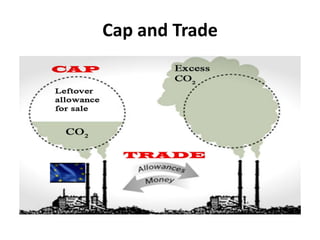
Cap and Trade
• Sets a cap, and distributes emissions permits
among firms that produce emissions.
• The emission cap ensures that total pollution
goes down
• Companies are given an economic incentive to
find better ways to reduce greenhouse gas
and support clean energy.
• more complex
Cap and Trade
Advantages
Carbon Tax:
• encourages alternative energy.
• more predictable and stable.
• incentive to use/develop more environmentally
friendly production processes.
• Quick to implement
Cap and Trade:
• More effective/complex approach.
• Fewer political obstacles than tax
Disadvantages
Carbon Tax:
• Production shift to countries with no or lower carbon
taxes (China)
• Firms may hide the real carbon emissions so they can
pay less.
• Difficult to measure how much carbon is produced.
Cap and Trade:
• Emissions are capped, but the dollar price is unknown
and dependent on many market variables.
• Everybody has to be involved otherwise some
businesses may loose their competitive advantage!
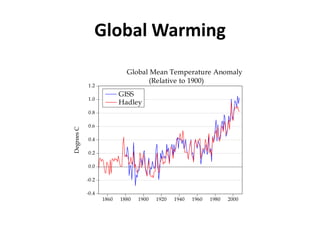
Global Warming
-0.4
-0.2
0.0
0.2
0.4
0.6
0.8
1.0
1.2
1860 1880 1900 1920 1940 1960 1980 2000
GISS
Hadley
Global Mean Temperature Anomaly
(Relative to 1900)
DegreesC
Solution
How can we reduce pollution and other
externalities that are caused through market
mechanisms?
• Harmonized international carbon price. (Fair)
• Allowance prices automatically adjust to
economic conditions.
• Use alternative Energy.
• Think outside the box!

Carbon powerpoint

  • 1.
    Carbon tax vs.Cap- and-Trade: which is better? A presentation by Angel-Avocado and Nami-Nutella
  • 2.
    Carbon Tax • Carbontax is a form of pollution tax. A fee for greenhouse gas pollution. • The government sets a price per ton on carbon, then translates it into a tax. • Tax makes using dirty fuels more- expensive. • Encourages businesses and individuals to reduce consumption and increase energy efficiency. • Adopting to greener practices.
  • 3.
    Cap and Trade •Sets a cap, and distributes emissions permits among firms that produce emissions. • The emission cap ensures that total pollution goes down • Companies are given an economic incentive to find better ways to reduce greenhouse gas and support clean energy. • more complex
  • 4.
  • 5.
    Advantages Carbon Tax: • encouragesalternative energy. • more predictable and stable. • incentive to use/develop more environmentally friendly production processes. • Quick to implement Cap and Trade: • More effective/complex approach. • Fewer political obstacles than tax
  • 6.
    Disadvantages Carbon Tax: • Productionshift to countries with no or lower carbon taxes (China) • Firms may hide the real carbon emissions so they can pay less. • Difficult to measure how much carbon is produced. Cap and Trade: • Emissions are capped, but the dollar price is unknown and dependent on many market variables. • Everybody has to be involved otherwise some businesses may loose their competitive advantage!
  • 7.
    Global Warming -0.4 -0.2 0.0 0.2 0.4 0.6 0.8 1.0 1.2 1860 18801900 1920 1940 1960 1980 2000 GISS Hadley Global Mean Temperature Anomaly (Relative to 1900) DegreesC
  • 8.
    Solution How can wereduce pollution and other externalities that are caused through market mechanisms? • Harmonized international carbon price. (Fair) • Allowance prices automatically adjust to economic conditions. • Use alternative Energy. • Think outside the box!