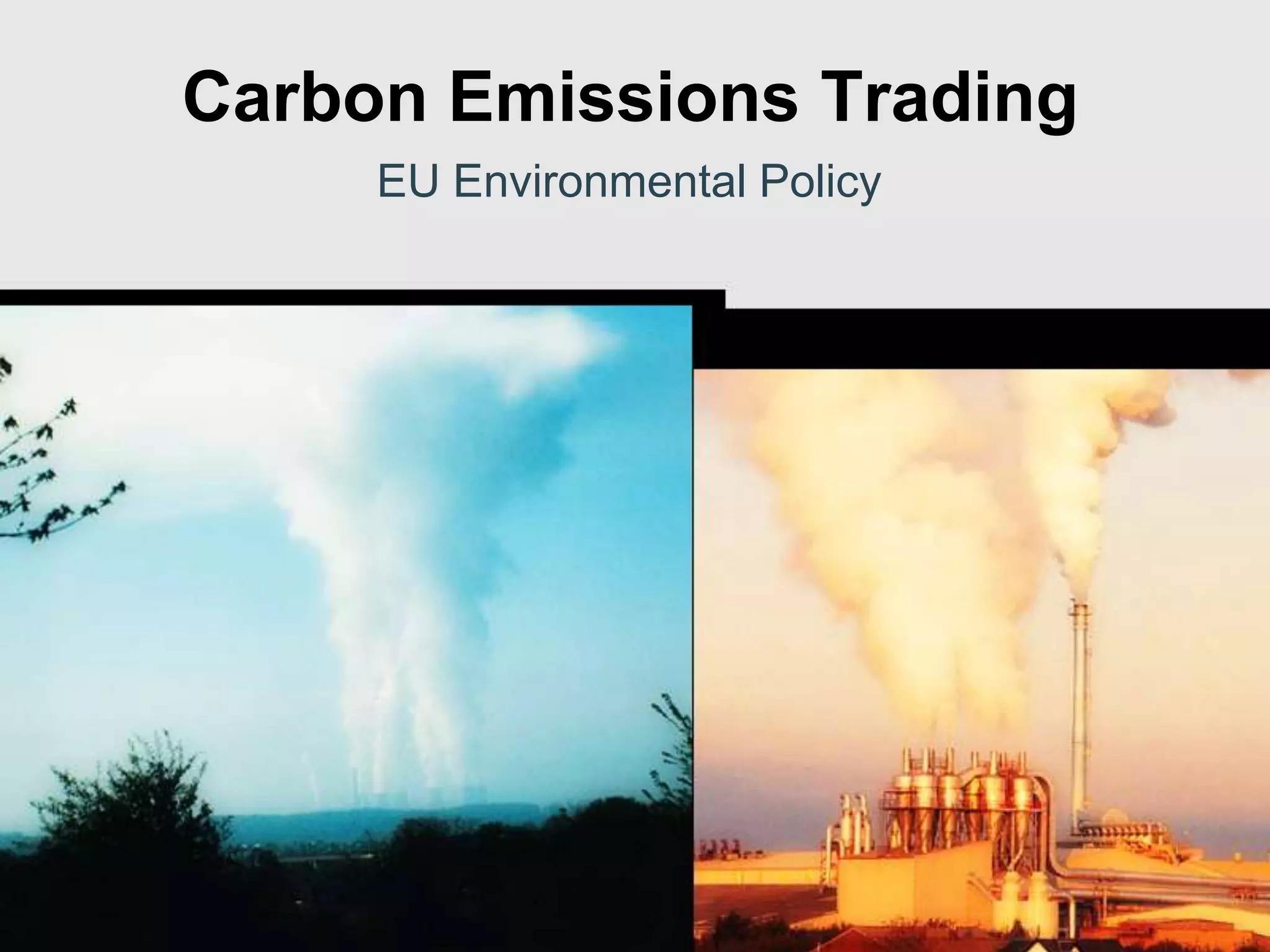
Carbon Emissions TradingEU Environmental Policy
This presentation coversCan carbon markets be part of the answer in controlling climate change?What is the basic economics of carbon trading?Is the EU system working?What are the alternatives / complements?Should carbon trading be replaced with a carbon tax?
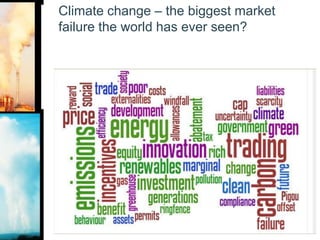
Climate change – the biggest market failure the world has ever seen?
The EU-Emissions Trading SchemeEU ETS is a market-based mechanism to incentivise reduction of greenhouse gas emissions in a cost-effective and economically-efficient manner.Similar system trialed in the USA - US acid rain program employed a sulfur emissions cap and trade system and successfully produced a 50 percent cut in emissions The scheme operates through the allocation and trade of CO2 emissions allowancesOne allowance represents one tonne of carbon dioxide equivalent.Long term goal - de-carbonization of EU economyCarbon trading scheme began in January 2005Now into 2nd phase – which lasts until end 2012
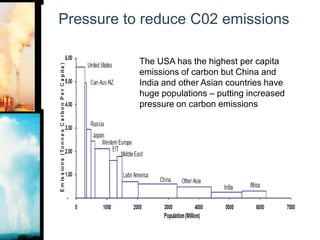
Pressure to reduce C02 emissionsThe USA has the highest per capita emissions of carbon but China and India and other Asian countries have huge populations – putting increased pressure on carbon emissions
20-20-20EU Targets:20% cut in greenhouse gas emissions by 2020, compared with 1990 levels20% increase in use of renewable energy by 202020% cut in energy consumption through improved energy efficiency by 2020
Trading the right to polluteMarket failure can occur with missing markets. In the past there has been no market to trade and enforce environmental property rights. Carbon trading seeks to create incentives to reduce pollution.A cap is set on the emissions allowedThe cap creates the scarcity required for the marketAt the end of each year installations are required to ensure they have enough allowances to account for their installation’s actual emissions.In Phase II increased penalties imposed on any excess emissions rise to €100 per ton of CO2
Carbon Trading – assets and liabilitiesBusinesses in the EU-ETS must implement carbon management strategies in the medium termAssets: If a carbon emitting business can under-use its initial allowance by better energy efficiency, it can sell its surplus on the market.  Liabilities: If a business is faced by high costs to reduce its emissions, it must buy extra allowancesThe new carbon market should develop a price that reflects the cheapest ways of implementing emission cutbacks. As the market price of carbon emissions rises, so there is an incentive for businesses to invest in technologies that are more pollution efficient  including carbon sequestration.
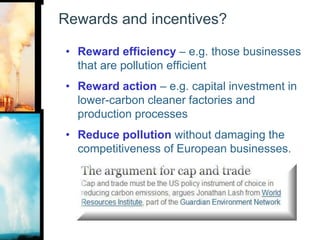
Rewards and incentives?Reward efficiency – e.g. those businesses that are pollution efficientReward action – e.g. capital investment in lower-carbon cleaner factories and production processesReduce pollution without damaging the competitiveness of European businesses.
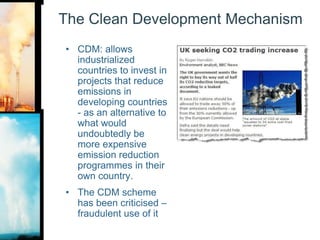
The Clean Development MechanismCDM: allows industrialized countries to invest in projects that reduce emissions in developing countries - as an alternative to what would undoubtedly be more expensive emission reduction programmes in their own country. The CDM scheme has been criticised – fraudulent use of it
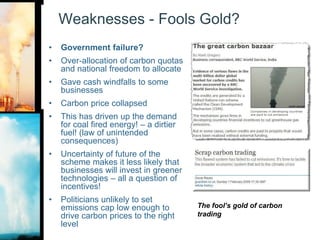
Weaknesses - Fools Gold?Government failure?Over-allocation of carbon quotas and national freedom to allocateGave cash windfalls to some businessesCarbon price collapsedThis has driven up the demand for coal fired energy! – a dirtier fuel! (law of unintended consequences)Uncertainty of future of the scheme makes it less likely that businesses will invest in greener technologies – all a question of incentives!Politicians unlikely to set emissions cap low enough to drive carbon prices to the right levelThe fool’s gold of carbon trading
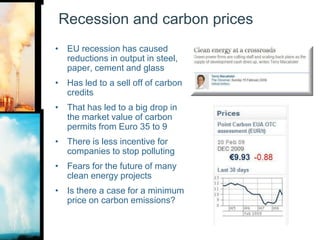
Recession and carbon pricesEU recession has caused reductions in output in steel, paper, cement and glassHas led to a sell off of carbon creditsThat has led to a big drop in the market value of carbon permits from Euro 35 to 9There is less incentive for companies to stop pollutingFears for the future of many clean energy projectsIs there a case for a minimum price on carbon emissions?
More videos
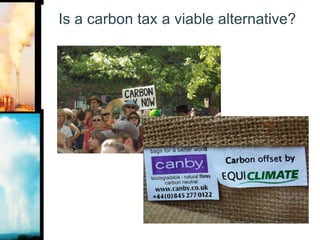
Is a carbon tax a viable alternative?
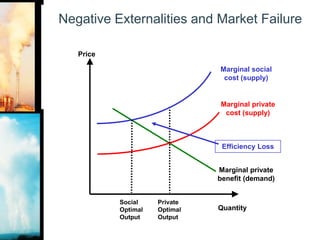
Carbon taxationA Carbon tax is a specific tax on the consumption of goods which cause carbon dioxide emissionsCase for a carbon tax:Cap and trade is like a tax so why not tax instead?Mandates a specific price on carbon – less uncertainty than the emissions-trading priceA way of internalizing externalities – the tax would raise the marginal cost of the CO2E-emitting activities, up to the point that the marginal social cost of abatement activities is equated to the marginal social benefit from these activitiesIncentive for firms to lower their emissions and for consumer behaviour to change Consumers will respond … perhaps in surprising ways (behavioural economics has something to say here!)Revenue generated can be “ring-fenced” and then recycled – i.e. spent on environmental initiatives
Negative Externalities and Market FailurePriceMarginal social cost (supply)Marginal private cost (supply)EfficiencyLossMarginal private benefit (demand)Private Optimal OutputSocial Optimal OutputQuantity
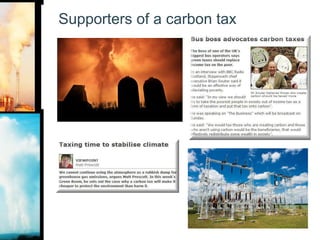
Supporters of a carbon tax
Problems with a carbon taxWhat are the chances of agreeing a carbon tax across different parts of the world?How much to tax when emissions of carbon are difficult to measure accuratelyWhat is the true economic cost of CO2 emissions and impact on climate change? Involves discounting the future Costs of compliance / risk of tax evasionPossible regressive effects on lower income householdsLess certainty about the effect on quantity of emissionsCountries may free ride on others carbon taxes i.e. enjoy a reduction in CO2 emissions without imposing their own taxUnless introduced across many countries – would potentially damage competitiveness and jobs of countries that bring a carbon tax inWould countries be prepared to raise the carbon tax to reduce emissions? Low price elasticity of demand?
Evaluating the alternativesWhen evaluating consider some of these points:Which interventions are likely to be most effective?In changing behaviour
In encouraging innovation and investment

Europe carbon-emissions-trading

  • 1.
    Carbon Emissions TradingEUEnvironmental Policy
  • 2.
    This presentation coversCancarbon markets be part of the answer in controlling climate change?What is the basic economics of carbon trading?Is the EU system working?What are the alternatives / complements?Should carbon trading be replaced with a carbon tax?
  • 3.
    Climate change –the biggest market failure the world has ever seen?
  • 4.
    The EU-Emissions TradingSchemeEU ETS is a market-based mechanism to incentivise reduction of greenhouse gas emissions in a cost-effective and economically-efficient manner.Similar system trialed in the USA - US acid rain program employed a sulfur emissions cap and trade system and successfully produced a 50 percent cut in emissions The scheme operates through the allocation and trade of CO2 emissions allowancesOne allowance represents one tonne of carbon dioxide equivalent.Long term goal - de-carbonization of EU economyCarbon trading scheme began in January 2005Now into 2nd phase – which lasts until end 2012
  • 5.
    Pressure to reduceC02 emissionsThe USA has the highest per capita emissions of carbon but China and India and other Asian countries have huge populations – putting increased pressure on carbon emissions
  • 6.
    20-20-20EU Targets:20% cutin greenhouse gas emissions by 2020, compared with 1990 levels20% increase in use of renewable energy by 202020% cut in energy consumption through improved energy efficiency by 2020
  • 7.
    Trading the rightto polluteMarket failure can occur with missing markets. In the past there has been no market to trade and enforce environmental property rights. Carbon trading seeks to create incentives to reduce pollution.A cap is set on the emissions allowedThe cap creates the scarcity required for the marketAt the end of each year installations are required to ensure they have enough allowances to account for their installation’s actual emissions.In Phase II increased penalties imposed on any excess emissions rise to €100 per ton of CO2
  • 8.
    Carbon Trading –assets and liabilitiesBusinesses in the EU-ETS must implement carbon management strategies in the medium termAssets: If a carbon emitting business can under-use its initial allowance by better energy efficiency, it can sell its surplus on the market. Liabilities: If a business is faced by high costs to reduce its emissions, it must buy extra allowancesThe new carbon market should develop a price that reflects the cheapest ways of implementing emission cutbacks. As the market price of carbon emissions rises, so there is an incentive for businesses to invest in technologies that are more pollution efficient including carbon sequestration.
  • 9.
    Rewards and incentives?Rewardefficiency – e.g. those businesses that are pollution efficientReward action – e.g. capital investment in lower-carbon cleaner factories and production processesReduce pollution without damaging the competitiveness of European businesses.
  • 10.
    The Clean DevelopmentMechanismCDM: allows industrialized countries to invest in projects that reduce emissions in developing countries - as an alternative to what would undoubtedly be more expensive emission reduction programmes in their own country. The CDM scheme has been criticised – fraudulent use of it
  • 11.
    Weaknesses - FoolsGold?Government failure?Over-allocation of carbon quotas and national freedom to allocateGave cash windfalls to some businessesCarbon price collapsedThis has driven up the demand for coal fired energy! – a dirtier fuel! (law of unintended consequences)Uncertainty of future of the scheme makes it less likely that businesses will invest in greener technologies – all a question of incentives!Politicians unlikely to set emissions cap low enough to drive carbon prices to the right levelThe fool’s gold of carbon trading
  • 12.
    Recession and carbonpricesEU recession has caused reductions in output in steel, paper, cement and glassHas led to a sell off of carbon creditsThat has led to a big drop in the market value of carbon permits from Euro 35 to 9There is less incentive for companies to stop pollutingFears for the future of many clean energy projectsIs there a case for a minimum price on carbon emissions?
  • 13.
  • 14.
    Is a carbontax a viable alternative?
  • 15.
    Carbon taxationA Carbontax is a specific tax on the consumption of goods which cause carbon dioxide emissionsCase for a carbon tax:Cap and trade is like a tax so why not tax instead?Mandates a specific price on carbon – less uncertainty than the emissions-trading priceA way of internalizing externalities – the tax would raise the marginal cost of the CO2E-emitting activities, up to the point that the marginal social cost of abatement activities is equated to the marginal social benefit from these activitiesIncentive for firms to lower their emissions and for consumer behaviour to change Consumers will respond … perhaps in surprising ways (behavioural economics has something to say here!)Revenue generated can be “ring-fenced” and then recycled – i.e. spent on environmental initiatives
  • 16.
    Negative Externalities andMarket FailurePriceMarginal social cost (supply)Marginal private cost (supply)EfficiencyLossMarginal private benefit (demand)Private Optimal OutputSocial Optimal OutputQuantity
  • 17.
    Supporters of acarbon tax
  • 18.
    Problems with acarbon taxWhat are the chances of agreeing a carbon tax across different parts of the world?How much to tax when emissions of carbon are difficult to measure accuratelyWhat is the true economic cost of CO2 emissions and impact on climate change? Involves discounting the future Costs of compliance / risk of tax evasionPossible regressive effects on lower income householdsLess certainty about the effect on quantity of emissionsCountries may free ride on others carbon taxes i.e. enjoy a reduction in CO2 emissions without imposing their own taxUnless introduced across many countries – would potentially damage competitiveness and jobs of countries that bring a carbon tax inWould countries be prepared to raise the carbon tax to reduce emissions? Low price elasticity of demand?
  • 19.
    Evaluating the alternativesWhenevaluating consider some of these points:Which interventions are likely to be most effective?In changing behaviour
  • 20.