The 21st International Congress on Modelling and Simulation (MODSIM2015)
MINERAL RESOURCES FLAGSHIP
Anusuriya Devaraju and Jens Klump
4th December 2015
CAPTURING DATA PROVENANCE WITH A USER-DRIVEN
FEEDBACK APPROACH
by Matthew Niederberger
Outline
• Definitions (Provenance, Research Data, User Feedback)
• Motivation
• Goals & Solutions
• Summary
Outline
• Definitions (Provenance, Research Data, User Feedback)
• Motivation
• Goals & Solutions
• Summary
User Feedback
4 |
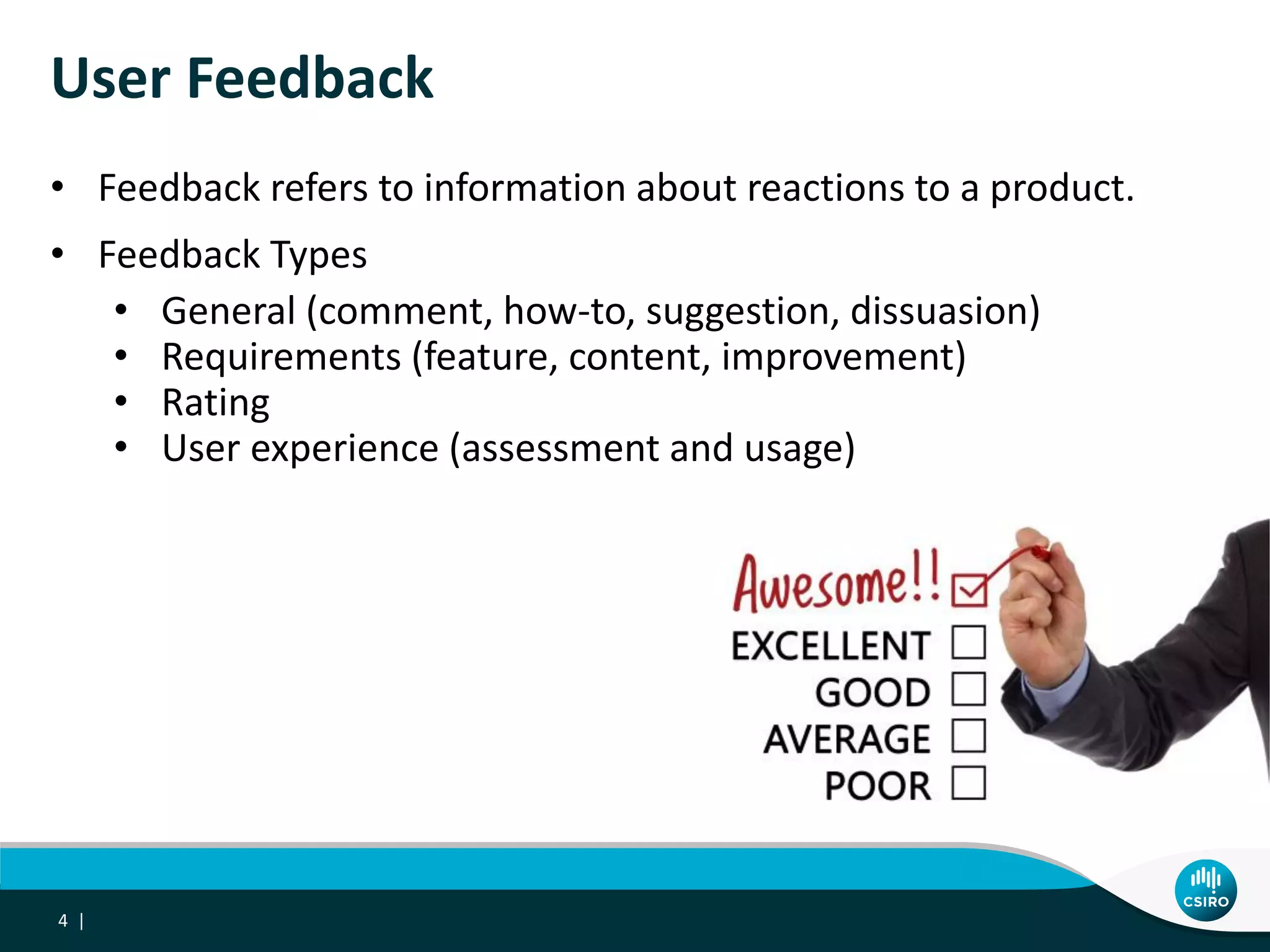
• Feedback refers to information about reactions to a product.
• Feedback Types
• General (comment, how-to, suggestion, dissuasion)
• Requirements (feature, content, improvement)
• Rating
• User experience (assessment and usage)
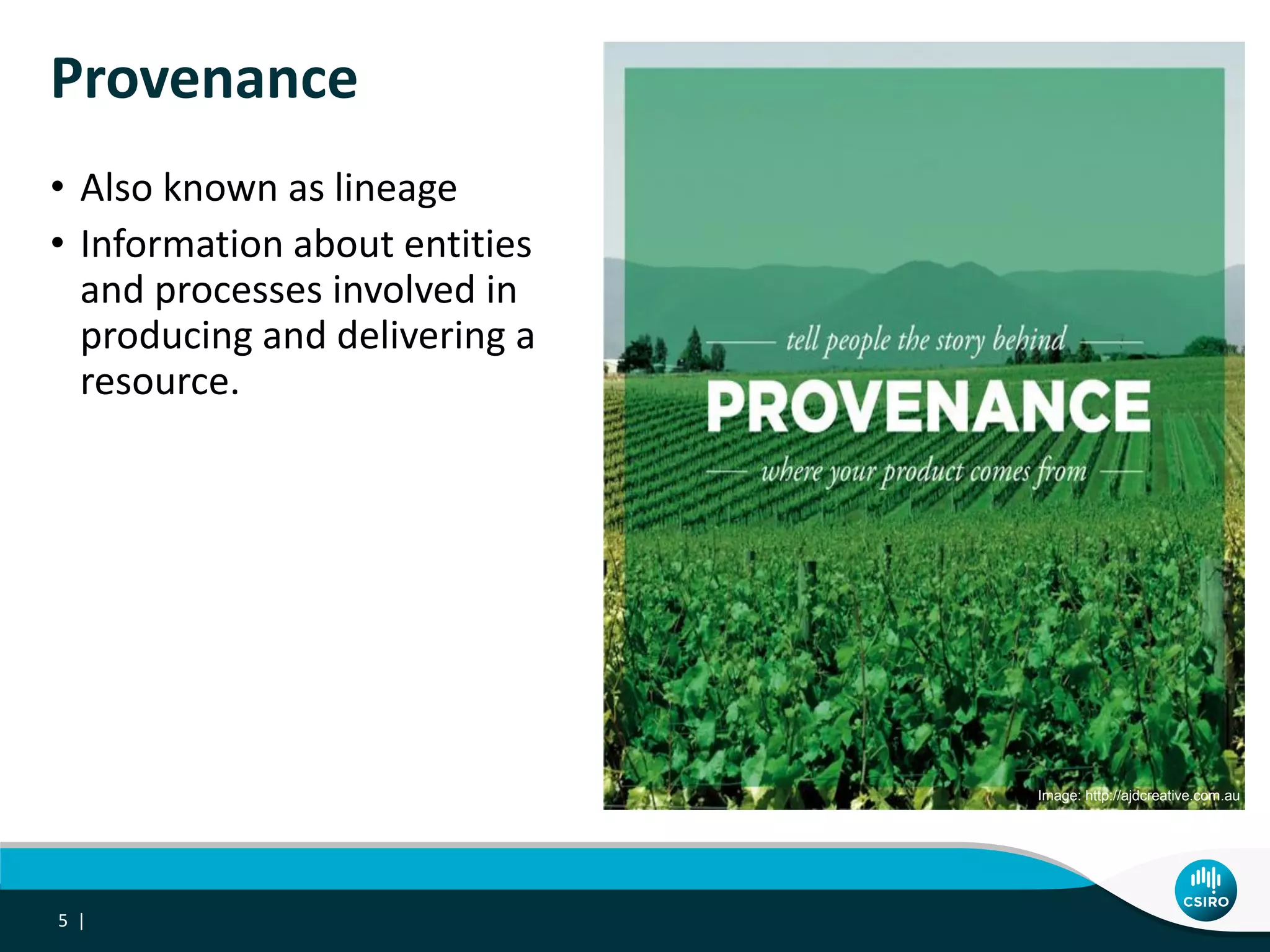
Provenance
• Also known as lineage
• Information about entities
and processes involved in
producing and delivering a
resource.
5 |
Image: http://ajdcreative.com.au
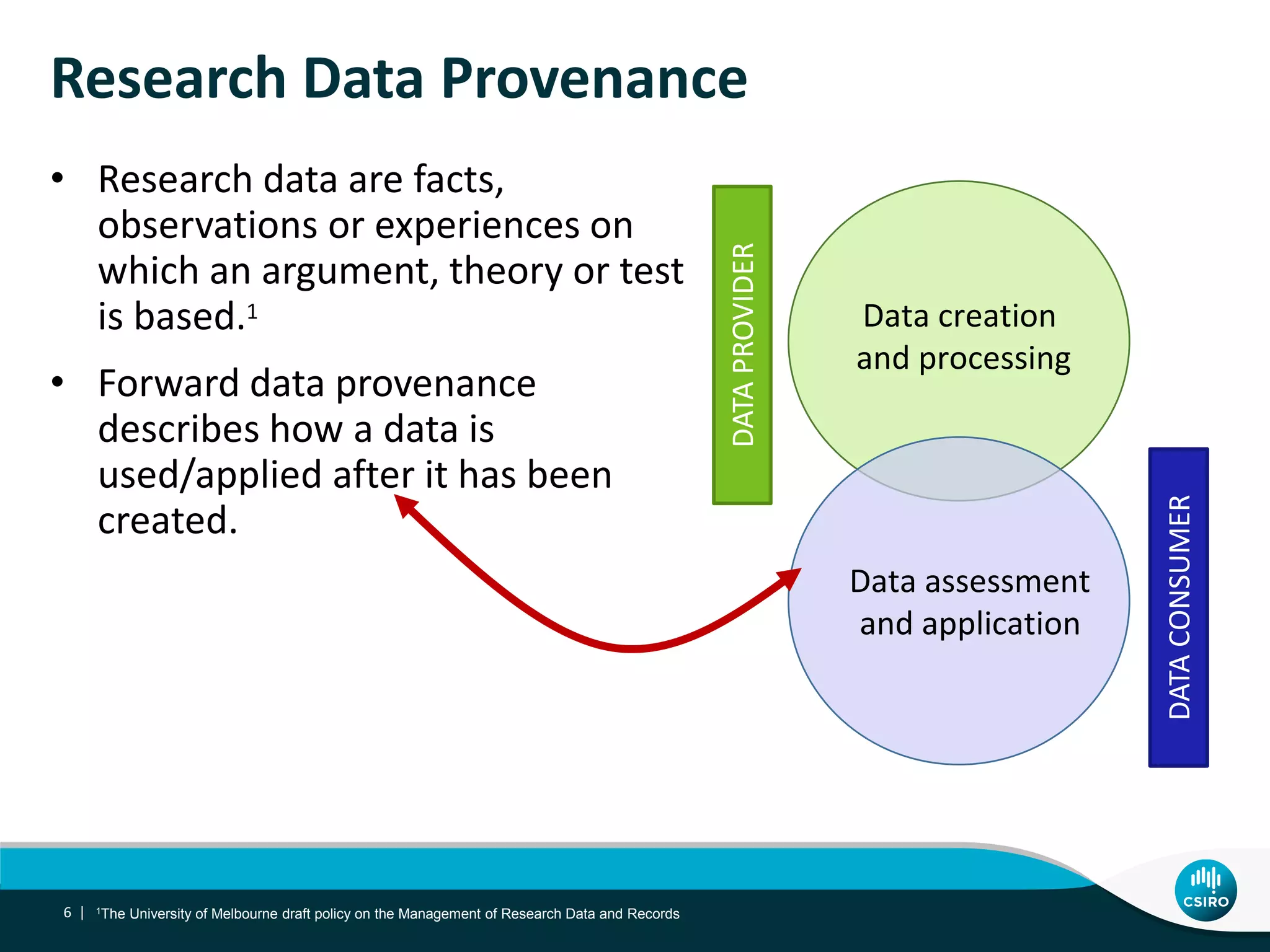
Research Data Provenance
• Research data are facts,
observations or experiences on
which an argument, theory or test
is based.1
• Forward data provenance
describes how a data is
used/applied after it has been
created.
6 |
Data creation
and processing
Data assessment
and application
DATAPROVIDER
DATACONSUMER
1The University of Melbourne draft policy on the Management of Research Data and Records
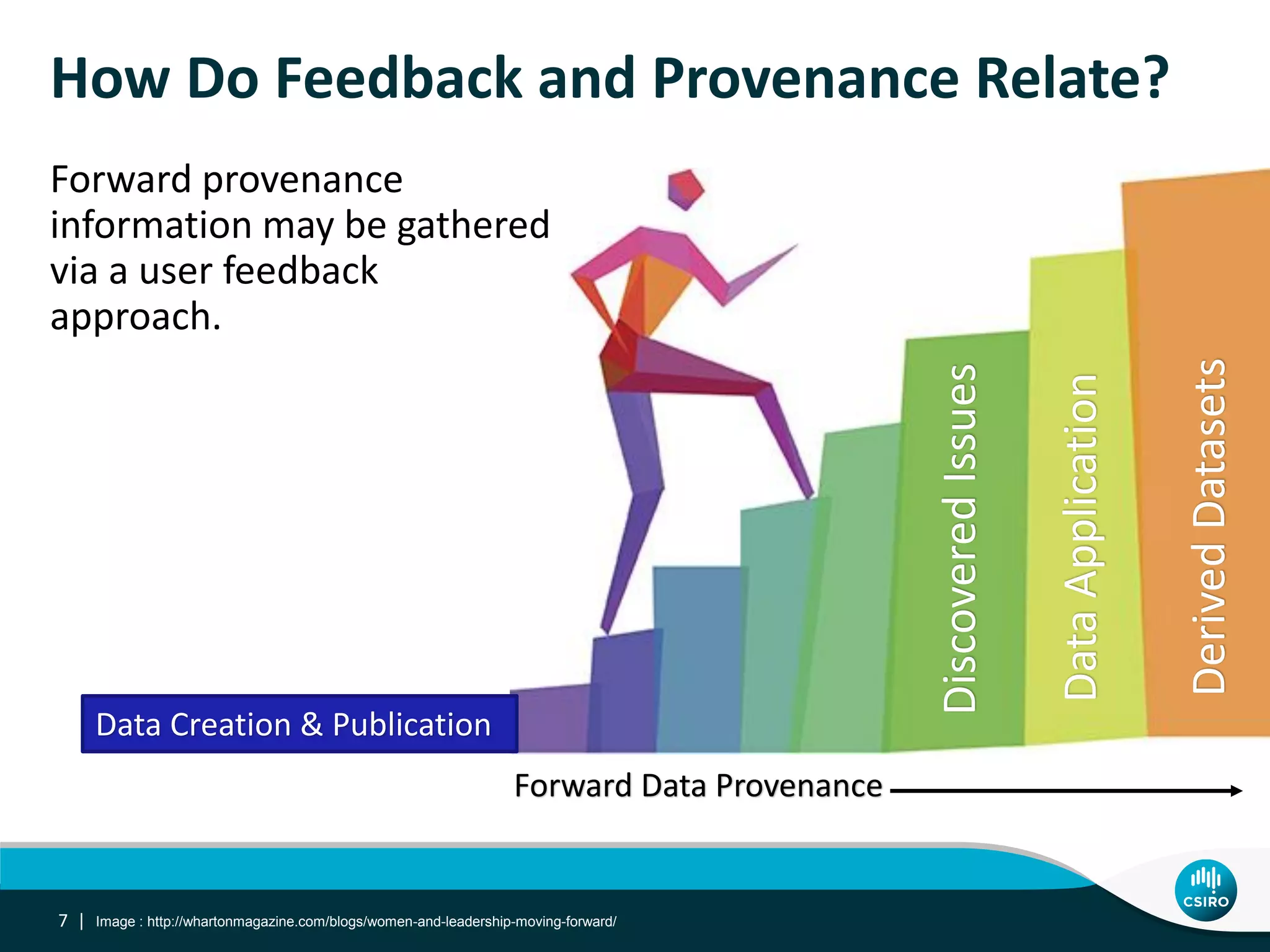
How Do Feedback and Provenance Relate?
7 | Image : http://whartonmagazine.com/blogs/women-and-leadership-moving-forward/
Forward provenance
information may be gathered
via a user feedback
approach.
DerivedDatasets
DataApplication
DiscoveredIssues
Forward Data Provenance
Data Creation & Publication
Outline
• Definitions (Provenance, Research Data, User Feedback)
• Motivation
• Goals & Solutions
• Summary
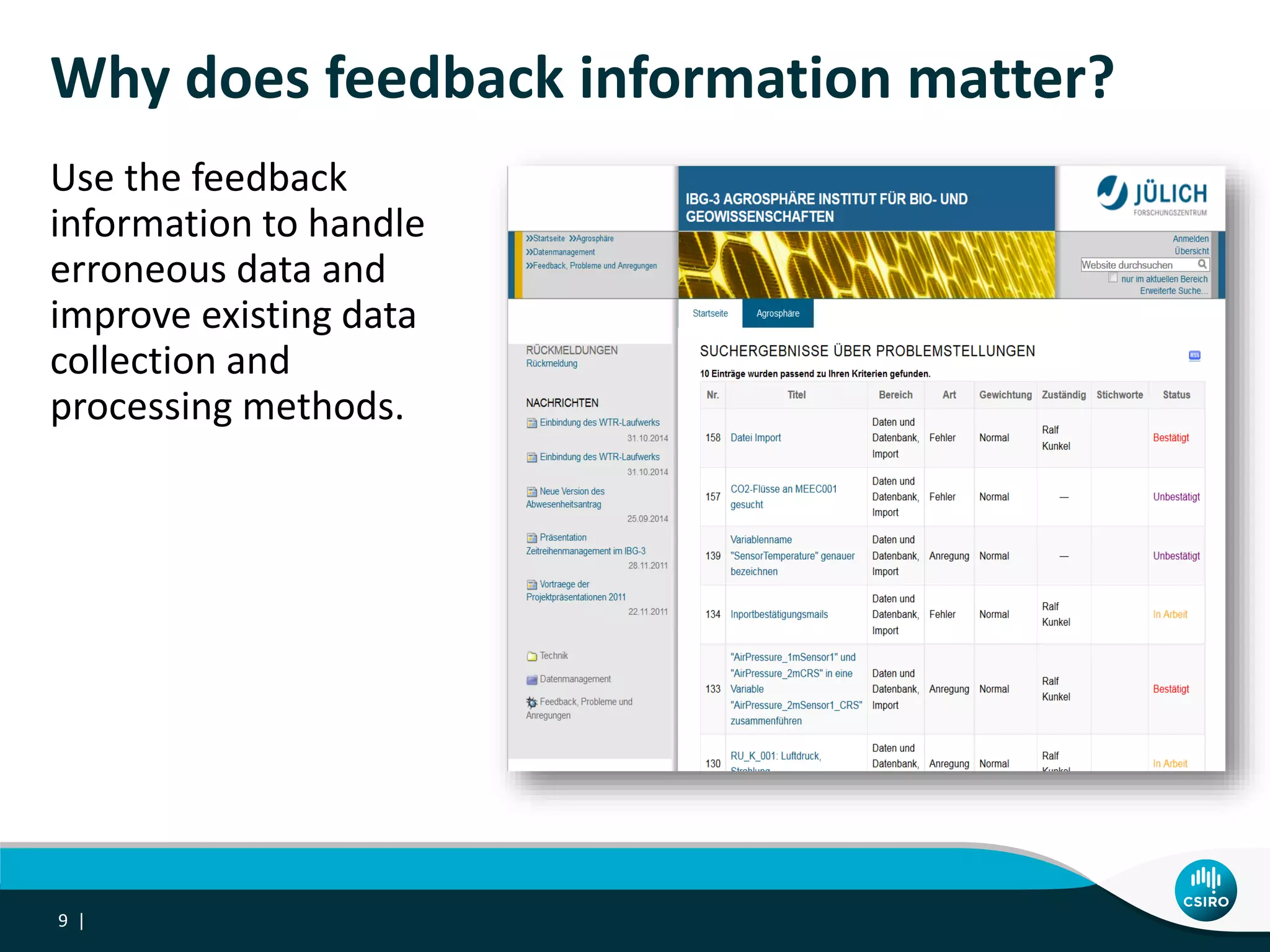
Why does feedback information matter?
Use the feedback
information to handle
erroneous data and
improve existing data
collection and
processing methods.
9 |
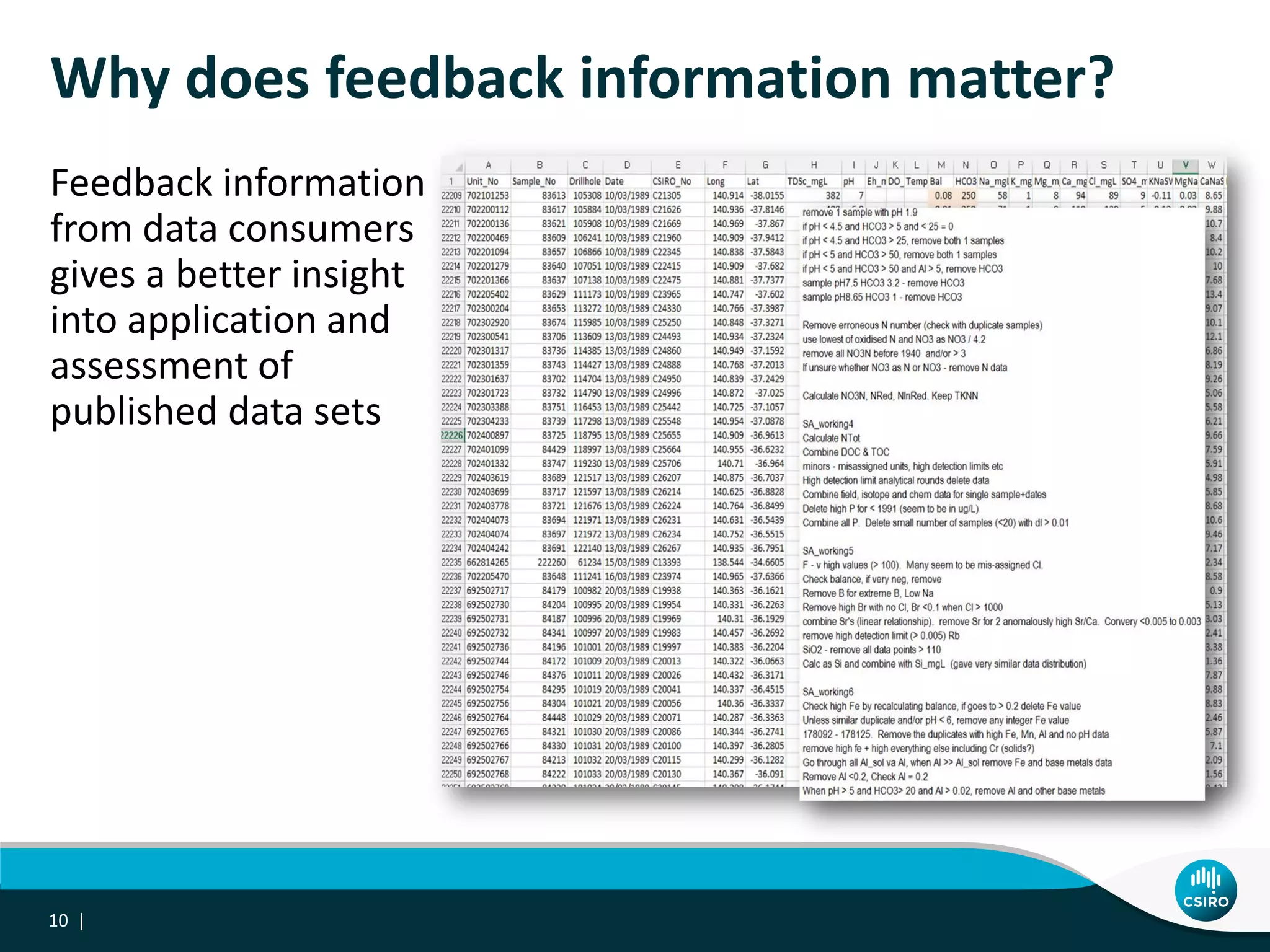
Why does feedback information matter?
Feedback information
from data consumers
gives a better insight
into application and
assessment of
published data sets
10 |
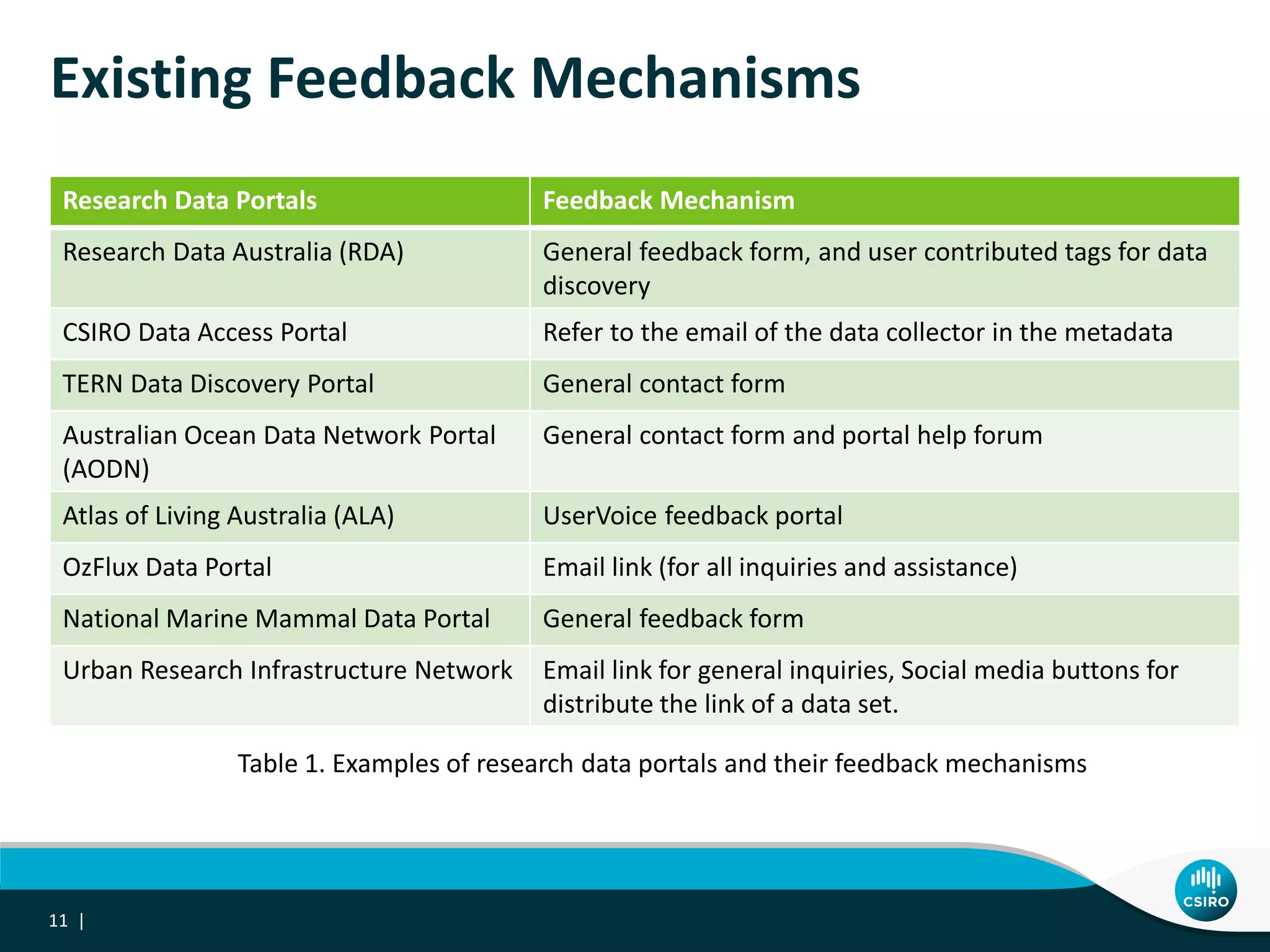
Existing Feedback Mechanisms
11 |
Research Data Portals Feedback Mechanism
Research Data Australia (RDA) General feedback form, and user contributed tags for data
discovery
CSIRO Data Access Portal Refer to the email of the data collector in the metadata
TERN Data Discovery Portal General contact form
Australian Ocean Data Network Portal
(AODN)
General contact form and portal help forum
Atlas of Living Australia (ALA) UserVoice feedback portal
OzFlux Data Portal Email link (for all inquiries and assistance)
National Marine Mammal Data Portal General feedback form
Urban Research Infrastructure Network Email link for general inquiries, Social media buttons for
distribute the link of a data set.
Table 1. Examples of research data portals and their feedback mechanisms
Outline
• Definitions (Provenance, Research Data, User Feedback)
• Motivation
• Goals & Solutions
• Summary
Goals
Develop a systematic and reusable approach to
1. Capture feedback information from data users on research data
sets
2. Link feedback information to actual data sets
3. Support discovery of research data using feedback information.
13 |
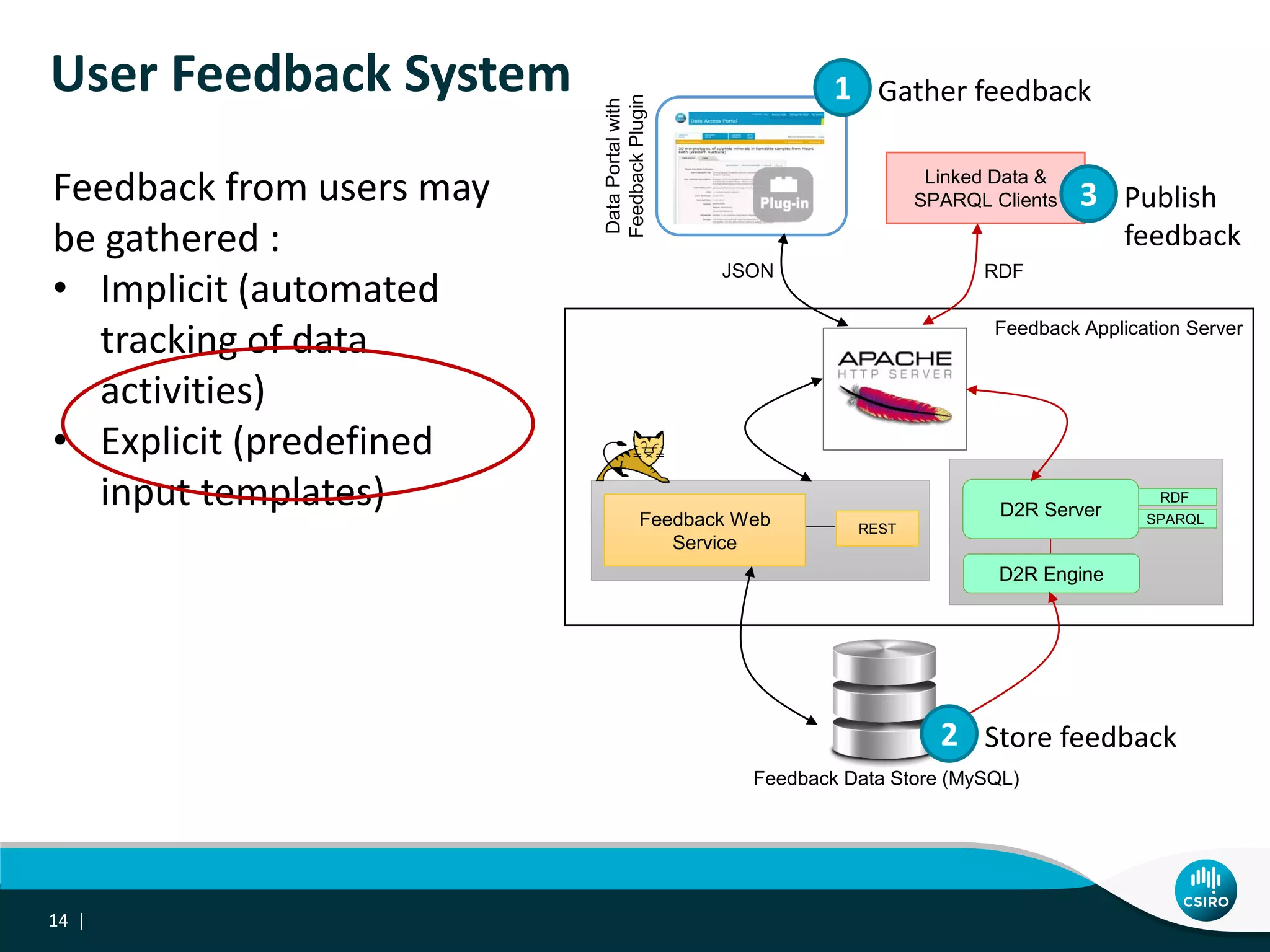
Feedback Application Server
DataPortalwith
FeedbackPlugin
Linked Data &
SPARQL Clients
Feedback Data Store (MySQL)
REST
Feedback Web
Service
RDF
SPARQL
D2R Server
D2R Engine
JSON RDF
User Feedback System
14 |
Feedback from users may
be gathered :
• Implicit (automated
tracking of data
activities)
• Explicit (predefined
input templates)
1 Gather feedback
2 Store feedback
3 Publish
feedback
15 |
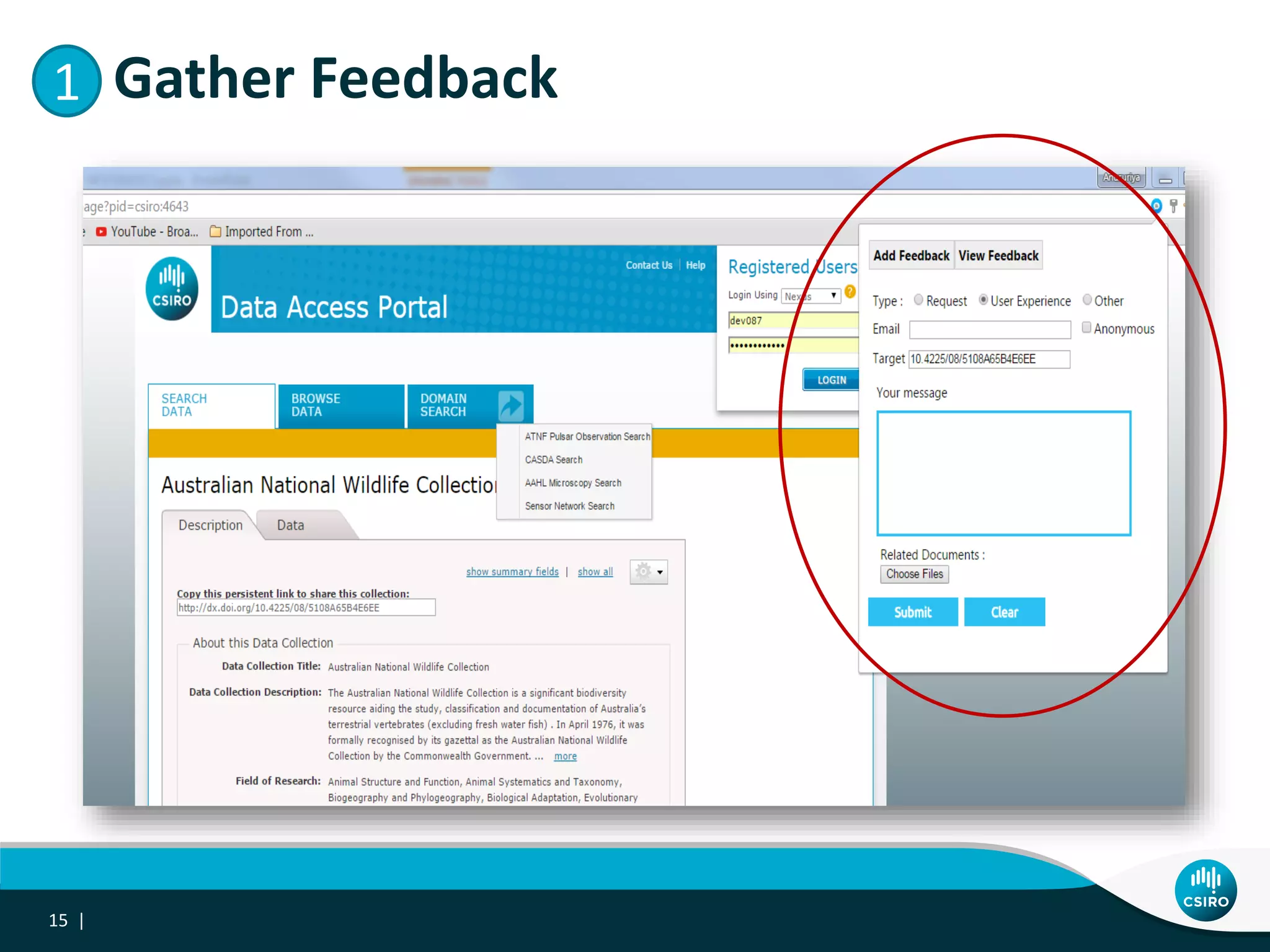
1. Gather Feedback1
16 |
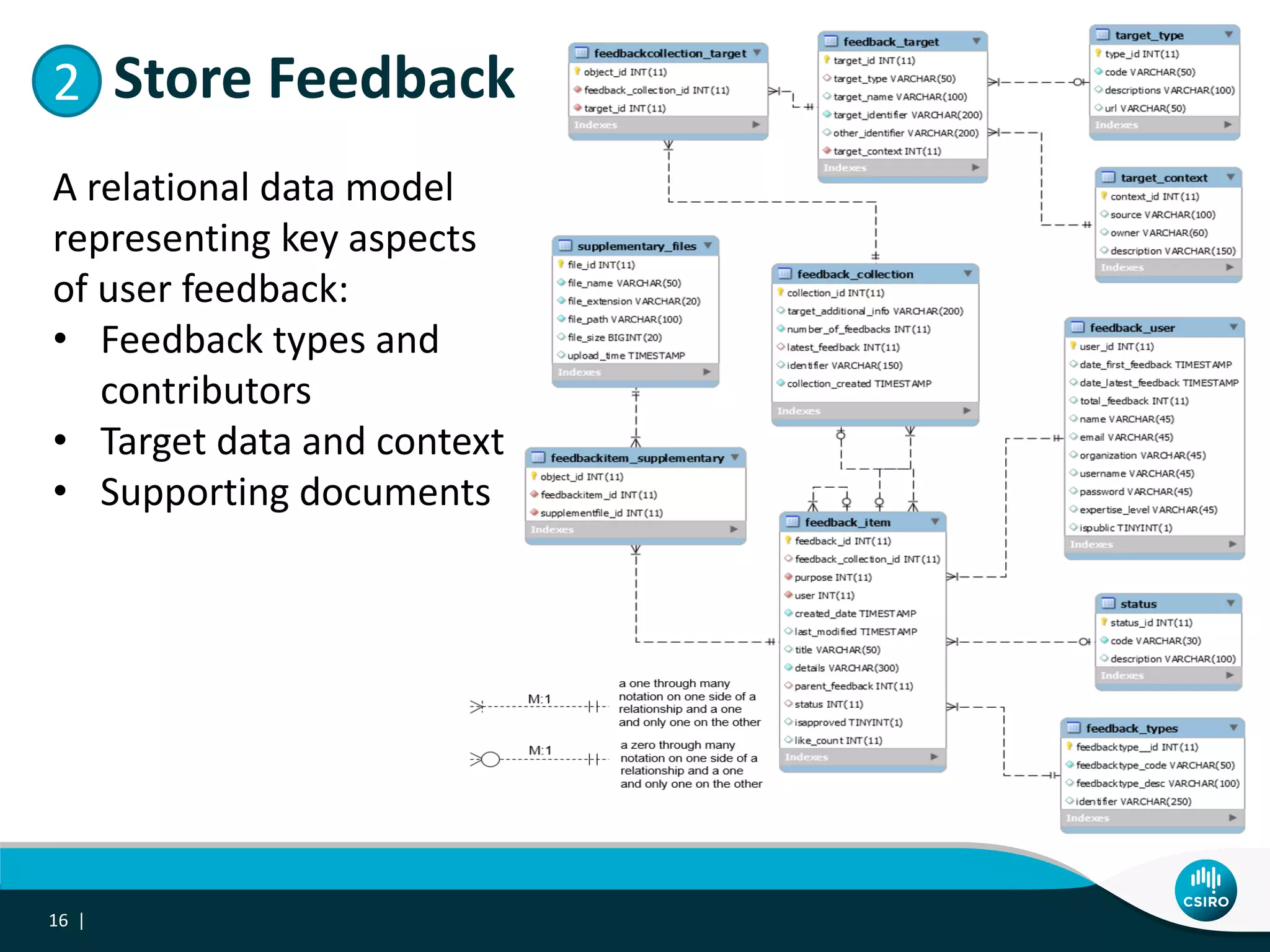
A relational data model
representing key aspects
of user feedback:
• Feedback types and
contributors
• Target data and context
• Supporting documents
2. Store Feedback2
17 |
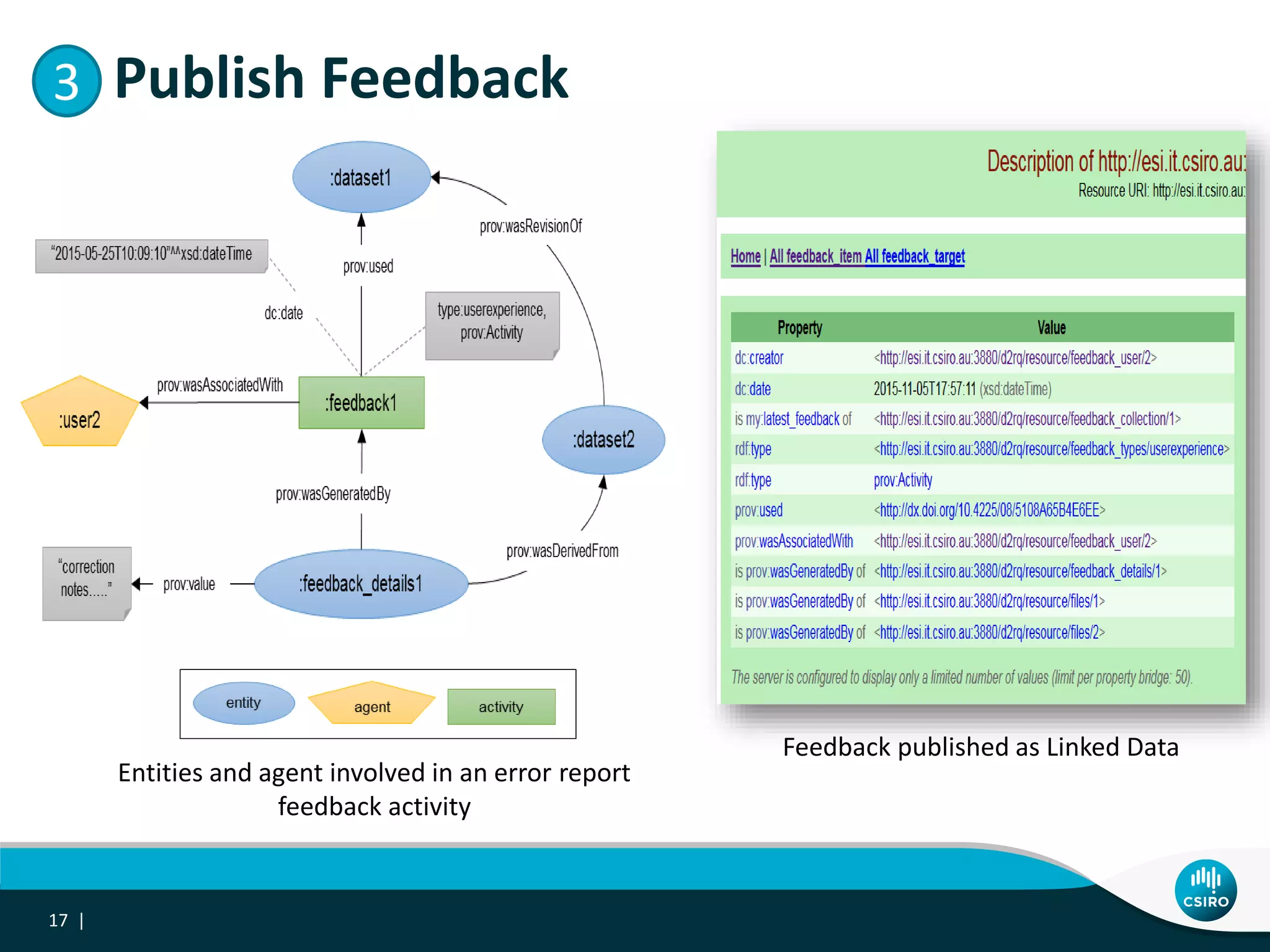
3. Publish Feedback
Feedback published as Linked Data
Entities and agent involved in an error report
feedback activity
3
Conclusions
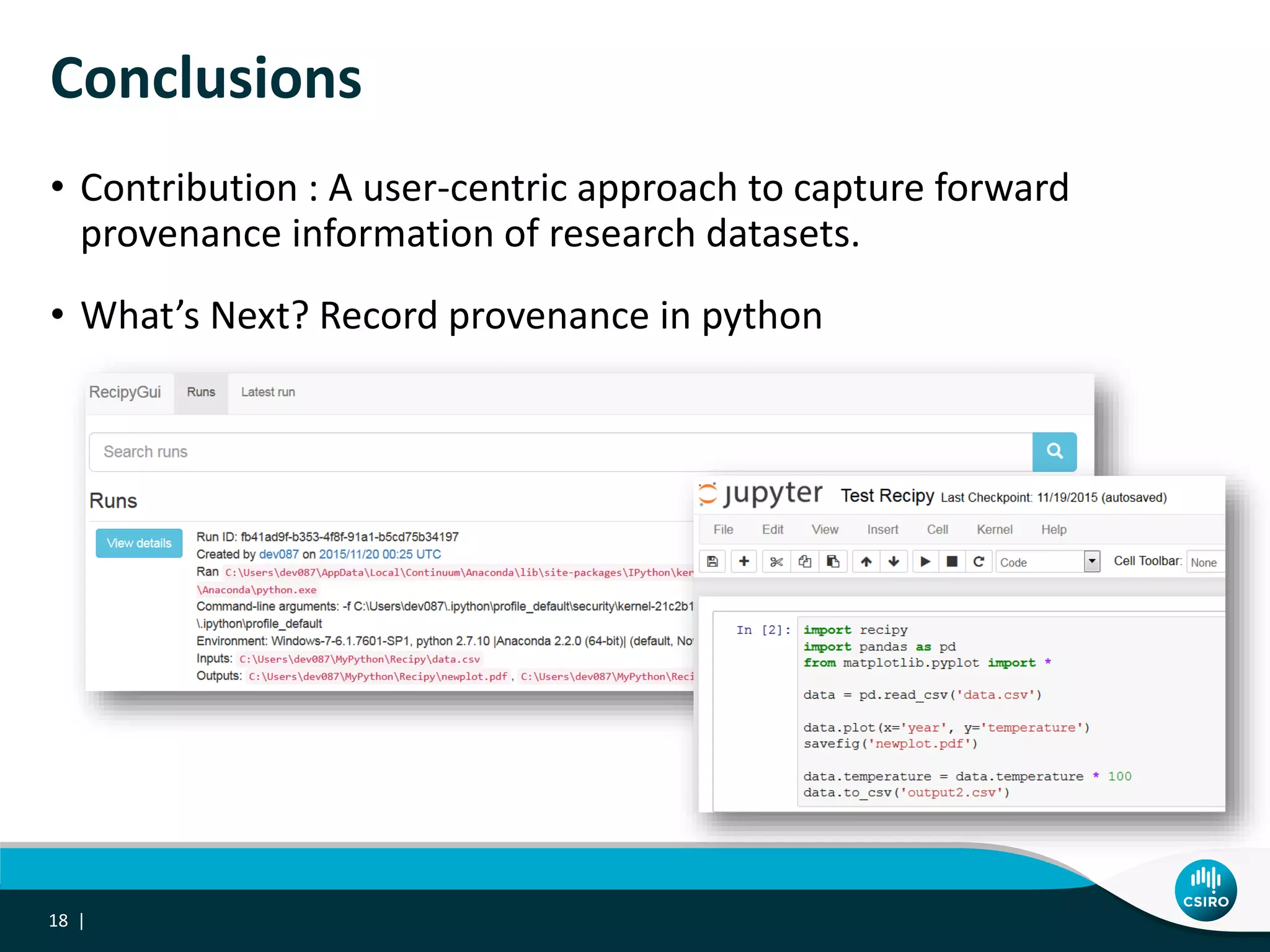
• Contribution : A user-centric approach to capture forward
provenance information of research datasets.
• What’s Next? Record provenance in python
18 |
Conclusions
19 |
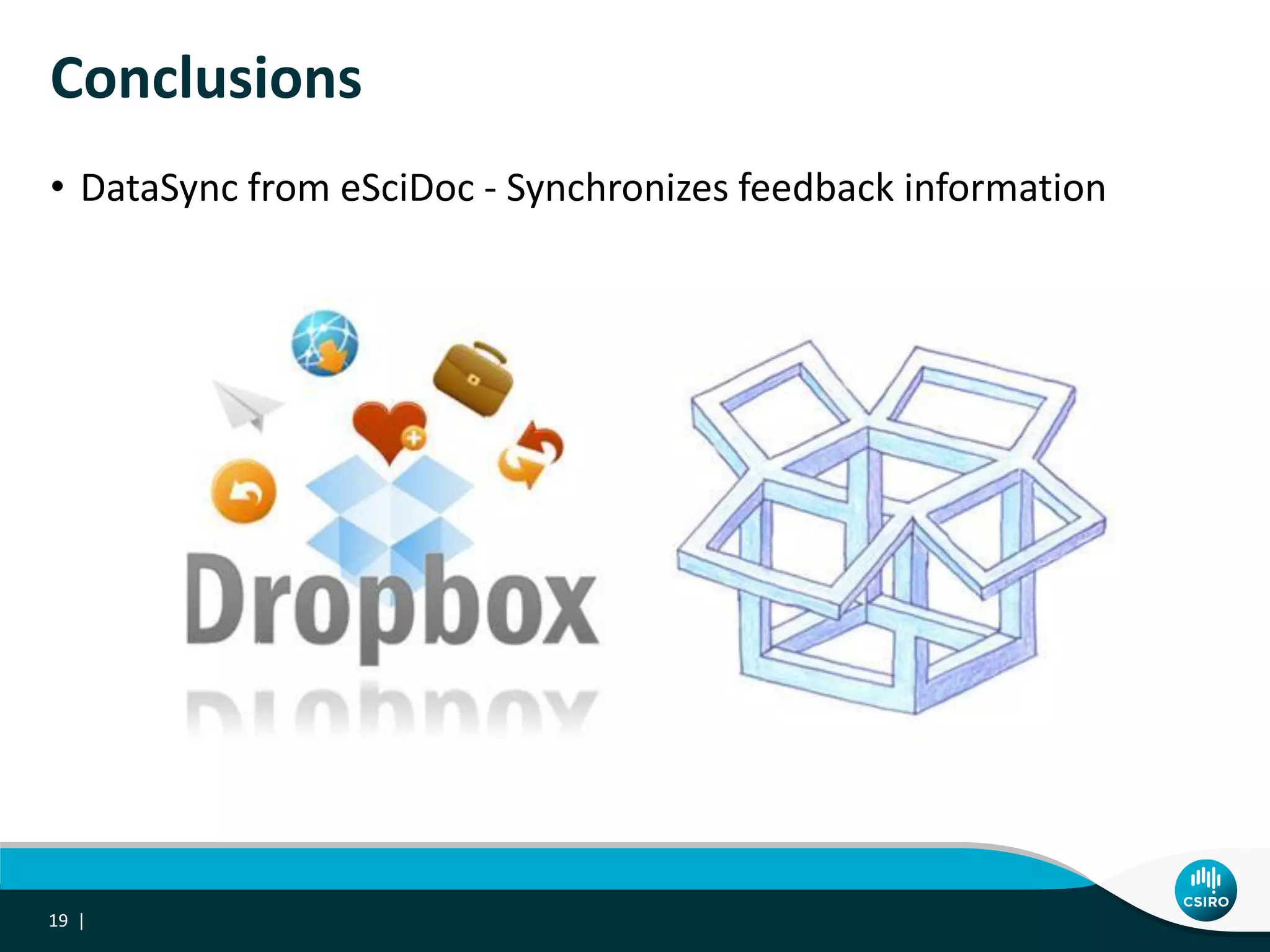
• DataSync from eSciDoc - Synchronizes feedback information
Thank You…
20 |
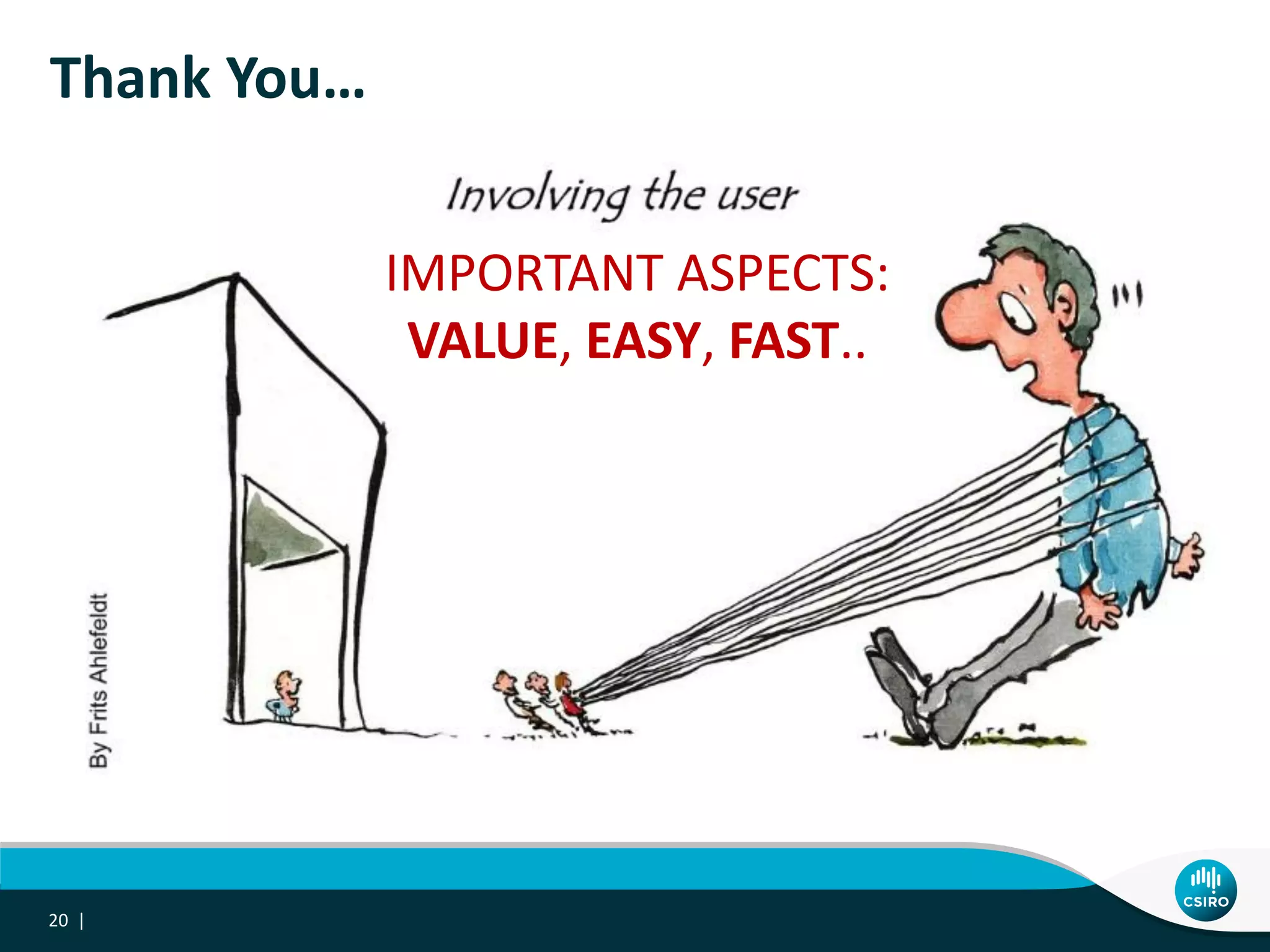
IMPORTANT ASPECTS:
VALUE, EASY, FAST..

CAPTURING DATA PROVENANCE WITH A USER-DRIVEN FEEDBACK APPROACH

  • 1.
    The 21st InternationalCongress on Modelling and Simulation (MODSIM2015) MINERAL RESOURCES FLAGSHIP Anusuriya Devaraju and Jens Klump 4th December 2015 CAPTURING DATA PROVENANCE WITH A USER-DRIVEN FEEDBACK APPROACH by Matthew Niederberger
  • 2.
    Outline • Definitions (Provenance,Research Data, User Feedback) • Motivation • Goals & Solutions • Summary
  • 3.
    Outline • Definitions (Provenance,Research Data, User Feedback) • Motivation • Goals & Solutions • Summary
  • 4.
    User Feedback 4 | •Feedback refers to information about reactions to a product. • Feedback Types • General (comment, how-to, suggestion, dissuasion) • Requirements (feature, content, improvement) • Rating • User experience (assessment and usage)
  • 5.
    Provenance • Also knownas lineage • Information about entities and processes involved in producing and delivering a resource. 5 | Image: http://ajdcreative.com.au
  • 6.
    Research Data Provenance •Research data are facts, observations or experiences on which an argument, theory or test is based.1 • Forward data provenance describes how a data is used/applied after it has been created. 6 | Data creation and processing Data assessment and application DATAPROVIDER DATACONSUMER 1The University of Melbourne draft policy on the Management of Research Data and Records
  • 7.
    How Do Feedbackand Provenance Relate? 7 | Image : http://whartonmagazine.com/blogs/women-and-leadership-moving-forward/ Forward provenance information may be gathered via a user feedback approach. DerivedDatasets DataApplication DiscoveredIssues Forward Data Provenance Data Creation & Publication
  • 8.
    Outline • Definitions (Provenance,Research Data, User Feedback) • Motivation • Goals & Solutions • Summary
  • 9.
    Why does feedbackinformation matter? Use the feedback information to handle erroneous data and improve existing data collection and processing methods. 9 |
  • 10.
    Why does feedbackinformation matter? Feedback information from data consumers gives a better insight into application and assessment of published data sets 10 |
  • 11.
    Existing Feedback Mechanisms 11| Research Data Portals Feedback Mechanism Research Data Australia (RDA) General feedback form, and user contributed tags for data discovery CSIRO Data Access Portal Refer to the email of the data collector in the metadata TERN Data Discovery Portal General contact form Australian Ocean Data Network Portal (AODN) General contact form and portal help forum Atlas of Living Australia (ALA) UserVoice feedback portal OzFlux Data Portal Email link (for all inquiries and assistance) National Marine Mammal Data Portal General feedback form Urban Research Infrastructure Network Email link for general inquiries, Social media buttons for distribute the link of a data set. Table 1. Examples of research data portals and their feedback mechanisms
  • 12.
    Outline • Definitions (Provenance,Research Data, User Feedback) • Motivation • Goals & Solutions • Summary
  • 13.
    Goals Develop a systematicand reusable approach to 1. Capture feedback information from data users on research data sets 2. Link feedback information to actual data sets 3. Support discovery of research data using feedback information. 13 |
  • 14.
    Feedback Application Server DataPortalwith FeedbackPlugin LinkedData & SPARQL Clients Feedback Data Store (MySQL) REST Feedback Web Service RDF SPARQL D2R Server D2R Engine JSON RDF User Feedback System 14 | Feedback from users may be gathered : • Implicit (automated tracking of data activities) • Explicit (predefined input templates) 1 Gather feedback 2 Store feedback 3 Publish feedback
  • 15.
    15 | 1. GatherFeedback1
  • 16.
    16 | A relationaldata model representing key aspects of user feedback: • Feedback types and contributors • Target data and context • Supporting documents 2. Store Feedback2
  • 17.
    17 | 3. PublishFeedback Feedback published as Linked Data Entities and agent involved in an error report feedback activity 3
  • 18.
    Conclusions • Contribution :A user-centric approach to capture forward provenance information of research datasets. • What’s Next? Record provenance in python 18 |
  • 19.
    Conclusions 19 | • DataSyncfrom eSciDoc - Synchronizes feedback information
  • 20.
    Thank You… 20 | IMPORTANTASPECTS: VALUE, EASY, FAST..