Capital structure
    & cost of capital
MV of a company


    Future cashflows
         Wacc


  If we can reduce this by changing
   gearing, then shareholder wealth
               increases
Impact of gearing?


Should decrease WACC because debt is
cheaper

Should increase WACC because more debt
means more risk to shareholders and so
increase cost of equity
Traditional Theory


WACC is U shaped. So find optimal point at
bottom and keep gearing at that level
M&M theory
        (no tax)


Debt is cheaper but cost of equity rises so
WACC is constant. Gearing irrelevant.
M&M theory
         (with tax)


Debt is cheaper and greater than the
related cost of equity rises so WACC falls.
Get as much debt as possible.
Betas

In an ungeared company it simply represents
the business risk. It is called the Asset Beta.

In a geared company it represents both
business risk and the further risk that debt
brings, financial risk. This is called Equity
Beta
Choosing a beta


Get an appropriate asset beta (same as a
company in that business)

Adjust it to our gearing levels. Make it an
equity beta
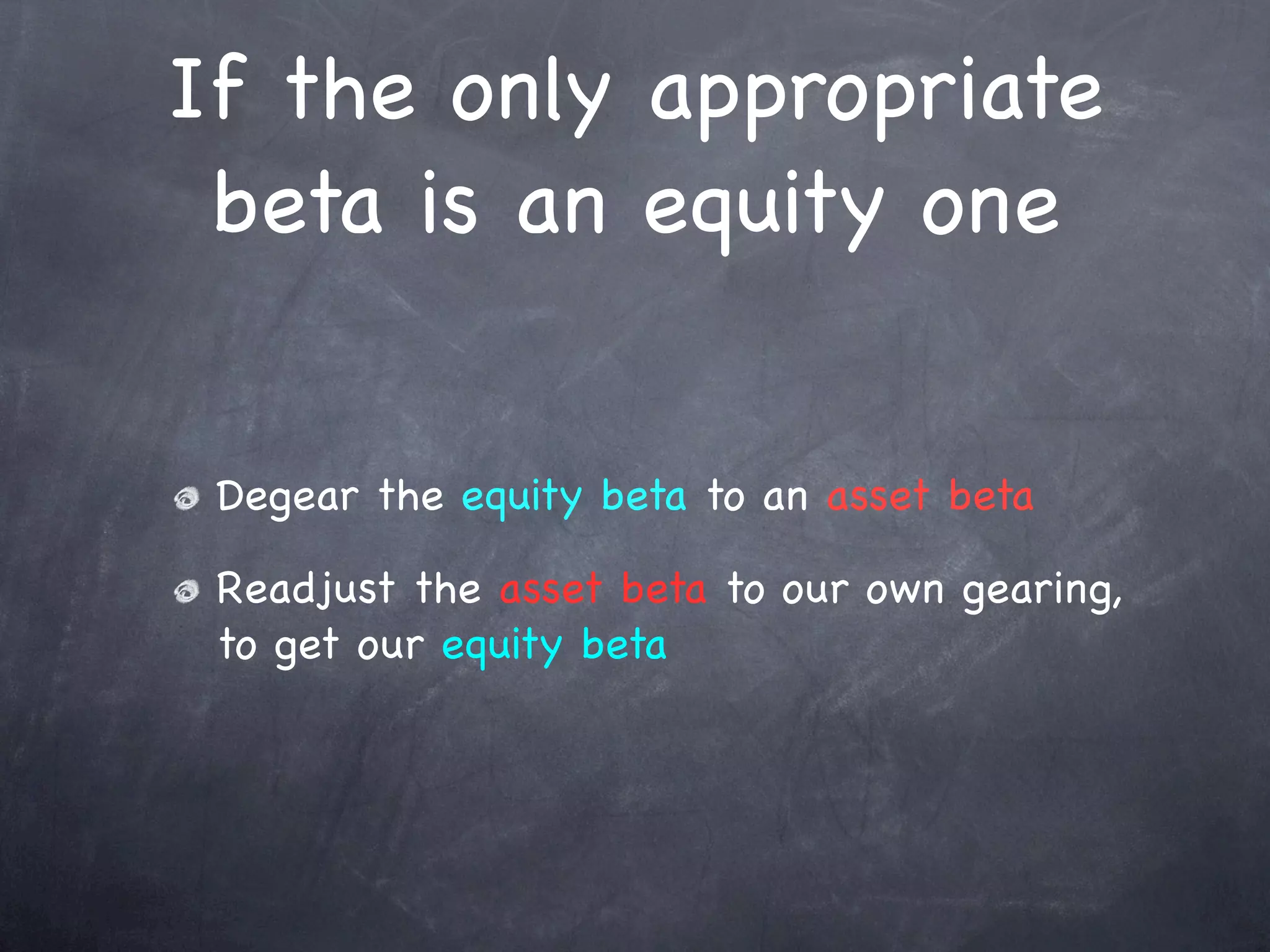
If the only appropriate
 beta is an equity one


 Degear the equity beta to an asset beta

 Readjust the asset beta to our own gearing,
 to get our equity beta
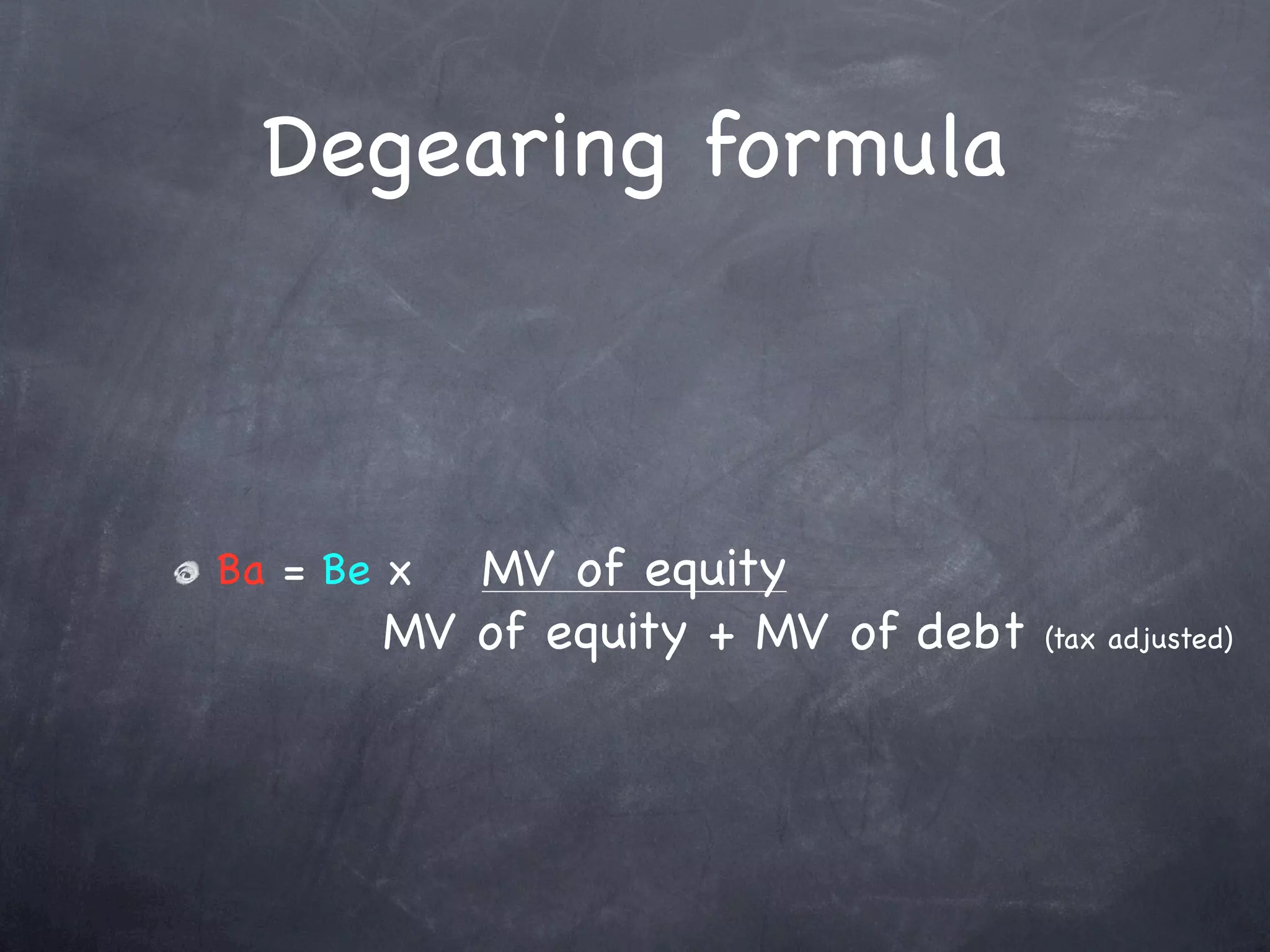
Degearing formula


Ba = Be x MV of equity
       MV of equity + MV of debt   (tax adjusted)
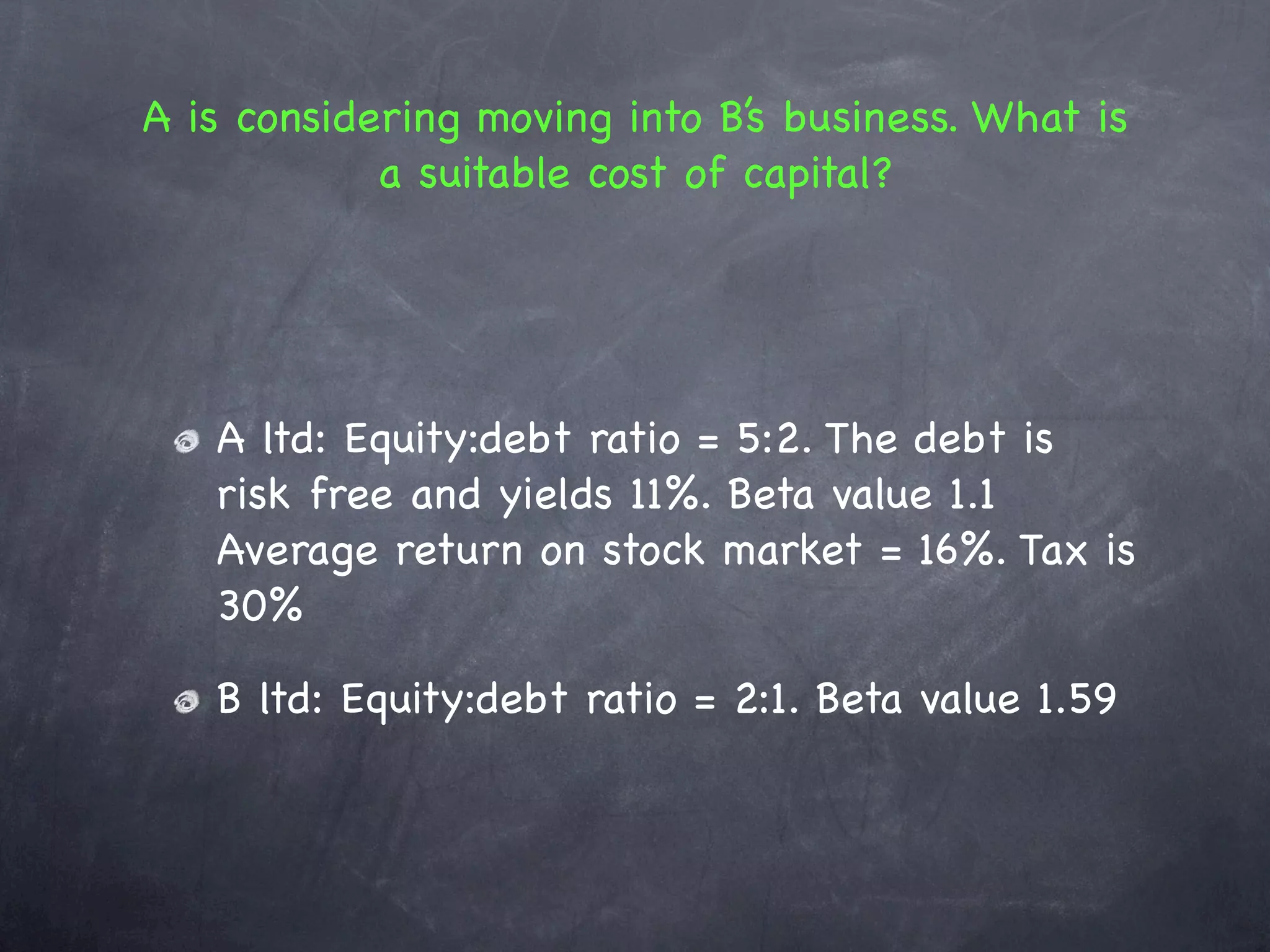
A is considering moving into B’s business. What is
            a suitable cost of capital?


   A ltd: Equity:debt ratio = 5:2. The debt is
   risk free and yields 11%. Beta value 1.1
   Average return on stock market = 16%. Tax is
   30%

   B ltd: Equity:debt ratio = 2:1. Beta value 1.59
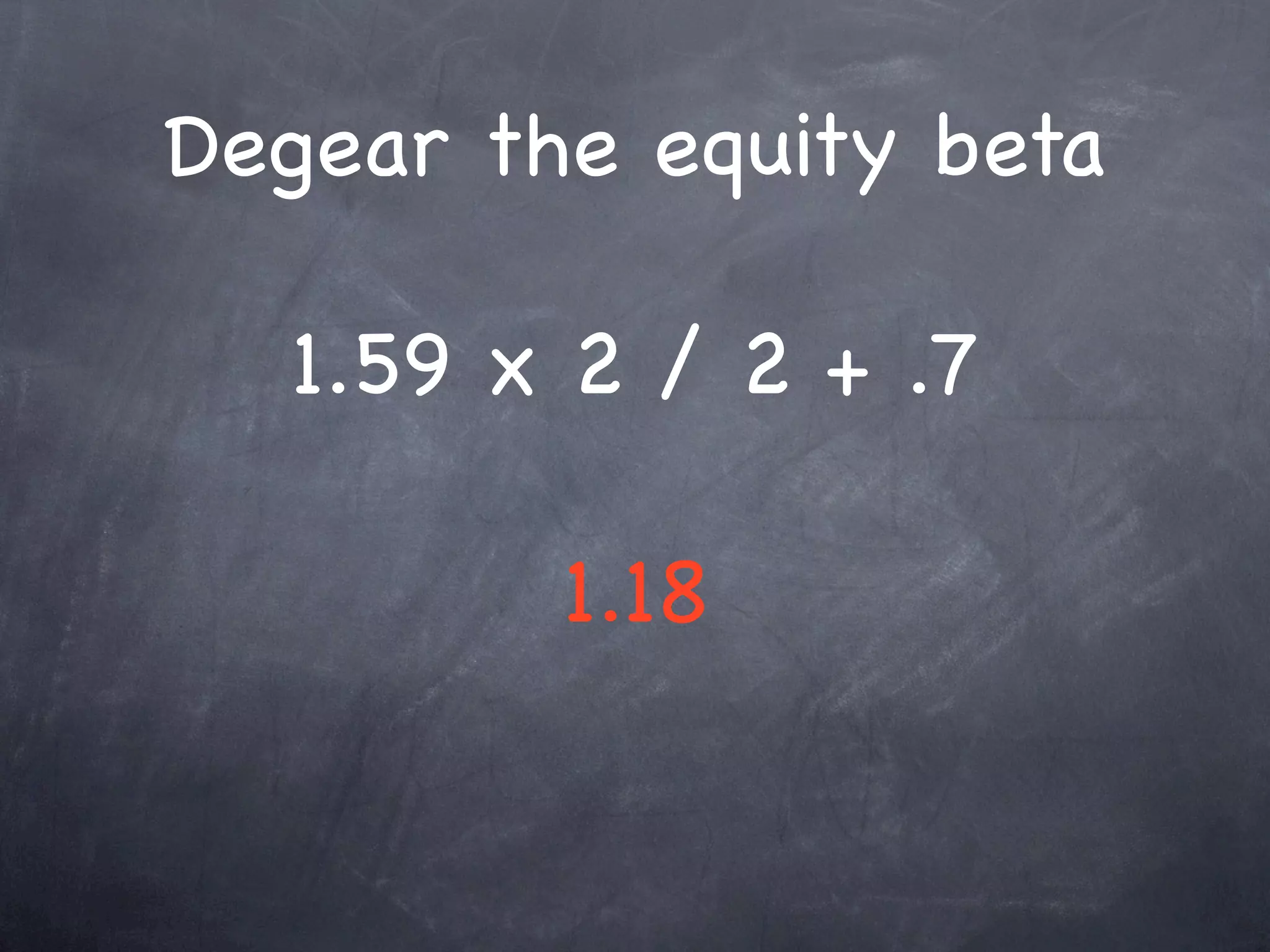
Degear the equity beta

  1.59 x 2 / 2 + .7

         1.18
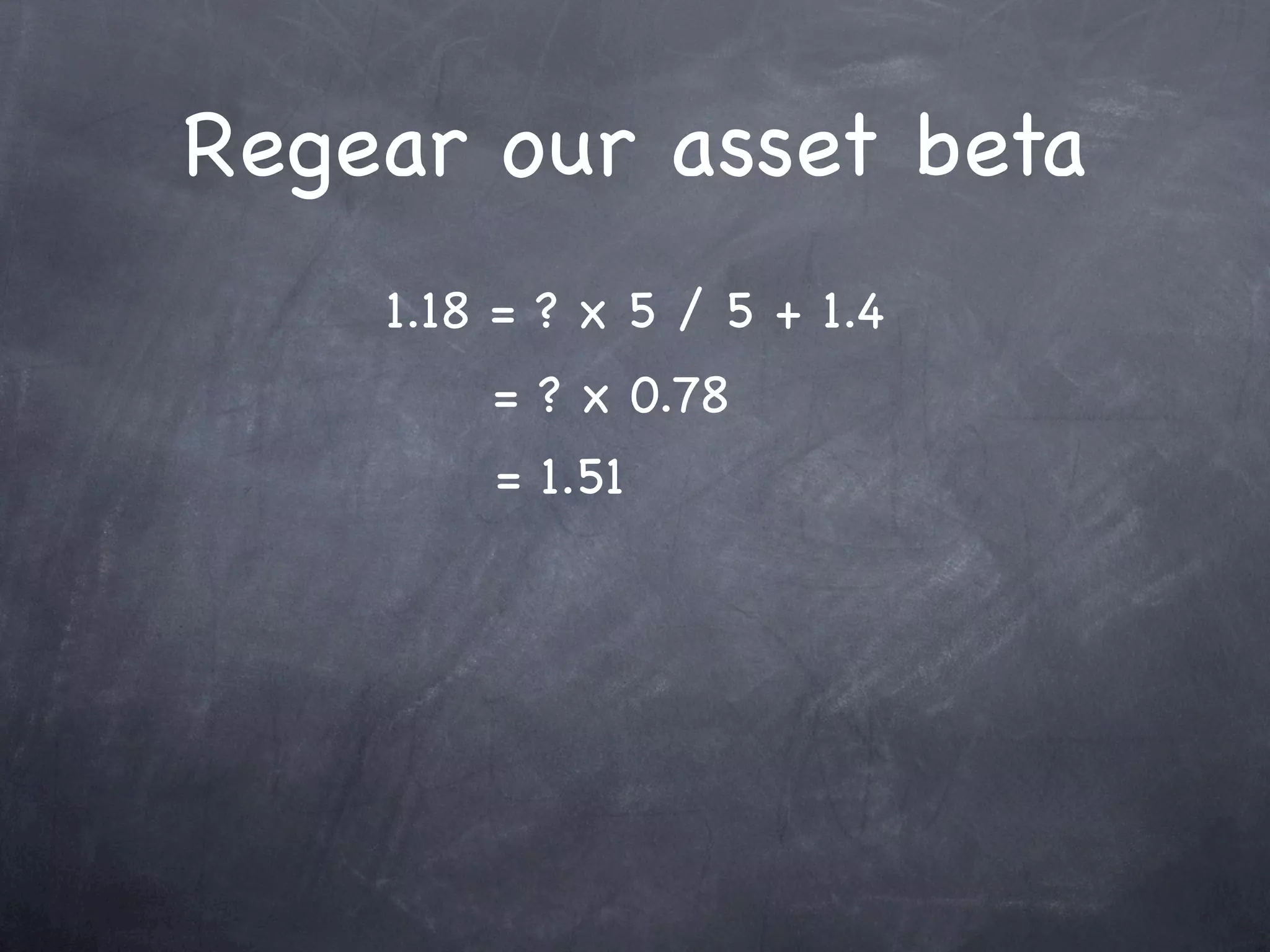
Regear our asset beta
    1.18 = ? x 5 / 5 + 1.4
        = ? x 0.78
        = 1.51
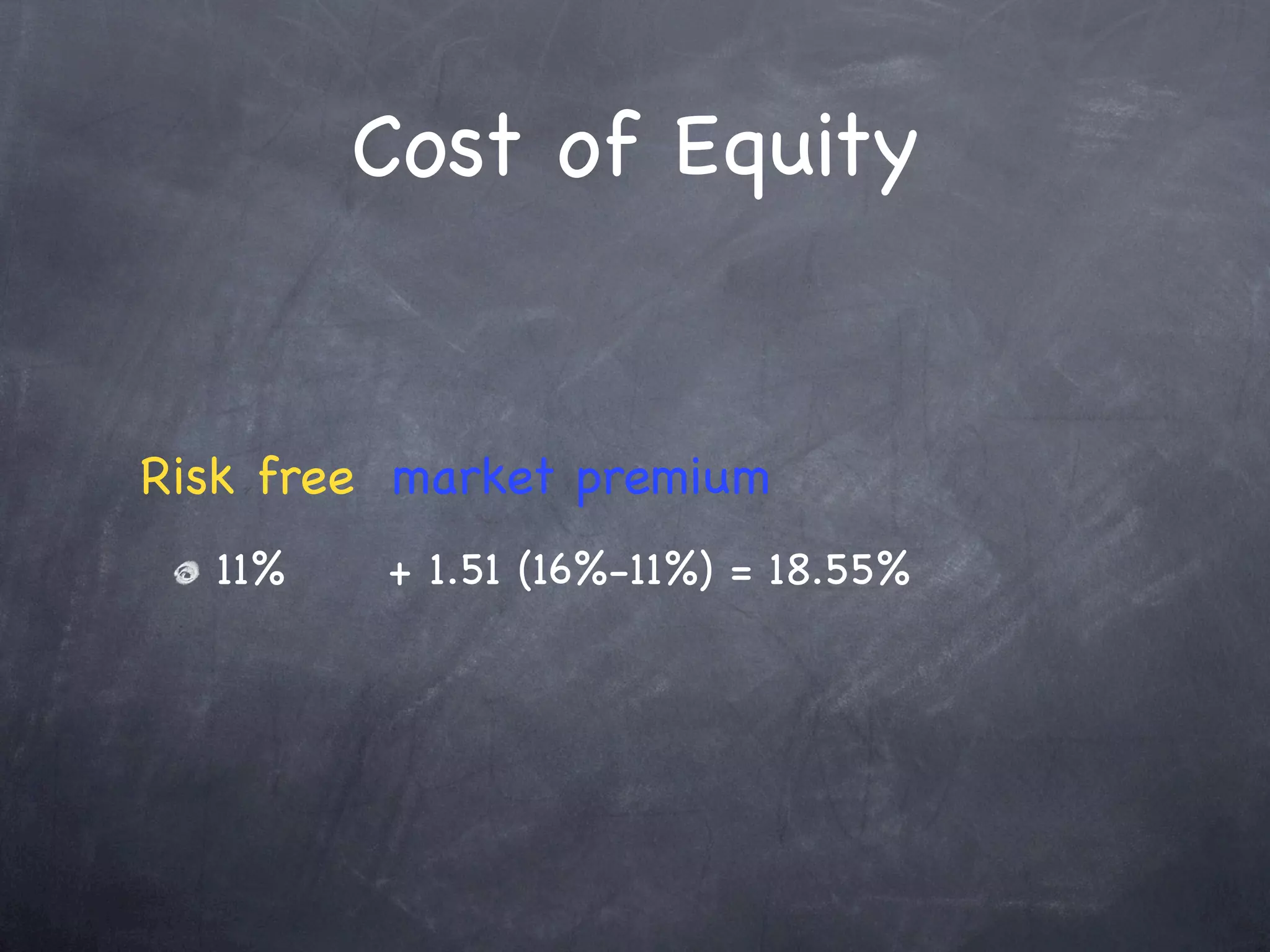
Cost of Equity


Risk free market premium
  11%    + 1.51 (16%-11%) = 18.55%
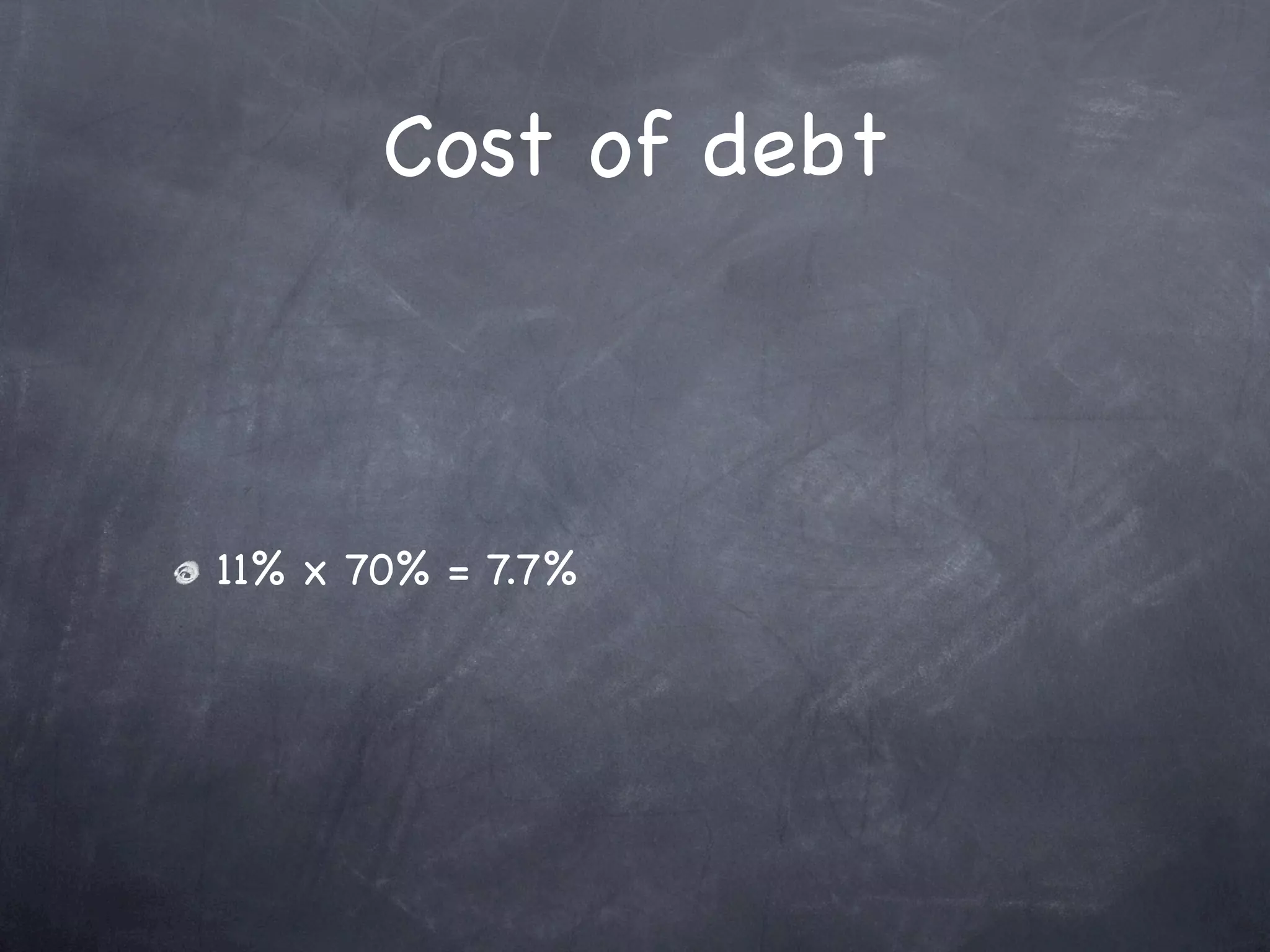
Cost of debt


11% x 70% = 7.7%
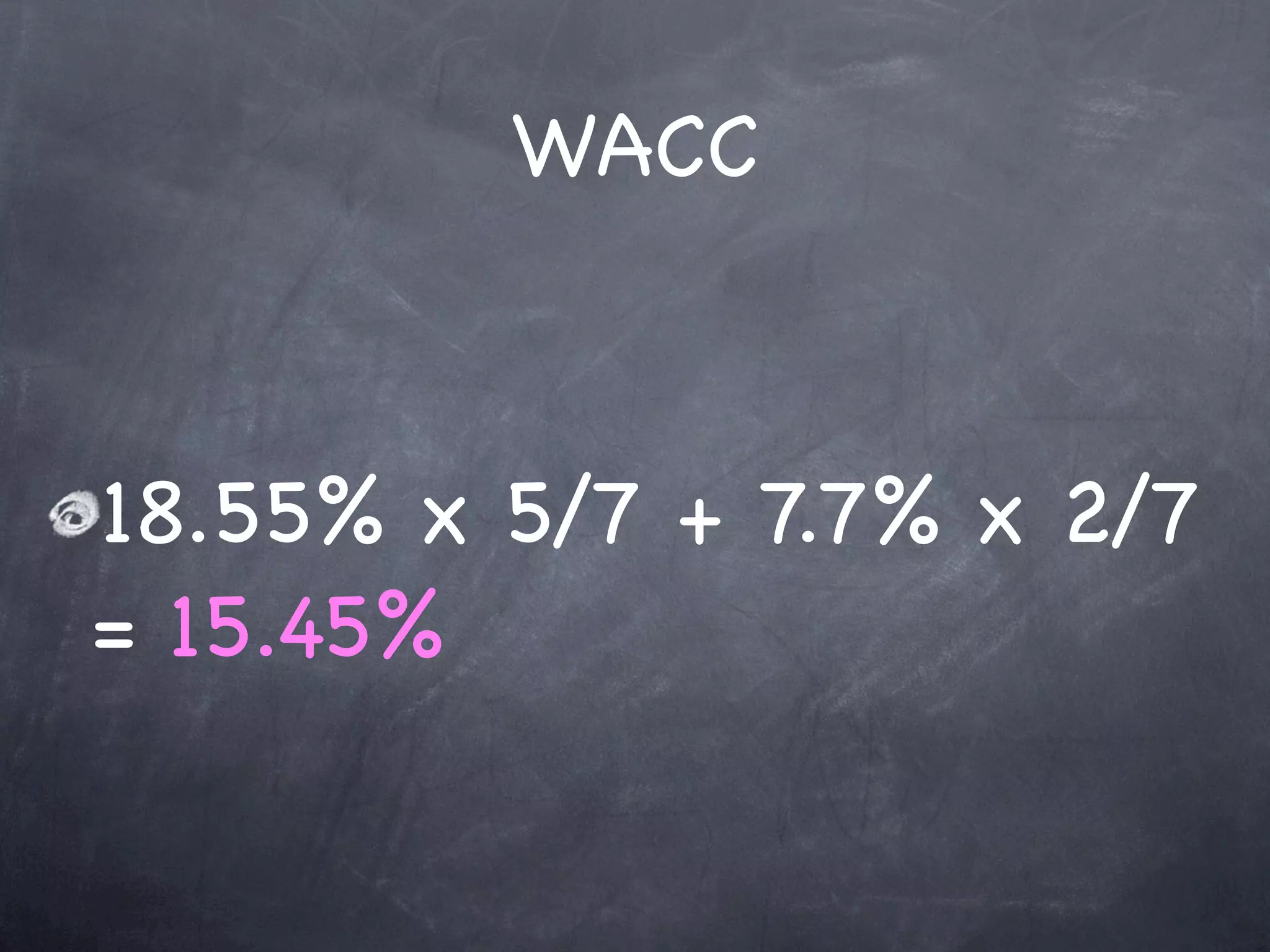
WACC


18.55% x 5/7 + 7.7% x 2/7
= 15.45%

Capital structure and wacc

  • 1.
    Capital structure & cost of capital
  • 2.
    MV of acompany Future cashflows Wacc If we can reduce this by changing gearing, then shareholder wealth increases
  • 3.
    Impact of gearing? Shoulddecrease WACC because debt is cheaper Should increase WACC because more debt means more risk to shareholders and so increase cost of equity
  • 4.
    Traditional Theory WACC isU shaped. So find optimal point at bottom and keep gearing at that level
  • 5.
    M&M theory (no tax) Debt is cheaper but cost of equity rises so WACC is constant. Gearing irrelevant.
  • 6.
    M&M theory (with tax) Debt is cheaper and greater than the related cost of equity rises so WACC falls. Get as much debt as possible.
  • 7.
    Betas In an ungearedcompany it simply represents the business risk. It is called the Asset Beta. In a geared company it represents both business risk and the further risk that debt brings, financial risk. This is called Equity Beta
  • 8.
    Choosing a beta Getan appropriate asset beta (same as a company in that business) Adjust it to our gearing levels. Make it an equity beta
  • 9.
    If the onlyappropriate beta is an equity one Degear the equity beta to an asset beta Readjust the asset beta to our own gearing, to get our equity beta
  • 10.
    Degearing formula Ba =Be x MV of equity MV of equity + MV of debt (tax adjusted)
  • 11.
    A is consideringmoving into B’s business. What is a suitable cost of capital? A ltd: Equity:debt ratio = 5:2. The debt is risk free and yields 11%. Beta value 1.1 Average return on stock market = 16%. Tax is 30% B ltd: Equity:debt ratio = 2:1. Beta value 1.59
  • 12.
    Degear the equitybeta 1.59 x 2 / 2 + .7 1.18
  • 13.
    Regear our assetbeta 1.18 = ? x 5 / 5 + 1.4 = ? x 0.78 = 1.51
  • 14.
    Cost of Equity Riskfree market premium 11% + 1.51 (16%-11%) = 18.55%
  • 15.
    Cost of debt 11%x 70% = 7.7%
  • 16.
    WACC 18.55% x 5/7+ 7.7% x 2/7 = 15.45%