Canon Brief Campaign - Initial Key questions
Client
Who is the client? – The client for this product is the company “Canon. Canon is a Japanese
company who was founded in 1937 under the name Seikikōgaku kenkyūsho in Tokyo by four
men (Takeshi Mitarai, Goro Yoshida, Takeo Maeda and Saburo Uchida.) however its name was
changed to canon camera co in 1947. (Shortened to Canon Inc in 1969.) Its headquarters has
stayed where it was founded. Canon creates products ranging from cameras, lenses and
printers/scanners all the way to things such as medical equipment and semiconductor
manufacturing equipment. Canon also began creating computers in 1983 however these
were discontinued. Canon is a ranged company and as of 2020, they have four principal
business segments The Office Unit (Which includes their products such as their printers and
copiers), The Image System Business Unit which focuses on their cameras, scanners,
printers, calculators, lenses and broadcasting equipment.), The Medical System Business
Unit (which works on medical equipment such as ophthalmic equipment, CT, MRI and
ultrasound scanners) and their Industry and Others Business Unit (which focuses on
products such as computers, handy terminals, magnetic heads, micromotors, flat panel
display lithography equipment, semiconductor lithography equipment, and network
cameras) Not only this but they also have been said to are one of the best companies in
terms of their environmental record. They make products with recycled parts from recycled
products and they also have an environmental charter which look at “offering products with
a lower environmental burden.” They’re also a charitable company as in 2008 when the
earthquake hit China’s Sichuan province, they donated roughly around one million gbp to
help to people who had been effected by it.
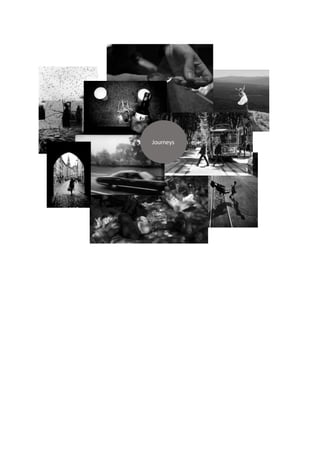
What is the name of the campaign? – The name of this campaign is called “Journeys” as it is
a campaign to show how photography can be used creatively on its own or in combination
with other kinds of media such as a moving image advertisement which would go on the
side of a bus shelter or on some kind. It could also be photography shows on a poster, as a
sort of poster campaign or print advertisement. I could also create a collection of posters
with a similar theme however different focal point. This campaign is being made to
represent the journeys we take either in our day-to-day life or in other parts of our life.
What is the purpose of the company? – The company's mission is to assist people
understand the power of imaging and information, and everything they do is intended to
inspire and empower individuals to explore and embrace their visions with confidence.
Canon aspires to become one of the world's top 100 global companies by achieving healthy
growth through rapid change. They also want to contribute to humanity's well-being and
social success by creating a world that values the creation of new value and is guided by
knowledge of the future of science, technology, and society.
What do they want from you? – Canon want us to create a piece/pieces of work that
incorporate photography and/or other pieces of media as part of their marketing campaign
“Journeys” by 14/02/2022. This could be a stand-alone piece like a magazine of an insert, a
series of print posters or possibly even a moving image advert (however to do this you must
have a print campaign piece finished first.) Talk about the demographic and what piece of
media may be more appealing The demographic for this piece of work are young people
aged between 15 and 25, there is no preference for gender, income, family life cycle,
religion or socio-economic status however the people we aim this towards are most likely
working or studying some kind of media, such as art or photography. Due to this, I would
most likely make my work bright and would include some kind of photo of someone within
this age range because this will appeal to who we have to appeal to. I would most likely
make something like a poster or a video/a moving image advert because I feel something
with less words on it and more visual focal points would appeal to these people.
What issues do you have to consider regarding your client? – Issues I must consider
regarding my client are things such as my time management as we are given deadlines and if
we don’t follow them it could lead to complications with the product we’re making. I also
need to keep in mind the brief that we were given because if we don’t follow that brief then
there may be a chance we would have to start our work all over again. Canon’s company
values are to help people realise the power of imaging and information as well as living and
working together for the common good. I feel I will have these shown well through my work
by the fact that I will be working with my peers however I will also be showing the power of
imaging through the products I’m producing.
Target Audience
Who is the target audience? - The primary target audience is for young people from the
ages of 15-25. The aim is to encourage young people to form a brand allegiance to Canon
equipment and services. This will be for people of any gender, religion, etc however it will
most likely be advertised to those taking arts/media course in school/college/university as
they’re who’d be most interested. (Demographics for my target audience are age- 15-25.
There is no preference for gender, income, family life cycle, religion or socio-economic
status however for education, this is most likely aimed towards students who have chosen
to learn about some sort of art/media course as this is who would most likely be most
interested.)
How do you know who the target audience is? – I know that the above is the target
audience as it states it on the brief that Canon is looking for “the primary target audience to
be young people from the ages of 15-25”
Are there any issues you must consider for your target audience? – Issues I would have to
consider for my target audience would be what kind of jobs the target audience may have
because some of the people we are targeting may not be interested in this at all due to a
lack of time to view or participate in this. We would also need to consider the income of the
target audience as it is very likely that they may not even be able to afford a camera to
participate in something like this. Additionally, we would have to take the lifestyle of the
target audience into account because if they have a busy lifestyle then this campaign may
not interest them at all. The journeys our target audience may take in their day-to-day life
may be physical or mental journeys so I could also possibly link that to my work.
Research
Can you find any written articles about “Journeys” for your demographic? -
https://goinswriter.com/journeys/ - This is an article written by journalist Jeff Goins about
the impact that travel has on a person’s life and how he feels that it influences who you are
as a person. He opens the article with his opinion on travelling, and how he “began his life
as a traveller” and how doing this had “made him who he is today.” He shares how he feels,
saying that life should be seen as a journey rather than a destination. He then continues on
to explain how his own time travelling began (Which was a trip to go to college, which then
evolved into a semester in Spain which followed with summers spent in Texas.) After he had
graduated from college, Goins ended up joining a band and he and his members ended up
travelling for a year around most of the United States, Canada and Taiwan where he says
the band were very nice. After his travelling around the world he had moved to Nashville
and spent his weekends going on road trips. (He would also travel downtown to “hang out
with homeless people.”) Following this, he began going on “mission trips” overseas yearly.
This was apparently important and had to be mentioned as he uses this to make a point
which was that “wherever he was, he would find a way to embark on some kind of
excursion. Because in leaving, he found himself and in the going he learned something
about his identity.” Goins adds a small part in his article about the three lessons he feels
Journeys teach us which are generally just that they help us discover who we are as people
and teach us about life (which I can’t say I agree with but we all have a different outlook on
these kinds of things.) Goins continues on with a statement I found myself agreeing with
which is that a journey is what you make of it, he reminds the reader “lesson of all journeys”
which is that “life is not stable and we are not in control of it so all we can do is enjoy the
ride” There is a cyclical element to this article as he includes a quote on journeys/travel at
the beginning and end of the article, which was most likely done intentionally as it rounds
off a story in a satisfying way.
https://mymentalhealthjourney.com.au/mental-health-putting-the-fit-back-into-fitness/ -
Similarly to the last article I covered, this blog also focuses on a journey however instead of
a physical journey this blog was made to cover the mental health journey that the writer is
going on. This blog is written by someone who goes by the name Matty G and they talk
about their own struggles with mental health (As they suffer from depression, anxiety and
generalised anxiety.) The writer has a few articles on his blog that focus on mental health
and the way he struggles but also the ways he attempts to manage his mental health. The
first article that he published was called “Mental Health – Putting the Fit back into Fitness.”
He opens this article with a little but of information about his background with mental
health and the severity of the things he deals with (Such as how he has been hospitalised
eighteen times due to his mental health.) After these trips to the hospital, he took time and
reflected on things he could do to avoid more hospitalisations and from there he began to
remember his passion and love for fitness, finding that fitness had positive benefits on his
mood and stability overall. He also includes a small section on something he labels his
“mental health stability ladder.” He goes on to share how he feels that mental illness is not
something that needs to be whispered about and he then says the aim of his blog is to
spread awareness of the fact that mental health is nothing to be ashamed of. Similarly to
the last article he also shares a quote for the reader however unlike goins he actually
comments on why he felt he should include a quote, which was that he felt someone may
benefit from hearing it. He also gives the reader songs to listen to as he finds them
motivating to listen to.
Visual Mind Map on Journeys 1
Visual Mind Map on Journeys 2
Journeys

Canon brief campaign

  • 1.
    Canon Brief Campaign- Initial Key questions Client Who is the client? – The client for this product is the company “Canon. Canon is a Japanese company who was founded in 1937 under the name Seikikōgaku kenkyūsho in Tokyo by four men (Takeshi Mitarai, Goro Yoshida, Takeo Maeda and Saburo Uchida.) however its name was changed to canon camera co in 1947. (Shortened to Canon Inc in 1969.) Its headquarters has stayed where it was founded. Canon creates products ranging from cameras, lenses and printers/scanners all the way to things such as medical equipment and semiconductor manufacturing equipment. Canon also began creating computers in 1983 however these were discontinued. Canon is a ranged company and as of 2020, they have four principal business segments The Office Unit (Which includes their products such as their printers and copiers), The Image System Business Unit which focuses on their cameras, scanners, printers, calculators, lenses and broadcasting equipment.), The Medical System Business Unit (which works on medical equipment such as ophthalmic equipment, CT, MRI and ultrasound scanners) and their Industry and Others Business Unit (which focuses on products such as computers, handy terminals, magnetic heads, micromotors, flat panel display lithography equipment, semiconductor lithography equipment, and network cameras) Not only this but they also have been said to are one of the best companies in terms of their environmental record. They make products with recycled parts from recycled products and they also have an environmental charter which look at “offering products with a lower environmental burden.” They’re also a charitable company as in 2008 when the earthquake hit China’s Sichuan province, they donated roughly around one million gbp to help to people who had been effected by it. What is the name of the campaign? – The name of this campaign is called “Journeys” as it is a campaign to show how photography can be used creatively on its own or in combination with other kinds of media such as a moving image advertisement which would go on the side of a bus shelter or on some kind. It could also be photography shows on a poster, as a sort of poster campaign or print advertisement. I could also create a collection of posters with a similar theme however different focal point. This campaign is being made to represent the journeys we take either in our day-to-day life or in other parts of our life. What is the purpose of the company? – The company's mission is to assist people understand the power of imaging and information, and everything they do is intended to inspire and empower individuals to explore and embrace their visions with confidence. Canon aspires to become one of the world's top 100 global companies by achieving healthy growth through rapid change. They also want to contribute to humanity's well-being and social success by creating a world that values the creation of new value and is guided by knowledge of the future of science, technology, and society. What do they want from you? – Canon want us to create a piece/pieces of work that incorporate photography and/or other pieces of media as part of their marketing campaign “Journeys” by 14/02/2022. This could be a stand-alone piece like a magazine of an insert, a series of print posters or possibly even a moving image advert (however to do this you must have a print campaign piece finished first.) Talk about the demographic and what piece of media may be more appealing The demographic for this piece of work are young people aged between 15 and 25, there is no preference for gender, income, family life cycle,
  • 2.
    religion or socio-economicstatus however the people we aim this towards are most likely working or studying some kind of media, such as art or photography. Due to this, I would most likely make my work bright and would include some kind of photo of someone within this age range because this will appeal to who we have to appeal to. I would most likely make something like a poster or a video/a moving image advert because I feel something with less words on it and more visual focal points would appeal to these people. What issues do you have to consider regarding your client? – Issues I must consider regarding my client are things such as my time management as we are given deadlines and if we don’t follow them it could lead to complications with the product we’re making. I also need to keep in mind the brief that we were given because if we don’t follow that brief then there may be a chance we would have to start our work all over again. Canon’s company values are to help people realise the power of imaging and information as well as living and working together for the common good. I feel I will have these shown well through my work by the fact that I will be working with my peers however I will also be showing the power of imaging through the products I’m producing. Target Audience Who is the target audience? - The primary target audience is for young people from the ages of 15-25. The aim is to encourage young people to form a brand allegiance to Canon equipment and services. This will be for people of any gender, religion, etc however it will most likely be advertised to those taking arts/media course in school/college/university as they’re who’d be most interested. (Demographics for my target audience are age- 15-25. There is no preference for gender, income, family life cycle, religion or socio-economic status however for education, this is most likely aimed towards students who have chosen to learn about some sort of art/media course as this is who would most likely be most interested.) How do you know who the target audience is? – I know that the above is the target audience as it states it on the brief that Canon is looking for “the primary target audience to be young people from the ages of 15-25” Are there any issues you must consider for your target audience? – Issues I would have to consider for my target audience would be what kind of jobs the target audience may have because some of the people we are targeting may not be interested in this at all due to a lack of time to view or participate in this. We would also need to consider the income of the target audience as it is very likely that they may not even be able to afford a camera to participate in something like this. Additionally, we would have to take the lifestyle of the target audience into account because if they have a busy lifestyle then this campaign may not interest them at all. The journeys our target audience may take in their day-to-day life may be physical or mental journeys so I could also possibly link that to my work.
  • 3.
    Research Can you findany written articles about “Journeys” for your demographic? - https://goinswriter.com/journeys/ - This is an article written by journalist Jeff Goins about the impact that travel has on a person’s life and how he feels that it influences who you are as a person. He opens the article with his opinion on travelling, and how he “began his life as a traveller” and how doing this had “made him who he is today.” He shares how he feels, saying that life should be seen as a journey rather than a destination. He then continues on to explain how his own time travelling began (Which was a trip to go to college, which then evolved into a semester in Spain which followed with summers spent in Texas.) After he had graduated from college, Goins ended up joining a band and he and his members ended up travelling for a year around most of the United States, Canada and Taiwan where he says the band were very nice. After his travelling around the world he had moved to Nashville and spent his weekends going on road trips. (He would also travel downtown to “hang out with homeless people.”) Following this, he began going on “mission trips” overseas yearly. This was apparently important and had to be mentioned as he uses this to make a point which was that “wherever he was, he would find a way to embark on some kind of excursion. Because in leaving, he found himself and in the going he learned something about his identity.” Goins adds a small part in his article about the three lessons he feels Journeys teach us which are generally just that they help us discover who we are as people and teach us about life (which I can’t say I agree with but we all have a different outlook on these kinds of things.) Goins continues on with a statement I found myself agreeing with which is that a journey is what you make of it, he reminds the reader “lesson of all journeys” which is that “life is not stable and we are not in control of it so all we can do is enjoy the ride” There is a cyclical element to this article as he includes a quote on journeys/travel at the beginning and end of the article, which was most likely done intentionally as it rounds off a story in a satisfying way. https://mymentalhealthjourney.com.au/mental-health-putting-the-fit-back-into-fitness/ - Similarly to the last article I covered, this blog also focuses on a journey however instead of a physical journey this blog was made to cover the mental health journey that the writer is going on. This blog is written by someone who goes by the name Matty G and they talk about their own struggles with mental health (As they suffer from depression, anxiety and generalised anxiety.) The writer has a few articles on his blog that focus on mental health and the way he struggles but also the ways he attempts to manage his mental health. The first article that he published was called “Mental Health – Putting the Fit back into Fitness.” He opens this article with a little but of information about his background with mental health and the severity of the things he deals with (Such as how he has been hospitalised eighteen times due to his mental health.) After these trips to the hospital, he took time and reflected on things he could do to avoid more hospitalisations and from there he began to remember his passion and love for fitness, finding that fitness had positive benefits on his mood and stability overall. He also includes a small section on something he labels his “mental health stability ladder.” He goes on to share how he feels that mental illness is not something that needs to be whispered about and he then says the aim of his blog is to spread awareness of the fact that mental health is nothing to be ashamed of. Similarly to the last article he also shares a quote for the reader however unlike goins he actually comments on why he felt he should include a quote, which was that he felt someone may
  • 4.
    benefit from hearingit. He also gives the reader songs to listen to as he finds them motivating to listen to. Visual Mind Map on Journeys 1 Visual Mind Map on Journeys 2
  • 5.