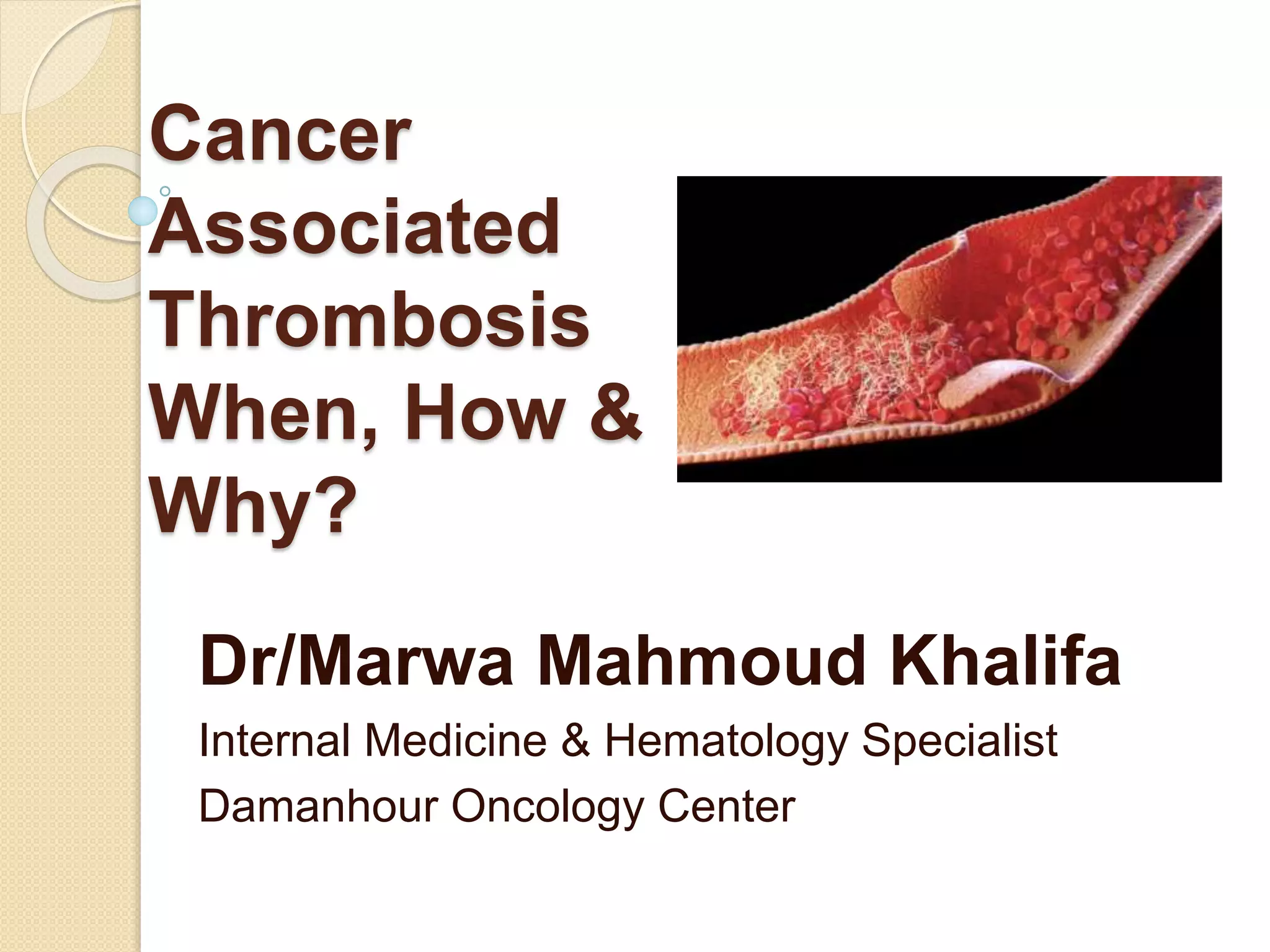
Cancer
Associated
Thrombosis
When, How &
Why?
Dr/Marwa Mahmoud Khalifa
Internal Medicine & Hematology Specialist
Damanhour Oncology Center
Magnitude of the problem
 Venous thromboembolism (VTE) is a
common and life threatening condition in
cancer patients. (DVT&PE)
 Presence of cancer increased the risk for
VTE by 9-fold.
 Thrombosis is the leading cause of death
in cancer patients, second only to cancer
itself (higher mortality, reduced OS).
 Most common cause of death at 30-day
follow-up among cancer patients
underwent surgery.
 American Society of Hematology
 American Society of Clinical Oncology
 National Comprehensive Cancer
Network
 International Society of Thrombosis
and Hemostasis
 International Initiative on Thrombosis
in Cancer
VTE Risk Factors in Patients
With Cancer
Patient-Related
Cancer-Related
Treatment-Related
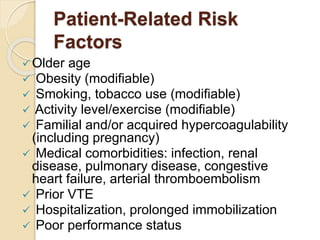
Patient-Related Risk
Factors
Older age
 Obesity (modifiable)
 Smoking, tobacco use (modifiable)
 Activity level/exercise (modifiable)
 Familial and/or acquired hypercoagulability
(including pregnancy)
 Medical comorbidities: infection, renal
disease, pulmonary disease, congestive
heart failure, arterial thromboembolism
 Prior VTE
 Hospitalization, prolonged immobilization
 Poor performance status
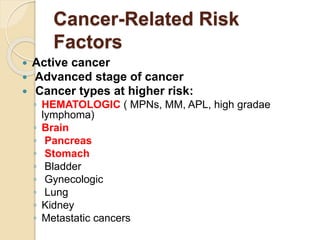
Cancer-Related Risk
Factors
 Active cancer
 Advanced stage of cancer
 Cancer types at higher risk:
◦ HEMATOLOGIC ( MPNs, MM, APL, high gradae
lymphoma)
◦ Brain
◦ Pancreas
◦ Stomach
◦ Bladder
◦ Gynecologic
◦ Lung
◦ Kidney
◦ Metastatic cancers
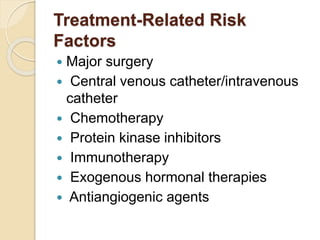
Treatment-Related Risk
Factors
 Major surgery
 Central venous catheter/intravenous
catheter
 Chemotherapy
 Protein kinase inhibitors
 Immunotherapy
 Exogenous hormonal therapies
 Antiangiogenic agents
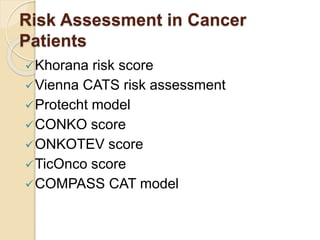
Risk Assessment in Cancer
Patients
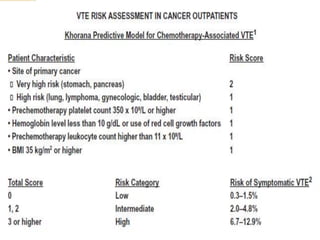
Khorana risk score
Vienna CATS risk assessment
Protecht model
CONKO score
ONKOTEV score
TicOnco score
COMPASS CAT model
VTE Prophylaxis in Patients With
Cancer
Inpatient VTE Prophylaxis
Who ??
◦ for all adults
◦ medical and surgical inpatients
◦ with a diagnosis of cancer or clinical
suspicion of cancer.
 For multiple myeloma patients receiving
lenalidomide, thalidomide, or
pomalidomide-based regimens, ASH
guideline panel suggests using low-dose
acetylsalicylic acid (ASA) or fixed low-
dose VKA or LMWH
Primary prophylaxis for patients
with cancer with central
venous catheter.
 ASH guideline suggests NOT using
parenteral / oral thromboprophylaxis.
Evaluation Prior To The Initiation
Of Thromboprophylaxis
 Comprehensive medical history and
physical examination
 CBC with platelet count and differential
 Prothrombin time, activated partial
thromboplastin time (aPTT)
 Liver and kidney function tests
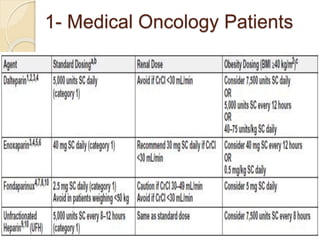
1- Medical Oncology Patients
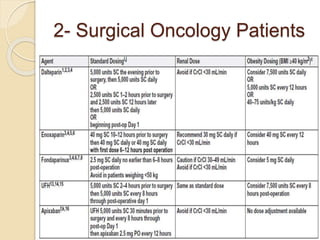
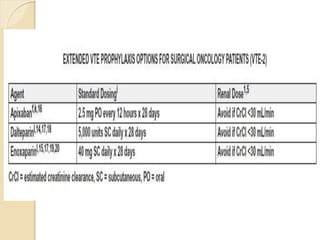
2- Surgical Oncology Patients
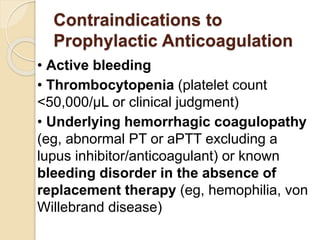
Contraindications to
Prophylactic Anticoagulation
• Active bleeding
• Thrombocytopenia (platelet count
<50,000/μL or clinical judgment)
• Underlying hemorrhagic coagulopathy
(eg, abnormal PT or aPTT excluding a
lupus inhibitor/anticoagulant) or known
bleeding disorder in the absence of
replacement therapy (eg, hemophilia, von
Willebrand disease)
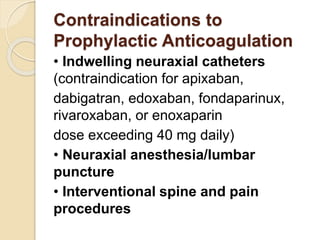
Contraindications to
Prophylactic Anticoagulation
• Indwelling neuraxial catheters
(contraindication for apixaban,
dabigatran, edoxaban, fondaparinux,
rivaroxaban, or enoxaparin
dose exceeding 40 mg daily)
• Neuraxial anesthesia/lumbar
puncture
• Interventional spine and pain
procedures
Mechanical prophylaxis
 In case of contraindication to
anticoagulation
 Intermittent pneumatic compression
(IPC)
 Graduated compression stockings
(GCS)
 ??? efficacy
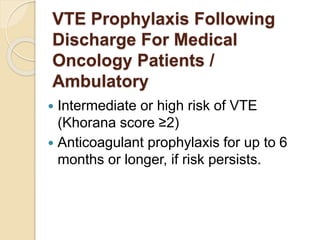
VTE Prophylaxis Following
Discharge For Medical
Oncology Patients /
Ambulatory
 Intermediate or high risk of VTE
(Khorana score ≤2)
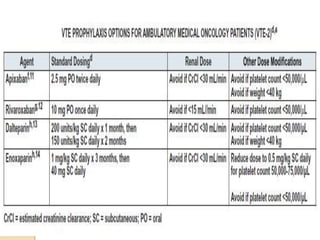
 Anticoagulant prophylaxis for up to 6
months or longer, if risk persists.
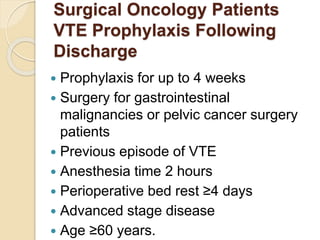
Surgical Oncology Patients
VTE Prophylaxis Following
Discharge
 Prophylaxis for up to 4 weeks
 Surgery for gastrointestinal
malignancies or pelvic cancer surgery
patients
 Previous episode of VTE
 Anesthesia time 2 hours
 Perioperative bed rest ≤4 days
 Advanced stage disease
 Age ≤60 years.
Treatment for Patients with
Active Cancer and VTE
 The decision of treatment should be
made based on the risk-benefit
ratio
 The selection among
anticoagulants should be made
based on efficacy, bleeding risk
assessment, renal or hepatic
function, drug-drug interactions,
clinical setting, convenience of
use, cost, drug availability and
patient preference.
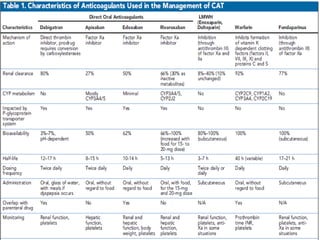
Initial Treatment (First Week)
 DOAC (apixaban or rivaroxaban) or
LMWH be used for initial treatment
 LMWH over UFH
 LMWH over fondaparinux
Short-term Treatment (Initial 3-
6 Months).
 DOAC (apixaban, edoxaban, or
rivaroxaban) over LMWH
 DOAC (apixaban, edoxaban, or
rivaroxaban) over VKA
 LMWH over VKA
Long-term treatment (>6
months)
 Continuing indefinitely
anticoagulation over stopping after
completion of a definitive period of
anticoagulation
 using DOACs or LMWH
CVC-related VTE
 Start anticoagulant treatment
 keep the CVC rather than removal
Recurrent VTE despite receiving
therapeutic LMWH
 Increasing the LMWH dose to a
supratherapeutic level or continuing
with a therapeutic dose
 NOT using an inferior vena cava (IVC)
filter over using a filter
Treatment of Cancer-associated
VTE in special situations
1- Intracranial malignancy
 Patients with intracranial malignancy
are at increased risk of thrombotic
complications and intracranial
hemorrhage (ICH) simultaneously
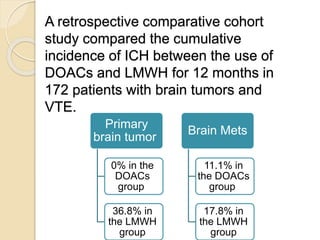
A retrospective comparative cohort
study compared the cumulative
incidence of ICH between the use of
DOACs and LMWH for 12 months in
172 patients with brain tumors and
VTE.
Primary
brain tumor
0% in the
DOACs
group
36.8% in
the LMWH
group
Brain Mets
11.1% in
the DOACs
group
17.8% in
the LMWH
group
2-Renal impairment and Patients
on Hemodialysis
 Bleeding risk is high in cancer patients
with concurrent renal impairment
 LMWH should be used with caution &
avoided for those on hemodialysis.
 DOACs should generally be avoided.
 Apixaban NO dosing adjustment for
patients with end-stage renal disease
on dialysis. (insufficient data)
 Warfarin may be preferred
 In the CATCH trial, between patients
with and without renal impairment,
recurrent VTE rates were 14 and 8%,
major bleeding rates were 6.1 and
2.0%
mortality rates were 40 and 34%.
3- Liver Disease
 DOACs are to be avoided in active,
and clinically significant liver disease.
 LMWH is preferred with warfarin as an
alternative anticoagulant option.
4- Altered Gastrointestinal
Anatomy or Feeding Tubes
 The DOACs are absorbed at various
locations in the gastrointestinal tract,
largely in the stomach and small
intestine,
 Only apixaban, which is also absorbed in
the distal small bowel and ascending
colon.
 LMWH may be preferred warfarin as an
alternative option.
 Dabigatran and edoxaban are not
recommended for administration by
enteral tubes.
 Rivaroxaban and apixaban can be
administered via nasogastric feeding
Treatment of Cancer-associated
VTE with COVID-19
Thrombosis is one of the sequences
due to COVID-19 putting cancer
patients at higher VTE risk.
Parenteral anticoagulation (e.g.
LMWH) is preferred over oral
anticoagulation in the treatment of
established VTE in cancer patients
with COVID-19
Conclusions
 Cancer-associated venous thromboembolism
is a concerning issue that increases both
morbidity and mortality for patients with cancer.
 the decision of treatment should be made
based case by case
 LMWH, DOACs have shown a predominant
role in the treatment of cancer-associated VTE
 A minimum of 6 months of treatment should be
offered to patients with cancer associated VTE
 Continuation or discontinuation of treatment
should be made on a risk-benefit ratio of
anticoagulation
References
1. NCCN clinical practice guidelines in oncology
Version 2.2021
2. American Society of Hematology 2021 guidelines
for management of venous thromboembolism
3. How to Choose An Appropriate Anticoagulant for
Cancer-Associated Thrombosis (J Natl Compr
Canc Netw 2021;19(10):1203–1210)
4. Update on Guidelines for the Management of
Cancer-AssociatedThrombosis (The Oncologist
2021;26:e24–e40)
5. Current status of treatment of cancer associated
venous thromboembolism (Thrombosis Journal
2021)
Cancer associated thrombosis.pptx

Cancer associated thrombosis.pptx

  • 1.
    Cancer Associated Thrombosis When, How & Why? Dr/MarwaMahmoud Khalifa Internal Medicine & Hematology Specialist Damanhour Oncology Center
  • 2.
    Magnitude of theproblem  Venous thromboembolism (VTE) is a common and life threatening condition in cancer patients. (DVT&PE)  Presence of cancer increased the risk for VTE by 9-fold.  Thrombosis is the leading cause of death in cancer patients, second only to cancer itself (higher mortality, reduced OS).  Most common cause of death at 30-day follow-up among cancer patients underwent surgery.
  • 3.
     American Societyof Hematology  American Society of Clinical Oncology  National Comprehensive Cancer Network  International Society of Thrombosis and Hemostasis  International Initiative on Thrombosis in Cancer
  • 4.
    VTE Risk Factorsin Patients With Cancer Patient-Related Cancer-Related Treatment-Related
  • 5.
    Patient-Related Risk Factors Older age Obesity (modifiable)  Smoking, tobacco use (modifiable)  Activity level/exercise (modifiable)  Familial and/or acquired hypercoagulability (including pregnancy)  Medical comorbidities: infection, renal disease, pulmonary disease, congestive heart failure, arterial thromboembolism  Prior VTE  Hospitalization, prolonged immobilization  Poor performance status
  • 6.
    Cancer-Related Risk Factors  Activecancer  Advanced stage of cancer  Cancer types at higher risk: ◦ HEMATOLOGIC ( MPNs, MM, APL, high gradae lymphoma) ◦ Brain ◦ Pancreas ◦ Stomach ◦ Bladder ◦ Gynecologic ◦ Lung ◦ Kidney ◦ Metastatic cancers
  • 7.
    Treatment-Related Risk Factors  Majorsurgery  Central venous catheter/intravenous catheter  Chemotherapy  Protein kinase inhibitors  Immunotherapy  Exogenous hormonal therapies  Antiangiogenic agents
  • 8.
    Risk Assessment inCancer Patients Khorana risk score Vienna CATS risk assessment Protecht model CONKO score ONKOTEV score TicOnco score COMPASS CAT model
  • 9.
    VTE Prophylaxis inPatients With Cancer Inpatient VTE Prophylaxis Who ?? ◦ for all adults ◦ medical and surgical inpatients ◦ with a diagnosis of cancer or clinical suspicion of cancer.  For multiple myeloma patients receiving lenalidomide, thalidomide, or pomalidomide-based regimens, ASH guideline panel suggests using low-dose acetylsalicylic acid (ASA) or fixed low- dose VKA or LMWH
  • 10.
    Primary prophylaxis forpatients with cancer with central venous catheter.  ASH guideline suggests NOT using parenteral / oral thromboprophylaxis.
  • 11.
    Evaluation Prior ToThe Initiation Of Thromboprophylaxis  Comprehensive medical history and physical examination  CBC with platelet count and differential  Prothrombin time, activated partial thromboplastin time (aPTT)  Liver and kidney function tests
  • 13.
  • 14.
  • 15.
    Contraindications to Prophylactic Anticoagulation •Active bleeding • Thrombocytopenia (platelet count <50,000/μL or clinical judgment) • Underlying hemorrhagic coagulopathy (eg, abnormal PT or aPTT excluding a lupus inhibitor/anticoagulant) or known bleeding disorder in the absence of replacement therapy (eg, hemophilia, von Willebrand disease)
  • 16.
    Contraindications to Prophylactic Anticoagulation •Indwelling neuraxial catheters (contraindication for apixaban, dabigatran, edoxaban, fondaparinux, rivaroxaban, or enoxaparin dose exceeding 40 mg daily) • Neuraxial anesthesia/lumbar puncture • Interventional spine and pain procedures
  • 17.
    Mechanical prophylaxis  Incase of contraindication to anticoagulation  Intermittent pneumatic compression (IPC)  Graduated compression stockings (GCS)  ??? efficacy
  • 18.
    VTE Prophylaxis Following DischargeFor Medical Oncology Patients / Ambulatory  Intermediate or high risk of VTE (Khorana score ≤2)  Anticoagulant prophylaxis for up to 6 months or longer, if risk persists.
  • 21.
    Surgical Oncology Patients VTEProphylaxis Following Discharge  Prophylaxis for up to 4 weeks  Surgery for gastrointestinal malignancies or pelvic cancer surgery patients  Previous episode of VTE  Anesthesia time 2 hours  Perioperative bed rest ≤4 days  Advanced stage disease  Age ≤60 years.
  • 23.
    Treatment for Patientswith Active Cancer and VTE  The decision of treatment should be made based on the risk-benefit ratio  The selection among anticoagulants should be made based on efficacy, bleeding risk assessment, renal or hepatic function, drug-drug interactions, clinical setting, convenience of use, cost, drug availability and patient preference.
  • 24.
    Initial Treatment (FirstWeek)  DOAC (apixaban or rivaroxaban) or LMWH be used for initial treatment  LMWH over UFH  LMWH over fondaparinux
  • 25.
    Short-term Treatment (Initial3- 6 Months).  DOAC (apixaban, edoxaban, or rivaroxaban) over LMWH  DOAC (apixaban, edoxaban, or rivaroxaban) over VKA  LMWH over VKA
  • 26.
    Long-term treatment (>6 months) Continuing indefinitely anticoagulation over stopping after completion of a definitive period of anticoagulation  using DOACs or LMWH
  • 27.
    CVC-related VTE  Startanticoagulant treatment  keep the CVC rather than removal
  • 28.
    Recurrent VTE despitereceiving therapeutic LMWH  Increasing the LMWH dose to a supratherapeutic level or continuing with a therapeutic dose  NOT using an inferior vena cava (IVC) filter over using a filter
  • 30.
    Treatment of Cancer-associated VTEin special situations 1- Intracranial malignancy  Patients with intracranial malignancy are at increased risk of thrombotic complications and intracranial hemorrhage (ICH) simultaneously
  • 31.
    A retrospective comparativecohort study compared the cumulative incidence of ICH between the use of DOACs and LMWH for 12 months in 172 patients with brain tumors and VTE. Primary brain tumor 0% in the DOACs group 36.8% in the LMWH group Brain Mets 11.1% in the DOACs group 17.8% in the LMWH group
  • 32.
    2-Renal impairment andPatients on Hemodialysis  Bleeding risk is high in cancer patients with concurrent renal impairment  LMWH should be used with caution & avoided for those on hemodialysis.  DOACs should generally be avoided.  Apixaban NO dosing adjustment for patients with end-stage renal disease on dialysis. (insufficient data)  Warfarin may be preferred
  • 33.
     In theCATCH trial, between patients with and without renal impairment, recurrent VTE rates were 14 and 8%, major bleeding rates were 6.1 and 2.0% mortality rates were 40 and 34%.
  • 34.
    3- Liver Disease DOACs are to be avoided in active, and clinically significant liver disease.  LMWH is preferred with warfarin as an alternative anticoagulant option.
  • 35.
    4- Altered Gastrointestinal Anatomyor Feeding Tubes  The DOACs are absorbed at various locations in the gastrointestinal tract, largely in the stomach and small intestine,  Only apixaban, which is also absorbed in the distal small bowel and ascending colon.  LMWH may be preferred warfarin as an alternative option.  Dabigatran and edoxaban are not recommended for administration by enteral tubes.  Rivaroxaban and apixaban can be administered via nasogastric feeding
  • 36.
    Treatment of Cancer-associated VTEwith COVID-19 Thrombosis is one of the sequences due to COVID-19 putting cancer patients at higher VTE risk. Parenteral anticoagulation (e.g. LMWH) is preferred over oral anticoagulation in the treatment of established VTE in cancer patients with COVID-19
  • 37.
    Conclusions  Cancer-associated venousthromboembolism is a concerning issue that increases both morbidity and mortality for patients with cancer.  the decision of treatment should be made based case by case  LMWH, DOACs have shown a predominant role in the treatment of cancer-associated VTE  A minimum of 6 months of treatment should be offered to patients with cancer associated VTE  Continuation or discontinuation of treatment should be made on a risk-benefit ratio of anticoagulation
  • 38.
    References 1. NCCN clinicalpractice guidelines in oncology Version 2.2021 2. American Society of Hematology 2021 guidelines for management of venous thromboembolism 3. How to Choose An Appropriate Anticoagulant for Cancer-Associated Thrombosis (J Natl Compr Canc Netw 2021;19(10):1203–1210) 4. Update on Guidelines for the Management of Cancer-AssociatedThrombosis (The Oncologist 2021;26:e24–e40) 5. Current status of treatment of cancer associated venous thromboembolism (Thrombosis Journal 2021)