The Roaring Twenties
The Roaring Twenties, a time of economic prosperity and cultural
dynamism, saw significant changes in American society. This
transformative decade gave rise to groundbreaking advancements in
music, art, fashion, and technology, shaping the modern world we know
today.
Economic Boom and Cultural Changes
Economic Prosperity
The 1920s saw a surge in industrial growth,
leading to increased wealth and job
opportunities.
New consumer goods like radios and cars
became widely available, transforming the way
people lived and entertained themselves.
Cultural Revolution
Flappers and jazz music symbolized the new
modern and rebellious spirit of the era,
challenging traditional societal norms.
Cinemas, radio broadcasts, and literature
became popular, shaping the cultural landscape
and fostering a sense of freedom and
expression.
Culture and Lifestyle in the 1920s
Vibrant Fashion
The 1920s saw the
emergence of the iconic
flapper style, with short skirts,
sleek dresses, and bold
makeup becoming the
hallmarks of the decade's
fashion.
Jazz Age Parties
Lavish parties, where guests
danced the Charleston to the
infectious rhythms of jazz
music, became a defining
feature of the 1920s social
scene.
Consumerism Boom
The decade witnessed a
surge in consumerism, with
the mass production of
automobiles, radios, and
household appliances
revolutionizing American daily
life.
The Rise of Jazz and Popular Music
1
The Birth of Jazz
Originating in the vibrant African-
American communities of New
Orleans, jazz music quickly gained
popularity, spreading across the
country and captivating audiences with
its syncopated rhythms and
improvisational style.
2 The Jazz Age
The 1920s saw the rise of iconic jazz
musicians, such as Louis Armstrong,
Duke Ellington, and Ella Fitzgerald,
who helped define the sound of the era
and made jazz the soundtrack of the
Roaring Twenties.
3
Popular Music Boom
Alongside the growth of jazz, the
1920s also witnessed the emergence
of popular music genres like blues,
ragtime, and the early stages of rock
and roll, shaping the musical
landscape of the decade.
Prohibition and the Speakeasy Era
1 The Volstead Act
The 1920s saw the
implementation of the
Volstead Act, which
prohibited the
production, importation,
transportation, and sale
of alcoholic beverages,
leading to the rise of the
notorious speakeasies.
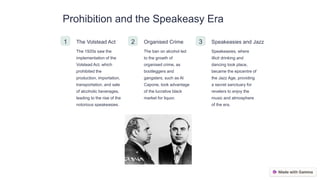
2 Organised Crime
The ban on alcohol led
to the growth of
organised crime, as
bootleggers and
gangsters, such as Al
Capone, took advantage
of the lucrative black
market for liquor.
3 Speakeasies and Jazz
Speakeasies, where
illicit drinking and
dancing took place,
became the epicentre of
the Jazz Age, providing
a secret sanctuary for
revelers to enjoy the
music and atmosphere
of the era.
Changing Gender Roles and the Flapper
Movement
Emancipation of
Women
The Roaring Twenties
witnessed a shift in gender
roles, with women gaining
more independence and
societal influence,
exemplified by the rise of
the iconic flapper.
The Flapper Aesthetic
Flappers embraced a
modern, androgynous
look, with short skirts,
bobbed hair, and a
rejection of traditional
gender norms, challenging
the social conventions of
the time.
Changing Attitudes
The flapper movement
symbolized a broader
cultural shift, as women
asserted their autonomy,
challenged societal
expectations, and
participated more actively
in the public sphere.
The Great Gatsby (1925)
The Great Gatsby, a novel F. Scott Fitsgerald, has come to represent the era of the roaring twenties in
popular fiction. A tale about self-made millionaire Jay Gatsby and narrator, Nick Carraway, it depicts the
culture, excesses, feelings, and mood of 1920s America.
Here is the party scene from the Baz Lurhmann film.
Economic Boom and Technological
Advancements
Automobile
Revolution
The mass production
of affordable cars,
such as the Ford
Model T, transformed
transportation and
enabled greater
mobility for
Americans.
Radio and
Communication
The widespread
adoption of radio
technology
revolutionized
communication,
entertainment, and
popular culture,
connecting people
across the country.
Electrification and
Modernization
The expansion of
electricity and the
proliferation of
household appliances
modernized American
homes and daily life.
Economic
Prosperity
The 1920s saw a
period of economic
growth and prosperity,
driven by
advancements in
industry, finance, and
consumer culture.
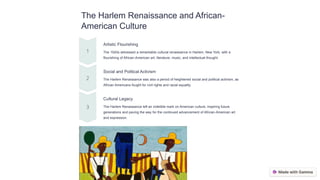
The Harlem Renaissance and African-
American Culture
Artistic Flourishing
The 1920s witnessed a remarkable cultural renaissance in Harlem, New York, with a
flourishing of African-American art, literature, music, and intellectual thought.
Social and Political Activism
The Harlem Renaissance was also a period of heightened social and political activism, as
African Americans fought for civil rights and racial equality.
Cultural Legacy
The Harlem Renaissance left an indelible mark on American culture, inspiring future
generations and paving the way for the continued advancement of African-American art
and expression.
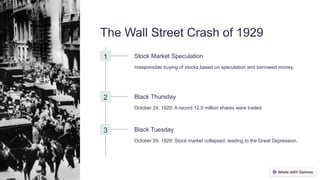
The Wall Street Crash of 1929
1 Stock Market Speculation
Irresponsible buying of stocks based on speculation and borrowed money.
2 Black Thursday
October 24, 1929: A record 12.9 million shares were traded.
3 Black Tuesday
October 29, 1929: Stock market collapsed, leading to the Great Depression.
Causes and impact of the
Great Depression
The Great Depression was triggered by the stock market crash of 1929,
leading to widespread unemployment, bank failures, and severe
economic hardship.
Factors contributing to the Great Depression included overproduction,
high levels of debt, and a banking crisis, causing a devastating impact on
families and businesses.
This economic downturn had far-reaching consequences, influencing
social and political landscapes globally, and prompting significant reforms
to prevent future crises.
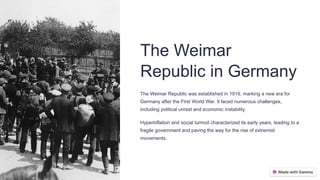
The Weimar
Republic in Germany
The Weimar Republic was established in 1919, marking a new era for
Germany after the First World War. It faced numerous challenges,
including political unrest and economic instability.
Hyperinflation and social turmoil characterized its early years, leading to a
fragile government and paving the way for the rise of extremist
movements.
Political and economic challenges
1
Political Turmoil
Unstable government and power struggles.
2
Economic Instability
Struggling industries and high inflation.
3
Social Unrest
Protests and growing dissatisfaction.
The 1920s were marked by political turmoil, economic instability, and social unrest. Governments faced
internal strife, industries struggled, and dissatisfaction among citizens grew, setting the stage for
significant changes in the coming years.
The Dawes Plan and its role in stabilizing
Germany
• Reparations: The plan reduced Germany's reparation payments, easing the economic burden.
• Foreign Loans: It facilitated foreign loans to stabilize the German economy.
• Industrialisation: The plan supported Germany's industrialization and economic recovery.
The New Deal in the United States
Roosevelt's Response
President Roosevelt's New Deal aimed
to provide relief, recovery, and reform
during the Great Depression.
Programs and Policies
It included programs such as the
Civilian Conservation Corps and Social
Security, aiming to create jobs and
provide a safety net for citizens.
Economic Impact
The New Deal led to the expansion of the federal government's role in the economy and
was a significant factor in the recovery from the Depression.
FDR's policies and their effects
New Deal Programs
FDR's policies introduced
programs to create jobs,
provide financial relief, and
regulate the stock market.
Social and Economic
Reform
The New Deal aimed to reform
the economy, improve living
conditions, and strengthen
workers' rights.
Infrastructure
Development
Investments in infrastructure,
such as roads and bridges,
aimed to stimulate economic
growth and create
employment.
Conclusion and Legacy of the 1920s and
1930s
Cultural Impact
The 1920s saw the rise of cultural and
artistic movements such as the Harlem
Renaissance, which left a lasting impact on
society.
Economic Instability
The stock market crash of 1929 led to
global economic instability and widespread
unemployment, shaping the trajectory of
world economies.
Growth of Welfare States
The social and economic crises of the
1930s spurred the development of welfare
states and safety nets to protect citizens
from future hardships.
Political Realignment
The tumultuous events of the 1920s and
1930s reshaped global politics and led to
the emergence of new political ideologies
and alliances.

The-Roaring-Twenties.pptx World War One & USA

  • 1.
    The Roaring Twenties TheRoaring Twenties, a time of economic prosperity and cultural dynamism, saw significant changes in American society. This transformative decade gave rise to groundbreaking advancements in music, art, fashion, and technology, shaping the modern world we know today.
  • 2.
    Economic Boom andCultural Changes Economic Prosperity The 1920s saw a surge in industrial growth, leading to increased wealth and job opportunities. New consumer goods like radios and cars became widely available, transforming the way people lived and entertained themselves. Cultural Revolution Flappers and jazz music symbolized the new modern and rebellious spirit of the era, challenging traditional societal norms. Cinemas, radio broadcasts, and literature became popular, shaping the cultural landscape and fostering a sense of freedom and expression.
  • 3.
    Culture and Lifestylein the 1920s Vibrant Fashion The 1920s saw the emergence of the iconic flapper style, with short skirts, sleek dresses, and bold makeup becoming the hallmarks of the decade's fashion. Jazz Age Parties Lavish parties, where guests danced the Charleston to the infectious rhythms of jazz music, became a defining feature of the 1920s social scene. Consumerism Boom The decade witnessed a surge in consumerism, with the mass production of automobiles, radios, and household appliances revolutionizing American daily life.
  • 4.
    The Rise ofJazz and Popular Music 1 The Birth of Jazz Originating in the vibrant African- American communities of New Orleans, jazz music quickly gained popularity, spreading across the country and captivating audiences with its syncopated rhythms and improvisational style. 2 The Jazz Age The 1920s saw the rise of iconic jazz musicians, such as Louis Armstrong, Duke Ellington, and Ella Fitzgerald, who helped define the sound of the era and made jazz the soundtrack of the Roaring Twenties. 3 Popular Music Boom Alongside the growth of jazz, the 1920s also witnessed the emergence of popular music genres like blues, ragtime, and the early stages of rock and roll, shaping the musical landscape of the decade.
  • 5.
    Prohibition and theSpeakeasy Era 1 The Volstead Act The 1920s saw the implementation of the Volstead Act, which prohibited the production, importation, transportation, and sale of alcoholic beverages, leading to the rise of the notorious speakeasies. 2 Organised Crime The ban on alcohol led to the growth of organised crime, as bootleggers and gangsters, such as Al Capone, took advantage of the lucrative black market for liquor. 3 Speakeasies and Jazz Speakeasies, where illicit drinking and dancing took place, became the epicentre of the Jazz Age, providing a secret sanctuary for revelers to enjoy the music and atmosphere of the era.
  • 6.
    Changing Gender Rolesand the Flapper Movement Emancipation of Women The Roaring Twenties witnessed a shift in gender roles, with women gaining more independence and societal influence, exemplified by the rise of the iconic flapper. The Flapper Aesthetic Flappers embraced a modern, androgynous look, with short skirts, bobbed hair, and a rejection of traditional gender norms, challenging the social conventions of the time. Changing Attitudes The flapper movement symbolized a broader cultural shift, as women asserted their autonomy, challenged societal expectations, and participated more actively in the public sphere.
  • 7.
    The Great Gatsby(1925) The Great Gatsby, a novel F. Scott Fitsgerald, has come to represent the era of the roaring twenties in popular fiction. A tale about self-made millionaire Jay Gatsby and narrator, Nick Carraway, it depicts the culture, excesses, feelings, and mood of 1920s America. Here is the party scene from the Baz Lurhmann film.
  • 8.
    Economic Boom andTechnological Advancements Automobile Revolution The mass production of affordable cars, such as the Ford Model T, transformed transportation and enabled greater mobility for Americans. Radio and Communication The widespread adoption of radio technology revolutionized communication, entertainment, and popular culture, connecting people across the country. Electrification and Modernization The expansion of electricity and the proliferation of household appliances modernized American homes and daily life. Economic Prosperity The 1920s saw a period of economic growth and prosperity, driven by advancements in industry, finance, and consumer culture.
  • 9.
    The Harlem Renaissanceand African- American Culture Artistic Flourishing The 1920s witnessed a remarkable cultural renaissance in Harlem, New York, with a flourishing of African-American art, literature, music, and intellectual thought. Social and Political Activism The Harlem Renaissance was also a period of heightened social and political activism, as African Americans fought for civil rights and racial equality. Cultural Legacy The Harlem Renaissance left an indelible mark on American culture, inspiring future generations and paving the way for the continued advancement of African-American art and expression.
  • 10.
    The Wall StreetCrash of 1929 1 Stock Market Speculation Irresponsible buying of stocks based on speculation and borrowed money. 2 Black Thursday October 24, 1929: A record 12.9 million shares were traded. 3 Black Tuesday October 29, 1929: Stock market collapsed, leading to the Great Depression.
  • 11.
    Causes and impactof the Great Depression The Great Depression was triggered by the stock market crash of 1929, leading to widespread unemployment, bank failures, and severe economic hardship. Factors contributing to the Great Depression included overproduction, high levels of debt, and a banking crisis, causing a devastating impact on families and businesses. This economic downturn had far-reaching consequences, influencing social and political landscapes globally, and prompting significant reforms to prevent future crises.
  • 12.
    The Weimar Republic inGermany The Weimar Republic was established in 1919, marking a new era for Germany after the First World War. It faced numerous challenges, including political unrest and economic instability. Hyperinflation and social turmoil characterized its early years, leading to a fragile government and paving the way for the rise of extremist movements.
  • 13.
    Political and economicchallenges 1 Political Turmoil Unstable government and power struggles. 2 Economic Instability Struggling industries and high inflation. 3 Social Unrest Protests and growing dissatisfaction. The 1920s were marked by political turmoil, economic instability, and social unrest. Governments faced internal strife, industries struggled, and dissatisfaction among citizens grew, setting the stage for significant changes in the coming years.
  • 14.
    The Dawes Planand its role in stabilizing Germany • Reparations: The plan reduced Germany's reparation payments, easing the economic burden. • Foreign Loans: It facilitated foreign loans to stabilize the German economy. • Industrialisation: The plan supported Germany's industrialization and economic recovery.
  • 15.
    The New Dealin the United States Roosevelt's Response President Roosevelt's New Deal aimed to provide relief, recovery, and reform during the Great Depression. Programs and Policies It included programs such as the Civilian Conservation Corps and Social Security, aiming to create jobs and provide a safety net for citizens. Economic Impact The New Deal led to the expansion of the federal government's role in the economy and was a significant factor in the recovery from the Depression.
  • 16.
    FDR's policies andtheir effects New Deal Programs FDR's policies introduced programs to create jobs, provide financial relief, and regulate the stock market. Social and Economic Reform The New Deal aimed to reform the economy, improve living conditions, and strengthen workers' rights. Infrastructure Development Investments in infrastructure, such as roads and bridges, aimed to stimulate economic growth and create employment.
  • 17.
    Conclusion and Legacyof the 1920s and 1930s Cultural Impact The 1920s saw the rise of cultural and artistic movements such as the Harlem Renaissance, which left a lasting impact on society. Economic Instability The stock market crash of 1929 led to global economic instability and widespread unemployment, shaping the trajectory of world economies. Growth of Welfare States The social and economic crises of the 1930s spurred the development of welfare states and safety nets to protect citizens from future hardships. Political Realignment The tumultuous events of the 1920s and 1930s reshaped global politics and led to the emergence of new political ideologies and alliances.