CAMPTODACTYLY
BY
RAJAH AMINA SULEIMAN
(RN, RM, RNE, RBPN, BNSc., PGDE, MSc)
Introduction
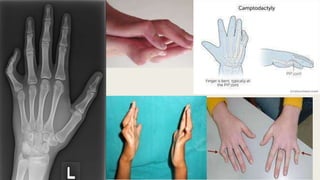
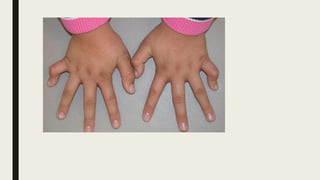
■ Camptodactyly is a congenital flexion deformity of the PIPJ.
■ It affects 1% of the population and often goes unreported. It
tends to present either in infancy, when the sex distribution is
equal, or at the start of adolescence, when females tend to be
more affected than males.
■ Familial cases are inherited in an autosomal dominant fashion.
■ Camptodactyly is also associated with a number of syndromes,
but the underlying aetiology remains unclear.
Definition
■ The term camptodactyly refers to the presence of congenital or
acquired flexion contractures of the proximal interphalangeal
joints, resulting from soft tissue tightening.
■ Camptodactyly (Greek: campto = bent, dactylos = digit) refers to
a flexion deformity of a digit or thumb in an anteroposterior
plane.
■ Camptodactyly is a rare congenital condition of the hand that is
characterized by a digital flexion deformity that usually occurs in
the PIP joint.
■ This type of bent finger deformity should be distinguished
from clinodactyly, in which the finger is bent either radialward or
ulnarward.
Presentation
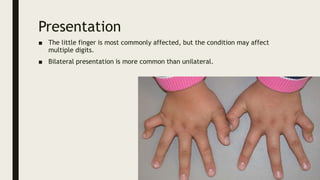
■ The little finger is most commonly affected, but the condition may affect
multiple digits.
■ Bilateral presentation is more common than unilateral.
Classification
Camptodactyly has been divided into three categories
■ Type I deformity is the most common form and becomes
apparent during infancy.
■ The deformity is usually an isolated instance that is limited to
the small finger.
■ This “congenital” form affects males and females equally.
Classification
■ Type II deformity has similar clinical features, although they are
not apparent until preadolescence. This “acquired” form of
camptodactyly develops between the ages of 7 and 11 and
affects females more than males.
■ It usually does not improve spontaneously and may progress to a
severe flexion deformity.
■ Type III deformity is often a severe deformity that usually
involves multiple digits of both extremities and is associated with
a variety of syndromes.
■ This syndromic camptodactyly can occur in conjunction with
craniofacial disorders, short stature, and chromosomal
abnormalities.
Syndromes associated with
Camptodactyly
■ Camptodactyly is seen as a feature of more than 50 conditions and is
frequently associated with chromosomal anomalies.
■ Trisomy 13, oculodentodigital, orofaciodigital, Aarskog, and
cerebrohepatorenal syndromes.
Etiology
Typically caused by either:
■ abnormal lumbrical insertion/origin
■ abnormal FDS insertion
■ Genetics
Management
■ The principal treatment is stretching and splinting; surgery should be reserved
for contractions of >60° where conservative therapy has failed, and in
progressive cases.
■ Primary anomalies are of the lumbrical and FDS. Secondary anomalies include
those affecting the skin, retinaculum cutis, collateral ligaments, volar plate
and joint capsule
■ Correction of the bony abnormality is not advised because of the increased
risk of long-term stiffness and a poorer outcome.
CLINODACTYLY
Definition
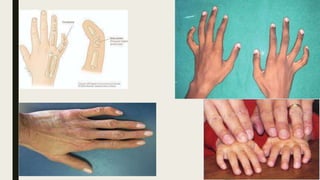
■ Clinodactyly (Greek: clino = deviated, dactylos = digit) refers to
a digit or thumb that is deviated in a radioulnar or mediolateral
direction.
■ An inward deviation of the fifth digit is most commonly seen and
is so often associated with various other types of congenital hand
anomalies.
■ It commonly occurs bilaterally at the middle phalanx of the small
finger into radial deviation. However, other phalanges and digits
can be affected.
Etiology
■ Clinodactyly can be inherited as an autosomal dominant trait
■ Associated with various chromosomal disorders,
■ Physical or thermal injury to the finger with subsequent asymmetric growth
plate disturbance.
Management
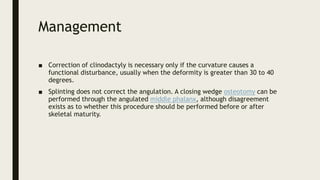
■ Correction of clinodactyly is necessary only if the curvature causes a
functional disturbance, usually when the deformity is greater than 30 to 40
degrees.
■ Splinting does not correct the angulation. A closing wedge osteotomy can be
performed through the angulated middle phalanx, although disagreement
exists as to whether this procedure should be performed before or after
skeletal maturity.
PROMINENT EAR
Introduction
■ Ear prominence is a relatively common cosmetic deformity with no associated
functional deficits, but with profound psychosocial impact, especially in young
patients.
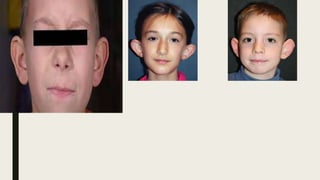
■ Prominent ear, otapostasis or bat ear is an abnormally protruding human ear.
■ Protruding ear is the most common congenital auricular deformity and
typically occurs bilaterally.
■ But it may also be unilateral
■ The concha is large with poorly developed antihelix.
■ It is the result of malformation of cartilage during primitive ear development
in intrauterine life.
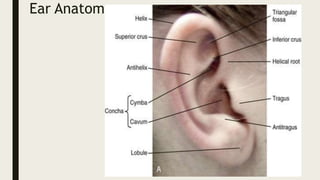
Ear Anatomy
Management
■ Prior to 6 months of age, the ear cartilage is very soft and may be amenable to
moulding and splinting. Bandaging and taping have been used in the past but
now sophisticated splints have been designed to correct problems more
specifically[3].
■ Ear splintage can be a very effective technique for treatment of neonates with
deformational auricular anomalies. After 6 months, surgical correction is the
only option.
Management
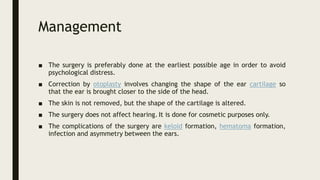
■ The surgery is preferably done at the earliest possible age in order to avoid
psychological distress.
■ Correction by otoplasty involves changing the shape of the ear cartilage so
that the ear is brought closer to the side of the head.
■ The skin is not removed, but the shape of the cartilage is altered.
■ The surgery does not affect hearing. It is done for cosmetic purposes only.
■ The complications of the surgery are keloid formation, hematoma formation,
infection and asymmetry between the ears.
MICROGENIA
Definition
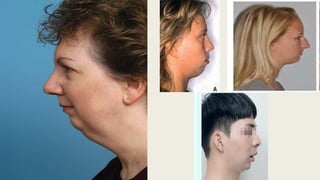
■ Microgenia is a term meaning a small chin. It is somewhat related to but
distinct from the term micrognathia which means a small mandible.
■ This is a condition in which the height, projection, and width of the chin
prominence is too small in relation to the rest of the facial skeleton.
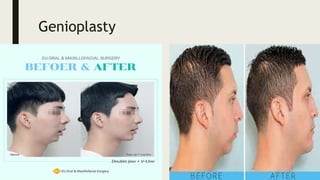
Genioplasty

CAMPTODACTYLY.ppt

  • 1.
    CAMPTODACTYLY BY RAJAH AMINA SULEIMAN (RN,RM, RNE, RBPN, BNSc., PGDE, MSc)
  • 2.
    Introduction ■ Camptodactyly isa congenital flexion deformity of the PIPJ. ■ It affects 1% of the population and often goes unreported. It tends to present either in infancy, when the sex distribution is equal, or at the start of adolescence, when females tend to be more affected than males. ■ Familial cases are inherited in an autosomal dominant fashion. ■ Camptodactyly is also associated with a number of syndromes, but the underlying aetiology remains unclear.
  • 3.
    Definition ■ The termcamptodactyly refers to the presence of congenital or acquired flexion contractures of the proximal interphalangeal joints, resulting from soft tissue tightening. ■ Camptodactyly (Greek: campto = bent, dactylos = digit) refers to a flexion deformity of a digit or thumb in an anteroposterior plane. ■ Camptodactyly is a rare congenital condition of the hand that is characterized by a digital flexion deformity that usually occurs in the PIP joint. ■ This type of bent finger deformity should be distinguished from clinodactyly, in which the finger is bent either radialward or ulnarward.
  • 4.
    Presentation ■ The littlefinger is most commonly affected, but the condition may affect multiple digits. ■ Bilateral presentation is more common than unilateral.
  • 5.
    Classification Camptodactyly has beendivided into three categories ■ Type I deformity is the most common form and becomes apparent during infancy. ■ The deformity is usually an isolated instance that is limited to the small finger. ■ This “congenital” form affects males and females equally.
  • 6.
    Classification ■ Type IIdeformity has similar clinical features, although they are not apparent until preadolescence. This “acquired” form of camptodactyly develops between the ages of 7 and 11 and affects females more than males. ■ It usually does not improve spontaneously and may progress to a severe flexion deformity. ■ Type III deformity is often a severe deformity that usually involves multiple digits of both extremities and is associated with a variety of syndromes. ■ This syndromic camptodactyly can occur in conjunction with craniofacial disorders, short stature, and chromosomal abnormalities.
  • 7.
    Syndromes associated with Camptodactyly ■Camptodactyly is seen as a feature of more than 50 conditions and is frequently associated with chromosomal anomalies. ■ Trisomy 13, oculodentodigital, orofaciodigital, Aarskog, and cerebrohepatorenal syndromes.
  • 10.
    Etiology Typically caused byeither: ■ abnormal lumbrical insertion/origin ■ abnormal FDS insertion ■ Genetics
  • 11.
    Management ■ The principaltreatment is stretching and splinting; surgery should be reserved for contractions of >60° where conservative therapy has failed, and in progressive cases. ■ Primary anomalies are of the lumbrical and FDS. Secondary anomalies include those affecting the skin, retinaculum cutis, collateral ligaments, volar plate and joint capsule ■ Correction of the bony abnormality is not advised because of the increased risk of long-term stiffness and a poorer outcome.
  • 12.
  • 13.
    Definition ■ Clinodactyly (Greek:clino = deviated, dactylos = digit) refers to a digit or thumb that is deviated in a radioulnar or mediolateral direction. ■ An inward deviation of the fifth digit is most commonly seen and is so often associated with various other types of congenital hand anomalies. ■ It commonly occurs bilaterally at the middle phalanx of the small finger into radial deviation. However, other phalanges and digits can be affected.
  • 15.
    Etiology ■ Clinodactyly canbe inherited as an autosomal dominant trait ■ Associated with various chromosomal disorders, ■ Physical or thermal injury to the finger with subsequent asymmetric growth plate disturbance.
  • 16.
    Management ■ Correction ofclinodactyly is necessary only if the curvature causes a functional disturbance, usually when the deformity is greater than 30 to 40 degrees. ■ Splinting does not correct the angulation. A closing wedge osteotomy can be performed through the angulated middle phalanx, although disagreement exists as to whether this procedure should be performed before or after skeletal maturity.
  • 17.
  • 18.
    Introduction ■ Ear prominenceis a relatively common cosmetic deformity with no associated functional deficits, but with profound psychosocial impact, especially in young patients. ■ Prominent ear, otapostasis or bat ear is an abnormally protruding human ear. ■ Protruding ear is the most common congenital auricular deformity and typically occurs bilaterally. ■ But it may also be unilateral ■ The concha is large with poorly developed antihelix. ■ It is the result of malformation of cartilage during primitive ear development in intrauterine life.
  • 19.
  • 21.
    Management ■ Prior to6 months of age, the ear cartilage is very soft and may be amenable to moulding and splinting. Bandaging and taping have been used in the past but now sophisticated splints have been designed to correct problems more specifically[3]. ■ Ear splintage can be a very effective technique for treatment of neonates with deformational auricular anomalies. After 6 months, surgical correction is the only option.
  • 22.
    Management ■ The surgeryis preferably done at the earliest possible age in order to avoid psychological distress. ■ Correction by otoplasty involves changing the shape of the ear cartilage so that the ear is brought closer to the side of the head. ■ The skin is not removed, but the shape of the cartilage is altered. ■ The surgery does not affect hearing. It is done for cosmetic purposes only. ■ The complications of the surgery are keloid formation, hematoma formation, infection and asymmetry between the ears.
  • 23.
  • 24.
    Definition ■ Microgenia isa term meaning a small chin. It is somewhat related to but distinct from the term micrognathia which means a small mandible. ■ This is a condition in which the height, projection, and width of the chin prominence is too small in relation to the rest of the facial skeleton.
  • 26.

Editor's Notes

  • #8 Trisomy 13 (also called Patau syndrome)  Trisomy 21 (Down syndrome) Trisomy 18 (Edwards syndrome) XXX (Triple X syndrome) XXY (Klinefelter syndrome)