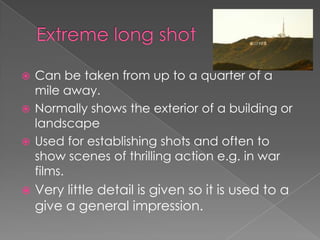
Can be taken from up to a quarter of a
mile away.
 Normally shows the exterior of a building or
landscape
 Used for establishing shots and often to
show scenes of thrilling action e.g. in war
films.




Very little detail is given so it is used to a
give a general impression.
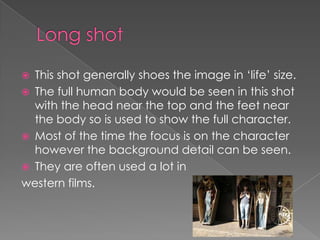
This shot generally shoes the image in ‘life’ size.
 The full human body would be seen in this shot
with the head near the top and the feet near
the body so is used to show the full character.
 Most of the time the focus is on the character
however the background detail can be seen.
 They are often used a lot in
western films.

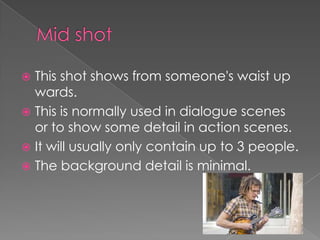
This shot shows from someone's waist up
wards.
 This is normally used in dialogue scenes
or to show some detail in action scenes.
 It will usually only contain up to 3 people.
 The background detail is minimal.

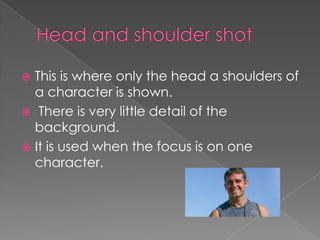
This is where only the head a shoulders of
a character is shown.
 There is very little detail of the
background.
 It is used when the focus is on one
character.

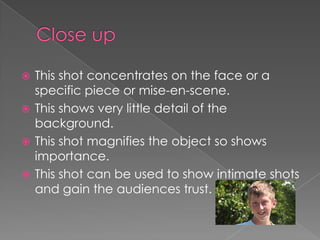
This shot concentrates on the face or a
specific piece or mise-en-scene.
 This shows very little detail of the
background.
 This shot magnifies the object so shows
importance.
 This shot can be used to show intimate shots
and gain the audiences trust.

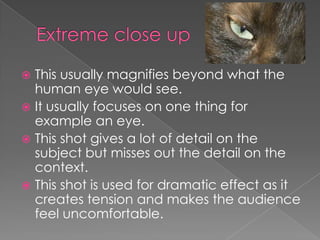
This usually magnifies beyond what the
human eye would see.
 It usually focuses on one thing for
example an eye.
 This shot gives a lot of detail on the
subject but misses out the detail on the
context.
 This shot is used for dramatic effect as it
creates tension and makes the audience
feel uncomfortable.

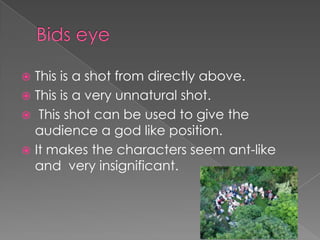
This is a shot from directly above.
 This is a very unnatural shot.
 This shot can be used to give the
audience a god like position.
 It makes the characters seem ant-like
and very insignificant.

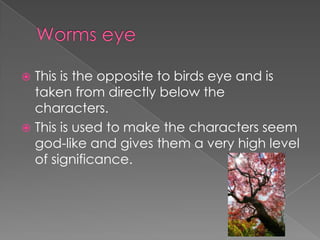
This is the opposite to birds eye and is
taken from directly below the
characters.
 This is used to make the characters seem
god-like and gives them a very high level
of significance.

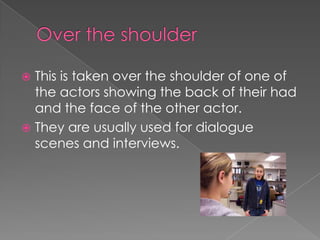
This is taken over the shoulder of one of
the actors showing the back of their had
and the face of the other actor.
 They are usually used for dialogue
scenes and interviews.

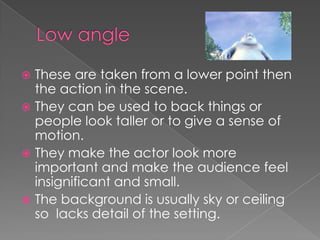
These are taken from a lower point then
the action in the scene.
 They can be used to back things or
people look taller or to give a sense of
motion.
 They make the actor look more
important and make the audience feel
insignificant and small.
 The background is usually sky or ceiling
so lacks detail of the setting.

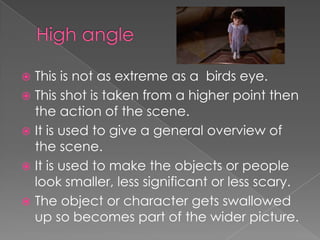
This is not as extreme as a birds eye.
 This shot is taken from a higher point then
the action of the scene.
 It is used to give a general overview of
the scene.
 It is used to make the objects or people
look smaller, less significant or less scary.
 The object or character gets swallowed
up so becomes part of the wider picture.

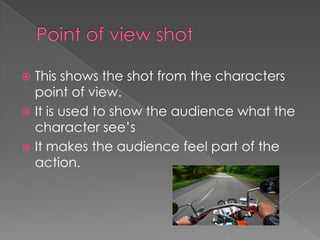
This shows the shot from the characters
point of view.
 It is used to show the audience what the
character see’s
 It makes the audience feel part of the
action.

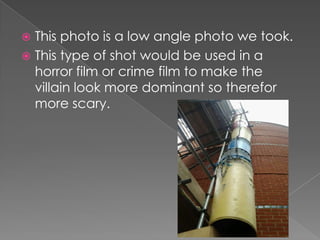
This photo is a low angle photo we took.
 This type of shot would be used in a
horror film or crime film to make the
villain look more dominant so therefor
more scary.

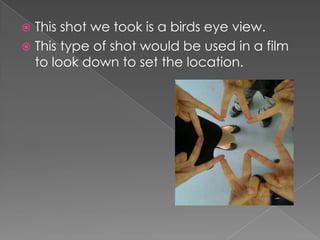
This shot we took is a birds eye view.
 This type of shot would be used in a film
to look down to set the location.


Camera angles

  • 2.
    Can be takenfrom up to a quarter of a mile away.  Normally shows the exterior of a building or landscape  Used for establishing shots and often to show scenes of thrilling action e.g. in war films.   Very little detail is given so it is used to a give a general impression.
  • 3.
    This shot generallyshoes the image in ‘life’ size.  The full human body would be seen in this shot with the head near the top and the feet near the body so is used to show the full character.  Most of the time the focus is on the character however the background detail can be seen.  They are often used a lot in western films. 
  • 4.
    This shot showsfrom someone's waist up wards.  This is normally used in dialogue scenes or to show some detail in action scenes.  It will usually only contain up to 3 people.  The background detail is minimal. 
  • 5.
    This is whereonly the head a shoulders of a character is shown.  There is very little detail of the background.  It is used when the focus is on one character. 
  • 6.
    This shot concentrateson the face or a specific piece or mise-en-scene.  This shows very little detail of the background.  This shot magnifies the object so shows importance.  This shot can be used to show intimate shots and gain the audiences trust. 
  • 7.
    This usually magnifiesbeyond what the human eye would see.  It usually focuses on one thing for example an eye.  This shot gives a lot of detail on the subject but misses out the detail on the context.  This shot is used for dramatic effect as it creates tension and makes the audience feel uncomfortable. 
  • 8.
    This is ashot from directly above.  This is a very unnatural shot.  This shot can be used to give the audience a god like position.  It makes the characters seem ant-like and very insignificant. 
  • 9.
    This is theopposite to birds eye and is taken from directly below the characters.  This is used to make the characters seem god-like and gives them a very high level of significance. 
  • 10.
    This is takenover the shoulder of one of the actors showing the back of their had and the face of the other actor.  They are usually used for dialogue scenes and interviews. 
  • 11.
    These are takenfrom a lower point then the action in the scene.  They can be used to back things or people look taller or to give a sense of motion.  They make the actor look more important and make the audience feel insignificant and small.  The background is usually sky or ceiling so lacks detail of the setting. 
  • 12.
    This is notas extreme as a birds eye.  This shot is taken from a higher point then the action of the scene.  It is used to give a general overview of the scene.  It is used to make the objects or people look smaller, less significant or less scary.  The object or character gets swallowed up so becomes part of the wider picture. 
  • 13.
    This shows theshot from the characters point of view.  It is used to show the audience what the character see’s  It makes the audience feel part of the action. 
  • 15.
    This photo isa low angle photo we took.  This type of shot would be used in a horror film or crime film to make the villain look more dominant so therefor more scary. 
  • 16.
    This shot wetook is a birds eye view.  This type of shot would be used in a film to look down to set the location. 