Combining Shot-type and
Audience reaction
Lesson Objective: To understand how
different shots cause audience
involvement and reaction
Lesson Objective
•At the end of this lesson
we will have analysed
camera shots/angles
and the effect they have
on the audience.
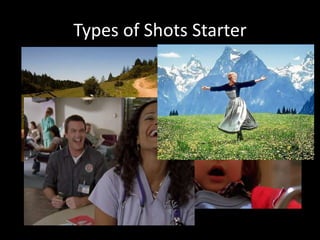
Types of Shots Starter
Nothing is ever in the scene ‘by
accident’
Denotation:
The objects/items that are in the picture
Connotation
What the objects and items suggest
The person/institution who made the media will
already have an idea about what suggestions they
want to make.
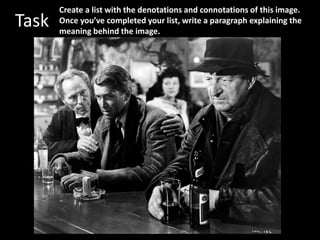
Task
Create a list with the denotations and connotations of this image.
Once you’ve completed your list, write a paragraph explaining the
meaning behind the image.
Audience positioning
• Audiences enjoy texts when they feel involved
in them.
• We will learn to analyse the techniques used
to ‘sew’ the audience into the text.
– Narrative (the story)
– Development ( how the story is told)
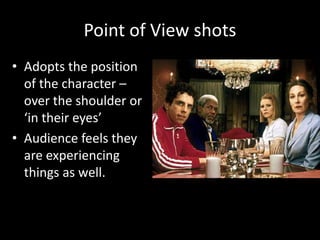
Point of View shots
• Adopts the position
of the character –
over the shoulder or
‘in their eyes’
• Audience feels they
are experiencing
things as well.
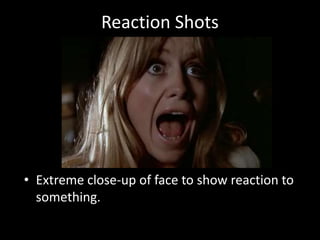
Reaction Shots
• Extreme close-up of face to show reaction to
something.
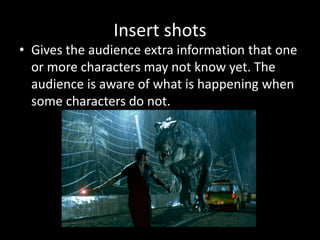
Insert shots
• Gives the audience extra information that one
or more characters may not know yet. The
audience is aware of what is happening when
some characters do not.
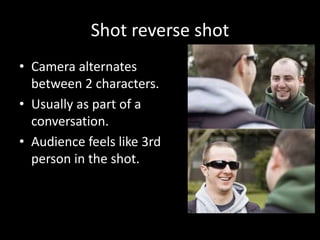
Shot reverse shot
• Camera alternates
between 2 characters.
• Usually as part of a
conversation.
• Audience feels like 3rd
person in the shot.
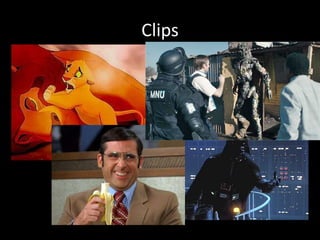
Task
• We will watch a series of different film clips.
• Consider the shot types used
• Consider the audience positioning
techniques used
• Comment on why you think the director
chose each shot type. What was the desired
effect? Do you feel this effect was achieved?
Clips
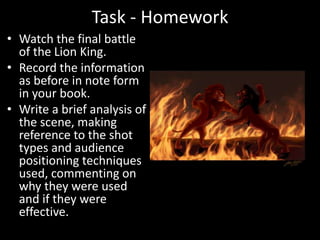
Task - Homework
• Watch the final battle
of the Lion King.
• Record the information
as before in note form
in your book.
• Write a brief analysis of
the scene, making
reference to the shot
types and audience
positioning techniques
used, commenting on
why they were used
and if they were
effective.

Camera and aud

  • 1.
    Combining Shot-type and Audiencereaction Lesson Objective: To understand how different shots cause audience involvement and reaction
  • 2.
    Lesson Objective •At theend of this lesson we will have analysed camera shots/angles and the effect they have on the audience.
  • 3.
  • 4.
    Nothing is everin the scene ‘by accident’ Denotation: The objects/items that are in the picture Connotation What the objects and items suggest The person/institution who made the media will already have an idea about what suggestions they want to make.
  • 5.
    Task Create a listwith the denotations and connotations of this image. Once you’ve completed your list, write a paragraph explaining the meaning behind the image.
  • 6.
    Audience positioning • Audiencesenjoy texts when they feel involved in them. • We will learn to analyse the techniques used to ‘sew’ the audience into the text. – Narrative (the story) – Development ( how the story is told)
  • 7.
    Point of Viewshots • Adopts the position of the character – over the shoulder or ‘in their eyes’ • Audience feels they are experiencing things as well.
  • 8.
    Reaction Shots • Extremeclose-up of face to show reaction to something.
  • 9.
    Insert shots • Givesthe audience extra information that one or more characters may not know yet. The audience is aware of what is happening when some characters do not.
  • 10.
    Shot reverse shot •Camera alternates between 2 characters. • Usually as part of a conversation. • Audience feels like 3rd person in the shot.
  • 11.
    Task • We willwatch a series of different film clips. • Consider the shot types used • Consider the audience positioning techniques used • Comment on why you think the director chose each shot type. What was the desired effect? Do you feel this effect was achieved?
  • 12.
  • 13.
    Task - Homework •Watch the final battle of the Lion King. • Record the information as before in note form in your book. • Write a brief analysis of the scene, making reference to the shot types and audience positioning techniques used, commenting on why they were used and if they were effective.