How to write good storiesTIPS FOR CREATIVE STUDENTS
PART ONE: IDEASLook for ideas in real life, such as funny quotes, interesting people, or occurrences at school.Consider your favorite stories. You can use elements of them to make a new story.Brainstorm! Combine several ideas to form the basis of a new story.
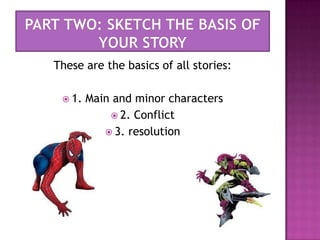
PART TWO: SKETCH THE BASIS OF YOUR STORYThese are the basics of all stories:1. Main and minor characters2. Conflict3. resolution
Part three: fill in the detailsHere are important traits of a main character:Has a problem or need.Has the ability to solve the problem, whether or not he knows it (there's usually more suspense if he doesn't).Often has a flaw to overcome to solve the problem or win the reward.
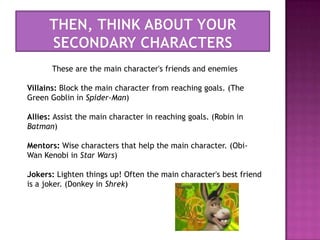
Then, think about your secondary charactersThese are the main character's friends and enemiesVillains: Block the main character from reaching goals. (The Green Goblin in Spider-Man)Allies: Assist the main character in reaching goals. (Robin in Batman)Mentors: Wise characters that help the main character. (Obi-Wan Kenobi in Star Wars)Jokers: Lighten things up! Often the main character's best friend is a joker. (Donkey in Shrek)
Theclassicconflicts:Person versus person: The most popular, since conflicts between people are the most interesting to readers. Person versus himself: Conflict between good and evil or strengths and weaknesses in a character. Person versus nature: Usually involves natural disasters or survival skills.
Tips on creating conflictCombine different types of conflict. Maybe your characters struggle to survive and fight among themselves.Add more conflicts and obstacles if your story seems slow or not "big" enough.Before you write, know how the problem will be solved.
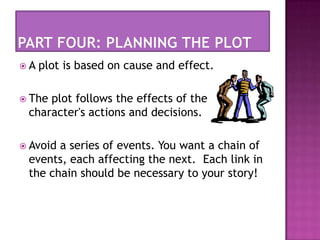
Part four: planning the plotA plot is based on cause and effect.The plot follows the effects of the character's actions and decisions.Avoid a series of events. You want a chain of events, each affecting the next.  Each link in the chain should be necessary to your story!
Part five: Plan how to show your plotYou can use dialogueDialogue does many things for your story.Reveals character (especially through reactions)Advances plotBrings scenes to lifeAdjusts the story's pace
Plan your setting Setting helps you avoid "floating" scenes -- conversation or action that could be happening anywhere.Setting adds atmosphere to scenes.
Wrap-up: Tie up the loose ends and hand out rewards & punishments. The end

How to write good stories

  • 1.
    How to writegood storiesTIPS FOR CREATIVE STUDENTS
  • 2.
    PART ONE: IDEASLookfor ideas in real life, such as funny quotes, interesting people, or occurrences at school.Consider your favorite stories. You can use elements of them to make a new story.Brainstorm! Combine several ideas to form the basis of a new story.
  • 3.
    PART TWO: SKETCHTHE BASIS OF YOUR STORYThese are the basics of all stories:1. Main and minor characters2. Conflict3. resolution
  • 4.
    Part three: fillin the detailsHere are important traits of a main character:Has a problem or need.Has the ability to solve the problem, whether or not he knows it (there's usually more suspense if he doesn't).Often has a flaw to overcome to solve the problem or win the reward.
  • 5.
    Then, think aboutyour secondary charactersThese are the main character's friends and enemiesVillains: Block the main character from reaching goals. (The Green Goblin in Spider-Man)Allies: Assist the main character in reaching goals. (Robin in Batman)Mentors: Wise characters that help the main character. (Obi-Wan Kenobi in Star Wars)Jokers: Lighten things up! Often the main character's best friend is a joker. (Donkey in Shrek)
  • 6.
    Theclassicconflicts:Person versus person:The most popular, since conflicts between people are the most interesting to readers. Person versus himself: Conflict between good and evil or strengths and weaknesses in a character. Person versus nature: Usually involves natural disasters or survival skills.
  • 7.
    Tips on creatingconflictCombine different types of conflict. Maybe your characters struggle to survive and fight among themselves.Add more conflicts and obstacles if your story seems slow or not "big" enough.Before you write, know how the problem will be solved.
  • 8.
    Part four: planningthe plotA plot is based on cause and effect.The plot follows the effects of the character's actions and decisions.Avoid a series of events. You want a chain of events, each affecting the next.  Each link in the chain should be necessary to your story!
  • 9.
    Part five: Planhow to show your plotYou can use dialogueDialogue does many things for your story.Reveals character (especially through reactions)Advances plotBrings scenes to lifeAdjusts the story's pace
  • 10.
    Plan your settingSetting helps you avoid "floating" scenes -- conversation or action that could be happening anywhere.Setting adds atmosphere to scenes.
  • 11.
    Wrap-up: Tie upthe loose ends and hand out rewards & punishments. The end