Camera
Angles
Jelly Baby story board
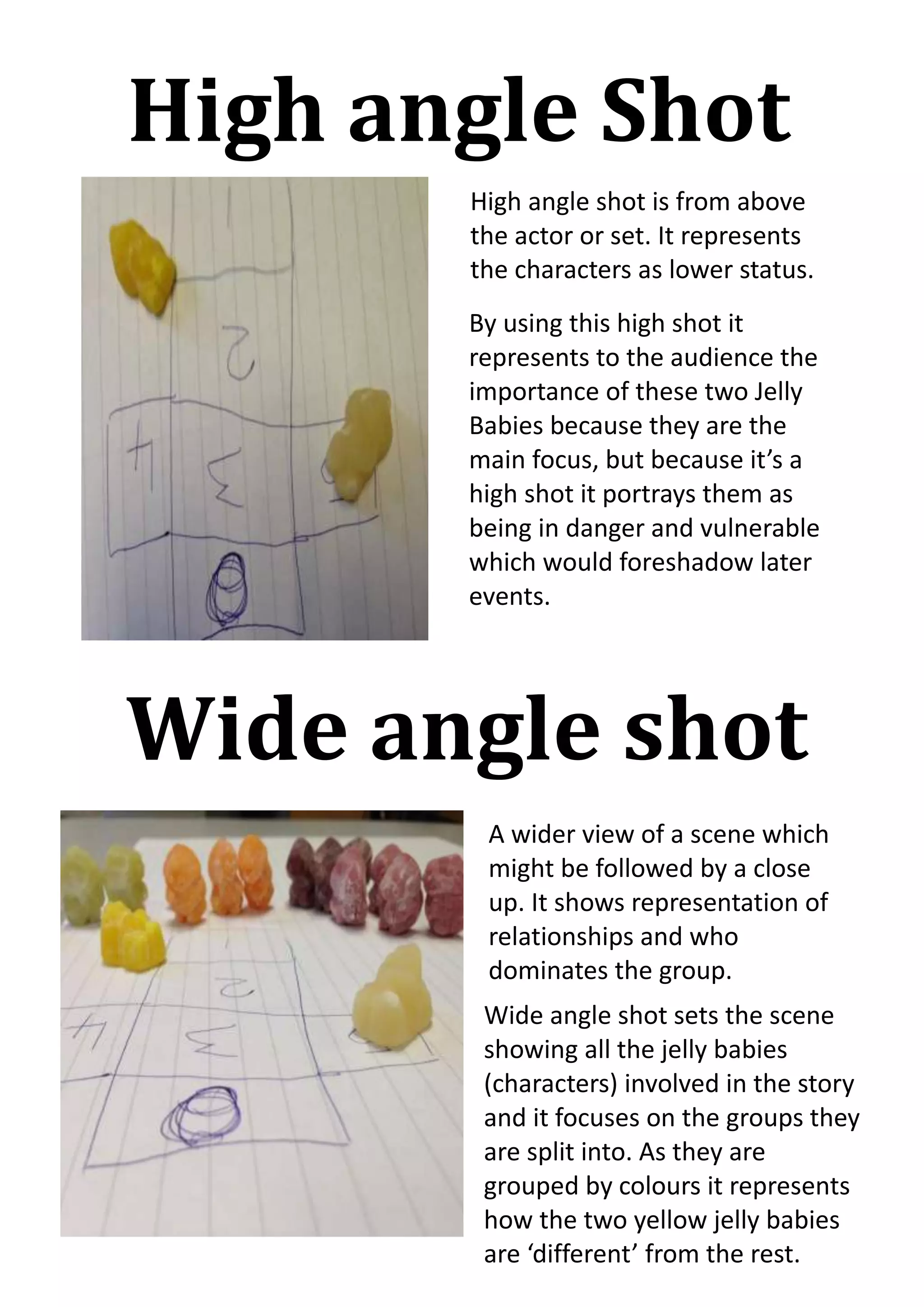
High angle Shot
High angle shot is from above
the actor or set. It represents
the characters as lower status.
By using this high shot it
represents to the audience the
importance of these two Jelly
Babies because they are the
main focus, but because it’s a
high shot it portrays them as
being in danger and vulnerable
which would foreshadow later
events.

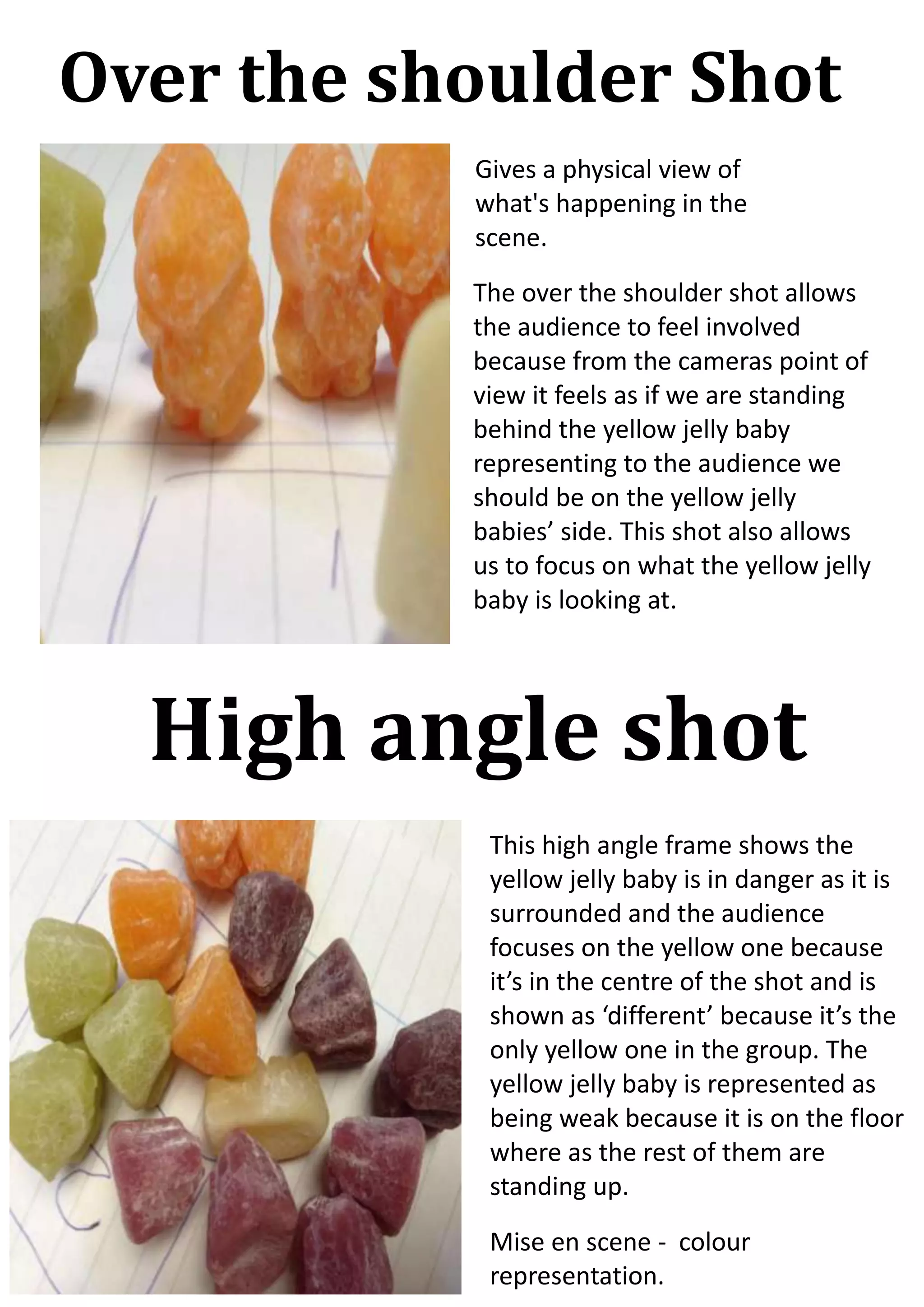
Wide angle shot
A wider view of a scene which
might be followed by a close
up. It shows representation of
relationships and who
dominates the group.
Wide angle shot sets the scene
showing all the jelly babies
(characters) involved in the story
and it focuses on the groups they
are split into. As they are
grouped by colours it represents
how the two yellow jelly babies
are ‘different’ from the rest.
Over the shoulder Shot
Gives a physical view of
what's happening in the
scene.
The over the shoulder shot allows
the audience to feel involved
because from the cameras point of
view it feels as if we are standing
behind the yellow jelly baby
representing to the audience we
should be on the yellow jelly
babies’ side. This shot also allows
us to focus on what the yellow jelly
baby is looking at.

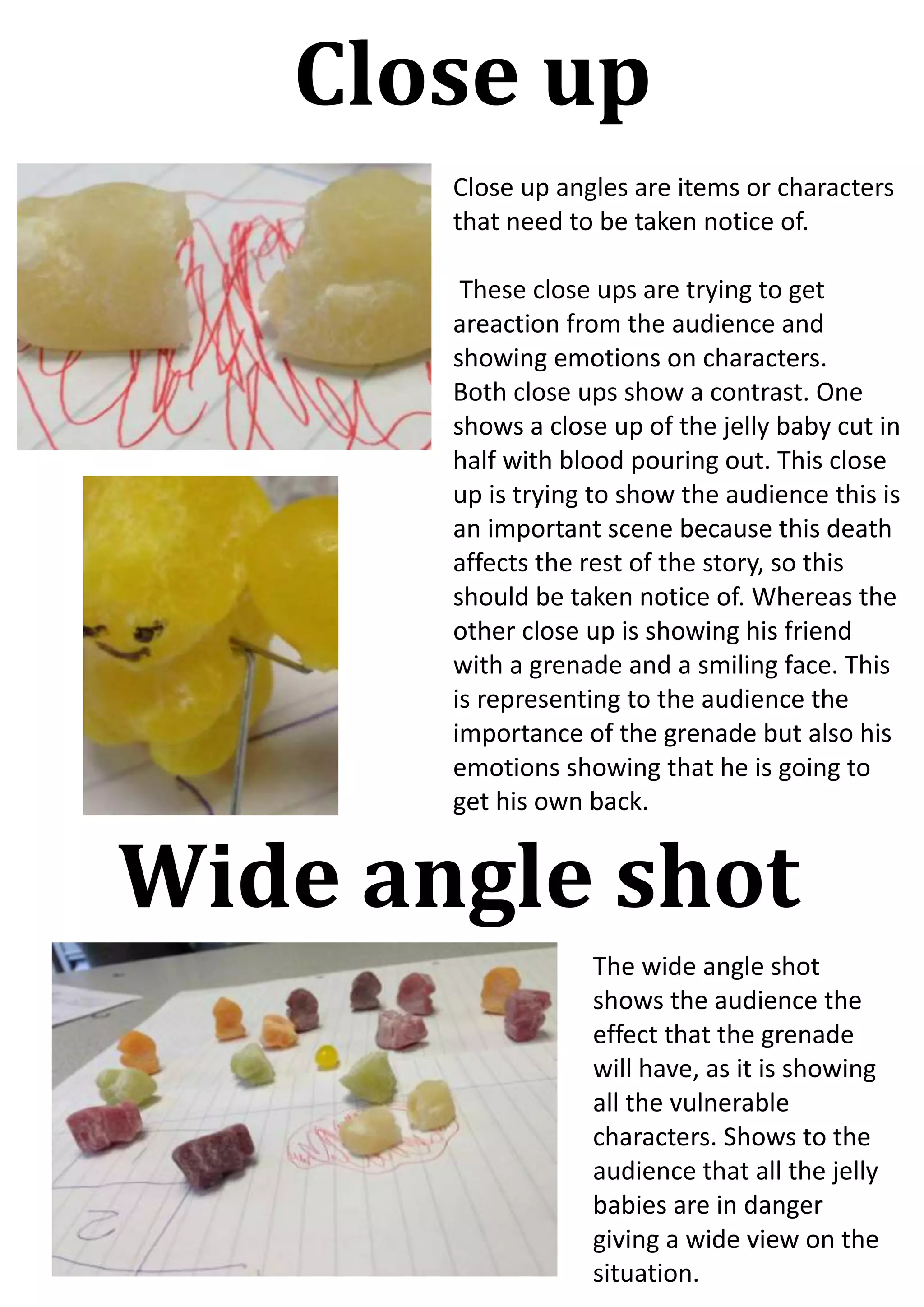
High angle shot
This high angle frame shows the
yellow jelly baby is in danger as it is
surrounded and the audience
focuses on the yellow one because
it’s in the centre of the shot and is
shown as ‘different’ because it’s the
only yellow one in the group. The
yellow jelly baby is represented as
being weak because it is on the floor
where as the rest of them are
standing up.
Mise en scene - colour
representation.
Close up
Close up angles are items or characters
that need to be taken notice of.
These close ups are trying to get
areaction from the audience and
showing emotions on characters.
Both close ups show a contrast. One
shows a close up of the jelly baby cut in
half with blood pouring out. This close
up is trying to show the audience this is
an important scene because this death
affects the rest of the story, so this
should be taken notice of. Whereas the
other close up is showing his friend
with a grenade and a smiling face. This
is representing to the audience the
importance of the grenade but also his
emotions showing that he is going to
get his own back.

Wide angle shot
The wide angle shot
shows the audience the
effect that the grenade
will have, as it is showing
all the vulnerable
characters. Shows to the
audience that all the jelly
babies are in danger
giving a wide view on the
situation.
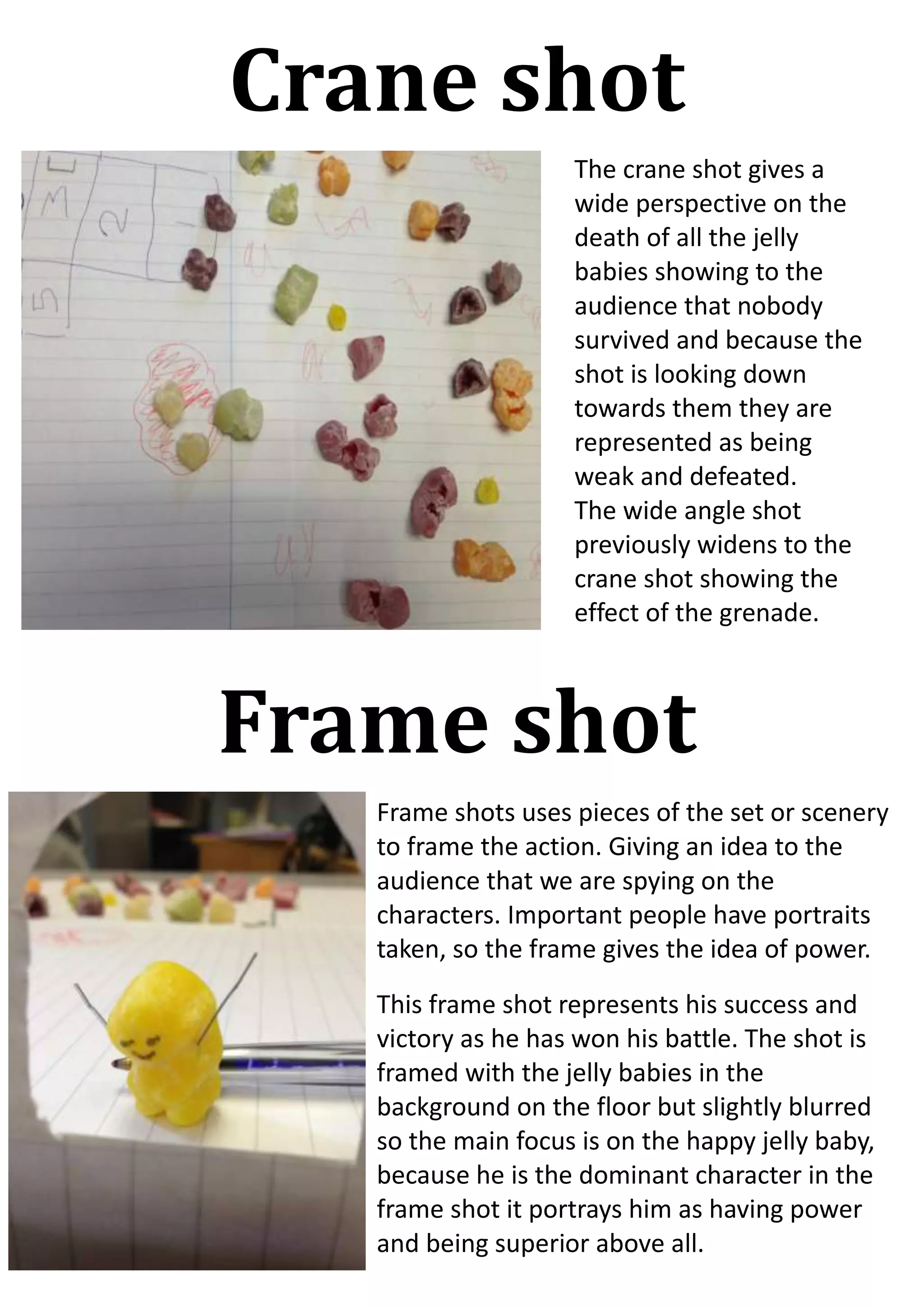
Crane shot
The crane shot gives a
wide perspective on the
death of all the jelly
babies showing to the
audience that nobody
survived and because the
shot is looking down
towards them they are
represented as being
weak and defeated.
The wide angle shot
previously widens to the
crane shot showing the
effect of the grenade.

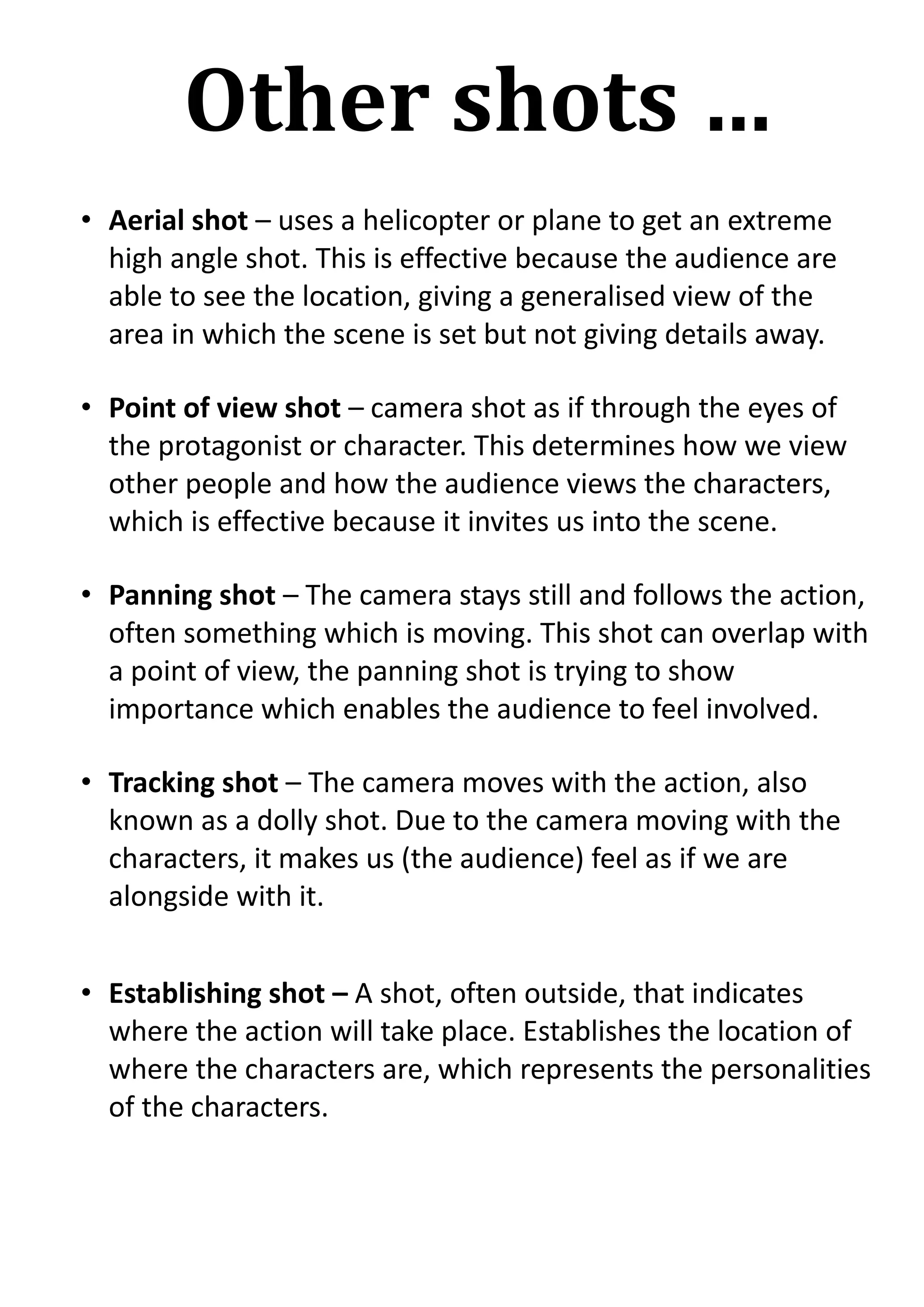
Frame shot
Frame shots uses pieces of the set or scenery
to frame the action. Giving an idea to the
audience that we are spying on the
characters. Important people have portraits
taken, so the frame gives the idea of power.
This frame shot represents his success and
victory as he has won his battle. The shot is
framed with the jelly babies in the
background on the floor but slightly blurred
so the main focus is on the happy jelly baby,
because he is the dominant character in the
frame shot it portrays him as having power
and being superior above all.
Other shots …
• Aerial shot – uses a helicopter or plane to get an extreme
high angle shot. This is effective because the audience are
able to see the location, giving a generalised view of the
area in which the scene is set but not giving details away.
• Point of view shot – camera shot as if through the eyes of
the protagonist or character. This determines how we view
other people and how the audience views the characters,
which is effective because it invites us into the scene.
• Panning shot – The camera stays still and follows the action,
often something which is moving. This shot can overlap with
a point of view, the panning shot is trying to show
importance which enables the audience to feel involved.
• Tracking shot – The camera moves with the action, also
known as a dolly shot. Due to the camera moving with the
characters, it makes us (the audience) feel as if we are
alongside with it.
• Establishing shot – A shot, often outside, that indicates
where the action will take place. Establishes the location of
where the characters are, which represents the personalities
of the characters.

Camer Angles

  • 1.
  • 2.
    High angle Shot Highangle shot is from above the actor or set. It represents the characters as lower status. By using this high shot it represents to the audience the importance of these two Jelly Babies because they are the main focus, but because it’s a high shot it portrays them as being in danger and vulnerable which would foreshadow later events. Wide angle shot A wider view of a scene which might be followed by a close up. It shows representation of relationships and who dominates the group. Wide angle shot sets the scene showing all the jelly babies (characters) involved in the story and it focuses on the groups they are split into. As they are grouped by colours it represents how the two yellow jelly babies are ‘different’ from the rest.
  • 3.
    Over the shoulderShot Gives a physical view of what's happening in the scene. The over the shoulder shot allows the audience to feel involved because from the cameras point of view it feels as if we are standing behind the yellow jelly baby representing to the audience we should be on the yellow jelly babies’ side. This shot also allows us to focus on what the yellow jelly baby is looking at. High angle shot This high angle frame shows the yellow jelly baby is in danger as it is surrounded and the audience focuses on the yellow one because it’s in the centre of the shot and is shown as ‘different’ because it’s the only yellow one in the group. The yellow jelly baby is represented as being weak because it is on the floor where as the rest of them are standing up. Mise en scene - colour representation.
  • 4.
    Close up Close upangles are items or characters that need to be taken notice of. These close ups are trying to get areaction from the audience and showing emotions on characters. Both close ups show a contrast. One shows a close up of the jelly baby cut in half with blood pouring out. This close up is trying to show the audience this is an important scene because this death affects the rest of the story, so this should be taken notice of. Whereas the other close up is showing his friend with a grenade and a smiling face. This is representing to the audience the importance of the grenade but also his emotions showing that he is going to get his own back. Wide angle shot The wide angle shot shows the audience the effect that the grenade will have, as it is showing all the vulnerable characters. Shows to the audience that all the jelly babies are in danger giving a wide view on the situation.
  • 5.
    Crane shot The craneshot gives a wide perspective on the death of all the jelly babies showing to the audience that nobody survived and because the shot is looking down towards them they are represented as being weak and defeated. The wide angle shot previously widens to the crane shot showing the effect of the grenade. Frame shot Frame shots uses pieces of the set or scenery to frame the action. Giving an idea to the audience that we are spying on the characters. Important people have portraits taken, so the frame gives the idea of power. This frame shot represents his success and victory as he has won his battle. The shot is framed with the jelly babies in the background on the floor but slightly blurred so the main focus is on the happy jelly baby, because he is the dominant character in the frame shot it portrays him as having power and being superior above all.
  • 6.
    Other shots … •Aerial shot – uses a helicopter or plane to get an extreme high angle shot. This is effective because the audience are able to see the location, giving a generalised view of the area in which the scene is set but not giving details away. • Point of view shot – camera shot as if through the eyes of the protagonist or character. This determines how we view other people and how the audience views the characters, which is effective because it invites us into the scene. • Panning shot – The camera stays still and follows the action, often something which is moving. This shot can overlap with a point of view, the panning shot is trying to show importance which enables the audience to feel involved. • Tracking shot – The camera moves with the action, also known as a dolly shot. Due to the camera moving with the characters, it makes us (the audience) feel as if we are alongside with it. • Establishing shot – A shot, often outside, that indicates where the action will take place. Establishes the location of where the characters are, which represents the personalities of the characters.