Assignment 3:

Cam samc

By: Patrycia Butrym
CAM Shot
•
•
•
•
•
•
•
•
•
•

Establishing shot
Wide shot
Long shot
Mid/Medium shot
Close up shot
Extreme close up shot
POV(point of view)
Over the shoulder shot
Two shot
Overhead shot
Establishing Shot
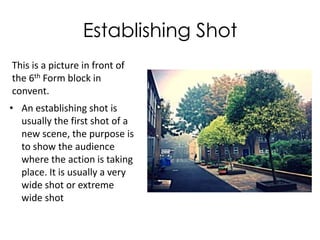
This is a picture in front of
the 6th Form block in
convent.
• An establishing shot is
usually the first shot of a
new scene, the purpose is
to show the audience
where the action is taking
place. It is usually a very
wide shot or extreme
wide shot
Wide Shot
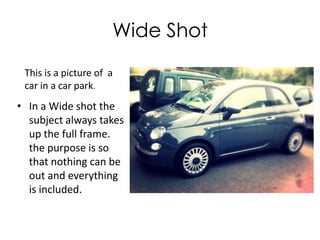
This is a picture of a
car in a car park.

• In a Wide shot the
subject always takes
up the full frame.
the purpose is so
that nothing can be
out and everything
is included.
Medium Shot
• The mid shot shows
some part of the
subject in more
detail, whilst still
showing enough for
the audience to feel
as if they were
looking at the
whole subject. It is
mostly framed of a
characters torso.
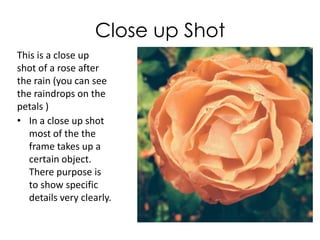
Close up Shot
This is a close up
shot of a rose after
the rain (you can see
the raindrops on the
petals )
• In a close up shot
most of the the
frame takes up a
certain object.
There purpose is
to show specific
details very clearly.
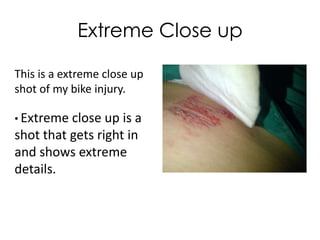
Extreme Close up
This is a extreme close up
shot of my bike injury.
• Extreme close up

is a
shot that gets right in
and shows extreme
details.
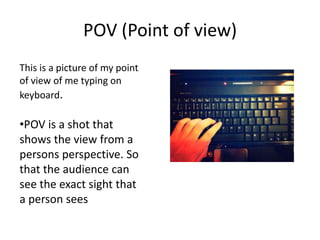
POV (Point of view)
This is a picture of my point
of view of me typing on
keyboard.

•POV is a shot that
shows the view from a
persons perspective. So
that the audience can
see the exact sight that
a person sees
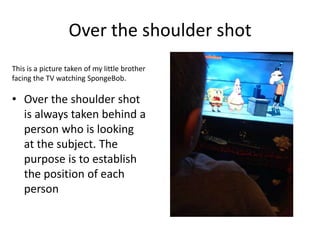
Over the shoulder shot
This is a picture taken of my little brother
facing the TV watching SpongeBob.

• Over the shoulder shot
is always taken behind a
person who is looking
at the subject. The
purpose is to establish
the position of each
person
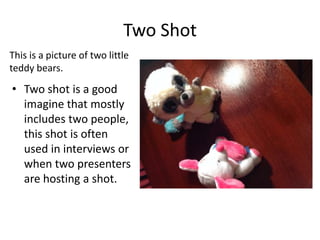
Two Shot
This is a picture of two little
teddy bears.

• Two shot is a good
imagine that mostly
includes two people,
this shot is often
used in interviews or
when two presenters
are hosting a shot.
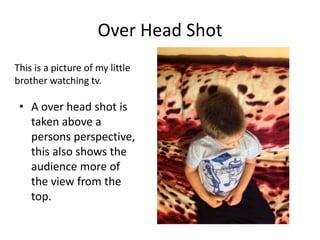
Over Head Shot
This is a picture of my little
brother watching tv.

• A over head shot is
taken above a
persons perspective,
this also shows the
audience more of
the view from the
top.
CAM Angles
• High angles
• Low angles
• Canted/oblique
High Angle
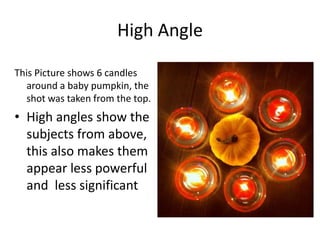
This Picture shows 6 candles
around a baby pumpkin, the
shot was taken from the top.

• High angles show the
subjects from above,
this also makes them
appear less powerful
and less significant
Low Angle
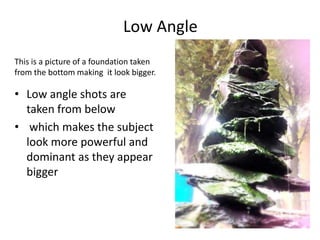
This is a picture of a foundation taken
from the bottom making it look bigger.

• Low angle shots are
taken from below
• which makes the subject
look more powerful and
dominant as they appear
bigger
Canted/Oblique
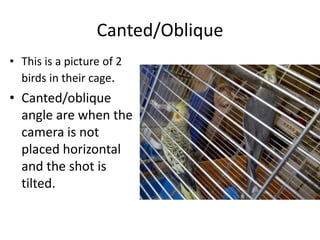
• This is a picture of 2
birds in their cage.

• Canted/oblique
angle are when the
camera is not
placed horizontal
and the shot is
tilted.
CAM Movements
•
•
•
•
•
•

Pan
Tilt
Track
Zoom
Reverse Zoom
Dolly
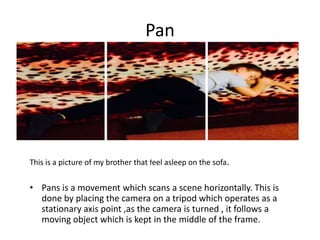
Pan

This is a picture of my brother that feel asleep on the sofa.

• Pans is a movement which scans a scene horizontally. This is
done by placing the camera on a tripod which operates as a
stationary axis point ,as the camera is turned , it follows a
moving object which is kept in the middle of the frame.
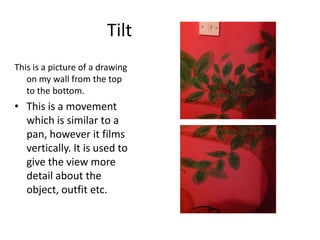
Tilt
This is a picture of a drawing
on my wall from the top
to the bottom.

• This is a movement
which is similar to a
pan, however it films
vertically. It is used to
give the view more
detail about the
object, outfit etc.
Track
• A track is used to film every move and
adjust to the speed of what it is filming.
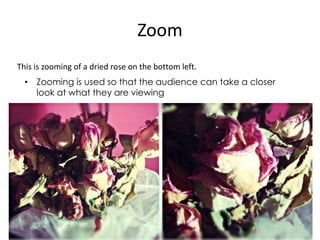
Zoom
This is zooming of a dried rose on the bottom left.
• Zooming is used so that the audience can take a closer
look at what they are viewing
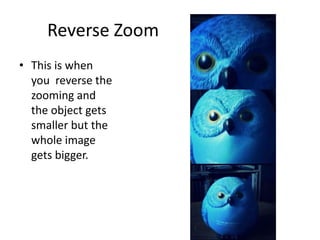
Reverse Zoom
• This is when
you reverse the
zooming and
the object gets
smaller but the
whole image
gets bigger.
Dolly

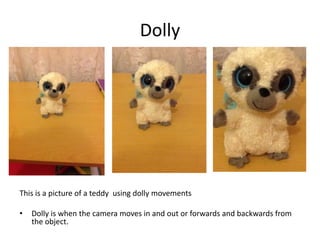
This is a picture of a teddy using dolly movements
•

Dolly is when the camera moves in and out or forwards and backwards from
the object.
Composition
•
•
•
•
•

Symmetry/ Asymmetry Balance
Rule of Thirds
Shallow focus
Deep Focus
Focus pulls
Symmetry balance
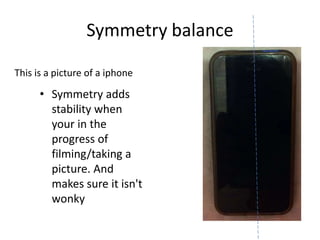
This is a picture of a iphone

• Symmetry adds
stability when
your in the
progress of
filming/taking a
picture. And
makes sure it isn't
wonky
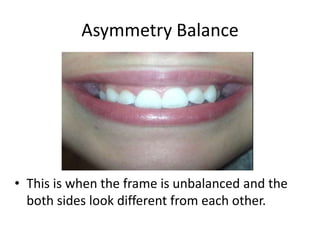
Asymmetry Balance

• This is when the frame is unbalanced and the
both sides look different from each other.
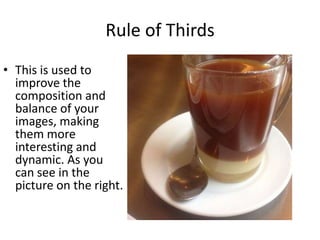
Rule of Thirds
• This is used to
improve the
composition and
balance of your
images, making
them more
interesting and
dynamic. As you
can see in the
picture on the right.
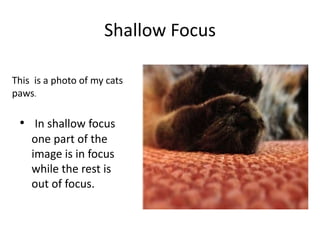
Shallow Focus
This is a photo of my cats
paws.

• In shallow focus
one part of the
image is in focus
while the rest is
out of focus.
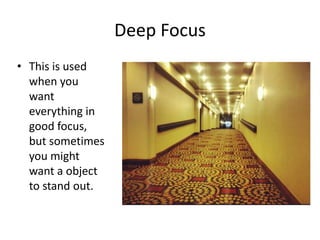
Deep Focus
• This is used
when you
want
everything in
good focus,
but sometimes
you might
want a object
to stand out.
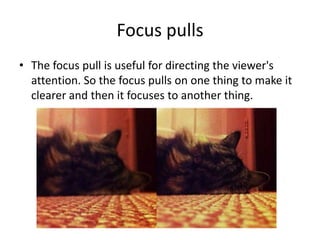
Focus pulls
• The focus pull is useful for directing the viewer's
attention. So the focus pulls on one thing to make it
clearer and then it focuses to another thing.

Cam samc

  • 1.
  • 2.
    CAM Shot • • • • • • • • • • Establishing shot Wideshot Long shot Mid/Medium shot Close up shot Extreme close up shot POV(point of view) Over the shoulder shot Two shot Overhead shot
  • 3.
    Establishing Shot This isa picture in front of the 6th Form block in convent. • An establishing shot is usually the first shot of a new scene, the purpose is to show the audience where the action is taking place. It is usually a very wide shot or extreme wide shot
  • 4.
    Wide Shot This isa picture of a car in a car park. • In a Wide shot the subject always takes up the full frame. the purpose is so that nothing can be out and everything is included.
  • 5.
    Medium Shot • Themid shot shows some part of the subject in more detail, whilst still showing enough for the audience to feel as if they were looking at the whole subject. It is mostly framed of a characters torso.
  • 6.
    Close up Shot Thisis a close up shot of a rose after the rain (you can see the raindrops on the petals ) • In a close up shot most of the the frame takes up a certain object. There purpose is to show specific details very clearly.
  • 7.
    Extreme Close up Thisis a extreme close up shot of my bike injury. • Extreme close up is a shot that gets right in and shows extreme details.
  • 8.
    POV (Point ofview) This is a picture of my point of view of me typing on keyboard. •POV is a shot that shows the view from a persons perspective. So that the audience can see the exact sight that a person sees
  • 9.
    Over the shouldershot This is a picture taken of my little brother facing the TV watching SpongeBob. • Over the shoulder shot is always taken behind a person who is looking at the subject. The purpose is to establish the position of each person
  • 10.
    Two Shot This isa picture of two little teddy bears. • Two shot is a good imagine that mostly includes two people, this shot is often used in interviews or when two presenters are hosting a shot.
  • 11.
    Over Head Shot Thisis a picture of my little brother watching tv. • A over head shot is taken above a persons perspective, this also shows the audience more of the view from the top.
  • 12.
    CAM Angles • Highangles • Low angles • Canted/oblique
  • 13.
    High Angle This Pictureshows 6 candles around a baby pumpkin, the shot was taken from the top. • High angles show the subjects from above, this also makes them appear less powerful and less significant
  • 14.
    Low Angle This isa picture of a foundation taken from the bottom making it look bigger. • Low angle shots are taken from below • which makes the subject look more powerful and dominant as they appear bigger
  • 15.
    Canted/Oblique • This isa picture of 2 birds in their cage. • Canted/oblique angle are when the camera is not placed horizontal and the shot is tilted.
  • 16.
  • 17.
    Pan This is apicture of my brother that feel asleep on the sofa. • Pans is a movement which scans a scene horizontally. This is done by placing the camera on a tripod which operates as a stationary axis point ,as the camera is turned , it follows a moving object which is kept in the middle of the frame.
  • 18.
    Tilt This is apicture of a drawing on my wall from the top to the bottom. • This is a movement which is similar to a pan, however it films vertically. It is used to give the view more detail about the object, outfit etc.
  • 19.
    Track • A trackis used to film every move and adjust to the speed of what it is filming.
  • 20.
    Zoom This is zoomingof a dried rose on the bottom left. • Zooming is used so that the audience can take a closer look at what they are viewing
  • 21.
    Reverse Zoom • Thisis when you reverse the zooming and the object gets smaller but the whole image gets bigger.
  • 22.
    Dolly This is apicture of a teddy using dolly movements • Dolly is when the camera moves in and out or forwards and backwards from the object.
  • 23.
    Composition • • • • • Symmetry/ Asymmetry Balance Ruleof Thirds Shallow focus Deep Focus Focus pulls
  • 24.
    Symmetry balance This isa picture of a iphone • Symmetry adds stability when your in the progress of filming/taking a picture. And makes sure it isn't wonky
  • 25.
    Asymmetry Balance • Thisis when the frame is unbalanced and the both sides look different from each other.
  • 26.
    Rule of Thirds •This is used to improve the composition and balance of your images, making them more interesting and dynamic. As you can see in the picture on the right.
  • 27.
    Shallow Focus This isa photo of my cats paws. • In shallow focus one part of the image is in focus while the rest is out of focus.
  • 28.
    Deep Focus • Thisis used when you want everything in good focus, but sometimes you might want a object to stand out.
  • 29.
    Focus pulls • Thefocus pull is useful for directing the viewer's attention. So the focus pulls on one thing to make it clearer and then it focuses to another thing.