Contrastive
Analysis
Essay Guidelines
INSTRUCTOR: LE NGUYEN NHU ANH
Writing The
End-of-Term Essay
CONTENTS
1. Choosing your topic
2. Components of the essay
3. Using academic language
4. Plagiarism
5. Using resources
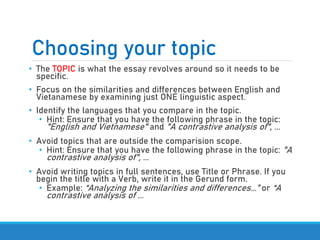
Choosing your topic
• The TOPIC is what the essay revolves around so it needs to be
specific.
• Focus on the similarities and differences between English and
Vietanamese by examining just ONE linguistic aspect.
• Identify the languages that you compare in the topic.
• Hint: Ensure that you have the following phrase in the topic:
"English and Vietnamese" and "A contrastive analysis of", ...
• Avoid topics that are outside the comparision scope.
• Hint: Ensure that you have the following phrase in the topic: "A
contrastive analysis of", ...
• Avoid writing topics in full sentences, use Title or Phrase. If you
begin the title with a Verb, write it in the Gerund form.
• Example: “Analyzing the similarities and differences...” or “A
contrastive analysis of ...
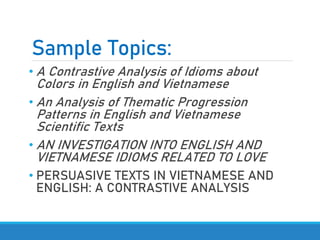
Sample Topics:
• A Contrastive Analysis of Idioms about
Colors in English and Vietnamese
• An Analysis of Thematic Progression
Patterns in English and Vietnamese
Scientific Texts
• AN INVESTIGATION INTO ENGLISH AND
VIETNAMESE IDIOMS RELATED TO LOVE
• PERSUASIVE TEXTS IN VIETNAMESE AND
ENGLISH: A CONTRASTIVE ANALYSIS
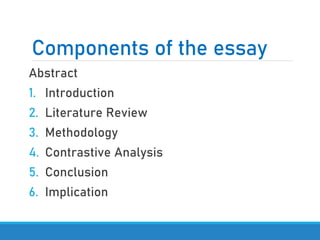
Components of the essay
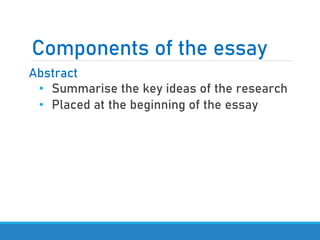
Abstract
1. Introduction
2. Literature Review
3. Methodology
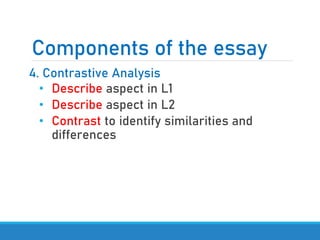
4. Contrastive Analysis
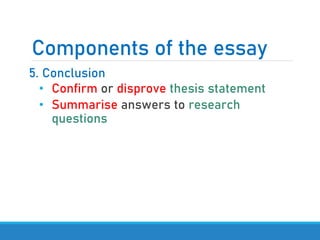
5. Conclusion
6. Implication
Components of the essay
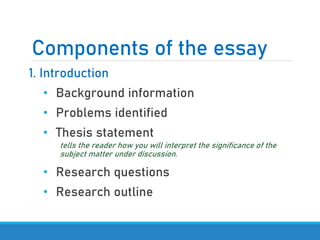
1. Introduction
• Background information
• Problems identified
• Thesis statement
tells the reader how you will interpret the significance of the
subject matter under discussion.
• Research questions
• Research outline
Components of the essay
1. Introduction
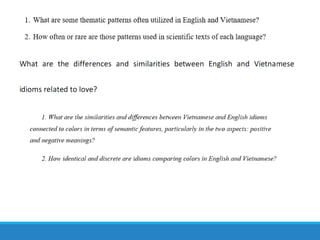
• Research question(s):
• Focus on the topic.
• Avoid questions about definitions,
descriptions, implication, factors, etc.
• Example of a simple research question:
• What are the similarities and differences between English
and Vietnamese + [the aspect you are examining]
Components of the essay
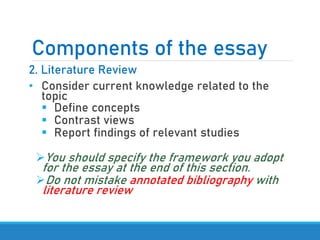
2. Literature Review
• Consider current knowledge related to the
topic
▪ Define concepts
▪ Contrast views
▪ Report findings of relevant studies
➢You should specify the framework you adopt
for the essay at the end of this section.
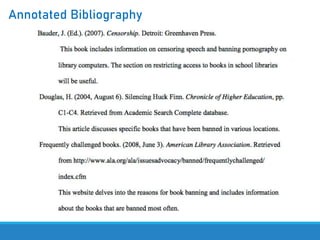
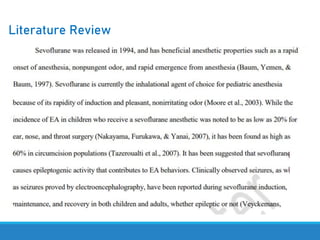
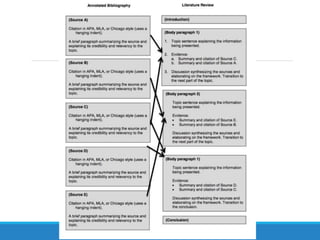
➢Do not mistake annotated bibliography with
literature review
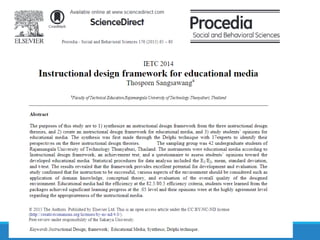
Annotated Bibliography
Literature Review
Components of the essay
3. Methodology
• Provide the methods and procedures used in a
research study or experiment.
• Describe the followings:
• How you collect data (source of information,
collecting method/procedure)
• How you analyse data (approaches to the
topic [see chapters 3, 4 and 5 for more
information])
See sample here:
https://tinyurl.com/y32goe6g
Components of the essay
4. Contrastive Analysis
• Describe aspect in L1
• Describe aspect in L2
• Contrast to identify similarities and
differences
Components of the essay
5. Conclusion
• Confirm or disprove thesis statement
• Summarise answers to research
questions
Components of the essay
6. Implication
• Discuss the implications of findings (see
Chapter 6 for more ideas)
Components of the essay
Abstract
• Summarise the key ideas of the research
• Placed at the beginning of the essay
Using academic language
Academic language is:
➢Formal
• should not sound conversational or casual
• avoid colloquial, idiomatic, slang, or journalistic expressions in
favour of precise vocabulary
• use full forms rather than contractions
➢Objective
• unbiased, based on facts and evidence and is not influenced by
personal feelings
➢Impersonal
• don’t refer to yourself as the performer of actions (avoid “I”,
“we”, “you”
• use Passive voice
• use third person
• make things rather than people the subject of sentences
Plagiarism
Follow this link to read the full description of
10 types of plagiarism:
https://myassignmenthelp.com/blog/the-10-
most-common-types-of-plagiarism/
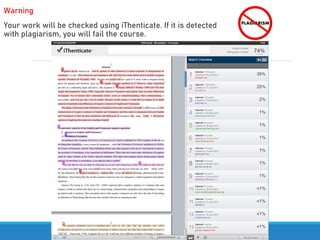
Warning
Your work will be checked using iThenticate. If it is detected
with plagiarism, you will fail the course.
Using resources
•Resources in the LMS
•Google Scholar:
•https://scholar.google.com/
•Science Direct:
•https://www.sciencedirect.com/
•Grammarly
•Discuss your ideas with me using TEAMS

Ca writing the essay

  • 1.
  • 2.
  • 3.
    CONTENTS 1. Choosing yourtopic 2. Components of the essay 3. Using academic language 4. Plagiarism 5. Using resources
  • 4.
    Choosing your topic •The TOPIC is what the essay revolves around so it needs to be specific. • Focus on the similarities and differences between English and Vietanamese by examining just ONE linguistic aspect. • Identify the languages that you compare in the topic. • Hint: Ensure that you have the following phrase in the topic: "English and Vietnamese" and "A contrastive analysis of", ... • Avoid topics that are outside the comparision scope. • Hint: Ensure that you have the following phrase in the topic: "A contrastive analysis of", ... • Avoid writing topics in full sentences, use Title or Phrase. If you begin the title with a Verb, write it in the Gerund form. • Example: “Analyzing the similarities and differences...” or “A contrastive analysis of ...
  • 5.
    Sample Topics: • AContrastive Analysis of Idioms about Colors in English and Vietnamese • An Analysis of Thematic Progression Patterns in English and Vietnamese Scientific Texts • AN INVESTIGATION INTO ENGLISH AND VIETNAMESE IDIOMS RELATED TO LOVE • PERSUASIVE TEXTS IN VIETNAMESE AND ENGLISH: A CONTRASTIVE ANALYSIS
  • 6.
    Components of theessay Abstract 1. Introduction 2. Literature Review 3. Methodology 4. Contrastive Analysis 5. Conclusion 6. Implication
  • 7.
    Components of theessay 1. Introduction • Background information • Problems identified • Thesis statement tells the reader how you will interpret the significance of the subject matter under discussion. • Research questions • Research outline
  • 8.
    Components of theessay 1. Introduction • Research question(s): • Focus on the topic. • Avoid questions about definitions, descriptions, implication, factors, etc. • Example of a simple research question: • What are the similarities and differences between English and Vietnamese + [the aspect you are examining]
  • 10.
    Components of theessay 2. Literature Review • Consider current knowledge related to the topic ▪ Define concepts ▪ Contrast views ▪ Report findings of relevant studies ➢You should specify the framework you adopt for the essay at the end of this section. ➢Do not mistake annotated bibliography with literature review
  • 11.
  • 12.
  • 14.
    Components of theessay 3. Methodology • Provide the methods and procedures used in a research study or experiment. • Describe the followings: • How you collect data (source of information, collecting method/procedure) • How you analyse data (approaches to the topic [see chapters 3, 4 and 5 for more information]) See sample here: https://tinyurl.com/y32goe6g
  • 15.
    Components of theessay 4. Contrastive Analysis • Describe aspect in L1 • Describe aspect in L2 • Contrast to identify similarities and differences
  • 16.
    Components of theessay 5. Conclusion • Confirm or disprove thesis statement • Summarise answers to research questions
  • 17.
    Components of theessay 6. Implication • Discuss the implications of findings (see Chapter 6 for more ideas)
  • 18.
    Components of theessay Abstract • Summarise the key ideas of the research • Placed at the beginning of the essay
  • 20.
    Using academic language Academiclanguage is: ➢Formal • should not sound conversational or casual • avoid colloquial, idiomatic, slang, or journalistic expressions in favour of precise vocabulary • use full forms rather than contractions ➢Objective • unbiased, based on facts and evidence and is not influenced by personal feelings ➢Impersonal • don’t refer to yourself as the performer of actions (avoid “I”, “we”, “you” • use Passive voice • use third person • make things rather than people the subject of sentences
  • 21.
    Plagiarism Follow this linkto read the full description of 10 types of plagiarism: https://myassignmenthelp.com/blog/the-10- most-common-types-of-plagiarism/
  • 22.
    Warning Your work willbe checked using iThenticate. If it is detected with plagiarism, you will fail the course.
  • 23.
    Using resources •Resources inthe LMS •Google Scholar: •https://scholar.google.com/ •Science Direct: •https://www.sciencedirect.com/ •Grammarly •Discuss your ideas with me using TEAMS