Vocational Education:
Business Computing
Class M4/12
Aj. Jamie
Semester 2
Introduction
 What is a business?
– A business is an organisation relating to
the production, buying and selling of goods
or services.
 What is the aim of this course?
– To give you an introduction to all types of
business. To recognize different types of
business and understand how the business
world functions.
Course projects
 Write a CV and letter of application
 Presentation: Using computers for
Business communication
 Design a basic Accounting Spreadsheet
Course projects
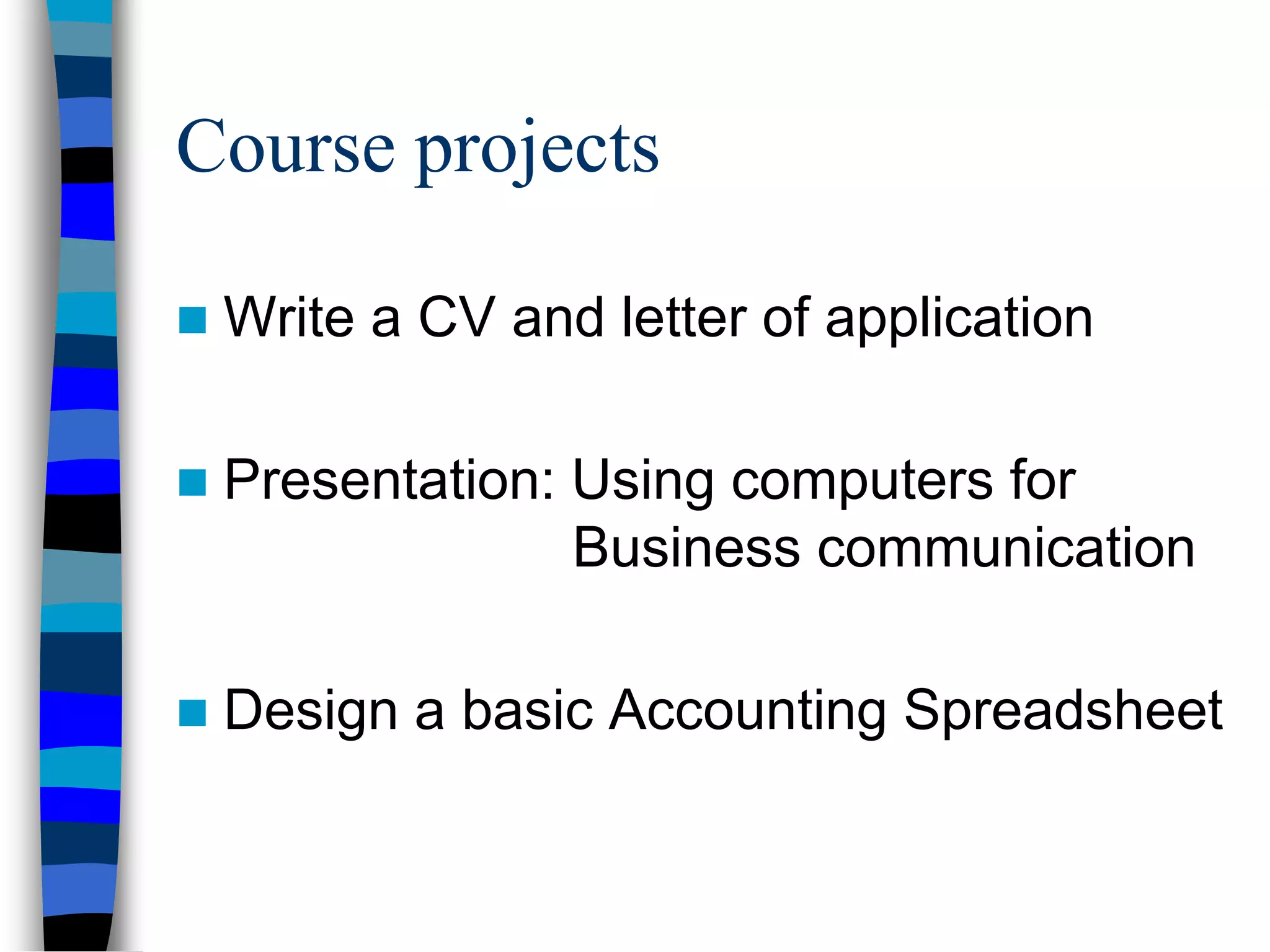
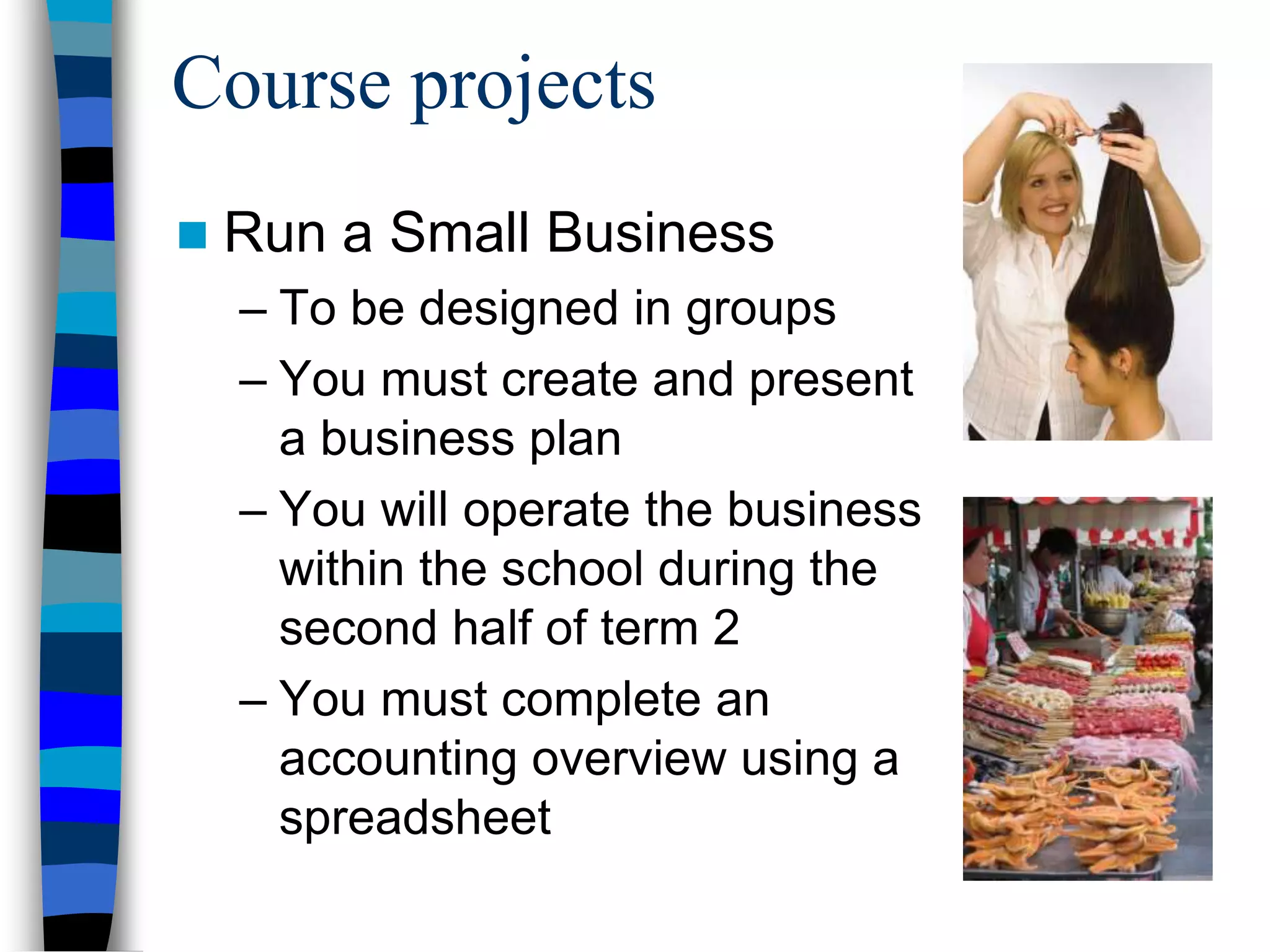
 Run a Small Business
– To be designed in groups
– You must create and present
a business plan
– You will operate the business
within the school during the
second half of term 2
– You must complete an
accounting overview using a
spreadsheet
Different types of Business
 We will now take a look at a few
different types of business.
Manufacturers
 Produce products from raw materials or
component parts that they aim to sell at a profit.
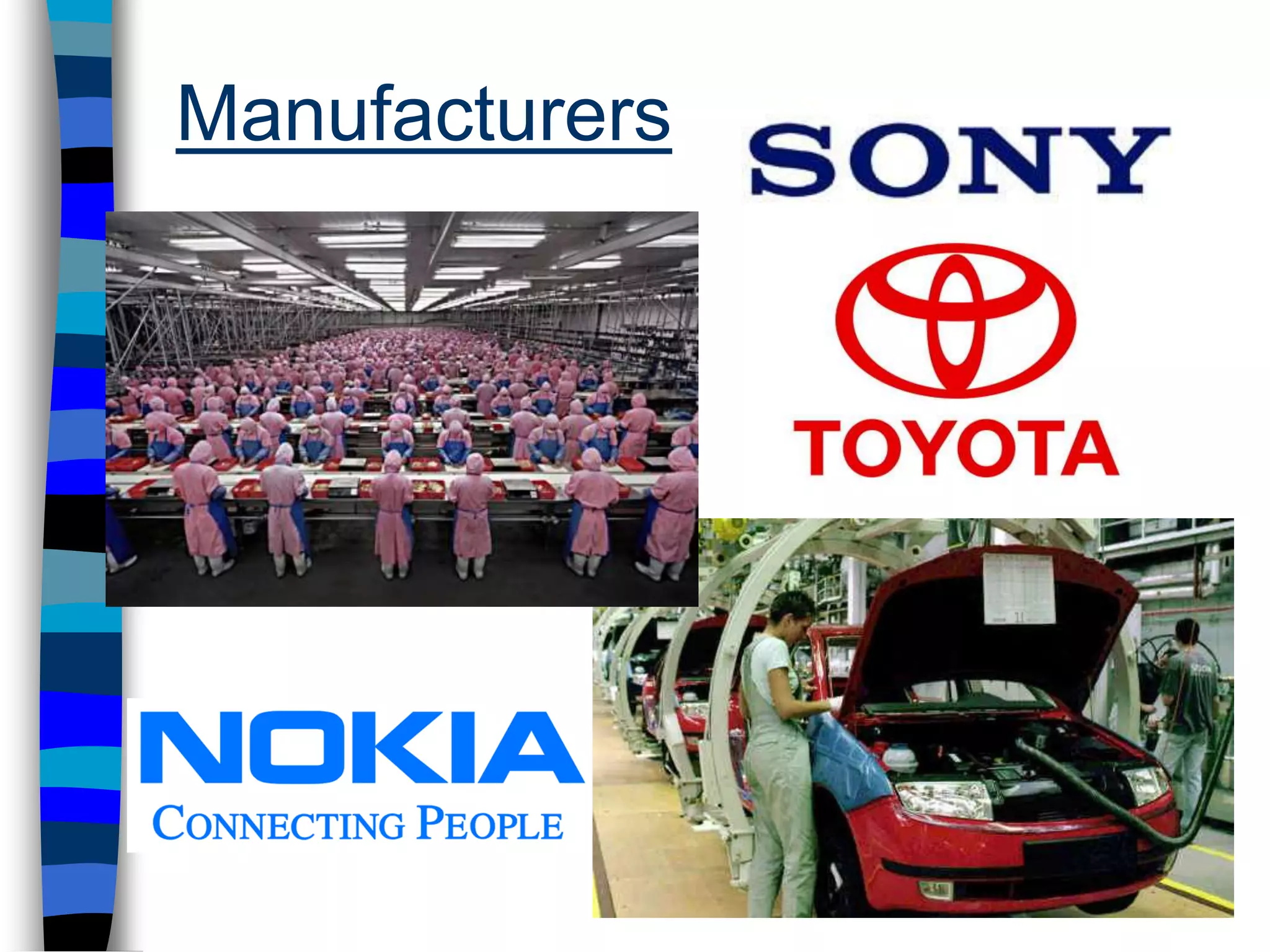
 Companies that make physical goods such as
cars, televisions, washing machines are
considered manufacturers.
Raw materials - Materials that are still in their natural state;
required to make a product.
Iron, Wood and Crude oil.
Component parts - Parts required to complete a larger products.
IBM purchase microprocessors from Intel
Toyota purchase tyres from Goodyear
Manufacturers
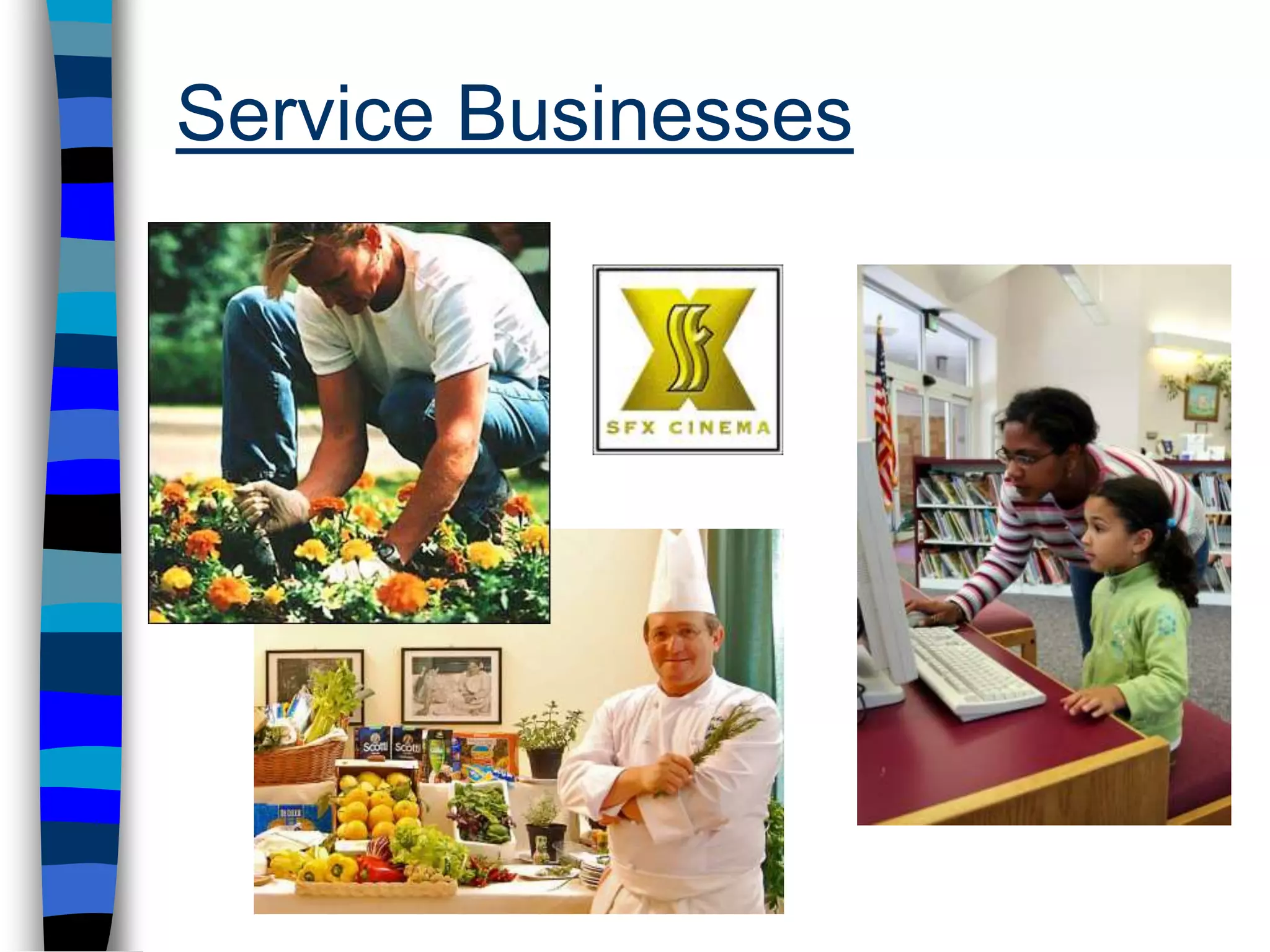
Service Businesses
 Businesses that provide a service to other
businesses or consumers.
 Make a profit by charging for labour or other
services.
 Companies such as restaurants, house
decorators and language schools are
considered service businesses.
consumers – people that purchase and use goods or services.
(customers)
profit - money a company makes over and about all the
general costs of running a business.
labour - people that work in a company
Service Businesses
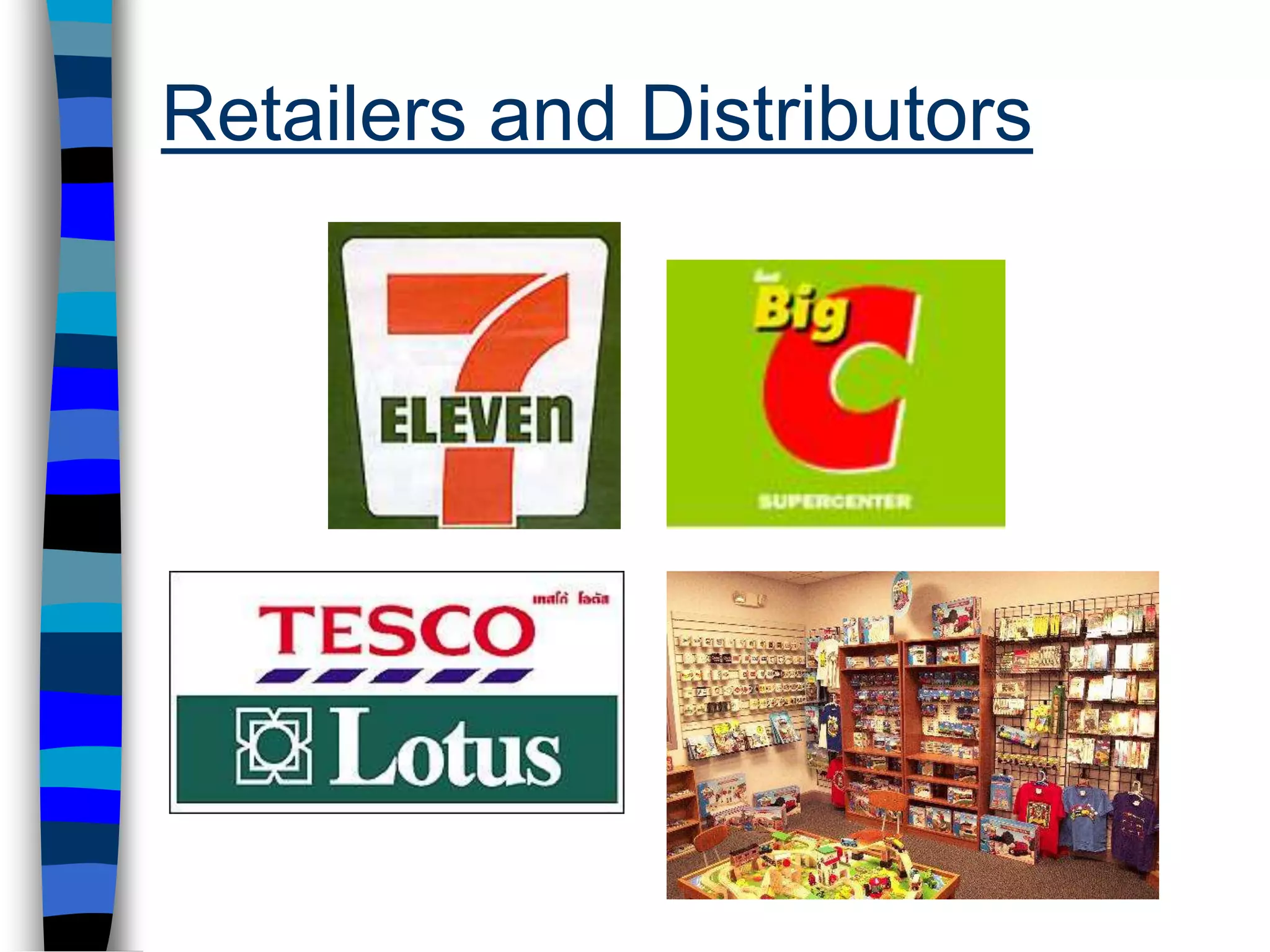
Retailers and Distributors
 Companies that act as middle-men in getting
products from manufacturers to their intended
consumers.
 Generate a profit as a result of providing
sales or distribution services.
 Most shops and catalogue companies.
distribute - supply or sell things to people or businesses.
Retailers and Distributors
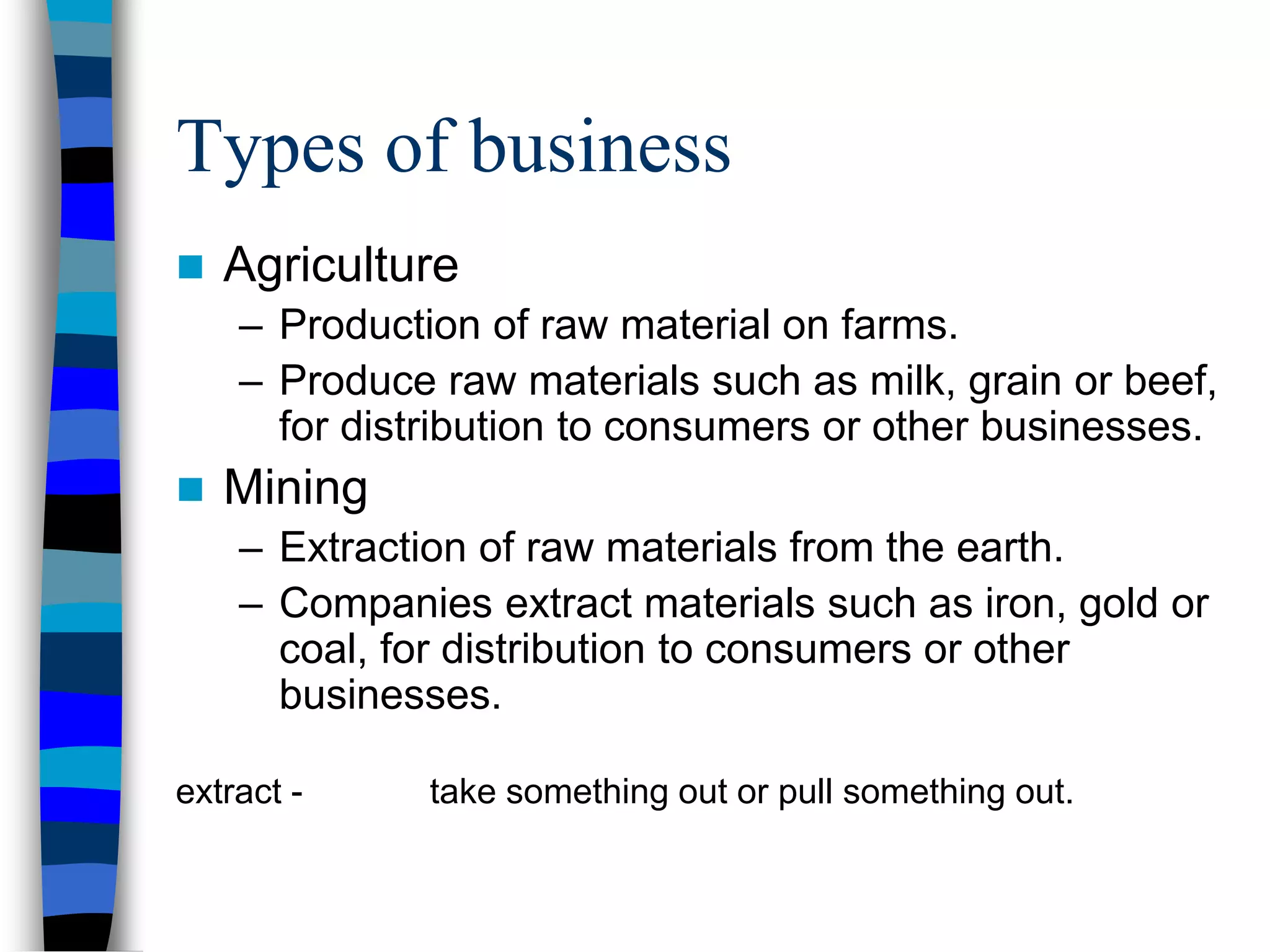
Types of business
 Agriculture
– Production of raw material on farms.
– Produce raw materials such as milk, grain or beef,
for distribution to consumers or other businesses.
 Mining
– Extraction of raw materials from the earth.
– Companies extract materials such as iron, gold or
coal, for distribution to consumers or other
businesses.
extract - take something out or pull something out.
Types of business
 Financial businesses
– Companies that generate profits through working
with or investing money.
– Banks and loan companies.
 Utilities
– Produce public services, such as electricity or heat.
– Usually owned or created by the government.
invest – use your money in a way that you hope will
increase it in time.
Types of business
 Real Estate
– Companies that generate profit from the
selling, renting or development of
buildings, homes or properties.
 Transportation
– Deliver goods and individuals from location
to location, generating a profit on the
transportation costs.
 You will be given a business or company
and must create a case study about them.
 Case Study – A method of research to
investigate and find out about something.
To discover why something is successful.
To analyse data.
 PowerPoint Presentation, at least 8
slides. Groups of 3 students.
Today’s Task
Today’s Task
 Please USE YOUR OWN WORDS!
 Use the Internet for research – but please
rewrite and just include the important
information.
 This semester marks will be
reduced for those of you that
cut ‘n’ paste every week!
Today’s Task
Include:
•What type of business is it?
•What does the business do?
•Turnover
•History
•Location – Local / National / International?
•Your experience with the company
•Products / Services
•Website - Internet Services?

Business Studies - Introduction

  • 1.
  • 2.
    Introduction  What isa business? – A business is an organisation relating to the production, buying and selling of goods or services.  What is the aim of this course? – To give you an introduction to all types of business. To recognize different types of business and understand how the business world functions.
  • 3.
    Course projects  Writea CV and letter of application  Presentation: Using computers for Business communication  Design a basic Accounting Spreadsheet
  • 4.
    Course projects  Runa Small Business – To be designed in groups – You must create and present a business plan – You will operate the business within the school during the second half of term 2 – You must complete an accounting overview using a spreadsheet
  • 5.
    Different types ofBusiness  We will now take a look at a few different types of business.
  • 6.
    Manufacturers  Produce productsfrom raw materials or component parts that they aim to sell at a profit.  Companies that make physical goods such as cars, televisions, washing machines are considered manufacturers. Raw materials - Materials that are still in their natural state; required to make a product. Iron, Wood and Crude oil. Component parts - Parts required to complete a larger products. IBM purchase microprocessors from Intel Toyota purchase tyres from Goodyear
  • 7.
  • 8.
    Service Businesses  Businessesthat provide a service to other businesses or consumers.  Make a profit by charging for labour or other services.  Companies such as restaurants, house decorators and language schools are considered service businesses. consumers – people that purchase and use goods or services. (customers) profit - money a company makes over and about all the general costs of running a business. labour - people that work in a company
  • 9.
  • 10.
    Retailers and Distributors Companies that act as middle-men in getting products from manufacturers to their intended consumers.  Generate a profit as a result of providing sales or distribution services.  Most shops and catalogue companies. distribute - supply or sell things to people or businesses.
  • 11.
  • 12.
    Types of business Agriculture – Production of raw material on farms. – Produce raw materials such as milk, grain or beef, for distribution to consumers or other businesses.  Mining – Extraction of raw materials from the earth. – Companies extract materials such as iron, gold or coal, for distribution to consumers or other businesses. extract - take something out or pull something out.
  • 13.
    Types of business Financial businesses – Companies that generate profits through working with or investing money. – Banks and loan companies.  Utilities – Produce public services, such as electricity or heat. – Usually owned or created by the government. invest – use your money in a way that you hope will increase it in time.
  • 14.
    Types of business Real Estate – Companies that generate profit from the selling, renting or development of buildings, homes or properties.  Transportation – Deliver goods and individuals from location to location, generating a profit on the transportation costs.
  • 15.
     You willbe given a business or company and must create a case study about them.  Case Study – A method of research to investigate and find out about something. To discover why something is successful. To analyse data.  PowerPoint Presentation, at least 8 slides. Groups of 3 students. Today’s Task
  • 16.
    Today’s Task  PleaseUSE YOUR OWN WORDS!  Use the Internet for research – but please rewrite and just include the important information.  This semester marks will be reduced for those of you that cut ‘n’ paste every week!
  • 17.
    Today’s Task Include: •What typeof business is it? •What does the business do? •Turnover •History •Location – Local / National / International? •Your experience with the company •Products / Services •Website - Internet Services?