Q1

      India


     Charmaine Ong
     Tan Chun Xian
       Tan Jia Hui
      Tan Jun Wei
Social Norms
In General…
• Gender inequality in India.

• Members of the society tend to put high
   value on males.
  • High Masculinity

• Indians' marriage are usually planned by
  their parents which they could only abide.

• A man is allowed to remarry or initiate
  divorce, but not a woman
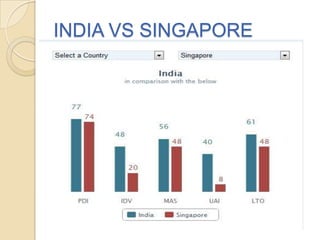
INDIA VS SINGAPORE
GREETINGS AND GIFTS
• Always greet the eldest or most senior
  person first.


• When leaving a group, each person must be
  bid farewell individually.


• Yellow, green and red are lucky colors.
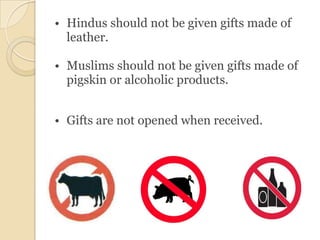
• Hindus should not be given gifts made of
  leather.

• Muslims should not be given gifts made of
  pigskin or alcoholic products.


• Gifts are not opened when received.
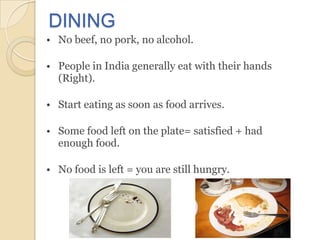
DINING
• No beef, no pork, no alcohol.

• People in India generally eat with their hands
  (Right).

• Start eating as soon as food arrives.

• Some food left on the plate= satisfied + had
  enough food.

• No food is left = you are still hungry.
Take note!
• Always take off your shoes before entering the
  house.

• Wait to be told where to sit.

• Dress modestly and conservatively.

• Politely turn down the first offer of tea, coffee, or
  snacks. Saying no to the first invitation is part of
  the protocol.
COMMUNICATION
   Indians thinks that rejecting offers is rude and
    offensive.

• Indians are highly family-oriented.

• However there are seldom handshakes between
  men and woman due to religious beliefs. If you are
  uncertain, wait for them to extend their hand.
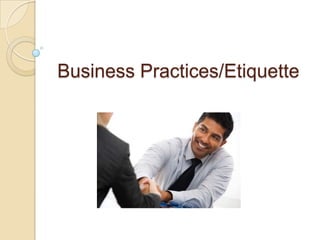
Business Practices/Etiquette
Before the
meeting…
   Best time for a meeting: Late morning or
    early afternoon

   Ensure appointment not on
    holidays/festivals

   Keep schedule flexible
    ◦ Indians not particular about punctuality
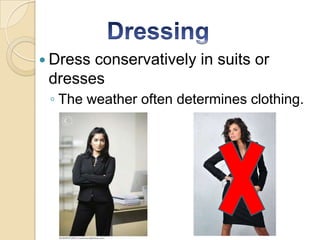
 Dressconservatively in suits or
 dresses
 ◦ The weather often determines clothing.
During the
meeting
Addressing
   Use titles to address them
    ◦ E.g. “Dr Pandian, Miss Chandra”

   Approach and greet the most senior figure
    first.

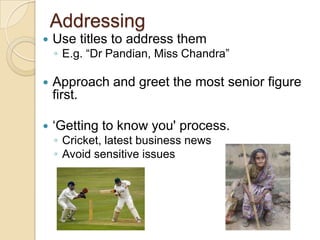
   „Getting to know you' process.
    ◦ Cricket, latest business news
    ◦ Avoid sensitive issues
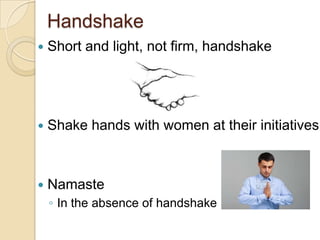
Handshake
   Short and light, not firm, handshake


   Shake hands with women at their initiatives


   Namaste
    ◦ In the absence of handshake
Business Card
   Must exchange after the initial handshake and
    greeting

   Use the right hand to give and receive business
    cards.

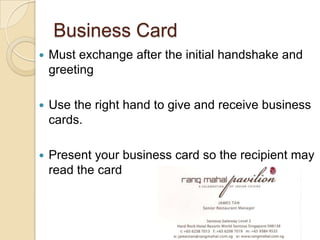
   Present your business card so the recipient may
    read the card
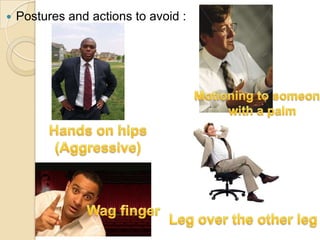
   Postures and actions to avoid :
Negotiations
   Be patient and show good character

   NEVER express anger or frustration

   Be polite
   Never appear overly legalistic during
    negotiations

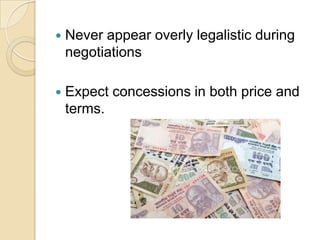
   Expect concessions in both price and
    terms.
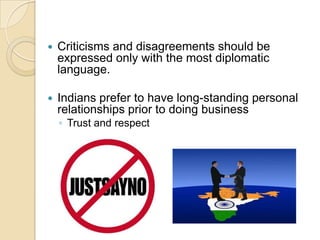
   Criticisms and disagreements should be
    expressed only with the most diplomatic
    language.

   Indians prefer to have long-standing personal
    relationships prior to doing business
    ◦ Trust and respect
Decision-making
   They use intuition, feeling and faith to
    guide them.

   Decisions are reached by the person
    with the most authority.

   Decision making is a slow process.
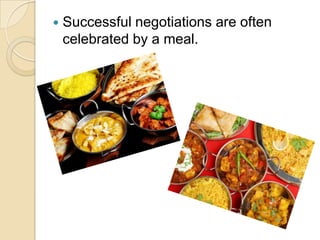
   Successful negotiations are often
    celebrated by a meal.
Workforce Norms
• Family Oriented/Filial Piety

• British Raj Cultural Trait

• High Power Distance

• Time consideration

• Consultation
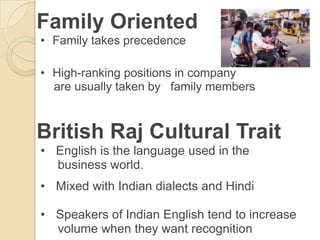
Family Oriented
• Family takes precedence

• High-ranking positions in company
  are usually taken by family members


British Raj Cultural Trait
• English is the language used in the
  business world.
• Mixed with Indian dialects and Hindi

• Speakers of Indian English tend to increase
  volume when they want recognition
Time Consideration
• Businessmen expected to be
  punctual

• Buffer time must be allocated for travelling
  as transport are not punctual

Consultation
• Used only in the legal, technology and
  marketing industry.

• Viewed as cost inefficient

• Hired only when government provides grants
  for their hire
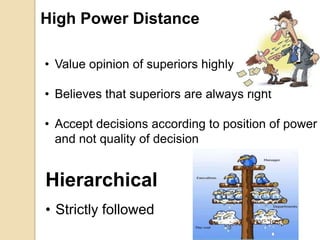
High Power Distance

• Value opinion of superiors highly

• Believes that superiors are always right

• Accept decisions according to position of power
  and not quality of decision


Hierarchical
• Strictly followed
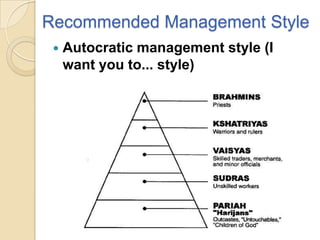
Recommended Management Style
    Autocratic management style (I
     want you to... style)
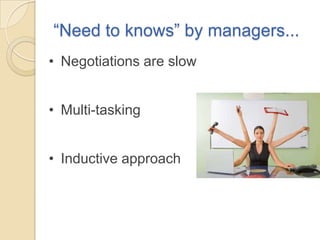
“Need to knows” by managers...
• Negotiations are slow


• Multi-tasking


• Inductive approach
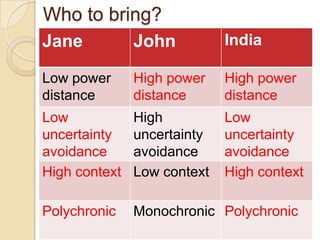
Who to bring?
Jane           John          India

Low power      High power    High power
distance       distance      distance
Low            High          Low
uncertainty    uncertainty   uncertainty
avoidance      avoidance     avoidance
High context   Low context   High context

Polychronic    Monochronic Polychronic
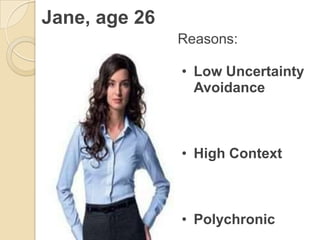
Jane, age 26
               Reasons:

               • Low Uncertainty
                 Avoidance


               • High Context


               • Polychronic
Some other helpful facts….
    Shaking head is a "yes" for the Indians
     instead for a "no“

    Do not walk over books and paper

    Do not use the same hand for eating
     and also for taking food from a
     common dish on the dining table.
   Homosexual relations for men are also
    illegal in India ,according to Section
    377 of the National Legislation.

   Indians are conservative and hence
    should abstain physical contact
    among different gender.
SHUKRIYA!
(THANK YOU)
References
 http://www.kwintessential.co.uk/etiquette/doing-
  business-india.html
 http://www.worldbusinessculture.com/Indian-
  Management-Style.html
 http://www.slideshare.net/jaaaspal/know-more-
  about-indian-business-culture-presentation
 http://nursing322sp10.wordpress.com/india/
 http://www.kwintessential.co.uk/resources/global-
  etiquette/india-country-profile.html
 http://www.languageinindia.com/sep2001/genderan
  dlang.html
 http://www.exampleessays.com/essay_search/Nor
  ms_Indian.html

Business practices

  • 1.
    Q1 India Charmaine Ong Tan Chun Xian Tan Jia Hui Tan Jun Wei
  • 2.
  • 3.
    In General… • Genderinequality in India. • Members of the society tend to put high value on males. • High Masculinity • Indians' marriage are usually planned by their parents which they could only abide. • A man is allowed to remarry or initiate divorce, but not a woman
  • 4.
  • 5.
    GREETINGS AND GIFTS •Always greet the eldest or most senior person first. • When leaving a group, each person must be bid farewell individually. • Yellow, green and red are lucky colors.
  • 6.
    • Hindus shouldnot be given gifts made of leather. • Muslims should not be given gifts made of pigskin or alcoholic products. • Gifts are not opened when received.
  • 7.
    DINING • No beef,no pork, no alcohol. • People in India generally eat with their hands (Right). • Start eating as soon as food arrives. • Some food left on the plate= satisfied + had enough food. • No food is left = you are still hungry.
  • 8.
    Take note! • Alwaystake off your shoes before entering the house. • Wait to be told where to sit. • Dress modestly and conservatively. • Politely turn down the first offer of tea, coffee, or snacks. Saying no to the first invitation is part of the protocol.
  • 9.
    COMMUNICATION  Indians thinks that rejecting offers is rude and offensive. • Indians are highly family-oriented. • However there are seldom handshakes between men and woman due to religious beliefs. If you are uncertain, wait for them to extend their hand.
  • 10.
  • 11.
  • 12.
    Best time for a meeting: Late morning or early afternoon  Ensure appointment not on holidays/festivals  Keep schedule flexible ◦ Indians not particular about punctuality
  • 13.
     Dressconservatively insuits or dresses ◦ The weather often determines clothing.
  • 14.
  • 15.
    Addressing  Use titles to address them ◦ E.g. “Dr Pandian, Miss Chandra”  Approach and greet the most senior figure first.  „Getting to know you' process. ◦ Cricket, latest business news ◦ Avoid sensitive issues
  • 16.
    Handshake  Short and light, not firm, handshake  Shake hands with women at their initiatives  Namaste ◦ In the absence of handshake
  • 17.
    Business Card  Must exchange after the initial handshake and greeting  Use the right hand to give and receive business cards.  Present your business card so the recipient may read the card
  • 18.
    Postures and actions to avoid :
  • 19.
    Negotiations  Be patient and show good character  NEVER express anger or frustration  Be polite
  • 20.
    Never appear overly legalistic during negotiations  Expect concessions in both price and terms.
  • 21.
    Criticisms and disagreements should be expressed only with the most diplomatic language.  Indians prefer to have long-standing personal relationships prior to doing business ◦ Trust and respect
  • 22.
    Decision-making  They use intuition, feeling and faith to guide them.  Decisions are reached by the person with the most authority.  Decision making is a slow process.
  • 23.
    Successful negotiations are often celebrated by a meal.
  • 24.
    Workforce Norms • FamilyOriented/Filial Piety • British Raj Cultural Trait • High Power Distance • Time consideration • Consultation
  • 25.
    Family Oriented • Familytakes precedence • High-ranking positions in company are usually taken by family members British Raj Cultural Trait • English is the language used in the business world. • Mixed with Indian dialects and Hindi • Speakers of Indian English tend to increase volume when they want recognition
  • 26.
    Time Consideration • Businessmenexpected to be punctual • Buffer time must be allocated for travelling as transport are not punctual Consultation • Used only in the legal, technology and marketing industry. • Viewed as cost inefficient • Hired only when government provides grants for their hire
  • 27.
    High Power Distance •Value opinion of superiors highly • Believes that superiors are always right • Accept decisions according to position of power and not quality of decision Hierarchical • Strictly followed
  • 28.
    Recommended Management Style  Autocratic management style (I want you to... style)
  • 29.
    “Need to knows”by managers... • Negotiations are slow • Multi-tasking • Inductive approach
  • 30.
    Who to bring? Jane John India Low power High power High power distance distance distance Low High Low uncertainty uncertainty uncertainty avoidance avoidance avoidance High context Low context High context Polychronic Monochronic Polychronic
  • 31.
    Jane, age 26 Reasons: • Low Uncertainty Avoidance • High Context • Polychronic
  • 32.
    Some other helpfulfacts….  Shaking head is a "yes" for the Indians instead for a "no“  Do not walk over books and paper  Do not use the same hand for eating and also for taking food from a common dish on the dining table.
  • 33.
    Homosexual relations for men are also illegal in India ,according to Section 377 of the National Legislation.  Indians are conservative and hence should abstain physical contact among different gender.
  • 34.
  • 35.
    References  http://www.kwintessential.co.uk/etiquette/doing- business-india.html  http://www.worldbusinessculture.com/Indian- Management-Style.html  http://www.slideshare.net/jaaaspal/know-more- about-indian-business-culture-presentation  http://nursing322sp10.wordpress.com/india/  http://www.kwintessential.co.uk/resources/global- etiquette/india-country-profile.html  http://www.languageinindia.com/sep2001/genderan dlang.html  http://www.exampleessays.com/essay_search/Nor ms_Indian.html

Editor's Notes

  • #22 Indians prefer to do business with those they know. It may be a good idea to go through a third party introduction. This gives you immediate credibility.
  • #23 Indians do not base their business decisions solely on statistics, empirical data and exciting PowerPoint presentations.