Welcome !
Working Culture
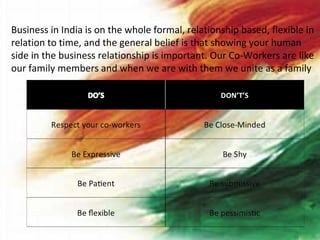
Business in India is on the whole formal, relationship based, flexible in
relation to time, and the general belief is that showing your human
side in the business relationship is important. Our Co-Workers are like
our family members and when we are with them we unite as a family
Communication
•   Regular contact by phone and email and frequent personal visits are
    important when you’re doing business with Indians. If you try to
    communicate simply by sending occasional formal emails, no matter how
    detailed and clear they might be, you won’t build the kind of relationship that
    is so prized in India.

•   The word ‘no’ has harsh implications. Evasive refusals are more polite, so say
    something like, ‘I’ll try,’ instead. Learn to develop a tolerance for ambiguity in
    conversation.

•   Politeness and praise are important, and people often use ‘we’ rather than ‘I’.

•   Indian body language is generally expressive and important to communication
    - but don’t be confused by the nodding of heads when people are listening to
    you. It says, ‘We are paying attention’, not ‘We agree with you’.
Meetings and Negotiations
•   Indian business is unhurried, and people take time to discuss the finer points of a
    project but implementation can move extremely fast.

•   Indians are open to being persuaded.

•   Respect for education and formality means that Indians use titles and surnames
    when they first meet you. Don’t use first names unless you are asked to .

•   Agendas are not strictly adhered to. The aims of a negotiation will be revealed
    early in a discussion, but the objectives may not be divulged till later.

•   Indians are usually flexible, patient negotiators, and they often use personalized
    and sometimes emotional arguments. They are usually willing to compromise,
    especially in the interests of forming good long-term relations.

•   Negotiations often involve large groups, although individuals may be given the
    responsibility to pursue discussions beyond initial meetings.
Teamwork
•   Indians often feel happier working together on tasks that foreigners would
    normally do on their own.

•   • A team is usually headed by a charismatic leader, who will often have family or
    trade group connections: remember that these may influence his decisions.

•   Team members will usually be selected on the grounds of seniority, experience and
    education.

•   Decisions are reached by consultation, and team members will expect to see their
    viewpoint reflected in the outcome.

•   The working pace tends to be slow, and deadlines are flexible.
Leadership
•   Indian companies operate a top down system of management and all major
    decisions will be taken at the top of the company.

•   Indians prefer established processes, and new ideas will have to be sold
    convincingly to your new colleagues.

•   Persistent persuasion and appeals to emotion are often more successful than hard
    logic or fact.

•   Listen carefully to proposed solutions. They may seem illogical to you, but will
    usually work in the Indian context.

•   People do not express disagreement directly. Disagreements may be expressed in
    writing or face to face.
Dress Etiquette
•   Business attire is conservative.

•   Men wear dark colored conservative business suits.

•   Women dress conservatively in suits or dresses.

•   The weather often determines clothing. In the hotter parts of the country, dress is
    less formal, although dressing as suggested above for the first meeting will indicate
    respect.
Dress Etiquette
•   Business attire is conservative.

•   Men wear dark colored conservative business suits.

•   Women dress conservatively in suits or dresses.

•   The weather often determines clothing. In the hotter parts of the country, dress is
    less formal, although dressing as suggested above for the first meeting will indicate
    respect.
Dress Etiquette
•   Business attire is conservative.

•   Men wear dark colored conservative business suits.

•   Women dress conservatively in suits or dresses.

•   The weather often determines clothing. In the hotter parts of the country, dress is
    less formal, although dressing as suggested above for the first meeting will indicate
    respect.

Working Culture in India

  • 1.
  • 2.
  • 3.
    Business in Indiais on the whole formal, relationship based, flexible in relation to time, and the general belief is that showing your human side in the business relationship is important. Our Co-Workers are like our family members and when we are with them we unite as a family
  • 4.
    Communication • Regular contact by phone and email and frequent personal visits are important when you’re doing business with Indians. If you try to communicate simply by sending occasional formal emails, no matter how detailed and clear they might be, you won’t build the kind of relationship that is so prized in India. • The word ‘no’ has harsh implications. Evasive refusals are more polite, so say something like, ‘I’ll try,’ instead. Learn to develop a tolerance for ambiguity in conversation. • Politeness and praise are important, and people often use ‘we’ rather than ‘I’. • Indian body language is generally expressive and important to communication - but don’t be confused by the nodding of heads when people are listening to you. It says, ‘We are paying attention’, not ‘We agree with you’.
  • 5.
    Meetings and Negotiations • Indian business is unhurried, and people take time to discuss the finer points of a project but implementation can move extremely fast. • Indians are open to being persuaded. • Respect for education and formality means that Indians use titles and surnames when they first meet you. Don’t use first names unless you are asked to . • Agendas are not strictly adhered to. The aims of a negotiation will be revealed early in a discussion, but the objectives may not be divulged till later. • Indians are usually flexible, patient negotiators, and they often use personalized and sometimes emotional arguments. They are usually willing to compromise, especially in the interests of forming good long-term relations. • Negotiations often involve large groups, although individuals may be given the responsibility to pursue discussions beyond initial meetings.
  • 6.
    Teamwork • Indians often feel happier working together on tasks that foreigners would normally do on their own. • • A team is usually headed by a charismatic leader, who will often have family or trade group connections: remember that these may influence his decisions. • Team members will usually be selected on the grounds of seniority, experience and education. • Decisions are reached by consultation, and team members will expect to see their viewpoint reflected in the outcome. • The working pace tends to be slow, and deadlines are flexible.
  • 7.
    Leadership • Indian companies operate a top down system of management and all major decisions will be taken at the top of the company. • Indians prefer established processes, and new ideas will have to be sold convincingly to your new colleagues. • Persistent persuasion and appeals to emotion are often more successful than hard logic or fact. • Listen carefully to proposed solutions. They may seem illogical to you, but will usually work in the Indian context. • People do not express disagreement directly. Disagreements may be expressed in writing or face to face.
  • 8.
    Dress Etiquette • Business attire is conservative. • Men wear dark colored conservative business suits. • Women dress conservatively in suits or dresses. • The weather often determines clothing. In the hotter parts of the country, dress is less formal, although dressing as suggested above for the first meeting will indicate respect.
  • 9.
    Dress Etiquette • Business attire is conservative. • Men wear dark colored conservative business suits. • Women dress conservatively in suits or dresses. • The weather often determines clothing. In the hotter parts of the country, dress is less formal, although dressing as suggested above for the first meeting will indicate respect.
  • 10.
    Dress Etiquette • Business attire is conservative. • Men wear dark colored conservative business suits. • Women dress conservatively in suits or dresses. • The weather often determines clothing. In the hotter parts of the country, dress is less formal, although dressing as suggested above for the first meeting will indicate respect.