BUSINESS
  PLAN
Why Business Plan ?????????????


A business plan is an effective tool for defining the existing
realities.
A good business plan will reveal weaknesses or omissions in
your planning.
They provide a valuable communication tool presented in an
organized, credible manner, which allows the stakeholders to
obtain a complex view of the business.`
BUSINESS PLAN ESSENTIALS
•ALWAYS Prepare the Plan Yourself!

  –Professional input from
  accountants, consultants, lawyers, etc. can be
  helpful.

  –Write the Plan. Own the Plan. Know the Plan.


•I am investing in You & in Your Plan!
FORMAT OF THE BUSINESS PLAN


 – Executive Summary
 – General Company Description
 – Products & Services Offering
 – Strategic Marketing & Sales Plan
 – Operational Plan
 – Management & Organizational Structure
 – Capitalization & Use of Proceeds
 – Financial Projections -- to include Assumptions
 – Appendices
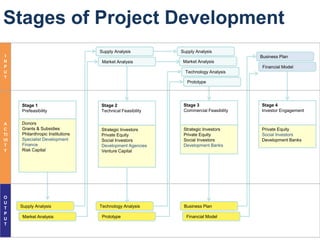
Stages of Project Development
                                  Supply Analysis         Supply Analysis
I                                                                                   Business Plan
N                                  Market Analysis         Market Analysis
P                                                                                    Financial Model
U                                                           Technology Analysis
T
                                                             Prototype


     Stage 1                      Stage 2                  Stage 3                  Stage 4
     Prefeasibility               Technical Feasibility    Commercial Feasibility   Investor Engagement


A    Donors
C    Grants & Subsidies           Strategic Investors      Strategic Investors      Private Equity
TI   Philanthropic Institutions   Private Equity           Private Equity           Social Investors
VI   Specialist Development       Social Investors         Social Investors         Development Banks
T    Finance                      Development Agencies     Development Banks
Y    Risk Capital                 Venture Capital


O
U
T    Supply Analysis              Technology Analysis      Business Plan
P
U     Market Analysis              Prototype                Financial Model
T
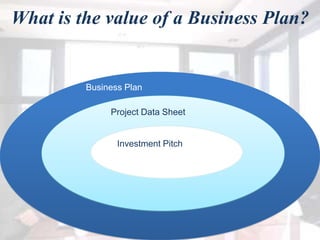
What is the value of a Business Plan?


         Business Plan

              Project Data Sheet


                Investment Pitch
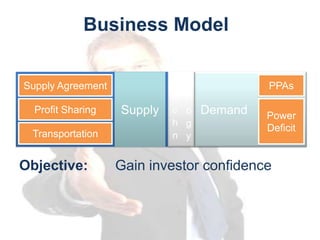
Business Model


Supply Agreement            T   o            PPAs
                            e   l
  Profit Sharing   Supply   c   o   Demand   Power
                            h   g
                                             Deficit
 Transportation             n   y


Objective:         Gain investor confidence
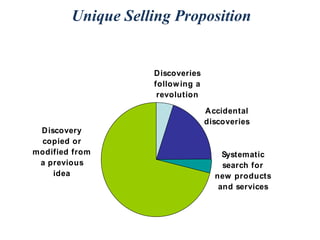
Unique Selling Proposition


                   Discoveries
                   follow ing a
                    revolution

                                  Accidental
                                  discoveries
 Discovery
 copied or
modified from                         Systematic
 a previous                           search for
    idea                            new products
                                     and services
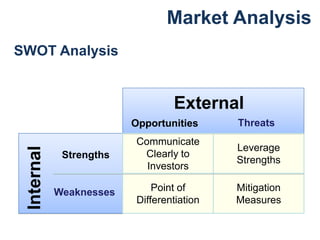
Market Analysis
SWOT Analysis


                                  External
                         Opportunities      Threats
                          Communicate
                                            Leverage
 Internal


             Strengths     Clearly to
                                            Strengths
                            Investors

            Weaknesses        Point of      Mitigation
                          Differentiation   Measures
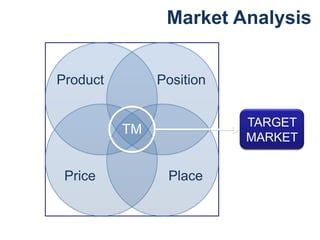
Market Analysis


Product        Position


                          TARGET
          TM
                          MARKET


 Price          Place
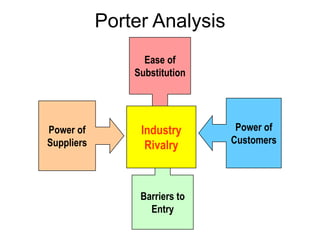
Porter Analysis
                  Ease of
                Substitution


Power of         Industry       Power of
Suppliers                      Customers
                  Rivalry


                 Barriers to
                   Entry
Industry Questions
How do we define our industry?
How is the industry segmented?
What are current trends and important
developments?
Who are the largest and most important
players?
What problems is the industry experiencing?
What national and int’l events influence our
industry?
What are growth forecasts?
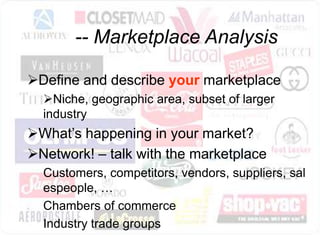
-- Marketplace Analysis

Define and describe your marketplace
  Niche, geographic area, subset of larger
  industry
What’s happening in your market?
Network! – talk with the marketplace
  Customers, competitors, vendors, suppliers, sal
  espeople, …
  Chambers of commerce
  Industry trade groups
Marketplace Questions

How do we define our marketplace?
How large is it and how fast is it
growing?
How is our marketplace segmented?
What companies currently service this
market?
What trends are important in our
marketplace?
-- Customer Analysis

Identify current buyers in your
marketplace
  Segment these customers
  What “problems” are not being solved?
  What needs are not being met?
  Which customer segments are currently
  ignored?
Talk with current buyers!
-- Competitor Analysis

Identify current sellers in your marketplace
  Niche and focus
  Target customers
  Strengths and weaknesses
Talk with current marketplace sellers!
  Sellers themselves
  Vendors
  Customers
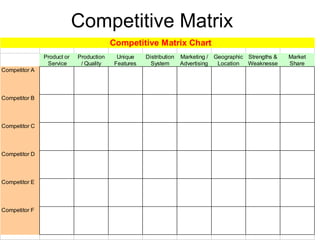
Competitive Matrix Comparison
Competitive Matrix
                                         Competitive Matrix Chart
               Product or   Production     Unique    Distribution   Marketing /   Geographic Strengths &   Market
                Service      / Quality    Features     System       Advertising    Location  Weaknesse     Share
Competitor A


Competitor B


Competitor C


Competitor D


Competitor E


Competitor F
Competitor Questions

Who are current sellers in the marketplace?
What are the attributes and characteristics of
these sellers and their products/services?
What is there size, location, target market, and
other important characteristics?
For their products or services, identify
price, quality, features, distribution, and other
important attributes.
What problems and concerns to customers
have with these sellers?
PROJECT PROFIT AND LOSS
            ACCOUNT
Income from Sales/Service
Cost of Manufacturing/Servicing
    i) Raw Materials
    ii) Utilities
    iii) Salaries/Wages
    iv) Repairs & maintenance
    v) Selling & Distribution Expenses
    vi) Administrative Expenses
    vii) Interest
    viii) Rent
    ix) Depreciation
    x) Misc. Expenses
c. Gross Profit/Loss (A-B)
Business plan   final

Business plan final

  • 1.
  • 2.
    Why Business Plan????????????? A business plan is an effective tool for defining the existing realities. A good business plan will reveal weaknesses or omissions in your planning. They provide a valuable communication tool presented in an organized, credible manner, which allows the stakeholders to obtain a complex view of the business.`
  • 3.
    BUSINESS PLAN ESSENTIALS •ALWAYSPrepare the Plan Yourself! –Professional input from accountants, consultants, lawyers, etc. can be helpful. –Write the Plan. Own the Plan. Know the Plan. •I am investing in You & in Your Plan!
  • 4.
    FORMAT OF THEBUSINESS PLAN – Executive Summary – General Company Description – Products & Services Offering – Strategic Marketing & Sales Plan – Operational Plan – Management & Organizational Structure – Capitalization & Use of Proceeds – Financial Projections -- to include Assumptions – Appendices
  • 5.
    Stages of ProjectDevelopment Supply Analysis Supply Analysis I Business Plan N Market Analysis Market Analysis P Financial Model U Technology Analysis T Prototype Stage 1 Stage 2 Stage 3 Stage 4 Prefeasibility Technical Feasibility Commercial Feasibility Investor Engagement A Donors C Grants & Subsidies Strategic Investors Strategic Investors Private Equity TI Philanthropic Institutions Private Equity Private Equity Social Investors VI Specialist Development Social Investors Social Investors Development Banks T Finance Development Agencies Development Banks Y Risk Capital Venture Capital O U T Supply Analysis Technology Analysis Business Plan P U Market Analysis Prototype Financial Model T
  • 6.
    What is thevalue of a Business Plan? Business Plan Project Data Sheet Investment Pitch
  • 7.
    Business Model Supply Agreement T o PPAs e l Profit Sharing Supply c o Demand Power h g Deficit Transportation n y Objective: Gain investor confidence
  • 8.
    Unique Selling Proposition Discoveries follow ing a revolution Accidental discoveries Discovery copied or modified from Systematic a previous search for idea new products and services
  • 9.
    Market Analysis SWOT Analysis External Opportunities Threats Communicate Leverage Internal Strengths Clearly to Strengths Investors Weaknesses Point of Mitigation Differentiation Measures
  • 10.
    Market Analysis Product Position TARGET TM MARKET Price Place
  • 11.
    Porter Analysis Ease of Substitution Power of Industry Power of Suppliers Customers Rivalry Barriers to Entry
  • 12.
    Industry Questions How dowe define our industry? How is the industry segmented? What are current trends and important developments? Who are the largest and most important players? What problems is the industry experiencing? What national and int’l events influence our industry? What are growth forecasts?
  • 13.
    -- Marketplace Analysis Defineand describe your marketplace Niche, geographic area, subset of larger industry What’s happening in your market? Network! – talk with the marketplace Customers, competitors, vendors, suppliers, sal espeople, … Chambers of commerce Industry trade groups
  • 14.
    Marketplace Questions How dowe define our marketplace? How large is it and how fast is it growing? How is our marketplace segmented? What companies currently service this market? What trends are important in our marketplace?
  • 15.
    -- Customer Analysis Identifycurrent buyers in your marketplace Segment these customers What “problems” are not being solved? What needs are not being met? Which customer segments are currently ignored? Talk with current buyers!
  • 16.
    -- Competitor Analysis Identifycurrent sellers in your marketplace Niche and focus Target customers Strengths and weaknesses Talk with current marketplace sellers! Sellers themselves Vendors Customers Competitive Matrix Comparison
  • 17.
    Competitive Matrix Competitive Matrix Chart Product or Production Unique Distribution Marketing / Geographic Strengths & Market Service / Quality Features System Advertising Location Weaknesse Share Competitor A Competitor B Competitor C Competitor D Competitor E Competitor F
  • 18.
    Competitor Questions Who arecurrent sellers in the marketplace? What are the attributes and characteristics of these sellers and their products/services? What is there size, location, target market, and other important characteristics? For their products or services, identify price, quality, features, distribution, and other important attributes. What problems and concerns to customers have with these sellers?
  • 19.
    PROJECT PROFIT ANDLOSS ACCOUNT Income from Sales/Service Cost of Manufacturing/Servicing i) Raw Materials ii) Utilities iii) Salaries/Wages iv) Repairs & maintenance v) Selling & Distribution Expenses vi) Administrative Expenses vii) Interest viii) Rent ix) Depreciation x) Misc. Expenses c. Gross Profit/Loss (A-B)