Strategic Marketing

A Brief Overview
Ken Thomas
Robbins, Inc.
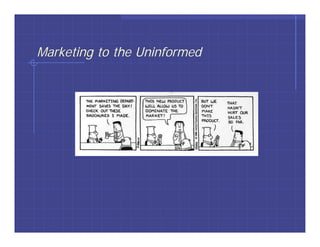
Marketing to the Uninformed
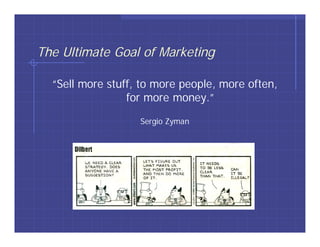
The Ultimate Goal of Marketing

  “Sell more stuff, to more people, more often,
                 for more money.”

                   Sergio Zyman
Strategic Marketing Defined

               The management function within a company that seeks to
               generate a profit by organizing the firm’s resources and
               activities to determine and satisfy the needs and desires of the
               customer, delivering better value than competitors


               It is a company-leading, defining and direction-setting function


Source: “Strategic Market Planning, Hamper and Baugh 1996
Strategic Marketing is the Management
function that:

   Emphasizes profits, not just sales
   Identifies target markets & delivers better value to the market
   than competitors
   Combines target markets and mix to formulate marketing
   strategy
   Strives to create sustainable differentiation
Strategic Marketing

   Leads the strategic planning process & oversees execution
   Leads & manages the new product/service development process
   from ideation thru commercial launch
   Identifies/exploits intellectual property, technical & commercial
   advantages
   Identifies/exploits trends
   Identifies/addresses manufacturing/operational gaps
   Gathers/disseminates/exploits market research and competitive
   intelligence
Strategic Marketing

 IS NOT:
    Marketing Communications
    Sales support/service

 HOWEVER

   Marketing Communications, Sales Support and
   Customer Service initiatives are vitally important
   elements of the overall strategic marketing mix,
   especially when executed in a manner that creates
   competitive differentiation
Marketing Encompasses:

  Product
  Price
  Position
  Promotion
  Process
  Profit
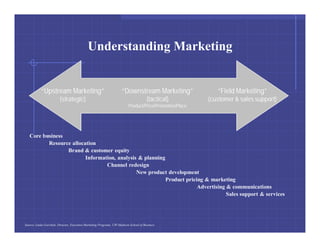
Understanding Marketing


           “Upstream Marketing”                                      “Downstream Marketing”                  “Field Marketing”
                         (strategic)                                                   (tactical)         (customer & sales support)
                                                                          Product/Price/Promotion/Place


   Core business
          Resource allocation
                 Brand & customer equity
                         Information, analysis & planning
                                 Channel redesign
                                              New product development
                                                          Product pricing & marketing
                                                                       Advertising & communications
                                                                                   Sales support & services


Source: Linda Gorchels, Director, Executive Marketing Programs, UW-Madison School of Business
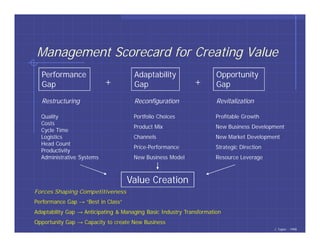
Management Scorecard for Creating Value
  Performance                         Adaptability                    Opportunity
  Gap                      +          Gap                    +        Gap

  Restructuring                       Reconfiguration                 Revitalization

  Quality                             Portfolio Choices               Profitable Growth
  Costs
                                      Product Mix                     New Business Development
  Cycle Time
  Logistics                           Channels                        New Market Development
  Head Count
                                      Price-Performance               Strategic Direction
  Productivity
  Administrative Systems              New Business Model              Resource Leverage


                                     Value Creation
Forces Shaping Competitiveness
Performance Gap    “Best in Class”
Adaptability Gap   Anticipating & Managing Basic Industry Transformation
Opportunity Gap    Capacity to create New Business
                                                                                            J. Taylor - 1998
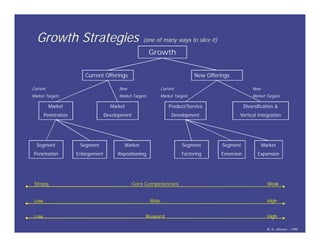
Growth Strategies                                  (one of many ways to slice it)

                                                          Growth


                        Current Offerings                                         New Offerings

Current                                  New                     Current                                    New
Market Targets                           Market Targets          Market Targets                             Market Targets

          Market                     Market                          Product/Service                    Diversification &
       Penetration                 Development                        Development                   Vertical Integration


  Segment             Segment              Market                           Segment         Segment               Market
 Penetration         Enlargement        Repositioning                       Factoring       Extension          Expansion


 Strong                                          Core Competencies                                                  Weak


 Low                                                      Risk                                                      High


 Low                                                  Reward                                                        High

                                                                                                                    M. D. Johnson - 1998
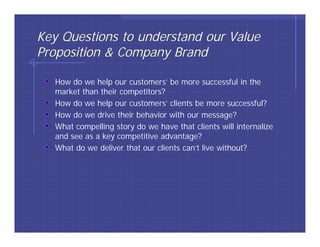
Key Questions to understand our Value
Proposition & Company Brand

   How do we help our customers’ be more successful in the
   market than their competitors?
   How do we help our customers’ clients be more successful?
   How do we drive their behavior with our message?
   What compelling story do we have that clients will internalize
   and see as a key competitive advantage?
   What do we deliver that our clients can’t live without?

Strategic Marketing Overview

  • 1.
    Strategic Marketing A BriefOverview Ken Thomas Robbins, Inc.
  • 2.
    Marketing to theUninformed
  • 3.
    The Ultimate Goalof Marketing “Sell more stuff, to more people, more often, for more money.” Sergio Zyman
  • 4.
    Strategic Marketing Defined The management function within a company that seeks to generate a profit by organizing the firm’s resources and activities to determine and satisfy the needs and desires of the customer, delivering better value than competitors It is a company-leading, defining and direction-setting function Source: “Strategic Market Planning, Hamper and Baugh 1996
  • 5.
    Strategic Marketing isthe Management function that: Emphasizes profits, not just sales Identifies target markets & delivers better value to the market than competitors Combines target markets and mix to formulate marketing strategy Strives to create sustainable differentiation
  • 6.
    Strategic Marketing Leads the strategic planning process & oversees execution Leads & manages the new product/service development process from ideation thru commercial launch Identifies/exploits intellectual property, technical & commercial advantages Identifies/exploits trends Identifies/addresses manufacturing/operational gaps Gathers/disseminates/exploits market research and competitive intelligence
  • 7.
    Strategic Marketing ISNOT: Marketing Communications Sales support/service HOWEVER Marketing Communications, Sales Support and Customer Service initiatives are vitally important elements of the overall strategic marketing mix, especially when executed in a manner that creates competitive differentiation
  • 8.
    Marketing Encompasses: Product Price Position Promotion Process Profit
  • 9.
    Understanding Marketing “Upstream Marketing” “Downstream Marketing” “Field Marketing” (strategic) (tactical) (customer & sales support) Product/Price/Promotion/Place Core business Resource allocation Brand & customer equity Information, analysis & planning Channel redesign New product development Product pricing & marketing Advertising & communications Sales support & services Source: Linda Gorchels, Director, Executive Marketing Programs, UW-Madison School of Business
  • 10.
    Management Scorecard forCreating Value Performance Adaptability Opportunity Gap + Gap + Gap Restructuring Reconfiguration Revitalization Quality Portfolio Choices Profitable Growth Costs Product Mix New Business Development Cycle Time Logistics Channels New Market Development Head Count Price-Performance Strategic Direction Productivity Administrative Systems New Business Model Resource Leverage Value Creation Forces Shaping Competitiveness Performance Gap “Best in Class” Adaptability Gap Anticipating & Managing Basic Industry Transformation Opportunity Gap Capacity to create New Business J. Taylor - 1998
  • 11.
    Growth Strategies (one of many ways to slice it) Growth Current Offerings New Offerings Current New Current New Market Targets Market Targets Market Targets Market Targets Market Market Product/Service Diversification & Penetration Development Development Vertical Integration Segment Segment Market Segment Segment Market Penetration Enlargement Repositioning Factoring Extension Expansion Strong Core Competencies Weak Low Risk High Low Reward High M. D. Johnson - 1998
  • 12.
    Key Questions tounderstand our Value Proposition & Company Brand How do we help our customers’ be more successful in the market than their competitors? How do we help our customers’ clients be more successful? How do we drive their behavior with our message? What compelling story do we have that clients will internalize and see as a key competitive advantage? What do we deliver that our clients can’t live without?