
Business level strategy Analysis                                 Presented By…….                                 Anil Dhankhar
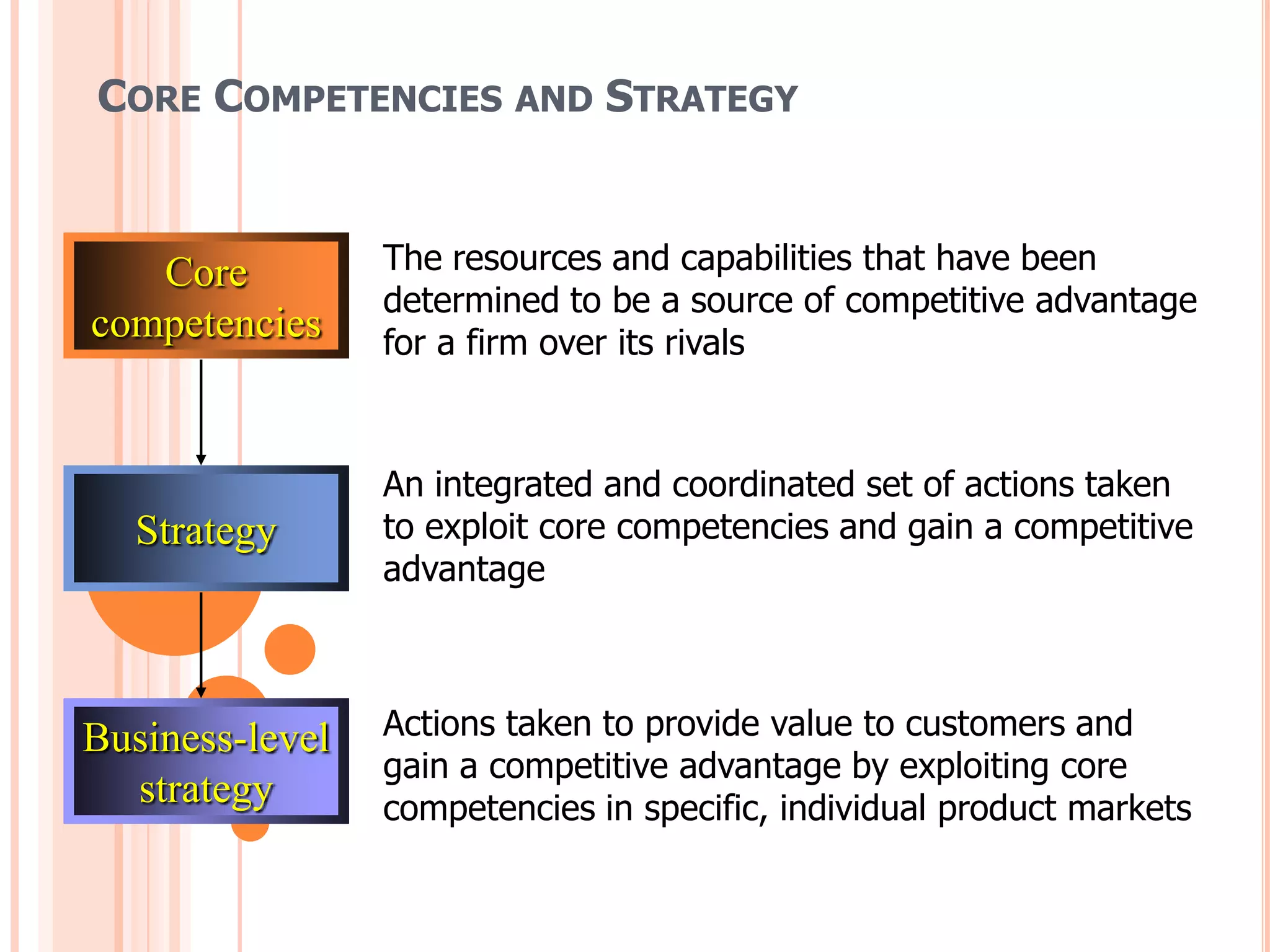
CorecompetenciesStrategyBusiness-levelstrategyCore Competencies and StrategyThe resources and capabilities that have been determined to be a source of competitive advantage for a firm over its rivalsAn integrated and coordinated set of actions taken to exploit core competencies and gain a competitive advantageActions taken to provide value to customers and gain a competitive advantage by exploiting core competencies in specific, individual product markets
   Business Level StrategyThree Issues:Whom it will serve. What needs target customers have that it will satisfy.How those needs will be satisfied through implementation of given strategy.
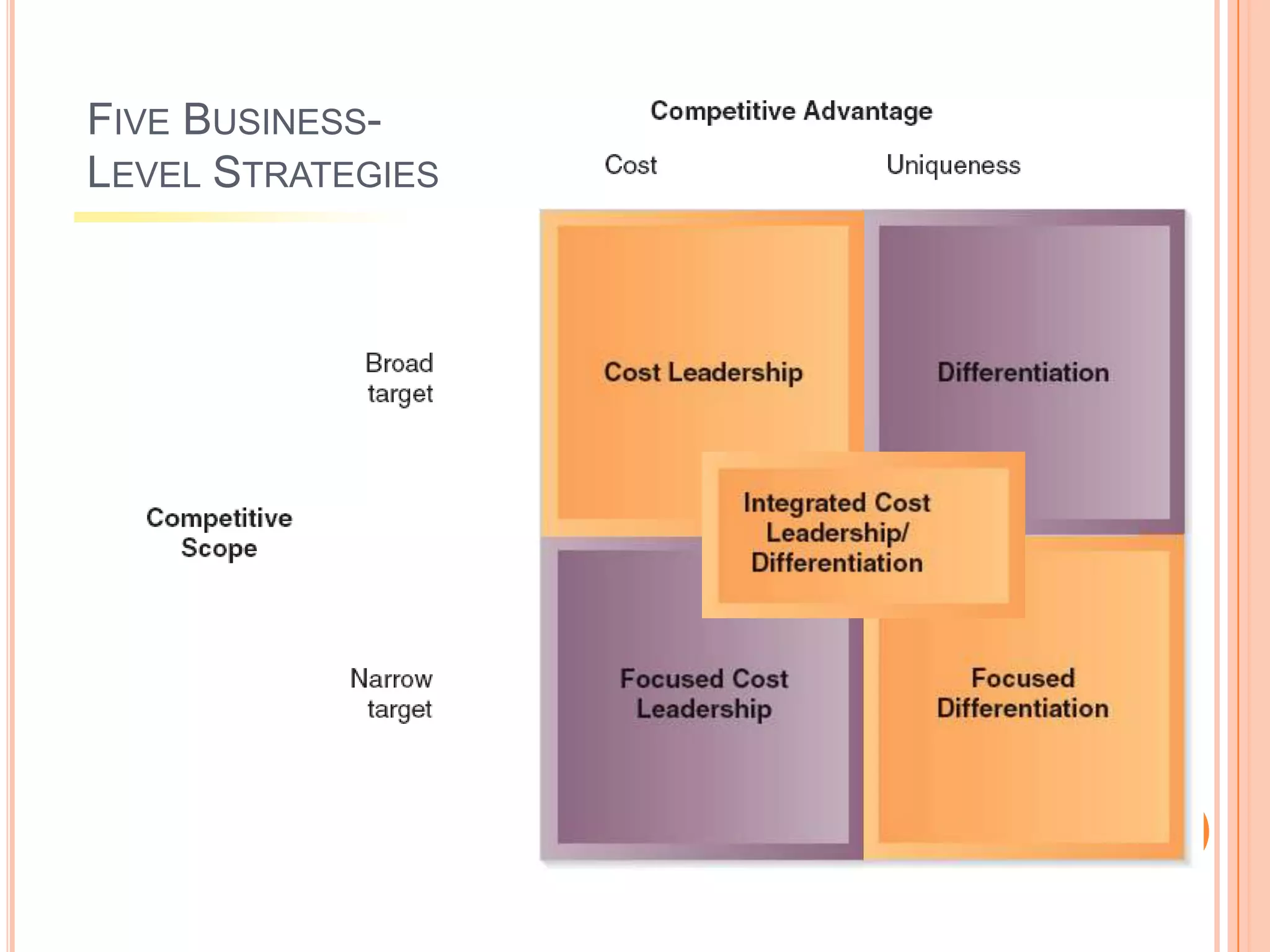
Five Business-Level Strategies
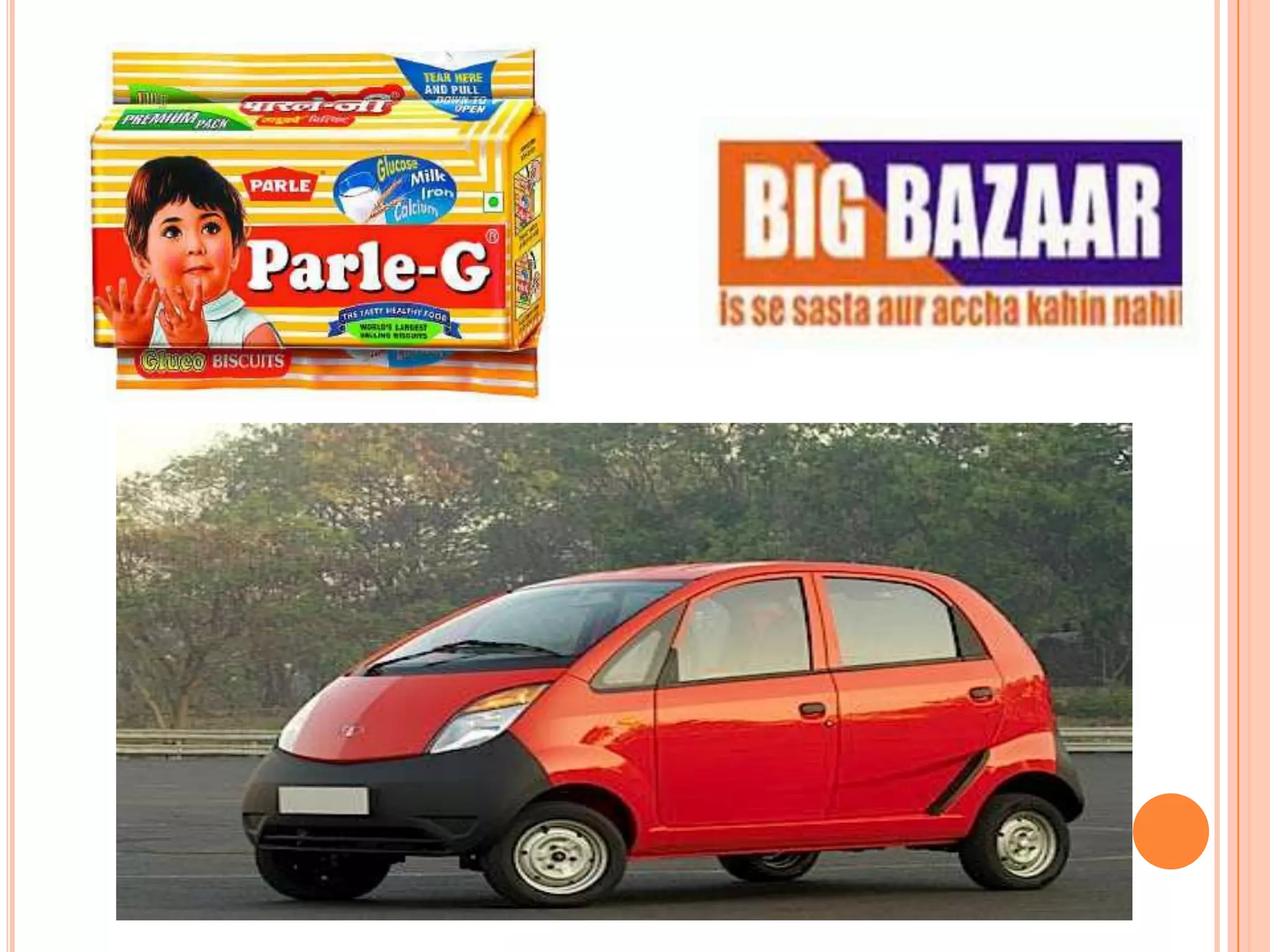
1. Cost Leadership StrategyAn integrated set of actions taken to produce goods or services with features that are acceptable to customers at the lowest cost, relative to that of competitors with features that are acceptable to customersRelatively standardized productsFeatures acceptable to many customersLowest competitive price
1. Cost Leadership strategyThreats of new entrants.Bargaining power of suppliers.Bargaining power of buyers.Threat of substituted products.Rivalry among competing firms.
8         1. COST LEADERSHIP STRATEGYFAILS WHEN?Being overly aggressive in cutting price (revenue erosion of lower price is not offset by gains in sales volume--profits go down, not up).
Low cost methods are easily imitated by rivals
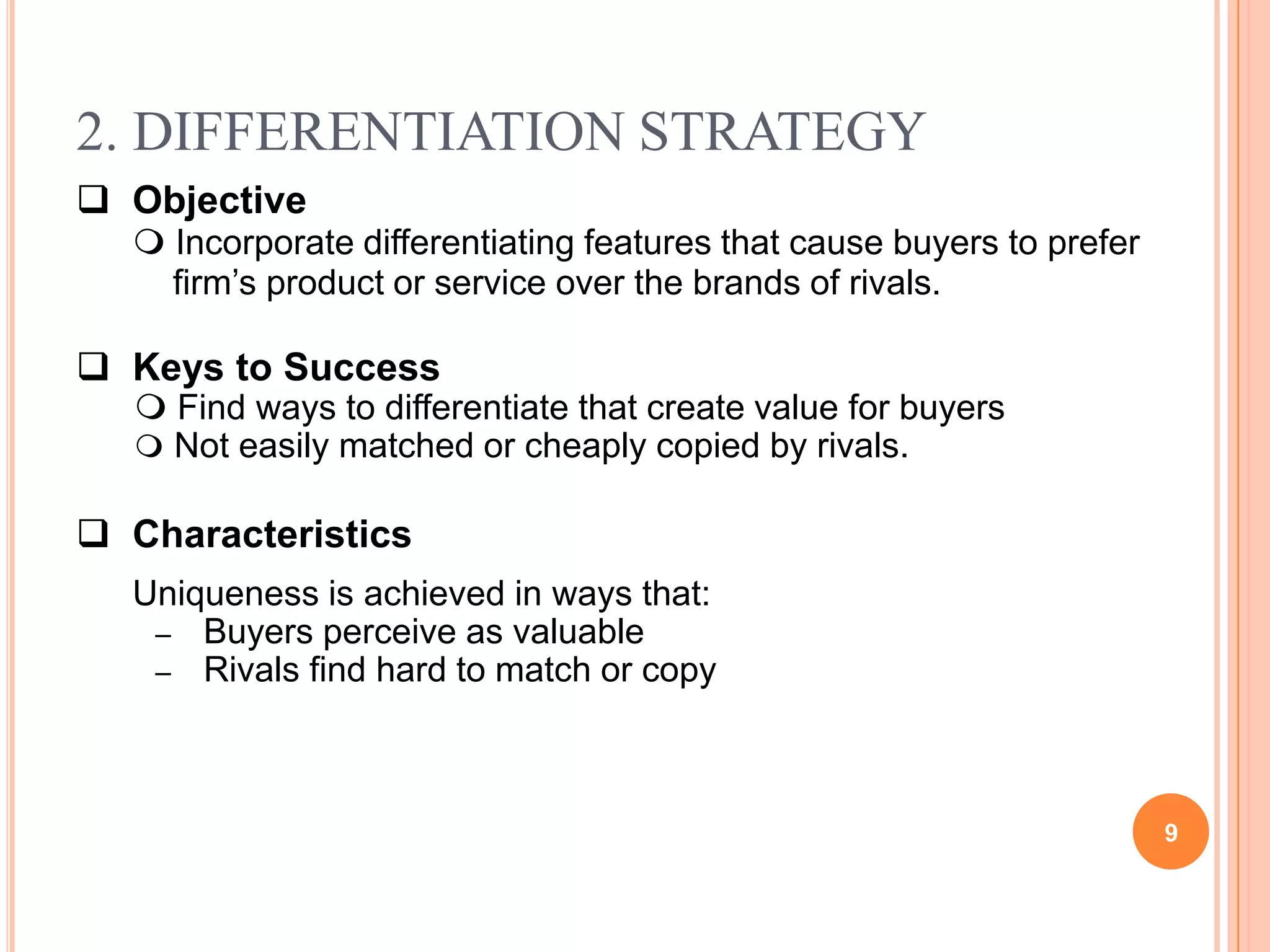
Becoming too fixated on reducing costs and ignoringBuyer interest in additional featuresDeclining buyer sensitivity to priceChanges in how the product is usedTechnological breakthroughs open up cost reductions for rivals.92. DIFFERENTIATION STRATEGYObjective	Incorporate differentiating features that cause buyers to prefer           firm’s product or service over the brands of rivals.Keys to Success      Find ways to differentiate that create value for buyers Not easily matched or cheaply copied by rivals.CharacteristicsUniquenessis achieved in ways that:Buyers perceive as valuable
Rivals find hard to match or copy
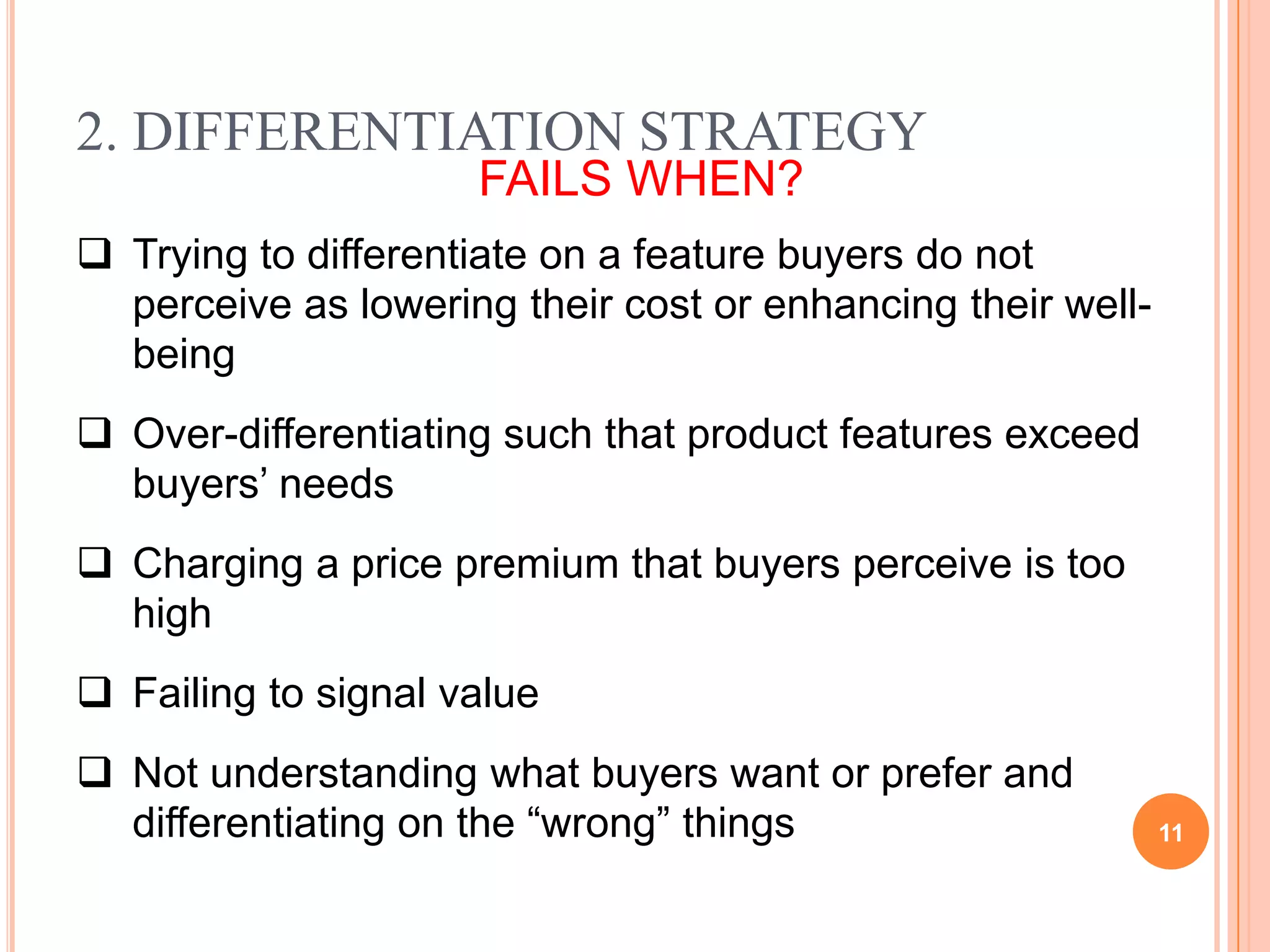
112. DIFFERENTIATION STRATEGYFAILS WHEN?Trying to differentiate on a feature buyers do not perceive as lowering their cost or enhancing their well-being
Over-differentiating such that product features exceed buyers’ needs
Charging a price premium that buyers perceive is too high
Failing to signal value
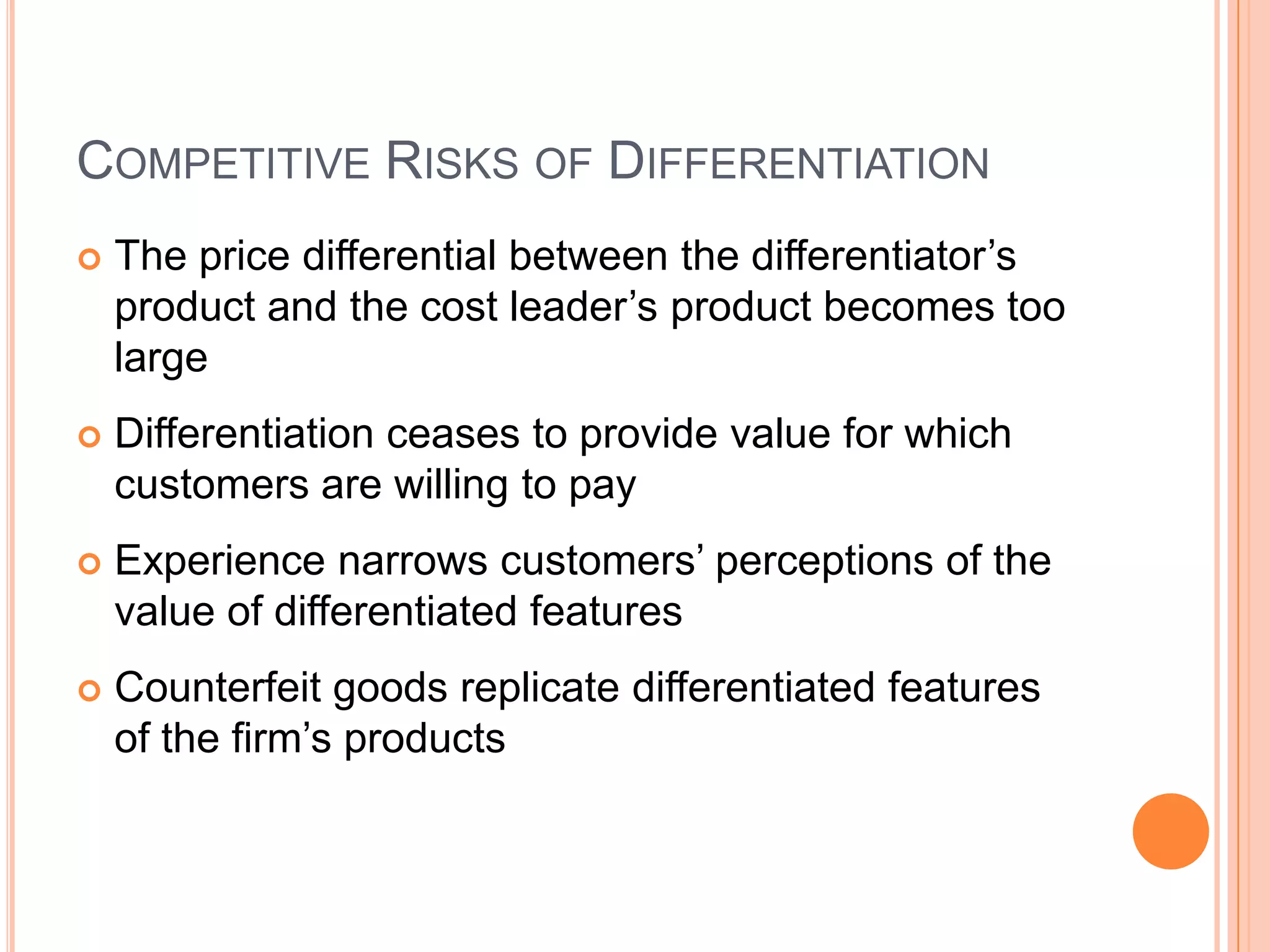
Not understanding what buyers want or prefer and differentiating on the “wrong” thingsCompetitive Risks of DifferentiationThe price differential between the differentiator’s product and the cost leader’s product becomes too largeDifferentiation ceases to provide value for which customers are willing to payExperience narrows customers’ perceptions of the value of differentiated featuresCounterfeit goods replicate differentiated features of the firm’s products
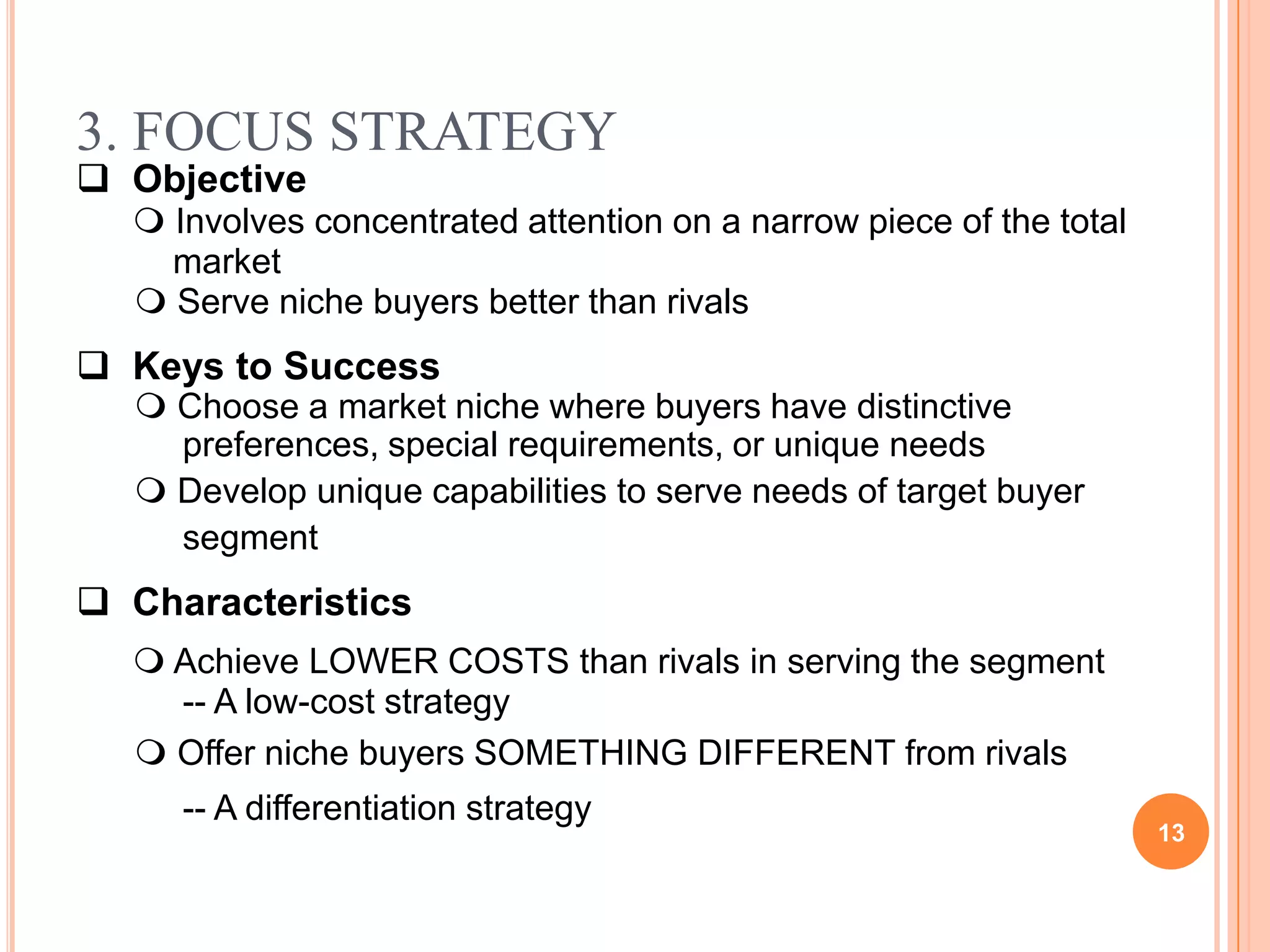
133. FOCUS STRATEGYObjective	Involves concentrated attention on a narrow piece of the total          market       Serve niche buyers better than rivalsKeys to Success      Choose a market niche where buyers have distinctive           preferences, special requirements, or unique needs      Develop unique capabilities to serve needs of target buyer           segmentCharacteristics	Achieve LOWER COSTSthan rivals in serving the segment           -- A low-cost strategy      Offer niche buyers SOMETHING DIFFERENTfrom rivals           -- A differentiation strategy
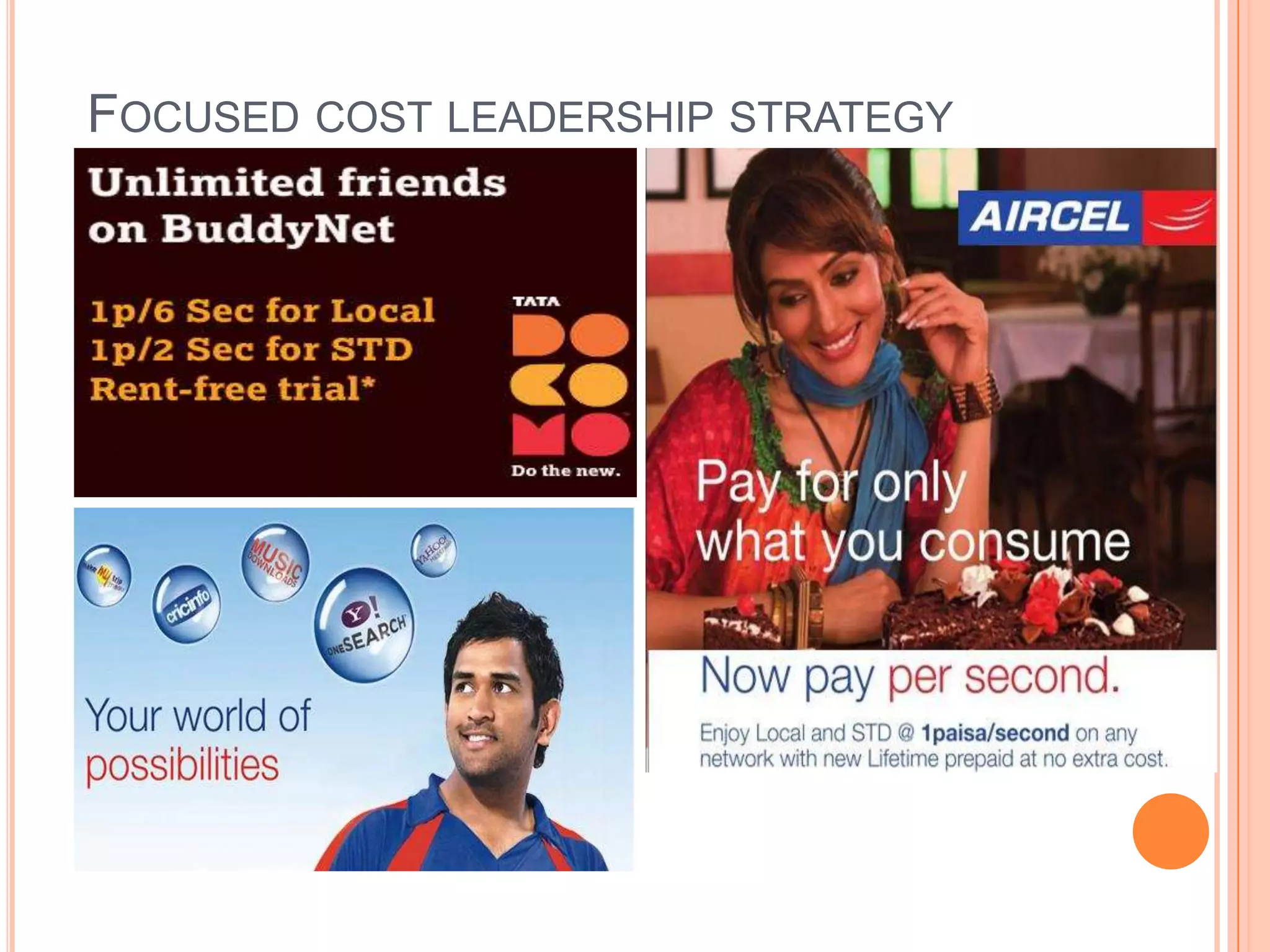
Focused cost leadership strategy
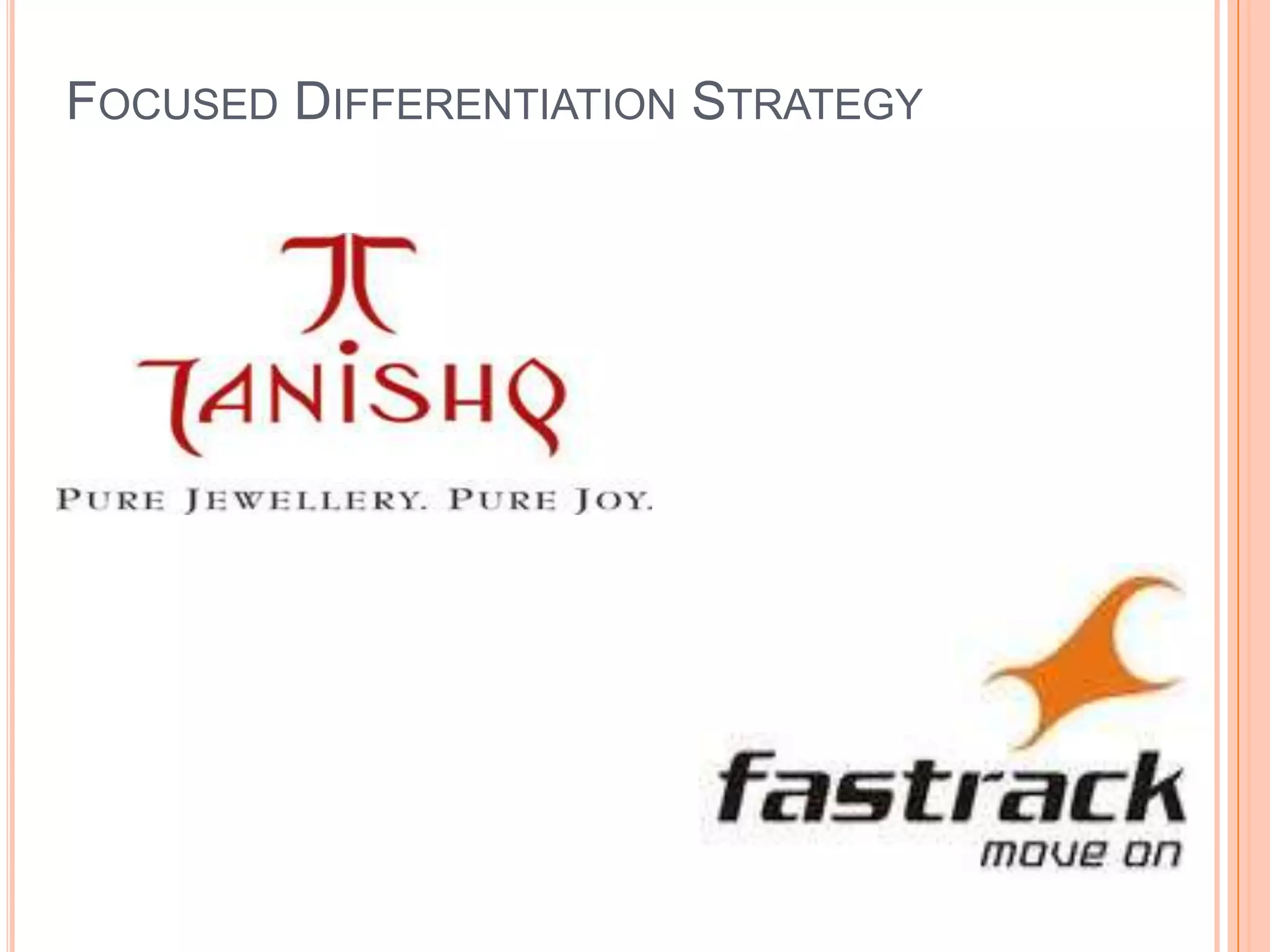
Focused Differentiation Strategy
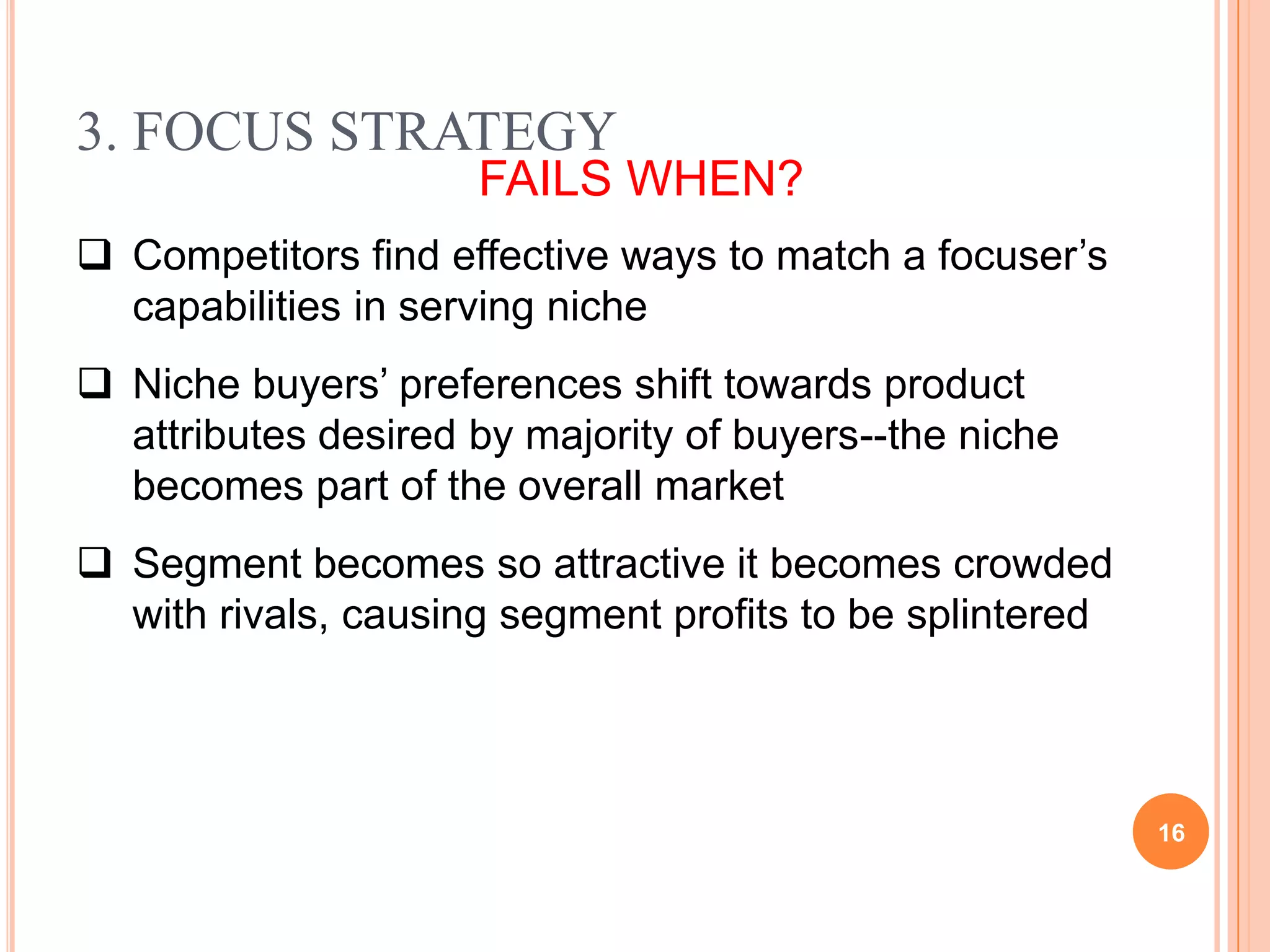
163. FOCUS STRATEGYFAILS WHEN?Competitors find effective ways to match a focuser’s capabilities in serving niche

Business level strategies

  • 1.
    Business level strategyAnalysis Presented By……. Anil Dhankhar
  • 2.
    CorecompetenciesStrategyBusiness-levelstrategyCore Competencies andStrategyThe resources and capabilities that have been determined to be a source of competitive advantage for a firm over its rivalsAn integrated and coordinated set of actions taken to exploit core competencies and gain a competitive advantageActions taken to provide value to customers and gain a competitive advantage by exploiting core competencies in specific, individual product markets
  • 3.
    Business Level StrategyThree Issues:Whom it will serve. What needs target customers have that it will satisfy.How those needs will be satisfied through implementation of given strategy.
  • 4.
  • 5.
    1. Cost LeadershipStrategyAn integrated set of actions taken to produce goods or services with features that are acceptable to customers at the lowest cost, relative to that of competitors with features that are acceptable to customersRelatively standardized productsFeatures acceptable to many customersLowest competitive price
  • 7.
    1. Cost LeadershipstrategyThreats of new entrants.Bargaining power of suppliers.Bargaining power of buyers.Threat of substituted products.Rivalry among competing firms.
  • 8.
    8 1. COST LEADERSHIP STRATEGYFAILS WHEN?Being overly aggressive in cutting price (revenue erosion of lower price is not offset by gains in sales volume--profits go down, not up).
  • 9.
    Low cost methodsare easily imitated by rivals
  • 10.
    Becoming too fixatedon reducing costs and ignoringBuyer interest in additional featuresDeclining buyer sensitivity to priceChanges in how the product is usedTechnological breakthroughs open up cost reductions for rivals.92. DIFFERENTIATION STRATEGYObjective Incorporate differentiating features that cause buyers to prefer firm’s product or service over the brands of rivals.Keys to Success Find ways to differentiate that create value for buyers Not easily matched or cheaply copied by rivals.CharacteristicsUniquenessis achieved in ways that:Buyers perceive as valuable
  • 11.
    Rivals find hardto match or copy
  • 12.
    112. DIFFERENTIATION STRATEGYFAILSWHEN?Trying to differentiate on a feature buyers do not perceive as lowering their cost or enhancing their well-being
  • 13.
    Over-differentiating such thatproduct features exceed buyers’ needs
  • 14.
    Charging a pricepremium that buyers perceive is too high
  • 15.
  • 16.
    Not understanding whatbuyers want or prefer and differentiating on the “wrong” thingsCompetitive Risks of DifferentiationThe price differential between the differentiator’s product and the cost leader’s product becomes too largeDifferentiation ceases to provide value for which customers are willing to payExperience narrows customers’ perceptions of the value of differentiated featuresCounterfeit goods replicate differentiated features of the firm’s products
  • 17.
    133. FOCUS STRATEGYObjective Involvesconcentrated attention on a narrow piece of the total market  Serve niche buyers better than rivalsKeys to Success Choose a market niche where buyers have distinctive preferences, special requirements, or unique needs Develop unique capabilities to serve needs of target buyer segmentCharacteristics Achieve LOWER COSTSthan rivals in serving the segment -- A low-cost strategy Offer niche buyers SOMETHING DIFFERENTfrom rivals -- A differentiation strategy
  • 18.
  • 19.
  • 20.
    163. FOCUS STRATEGYFAILSWHEN?Competitors find effective ways to match a focuser’s capabilities in serving niche
  • 21.
    Niche buyers’ preferencesshift towards product attributes desired by majority of buyers--the niche becomes part of the overall market
  • 22.
    Segment becomes soattractive it becomes crowded with rivals, causing segment profits to be splintered4. Integrated Cost Leadership/ Differentiation StrategyA firm that successfully uses an integrated cost leadership/differentiation strategy should be in a better position to:Adapt quickly to environmental changesLearn new skills and technologies more quicklyEffectively leverage its core competencies while competing against its rivals
  • 23.
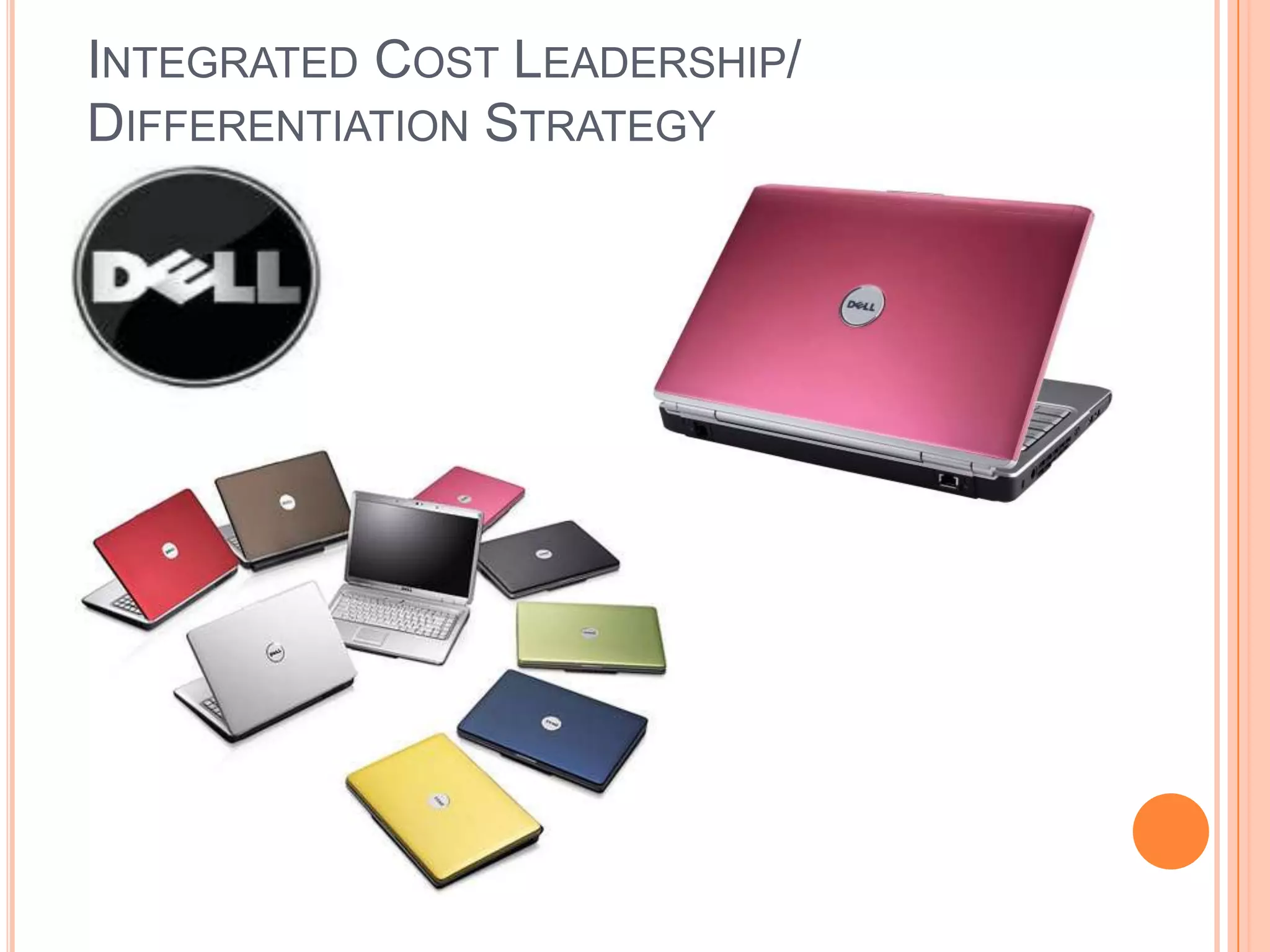
    Integrated Cost Leadership/Differentiation Strategy
  • 24.
    Risks of theIntegrated Cost Leadership/ Differentiation StrategyOften involves compromisesBecoming neither the lowest cost nor the most differentiated firmBecoming “stuck in the middle”Lacking the strong commitment and expertise that accompanies firms following either a cost leadership or a differentiated strategy
  • 25.
    THANK YOU FORLISTENING

Editor's Notes

  • #16 New designs introduced every quarter, differentiating strategy offering range of gold, pearl and diamond jwewlery for men and women treating jewlery as fashionable items rather than just investment. Titan Watches: Fast track watches were launched for youth segment, the cool, trendy, funky range for the young and young-at-heart were well differentiated itself as youth watches compare to TATA’s other watches.
  • #19 DELL:- DELL India is a export hub for Asia market, DELL uses Indian talent and raw material (of best quality) for production at Chennai, they get the best mixture of raw material & skills to produce at low cost with best quality.DELL Chennai manufacturing unit cater 60% of their Asian mkt demand.