By: Mohamed Azmi Taufik
o

o

2

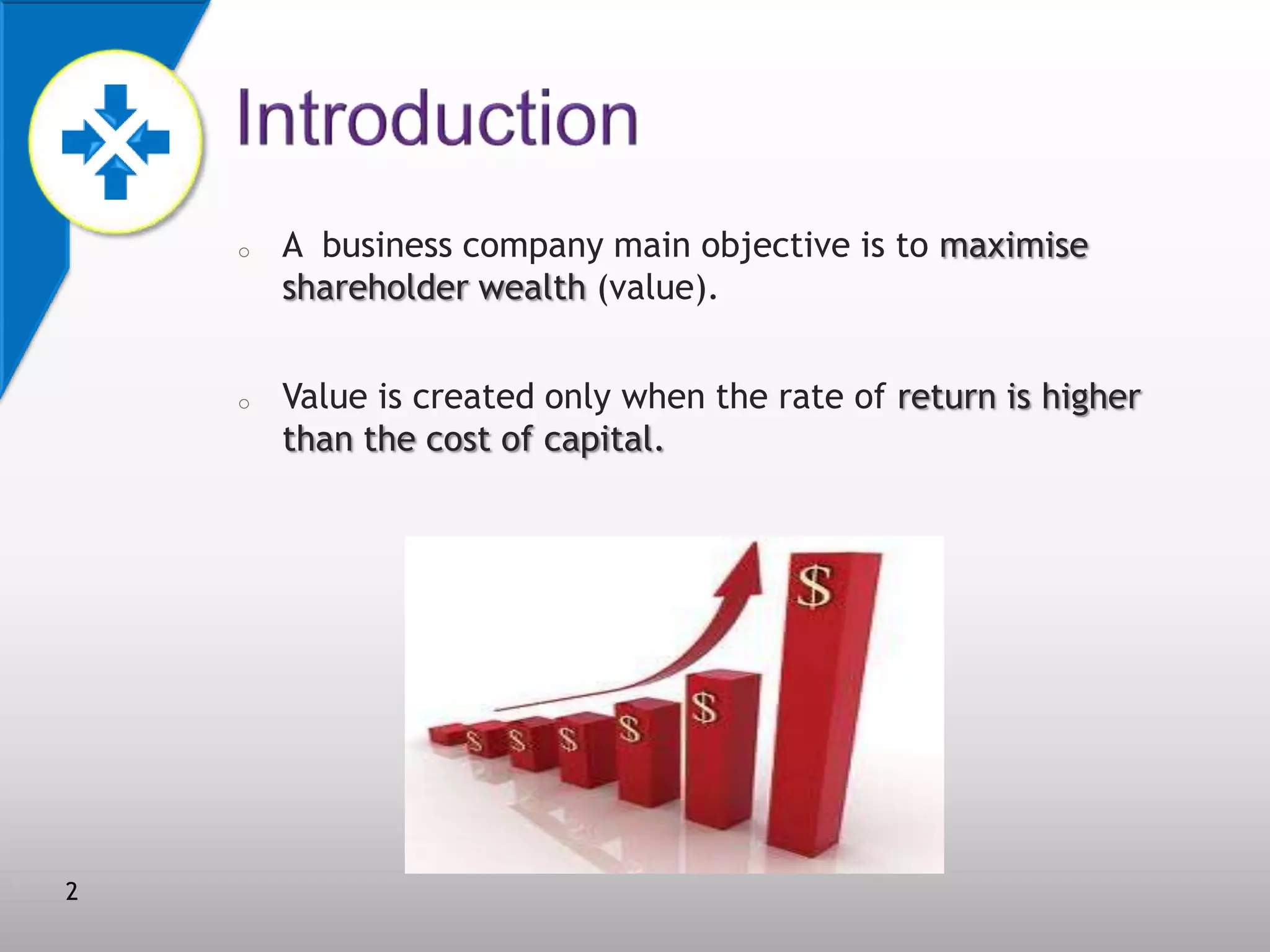
A business company main objective is to maximise
shareholder wealth (value).
Value is created only when the rate of return is higher
than the cost of capital.
o

o

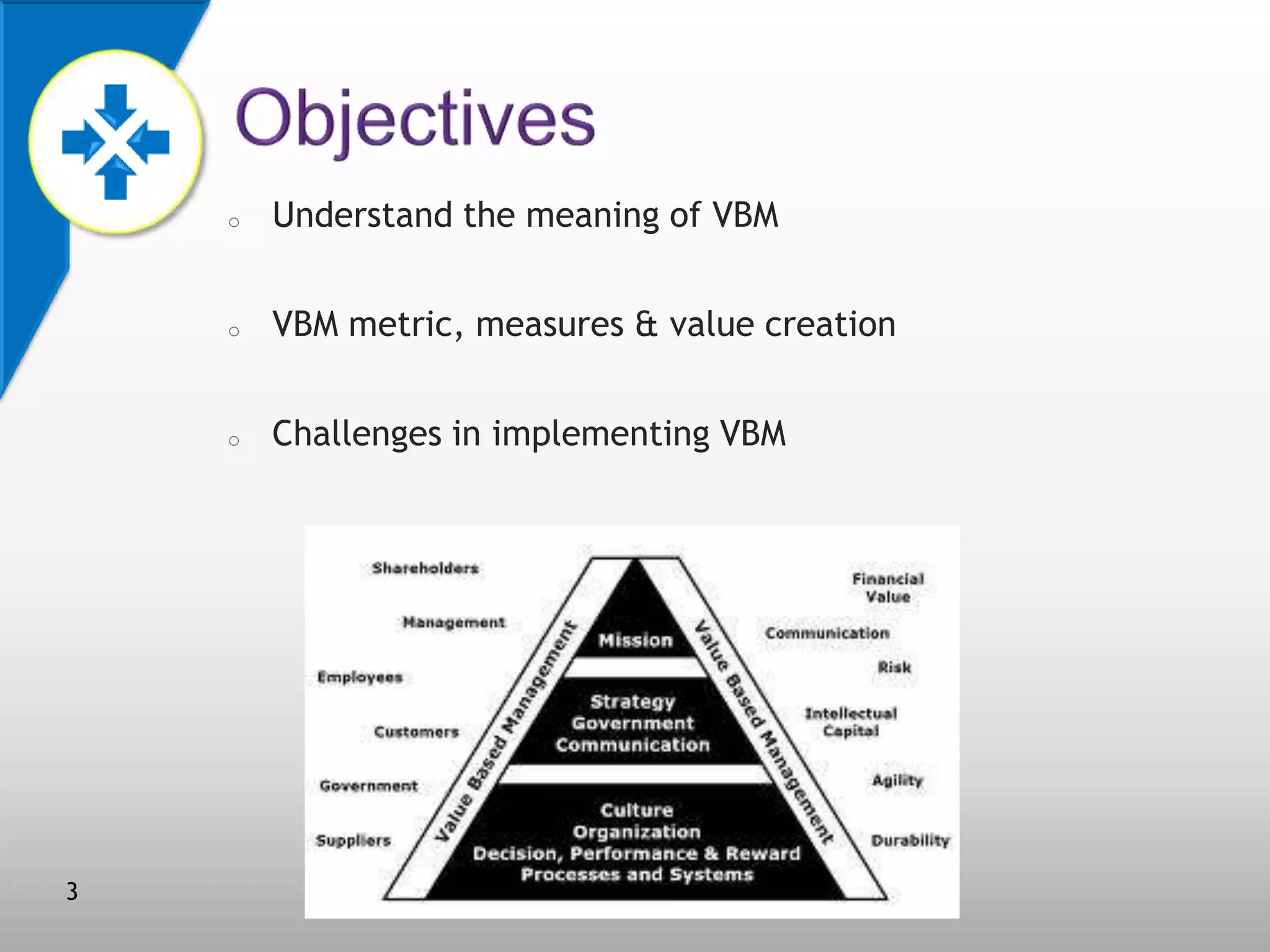
VBM metric, measures & value creation

o

3

Understand the meaning of VBM

Challenges in implementing VBM
o
o
o
o
o

o
o
o

4

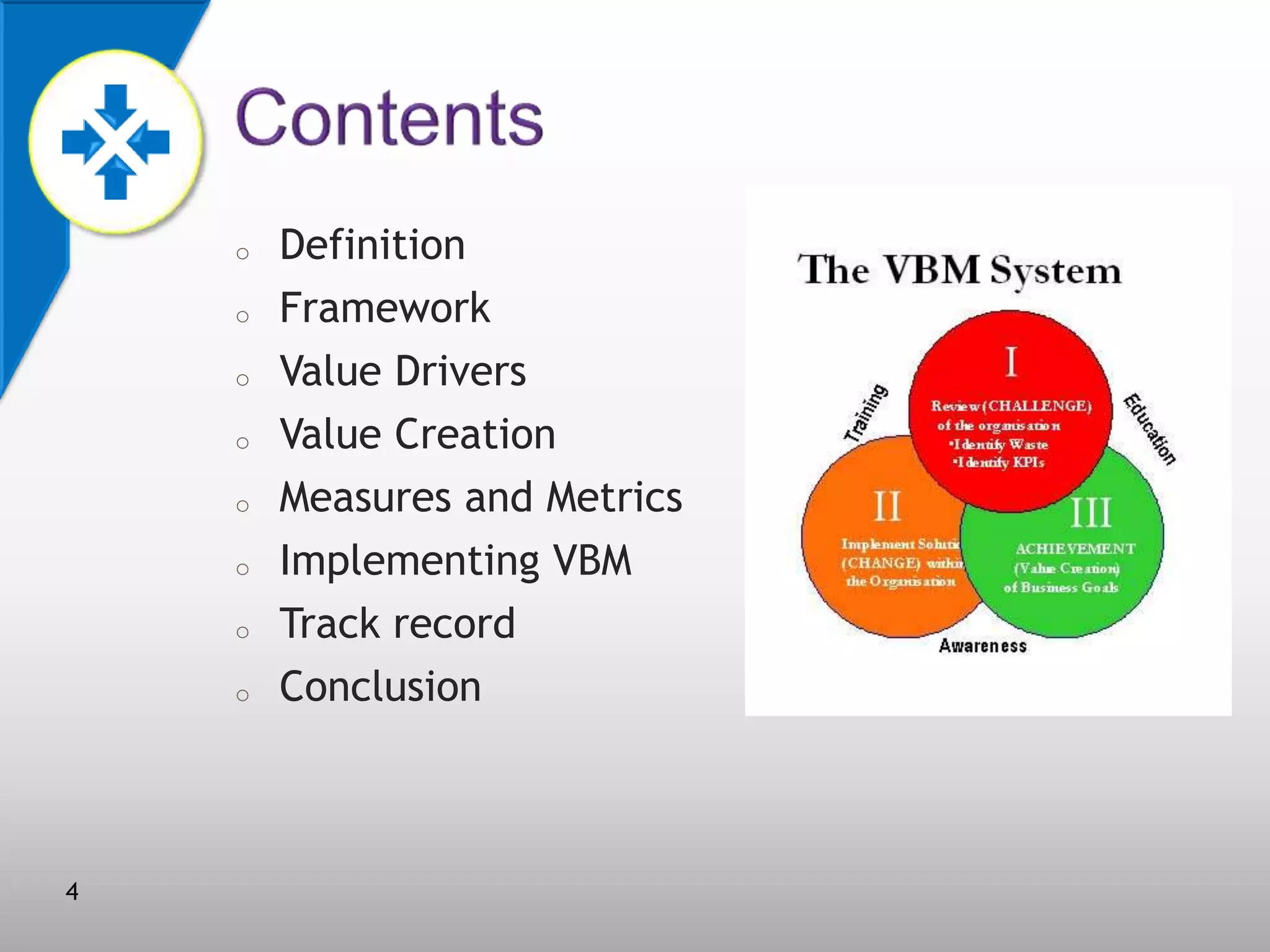
Definition
Framework
Value Drivers
Value Creation
Measures and Metrics
Implementing VBM
Track record
Conclusion



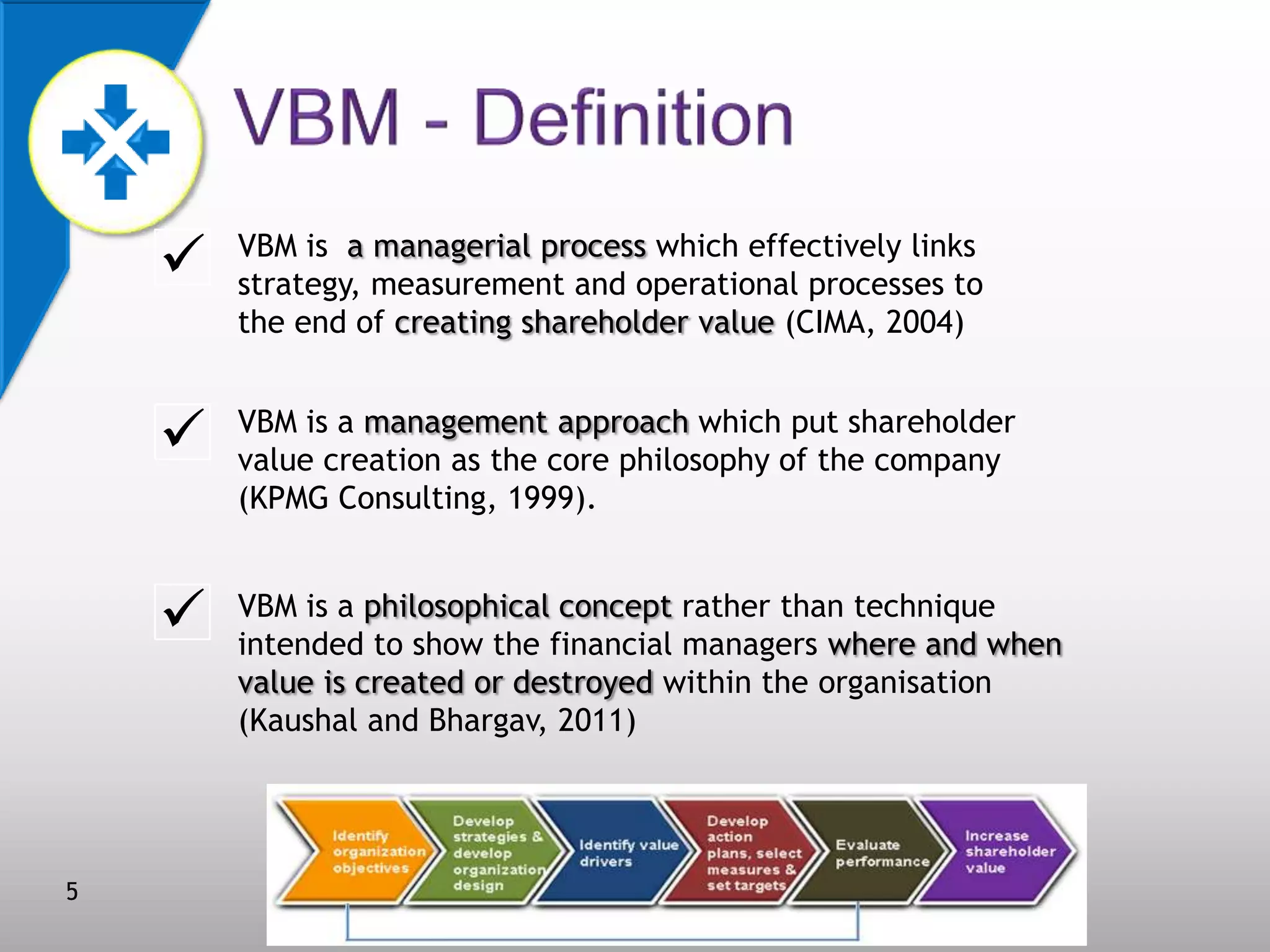
VBM is a management approach which put shareholder
value creation as the core philosophy of the company
(KPMG Consulting, 1999).



5

VBM is a managerial process which effectively links
strategy, measurement and operational processes to
the end of creating shareholder value (CIMA, 2004)

VBM is a philosophical concept rather than technique
intended to show the financial managers where and when
value is created or destroyed within the organisation
(Kaushal and Bhargav, 2011)
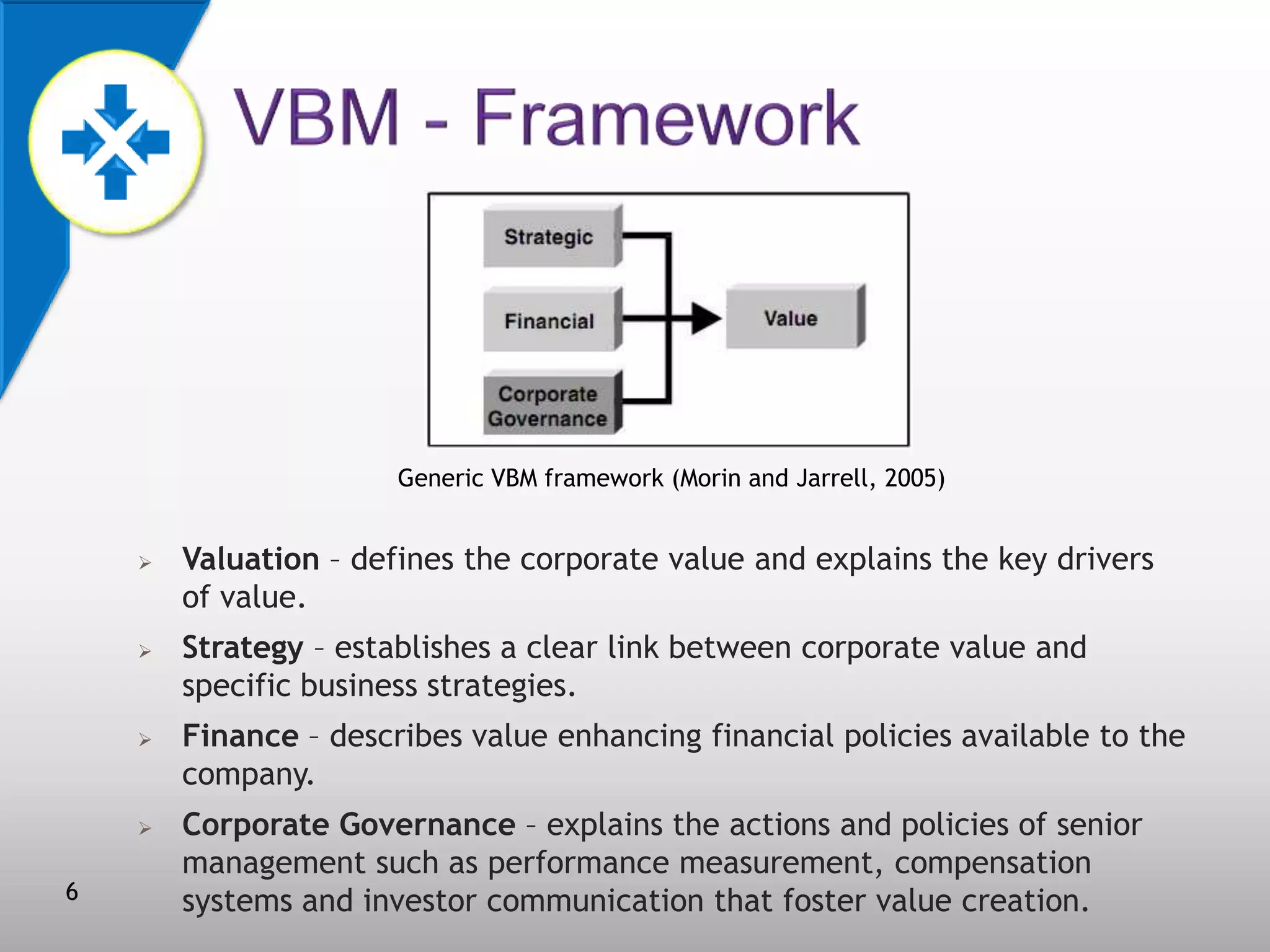
Generic VBM framework (Morin and Jarrell, 2005)








6

Valuation – defines the corporate value and explains the key drivers
of value.

Strategy – establishes a clear link between corporate value and
specific business strategies.
Finance – describes value enhancing financial policies available to the
company.
Corporate Governance – explains the actions and policies of senior
management such as performance measurement, compensation
systems and investor communication that foster value creation.
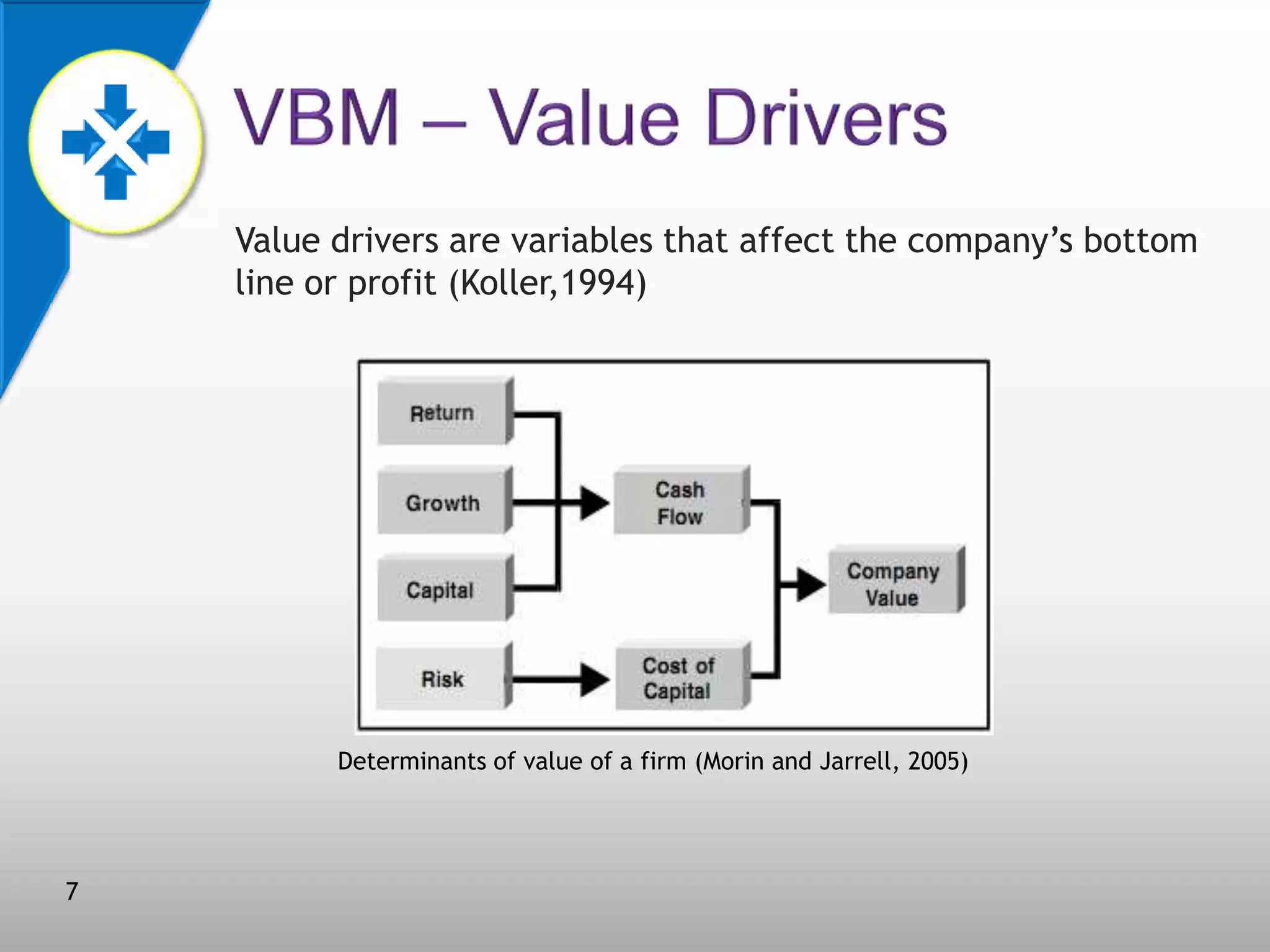
Value drivers are variables that affect the company’s bottom
line or profit (Koller,1994)

Determinants of value of a firm (Morin and Jarrell, 2005)

7


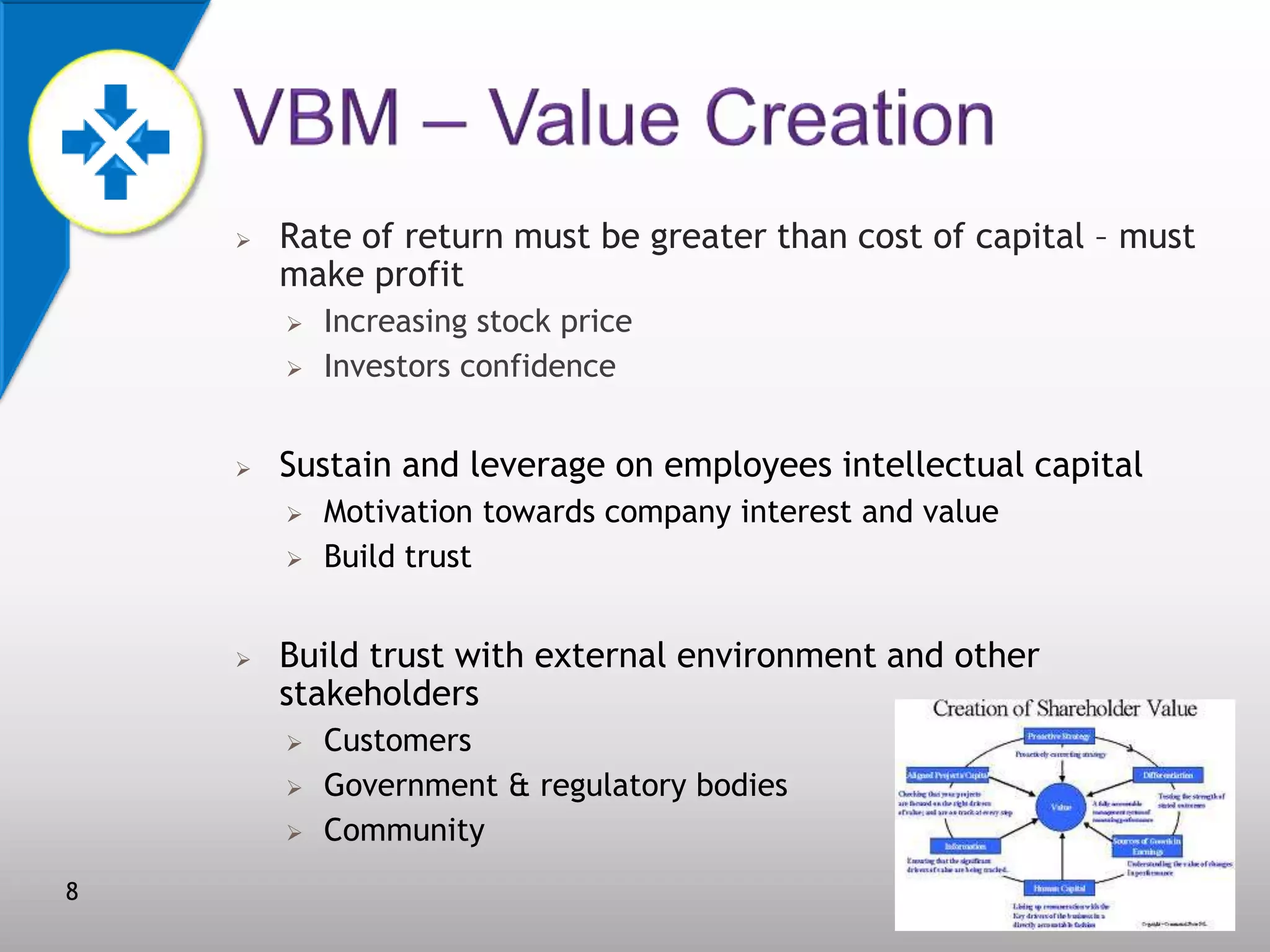
Rate of return must be greater than cost of capital – must
make profit





Sustain and leverage on employees intellectual capital






Motivation towards company interest and value
Build trust

Build trust with external environment and other
stakeholders




8

Increasing stock price
Investors confidence

Customers
Government & regulatory bodies
Community
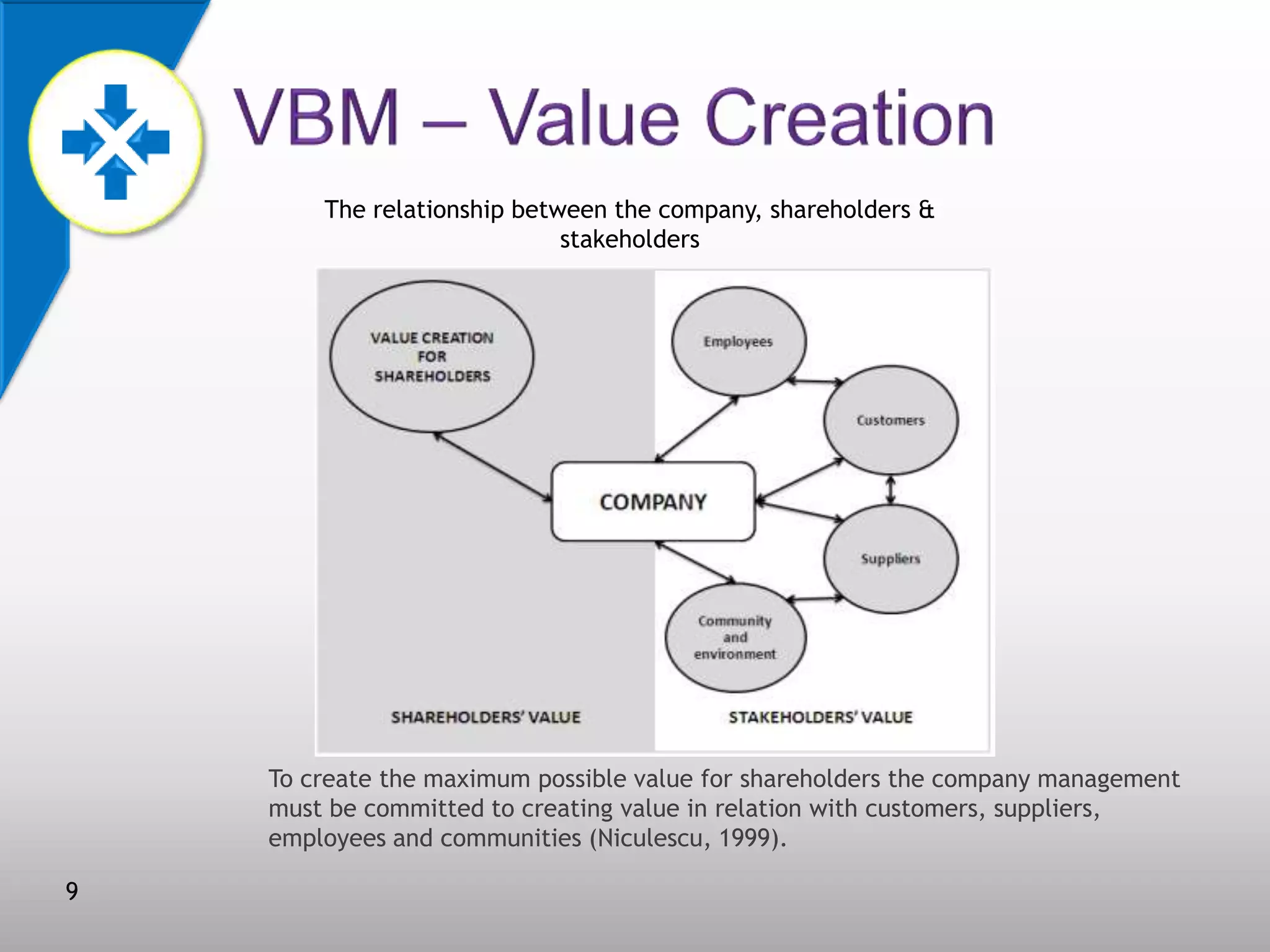
The relationship between the company, shareholders &
stakeholders

To create the maximum possible value for shareholders the company management
must be committed to creating value in relation with customers, suppliers,
employees and communities (Niculescu, 1999).
9


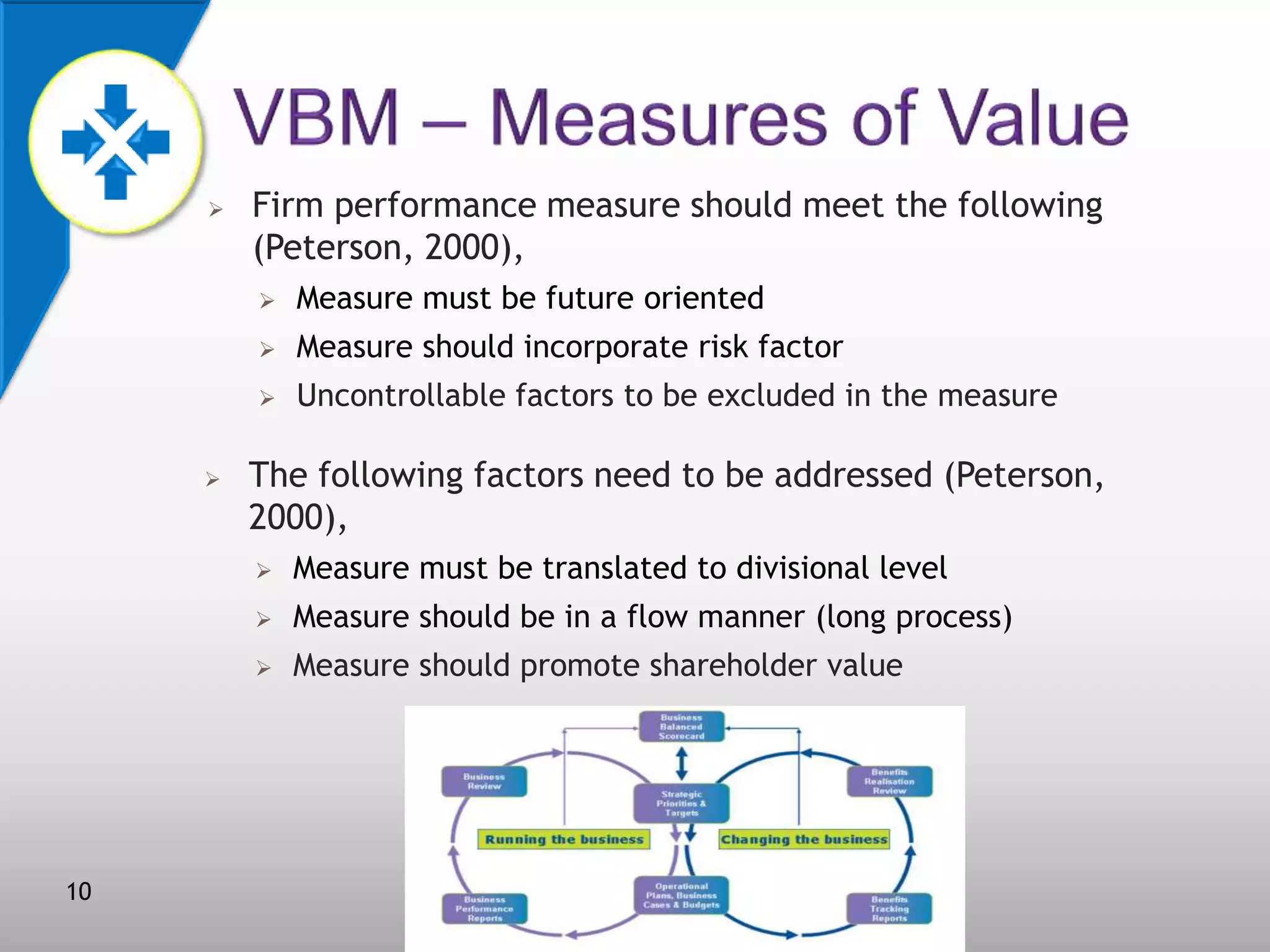
Firm performance measure should meet the following
(Peterson, 2000),



Measure should incorporate risk factor





Measure must be future oriented
Uncontrollable factors to be excluded in the measure

The following factors need to be addressed (Peterson,
2000),



Measure should be in a flow manner (long process)



10

Measure must be translated to divisional level
Measure should promote shareholder value


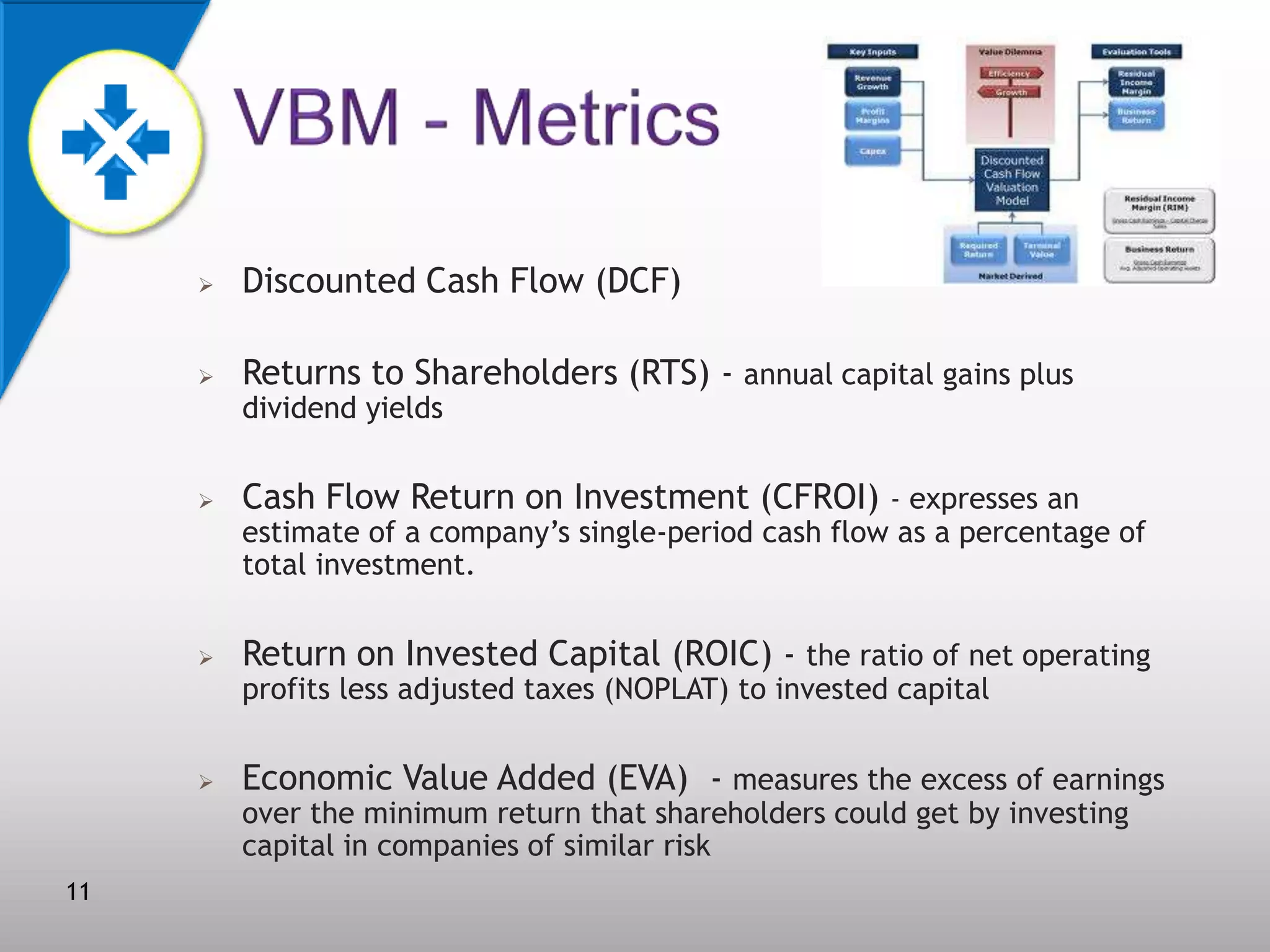
Discounted Cash Flow (DCF)



Returns to Shareholders (RTS) - annual capital gains plus
dividend yields



Cash Flow Return on Investment (CFROI) - expresses an

estimate of a company’s single-period cash flow as a percentage of
total investment.


Return on Invested Capital (ROIC) - the ratio of net operating
profits less adjusted taxes (NOPLAT) to invested capital



Economic Value Added (EVA) - measures the excess of earnings
over the minimum return that shareholders could get by investing
capital in companies of similar risk

11








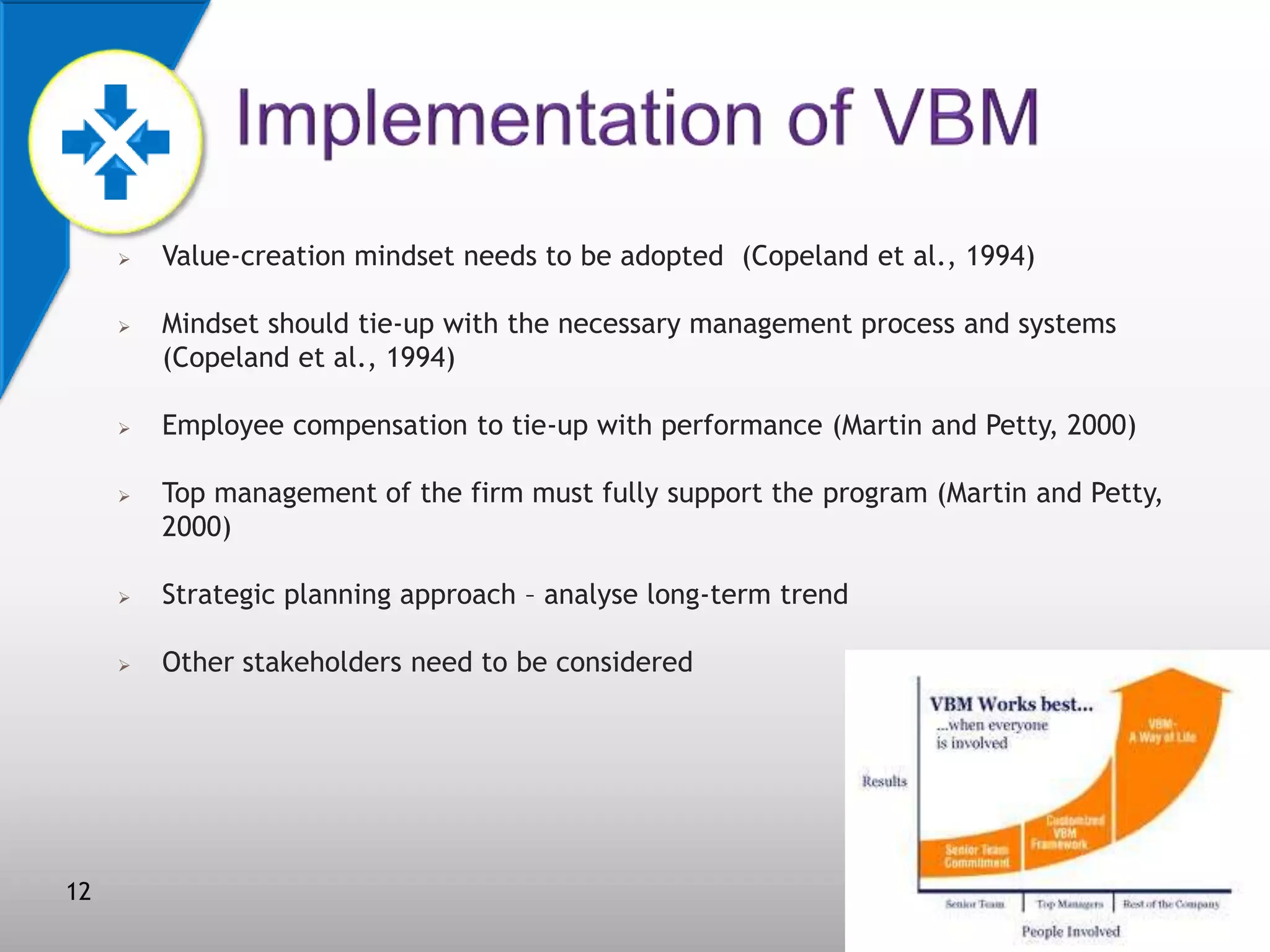
Value-creation mindset needs to be adopted (Copeland et al., 1994)
Mindset should tie-up with the necessary management process and systems
(Copeland et al., 1994)

Employee compensation to tie-up with performance (Martin and Petty, 2000)
Top management of the firm must fully support the program (Martin and Petty,
2000)





12

Strategic planning approach – analyse long-term trend
Other stakeholders need to be considered


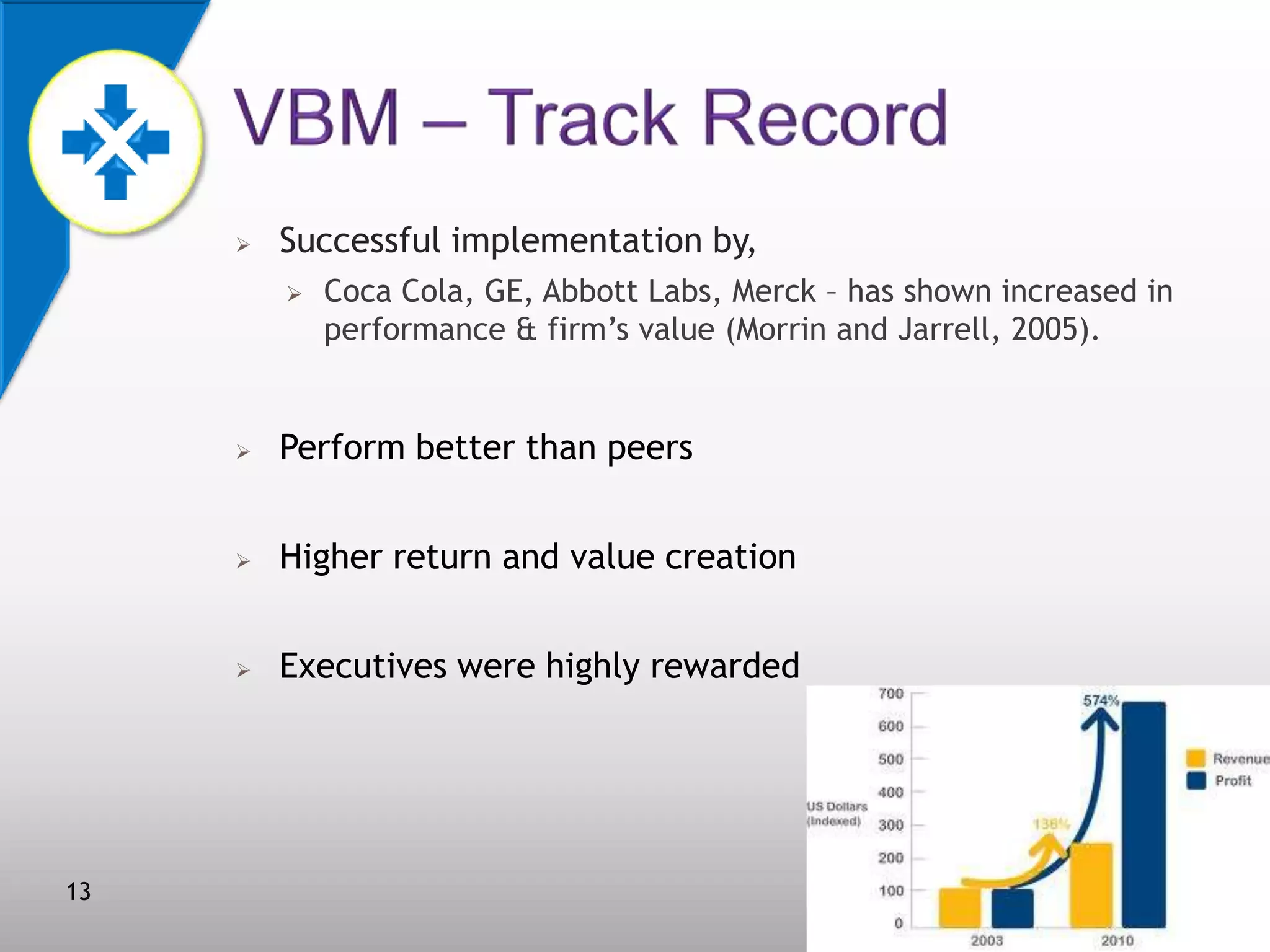
Successful implementation by,


Coca Cola, GE, Abbott Labs, Merck – has shown increased in
performance & firm’s value (Morrin and Jarrell, 2005).





Higher return and value creation



13

Perform better than peers

Executives were highly rewarded
14

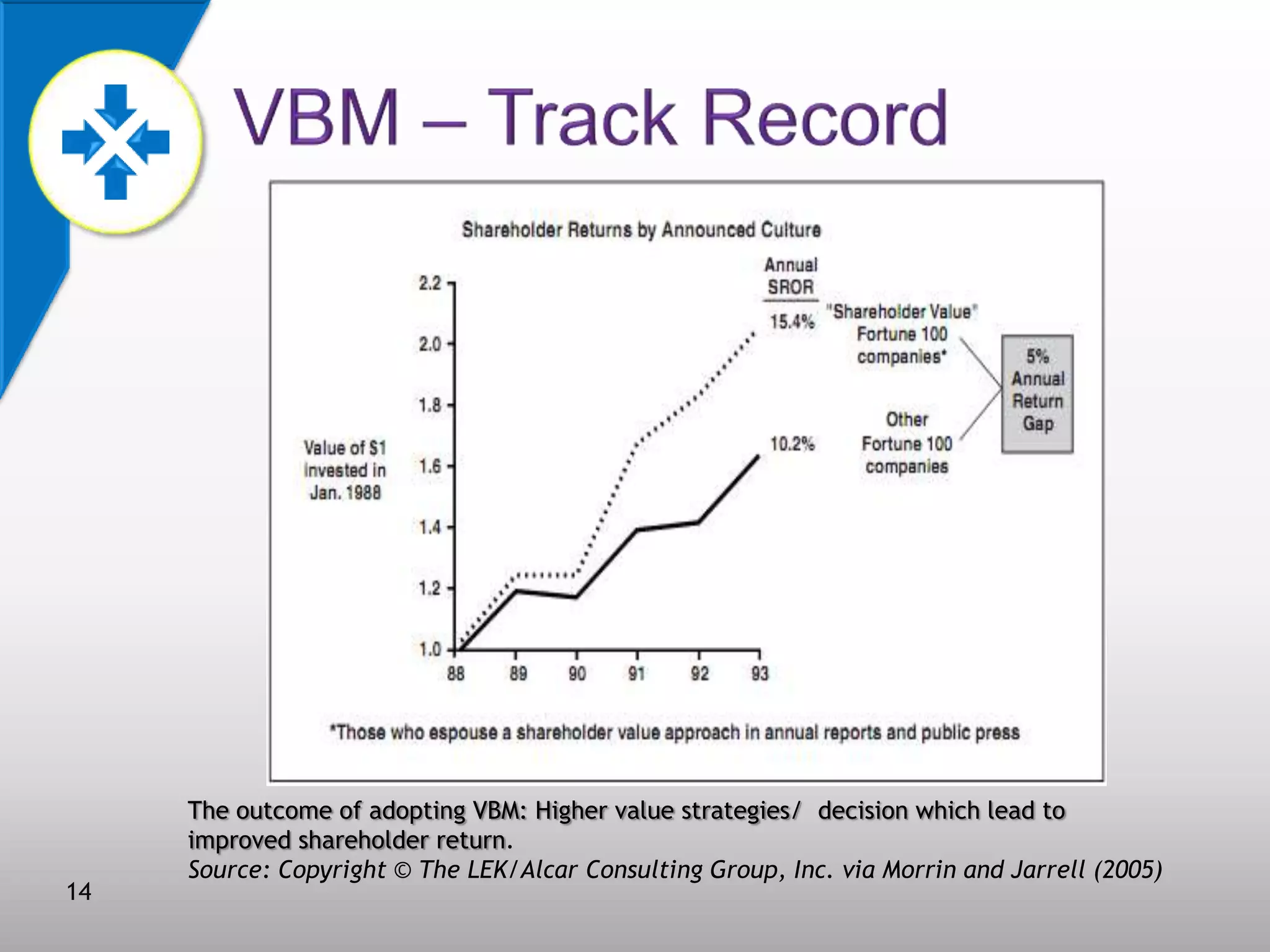
The outcome of adopting VBM: Higher value strategies/ decision which lead to
improved shareholder return.
Source: Copyright © The LEK/Alcar Consulting Group, Inc. via Morrin and Jarrell (2005)
o

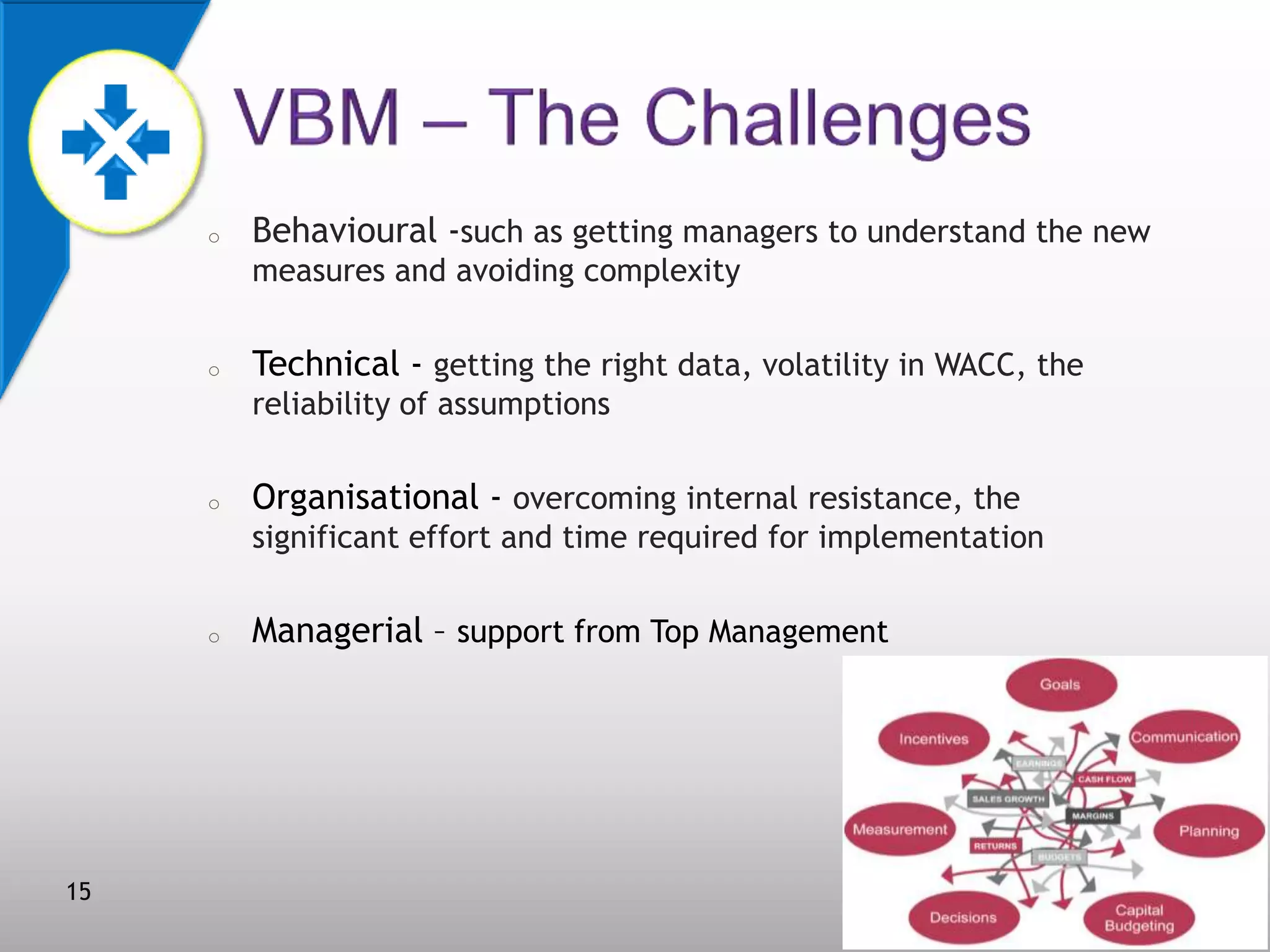
Behavioural -such as getting managers to understand the new
measures and avoiding complexity

o

Technical - getting the right data, volatility in WACC, the
reliability of assumptions

o

Organisational - overcoming internal resistance, the
significant effort and time required for implementation

o

15

Managerial – support from Top Management








16

Implementation of VBM by various Fortune 100 companies has
proven the effectiveness of VBM in creating and increasing firm’s
value.
Companies need to adopt VBM with performance measures that is
relevant and suitable to their organisations’
Top management support and commitment will ensure ‘smooth’
implementation of VBM

To maintain the competitive edge and continue to create value
performance metrics adopted need to be constantly monitored
and assessed


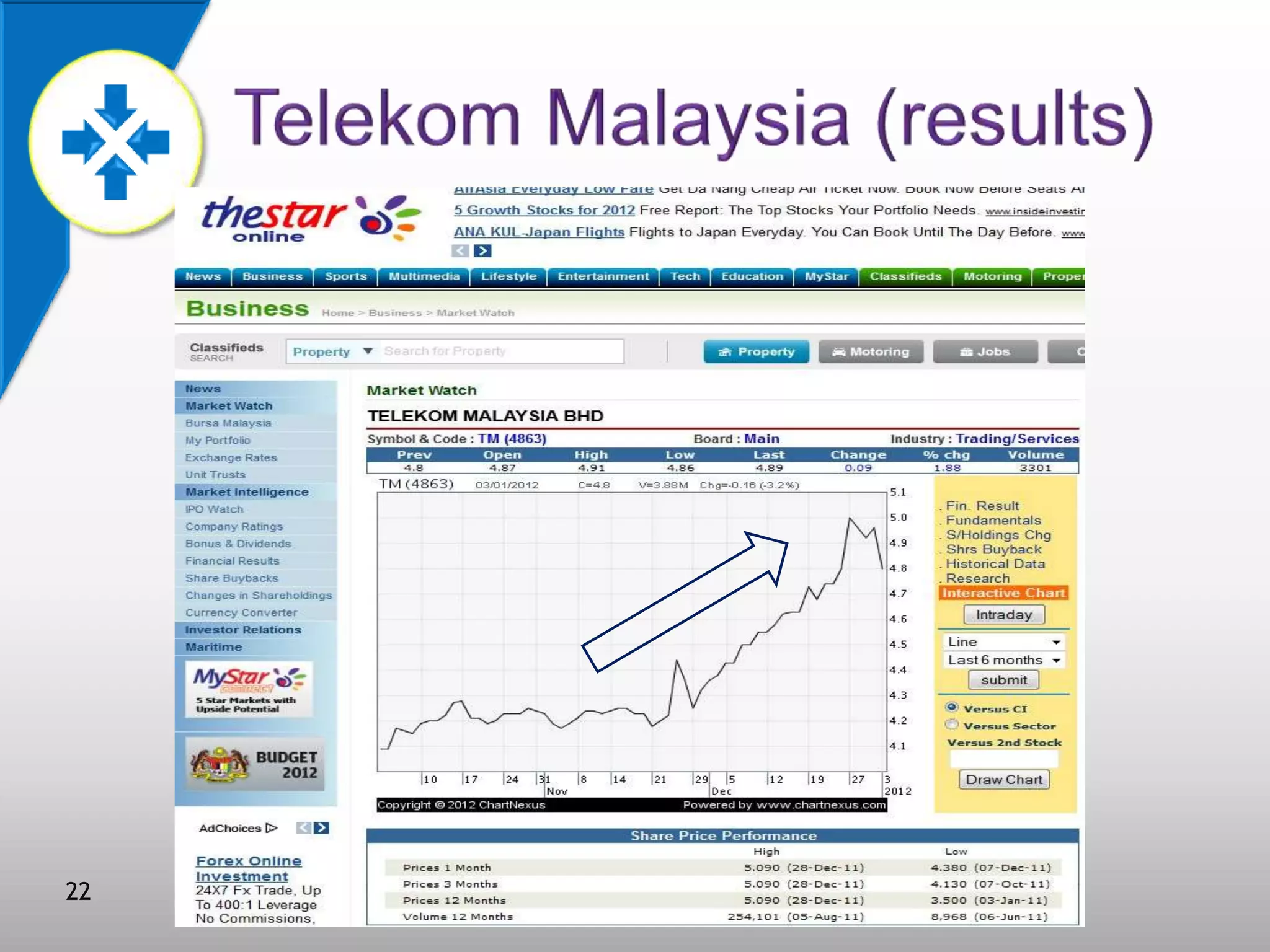
Introduced Smart Orange under the GLC Transformation program in 2004



Process includes,



18

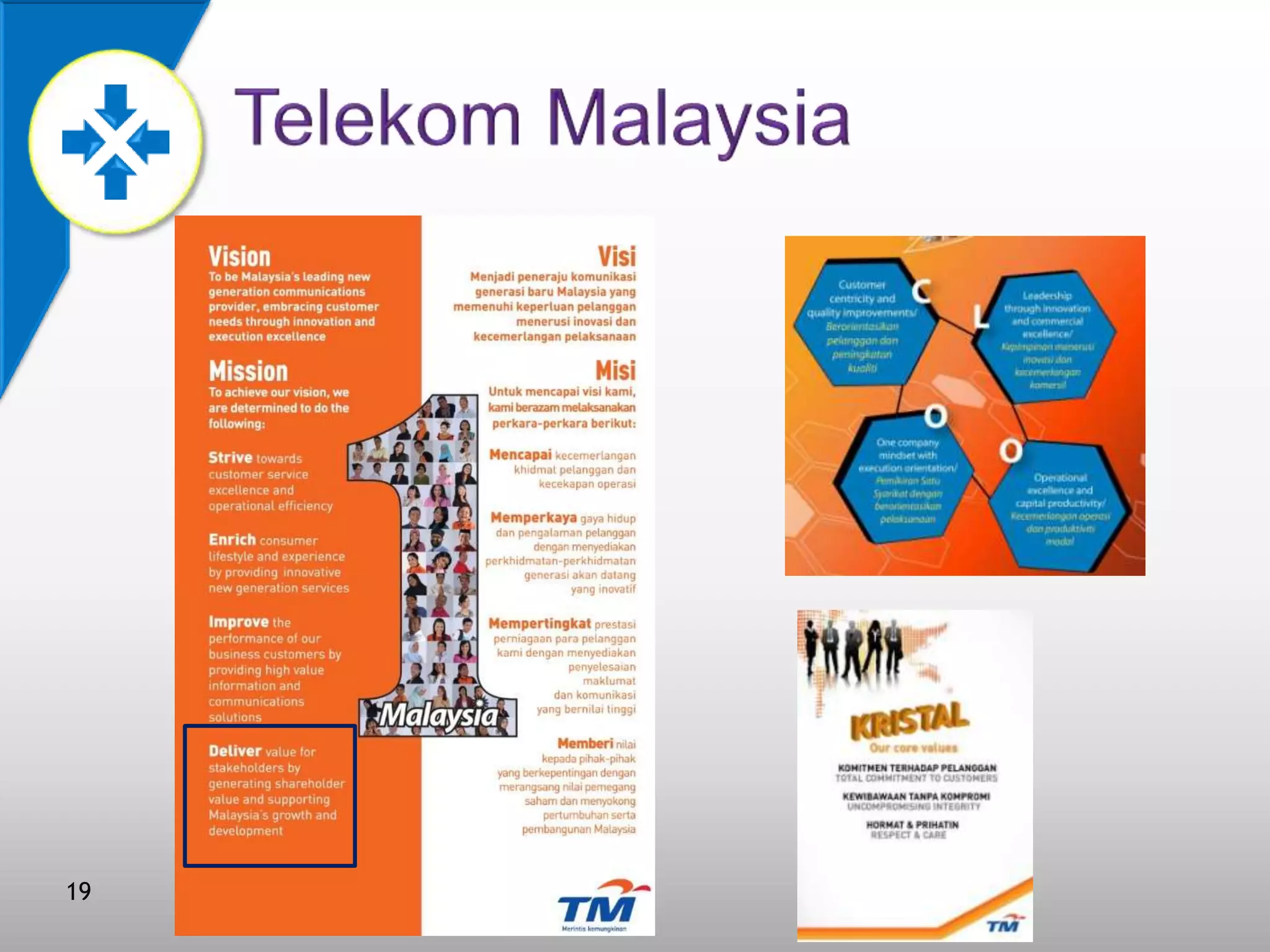
Introducing Core Values – Kristal





Restructuring into 2 separate SBUs - Wholesale and Retail





Realign Vision, Mission and Business Strategy

Develop competency model – Functional & Behavioural

Full Top management support and commitment
To continue to create value - Teaming With Passion Program were
carried out – compulsory for all staff and Leadership team to attend
19
20
21
22

Value-based Management

  • 1.
  • 2.
    o o 2 A business companymain objective is to maximise shareholder wealth (value). Value is created only when the rate of return is higher than the cost of capital.
  • 3.
    o o VBM metric, measures& value creation o 3 Understand the meaning of VBM Challenges in implementing VBM
  • 4.
    o o o o o o o o 4 Definition Framework Value Drivers Value Creation Measuresand Metrics Implementing VBM Track record Conclusion
  • 5.
      VBM is amanagement approach which put shareholder value creation as the core philosophy of the company (KPMG Consulting, 1999).  5 VBM is a managerial process which effectively links strategy, measurement and operational processes to the end of creating shareholder value (CIMA, 2004) VBM is a philosophical concept rather than technique intended to show the financial managers where and when value is created or destroyed within the organisation (Kaushal and Bhargav, 2011)
  • 6.
    Generic VBM framework(Morin and Jarrell, 2005)     6 Valuation – defines the corporate value and explains the key drivers of value. Strategy – establishes a clear link between corporate value and specific business strategies. Finance – describes value enhancing financial policies available to the company. Corporate Governance – explains the actions and policies of senior management such as performance measurement, compensation systems and investor communication that foster value creation.
  • 7.
    Value drivers arevariables that affect the company’s bottom line or profit (Koller,1994) Determinants of value of a firm (Morin and Jarrell, 2005) 7
  • 8.
     Rate of returnmust be greater than cost of capital – must make profit    Sustain and leverage on employees intellectual capital    Motivation towards company interest and value Build trust Build trust with external environment and other stakeholders    8 Increasing stock price Investors confidence Customers Government & regulatory bodies Community
  • 9.
    The relationship betweenthe company, shareholders & stakeholders To create the maximum possible value for shareholders the company management must be committed to creating value in relation with customers, suppliers, employees and communities (Niculescu, 1999). 9
  • 10.
     Firm performance measureshould meet the following (Peterson, 2000),   Measure should incorporate risk factor   Measure must be future oriented Uncontrollable factors to be excluded in the measure The following factors need to be addressed (Peterson, 2000),   Measure should be in a flow manner (long process)  10 Measure must be translated to divisional level Measure should promote shareholder value
  • 11.
     Discounted Cash Flow(DCF)  Returns to Shareholders (RTS) - annual capital gains plus dividend yields  Cash Flow Return on Investment (CFROI) - expresses an estimate of a company’s single-period cash flow as a percentage of total investment.  Return on Invested Capital (ROIC) - the ratio of net operating profits less adjusted taxes (NOPLAT) to invested capital  Economic Value Added (EVA) - measures the excess of earnings over the minimum return that shareholders could get by investing capital in companies of similar risk 11
  • 12.
        Value-creation mindset needsto be adopted (Copeland et al., 1994) Mindset should tie-up with the necessary management process and systems (Copeland et al., 1994) Employee compensation to tie-up with performance (Martin and Petty, 2000) Top management of the firm must fully support the program (Martin and Petty, 2000)   12 Strategic planning approach – analyse long-term trend Other stakeholders need to be considered
  • 13.
     Successful implementation by,  CocaCola, GE, Abbott Labs, Merck – has shown increased in performance & firm’s value (Morrin and Jarrell, 2005).   Higher return and value creation  13 Perform better than peers Executives were highly rewarded
  • 14.
    14 The outcome ofadopting VBM: Higher value strategies/ decision which lead to improved shareholder return. Source: Copyright © The LEK/Alcar Consulting Group, Inc. via Morrin and Jarrell (2005)
  • 15.
    o Behavioural -such asgetting managers to understand the new measures and avoiding complexity o Technical - getting the right data, volatility in WACC, the reliability of assumptions o Organisational - overcoming internal resistance, the significant effort and time required for implementation o 15 Managerial – support from Top Management
  • 16.
        16 Implementation of VBMby various Fortune 100 companies has proven the effectiveness of VBM in creating and increasing firm’s value. Companies need to adopt VBM with performance measures that is relevant and suitable to their organisations’ Top management support and commitment will ensure ‘smooth’ implementation of VBM To maintain the competitive edge and continue to create value performance metrics adopted need to be constantly monitored and assessed
  • 18.
     Introduced Smart Orangeunder the GLC Transformation program in 2004  Process includes,   18 Introducing Core Values – Kristal   Restructuring into 2 separate SBUs - Wholesale and Retail   Realign Vision, Mission and Business Strategy Develop competency model – Functional & Behavioural Full Top management support and commitment To continue to create value - Teaming With Passion Program were carried out – compulsory for all staff and Leadership team to attend
  • 19.
  • 20.
  • 21.
  • 22.