BUSINESS CYCLE
BUSINESS CYCLE
• Business cycle is also known as economic cycle
or trade cycle.
• It refers to the phenomenon of cyclical booms
and depression.
• In business cycle there are wave like fluctuations
in employment, income, price-level and output.
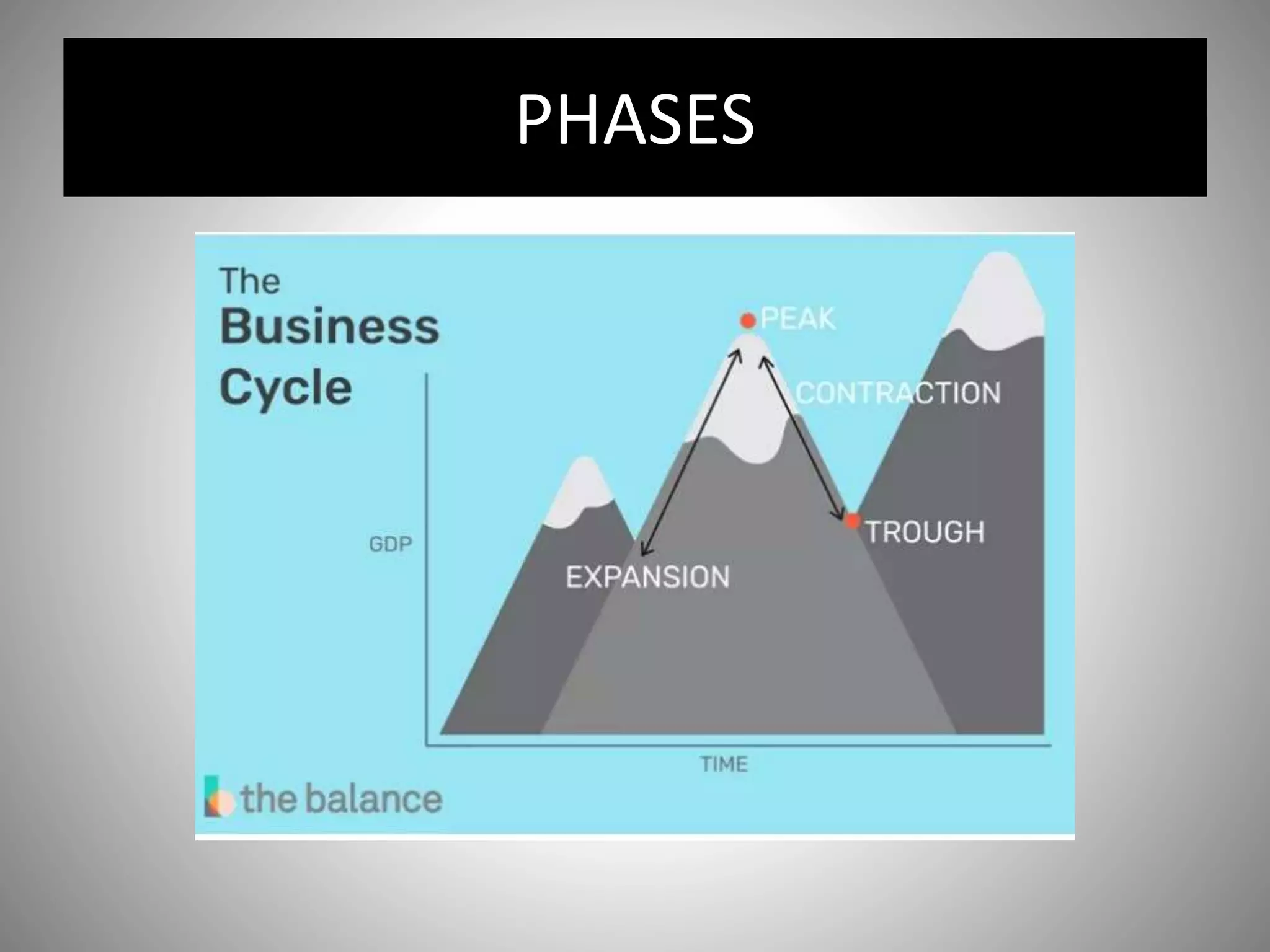
PHASES
EXPANSION
DURING A PERIOD OF EXPANSION:
• Wages increase
• Low unemployment
• People are optimistic and spending money
• High demand for goods
• Business starts
• Easy to get a bank loan
• Business make profits and stock prices
increases
PEAK or PROSPERITY
WHEN THE ECONOMY CYCLE PEAKS:
• The economy stops growing(reached the top)
• GDP reaches maximum
• Business can’t produce any more or hire more
people
• Cycle begins to contract
CONTRACTION
DURING A PERIOD OF CONTRACTION:
• Business cut back production and layoff
people
• Unemployment increases
• Number of jobs decline
• People are pessimistic (negative) and stop
spending money
• Banks stop lending money.
RECESSION and DEPRESSION
• A prolonged contraction is called a
recession(contraction for over 6 months)
• A recession of more than one year is called a
depression
MEASURES TO CONTROL
BUSINESS CYCLE
• Monetary policy- the central bank can practice
the monetary measures.
• Fiscal measures- budgetary measures,
taxation, public expenditure and public debt.
• Price control- prices should be kept under
check.
• Reduction of economic inequalities.
CONCLUSION
Though the government has taken a number
of steps, business cycle is not so easy to be
controlled.
The business cycle seems to have become
an almost natural feature of the present
economy.
However, to get desirable results both
monetary and fiscal policies should be
combined and implemented effectively.
Business  cycle

Business cycle

  • 1.
  • 2.
    BUSINESS CYCLE • Businesscycle is also known as economic cycle or trade cycle. • It refers to the phenomenon of cyclical booms and depression. • In business cycle there are wave like fluctuations in employment, income, price-level and output.
  • 3.
  • 5.
    EXPANSION DURING A PERIODOF EXPANSION: • Wages increase • Low unemployment • People are optimistic and spending money • High demand for goods • Business starts • Easy to get a bank loan • Business make profits and stock prices increases
  • 6.
    PEAK or PROSPERITY WHENTHE ECONOMY CYCLE PEAKS: • The economy stops growing(reached the top) • GDP reaches maximum • Business can’t produce any more or hire more people • Cycle begins to contract
  • 7.
    CONTRACTION DURING A PERIODOF CONTRACTION: • Business cut back production and layoff people • Unemployment increases • Number of jobs decline • People are pessimistic (negative) and stop spending money • Banks stop lending money.
  • 8.
    RECESSION and DEPRESSION •A prolonged contraction is called a recession(contraction for over 6 months) • A recession of more than one year is called a depression
  • 9.
    MEASURES TO CONTROL BUSINESSCYCLE • Monetary policy- the central bank can practice the monetary measures. • Fiscal measures- budgetary measures, taxation, public expenditure and public debt. • Price control- prices should be kept under check. • Reduction of economic inequalities.
  • 10.
    CONCLUSION Though the governmenthas taken a number of steps, business cycle is not so easy to be controlled. The business cycle seems to have become an almost natural feature of the present economy. However, to get desirable results both monetary and fiscal policies should be combined and implemented effectively.