Business Analysis Core
Standard Knowledge Areas
by
Ayo Apampa MSc Engr. And Economics
Business Analysis Professional Diploma | Member IIBA
Certified Scrum Master | Certified Scrum Product Owner
GDPR Certified | Member International Association of Privacy Policy
Microsoft Technical Associate | Certified in Server 2012, Network Fundamentals and Office 365
Affiliate International Compliance Association
The Core Standard knowledge areas are:
• Business Analysis Planning and Monitoring
• Elicitation and Collaboration
• Requirements Life Cycle Management
• Strategy Analysis
• Requirements Analysis and Design Definition
• Solution Evaluation
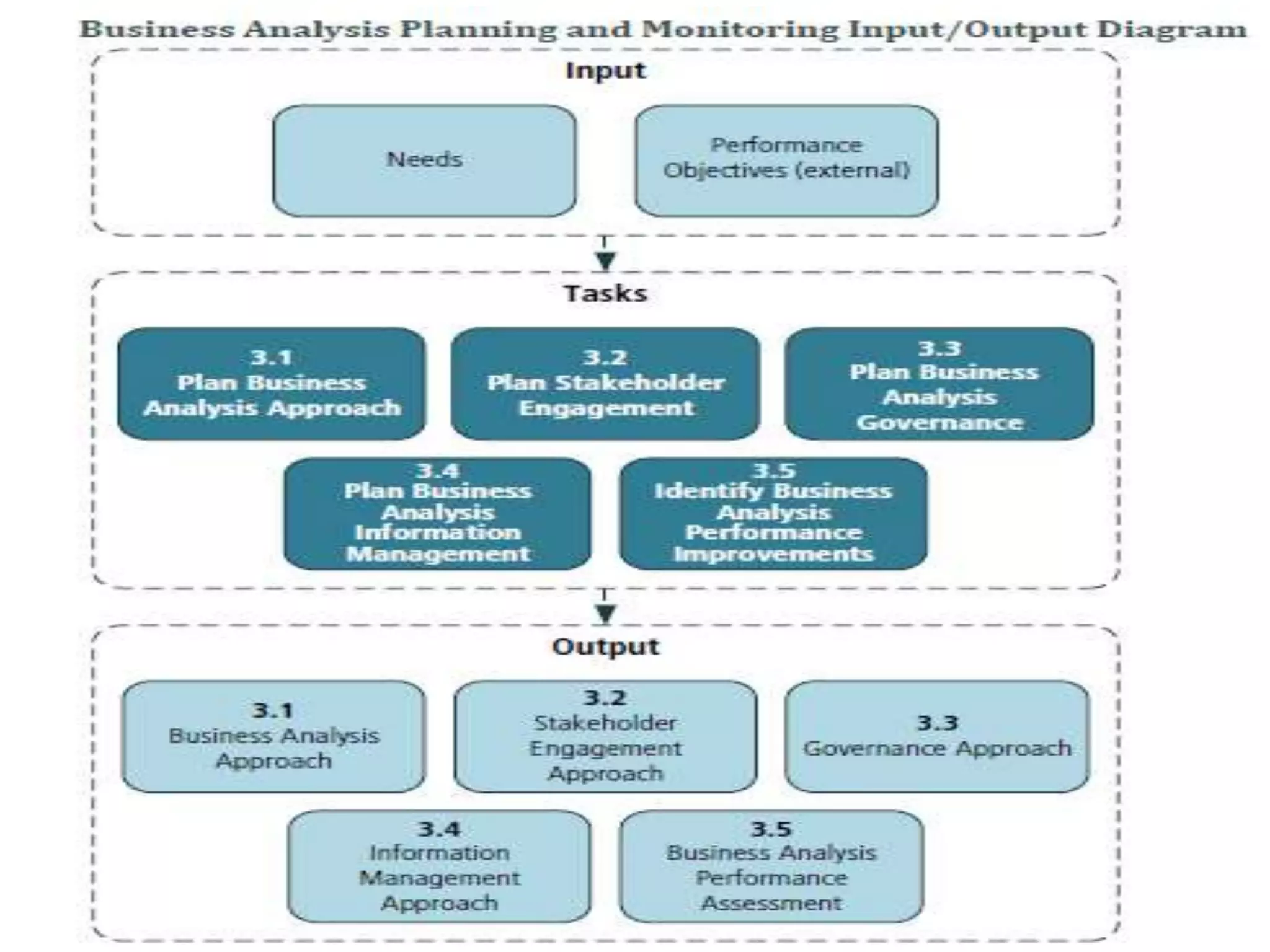
The Business Analysis Planning and Monitoring
knowledge area includes the following tasks:
• Plan Business Analysis Approach
• Plan Stakeholder Engagement
• Plan Business Analysis Governance
• Plan Business Analysis Information Management
• Identify Business Analysis Performance Improvements
Elicitation and Collaboration
Elicitation is the drawing forth or receiving of information
from stakeholders or other sources.
It is the main path to discovering requirements and
design information, and might involve talking with
stakeholders directly, researching topics, experimenting,
or simply being handed information.
Elicitation and collaboration can be planned,
unplanned, or both.
Planned activities such as workshops, experiments,
and/or surveys can be structured and organised in
advance.
Unplanned activities happen in the moment without
notice, such as last-minute or 'just in time' collaboration
or conversations.
Business analysis information derived from an
unplanned activity may require deeper exploration
through a planned activity.
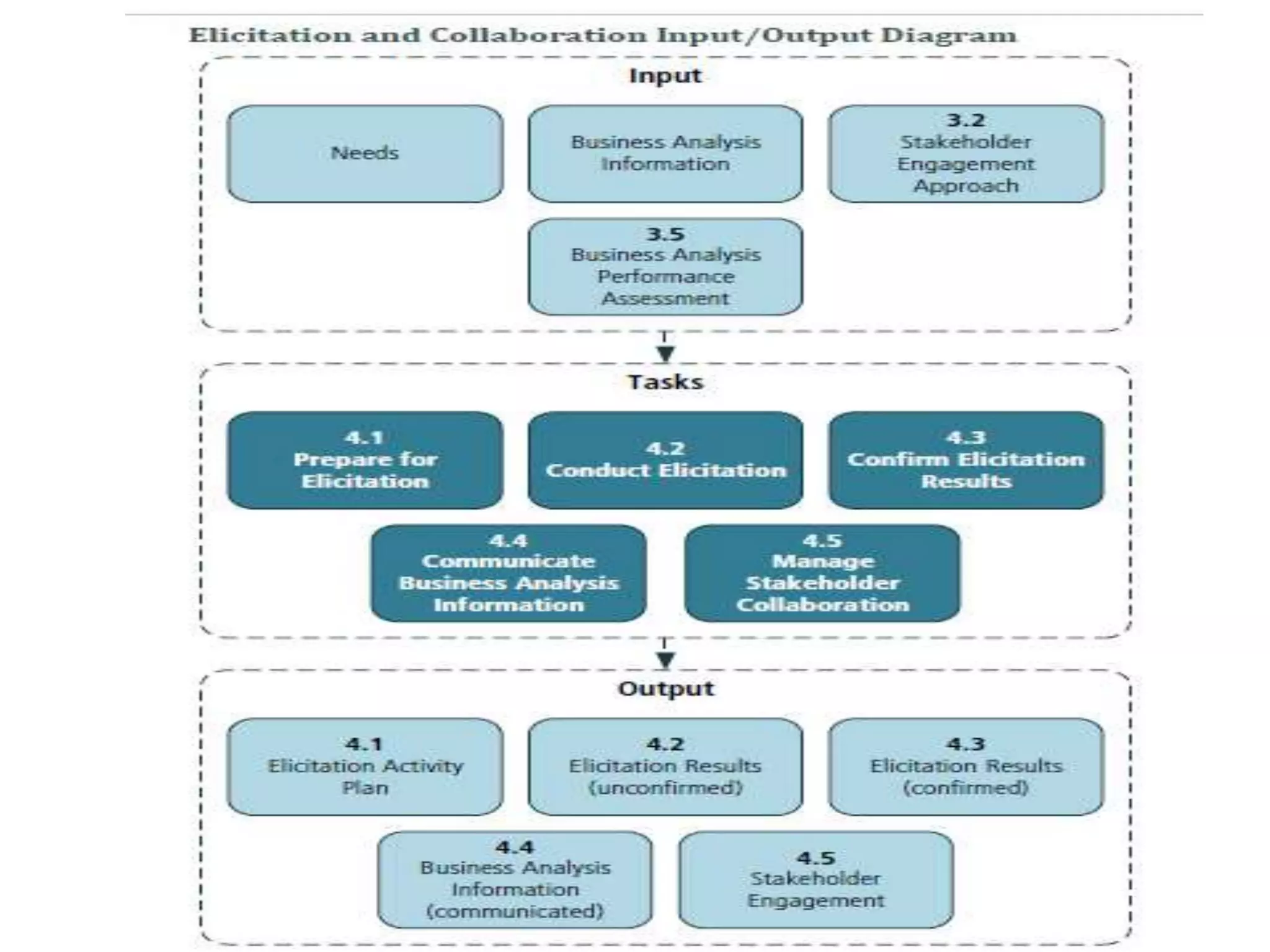
• Prepare for Elicitation (Gathering Requirements)
• Conduct Elicitation
• Confirm Elicitation Results
• Communicate Business Analysis Information
(Requirements gathered/needs)
• Manage Stakeholder Collaboration
The Elicitation and Collaboration knowledge
area is composed of the following tasks:
Requirements Life Cycle Management
The purpose of requirements life cycle management is
to ensure that business, stakeholder, and solution
requirements and designs are aligned to one another
and that the solution implements them.
It involves a level of control over requirements and
over how requirements will be implemented in the
actual solution to be constructed and delivered. It
also helps to ensure that business analysis
information is available for future use.
The requirements life cycle
• begins with the representation of a business need
as a requirement
• continues through the development of a solution
• ends when a solution and the requirements that
represent it are retired.
• Trace Requirements
• Maintain Requirements
• Prioritise Requirements
• Assess Requirements Change
• Approve/Validate Requirements
The Requirements Life Cycle Management
knowledge area includes the following tasks:
Strategy Analysis
The Strategy Analysis knowledge area describes the
business analysis work that must be performed to
collaborate with stakeholders in order to identify a
need of strategic or tactical importance (the business
need), enable the enterprise to address that need,
and align the resulting strategy for the change with
higher- and lower-level strategies.
The Strategy Analysis knowledge area
includes the following tasks:
• Analyse Current State
• Define Future State
• Assess Risks
• Define Change Strategy
Requirements Analysis and Design Definition
The Requirements Analysis and Design Definition
knowledge area describes the tasks that business
analysts perform to structure and organise
requirements discovered during elicitation activities,
specify and model requirements and designs, validate
and verify information, identify solution options that
meet business needs, and estimate the potential value
that could be realised for each solution option.
Business analysts analyse the potential value of both
requirements and designs.
In collaboration with implementation subject matter
experts, business analysts define solution options that
can be evaluated in order to recommend the best
solution option that meets the need and brings
the most value.
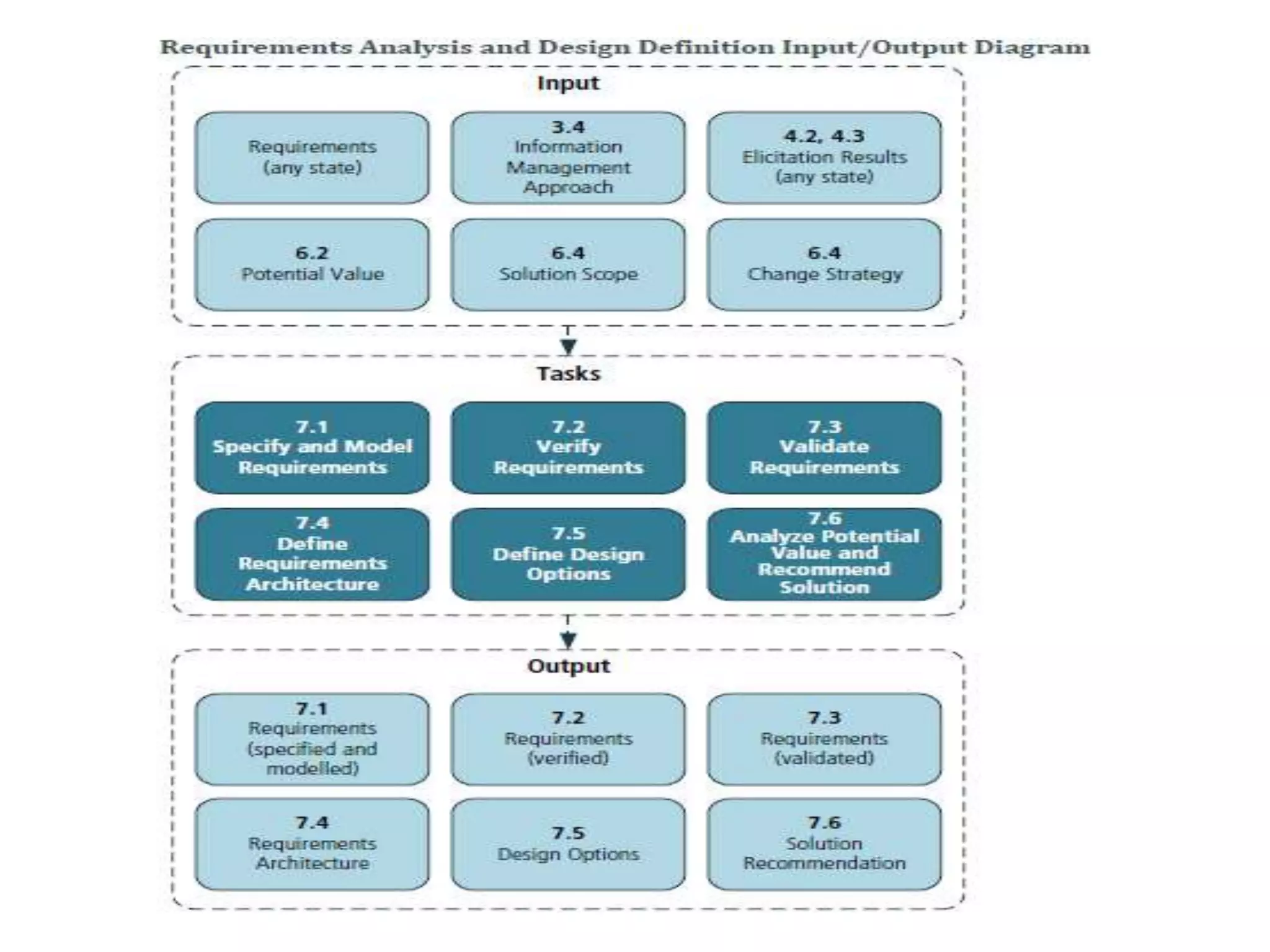
The Requirements Analysis and Design Definition
knowledge area includes the following tasks
• Specify and Model Requirements
• Verify Requirements
• Validate Requirements
• Define Requirements Architecture
• Define Solution Options
• Analyse Potential Value and Recommend Solution
Solution Evaluation
The Solution Evaluation knowledge area describes
the tasks that business analysts perform to assess
the performance of and value delivered by a solution
in use by the enterprise, and to recommend removal
of barriers or constraints that prevent the full
realisation of the value.
Solution Evaluation tasks can be performed on solution
components in varying stages of development:
• Prototypes or Proofs of Concept: working but limited
versions of a solution that demonstrate value.
• Pilot or Beta releases: limited implementations or
versions of a solution used in order to work through
problems and understand how well it actually delivers value
before fully releasing the solution.
• Operational releases: full versions of a partial or
completed solution used to achieve business objectives,
execute a process, or fulfil a desired outcome.
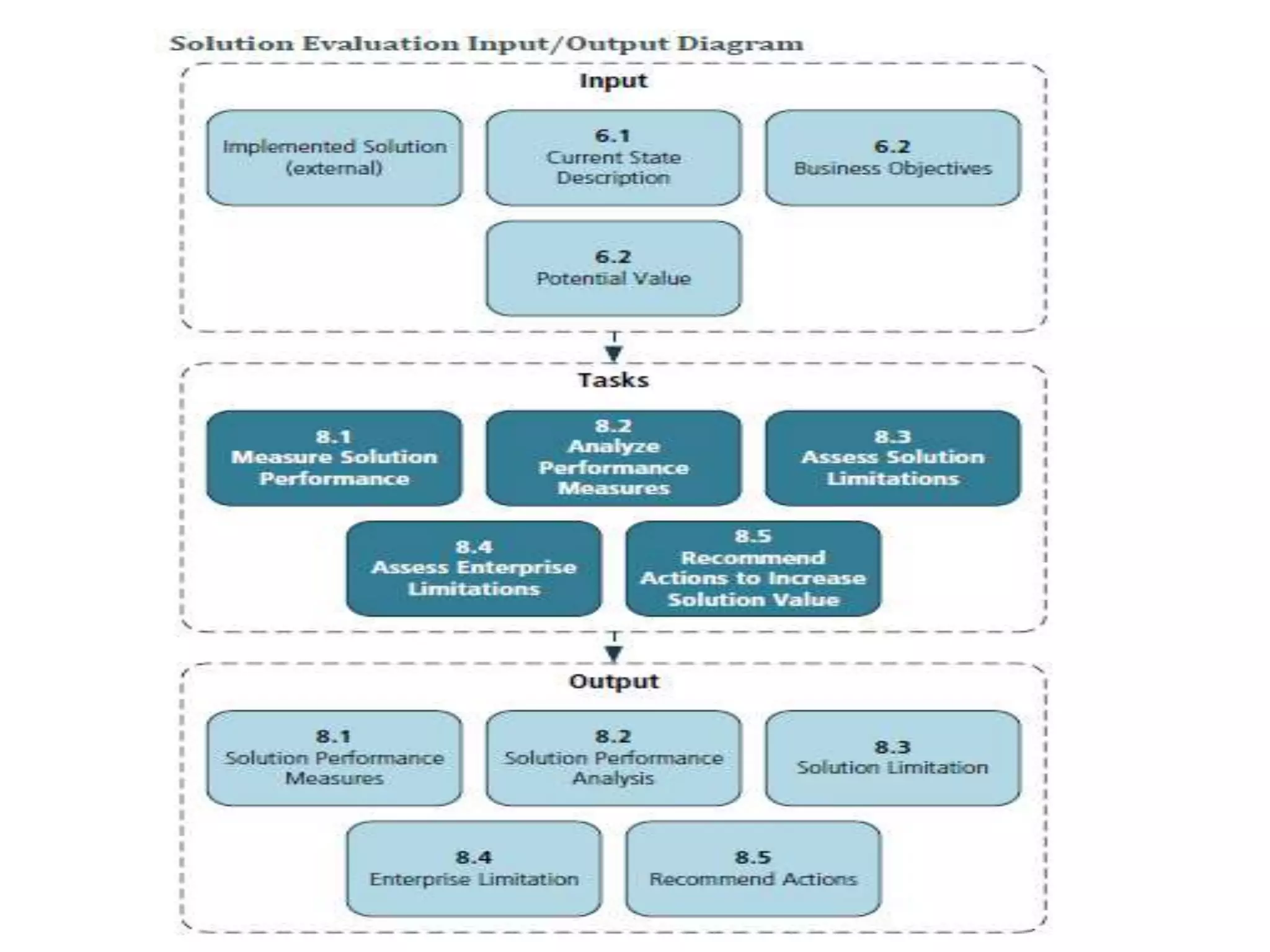
The Solution Evaluation knowledge area includes
the following tasks:
• Measure Solution Performance
• Analyse Performance Measures
• Assess Solution Limitations
• Assess Enterprise Limitations
• Recommend Actions to Increase Solution
Value
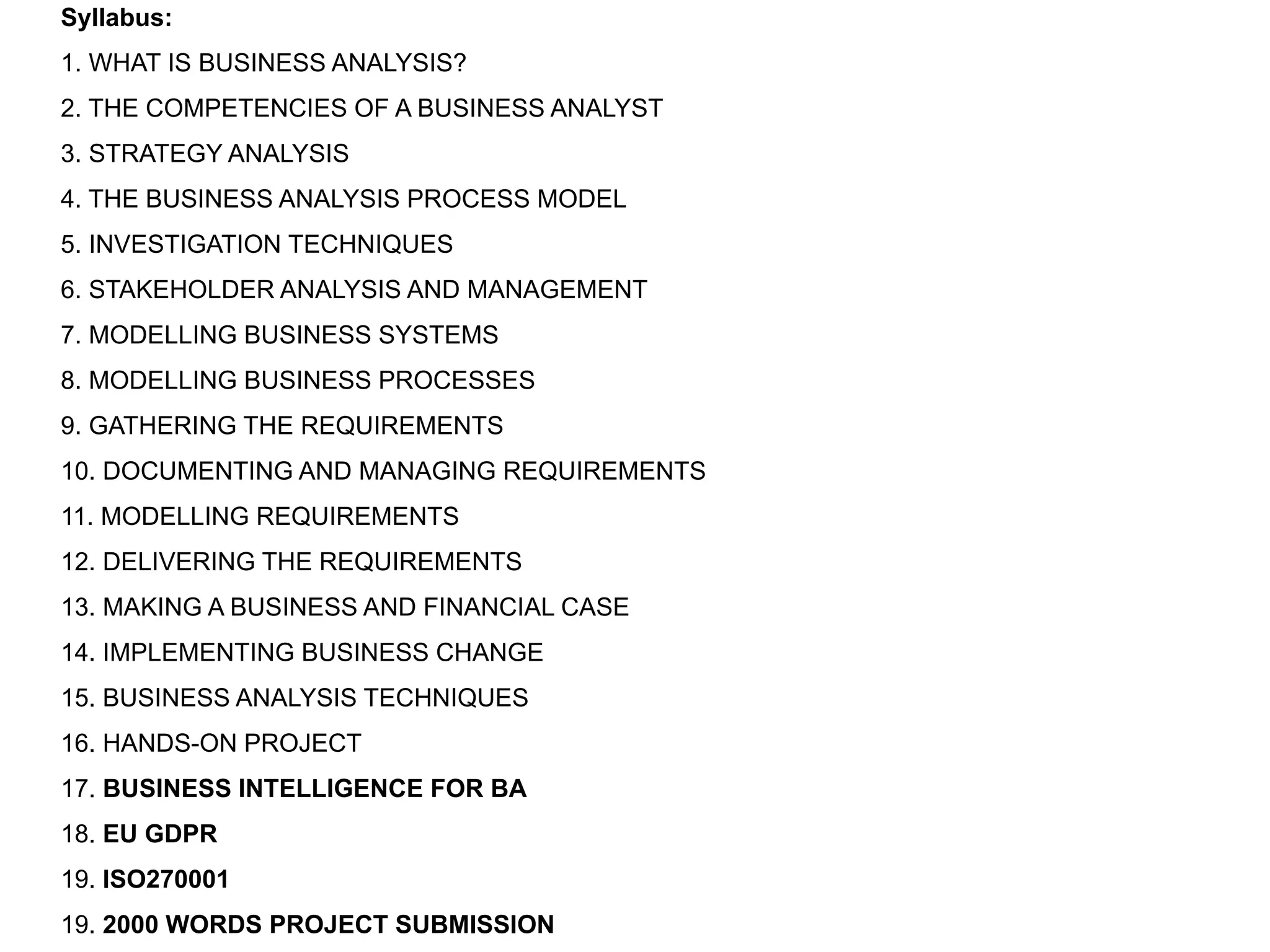
Syllabus:
1. WHAT IS BUSINESS ANALYSIS?
2. THE COMPETENCIES OF A BUSINESS ANALYST
3. STRATEGY ANALYSIS
4. THE BUSINESS ANALYSIS PROCESS MODEL
5. INVESTIGATION TECHNIQUES
6. STAKEHOLDER ANALYSIS AND MANAGEMENT
7. MODELLING BUSINESS SYSTEMS
8. MODELLING BUSINESS PROCESSES
9. GATHERING THE REQUIREMENTS
10. DOCUMENTING AND MANAGING REQUIREMENTS
11. MODELLING REQUIREMENTS
12. DELIVERING THE REQUIREMENTS
13. MAKING A BUSINESS AND FINANCIAL CASE
14. IMPLEMENTING BUSINESS CHANGE
15. BUSINESS ANALYSIS TECHNIQUES
16. HANDS-ON PROJECT
17. BUSINESS INTELLIGENCE FOR BA
18. EU GDPR
19. ISO270001
19. 2000 WORDS PROJECT SUBMISSION
Thank you
Admin@hostserviceuk.com
Reference
IIBA BABOK v3 - International Institute of Business
Analysis, Toronto, Ontario, Canada

Business Analysis Core Standard Knowledge Areas

  • 1.
    Business Analysis Core StandardKnowledge Areas by Ayo Apampa MSc Engr. And Economics Business Analysis Professional Diploma | Member IIBA Certified Scrum Master | Certified Scrum Product Owner GDPR Certified | Member International Association of Privacy Policy Microsoft Technical Associate | Certified in Server 2012, Network Fundamentals and Office 365 Affiliate International Compliance Association
  • 2.
    The Core Standardknowledge areas are: • Business Analysis Planning and Monitoring • Elicitation and Collaboration • Requirements Life Cycle Management • Strategy Analysis • Requirements Analysis and Design Definition • Solution Evaluation
  • 3.
    The Business AnalysisPlanning and Monitoring knowledge area includes the following tasks: • Plan Business Analysis Approach • Plan Stakeholder Engagement • Plan Business Analysis Governance • Plan Business Analysis Information Management • Identify Business Analysis Performance Improvements
  • 5.
    Elicitation and Collaboration Elicitationis the drawing forth or receiving of information from stakeholders or other sources. It is the main path to discovering requirements and design information, and might involve talking with stakeholders directly, researching topics, experimenting, or simply being handed information.
  • 6.
    Elicitation and collaborationcan be planned, unplanned, or both. Planned activities such as workshops, experiments, and/or surveys can be structured and organised in advance.
  • 7.
    Unplanned activities happenin the moment without notice, such as last-minute or 'just in time' collaboration or conversations. Business analysis information derived from an unplanned activity may require deeper exploration through a planned activity.
  • 8.
    • Prepare forElicitation (Gathering Requirements) • Conduct Elicitation • Confirm Elicitation Results • Communicate Business Analysis Information (Requirements gathered/needs) • Manage Stakeholder Collaboration The Elicitation and Collaboration knowledge area is composed of the following tasks:
  • 10.
    Requirements Life CycleManagement The purpose of requirements life cycle management is to ensure that business, stakeholder, and solution requirements and designs are aligned to one another and that the solution implements them.
  • 11.
    It involves alevel of control over requirements and over how requirements will be implemented in the actual solution to be constructed and delivered. It also helps to ensure that business analysis information is available for future use.
  • 12.
    The requirements lifecycle • begins with the representation of a business need as a requirement • continues through the development of a solution • ends when a solution and the requirements that represent it are retired.
  • 13.
    • Trace Requirements •Maintain Requirements • Prioritise Requirements • Assess Requirements Change • Approve/Validate Requirements The Requirements Life Cycle Management knowledge area includes the following tasks:
  • 14.
    Strategy Analysis The StrategyAnalysis knowledge area describes the business analysis work that must be performed to collaborate with stakeholders in order to identify a need of strategic or tactical importance (the business need), enable the enterprise to address that need, and align the resulting strategy for the change with higher- and lower-level strategies.
  • 15.
    The Strategy Analysisknowledge area includes the following tasks: • Analyse Current State • Define Future State • Assess Risks • Define Change Strategy
  • 16.
    Requirements Analysis andDesign Definition The Requirements Analysis and Design Definition knowledge area describes the tasks that business analysts perform to structure and organise requirements discovered during elicitation activities, specify and model requirements and designs, validate and verify information, identify solution options that meet business needs, and estimate the potential value that could be realised for each solution option.
  • 17.
    Business analysts analysethe potential value of both requirements and designs. In collaboration with implementation subject matter experts, business analysts define solution options that can be evaluated in order to recommend the best solution option that meets the need and brings the most value.
  • 18.
    The Requirements Analysisand Design Definition knowledge area includes the following tasks • Specify and Model Requirements • Verify Requirements • Validate Requirements • Define Requirements Architecture • Define Solution Options • Analyse Potential Value and Recommend Solution
  • 20.
    Solution Evaluation The SolutionEvaluation knowledge area describes the tasks that business analysts perform to assess the performance of and value delivered by a solution in use by the enterprise, and to recommend removal of barriers or constraints that prevent the full realisation of the value.
  • 21.
    Solution Evaluation taskscan be performed on solution components in varying stages of development: • Prototypes or Proofs of Concept: working but limited versions of a solution that demonstrate value. • Pilot or Beta releases: limited implementations or versions of a solution used in order to work through problems and understand how well it actually delivers value before fully releasing the solution.
  • 22.
    • Operational releases:full versions of a partial or completed solution used to achieve business objectives, execute a process, or fulfil a desired outcome.
  • 23.
    The Solution Evaluationknowledge area includes the following tasks: • Measure Solution Performance • Analyse Performance Measures • Assess Solution Limitations • Assess Enterprise Limitations • Recommend Actions to Increase Solution Value
  • 25.
    Syllabus: 1. WHAT ISBUSINESS ANALYSIS? 2. THE COMPETENCIES OF A BUSINESS ANALYST 3. STRATEGY ANALYSIS 4. THE BUSINESS ANALYSIS PROCESS MODEL 5. INVESTIGATION TECHNIQUES 6. STAKEHOLDER ANALYSIS AND MANAGEMENT 7. MODELLING BUSINESS SYSTEMS 8. MODELLING BUSINESS PROCESSES 9. GATHERING THE REQUIREMENTS 10. DOCUMENTING AND MANAGING REQUIREMENTS 11. MODELLING REQUIREMENTS 12. DELIVERING THE REQUIREMENTS 13. MAKING A BUSINESS AND FINANCIAL CASE 14. IMPLEMENTING BUSINESS CHANGE 15. BUSINESS ANALYSIS TECHNIQUES 16. HANDS-ON PROJECT 17. BUSINESS INTELLIGENCE FOR BA 18. EU GDPR 19. ISO270001 19. 2000 WORDS PROJECT SUBMISSION
  • 26.
  • 27.
    Reference IIBA BABOK v3- International Institute of Business Analysis, Toronto, Ontario, Canada