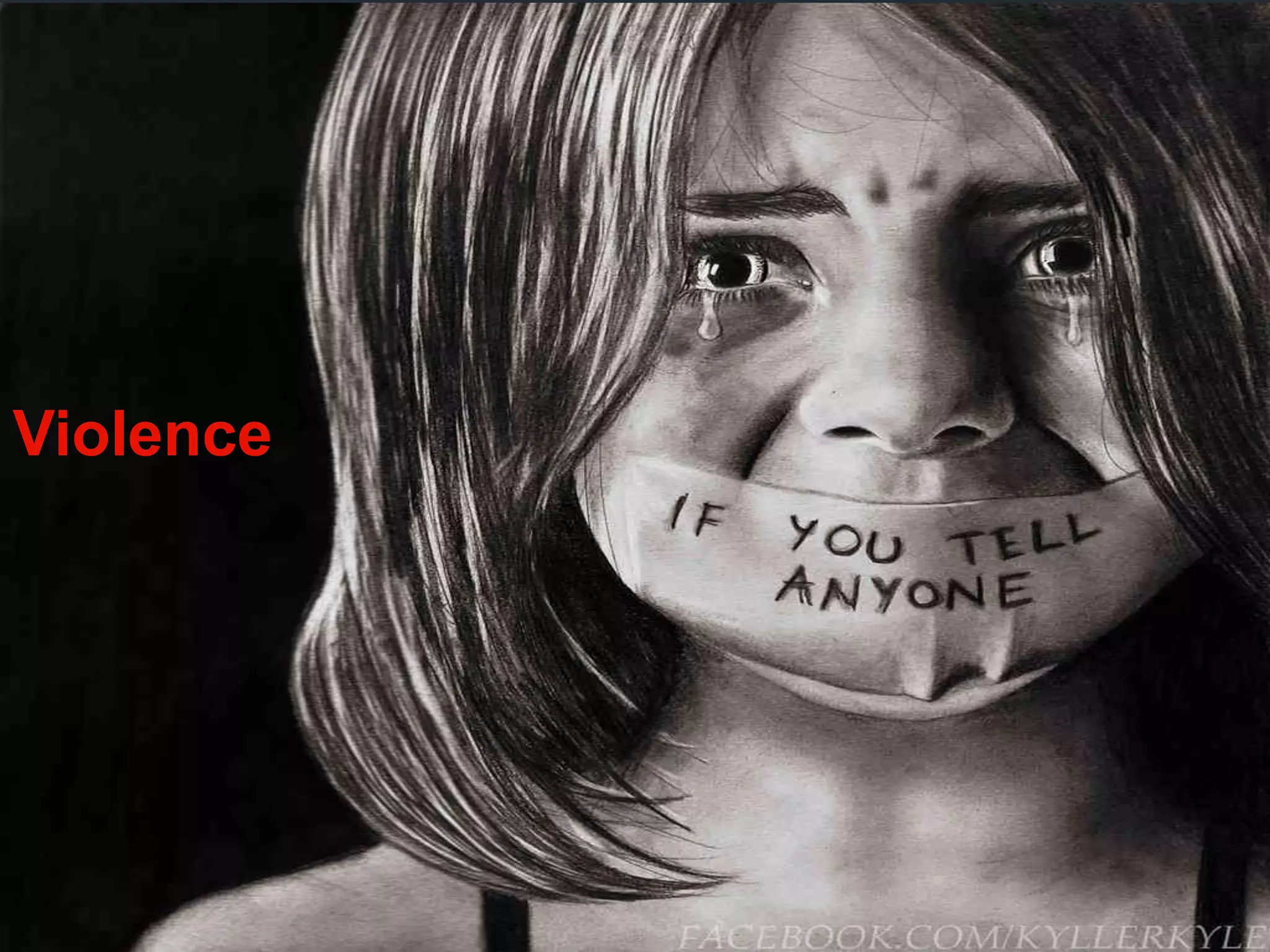
Violence
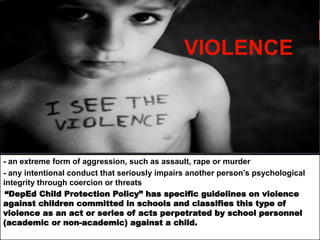
VIOLENCE
- an extreme form of aggression, such as assault, rape or murder
- any intentional conduct that seriously impairs another person’s psychological
integrity through coercion or threats
“DepEd Child Protection Policy” has specific guidelines on violence
against children committed in schools and classifies this type of
violence as an act or series of acts perpetrated by school personnel
(academic or non-academic) against a child.
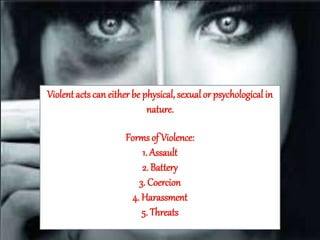
Violentacts can either be physical, sexual or psychological in
nature.
Forms of Violence:
1. Assault
2. Battery
3. Coercion
4. Harassment
5. Threats
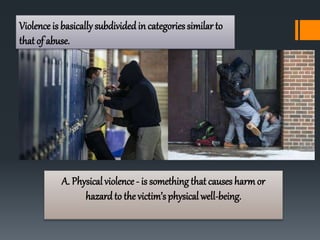
Violence is basically subdividedin categories similar to
that of abuse.
A. Physical violence - is something that causes harmor
hazard to the victim’s physical well-being.
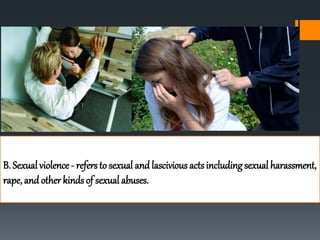
B. Sexual violence - refers to sexual and lascivious acts including sexual harassment,
rape, and other kinds of sexual abuses.
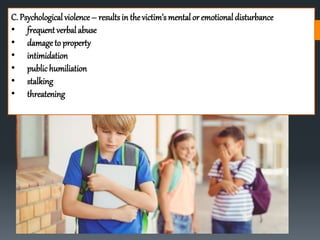
C. Psychological violence– results in the victim’s mental or emotional disturbance
• frequent verbal abuse
• damage to property
• intimidation
• publichumiliation
• stalking
• threatening
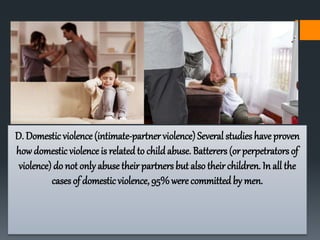
D. Domestic violence (intimate-partner violence) Several studies have proven
how domestic violence is related to childabuse. Batterers (orperpetrators of
violence) do not only abuse their partners but also their children. In all the
casesof domesticviolence, 95%were committed by men.
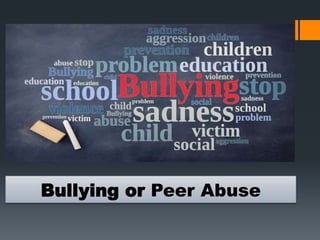
Bullying or Peer Abuse
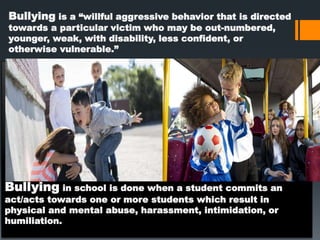
Bullying in school is done when a student commits an
act/acts towards one or more students which result in
physical and mental abuse, harassment, intimidation, or
humiliation.
Bullying is a “willful aggressive behavior that is directed
towards a particular victim who may be out-numbered,
younger, weak, with disability, less confident, or
otherwise vulnerable.”
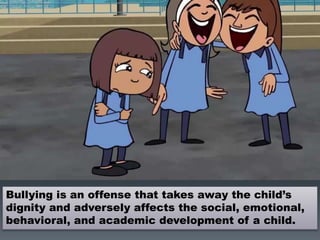
Bullying is an offense that takes away the child’s
dignity and adversely affects the social, emotional,
behavioral, and academic development of a child.
Examples:
1. threats to do harm to a person, his honor, property,
or family;
2. stalking or constantly giving unwanted and
obsessive attention to someone;
3. taking someone’s belongings;
4. oral defamation or public humiliation;
5. deliberate destruction of someone’s property;
physical violence (i.e. mauling, hitting, kicking,
punching, pinching, etc.);
6. demanding money or sexual favors from a student;
and
7. depriving a student of freedom and liberty.
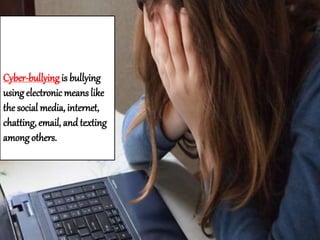
Cyber-bullying is bullying
using electronic means like
the social media, internet,
chatting, email, and texting
among others.
1. Verbally abusing another student through
texting
2. Spreading rumors about a student on
Facebook, Twitter, MySpace, etc.
3. Sending emails or instant messages to
their victims
4. Taking humiliating pictures of another
student and sharing them with others
1. Don’t engage the bully. Most bullies are
looking for a reaction from their victims.
Lack of a response can help to extinguish
the bullying behaviors.
2. Don’t share secrets.
3. Protect your own privacy. Do not send
pictures of yourself on the Internet.
What Students Can Do About
Cyberbullying
4. Think about the consequences.
5. Don’t respond to and don’t forward cyberbullying
messages.
6. Keep evidence of cyberbullying. Record the dates,
times and descriptions what the cyberbully says.
7. Report instances of cyberbullying to your parent.
What Students Can Do About
Cyberbullying
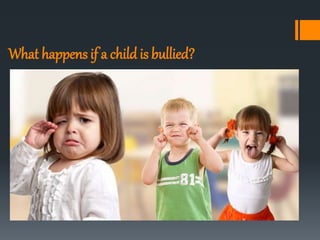
What happens if a child is bullied?
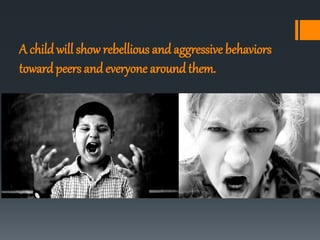
A childwill show rebellious andaggressive behaviors
towardpeers andeveryone around them.
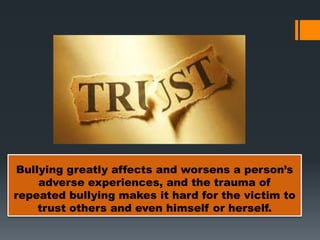
Bullying greatly affects and worsens a person’s
adverse experiences, and the trauma of
repeated bullying makes it hard for the victim to
trust others and even himself or herself.
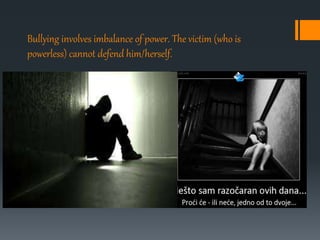
Bullying involves imbalance of power. The victim (who is
powerless) cannot defend him/herself.
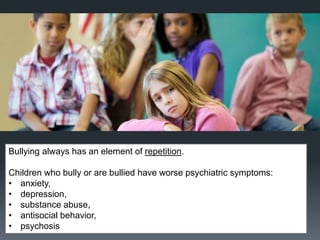
Bullying always has an element of repetition.
Children who bully or are bullied have worse psychiatric symptoms:
• anxiety,
• depression,
• substance abuse,
• antisocial behavior,
• psychosis
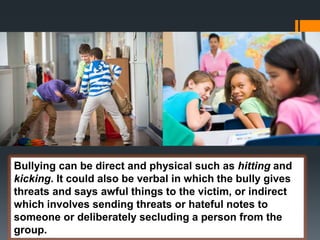
Bullying can be direct and physical such as hitting and
kicking. It could also be verbal in which the bully gives
threats and says awful things to the victim, or indirect
which involves sending threats or hateful notes to
someone or deliberately secluding a person from the
group.
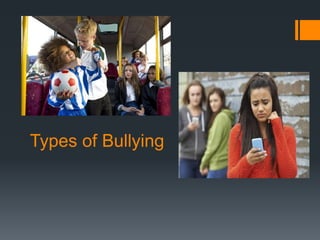
Types of Bullying
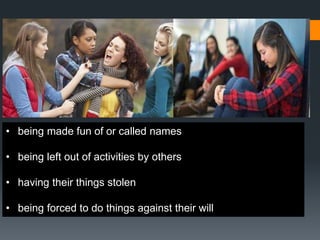
• being made fun of or called names
• being left out of activities by others
• having their things stolen
• being forced to do things against their will
Video clip about bullying
Thank you and Godbless!!!
Violence and Bullying

Violence and Bullying

  • 1.
  • 2.
    VIOLENCE - an extremeform of aggression, such as assault, rape or murder - any intentional conduct that seriously impairs another person’s psychological integrity through coercion or threats “DepEd Child Protection Policy” has specific guidelines on violence against children committed in schools and classifies this type of violence as an act or series of acts perpetrated by school personnel (academic or non-academic) against a child.
  • 3.
    Violentacts can eitherbe physical, sexual or psychological in nature. Forms of Violence: 1. Assault 2. Battery 3. Coercion 4. Harassment 5. Threats
  • 4.
    Violence is basicallysubdividedin categories similar to that of abuse. A. Physical violence - is something that causes harmor hazard to the victim’s physical well-being.
  • 5.
    B. Sexual violence- refers to sexual and lascivious acts including sexual harassment, rape, and other kinds of sexual abuses.
  • 6.
    C. Psychological violence–results in the victim’s mental or emotional disturbance • frequent verbal abuse • damage to property • intimidation • publichumiliation • stalking • threatening
  • 7.
    D. Domestic violence(intimate-partner violence) Several studies have proven how domestic violence is related to childabuse. Batterers (orperpetrators of violence) do not only abuse their partners but also their children. In all the casesof domesticviolence, 95%were committed by men.
  • 10.
  • 11.
    Bullying in schoolis done when a student commits an act/acts towards one or more students which result in physical and mental abuse, harassment, intimidation, or humiliation. Bullying is a “willful aggressive behavior that is directed towards a particular victim who may be out-numbered, younger, weak, with disability, less confident, or otherwise vulnerable.”
  • 12.
    Bullying is anoffense that takes away the child’s dignity and adversely affects the social, emotional, behavioral, and academic development of a child.
  • 13.
    Examples: 1. threats todo harm to a person, his honor, property, or family; 2. stalking or constantly giving unwanted and obsessive attention to someone; 3. taking someone’s belongings; 4. oral defamation or public humiliation; 5. deliberate destruction of someone’s property; physical violence (i.e. mauling, hitting, kicking, punching, pinching, etc.); 6. demanding money or sexual favors from a student; and 7. depriving a student of freedom and liberty.
  • 14.
    Cyber-bullying is bullying usingelectronic means like the social media, internet, chatting, email, and texting among others.
  • 15.
    1. Verbally abusinganother student through texting 2. Spreading rumors about a student on Facebook, Twitter, MySpace, etc. 3. Sending emails or instant messages to their victims 4. Taking humiliating pictures of another student and sharing them with others
  • 16.
    1. Don’t engagethe bully. Most bullies are looking for a reaction from their victims. Lack of a response can help to extinguish the bullying behaviors. 2. Don’t share secrets. 3. Protect your own privacy. Do not send pictures of yourself on the Internet. What Students Can Do About Cyberbullying
  • 17.
    4. Think aboutthe consequences. 5. Don’t respond to and don’t forward cyberbullying messages. 6. Keep evidence of cyberbullying. Record the dates, times and descriptions what the cyberbully says. 7. Report instances of cyberbullying to your parent. What Students Can Do About Cyberbullying
  • 18.
    What happens ifa child is bullied?
  • 19.
    A childwill showrebellious andaggressive behaviors towardpeers andeveryone around them.
  • 20.
    Bullying greatly affectsand worsens a person’s adverse experiences, and the trauma of repeated bullying makes it hard for the victim to trust others and even himself or herself.
  • 21.
    Bullying involves imbalanceof power. The victim (who is powerless) cannot defend him/herself.
  • 22.
    Bullying always hasan element of repetition. Children who bully or are bullied have worse psychiatric symptoms: • anxiety, • depression, • substance abuse, • antisocial behavior, • psychosis
  • 23.
    Bullying can bedirect and physical such as hitting and kicking. It could also be verbal in which the bully gives threats and says awful things to the victim, or indirect which involves sending threats or hateful notes to someone or deliberately secluding a person from the group.
  • 24.
  • 25.
    • being madefun of or called names • being left out of activities by others • having their things stolen • being forced to do things against their will
  • 26.
  • 27.
    Thank you andGodbless!!!