







BULLYINGbadbehavior
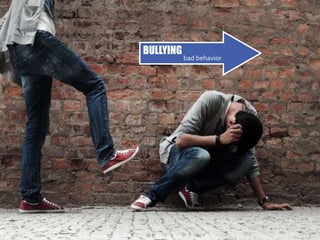
BULLYINGBullying is a form of abuse. It involves repeated acts over time attempting to create or enforce one person's  power over another person, thus an imbalance of power. The victim of bullying is sometimes referred to as a target. Bullying types of behavior are often rooted in a would-be bully's inability to empathize with those whom he or she would target.
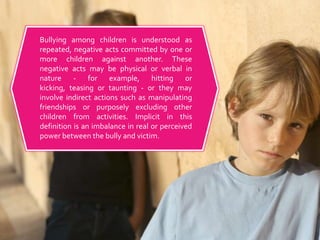
Bullying among children is understood as repeated, negative acts committed by one or more children against another. These negative acts may be physical or verbal in nature - for example, hitting or kicking, teasing or taunting - or they may involve indirect actions such as manipulating friendships or purposely excluding other children from activities. Implicit in this definition is an imbalance in real or perceived power between the bully and victim.
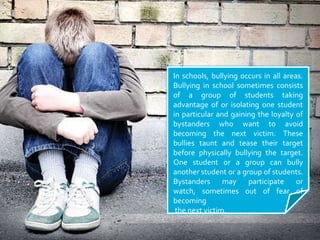
In schools, bullying occurs in all areas. Bullying in school sometimes consists of a group of students taking advantage of or isolating one student in particular and gaining the loyalty of bystanders who want to avoid becoming the next victim. These bullies taunt and tease their target before physically bullying the target. One student or a group can bully another student or a group of students. Bystanders may participate or watch, sometimes out of fear of becoming the next victim.
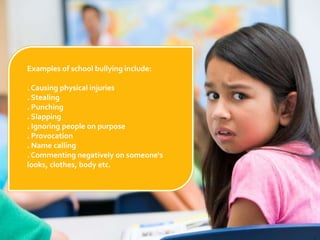
Examples of school bullying include:. Causing physical injuries. Stealing. Punching. Slapping. Ignoring people on purpose. Provocation. Name calling. Commenting negatively on someone‘s                                looks, clothes, body etc.
bullied for being overweight in her classbullied forthinkingonlyabout soccerkatewinsletdavidbeckhambullied for notshavingherselfbullied for being forhaving dyslexiatom cruisemadonna
Bullying at work is when someone tries to intimidate another worker, often in front of colleagues. It is usually, though not always, done to someone in a less senior position. It is similar to harassment, which is where someone's behavior is offensive. For example, making sexual comments, or abusing someone's race, religion or sexual orientation.You cannot make a legal claim directly about bullying, but complaints can be made under laws covering discrimination and harassment. If you are forced to resign due to bullying you may be able to make a constructive dismissal claim.
Examples of bullying behavior at work includes abuse, physical or verbal violence, humiliation and undermining someone's confidence. You are probably being bullied if, for example, you are:• constantly picked on• humiliated in front of colleagues• regularly unfairly treated• physically or verbally abused• blamed for problems caused by others
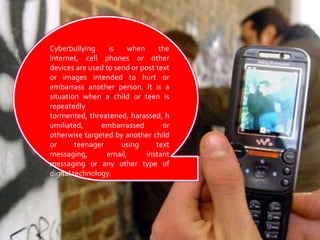
Cyberbullying is when the Internet, cell phones or other devices are used to send or post text or images intended to hurt or embarrass another person. It is a situation when a child or teen is repeatedly tormented, threatened, harassed, humiliated, embarrassed or otherwise targeted by another child or teenager using text messaging, email, instant messaging or any other type of digital technology.
Cyberbullying occurs when someone bullies through the Internet, mobile phones or other electronic means.Examples include:. sending mean-spirited text, e-mail, or instant messages.. posting inappropriate pictures or messages about others in blogs or on web sites. using someone else's user name to spread rumors or lies about someone.
Studies of bullying suggest that there are short- and long-term consequences for both the perpetrators and victims of bullying. Students who are chronic victims of bullying experience more physical and psychological problems than their peers who are not harassed by other children and they tend not to grow out of the role of victim. Longitudinal studies have found that victims of bullying in early grades also reported being bullied several years later. Studies also suggest that chronically victimized students may as adults be at increased risk for depression, poor self-esteem, and other mental health problems, including schizophrenia.
Antibullying InitiativeUntil recently, little attention has been given to the establishment of antibullying initiatives in U.S. schools. Within the past several years, a number of school-based programs have been developed to address bullying, although the degree to which they embrace a whole-school approach to the problem varies.
Bullying

Bullying

  • 1.
  • 2.
    BULLYINGBullying is aform of abuse. It involves repeated acts over time attempting to create or enforce one person's power over another person, thus an imbalance of power. The victim of bullying is sometimes referred to as a target. Bullying types of behavior are often rooted in a would-be bully's inability to empathize with those whom he or she would target.
  • 3.
    Bullying among childrenis understood as repeated, negative acts committed by one or more children against another. These negative acts may be physical or verbal in nature - for example, hitting or kicking, teasing or taunting - or they may involve indirect actions such as manipulating friendships or purposely excluding other children from activities. Implicit in this definition is an imbalance in real or perceived power between the bully and victim.
  • 4.
    In schools, bullyingoccurs in all areas. Bullying in school sometimes consists of a group of students taking advantage of or isolating one student in particular and gaining the loyalty of bystanders who want to avoid becoming the next victim. These bullies taunt and tease their target before physically bullying the target. One student or a group can bully another student or a group of students. Bystanders may participate or watch, sometimes out of fear of becoming the next victim.
  • 5.
    Examples of schoolbullying include:. Causing physical injuries. Stealing. Punching. Slapping. Ignoring people on purpose. Provocation. Name calling. Commenting negatively on someone‘s looks, clothes, body etc.
  • 7.
    bullied for beingoverweight in her classbullied forthinkingonlyabout soccerkatewinsletdavidbeckhambullied for notshavingherselfbullied for being forhaving dyslexiatom cruisemadonna
  • 9.
    Bullying at workis when someone tries to intimidate another worker, often in front of colleagues. It is usually, though not always, done to someone in a less senior position. It is similar to harassment, which is where someone's behavior is offensive. For example, making sexual comments, or abusing someone's race, religion or sexual orientation.You cannot make a legal claim directly about bullying, but complaints can be made under laws covering discrimination and harassment. If you are forced to resign due to bullying you may be able to make a constructive dismissal claim.
  • 10.
    Examples of bullyingbehavior at work includes abuse, physical or verbal violence, humiliation and undermining someone's confidence. You are probably being bullied if, for example, you are:• constantly picked on• humiliated in front of colleagues• regularly unfairly treated• physically or verbally abused• blamed for problems caused by others
  • 11.
    Cyberbullying is whenthe Internet, cell phones or other devices are used to send or post text or images intended to hurt or embarrass another person. It is a situation when a child or teen is repeatedly tormented, threatened, harassed, humiliated, embarrassed or otherwise targeted by another child or teenager using text messaging, email, instant messaging or any other type of digital technology.
  • 12.
    Cyberbullying occurs whensomeone bullies through the Internet, mobile phones or other electronic means.Examples include:. sending mean-spirited text, e-mail, or instant messages.. posting inappropriate pictures or messages about others in blogs or on web sites. using someone else's user name to spread rumors or lies about someone.
  • 14.
    Studies of bullyingsuggest that there are short- and long-term consequences for both the perpetrators and victims of bullying. Students who are chronic victims of bullying experience more physical and psychological problems than their peers who are not harassed by other children and they tend not to grow out of the role of victim. Longitudinal studies have found that victims of bullying in early grades also reported being bullied several years later. Studies also suggest that chronically victimized students may as adults be at increased risk for depression, poor self-esteem, and other mental health problems, including schizophrenia.
  • 15.
    Antibullying InitiativeUntil recently,little attention has been given to the establishment of antibullying initiatives in U.S. schools. Within the past several years, a number of school-based programs have been developed to address bullying, although the degree to which they embrace a whole-school approach to the problem varies.