1. Types of entertainment – both live and non-
live, including drama, musicals, concerts and TV
and video, OTT video, music streaming.
Live entertainment
Types of live entertainment
• Concerts
• Musical theatre
• Sports
• Comedy club
• Fashion shows
• Circus
Statistics
• the UK’s live entertainment sector hit
a record £17bn in revenues in 2017
• Growth was predicted to continue as
the UK’s live entertainment was
forecast to surge by another £400m in
2018.
• Live Nation, who own Ticket Master,
ticket sales were up 20% to more than
£80m, according to its most recent
figures published in October.
Non-live entertainment
Types of non-live
entertainment
•Movie
•Music streaming
•TV and video
•OTT video
•Video games
Live - Concerts
• A concert is a live music performance in front of
an audience
• Concerts are held in a wide variety and size of
settings, from private houses and small nightclubs,
dedicated concert halls, arenas and parks to large
multipurpose buildings, and even sports stadiums.
• Musicians usually perform on a stage. Concerts often
require live event support with professional
audio equipment.
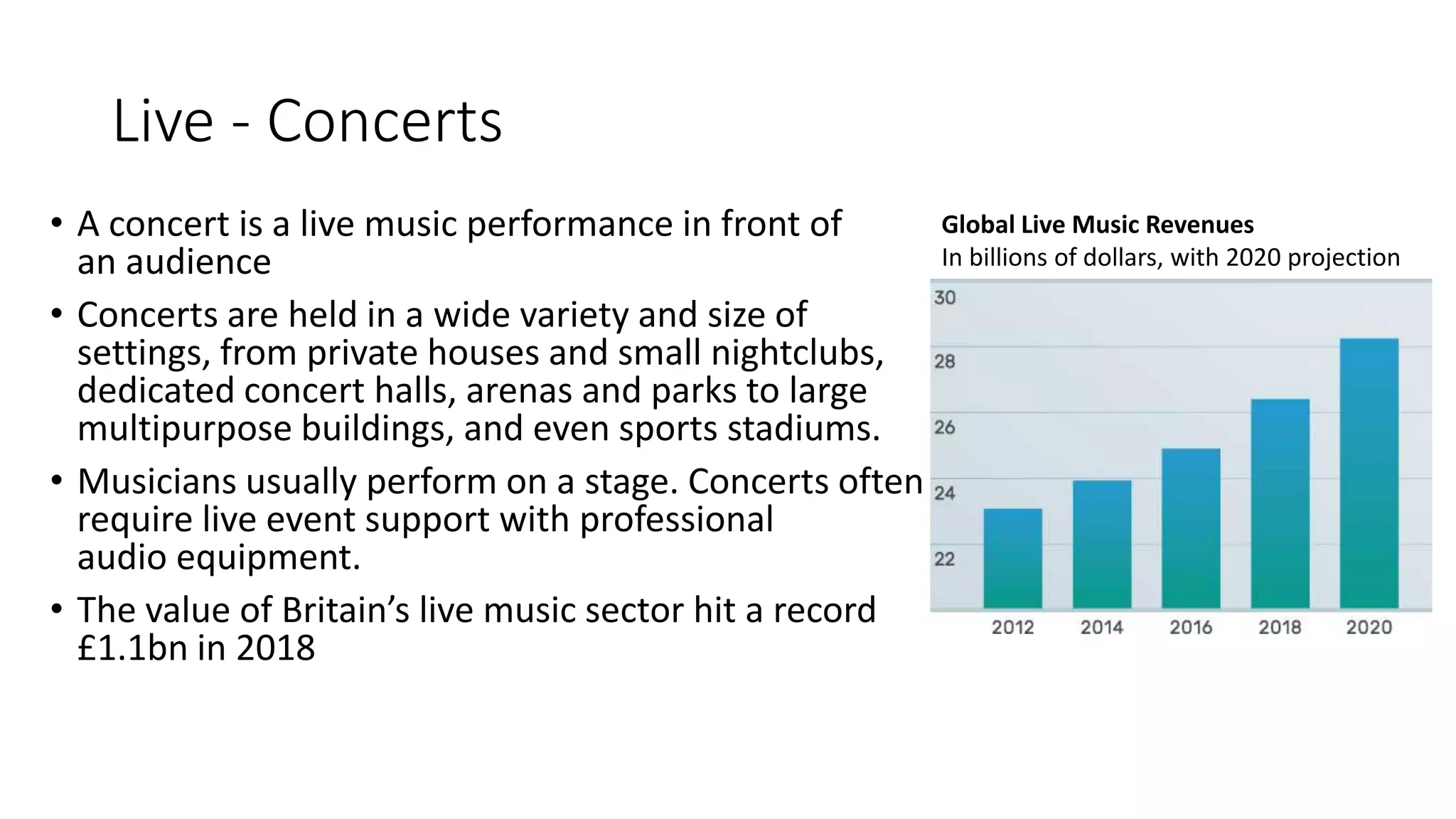
• The value of Britain’s live music sector hit a record
£1.1bn in 2018
Global Live Music Revenues
In billions of dollars, with 2020 projection
Live – Traditional sport
• Traditional sports are a large sector of
the global market for live events,
estimated to be worth £24bn/$33bn.
• The global market for live events,
including sporting events, is forecast
to grow collectively by £3.7bn ($5bn),
to £108bn ($146bn) in 2018.
• Revenue from ticket sales to sports
events was £800m in 2017 and was
expected to grow to £900m in 2018.
• The consultancy firm estimates that
live TV broadcasting – watching sport
and other programmes when they are
first broadcast – generated £12.1bn
for the UK economy last year. This
figure comprises revenue from
television ads (£3.9bn), pay-TV
subscriptions (£6.1bn) and the BBC’s
licence fee (£2.1bn). It will rise slightly
to £12.2bn this year.
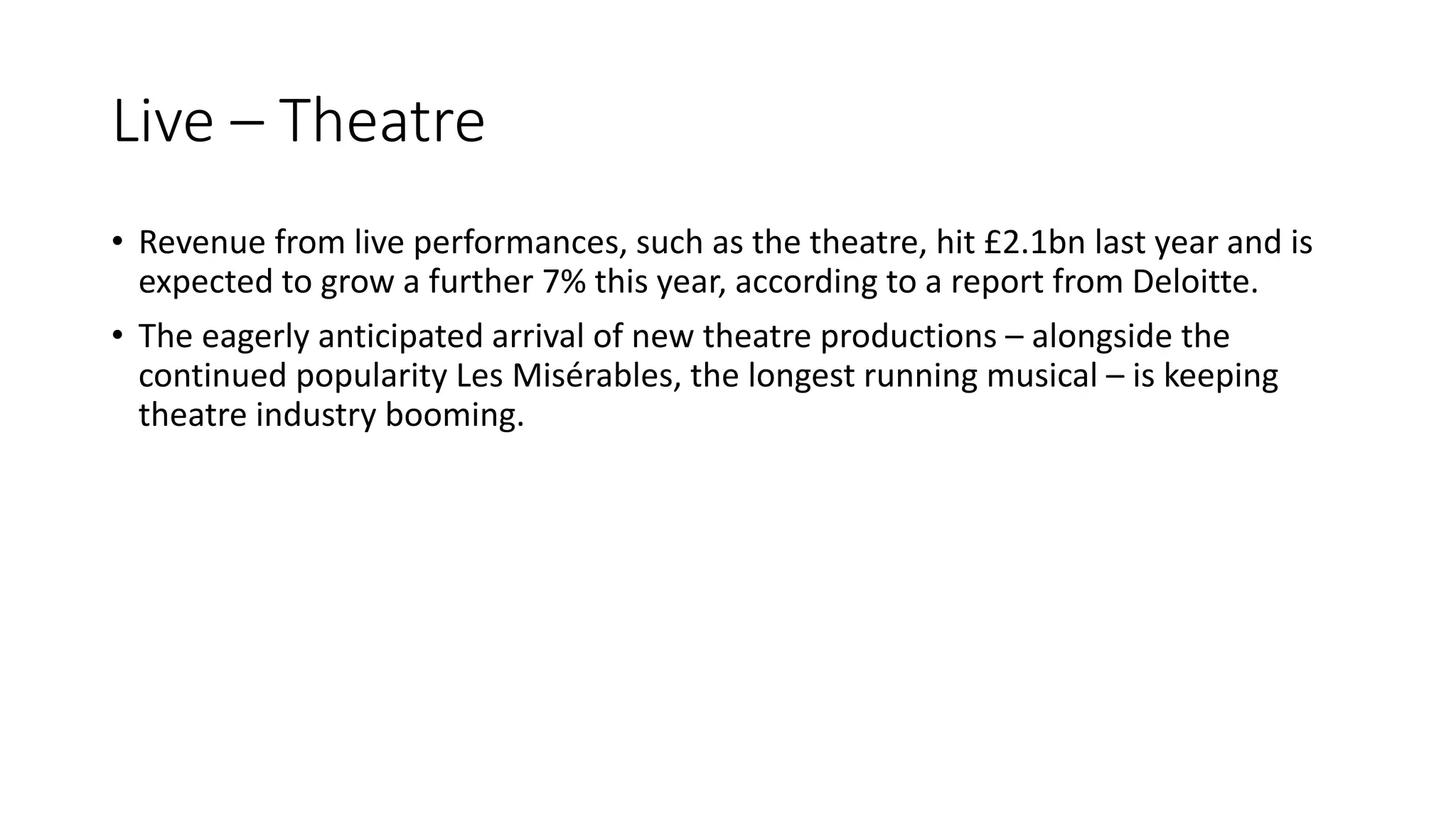
Live – Theatre
• Revenue from live performances, such as the theatre, hit £2.1bn last year and is
expected to grow a further 7% this year, according to a report from Deloitte.
• The eagerly anticipated arrival of new theatre productions – alongside the
continued popularity Les Misérables, the longest running musical – is keeping
theatre industry booming.
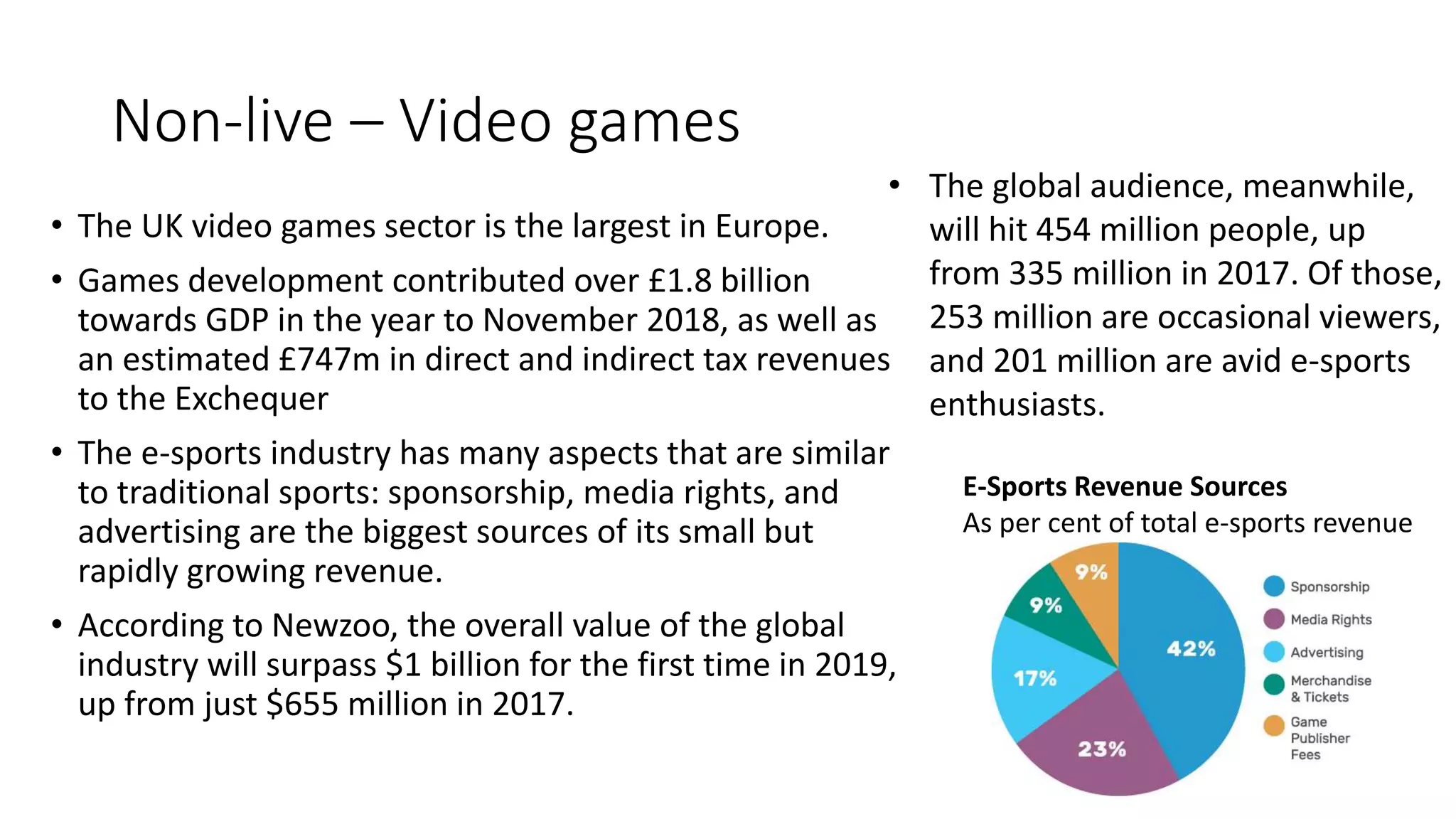
Non-live – Video games
• The UK video games sector is the largest in Europe.
• Games development contributed over £1.8 billion
towards GDP in the year to November 2018, as well as
an estimated £747m in direct and indirect tax revenues
to the Exchequer
• The e-sports industry has many aspects that are similar
to traditional sports: sponsorship, media rights, and
advertising are the biggest sources of its small but
rapidly growing revenue.
• According to Newzoo, the overall value of the global
industry will surpass $1 billion for the first time in 2019,
up from just $655 million in 2017.
• The global audience, meanwhile,
will hit 454 million people, up
from 335 million in 2017. Of those,
253 million are occasional viewers,
and 201 million are avid e-sports
enthusiasts.
E-Sports Revenue Sources
As per cent of total e-sports revenue
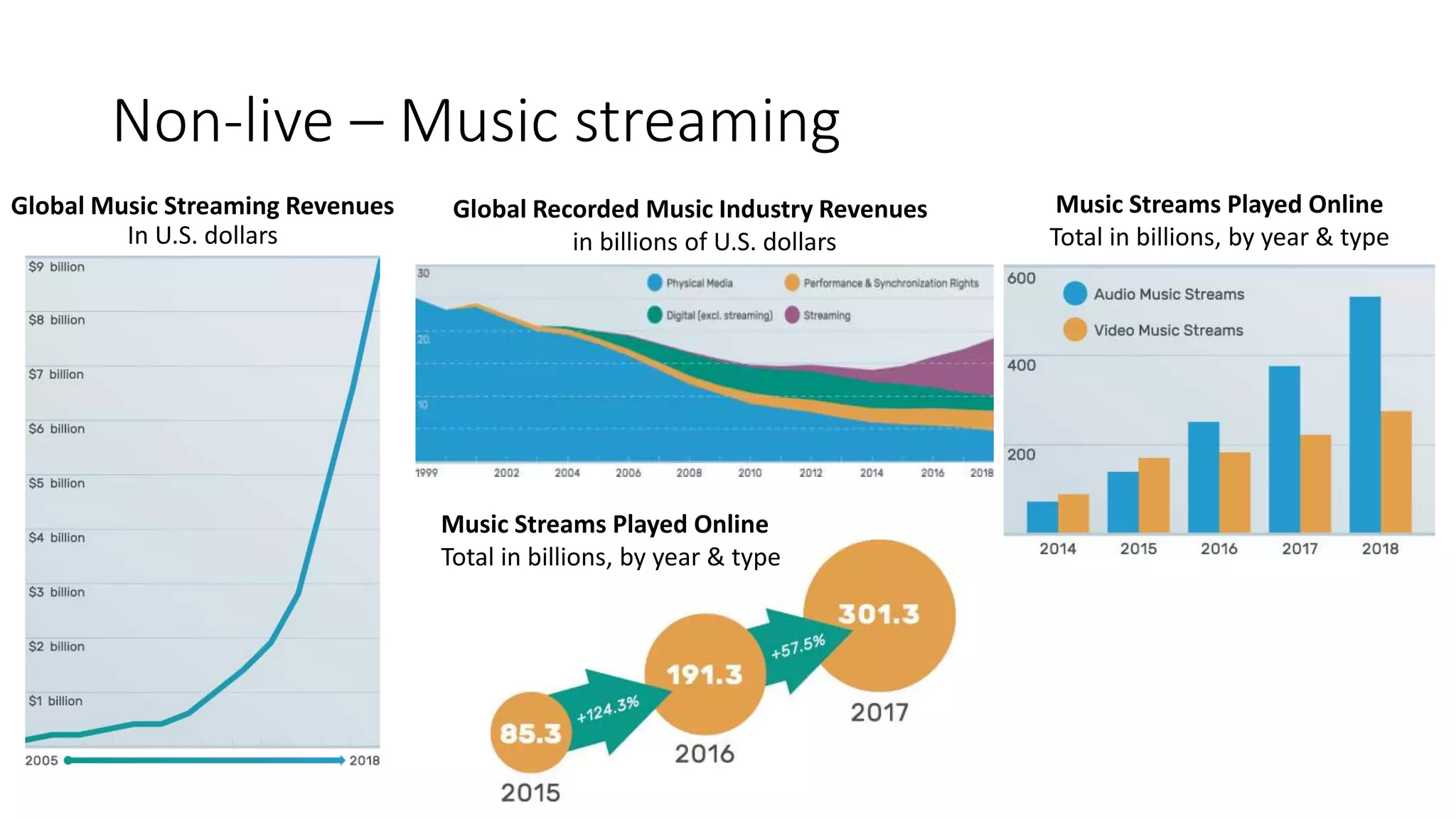
Non-live – Music streaming
Global Music Streaming Revenues
In U.S. dollars
Global Recorded Music Industry Revenues
in billions of U.S. dollars
Music Streams Played Online
Total in billions, by year & type
Music Streams Played Online
Total in billions, by year & type
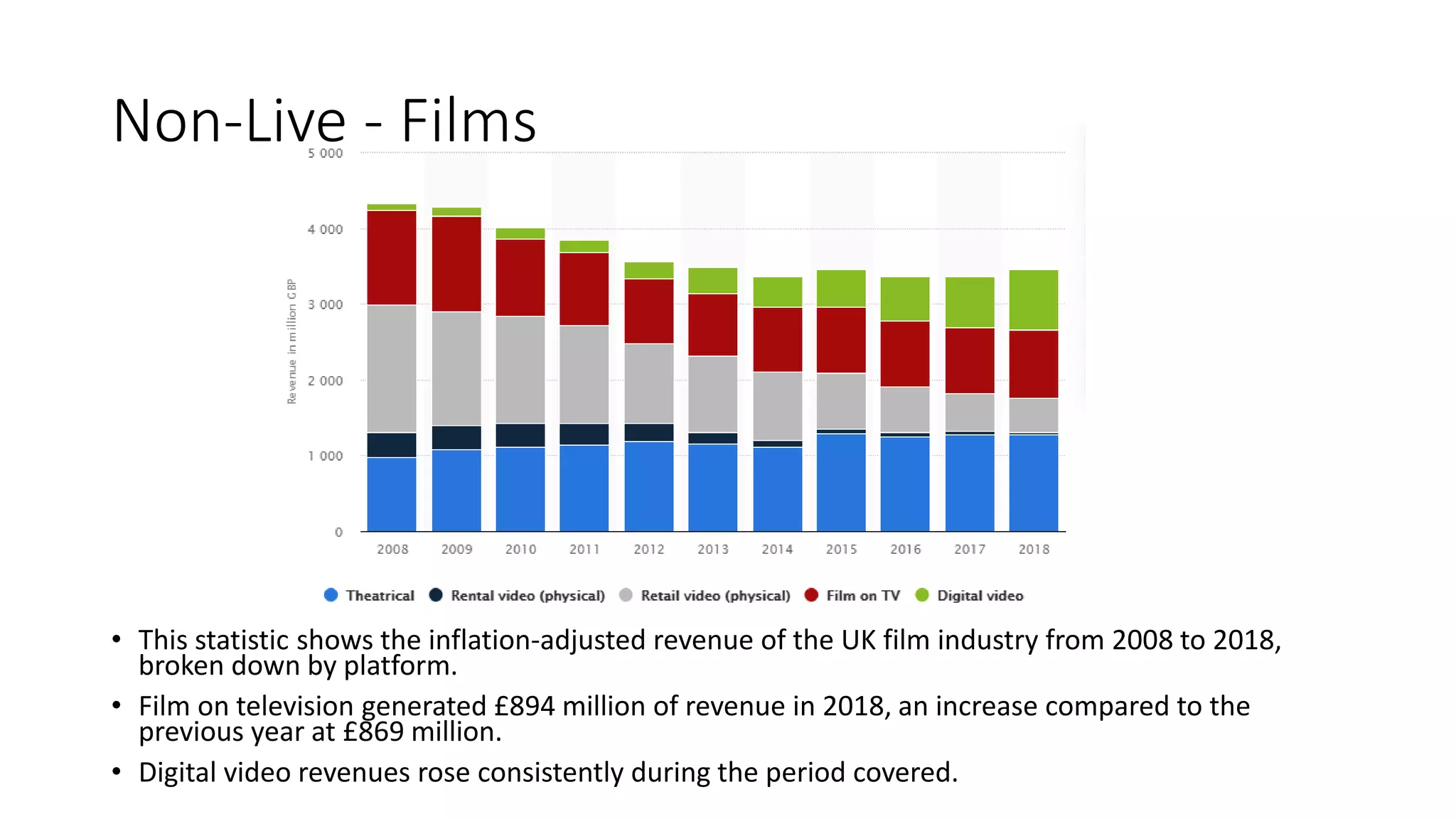
Non-Live - Films
• This statistic shows the inflation-adjusted revenue of the UK film industry from 2008 to 2018,
broken down by platform.
• Film on television generated £894 million of revenue in 2018, an increase compared to the
previous year at £869 million.
• Digital video revenues rose consistently during the period covered.
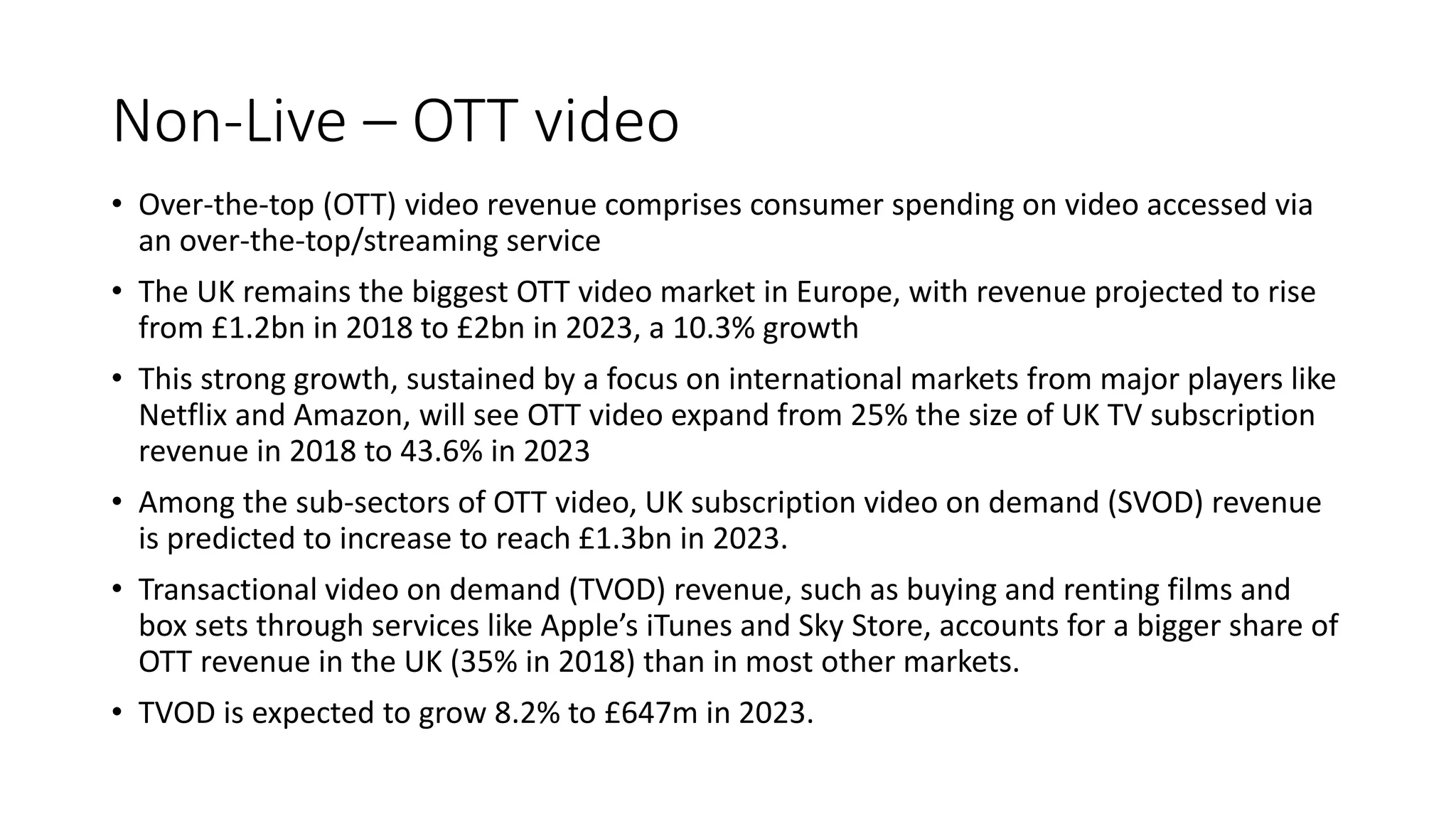
Non-Live – OTT video
• Over-the-top (OTT) video revenue comprises consumer spending on video accessed via
an over-the-top/streaming service
• The UK remains the biggest OTT video market in Europe, with revenue projected to rise
from £1.2bn in 2018 to £2bn in 2023, a 10.3% growth
• This strong growth, sustained by a focus on international markets from major players like
Netflix and Amazon, will see OTT video expand from 25% the size of UK TV subscription
revenue in 2018 to 43.6% in 2023
• Among the sub-sectors of OTT video, UK subscription video on demand (SVOD) revenue
is predicted to increase to reach £1.3bn in 2023.
• Transactional video on demand (TVOD) revenue, such as buying and renting films and
box sets through services like Apple’s iTunes and Sky Store, accounts for a bigger share of
OTT revenue in the UK (35% in 2018) than in most other markets.
• TVOD is expected to grow 8.2% to £647m in 2023.

Bullet Point 1: Types of entertainment.

  • 1.
    1. Types ofentertainment – both live and non- live, including drama, musicals, concerts and TV and video, OTT video, music streaming.
  • 2.
    Live entertainment Types oflive entertainment • Concerts • Musical theatre • Sports • Comedy club • Fashion shows • Circus Statistics • the UK’s live entertainment sector hit a record £17bn in revenues in 2017 • Growth was predicted to continue as the UK’s live entertainment was forecast to surge by another £400m in 2018. • Live Nation, who own Ticket Master, ticket sales were up 20% to more than £80m, according to its most recent figures published in October.
  • 3.
    Non-live entertainment Types ofnon-live entertainment •Movie •Music streaming •TV and video •OTT video •Video games
  • 4.
    Live - Concerts •A concert is a live music performance in front of an audience • Concerts are held in a wide variety and size of settings, from private houses and small nightclubs, dedicated concert halls, arenas and parks to large multipurpose buildings, and even sports stadiums. • Musicians usually perform on a stage. Concerts often require live event support with professional audio equipment. • The value of Britain’s live music sector hit a record £1.1bn in 2018 Global Live Music Revenues In billions of dollars, with 2020 projection
  • 5.
    Live – Traditionalsport • Traditional sports are a large sector of the global market for live events, estimated to be worth £24bn/$33bn. • The global market for live events, including sporting events, is forecast to grow collectively by £3.7bn ($5bn), to £108bn ($146bn) in 2018. • Revenue from ticket sales to sports events was £800m in 2017 and was expected to grow to £900m in 2018. • The consultancy firm estimates that live TV broadcasting – watching sport and other programmes when they are first broadcast – generated £12.1bn for the UK economy last year. This figure comprises revenue from television ads (£3.9bn), pay-TV subscriptions (£6.1bn) and the BBC’s licence fee (£2.1bn). It will rise slightly to £12.2bn this year.
  • 6.
    Live – Theatre •Revenue from live performances, such as the theatre, hit £2.1bn last year and is expected to grow a further 7% this year, according to a report from Deloitte. • The eagerly anticipated arrival of new theatre productions – alongside the continued popularity Les Misérables, the longest running musical – is keeping theatre industry booming.
  • 7.
    Non-live – Videogames • The UK video games sector is the largest in Europe. • Games development contributed over £1.8 billion towards GDP in the year to November 2018, as well as an estimated £747m in direct and indirect tax revenues to the Exchequer • The e-sports industry has many aspects that are similar to traditional sports: sponsorship, media rights, and advertising are the biggest sources of its small but rapidly growing revenue. • According to Newzoo, the overall value of the global industry will surpass $1 billion for the first time in 2019, up from just $655 million in 2017. • The global audience, meanwhile, will hit 454 million people, up from 335 million in 2017. Of those, 253 million are occasional viewers, and 201 million are avid e-sports enthusiasts. E-Sports Revenue Sources As per cent of total e-sports revenue
  • 8.
    Non-live – Musicstreaming Global Music Streaming Revenues In U.S. dollars Global Recorded Music Industry Revenues in billions of U.S. dollars Music Streams Played Online Total in billions, by year & type Music Streams Played Online Total in billions, by year & type
  • 9.
    Non-Live - Films •This statistic shows the inflation-adjusted revenue of the UK film industry from 2008 to 2018, broken down by platform. • Film on television generated £894 million of revenue in 2018, an increase compared to the previous year at £869 million. • Digital video revenues rose consistently during the period covered.
  • 10.
    Non-Live – OTTvideo • Over-the-top (OTT) video revenue comprises consumer spending on video accessed via an over-the-top/streaming service • The UK remains the biggest OTT video market in Europe, with revenue projected to rise from £1.2bn in 2018 to £2bn in 2023, a 10.3% growth • This strong growth, sustained by a focus on international markets from major players like Netflix and Amazon, will see OTT video expand from 25% the size of UK TV subscription revenue in 2018 to 43.6% in 2023 • Among the sub-sectors of OTT video, UK subscription video on demand (SVOD) revenue is predicted to increase to reach £1.3bn in 2023. • Transactional video on demand (TVOD) revenue, such as buying and renting films and box sets through services like Apple’s iTunes and Sky Store, accounts for a bigger share of OTT revenue in the UK (35% in 2018) than in most other markets. • TVOD is expected to grow 8.2% to £647m in 2023.